Author John Walsh on the troubled making of a pop-art classic, and why writing his new official book of the film was no easy task either!
“Thanks to some remarkable archiving by Tina Wyngarde-Hopkins and the Hellfire Hall Official Peter Wyngarde Appreciation Society, the world can now share in the full story of what was planned but axed, as the frantic filming progressed day by day.” John Walsh – author: ‘Flash Gordon- The Official Story The Film’
On December 11th, 1980, Flash Gordon hit cinema screens in the UK. At the time the country was heading into a deep recession, and the winter was about to bite. That week’s news was dominated by the killing of John Lennon three days earlier. Despite all this, the comic strip adaption of the 1930’s newspaper serial proved a hit with UK audiences and managed to make it to the top three spot for that year’s top box office hits despite being released in the last three weeks of 1980. It fared less well in the USA where plans for a sequel died after a disappointing opening weekend.
Now forty years later the film has a status that many other films from the time have still not and perhaps never will achieve. A cinema re-release this summer of StudioCanal’s 4k restoration of the film showed a brighter, sharper version that has ever been seen before.
Sam J. Jones as Flash Gordon with Peter as General Klytus
My plan to write a book about the making of the film was a long process. After writing Harryhausen: The Lost Movies for Titan Books, in 2019. I planned to follow up with a book on the making of Flash Gordon. Wondering why no one had thought of making this before I was confident my publisher would say yes, and they did. What I didn’t expect was what followed. For years my publisher and many others had tried and failed to secure the rights to get a book about the making of the film published. I was warned by a friend who worked in as an attorney in Hollywood that the rights for the project were a hornet’s nest. For eight months, I worked with the various rights holders and along the way, uncovered another uncomfortable truth. Even if I can secure the rights to pen this making-of book, there are very few images that will help tell the story or convince readers it is worth shelling out £35.00. Why should this be, when it is a modern film with a larger production budget that any other film made that year?
On November 20th, my book will be published. A long and sometimes shocking search for images has come together with rare and missing behind the scenes photos and artwork. Such is the love for this film amongst the fans, from TV repeats and VHS viewings, the quotable lines of dialogue from the film have passed into school playground legend and now into the workplace and beyond. If you were about ten when the film came out, you would certainly remember it. From the glamorous and outrageously sexualised costume design to the camp dialogue and fast-paced action, the film has become a favourite at conventions and within the comic book communities. This year Brian Blessed revealed The Queen herself named it as her favourite film.
I searched the planet to track down the mega fans of Flash Gordon. They held the vital pieces of the film, from movie props to unpublished images and a series of stories which helped me build a picture of the production. I then turned to the surviving cast and crew members. I managed to access them all including those who had never gone on the record before. Each of them had either an exciting take on the production or had further contacts for me to chase. This became more like the making of a true-crime podcast series than a book about the making of a science fiction classic. Memories fade with time, and some of the accounts of the troubled production needed some clarity.
Sam Jones was in his early twenties when he was cast as the leading actor Flash Gordon. His fights with the producer led him to leave the film before filming was complete. Sam’s time on the production has gathered almost mythological status amongst fans. Sam was generous with his time and was eager to set the record straight. For a young man taking a leading role in one of the most expensive films in cinema history and relocating to London, it was quite a culture shock. Sam’s time on the film and his experience being Flash Gordon is a big part of what drew me to this project.
In the early 1980s, there was very little news about the behind the scenes struggles that filmmakers had. Most press at the time concentrated on the plot or the technical aspect of the production. Even these areas were shrouded in secrecy. Filmmakers didn’t want to give up their technical secrets as it might destroy the illusion they had spent millions of pounds creating.
The budget for Flash Gordon was over $27million, three times the costs of the original Star Wars (1977). There was no shortage of talent, too, with the best special effects and creative teams available were gathered from around the globe. They would eventually descend on EMI Shepperton Film Studios taking over all of the major studio’s space. Such was the vast expanse of sets needed to create this unique cinematic version of the comic strip that the production even spilled out into an old aeroplane hangar in Weybridge Surrey. Today’s CGI-infused cinematic offerings from the superhero universes think nothing of flying a man or woman across the screen. For the photochemical technology of the late 1970s this was almost an impossibility to create effectively until Superman The Movie (1978) proved with it’s now iconic tag line. “You’ll believe a man can fly.”
For the man of steel’s first outing, he only had himself to fly around with occasional date nights with Lois Lane in tow. For Flash Gordon director Mike Hodges needed hundreds of Hawkmen taking flight during the film’s cinematic climax. Superman had almost a year of planning and special effects experimentation which lead to a complicated front screen projection system what would tilt and zoom. This process was called Zoptic. Along with some traditional wire work, great editing and lighting, it was possible to wow audiences. Some of the most effectine flying sequences benefited from being covered with the cloak of night. No such luxury of was afforded to the Hawkmen who would have to fly in brightly coloured lit skies. The volume of shots needed and the tight shooting schedule of just seventeen weeks meant using a complicated system such as Zoptic was not an option for Mike Hodges.
The same was true of the spaceship models that were hurtling through the stars. Leading model makers Martin Bower and Bill Pearson gave me exclusive access to their photos from Flash Gordon with many never before published images showing deleted special effects sequences. Both men have credits on some of the biggest science fiction films of all time. Both had just come off Ridley Scott’s Alien (1979) when they took on the enormously complex task of creating the variety of different models in various scales and sizes for Flash Gordon. Some deleted scenes were shot and cut from the final print. These are in my new book along with new recently discovered photography showing the behind the scenes process.
Much came to light about the film that Flash Gordon could have been. The film’s legendary producer Dino De Laurentiis had prepared another version of Flash Gordon with a different director. Nicolas Roeg was best known for the thriller Don’t Look Now (1973) but it would be his unconventional science fiction film with David Bowie, The Man Who Fell to Earth (1976), that would get Dino’s attention. Roeg worked on the first Flash Gordon film for over six months, but ultimately, he parted ways with Dino when both men realised they had very different ideas of how to bring this 1930s comic strip to the cinema screen. What is left behind are beautifully created pieces of production art that are being seen for the very first time in my new book. They reveal a grand vision that could not have been realised by the technology of the last 1970s. In many ways what Roeg had created was unfilmable at the time with any degree of realism that would meet the need for audiences already growing more sophisticated due to science fiction blockbusters Star Wars (1977), Close Encounters (1978) and Star Trek The Motion Picture (1979).
Dino’s plans to film three Flash Gordon films back to back reveals his epic vision as a producer. His 1976 King Kong remake was controversial but was also one of the biggest cinema hits of 1976. Dino was one of the last true Hollywood moguls. A man of singular vision who brought his creative European sensibilities to a world that is often portrayed as commercial and garish. Although he is no longer here to see the legacy of his work with Flash Gordon he does deserve much if not all of the credit for bringing us humour, colour and one of the greatest rock score soundtracks of all time with Queen. The following year he would next go on to make a star of Schwarzenegger with Conan The Barbarian.
Speaking with the cast, crew and director Mike Hodges the true story of how Flash Gordon took forty years to become an overnight success is finally here. Their memories of the filmmaking process and the amazing fans who kept the flame alive during the wilderness years of the late 1980s and 1990s has shaped the telling if this story. Today many film makers including the UK’s own Edgar Wright hail it as an all-time favourite. Flash Gordon can finally take its rightful place in film history.
Flash Gordon: The Official Story of the Film was published on 20th November, 2020 – you can order it here.
“Peter Wyngarde is an incomparable player of dashing, juicy rakehells, men on the edge, pagan creatures. A star in the grand style, with the ability to lengthen his vowels and pierce with his eyes,never afraid to add touches of the absurd and the surreal. Remembered now for his extraordinary range and charisma during the 1950’s, but for his campy thriller-writer sleuth Jason King in the early 1970’s.”
Keith Howes – Broadcasting IT
"I always felt that any success the show (Department 'S') had was due in no small part to Peter's ability and imagination."Joel Fabiani - Co-Star, Department S
"Watch that young man, he is the best emerging actor in the country today."
Sir Tyrone Guthrie - Theatre Producer
"I remember working with Peter was always fun - he is such a stylish actor."
Dame Diana Rigg - Actressand friend
“Peter Wyngarde defined the complete, bravura actor who dominated a stage with an incomparable, elegant, physical presence and a voice which defied emulation, a voice akin to music.”
Steven Berkoff – actor, author, playwright, theatre practitioner and director
"Working with Peter was a scream - he's such a hoot!"Felicity Kendal - Actress
"If I were a film producer I would sign Peter Wyngarde up right away. He has everything - looks, height, a black magic voice... and he can actually act."Patricia Laffan - Actress
"Peter is a wonderfully professional actor - a serious man who sendshimself up. He has a wonderful sense of humour, and a great stage presence with a beautifully melodious voice."Anne Sharpe - Regular, Jason King
"I toured with Peter for six months in the revival of 'Anastasia'. He really is an outrageous character. You couldn't believe the clothes he wore. We played a West End season at the Cambridge Theatre. He played the principal lead character, which Yul Brynner played and which I played before him. Peter was flamboyant and didn't like the designs for his costumes when he saw them on paper. He didn't say anything, went off and engaged a designer to design all his uniforms, which looked over-the-top!"
David Nettheim - Actor
"My diaries bear evidence of determined encroachments on my resolve; Vivien departs, Vivien back; Peter away, Peter back (this was evidence of another encroachment from another quarter)."A cryptic reference to Peter's relationship with Vivien Leigh from Lawrence Olivier's autobiography, 'Confessions Of An Actor'
Peter with Vivien Leigh with whom he starred in ‘Duel of Angels’.
"Peter was always a very courteous man, easy to work with, and who behaved off screen with the same suave sophistication that some of his on-screen roles demanded."Dennis Spooner- Producer, Department S/Jason King
"Peter Wyngarde is probably this country's most underrated actor."
Sir John Gielgud - Actor
"Ah, now I did see Jason King. It was something I had to see as everybody was talking about it. 'How much further can he take it? How much larger can his moustache get?' His swank. His sheer swank!"Fenella Fielding - Actress and Friend
“He is a visual speaker; an artist with words; a born raconteur, telling self-deprecating stories with neat epigrams.” John Stewart – Journalist
"He was one of the most unique, original and creative actors that I have ever seen. As a man, there were few things in life he didn't know. I sometimes nicknamed him the King because he simply knew everything. He was a mentor on everything you can think of, from sports cars to how to make a good cup of tea and how to do a tie and shirt. He died at the Chelsea and Westminster Hospital, and even then he was saying that you shouldn't button the upper button on a shirt. As a person he was the most exceptional person I met in my life and a great mentor and teacher."
Thomas Bowington - agent and friend
“The notices are appalling, apart from the Mail and the Times. The rest are spiteful and rude. Second house at tonight’s performance was mediocre. We haven’t had a easy night in London yet. Nothing to compare with a good night at Brighton. After, I saw Peter Wyngarde & Alan Bates. They were both charming, & wise & understanding about it all & made the evening a great delight. They came back to the flat for a drink and a chat, leaving about 12.45. It was a delight.” February 29th, 1963, entry from ‘The Kenneth Williams Diaries’
"Peter Wyngarde gives a performance of near genius."Harold Hobson - Theatre Critic (Speaking of Peter's role in 'Mother Adam')
"I don't think Peter could play a fool if he wanted to. He's all elegance, relaxed and silky, a cerebral actor rather than a beefcake. He moves with a studied grace. Even to watch him light a cigarette or scratch his ear is a pleasure. There's that air of authority, of superiority, of exotic eroticism."
Sylvia Margolis - Journalist
"Peter Wyngarde played Langdale Pike - a Victorian Nigel Dempster in 'The Three Gables', which opened the 1994 season of 'The Memoirs of Sherlock Holmes'. As always, Peter was distinguished by his rapier wit and style. A memorable performance."
June Wyndham-Davis - Producer, 'The Three Gables'
"I think that Peter is probably the finest actor, technically, that I have ever worked with. I'm not trying to belittle any of the others, it is just that Peter is an outstanding actor."
Dennis Spooner - writer and producer, Department S/Jason King
“No dramatics in dress. No champagne with oysters. The man himself – in casual, rolled-up jeans and open floral shirt with unfreaked hair combed soft just as it grows – is more devastating than all the images we have of him on stage and screen rolled into one.”Joy Jones – Journalist.
Peter in Russian fur hat and matching coat as mentioned by Benny Hill
"He was funny and quick and bright. I think the professionals are professionals, and he's one of those. He hasn't any inflated idea's about himself. He's completely unpompous, and I didn't find him the least bit phoney."
David Bailey - Photographer.
"In the mid Sixties, it was the fashion, on a Saturday afternoon, for young people to parade up and down the King's Road, Chelsea, in fancy dress and crazy hairstyles. They were doing their own thing, to the astonishment and disbelief of tourists. One such afternoon, Benny, in brown suit, brown shoes, white shirt and plain tie, was about his business on the famous thoroughfare when he espied, amongst the brightly clad revellers, Peter Wyngarde, a darkly handsome brute of breathtaking panache, who had played Oberon in the television 'A Midsummer Night's Dream'. Peter, looking like a prince in a Russian fur hat and an overcoat with a fur collar and trimmings. He held on a leash, as his accessory, a large hound of exactly the same fur. Had he, Benny wondered, as Peter approached, killed the animal's mate to make that hat and trimming? When Peter deigned at last to see Benny, he stopped in exaggerated horror and declaimed to the gods with actors resonance, 'Oh Benny! Look at you! You're outrageous!"From 'Saucy Boy' - The Benny Hill Story
"On tour, of a play about juvenile delinquency by Elsa Shelley called 'Pick-Up Girl', Peggy joined late to replace an actress who had fallen out with the director. A young Peter Wyngarde was in the cast. One day he missed a matineé performance because he had mixed up the days and had gone to the cinema instead. Peggy decided to help and covered up for him. When he returned to the theatre for the evening performance, he found a note from Peggy. 'I told them you had gone to the pre-London tour of the Old Vic with Olivier and Richardson in the same production. And that I thought you'd learn more from that than our matineé. Back me up. Peggy.' The fact that the Old Vic was not expected in town for another two weeks seemed to have escaped her and landed Wyngarde in even deeper trouble. 'I was severely reprimanded for making up such a poor excuse,' says Wyngarde. Peggy simply roared with laughter. From'The Life And Times Of Margaret Ramsey - Play Agent'
Shortly after the release of The Innocents in 1961, director Jack Clayton was eating in a Soho restaurant. Also there, dining at another table, was legendary French director François Truffaut. As Clayton ate, Truffaut sent over a waiter with a message scribbled on a napkin: “The Innocents is the best English film after Hitchcock goes to America.”
It’s safe to say that Truffaut, the maestro of French New Wave Cinema, knew his stuff. In contrast to the Technicolor blood-splattered Hammer films of the era, or gimmicky haunted house pictures (“Cinematic equivalents of a ride on the ghost train at the funfair,” wrote Innocents expert Sir Christopher Frayling), Jack Clayton’s black-and-white ghost story – based on Henry James’s The Turn of the Screw – is a masterpiece of spiraling, psychological terror.
Peter as Peter Quint with Deborah Kerr as Miss Giddens
The Turn of the Screw is about to haunt the screen again. This time in the Netflix series The Haunting of Bly Manor, the second installment of Mike Flanagan’s The Haunting of… anthology series. But The Innocents has left considerable ghostly footsteps in which to follow. It’s not just the finest adaptation of the world’s most famous ghost story, but an evolution of it. By way of the stage play and opera versions – from which Jack Clayton picked up pieces along the way – The Innocents goes deeper into the chills and (alleged) perverse subtext of The Turn of the Screw.
The Innocents stays relatively close to James’s 1898 novella: Miss Giddens (Deborah Kerr) takes a job as the governess at the Bly country estate, where she will care for two young children – a brother and sister named Miles (Martin Stephens) and Flora (Pamela Franklin) – who are all-but abandoned by their bachelor uncle (Michael Redgrave). Unnerved by the children’s sometimes-spooky behaviour and sightings of strange figures (who no else seems to see… or do they?) Miss Giddens believes the ghosts of illicit lovers – who both worked and died on the Bly estate – have returned to possess the children. But are the ghosts real? Or do they exist only in the governess’s mind?
Martin Stephens was just 11 years old when he played Miles. Almost 60 years later, he enjoys the shadow of uncertainty that looms over the film. “I like the fact it’s ambiguous,” he tells me. “That, to me, is what makes it unsettling. It leaves you teetering on this razor blade of indecision. Did she imagine those ghosts? Or were they real?”
As Christopher Frayling recalls in his 2013 book about the film, Jack Clayton first read The Turn of the Screw at the age of 10, and may have seen echoes of his own childhood in the story. He grew up without a father and was largely isolated from other children. After Clayton made his directorial debut in 1959 – the acclaimed, Oscar-winning northern drama Room at the Top – he was concerned with being typecast as a “kitchen sink” filmmaker so look to make something detached from realism.
The Turn of the Screw was first adapted as The Innocents by William Archibald – a stage play set entirely in the drawing room of Bly House. Archibald also wrote the first draft of the screenplay for Clayton. But Clayton was dissatisfied. His vision for the story was as much inspired by Edmund Wilson’s 1934 critical essay on The Turn of the Screw, a Freudian interpretation in which Wilson called the Governess character “a neurotic case of sex repression”; the ghosts are manifestations of her shackled sexual impulses.
Clayton consulted with other writers, including Harold Pinter and Nigel Kneale (Kneale’s later TV adaptation of The Woman in Black seemed to draw from The Innocents). Clayton brought in John Mortimer to rewrite the script, and then Truman Capote, with whom Clayton had worked on the 1953 comedy Beat the Devil. Clayton later said that Capote was responsible for “90 per cent” of The Innocents.
Capote was deep into writing In Cold Blood, his seminal “non-fiction novel” about the two killers, and the family they murdered, in Kansas. Early in the process, Capote had retreated to Switzerland to try and finish his book, and sent pages of script back to Clayton.
While Capote and Clayton’s version expands on the stage play, the influence is still there, with just a handful of cast members. “It’s theatre really, made into film,” says Martin Stephens. “It has an intensity, which doesn’t dissipate into a big cast.”
Peter (far left) as Quint during filming
Playing Miss Giddens, Deborah Kerr was already an Oscar-nominated star, from films such as From Here to Eternity and The King and I. Kerr had worked with Martin Stephens too. She played his mother in 1959’s Count Your Blessings, and they formed a close bond. “I remember when I arrived for the first day of filming on The Innocents, all the dressing rooms were on the first floor,” says Stephens. “I went up the stairs and ran down the corridor, and I jumped into her arms.”
Michael Redgrave would play the children’s uncle. He appears in the first scene but is appropriately absent afterwards. He leaves an impression on Miss Giddens though. It seems his charm and bachelorly ways awaken something in Miss Giddens, and sends her off to Bly House all aflutter.
Rounding off the grown-up cast is Megs Jenkins as homely housekeeper Mrs Grose; and Peter Wyngarde and Clytie Jessop as Peter Quint and Miss Jessel, the estate’s former (as in, deceased) valet and governess. Quint and Miss Jessel, so Miss Giddens learns, were locked in an abusive, sexually depraved relationship (“There’s things I’ve seen, I’m ashamed to say,” Mrs Grose explains. “Rooms used by daylight as though they were dark woods”). Peter Wyngarde – before the moustachioed flamboyance of his playboy sleuth Jason King – is a striking, literally haunting presence: Miss Giddens sees him watching over her from atop the tower; and later gliding out of the darkness to appear as a face at the window (an effect achieved by placing Wyngarde on a trolley and wheeling him into shot).
Though just 11, Martin Stephens was already a veteran of the big screen. He’d made ten films by the time of The Innocents (“I never intended to get in the business myself,” he laughs. “It was entirely the volition of my mum!”). Stephens is almost unearthly as Miles: precocious and gentlemanly, as if old before his time; flirtatious, certainly enough to near-seduce a grown woman; and treading a line between both vulnerable and sinister. In one scene he’s upset because the uncle has abandoned him; soon after, there’s a threat of violence in him as he grips ahold of Miss Giddens in a game of hide and seek. She believes that Quint has an influence on the boy from beyond the grave; I can’t deny, I’m half convinced she’s right.
Even more disturbing is a later scene, in which Miles suddenly kisses Miss Giddens. It’s her reaction that’s most jarring: part taken aback, part aroused as the emotional connection between them turns physical. In 1961, the scene was shocking; in 2020, it’s perhaps the best example of how The Innocents has aged: darker, more complex, more horrifying.
“It’s challenging stuff,” says Martin Stephens. “I remember that kiss was the only scene where Jack didn’t give me a full explanation of what was happening. You can understand why. How are you going to explain to an 11-year-old boy the almost paedophile undertones? Or the governess’s response? She associates the boy with Peter Quint, who is very handsome and sexual. She’s this virgin, slightly frustrated governess. She had probably never been kissed on the mouth before. It was deeply shocking.”
In 1960, the year before The Innocents, Stephens had starred in Village of the Damned. He played David, the platinum-haired head-boy in a gang of murderous, telepathic children. The power of both performances, so Stephens tells me, goes deeper than a knack for playing spooky kids; it was a response to personal tragedy. “My dad died three weeks before I started filming Village of the Damned,” says Stephens. “You can imagine how that had a strong impact. If you look at both of those performances – David and Miles – they’re very self-assured but there’s sadness. You could say there was a different quality to my acting – something deep underlying it.”
Sheffield House, East Sussex
The Innocents was shot at Sheffield Park House and Shepperton Studios. Pamela Franklin, who made her film debut as Flora, recalled that Jack Clayton never gave the kids the full script; instead, he only gave them the next day’s scenes. “He just wanted her to be a little girl,” said Franklin about her character. “That was it. No undertones.” Martin Stephens’ mother had seen various stage versions, so clued him in to the whole story.
Clayton, he recalls, was fantastically patient with them as children. It was a contrast to other directors, such as Jean Negulesco on Count Your Blessings, who proved such a taskmaster that it made a nine-year-old Stephens ill during production.
“We didn’t know this as children, but apparently Jack could have a really, really strong temper,” says Stephens. “But he kept it away from us children. He would prepare for a scene for two or three hours, just to talk us through it. We never felt under pressure. I’ve got some beautiful photographs of him directing me. There’s this real intensity about him.”
Just as crucial to The Innocents’ brilliance was cinematographer Freddie Francis, already an Academy Award winner for 1959’s Sons and Lovers. Forced by the studio, Twentieth Century Fox, to use its CinemaScope technology – a letterbox format which tended to flatten the image – Freddie Francis had to experiment. To get the all-important depth of field in Clayton’s shots, Francis beamed an extraordinary amount of light onto the Shepperton set – up to 50 brute lights at once.
As the story goes, Deborah Kerr would arrive wearing sunglasses. Francis also experimented with filters and even painted part of the camera lens to blur the edges of the frame. The effect is dream-like and ethereal – a fogged reality that surrounds Miss Giddens, like there’s always something lurking at the fringes. The Innocents may be black and white, but it’s utterly vivid.
From the opening titles – perfectly black, with Miss Giddens hands raised in prayer – The Innocents is a sensory terror: a haunting of both the mind and soul. Thematically, visually, and orally, not an inch, or shot, or word is wasted. As soon as Miss Giddens arrives at Bly, she’s met by the sound of a voice – an unknown person calling out to Flora. There’s a foreboding moment inside the house: Miss Giddens sees a vase of beautiful white roses, but the petals drop off as soon as she touches them.
“When she comes to Bly, we start in the spring and she’s wearing these beautiful light-coloured dresses,” says Martin Stephens. “As the film progresses through the seasons, the clothes get darker and darker, and the story gets darker and darker.”
It’s a testament to Jack Clayton’s direction that the film’s most frightening moment comes in broad daylight. As Miss Giddens and Flora lounge in the gardens, the ghost of Miss Jessel appears in the distance – standing upon the lake; an ominous figure among the reeds.
There are skin-crawling ideas and imagery – Flora watching a spider eat a butterfly; a beetle creeping its way out of a stone cherub’s mouth – while the tune of O Willow Waly, written especially for the film, goes around and around, like a giddying soundtrack to the haunting.
There are also unanswered mysteries: is there a psychic connection between the children? And does anyone else see the ghosts? Ultimately, its biggest mystery is Miss Gidden’s own unravelling consciousness, as seen in the film’s most iconic sequence: Miss Gidden walking through the darkened corridors and rooms of Bly House, led by flickering candle light. Disturbed by strange sounds and sights, it’s a journey into her own fear.
In the final scenes, the bubbling tension of secrets, terror, and sexuality erupt at once, when Miss Giddens tries to free Miles from the ghostly clutches of Quint. Cornered in the conservatory, Miles unleashes a torrent of abuse – admittedly, tame by today’s standards – at her (“That’s what you are, a damned hussy, a damned dirty-minded hag!”) as Quint’s face appears at the glass behind him. The question is, who is Miles’ true tormentor? The ghost of Quint? Or Miss Giddens herself?
“I found that pretty challenging,” says Martin Stephens. “Deborah Kerr was a good friend. For me to say that stuff to her was quite hard. It’s pretty strong stuff for an 11-year-old child to be shouting at an adult! I remember those scenes very well. We were in this sub-tropical conservatory, sweat was beading down our faces, surrounded by plants. It was very claustrophobic.”
In the climactic moment, the boy dies – the cause of his death as ambiguous as the haunting itself. The film – already buried beneath the layers of an unknowable Freudian nightmare – delivers one final shock: holding the boy’s dead body in her arms, she kisses him on the lips.
According to Christopher Frayling, Twentieth Century Fox executives were nervous about the end of the script from the first draft. One exec called Clayton from Hollywood and begged him to change it. “You can’t finish a film like that!” said the executive. Clayton asked why, to which the exec replied: “Because… because… it’s not done!” It is, particularly for the time, unmercifully dark. And with a budget of £432,000 – around $1 million – The Innocents was a relatively high cost for what was essentially a small, atmospheric theatrical piece. The executives were right to be nervous. The final scene earned The Innocents an X certificate.
Stephens remembers being invited to see a preview screening – but he was too young to attend. “At the last minute I got a phone call from the studio saying, ‘Sorry Martin, you can’t come, it’s an X!’” He didn’t see it until he was 15. Though he was still too young, even then; a tutor had to sneak him in.
The Innocents was entered into the Cannes Film Festival but was a box office disappointment. It wasn’t until later that it gained its reputation. Its influence is still seen years later: most obviously in the Nicole Kidman-starring chiller The Others from 2001 (which even takes its name from a line in The Innocents). It’s a curious case of a film that retrospectively adds even more to the original. Watching The Innocents now – with knowledge of The Others’ final twist (spoiler: they’re already dead) – lines about Bly House being like heaven, and the kids wanting to stay there forever, add more chills. Kate Bush also released a song, The Infant Kiss, inspired by the film.
Stephens quit acting in 1966, but says he’s not haunted by his association with the film all these years later. “It’s held in very high esteem,” he says. “It was hard work but in no way did it haunt me.”
He knows that others have continued to hold it in high regard. Many years later, Stephens attended a master class with Freddie Francis at Pinewood Studios, where Francis screened The Innocents. “He obviously held the film very dear because it was groundbreaking,” says Stephens. He also recalls high praise from the governess herself. “I met Deborah Kerr decades later and had a reunion,” he said. “She told me it was probably the most challenging part she ever played.”
“When I’m doing TV drama, I deliberately play down the sex appeal – I suppose you must call it that – unless it’s needed for the plot. I believe that actors should steer away from their natural traits. They’ll still show through in your final performance, but they’ll be much more realistic if you restrain them.”1956
“After my part as Sidney Carton in ‘A Tale Of Two Cities” on BBC TV, I got 2,500 fan letters, all from the dear gentle sex. One of them said she used to have Van Gogh painting over her fireplace. She’s now replaced it with a picture of me. I’m pleased to think that I’ve replaced Tommy Steele – or Van Gough – in their hearts.“ 1959
1960s
“If a part appeals strongly enough to me, then I play it. I want to play parts that are worthwhile and not just appear in films for the sake of being seen on screen. I want people to remember me.” 1962
“I’m a very restless man and I like whatever I’m doing at the moment. If I’m in a TV play I can hardly wait to get into another play or movie.”1965
“Like me, Jason King is an impatient man, and that’s why he has a quick brain. Maybe I haven’t got the same quick imagination that makes it easy for me to portray such a man.” 1969
1970s
“The truth is that people only seem interested in my sex life. Women just want to take me to bed. And men just want to know where I get my suits cut!”1971
“I don’t hold great value for fame really, because I think the public would soon forget about Jason King if he didn’t appear on their TV screens”1971
“If clothes really matter to you they must be treated with respect. Men who fill their pockets with bric-a-brac amaze me as they ruin the shape of their suits and prove they don’t really care how they look.” 1971
“Me a sex symbol? God help us! Most of us have sex appeal, but probably mine is a little more blatant, more visual. I don’t see myself as anything particular.”1973
“I’m the sort of actor who become the part he plays. When the part of Jason was written originally, he was quiet, donnish sort of chap. I knew then that if I played him like that that I would come home after playing the part all day, and I’d end up feeling about seventy. So Jason ended up being much more like me.”1972
“I get some remarkable fan letters. I’ve had requests from girls which read: “When you shave tomorrow, please clip the ends off your moustache and send them to me in the enclosed envelope.”1972
“I was told yesterday that my window cleaner had started dressing up to look like I do on TV. The girls apparently liked it. He became a bit of a raver… his wife divorced him and blamed me.”1972
“I used to be very intolerant if things didn’t go may way. I sulked or made an awful lot of noise. Now I am much more inclined to see others points of view. Acting has done that for me. It has helped me to learn more about people and life.”1973
“I desperately want children of my own, but I can’t bear the thought of getting married again. I know that nowadays a wedding ring has become unfashionable, and although I’ll swing along with the best of the Seventies crowd, when it comes to being a father, I’m positively Victorian.” 1973
“Women cannot bear not to be wanted. You look a girl up and down, appraise her figure, legs – the lot – and then turn back to your drink or whatever you’re doing, and a couple of seconds later, she’s there beside you.”1973
“A man can love a woman without thinking about her every waking moment. He still has time for the football match, or a game of darts at the pub, or a drink with the boys. And that’s something women just don’t understand.”1973
“There was one girl in Australia that I met last year who came very close to making me think that waking up next to her every morning for the rest of my life would be the most wonderful thing in the world.”1973
“I don’t feel as if I belong to any strata of society. I never did. I can be at home with anyone, whether it’s at an ambassadorial dinner party, or with a gang of building labourers. Mind you, people say I try to hard to be one of the boys.”1973
“I’m a very solitary person. Although I’m not self-sufficient. I like to be on my own. I ruminate a lot. Maybe I’m frightened of getting too close to people. I don’t want to get hurt, and I don’t want to hurt other people.” 1974
“I adore flying. I’m trying to improve my tennis and my passion is sex. I think I’ll change that to sophisticated sex.”1974
“Clothes are very important to me. I see things mostly in shapes. I draw a shape. I see characters in shapes and before I know it, I’m designing clothes.” 1975
1980s
“I would love to play Drake or Raleigh in a swashbuckling series about the Elizabethan era. It’s the sort of style and glamour that is missing on TV today.” 1980
“I’ve never had any doubt about my sexuality. I’m mad about women.” 1980
1990s
“I decide that Jason King was going to be an extension of me. I was going to have a superimposed personality. I was inclined to be a bit of a dandy.”1993
“Jason King had champagne and strawberries for breakfast, just as I did myself. I drank myself to a standstill. When I think about it now, I am amazed I’m still here.” 1993
“My problem is that women fall for Jason King and find that I’m really Dracula. There’s a sadistic streak in me but I think women quite like it. You have to be tough with them and they love you for it. Treat them with any amount of charm, that’s how you start – then you throw off the frock coat and put on a bearskin. I love being the caveman.” 1993
“I’ve never worn a medallion outside my shirt, except for one character who goes to a disco. Of course, they accused me of being a “Medallion Man”, which I never was.”1994
“All the problems of the world are caused because people don’t laugh. I’d love my album to be heard all over the place. It’s totally fun..” 1996
“If you’ve got humour in yourself, you’ve got to bring it out. That was the lovely thing about playing Jason because he was a romantic extension – and I emphasise the word ‘extension – of yourself.”1996
“I got on marvellously with Joel Fabiani and we became great mates, but I didn’t his it of with ‘Knickers’ [Rosemary Nicolls] as I called her, because she decided that she was going to be this great star and actors don’t like that.” 1996
“The real danger that happens to a lot of actors – and it happened to me towards the end – is that you get so embroiled with the character that you think nobody else can write for him, which is probably 75% true. But then suddenly you find you’re only going in one direction.”1997
“I was a terrible, outrageous little show-off. A precocious, hideous little child.”1998
“I never watch myself on TV. In fact it’s only recently that I’ve been watching any of the ‘Jason King’ episodes, because I used to have to watch rushes every day on that show, and that was enough to put me off watching myself for the rest of my life!” 1998
2000’s
“I loved every minute of being in The Avengers. It was obviously very kinky and it was meant to be. Since the Cathy Gale days, there was always this slightly camp and kinky side to the Avengers. Before (‘A Touch Of Brimstone’) I had this reputation of being a bit of a sadist, quite unfounded of course. After that episode I was in great demand. Off screen too!” 2000
“On Department S I wasn’t that close to Rosemary really, but she was alright. I suppose Joel was charming. We really had a good relationship both on screen and off. He was quite a good mate.” 2000
“I loved every minute of being in The Avengers. It was obviously very kinky and it was meant to be. Since the Cathy Gale days, there was always this slightly camp and kinky side to the Avengers. Before (‘A Touch Of Brimstone’) I had this reputation of being a bit of a sadist, quite unfounded of course. After that episode I was in great demand. Off screen too!” 2000
“I’m a jeans and T-shirt man now. On ‘Jason King’ I had to change suits about a dozen times a day so after that I was in no hurry to wear a suit again.”2003
2010s
“Vivien Leigh, Diana Rigg, Deborah Kerr – they were all brilliant, professional actresses, from whom I learn an awful lot; how to behave as an actor. To respect them and the audience. Vivien always taught me that when you come out onto the stage you must remember that there is an audience out there who have paid to see you. So the first thing you have to do is charm them.”2017
“The album was meant to be Jason King sending himself up.”2017
“I think that the popularity of Jason King got way out of proportion. It got to the point where I couldn’t walk through any capital city in Europe without being mobbed. It was like The Beatles. For instance, in Norway or Denmark – I can;’t remember which one, I was give the Royal Suite, which I thought was ridiculous. I mean, why? Just because I’m an actor playing a part should I be given such an honour? I didn’t like it at all. I remember going out onto the balcony and looking down and there was all these people, which is why I’m convinced any actor could become President of his country for the same reason.” 2017
It is hereby made known that TINA WYNGARDE-HOPKINS is the exclusive proprietor of the the name PETER WYNGARDE and of his image under Trademark.TINA WYNGARDE-HOPKINS therefore has the propitiatory rights in respect of Trademark and associated artistic works which are duly protected under Copyright and applicable Laws.
The name PETER WYNGARDE and his image is a registered trade mark with the Intellectual Properties Office – reg. 00003295755. https://trademarks.ipo.gov.uk/ipo-tmcase
Contact: c/o Stone King LLP, Boundary House, 91 Charterhouse Street, LONDON, EC1M 6HR, United Kingdom
Any unauthorised party or parties currently using the aforementioned Trademark must cease and desist with immediate effect.
Trade Mark Act 1994
1.1 Unauthorised use of a trade mark
Offence
Section
Sentence
Indictment
(1) A person commits an offence who with a view to gain for himself or another, or with intent to cause loss to another, and without the consent of the proprietor –
(a) applies to goods or their packaging a sign identical to, or likely to be mistaken for, a registered trade mark, or
(b) sells or lets for hire, offers or exposes for sale or hire or distributed goods which bear, or the packaging of which bears, such a sign, or
(c) has in his possession, custody or control in the course of a business any such goods with a view to the doing of anything, by himself or another, which would be an offence under paragraph (b)
A: I’ve no idea. I would think that if they did, given the number of times the film has been reissued on VHS, DVD and BluRay over the years, there would’ve been a ‘Director’s Cut’ released by now. It’s sad, as it would be interesting to see the scenes that are detailed in the First and Second drafts of the script.
Q:Will Peters Album ever be re-issued?Justin Davidson
A: Do you mean in vinyl form or CD? The trouble would be in finding the original contract that was in EMI’s possession. I have Peter’s copy of the contract, which he gave to me (amongst other things) in the mid-90’s, but as far as the EMI part of it goes, I wouldn’t have a clue. I suppose it’s not beyond the realms of possibility giving that vinyl is making a comeback.
Q:I was trying to find the location of the tower block in department s episode handicap dead it said Fairfax House can’t find it in Wimbledon or Google street view. Brian Mathieson
A: Many of the buildings that featured in series like ‘Department S’ have since been demolished – Fairfax House may well be an example of that process. So sorry that I can’t help you any further.
Q: Someone is selling a gold tooth of Peter’s on eBay. Do you think it’s genuine? Chris Slinn.
A: I saw this listing online. There are two things I have to say about this:
1. Things were taken from Peter’s flat without permission back in 2018. I’m not suggesting that this particular seller is at fault here, as he/she may well have bought these items in good faith.
2. To my knowledge, based on almost 30 years of knowing Peter, he never had a gold tooth! Whether it had once belonged to someone else, or it was added to a lot by an auctioneer etc., I don’t Know but, to my mind, it’s not Peter’s.
PLEASE be very careful when buying things like this online, as there are a lot of unscrupulous people out there. If you’re unsure of something, you can always ask me and I’ll do my best to verify the item or items for you.
To be perfectly honest, I don’t like the thought of people pawing over Peter’s private things. It’s deeply upsetting. I know it goes on, but there’s little I can do about it. I just find the whole thing disrespectful and ghoulish.
Q: I understand that the director Matthew Vaughn had intended to cast Wyngarde in either “Layer Cake” or “X-Men: First Class”, but was misinformed of his death. Is it possible to know what potential roles he was specifically considered in either film? Guy Makey
A: I’ve heard this story before, but it just doesn’t ring true, given that numerous other producers and TV companies were able to find Peter perfectly easily, He had an agent, had an online presence, and was also listed in Spotlight and with Equity.
The purpose of me doing our website was to scotch as many myths as I could about Peter – his, seemingly, just another one of them. I hope my answer helps in some way.
Q: I recently read that Peter Wyngarde would often visit Bradford. As i’m from Bradford, this caught my eye. I thought it quite unusual that he should visit a relatively out of the way city? I also learnt that Rosemary Nicols, his co star in Department S, is from Bradford. A coincidence??? Simon Jordan
A: I’m not sure where this connection to Bradford came from. You’re he second person who’s asked me this recently. Apart from a handful of appearances at the Alhambra Theatre (in ‘Dracula’ and ‘The King and I’), he didn’t spend any time in Bradford.
Given that he and Rosemary Nicols didn’t particularly get on during filming on ‘Department S’ (his nickname for her was “Knickers”), the only oher connection was his work in the 1970’s for a personal appearance agency owned by Carl Gresham, who was based in Bradford. That said, Peter would go directly to the town or city where he was appearing, and be met there by Gresham. Peter wasn’t required to go to Bradford for any reason.
Via our website and my book, ‘Peter Wyngarde: A Life Amongst Strangers’, I have attempted to scotch many of the ridiculous rumours that have sprung up online about Peter over the years.
I hope this has helped answer your question.
Q:I’ve noticed in a few episodes of ‘Department S’, Jason King is using a walking stick. In one episode it was because of a fall while skiing. Did Peter Wyngarde actually hurt his leg during filming, necessitating the use of the walking sticks, or am I reading too much into it? Kind regards, Gary Smith
A: Peter did as many of his own stunts on TV as he was allowed, and picked up a few injuries as a result. For instance, his knee was pierced with a sabre while working on ‘The Adventures of Ben Gunn‘, and he suffered bruised bones when filming a fight scene in The Champions episode, ‘The Invisible Man‘. He did, however, injure his back in the early 1960’s. It involved a “bird” he’d been seeing when he was working in the US, and a hardtop Ford Thunderbird. That injury which plagued him for the rest of his life. I’ll let him explain:
As a result, he did sometimes use a stick when he has a ‘flare up’, but for the most part he could walk perfectly well unaided. The sticks you’d occasionally see in both ‘Department S’ and ‘Jason King’ were merely character props.
Q:Do you know if Peter ever worked with John Schlesinger? Trevor Carney
A: The only thing they were in together was a BBC production of Shakespeare’s, ‘As You Like It’ – under the ‘Sunday Night Theatre’ banner (Broadcast: March 15th, 1953). Peter played Sylvius, while Schlesinger the minor role of Amiens. They didn’t share any scenes.
Peer didn’t like Schlesinger. He thought he (J.S.) was phoney, and although they had a nodding acquaintance, as many in the acting profession do, he didn’t spend any time with him as such.
Q: I wondered if you might be able to help with a bit of an odd request. My husband is a huge fan of Peter, and has a habit of firing off Jason King oneliners on an almost daily basis. One of his favourite when asked to do something he’d rather not, is to decline on the basis that he has “…discovered a new pâté…’’, a line from the series. I wondered if with your encyclopaedic knowledge you might be able to pinpoint which episode..? It seems more-than likely to have been another of Peter’s marvellous ad libs. Any help you could give me would be tremendously appreciated. With best regards. Katie Milford
A: I understand on good authority that the line was uttered in the Jason King episode, ‘Toki’.
Q:Peter wore a red and blue bar scarf in the Avengers episode, ‘Epic’. Was he a Crystal Palace supporter? Barry Robinson
A: No. Peter supported Chelsea, which is something I never forgave him for!
Q: Almost every character in ‘Flash Gordon’ had their own personal rocket except for Klytus. Did he have such a craft and I’ve just missed it?Mike Stephenson
A: Yes, Klytus had a rocket. You can see it in flight in one scene, and also the interior when he’s awakened by one of his subordinates en route to Sky City, home of The Hawkmen. You also get a view of the craft when Klytus arrives at Sky City.
Above (left): General Kltus’s ship as seen in the film and, (Right) Martin Bower’s model.
All the rockets seen in the film were designed and built by the Martin Bower, who also designed the vessels for Space: 1999,Alien, Outland and Into Infinity.
Q:Would you know is General Klytus from ‘Flash Gordon’ had a backstory in the ‘F.G.’ comics which told how he came to wear the mask and gave his full name?Barry C.
A: If there has been, I’ve certainly never heard of it. Aparently, the General’s full name is Klytus Ra Djaaran and, according to Arthur Byron Cover’s 1980 novel based around the film, Klytus had been seriously injured while attempting to increase his intelligence using the same mind altering probe used to empty Dr. Zarkov’s mind. His face and right arm had been badly burned, which resulted in him having to wear the mask and metal plating to his arm.
Q: Can you tell me how to watch Department S in date order?Sally Ames
Q: In the early 70s, me and a girlfriend loaned a flat in Glasgow. [Byres Rd]. She claimed that a mutual friend of hers had given her permission to use it. This person told my girlfriend it was Peter Wyndgarde’s temporary accommodation. Was he actually filming somewhere in Scotland at the time? Rick Ketz
A: It’s highly unlikely that he had a flat – temporary or otherwise – in Glasgow.
During the early 70’s, he was working on Departments S and Jason King, both of which were filmed at Elstree just outside of London, and he was to spend several months in Australia in the play, ‘Butley‘.
The only time he was in Glasgow was in 1973 when he appeared with Hermione Baddeley in ‘Mother Adam‘, but that was part of a British Tour, so he only did a couple of nights there. The same when he was the lead in ‘The King and I‘ and ‘Dracula‘ in 1974 & ’75, respectively.
Q: I read the following on a website called We Are Cult (https://wearecult.rocks/), which was a review of the Network’s ‘Fall In: The Prisoner at 50’ event in September 2017.
‘The audience in Hercules Hall were rather shocked when the next guest appeared. Peter Wyngarde, who been so suave and dangerous as Number 2 in Checkmate, entered the hall in a wheelchair, courtesy of the hospital where he’d been taken when he became severely ill. Not wanting to disappoint people, he had insisted on returning to Portmeirion (via ambulance), the very embodiment of the actors’ motto ‘the show must go on.’ His interview was necessarily short – 5 minutes – but Peter still found time to profess his admiration for McGoohan, who with The Prisoner “gave you the feeling that you were doing something original.”
I was in the audience at Hercules Hall and witnessed someone bring Peter in in a wheelchair, but I didn’t realise he’d been brought from the hospital. Can you clarify?Stephen Bailey
A: It was me who brought Peter into Hercules Hall in a wheelchair. I’d driven him to ‘The Village’, and was with him every moment throughout his stay there, so I can tell you categorically that, although an ambulance was called, and he was seen by paramedics, he was never, EVER admitted to hospital!
I can only surmise that someone saw the ambulance arrive at the Portmeirion Hotel where we were staying; the jungle drums began pounding, and before you know it another inaccurate story is doing the rounds.
Above:Number 2’s lair – the infamous ‘Green Dome’at Portmeirion
And people wonder why there are so many inaccuracies about Peter online and in the ‘papers!
Q: This may seem like a strange question, but the sort of thing that intrigues a person like me. This is the entrance to Peter’s flat in Earls Terrance of course, and it’s always bothered me. As I understand it No.1 flat is the only one with it’s own entrance, the others are all accessed by the main entrance. Why? ……… and how did they ever get planning permission to put the stairway right on what is obviously the pavement, completely blocking it so that pedestrians have to walk round it from either direction and dangerously walk in the road. It’s so out of place and odd it hurts my eyes! When was this done, why was it done, how did it get done??? I need an explanation Tina. Chris Williams.
A: The steps are original to the Terrace, which is Edwardian. The paving stones are set around it. The street is a one-way system as it’s only wide enough to get one car down. There’s a full pavement on the opposite side of the road.
Q:I loved that overcoat (see right), did you manage to keep it as a keepsake?Paul Mohamed.
A: Unfortunately, no I never saw this coat ‘in the flesh’. Peter gave away a lot of stuff over the years. It’s probably tucked away in someone’s wardrobe somewhere. It may well turn up at some point.
You can find more information about this coat and many of Peter’s other fantastic clothes by clicking here.
Q:Great episode of Jason King this morning. I noticed that Peter was in great shape in this episode, very trim and fit. Was he a keep fit work out sort of guy? He had a very good physique for a man in his middle forties.Chris Williams
A: Peter always kept himself fit. He jogged every day; went to the gym three days a week, and had weights and a bench press at home. He was also keen on eating healthily. Hope that helps answer your question.
Q:Do you know if there’s a comic adaptation of the 1980 Flash Gordon film? I have a novel by Arthur Byron Cover, but I’ve never seen evidence of a comic based on the film.Barry Stanard
A: Golden Press / Western Publishing published a 64-page comic adaptation in 1980 (ISBN-10: 0307112942; ISBN-13: 9780307112941).
It was written by Bruce Jones, and illustrated by Al Williamson and Rick Veitch. It is possible to pick up copies online but they usually sell for top dollar; averaging around £55 to £60. There were four further comics which were as follows:
Flash Gordon (1981) Issue #32. Whitman / Cover code: 90148-103: Flash Gordon The Movie adaptation, part 1. In this opening act, former Jet’s quarterback Flash Gordon and travel agent Dale Arden are kidnapped by a crazy-eyed Dr. Hans Zarkov. Zarkov is convinced that the recent onslaught of hurricanes, tornados, tidal-waves, earthquakes, and meteor showers are the result of an attack on Earth by an alien race from beyond the stars. So strap yourself in with the cast and let’s rocket into outer space for bit of adventure and the unknown.
Flash Gordon (1981) Issue #32. Whitman / Cover code: 90148-104: Flash Gordon The Movie adaptation, part 2. In this second act, Flash must survive the trials of the forest planet, Arboria plus face Prince Barin in mortal combat on the Disc of Death in Cloud City, home of the Hawkmen.
Flash Gordon (1981) Issue #33. Whitman / Cover code: 90148-105: Flash Gordon The Movie adaptation, part 3. In this final explosive act, Flash must somehow unite the kingdoms of Mongo and race against the clock to prevent Dale Arden’s marriage to Ming the Merciless.
Q: Great website! Does anybody know the make and model typewriter Jason King uses? Thanks, Leo
A: Funnily enough I was thinking about this the other day – at around the 7 min mark of All That Glisters part 2 there’s a good look at what looks like an Olivetti Lettera 32 (not the Deluxe version) – so there were seemingly multiple Olivettis across the series. Might even have been a deal with the manufacturer to supply a few? Although funny then that JK never uses the super-cool Olivetti Valentine. Perhaps that would have been too kitsch, not serious enough for a real writer.
Answer courtesy of Christopher Budd.
Q; What is the “professional” Peter Wyngarde “biography” spoken of by Wikipedia that they say was published in 2012? The Roger Langley biography was published in 2012 and reissued in 2019, but this was produced in house by The Prisoner appreciation society, Six of One, so it’s not what you might describe as being “professional”. Bob Kelsall
A: They do appear to be talking about the Roger Langley book.
I gave up a long time ago trying to work out what motivates the people that covetously guard the Peter Wyngarde ‘biography’ on Wikipedia. They quote liberally from tabloid articles – even those that have caused public outrage and resulted in the journalist responsible being sacked – whilst ignoring or outrightly dismissing others that are verified with original documentary evidence. I suggest you take most of what you read on there with a ton of salt.
Q: Could you tell me if the handprints that Peter made during his visit to Melbourne in 1972 still exist. Gerry McKellen, Melbourne
A: Peter left his handprints in the Walk of Fame at McEwans – latterly CBD Bunnings – hardware emporium on Bourke Street, Melbourne, on the 16th June, 1972. The Walk of Fame featured many international celebrities of the day, including Terry-Thomas and Sid James. A few years ago, all the hand and footprints were moved to an interior wall of the shop as many had eroded due to the years of people constantly walking over in the centre of the city of Melbourne. The prints were located just inside the Bourke Street entrance on the right. Peter’s handprints were in the centre of the bottom row.
Sadly, Bunnings no longer exists, but the handprints do. They have been removed to a council facility storage at City of Melbourne’s archive space.
Below is all the information we have on the artifact, which is directly from The City of Melbourne Art and Heritage Collection.
Registration number: 1809811 Artist/maker: Maker unknown Title: Peter Wyngarde celebrity print Production date: 1972 Medium: concrete, brass Dimensions (H x W x D): 65 x 23 x 6 cm Inscriptions: PETER WYNGARDE / PLACED HIS HANDPRINT HERE ON / FRIDAY 16TH JUNE 1972 Credit line: City of Melbourne Art and Heritage Collection. Acquired: 2005
“Peter Wyngarde (1927-2018) starred in the title role of the British TV sleuth series, ‘Jason King’ (1971-72).1 His suave character – a ‘favourite with the ladies’ – appears to have launched ‘Jason’ as a popular baby name. Wyngarde was in Melbourne in June 1972 starring in the play ‘Butley’, at the Metro Theatre in Bourke Street.” – Robyn Annear, 2023
Q:I can’t find much of Peter’s stuff on BBC iPlayer – not even in the Archive section. Any idea why? Ellie S.
A: Yes, because Peter didn’t do very much work for the BBC. Despite supposedly being Britain’s ‘National Broadcaster’, Aunty Beeb either deleted or recorded over much of the programmes they made in the 1950s and 60s, so the handful of things Peter worked on for the BBC are, sadly, no more.
Q:I recently bought a white label promo copy of Peter’s 1970 LP. There is writing on the outer card and a note written on a Sydney hotel notepaper. Would you be able to give me your opinion on if they were written by Peter. There were so few produced if not Peter’s hand it is probably someone involved in it’s making. Thanks. Steve Cain
A. Thanks for the pics. The only bit of in Peter’s hand is that with the name – ‘Sam Harding’s – and the phone number.
Q:Was Peter involved in a documentary about the Doctor Who episode, ‘Planet of Fire‘ in 2011? Dave Healey
A: ‘The Flames of Sarn’ was a documentary about the making of ‘Planet of Fire’, which was released on DVD by 2|entertain in 2010. Extracts from the Big Finish release The John Nathan-Turner Memoirs are heard throughout the documentary to represent John Nathan-Turner’s memories of the story. The documentary featured interviews with Peter Davidson, Mark Strickson, Nicola Bryant and director, Fiona Cummings, but Peter had no part in it.
Right: Peter as Timanov in ‘Planet of Fire’
Q:Could you possibly settle what I’ll politely refer to as an enthusiastic discussion I had online a few days ago with a foul-mouthed clown who stated that your book, ‘Peter Wyngarde: A Life Amongst Strangers’ only sold a handful of copies. I could swear I remember it being on the Amazon Top 100 Best Sellers List? Andy Gray
A: The book was published on 28th February 2020, and it spent much of March of that year in the Amazon Top 100 – peaking at No.5. According to Amazon, who are the largest book retailer on the planet: “To make our Top 100 best seller list, a book must sell at least 3,500 copies in its first week. However, to make it into the top 5, over 5,000 copies of a title have to be sold per day.” So as you can see, this “clown” is spouting utter nonsense!
Q: Just a question about Peter. I notice he is always referred to as Peter and not Pete. As a Peter myself, I prefer being called Pete. Did he prefer Peter or would he sometimes be referred to as Pete? Peter Hodges
A: No – never heard anyone call Peter ‘Pete’, and he never used it himself. I often called him either Pierre or Pedro which didn’t bother him. Anyway, thanks for your question.
Q:Hello. Do you know anything about an audio book that Peter narrated of Terry Pratchett’s ‘Discworld’? Simon Metford
A: It wasn’t an audio book, Simon, but a radio play based on Pratchett’s ‘Mort’, which was produced by Dirk Maggs and Neil Rosser. Peter played ‘Death’, with Sir Simon Russell-Beale in the title role and Geoffrey Bayden as his Dad. Dirk Maggs latterly said of Peter, “It was a pleasure and privilege to work with Peter. He was wise and kind and had some wonderful stories to tell.”
It was broadcast on BBC Radio 4 on 28th August, 1991.
Q: I’m looking to purchase the reproduction General Klytus mask. Would anyone know where I can pick one up if anyone has one for sale in private collection. Thanks.John Shivers
A: The reproduction Klytus Mask to which you refer was a prototype. Chronicle’s plan was make a limited number for sale to the public, but they must’ve had a change of heart as they didn’t go ahead in the end, which is a great shame as it looked fantastic. Sorry to bring you disappointing news.
Q: I was talking to my mum recently about Peter Wyngarde and she was like “I knew him, he was really good friends with your grandma” then she told me lots of stories about his antics in our local pub “The Ancient Foresters” but what she doesn’t know was why Peter came to Bradford regularly, did he work here? (We are a big city for film and tv), or maybe he had family here? Can anyone shed any light on this? Joe Hill
A: Peter would often travel to Bradford when he was working with Greshamstyle – a personal appearance agency that was based in the city and run by the late Carl Gresham. He also made many appearances at the Alhambra there.
A: The first book – ‘Jason King’ – went on sale in March 1972, and were publicised via most of the popular magazines of the time, i.e. Woman, Woman’s Own and the TV Times et al.
The following passage is taken from the March 18th issue of FAB 208: ‘If you are one of the avid Peter Wyngarde fans who glue themselves to the front of the television every time he appears as the outrageous, devastatingly handsome Jason King, you must be very sad when the series is off the air.
As some sort of consolation, Pan Books have brought out two Jason King paperbacks (25p), so now you can curl up in front of the fire in the company of Jason and his daring antics. Or you can choose it as your book at bedtime and go to sleep dreaming of him.
There are plenty of action-packed adventures as Jason races around the world righting wrongs, wooing beautiful women, getting himself into terrible scrapes only to escape just in the nick of time. And as always, he remains his usual suave, elegant, witty self. If you like Jason, you’ll love reading these books.’
With regard to sales, Pan Books say they have no actual units sold, although it was suggested by certain newspapers and magazines of the time that they outsold The Persuaders novel, which was published the same week, 10 to 1!
You can find more about Peter’s film and TV tie-ins here
Q:Was there a moment when Peter felt he had become a star? Who did he consider to be the best actor/actress he ever worked with? Did he ever feel intimidated at the prospect of working with some of the legends (or even non-legends) he got to work with?? Did he have any regrets?? Many thanks. Patrick Nash.
A: Peter would always say that he never really felt like a “star”. He considered actors like Laurence Olivier and Sir Ralph Richardson to be the real stars. He did get the feeling that he’d finally made it when he got the part of Count Marcellus in ‘Duel of Angels‘, opposite Vivien Leigh.
He enjoyed working with many people – probably too many to mention. Vivien Leigh, certainly, and the cast of ‘Flash Gordon‘. He got on really well with Joel Fabiani while working on Departments S, and loved filming ‘The Light Is Dark Enough‘ with Dame Edith Evans who was his neighbour in Kent.
No, he’s never been intimidated by anyone. After spending his childhood in a Japanese Prisoner of War camp, nothing seemed to faze him!
No real regrets – only not doing more work in America. He would often say that he learned as much from the bad productions had he’d done from the good ones. He’d have liked to have played Iago in ‘Othello’ but, alas, that was a part that always alluded him.
Q:Could you tell me if this is Peter Wyngarde’s signature or not? It’s on a copy of his LP that I was considering buying.Paul Stout
A: Although Peter’s handwriting changed markedly over the years (if you scroll further down this page, you’ll see that I’ve posted many examples of his signature over the decades), I can categorically say that this is NOT his signature!
Q: I was looking at a list of Peter’s early TV work and I noticed he appeared in a serial called Epilogue To Capricorn in 1959. My earliest memory of Peter was a serial with the word ‘Capricorn’ in the title but I’ve always remembered it as ‘Operation Capricorn’. I also strongly remember the actress Maxine Audley starring alongside Peter in the series.
I seem recall it was perhaps set in the Caribbean or the tropics. Maybe I am wrong about the title, but I’m sure Maxine Audley was in it. I was only eleven years old at the time, and it’s a long time ago but can anyone help?Dennis Leary
A: ‘Epilogue to Capricorn’ was a six-part mini-series broadcast under the banner ‘Saturday Special’. Peter’s character was called Paul Vauxhall, and the 30-minute episodes were as follows:
All On Tape. Broadcast: October 31st, 1959
Manhunt. Broadcast: November 7th, 1959
Point Of No Return: November 14th, 1959
Child’s Play: November 21st, 1959
Time Factor: November 28th, 1959
Traitor’s Gate. Broadcast: December 6th, 1959
Unlike most British television programmes of the 1950s, this series survives intact. Peter’s character was killed off in the fourth episode, but there was so many complaints by angry viewers at his demise, that he was brought back the following week (the serial was broadcast live), so Peter did it years before Patrick Duffy in ‘Dallas’!
The main female characters in the series were: Lady Kerwin played by Jean Kent; Jill Howard – Adrienne Corri, and Pamela Warren – Pauline Yates.
Hope that’s of some help(?).
Q:I don’t know if you’ll be able to answer this as this isn’t a website devoted entirely to The Prisoner (I’ve written to the biggest Prisoner fan club, Six of One, about this but never received a reply). Do you know if the scarf that Peter and the other actors who played Number 2 in this series is the same as those worn by students at Oxford University? Brian Ainsworth
A: Although they are very similar, the scarf seen in The Prisoner has several differences to the one worn by Oxford Uni students.
There appears to be just 2 stripes on the one worn in The Prisoner, while there are 4 on the Oxford one, and there is a gap between the yellow and white stripes on the Prisoner scarf which is not present on the Oxford so my answer to your question is no.
Q:I’ve been thinking about the film ‘The Siege of Sidney Street‘ and wondered – are decent prints of this hard to come by hence the lack of an official DVD/Bluray in the UK? I first saw it in around 1990 on BBC1 and that had, like the DVD I’ve got of it, a cropped picture. Plus the DVD is (very) unremastered. Either way has it fallen into copyright limbo? According to the BBFC website, the only time the film has been granted a certificate in this country was on its cinema release, I guess that means it’s never even been submitted for a certificate for DVD in this country let alone ever put out on video (except perhaps for a pre-cert, pre-1984 video?). Simon Morris
Q:I’ve been thinking about the film ‘The Siege of Sidney Street‘ and wondered – are decent prints of this hard to come by hence the lack of an official DVD/Bluray in the UK? I first saw it in around 1990 on BBC1 and that had, like the DVD I’ve got of it, a cropped picture. Plus the DVD is (very) unremastered. Either way has it fallen into copyright limbo? According to the BBFC website, the only time the film has been granted a certificate in this country was on itsQ: I’ve been thinking about the film ‘The Siege of Sidney Street‘ and wondered – are decent prints of this hard to come by hence the lack of an official DVD/Bluray in the UK? I first saw it in around 1990 on BBC1 and that had, like the DVD I’ve got of it, a cropped picture. Plus the DVD is (very) unremastered. Either way has it fallen into copyright limbo? According to the BBFC website, the only time the film has been granted a certificate in this country was on its cinema release, I guess that means it’s never even been submitted for a certificate for DVD in this country let alone ever put out on video (except perhaps for a pre-cert, pre-1984 video?). Simon Morris
A: The film is available on DVD, but only in the USA as part of a compilation entitled, ‘British Cinema Classic B Film Collection: Volume 1’ (VCIV8538DVD). The other titles included in the set are: Softly Stranger, The Frightened Man, Crimes at the Dark House and The Hooded Terror. While the licence for the film is held by this American company, it’s unlikely that it will be issued in the UK. Hope that helps.
Q:Do you know if Peter had any memories of filming the bus chase and car crash sequence in ‘Night of the Eagle‘ ? It’s a fantastically effective sequence and Peter appears to have done much of the stunt driving himself. I’d love to know where exactly it was filmed and any other anecdotes he might remember. Hope you don’t mind me asking.Clive Dawson
A: Yes, Peter remembered doing the bus chase scene very clearly. Those shots were filmed around Buckinghamshire. He always insisted on doing as much of his own stunt work as possible and was a very accomplished driver, having passed his Advanced Driving Test. I hope that helps to answer your question.
Q:In your book, ‘Peter Wyngarde: A Life Amongst Strangers‘, you quote from letters that Peter had written, often years ago, to friends and colleagues. How were you able to do that when the letter would be in the hands of the intended recipient?David Tyrell
A: Peter was a remarkable record-keeper who made copies of ALL the letters he sent to his Mother, friends, colleagues and other associates from the early 1950s until his death in 2018. He started by making a handwritten copy of each, then progressed to Xeroxing them and, latterly, printing out a copy from his computer. He gave all of these letters to me when he was preparing to write his autobiography in 2015/16.
He also kept all his address books and diaries from that same period, which made mention of everyone he’d ever known – from members of the British establishment, acting colleagues, directors, producers, writers, his mother, family and acquaintances. Over an eight month period, I went through these books with a fine tooth comb, listing EVERYONE he had ever known as an Aide-Mémoire to the writing process. Latterly, Peter went through the list marking out those he intended to make mention of in the book and those he had no interest in.
As it turned out, this list proved to be invaluable to me when, after Peter passed away, I’d receive an email or any other type of message from someone purporting to be a “good friend” of his – especially if this supposed ‘friendship’ pre-dated the time when I first met Peter. All I had to do was check the list(s) which had been put into both alphabetic and date order (the latter detailed which period of time in any given decade that an individual had been ‘prevalent’) to see whether he or she existed or not. Needless to say, there were two or three that tried it on but were quickly given short shrift.
Above: Just a small selection of the thousands of letters Peter wrote between 1950 and 2018.
Q: I’ve just seen your article about the Inaugural John Steed Ball and wondered if Peter knew Fenella Fielding personally?Tess Holding
A: Yes. Peter had known Fenella for quite a while as she was once a neighbour of his at Earls Terrace, Kensington. She acted with him in ‘The Country Wife‘ in 1990, and worked with him on ‘Night Dragon‘ – a track on Graham Roos album, ‘Quest’ in 2010. They were planning to bring George Bernard Shaw’s ‘Dear Liar‘ back to the London stage in 2016 but, alas, it never came about.
When Peter passed away in January 2018, the Fenella Fielding Foundation posted the following on their Facebook page:
Q:Are there any difference between the German issue of Peter Wyngarde’s album and the UK release?David Thomas
A: The only differences are that the track ‘Neville Thumbcatch’ is not on the German LP. The British edition came in a gatefold sleeve – the German one didn’t. The latter also has the words ‘Jason King of Department S’ on the cover (see below).
UK release
German release
Q:I recently read an interview that journalist Andrew Billen did with author, J.G. Ballard, in which he recalls Peter Wyngarde saying that he enjoyed “sadistic sex”. Whatever did he mean by this? Malcolm Selby
A: For many years, author and satirist, J.G. Ballard, had claimed to have known Peter while the two of them were internees at Lunghua Civil Assembly Centre near Shanghai during World War II. Peter had always denied this – saying that he had no memory of Ballard at all.
On 7th August 1997, The Guardian newspaper published an interview with the writer, which was conducted by journalist, Andrew Billen. The following extract is from that article:
“Ballard is not being pious and he is, anyway, in little danger of being damned as politically correct. In 1973, when he was still thought of as a science fiction writer, he published Crash, a novel celebrating the eroticism of car smashes. The kinkiness of Crash, and of some of his other works (one, featuring the Kennedy assassinations, is called The Atrocity Exhibition), reminds me of a fairly weird interview I once conducted with the actor Peter Wyngarde. The one-time Jason King had talked about his preference for sadistic sex. I am reminded because Wyngarde and Ballard were in the same internment camp. ‘Oh,’ Ballard says when I mention it, ‘I don’t think that sort of thing affects your sex life. I’d have thought it needed to be much more personal than that, but then I don’t have any strain of S&M in me, so I wouldn’t know.’”(Read full interview here).
In actual fact, Peter’s exact words were as follows: “I adore flying. I’m trying to improve my tennis and my passion is sex. I think I’ll change that. My passion is sophisticated sex.”
Here, in Peter’s own hand, is his thoughts on the matter – it reads as follows: “Again, I was misquoted. I said yes, my relationships with women veered towards the sadistic – probably because someone said I had that kind of face – if the face fits no acting required! But his [Ballard’s] quote is far more revealing.”
You should NEVER believe everything you read in the press!
Q:Do you know if cameo of Peter Quint seen in ‘The Innocents’ was it a true representation of Peter or just a picture that looked a bit like him?Sharon Dennison
A: It was in fact painted from a photo of Peter by artist, Stella MacMahon in her studio in High Street, Kensington (London). Here is the original photo and cameo, plus a screengrab from the film.
Q: Is it true that Peter got comedian Rufus Hound sacked from his job on BBC radio?Jeanette Hayes
A: Not directly, as the incident you refer to happened in 2021 – 3 years after Peter passed away. The following is an article that appeared on The Guardian website at the time:
‘Dancing on Ice star Rufus Hound urged fans to buy a record glorifying rape and joked about the killing of Jews, it emerged last night. The comments increased pressure on show bosses to axe him following anger at previous tweets — including one claim about the Manchester Arena bombing which triggered a falling out with pro-partner Robin Johnstone. Fed-up producers are even preparing TV and radio presenter Matt Richardson, 29, as his replacement.
Last night Hound, who missed last weekend’s show and will be absent tonight, tweeted: “I’ve had Covid. Isolated when I knew I’d come into contact with it, tested five days later, am coming to the end of having had it, luckily v mild case.” His rape blunder came in a podcast in which he talked about TV actor Peter Wyngarde’s banned[1] 1970 record, titled When Sex Leers Its Inquisitive Head[2].
Wyngarde, who died in 2018 aged 90, played sleuth Jason King, said to be an inspiration for Mike Myers’ Austin Powers character. The album featured a song called ‘Rape’, in which Wyngarde babbled about how sex attacks differ from country to country. The tasteless lyrics include: “Rape, rape, rape, rape, rape! It’s utterly amazing how many different kinds of rape there are!” He goes on: “There’s Italian Rape . . . Look into my eye-a-balls, you will see the fire! “Japanese Rape, of course! In France of course, where fun is greedy, The women are a little more seedy, And rape is hardly ever necessary.
Hound said: “Have you heard his album? Oh my s! “It starts with literally a seduction. “And one track, I s*** you not, is his take on how rape works in different countries, doing the different ’70s racist accents of the people committing the rape. “It sounds like I must be making it up in order to make it weirder for you to struggle to make you believe.“It absolutely genuinely exists — and I urge you all to buy it.”
He also joked to comedian Richard Herring on his Leicester Square Theatre Podcast that Hitler killed millions of Jews “as a bet”. At one point he declared: “I’ve just thought of the most racist joke”– prompting host Herring to tell him: “Keep that to yourself.” The Sun on Sunday has already told how Hound, 41, had used terms such as “retard” and “gay lord” in tweets. And we told how another he posted suggested then – PM Theresa May orchestrated the 2017 Manchester Arena bombing to help win the Election.
“In Germany it isn’t always remembered, that rape is synonymous with whips, bunkers and Mauser, Which makes it all comparatively kinky.” He then makes a sick reference to the Holocaust. Critics have called it one of the most disturbingly racist recordings ever made[3].’
Errors and Corrections
[1]: The album was not banned. [2]: The original album – released in 1970 – was not entitled, ‘When Sex Leers Its Inquisitive Head’. [3]: I have never read a single review of the album in which a critic has described it as, “one of the most disturbingly racist recordings ever made”.
Q: I recently bought a copy of ‘Flash Gordon’ on DVD but was surprised and disappointed to find that the scene where Klytus is awoken by one of his subordinates on his ship had been cut. Do you know if there is a version of the film out there which includes that scene?Mal Grayson
A: You don’t say which DVD release you have as there have been many over the years, most of which have had particular scene added or removed.
Left: Momentum widescreen video and, Right: 4 Front Video
The trend for cutting the film in places began with the Discovision (USA) laserdisc pressing in 1981 which removed the following scenes – not because they were considered nonessential to the plot, but because of the limitations of the format itself (laser discs at that time could not hold as much information as those in later years):
Emperor Ming’s face during the ‘Hot Hail’ attack at the beginning of the film.
The scene at Sky City after he has killed Klytus, Flash recommends that he and Dale use curtains as parachutes and Zarkov signals Ming’s shuttle.
The sequence where the young Arborian takes the Wood Beast trial.
Dale’s fight with the Ming’s guards in the corridor at the palace were all invariably cut.
The later MCA/Universal laser disc was also missing the above.
The very early CIC rental release, Circa 1980, was missing the scene with Klytus that you describe, but was restored to later video (4Front and Momentum) and DVD issues.
In some versions DVD versions and those aired on TV, the scene involving Fico (Richard O’Brien) have been cut, as have those involving Flash and Aura’s arrival on Arboria. In those cases, they just cut to Flash undergoing the Wood Beast Trial.
The best and most complete version of the film is the ‘Flash Gordon 40th Anniversary BluRay’ edition, which was released in October 2020.
Hope this helps to answer your question.
Q: I recently bought a 7″ Japanese pressing of the Department S theme on vinyl. I thought it came in a picture sleeve, but this one is in just a Pye paper sleeve. Were there two different issues? Brian Carney
A: The single was released in the paper sleeve with a glossy insert, which was usually how vinyl records were released in Japan back in the 1970s and 80s – the reason being that the vinyl was mainly pressed overseas.
This is the record to the right, with both sides of the insert below.
Q:I once saw a DVD that featured a famous image of Peter and Patrick McGoohan on the disc itself which, obviously, contained an episode of The Prisoner (most probably ‘Checkmate’), but I’ve never seen it since. Have you any idea where this might be from? Stan Peers
A: In 2005, the publisher DeAgostini launched The Prisoner The Official Fact Files, a 17-part DVD and magazine part-work, which was published twice each month to subscribers would receive a magazine and a DVD of one episode. After 6 issues, Carlton were bought out by Granada Ventures and the collection was started again for new subscribers (existing subscribers could continue from issue 7). After 17 issues, the magazine became The Danger Man Collection and episodes of that particular McGoohan series accompanied the magazine on DVD. I would suspect that the disc you saw was from this collection.
Q:What happened to your sister Facebook group, ‘Department Wyngarde’ as it just seemed to disappear from FB without explanation?Matt Cousins
A: ‘Department Wyngarde’ opened around 2008 and was run by Liverpudlian, Dan Box. It was a totally independent group that had nothing to do with The Official Peter Wyngarde Appreciation Society.
Over the years, individuals that had been removed from our group for being abusive or otherwise behaving in an inappropriate manner, often ended up gravitating towards ‘Department Wyngarde’, so it had started to get a rather unsavory reputation. In the end, Facebook was to receive so many complaints about the abuse, foul language, personal attacks and numerous other misuses of the platform that they decided to close it down.
Its admin, who had oft been witnessed preaching online about race and Racism, would end up as part of a notorious, rabidly misogynistic, homophobic and anti-Semitic gang that toured the internet posting libels about myself and abusing Peter – a man who could no longer defend himself. As a result, they were systematically banned from dozens of websites and forums, and from entering any and all Cult TV and/or film related events in the UK. Latterly, Mr Box would also be collared selling unlicensed Peter Wyngarde products on eBay. I recently heard that he was attempting to “distance” himself from the aforementioned mob, but the damage to his reputation had already been done.
“Content of this group [‘Department Wyngarde’] goes against our Community Standards, so we have taken it down. Because the admin created or approved posts that did not follow the rules, this was considered far more serious.” Facebook
Special Comment:
Dear Tina,
I was one of those that complained about the bullying and abuse which was instigated by Dan Box and his mates on this particular Facebook group in October 2019. I received the following from FB in reply:
Thank you for letting us know about something that you did not want to see on Facebook. After carrying out a review we have removed theDepartment Wyngarde group as it breached our community standards concerning bullying and harassment. We have let the admin of the group know that it has been removed, but not who reported it. If you or someone you know continues to be bullied by this admin or former members of this group, visit our Bullying Prevention Hub to learn about tools that can help you.
Generally speaking, Facebook will only remove a group if a large enough number of people have complained about it. One or two objections will ultimately fail to grab their attention, so there must’ve been a lot of grievances about the stuff being posted by Box and his mates. I personally found what was being said on there to be abhorrently sexist, intentionally cruel, utterly groundless and wholly indefensible. Dan Box and those that encouraged and participated in that appalling witch hunt are beyond contempt! Colin Hanson
Q:Could you tell me how tall Peter Wyngarde was? The reason I ask is because I’m currently working on a life size painting of some of the icons of the ITC stable, including Patrick McGoohan, Roger Moore, Patrick Macnee etc. Many thanks. Mike Lyon.
A: Peter was 5 feet 11 inches (1.55m) tall. And since I’m expected to open a vein in order to prove everything I say and do these days, here is his height in black and white in the Spotlight actors directory from 1958 (below) and 1960.
Q: Is it true that Peter contributed to The Orb’s 2006 album, ‘Adventures Beyond the Ultraworld’? Geoff Fletcher
A: The band sampled a piece of audio taken from ‘Flash Gordon‘ that featured Peter as General Klytus and Max Von Sydow as Emperor Ming, so it wasn’t a contribution as such.
Q: Whenever a photograph of Peter Wyngarde appeared in a magazine or on the internet, he was always wearing a gold ring on the little finer of both hands. Can you tell me what, if anything, was on them? D. Mervin
A: Here is a photograph of both rings. The one on the right is a seal, which has an inverted chevron and three stars.
Note to Goldbert Family: This photograph does not imply possession of these rings by Tina Wyngarde-Hopkins. It was taken in 2015 for insurance purposes only.
Q: Why is Peter’s moustache described as Zapata? Sandra Benson
A: That was just a description given to it by the press back in the 1970s as it supposedly resembled the one worn by Mexican revolutionary, Emiliano Zapata.
In fact, Peter’s moustache is of 19th Century Russian fashion, as he’d grown it to take a character called Nicolay Von Koren in a play called ‘The Duel‘ at the Duke of York’s Theatre, London, in 1968.
He kept the moustache when he was cast as Jason King in ‘Department S’.
Right: Peter as Von Koren.
Q: It states the following on Wikipedia about Peter Wyngarde’s relationship with his brother and sister: “…he chose to have very little further contact with them or their families, including Henry Jr’s two sons who were named executors of Wyngarde’s estate.” I read somewhere else that Peter omitted his family from his Will, so why would he name his two nephews executors? Matt Cantrell
A: I’ve had numerous emails and letters about this matter, but this is the absolute final time that I’m prepared to speak about it.
To begin with, Peter’s estranged family were not mentioned AT ALL in his Will, and the two nephew’s were NOT named by Peter as his Executors. In fact, he had nominated Thomas Bowington – his friend and agent – as his Trustee. The only person ‘named’ in the Will was me – his sole beneficiary. However, the family decided to disregard Peter’s wishes by applying for probate themselves. It was then and only then that ONE of the two nephews appointed himself Executor.
You really shouldn’t believe everything you read on the Internet – especially on Wikipedia!
Q:I know Peter designed his own wardrobe and suits. Do you know who his actual tailor was during his Dept S and Jason King period Tony Curtis suits during the early Persuaders were cut very much as Peter’s. Thank you. Richard Derchin
A: Peter would have his suits made by a bespoke tailor on Savile Row in London, called Mr Fish. He kind of drops a hint in one of the Jason King episodes by referring to him as “Mr Cod”.
There were several other tailors that copied the designs, but the ones Peter wore both on and off screen were made by the above.
Q: You mention in your book, ‘Peter Wyngarde: A Life Amongst Strangers‘, that Peter had an affair with actress, Vivien Leigh in the early 1960s. I’ve never seen this mentioned anywhere else. I thought he was supposed to have been with Alan Bates then?Daniel Cox
A: I’m afraid you’ve been misinformed about Alan Bates. The affair that Peter had with Vivien Leigh is referred to in numerous biographies of the actress and her husband, Laurence Olivier, including those by Alexander Walker, Hugo Vickers, Terry Coleman, Gwen Robyns and Roy Moseley & Darwin Porter, to name but a few. Even Olivier himself refers to it in his autobiography, ‘Confessions of an Actor’. Here with some examples:
Above: From Laurence Olivier’s autobiography, ‘Confessions Of An Actor’ (1994)
Above: A cutting from the 24th November, 1960 edition of the Detroit Free Press.
Q:Is it true that Peter Wyngarde was a Derby County football fan?D. Winston, Derby
A: I’m afraid not – Peter was a lifelong Chelsea Fan. The reason for the confusion is that, back in the 1970s, a national British newspaper were having a bit of fun by asking which football club had the best looking fans. The chairman of Derby County had the idea of asking Peter, Roger Moore and popstar, David Essex (a Fulham fan, apparently) to a game. The 3 of them sat in the stand where they were photographed by the press. This is probably how that particular rumour began.
Q:Tina, I recently bought some Tabac inspired by Peter’s advert. It’s ok, but I was wondering what scent Peter wore around the Department S/Jason King era? Ian Davis
A: Peter generally used Brute during the 70s but, latterly, wore Calvin Klein’s Eternity. Enjoy your Tabac.
Q: In the film, Flash Gordon, is General Klytus supposed to be human or cyborg?
During close-ups, his Secret Police don’t appear not to not have lower jaws – only the upper portion of a golden skull seems to be intact. They don’t appear to be human, and at one point we see an agent with wires behind his goggles (although that may have been a different case).Trevor – Hunslet.
A: The Klytus character was created for the film. All the others that appear in the film were taken from the original Alex Raymond comic books.
Given the time that the film was made, it’s likely that General Klytus was intended to be a nod to the Darth Vader character in the Star Wars film. Both were hidden by a mask Klytus had an immobile arm encased in gold armour. According to the the original script, Klytus had supposedly suffered burns to his his body, presumably while carrying out his duties.
It’s evident from his display of emotions; lust (for Princess Aura), anger, love (for Kala?) and jealousy, that he was human – or at least Mongonian.
Q: You have often said that you have never made money from Peter Wyngarde’s name and never would, so what happens to the money made from the T-shirts advertised on this website? Phil Audley
A: There was an exceptionally arrogant and misinformed group of people who had insisted that I waspersonally making money from the sale of PW T-shirts. In fact, one of these pathetic individuals – a woman from Oxford in late middle-age – set up an account on Twitter for the sole purpose of sending a single message accusing me of such, then immediately closed the account (yes – some people really are THAT ludicrous!). Clearly she realised that her ill-informed arraignment couldn’t stand up to neither challenge nor scrutiny, which is why she so hastily removed any means of recourse.
The best person to explain the arrangement is Adam Svensen, the gentleman who designs the shirts:
“I am the artist who created the Peter Wyngarde designs sold on the RedBubble SuchDesign page.
Tina contacted me originally having seen the image I did a few years ago of ‘Jason King’, kindly asking me if I would like her to link my online store to Peter’s official site and Facebook page, also mentioning the possibility of me doing some other Peter-related images. She told me that she’d had quite a few requests from his fans for new designs and thought they might be interested in these.
Print-on-demand sites such as RedBubble host an artist’s designs, offering them for sale on a variety of products. RedBubble set the price. When a customer orders a product, RedBubble send it off to be manufactured and then mail it on to the customer. The artist then receives a percentage of the sale. In my case I receive 20% – so for example, when an ordinary T-shirt is bought by a customer, I receive around £2.14 (depending on the country from which the order was made).
Tina receives no money from the sale of any of my designs, and indeed has specifically told me she has no wish to make any financial gain from Peter’s name.
I’m very grateful to her, as she owns the trademark to Peter’s name and image, for allowing me to sell my ‘fan art’ images of one of Britain’s best-loved actors and style icons. It has been a pleasure for me to make Tina’s acquaintance, and in my dealings with her I have found to be a genuinely kind and thoughtful person who, as one would expect, still suffers greatly from the recent loss of such a close companion.”
Q:Hello, Is it true that the maroon Bentley used in Department S was Peter’s own car? I heard somewhere it was, it was also used in an episode of Randell & Hopkirk. Thank You.Graeme Kornicki
A: The story about Peter owning the maroon Bentley that appeared in Department S is just another one of those urban myths. He did own a Bentley – you can see it by clicking here.
Q:What colour were Peter’s eyes? Sometimes they look blue, but at other times they look green. Thanks.Chris Shaw
A: Peter had blue eyes. Colours were often distorted by the type and quality of film used back in the 60s and 70s. For instance, if you were to watch a video from the 90s of him in The Prisoner, his eyes look almost black! Since the advent of HD and digitalisation, you can more clearly see his eye colour.
Q: Could you tell me what it says on the plaque on the Best Dressed Man trophy that Peter Wyngarde was awarded in 1970 & ’71? Paul Barnes
A: Here with a close-up of the 1970 award base, which reads: ‘John Stephen Fashion Award – Peter Wyngarde – Best Dressed Personality 1970’.
Q:Could you give me any information about the Peter Wyngarde tribute disc by a group called Paisley Wheelchair Experience?Denny Dickenson
The CD was released in the mid-1990’s and sold as a limited edition via the Hellfire Club – The Official Peter Wyngarde Appreciation Society. Since it was authorised by Peter himself, he was given issue No.1 and I was given No.2. All of the discs sold out almost immediately and are no longer available to buy. You can find more information on this release and all other Wyngarde tribute songs by clicking here.
Q:Could you tell me what type of music Peter listened to? Frank Bainbridge
A: Peter’s musical taste was quite eclectic. At home, the radio was always tuned to (BBC) Classic FM, and that would be playing away for most of the day.
That said, he also liked pop music, The Beatles, Jazz – especially Ella Fitzgerald – and I also managed to turn him into something of a Queen fan, but he did draw a line with The Darkness!
Q:Could you tell me where Peter’s home was in Gloucestershire?Harry Wilson – Tewkesbury
A: The house was called Withy Bed Farm off Calf Way Nr. Stroud. It was a 42-acre small holding. Here is a photograph of the house itself.
Q:Do you have any photographs of Peter when he was a young child? Mark Graham
Above:Peter is the boy, third in from the left – front row, with the dog.
A: The only picture I have of him is with fellow members of his Cub Scout pack – the Shanghai (Telephone Company) Pack. He was about 8-years-old at the time the photo was taken.
Q:Did Peter ever record any audio books please?Steven Lines
A: Sadly, Peter didn’t record any audio books, although he was involved with several audio plays, including the following:
‘Cyrano De Beregeac’ (LP Record) – Caedmon, 1964. Peter played the part of the Comte De Guiche, and The ‘Two Gentlemen of Verona’ (Audio Cassette) – HarperCollins Publishers Limited. Peter played Valentine.
Please click herefor a full list of all Peter’s recordings.
Q: Is it true that director, Sidney Hayers, would only film Peter from the waist up because it was feared the film wouldn’t get through the censors because of the bulge in the actor’s trousers? Pat O’Sullivan
A: No, it’s not true, as can be seen from this image (left). It’s just another myth that about Peter that did the rounds a few years ago. When asked in an interview in the 1990’s director, Sidney Hayers, said that he had no idea where the story had come from. It was probably just another bit of tabloid tittle-tattle, or was fabricated by on the Internet which is where most of this kind of nonsense comes from.
Q:Could you possibly tell me what the play, ‘Water, Water Everywhere’, was about? Ryan Jackson, Brighton.
A: Yes, of course. ‘Water, Water Everywhere’ wasn’t a play as such, it was a segment that was part of the 1974 Brighton Festival – the theme being the sea. Peter was to perform Samuel Taylor Coleridge’s, ‘The Rime of the Ancient Mariner’ in the Music Room of the Royal Pavilion in Brighton.
Q:As well as The Avengers episode, ‘Epic’, did Peter play more than two characters in any other film, TV episode or theatre play. Thanks. Reece Jacobs, Loughborough
A: Yes, he played both The Door Attendant and Policeman Owens in ‘The Pick-Up Girl‘; a Messenger and a Murderer in ‘Macbeth’; Inspector Japp and Sir Claude Amory in ‘Black Coffee;, Voltimand and the “Third Player” in ‘Hamlet’, William Maitland and William Cecil – 1st Earl of Burleigh in ‘Queen of Scots‘, and King Ibrahim and Ronald Noyes is The Baron episode, ‘The Legions of Ammak‘.
Q: Wikipedia have always disputed that Peter Wyngarde was the nephew of French actor, Louis Jouvet. Who is right? Gerry McLoughlin
A: Peter was adamant that Jouvet was his uncle, and this biography about L.J., which was published in 2014, bears that out.
The text states the following – Original Portugese/Brazilian: O renomado ator e diretor de teatro foi responsável pela montagem de peças de Jean-Paul Sartre, Jean Giraudoux. Dirigiu La Comédie des Champs-Elysées, encenou em L’Athénée – tornando a casa conhecida, nesse período, como Théatrê de l’Athénée Louis-Jouvet – e foi professor no conceituado CNSAD (Conservatoire National Supérieur d’Art Dramatique). Também escreveu ensaios e atuou no cinema, com destaque para o filme Copie Conforme (1947). Jouvet inspirou o personagem Anton Ego, do filme Ratatouille (Pixar, 2007). O ator naturalizado inglês Peter Wyngarde é seu sobrinho.
English translation: The renowned actor and theater director was responsible for assembling plays by Jean-Paul Sartre, Jean Genet and Jean Giraudoux. He directed La Comédie des Champs-Elysées, staged in L’Athénée – making the house known, at that time, as Théatrê de l’Athénée Louis-Jouvet – and was a professor at the renowned CNSAD (Conservatoire National Supérieur d’Art Dramatique). He also wrote essays and acted in the cinema, with emphasis on the film Copie conform (1947). Jouvet inspired the character Anton Ego, from the movie Ratatouille (Pixar, 2007). English naturalised actor Peter Wyngarde is his nephew.
It’s interesting that while Wikipedia profess to rely entirely on “reliable printed sources”, and continue to quote from debunked tabloid newspaper articles and discredited journalists and authors, they choose to ignore this. As our American cousins are often heard to say, “Go figure!”
Q:Have you any plans to petition English Heritage for a Blue Plaque[1] to be put on the house in West London where Peter Wyngarde lived for most of his life? Thank you. Suzy Kerr
A: In April of 2019, I was contacted by the Chairman of the Earls Terrace Residents Association that wished to have a Blue Plaque affixed to the property where Peter had lived from 1958 until he passed away in 2018. Their suggestion was that the Official Peter Wyngarde Appreciation Society should raise the necessary funds to pay for it – peculiar, since the individual writing to me was a multi-millionaire who I’d bumped into many times there.
Given the manner in which Peter had been treated by certain residents of the Terrace during the final few years of his life, I declined to assist with the project. Evidently, the Association did’nt realise that the secretary of the Appreciation Society and the person who had been living at the flat and fighting Peter’s corner for some considerable time, was one and the same. Below is my written response to them:
Dear Sir,
Thank you for your email of 4th April (2019) regarding a Blue Plaque honouring the life of Peter Wyngarde.
As both Peter’s Appreciation Society secretary and his designated Next-of-Kin, I’m afraid that I won’t be assisting you with this project.
While Peter had lived in Earls Terrace from 1958, his final decade there was the most unhappy of his life given that he’d been forced to live, more or less, on a building site thanks to his neighbour’s ceaseless renovation work. Additionally, he was to suffer incessant harassment that would involve his garden being divided up and vandalised (two mature trees that he’d planted himself in 1958 were hacked down) and his shotguns taken away from him. He was even to find himself abused by one of his neighbour’s children which I myself witnessed.
As a result of the stress caused by the above, Peter suffered two heart attacks in 2017, resulting in his hospitalisation. Whilst in hospital for the final time at the end of that same year, he confided that he couldn’t face returning to the flat he’d called home for almost sixty years. He passed away in January of 2018 of kidney failure and with a broken heart.
I therefore feel that it would be wholly inappropriate to place a Plaque on the property in view of these events. It is my intention to honour him in a more fitting manner.
Given that those who live in Earls Terrace had such scant regard for him while he was alive, I cannot understand why they are feigning reverence for him now that he’s dead!
Yours Sincerely,
Tina Wyngarde-Hopkins
In reply, I was sent a quote from some well-known(?) American poet about forgiveness. I’m afraid that when it comes to anyone hurting or abusing Peter – now or then – there’s no such thing as “forgiveness” on my part!
[1]. London’s famous blue plaques link the people of the past with the buildings of the present. Now run by English Heritage, the London blue plaques scheme was started in 1866 and is thought to be the oldest of its kind in the world.
Q:I hope you’ll forgive me if you consider this question a bit off topic, but I wonder if you could tell me how you went about getting both Sam J. Jones and Steven Berkoff to write the Foreword and afterword to your book? The reason I ask is because I’m currently working on a book of my own and would like to have a well-know personality that’s associated with the subject to write a few words to introduce it. Adrian Haslem
A: Well, in my case, Sam and Steven were both friends of Peter’s, so we were already familiar with each other. The three actors (Joel Fabiani also wrote a short piece for my book), were not only welcoming of my approach, but incredibly generous with their time. Steven Berkoff, for instance, was good enough to call me after reading the transcript of my book, and we spoke at length about its content, and he was kind enough to offer both praise and advice. Sam J. Jones, Melody Anderson and I had an online discussion about both Peter and the book, which was really interesting. And Joel Fabiani was, as ever, just wonderful.
All I can suggest is that you make a shortlist of the people you would most like to do the foreword and do some research on them. for instance, have they previously written a foreword, and who their agent or other representative is. Some agents can be incredibly dismissive if you have nothing of substance to show them (be prepared to forward a copy of your manuscript, if requested), so do have your ducks in a row before you write to anyone.
I do hope that this will help, and good luck with your project.
Q: Two questions-in-one: (a) Following the horrendous assault on Peter Wyngarde’s feet in the Japanese pow camp, did the great actor struggle with walking-basic mobility and problems with arthritis in his ensuing years? and (b), his handwriting seemed a bit cramped and perhaps originating from an uncomfortable place. Was he naturally left-handed and forced to adapt to right-handedness in childhood?
May I add that I hope all is well and safe where you are.Mike Dinken, Birmingham, Alabama
A: Fortunately, Peter didn’t suffer any problems with his feet because of the injuries inflicted by the Japanese. It was only in later life that he required the aid of a stick.
Peter was right-handed and preferred to write with a fountain pen. He began to have problems with his hands from the early 90s onward (see earlier answer and examples of his differing signature), but especially during the last decade of his life. His handwriting and signature changed a great deal throughout those years. Thank you so much for your continued interest in Peter.
Q:Love your website! Do you know if ‘A Tale of Two Cities’, starring Peter as Sidney Carton, is available to view anywhere? HarlowGold
A: Unfortunately, like many early plays and series produced by the BBC, it has either been wiped or recorded over., which is an absolute travesty!
While ITV was often considered the poor relation to the BBC – the country’s national broadcaster – most of the former’s works still exist in their own archives.
Q:Why did Peter never appear in Randall and Hopkirk (Deceased) while employed by Lew Grade at ITC? Rick Bonnington
A: Firstly, it’s a common misconception that Peter was employed by The Incorporated Television Company (ITC), when his contract was in fact with Scoton – a production company founded and owned by cinematographer, Monty Berman, and writer & script editor, Dennis Spooner. ITC in this instance was merely the distributor, so it’s incorrect that he was employed by Lew Grade/ITC.
At the time that Randall and Hopkirk (Deceased) was in production at Elstree, Peter was filming Department S at the same studio, so it would’ve been extremely difficult for him to have made a guest appearance in the former at that time.
Q: Could you please tell me if Peter has a burial plot or was he cremated and his ashes dispersed ? Thank you for your time and consideration.Sam Smith
A: Peter was cremated at Golders Green Crematorium on 25th January, 2018. He wished to keep the whereabouts of his ashes non-public.
Q:Dear Hellfire Hall, I came across your excellent website and wondered if you know in which episode of ‘Jason King’ Peter Wyngarde was dressed as Sherlock Holmes ? Many thanks for any clue. Kind regards, Alexis Barquin
A: The episode is called, ‘It’s Too Bad About Auntie’.
Q:Just discovered your website, amazing and so interesting, never knew all of those things existed. Always a fan, plus all the ITC productions, and a few material items of interest in my own little collection but mostly from Randall and Hopkirk, The Persuaders, The Champions, but I do at least have one “Jason King” Pan Paperback. The item which you mention which I have spent many hours searching for on line is Edwin Astley’s Sheet Music of the wonderful Department S theme. Alas I have never found a copy of it online unlike all the other themes which people have published somewhere or other. I am not a professional musician, but I play keyboards as a hobby and learning that theme is something I have always wanted to do. I have to ask you whether there is any chance of a copy of the notes? I would give you my absolute assurance this would not be for any commercial gain if it made any difference? Failing that, would you know where a copy might be that I could perhaps pursue elsewhere? Andrew Mooresmith
A: The sheet music of Edwin Astley’s theme to Department S was published in the UK by New World Music Limited of New Bond Street, London. in A4 format, with a black and white photograph of the three main characters on the cover. It originally cost 3 shillings (15p).
Sadly, the score is now out of print and almost impossible to get a copy of. I have, however, kept a record of your contact details, and should I ever come across a copy I will let you know.
Q:I recently bought an ‘autographed’ photo of Peter on eBay, but I’m not sure now whether it’s genuine, as the signature looks different from another autographed picture I have of him. Can you help?Malcolm Burrows, Taplow
A: Peter’s signature changed dramatically over the years, and would differ depending on what kind of implement he was using at that time. While he preferred to use his own fountain pen, however, he did sometimes sign with a ballpoint, and more and more regularly in latter years, with a Markie.
The fact that Peter suffered problems with his hands in the final third of his life and occasionally had to wear a wrist/hand brace, this could often affect the way he signed his name. That said, he never, ever refused to sign an autograph for a fan, Having run his Appreciation Society since the early 1990s, I was to fulfil many requests for for his signature from our members, and have lots of “Thank You” letters and cards to prove it.
Below is a selection of Peter’s signatures to compare your autograph with.
This slideshow requires JavaScript.
Q: I’ve read several times that Peter drove a JensenInterceptor as Jason King in Department S. I don’t remember that, do you?Mike Eccleston
A: No, I don’t. Where that particular myth came from is anyone’s guess, but it’s been much repeated both in the press and online. Just shows that you can’t believe everything you read.
A Bentley Continental – Jason King’s car of choice
A Jensen Interceptor– NOT Jason King’s car of choice
Q: There is a touching letter on your website, written by Mr Wyngarde to his sister-in-law after his brother’s death. The letterhead is “Peter Macaulay”. I believe from your biography that Macauley was his stepfather’s name, but I hadn’t realised that Peter used the name himself. Was this perhaps reserved for private correspondence, or to be incognito if he wanted to be?Ruslan Yakov
A: Peter chose to change his name in the mid-1940s from Goldbert to Wyngarde, initially for aesthetic reason, but latterly, he wished to distance himself completely from the name – certainly, he did everything in his power during interviews with the press and media to distance himself from the Goldbert family; insisting up to the last few weeks of his life that he had no connection to the name whatsoever.
Given that he was to see his sister and brother only once from the mid-1940s onward, he chose to adopt his stepfather’s name which, as you rightly say, was Macauley. He would use that name on some correspondence, and given that Wyngarde is a somewhat uncommon name in the UK (there was only one other Wyngarde listed in London, for instance) he also used it on the bell at the entrance to his flat.
Q:Hello. Can you tell me how many singles were released from Peter’s album in 1970? Nuala O’Connor
Side A: Peter Wyngarde “LeRonde De L’Amour”
A: There were two, Nuala – see above. The disc on the right, however, was merely a promo – a copy of which could now set you back around £200!
Q:I can see that there have been other’s who have asked about your trademark of Peter Wyngarde’s name and image, but could you please clarify something for me. My mate and I took some photos of Peter at Westminster Film Fair in 2016 and we’d like to print up some T-shirts using one of those images. My friend believes it’s the person who physically took photo who owns the copyright, but I’m not sure. Can you help?AidenKinnear– Upper Norwood.
A: Although your friend, as the person who took the photograph(s) owns the copyright to that image or images, he cannot publish it, or give permission for a third party to publish it in any way, shape or form without consent from the Trademark owner. Failure to do so is an infringement and he could face legal action.
As the Trademark owner of Peter’s name and image, I’ve always been willing to waive any or all restrictions to those individuals who wish to use either for positive purposes. However, any attempt to publish scurrilous or libellous material about him by any party or parties, or to print unlicensed merchandise, would be met with the full force of the law.
Q: I remember seeing a CD many years ago that was made up of Sixties and Seventies TV themes, including (I think) ‘Department S’. I’m certain that it had a photo of Peter on the cover. Have you any idea what it might be? Darren Clarke.
A: I’m pretty sure that you mean ‘Classic 60’s Cult TV Themes’. Released by Castle Music Limited. Catalogue No.: SEL CD 561. It featured the Department S theme by the Cyril Stapleton Orchestra. You can still pick up copies of it on eBay and Amazon.
Q:Was Peter in the ITC series, ‘Espionage’? Only someone is currently selling a complete series DVD on eBay. Thanks. Mark Deakin, Carlton Colville
A: No, Peter never made an appearance in that particular series, so I don’t know how his name has become attached to it.
Q: Did Peter’s mother call her son by his birth name, Cyril, or Peter?Ron Kelsey
A: She called him Peter.
Q: I recently read a very spiteful review of your book online by someone called B**** D***** which stated that you’d spent the entire first half trying to convince the reader that Peter wasn’t gay. Do you have any thoughts on this? Colin Simpson, Croydon
A: The person responsible had been a member of the Official Peter Wyngarde Appreciation Society Facebook group but was barred in October of 2019. Mr D***** clearly felt emasculated by his removal from the group and so decided to regain his fragile male pride by penning this spurious “review”.
In due course, this gentleman’s appraisal was read by several people who were inspired to buy the book – each of whom wrote to say that they’d purchased it because they couldn’t believe anything in print could possibly be as bad as Mr D***** was suggesting. Inevitably, each of them was to give it 5-Stars. What is it they say about no publicity being bad publicity?!
As for the suggestion that I’d “spent the entire first half trying to convince the reader that Peter wasn’t gay!: Much of what was contained in the book about Peter’s female conquests came from his own writings, so it’s really Peter who is being labelled a liar – and by someone who never met him and who knows nothing about him beyond what he’s read in the tabloids! Strange as it might sound to some people, Peter was actually there at the time that these events took place; these amateur critics were not, so who would YOUbelieve?!
Q: Did Peter celebrate Christmas, only I read somewhere that he was Jewish?D. Johnson
A: This is just another ridiculous myth courtesy of the Internet gossip mill. Both of Peter’s parents were Roman Catholics so, yes, he celebrated Christmas.
Q: Did Peter do National Service in the 1950s?Martin Webb
A: No, he didn’t Martin. Because of his badly injured feet – the result of a punishment in Lung Hau Civil Assembly Centre – he was classed as unfit to serve.
Q: Is it true that Jaz Wiseman who runs the various cult TV websites has some sort of jurisdiction over all ITC-based websites and fansites? Only I seem to remember him having a bit of a hissy fit when Bowington Management trademarked Peter Wyngarde’s name. Aki Leyland, Crossfields
A: No, he doesn’t!
Q:Did Peter have any celebrity crushes?
A: Peter had a bit of a thing about Michelle Pfeiffer, and said that if he had the opportunity, he’d choose to do a love-scene with her in a film above anyone else. After watching the now notorious interview in November 1995, he took quite a shine to Princess Diana, writing the following…
Q: It must’ve been really frustrating for Peter having the 1975 Gloucester incident brought up every time an article appeared in the papers about him. Did he ever talk about it to you?K. O’Shaughnessy
A: Yes, of course he mentioned it occasionally, and while he was quite a pragmatic about things being a glass-half-full kind of person, it did bother him that it was raked up all the time – and not only that, but endlessly exaggerated. Below is what he said about the situation in 2017:
He was absolutely adamant right up to his death that he was innocent of the charge levelled against him but, of course, there are still people who despite their not being there at the time, still believe that they know better, but here it is in his own words.
Q: Could you tell me why there was not more in your book about Peter Wyngarde’s relationship with fellow actor, Alan Bates? I had previously read Donald Spoto’s biography, ‘Alan Bates: Otherwise Engaged’, and had hoped to learn much more from your book. Malcolm Davies
A: I included as much about their friendship as I felt was necessary, given that – in Peter’s own words – “I reckon that, during the seven years we shared the flat, we probably spent less than four months there at the same time”.
It was Mr Spoto that initially implied that there had been something more between Peter and Alan Bates than merely friendship. Peter, however, was horrified when he read what this author had said about him (see below in his own hand), and so he wrote two A4-sized pages about his association with Bates which he gave to me. I was to rely on that account when writing my book.
The above reads in Peter’s own hand:“The American author [Spoto] signed a letter to say he would adhere to my request about omitting material, but managed to send it to me after the book was published which was of course too late.“
This reads: “I cannot tell you how shocked I was when I read what that American biographer had said those unbelievable things about me.
As far as my book is concerned, every statement I have made about Peter and Bates, including dates and times that they were in different parts of the country/world touring, and all other records concerning who was living where and when, are in the public domain and can be verified.
I realise that there are some people out there who are determined to believe Mr Spoto’s account – perhaps because they are gay and are desperate for Peter to have been one of their own, or simply because they have another agenda – i.e. a personal vendetta against me. Either way, it doesn’t matter what any one of these people THINK, or how often they dismiss Peter’s own words to get at me, it will never change the facts.
Q:I hope this isn’t too much of an intrusive question, but could you tell me where Peter is buried as I’d very much like to pay my respects? Tony Harris, Eastleigh.
A: There isn’t a grave as he was cremated. It was Peter’s wish that his ashes should be interned in a place known only to him and myself, which he disclosed to me during the final week of his life. While I understand the need for lifelong fans to pay their respects, I intend to abide by Peter’s dying wish by keeping the whereabouts of his internment a secret.
Q:Is it true that Robin Gibb of the Bee Gees wrote a song for Peter?Edwin Burns
A: Gibb wrote a song entitled, ‘I Will Surrender’, which it was hoped would become a track on a follow up album to his 1970 release. Alas, a second disc was never released. You can see an excerpt from Gibb’s own lyric sheet by clicking here.
Q:I read somewhere that the famous “Peter Wyngarde Smells… Great!” Tabac advertisements were also shown on TV. Is that true?Lisa McNeill
A: There was a live-action version of the ad, but it was only shown in the London region over the Christmas period of 1971.
Q:Firstly, I’d like to congratulate you on your fantastic book, it really is first class, and enjoyed reading it immensely.
You mention in the book that Thomas Bowington was planning to stage a retrospective of Peter’s life and work back in 2018, but it was foiled by another party. Do you think that such an event could take place in the future? Martin Royal
A: This is something that Thomas and I have discussed again recently, but given the current situation with Covid-19, it’s something that will have to remain on the backburner for sometime yet.
Fortunately, Thomas knows a great many people within the acting and theatrical fraternity, and is extremely well thought of, so it would be relatively easy for him to find a suitable venue in
London to hold such an event. Additionally, many well-known personalities within the profession have indicated that they would be interested in appearing as a guest speakers. Certainly, Joel Fabiani appeared interested in taking part when I last spoke with him.
We will, of course, keep you posted with any development via this website, and both our Facebook group page and Twitter feed.
Q:I found the following on a Facebook page called ‘Minder TV series. The truth behind the forum’: ‘At the moment a deranged individual is threatening to sue me for using the name “Peter Wyngarde” in my Facebook Group. You couldn’t make it up!’
Is this true? I saw that you have Mr Wyngarde’s name trademarked so I’m concerned as I have several pictures of PW on my own cult tv and film website. Could I be sued? Doug Rowe
A: Firstly, the person responsible for this idiocy has a number of these, ‘The Truth About…’ websites which he uses to vilify anyone he takes a disliking to. His victims have included former friends and, as in my case, a complete stranger who he neither knows nor has ever met.
Since he and his associates have repeatedly brought Peter’s name into disrepute via their hate-filled websites, I posted the following on this ‘site: ‘Any unauthorised party or parties currently using the aforementioned Trademark must cease and desist with immediate effect.’
As you can clearly see from the original post, the caution I issued was NOT directed at any specific individual. The fact that this person managed to identify himself amongst the rabble speaks volumes, as does his misrepresentation of what I actually said. Of course, this wouldn’t be the first occasion on which he has blatantly manipulated the truth to suit his agenda.
As the owner of the Peter Wyngarde Trademark, I am perfectly happy for anyone to post Peter’s name and image on their website, providing that neither are exploited to spread lies and hate about Peter, or any third party.
Q: Is it true that an episode of ‘Star Trek: The Next Generation’ is based on one of Peter’s TV appearances?M. Mitchenson-Jones.
A: Apparently, the ‘Star Trek: The Next Generation’ (ST:TNG) episode, ‘Sub Rosa’ is based on ‘The Innocents’.
Peter as the ghost of Peter Quint in ‘The Innocents’
Duncan Regher in ‘Sub Rosa’
Written by Brannon Bragga – a regular ST:TNG script-writer – the episode featured characters by the names of Ned Quint and Jessel Howard which were of course, a nod to the ghosts valet, Peter Quint (Peter), and governess, Miss Jessel (Clytie Jessop) in ‘The Innocents‘,
‘Sub Rosa’ borrowed heavily from Jack Clayton’s film which, itself, was an adaptation of Henry James book, The Turn of the Screw.
Q:How many posters of Peter did Pace produce in the 1970s? I have one, but a friend of mine says that she can remember two being on sale.Angela Cousins
A: There was two, Angela, so your friend is right.There were also several other manufacturers that made posters of Peter – one of the most famous was Sandecor of (West) Germany – see here.
Q:This item – an artists palette covered in oil paint – has been advertised on eBay for many months and is claimed to have belonged to Peter Wyngarde. Can you shed any light on it provenance? E. Caplin – Solihull
A. Although Peter had in the past dabbled with water colour paints, I never in the 3 decades I knew him, ever saw him use oils. He was more of a sketcher and doodler, and I have many examples of the cartoons he drew on the backs of envelopes, till receipts – indeed anything he could get hold of. Below are a few of those he drew for me in cards and notes he’d leave around the flat for me. (See also ‘Peter’s Cartoons‘).
Q: Could you tell me if there are any ‘Easter Eggs’ on the Network Jason King DVD box set? Rob Hudson
A: There is. If you skip to Chapter 11 of the documentary, ‘Wanna Watch a Television Series? Chapter Two: Fish out of Water, then click your remote control as if you were skipping to the next scene, you’ll find ‘Peter Wyngarde in “The Pink Prisoner” – a 9min, 22sec interview with Peter about his involvement in The Prisoner.
Q:Do you have any honourary members of the Peter Wyngarde Society? Rodney Atherton
A: Yes, we have several. Your email prompted me to post all their names on the Index Page of this website. They include: Melody Anderson, Annette Andre, Steven Berkoff, Vernon Dobtcheff, Anne Frost (Dennis Spooner’s sister), Joel Fabiani, Caron Gardner, Sam J. Jones, Dame Diana Rigg, Anne Sharpe, Tim V.
Q:Did it bother Peter that there were so many untruths written about him in the press?Fergus Atcheson – Ovington
A: I suppose it did in the beginning, but he just became hardened to over the years. One of his favourite sayings was, “I love listening to lies when I know the truth.”
Q: Could Peter speak any other languages? Martin Claes – Liège, Belgique
A: Yes. He could speak fluent French and Russian.
Q:Did Peter have any say in who his co-stars and supporting actors in the films he appeared in? Maria Atkinson – Peterhead
A: No, not in any of the film or early TV plays. He did however, have some say in the casting of Joel Fabiani and Rosemary Nicolls for ‘Department S‘, and he would handpick all the girls that appeared in the ‘Jason King‘ series, including Felicity Kendall, Kate O’Mara, Toby Robbins and Stephanie Beacham.
A: We have an entire page devoted to many of the locations where Peter filmed, including ‘Night of the Eagle’ and ‘The Innocents’. You can find it here.
Q:Is it true that Peter wrote and published a novel under an assumed name in the 1970s? Eric Lavin
A: This one has come up several times over the years but, no, he never wrote a book. He did however, begin writing a Mark Caine novel in the mid-1970s but it was never finished.
Q: I used used to have a shop across the road from Earls Terrace and remember you and Peter coming in for a copy of The Times. Do you know what happened to the white Porsche he had in the late 90s/early 2000s? It was a beauty! Ro Brauer – Hammersmith, London
A: Hello Ro – of course I remember you, too. Sadly, the car was stolen and never returned. That was the second car that was taken from outside Earls Terrace. He had a TR7 that was stolen during the 90s but, fortunately, was found a few streets away. It was a relief when they built the underground car park there with residents access only.
Q:When I joined The Official Peter Wyngarde Appreciation Society Facebook group, I received a very warm welcome. Thank you. When I lived in France, Peter had a cult status with the likes of FNAC. I had every box set in existence and they sold well there.
Above: A Test Pressing of Peter’s album
I have both bought and sold a few records on eBay in the past, and one day I came across this (see below): a test pressing of his album. I read with interest the piece about the record on this website.; I’m assuming that the words are Peter’s own? To my knowledge, this is the third known test pressing;
1. Peter’s own at auction. 2. A copy has circulated on eBay for years between Spain the UK, going up and down in price (it has his signature on the front cover) – it is always in Discogs. 3. My copy bought from a charity shop in Kent (I admit I didn’t know what it was at the time). Any comments on the word talking and how many are really in existence? David Parker
A: As far as I’m aware, there was only four Test Pressings made (I have Peter’s original RCA contract, and it states that number was made), one of which was given to Peter himself. Whether RCA made any additional copies after the contract was issued, I have no idea. Perhaps someone else will be able to enlighten us.
Special Comment
Test pressings are made to test the audio responses from the master disc, so there is no hard or fast rule as to how many.. also when they are happy the record company may stamp out ‘several’ to distribute to interested parties .. so I would say it would be unwise to be too prescriptive as the actual number .. quite a few are sent out perhaps to journalists or radio stations .. in 1970 that was limited in the UK.. also being RCA.. who used several pressing plants in those years like Decca and I think CBS in Aylesbury which the PW was pressed at.. you can be sure the number of discs pressed might be a mystery. It is a fantastic object.. but sadly they don’t seem to have a proof sleeve which should exist. Deepinder Singh Cheema
Q:Do you know what brand of cigarettes Peter preferred and how old he was when he started smoking? Ally North – Kingston-Upon-Hull
A: Peter told me that he was around 11 years old when he smoked his first cigarette, but really took up the habit when he was confined to Lung Hau Civil Assembly Centre in China during World War II; he said that he and some of the other boys would pick up butts thrown away by the guards.
In the 1960’s, he started to smoke Sobrani cigarettes, which were imported into the UK from Russia. They became both his and Jason King’s favourite brand. He finally gave up the habit around 1980 after visiting a hypnotist.
A: Why did you trademark Peter’s name?Mia Cook
Q: During the final week of Peter’s life, he asked Thomas Bowington and me to continue do all we could to protect his name and legacy. Since neither of us knew how best to do this, we consulted a friend of mine who is a lawyer that specialises in IP rights, with a particular focus on brand and design protection and exploitation. He recommended that we take out the Trademark.
It is not our intention to make money from the TM, or to stop anyone from using Peter’s name or image in a positive way, since this keeps his name in the public consciousness. We will however, use the relevant legislation under the 1994 Trademarks Act to prevent anyone from cashing in on his name/image with tasteless merchandise or, as we were forced to do recently, from bringing his name into disrepute by using it to abuse other people.
Q:Based on the myth that Peter could be a very demanding person, did he make any specific requests when negotiating his contract with ITC for Department S?Neal Pearson – Workington
A: Well to begin with, the contract he signed was with the production company, Scoton, not directly with ITC. And, no, he made no demands at all. Unlike many of the actors working at Elstree, he didn’t ask for a driver; he provided most of the suits he wore as Jason King himself; he ate with the rest of the cast and crew in the onsite restaurant. and was allocated a dressing room along with everyone else. There was nothing Peter was given that was any different to Joel Fabiani and Rosemary Nicols. So as you can see, the rumours of his egotistical behaviour have been greatly exaggerated.
Q:What was the pendant on the neck chain Peter always seemed to wear in the 1970’s? Roger Bayford
A: It was the figure of a woman carrying a bag and walking with a stick. It has been suggested that it might be the image of the goddess, Fatima, from Arabic culture. It’s a possibility, since Peter visited Morocco several times in the 1960’s and could’ve bought it there.
Q:Have you ever heard of a Simon Milburn? He claims to be a close friend of Peter Wyngarde’s, but has been seen badmouthing you and Thomas Bowington online.Elle Robinson
A: Good lord – not ANOTHER ONE! If only Peter had known he was blessed with so many devoted comrades and bosom buddies. It’s just a shame that none of them could be bothered to show their faces when he was alive!
Although I’ve never heard the name Simon Milburn before (nor, for that matter, have any of Peter’s REAL friends, whose combined association with him amounts to over 250 years), I’ll take a punt that he’s been spewing the same timeworn bullsh*t that his troll mates have been spouting since September 2019.
I can assure you that there is no such person as ‘Simon Milburn’. – even the most rudimentary enquiry would enquiry would prove that. There is a certain party who have a vested interest in keeping a small gang of ignorant knuckle-draggers perusing an online hate-campaign against Mr Bowington and me. Given how half-witted these people are, a balloon on a stick would’ve done the job equally as well and saved the party responsible the trouble of thinking up the name ‘Simon Milburn’!
My book is my statement with regard to these matters, and I stand by it 100%. If any of the above had a legitimate, legal objection relating to something that Mr Bowington and/or I have said or done, they would not have to resort to online bullying, abuse and harassment.
Q:This cutting is from The Daily Mail. Could you possibly clear up the question of Peter wearing a wig once and for all? Adam Worsley – Loughborough
A: To clear up the ‘Jason King Wig’ matter. In Department S, when Peter was one of three main characters (albeit the best one), his daily filming schedules were less intense. His own hair was fine though, but was always in need of an attentive hairdresser to retain that distinctive look.
For Jason King however, he was in almost every scene, so he and the producers decided to save time and effort by having Peter wear a substantial wig – not to conceal any lack of hair – but rather just to make life and the daily shooting schedules easier. Cult TV Anoraks might have noticed a marked difference across the episodes of Jason King between many foreign location exteriors, and the exterior locations and studio exteriors/interiors shot in England: this was because during pre-production for the series, Peter and a skeleton crew hopped around Europe shooting Second Unit footage of Jason arriving at and departing from a myriad of hotels, restaurants, offices, cafes, etc. This footage was then used to enhance the UK studio-shot scenes and sequences.
Either because the wig decision had yet to be made or because the Second Unit was so small that it did not include Make-Up and a hairdresser, it was Peter’s own hair in all of the European-shot material, intercut with the UK location/studio-shot material in which he was wearing the wig.
No mystery then. No premature balding. Peter had a good head of hair, though fine textured, into his 50’s. Paul Tchaikov (a GENUINE friend of Peter’s).
Q:Don’t know if this is an urban myth, but did Peter ever live or have a house in Morpeth, Northumberland? Sarah Armstrong
A: Peter owned several properties over the years, but never in Northumberland. There are so many myths about Peter supposedly being in this or that part of the country, it’s almost as if he was omnipresent! At least now you’ll be able to shoot that one down the next time you hear it.
Q: As a fan of Triumph cars, any idea what model Triumphs Peter owned or pictures of him in a Triumph? Just wondering.Travis Shick – South Carolina, USA
Left: Peter’s ‘Frogeye’ parked outside his flat in Kensington – 1960s
A: Hello Travis, He owned several Triumph’s over the years, including an Austin Frogeye and a two TR7’s. An article about Peter and his cars is due to be published in the November 2020 issue of ‘Classic Cars’ magazine, so do look out for that.
Q: Did Peter ever direct any of the television episodes he was in?Anne Fortin – Kitchener, Ontario, Canada
A: Unfortunately, no. He did however direct several stage plays, including: ‘Long Days Journey Into Night‘ – March/April 1959; ‘Present Laughter‘ – Autumn 1974; ‘Big Toys‘ – July 1977; ‘The Merchant of Venice‘ – August 1977.
Q: One of my favourite films is ‘The Adventures of Priscilla – Queen of the Desert’. Could you tell me if Peter ever appeared on either stage or screen in drag? A.J. Thomas
A: I suppose the nearest he ever came to drag was in the Jason King episode, ‘Chapter One: The Company I Keep’, in which he disguised himself as a nun.
Right: Peter with Canadian actress, Toby Robbins
Q: I’m not sure if you’ll consider this on or off topic, but could you tell me how the best selling books chart works on Amazon, as I’ve been following sales of your excellent book? Isla Goodwin
A: I’m only just learning about Sales Ranks and best sellers charts myself, Isla. Amazon have a separate chart for each edition of a book; in the case of ‘Peter Wyngarde: A Life Amongst Strangers’, it’s in three categories – Kindle, Hardback and Paperback, and has reached different positions on the associated chart.
Still further, there are a series of other classifications, for instance: ‘Ballet, Biographies & Entertainment’, ‘Actors and Entertainment Biographies’, ‘Theatre Biographies’, ‘Television’ etc.
Lastly, there’s the overall Best-Sellers Rank. According to Amazon, they currently sell over 6,000,000 different book titles worldwide. ‘A Life Amongst Strangers’ has constantly been in the top 200,000 since publication, which I’m really proud of.
Q: Is there a part that Peter would’ve liked to play but was never given the opportunity?Sam Haley
A: Although he appeared in a large number of Shakespeare plays over the years, the roles that he converted most were Richard III and Iago in ‘Othello’.
Q:You mention in your book that Peter wrote several other songs in addition to those that made it onto his album. Were they ever recorded?Terry Hart
A: He recorded seven other tracks entitled: Where Shall We Begin? – Silent Thanks To Noisy Yanks – To Call a Man a Man – Colour TV – Merry Christmas – Nurse, Your Hands Are Cold and Taxi Drivers Talk Too Much.
I would suspect that they are in an RCA archive somewhere just waiting to be released.
Q:I read your biography of Peter Wyngarde and think it’s amazing. Can you tell me why did Peter never wrote an autobiography of his own?Paul Lucas
A: He had been working on an autobiography, with him writing in long-hand and me typing it up for him. Sadly, he was to fall ill and passed away before it was completed. However, I was able to quote numerously from his vast notes, and you can read some them by clicking here.
Q:Did Peter have a favourite holiday destination? Nick Lavin
A: Yes – he particularly liked Figi and Mauritius.
Q:Did Peter have any close friends within the acting world? Vic Gamely
A: No one particularly. I’d say that Vernon Dobtcheff was probably the only actor he remained in touch with throughout his life. He also knew Steven Berkoff, and remained in contact with Sam J. Jones and Joel Fabiani. Otherwise, his closest friends were all outside the theatrical profession.
Q:Which actors did Peter most enjoy working with most? Aoife McCarthy
Are you getting your fair share in the crumpet stakes? Or was your plonker the last thing you pulled? Here’s your chance to find out what you are doing right, or where you’re going wrong. We contacted international playboy and professional smoothie-about-town Jason King, aka ‘The Best Dressed Man of 1970’ to ask him at his bachelor pad on the beach at Cannes, the multi-talented master detective came up with this sure fire acid test that will help you get your hands on more tarts than Mr. Kipling. Are you man enough?
Okay, here goes…
1: You have to go out and buy some new clothes.
Do you…
A. Nip down to Millets and ask for a shell suit.
B. Get a sensible business suit from the Freemans catalogue, and pay for it over three years in monthly instalments.
C. Go down to Carnaby Street, find a trendy boutique and purchase a lilac kaftan with psychedelic kipper tie, a pink cravat and a huge gold bracelet.
2: You are invited to a party by the girl of your dreams.
Do you…
A. Turn up early with a bottle of low alcohol wine and your new Des O’Connor CD, and proceed to complain about how many sets of traffic lights you had to pass through on the way there.
B. Turn up on time with four cans of Special Brew, still dressed in your work clothes, and say you have to be home early because there’s football on the telly.
C. Turn up late with a crate of champagne and another girl on your arm. Say, ‘Let’s blow this scene baby, it’s like nowhere.’ Then take them both off for a shag in the back of your TVR.
3: Your idea of a romantic weekend is:
A. A bargain break at Centre Parcs.
B. Fell walking in the Lake District.
C. Flying by private jet to Monte Carlo, where you blow twenty grand at a casino and retire to your luxury yacht in the harbour for group sex.
4: What are your thoughts on smoking and drinking?
A. They are both very bad for your health. You’ve only ever tried sweet cigarettes.
B. You find it easier to chat up a bird after you’ve put a few pints down your neck. You don’t know whether you smoke after sex because you’ve never been conscious enough to look.
C. You smoke 200 coloured cocktail cigarettes every day, and swig claret and champers until they are coming out of your ears. You never drink and drive though, because you’re worried about spilling some.
5: You take a girl out for a meal.
Do you…
A. Ask for salt and vinegar with your chips.
B. Order the hottest vindaloo on the menu at your local curry house and spend the rest of the evening on the toilet.
C. Greet the head waiter like an old friend and smile smugly as he gives you the best table. Then you order in French and spend the evening fending off autograph hunters.
6: You are in bed with a married woman when her husband comes home early. What do you do?
A. Hide under the bedclothes.
B. Apologise profusely and say that you only popped in to read the meter as he punches you repeatedly in the face.
C. Laugh gaily and offer him a glass of champagne before you leap out of the window to land in the driver’s seat of your sports car and roar off into the night.
7: It’s time to buy yourself a new car.
Do you…
A. Get a Micra because they’re cheap to run.
B. Look in The Exchange and Mart to find an old banger, then spend two years taking it to bits only to find you can’t put it together again.
C. Borrow the most expensive Lamborghini in the showroom and smash it to pieces on a test drive. Laugh gaily as you tell the assistant, ‘It’s not fast enough for me.’
8: What do you do for a living?
A. You’ve worked in the Civil Service for 15 years. But it’s a very interesting job, really.
B. You retrieve trolleys on the car park at Sainsbury’s, but at least you get to see the world.
C. Snog sexy women, drink champagne, drive fast cars and write best-selling novels. And you get weekends off.
9: You’ve clicked with a bird and get her back to your flat.But how will you put her in the mood for love?
A. Introduce her to your mum. Crank up your favourite Cliff Richard LP and spend the next three hours explaining the complexities of index-linked pension schemes.
B. Stick the footie on and crack a few cans.
C. Suggest she joins you for a brandy in your giant sunken jacuzzi. Then adjourn to a heart-shaped water bed where there are two other beauties waiting to make the numbers up.
10: Your girlfriend announces she is pregnant.
Do you…
A. Say you’ll be happy to marry her after you check the results of the blood test.
B. Commit suicide by drinking thirty Alcopops on an empty stomach.
C. Laugh gaily, crack some champagne. Then throw a wad of notes in her face and piss off to your luxury yacht in the South of France.
HOW DID YOU DO?
Check your score below to see how you measure up to the Jason King standard.
MOSTLY A: You are what is technically known as a wanker. Friends think you’re more boring than a party political broadcast. You look middle-aged at 30, live with your mum in a semi in Milton Keynes and keep telling your mates how nice those concrete cows are. It’s time to blow your life savings on a lava lamp and tight leather trousers. Or alternatively you could do us all a favour and step in front of a train.
MOSTLY B: You spend far too much time down the boozer with your mates. That beer gut isn’t going to help you pull the crumpet, you know, and neither are those spots or the mullet haircut. Get a life, before it’s too late.
MOSTLY C: Congratulations! You are rich, handsome, carefree, and so bloody smooth that you are always up to your handlebar moustache in adoring females. As for those togs, well when the 70s come back into fashion you’ll be right up there.
A couple of years ago, I received an email from Tina Wyngarde-Hopkins, Peter Wyngarde’s beloved soulmate.
Peter and Ian worked together back in the 60s, in a television play called The Crossfire which also featured Eric Portman, Jeannette Sterke and Roger Delgado. Set during the Algerian War, it was first broadcast as part of ITV’s Play Of The Week, on 7th February 1967. And it was that play that first inspired Tina to get in contact with me, some five decades later, to see if I had a copy.
By lucky coincidence, I had been sent a message a year or so earlier, by someone who had found a copy of the play, which included Anglia TV’s famous ‘knight in armour on horseback’ opening.
Above: Peter with Jeanette Sterke and Ian Hendry in ‘The Crossfire, 1967
I was also fortunate to be able to exchange a few emails with Peter. He remembered working with Ian, but could not recall any specific details from the production itself, but was hoping that the recording would help to jog his memory! I made a copy of The Crossfire and posted it off to them.
For someone who was so young at the time, in the early 70s, I didn’t realise that I was corresponding with THE Jason King, until a short while after when I read more about his life and career. And what a wonderful, colourful and varied life he has had, including being kept captive in the Lunghua Civilian Assembly Centre – a Japanese internment camp in Shanghai, during the second world war.
A fellow detainee at that time, was J.G. Ballard, who famously retold the events in the biographically influenced, Empire of the Sun; subsequently made into a film by Steven Spielberg.
In an interview with Tina Wyngarde-Hopkins from 2017, Peter reflected on that time in the Japanese interment camp, when still just a young boy. Tina wrote:
“However, when the Japanese forbade prisoners in one block from communicating with those in another, Peter was used as their runner to spread the radio news through the camp. But then one day he was caught by a guard, who broke both his feet with rifle butts to stop him ever running again. He was then thrown into solitary confinement for a month. When he came out, he could barely walk and had to rely on crutches. His feet still show the signs of that beating to this day.”
I understand that Peter was still active until relatively recently, appearing at special events and reunions, related to the various shows that he appeared in.
Robert C. contacted me via this website[1] in the Spring of 2017 and mentioned that:
“Hope to meet Peter Wyngarde at Portmierion for The Prisoner’s 50th. If I get the chance that is I will ask him about working on Crossfire with Ian Hendry”.
The Guardian’s original obituary was mean spirited and quite frankly, nasty.[2] In my haste to publish an appreciation following a 24 hour domestic power cut, I used a source that I had always relied on previously. On this occasion, I should have been more careful as what I consider to be reputable paper was clearly lacking in editorial control. I have since removed that text from this article and apologise for any offence cause by it’s easier inclusion.
The obituary of Peter Wyngarde overlooked a number of the talents and successes of this suave and charismatic performer who never lost his ability to inspire fascination.
Before Jason King he had an early television success as Will Shakespeare (1953) – a taxing part that earned him the admiration of the production’s pioneering producer/director Rudolph Cartier. By 1965, when lured to play the arrogant and dangerous Baron Grüner in an episode of Sherlock Holmes, he had enough clout for the producers to accede to his agent’s stipulation that on foreign sales prints he – uniquely – be inserted into the opening titles and credited alongside the leads Douglas Wilmer and Nigel Stock, both of whom he was also paid considerably more than).
His quirky tastes embraced cult shows which showcased his versatility and zeal – he is glorious in both of his episodes of The Avengers (1966-67) and a cunning and aloof Number Two in The Prisoner (1967). As the religious zealot Timanov in the 1984 Doctor Who story Planet of Fire he imbues a flawed character with a tremendous tragic dignity.
His non-speaking role in the film The Innocents (1961) is no glorified bit part. He is a memorably spooky, spectral presence and gets second billing, a year after his effective turn as a ruthless gang leader in The Siege of Sidney Street.
His extensive theatre work attracted many good notices from the outset and included Shylock and King John, via Jack Pinchwife (The Country Wife) and more than 200 performances as the lead in The King and I (Adelphi theatre and tour, 1973-74). He also directed productions at the Bristol Old Vic and the Yvonne Arnaud theatre, Guildford.
In later years he was gracious with fans and a writer of detailed and helpful letters crafted in attractive – if minute – handwriting, generously extolling the virtues of colleagues he admired such as Cartier, Wilfred Lawson and Patrick McGoohan: unpredictable talents all, who should give some clue as to where his sensibilities lay.
A perfectionist, he was doubtless sometimes difficult, but the scandal that dented his career should not overshadow the many fine qualities of a charming, seductive, watchable leading actor with an offbeat streak.
In closing…
My heartfelt condolences go to Tina Wyngarde-Hopkins who spent much of her life devoted to Peter. I know she was very close to him and will be feeling a great sense of loss. And to Peter’s agent, Thomas Bowington.[3]
Thomas describes Peter with great affection:
“He was one of the most unique, original and creative actors that I have ever seen. As a man, there were few things in life he didn’t know. I sometimes nicknamed him ‘the King’ because he simply knew everything. He was a mentor on everything you can think of, from sports cars to how to make a good cup of tea and how to do a tie and shirt.
He died at the Chelsea and Westminster hospital [in London], and even then he was saying that you shouldn’t button the upper button on a shirt. As a person he was the most exceptional person I met in my life and a great mentor and teacher.”
Our thoughts and condolences also go to Peter’s many friends and fans around the world.
For those wishing to find out more about the life of Peter Wyngarde, I can really recommend this excellent and authoritative interview from 2017, by Tina Hopkins:
The Ultimate Peter Wyngarde Interview by Tina Wyngarde-Hopkins
Further to the following newspaper and magazine articles:
BBC News – 18th January, 2018
The Last Word: Obituary series. Matthew Sweet talks about the life and career of Peter Wyngarde Friday, 19th January, 2019. Click hereto listen.
Peter Wyngarde, Charismatic Star of ‘Jason King,’ Dies at 90
By Rhett Bartlett – January 18, 2018 1.33am
Aside from playing the louche spy, he headlined horror film ‘Burn, Witch, Burn!’ opposite Janet Blair and popped up as a villain in the camp classic ‘Flash Gordon.’
Peter Wyngarde, the charismatic star of spy series Department S and its spinoff show, Jason King, and a mainstay of British television, has died. He was 90.
Wyngarde died Monday at the Chelsea and Westminster hospital in London, his agent Thomas Bowington announced.
Wyngarde appeared in films such as Alexander the Great (1956), The Siege of Sidney Street (1960) and The Innocents (1961) as well as seminal British television shows including The Avengers; The Saint; The Champions; Doctor Who; and The Prisoner, where he portrayed Number Two in the episode “Checkmate.”
Wyngarde is most fondly remembered for Department S, a spy series that ran for two seasons in the U.K. starting in 1969. He played the suave handlebar-moustached Jason King, an author of adventure novels and a member of Interpol who always seemed to get the girl.
After the success of Department S, Wyngarde’s character was given his own spinoff, simply titled Jason King, that ran for 26 episodes in the U.K. and was syndicated around the world. Mike Myers has cited the dandy lothario spy as an inspiration for Austin Powers.
In the camp cult classic Flash Gordon (1980), Wyngarde, behind a gold metallic mask, played the menacing General Klytus, commander of Ming the Merciless’ police force. He meets his gruesome end at the hands of the title character (played by Sam J. Jones), who throws him on a platform of spikes.
Wyngarde, who was born in Marseille, France, also headlined the horror film Burn, Witch, Burn! (1962), playing a professor whose wife (Janet Blair), unknown to him, is practicing witchcraft.
He also had a modest career as a recording artist at the height of his Jason King fame.
A number of British television, stage and screen actors paid tribute to Wyngarde on social media.
Doctor Who and Department S actor Peter Wyngarde dies aged 90
The actor passed away in hospital after a career spanning 80 years
By Francis Taylor – 18 January, 2018
Actor Peter Wyngarde, the star of Doctor Who and Department S, has died aged 90.
His agent and manager confirmed that he had passed away in a London hospital. He described the Jason King actor as “the most exceptional person I met in my life and a great mentor and teacher.”
After beginning his career on stage in 1947, he went on to act alongside Richard Burton in Alexander the Great. But it was taking the lead role in Department S and its subsequent spin-off Jason King that made him a household name. It was a character that was said to be the inspiration behind the comedy character Austin Powers.
He also played Timanov in four episodes of Doctor Who in 1984.
Wyngarde’s agent, Thomas Bowington, said that the actor was “one of the most unique, original and creative actors that I have ever seen.
“As a man, there were few things in life he didn’t know,” said Bowington. “I sometimes nicknamed him the King because he simply knew everything.
“He was a mentor on everything you can think of, from sports cars to how to make a good cup of tea and how to do a tie and shirt,” he added. “He died at the Chelsea and Westminster Hospital and even then he was saying that you shouldn’t button the upper button on a shirt.”
Peter Wyngarde, flamboyant actor known for Jason King and Flash Gordon
By Brian Pedreigh – 18th January, 2018
Peter Wyngarde, who has died, probably aged 90, lived a life as dramatic and mysterious as the plots in the hit television show Department S (1969-70), in which he played the outrageously flamboyant novelist and secret agent Jason King.
The mysteries begin with his arrival in the world, probably in Marseilles, anywhere between 1924 and 1933, according to various sources. He was in Shanghai when the Japanese invaded and spent much of the Second World War in an internment camp, an experience that scarred him both mentally and physically.
As Jason King, Wyngarde became a style icon, with his droopy moustache, hair that looked like a bearskin hat and a wardrobe of wide-lapelled,
three-piece suits, cravats and open-necked shirts in colours so bright they might hurt sensitive eyes. Wyngarde was a sex symbol, mobbed by women and idolised by the gay community. Although Wyngarde was married for a while, there were persistent rumours of gay relationships, including one with Alan Bates.
It has been suggested he had a showbusiness nickname of Petunia Winegum, though his appreciation society argued that the name was created for a Two Ronnies sketch. In 1975 he was convicted of “gross indecency” with a lorry driver in a public toilet and was fined £75.
Announcing the death, Wyngarde’s agent said he was 90, suggesting he was born in 1927. It seems his father was a diplomat, or according to Wyngarde, some sort of secret agent. “My father took me from my mother when I was a tiny child”, he said. “She was beautiful – a real Claudette Colbert lookalike and racing driver, who was chased all over the place by men.”
His mother was French and married a Russian called Henry Goldbert. JG Ballard, author of Empire of the Sun, said he remembered “the future Peter Wyngarde” in Shanghai as a boy called Cyril Goldbert.
Wyngarde said that in the internment camp the guards caught him taking messages between different blocks and broke both his feet, leaving him on crutches at the end of the war.
He claims he enrolled to study law at Oxford University after the war, but dropped out. He appeared on stage at the Glasgow Alhambra as early as 1946 in a play called Pick-up Girl. He established himself as a maverick and challenging actor, and recalls being sacked from a genteel drawing-room comedy for playing his role in the style of a moody Laurence Olivier.
He shared a London flat with Alan Bates. On rumours of a more intimate relationship, he later said: “All I’ll say on this occasion is that there’s been a lot of speculation and lies written about that time in my life. I certainly feel betrayed by a particular individual to whom I’d previously only ever shown the greatest respect and kindness.”
While working in repertory theatre Wyngarde married a young actress called Dorinda Stevens, but the marriage was short-lived.
He was Sydney Carton in a 1957 BBC adaptation of A Tale of Two Cities and in 1958 he appeared with Vivien Leigh in Duel of Angels in the West End and on a tour that included both Edinburgh and Glasgow. Leigh was married to Olivier at the time, but there seems little doubt that she and Wyngarde were soon in a relationship.
He played Peter Quint in the film The Innocents (1961), a psychology lecturer in the horror film Night of the Eagle (1962) and Number Two in an episode of the cult TV series The Prisoner (1967).
He had a couple of roles in The Avengers (1966-67), including a notable S&M episode in which he whips Emma Peel (Diana Rigg), and in The Saint (1966-67), in which he blacked up to play a Turkish villain.
Wyngarde was reluctant to take the role of Jason King in Department S, the name of an Interpol team that investigates baffling cases such as the disappearance of a plane in mid-air.
Producer Monty Berman was equally reluctant to approve him. It was director Cyril Frankel, who had worked with him before, who wanted him. Frankel said: “He was a very fine actor, but unfortunately a difficult person.”
Wyngarde was appearing in the West End and eventually wrote his acceptance on a napkin at dinner, on condition that each day he would be driven to the theatre after filming.
Jason King was envisaged as a tweedy Oxford don, but Wyngarde reinvented the character as the flamboyant hedonist, remarking on one occasion that it was “a bit too early for coffee… I think I’ll have Scotch.” King was essentially an extension of Wyngarde himself. Wyngarde admitted he was “a bit of a dandy”. He also struggled with alcoholism.
There were two series, first broadcast in 1969-70, but the character proved so popular that he got his own spin-off series Jason King (1971-72), and they found new audiences with video, DVDs and repeats. Mike Myers said King inspired his character Austin Powers.
Wyngarde’s status as a cult star was further enhanced by his appearance as the masked villain Klytus in Flash Gordon (1980). Although viewers could not see his face, the silky voice was recognisable and in context distinctly sinister.
“The one thing I remember most about shooting the film was the weight of the costume,” he said. “Another difficulty was being able to see the other characters, all of whom were wonderfully cast, with a mask over my face.”
Wyngarde went on working occasionally in film, television and theatre – appearing in the Doctor Who story Planet of Fire in 1984 and in Aladdin at His Majesty’s in Aberdeen in 1984-85, but his last credits on IMDB were over 20 years ago. He said his career was ruined by “small-minded people” after his 1975 arrest.
In an interview for his appreciation society just last year he said: “I’m getting letters from a lot of younger people… They tell me that they’ve seen me in Flash Gordon or Night of the Eagle, and then have discovered Jason King as a result.
“I had to phone the hospital a few days ago to rearrange an appointment, and when I gave the lady my name, she said: ‘Wyngarde – like the actor?’ I said, ‘Yes. I am the actor.’ She only sounded about 12.”
Veteran British Actor Peter Wyngarde Dies at 90
By Stewart Clarke – 19th January, 2018
Veteran actor Peter Wyngarde, who starred as flamboyant investigator Jason King in the iconic 1970s British police series “Department S,” has died. He was 90. Wyngarde died in a West London hospital, his agent Thomas Bowington told Variety.
“Peter Wyngarde passed away peacefully in his sleep early evening Monday at the Chelsea and Westminster Hospital,” Bowington said, adding that Wyngarde was “one of the most original and truly great actors I’ve ever seen and by far the most exceptional man I have ever met.”
Wyngarde had a long career on stage and screen but is best known as handlebar-mustachioed investigator King. He also appeared in classic series including “The Avengers,”” “The Saint,” and “The Prisoner.”
The King character was an author and investigator in “Department S,” and in 1971 was given his own series, “Jason King.” The show was cancelled in 1972, but Wyngarde continued to appear on stage and screen in Britain and internationally.
His movie appearances included “The Innocents” and “Night of the Eagle.” He also starred in the 1980 movie “Flash Gordon.”
Wyngarde was born in Marseilles, France, to an English father and French mother.
Please Note: The article below was hastily penned by actor and writer, Toby Hadoke, after The Guardian was forced to remove the original “obituary” (published on 18th January, 2018), due to the number of complaints it attracted from the public.
Purposefully unpleasant and needlessly spiteful, the earlier piece had been authored by Gavin Gaughan, a part time journalist from Oxford. The Guardian were to dispel with Mr Gaughan’s services thereafter.
Appreciation: Peter Wyngarde obituary
The Guardian – 23rd January, 2018. By Toby Hadoke.
The obituary of Peter Wyngarde overlooked a number of the talents and successes of this suave and charismatic performer who never lost his ability to inspire fascination.
Before Jason King he had an early television success as Will Shakespeare (1953) – a taxing part that earned him the admiration of the production’s pioneering producer/director Rudolph Cartier. By 1965, when lured to play the arrogant and dangerous Baron Grüner in an episode of Sherlock Holmes, he had enough clout for the producers to accede to his agent’s stipulation that on foreign sales prints he – uniquely – be inserted into the opening titles and credited alongside the leads Douglas Wilmer and Nigel Stock, both of whom he was also paid considerably more than).
His quirky tastes embraced cult shows which showcased his versatility and zeal – he is glorious in both of his episodes of The Avengers (1966-67) and a cunning and aloof Number Two in The Prisoner (1967). As the religious zealot Timanov in the 1984 Doctor Who story Planet of Fire he imbues a flawed character with a tremendous tragic dignity.
His non-speaking role in the film The Innocents (1961) is no glorified bit part. He is a memorably spooky, spectral presence and gets second billing, a year after his effective turn as a ruthless gang leader in The Siege of Sidney Street.
His extensive theatre work attracted many good notices from the outset and included Shylock and King John, via Jack Pinchwife (The Country Wife) and more than 200 performances as the lead in The King and I (Adelphi theatre and tour, 1973-74). He also directed productions at the Bristol Old Vic and the Yvonne Arnaud theatre, Guildford.
‘What a life. What a legend’: tributes paid to cult TV star Peter Wyngarde
Fans honour the stylish star with tweets and memories.
The Guardian -19th January, 2018.
Writers, celebrities and cult TV enthusiasts are among those paying tribute to the actor Peter Wyngarde, who has died aged 90. Wyngarde was best known for his role as the author and sleuth Jason King in Department S and the spin-off that followed. The character was summed up by one of the most famous lines from the show: “A bit too early for coffee … I think I’ll have Scotch.”
He also appeared in a series of other cult TV shows, including The Saint, The Avengers and a turn as the mysterious Number Two in an episode of The Prisoner.
Many on social media referenced Wyngarde’s distinctive style.
His agent and manager, Thomas Bowington, said: “He was one of the most unique, original and creative actors that I have ever seen.”
People have been sharing their memories of encountering Wyngarde, including a time he signed a copy of a review of one of his performances for Johnny Mains – and passed a verdict on it.
Bob Stanley, author and member of the pop group Saint Etienne, recalled a dinner quip that summed up Wyngarde. “I’m 50% vegetarian, 100% bisexual.”
Tributes have been littered with phrases such as “flamboyant” and “larger than life”. Away from the screen, Wyngarde’s life was complicated.
During a time when it was difficult to be an openly homosexual celebrity, it was known in acting circles that Wyngarde was gay – with Petunia Winegum as a nickname – but it was kept secret from the public. Wyngarde did, though, play the lead in the first gay British TV drama, a 1959 broadcast of a play called South. Set as the US civil war loomed, Wyngarde’s character agonised over his love for an officer.
He was outed publicly as gay in 1975 following charges of gross indecency, and the ensuing scandal saw his television appearances dwindle. During the 1980s and 1990s he guested on shows such as the Two Ronnies and the Lenny Henry Show, and took a role in the Comic Strips Presents film The Yob. His last cult TV appearance came in 1984, opposite Peter Davison in the Doctor Who episode Planet of Fire. The story, which unusually for the show was shot on location in Lanzarote, featured Wyngarde as Chief Elder Timanov.
He also recorded an album in 1970, reissued in the 2000s as When Sex Leers Its Inquisitive Head. One review describes the album as “the kind of thing one would hear if one spent some time with Jason King, who always boasted an air of world-weary bitterness beneath his promiscuous frolicking”. Mostly it features Wyngarde providing narration over various backing tracks. It was withdrawn soon after its original release, owing to controversy over the inclusion of a song called Rape.
Wyngarde will also be fondly remembered for his gloriously over-the-top performance as the gold-masked villain General Klytus, the commander of Ming the Merciless’s secret police force in the 1980 Flash Gordon movie.
Wyngarde’s distinctive style as a TV detective was also much parodied. Mike Myers stated he was the influence for the dress sense of Austin Powers, and Jason King was the inspiration for Mister Six in Grant Morrison’s The Invisibles comic.
Martin Clunes and Harry Enfield got the cue for their The Playboys sketch from him, and Wyngarde also inspired Peter Richardson’s role in the 1993 Comic Strip Presents short film Detectives on the Edge of a Nervous Breakdown.
Wyngarde died at Chelsea and Westminster hospital in London on Monday, having been unwell for a couple of months.
Before Austin Powers there was ‘Jason King’ – and the fabulous Peter Wyngarde who has died aged 90
No one rivalled Jason King, the detective he played in the series of the same name, for sheer insouciant, arch, camp style. But Wyngarde fell victim to the disapproval of a homophobic era‘
By Sean O’Grady – 18 January 2018.
Mr Wyngarde’s role as detective Jason King gained him fame around the world
When I was growing up in a little terraced house in Leicester, there would be beamed into our living room telly a glimpse of an impossible glamorous world filled with fast cars, frightening gangsters and one unimaginably stylish and exotic central character – Jason King – played by Peter Wyngard, who has died aged 90.
I remember that he was a writer for a living, imagine that, and had a 1950s Bentley Continental coupe – which he took to the Continent to confront villains in places such as Paris, Vienna or Monaco. He ate strawberries – for breakfast, when we were only just discovering Alpen. He drank champagne at any and all hours, inexplicably.
He was elegant and always surrounded by beautiful things. He had a Zapata moustache, like the popular singer of “Where Do You Go to My Lovely?” Peter Sarstedt or Derek Dougan who played for Wolves, when they were a big club). He was frilly and flared in every way, like the Dr Who of the era, Jon Pertwee, another fully frilly and flared telly hero. He might as well have come from another planet, a sci-fi show such as Space 1999 or The Tomorrow People.
There was a magnificent vogue at the time for rich playboy-style crime-fighters, such as Tony Curtis (plus Ferrari Dino) and Roger Moore (plus Aston Martin V8) in The Persuaders, each and every episode a glorification of violence and sexism. Or The Avengers, a more civilised and surreal take on the genre, with Patrick Macnee in a bowler hat and Diana Rigg in a leather cat suit. No wonder those men who watched telly in the 1970s when they were growing up later found themselves on the wrong side of history, feminism and #MeToo. No TV personality, though, rivalled Jason King for sheer insouciant, arch, camp style.
But then, one day, when I was a slightly bigger kid it all stopped. No more Jason King on his chaise longue in his Chelsea mews home, no more seducing models in clothes made by Balmain, no more sipping Napoleon brandy in his apartment on the Boulevard St Michel.
The shows, harmless escapes from the three-day week and power cuts, and with sometimes ingenious plotting, weren’t even repeated. I had assumed that it was somehow a matter of fashion, and that just as glam rock gave way to punk, so too must Jason King flamingo flights of fancy gave way to The Sweeney’s gritty realism.
It was only much, much later that I read, I think in Private Eye, the reason for Wyngarde’s switch from ubiquity to obscurity. It was an incident that took place in the rather unglamorous and unerotic surroundings of the gents’ loos at Gloucester Bus Station. Wyngarde was caught, very possibly by some sort of a police entrapment, engaged in what was described as an act of gross indecency with a man.
Wyngarde maintained his innocence and proffered the explanation, for why he had been discovered prone in a cubicle, that he had slipped backwards on a piece of soap carelessly left on the floor. He was given a token fine, but this television career, at any rate, was simply over.
Nowadays it wouldn’t happen (the prosecution I mean, not the slipping over on the soap) and we’d condemn the sort of treatment he suffered at the hands of the telly executives of the time as homophobic.
Reading about Wyngarde’s life since it seems he made the best of things and picked up some work in the theatre, and sounded a proud and charming man who hardly deserved what had happened to him. It was a rather backhanded compliment that the various parodies inspired by the lies of Wyngarde – the Austin Powers movies being much the most celebrated – were vastly more famous than the actor who had inspired them. It should have been that Wyngarde would have gone to many more roles on the small screen and, in due course, played a willing cameo to his alter ego in some of those successful – and lucrative – homages to his 1970s persona that later emerged. A shame.
In memory of Peter Wyngarde, debonair star behind Jason King
From the ghostly face at the window in The Innocents to suave spy Jason King in cult TV series Department S, Peter Wyngarde cut an irreplaceable dash in British films and TV of the 1960s and 70s.
By David Parkinson – 18th January, 2018
Peter Wyngarde, who has died at the presumed age of 90, took the role of Jason King in the ITV series Department S (1969-70) because he relished its spirit of adventure. His own life was certainly far from dull and there are often conflicting versions of its key events in circulation. Debates rage about his parentage and date of birth, and whether the renowned French actor Louis Jouvet was his uncle.
But, wherever the truth lies, Wyngarde seemingly caught the acting bug while being interned by the Japanese in the Lunghua Civilian Assembly Centre near Shanghai, where he played all the characters in his own variation on Dr Jekyll and Mr Hyde.
Whether or not he quit law studies at Oxford or abandoned classmates Alan Bates, Albert Finney and Peter O’Toole at RADA (“if you learn too much, you become aware of it; it can become tedious”), Wyngarde’s career almost ended with his debut after he was fired from a 1947 production of Noël Coward’s Present Laughter. Yet, by the time Vivien Leigh gave him a second chance to make good on the stage in Duel of Angels (1958), he had palled up with Richard Burton in Robert Rossen’s Alexander the Great (1956) and become a heartthrob as Sydney Carton in a seven-part BBC serialisation of A Tale of Two Cities (1957).
Although he would seethe anarchist fury as Peter the Painter in Robert S. Barker and Monte Berman’s The Siege of Sidney Street (1960) and prove a hauntingly menacing presence as Peter Quint in Jack Clayton’s masterly Henry James adaptation, The Innocents (1961), Wyngarde found his métier on television rather than the big screen. Having impressed as Sir Roger Casement in On Trial (1960), he guested in a number of cult shows. As John Cleverly Catney, he led a latter-day incarnation of the Hellfire Club in the 1966 Avengers episode, ‘A Touch of Brimstone’, and, later the same year, crossed swords with Roger Moore as The Saint in ‘The Man Who Liked Lions’.
In 1967, Wyngarde’s Number Two tormented Patrick McGoohan during an human chess game in the ‘Checkmate’ instalment of The Prisoner. He would also crop up in The Baron, I Spy, The Troubleshooters and The Champions before he was placed in charge of the Interpol unit charged with cracking cases that had left others baffled, in Department S. Modelling novelist-turned-sleuth Jason King on James Bond creator Ian Fleming, Wyngarde proved so suave and magnetic that he was invited to reprise the character in a 1971 spin-off series.
After one 26-show season, however, he tired of playing this “blasé idiot” who looked “like a Mexican expatriate” and spoke with an “awful English accent”. Yet it would remain Wyngarde’s most iconic role, even though he battled black magic in Sidney Hayers’s Night of the Eagle (1962), revelled in malevolence as secret police chief Klytus in Mike Hodges’ Flash Gordon (1980) and reeked of hypocrisy as a government grandee in James Marcus’s Tank Malling (1989).
He even confronted Peter Davison as the elder of a parched world in the 1984 Doctor Who storyline ‘Planet of Fire’, and enjoyed a degree of notoriety in 1998 when the press latched on to ‘Rape’, a track from a 1970 speak-sing album that had been reissued as When Sex Leers Its Inquisitive Head.
To the end, however, Wyngarde lived up to his definition of sophistication: “To be, but not seem to be.”
Peter Wyngarde obituary – 1927 – 2018: Flamboyant TV star who inspired Austin Powers
by Jane Warren – 19th January, 2018
In the late-1960s TV series Department S and later in its spin-off Jason King, actor Peter Wyngarde was an all-action lady-killer with huge sideburns, a lush moustache and a serious whisky habit.
“A bit too early for coffee, I’ll have a scotch,” was a typical line in a series that was an enjoyable parody of spy and detective dramas such as The Saint and The Avengers.
The flamboyant tailored suits Wyngarde wore for the part were never so tight that he couldn’t karate chop himself out of trouble – a critical consideration as he had insisted his character, based on James Bond creator Ian Fleming, would never carry a gun.
The two series made Wyngarde a huge star. He was once mobbed on arrival in Australia by 30,000 screaming women.
Some fans would send him intimate items of clothing to sign, others would “throw brassieres all over the car, on the antennae and so on”
…Such was his status that Jason was the most popular choice of name for boys in 1971. Even the children’s show Blue Peter named its Siamese cat after his character.
But Wyngarde – who has died aged 90 – enjoyed an earlier career as a serious Shakespearean actor and once revealed that he nearly refused the role.
“I looked hideous,” he once said of his on-screen styling. “He was this blasé idiot floating about on screen looking like a Mexican expatriate. I nearly decided not to go with it.”
He relented and came to relish playing “this very romantic extension of me” that allowed him to wear “peacock” fashions of his own devising. He also had a hand in other aspects of the production’s creation. “I was told I was going to be an Oxford professor sitting at his desk solving problems. I thought it was a bit dull. Then I had the bright idea of basing him on Fleming.”
Perhaps this is not so surprising given that Wyngarde’s father is believed to have been a member of the British diplomatic corps, while Fleming’s wartime service working for Britain’s Naval Intelligence Division provided much of the background detail and depth of the James Bond novels.
The actor also persuaded TV bosses to film on location – something very rarely done in the 1960s and 70s due to cost.
“They agreed to send just me and a cameraman away,” he once explained.
“When we went to Rome and came across a gaggle of nuns I just ran into the middle of them like some terrible rooster among all these hens. Then we would write stories to fit in with the location shots.”
Jason King was also renowned for its glamorous actresses, many of whom went on to become household names. They included Stephanie Beacham, Kate O’Mara and Felicity Kendal – whom Wyngarde confessed he fancied like mad.
“Why has no woman ever been finally able to tame you?” the actor was asked in 1973 by gay chat show host Russell Harty.
“It did happen once, a long time ago, but I have great choice, great variety,” said Wyngarde drolly of a brief marriage to actress Dorinda Stevens in his early 20s. “I don’t think I’d like to get tied down in any shape or form.”
In fact Wyngarde – who once described himself as “100 per cent bisexual” and was nicknamed Petunia Winegum – had a decade-long affair with actor Alan Bates that is believed to have begun in 1956 after Bates made his debut in Look Back In Anger.
The relationship was said to have been “a psychologically damaging, Pinter-style situation”.
In 1975 Wyngarde was fined £75 under his real name Cyril Louis Goldbert for “gross indecency” with a lorry driver in the toilets of Gloucester bus station.
This followed a caution for similar activities in Birmingham. Although he appeared on stage in South Africa and Austria after the bus-station episode his TV career came to a standstill and he took consolation in drink.
In a 1993 interview he said: “Jason King had champagne and strawberries for breakfast, just as I did myself. I drank myself to a standstill. When I think about it now I’m amazed I’m still here.”
As attitudes to homosexuality became more liberal Wyngarde made cameo appearances on film, including as a masked villain in the 1980 movie Flash Gordon, but he never forgave the “small-minded people” who had wrecked his career.
But Wyngarde was nothing if not a survivor. Born in France he had spent his childhood in the Far East due to his father’s diplomatic career and was interned in the Lunghua Civilian Assembly Centre outside Shanghai when Japan attacked China.
His feet were broken by a guard who caught him smuggling messages between barracks but the Japanese did let the prisoners put on plays, a concession that showed him his calling.
At the end of the war he returned to England, went to drama school, adopted his stage name and started out in rep before finding success in the West End. But it was as the high camp Jason King that he achieved lasting fame.
Farewell to a Hellfire Club Inspiration
In their latest look at outdated pop culture references in comics, CSBG looks at the real life inspiration for the Hellfire Club AND Austin Powers!
By Brian Cronin – 20th January, 2018
This is Foggy Ruins of TIme, a feature that provides the cultural context behind certain comic book characters/behaviors. You know, the sort of then-topical references that have faded into the “foggy ruins of time.” To wit, twenty years from now, a college senior watching episodes of “Seinfeld” will likely miss a lot of the then-topical pop culture humor (like the very specific references in “The Understudy” to the Nancy Kerrigan/Tonya Harding scandal).
Reader Bruce P. wrote in to note the passing of a major British pop culture icon who also ended up playing a major role in the introduction of the Hellfire Club!
Peter Wyngarde was one of those celebrities that you don’t really get to see any more in the internet age, which is that no one really knows WHAT the heck happened to him during his early life. He told so many conflicting stories about his background that people aren’t even sure that the age he gave upon his death a few days ago was the correct one.
In any event, late in the 1960s, Wyngarde began to make a real career out of notable guest appearances in British TV series, including playing the main villain in the 1966 Avengers episode, “A Touch of Brimstone,” where Emma Peel has to go undercover as a member of the Hellfire Club, of which the leader, Honorable John Cleverly Cartney, is played by Wyngarde with all the over-the-top pomp and circumstance that you would expect from an underground “Sin” club…
John Byrne and Chris Claremont were both teenagers when this episode came out and, probably much like many teenage boys at the time, the episode (particularly Diana Rigg in a corset) likely left a very much lasting impression, as years later, they adapted the Hellfire Club to the pages of the X-Men….
After his success as a guest actor in the late 1960s, Wyngarde was given his own series, where he played the over-the-top international man of mystery, Jason King, in Department S.
King clearly seems to be a visual inspiration for Mike Myers’ Austin Powers (King even said “Groovy, baby” in one episode of his series).
Wyngarde’s Jason King character was also the visual inspiration for Mastermind’s new look as a member of the Hellfire Club, as well as his new name, which was a combination of the Jason King character and the Peter Wyngarde actor to become Jason Wyngarde…
Farewell to an actor so great at being over the top that he left an impression in a multitude of media!
Obituary: Peter Wyngarde
By Michael Quinn – 6th February, 2018
Success in Department S and Jason King brought Peter Wyngarde fame in the early 1970s but cost him a later career on television. Typecast as the flamboyant, womanising novelist and sleuth Jason King, his later small-screen career amounted to little more than a handful of guest spots.
Wyngarde’s own background was itself the stuff of fantasy, the actor deliberately obfuscating his past to create confusion about his date of birth, family name and much else. Increasingly enamoured of the rakish, bed-hopping dandy persona he had created, he found himself wrong-footed by a shift towards what he dismissed as “all that naturalistic stuff”.
The son of a diplomat, much of his early life was spent in Asia. He fled from Singapore to the UK when the Japanese army invaded in 1941 and claimed to have later read law at Oxford. He trained at RADA briefly before finding work in regional repertory companies, making his debut at the Buxton Playhouse in 1946.
Without the mannerisms that would define his later career, he showed considerable early promise, The Stage noting his “outstanding performance [of] power and vitality” as Jonah in Nathan Shaham’s They’ll Arrive Tomorrow at the Irving Palace Theatre in 1952.
His theatre profile continued to rise, appearing alongside Peggy Ashcroft and Joan Plowright in Brecht’s The Goodwoman of Szechwan (sic) at the New Theatre, Oxford (1956), with Vivien Leigh (whom he claimed to have had an affair) and Claire Bloom in Jean Giraudoux’s Duel of Angels at the Apollo Theatre (1958, transferring with it to Broadway in 1960) and taking the title role in Edmond Rostand’s Cyrano de Bergerac and directing Eugene O’Neill’s A Long Day’s Journey Into Night for the Bristol Old Vic in 1959.
The same year, he attracted attention on television with “a stunningly brilliant performance” in Julien Green’s American Civil War-era South, and as a “flashing-eyed, dashing” Petruchio in a broadcast of the Bristol Old Vic’s The Taming of the Shrew.
In 1964, he played Oberon to Anna Massey’s Titania (A Midsummer Night’s Dream) on TV and shared the stage with Margaret Rutherford in Jean Anouilh’s Time Remembered at the New Theatre, Bromley.
He was seen in the world premiere of Tennessee Williams’ The Two-Character Play at the Hampstead Theatre (1967) and an adaptation of Chekhov’s novel The Duel at the Duke of York’s Theatre (1968).
He made several visits to Austria, South Africa and Australia, where he appeared in the premiere of Simon Gray’s Butley in 1971.
Returning home, he was the eponymous Siamese royal in The King and I for 260 performances at the Adelphi Theatre. Later West End appearances included Marcelle Maurette’s Anastasia (Cambridge Theatre, 1976), Michael Sloan’s Underground (Prince of Wales Theatre, 1983) and William Wycherley’s The Country Wife (Mermaid Theatre, 1990).
Other notable television credits included Sydney Carton (A Tale of Two Cities, 1957), Rupert of Hentzau (1964), The Avengers (1966-67) and Doctor Who (1984), while on film he memorably played the masked Klytus in Flash Gordon (1980).
He was married to the actor Dorinda Stevens and had a long-term relationship with the actor Alan Bates. In 1975, he was found guilty of gross indecency after an incident in a public toilet and was declared bankrupt in 1982.
Peter Wyngarde was born Cyril Louis Goldbert on August 23, 1927 (some sources claim 1926 and 1928) and died on January 15.
Peter Wyngarde 1928 – 2018
Starburst – 18th January, 2018
Few actors epitomised the gaudy stylishness of the 1960s and early 1970s better than the charismatic Peter Wyngarde, who passed away on January 15th after a short illness at the age of 90.
Although he kept his true age – and, indeed, much of his own personal biographical history (he spent time as a child during the Second World War at an internment camp for children near Shanghai) – shrouded in mystery, Peter Wyngarde (his birth name, at least, is accepted as Cyril Goldbert) was a regular on many of the classic ITV adventure series of the 1960s including The Saint and The Avengers and he appeared as No 2 in ‘Checkmate’, an episode of Patrick McGoohan’s The Prisoner in 1967. But he became an “overnight sensation” in 1969 when he was cast as flamboyant thriller author/investigator Jason King on ITC’s Department S (think X Files without the torches…or monsters or alien invasion conspiracies) alongside Rosemary Nicholls and Joel Fabiani. TV had never seen a hero quite like King, with his extravagant champagne-quaffing lifestyle, extraordinary fashion sense and luxurious handlebar moustache – although he was nearly an entirely different character, as he told Hellfire Club (named after his appearance in the legendary ‘A Touch of Brimstone’ episode of The Avengers in 1966), the Peter Wyngarde Appreciation Society, just last year. “When Department S was being planned, I was told that I was going to be an Oxford professor sitting at his desk solving problems for two Americans. I thought it was a bit dull. Then I had the bright idea of basing him on Ian Fleming. The clothes were sort of an extension of me. I was a bit of a peacock then. I loved clothes, but I didn’t much like the kind of fashions that were about for guys in those days. Then I saw a picture of an Edwardian riding jacket and I thought it had real style, so I did some drawings and had a similar coat made.” King was an instant hit, a worldwide sex symbol, and the character was resurrected in a less-successful and more mundane series (Jason King) in 1971.
Wyngarde more or less disappeared from TV screens during the rest of the decade but his career flourished on stage and he had little time for critics who insisted that his career had become derailed. “That’s because they haven’t the intellect to notice that there are mediums other than television,” he told Hellfire Club. “If you’re not on the box every week they think you’ve disappeared! My first love was always the stage, and after Jason King ended, I couldn’t wait to return to the theatre. I feel that if some journalists had a brain, they’d be dangerous!”
Notable screen roles followed though. In 1980 he played Klytus in Flash Gordon and appeared in the 1984 Doctor Who serial ‘Planet of Fire’ alongside Peter Davison’s fifth Doctor. “I’d been asked to appear in the series in the 1970’s, but it was due to be filmed entirely on a soundstage, which I’d have hated, so I turned it down. When ‘Planet of Fire’ came about, I was told that we’d be filming almost exclusively on location (the serial was filmed in Lanzarote), so I jumped at the chance. It gave me the opportunity to do a lot of sunbathing between my scenes, which I love.” In 1994 he appeared as Langdale Pike in Granada’s acclaimed Memoirs of Sherlock Holmes series with Jeremy Brett as the Great Detective. He left a stage production in 1995 after contracting a throat infection and much of his subsequent work involved providing voiceovers and narrations and attending fan events celebrating the ‘golden age’ of classic and cult television.
A vibrant, outspoken and outrageous talent – “He was one of the most unique, original and creative actors that I have ever seen,” said his agent/manager Thomas Bowington – Peter Wyngarde might not have scaled the professional heights of some of his contemporaries and Jason King might not have been the work he’d have preferred to have been remembered for but in both Department S and his own series he created a character and an image which in many ways helped define both a generation and a decade.
Peter Wyngarde: Cult TV star who inspired Austin Powers dies aged 90
BBC – 18th January, 2018.
The star became a heartthrob thanks to his suave appearance on Jason King
Wyngarde played dandy detective Jason King in the 1970s TV show of the same name – which was a partial inspiration for the Austin Powers films. He had numerous stage roles, as well as playing the gold-masked Klytus in Flash Gordon and Timanov in Doctor Who. His agent and manager, Thomas Bowington, described him as “one of the most unique, original and creative actors” he had seen.
“As a man, there were few things in life he didn’t know.”
“I sometimes nicknamed him The King because he simply knew everything,” Bowington added.
Wyngarde started his career on stage, in a production on Noel Cowards’ Present Laughter at Birmingham’s Theatre Royal in 1947; and later starred opposite Richard Burton in the big-screen adaptation of Alexander the Great.
In 1959, he starred in ITV’s South – which some have claimed was the first gay drama on British television.
Set during the US Civil War, it featured Wyngarde as a Polish army lieutenant Jan Wicziewsky, who must decide who he loves: Miss Regina, a plantation owner’s niece; or a tall, rugged officer called Eric MacClure.
Broadcast live at a time when homosexuality had not been decriminalised in the UK, the drama received scathing reviews in the press.
“I do NOT see anything attractive in the agonies and ecstasies of a pervert, especially in close-up in my living room,” noted The Daily Sketch’s critic.
“I think you have to give Wyngarde a massive pat on the back in terms of the bravery in taking this role,” said BFI curator Simon McCallum when South was rediscovered five years ago.
The furore over the programme did not affect the actor’s career, and he guest-starred in a number of 1960s television shows including The Saint, The Prisoner and The Avengers before debuting Jason King in the spy drama Department S.
The character proved so popular that Wyngarde got a spin-off series, which made him a household name in the US and Australia.
He started his own fashion column in a daily newspaper and, after Australian women voted him the man they’d most like to have an affair with, was mobbed at Sydney airport.
“It was one of the most terrifying experiences I can remember,” he later recalled. “They got me to the ground, tore my clothes, debagged me… I was in hospital for three days.”
Wyngarde was briefly married to actress Dorinda Stevens in the 1950s, and then had a long-term relationship with actor Alan Bates.
His career suffered a setback in 1975 when he was arrested and convicted of “an act of gross indecency” with a lorry driver. He was fined £75 by magistrates under his real name Cyril Louis Goldbert.
The star said the conviction upset him deeply, but did not affect his career. However, his days as a leading man were largely finished.
He attributed his decline to type-casting by “small-minded people”, but homophobia was undoubtedly a factor.
King remained his best-known character, a globe-trotting playboy with an astonishing array of outfits. And it wasn’t just his sartorial extravagance that inspired Mike Myers to create Austin Powers: King even uttered the phrase “groovy, baby” in one episode.
“I decided Jason King was going to be an extension of me,” he once said. “I was inclined to be a bit of a dandy – I used to go to the tailor with my designs.”
However, he took the character’s lifestyle a bit too literally, battling alcoholism in the 1980s. He only quit after cutting ties with a close friend in a fight he couldn’t remember.
“Jason King had champagne and strawberries for breakfast, just as I did myself,” he told The Observer in 1993.
“I drank myself to a standstill. When I think about it now, I’m amazed I’m still here.”
Wyngarde died at Chelsea and Westminster Hospital in London after being unwell for a few months.
His agent said that, despite his age, the actor had roles and appearances lined up for the coming year.
Mark Gattiss was among those paying tribute on Twitter.
“What a life. What a legend. Jason King is dead. Long live Jason King!”
Fellow Doctor Who writer Paul Cornell also paid tribute, acknowledging that many details of Wyngarde’s life, including his place of birth and parentage, were unclear.
“It’s terrible and impossible that #peterwyngarde is dead,” he wrote, linking to the star’s uncharacteristically caveat-heavy Wikipedia page.
“Such an extraordinary, detail-disputed, life. He was oddly magnificent.”
The awards were held on Friday 20 March 1970, at the Southern Cross Hotel in Melbourne and hosted by Bert Newton. The presentation was broadcast live through the Nine Network in Sydney and Melbourne, and on relay to CTC7, Canberra.
Crocker’s Gold Logie for Best Male Personality comes a year after he left hosting the 0-10 Network‘s Say It With Music and took over at Nine’s Sound Of Music. Sound Of Music also won the Logie for Best Australian Musical/Variety Show.
A former model, Tabberer gained a national profile as a panellist on Beauty And The Beast before scoring her own afternoon show, Maggie, seen on the Seven Network. Her Gold Logie win as Best Female Personality came after Logie judges had opted not to award a Gold Logie in the female category for the previous two years.
The Nine Network drama series Division 4 won the Logie for Best Australian Drama. The series, which debuted in 1969, ended Homicide‘s five-year winning streak in the category.
Pop star Johnny Farnham won Best Australian Teenage Personality for the second year running. The 20-year-old chart topper was also on the verge of breaking into a TV career. Just months after this Logie win, he scored a presenting job on a school holiday series, Good Morning Melbourne.
Peter with GTV9 presenter, Rosemary Margen, and Logies host, Bert Newton
ABC series Chequerboard won the Logie for Best Australian Documentary Series. Chequerboard took the emphasis away from the interviewer and let its subjects tell their story in their own words. The show was a pioneer in incorporating “fly on the wall” perspectives, showing its interview subjects going about their day-to-day activities. It was a filming technique that is very common today but was groundbreaking for the time.
Jeff Phillips, a contestant on New Faces who went on to host his own show, Sounds Like Us on ABC, won the George Wallace Memorial Logie For Best New Talent.
Steve Raymond, a journalist with Sydney’s TEN10, won Best News Reporting for two big news scoops during 1969. He scored an exclusive interview with English singer-actress Marianne Faithfull, who was in a Sydney hospital recovering from a drug overdose. The interview was sold overseas, including being published in full on the front page of a London newspaper. The other big news story was Raymond’s coverage of a funeral for seven teenagers killed in a high-speed car crash in the remote NSW farming town of Warren. His reporting of the funeral attracted the praise of NSW Premier Robert Askin.
A commercial for Coca-Cola won the Logie for Best Commercial. The commercial featured a filming process that gave it a unique appearance with dancers and surfers shown as silhouettes and light outlines against a dark background. Filmed on Palm Beach in Sydney, with a soundtrack recorded by Doug Parkinson and featuring choreography by Ronne Arnold, the commercial led a saturation campaign by the soft drink maker. A colour version of the commercial was also made for cinema screening and won the Silver Lion Award at the Cannes Film Festival as the best soft drink commercial.
As well as the publicly-voted awards, TV Week Logie Awards judges also awarded six special awards: To transport magnate and ATV0 owner Reg Ansett for staging a boxing title fight that broke TV ratings records; to producer Hector Crawford, maker of successful programs including Homicide, Division 4 and Showcase; to children’s program Here’s Humphrey; to compere Bert Newton for his hosting of special events; to ABC documentary Dig A Million, Make A Million, reporting on the increasing overseas interests in Australia’s mining boom; and to the Apollo 11 crew for creating “TV Greatest Moment” with their moon landing.
Peter with ‘Tonight’ presenter, Rosemary Eather, and Bert Newton
Included in the state-based awards, GTV9 presenters Mike Preston and Rosemary Margan won Best Male Personality and Best Female Personality in Victoria for the second year running. In Melbourne Tonight was voted Best Show in Victoria for the ninth time. Don Lane won Best Male Personality again for NSW, and his Tonight show again won Best Show in NSW. Rosemary Eather, host of Ten’s Good Morning!, won Best Female Personality in NSW.
Ernie Sigley, Anne Wills and Adelaide Tonight again took out the South Australian awards. Joy Chambers again won Best Female Personality in Queensland, and Lindsay Edwards and Caroline Schmitt won the awards for Tasmania for another year.
Western Australia had not had a Logies appearance since 1964. With the state-based categories’ return to the state, Perth TV presenters Garry Meadows and Trina Brown, both from TVW7, won the Best Personality awards for Western Australia. Best Show was awarded to ABC’s Today Tonight, the local version of the national This Day Tonight.
Special guests at the awards presentation included Robert Young (Marcus Welby MD), Peter Graves (Mission: Impossible), Peter Wyngarde (Department S) and Australia’s 1968 Miss World, Penny Plummer.
Peggy Lipton, from US series Mod Squad, which won the Logie for Best Overseas Show, was also set to appear as a special guest, but had to cancel due to illness. She did make it to the Logies stage over 20 years later, in 1991.
PETER PAUL WYNGARDE was born on Wednesday, 28th August, 1928, in Marseilles, Southern France, to a French mother – Margheritta , and British-Ukrainian father, Henry.
Peter had three siblings: Adolphe Henry, Marion Claudette and Paul, and Peter spent much of his childhood living in Singapore and China, was educated in a number of different schools.
One of his old school friends, Frank Waller, remembers the young Mr Wyngarde and those early days in China: “Our school and the girls’ school next door were turned into ‘Assembly Centres’ shortly before our own incarceration and were known as the YuYuen road camps. As boy scouts we use to collect paper and aluminium milk bottle tops for the war effort, and occasionally acted as messengers between the consulate and other locations. The next pin-prick we had to endure was compulsorily having to learn Japanese in school, but the teacher was such a mild mannered man that we ribbed him without mercy. When told to stand in Japanese we would sit and vice versa and then some would stand while others would sit and then we would change over causing total chaos in class. “One of the worst offenders was the boy that sat adjacent to me,” Frank continued, ” the young Mr Wyngarde. Even in those days he was quite the exhibitionist”.
The city that left a lasting impression on him was Shanghai where he’d been left temporarily in the care of a Swiss family while his father was away on business. Amidst the turmoil and confusion, news broke that the Japanese had captured the city, and when soldiers of the Imperial Army began arresting all British citizens, Peter found himself interned in Lunghua Civilian Assembly Centre.
Right: St. Peter’s Boys School where Peter was educated.
Morale was low in the camp. However, when a radio was smuggled in, as one of the youngest detainees, Peter was used as a runner to spread the news between billets about the Allies progress, and the mood soon lifted. On one occasion while on his rounds, he was caught by a guard, who punished him by breaking both his feet with a rifle butt, and then throwing him into solitary confinement.
Morale was low in the camp. However, when a radio was smuggled in, as one of the youngest detainees, Peter was used as a runner to spread the news between billets about the Allies progress, and the mood soon lifted. On one occasion while on his rounds, he was caught by a guard, who punished him by breaking both his feet with a rifle butt, and then throwing him into solitary confinement.
The canteen at Lunghwa Civil Assembly Camp where Peter performed in his first ever play ‘Dr Jekyll and Mr Hyde’
One concession the Japanese did allow was for the prisoners to put plays on in the canteen, and it was here that Peter got the acting bug. However, with the dropping of an atomic bomb on Hiroshima, the war was suddenly over. The American’s finally liberated the camp and Peter, along with hundreds of his fellow internees, boarded a cargo ship for Liverpool.
The SS Arawa
Suffering from malnutrition, Beriberi and Malaria, he was taken to a sanatorium in the Swiss mountains where he remained for nearly two years. After completing his education in Switzerland, France and England, Peter reluctantly honoured his parents’ wishes, and entered university, where he began studying law, but dropped out soon after in favour of a career in advertising. After a brief spell with an agency in London, he walked into an audition, read the part, and was cast as the understudy for the lead in a play in Brighton.
Whilst in Rep at The Grand Theatre in Southampton, he met and fell in love with a young actress, Dorinda Stevens (birth name: Dorothy May Stevens), of whom he said: “She was the most beautiful girl on the block, and I got her!” They married in small church in Sicily. The marriage lasted over six years.
In the late 50’s, he met up-and-coming actor, Alan Bates, with whom he formed a strong professional bond based on a mutual love of acting. At the time, Peter was living in Kent, where he owned a cottage next door to the actress, Dame Edith Evans. For convenience, the two actors rented a flat in London to use when either one of them was appearing in the West End.
Right: Peter’s wife, Dorinda Stevens. The inscription to her husband reads: “Darling – If you ever miss me – whistle…!
While touring with ‘Duel of Angels’ (1958-1960), Peter and his leading lady, Vivien Leigh, became inseparable, and were soon romantically involved. Their Co-star, Claire Bloom, suggested later that Ms Leigh had set her sights on Peter from the outset. “All the girls in the play adored Peter”, she said in a letter to a student author. ”He was a beautiful boy who we’d have all loved to take to bed! Vivien had her heart sent on him right from the start, and she managed to seduce him.”
There’s a rather cryptic reference to the pair in Lawrence Olivier’s biography, ‘Confessions of an Actor’, which reads: “My diaries bear witness of determined encroachments on my resolve; Vivien departs, Vivien back; Peter away, Peter back (this was evidence of another encroachment form another quarter).” Further reading: ‘Damn you, Miss Scarlett: The Private Lives of Vivien Leigh and Lawrence Oliver’ by Darwin Porter and Roy Moseley. Published Feb. 2011.
Whilst some misinformed sources suggest that Peter had become typecast by his spell in ‘Department S’ and ‘Jason King’, paperwork in the current possession of Peter’s companion (see below), bear witness to the number of producers who were eager to cast Peter in new plays and revivals in the West End.
In the early 1980’s, he quit smoking and drinking, and embarked on a healthier lifestyle; jogging daily and visiting the gym four times a week. He also took up Pistol Shooting, entering and winning many local and national competitions. He’s also a master swordsman, who has fought many times at the world-renowned Green Club. He also enjoys watching Formula 1 racing, tennis, boxing and adores Classic cars.
Career Information
Naturally gifted, Peter Wyngarde had no formal training. His very first role was in in ‘The Pick-Up Girl’ – a play about juvenile delinquency, in which he was cast in a triple role of ‘A Young Man’, ‘The Door Attendant’ and ‘Policeman Owens’. Once old enough, he began learning his trade in repertory theatre in Colchester, York, Chester, Nottingham and Southampton. His first role on the London stage was with the Nottingham Repertory Company at the Embassy Theatre as Cassio in ‘Othello’. From there, he moved to the world famous Old Vic in Bristol, where he played the lead role in both ‘Cyrano de Bergerac’ and ‘Taming of the Shrew’ (Petruchio), and also tried his hand at directing – most notably with ‘Long Day’s Journey Into The Night’.
Whilst playing Dunois in George Bernard Shaw’s ‘St. Joan’ in the West End, Peter was invited over to the U.S. to take a screen test for the part of Pausanius in Robert Rossen‘s epic feature film, ‘Alexander the Great’ opposite Richard Burton and Fredric March.
Disillusioned with Hollywood, Peter returned to his first love – the British stage. He was immediately cast as Yang Sun, a Chinese pilot, in Bertold Brecht’s, ‘The Good Woman of Setzuan’, at the Royal Court Theatre in London. It was here that he first made the acquaintance of the Olivier’s – Lawrence and his wife, Vivien Leigh, the latter of whom he later played opposite in the critically acclaimed ‘Duel of Angels’.
In 1957, he was cast as Sidney Carton in a 7-part TV adaptation of Charles Dickens ‘A Tale of Two Cities’. As a result, he received over 4,000 letters from adoring fans, and got his first real taste of being a sex symbol.
Following its hugely successful run at the Apollo Theatre in London in 1958, ‘Duel of Angels’ was to transfer to the American stage. Although reluctant at first to reprise the role of Count Marcellus – mainly because he felt he wouldn’t be able to bring anything new to the part, Vivien Leigh, who’d become extremely close to Peter, managed to change his mind, and so in 1959 he made his American debut at the Helen Hayes Theatre on Broadway. During the tour of the States, he won both the ‘San Francisco Award for Best Actor in a Foreign Play’, and a Tony in the ‘Most Promising Newcomer’ category – both for his portrayal of Count Marcellus.
On his return to Britain in 1960, he was almost immediately cast as the enigmatic ‘Peter the Painter’ in Monty Berman’s production of ‘The Siege of Sidney Street’ – a film which was based on the true story of the British Government’s legendary battle with a notorious gang of Slavonic anarchist, whose reputation throughout Europe for robbery and murder lead to one of the bloodiest confrontations in British criminal history.
Between numerous starring roles in television productions such as Independent Television’s popular ‘Armchair Theatre’ and ‘Play of the Week’, Peter made two more big-screen appearances in the 1960’s – both Albert Fennell productions. The first, in 1961, was ‘The Innocents’ – a feature-length adaptation of the Henry James’ book, ‘Turn of the Screw’, which was followed in 1962 by the classic supernatural thriller, ‘Night of the Eagle’ (A.K.A. ‘Burn, Witch, Burn’) which was, once again, based on a novel – this time Fritz Leiber’s ‘Conjure Wife’.
From July of 1960 to March of 1969, Peter appeared in no fewer than thirty television plays, and twice won the coveted Actor of the Year award from the Guild of Television Producers and Directors (UK), in addition to being nominated for an Emmy for his portrayal of Stewart Kirby in the Avengers episode, ‘Epic’. He also made memorable guest appearances in such classic series as The Avengers, The Baron, The Saint, The Champions and The Prisoner, which today have a huge cult following.
In 1969, Peter was cast in what was undoubtedly his most famous role as author-cum-investigator, Jason King, in the ITC action series, ‘Department S’ was devised, which allowed the handsome novelist to go adventuring without restriction.
When the series came to an end in 1972, Peter decided to return to the theatre and, after being greeted at Melbourne Airport by 35,000 screaming fans, he took the city by storm in the World Premiere of ‘Butley’, which played to packed houses every night. Once back in London, he took the lead role in Charles Dyer’s ‘Mother Adam’ at the Hampstead Theatre, of which the highly respected theatre critic, Harold Hobson, said: “Peter Wyngarde gives a performance of near genius – a great actor in the very best sense of the word”.
In 1973, he embarked on a British tour in Rodgers and Hammerstein’s ‘The King and I’ opposite Sally Anne Howes, appearing in all 260 performances. The following year, he once again took up the mantle of actor/director with ‘Present Laughter’, stopping off along the way to host the 1974 ‘Miss Television’ Contest.
In late 1975, Peter headed out to Austria to work at The English Theatre in Vienna, to both act in and direct productions of ‘Dear Liar’ and ‘Big Toys’, before returning to the big screen in an Austrian film (‘Himmel, Scheich und Wolkenbrunch’) in the role of a latter-day Rudolph Valentino. The following year, he returned to the British stage in the Lawrence Parnes production of ‘Anastasia’, and to South Africa in 1978 to play Sidney Bruhl in Ira Levin’s new play, ‘Deathtrap’.
In 1980, he was cast as the evil General Klytus in Dino De Laurentiis’s lavish 1980’s sci-fi blockbuster, ‘Flash Gordon’. In 1984, after an absence of almost 12 years, Peter returned to the small screen, appearing in the four-part Doctor Who installment, ‘Planet of Fire’, which was followed in short succession by the Hammer House of Mystery and Suspense story, ‘And The Wall Came Tumbling Down’, and a memorable guest-starring role in Granada Television’s ‘Bulman’.
In 1989, Peter returned to the stage playing hard-man, Harry Roat, for a nine-month tour of South Africa, Asia and the Middle East in ‘Wait Until Dark’, and in the same year he was cast as the unsavoury character, Sir Robert Knights, in the stylish, yet explicitly violent British thriller, ‘Tank Malling’.
Although scarcely ever agreeing to be interviewed due to his being repeatedly misrepresented by the media, Peter consented to appear on SKY TV’s ‘Jameson’ Show’ in the early 90’s, and in 1994, he made a welcome return to British TV screens in Granada Television’s popular ‘The Memoirs of Sherlock Holmes’ series opposite Jeremy Brett.
The long-overdue release of both ‘Department S’ and ‘Jason King’ on video in 1993 helped rekindle interest in the debonair Mr Wyngarde, with repeats of the series being shown on satellite and cable channels, and public pressure resulting in the re-release of his 1970 album on CD.
Peter being interviewed for the ‘Life After Flash’ documentary
In more recent years, Peter made numerous TV appearances, which include ‘Astleys Way’, ‘Dee Time’, ‘100 Greatest TV Characters’, ‘Don’t Knock Yourself Out’ and narrated the acclaimed Timeshift documentary, ‘How To Be Sherlock Holmes: The Many Faces of the Master Detective’ in 2014. In July.2016, he recorded an interview in London for a documentary about ‘Flash Gordon’ entitled ‘Life After Flash’, which was released in the Spring of 2019.
Peter remains one of the most popular British actors of all time, with a thriving fan club (The Official Peter Wyngarde Appreciation Society) and a devoted worldwide following. His appearances at TV and Sci-Fi conventions drew thousands of attendees, eager to meet and shake the hand of a true acting legend.
Peter passed away on Monday, 15th January, 2018 at the Chelsea and Westminster Hospital in London with his beloved Tina, agent, Thomas Bowington and lifelong friend, Mitzi Kalinsky, at his side.
For more information, look out for the definitive story of Peter’s life and career – ‘Peter Wyngarde: A Life Amongst Strangers’ by Tina Wyngarde-Hopkins. Available in Hardback, Paperback and Kindle from Austin-Macaulay, Amazon and all good bookshops.


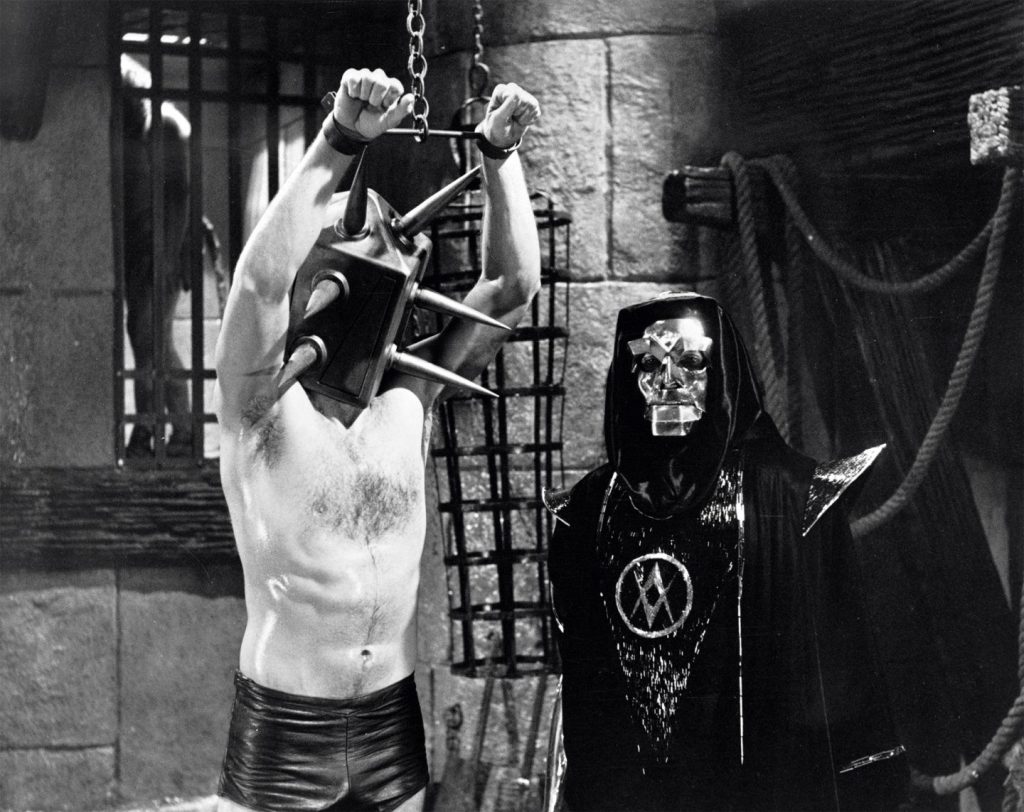


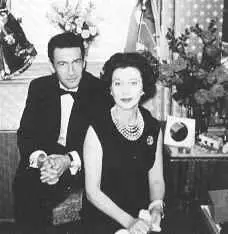
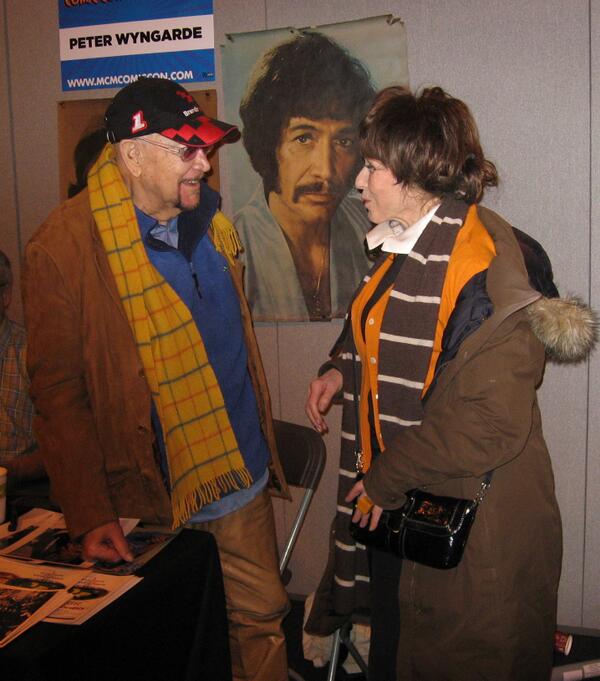
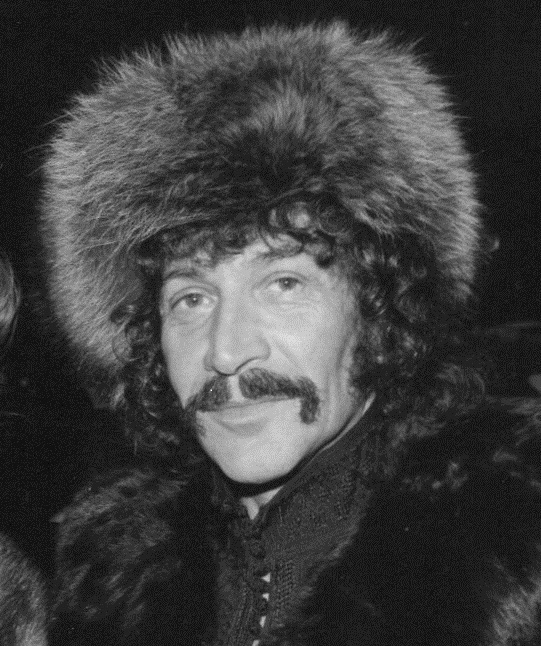



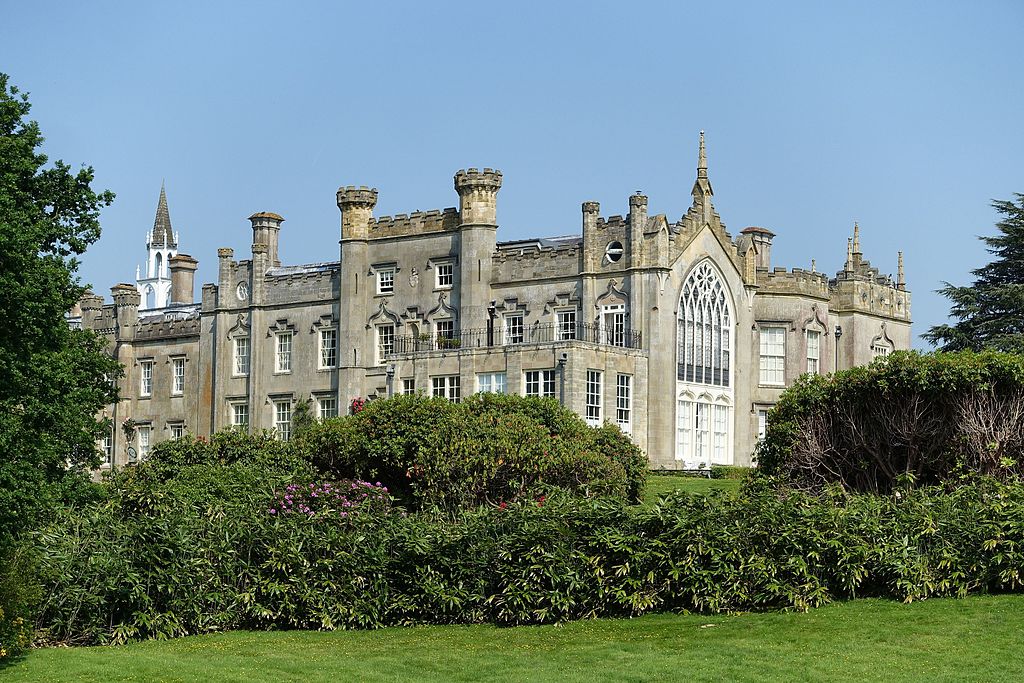

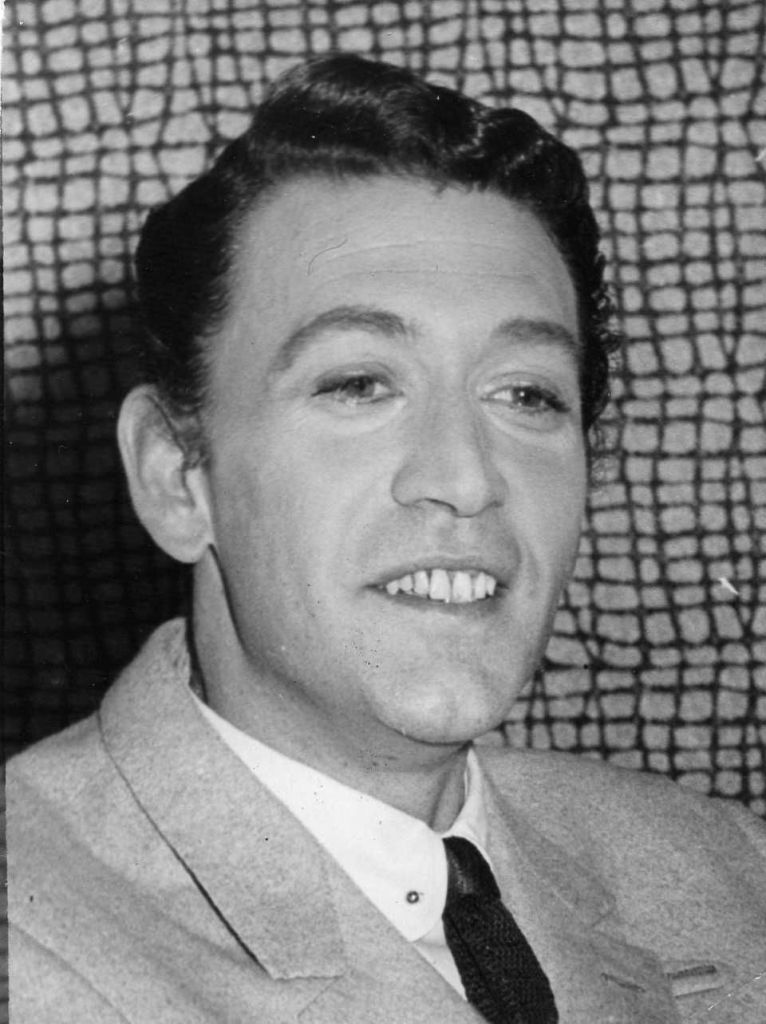
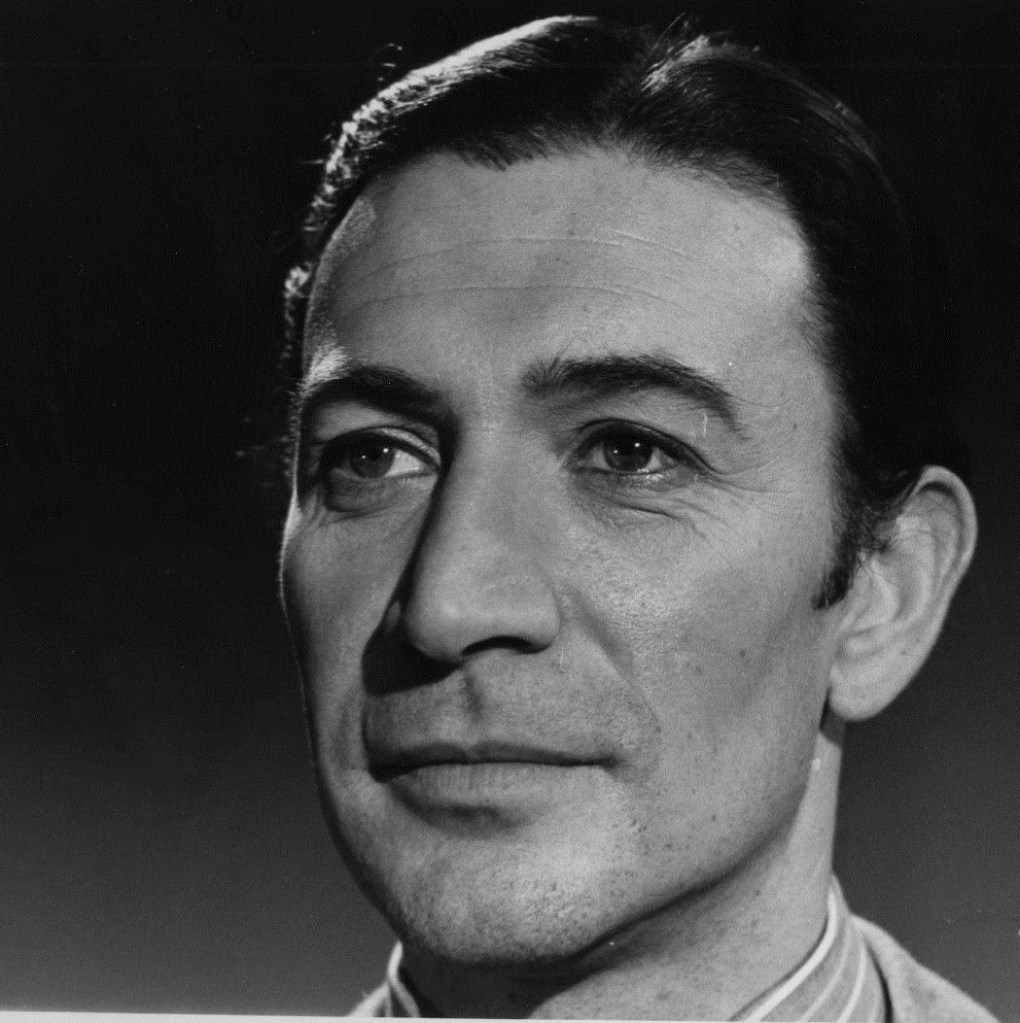
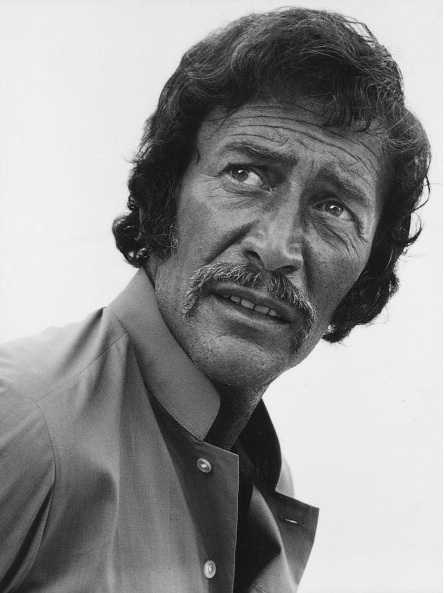
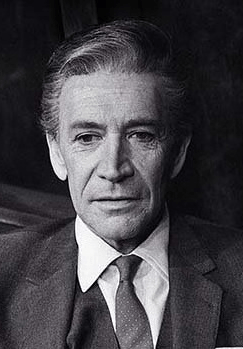


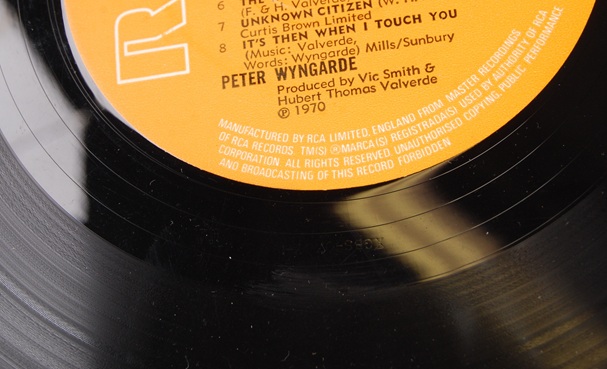
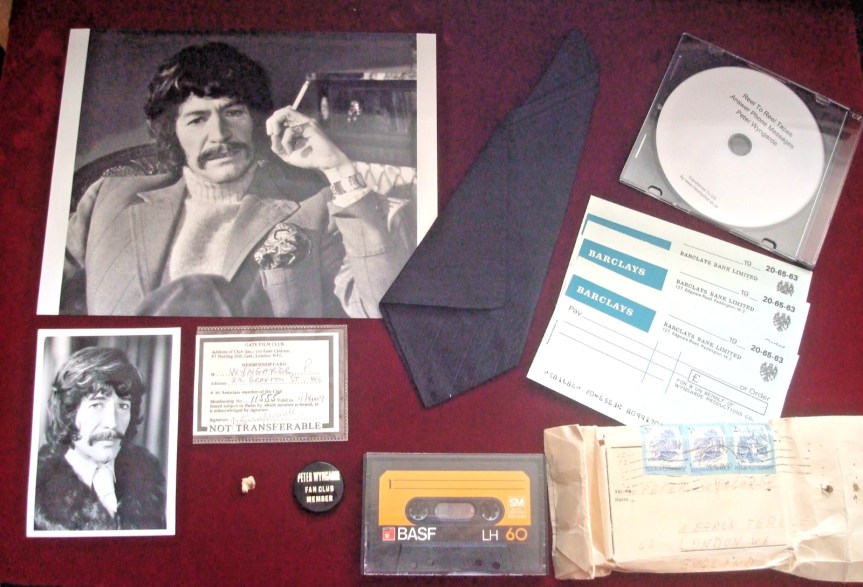

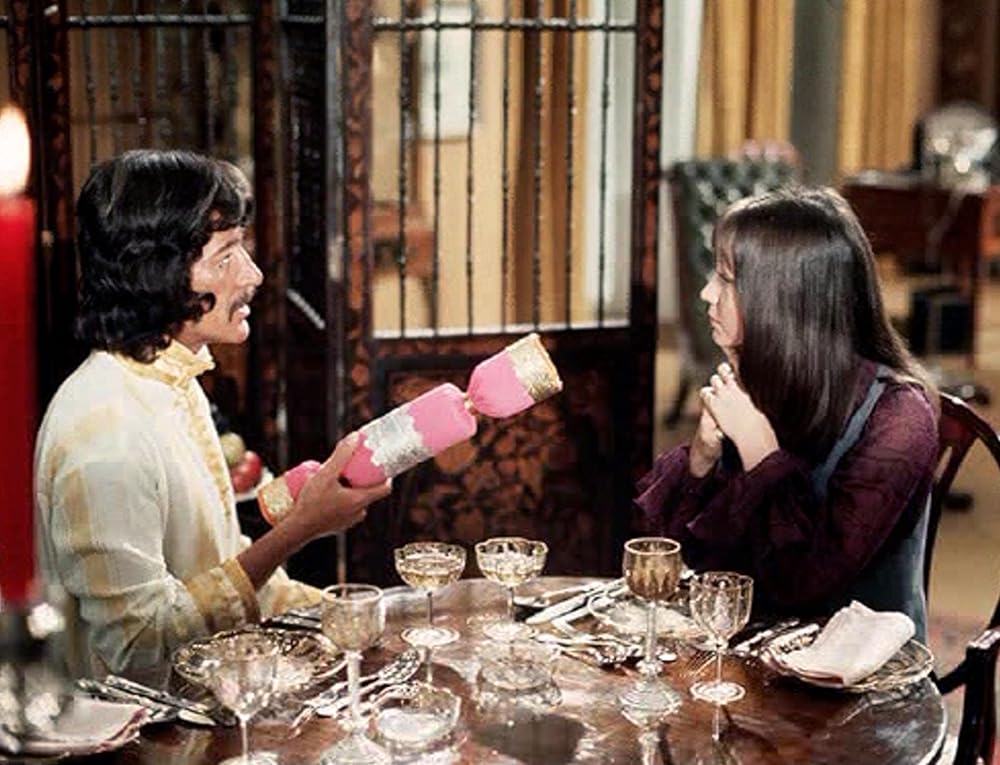
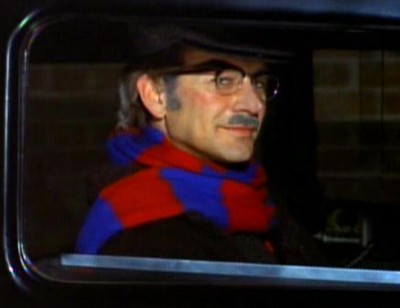


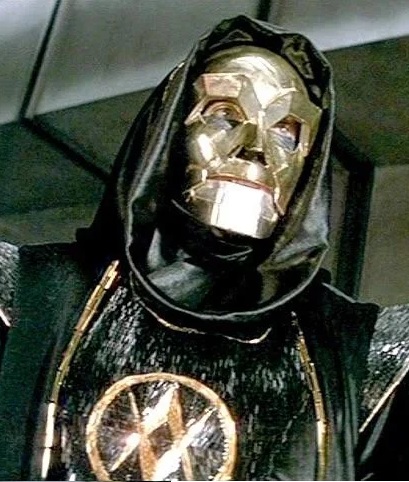

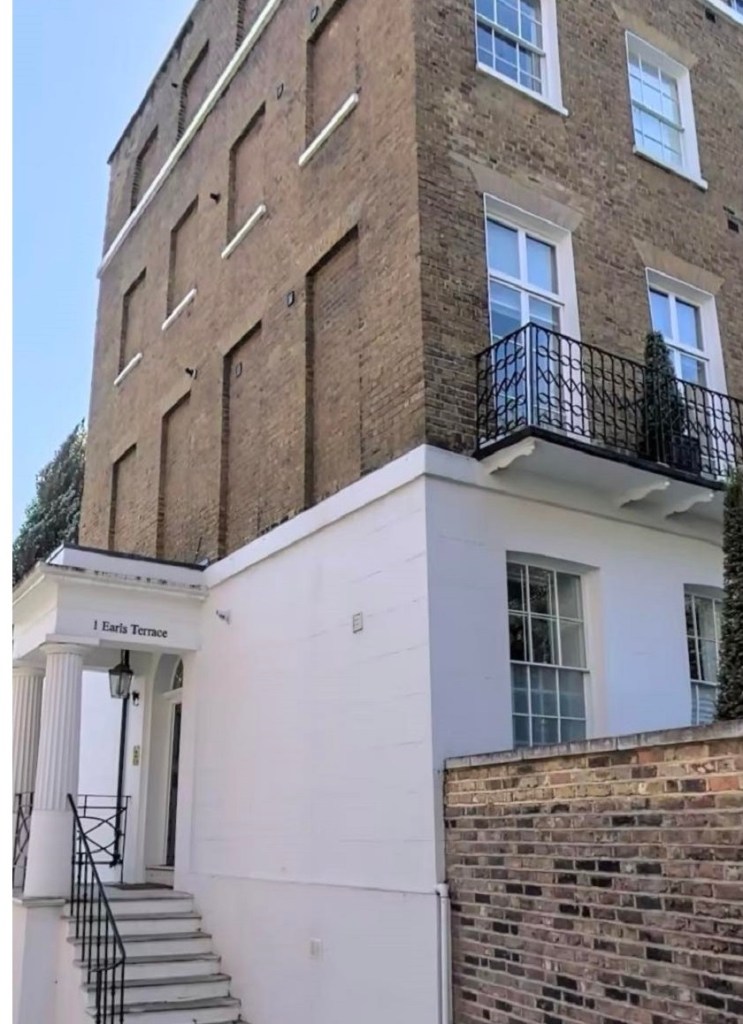

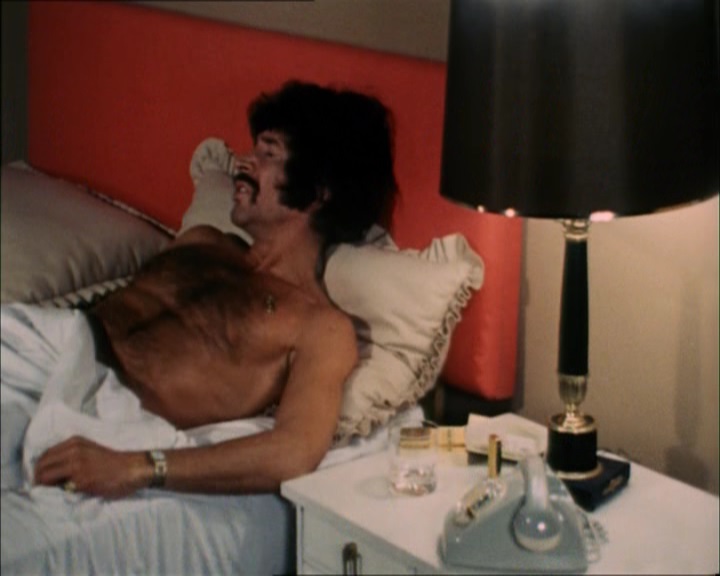 Q: Great episode of Jason King this morning. I noticed that Peter was in great shape in this episode, very trim and fit. Was he a keep fit work out sort of guy? He had a very good physique for a man in his middle forties. Chris Williams
 It was written by Bruce Jones, and illustrated by Al Williamson and Rick Veitch. It is possible to pick up copies online but they usually sell for top dollar; averaging around £55 to £60. There were four further comics which were as follows: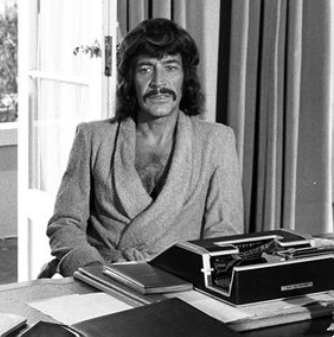

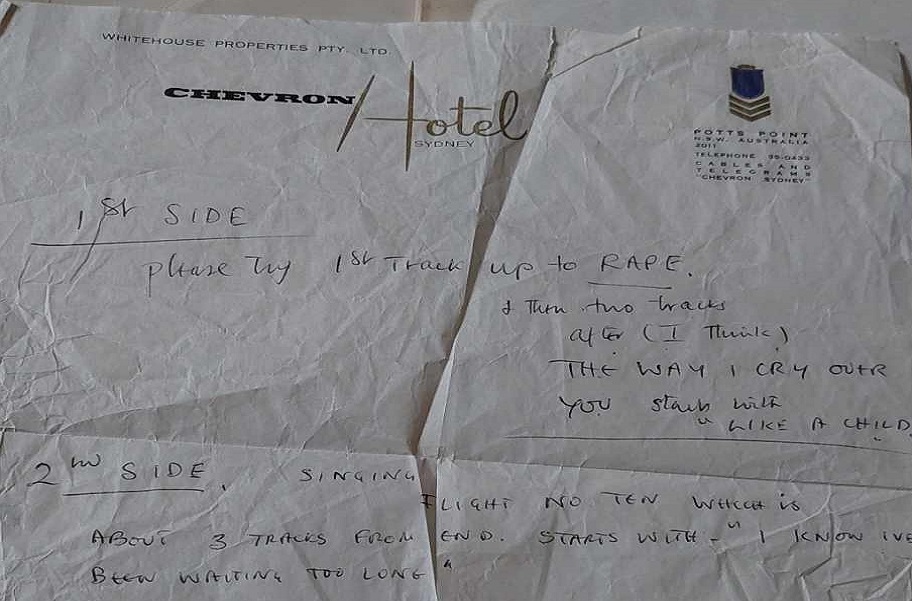

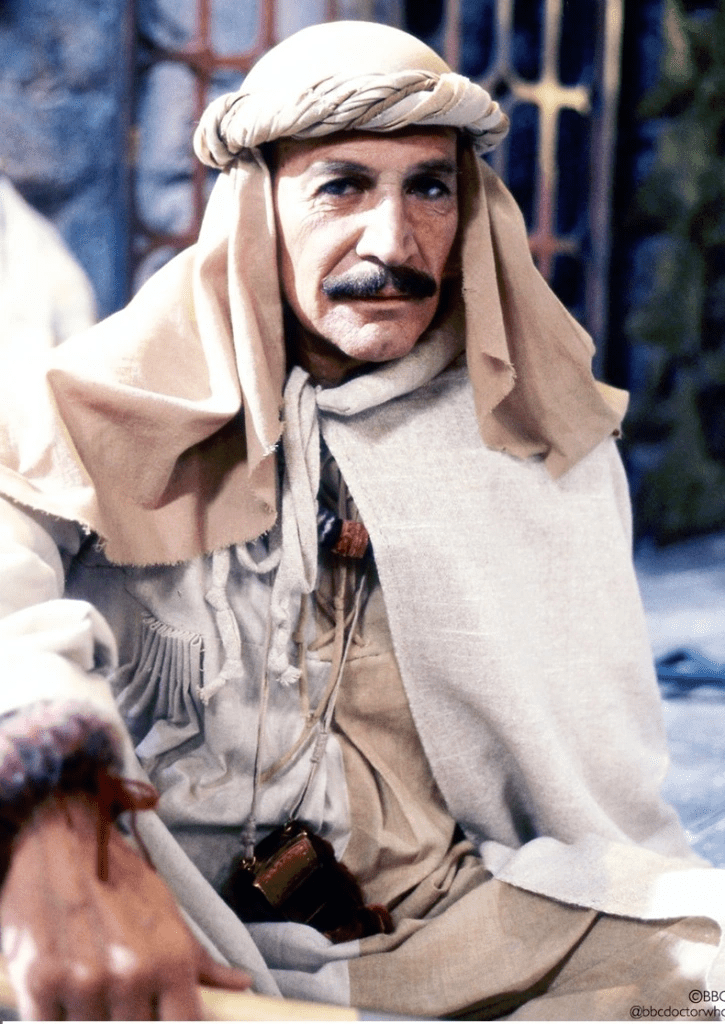

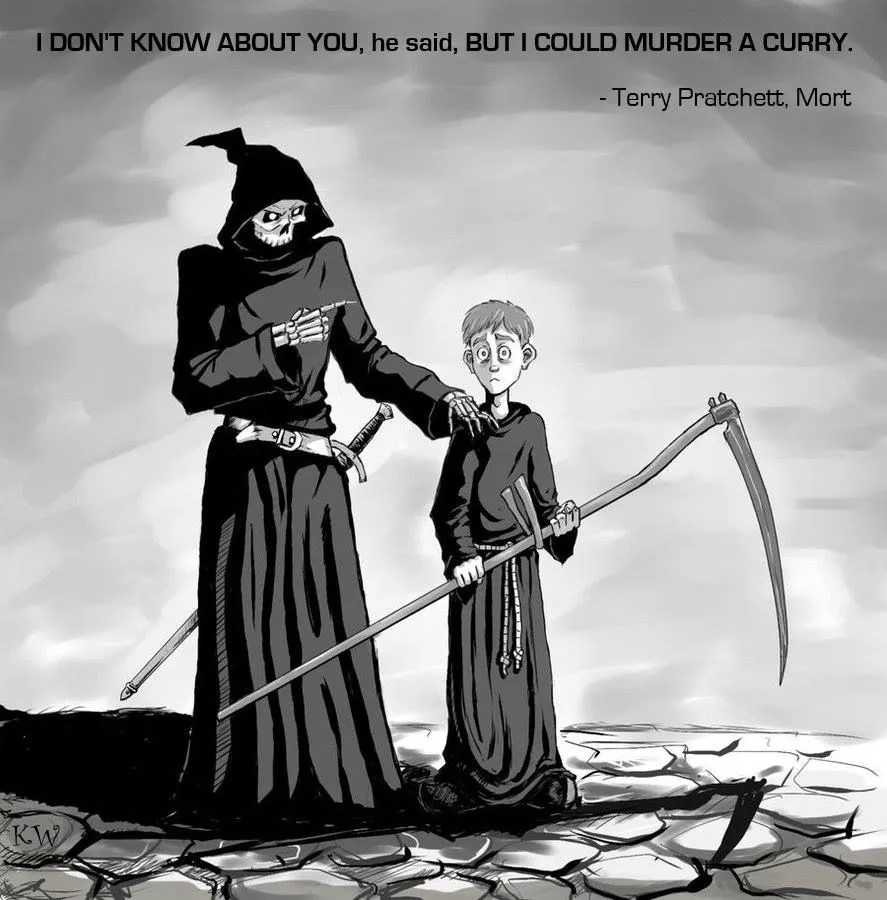 Metford
 anyone has one for sale in private collection. Thanks. John Shivers
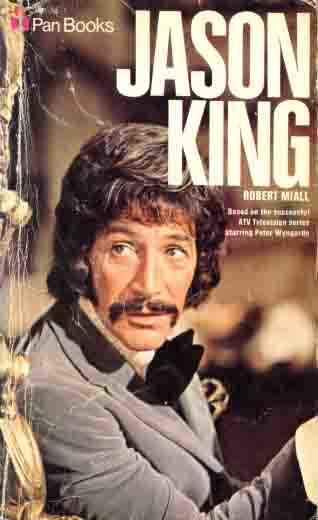 The following passage is taken from the March 18th issue of FAB 208: ‘If you are one of the avid Peter Wyngarde fans who glue themselves to the front of the television every time he appears as the outrageous, devastatingly handsome Jason King, you must be very sad when the series is off the air.


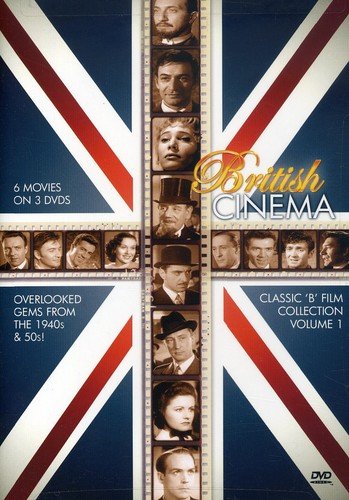 ‘ and wondered – are decent prints of this hard to come by hence the lack of an official DVD/Bluray in the UK? I first saw it in around 1990 on BBC1 and that had, like the DVD I’ve got of it, a cropped picture. Plus the DVD is (very) unremastered. Either way has it fallen into copyright limbo? According to the BBFC website, the only time the film has been granted a certificate in this country was on its cinema release, I guess that means it’s never even been submitted for a certificate for DVD in this country let alone ever put out on video (except perhaps for a pre-cert, pre-1984 video?). Simon Morris


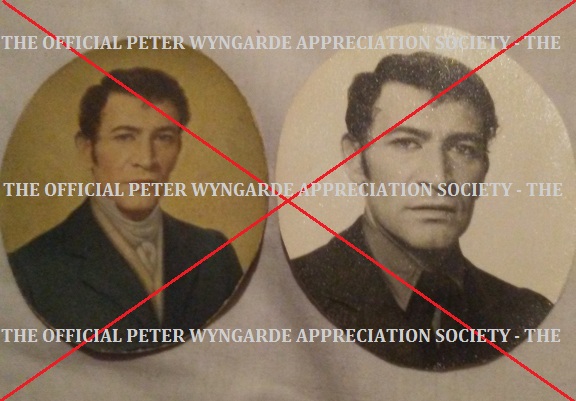
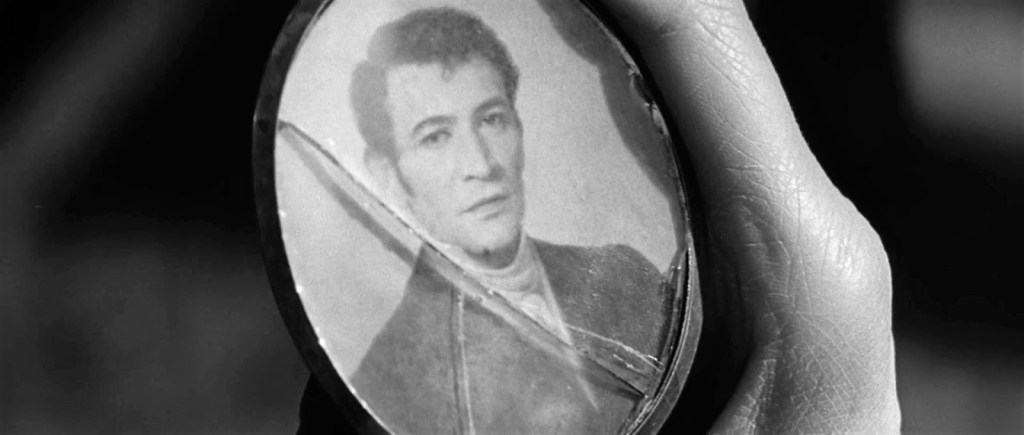


 picture sleeve, but this one is in just a Pye paper sleeve. Were there two different issues? Brian Carney
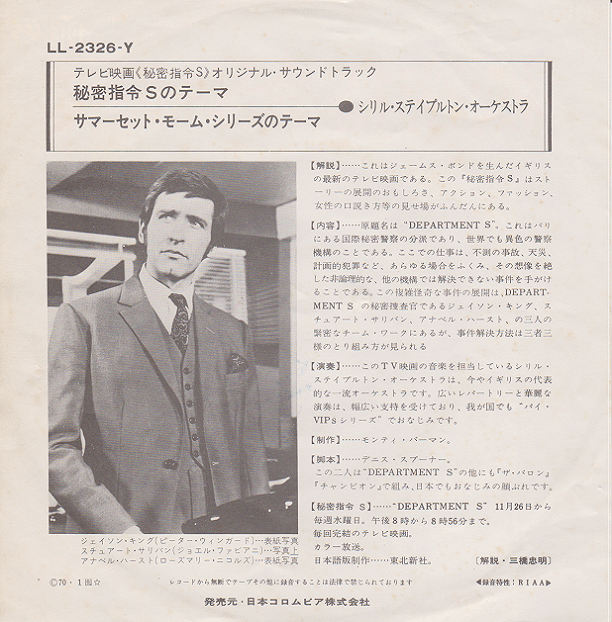

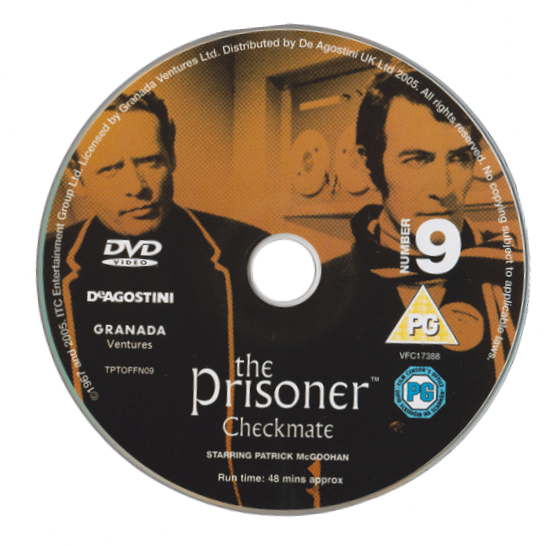
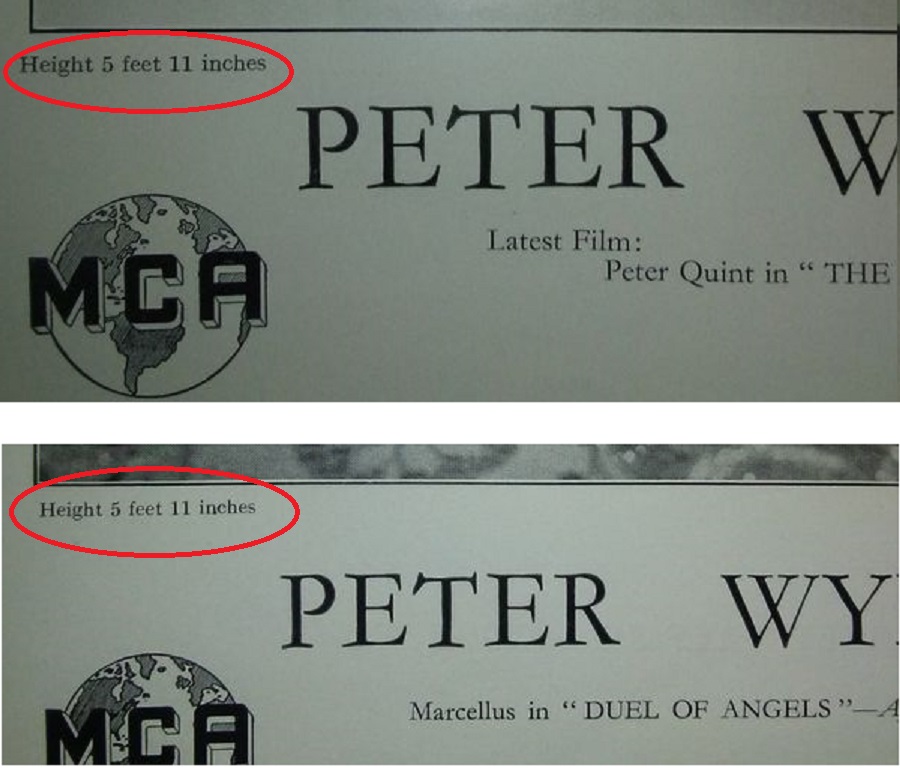
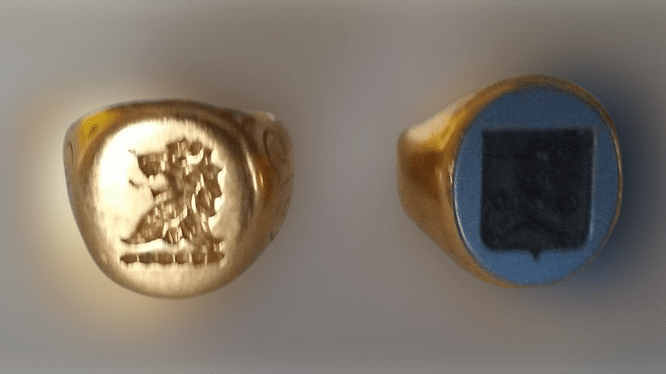 gold ring on the little finer of both hands. Can you tell me what, if anything, was on them? D. Mervin






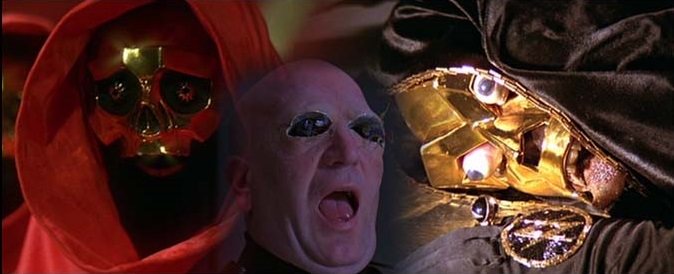
 personally making money from the sale of PW T-shirts. In fact, one of these pathetic individuals – a woman from Oxford in late middle-age – set up an account on Twitter for the sole purpose of sending a single message accusing me of such, then immediately closed the account (yes – some people really are THAT ludicrous!). Clearly she realised that her ill-informed arraignment couldn’t stand up to neither challenge nor scrutiny, which is why she so hastily removed any means of recourse.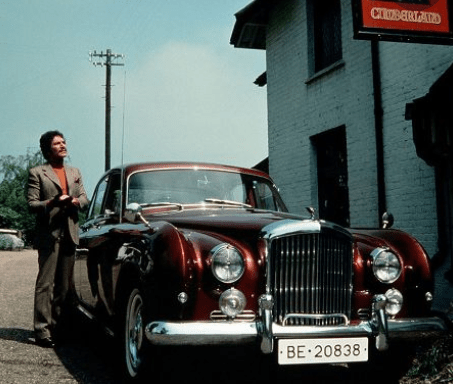


 wouldn’t get through the censors because of the bulge in the actor’s trousers? Pat O’Sullivan
 bears that out.

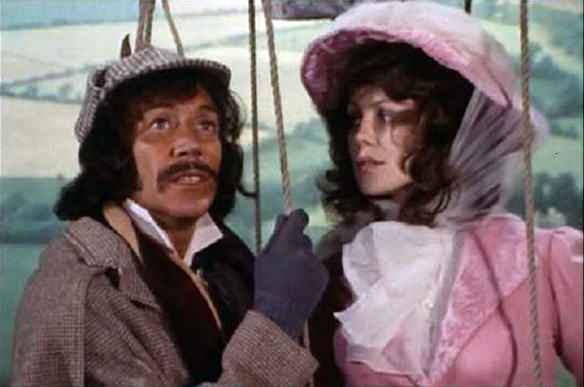

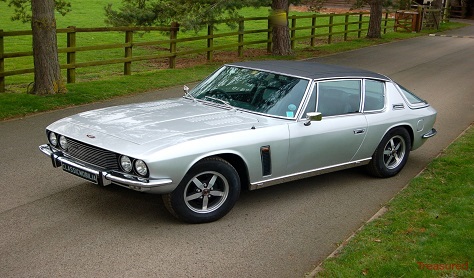
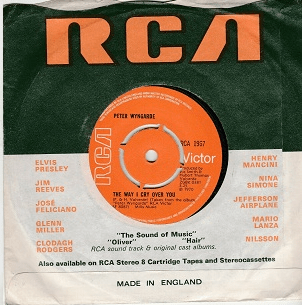

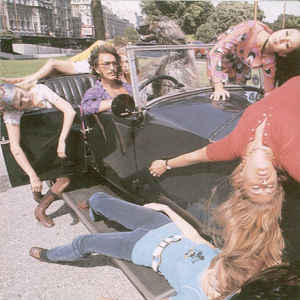

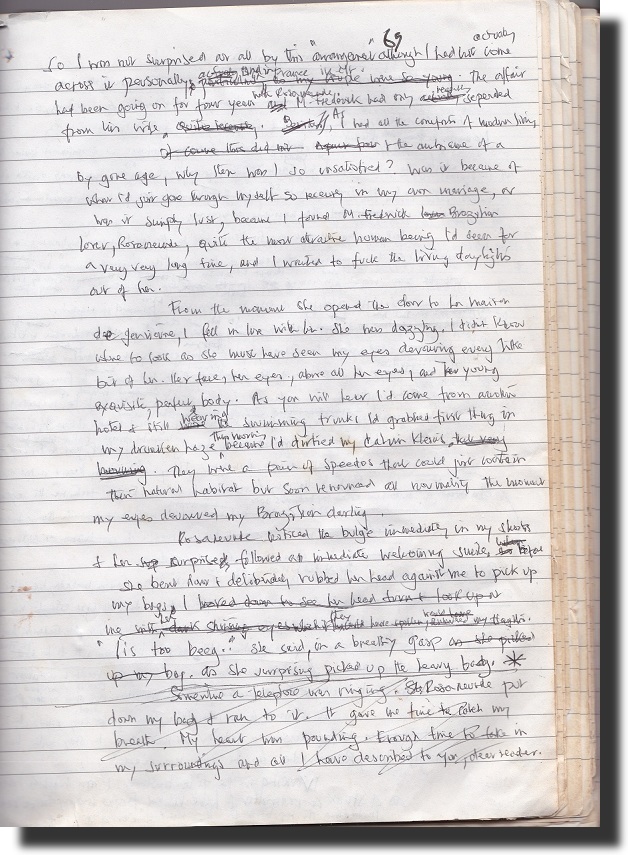 A: The person responsible had been a member of the Official Peter Wyngarde Appreciation Society Facebook group but was barred in October of 2019. Mr D***** clearly felt emasculated by his removal from the group and so decided to regain his fragile male pride by penning this spurious “review”.




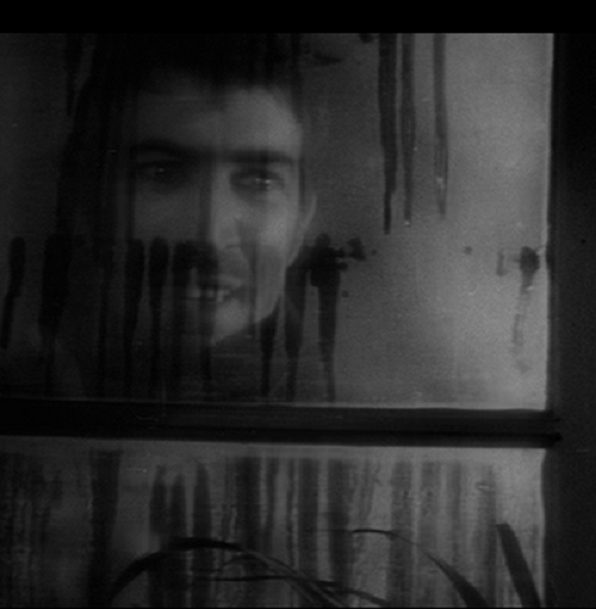



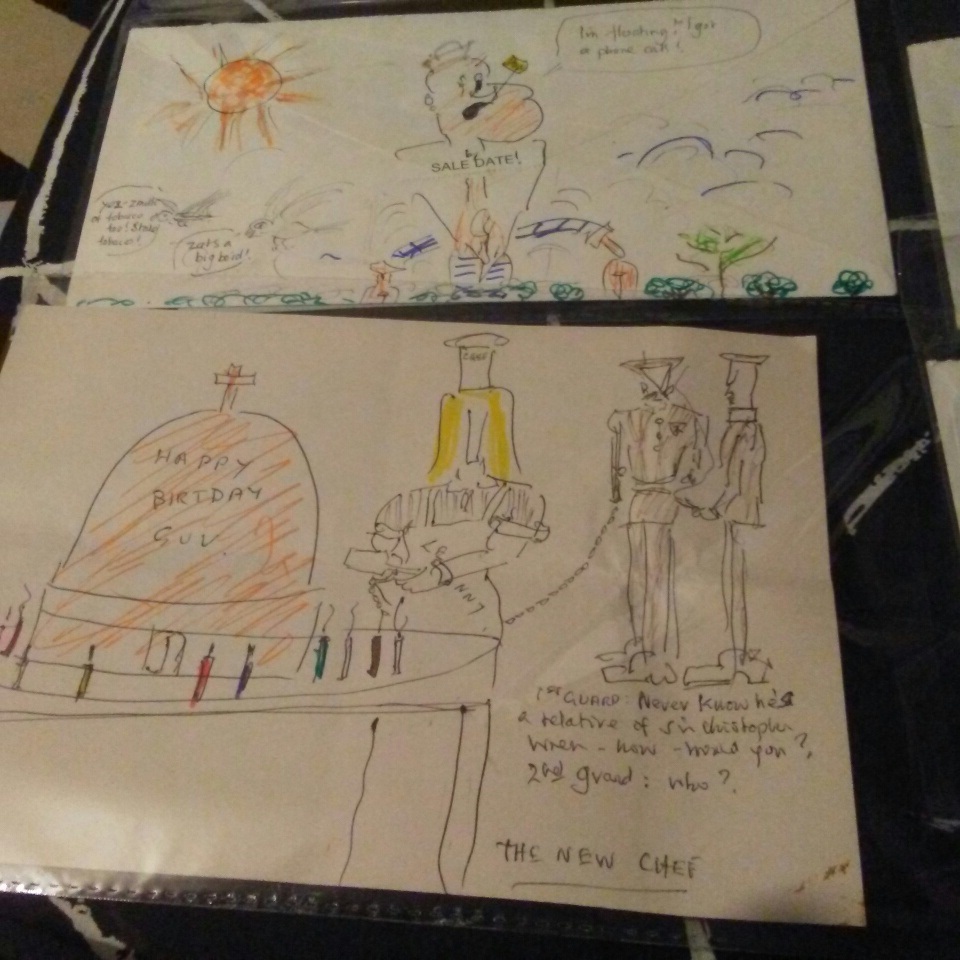

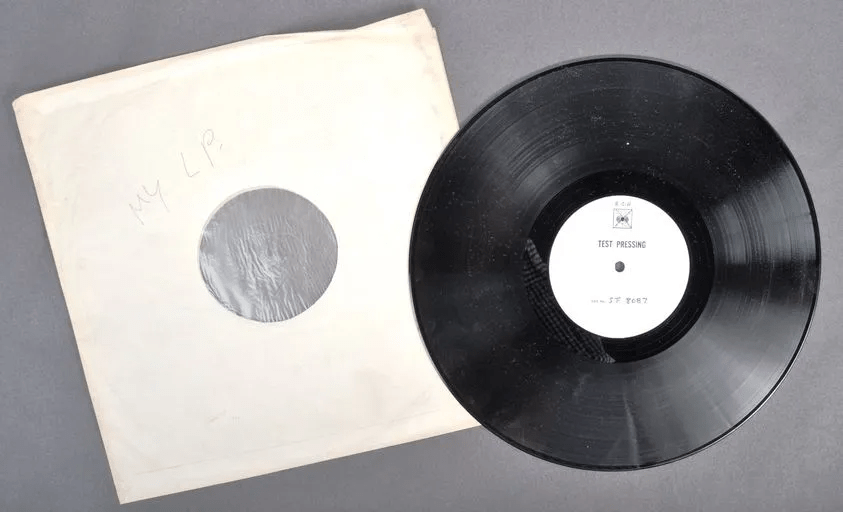
 Q: Do you know what brand of cigarettes Peter preferred and how old he was when he started smoking? Ally North – Kingston-Upon-Hull
 Q: What was the pendant on the neck chain Peter always seemed to wear in the 1970’s? Roger Bayford
 friends, whose combined association with him amounts to over 250 years), I’ll take a punt that he’s been spewing the same timeworn bullsh*t that his troll mates have been spouting since September 2019.
 Q: This cutting is from The Daily Mail. Could you possibly clear up the question of Peter wearing a wig once and for all? Adam Worsley – Loughborough
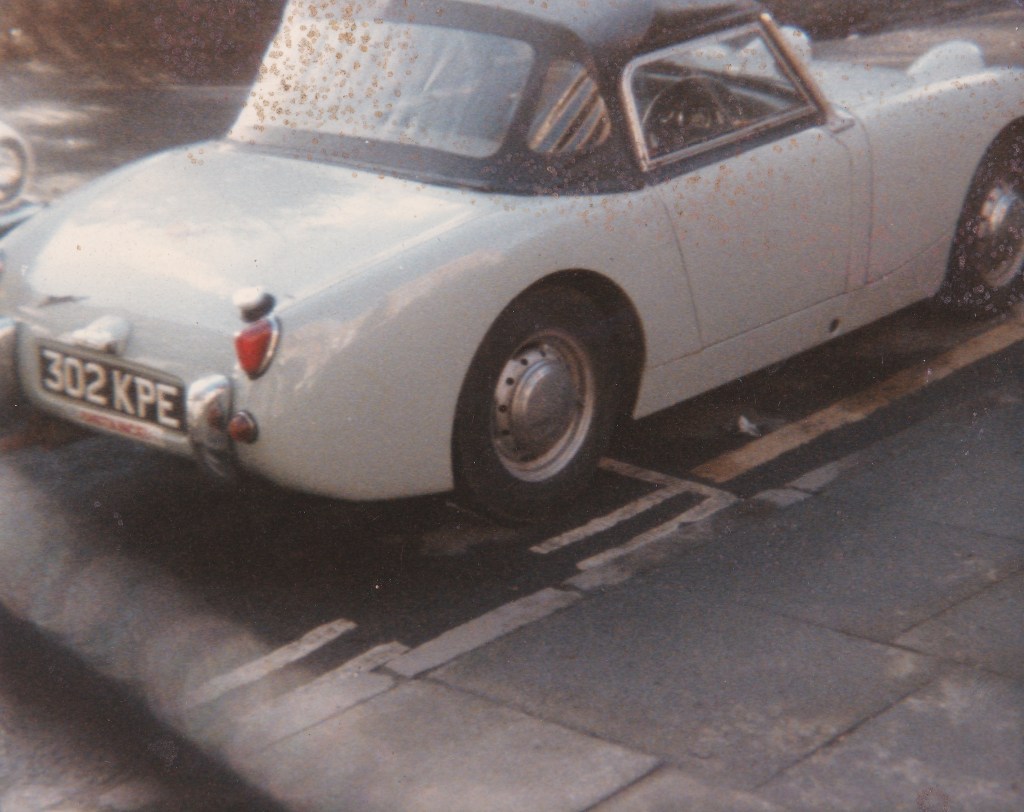 Q: As a fan of Triumph cars, any idea what model Triumphs Peter owned or pictures of him in a Triumph? Just wondering.Travis Shick – South Carolina, USA
 ever appeared on either stage or screen in drag? A.J. Thomas

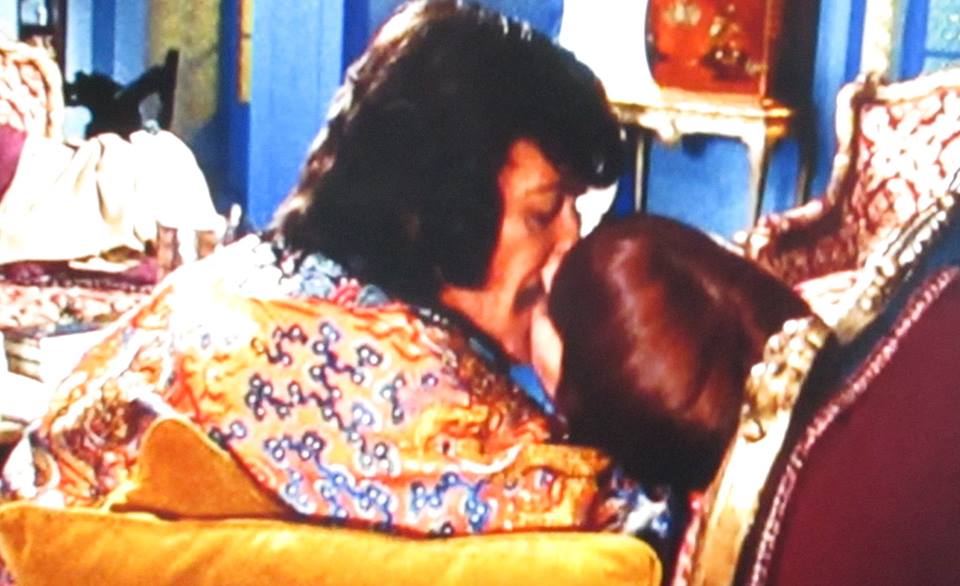


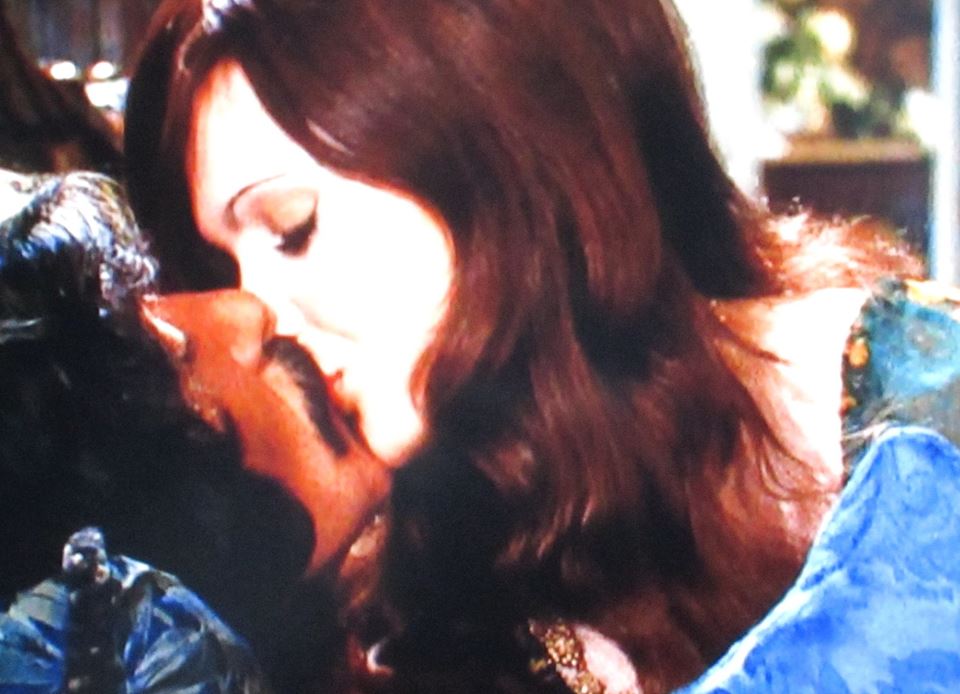

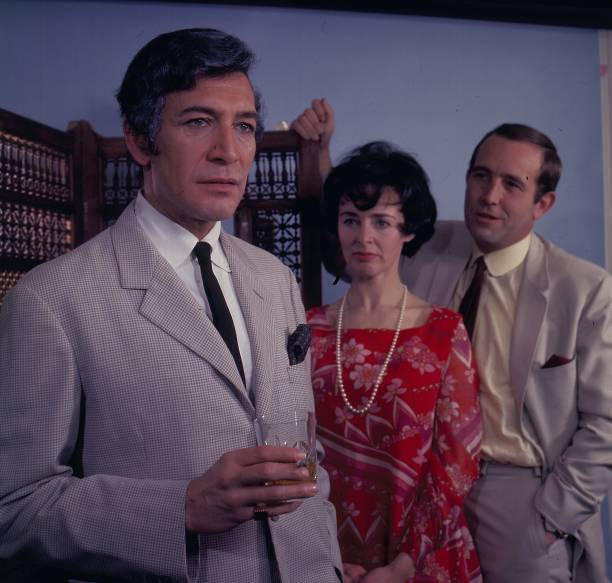




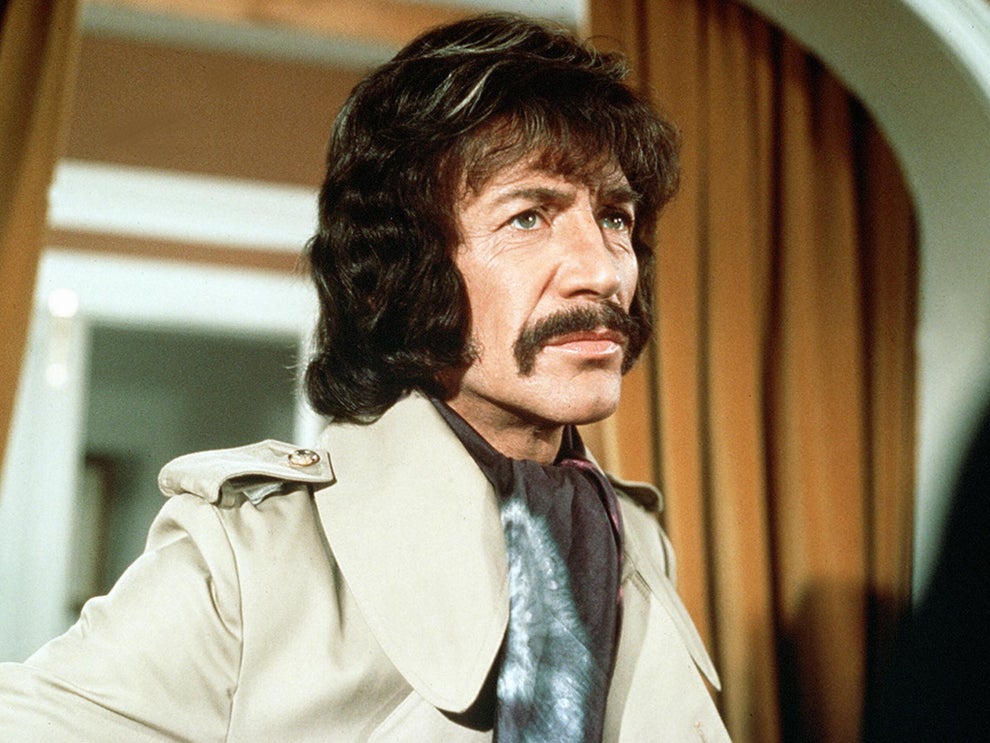

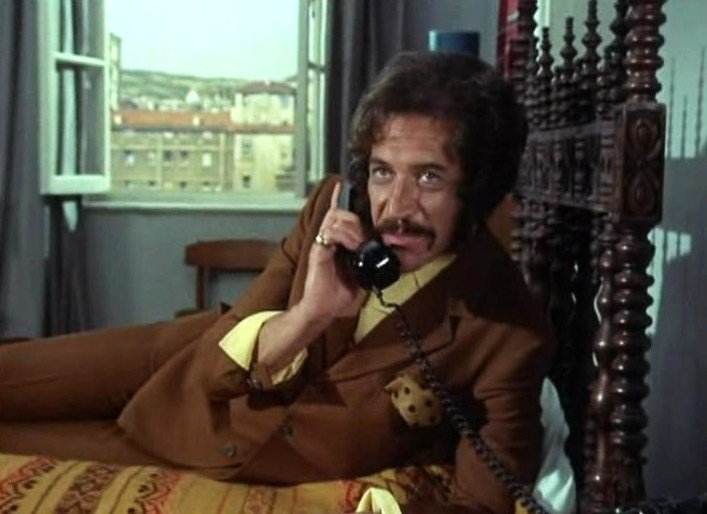




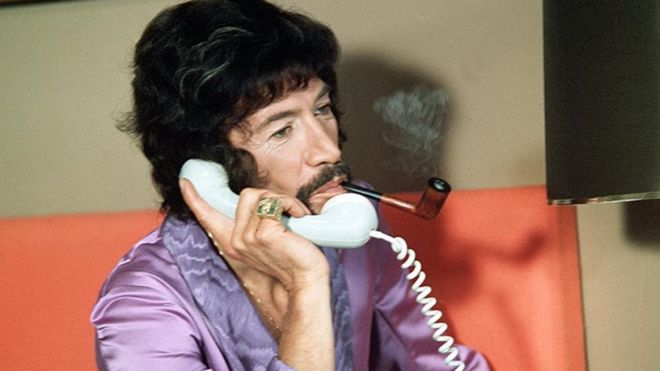

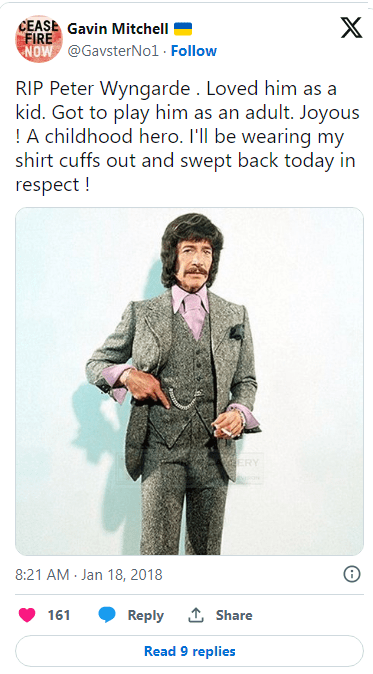


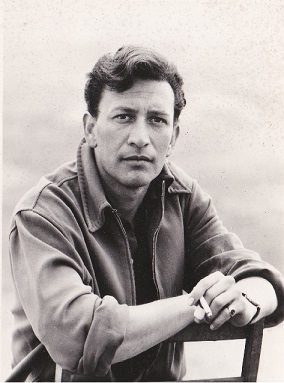 One of his old school friends, Frank Waller, remembers the young Mr Wyngarde and those early days in China: “Our school and the girls’ school next door were turned into ‘Assembly Centres’ shortly before our own incarceration and were known as the YuYuen road camps. As boy scouts we use to collect paper and aluminium milk bottle tops for the war effort, and occasionally acted as messengers between the consulate and other locations. The next pin-prick we had to endure was compulsorily having to learn Japanese in school, but the teacher was such a mild mannered man that we ribbed him without mercy. When told to stand in Japanese we would sit and vice versa and then some would stand while others would sit and then we would change over causing total chaos in class. “One of the worst offenders was the boy that sat adjacent to me,”
  Japanese had captured the city, and when soldiers of the Imperial Army began arresting all British citizens, Peter found himself interned in Lunghua Civilian Assembly Centre.
 based on a mutual love of acting. At the time, Peter was living in Kent, where he owned a cottage next door to the actress, Dame Edith Evans. For convenience, the two actors rented a flat in London to use when either one of them was appearing in the West End.


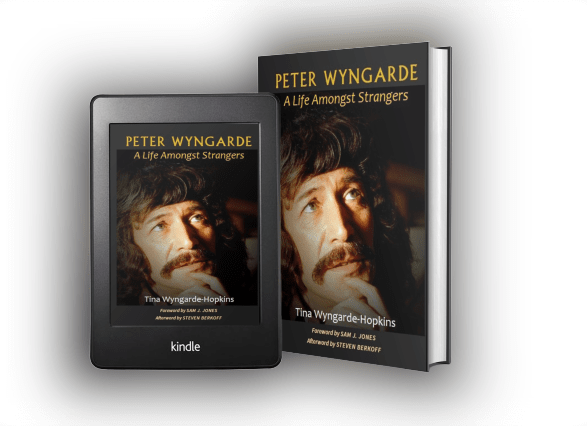

 PETER WYNGARDE: The Official Website