


Broadcast: Monday, 27th November 1967
Character: Number 2
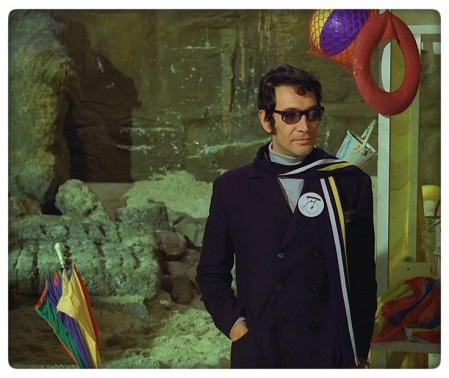
Above: Peter as Number 2.
“In society one must learn to conform.” Number 2
The Story
Among the seventeen episodes of The Prisoner, few encapsulate the series’ themes of identity, conformity, and manipulation as effectively as “Checkmate.” First broadcast in 1967, the episode places Patrick McGoohan’s Number Six at the center of a deceptively straightforward psychological puzzle: how does one distinguish ally from adversary in a society where everyone adheres to the same rules, maintains the same appearance, and may be concealing a secret allegiance? The result is one of the most intellectually stimulating installments of the series.
The episode opens with one of the most memorable visual sequences in the series, depicting the Village engaged in a massive game of human chess, with residents serving as pieces on an oversized board. While visually striking, the imagery is deeply symbolic; the game serves as a metaphor for life within the Village, where individuals are moved and manipulated by unseen authorities. This imagery of citizens surrendering their autonomy to become mere playing pieces immediately establishes the episode’s central conflict: the tension between individuality and conformity.
Unlike episodes that rely on surrealism or elaborate science-fiction concepts, “Checkmate” is grounded in psychological warfare. Number Six becomes convinced that he can identify prisoners and guardians by analyzing their behavior. Encouraged by the enigmatic Chess Master, Number Fourteen, he develops a theory that a person’s true allegiance can be determined through the observation of character rather than appearance. This is a compelling prospect for a man desperate to find allies to organise an escape.
What follows is a sophisticated exploration of trust. Number Six begins assembling a group he believes to be genuine prisoners, yet the audience quickly realises that certainty is impossible within the Village. Every gesture and apparent act of rebellion may be genuine, or it may simply be part of a broader deception. The episode skillfully exploits this ambiguity, forcing the viewer to share in Number Six’s escalating paranoia.
The atmosphere is one of the episode’s primary strengths. While the Village has always been unsettling, “Checkmate” intensifies this unease. The bright colors and picturesque surroundings stand in stark contrast to the sinister reality lurking beneath the surface. The psychiatric treatment administered to dissenters, the constant surveillance, and the manipulation of emotions all contribute to an environment where independent thought is treated as a pathology.
Gerald Kelsey’s script is exceptionally clever, ensuring that neither Number Six nor the audience ever feels secure in their assumptions. Every apparent breakthrough leads to further uncertainty. Just as Number Six believes he has devised a method for distinguishing friends from enemies, the story introduces new evidence that undermines his confidence. Consequently, the episode becomes less about the physical act of escape and more about the impossibility of obtaining reliable knowledge in a controlled society.
As Number Six, Patrick McGoohan delivers one of his strongest performances, perfectly capturing the character’s determination and stubborn independence. Throughout the episode, Number Six remains driven by the belief that truth can be uncovered through reason. However, McGoohan also allows moments of vulnerability to emerge; his frustration grows as he discovers that every solution generates new problems. The audience shares his hope, his doubts, and ultimately his disappointment.
The supporting cast is equally impressive. Ronald Radd is excellent as Number Fifty-Eight, the rebellious Rook whose apparent independence bolsters Number Six’s confidence. Similarly, Rosalie Crutchley is memorable as the Queen, a figure who embodies the manipulative techniques employed by the Village administration. Both performances contribute significantly to the pervasive atmosphere of ambiguity.
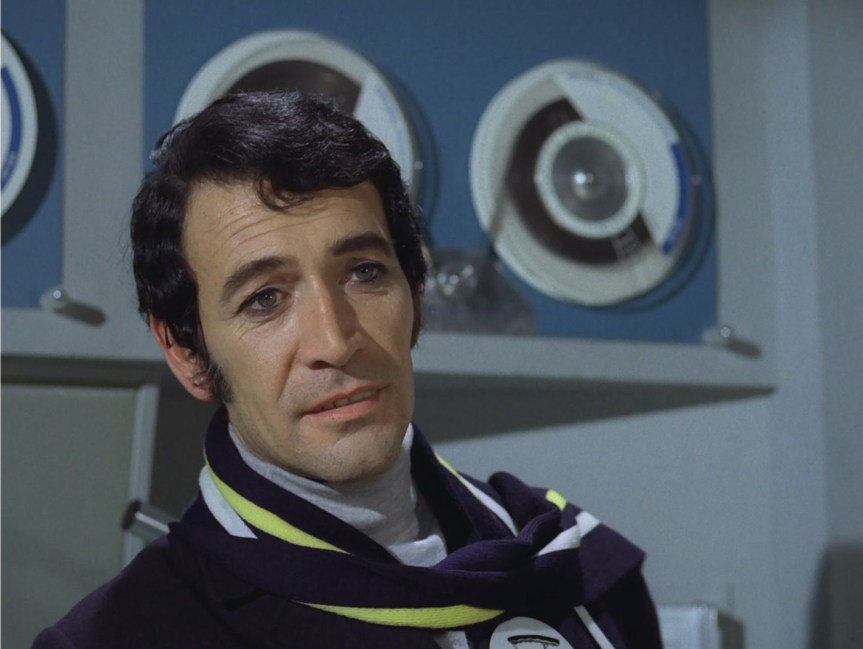
Special mention must be made of Peter Wyngarde as Number Two. Although his screen time is limited, his portrayal is lasting. Wyngarde’s Number Two is sophisticated and quietly menacing; unlike previous holders of the office, he exudes complete confidence and rarely resorts to overt threats. His calm demeanor suggests a man entirely certain of his control over the environment. The character functions much like a chess master observing a game whose outcome is already determined. His scenes with McGoohan are charged with tension, creating a compelling battle between authority and resistance.
The enduring strength of “Checkmate” lies in its philosophical depth and its exploration of themes that remain strikingly relevant. The episode probes fundamental questions regarding trust, the reliability of behavioral cues in determining loyalty, and the struggle to maintain individuality within a culture of conformity. Rather than offering definitive answers, the narrative compels the viewer to grapple with these dilemmas independently.
The climax is both ironic and devastating. Number Six discovers that he has been manipulated once again—not due to a lack of intelligence, but because he relied too heavily on his own assumptions. His meticulously constructed system for identifying allies proves as fallible as his previous attempts. Ultimately, the Village triumphs not through brute force, but through the strategic application of confusion, demonstrating that uncertainty can be a more potent weapon than coercion.
Over five decades after its initial broadcast, “Checkmate” remains one of the most distinguished episodes of The Prisoner. By synthesizing evocative imagery, sophisticated writing, and compelling performances, it exemplifies the qualities that made the series unique. Suspenseful and intellectually demanding, the episode rewards repeated viewings with new insights. As both a gripping drama and a meditation on freedom, loyalty, and identity, “Checkmate” stands as an undisputed masterpiece of the series.

Focus On Number 2
In “Checkmate,” Peter delivers one of the series’ most memorable interpretations of Number Two. While several actors occupied the role across the program’s seventeen episodes, Peter brought a distinctive elegance, intelligence, and quiet authority to the character. He created a Number Two who is less overtly threatening than his predecessors, yet no less formidable. Appearing in the 1967 broadcast, Peter serves as a sophisticated foil to Patrick McGoohan’s enduringly defiant Number Six.
The effectiveness of Peter’s performance lies in his restraint. Unlike other iterations of Number Two who rely on bluster or intimidation, his portrayal is smooth, sophisticated, and deceptively charming. Throughout the episode, he maintains an air of absolute confidence, behaving as though the Village’s victory over Number Six is inevitable. This composure allows him to appear relaxed, and even courteous, while remaining firmly in control of the situation. His character rarely raises his voice, as authority comes naturally to him.
The episode centres on Number Six’s attempt to distinguish genuine prisoners from agents of the administration. Utilising the imagery of a giant human chess game, Number Six develops a theory that individuals can be identified by their actions and allegiances. Number Two observes these developments with apparent detachment, granting Number Six enough freedom to pursue his theories while quietly monitoring every move.
Peter excels in portraying Number Two as a master strategist. Much like a chess player contemplating several moves ahead, he understands that brute force will never break Number Six. Instead, he permits his adversary to believe he is making progress, subtly guiding events to encourage Number Six to reveal his thinking. The episode’s chess motifs are highly appropriate, as Peter’s Number Two treats human beings as pieces on a board to be observed, manipulated, and sacrificed if necessary.
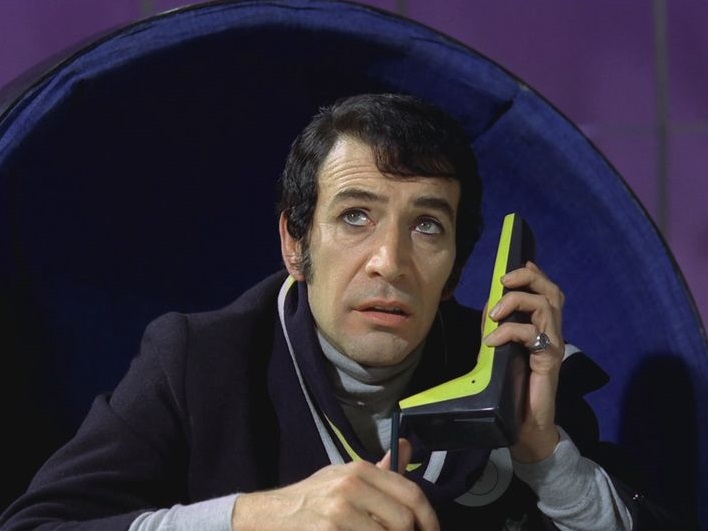
From a casting perspective, Peter was an ideal choice. His striking appearance, impeccable grooming, and natural charisma make him instantly convincing as the Village’s chief administrator. He exudes sophistication while suggesting a dangerous underlying intelligence; even in stillness, he commands attention. His scenes with McGoohan possess a compelling tension, as both actors project an immense level of self-assurance, neither appearing willing to concede.
One of the most significant aspects of Peter’s performance is the embodiment of conformity. He represents the philosophy of the Village – a society where individuality is viewed as a threat and independent thought must be controlled. His remark that “in society one must learn to conform” neatly encapsulates the worldview he embodies.
Despite appearing in only a single episode, Peter left a lasting impression on the audience. His interpretation of Number Two is urbane, calculating, and quietly sinister, combining charm with menace in a manner few actors could achieve. Rather than portraying a conventional villain, he created a cultured and intelligent opponent worthy of Number Six, making “Checkmate” one of the most engaging and intellectually satisfying episodes of the series.
Click below for more about ‘Checkmate’…

PETER WYNGARDE WAS NOT GAY. THIS IS A MYTH CONJOURED UP BY THE BRITISH TABLOIDS
PETER WYNGARDE DID NOT HAVE A ROMANTIC RELATIONSHIP WITH ALAN BATES. THIS WAS A LIE PERPITRATED BY DONALD SPOTO IN HIS BOOK, ‘OTHERWISE ENGAGED: THE LIFE OF ALAN BATES’
PETER WYNGARDE WAS NOT ARRESTED OR CAUSTIONED IN KENNEDY GARDENS OR ELSEWHERE. THIS IS A LIE CREATED BY WIKIPEADIA AND COPIED BY THE BRITISH TABLOIDS.
THE 1975 CONVICTION AGAINST PETER WYNGARDE WAS LATTERLY QUASHED BY THE HOME OFFICE (UK GOVERNMENT) AS BEING “UNPROVEN”.


One thought on “REVIEW: The Prisoner – ‘Checkmate’”