


Broadcast: Friday, 18th November 1966
Character: King Ibrahim/Ronald Noyes
Among the episodes of The Baron, “The Legions of Ammak” stands out as one of the series’ most effective blends of adventure, intrigue, and international conspiracy. Broadcast in 1966, the episode plunges John Mannering—better known as the Baron—into a complex plot involving royal impersonation, priceless treasure, and large-scale political deception. While it may lack the hard-edged espionage of contemporary programs such as Danger Man or the fantasy elements of The Champions, it delivers exactly what viewers expected from The Baron: glamour, mystery, and a fast-paced narrative populated by colourful characters.
The plot begins with what appears to be a legitimate business transaction involving the “Legions of Ammak,” a magnificent necklace containing seven matched black pearls. The treasure, belonging to King Ibrahim of Ammak, is being sold through Mannering’s antiques business to the eccentric millionaire Olaf Cossakian. As is common in television thrillers of the era, however, appearances are deceptive. Mannering and his assistant, David Marlowe, soon uncover evidence that the supposed king is an impostor, triggering an increasingly complicated web of political intrigue and greed.
One of the episode’s primary strengths is the gradual unfolding of its mystery. The script resists revealing its secrets too quickly, instead encouraging the audience to notice small details alongside David Marlowe. It is Marlowe’s observation of the king’s incorrect school tie that serves as the first clue that something is amiss. This is a quintessentially British touch—a detail that seems insignificant but proves crucial in exposing a fraud. Such a revelation demonstrates the episode’s affinity for traditional detective storytelling, where intelligence and observation triumph over brute force.
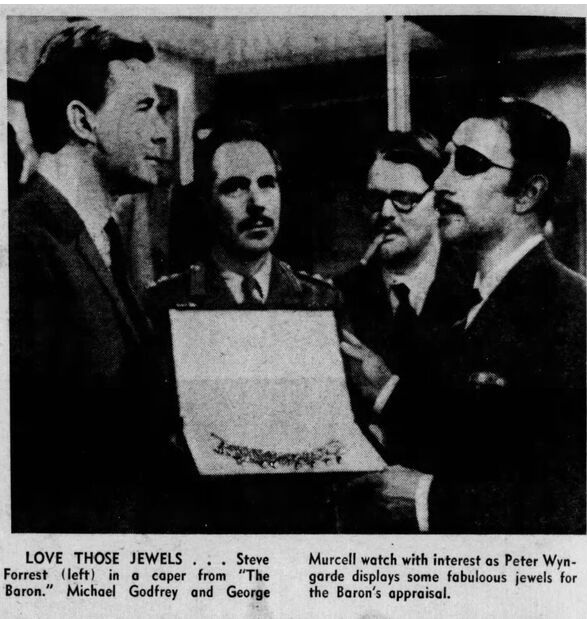
Steve Forrest remains dependable in the role of John Mannering. Unlike many television adventurers of the 1960s, Mannering is not a professional spy or government agent, but rather an antiques expert who repeatedly finds himself entangled in dangerous situations. Forrest brings warmth, confidence, and authority to the role, creating a highly likable protagonist who possesses charm without smugness and competence without appearing invincible. Throughout the episode, he navigates the tangled plot with intelligence and determination.
The supporting cast is equally impressive. Paul Ferris’s David Marlowe plays a pivotal role in the narrative, as it is his attention to detail that first casts doubt on the king’s identity. Marlowe often functions as the audience’s surrogate, and Ferris imbues the character with an engaging mixture of youthful enthusiasm and professional competence.
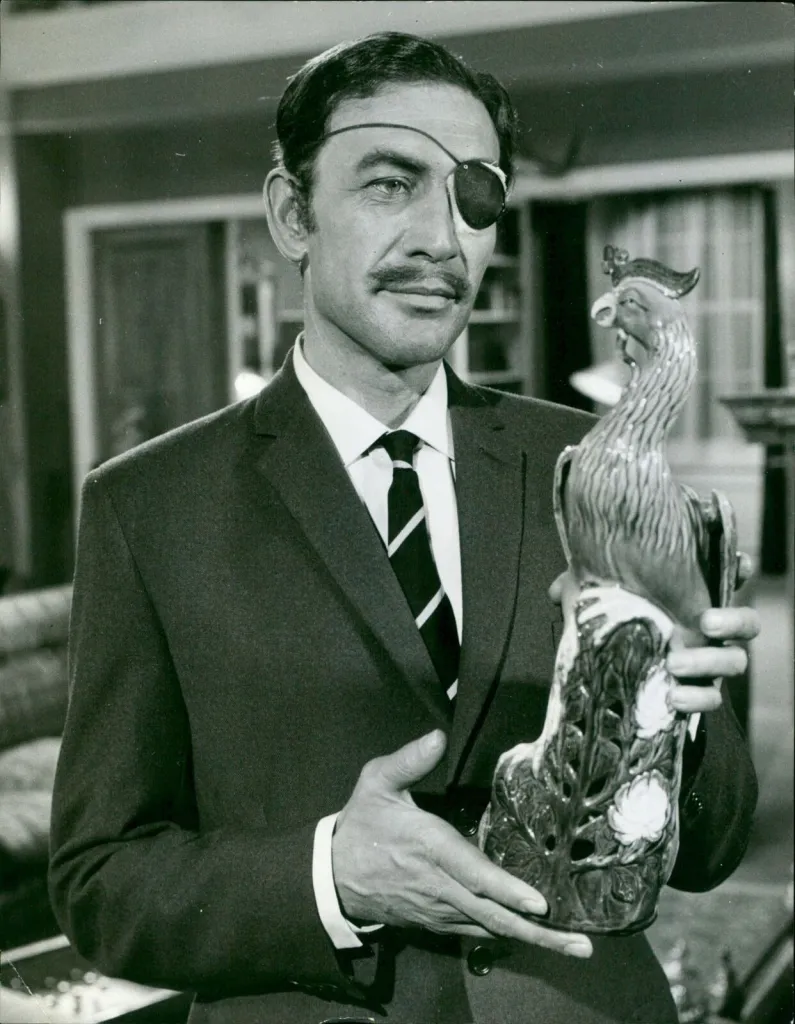
However, the episode ultimately belongs to Peter Wyngarde. Cast as King Ibrahim, Peter delivers a performance defined by charisma and elegance. Even before the audience suspects a deception, there is something intrinsically intriguing about his portrayal. By bringing a regal bearing, wit, and sophistication to the role, Peter ensures that every scene in which he appears gains an immediate layer of interest.
Peter excels in portraying complex, enigmatic characters, and The Legions of Ammak provides an ample canvas for his talents. Whether engaging in polite conversation, adhering to the ceremonial requirements of his royal position, or revealing a more calculating nature, he commands the screen. His performance introduces a theatrical quality that elevates the episode beyond a standard mystery; much of the episode’s appeal derives from watching him navigate his character’s increasingly precarious circumstances.
The episode further benefits from its exotic setting. Consistent with many adventure series of the 1960s, The Baron frequently capitalised on the audience’s fascination with distant kingdoms, aristocratic intrigue, and hidden wealth. Although Ammak is fictional, it effectively evokes the atmosphere of a wealthy Middle Eastern state where dynastic politics and economic power intersect. Such settings were staples of the genre and provide an aesthetically pleasing backdrop for the drama. The necklace itself, with its seven black pearls, possesses the romantic allure expected of a classic adventure serial.
What makes The Legions of Ammak particularly effective is the balance it strikes between suspense and entertainment. The narrative avoids becoming excessively solemn, maintaining a sense of levity even during its most dramatic moments. The colourful cast, the presence of an eccentric millionaire, elaborate deceptions, and an escalating series of complications lend the story a larger-than-life quality that suits the series perfectly.
Viewed from a modern perspective, the episode serves as an excellent example of mid-1960s British adventure television. The pacing is brisk, the plotting is clever, and the performances are consistently engaging. While certain elements inevitably reflect the conventions of the era, the central mystery remains effective and the cast ensures sustained viewer interest.
Ultimately, The Legions of Ammak stands as one of the stronger entries in The Baron. By combining a sophisticated mystery and political intrigue with a memorable guest performance by Peter Wyngarde, it delivers everything a devotee of classic adventure television would desire. Stylish and full of unexpected turns, the episode remains a rewarding experience and a testament to why The Baron continues to enjoy a loyal following among enthusiasts of vintage television.
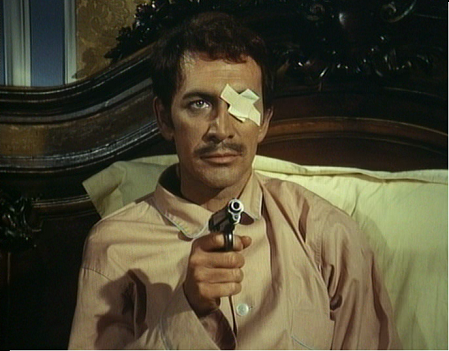
Focus on Ronald Noyes & King Ibrahim
The highlights of The Baron episode, “The Legions of Ammak,” is the opportunity it provides Peter Wyngarde to demonstrate his considerable versatility. Cast in the dual role of King Ibrahim of Ammak and the actor Ronald Noyes, Peter effectively portrays a man pretending to be another, a layered performance that allows him to transition seamlessly between regal dignity and theatrical artifice. The result is one of the most memorable guest appearances in the series.
When viewers first encounter King Ibrahim, Peter presents a convincing image of royalty, embodying the elegance, refinement, and effortless authority expected of a monarch. During the negotiations surrounding the sale of the priceless necklace, the King appears relaxed and charming; at first glance, there is little reason to doubt his authenticity. Peter’s natural poise makes the deception entirely credible, explaining why John Mannering and those around him initially accept him as genuine.
However, beneath this polished exterior are subtle hints that something is amiss. Peter introduces small touches that, in retrospect, suggest the performance is not quite perfect. The King’s behaviour occasionally appears slightly too theatrical or carefully judged. These nuances become more apparent once it is revealed that the monarch is actually Ronald Noyes, an actor hired to impersonate King Ibrahim as part of an elaborate fraud.
The performance is particularly impressive in the way Peter differentiates the two personalities. As King Ibrahim, he is composed, diplomatic, and accustomed to command. In contrast, as Ronald Noyes, he adopts a very different manner; once the disguise is removed, he becomes an ambitious and opportunistic figure, notably less sophisticated than the royal persona. This striking contrast demonstrates Peter’s skill in creating distinct characterizations within the same narrative space.
The scenes involving Noyes are especially engaging as they reveal the actor behind the masquerade. Having successfully fooled his peers, Noyes begins to believe he deserves greater compensation, leading to clashes with the architects of the scheme. These moments allow Peter to inject humour and self-interest into the character, shifting from regal confidence to the frustrations of an underappreciated professional actor.
The role is perfectly suited to Peter’s strengths. Throughout his career, he excelled at portraying enigmatic and sophisticated men whose outward appearances concealed complex realities. In “The Legions of Ammak,” he embodies illusion itself. The audience must believe that Ronald Noyes can convince the world he is a king, a feat Peter achieves through a commanding screen presence and meticulous attention to detail.
This dual characterization also contributes significantly to the episode’s central themes of deception and appearance. With a plot revolving around counterfeit identities and hidden motives, Wyngarde’s performance is central to the intrigue. His ability to switch between the dignified King Ibrahim and the calculating Ronald Noyes adds depth to the mystery.
Ultimately, Peter Wyngarde’s work in this episode is a masterclass in screen charisma. By playing both the monarch and the impostor, he creates two distinct personalities while reminding the audience that identity itself can be a performance. It is a clever, engaging, and highly entertaining turn from an actor whose presence elevates every scene.


One thought on “REVIEW: The Baron – ‘The Legions of Ammak’”