


Broadcast: Wednesday, 2nd October 1968
Character: Dr. John Hallem
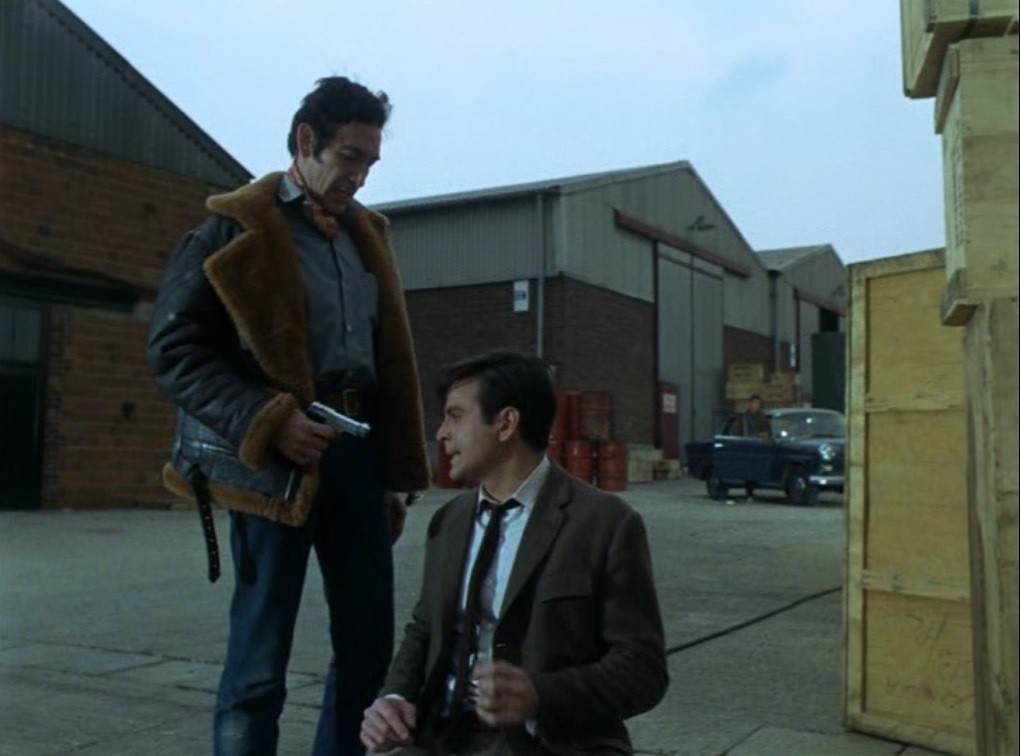
Few television series of the 1960s successfully integrated espionage, science fiction, and adventure as effectively as The Champions. Produced by ITC and featuring Stuart Damon, Alexandra Bastedo, and William Gaunt as the gifted agents of Nemesis, the series relied upon imaginative narratives that extended beyond the typical boundaries of the spy drama. Among its most notable episodes is “The Invisible Man,” a production rendered particularly significant by the inclusion of Peter Wyngarde in a compelling guest role playing Dr. John Hallem. While remembered today primarily for its inventive premise, the episode benefits greatly from Peter’s commanding presence and his ability to lend credibility to highly fantastical material.
The plot explores the unsettling possibility of an individual capable of moving unseen among the living. In less capable hands, such a premise might have served as a mere gimmick; however, The Champions treats the concept with commendable seriousness. The invisible figure is presented not as a curiosity, but as a genuine threat. Every creaking door, unexplained movement, and seemingly empty room becomes a source of tension. This unseen adversary transforms ordinary settings into hazardous territory, sustaining an atmosphere of suspense that remains remarkably effective.
From the outset, the episode highlights one of the series’ primary strengths: its capacity to make extraordinary concepts appear plausible within its established universe. As the protagonists themselves possess enhanced mental and physical abilities, the introduction of an invisible man does not seem incongruous. Instead, it serves as another challenge for Craig Stirling, Richard Barrett, and Sharron Macready to overcome. Notably, the episode remains engaging because these powers do not offer simplistic solutions; faced with an invisible opponent, even these extraordinary agents find themselves at a disadvantage.
The script prudently leverages this vulnerability. Rather than portraying the Champions as invincible superheroes, it places them in genuine jeopardy. The invisible antagonist possesses a unique advantage that repeatedly frustrates attempts to capture or confront him. This uncertainty maintains viewer engagement and prevents the narrative from becoming predictable.
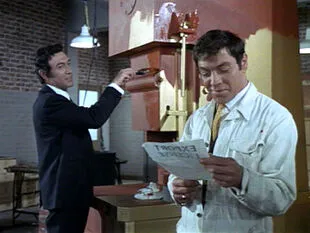
Peter with James Culliford as Dr. Sumner
While the central premise is undeniably strong, much of the episode’s enduring appeal is derived from the quality of the performances. Stuart Damon provides a reliable anchor as Craig Stirling, contributing courage, determination, and a natural charm to the proceedings. William Gaunt’s Richard Barrett provides the intellectual dimension, meticulously analysing clues to unravel the mystery. Similarly, Alexandra Bastedo’s Sharron Macready remains their equal, combining intelligence and bravery with a professional demeanour.
Nevertheless, it’s Peter who leaves the most lasting impression. By the time of his appearance in The Champions, Peter was already one of British television’s most charismatic performers. His striking appearance, distinctive voice, and inherent authority made him instantly recognizable, while his reputation for handling demanding material ensured that audiences took note of his presence. In “The Invisible Man,” he demonstrates precisely why he became such a compelling figure on the screen.
Peter possessed a rare capacity for command, dominating a scene without ever appearing to force the issue. While some actors demand attention through volume or exaggerated mannerisms, Peter achieved a similar effect through precision and confidence. A subtle glance, a calculated pause, or the careful inflection of a line proved as effective as pages of dialogue—a quality that serves him exceptionally well in this episode.
Of particular note is his complete commitment to the material. Science-fiction and fantasy television frequently require actors to react convincingly to scenarios that would seem absurd in a domestic context; a task that not every performer manages successfully. Peter, however, never appears self-conscious or hesitant. He approaches the production with absolute seriousness, lending credibility to a narrative that could easily have seemed ridiculous in less capable hands.
This was one of Peter’s primary strengths throughout his career. Whether appearing in historical dramas, thrillers, horror films, or fantasy adventures, he never regarded a role as beneath him, understanding that the actor’s primary responsibility is to serve the story. In “The Invisible Man”, this commitment is evident in every scene. His performance grounds the episode, ensuring that the increasingly extraordinary developments retain their dramatic weight.
Furthermore, Peter’s ability to cultivate ambiguity is worthy of praise. He excelled at portraying characters whose motives were not immediately apparent, ensuring that audiences were rarely certain of his intentions. This undercurrent of mystery and potential danger rendered his performances especially compelling; even when playing ostensibly straightforward characters, he introduced layers that encouraged closer observation.
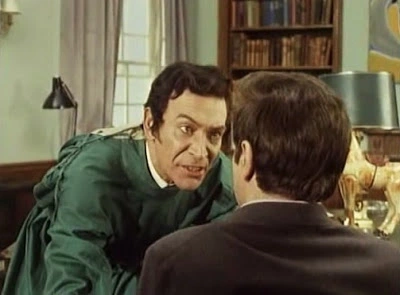
His contribution further enhances the atmosphere of sophistication that characterised many ITC productions. Series such as The Saint (‘The Man Who Liked Lions‘ and ‘The Gadic Collection‘), Department S, Jason King, and The Champions occupied a glamorous, international world of espionage and intrigue – an environment in which Peter seemed entirely at home. Indeed, his performance here clarifies why he would soon become synonymous with the flamboyant adventurer Jason King, as he possessed the precise mixture of elegance and charisma that these productions required.
The episode itself is impressively mounted. For a 1960s television production working within the technological limitations of the era, the special effects are surprisingly effective. Rather than attempting to visualise too much, the production team relies upon suggestion and imagination. Objects move seemingly of their own accord, footsteps echo from unseen locations, and doors open without a visible presence. Such techniques create a far more convincing illusion than elaborate effects might have achieved.
Ultimately, the concept of invisibility works because the audience is invited to participate. Viewers fill the empty spaces with their own imaginations, often creating something more unsettling than could be displayed on screen. The directors and editors understand this dynamic perfectly, generating suspense through anticipation rather than spectacle.
The pacing is equally commendable; at no point does the narrative become sluggish or repetitive. Each development introduces a new complication, steadily intensifying the pressure on the Champions until the final resolution. The script maintains a consistent sense of momentum, ensuring that the audience remains invested in the outcome.
Viewed from a modern perspective, “The Invisible Man” serves as a reminder of the ambition often displayed by The Champions. While many contemporary adventure series remained firmly rooted in realism, The Champions embraced imaginative storytelling, recognizing that audiences were willing to accept extraordinary premises provided they were presented with conviction and intelligence. This episode exemplifies that philosophy effectively.
If a criticism is to be made, it is that certain plot elements inevitably reflect the storytelling conventions of the era. Modern viewers, accustomed to more complex narratives, may find some developments resolved too hastily. However, such shortcomings are minor when weighed against the episode’s numerous strengths; the inventive premise, atmospheric direction, and strong performances more than compensate.
Ultimately, “The Invisible Man” remains one of the most entertaining episodes of The Champions. It captures the elements that made the series distinctive: imaginative concepts, polished production values, engaging suspense, and a cast capable of rendering even the most improbable situations believable. Central to its success is Peter Wyngarde, whose contribution elevates the episode considerably. His performance exemplifies the professionalism, intelligence, and magnetic presence that established him as one of British television’s most memorable actors. Decades after its original transmission, “The Invisible Man” continues to entertain, and Peter’s appearance remains one of its greatest assets, adding a layer of sophistication and authority to an already excellent piece of television adventure.


2 thoughts on “REVIEW: The Champions – ‘The Invisible Man’”