Looking at the missing scenes and dialogue involving General Klytus that was changed between script and screen.
Above: In the prison cell where Flash is being held before his execution. An angle that we don’t see in the finished film.
Despite the “Klytus, I’m bored” line being one of the most quotable in film history, in the original script, the immortal exchange between Emperor Ming and General Klytus didn’t exist. The opening was intended to be at Shea Stadium, New York, where the New York Jets – with Flash Gordon as their Quarterback – had just won the Superbowl which would lead to the opening titles.
Despite the “Klytus, I’m bored” line being one of the most quotable in film history, in the original script, the immortal exchange between Emperor Ming and General Klytus didn’t exist. The opening was intended to be at Shea Stadium, New York, where the New York Jets – with Flash Gordon as their Quarterback – had just won the Superbowl which would lead to the opening titles.
Inside the main palace hall when Flash, Dale and Zarkov are brought before Emperor Ming. There is an exchange between Klytus, Ming and Vultan regarding the latter’s 12-year old daughter, Rima, who is taken away and added to Ming’s harem.
After the scene between Aura and the Surgeon who revives Flash following his execution, Aura was supposed to be seen dropping her handkerchief which Klytus subsequently picks up . It’s the same handkerchief that he’d seen with as Flash is being executed. When Aura sees him with it, she was to desperately search her person for it before finally realising that Klytus knows of her treachery.
Above: The purpose-built set at EMI-Elstree for the arrest of Princess Aura by Klytus on her return to Mingo City from Arboria.
There has long been talk amongst fans about a scene involving the arrest of Princess Aura by General Klytus on her return to Mongo City after putting Flash Gordon in the care of Prince Barin in Arboria. Only a a handful of photographs and the inclusion of the sequence in both the first (12th June 1979) and final (July 1979) drafts of Lorenzo Semple’s script, and in the shooting schedules prove its existence, as it was inevitably to end up on the cutting room floor before the film was released in 1980.
A full-size set (see image above) was constructed was built on Soundstage 8 at EMI-Elstree, which was made up of Aura’s rocket ship, docking area, walls and pillars. The scene (154 in the shooting schedule), ran as follows:
ANGLE – THE ROCKET SHIP
As the canopy opens and AURA climbs out, smiling to herself. She stops short, her expression changing as she sees something.
KLYTUS appears in the foreground with THREE of his black-clad POLICE AGENTS.
KLYTUS Good evening, Princess — did you have a good flight back from Arboria? (and to the Men) Seize her.
In a later Shooting Schedule dated 31st July 1979, the above described scene was “cancelled”(see above) and replaced with the section in the Torture Chamber. This in itself is different to what we eventually see on screen, as the interrogation of Princess Aura was to have taken place in the same prison cell in which Flash was held captive earlier in the story. The cast for this sequence was to include Generals Klytis and Kala, Aura, 8 Prisoners and 2 of Klytus’s Secret Police men.
In the script, Aura is chained with her face to the wall, not on a table as in the final cut. On her head is a “metal crown crown-like device” with electrodes pressing on her temples. Her gown has been pulled down to her waist* so her back is naked*. Kala stands by with a “lizard-hide whip” as Klytus asks the questions.
In the first draft of the script, Klytus orders one of his henchmen to “Rip off her clothes”. Latterly, Klytus tears off the rest of her gown and“throws it to the ground”. The reason for this particular sequence being omitted from the final cut could be down the the Censors.
Getting nowhere with the interrogation, the first draft has Klytus instruct Kala to bring him the Bore Worms, but in the final script, his instructions are carried out by “Two Torturers” who appear carrying a glass jar containing the Worms, and a pair of tweezers. Klytus orders the two men to “Do as I told you”. The script describes what happens next:
Aura’s rage and indignation explodes; she fights tooth and nail inflicting some breaking scratches. But the two experienced men quickly overpower her. One twist both arms behind her in a double half-nelson; the other grabs her kicking feet and pushes them together. AURA is lifted bodily and carried to a metal bench on the other side of the room. AURA is lowered onto this. Her ankles are strapped apart. Her head is lowered into a black velvet-lined hollow, and a hand snaps around her throat. Her hands are raised level with her head, and the wrists are secure tight. She looks like a sacrificial victim.
On being handed the glass jar, Klytus asks Aura:
“Have you ever seen a Bore Worm? They are an almost extinct species from Cytheres. Their mouths contuct a faint electrical vibration that prevents the victim from trying to escape.”
Below is how the Bore Worms are described in the script:
156A CU of BORE WORMS in JAR.
They look like hairy caterpillars about 6 inches long. KLYTUS’S is finger appears against the glass. The nearest Worm tries to bite it. Against the glass we see a wide mouth with unhinged jaw,s so it can’t open 180 degrees. The teeth are like rows of tiny spikes. a little pointed red tongue tries to lap and thrust its way into the glass.
One particular sequence that was changed at least twice from the first draft of the script to what we eventually see in the finished film is onboard Klytus’s rocket ship. Initially, he was to be seen standing with the pilots, who he asks how long it will be before they reach the Hawkmen’s Sky City. When told, he advises that he’s going to sleep and that they should wake him “when it’s in sight’.
The second version sees Klytus sleeping in a ‘glass cylinder’. Latterly, this is changed to him in a chamber inside the wall of the ship.
According to both the first and second drafts of the script, General’s Klytus and Kala – rather than being lovers as suggested by the former’s touching of the latter’s chin in the Laboratory Scene (where Zarkov is having his mind purged), and his saying gentle, “I’ll return”, the two were actually brother and sister. This was supposed to have been revealed when Klytus arrives on Sky City to arrest Barin, Vultan and Gordon. He tells Barin that Aura had implicated him in treason under the influence of his and “my sister’s persuasion”.
White Robes?
There was an idea, both during the writing of the script, and kept during filming, that whenever General Klytus and Princess Aura shared a scene, Klytus would wear white robes as opposed to black.
In the ‘Final Script’ of July 1979, Peter has written in pencil in the top right-hand corner of the page: ‘In black here? Or in black when behind people?. Clearly, no definite decision had been made at this point. Peter said latterly on the subject: “Originally had two costumes; a black and a virgin white version – the latter of which I was to wear in the scenes with Princess Aura. I felt, though, that the white one looked a bit like something that had been worn in a pantomime, so I decided to stick with the black one throughout the film.“
Above: From Peter’s copy of the script.
A photographs do exist of Peter wearing all white, which were taken during while shooting the scene involving Aura’s return to Mongo City and her subsequent arrest (see below). This was most probably the only time the white robes were worn.
Above : Peter as General Klytus in white robes with with Ornella Muti as Princess Aura.
Dialogue Changes: From script to screen
Peter was well known for changing his characters dialogue in scripts, more often than not for the better. Here are some of the improvements he made – from script to screen:
SCENE
SCRIPT
SCREEN
Inside the great hall where Flash, Dale and Zarkhov are brought before Ming, Vultan and Barin draw their weapons.
“Put up your weapons. Nobody dies in the palace but by the Emperor’s command”
“Set down your weapons. No one, but no one dies in the palace without a command from the Emperor.”
Scene as above. Vultan initially refuses to follow Kytus’s instruction .
There is no dialogue at all from Klytus at this point.
“Vultan! You obey or you sacrifice your daughter.”
In the prison cell where Flash is awaiting execution.
(To Flash): “You refused your final meal. The chef is very upset.”
“Yes, you don’t look well. I heard you refused your final meal. The chef will be upset.”
Same scene as above.
“You were wise, actually — the gas works more quickly on an empty stomach. Have you any final requests?”
“Just as well. Gas works more quickly on an empty stomach. Any final requests?”
Inside the laboratory where Klytus and Aura are removing all Zarkov’s memories. The two General’s are watching the screen, when Klytus sees Hitler.
There is no dialogue here.
“Now he showed promise!”
Scene as above. The procedure has been done.
(To Kala): “I will return after reporting to the Emperor.” (Seen holding Aura’s handkerchief).
“I’ll return.” (No handkerchief. He touches Kala’s chin).
Torture Chamber. Aura demands to see her father,
(Klytus touches a button to reveal Ming). No dialogue
“With pleasure.”
Klytus has arrived at the Hawkmen’s Sky City.
“Agent Zarkov, you will be liquidated for treachery. As for you, Prince Vultan, you will surrender these fugitives at once or the Imperial Fleet will blast your kingdom to atoms.”
“Agent Zarkov, you will be liquidated for treachery.
Scene as above. Barin insists that Klytus address him as “Prince Barin”.
See below for page from original script
“No longer, I think. Princess Aura — under our persuasion — has implicated you of high treason. You are under arrest along with these Earthlings. A prison ship will be along shortly to take you away.”
“No longer. Princess Aura — under our persuasion — has implicated you of high treason. You are under arrest. A prison ship will be along shortly to take you away.”
Above: Page 84 (Scene 191). Changes to dialogue in Peter’s own hand.
Below: How Peter envisaged the character of General Klytus. Written by him inside the first draft of the script
Top: Klytus. He is electric electrically – verging on abysmal grandeur in his male violence.
(Under Title): Klytus: is an accomplished murderer as he is a sorcerer. An animal in agony because of his intelligence; a wretch whose heart has cracked and whose sole obsession is revenge. His is the fury of hell, no less than of a woman scorned. Hate Incarnate; misery broken out of all control; loathing unleashed until, hurricane wise, he sweeps everything and everyone before it.
He is blood and electricity mixed.
His death: The dreadful, hoarse groans of a wounded animal. They well out of a half human body, there has been clubbed by fate. They are sounds that speak as no words could, for a soul torn by horror, for a mind numbed by what it has been forced to comprehend. The horror at his isolation from humanity.
Above is Peter’s copy of the Shooting Schedule dated 31st July, 1979
Starling Productions Limited
”Flash Gordon”
MAIN UNIT SHOOTING SCHEDULE
BASED ON FINAL SCRIPT DATED JULY 1979
Notes:
(a) it is possible that 23rd August and 24th August will be switched to avoid an unnecessary move back to Shepperton whilst we are at Weybridge.
(b) This Schedule excludes all 2nd unit work and blue backing at Weybridge and all miniature and optical effects shooting.
(c) The 2nd unit will shoot all blue backing scenes as follows –
Presented by Paul Elliot at His Majesty’s Theatre, Aberdeen – 7th December 1984 – 5th January 1985.
Character: Abarnazar
Act One
Prologue: Abanazar’s Lair
Scene 1: In old Pekin
Scene 2: Outside Pekin
Scene 3: The Princess’s garden
Scene 4: Widow Twankey’s Launderette
Scene 5: Outside Pekin
Scene 6: A ravine in the mountains
Scene 7: Inside Abanaza’s cave
Act Two
Scene 1: The Festival of Lanterns
Scene 2: Widow Twankey’s Launderette
Scene 3: Outside Pekin
Scene 4: The Garden of Aladdin’s Palace
Scene 5: The Flight to Egypt
Scene 6: Aladdin’s palace in Egypt
Scene 7: Back home in Pekin
Scene 8: The Royal Wedding
The pantomime Aladdin is one that lends itself particularly to spectacular and colourful settings and costumes, and the 1985/85 Christmas season a spectacular production at His Majesty’s Theatre, Aberdeen, that left nothing to be desired.
In this respect with a first half finale inside up Abarnazar’s (Peter Wyngarde) cave, that glittered and sparkled with a delightful festival of lanterns and a lavish ‘Willow Pattern’ to close the evening. Only in magical effects did the presentation fall a little short of expectations. Add a multi-talented cast an eight-strong dancing chorus augmented by a group of lively youngsters from the Jessiman Shool of Dance, and the clever specialty act and there was all the ingredients for a successful show which was proven with every performance a sell-out.
While Peter was the target of hearty rounds of “Boo’s” from the audience, the children especially took to wishy Washy Washy, played by Scottish comedian, (Allan Stewart), who not only used his ability as an impersonator to excellent effect at many appropriate moments, but he also has a warmth of personality that makes the character irresistible, Denny Willis was his inimitable self as Widow Twanky – brilliantly funny at his best; his funny walk reminiscent of part of his Hunting Quartet but, alas, was been given too few opportunities to use his comic skills to the full.l
Peter Morrison in the role of the Emperor, was said to have made an impressive figure, and carried off the part with great style displaying equal poise and polish in his singing. Meanwhile, Louise English looked every inch a princess to win all hearts, and she too was an accomplished singer Edwina Lori .
Meanwhile, Peter ruled the stage as a splendidly evil looking magician, Abanaza. According to the Aberdeenshire Press and Journal, “He (Peter) needs more vocal bite to complete the characterization.” which was a strange comment to make given that Peter had one of the most powerful voices of the world stage.
The show was enhanced with a performance of the dancing skeletons by Dumarte et Denzar – one of the oldest specialty acts in the business, which provoked shrieks of delight and laughter from the children.
And that rakish fellow, Peter Wyngarde, must have regarded his reception as the dastardly Abanazar as a triumph.
I swear he almost brought the house down when he announced wickedly he had let all their dad’s car tyres down outside the theatre.
‘Turn Out the Lights’ was short-lived ITV sitcom series made by Granada Television, that was first broadcast from Monday 2 January to Monday 6 February 1967 by Associated Rediffusion and Tyne Tees Television,. The series was a spin-off of the sitcom, ‘Pardon The Expression’, which was itself a spin-off of Britain’s top-rated soap opera, ‘Coronation Street’.
Leonard Swindley and Wally Hunt had been fired from their jobs at Dobson and Hawks department store in the last episode of ‘Pardon the Expression’. Developing an interest in astrology Swindley travelled the country employed as professional speaker on the subject. Wherever they went Swindley and Hunt stumbled across supernatural mysteries and set about exploring them. The series was a mixture of comedy and light drama.
Six fifty-five minute-long episodes gained their first broadcast on ITV from Monday 2nd January to 6th February 1967 on Associated Rediffusion (London) and Tyne Tees Television (North East England) with all the other regions, including Granada Television, broadcasting the episodes on the following Friday from 9.10 to 10.05pm. The series was also broadcast in two ITV regions (Westward Television and Channel Television) where no single episode of ‘Pardon the Expression’ had ever been shown however it was not shown by Teledu Cymru. Though a smaller number of episodes were commissioned the double running time essentially meant this series lasted as long as the first season of ‘Pardon the Expression’.
The series was produced by Derek Granger, the second producer of ‘Coronation Street’ and later producer of ‘Brideshead Revisited;. Peter Eckersley and John Finch were two of the writers and the former co-wrote two of his episodes with Kenneth Cope, alias Jed Stone. Denis Parkin, the original designer of ‘Coronation Street’ designed three of the episodes.
Several ‘Coronation Street’ regulars made appearances in the series, although Leonard Swindley was the only character from the programme to appear. In addition to these cast members, several notable actors, including some who appeared on the Street made contributions.
The first episode of the series was critically panned by Nancy Banks-Smith in the 3rd January edition of The Sun when she said: “I say, that’s quick off the mark. Only the 2nd of January and yet last night ‘Turn Out the Lights’ put in a powerful claim to be the worst series of 1967. Let’s not be niggling in our tribute. Possibly the worst-written, worst-directed and worst-acted series of the year. You think I’m overstating the case about the new series…don’t you? So I started to make a list of the jokes to give you the flavour of it. But that didn’t work out as I had the greatest difficulty in spotting which were the jokes. Mark you, it’s not meant to be a comedy show, I gather. But I refuse to believe it is a serious one. I’m darned if I know what it is intended to be.
She went to describe the storyline as “confused”, and commented on the “loose ends” and the “sickly modulation to pathos and homespun philosophy at the end.”
John Finch has described his contribution as the “worst thing I ever wrote”. Although almost everyone seems to have hated the programme, Arthur Lowe for one is described as having thoroughly enjoyed it and a theory has been posited that he might have signed for another series if ongoing fame the following year in the role of Captain George Mainwaring in ‘Dad’s Army’ hadn’t beckoned.
The series performed favourably at first in the charts with the first episode achieving 7,250,000, more than either episode of ‘Coronation Street’ shown in the same week. After that, ratings dropped slightly but never fell below 6,100,000 homes.
Along with the dry runs and the inserts for the ‘All Star Comedy Carnival’, the two pilot programmes for Pardon the Expression, and Episode 1202 (24th July 1972), the six episodes of ‘Turn out the Lights’ are the only ‘Coronation Street’-related material missing from the Granada Television archives.
The Episode
‘The Boyhood Haunt’ was the first of just 5 episodes of ‘Turn Out The Lights’ to be screened by ITV.
Above (left to right): Peter as Richard Merlin, Robert Dorning as Walter Hunt and Arthur Lowe as Leonard Swindley
Leonard Swindley is shocked when his colleague Walter confesses that he is totally under the influence of his horoscope sign- Aries the Ram. In spite of Leonard’s mocking him, Hunt insists on introducing him to Richard Merlin (Peter Wyngarde) – a nationally famous astrologer.
All of the words below were written by Peter Wyngarde. No notes were left with regard to tempo, instrumentation, other music reference points, save for the words ‘Ballad’ and ‘To be sung as if drunk’ on two of the lyric sheets.
Please be reminded that all the lyrics below are copyrighted to Tina-Wyngarde-Hopkins and Bowington Management.
1 Colour TV
It’s so trendy to be a colour all that fuss about who’s in power No one knew who to love or hate but now it’s purple red and green Blood transfusions in on colour television
Mind you, it is a little confusing when Sammy Davis says he’s Jewish And looks more red than red Indian so does Pope Pius and being Yiddish Blood transfusions in on colour television
And then all these Vietnamese North or South seem none too pleased Their skins are greener than the trees and G.I. Joes browner than Heinz baked beans It is confusing since they call each other yellow in good ol’ Americanise Blood transfusions in in colour TV’s Of course the real joy’s to come
when they televise parliament and Georgie Brown looks blue to some in spite of Scotch and Murray mints And Barbara Castle’s a soft of magenta plum Blood transfusions in cool television
But it’s the revolutioning students that are by far the trendiest And change their colour the fastest from bloody blue, white and red To the grey sobriety of hospital bed as they slide from violence to passivity and silence Blood transfusions in on colour TV
2 D.J.
Roll your R’s to prove you’re no homo Add a pun to make it fun A voice more stereo than mono you’re bound to be a DJ on 1
Chat up the guys and dolls and talk of peace call them lad and lassies, of course peace is neece Add to this Scots whoo-hooI monotony a discombobulating cacophony
And you have Stewart Henry and the like Every morning, noon and night Telling us what is a hit or a miss what disc to buy and what to cross off your list I’m just hoping for the day they go on strike Praying they miss their bus, are late or break their mic Do let the music have an unadulterated run Cut out all the constipated fun on Radio 1 but then of course we won’t know the titles of anyone’s album because words don’t seem to count anymore Just the mixing, beat and backtracking on some so Stewart stay and save us from another one
3 Marie
Marie looks across her window above the trees the men all down below enjoy all they can see She’s a woman of nature that life brought into the world to play with And she looks so sad ’cause she’s lonely, Marie
She never hurries to put on her underwear her only real friend is a yellow teddy bear. Marie, Marie.
Marie, only you cannot see the more you have the less you will be free Butterscotch, acid drops, trips too with tea
Marie lies on a pillow next to a bed the men who visit her don’t see what’s in her head She’s going on a journey that’s kinder and faster than any they’ve made closed door, not alone anymore. Marie, Marie.
She never hurries to put on her underwear her only real friend is a yellow teddy bear. Marie, Marie.
Marie, only you cannot see
(Repeat this to end).
4 Merry Sexmas
(Spoken as if drunk)
What is all this fuss o’er Xmas s’cuse us is it to do with – love Why is everyone so sexless he must have had some fun above
After all it is his birthday no one’s born without someone’s horn Proclaiming it is a mirth day and the night is no time to mourn But time to have more jollity And practise his philosophy Turning to other cheek rapidly for kisses from the majority
Good will and love for all men let’s all have a cuddle and a drink Even that loner in No.10 Might make that cheek turn quite pink
All that matters is for us to love give the old world a piece of dove Have one another, sod givin’ (I’m drunk) a’int we all God’s chill’un
5 Robinson Crusoe’s Story
The night was thick and hazy When the ‘Piccadilly Daisy’ Carried down the crew and captain in the sea; And I think the water drowned ‘em For they never, ever found ‘em And I know they didn’t come ashore with me
Oh ‘twas very sad and lonely When I found myself the only Population on this cultivated shore; But I’ve made a little tavern In a rocky little cavern And I sit and watch for people at the door
I spent no time in looking For a girl to do my cooking As I’m quite a clever hand at making stews; Perhaps that fellow Friday Just to keep the tavern tidy And to put a Sunday polish on my shoes
I have a little garden That I’m cultivating lard in as the things I eat are rather tough and dry; For I live on toasted lizards Prickly pears and parrot gizzards And I’m really very fond of beetle pie
The clothes I had were furry And it made me fret and worry When I found the moths were eating off the hair; And I had to scrape and sand ‘em And I boiled ‘em and I tanned ‘em ’Till I got the fine Morocco suit I wear
I sometimes see diversions In family excursions With a few domestic animals you see; And we take along a carrot As refreshment for the parrot And a little can of jungleberry tea
Then we gather as we travel Bits of moss and dirty gravel And we chip off little specimens of stone; And will carry home the prizes Funny bugs of handy sizes Just to give the day of scientific tone
If the roads are wet and muddy We remain at home and study For the goat is very clever at a sum; And the dog instead of fighting Studies ornamental writing While the cat is taking lessons on the drum
We retire at eleven And we rise again at seven And I wish to call attention as I close; To the fact that all the scholars Are correct about their collars In particular in turning out their toes
6 Silent Thanks To Noisy Yanks
Why are Americans so demonstrative are they worried they won’t be noticed? That they have to be more remonstrative Than any other country listed
From juvenile delinquency to God is longer than any trip to Mars and back Why make all that fuss about the sod And the fairy brigade when all is black without the aid of any lease-lend pact
Maybe it’s because they’re worried about the state of violent destructive groups that have sprung from their roots of palsied need And feel the time is now to be reconstructive – in deed
If not invoice at least some gesture that democratic move presages failure to all the innocence that need blackmailers to excuse their greed With soldiers and sailors to guard that little countries shops and retailers?
Wouldn’t it be oh so much wiser to forget their noisy publicity And quietly reform (so much nicer) At home where all the trouble lies with love – no guns – so no one dies
7 To Call A Man A Man – Is A State of Grace
(Spoken): You may remember students demonstrating outside the White House with placards with the names of the fallen at Vietnam
A fence like sentinels in wait as names echo on the lawns of the House of white
The spikes like tombstones at dawn salute the old and the new that died Wasserman, Daniels and Cohen both Kennedy’s, King and Lincoln
All are on common ground they fought and died for freedom That cry out of sight and sound even to those who cannot see them Is this the place for that cry which says To call man a man is a state of grace no man can deny
8 Why Do Taxi Drivers Talk So Much?
Why do taxi drivers talk so much? Is it because they want to tax our nerves Chat, chat in between each move of the clutch to the boiling point of no reserve
Do they already know we’re far too late And nothing they say could possibly make or alter that important date?
Or is it because they are fed up too with traffic, price of living, taxes (The government informs are overdue like this fast becoming talking taxi)
Really, what is he going on about? Mind that truck! Wish I were walking Did you see that? He didn’t shout I would have done! He just went on talking
What was that? Oh yes, the Permissive Society yes I do agree with it What’s that? Wish your missus did Oh, I see (spoken quietly) (Maybe that would be a bit TOO permissive!)
No, no I don’t think age has anything… (Look out! The bus was nearly on us!) No, if your own thing is really jumping in and out of her bras it’s a gas (spoken quietly) I only hope for your sake they’re stretch proof! No, I don’t think that makes you a poofe (wish I could be as optimistic about my life on this endless trip). “Is she?” (definitely masochistic!) “Oh, when you jumped your wife did a flip” (Well, if you really jumped – sadistic). “No, I didn’t think she was in ‘em you prefer short ones to the linen?” (“I’m sure you do – wish you button up. Don’t really care what either of you do”) “She wants a what – a Pekinese pup?” What’s he going on about now? The last war! Oh no not that I’m late for the premiere. (I was a conscientious objector – that was until I met this taxi bore!).
“Where you? (I’m so glad) The Royal Pay Corps?” (I wish they’d paid you off). Open the door, I can’t stand anymore! “Drop me off cabby!” (No tip – lip. You’ve been too gabby) “How much?” Well, no, it’s a beautiful day I was should have walked all the way 16 bob? No, no, keep the change you deserve the tip” Never know – might give up bras, swap them for gymslips
(Sound of cab door banging).
Note: The album was also to include a reading of the poem, ‘If I Have Made, My Lady’, written by E.E. Cummings.
Click below for more information on Peter’s album…
I am finding it hard to sleep at the moment, which has caused me to reacquaint myself, via the wonders of Youtube, with a TV series called Department S. I’m currently on a dose of at least two episodes a night. This was Incorporated Television Company supremo Lew Grade’s answer to ABC’S The Avengers: an elite section of Interpol, weird ‘unsolvable’ cases, a wacky main character and occasionally some interesting ideas… but mostly not. Throw in a crime-solving computer with lots of spools and flashing lights, plus an American sidekick with great hair (Joel Fabiani) to help flog the show to the USA, and you have pretty much a cliché of the ITC actionseries formula. Also lots of fast cars and pretty girls, plus a side order of comedy violence. Best of all, a great theme tune: I have very fond memories of driving my Lancia 2000 Berlina around London in the late ’80s with Edwin Astley’s arrangement as a mood-setter.
The action ranges across the UK and Europe; most episodes appear to kick off at Heathrow with a jet either landing or taking off, giving the impression the producers wanted to tap into newly emerging package-holiday aspirations. Not that anything is filmed on location: the budget only extended to potted palm trees and a few exotic numberplates. What could not be filmed on the Elstree back lot or a local hotel pool was recreated in the studio. As in Carry on Abroad, you can see the actors shivering, no matter how hard they try to invoke the feel of the south of France or the Costa del Sol. Via the tiny black-and-white screens on which it first aired, nobody noticed or cared.
The feel is ‘international crime-fighting meets early-’70s Martini advert’, particularly whenever the protagonist, Jason King, appears. With his flamboyant hair and tailored clothes, King was played by the wonderful Peter Wyngarde. This was a new kind of hero, who had the ladies’ hearts aflutter. Wyngarde was a fine stage actor, and Department S made him a household name: at the height of his fame, he published a risqué spoken-word album and was twice voted Britain’s best-dressed man.
Wyngarde became such a phenomenon that, post-Department S, he even got his own series, Jason King. This one I do remember: even aged five I was uncertain of the nature of the man’s appeal. My mum had fallen under his spell – “Do your cuffs like Jason King!” – as the ’70s replacement for the clean-cut Simon Templar.
In fairness, he is the best thing in the show, with his charisma bolstered by a James Young Bentley Continental S2 on Swiss plates; the car, and clothes, were allegedly Wyngarde’s own. He carries his myriad affectations lightly: Sobranie Cocktail cigarettes, matching shirt and tie in lurid colours, and Zapata moustache. When necessary, King/wyngarde can direct a convincing punch, taking on the likes of John Bindon and future Darth Vader actor Dave Prowse. You can even spot Anthony Hopkins in a rare – possibly unique – ITC appearance.
Department S probably has the best set of cars of any ITC series: regulars include a Vauxhall Ventora (for Fabiani), while computer boffin Rosemary Nichols swaps between a Lancia Fulvia Coupé and a Lotus Elan +2S. For foreign missions (driving on the wrong side of the road in Wales) there is a Fiat 2300S Coupé and a Mercedes SL Pagoda; baddies almost always drive Yanks or a recurring black Ford Zephyr MKIV. Corvairs turn up repeatedly – usually as a prelude to a crash – and a black Rolls-royce Silver Wraith limo often stands in for the Phantom V seen in the opening credits. When the script demands that the Wraith explodes, it magically turns into an Austin Sheerline.
They must have knocked out dozens of episodes of this show, because there is always a fresh one to watch. Or maybe they are coming around again and I’ve simply not noticed.
Way back in 1994 my friend, Mark Leigh and I, both then enthusiastic young journalism students and lifelong fans of Peter Wyngarde, interviewed Tina Wyngarde-Hopkins for the Official Peter Wyngarde Appreciation Society quarterly magazine [Issue 6]. While Mark emigrated to New Zealand 18 months later, I changed courses at university to study psychology instead.
I’m currently in the process of producing a work concerning how the modern phenomenon of online “Trolling” is impacting Fandom. A recent study by academics in Australia estimate that one in three internet users have experienced some kind of online harassment or abuse while using the internet. My intent is to construct a psychological profile of those who wish to cause harm to others online, and the correlation between the troll’s actions and their own low self-worth.
I’ve been shocked to learn from the administrators of several film and TV-related websites, forums and social media-based groups whom I’ve spoken with, the level of harassment and bullying they’ve experienced over the years, leading to many of them considering quitting. What has really saddened me is how many of these groups have already closed having been systematically “trolled to death.” As is ever the case, it’s the minority ruining the enjoyment of the majority.
It has been 33 years since I last spoke with Tina, so I thought it would be interesting to see how things have progressed with the Official Peter Wyngarde Appreciation Society, and to learn of her experiences with the dreaded online “Troll”. I was absolutely delighted to find that she hasn’tlost any of her wit, and despite the horrific abuse she and Thomas Bowington [Peter Wyngarde’s friend and agent] suffered at the hands of a group of deeply disturbed online bullies between 2018 and 2023, she is still able to see the funny side of it.
NB: You will find all my questions and additional explanations are boxed and in bold, as are any interjections [bracketed like this]. B.G.
Like so many website on the internet, The Official Peter Wyngarde Society has sadly fallen victim to the occasional attention seeker or mindless agitator over the years, but it was only after Peter passed away in early 2018 that things took on a more sinister tone. When a series of aggressive and accusatory solicitor’s letters from Peter’s (estranged) family were blown out of the water in June and July of 2019, a concerted online smear campaign against Tina and Thomas was initiated on social media. A platform was eagerly provided to the instigators of this witch hunt by the administrator of a Facebook group called, ‘Department Wyngarde’, who Tina had been acquainted with for 25 years and who, for the purposes of this article, will be referred to as Mr. X.
“Mr. X was amongst the first to join the newly formed Appreciation Society back in 1992,” Tina says, “and whilst the project had modest beginnings, our membership would increase exponentially over the course of a few short months. Despite the large number of people who’d inevitably become members, he was the only one amongst them to demonstrate scant regard for social boundaries by presenting himself unannounced on my doorstep not once, but TWICE!
“I vividly recall the moment I opened the front door on the first occasion to find him standing there looking for all the world as if he was auditioning for the part of a puppy in the Andrex* ads; his heart working like bilge pumps on the Grand Canal at high tide. He had one of those soapy voices often adopted by archbishops, and for a second or two I feared we were in for a Stan Laurel moment. While he didn’t quite lift a bowler hat and start blubbing, it was a close-run thing.”
*British toilet paper brand famed for it’s advertisements featuring Labrador pups.
Despite these disrespectful incursions, the gentleman in question was treated with respect by Tina and her family on both occasions. But as the late, great Oscar Wilde once said, “No good deed ever goes unpunished”…
“At that time, he was on a government work scheme at Granada TV Studios in Manchester, and as part of the course he was required to submit a proposal for a documentary,” Tina explains. “He’d suggested a retrospective of Peter’s life and career and wanted me to supply him with all the necessary information and material, such as photographs; TV and theatre reviews and so forth. I agreed to help him as much as I was able.
Right: Peter as Lieutenant Jan Wicziewsky in ‘South’.
“During one conversation I’d casually enquired if he knew anything of the seminal play, ‘South‘, which had been produced by Granada in 1959; specifically, if it still existed in the broadcaster’s extensive archive. I’d asked because I knew Peter had been looking for a copy for some time. When he eventually got back to me, he confirmed that the play was indeed part of the broadcaster’s vast library. He was at great pains to remind me in a somewhat bizarre email 28 years later[in October 2020. See later in this article] that he’d quoted no less than £500 for a copy of the play on a video tape. When I’d relayed this information to Peter, his response went something along the lines of: “You can tell the Beep! Beep! Beep! to stick it up his a*se!” – an act which, I’m reliably informed, would set you back a fair few bob* in Amsterdam, but that’s beside the point! And so we decided to contact Granada ourselves. Imagine our surprise when we learned they could make a bespoke copy of the play on a VHS cassette for just £70. By his own admission, this chancer was planning to rip Peter off to the tune of 430 quid! The purchasing power of £430 back in 1992 would equate to almost £1,000 at today’s rates, so he’d have come away with a nice little earner should we have fallen victim to this fraudulent transaction. Certainly, he’d have been able to afford at least a fortnight’s all-inclusive holiday for such a sum, plus spend! The best of it was, he’d latterly claim that he’d quoted this figure because, “I felt you were using me.” Evidently, he didn’t consider his rocking up unannounced on my doorstep on two separate occasions expecting me to assist him with his homework, as him “using” me! And that, ladies and gentlemen, is how you turn hypocrisy into an artform!”
*A ‘Bob’: British colloquialism for a Shilling in pre-decimalised UK currency.
As is ever the case, one doesn’t always see the full picture until all the pieces of the jigsaw are in place.
“Despite being one of life’s damp hankies, Mr. X would occasionally phone me to bitch about some other poor sod including, as it happens, one of his Facebook buddies who’d eventually receive honourary membership to the band of online bullies he’d be instrumental in recruiting some years later: “I’ve got something to tell you about J**k B****s” he’d mew. His calling was akin to the infamous Medieval torture of ‘Death By A Thousand Cuts’, as it would take him an inordinate amount of time just to declare who he was; spluttering and stumbling over his words while dithering like a greyhound in the slips. To the uninitiated, he’d sound as if his tongue had gone numb and was eluding normal control. Most people wouldn’t believe how listening to someone struggle to say their own name can wring your withers and leave you purged, but believe me, it does. After stifling a series of yawns, I’d often end up having to announce him myself rather than waste 25 minutes of my life I’d never get back! While he’d present not unlike the Dickens’ character, Uriah Heep – all, “I’m so very ‘umble, Master Copperfield,” when years later he suddenly began bombarding me with abuse in the manner of an 18th Century three-decker with full magazines and, of course, from the safety of his own living room, he was far more truculent and aggressive.”
Tina admits that the clues were there, but that she was too unguarded to have recognised them.
“I’m obviously an exceptionally bad judge of character,” she laments. “Peter always said I was too trusting for my own good. I was to learn to my cost that he was right.”
The alarm bells only really began to sound when, one morning, Peter received a letter from our Liverpudlian friend asking him out to lunch.
“I just found it incredibly underhanded,” Tina says. “Of course, Peter immediately dismissed the invitation – consigning it to the bin where it belonged. It’d only been a matter of weeks since Mr. X had boldly announced that he preferred to admire his idols “from afar”. But then he’d also trotted out something about hating “confrontation” – unless, of course, it’s done from at least a distance of 30 miles! You see, on a one-to-one basis, he’s a dithering wreck, but when skulking behind a computer screen, he becomes Yosemite Sam – the rootin’-tootinest’ tough guy ever to cross the Rio Grande… or The Mersey in his case.
“Only a few months earlier he’d asked me out to lunch. On the first occasion I’d broken bread with him back in 2006 (for ‘bread’ read chicken and bacon pizza), I felt as if I was sitting opposite Eeyore as he barely cracked a smile between splothering, spluttering and darting outside every few minutes for a drag on a Woodbine*. Indeed, an entire afternoon was lost just waiting for him to order a starter! This time around, however, he wore an inane grin that made him appear as if he’d swallowed a dodgy prawn and sensed the Kaolin & Morphine might not have completely cemented the lower passage. This caused him to jemmy open one side of his mouth and bare his teeth which genuinely unnerved me (think of the brass plaque on Scrooge’s office door). As ever, he was taking an absolute age to get out what he wanted to say, so the intended 45-minute pizza-and-glass-of-Diet-Coke session ended up outlasting a Japanese Tea Ceremony. Come to think of it, it was only after he became part of a vicious hate-mob that he finally found his voice; then he was firing off insults and threats like a howitzer. Anyway, after eating his fill, he immediately turned tail and tottered off towards the exit – his buttock cheeks clenched so tightly that they looked like two halves of a walnut. This left Muggin’s** here to pick up the entire bill, as he claimed he needed all the cash he could cling on to for an upcoming holiday to the States. I wouldn’t have minded so much, but he didn’t even have the decency to send me one of those delightful multi-view postcards or bring back a stick of rock! I could only conclude that he was planning to pull the same stunt on Peter.
*Woodbines: A UK brand of cigarettes.
**’Muggin’s: English slang for ‘Me who has been made a fool of’,
“It was in mid-2019 that Thomas and I received the solicitors’ letters from Peter’s estranged family as referred to earlier, which we duly responded to with a pledge of legal action should they continue to harass us. A couple of weeks later, some chap with the initials J.W. [hereafter referred to as Mr. W], gatecrashed Mr. X’s ‘Department Wyngarde’ Facebook group as if flinging open a set of huge double-doors, and to an almighty clarion call, demanded: “Everyone stop what you’re doing and listen to me!” After claiming to be a “close friend” of Peter’s, he promptly set about transforming Thomas and me into a couple of vile caricatures, based entirely on a series of cynical lies and baseless accusations to deliberately mislead anyone witless enough to listen to him: “She’s played the grieving widow long enough!” he crowed; a barbed reference to the inexcusable offence of my grieving for Peter. There was then some mumbo-jumbo about how badly we’d supposedly treated Peter’s “blood family”, despite the fact that they hadn’t been part of his life for well over half a century. In fact, we’d only learned of their existence after Peter passed away. In the three decades I’d known him, he never once mentioned them. I genuinely have no idea what these odious crimes were that we’d supposedly perpetrated against them, bearing in mind that we were to meet them for the first and last time at Peter’s funeral in January 2018. All I’ve done since then is report events as they happened and in a matter-of-fact manner. It’s an absolute certainty that if I’d said and done the things I was being accused of, I’d have found myself squirming before a jury of my peers before now!
“As fate would have it, Peter and I had compiled a list of every person he’d ever known or met during his lifetime as an aide memoir for the autobiography he began working on in 2016 [the list was complied using diaries, letters and address books dating back to 1951. Peter was nothing if not meticulous!]. This was of course consulted. It will come as no surprise to learn that Mr. W’s name was not on that list, nor had anyone who genuinely knew Peter ever heard of him.
“It was abundantly clear from Mr. W’s opening volley that he knew far too much about what had gone on concerning our dealings with the ‘family’ to be entirely independent of those that wished to control the narrative. His much-embellished tales and accusations were merely a smokescreen to detract from the real villains of the piece, and to ensure that no flies landed on them, And so here he was giving out a blatant,‘Don’t look over here at us, look over there at them’ message. It was soon discovered that Mr. W was nothing grander than a failed bar manager from Birmingham, but someone obviously believed he had promise as a master of tactical deception, just as one might see the potential of rope, cables and masking tape in the hands of Christian Grey. It was all “They’ve done this”…“They’ve done that”… and “They’ve done the other…”. Of course, not a word of it was true, but then why let the truth get in the way of a potential witch hunt?! Inevitably, he came to stand for whatever he believed the Mr. X’s of this world would fall for. Indeed, it’s always easier to fool people like that than it is for them to accept they’ve been fooled! However, it would quickly become apparent that artifice wasn’t his strong point, as he was about as subtle as a nuclear war when it came to his feeble attempts at disguising the fact that he’d been put up to this. The types that stoop to dragging another person’s name through the mud via a smear campaign often operate like a government quango. They need a patsy to act as a front so if, or more likely WHEN, it all goes pear shaped, it’s the sheep not the shepherd that ends up carrying the can.
“Don’t worry, Prime Minister. When it goes t*ts up, it’s the idiots in charge of the quango who’ll take the blame!”“Sir Humphry, you’re a genius!”
“It was one morning, a couple of days after Mr. W’s maiden speech, that I had a lightbulb moment. I suddenly remembered there’d been a gentleman who shared the same first name as him who Peter once employed on an ad hoc basis to do odd jobs for him, which included tinkering with his cars and, on occasion, flicking round the flat with a duster. According to what I was told, this chap had carried a torch for Peter over the course of many years, and so in the absence of anyone else by that name, and with Mr. W insisting he’d been a “close friend”, it begged the question: might he and the odd job man be one and the same?
“Imagine the scene: ‘October 2019.It was a dark and stormy night, etc…. Mr. W hears via the grapevine that I’m asking questions on Facebook about a certain handyman, and HIS name is in the frame. His eyes shift and he sniffs. He reads my post, then reads it again. It takes a while for the words to sink in but, finally, the penny drops and he begins to steam like a freshly laid cow pat…’ Dear God! He must have CHARGED at his computer keyboard faster than a lorry driver passing a Morrisons* salad bar! With jowls wobbling, eyeballs bulging and teeth tightly clenched, he demanded that I, “Get that off there!” – i.e. remove my enquiry. When that didn’t have the desired effect, he then began to appeal to person or persons unknown who he believed had dominion over me: “Tell her to take that down!” Oh dear! And there was me thinking that attempting to humiliate some poor bugger on a public forum was the theme of the evening!
*British supermarket chain.
“Despite bending the truth into any shape that suits them, bullies expect you to be the perfect victim by accepting everything that’s throw at you without hitting back or uttering a word in your own defence. In other words, “Do as I say, not as I do!” However, the moment they’re served a taste of their own medicine, they begin to squeal like the proverbial stuck pig. I’d witnessed it before; I saw it in Mr. W’s reaction to my odd-job man enquiry, and I was to see it again with someone else [Mr. Y} sometime later [see further on in this article]. It’s what’s called ‘Victim Blaming’.
“While Sockpuppets like Mr. W are perfectly capable of making a spectacle of themselves without the assistance of others, for true bona fide halfwittedness you can’t beat teamwork! Like misery, bullies love company because, fundamentally, they’re cowards who only feel secure when hunting in packs. Everything Mr. W said was wildly speculative and wholly inaccurate, but that didn’t matter as his undertaking was to enlist a posse of willing idiots who, while obviously not the sharpest tools in the box, would nevertheless be energetic at putting out certain messages. There was no requirement for them to believe what he was saying, just as long as their nature was dark enough to join the chorus. What this conglomerate of ignoramuses didn’t realise was, they were nothing but cannon fodder in a bigger game.
“Even though such people may never have met you and probably only heard your name for the first time that afternoon, they believe they know everything about you – from birth to the present day, plus all points between. With breathtaking arrogance, they’ll profess to have inner knowledge regarding where you stand on everything from politics to Strictly* and, moreover, what you’rethinking at any given time. Armed with this imagined insight, they’ll venture to tell you and everyone else who you are. In reality, they have no more intuitive understanding than a traffic cone!
*’Strictly Come Dancing’. BBC television show.
“Without establishing the authority to do so, Mr. W was essentially putting us on trial, based entirely on lies and insinuations. He clearly had no receipts for the accusations he was making, but with the blue touch paper already lit, all that remained was for him to adjust his gown and announce: ‘Ladies and gentlemen of the jury, you may now retire to consider your guilty verdict!”
“Despite Mr. W’s baseless lies and accusations, it was left to His Noble Radiance, Mr. X – as supreme arbiter of right and wrong – to make one of the most momentous allegations; namely, that I’d forged Peter’s Will. It had, in fact, been written by Peter [initially in his own hand and latterly typed], on 1st November 2017. As would become a common trait amongst the vermin who rallied to Mr. W’s call, Mr. Y (member for West Cornwall), was a thoroughly discordant character with all the warmth of a mortuary attendant. With his newly acquired qualification in psychiatry, he was to state on a public forum that I was “unhinged” and otherwise suffering from some undetermined “mental illness.” Sadly for him, his stand-up act didn’t get the laughs it deserved, but then live comedy has always been a notoriously hard gig!”
People like Mr. Y will often attach labels to others as it makes it easier for them to understand the world around them, even though these designations rarely, if ever, have any basis in reality. Back in January 2018, as Peter’s next-of-kin [he had registered Tina thusly in his passport, and with both the NHS and The Metropolitan Police (the Met) in regard to his gun licence], the Met had put his gun licence into her name until the three shotguns he’d owned were disposed of. To be granted a gun licence, one needs to prove full mental competence, which Tina had done with flying colours and to the full satisfaction of the police. How ironic that she was able to demonstrate her cognitive fitness, while Mr. Y’s willingness to attack a complete stranger online at someone else’s behest was hardly an indication of sanity!
The above is standard fayre from online bullies who, when they feel they have no control over another person, will do everything in their power to control how others see them. They will work overtime to paint their victim as the abuser to escape accountability for their own misdeeds. They will tell blatant lies about them; spread rumours and suggestions that call into question the morality of their victim by concocting false evidence. This serves to isolate the victim from outside support. They seek only power, dominance and control. Lying enables this. It gives them the position of advantage.
“The thing with Trial by Internet is that it doesn’t afford the ‘accused’ due process,” Tina says. “Even a suspected serial killer or terrorist is afforded the right to counsel and an opportunity to defend his or herself. There’s no such thing as the presumption of innocence when you’re ensnared by the hysteria of the mob. And, of course, the ‘accused’ stands no chance when there are characters like Mr. X running off at the mouth like a copper’s nark*, and who is willing to perjure himself in his own courtroom. What you end up with is a group of people who have no real knowledge of the matters they’re trying you on, but who will cast themselves not only as accuser, but judge, jury and executioner.
*British colloquialism for a police informant.
“Sadly, ‘Kangaroo Courts’ are becoming increasingly commonplace on the Internet and are frequently called into session based on the flimsiest of ‘evidence’. More often than not, they’re fueled entirely by mean spirited hearsay, exaggeration and outright lies. Indeed, Mr. W’s case was weak to the point of absurdity! Clearly, we’d done something truly unforgivable in caring for and remaining loyal to Peter until the end of his life, which was obviously an alien concept to those persecuting us. Not unsurprisingly, we’d find it was those who’d been absent from his life for years – even decades – that had the most vicious tongues.”
“And so having worked his modest entourage*into egg white peaks of indignation at the wickedness; the sheer evil filthiness of our crime, Mr. W opened the sluice gate and, Whooooosh! A torrent of foul-mouthed abuse and revilement. While the accusations would come thick and fast, absolutely no effort whatsoever was made to prove his case, so anyone reading his verbal diarrhoea was just expected to take his word for it and, as already demonstrated, some witless airheads did. All that was missing from this obscene sideshow was a range of tasteless merchandise featuring Mr. W’s mug a la Uncle Sam and the legend, ‘Your Hate Group Needs You!’.”
*From here on in this group of people will be referred to as ‘The Coven’ – a title given to them by Wyngarde fans – although ‘The Canard’ might have been more appropriate.
The old adage that “a little knowledge is a dangerous thing,” was coined for just this type of scenario. Think Chinese Whispers: one person hears a snippet of gossip from someone else who claims to be in the know. This alleged ‘intimate knowledge’ is immediately seized upon by certain individuals without proper enquiry as to the legitimacy of what’s being said, or if the person saying it is who they claim to be. Eyewitnesses to crimes are almost always completely unreliable for this very reason. They don’t really know what happened, it’s what they THINKthey know that inevitably becomes the truth.
Sadly, there have always been certain types who will gravitate towards ‘a bit of agro’ like midges to a porch light. Some have been known to run the full length of a football stadium, for instance, just to get stuck into a fight, despite their not knowing anyone involved or what it’s about. Such opportunists will leap on any horse that’s passing if it satisfies a need to take out their own personal frustrations on someone else, and with soul-sapping predictability, it was no different in this instance. Psychiatrists have found that such people often have deep rooted issues in their own lives that make them feel inadequate or disenfranchised. Inevitably, they’re drawn to each other (‘Birds of a feather flocking together’). Having no other sense of purpose and being devoid of the ability for independent thought, they follow the herd; waiting to be told what to do and think. It’s been discovered that such individuals were often bullied themselves; hate their boss or feel emasculated by a strong woman etc. The prism of the computer screen affords them the courage they lack in the real world to claw back some control. The ability to dominate someone else is essential to their sense of ‘self’.
“The windy obsessives who’d ultimately rally to this particular cause were, essentially, a bunch of loose cannons, but rather than rolling about on the deck of the HMS Victory, were more suited to a child’s rubber dinghy! Idiocy has always lain in jumping to conclusions, and their eagerness to believe Mr. W’s lies before being in full possession of the facts was reminiscent of those old American comedy shows of the 1950’s and 60’s, when the audience would applaud excitedly before the episode had even begun. It was impossible to work out what their interest in all this was; certainly, they weren’t fighting for what they believed was right. While this self-proclaimed Justice League of online fandom was to initially cast themselves as “Peter’s REAL fans” who, they claimed, were striving to keep his legacy safe from our evil clutches, this membrane-thin façade would quickly crumble when they began spiting bile in Peter’s direction in more than 70+ vile, sexually explicit, hate-filled rants sent over the course of almost 5 years.[See more later in this interview].
“We suddenly found ourselves in a kind of parallel universe where completely alien characteristics were being attributed to us which had absolutely no basis in reality, and where putting 2 and 2 together would somehow amount to 95. Mr. X and Co. deduced, based solely on what Mr. W – a person who had absolutely no connection whatsoever to Peter – had told them: namely. that we were lying, conniving so-and-so’s. Well, of course! As everyone’s aware by now, no one knows any of us better than a complete stranger online! The trouble was, these lemmings weren’t sure why we were (allegedly) lying or, indeed, what we were supposedly lying about. Nevertheless, they’d convinced themselves that they knew us better than we knew ourselves.”
Was it not our late Queen who said, “Recollections may vary?”
Tina laughs ironically. “We could recollect because we’d actually known Peter. This bunch of maniacs hadn’t! But that didn’t matter. Mr. W’s overriding goal was to convince a bunch of feeble-minded odd-balls to sign up to his Master(s) vindictive cause and, in turn, for them to encourage others to do the same. I was half expecting to see them marching down the street carrying pitchforks and flaming torches!
“Despite having no clue as to what the facts really were, this circle of self-congratulation had busied themselves weaving a narrative around Mr. W’s preposterous claims. Relying entirely on their own imaginations for the particulars, they’d stand for no interference from sanity. Just about anything they thought would reinforce the idea of us being heinous villains was greedily consumed, while any inconvenient truths to the contrary were immediately dismissed. I suppose that’s the advantage of marking your own homework. With his selective amnesia* and gift for bigging up his non-existent role in the relationship I’d shared with Peter Mr. X, with a complete absence of any intestinal fortitude, was responsible for shoveling an industrial amount of coal onto a fire that would quickly rage out of control.”
*While he’d conveniently forget what Tina’s profession was, he’d miraculously recall an innocuous incident she’d foolishly mentioned to him some 15 years earlier – namely, something that Peter had said to her on the eve of their parting company for a few years (and for which he’d latterly profusely apologised – see below). A close friend of Peter‘s told me he was “devastated” when Tina left“
“It will come as no surprise to learn that while this tale was eagerly dredged up by Mr. X, the line “Tina was always good to me”, remained entirely unuttered!” she added.
“There seemed to be no depths of depravity (or indeed buffoonery!) to which this misguided group of loony tunes wouldn’t stoop. One minute they were accusing me of being an “obsessed fan”; the next, I’d held so much sway over Peter as to influence who should benefit from his Will. If only one of them had possessed so much as a single brain cell, they may well have spotted this inconsistency! Inevitably, we were to end up with a Strawman* situation involving them creating a fallacious argument that distorted everything we said and did, thereby making us easier to attack. You see, when the mob has demonised you to the point of the Untermensch**, they feel entirely justified in doing whatever they damn well please to you because, to their mind at least, you deserve it.
*Examples of a ‘Strawman Fallacy’: Quoting the victim’s words out of context – i.e., choosing quotations that misrepresent the victim’s intentions; Exaggerating (sometimes grossly) a victim’s argument, then attacking this exaggerated version, etc.
**Untermensch: German for sub-human.
“As sole proprietor of the ‘Department Wyngarde’ group and self-proclaimed paragon of virtue, Mr. X was to enable what was happening by failing to discourage, challenge, prevent or remove libelous and abusive posts by Mr. W and his disciples. This served to lay bare his moral vacuity. While on a personal level he might only have wished to “blow the bloody doors off” as way of exacting some kind of misguided revenge on me, with ocean-going hypocrisy, he not only displayed an appalling lack of judgement in allowing this to go on, but was also witnessed actively encouraging and even contributing to these defamatory posts in direct contravention of Facebook’s Harassment and Bullying Policy. Such was his enthusiasm for the drama he was central to creating, I half expected to see him tottering up and down the aisle selling choc-ices and Kia-Ora. All that was missing was Rachmaninov’s Piano Concerto to waft through the ether and a sepia wash! As this campaign of lies and intimidation gathered pace, there didn’t seem to be a single act of villainy that wasn’t attribute to us. I do believe that if it’d gone on for much longer, we’d have ended up being held responsible for everything from the demise of the dinosaurs to the current hoo-ha in the Middle East!
“As the weeks turned to months, it was becoming increasingly apparent that Mr. W hadn’t read the room particularly well, as all the accusations, yelling and finger-pointing had had the effect of a dog whistle that only the most profoundly embittered and disturbed were attuned to. Clearly, persecuting complete strangers online isn’t for everyone. Nope! It takes a special kind of idiocy to blindly involve yourself in something like that. Ultimately, the vast majority of ‘Department Wyngarde’s’ membership elected not to lend credence to the malicious gossip he was spouting, and either left or came over to join us. Inevitably, Mr. W was to put me in mind of Noah when he failed to persuade his neighbours to join him on the Ark. I dare say that he’d anticipated a huge pile-on and feeding frenzy, which just didn’t happen. As one former member of ‘Department Wyngarde’ aptly observed: “It was a witch hunt without a witch!” Inevitably, all that remained of this once popular group was the effluence flushed from the social media cesspit by Mr’s. X and W.
“It was interesting to note that Mr. X, as a self-styled Man of the People who’d oft been witnessed calling out Racism whenever and wherever he perceived it, was muffled in studious silence when one of his cronies began feverishly spitting bile about Jews, the LBGBT+ community, the disabled and women. Unquestionably, his labeling others as bigots might’ve worked better BEFORE he hitched his wagon to such an unsavoury bunch. As it was, he failed to heed his own edict. This tells you everything you need to know about his character.
“Villains who tie women to railway lines while twirling their moustaches are easily identifiable. It’s the Mr. X’s of the world who disguise themselves as benevolent and altruistic that are not so easy to spot. In spite of all the virtue-signaling and pious handwringing, he was caught professing one thing while practicing another, resulting in him being hoisted by his own petard.”
It got to the point where Facebook were to receive so many complaints from disgusted former members concerning the witches brew of foul language and libels that Mr. X was allowing to be posted on his ‘Department Wyngarde’ group page, Meta had no alternative but to close it down. They were to issue the following statements:
Content of this group [Department Wyngarde} goes against our Community Standards, so we have taken it down. Because the admin created or approved posts that did not follow the rules, this was considered more serious.
And…
Thank you for letting us know about something that you did not want to see on Facebook. After carrying out a review we have removed the Department Wyngarde group as it breached our community standards concerning bullying and harassment. We have let the admin of the group know that it has been removed, but not who reported it. If you or someone you know continues to be bullied by this admin or former members of this group, visit our Bullying Prevention Hub to learn about tools that can help you.
“If your plan is to rummage about for filth in other people’s closets, it’s advisable to remove any skeletal remains there might be lying around in your own first. Not unsurprisingly, there wasn’t one amongst this conglomerate of freaks and human detritus that was qualified to cast the first stone at us or anyone else. As my Irish Grandmother would often be heard to say about such types, “A hypocrite is someone who conveniently forgets their own faults so he can point out someone else’s”. We could easily have responded in kind, and God knows we were tempted given the number of alarming stories we’d hear about every last member of this rat’s nest, but neither of us wished to drag ourselves down to their level. I’ve always maintained that if you want to behave like a turd, go and lie in the gutter!
“As chief tut-tutter, and despite the ignominy of having his Facebook page closed down for encouraging bullying and harassment. Mr. X was still pottering about being all holy. What he didn’t seem to realise was that, one way or another, the piper had to be paid. This would come in him being tarred with the same grubby brush as his potty-mouthed friends. He could no longer afford to be the human giraffe; sniffing down his nostrils from the moral high ground… unless, of course, he managed to unearth an earwig of questionable character that he could be sanctimonious to. Inevitably, he’d become the biggest laughingstock since Caligula married Incitatus!* That said, the group of impressionable dullards he was integral in assembling were clearly no strangers to prosecuting an online hate campaign, which was exactly what those pulling Mr. W’s strings had been hoping for all along. The type of people who involve themselves in other people’s business like this tend to conform to certain patterns of behaviour, and this lot were textbook examples. They’re what is making social media such a dark and terrible place for everyone else.”
*Incitatus was the notorious Emperor’s horse.
This hotbed of cold feet was to create several closed Facebook groups, or ‘Knitting Circles’ as they’d become known amongst Wyngarde fans. No doubt using ‘Mission Delivery Boards’ akin to those adopted by the Labour Party following the 2024 General Election, they’d meet up online to plot their next assault on Tina and Thomas.
“They’d use closed social media groups for council of war meetings and as a kind of mutual appreciation society-come-Mad Hatter’s Tea Party, where they’d regularly convene for grotesque ‘show & tell’ sessions,. There, each of their meagre membership would jostle to outdo the others with their latest “cunning plan” – all of which, no doubt, was greeted with evangelical whoops and wails. Like rabid dogs, I envisaged them sniffing each other’s backsides in self-congratulation, with one of their number pleading,“For Christ’s sake, form a circle!” Then, perhaps, after all the lying and plotting was over, they’d retire for a cup of Tetley’s* and a finger buffet.”
*Tetley’s: British tea brand.
Below are examples from some of the emails sent by Mr. Y in the names of, and doubtless with the approval of, ALL members of ‘The Coven’: Please note, that despite the following being the more publishable of the 70+ messages sent between 2018 and 2023 (yes, there are MUCH worse than this!), they still contain strong profanity and rabidly offensive Homophobic and Antisemitic language. As you will no doubt note, the author’s mastery of the English language was a work in progress:
Of Peter: (These are just sections of the emails sent. More often they would run for several pages).
“Thank God its dead, cremated and long-forgotten, the pathetic b@stard!”
“The old dead queer that was ‘Peter Wyngarde’ was a fucking absolutely dreadful nasty deeply perverted sexual pervert!”
“That dead pathetic dreadful fuck, Cyril Goldbert, aka “Peter Wyngarde” and “Petunia Winegum” was a really fucking pitiful bleeder. A pathetic closeted queer cunt he really, really was!”
“Re: The disgusting dead and cremated homosexually promiscuous Jewish criminal homo sex pervert and dirty bastard foul fucker Cyril Goldbert, aka ‘Peter Wyngarde’.”
“Thank fuck he’s now dead and burnt, Goldbert, he was utter fucking scum!”
“The very longstanding Jewish sex pervert, Goldbert, was that fucking bad that death was the ONLY answer to all his problems in life!”
“So glad he died in utter fucking agony and alone. Dirty, stinking fuck scum bastard twat.”
Of Tina:
“That fucking cunting faggot and Jew loving twating bitch.”
Of Thomas:
“A twatting fucking cunting arse fucking queer who was fucked loads of times by wyngarde!.
This is Mr. Y pretending to be Peter’s disgraced former Personal Assistant. Jeremy Dallas Cope. Little did the fool know, Dallas-Cope died in 1992!
“Cyril Goldbert me first started having anal sex in 1973 at Earls Terrace. That’s partly why I started forging his cheques for the money as I felt he was not giving me enough money for being a lot of things to him including being his frequent male prostitute each and every day. I am totally glad he is now dead as I went to prison because of him and I totally hated him, he was a most terrible Jewish man and totally selfish too. I am in my 70s now and hate him even more today. Peter Wyngarde, he was an absolute bastard of a man and he treat me like total shit and a great many others as well.’ Jeremy Dallas-Cope.
From subject box of one of Mr. Y’s emails: ‘Peter Wyngarde Was Jewish Utter Fucking Shit’.
The author of the above quite obviously had serious issues. Based on the contents of the emails he sent to Tina over the course of 5 years (all of which I’ve read), Mr. Y’s preoccupation with Peter Wyngarde is unambiguous, as is his deep-rooted hatred of Jews, homosexuals, the disabled and women.From a purely psychological standpoint, it would be reasonable to suppose that the things he appears on the surface to be railing against are the very things he despised most about himself. You could almost see him raging at his own image in the mirror as he was writing these things.
Rather than cause the outrage he was so clearly hoping for, this person’s angst succeeded only in eliciting pity from those who read these rants. This included a member of the council for the Ward where he lives who, on being sent a selection of these emails, remarked: “This is clearly a very disturbed individual.”
“Mr. Y and the clowns he associated with were labouring under the illusion that Peter was Jewish when, in fact, he and his family were Roman Catholic,” Tina says. “But being the idiots they were, they obviously believed that by repeating the same mantra ad infinitum, they’d eventually wear us down. What they didn’t understand was, if something isn’t true, and you know it isn’t true, it can’t hurt you. All the profanity and hate-speech served only to confirm how ludicrous they were. It was if the Victorian freak show had never gone away.
“In addition to the emails, Mr. Y was to set up a vicious. profanity-strewn website from where he’d scream abuse, not only about Peter and us, but at anyone who dared challenge him. Apart from tottering up and down the high street wearing a sandwich board, he pretty much had every means of self-promotion covered. It wasn’t long though before all the social media platforms on which he’d set up camp were to unceremoniously evict him due to the number of complaints received about his raw verbiage and brainless chunder. I did occasionally wonder if becoming one of the Internet’s most reviled pariahs had been top of his bucket list.
It was in September 2020 that Tina was to receive the bitter and resentful message from Mr. X as referred to earlier.
“I’d posted a new email address for the website on our Facebook group page, and literally within 10 minutes my phone rang. It was Pam; a friend of mine who’d volunteered to vet all incoming mail*. She had some breaking news – namely that our brand new in-box had already been Christened with an email from none other than Mr. X! Since he’d long been adept at talking b-b-b-b- b*****s, my hopes weren’t particularly high for its content, and for what was probably the first time in his life, he wasn’t to disappoint. Apparently, he was making all manner of indignant noises, while insisting that I’d ruined his life – not once, not twice, but innumerable times! I was absolutely mortified to hear this. I mean, how on Earth could I have been so insensitive? I’m welling up just talking about it now.”
* A member of ‘The Coven’ was to insist, completely inaccurately as it happens, that Tina was employing Pam on a full-time basis. This lady had in fact volunteered to deal with incoming mail so that she could weed out the sickening filth and abuse sent by members of ‘The Coven’, while passing on genuine fan mail.
“He’d obviously been sniffing around our Facebook group at the very moment I’d posted the new address, but it was clear from the inordinate length of this missive – which read more like a Guardian leader column than a standard email – he’d either been typing away feverishly in the nine minutes and 30 seconds since I’d posted the address or, what was more likely the case, he’d written it at an earlier date and then sat poised like a coiled spring awaiting an opportunity to pounce. Indeed, it must’ve taken him hours just picking the dust bunnies off the list of grievances he’d obviously had stored in his pocket since the early 1990’s.
“Even before Pam made the astonishingly courageous decision to read this malignant rot to me over the phone, I was already beginning to lose the will to live, so by the time she reached the “Dear T…” point, my attention was wandering to such an extent she resolved to just to give me the… er… highlights.
“I think it’s fair to say he wasn’t easy with the flattery! In an opening line worthy of the psalms, he quacked with all the conviction of his own purity: “I know you’ve been waiting to hear from me.” This came as a something of a revelation to me as I could’ve sworn I hadn’t! In fact, by this point in time I regarded him with such indifference it bordered on aversion! I was swiftly to conclude that this was going to be yet another piece of fiction for which ‘The Coven’ was quickly becoming notorious. With life-sapping monotony, he launched himself into a Peter Cook-esque monologue a la E.L. Wisty; droning on alarmingly with self-pitying pomposity. Such was his ‘She dun me wrong, an’ I’m-a fixin’ t’git even’ tone, should Pam have thought to come in with a steel guitar accompaniment, we might well have had a Country and Western hit on his hands!
“With exclamation marks brandished like lightsabers and clause begetting sub-clause, this charge sheet of diabolical skulduggery came by the hectare rather than the page and was, more or less, a litany of all the crimes he believed I’d visited upon him throughout the previous three decades: fraud, inciting fascist insurrection, handling a salmon in suspicious circumstances – you name it, it was there! It just went on and on and on… Blah! Blah! Blah! Jesus! Tolkien penned shorter stories! As deeply moving as all this was, it didn’t go unnoticed that, despite all these supposed ungodly acts, not a single one of them had ever deterred him from returning to me again and again over the years with his hand out! Funny that.
“Despite getting Peter to sign literally hundreds of autographs on all manner of things for grateful fans throughout the decades without so much as a single, solitary complaint, only Mr. X had a gripe about the signature I’d obtained for him. Apparently, I’d “forged” it (my supposed skill at counterfeiting would become a popular motif of ‘The Coven’s’ accusations throughout their 5-year reign of terror). Strange how it took him over 28 years to make an issue of it! And you’ll love this – it’s a corker! I’d also, allegedly, written a letter to Peter around the 2014/15 mark – wait for this – “praising” myself! I was either with Peter in person, or in touch with him, at all times. He trusted me with everything from his supermarket loyalty card to his bank details, while all the time referring to me as his “Soulmate.” Why in the name of all that’s holy would I need to do something so utterly absurd? {Another example of putting 2 and 2 together and coming up with 95?}
“As everyone knows, suspicion tends to be most prevalent in those that have done the very thing they’re accusing A.N. Other of. Either that, or they’ve seen someone else do it and have relished what they’ve witnessed. Every accusation that tumbled from his head into that email was a confession, and this particularly ludicrous allegation was to say far more about how Mr. X’s mind works than it ever could about me!
“I shall be eternally grateful to Pam for volunteering to wade through this crud and to boil it down to its bare bones. In customary fashion, Mr. X’s allegations had all the gravity of a schoolgirl reciting Longfellow’s, ‘The Wreck of the Hesperus’. I could almost hear his quavering voice in its familiar upper register as he trotted out this litany of monstrous unscrupulousness; each indictment more ungodly than the preceding one. While I might only have the body of a weak and feeble woman, to Mr. X’s mind at least, I have the mind of Pol Pot!
“It was in this very same email that he appeared curiously eager to reminded me of the £500 he’d quoted for a 70 quid VHS video tape back in 1992 [see earlier in this article], which was obviously a dastardly plot to rip Peter off to the tune of £430. Whether he realised after pressing ‘Send’ that he’d made a monumental blunder in confessing to this, I haven’t the foggiest, but given that he wore a permanently startled expression on his face at the best of times, who could tell? He latterly went on to describe me as a “crank”, which I thought was a pretty bold statement given the company he kept!
“Ultimately, I found being berated by Mr. X. was comparable to a pummeling with a wet lettuce. He was obviously a messed-up individual who, at best, had a tentative relationship with the truth. To win the approval of his new comrades, he’d misrepresented himself to them by professing to be far more familiar with Peter and me than he actually was. Mercifully, I’d only had the misfortune of encountering him on 4 occasions in almost 30 years. He’d met Peter a similar number of times at film fairs – one of those being for less than a minute, during the course of which he’d shook to the point of almost wetting himself. He’d therefore crossed mypath an average of once every seven-and-a-half years, so was reliant on his gifts as Liverpool’s answer to Mystic Meg to fill the gaps of those intervening years. This would then pass as ‘inner knowledge’ as far as his new B.F.F.’s were concerned. Never once was he at Peter’s home, nor did he go with us to an event or on an evening out. And for the life of me, I don’t have a single recollection of him joining us for a meal or accompanying us on holiday. HE WAS NOT THERE, plain and simple, so was entirely unqualified to express an opinion! He and people like him obviously believe I have an obligation to discuss the ins and outs of my relationship with Peter with them or, to their mind, it never happened. I’m relieved that I didn’t divulge anything beyond the usual small talk with him, so anything passed on to his mates in ‘The Coven’ was simply the product of his own imagination. This is how people of Mr. X’s ilk work. They manipulate language to distort reality. And so, there he was, professing to his playmates that he’d been Johnny-On-The-Spot and, of course, they believed him because they WANTED to believe him. On Planet ‘X’, it would appear, the truth is merely an excuse for a lack of imagination!
“And as if to underscore how impressionable he was, he’d all but vaulted onto his soapbox to announce that he’d been “talking to one of Peter’s friends” who’d, allegedly, told him “‘this”, “that” and “the other'” about Thomas and me. While I have little doubt he’d been “talking” with someone [for this read ‘exchanging messages with, but never actually meeting in person, someone who CLAIMED to be one of Peter’s friends] – but one of Peter’s flesh and blood pals? Eh, nah! Even a two-bit troll with an I.Q. one below a carrot should have the sense to ask themselves: ‘Self. Why would a genuine friend of Peter Wyngarde be so eager to confide in a sh*t-stirring lowlife like me?’ Did he pause for so much as a heartbeat to consider what this person’s agenda might be? Of course not! I expect he was so giddy at the prospect of racing back to his compadres in ‘The Coven’ with these worthless scraps of tittle-tattle to care! I do believe that if Jeffrey Dahmer had rocked up on his doorstep dressed as Lassie and claiming to have an anecdote about us, he’d have invited him in for a brew!*
*A Brew: Colloquial English for a cup of tea.
“Without question, none of Peter’s genuine friends would ever dream of betraying him or those closest to him, especially to a sniveling internet bully. And, of course, Mr. X wouldn’t have given a tinker’s cuss as to whether the information proffered to him was kosher or not, as the only thing on his mind was garnering material for ‘Show & Tell Night’. While I’m confident that not even he would be fool enough to sign a letter or contract without being 100% certain of its contents, he nevertheless appeared more than happy to spread spurious gossip and groundless allegations proffered to him by a faceless, unidentifiable stranger online; accepting it without question and disseminating it without hesitation. There’d have been no enquiry made as to the legitimacy of the character he was communicating with or consideration given as to why such a person was so eager to do what he was doing. In truth, the great dumpling had been having his plonker pulled by a third party (probably Mr. W or his puppet masters) whose sole interest was in him and his credulous associates continuing to perpetrate their hate campaign. But by this point, Mr. X’s head was so far up his own backside he couldn’t see he’d been led down a rabbit hole!
“Inevitably, I didn’t bother to return serve for two very good reasons:
1: I couldn’t be a**ed and,
2. The prospect of him responding with another dose of electronically delivered anesthetic was not at all desirable, regardless of its comic value.”
And, so, Mr. X had compiled this list of grievances. Pam read it. The world remained unshattered. What next?
“Around this time, and entirely out of the blue, I was sent a link from a member of the Appreciation Society which, when followed, lead to Mr. X’s Instagram page which, quite alarmingly, was plastered from top to bottom with close-up images of his own face. ‘Though hardly photogenic, it appeared that in addition to chairing ‘Coven’ cabinet meetings and spreading spurious lies on social media, Mr. X had also been busying himself with what some cynics might consider a rather narcissistic pursuit. There was no accompanying explanation as to why he’d chosen to inflict this gruesome line up on an unsuspecting world, but it’s something I’m not likely to forget in a hurry. Indeed, I’ve repeatedly tried toimagine my life before I witnessed this solo rouges gallery but, alas, the image remains elusive.
As everyone knows, there’s never a show without Punch and so. inevitably, up stepped Mr. Y, who we met briefly earlier. He would prove to be the single most obnoxious member of ‘The Coven’, despite being up against some pretty stiff competition. He was another of those that had never come within a 300-mile radius of either Peter, Tina or Thomas but, nonetheless, believed he had a unique insight into their lives which justified him pronouncing judgement at will.
“He was from the tip of South-West England, which isn’t exactly the end of the world, but you can probably see it from there. With his severe buzz-cut and Japanese sniper specs which looked as if they’d been fashioned from secondhand reentry shields, he had all the charisma of a lavatory brush.”
While he’d make a number of very serious allegations about Tina and Thomas via social media, rather than put his real name to these claims, he instead adopted the name of someone from Tina’s book, ‘Peter Wyngarde: A Life Amongst Strangers‘ to secrete himself behind.
“So as not to cause any embarrassment to his family, I’d given an alias to a person I speak of in the book, which is a perfectly acceptable thing to do in none-fiction writing,” Tina explains. “Until that point, Mr. Y – who was obviously only churning on one propeller, had had nothing more than a supporting role in this melodrama; dipping his toe in occasionally with a few grunts and a couple of one-syllable slights via the ‘Department Wyngarde’ group page, which was probably all he could muster at the time. The real trouble began when he worked out how to string words into sentences, which resulted in an onslaught of obscene, derogatory and sexually explicit diatribes [in email form, as seen earlier] sent via our website – some at a rate of four a day. While we’d initially been in the dark as to who was sending these things, we were pretty sure it wasn’t Mr. X as many of these messages were sent waaaayyyy after his bedtime! Nevertheless, it was clear they carried his seal of approval.
“It was evident from the off that Mr. Y was no fast bowler. While he’d attempted to pull an impenetrable mask over himself by adopting a username, he couldn’t quite hold his zeal and inevitably gave himself away a dozen times or more on Facebook and elsewhere. Promoting himself to the lofty position of ‘The Coven’s’ Chief Whip, he appeared to be under the illusion that I was obliged to obtain his permission before using the aforementioned pseudonym. I was sorry he felt that way, but whatever he believed, his approval wasn’t required. Ultimately, this one-man board of enquiry would waste months of his life in a futile attempt to track down the person I spoke of in the book. When inevitably he failed in this endeavour, he became increasingly vulgar and aggressive; accusing me of inventing the individual concerned. Evidently, he wasn’t familiar with the old adage, ‘Absence of evidence is not evidence absence’. My uncle Bernard isn’t mentioned anywhere on the Internet, but I know he exists because I saw him this morning! It was strange but, for the first couple of months of his sending these vile emails, we found it difficult to believe they were the work of an adult. It was immediately evident that the sender wasn’t intellectually particular or, for that matter, much bothered about grammar or factual considerations, as his messages were basically an inventory of every expletive known to mankind, with a dose of mindless filth thrown in for good measure. I tell you, terrible things were done to the English language by this bloke! While behaviour such as this might seem edgy to a 9 or 10-year-old, Mr. Y was a middle-aged man with a wife and son for God’s sake, so it was nothing short of pitiful. He quickly became stuck in a sort of rinse and repeat loop – seemingly in the misguided belief that it would grind our gears more the 70th time around than it had the first. As we entered the second month of this desperate stupidity, it was clear that he was in serious need of a new act.
“The definition of insanityis doing the same thing over and over again and expecting a different result.” Albert Einstein
“Perhaps I was being cynical in believing that his insistence on hiding behind a username was due to him having no confidence in what he was saying. But maybe the reality was – on a subconscious level at least, he was ashamed of what he was doing, which was why he tried so hard to conceal his identity. But there was really no need, as that was his wife and son’s job!
“Whatever his reasons were, it certainly made a mockery of the boast that he “stood by every word” of this manure. I suggest that anyone who has a genuine, absolute belief in what they’re saying would have no reason to resort to bullying tactics, issuing threats or hiding behind an alias. The self-regard and arrogance of people like this overpowers any natural understanding of their own behaviour and how ridiculous they appear to everyone else. It’s a shame his skills at playing a dummy couldn’t have been put to better use, like sticking him in Marks & Sparks* window a couple of days a week, for instance.
*Marks and Spencer. A well-known British fashion, homeware and food retailer.
“Uncertain of the proper etiquette, we weren’t entirely sure around Christmas time whether we ought to send him a card, given that we were hearing from him more often than from our own friends and family!
“On one occasion I heard from Tim V. – lead singer of the legendary Punk band, Sham 69. Tim and Peter had been good mates for many years and had worked together on a couple of projects. He’d also contributed to my book. He was a guest at a Punk/New Wave event in South-West England back in 2023. While standing there minding his own business, he was suddenly to catch a whiff of formaldehyde in the air then, like a Cobra rising from a snake charmer’s basket, who should pop up in front him but Mr. Y. But unlike the bullish, Sulphur-mouthed boor he’d been presenting online, Tim was to behold the personification of Stravinsky’s Seven Stone Weakling who shook like a daisy in the teeth of a Force 12 gale. Quite bizarrely, rather than taking the opportunity to engage in conversation with one of his musical heroes about the band or music in general which was, after all, the reason the two of them were there, he immediately began cross-examining Tim about my book!
“On being told that every last word in it was true, and suddenly realising that yet ANOTHER of his wild postulations had hit a pothole, our Cornish friend found himself rooted to the spot for several moments, which doubtless led the rest of the room to believe he was ‘Planking’. Then in a scene much beloved of comedy writers, Tim described how Mr. Y’s jaw had dropped open like a faulty oven door, followed swiftly by coughs, splutters and low-level choking. When finally this Freudian delight managed to regain control of his limbs, he appeared unable to muster anything above a flaccid whimper to acknowledge the fact he’d made a complete and utter ar*e of himself yet again! But, true to form, there wasn’t so much as an embarrassed ‘Aren’t-I-a-complete-bubblehead’ chuckle as he sloped off in a rather undignified sulk; his bottom lip protruding so prominently that any reasonable pilot could’ve easily landed a Chinook on it!
“I’m sure Tim would agree that the real heroes are those that have to put up with people like this on a daily basis. You seriously wonder how the types that believe idiocy is a virtue manage to survive infancy! If only Mr. W had operated some sort of quality control protocol when recruiting these dumbos, excruciating humiliations such as this might well have been avoided.”
After this latest calamity, did Mr. Y slink away with his tail between his legs, harbouring deep seated feelings of guilt and shame?
“Not a chance! When back in the bosom of ‘The Coven’ and not having to look someone directly in the eyes, he appeared completely undented by this latest toe-curling embarrassment, and still convinced that all was going his way, the same old blarney continued to jet from him. Of course, there was absolutely no mention of the ignominy he’d suffered at the music event; not even so much as a whisper about how he’d been told to his face that my book is the gospel truth, or that he’d shook to the point of soiling himself in Tim’s presence. Nor, for that matter, was there any reference to the mardy lip he’d slithered away with. He just carried on regardless with the false accusations and offensive language. When told of what’d transpired and, of course, after he stopped laughing, Thomas quoted from Act III, Scene IV of Shakespeare’s ‘Macbeth’, in which the eponymous character confesses the following to his wife:
“I am blood Stepp’d in it so far that, should I wade no more, Returning were as tedious as go o’er.”
“In pub language, this basically means that Mr. Y had screamed so much abuse and made so many fallacious allegations that he dared not stop for fear of losing face in front of the other ‘Coven’ members. What he failed to comprehend was that he lost face the very first time he wrote one of his appallingly bigoted emails and hit the ‘Send’ button. There really is only one thing worse than knowing you’re an idiot, and that’s NOT knowing you’re an idiot, and this chap seemed blissfully ignorant of what was so blatantly obvious to everyone else including, it would transpire, several of his own friends[more about this later in the article]. After millions of years of evolution, you’d be forgiven for thinking that humanity would’ve ended up with something better than… well… THAT!
“We learned pretty sharpish that challenging people like Mr. Y is an exercise in futility, as it only serves to reinforce their twisted ideas, not least because they have an unrivalled talent for projecting* their own failings onto others. Mr. Y and his pals were entirely incapable of accepting that anyone aside from us could possibly be appalled by the profanity and verbal abuse they were dishing out, or that other people might see through their veil of empty talk and distortions of the truth. This resulted in their blaming me whenever anyone else took a potshot a them. They didn’t understand that if you put a gun on the table, the likelihood is that someone you never expected will pick it up and start shooting. I ended up having to beg members of the [Official Peter Wyngarde] Appreciation Society to keep their counsel as it only served to fan the flames. By this time though, it was evident that these morons were supping in the Last Chance Saloon, as the stories and behaviours they were attributing to us were becoming increasingly far fetched. Even some of their tiny but enthusiastic membership could see it was all becoming a bit Trumpton Town**, not to mention incredibly tedious. Incidentally, can you die of boredom? I suppose, theoretically, you could become so comatose by the monotony of it all that you forget to breathe!”
* Projection is the process of displacing one’s feelings onto an other person, animal, or object. The term is commonly used to describe defensive projection — attributing one’s own unacceptable urges to another. **British animated children’s television programme from the 1960’s.
“It was clear by this juncture that Mr. X. was beginning to wilt like an begonia in needing a squirt Baby Bio. And perhaps because of a desire to preserve what was left of his dignity, the word on the street was that he was desperately trying to “distance himself” from the foul-mouthed bigots he’d once so fervently courted. It wasn’t clear what the real reason was for this sudden departure. Perhaps Mr. Y’s burgeoning ambition to become El Duce in ‘Coven’ circles had upset the chain of command? Or maybe his ego was too fragile to play Andrew Ridgley to Mr. W’s George Michael? I suspect we’ll never know. It’s unlikely that ‘The Coven’ had any inkling he was a flight risk, otherwise I expect he’d have found himself chained to a radiator in a darkened cellar somewhere – his grub served by Mr. Y concealed behind a Leatherface mask. Regardless, the self-righteous pipsqueak obviously believed that by handing his notice in he’d somehow exonerate himself of any involvement in this toxic campaign of hatred and, moreover, from the filth his former acolytes continued to spew about Peter and us. Someone should’ve explained to him that once the genie is out of the bottle, you can’t just stuff it back in and pretend nothing’s happened. What he was attempting to do was airbrush over the fact that this had been a joint enterprise and he was mired up to his scrawny neck in it!
“Despite tip-toeing away with his halo around his ankles (run, Forrest, run!), the capricious Mr. X has since made every effort to reimagine himself as some sort of guru on ‘Department S’ of all things, who third parties consult when producing podcasts, for instance. Clearly, some people continue to believe his skirts remain starched and unblemished by this shameful episode, even though he was instrumental in recruiting a group of rabid Anti-Semites, Misogynists, Ableists and Homophobes. Either that or there’s more than a smidgen of hypocrisy at play here. While pointing the finger in our direction over matters they have no understanding of and which are none of their business anyway, certain individuals are still willing to entertain Mr. X. The fact that he’s even talking about something like ‘Department S’ given the content of the emails we were being sent in his name and others [see earlier in this article]is deeply offensive. He’s wearing some incredibly grubby socks regarding this issue, and those that continue to support him would do well to remember that the last bloke who was deemed perfect ended up getting himself nailed to a plank of wood! It’s only a matter of time…”
Despite their leading moraliser removing his august presence from ‘The Coven’, the hate-filled diatribes continued to arrive unabated.
“After Comrade X’s sudden withdrawal from the field , ‘The Coven’ were a bit like a cricket Second XI with no creativity or skill, and yet they kept slogging away without getting anywhere near a win. Feigning injury seemed to be the only way for them to get off the pitch without conceding a loss.
“Most people would find it difficult to make sense of the types that join online hate mobs, but then idiots like those spoken of here simply don’t have the same emotions and feelings as the rest of us. The individuals that chose to leap aboard Mr. W’s rickety three-wheeled bandwagon were sad, middle-aged men with beer bellies and comb-overs whose wives probably paid them to go out. There was, however, at least one woman amongst them – namely Ms. Z (delegated Minister for Paperclips): an old boiler with the voice of a Klaxon and a face as hard as a dressed crab. She’d been prowling the touchline for some time with shades of a KGB agent eavesdropping at a Leningrad bus stop. I wouldn’t describe her as a dung beetle exactly – more something a dung beetle might eat! She came across as the type that no one had ever taken the slightest scrap of notice of her entire life, including her ‘partner’ – a keen fisherman by all accounts – who’d apparently rather sit dangling his tackle into a freezing canal than spend time with her. Now suddenly she was a great white shark in a goldfish bowl. For the first time in her pointless existence there was a group of mindless clowns who were not only willing to acknowledge her, but who were actually prepared to listen to what she had to say.
“Over the course of a couple of months, she was to launch herself into a series of unprovoked tirades that had all the fury of a Cairn Terrier gnawing at the postman’s leg. “I know you hate me…” came theopening line to the first of these unsolicited emails. This appeared to suggest that I actually cared enough to hate her when all I felt was abject pity, given the fact she obviously had nothing more constructive to do with her time than harass me. “I feel sorry for you” she honked without the slightest hint of irony, bearing in mind that, by this juncture, she’d already wasted three years of her life fixating about us!
“On one occasion, after announcing via our Facebook page that an Etsy-based designer had agreed to produce some T-shirts for our Appreciation Society members, she immediately took to Twitter with her interpretation of a shocked missionary, and while giving a virtuoso performance of melodramatic dry retching and intense pearl-clutching, crowed: “Shame on you formaking money from that poor man! Quelle horreur! She didn’t make it entirely clear who she was feigning concern for, so we could only assume it was Peter.
“Although the mouth-drawn-up-into-a-tunnel–of-disgust-look didn’t suit her (or anyone for that matter!), I was nevertheless moved by her obvious distress; I felt her pain! Being unable to offer up a chair given she was over 165 miles away, I wondered if I should sally forth to Oxford (for that is where she lived) with a bottle of sal volatile to rouse her from her angst…. that was until I realised she’d hastily deleted the [Twitter]account she’d set up for the sole purpose of sending this single, solitary note. She was obviously acknowledging the fact that she hadn’t the slightest confidence in what she was saying, nor had she the proof to substantiate the allegation should she have been challenged to do so. And so in the footsteps of the King of Rock’n’Roll, she’d swiftly vacated the building. It was left to the aforementioned designer to clarify our arrangement via Facebook – namely, that I’d point-blankly refused to take a cut of any profits made from these shirts. Not that this fact mattered to Ms. Z, just as long as she’d managed to landing a couple of cheap shots before scurrying into the nearest grid.
“In her concern for Peter, she’d conveyed all the conviction of Sybil of ‘Fawlty Towers’ fame drawling, “I know!”. Without a hint of the sardonic, she’d gone through the rigmarole of setting up a Twitter account to cast aspersions over a few T-shirts, while all the time appearing perfectly at ease with Peter’s name being dragged through the mire, both on a vile website and in a series of perverse emails {see earlier in the piece}– each sent in the name of ALL members of ‘The Coven’, her own included. The only thing worse than a foul-mouthed bully, it would seem, is a foul-mouthed bully who is also a hypocrite!
*Popular British TV comedy series of the 1970’s.
“Ms. Z’s venomous attacks might well have left a festering wound if what she thought of me actually mattered, but it didn’t. Inevitably, I just felt as if I’d been savaged by a dead sheep! And as for being the subject of her pity – well, I suppose anything is preferable to her flattery, which wouldn’t be worth having! According to her, “We[i.e. she and the pondlife she fraternised with] have a lot of knowledgeable people.” I could only assume she counted Mr. X and the spurious ‘Simon Milburn’ amongst that number – the latter of whom, along with Mr. W, also claimed to be one of Peter’s ‘great friends’. If only Pedro had known he was so blessed! Once again, none of Peter’s genuine pals had ever heard of this ‘Milburn’ character, nor did his name appear in any of the address books and diaries previously mentioned. Since I had no intention of taking anything she said under advisement, and being thoroughly unmoved by the whole experience, I asked Pam if she would tell the old trout something along the lines of, “I regret to inform you that Tina is far too busy to listen to your inane drivel right now, so would you mind if she ignores you some other time?!” This was hardly a battle of wits as the old dear had clearly rocked up completely unarmed!
“Forthe record, we also happened to I have a lot of “knowledgeable people”; none of whom have ever felt it necessary to:
Associate themselves with an unsavoury bunch of potty-mouthed trolls.
Secrete themselves behind usernames whilst posting abhorrent abuse aimed at women, the disabled, the LBGTQ+ and Jewish communities.
Set up fake accounts on social media to make hit-and-run attacks on people they don’t know.
Issue a series of online threats, or
Repeatedly send mindless and abusive emails to complete strangers in an attempt to harass and intimidate!
“I feel that if you have to resort to such practices, you know you haven’t a case. I didn’t hear from her again after this – not even so much as a gaseous whinny. I could only surmise that the ol’ bat had been confined to bed with Post Traumatic Stress Disorder following the T-shirt episode.
“The most alarming of her online threats as it turned out, was her putting herself forward to take over running the Appreciation Society. The response from our membership was a resounding, “Dear God, NO!”, with one chap insisting that he’drather “Be skinned alive and p***ed on!” than see her at the helm. Clearly, there wasn’t much love in the room for her”
Ms. Z and her accomplices were trying to imply that Tina’s book was a total fabrication. It must have therefore followed that people such as multi-award-winning director, author, actor and producer, Steven Berkoff [who wrote the afterword], Sam J. Jones [who wrote the foreword], and contributors such as Annette André, Joel Fabiani, Brian Blessed, Melody Anderson, Martin Stephens, Carol Cleveland and Caron Gardner (amongst numerous others) were also in on the conspiracy.
“Tina’s life story of Peter is a must-read from the one who knew him best.” Sam J. Jones
“Yeah, right! I’d have liked to see them tell Steven Berkoff to his face that he’s a liar!” Tina exclaims! “In an attempt to stir up trouble and malign the book, one of ‘The ‘Coven’s’ leading lights made the monumental mistake of contacting actress, Jane Merrow; a friend of both Thomas and me, and someone who has never suffered fools, gladly or otherwise – least of all those of this magnitude. I can just imagine the look on their faces when she quickly poo-pooed their poo-poo – advising them to go forth and multiply; never to darken her door again. I wonder if that was brought up in their next staff meeting?!”
‘The Coven’s’ determination to stymie Tina’s book would see them turning up mob handed (by ‘mob’ read approximately 5 of them – including the non-existent ‘Simon Milburn’) – on every website and forum that was to either mention or reviewed it. They’d begin screaming the odds and making all manner of baseless allegations. Just as quickly, web admins would block or ban them. They’d inevitably rack up an impressive number of black marks against their names, becoming pariahs within the fan community. Not only that, but actors from many well-known classic British film and TV shows made it clear that they would walk out of any event en masse if one or more of this gang were to gain entry. All the big organisers, including Comic Con, had the lot of them blacklisted.
“It goes without saying that anyone who reviewed the book positively would find themselves under siege by Mr. Y. If they were to respond or, worse, refuse to back down, he‘d return with reinforcements from the ranks of ‘The Coven’ to harass and abuse that person. Tragically – for them at least, all the bluff and bluster had no effect whatsoever on sales. In fact, several people who’d happened upon their trash-talk had gone out and bought a copy. One chap wrote to me from the USA, saying: “I couldn’t believe that anything in print could possibly be as bad as these people were claiming, so I went out and bought a copy. Best biography I’ve ever read!” It beggers belief as to the lengthsMessrs W, X, Y and Ms. Z were to go over this. Their obsession was off the scale!
“Unable to scrape up anything of substance to lob at me, they were reduced to totting up how many times a particular word had been used in the book and whether the French were still accepting Francs in resort towns in 2003. How the long Winter evenings must’ve just flown by!”
*Francs were indeed still being accepted in French resort towns in 2003, and in towns and cities bordering Italy, Belgium, Germany, Spain, Andorra, Switzerland and Luxembourg.
“An inquest was commissioned by ‘The Coven’ focused on my mentioning that Peter and I had spoken at one point about having a baby. The comment made was, “She [Tina]was 57 and he[Peter]was 90″. This was followed by the rider: “I’d have liked to have seen that!” This jibe, which was obviously intended to make me look the fool, served only to highlight the fact that this self-appointed regulatory committee was wholly incapable of following a straightforward timeline. I speak of a conversation that Peter and I had had in relation to this matter on Page 381 which, in the chronology of the book, occurred in the early 2000’s not, as was insisted upon by ‘The Coven’, within the final year of Peter’s life.
“It was also asserted that I’d said Peter “changed” his Will to benefit me during the final week of his life. Again, this was wildly inaccurate. I quite clearly state on Page 473 that Peter had written and dated his Will on 1st November 2017. This was the only such document he made – naming me as the sole beneficiary. He was never to amend or rewrite it at any time thereafter*.
*He did, however, commit the same instructions contained in the Will to tape during the final week of his life. That tape is in the possession of Bowington Management.
“Regrettably, ‘The Coven’ weren’t done yet. They were then to post the following: “She[Tina]tried to have us believe that he[Peter] had rewritten his Will and made a 3-hour recording while under the influence of Morphine.” Well actually, I didn’t! On Page 488, I make it abundantly clear that the audio recording was made by Peter and Thomas on the evening of 10th January 2018. The very first dose of Morphine was administered to Peter several days later, as is reported on Page 492. Once again, in their haste to make me look the idiot, all they succeeded in doing was highlighting their own vacuousness.
“And as if all THATwasn’t bad enough, one of ‘The Coven’ demanded that, “She should be made to do a Q & A session!” MADE, if you don’t mind!!! What the hell was this, the Spanish Inquisition? Here’s an idea. Why not skip the Q & A altogether and go straight to the waterboarding!”
So, the old adage that ‘No publicity is bad publicity’ is true?
“Evidently. They were attempting to obstruct the book by any means possible, which begs the question: what were those pulling the strings so afraid of? Despite their best efforts, sales weren’t affected in any way, shape or form, nor were the number of visitors to our website. In fact, in many cases – as already demonstrated – their handywork helped boost sales. That ship has now sailed. The book did far better than anyone of us could ever have imagined. Biographies generally have a shelf life of around 12 to 18 months, but this one is still selling.”
The above is a sales graph for just one edition of the book (hardback), and from one retailer (Amazon). The biography reached No.5 in the Amazon best sellers list, and has returned to their top 20 several times since it’s publication in February 2020.
‘The Coven’ also failed to discourage fans from visiting The Official Peter Wyngarde Appreciation Society website, which is regularly awarded the above notifications.
EvenTina’s friend, Pamela, was to come under attack.
“Because Pam’s first two initials are P.C., Ms. Z and her cheerleaders were to contact Merseyside Police requesting to speak to the police constable – i.e. PC – who they believed shared the same surname as Pam. When they discovered no such officer existed, this was used as yet another cudgel to beat me with, even though this was yet another in a long line of blunders entirely of their own making. Someone should’ve told them that when you judge others by your own crooked standards, you’re libel to end up looking like a bunch of prats, which is exactly what happened.
“Even monkeys learn from their mistakes, for Christ’s sake, but this lot didn’t seem capable even of that. The next thing I knew, Mr. Y was accusing me of writing a 5-Star review[on Amazon] for my own book! In fact, the referred-to appraisal had been penned by an author and artist from Melbourne. Imagine his surprise when he tracked this lady down over 11,000 miles away in Australia, only to have her confirm that she had indeed written the review! And to think he’d been encouraging some of his minions outside ‘The Coven’ to join our Facebook group for the express purpose of harassing me over this!”
Right: Having had his chair kicked out from under him yet again, Mr. Y must have sagged flaccidly like a punctured balloon on receiving this response. The tragic thing is, he could’ve saved himself an awful lot of time, trouble and humiliation if only he’d listened to Tina when she said, “I didn’t write a 5-star review of my own book,”butthenthere’s just is no talking to some people!
Caught in yet ANOTHER lie, did Mr. Y beat a hasty retreat to compose a heartfelt apology?
“Eh, no! He just manufactured something else to plague us with. For instance, I’d stated over 18 months prior to the book being published that I’d give any and all royalties to charity. Almost immediately this clown, with Earth shattering conceit, DEMANDED to know which charities would benefit, as if he had some God-given right to this information. He failed to comprehend that this was MY money, and if I’d decided to douse it in petrol and put a light to it, it STILL wouldn’t have been any of his business! After cheques were duly sent to three separate charities, this fixated idiot contacted each of these organisations in an attempt to garner information from them and to bad mouth me.
“I subsequently spoke with management members from each of these charities – all of whom stated that they’d never in their lives heard of anything so intrusive, not to mention creepy! Subsequently, this weirdo would set up a page on Facebook (yes, another one!) devoted to the Great “Charity Scandal.” There, he claimed to have spread libels about what I’d allegedly done to “over 15,000 people” via social media.”
As it turned out, a grand total of 23 people were to join that group, at least two thirds of whom clearly believed it to be a fan page devoted to Peter Wyngarde, so they weren’t fully aware of what they had signed up to. This would suggest that out of the 15,000 people boasted of, 14,993 of them completely ignored him. The world was well and truly scandalised!
“Although I’ve continued to donate money to charities from subsequent royalty payments in Peter’s name, I’ve been unable to let members of the Appreciation Society know as I’d promised since I don’t wish for other organisations to be harassed as the first three were.”
Online bullying, harassment and the posting of abuse on social media is now being taken extremely seriously by the UK police, as witnessed by the tough sentences meted out to those involved in the aftermath of the Southport stabbings in July 2024. And it matters not when something was posted, as the police now have the powers to prosecute retrospectively. UK law categorise ‘The Coven’ actions as ‘Cyberstalking’, the definition of which is: ‘A behaviour that is recognised as fixated, unwanted, obsessive and repeated’. I’m sure that anyone reading this will agree that whatthis group of people were doingdefinitely fits that description.
“We were advised by our solicitor to keep a record of everything this gang put online or sent to us, which involved us downloading all their posts from the ‘Department Wyngarde’ Facebook page relating to us [done in 2019}, the entire website hosted by Mr. Y, everything they posted on Amazon, plus all their emails etc.; copies of which were sent to Devon and Cornwall Police, Greater Manchester Police, Hampshire and Isle of Wight Constabulary, London Metropolitan Police. Merseyside Police and Thames Valley Police, We were advised that, even if the police weren’t to take direct action at that time, they were obliged to log offences like Harassment and Malicious Communications, which means that every member of ‘The Coven’ now found themselves on the police radar. From thereon in, should any one of them happen to be pulled over with a faulty brake light or something equally as innocuous, their name will automatically flag up on the Police National Computer (PNC) [This would also be the case if any of these characters were to apply for a job within certain fields, and even when applying for a passport etc.].And, of course, if anything was to happen to either of us or our property, or we were to receive any more threatening of derogatory mail that had even the slightest whiff of them about it, their names would automatically be in the frame given their history of threats and intimidation. I doubt very much that it will come as any surprise to learn that two of those involved in this witch hunt were already known to the police.
“What these maniacs were doing was undeniably Stalking. They were constantly watching our Facebook group, Twitter/X feed and our website. In Mr. Y’s case particularly, his IP address would be identified by the service provider of our website every single day – sometimes 5 or 6 times a day – for almost 5 years. He didn’t seem able to stay away, which was obsessive at best, chilling at worst, His modus operandi was to cut and paste anything I posted either on our website or on Facebook, then twist everything I’d said before reposting it on his own vile ‘site {I refer you back to the Strawman Fallacy reference earlier in this article}, along with a maniacal, profanity-strewn running commentary.
“People like that don’t become fixated maniacs overnight, so it was odds-on that this lot had been around the block a few times before imposing themselves on us. Mr. Y certainly had form, as confirmed by a well-placed source who informed us that, in addition to us. he’d also been spreading malicious gossip and gaseous assertions about two former friends of his who ran an online forum devoted to the TV series, ‘Minder’. Who was it who said men can’t multitask?! It turned out there wasn’t a single social media platform he hadn’t made a guest appearance on to castigate this unfortunate pair.
“True to form, he was to set up yet ANOTHER Facebook group (Zzzzzzzzz…) entitled, ‘Minder TV Series. The truth behind the Forum‘. Here, however, the aggressive, vulgar bully who, by this point, had been persecuting us for years, was appealing to emotion in a histrionic display of withering self pity – or, perhaps, self-delusion – over the shabby way he believed he’d been treated by these blokes. Such was the sour sound of blubbering from this pity pot, you’d have been forgiven for thinking he was about to deliver twins! With echo’s of the ‘Great Charity Scandal’ Facebook group, the majority of those who were to join this one appeared to be under the illusion it was a bona fide ‘Minder’ fan page. This was borne out after he delivered one of his most impassioned monologues[see below]; sobbing uncontrollably about how he felt he’d been unfairly victimised. “
“I (sic) truly touched that I’m still getting loads of new views. That means a lot to me. Hopefully it will stop good people from joining that bigoted, tinpot tyrant”s forum. Nobody else needs to suffer the downright abuse I did. Don’t let the bastards get you down or let bullies prosper.”Mr Y.
“The sole respondent” Tina tells me, “was a woman who, seemingly oblivious to the true purpose of the group, simply stated: “Loved the programme” – which may well have been great news for Arthur and Tel*, but as far as her thoughts on Mr. Y’s deeply poignant message, she might well have said, “The peas are nice tonight, dear.”
*Arthur Daley and Terry McCann – the two main characters in ‘Minder’.
It was interesting to note that the subtitle of the group read as follows: ‘To tell the truth about the Minder.org Forum and its owner. The guy that picks on people with severe mental health issues’. The lack of self-awareness here was truly astonishing. Remember how Mr. Y had labelled Tina “Unhinged” and otherwise suffering from some undetermined “mental illness.” Such double-speak is known by psychologists as ‘Janus-Face’ .
It does make you wonder what those from whom Mr. Y was attempting to elicit pity might have thought if they’d been aware of the abuse he was dishing out to Tina and Thomas? He was obviously incapable of accepting the contribution he’d made to the situation he found himself in with his former friends, so had sought victims of his own to take his anger and frustration out on. He was plainly incapable of treating others in the manner he expected to be treated himself and was attempting, albeit subconsciously, to replace shame with self-esteem. Just like Mr. W had done some years before [see earlier in this article}, Mr. Y was to wail uncontrollably when given a dose of his own medicine.
“In time, we determined not to allow these people head space, so learned to pity them instead. Afterall, you should never attribute to malice what can adequately be explained by idiocy. It’s tragic though that being a notorious bully and foul-mouthed bigot can be the height of some people’s ambition. Such sorts are like children who attempt to break something they can’t have themselves, which I believe is what caused the problems between Mr. Y and the “owner” of the Minder forum. They appear capable only of destroying, never of creating which, of course, takes a modicum of intelligence. But even if they were twice as clever as they are, they’d still only be half the brains they think they have, which is why they inevitably ended up painting themselves into a corner.”
It was sometime later that Tina heard via the grapevine that this gang had demanded she and Thomas “meet” with them online at a specified time and date to “talk terms.” A threat was then issued – namely, that the libeling and harassment would continue “indefinitely” if they failed to comply.
“They obviously expected us to come crawling, cap in hand, while declaring unconditional surrender. Again, this demonstrated their boundless conceit. These people had written themselves into our story, then felt we owed them something. It seemed their collective egos required someone to bend the knee to them, when what they really needed was the Wizard of Oz! ”
Tina was to learn some time later of the numerous complaints made about ‘The Coven’s’ appalling website and how, after investigating its content, Google had removed it from its platform. For Mr. Y, this was probably the first and only recognition he’d had in his insignificant life. What an accolade to have on your CV!
Statement from Google after removing Mr. Y’s vile website:
The content of this website violates our policies, so we’ve removed it from our services.It contravened several UK statutes including the Malicious Communications Act (1988) and the Protection from Harassment Act (1997). We were to find words and passages of a racist, misogynistic and homophobic nature. The liberal use of profanity violated our standards relating to public decency. We believe the language being used was designed to be of a threatening and abusive nature, with the intent of harassing and causing alarm and distress others.
Thank you to Ryan Church for the above. Sent to him by Google after he lodged a complaint about the contents of ‘The Covens’ website.
“It should be made clear that Mr. Y was not working in isolation in sending abusive emails, or in setting up endless social media groups and the aforementioned website,” Tina explains. “While it may well have been his fingers furiously tapping away at a keyboard at all hours of the day and night, the grubby paw prints of every last member of ‘The Coven’ were all over them.”
Despite the horrendous abuse and harassment, there were a few moments of hilarity. I suspect that most right-minded people would find the following both hilarious and pitiful in equal measure, if only for the rank stupidity of the perpetrator. It would involve Mr. Y attempting to take the public for fools by posting a yarn on his website about a British Gas engineer who had, purportedly, visited Tina’s parent’s home to carry out work on their central heating boiler (this despite the fact that her parents home is heated solely by electricality!). By an absolutely mind-boggling quirk of fate this engineer, it was claimed, was also a card-carrying member of ‘The Coven’! The odds of this happening must have been, well, astronomical!
“In spite of my not having lived at my parents address for decades (perhaps if ‘The Coven’ had employed a more reliable informant than Mr. X, they’d have been aware of this), it was asserted that the (cough) “gasman”, had sneaked into ‘my’ bedroom where, allegedly, he’d found the walls positively dripping with Nazi memorabilia. GOTT IN HIMMEL!!! As way of illustrating this ludicrous piece of fiction an image, which Joe Public was expected to believe had been snapped by this ubiquitous engineer, was duly posted aside the this fairy story as way of illustration.
“Plainly, the implausibility of Mr. Y’s account of our lives had reached a crescendo. I have no idea what his problem was, but I’m pretty sure it had a long, unpronounceable name! Of course, in his haste to make an issue out of this insane nonsense, he overlooked the fact that photographs downloaded from the internet carry metadata and are therefore traceable, so it was quickly discovered that he’d cut and pasted it from another website. Deary, deary me!The criminal mind, hey?! The Guild of Village Idiots would’ve been hard pressed to come up with something so ridiculous when planning a celebratory wassail; singing ‘Hey Nonny-No’ to the fertility god of farce!”
Only the most malignant of people would instigate an online smear campaign, which in its very nature is as cowardly as it is despicable.
“Those at the root of this knew full well they’d never played a part in Peter’s life, and that our existence highlighted that fact ever more prominently. We weren’t looking for praise because we’d been there for him or for stayed to care for him in his final days. What we did expect, though, was to be left alone and for our privacy to be respected. Instead, these people chose to encourage a group of mindless lunatics to carry out their dirty work for them. But that’s the kind of people they are: House martins nest in eaves. Sloths hang from trees, and haters, hate. It’s what they do. One day they may have to account for what they did, either to their maker or Peter himself depending on what. if anything, lies instore when we’re dead.”
Such individuals, and those that follow them like lemmings, fall into the category of narcissists and sociopaths. An example of Narcissism in the episodes detailed above is the sense of self-importance and entitlement that each of the individuals recruited to perpetrate this hate campaign portrayed:
“I know you’ve been waiting to hear from me…” Mr. X.
“I know you hate me…” and, “I feel sorry for you….” – Ms. Z
The expectation of Mr. Y that Tina was required to obtainhis personal approval before using an alias in her biography, ‘Peter Wyngarde: A Life Amongst Strangers’.
That Tina and Thomas should have to “meet” Mr. Y online at a given time and date to “talk terms.”
Sociopathy and Pathological Deception manifests in the covert predator by spreading falsehoods to slander the reputation of their victim(s), or in smearing their credibility toothers. This is a form of gaslighting which is intended to manage the victim’s image in the public eye to ensure that no one will believe them. Often, individuals like Mr. W, Mr. X, Mr. Y and Ms. Z etc. will jump on a hobby horse like this because they are pathologically envious or feel threatened.
In a professional sense, I would have found it interesting to confront each of the ‘Coven’ members to enquire what exactly it was they were hoping to gain from this savage campaign of intimidation and aggression. Were they intent on pushing their victims to the point of suicide? What then? Desecration of the corpses? It should be remembered that the nature of Tina’s relationship with Peter, and the issues between his estranged family and Tina and Thomas, had absolutely nothing to do with Ms. Z or Messer’s W, X, Y, and Co., so this could not possibly be categorised as a ‘personal’ vendetta. Additionally, their initial protestation that they were Peter’s “true fans” who were merely striving to protect his reputation from Tina and Thomas’s (alleged) evil clutches, was rendered moot when they began sending hate-filled, profanity-littered emails, defaming Peter. So, what was their true motivation?
Unquestionably, what went on here was not the actions of “normal”, rational human beings; certainly, anyone with sound views and principles would find what they did utterly abhorrent.The question must therefore be asked: were the perpetrators of this evil campaign of character assassination mentally unstable? It’s unlikely that anyone reading this could argue otherwise.
“I now feel only genuine pity for all of those that were involved in this,” Tina admits, “because they were victims too. The instigators of this shameful hate campaign preyed on their gullibility and incapacity to recognise when they were being used. As far as I’m aware, stupidity isn’t a crime, but harassment and repeatedly issuing threats is. In the land of unforeseen consequences where such people reside, reality would soon rear its head and bite them on their ample behinds.
“Inevitably, it would be these turnips who’d end up on the Police National Computer, not those pulling the strings. It was after a chance meeting with Gideon Falter, Chief Executive of the Campaign Against Antisemitism, that all the material downloaded from ‘The Coven’s’ website, social media feeds and emails was passed on to the Technology Secretary [HM Government, UK} who, in turn, forwarded the files onto the MP’s in the constituencies where each individual ‘Coven’ member lived. The Technology Secretary took this course of action for the simple reason that online hate-campaigns very often end up spilling over into the real world. We were promptly issued with a (Police) Victim Number and were given help and advice from Victim Support. It was also thought prudent to make local councils aware of the kind of people that were residing in their respective wards, given the language and threats that were being issued. Who really knew? If any one of them had become so frustrated at not being able to get to crush us, the possibility was that they may’ve sought to take their anger and frustrations out on some unsuspecting person closer to home.
“Following an intervention by our solicitor, Amazon were obliged to reveal the identities of those that had posted abuse about us on their website, Typically, the perpetrator(s) were concealing themselves behind usernames. I doubt it will come as any great surprise to learn that the principal protagonist was none other than Mr. Y.
“So concerned were they at the number of complaints received from the public over the stinking latrine ‘The Coven’ were making of their website, Amazon made the decision to remove the ‘Comments’ facility [response to reviews] from their entire ‘site. This was yet another shameful feather for Mr. Y’s cap, which was fast resembling Sitting Bull’s war bonnet!”
The Amazon website did, however, provide some hilarity from time to time.
“One of the most hilarious things I personally witnessed,” Tina says, “was Mr. Y turning himself inside out in an attempt to convince actress, Annette André, that she was “deluded” for believing what I’d written in my book concerning the relationship I’d shared with Peter. Ms. Andréhad known both Peter and me for donkey’s years, so had absolutely no requirement for Mr. Y’s unsolicited input. Annette just couldn’t believe the jaw-dropping hubris of this fruitcake, but for those of us in need a bit of light entertainment, it was comedy gold!”
“Perhaps no subject has had such a devoted author as Tina Wyngarde-Hopkins, whose decades-long relationship has given him the ‘life’ he deserves – warts and all – and has produced a book that deserves my 5-star rating and a permanent place on my bookshelf. I can see Peter raising a glass to that.”Annette André.
Do you think these bullies will have moved on to someone else by now?
“I have no doubts whatsoever!” Tina exclaims. “Such types are absolutely terrified of having nothing left to hate!
“Normal people don’t get up one morning and decide they’re going to devote the next 5 years of their life to persecuting individuals they don’t know and have never met. That’s why there are such things as straightjackets. There’s no point saying they didn’t know what impact their lunacy was having on their victims, because they do, that’s why they do it. I did wonder what their feelings would be if some random moron was to treat their mother, wife or daughter in such a manner?”
Any final thoughts on these people?
“Firstly, I’d just like to say, the fact that these maniacs hate us pleases us no end, as it means we’re nothing like them. I’d much rather spend the rest of my life being victimised by people like that than have them consider us their equals.
“When it all kicked off back in October 2019, I confess I was rocked by the absolute vitriol of those involved. I found it quitealarming how caring for someone you love and who you’d been close to for decades, can inspire such bitterness and hatred in complete strangers. I was at a very low ebb at the time as there were other things going on in my life in addition to losing Peter. There’d been two deaths in my immediately family – one of them my younger sister from cancer, and my Mum was very ill. I was seeing a Bereavement Counsellor who told me that, because of the incessant harassment and abuse I was suffering, I wasn’t being allowed to grieve properly, which was having a detrimental effect on my physical health. I genuinely considered closing the Appreciation Society – including the website – until Thomas reminded me of our promise to protect Peter’s legacy from the likes of Messer’s W, X, Y and Ms. Z. There were also the members of our Facebook group and the thousands of people who regularly visit and support the website, who were begging me not to let this human detritus ruin it for them. I remember talking with one of Peter’s oldest friends; her father had been a life-long pal of Peter’s, so she’d known him from her own birth in the 1950’s. She was with Thomas and me when Peter passed away in January 2018. I said to her that I felt these vile creatures were trying to take Peter away from me, to which she replied, “Now you listen to me. Peter adored you. He loved you as much as he was able to love. No one, least of all a handful of sniveling cowards like that can take him from you. Those who matter know the truth.What a bunch of lunatics choose to believe is irrelevant!” She was right, of course. I suppose you could compare it to basic Quantum Theory and General Relativity: it doesn’t matter what anyone else thinks, it will never change the facts!
“I now liken the members of ‘The Coven’ and those that were influencing them to an inoculation. You suffer a brief moment of pain, but then you find yourself immune from their hatred and threats. It means nothing! THEY mean nothing! If it hadn’t been for you asking me to do this interview, I probably wouldn’t have given them a thought from now until the day I drop off the twig.”
“I used to believe that the internet would be the making of Fandom. but I now believe it will be its ruin. There are too many people who can’t help but stick their noses into other people’s business for a start, and who’d rather scream abuse at others rather than do something worthwhile of their own. Some of the worst offenders, at least in my experience, are middle-aged men. You’d be forgiven for expecting at least a bit of decorum from the types that fit that age demographic, but it’s not always the case. I do wonder how they’re able to look their families in the eye when they’ve been systematically abusing and harassing another human being over the course of years.
“Everyone knows that people like Mr. W, Mr. X, Mr. Y and Ms. Z wouldn’t dare behave in the real world as they do online, not least because they’d probably end up nursing a broken nose. I can only say they were fortunate we aren’t as unpleasant as they were making us out to be. They may well discover that their next victim(s) aren’t quite so polite. Then, I suspect, they’ll find out what happens when a size 10 Doc Marten connects with the human face! Online bullying is the last word in cowardice, so I suspect if we’d have decided to pay each of them a surprise visit to find out if they had the guts to say to our faces what they were alleging online, the old adage about never sh*ting on your own doorstep might’ve taken on an whole new meaning .
And Mr. X?
“To be honest, I don’t think about any of them now, and I doubt they’ve remained bosom buddies either. If the doo-doo had really started to hit the fan, I suspect they’d have all been running about like headless chickens, pointing an accusing finger a everyone but themselves. It’s always the way. Despite all the threats, foul language, random attacks and abuse, I thought they could be really sweet at times – especially when they were talking about things they had no comprehension of. They put me in mind of a 2-year-old child pointing at a cat in the street and saying, “Look mummy – a giraffe!” I just hope they’ve all managed to get the professional help they so clearly needed.
“As for Mr. X specifically: while I’d only ever considered him an acquaintance, I did at one time believed him to be decent and trustworthy, and despite his lack of consideration for my privacy, I’d always treated him with respect. I now felt like one of those people who’ve traipsed all the way to the Louvre in Paris; gawped at the Mona Lisa for a couple of minutes and then shared in mankind’s realisation that it’s really just a bloody big ball of bugger all! That said, I still find it difficult to believe that he would wantonly degrade himself to the point of orchestrating something as vulgar and cowardly as an online hate campaign. That really is the lowest of the low. I genuinely thought he was better than that.
“I do feel I should’ve paid more attention when I thought I’d heard the sound of blades being sharpened on the morning his unsolicited lunch invitation reached Peter, but like an idiot, I gave him the benefit of the doubt, That, incidentally, is something he was never to afford me. I admit that for about a nano second I was shocked at how swift he was at knifing me in the back. After almost three decades, I’m sure I’d be forgiven for expecting him to at least show me the courtesy of listening to my side of the story, but he chose not to. That speaks volumes about the type of person he is and should serve as a warning to any other fool who gives him the time of day. Cowards tend to talk to everyone but the person they’re victimising. I just hope I’m around when the duplicitous oaf finally realises he backed he wrong horse!
“It’s really quite frightening to consider, given the lengths to which they went to over this, what Mr. X and his hired guns might’ve been capable of if we had done something to offend them personally. X certainly didn’t cover himself in glory here, and rather than discrediting us, he succeeded only in debasing himself. He certainly has no justification in peering down his snout at anyone else after this performance.
“Fame casts a long shadow, so there can be a lot of petty jealousies amongst fans, but we’re not talking about a gaggle of doe-eyed teenage girls bickering over the latest boyband. In the days before the World Wide Web, a fan would be content to know what their idol’s favourite colour was or what they had for breakfast. These days, they demand to know every last thing about an actor or musician’s life. Not even in death are they afforded any privacy; it’s become a type of voyeurism. The internet has bred an overwhelming sense of entitlement in some individuals that clearly knows no bounds.
“Back in 2019, when I announced that I was writing a book about Peter’s life, I had one person state: “You’re trying to change history!” I thought, ‘Christ almighty! I haven’t put pen to paper yet and already someone is second-guessing me!’ Of course, this character didn’t divulge which version of “history” he was thinking of.
“You tend to get a lot of this sort of thing; people professing to know someone they’ve only ever seen on TV. I recall getting an email from someone recently who expressed sadness because, he claimed, “Peter had died in poverty”. Really? I didn’t know that! When I asked this gentleman why he would say such a thing, his response was, “Well, he hadn’t worked for a long time.” When I told him that Peter had lived in a Grade II listed building in the Royal Borough of Kensington and Chelsea, he came back with: “But it was only a small place”.“Oh,” I enquired. “Had you ever been there?” Inevitably the answer to that was a resounding “No”. What a surprise! Is it any wonder there’s so much trash on the internet about Peter with people like that about?!
“Thomas and I certainly aren’t alone in falling victim to a bunch of misguided losers with too much time on their hands. Only a couple of days ago, a Facebook group I’m a member of which is devoted to 70’s TV and music had to ban 9 people in one afternoon for posting abuse or using “inappropriatelanguage“. Being abused online seems to be a rite of passage these days. Certainly, much bigger fish than me have fallen victim to it at one time or another. That said, you’d have thought by now humanity would’ve moved on from persecuting ‘heretics’ and denouncing their neighbour as a ‘witch’. It all seemed like ancient history a few years ago, but it’s started all over again. Now the inquisitors are faceless strangers skulking behind computer screens rather than then Catholic Church.
“In 2023; we learned through a third party that someone was selling unlicenced photographic prints of Peter on eBay. Back in 2018, Peter had us promise to protect his legacy and it was a solicitor friend of mine who advised that we trademark his name and image. For the most part, we’d turn a blind eye to people selling T-shirts and the like, as we felt it was helping to keep Peter’s name in the public domain. But when we learned that the ‘someone’ peddling these photos was none other than Mr. X, Thomas immediately instructed eBay to remove the images from sale. Given the theatrical rage she’d flown into when making egregious accusations about me supposedly selling Peter Wyngarde T-Shirts, I wondered if Ms. Z had been similarly incandescent on learning that one of her besties was brazenly attempting to “Make money from that poor man.” I bet she almost swallowed her teeth! I tried to picture her up to her knees in handwringing and the slobber of derision; hushed voices from what remained of ‘The Coven’ lurking in the background, their lips suitably pursed. But then I remembered they worked by the philosophy of ‘Do as I say and not as I do’, so rather than be outraged, I suspect they started a Mexican Wave!
“Ultimately, Mr. X was fortunate that we didn’t insist on him purchasing a Retrospective Licence, which we’d have been well within our rights do. Fortunately for him, we’re not as petty and vindictive as he is.
“If this hate campaign had gone on much longer, it may well have challenged ‘The Mousetrap’ for the title of Britain’s Longest Running Drama. There have been the odd batty email from them since the main event, but having fired off their heavy weapons within the first week of this hate campaign, all that remained in their arsenal was the equivalent of a Coconut Eclair at the bottom of a Quality Street tin on Boxing Day afternoon.”
It’s encouraging to see so many victims of online harassment, cyberstalking and abuse stepping up and telling their stories. For years this has been the dark heart of the internet which has seen too many people suffer in silence because they’re too afraid or embarrassed to speak out. Now that so many celebrities and others are beginning to tell of their own personal experiences, other victims of cyberbullies will feel empowered to come forward and, if necessary, inform the police. It must be incredibly cathartic when you’re finally able to turn the spotlight on these vile people?
“I’ve always maintained that sunshine is the best disinfectant”
Any final thought?
“I’m increasingly of the opinion that the reason for the Fermi Paradox* is that civilizations are inevitably crushed by the weight of d*ckheads shortly after inventing the internet!”
What a time to be alive!
*A.K.A. ‘The Great Silence’. A scientific theory concerning the absence of contact with alien life.
A final word from Thomas Bowington:
Tina is a decent, exceptionally kind and generous person who, as Peter would often tell others, “Doesn’t have a bad bone in her body.”
Peter adored Tina and she him. At his funeral at Golders Green Crematorium on 25h January, 2018, I told the members of the congregation,who included actors Caron Gardner, Madeline Smith, Linda Haydenand Vernon Dobcheff, plus members of his family, a story about how Peter and I had spoken in private about his relationship with Tina, during which he told me what she meant to him. When I asked if he’d ever said these things to her, he replied, “There’s no need – we just known.”
Another time when the two of them had been bickering as they did, I said to him: “You two are like an old married couple!”, to which he responded, “But that’s what we are.”
During his final few weeks of life, Tina never once left his side; sleeping in his hospital room, feeding him, washing him and holding his hand – day and night. Almost immediately following his death on 18h January 2018, all she faced was vile abuse online and shocking lies from those who had been absent from his life for decades.
The way Tina was treated by these people, and they know who they are, was diabolical! It’s their loss that they will never know her. She is worth a hundred thousand of them.
There are a number of organisations in the UK that offer support and advice to anyone who has been harassed, abused or stalked online, some of which are listed below. Here are a few tips on what to do if you find you find yourself the victim of people like those described above:
Keep a diary of all incidents – dates, times, what occurred, and any witnesses to what occurred etc.
If you report any incidents to the Police, Council etc. keep dates, times, names of person you spoke to and what was said and what action you were told would be taken.
Report all malicious emails to the Police and your internet service provider. They will work togeher to trace who is sending these emails to you.
If you are being cyberstalked, try to avoid going out alone and keep to busy public places.
Get a personal alarm and carry that with you as well as a mobile phone.
If you think you are being followed make for a shop to get help. If you are not near a shop then knock on a house and ask the householder to contact the Police.
If you notice cars following you or outside your house then always take make, model and registration, date, time etc. and report this to the Police if you keep seeing the same car.
Contact the local Police Crime Prevention Unit to check your house out to see whether there are ways in which it needs to be made safer – stronger locks, window locks, security lighting at back and front etc.
It may help to contact helplines/counsellor to give you regular emotional support at this time unless you already have a good network around you of support.
Try not to allow what is happening dominate your life and thoughts. Try and keep to your regular routine, try to do things you enjoy doing and spending time with friends.
Don’t allow the harassment, abuse and stalking to make you think there is anything wrong with you. The person or person who is doing this to you is disturbed. Remember the problem is with the person or persons doing the stalking/harassing/abusing, not YOU.
A Festival of Britain Production by arrangement with Bronson Albery production. Sherek Players Ltd. (in association with he Arts Council of Great Britain).
Opened at The New Theatre, London – Thursday, May 17th 1951.
Character: Voltimand and Third Player (Lucianus in the “play within a play”)
The entirety of the play takes place in Denmark.
Act 1:
Scene 1: Elsinore, A platform before he castle.
Scene 2: A room of state in the castle.
Scene 3: A room in Polonius’ house.
Scene 4: The platform.
Scene 5: Another part of the platform.
Act 2:
Scene 1: A room in Polonius’ house.
Scene 2: A room in the castle.
Act 3:
Scene 1: A room in the castle.
Scene 2: A hall in the castle.
Scene 3: A room in the castle.
Scene 4: The Queen’s closet.
Act 4:
Scene 1: A room in the castle.
Scene 2: Another room in the castle.
Scene 3: Another room in the castle.
Scene 4: A plain in Denmark.
Scene 5: Elsinore. A room in the castle.
Scene 6: Another room in the castle.
Scene 7: Another room in the castle.
Act 5:
Scene 1: A churchyard.
Scene 2: A hall in the castle.
Some Background
Rather than set this production of ‘Hamlet’ in the the late middle ages as per Shakespeare’s original Alec Guinness, who not only played the eponymous prince, but also directed (with Frank Hauser), chose to set in the 16th Century.
The sets, which one critic described as a “formal and rather bleak affair” were, again, at Guinness’ behest, as he had disliked the semi-permanent and realistic sets he’d seen in other productions of Shakespeare. he’d wanted a suggestion of reality here and there, and came to the conclusion that each scene could be played round, or influenced by, one or two specific real things – for instance, the battlement scene round a Tudor cannon, the Polonius household a table with a globe and papers, the main court scenes dominated by a large Renaissance classical doorway, and for the rest blackness and open wings. This did not work out overly well, and was not put to the best use.
Very little of the play was cut. Retrospectively, Guinness believed this to a misjudgement. He said it occurred later that perhaps Elizabethan audiences were able to stomach long entertainments for the simple reason that they were in the open air. He’d followed Granville-Barker’s advice and did not drop the curtain, as is usual, at the end of the ” Rogue and peasant slave ” soliloquy. This, he said, turned out to be the only “daring”, original and exciting thing they did in the whole production, with immense results, and it escaped the critics’ notice!
The play was not well received, either by critics or audiences. On the opening night alone, there was problems with the lighting, that found the cast drowned in bright light during night scenes, and in pitch darkness for day scenes.
Alec Guinness later wrote an article in the Spectator, explaining why he felt the play had been such a disappointment.
Above: Taken from the editorial of the June 1951 issue of ‘Theatre World’ magazine
A Synopsis
Prince Hamlet of Denmark (Alec Guinness) is devastated by the sudden death of his father, King Hamlet (John Bushelle), and is further disturbed when his mother, Queen Gertrude (Lydia Sherwood), quickly marries his uncle, Claudius (Walter Fitzgerald), who has now assumed the throne.
Guarding the castle at Elsinore, Marcellus Robert Sansom) and Barnado (Michael Godley) tell Horatio (Robert Urquahart) that they have seen the ghost of the dead king. The ghost reappears, and they decide they must tell Prince Hamlet about it.
King Claudius learns that Fortinbras (Michael Godley), the nephew of the King of Noway, is planing to invade Demark, so he sends Voltimand (Peter Wyngarde), his most loyal envoy and diplomat to ask Fortinbras to restrain his nephew and ensure peace between the two kingdoms. When Voltimand returns to Denmark, he delivers news of his successful negotiation with Fortinbras, and that war has been averted.
Claudius gives Polonius’ son Laertes permission to return to France. Hamlet reflects on the hasty marriage, and learns of the ghost’s visit. That night he meets the ghost, who reveals that King Hamlet was murdered by Claudius, and Hamlet willingly agrees to be the means of revenge. He warns Horatio and the others not to speak of what has happened, even if he should behave strangely.
He gives Polonius’ (Alan Webb) son Laertes (Michael Gough) permission to return to France. Hamlet reflects on the hasty marriage, and learns of the ghost’s visit. That night he meets the ghost, who reveals that King Hamlet was murdered by Claudius, and Hamlet willingly agrees to be the means of revenge. He warns Horatio and the others not to speak of what has happened, even if he should behave strangely.
Polonius bids farewell to Laertes and warns his daughter Ophelia (Ingrid Burke) against Hamlet’s courtship. Later, she tells Polonius of a strange visitation by Hamlet, and Polonius reports to the King and Queen that rejected love is the cause of Hamlet’s supposed madness. Hamlet’s fellow-students Rosencrantz (Robert Shaw) and Guildernstern (Patrick Crean) arrive, invited by the King to find out what is wrong. Polonius arranges for Ophelia to meet Hamlet where he and Claudius can observe them. Hamlet reflects to himself on the nature of life and death, then meets Ophelia. They argue about their relationship, and Hamlet, having become suspicious about being observed, tells her she should go to a nunnery. Claudius is convinced that love is not the cause of Hamlet’s behaviour, and decides to send him abroad.
Meanwhile, a troupe of travelling players have arrived, and Hamlet asks them to perform a play he has written entitled, ‘The Murder of Gonzago’ before the King, so that he and Horatio can judge Claudius’ guilt by his reaction. Hamlet contrasts his own inaction with the way the players can become so involved in their characters. When one of the players, (Peter Wyngarde) – in the role of a character called Lucianus – enacts the murder of a king by poring poison in his ear, Claudius leaves in high emotion, much to Hamlet’s jubilation. Gertrude asks to see Hamlet, and Polonius decides to hide in the room to hear what is said. On his way, Hamlet comes across Claudius alone, trying to pray for forgiveness, but decides not to kill him in such a state of mind.
Hamlet arrives in his mother’s room, and kills the person he discovers in hiding, thinking it to be Claudius but finding it to be Polonius. He argues fiercely with Gertrude, eventually persuading her to change her ways. The Ghost appears, restraining Hamlet’s anger towards his mother, and reminding him of the need for revenge. Claudius instructs Rosencrantz and Guildenstern to take Hamlet immediately to England. Travelling to the ship, Hamlet passes the Nowegian army on its way to fight for a small patch of land, and contrasts their determination with his own lack of resolve.
Ophelia has descended into madness. Laertes returns, blaming Claudius for his father’s death, and is incensed to see Ophelia in this state. Claudius persuades him that the blame is Hamlet’s. When Claudius receives a letter from Hamlet reporting his return to Denmark, he plots with Laertes to kill him. They arrange a duel in which Laertes’ sword will be unblunted and poisoned. Claudius will also poison a drink, which he will offer Hamlet. Gertrude arrives with the news that Ophelia has drowned.
Hamlet meets Horatio on returning to Elsinore. On the way, they see two Clowns (Stanley Holloway & Aubrey Richards) digging a grave, and Hamlet talks to the First Clown, reflecting on the skulls he finds. They discover that the grave is for Ophelia. Hamlet reveals himself to the funeral party, grappling with Laertes and proclaiming love for Ophelia. Later, Hamlet tells Horatio how the trip to England was a subterfuge for his death, arranged by Claudius, and how he managed to escape.
Osrick enters with news of the proposed fencing match, and Hamlet accepts the challenge. With Hamlet in the lead, Gertrude toasts him, and drinks from the poisoned cup. Laertes wounds Hamlet with the poisoned rapier, and is then wounded with it by Hamlet. Before he dies, Laertes blames Claudius, and Hamlet kills the King. Hamlet, close to death, passes the Danish succession to Fortinbras, and instructs Horatio to tell his story.
The Costumes
All the costumes for the play were designed by the Spanish Spanish painter, drawer, enamelling master, sculptor, and stage designer, Mariano Andreu. John Gielgud saw his work and invited Andreu to create the costumes and settings for Much Ado About Nothing at Stratford-upon-Avon in 1949. The production was a great success and was toured and revived in Stratford and London. Andreu went on to design a number of productions in Britain during the 1950s, including All’s Well That Ends Well at Stratford, and Berlioz’s opera The Trojans at the Royal Opera House, Covent Garden.
(Left) Andreu’s original design of Peter’s costume -worn as the ‘Third Player’. The painting is part of the V&A’s Theatrical Collection.
The BBC’s ‘Sunday Night Theatre’ ran from early 1950 until 1959.
The productions that were broadcast during the first five years were restaged following Thursday and performed live – in part because of the technical limitations in that era. The Sunday night drama slot was latterly renamed ‘The Sunday-Night Play’, which was to run 1960 and 1963..
There was a major difference between this production of Shakespeare’s ‘As You Like it’ and the earlier BBC staging in1946, and that was the presence in the cast of major actors such as Margaret Leighton, Michael Hordern and Laurence Harvey. The program notes for the music are especially revealing in their scholarly concern to bring the authentic music from Shakespeare’s own day into the production. The BBC also used 125 feet of film to support the televised script. The cast included 24 principals plus extras, and the cost came to £2,343 – a considerable sum in 1953.
The entire 90 minute recording was sadly wiped by the BBC. However, the original typescript for this production still exists and is kept at The Birmingham Shakespeare Library.
Story Synopsis
Orlando (Lawrence Harvey), the youngest son of the recently-deceased Sir Roland de Boys, is treated harshly by his eldest brother, Oliver (Roderick Lovell). Bitter and angry, Orlando challenges the court wrestler, Charles (Michael Brennan), to a fight. When Oliver learns of the fight, Oliver tells Charles to injure Orlando if possible.
Duke Frederick (Henry Oscar) has recently deposed his brother (Walter Hudd), as head of the court. But he allowed his brother’s daughter, Rosalind (Margaret Leighton), to remain, and she and Celia (Isabel Dean), Duke Frederick’s daughter, watch the wrestling competition. During the match, Rosalind falls in love with Orlando, who beats Charles. Rosalind gives Orlando a chain to wear; in turn, he is overcome with love.
Shortly after, Orlando is warned of his brother’s plot against him and seeks refuge in the Forest of Arden. At the same time, and seemingly without cause, Duke Frederick banishes Rosalind. She decides to seek shelter in the Forest of Arden with Celia. They both disguise themselves: Rosalind as the young man ‘Ganymede’ and Celia as his shepherdess sister Aliena. Touchstone (Kenneth Conor), the court fool, also goes with them.
In the Forest of Arden, the weary cousins happen upon Sylvius* (Peter Wyngarde), a lovesick shepherd who is in the act of declaring his feelings for Phoebe (Pamela Alan) -a scornful shepherdess. His love for her is unyielding, despite her consistent rejection and disdain towards him. Sylvius’ devotion to Phoebe is both endearing and pitiful, as he goes to great lengths to express his affections, only to be met with cold indifference.
Left: As scene in the Forest of Arden. Peter as the shepherd, Sylvius, with Pamela Alan as Phoebe.
Despite his despondency, Sylvius is not solely defined by his unrequited love. He is a loyal and trustworthy friend to his fellow shepherd, Corin (Eliot Makeham). Sylvius often seeks Corin’s advice and guidance, showing his respect for the older and wiser shepherd. This friendship highlights Silvius’ genuine and caring nature, as he values the connections he forms with others.
One of Sylvius’ most notable attributes is his eloquence and proficiency in the language of love. Throughout the play, he delivers impassioned speeches and sonnets, pouring out his emotions and baring his soul. Sylvius’ poetic nature adds depth and beauty to his character, showcasing his ability to express himself with grace and sincerity.
However, his poetic declarations of love are often met with ridicule and mockery from other characters, particularly from the court jester, Touchstone. Despite this, Silvius remains undeterred, clinging to his ideals of love and devotion.
‘Ganymede’ buys the lease to the property of an old shepherd who needs someone to manage his estate. ‘Ganymede’ and Aliena set up home in the forest. Not far away, and unaware of the newcomers, the old banished Duke is living a simple outdoor life with his fellow exiled courtiers and huntsmen. Their merriment is interrupted by the arrival of Orlando, who seeks food and water for himself and his servant. The two men are welcomed by the outlaw courtiers.
‘Ganymede’ and Aliena find verses addressed to Rosalind hung on the forest branches by Orlando. ‘Ganymede’ finds Orlando and proposes to cure Orlando of his love. To do this, Orlando will seduce ‘Ganymede’ as if he were Rosalind (even though “he” really is, in fact, Rosalind). Orlando consents and visits ‘Ganymede’/Rosalind every day for his lessons. In the meantime, the shepherdess Phoebe has fallen for ‘Ganymede’ while the young shepherd Sylvius still pursues her. Furthermore, Touchstone, the court fool, has dazzled a country girl, Audrey (Vida Hope) , with his courtly manners. Audrey deserts her young suitor, William (Stanford Holme), for him.
When Duke Frederick hears of Orlando disappeared at the same time as Rosalind and Celia, he orders Oliver to the forest to seek his brother. In the forest, Orlando saves Oliver’s life, injuring his arm in the process. Oliver runs into ‘Ganymede’ and Aliena in the forest and relates this news. Rosalind (disguised as ‘Ganymede’) is overcome with her feelings for Orlando. Celia (disguised as Aliena) and Oliver quickly fall in love with one another. Rosalind decides that it is time to end her game with Orlando and devises a plan in which everyone will get married.
As ‘Ganymede’, Rosalind promises Phoebe that they will marry, Celia will marry Oliver, Touchstone will marry Audrey, and Orlando will marry Rosalind. She makes Phoebe promise that if they, for some reason, don’t get married, Phoebe will marry Sylvius instead.
On the day of the wedding, and with the help of the god Hymen, Rosalind reappears in her female clothes. the Old Duke gives her away to Orlando, while Phoebe accepts Silvius. Orlando’s other older brother returns from college with the news that Celia’s father, Duke Frederick, has left court to become a hermit. Thus, everyone is happy (except maybe Phoebe, who marries someone she doesn’t love and Sylvius, who marries someone who doesn’t love him). The play ends with a joyful dance to celebrate the four marriages.
*In Shakespeare’s original play, Sylvius is spelt ‘Silvius’,
Above: Original feature from the Radio Times: 12th March, 1953.
The action of the play takes place in the household of Loveless, Lord Foppington and Sir Tunbelly Clumsey in 1696.
Some Background
‘The Relapse’ was written in 1696 by John Vanbrugh as a sequel to Colley Cibber’s comedy ‘Love’s Last Shift‘ (1696). Amanda, Loveless, and Lord Foppington (known as Sir Novelty Fashion in ‘Love’s Last Shift’) are the only characters to feature in both plays.
At the time ‘The Relapse’ was screened, there had been much discussion in the press concerning what is and what is not “obscene” on stage in the theatres, and moreover on TV. Naturally, views diverged. I was an age whenever the subject of sex was raised there were inevitably cries of “FILTH” from certain quarters followed, followed by indignant phone calls to the ‘papers and the BBC.
Media commentators believed that the broadcast of Vanburgh’s play would have a particularly hard time of it. As Phillip Hope-Wallace of The Listener was to put it, “Evidently the notion that anyone is free to inflict his own phobias on the public dies hard.”
There was speculation amongst drama critics that this BBC version of the play might be ‘tidied up’, as the original form of ‘The Relapse’ couldn’t be defined as family viewing. Some of the antics of Vanburgh’s characters barely skirted propriety. There certainly appeared to be much confused thinking on the subject.
On a general level ‘The Relapse, which had been so carefully prepared for the ‘Stage By Stage’ series of plays, was said to be superior to in style and spirit to the famous production at the end of war (with Cyril Richard as Lord Foppington), and was a true reproduction of the theatrical mode of its day, and a fully fashioned piece of television. As one critic stated, “The whole piece strikes a blow at hypocrisy and, if it didn’t put people off by being too long (2 hours), it may have sparked some interest in Vanburgh’s other works, if not in his architecture.”
Above: Peter as Worthy
Story Synopsis
Loveless (Michael Gough) is a gentleman who, after experiencing marital difficulties, resides quietly in the countryside. Despite his efforts to reform, he frequently travels to London, where he struggles to maintain his resolve. During one such visit to the city with his wife, Amanda (June Shields), Loveless becomes captivated by Berinthia (Moira Lister), a charming widow whose face he sees in a crowd and who is later revealed to be Amanda’s cousin. This infatuation leads to an affair with Berinthia, further exacerbating the tension between him and Amanda.
Key to the plot is the introduction of Novelty Fashion, or Lord Foppington (Geoffrey Bayldon) as he is now known – a title he has bought. He is a character who embodies the arrogance and excesses of the newly wealthy aristocracy, contrasting sharply with his brother Young Fashion (John Hayter), who struggles with debt. He neglects his younger brother, Fashion, and is initially engaged to Miss Hoyden (Jessie Evans) – a wealthy heiress and daughter of country squire, Sir Tunbelly Clumsey (David Bird), However, he becomes infatuated with Amanda’s beauty, leading to a confrontation with Loveless, during which Lord Foppington is wounded.
At Lord Foppington’s house, he and Young Fashion argue. This argument becomes heated, and Young Fashion challenges his brother to a duel.
At a garden, Loveless meets Berinthia and asks her about a “distemper”, which turns out to be his love for Berinthia. Berinthia leaves Loveless’ company and then meets with Worthy and the two begin plotting (largely driven by Worthy) to steal Amanda and Loveless. After they finish plotting, Berinthia meets with Amanda and begins sowing the seeds of doubt in her mind about Loveless’ reformation.
Meanwhile, Young Fashion travels to the home of Lord Foppington’s soon-to-be-bride, Miss Hoyden. He is nearly shot at but able to convince Hoyden’s father that he is Lord Foppington using a stolen letter.
Amanda and Berinthia talk, with this talk serving to plant even more seeds in Amanda’s mind. Worthy then arrives and takes Amanda away to play cards with her. Later that night, Loveless breaks into Berinthia’s house and hides in her wardrobe. Though’s is found, he is able to convince Berinthia of his undying love and she stops a servant from discovering him. Loveless carries Berinthia away to a nearby couch.
Young Fashion is able to meet Miss Hoyden (who has been literally locked in her room) and her governor, Nurse. Their meeting is broken up by the arrival of the real Lord Foppington. Young Fashion is able to convince Sir Turnbelly that Lord Foppington is a fraud and (after scaring away Lord Foppington’s men with pistol shots), he is arrested and thrown into a doghouse. Foppington is able to summon Sir Turnbelly’s neighbour, leading to Young Fashion fleeing before he can be found out as the real fraud.
The next day, Young Fashion and Coupler (Kenneth Conor) receive a letter revealing that Lord Foppington has courted Miss Hoyden and will soon marry her. Young Fashion is able to convince Nurse (Nuna Davey) and Bull (James Bree) – Sir Turnbelly’s chaplain – that he should be married to Miss Hoyden instead of Foppington.
Meanwhile, Berinthia is able to convince Amanda that her husband has failed to keep his vow of matrimony and has relapsed into his roguish way. This is the cue for Worthy (Peter Wyngarde) – a sophisticated young gentleman of the town who once courted Berinthia – swoops in and attempts to seduce Amanda, who only barely succeeds in summoning her virtue to reject his advances.
Amanda, Loveless, Worthy, and Berinthia then attend the marriage of Hoyden and Lord Foppington. After a masque featuring Cupid and “Hymen”, Young Fashion crashes the wedding. Though Sir Turnbelly tries to have him arrested, Young Fashion is able to successfully plead his case for marrying Miss Hoyden.
In what the author seemingly intended to be an antidote to the play’s liberalism, the once amoral libertine, Worthy, has a sudden repentance and reformation, resulting in his becoming an admirer of female virtue. This change of heart, we’re told, has came about after Amanda resisted him to remain loyal to her husband.
A bit of Trivia
The play was broadcast live from the stage of the Television Theatre at Lime House, London, before an invited audience.
The play began at 8.30pm. There was a short interval at 9.30.
I‘ve been a fan of Peter Wyngarde since the mid-1960’s when I first saw him in the Avengers episode, ‘A Touch of Brimstone‘. I’ve always wanted something that had actually belonged to him; just a little trinket that he’d actually owned, and so for the past 6 months I’ve been scouring saleroom catalogues and online auctions without much luck. Those things that I have happened upon where, I’m sad to say, were way out of my price range.
During my regular hunts, there’s been something I’ve noticed which kind of flies in the face of all the myths and relentless rumours that have surrounded Peter Wyngarde’s sexuality for decades. I’m talking about the items of “porn” (which I’d describe more as ‘erotica’ than hardcore filth) which has popped up in sales at some of the country’s most respected auction houses having once belonged to Peter, some of which is described as coming from his Estate*. Every last piece of the items listed, from the playing cards and magazines to the sex shop standee, all feature hot girly action!
Conspicuous by its complete absence has been anything that could remotely be described as homoerotic or which one might suppose would be of interest to a “gay” man. Can anyone explain?
When I contacted Tina Wyngarde-Hopkins about this she merely said, “Let the evidence speaks for itself.” It was then that I asked if I could collate this stuff and write a small article around it, and so here it is.
Ms. Wyngarde-Hopkins has faced unspeakable abuse at times from people online who believe they knew Peter better than she did, despite the fact that most of them never met him while she, on the other hand, enjoyed a 30-year relationship with him.
“People like that don’t bother me anymore,” she said. “Let them think what they want, it will never change the facts I know the truth, as do those who were also close to Peter. What some knuckle-dragger or vinegar-faced queen chooses to believe is just flotsam and jetsam. All these items are out there in the public domain, so it’s not something I’ve conjured up.”
What you’ll see below are lots from the online catalogues of two separate auction houses. All I can say to those people out there who are still clinging to the same time-worn myths: If it walks like a duck and quacks like a duck, it’s a duck!
*East Bristol Auctions, 1 Hanham Business Park, Memorial Road, Hanham, Bristol, BS153JE
The items I’ve found online
Auction House Description
A collection of assorted ephemera from Wyngarde’s estate – mostly of a pornographic nature, to include; several original Edwardian postcards of nude females, a set of pornographic playing cards, and a collection of photographs of an erotic nature showing orgies and other group activity (not shown), a copy of ‘ Miss ‘ magazine and other items. Non-pornographic items include a personal photograph of Wyngarde with an unknown lady, several black and white photographs of actresses and other items from his estate.
Auction House Description
Video double-feature of The Bare Breasted Countess / The Unfaithful Wives (Cinecenta Film Distributors 1970’s) double-feature. ‘ X ‘ rated. and poster. Folded. Measures approx; 76cm x 102cm. From the private collection of Peter Wyngarde.
Auction House Description (above and below)
The Estate of Peter Wyngarde; an original vintage 1970’s (1975) Marlboro cigarettes advertising erotic calendar. Each page featuring a different topless photograph, with the month details to top. Retains original binder to top.
Auction House Description
An original 1970’s large cardboard sex shop display / advertising standee of a nude actress. The standee of cardboard construction, with wooden reinforcement to rear. Measures approx; 75cm tall. Rare.
NOTE:
Neither Tina Wyngarde-Hopkins or Thomas Bowington (Bowington Management), entered any Peter Wyngarde related items into the aforementioned auctions, or had any connection to them whatsoever.



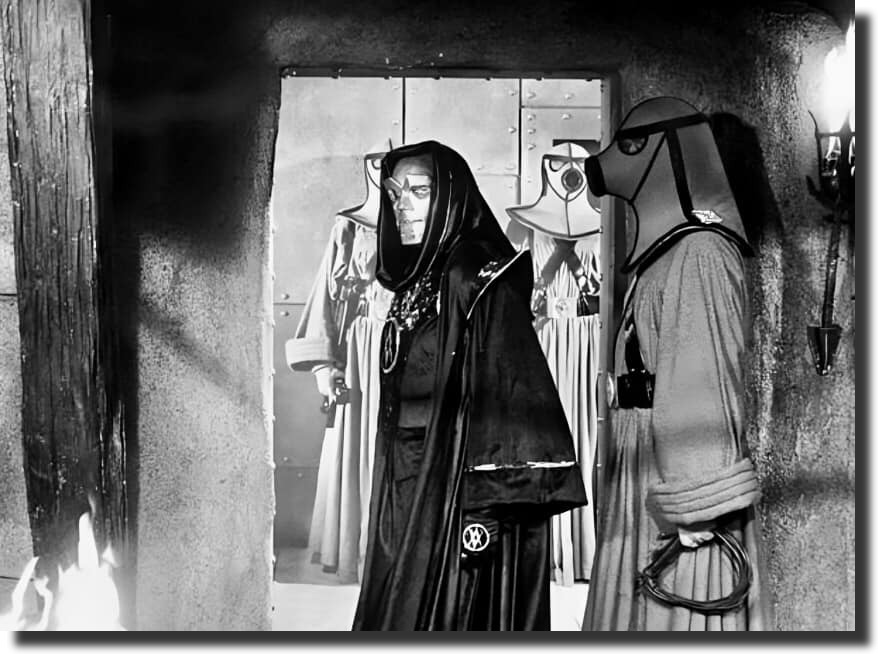

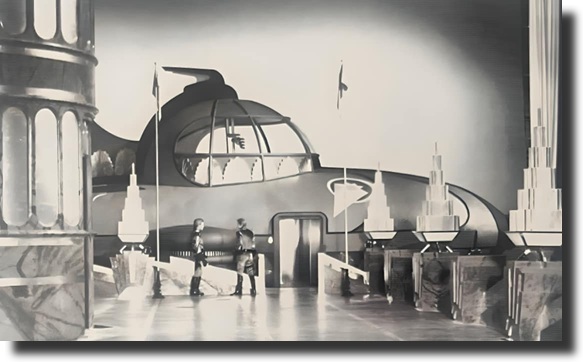
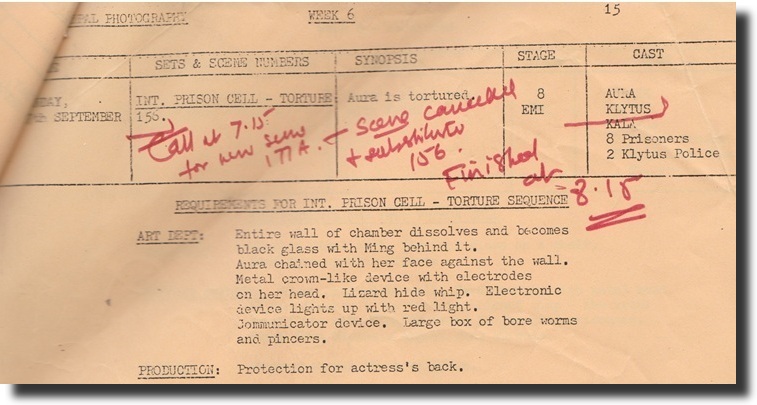
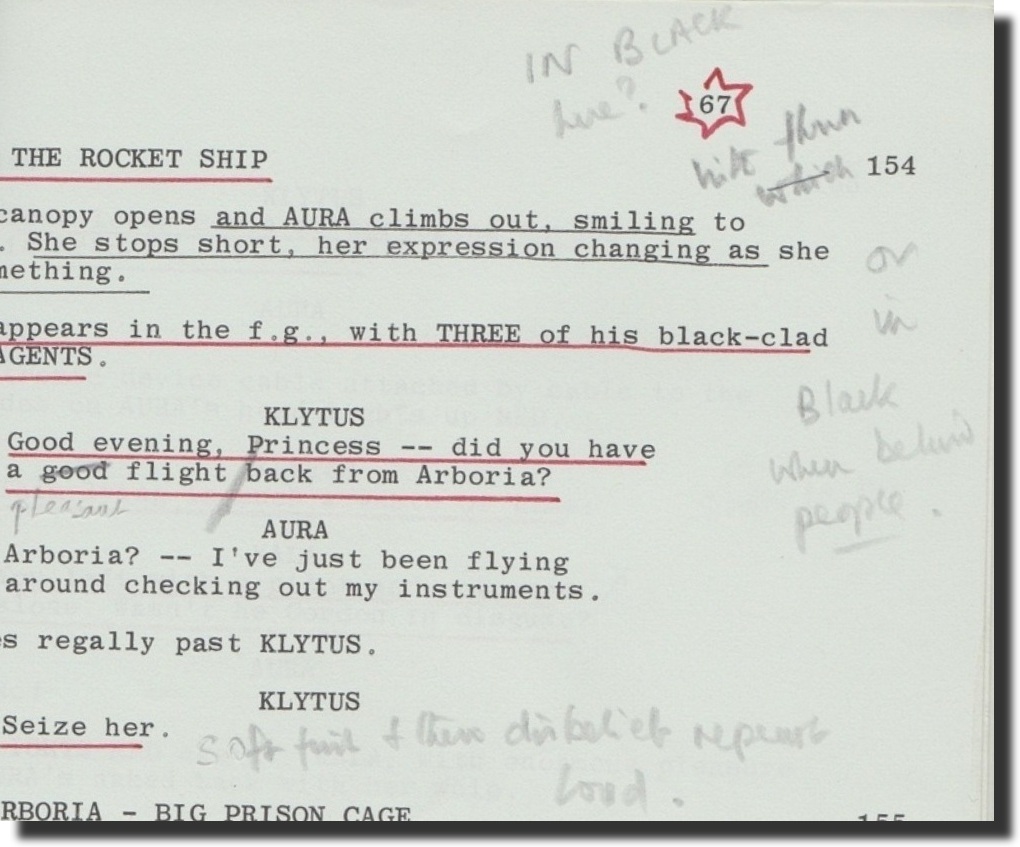

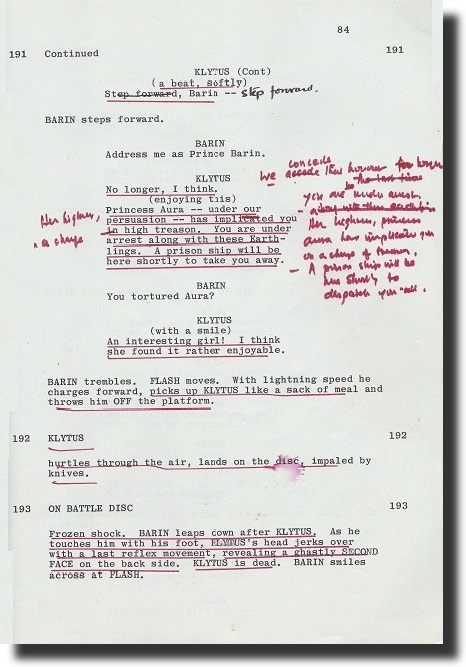
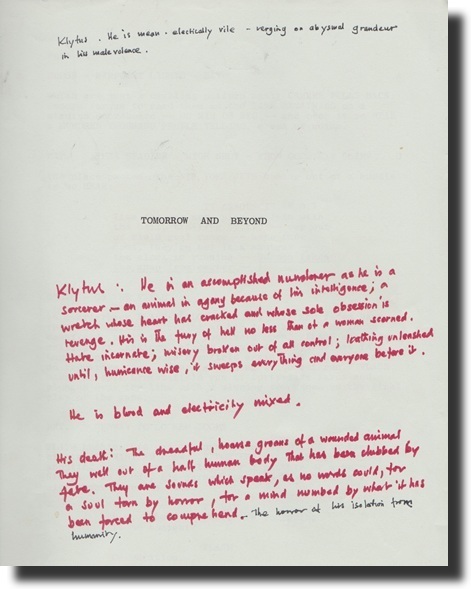
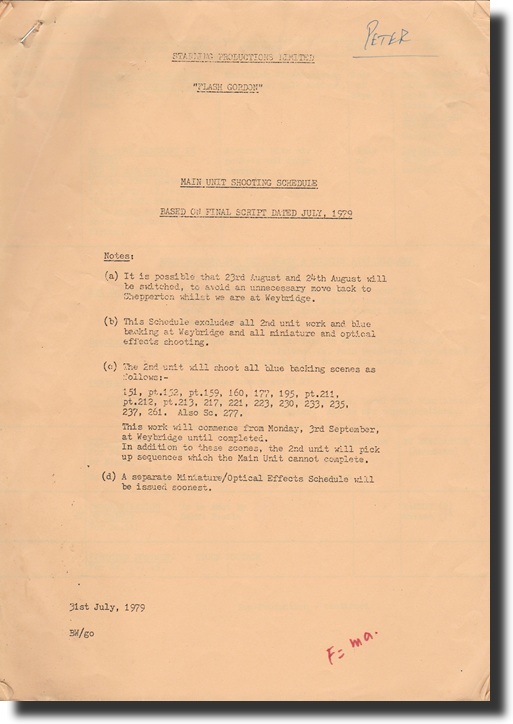



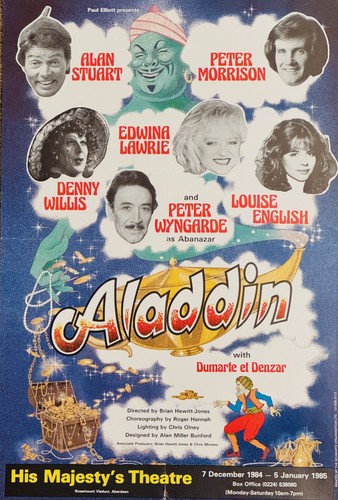
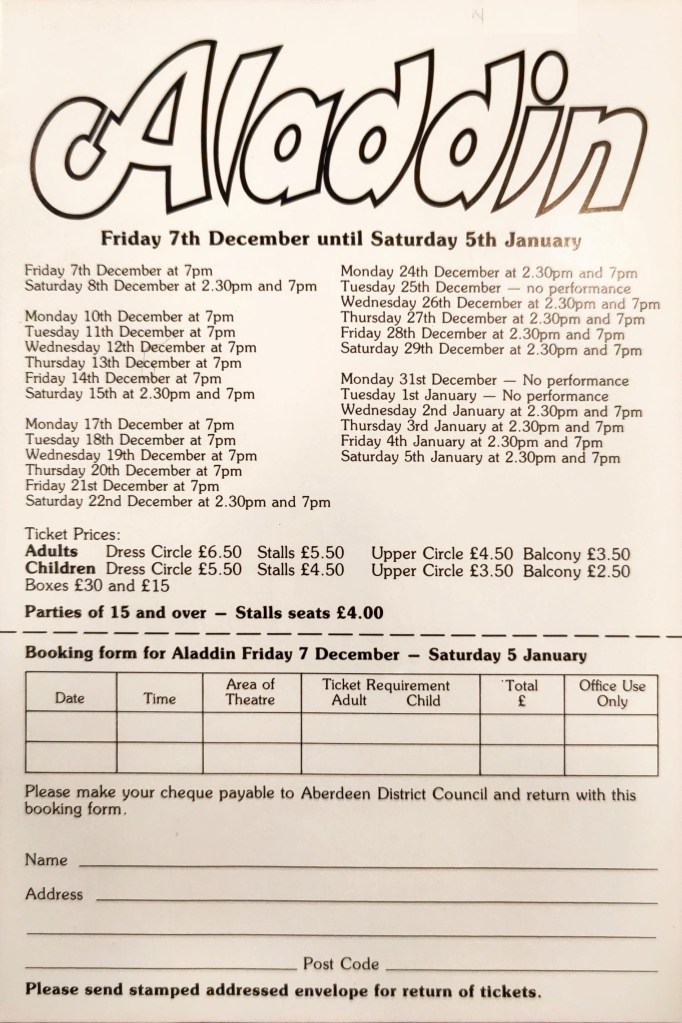
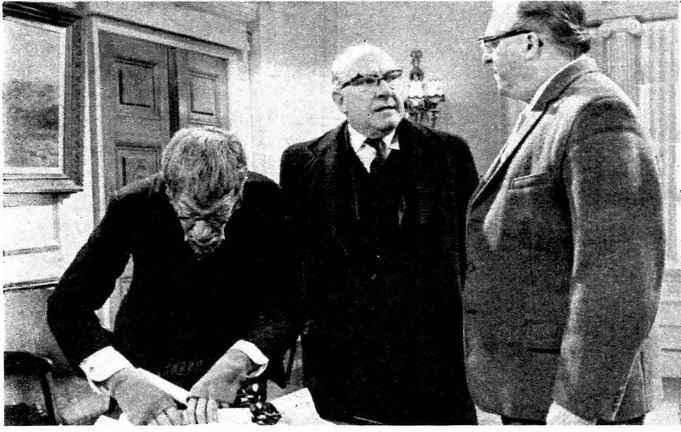
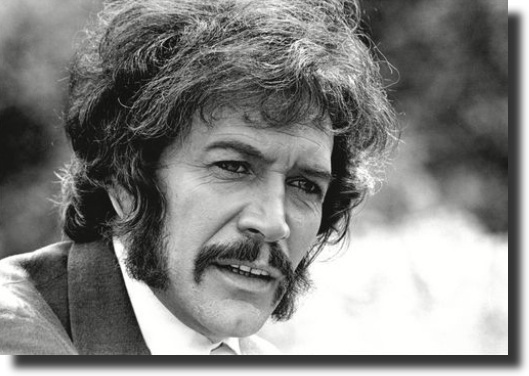

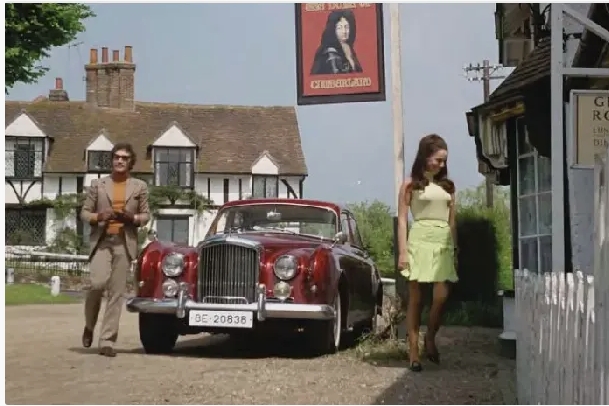
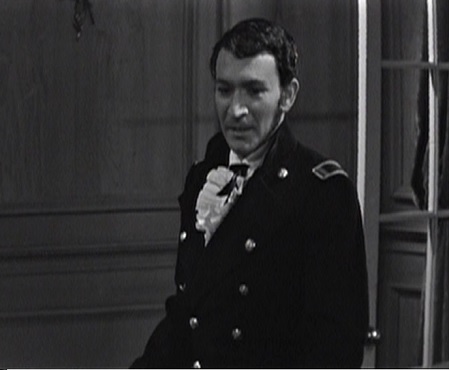


















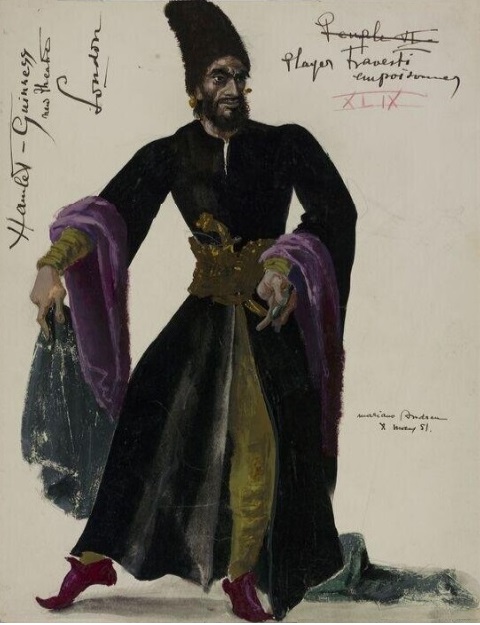



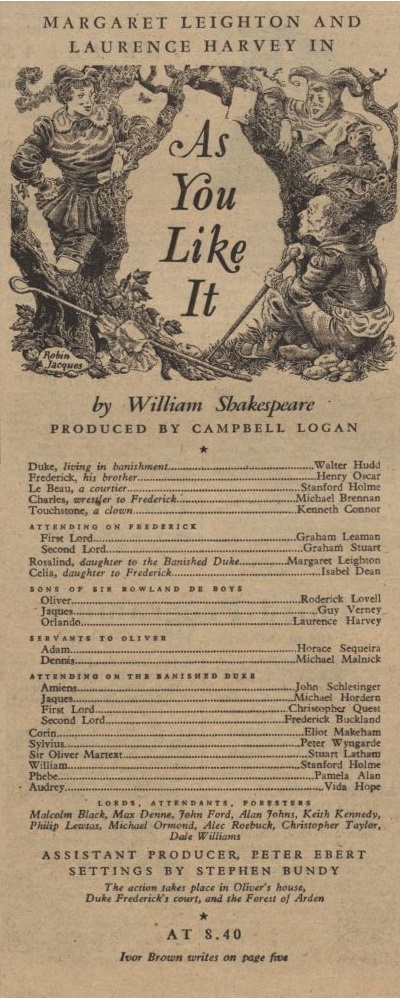

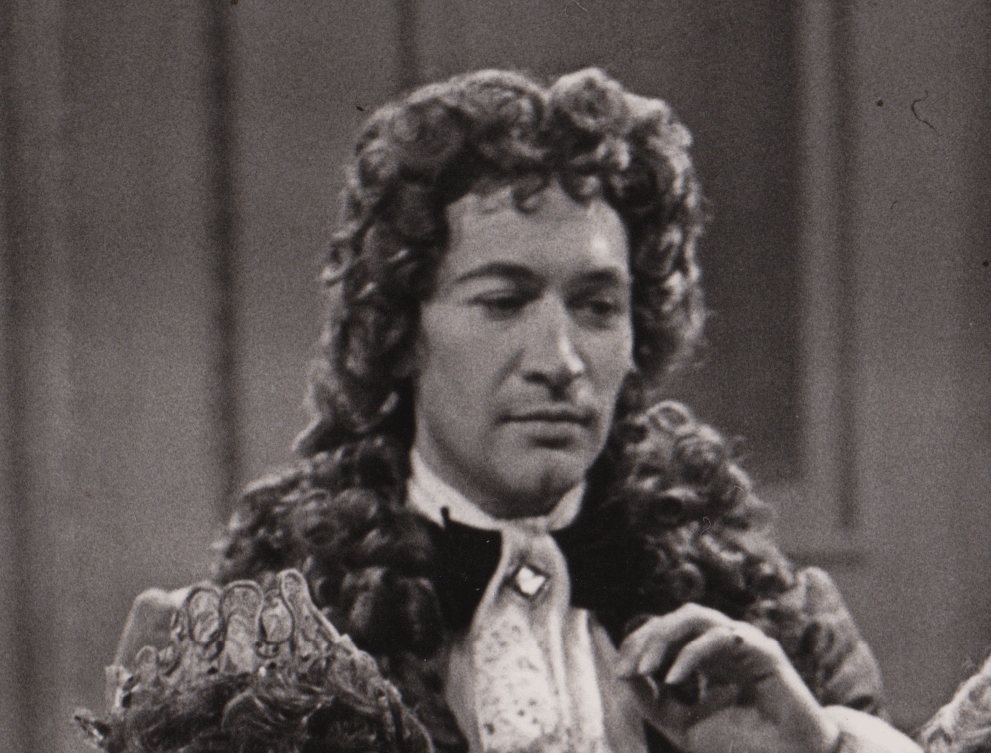


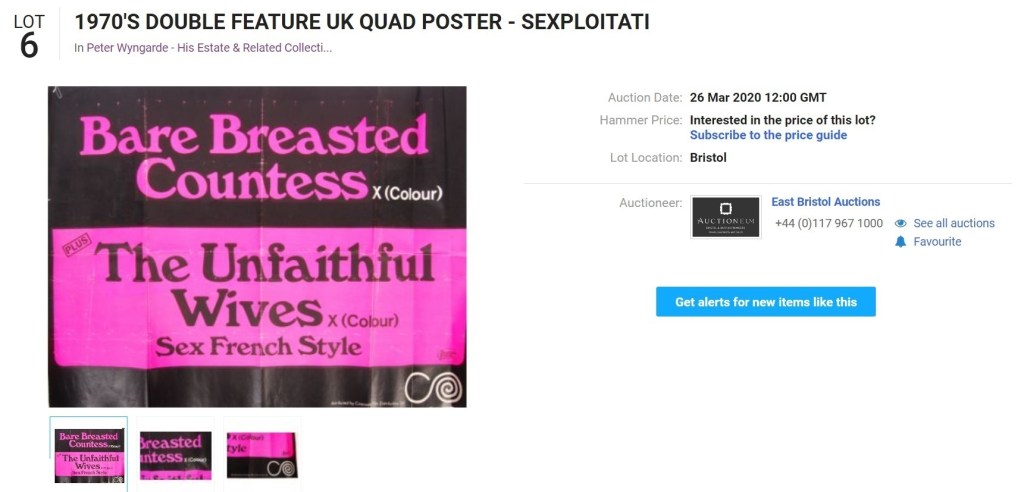


 PETER WYNGARDE: The Official Website