Produced by Rediffusion and filmed at Wembley Studio 5 in London, A Midsummer Night’s Dream was broadcast on Midsummer Night, 1964.
This version of the play was transmitted to honour the 400th anniversary of The Barde’s birth, and no less than George H.W. Rylands – Shakespearean scholar and theatre director of King’s College, Cambridge, was brought in to advise on the script. Also involved was Guy Woolfenden, then Director of Music at the Royal Shakespeare Theatre, who adapted Felix Mendelssohn’s celebrated incidental music for the production.
With Joan Kemp-Welch at the helm, every attempt was made to avoid a modern approach to the play. You wouldn’t know it, but this was Rediffusion’s first ever attempt at an in-house adaptation of a work of Shakespeare, but with a generous £16,000 budget; a small fortune back then, no expense was spared on the sets by Michael Yates, and lighting (there were 400 lamps used, with 40 lighting changes), the cast were given every opportunity to shine. Indeed over £4,000 was spent on the costumes alone!
The all-star cast was headed by Peter Wyngardeand Anna Massey as the squabbling King and Queen of the Faeries, Oberon and Titania, but were ably supported by Patrick Allen as Thesus, Cyril Luckham as Egeus, Benny Hill as Bottom, Alfie Bass as Thisbe, Bernard Bresslaw as Snout and Tony Tanner as an exceptionally energetic and feral Puck.
Above: Peter as Oberon with Anna Massey as his wife, Titania.
The very stylised and exacting approach by Kemp-Welsh showed the fairy scenes off to their best effect, and Guy Woolfenden original score added to the otherworldly ambience. Interludes featured a small corps de ballet (choreographed by Juan Corelli) set to Mendelssohn’s famous suit (performed by the Philharmonic Orchestra and the Ambrosian Singers) made good use of the well-designed costumes by Sheila Jackson.
“I thought this play was absolutely terrific. It was directed by Joan Kemp, who was herself a former actress. It had a wonderful cast, that included Anna Massey as Titania and Benny Hill as Bottom. The make-up department made my character, Oberon, appear as if he’d just come out of the earth; just like he’d grown from the earth itself. I genuinely believe that if it’d been filmed in colour as opposed to black and white, it would still be shown on TV today”. Peter Wyngarde
Above: TV Times- 21st to 27th June, 1964
Critic’s Comments
“The most imaginative TV production of a Shakespeare play during the quarter-centenary year” Alan Blyth, TV Times 19 June 1964.
“I have never seen a beer matched pair tha Peer Wyngarde’s Oberon and Anna Massey’s Titania.” Peter Black – Daily Mail
“Peter Wyngarde as Oberon is up to his usual standard of excellence”. Geoff Welsh – The Daily Mail, June 1964.
“With his smouldering presence and magnificent voice, the late Peter Wyngarde (c. 1928-2018) played Oberon in the 1964 ITV production of Shakespeare’s A Midsummer Night’s Dream. Shakespeare Magazine – Twitter
From the BBC
Screened on Midsummer’s Day, 1964, this ITV adaptation pulled in 3.8 million viewers – the Bard’s greatest television audience to that date. Transmitted to honour 400 years since Shakespeare’s birth and directed by Joan Kemp-Welch, the production deliberately sought to appeal to a wide audience, casting comics and musical theatre actors alongside more traditional thespians like Patrick Allen and Peter Wyngarde.
Philip Purser, The Sunday Telegraph’s television critic from 1961-87, recounts a wonderful anecdote concerning Benny Hill’s performance as Bottom:
Sir,
Reading your archive feature reminds me of a lucky improvisation in my weekly television review, which attracted attention exactly 47 years ago (June 28, 1964). The pioneer commercial television company Associated-Rediffusion had put out its first Shakespeare production – A Midsummer Night’s Dream, with Benny Hill as Bottom. I found Joan Kemp-Welch’s production good, with its cobwebby forest setting, Mendelssohn’s music and a superb, Lucifer-like Oberon from Peter Wyngarde. And, yes, Benny Hill did make the most of his part. But to give him sole billing above the title while ignoring the gods and lordly mortals of the cast was surely putting the cart before the horse? As I typed this I suddenly spotted, and substituted, an alternative version – it would be putting the arse before the court. They liked it in Arts and Features, but had to clear such a rude word with the paper’s founding editor, the donnish ex-schoolmaster Donald McLachlan. He pronounced it acceptable as a play on words. A letter from Michael Flanders, who with Donald Swann formed a celebrated comedy act, was printed the next week. Did my jest, he wondered, reflect my sincere opinion – or was I guilty of putting the coarse before the art? But posted directly to me from Spain, where he’d sped on holiday after the show, was a wildly enthusiastic postcard from Benny himself.
Philip Purser Television critic, The Sunday Telegraph, 1961-87 Towcester
Above: Peter as Oberon with Tony Tanner as Puck
Since it was photographed in black and white, this production had already been denied an almost essential element of its magic. Therefore, tremendous visual daring would have to be deployed to make up for the lack. And it is reasonable enough to suppose that a commercial company such as ITV, having committed themselves to the risk of losing so many millions of viewers for two hours peak showing should want to play safe and retain as many millions as they could. So, a pleasantly conventional production, with Mendelssohn‘s music, and a corps de ballet, and a clutch of well-known TV comedians for the Mechanicals.
The play opened, a little bafflingly perhaps, with Theseus and Hippolyta in close up – not a very strong exposition of framework. But as soon as we came to the forest, Michael Yates’ layers of gauzes were used to evoke a pretty atmosphere, although the lighting might be considered rather strong. Joan Kemp Welch, the director, played some effective conjuring tricks with a disappearing Oberon – acted with a controlled combination of the sinister and the majestic by Peter Wyngarde – and achieved some scenes of real charm as, for instance, Titania’s bower with Bottom and the attendant elves. The verse-speaking, as one might expect, was of a high standard. The TV Times
Above: TV Times- 21st to 27th June, 1964
A bit of the Trivia
Diaphanous gauze screens were used for the very first time on British television in this play, to help Peter and Tony Tanner to conceal themselves in the woods.
The Mill Dinner Theatre, Sonning, UK. July 22 – August 22.
National Tour, South Africa. 1989
The Hilton International Hotel, Singapore: August 26th-September 2nd
The Regent Hotel, Kuala Lumpa: September 4th-27th.
The Travel Lodge Hotel, Papua New Guinea: September 22nd-October 7th.
The Siam InterContinental, Bangkok: October 9th-13th.
The Travel Lodge Hotel, Papua New Guinea: September 22nd-October 7th.
The Nile Hilton, Cairo: October 18th-23rd.
The Jordan InterContinental Hotel: October 25th-28th.
The Athens Hilton, Athens: October 30th-November 3rd.
The InterContinental Hotel, Dubai: November 6th- November 13th.
The Hilton International Hotel, Manaman: November 15th-20th.
The InterContinental Hotel, Muttrah: November 22nd-27th.
The InterContinental Hotel, Abu Dhabi: November 30th-December 4th.
The InterContinental Hotel, Al Ain: December 6th.
The action of the play takes place in a basement flat in Notting Hill Gate, London – present day.
Act One:
Scene 1. A Friday evening in September
Scene 2. Saturday afternoon
Scene 3. Twenty minutes later
Act Two:
Scene 1. About an hour later
Scene 2. Immediately following
Scene 3. A few minutes later
Scene 4. A minute later
“Now all the children are in bed, we can talk”. Harry Roat
Some Background
This production went under the banner of ‘Dinner Theatre’, whereby a five-course cordon bleu meal was served to the audience who were seated at table, followed by a performance of the play. An extensive list of fine wines were on offer at an extra cost. Tickets for the meal and play cost around £200.
The production, was sponsored by British Airway and Reine Pedalque Burgundy Wines and Hilt on Hotels, was directed Tony Craven and produced by Derek Nimmo – the latter of whom had toured with Peter in Duel of Angels. Company Stage Manager, James Gill, also appeared in the play as ‘First Policeman’.
The Story
Mike (Roy Boyd) and Croker (Tony Caunter) are two petty crooks who, prior to a five-year stretch in Wormwood Scrubs prison, had worked as part of a trio of confidence tricksters who’d call upon some lonely and unsuspecting housewife, claiming to be friends of her husband. Their intention was to dupe her out of her life savings.
The brains of the outfit, however, was a beautiful and talented girl by the name of Lisa, who could be young or old, French or Italian…
It transpires that both men had fallen for her and would make little passes at her when he thought the other wasn’t looking. Finally she became bored of them; made an anonymous phone call to the police, and then disappeared, taking all their loot with her.
Now it seems that Lisa is back in town…
ACT I – SCENE I
A basement flat in an old house in Notting Hill, London. It’s a Friday evening.
The genuine appearance of the room is quite masculine and practical. The furniture is mostly inexpensive, second-hand stuff – bought and repaired by the tenant, Sam Henderson (Paul Blake), a professional photographer.
There are two vertical windows, with bars on the inside. In the corner is a refrigerator, and above it an illuminated clock which Susy (Helen Gill), Sam’s wife (who is blind), can feel. The room is completely silent until there are two soft knocks on the hall door. Mike enters and looks around him, suspecting that someone might already be there. He tries the bedroom door and, when hearing the front door open, he steps back into the shadow.
The front door creaks open, slowly, and Croker appears – standing in framed of the doorway, listening. He pulls from his pocket a brass knuckleduster. As he’s doing this, the bedroom door bursts open and Mike makes a dash for it. It’s obvious by the reactions of both that neither had known the other would be there.
At first, Croker thinks that the flat belongs to Mike, who’d been released from prison only a few months before. However, when he notices the woman’s clothing in lying around the house, he soon changes his mind. It transpires that both men had been summoned to the flat independently of each other by a telephone caller who they’d believed to be Lisa.
Suddenly, there’s a knock at the door. Mike signals to Crocker, who slips on the knuckle-duster and tiptoes towards the door. He slowly unlocks it to find a slim man standing outside with a dilapidated rug under his arm. Completely ignoring Croker, the man pushes open the door and forces his way in.
Addressing Mike as Mr Trenton, the man introduces himself as a messenger from the party who’d contacted the two men earlier. He identifies both villains, before introducing himself as Harry Roat (Peter Wyngarde).
Croaker enquires whether Roat is working for Lisa, or whether Lisa is working for him. Studying Crokers knuckle-dusters, Roat replies dryly: “We’re all working for Lisa!”
Sensing an atmosphere of mistrust, Roat reaches into his jacket pocket and introduces the two men to his “protection”; a five-inch long ivory figure of a girl – a girl with a deadly secret. He presses her once very gently and out springs a sleep switchblade.
“Her name’s Geraldine”, he announces. “Isn’t she beautiful?”
Mike and Croaker glance at each other nervously, where upon the latter gestures towards the coffee table where he’d placed his knuckle-duster next to a razor blade belonging to Mike. Picking up both items, Roat moves slowly away from the table: “She’ll act as a referee”, he remarks, menacingly, when Croaker suggests he return the knife to his pocket.
Roat then hands a wad of notes to the men, which both count greedily. He explains that the reason they’ve all been summoned to this particular locality, is to find a child’s doll which had been given the Sam Henderson two days earlier at Amsterdam Airport which, he tells the, contains just under two pounds of pure heroin. Sam, it seems, had taken the toy from Lisa, who’d sold him a fable of her sick daughter who was in Great Ormond Street hospital. She’s hoped to retrieve the toy when she returned to England, but had been unable to locate it in the flat.
He expounds that Lisa, posing as an Italian actress, had made an appointment with Henderson to have portraits taken at his London studio that evening, and that he’d been seen leaving the flat with his wife. The coast was clear – at least for a short time.
To be on the safe side, Roat decides to call Henderson posing as Italian restaurant owner, ‘Giano’, to apologise for ‘Ms Liciana’s’ late arrival, but adding that she’d be along directly.
As I it were all a matter of routine, Mike and Croaker immediately set about searching the flat. Whist Mike goes through to the bedroom, Roat goes through his plan for the following day, when Henderson will receive another call, this time from a proud grandfather who wishes to have photographs taken of his family. Whilst Henderson is away, Roat hopes that they might be able to persuade the wife to hand over the doll of her own free will.
As Roat begins to pack away his things in a zip-bag, he suggests that Croaker and Mike leave first so as not to raise any suspicions. Mike, meanwhile calls from the bedroom for the key to the wardrobe, which Road had claimed Lisa had left on a ledge above the door. On his return to the living room, Mike questions Lisa’s willingness to share her secrets with Roat, and suggests that she’d have only done that under duress. Again, he asks for the wardrobe key.
Taking a step closer to Mike, Roat draws the knife from his pocket and flicks open the blade. In response, Mike picks up a camera tripod and tosses it to Coaker. Mike then arms himself with a wooden kitchen chair.
Left: When things take a turn for the worse, Harry (Peter Wyngarde) has to defend himself with his flick-knife.
Hopelessly at a disadvantage, Roat returns ‘Geraldine’ to his pocket and hands the wardrobe key to Mike, who immediately returns to the bedroom. After a moment, Mike re-emerges – his face ashen and shocked. He takes from his pocket the wad of notes Road had given to him earlier, drops it to the ground and makes for the door.
In spite of Mike’s protestations, Croaker can’t suppress his curiosity, and goes to the bedroom himself. “Lisa was too clever, Mike”, Roat declares. “I felt certain she knew where it was, and then… too late”.
Croaker charges into the living room, and frantically starts wiping down any surface he thinks he might’ve touched. As the two men head for the door, Roat reminds them that they’re already involved; after all, HE is not an ex-jailbird, so no police officers will be looking for him!
They immediately begin to recognise the predicament they’re in the two crooks reluctantly agree to help Roat dispose of Lisa’s body by rolling her in the old rug, and carrying her to their van outside. Road again goes through the plan for the following day – highlighting one significant difference; they were working for him now, not Lisa.
At that moment Roat hears the distinct tip-tap of a cane in the corridor outside, and realises that Susy is approaching the flat. He gestures to Mike, who runs and stands behind the front door. Crocker, meanwhile, picks up the old rug and switches off the bedroom light. All stand silent in the semi-darkness – none of them daring even to breathe.
Susy opens the door and moving surly and quietly through the flat, calls out to her husband. She heads towards the bedroom, and feeling that the light switch is in the ‘on’ position, she again calls out to Sam. Realising at last that she’s alone, she picks up the telephone receiver and dials Sam’s studio number.
Following a brief conversation, Sam encourages his wife to walk out to meet him. His studio is only a couple of blocks away off the Kensington High Street. She agrees, and after hanging up the phone, starts to make her way back towards the door. She’s surprised given she knows the layout of the flat so well, that she accidently bumps into the kitchen chair that Mike had left out of place earlier. She pauses momentarily, then cries out, “Gloria!” – the name of a young girl she’s befriended from the flat above.
As if speaking to the three men directly, she calls out again: “Oh, come on – I know you’re there. You can’t fool me, you know!” Again she listens for a moment, but thinking she’s mistaken, proceeds on her way out of the door
ACT I – SCENE II
Right: Harry makes a proposition to his partners in crime.
It’s approximately 4.15 on Saturday afternoon. Sam is using the room as a photographic darkroom, with blackout curtains over the windows.
While busying herself with the laundry, Susy asks her husband if he’s hear anything about a murder the previous night. He says he hadn’t so Susy continues by telling him that a body of a young woman had been discovered wrapped in an old rug not far from them. Sensing her apprehension at the thought of spending the evening alone in the flat, Sam offers to cancel his appointment in Brighton and stay home. Typically, she refuses, telling him not to be silly – she’ll be fine.
A Sam heads for the door, he promises to call the moment he arrives in Brighton. He goes on to remind her that she might also receive a call from the lady about the doll, and asks her to apologise on his behalf as he’d not yet been able to find it. He suggests that she ask Gloria if she’s seen it, or at least help her look for it.
Closing the door behind him, Susy appears a little depressed at the prospect of a long, lonely evening in front of her. As she walks towards the kitchen with an armful of washing, a cigarette that Sam had left in an ashtray begins to smoke. She stops and tries to locate where the smell is coming from. After calling out to both Sam and Gloria without a response, she begins to panic, and runs towards the door where she trips and falls. Managing to pull herself together, she reaches for the phone and dials 999.
Just then, she hears a man at the door calling her name. Dropping the ‘phone receiver, she turns in the direction of the voice, which goes on to introduce itself as that of Mike Trenton – an old friend of her husband.
Forgetting completely her trepidation of spending the evening alone in the flat with a murdered on the loose, Susy happily asks Mike in, and within a moment he’s located the burning cigarette and extinguished it.
When Susy finally calmed down, Mike explains that he’s on a rare visit to London from Bristol, and since he was passing, he thought he’d drop in on an old friend. Mike goes on to say that he and Sam had been in the same Army regiment, and to make his story more plausible, recounts a couple of old stories of their adventures together. He’s suddenly interrupted by the sudden arrival of 12-year-old Gloria (Annabelle Lanyon), who has let herself into the flat.
Gloria’s arrival appears to spook Mike, who makes his excuses and leaves, leaving a Susy bemused and hollering after him to drop in again whenever he’s in London. The girl tells Susy that’s she’d just called for a shopping list, which is duly handed over to her. But just as she prepares to leave on her errand, there’s a knock at the door, which Gloria answers on her way out.
Gloria finds a man of around 70-years of age standing in the hallway, who seems rather eccentric in both appearance and manner. He’s wearing a hot over white, scraggy hair, and although his voice sounds old and husky, he looks uncannily like the figure of Harry Roat. He asks if he might speak to Mr Sam Hunt, but Susy informs him that no one by that name lives there. Accepting of her answer, the ‘old man’ asks if he might have a drink of water, but as the young woman turns to head for the kitchen, the ‘old man’ makes a dash for the bedroom – bursting across the living room and then reappearing carrying several books and framed wedding photographs – all the time yelling, “And you tell Sam Hunt – if he doesn’t leave her alone, I’ll kill him!”
Somewhat conveniently Mike Trenton returns, claiming to have left a parcel behind, and immediately pretends to give chase when the ‘old man’ darts past him. When Trenton returns, Susy is naturally very grateful to him, and she tells him how the ‘old man’ had just barged past her into the flat. Trenton offers to call the police, knowing that the call will only get as far as Detective-Sergeant Croker who is waiting in a phone box at the end of the street.
ACT II – SCENE I
Twenty minutes pass until Croker arrives dressed in a hat and raincoat, and enters the flat – notebook and pencil in hand. He takes the necessary details from Susy, but just as he’s about to leave the telephone rings. The caller asks for Croker who, during the course of the call mentions, amongst other things, a doll.
After taking the call, the ‘Policeman’ begins to ask Susy about her husband whereabouts on the previous evening, explaining that he’s investigating the suspicious death of a young woman whose body had been found in the area. Croker had noticed Susy’s reaction when he’d spoken about the doll moments earlier, and decides to continue with that particular line of enquiry – much to Mikes ‘annoyance’, who points out to the ‘Detective’ that Mrs Henderson need not answer any more of his questions. Croaker leaves, slamming the door loudly behind him.
A minute or two passes before the doorbell rings. Mikes opens it to find Harry Roat standing outside. He’s wearing a dark suit and black leather gloves, and sounds short of breath. “Good evening, Mr Hunt?“ he begins, but before Mike is able to correct him, he’s through the door and inside the flat. Susy suddenly recoils – an instinctive movement which both men notice. They cast a glance at each other.
Roat asks if, per chance, an elderly gentleman (his father), had called on her earlier that afternoon. She replies that he had, in fact, been quite rude. At that moment, Gloria appears in the doorway carrying a large bag of groceries. Mike, fearing that she might recognise him, turns away to hide his face but Roat, stares at her quite deliberately.
Apologising profusely for his ‘father’s’ behaviour, Roat explains that some years earlier, his wife had taken a holiday abroad and that she’d become acquainted with a photographer by the name of Sam Hunt. His ‘father’ had told him that she’d continued to see him from time to time, even though she’d always denied it. The previous Sunday, he and his wife had been invited to dinner at his ‘father’s’ house, but she arrived late saying that she’d been to see friends who were going abroad the following day, and that she’d wanted to give them a musical doll which his ‘father’ had broken recently.
Susy appears startled, but apart from a knowing glance in Miles direction, Roat brushes it off as if of no importance. Susy asks where ‘Mrs Roat’s’ friends were heading: “Amsterdam”, he replies, quite matter-of-factly.
Roat continues to tell her that the doll had been of great sentimental value to his wife, and that the friends had offered to take it back to Amsterdam to have it repaired. He discovered later that the toy had been given to “Luciana” by Sam Hunt. He claims that a note had been posted under his door giving the address of the Henderson’s flat, and when his wife had failed to return home, he’d decided to call on the off chance that he’d find Hunt home.
When the telephone rings, Susy looks too stunned to answer it, but when Mike moves towards it, Roat raises a gloved hand and gestures to him to let Susy take the call. When she doesn’t move, Mike finally picks up the receiver. It’s Croaker.
Mike informs Roat that the call was in relation to his ‘wife’, and that his father has been taken to the police station in Bayswater. Roat departs, leaving the front door wide open behind him. When Susy’s sure Roat has gone, she confides in Mike about the doll. With Mike’s assistance, she discovers that a wedding photograph of her and Sam had been removed from her dressing table, and she suggests that it must’ve been the ‘old man’ who’d taken it.
Glancing through the window, Mike tells her that there’s a police car parked across the road… and they’re watching the flat!
ACT II – SCENE II
An hour has passed since Roat’s departure, and by the state of the flat, it’s evident that Mike and Susy have been busy searching for the doll.
With Mike alone in the living room, the phone rings and he answers it. He relays a message to Susy that he husband will be home later than planned. While Susy feels she should wait until Sam gets home before continuing their search, Mike manages to persuade her that they should carry on so that they might destroy the doll and anything else that might connect Sam to ‘Mrs Roat’ before the police return.
Reluctantly, she hands Mike a set of keys to just about every door and cupboard in the flat including, Mike hope, the large safe in the corner of the room. He waits for Susy to go into the bedroom before trying three of the most likely keys in the large cast-iron lock. None of them work.
When Susy returns to the living room, Mike bring up the possibility of the doll being in the safe, but she tells him that it’d been left there by the previous tenant, and that neither she or Sam had ever seen the key. With almost ever avenue seemingly exhausted, Mike tells her that he must go and check out from his hotel, but assures her that once he’s collected his belongings, he’ll return.
With Mike gone, Susy returns to the bedroom. The room remains empty for a moment or two, until the sound of a key in the front door lock breaks the silence, and Gloria slips in. She’s carrying what appears to be the same bag of groceries she had before, but as she tip-toes across the room, she removes the much-sought-after doll from the bag and tucks it under the corner of the sofa to make it look as if it’s fallen there by accident. As she tries to leave in the same manner as she came in, Susy re-enters the room and catches her red-handed.
Susy asks Gloria if she’d take a look out of the window to see if the police car is still there. Gloria replies that it’s not, but there is a white van parked next to the phone box across the street, and Croaker has just got out of it. Both Gloria and Susy agree that Roat is probably a police officer, too.
The girl turns from the window to make her way to the sofa, where she reaches cautiously for the doll, which plays two or three notes of its tune. Susy turns sharply, and asks Gloria to hand her the toy. She immediately instructs the child to lock all the doors, and then desperately tries to find a place to hide the doll. She finally elects for the washing machine under a pile of laundry. She now tells Gloria to go upstairs and watch through the window, and to let her know should anyone get out of the van to use the phone.
In spite of all their precautions, Croaker somehow manages to gain entry to the flat via the back door, and tells a startled Susy that the body of a woman that’d been found the previous day was that of ‘Mrs Roat’. He goes on to say that he firmly believes that the doll, which was given to her by Sam hunt, is hidden somewhere on the premises. However, Susy refuses to allow him to search for it, and demands that he gets a warrant.
Before leaving, Croaker quietly slips the latch on the door, then slams it before stepping out into the street. Immediately Susy reaches for the phone and dial the number that Mike had left her. She tells him that she has the doll, and confides in her her suspicions about Roat.
Given the ease at which Croaker managed to get into the flat, she decides to check the back door to make sure it’s locked securely. At the moment the phone rings, and she turns back sharply hoping it might be Sam, but it stops after the second ring. Suddenly it dawns on her: What if Mike is in with Croaker and Roat?
For a moment she stands silently not knowing what to do, when suddenly she hears Mike at the door. He’s not alone. Both Croaker and Roat are with him – the latter of whom, still dressed in his dark suit and black leather gloves, stares coldly at Susy.
ACT III – SCENE I
Mike, keeping up the pretence, asks Susy where the doll is so that he might destroy it before the police arrive. She asks him to wait a moment, then disappears into the bedroom. When she re-emerges, she’s wearing a coat and carrying handbag. Picking up a small knife from the coffee table and a set of keys, she tells Mike that the doll is locked in Sam’s desk at his studio. Roat and Croaker look at each other in horror.
Left: Harry Roat makes himself at home in Susy’s flat.
Roat, still as cool as steel points to Mike, instructing him to offer to go. He does, and after tossing him the keys, Susy takes off her coat and lies back on the sofa. Mike exits through the front door, and both Croaker and Roat follow him. When she’s sure they’ve gone, she picks up a large, heavy saucepan and bangs it three times on a pipe in the kitchen. After a few moments, there are a trio of muffled knocks on the front door. It’s Gloria.
Together, Susy and the girl cover the windows with Sam’s darkroom curtains, and between them the break every bulb in the flat and remove the fuses from the electric meter. Susy then begins mixing a cocktail of ammonia and oil, which she pours into an old vase.
Satisfied that everything’s in place, Susy instructs Gloria to go to Victoria Station where she’s to wait for Sam’s train getting in from Brighton. Next, she locks the back door and then she takes a kitchen knife and hides it in the washing machine with the doll.
Act III – Scene II
The room is lit only by a torch on Sam’s workbench. Susy is sitting at the kitchen table, with the vase and a box of matches in front of her. Suddenly, there’s a noise at the back door, and simultaneously someone tries the handle of the front door. There’s a quiet knock. It’s Mike.
She hears the sound of something being pushed between the lock and the door, and after several seconds of impatient rattling, Mike enters. Susy tells him that she’s known all along that he’d been working with the two other men, and that she doesn’t believe that her husband is responsible for the death of Roat’s ‘wife’.
She goes on to tell him that the doll’s in the safe and that the door is unlocked. Mike picks up the phone and dials a number. Based on what he says, it’s evident that he’s talking to Croaker, as he instructs him to kill Roat.
As rings off, Mike moves towards the safe but finds that it’s locked. Susy lunges sharply for the phone, but before she can dial 999, Mike knocks the receiver from her hand. However, the sound of a car engine and sound of a man’s voice in the mews behind the flat draws Mikes attention, and Susy is able to wrest herself from his grasp.
Becoming increasingly agitated, Mike calls out that he’s going to leave. Susy promises not to tell the police about him if he’ll leave her husband alone. He agrees. However, as he reaches the door and turns to take one last look at her, he freezes, and with a look of horror on his face, falls backwards onto the floor.
Harry Roat enters, closes the door behind him and locks it. He wipes the blade of his knife on his sleeve and slips it into his pocket. “Well, Susy”, he calls out menacingly. “Now all the children are in bed, we can talk”.
ACT III – SCENE III
Harry Roat drags Mike’s body into the bedroom while Susy, terrified and shaking, attempts to make her war to the front door. But before she makes it across the room, Roat re-emerges from the bedroom and blocks her route. He tells her Susy that there’s no point in her hoping for Sam’s early return, since as a message had been sent to him advising that his wife had been taken to St Mary’s Hospital after a fall: “He’s probably there right now.”
Calmly Roat asks her for the doll, but she refuses. From his zip-bag, he produces a light, chiffon scarf which he flings into the air above Susy’s head. As it brushes against her face, she recoils violently, and as it tangles between her fingers, she backs away. Finally, it falls to the floor, and he watches intently as if it were some kind of experiment.
Susy backs further and further away until the back of her legs touch the table. Again he asks for the doll, and again she refuses – slowly manoeuvring around until she’s standing close to where she left the flower vase. Again and again he asks for the doll, but she remains silent. Roat reaches down and picks up the scarf, and from his bag produces a small can of petrol which he starts sprinkling around the room. At the same time, Susy picks up the box of matches from the table and slips them into the pocket of her skirt.
When he’s finished, Roat places the petrol can on top of the safe and moves slowly toward Susy. As he touches her lightly on the arm, she throws the contents of the vase in his face and he reels – his hands flying to his burning eyes. He backs away. Susy makes a lunge at the torch on Sam’s workbench, but she trips over a chair and falls. This gives Roat an opportunity to recover, and seeing what she’d intended to do, he reaches the lamp before her. As Roat tries desperately to turn on the lamp, Susy kicks off her shoes – Roat flicks open ‘Geraldine’.
Roat throws the knife in Susy’s direction. It misses her head and sticks in the wall behind her, and a split second later the lamp crashes to the floor. Susy listens intently as Roat moves towards the back wall to retrieve the knife, where he searches clumsily. Neither of them speak. Roat stands perfectly still as his breath gradually quietens until Susy can barely hear it at all. He strikes a match and finds that he’s standing next to the workbench. Susy is across the room near the safe with a kitchen knife in one hand. With the other, she feels for the petrol can then turns towards Roat. When he sees what she’s about to do, he lunges at her.
Aiming in his general direction, she begins dousing Roat with petrol from the can, then strikes a match and holds it out towards him. In response, he surrenders his own matches – tossing them on the floor at her feet. Gradually, Susy begins winning round after round, and starts to talk to Roat rather like an experienced teach talking to a rebellious child.
She throws him a key and tells him to go into the bedroom and lock himself in. Road, however, has other ideas, and makes a dart for the front door. Susy reacts by striking another match and holds it at arm’s length in front of her.
With a match in one hand and the knife in the other, Susy takes a few steps towards him. Scrambling in the darkness, Roat pulls out a kitchen chair and, like a lion tamer, taps his knuckles on it so Susy knows exactly where he is.
At first, he taps out an irregular beat, but then changes it to a more precise tempo until, finally, he’s beating a hard, sharpe, slow rhythm – punctuated by his words. At the same time something sinister creeps into his voice, as if he’d just had an idea and is daring her to guess what it is: “It’s funny. When most people plan something (Tap! Tap! Tap!) – however clever they are (Tap! Tap! Tap!) – they overlook…”
As the tapping stops, Roat’s voice begins to move further away. He reaches the kitchen and opens the refrigerator door. It immediately makes a loud hum and it throws a dim light onto Susy. Roat grabs a towel and loops it around the hinge on the door to keep it open. Again and again she tries to to close it, but always a slim streak of light comes from it. In her desperation she drops the knife, which Roat kicks away just out of her reach. Terrified, she finally agrees to give him the doll.
Susy reaches into the washing machine and produces the doll, but unbeknown to Roat, she slips the kitchen knife she’d hidden earlier up her sleeve. She carried the doll to the kitchen table, where she carefully slips the knife out of her sleeve and holds it behind her back. Meanwhile, Roat slits open the doll and pulls out several small packets of white powder. He fetches his zip-bag and puts the packets inside – as he does, the doll starts to play a few notes of its musical tune. Collecting the rest of his things together he stars towards the door then notices his box of matches on the floor. He picks them up and rattles them as if for Susy’s benefit. He orders her to the bedroom.
Roat takes the key from Susy’s pocket, saying that he’s only doing to her what she intended to do to him. He puts his hand gently on her elbow to guide her, but she shakes him off then obediently, heads towards the bedroom. He follows behind.
Once at the door, Roat abruptly attempts to push Susy inside, but she turns and catches hold of his coat. Initially, he doesn’t see the knife she’s holding, and she stabs at his – once, twice, three times, just missing. He tries to step back, but she holds tightly onto his coat and won’t let go. In the struggle they’ve managed to trade places, so now she’s outside the door, but she continues stabbing wildly, until she falls backwards and loses her grip on the knife. She feels around frantically, but can’t find it, so she retreats back into the living room –smashing up against the safe and almost knocking herself out. She recovers, and tries to reach the front door, but Roat pounces but falls, grabbing at Susy’s feet. He spots the knife and grabs at it, while Susy frantically tries to close the ‘fridge door and deprive him of his only light source. Roat stabs the knife into the floor, and pulls himself along like a reptile. Susy freezes and listens to him crawling nearer and nearer. She grabs wildly at the refrigerators electrical cord, and begins shouting for help; her voice half strangled so that barely a sound comes out. Road slides ever closer: “I’ll help you, Susy!”
Again she grasps for the electrical cord, but finds her way barred. Roat hauls himself up, using the shelves in the fridge as a ladder. Once steadied, he raises the knife and hurls himself at Susy. Again, she goes for the cord, and this time is successful; the light goes out, leaving the room in complete darkness. At that second, there’s a loud bang and the door flies open with a splintering crack. In rush two policemen, their torches darting about the room until one of them halt on Roat’s body. One of the officers (James Gill) goes over to him and shines a light directly at him. Roat is hanging in a contorted position; the sleeve of his jacket caught on one of the refrigerator shelves.
As the second officer (Chris Jacobs) heads towards the bedroom, and begins opening draws and cupboards, the first policeman continues to cast the torch around the room until suddenly he spots the tiny flicker of a match which Susy is holding out in front of her, as if for protection. Suddenly Gloria appears in the hall doorway, then pushing past the two policemen, she blows out the match and takes Susy by the hand.
Gloria begins to move anything that might be in Susy’s path and then begins to lead her towards the door. Sure that she’ll be able to make her own way out, Gloria finally releases her and the two policemen follow her to the door with the light from their torches.
As she reaches the door, Sam appears and holds out his hand, and for a moment, she gropes around to find it. Everyone is very still, and as Susy finally takes Sam’s hand, the curtain falls.
Above: An original ticket
Peter and Helen Gill in a publicity photo for ‘Wait Until Dark’.
Dark Facts
Since the story had originally been set in 1966, Peter re-wrote much of Harry Roat dialogue to bring it up to date.
The ‘Wait Until Dark’ tour was sponsored by aviation giants, British Airways.
The play’s producer was Derek Nimmo, who’d worked with Peter27 years earlier in ‘Duel of Angels’
James Gill, who played one of the police officers, also directed the play.
Press Cuttings
THRILLER PROVES A BIG HIT
The latest Hilton Playhouse is rare entertainment indeed. A brilliantly constructed thriller, it builds tension scene by scene until the audience is left gasping for breath.
Fredrick Knott’s play manages to be spine-tingling without being harrowing. There are laughs here as well as terrifyingly uncertain moments.
Peter Wyngarde as the psychopathic criminal who sets up two small-time crooks to con a blind woman into giving them a heroine-stuffed doll conveys the right mixture of threatening sanity and craziness.
Helen Gill as the recently blinded woman who know her husband is away for the day is vulnerable without being pathetic and convincingly resourceful. Roy Boyd and Tony Caunter are amiable petty crooks caught up in something they can’t quite handle.
The play never flags, moving smoothly from small dramas to even bigger ones, and culminating in an unforgettable scene in which the cast manage still to pull off surprises. A welcome change from farce, and a thoroughly gripping evening.
Gulf Daily News – Sunday, November 16th, 1989
Critics Comments
‘Peter Wyngarde is smoothly sinister, showing flashes of cruelty as suddenly as he produces his flick-knife’.Henley Standard
‘Wyngarde’s whispering villain Roat is a study in menace…’Chronicle 1st August, 1986
‘Peter Wyngarde as the most cunning and ruthless of the crooks, is superb in the best production I’ve seen at The Mill’ Bracknell Standard – 1st August, 1986
‘Peter Wyngarde is a frightening villain – the cultured kind who quotes Swinburne as he prepares to finish you off…‘ Evening Post 2nd August, 1986
Like Cult TV fans everywhere, I was delighted to learn in the early 1990’s that ITC Home Video were planning to release selected episodes from some of the classis British television series that I’d been a fan of since childhood.
Following on from the tremendous success of the earlier ventures into the home video market of The Prisoner, and children’s favourites, Thunderbirds and Captain Scarlet, I expected that the release of The Champions, Randall and Hopkirk (Deceased), The Saint and, more importantly from my stand point, department S, would’ve been welcomed by fans like old friend but, seemingly, that wasn’t the case.
Whilst the hard-core fans demanded more examples of their favourite programmes on tape, the powers-that- be at ITC Home Video complained of poor sales, stating that the fan base for the old ATV/ITC shows were comparatively small compared to those of, say, Doctor Who and Star Trek.
The went on to explain that the process of releasing episodes from Department S and Jason King, for example, was an extremely long and complicated one, since the original master tapes were, at the time, stored at the Technical Services Department at their U.S. base in Los Angeles.
The cleaning and transference of the original film on to a 1-inch master tape, which was then flown out to the United Kingdom for duplication onto video, was said to be very expensive – the money for which was taken straight from the marketing budget.
Since they claimed sales for these tapes weren’t excessively high, the coffers for promoting the next batch of releases remained low., and thus a vicious circle began to form, with ITC leaving much of the marketing in the hands of the individual retailer.
With advertising restricted mainly to specialist publications such as TV Zone and Empire ITC, it appeared, were merely preaching to the converted and little, if any, advantage was taken of the success of Sixties and Seventies retrospectives on both BBC 1 and 2, and Channel 4 during the early to mid-Nineties.
There also seemed to be a noticeable reluctance by ITC as a whole to cooperate with the respective fan clubs, which had sprung up as a result of these programmes and their stars.
Fellow club secretaries reported that their attempts to obtain promotional material from ITC’s Marketing Department often proved futile and, on occasion, it was even said that professional journalists were purposely thwarted in their effort to report on a particular show.
In the meantime, certain greedy retailers – namely Our Price Video! – were seizing the opportunity to rip-off Cult TV fans by raising the price of ITC product by £1.00, from the Retail Recommended Price of £10.99 per tape to £11.99, in the mistaken belief that the compulsion of fans to maintain his or her collection would drive them to pay that little bit extra.
Needless to say, this tactic was to prove disastrous for all concerned, as video store owners were left more often than not with unsold stock, and a reluctance by fans to buy new product. This in turn forced fans to travel to neighbouring towns (or further) to obtain the latest releases.
Once again, ITC scored a costly own goal with its half-hearted attempt to revive the public’s flagging interest in their video catalogue by releasing a collection of compilations, featuring a cocktail of various episodes under the banner, ‘A Night in TV Heaven’; ‘Action Classics’, and ‘Classic TV Heaven – the 50’s, 60’s & 70’s’.
Some fan clubs felt that, whilst compilations videos might work well as a teaser for the public in a similar vein to the BBC’s highly successful, ‘A Day in the Sixties’ retrospective, many collectors may be put off by the fact that they were being forced to buy one episode twice in a single series format, just to get a second instalment.
Meanwhile, The Avengers, which were being distributed by Lumier via Sony, were seemingly going from strength to strength. But why then were The Saint, The Baron and Jason King (to name but a few) appeared to be faltering?
The answer was simple: The principle difference between ITC’s video release policy and that of Lumier (The Avengers), CIC (Star Trek) and BBC Video (Doctor Who) was CONSISTANCY!
Fans of the aforementioned series, as with those of The X Files, Red Dwarf and Quantum Leap (amongst others) were able to establish a pattern of release days – usually the first Monday of every months, which allowed them to budget for their purchases, and to settle into a kind of ‘rhythm’.
Followers of the various ITC series, unfortunately, were never afforded the opportunity to form any sort of pattern. Releases any kind of order, and some fans were left reluctant to start a collection that might never be completed. It was as if ITC Home Video were dangling the proverbial carrot on an unfeasibly long stick!
Communication between the distributors and the retailers was virtually non-existent, with individual shops basically having to telephone ITC’s Marketing Department themselves on a semi-regular basis in order to obtain details on forthcoming titles and their proposed release dates.
Promotional material such as posters and cassette sleeves were scares –so scarce in fact that one retailer said that ITC actually called HIM to ask if he could return some posters to them to use at the Action ’93 convention at Shepperton Moat House near London!
By their own admission, few of those working for the company knew anything about the series they were selling, and episodes for release were often chosen at random, or because it featured a recognisable actor or actress in a guest role – i.e. ‘Toki’ was selected for Volume 2 of the ‘Classic TV Heaven’ compilation for no other reason than Felicity Kendall’s name appeared on the credit list! Photographs for the video sleeves were plucked out of the archives at random.
In spite of the shortcomings of ITC’s video release and marketing policy, at least it gave genuine fans an opportunity to gain limited access to television series which had long since disappeared from our screens.
Having sold on their entire treasure house of British telly to Polygram Television UK, it seemed inevitable that both Department S and Jason King, along with their ATV bed mates would become the property of satellite and cable channels, denying them to all but those who could afford the subscription fee.
It took the Australian company, Umbrella Entertainment, to issue the first decent, Department S complete series DVD box set in 2004, followed several years later by Network’s Department S and Jason King Box Sets – all of which have gone on to become collectors’ items (in the case of the Umbrella release) and best sellers around the world.
ITC Home Video releases of Department S and Jason King:
Department S: Vol 1, ‘Six Days’ and ‘The Trojan Tanker’ (ITC 1821). Released: June 8th 1992. Vol 2 ‘Man from X’ and ‘Pied Piper of Hambledown’. Released: June 8th 1992. Vol 3 ‘Blackout’ and ‘Man in the Elegant Room’. Released: August 23rd 1993. Vol 4 ‘One of Our Aircraft is Empty’ and ‘Cellar Full of Silence’. Released: August 23rd 1993.
Jason King: Vol1. ‘The Company I Keep’ and ‘Nadine’ (ITC 8201). Released: April 30th, 1993. Vol 2. ‘Flamingos only Fly on Tuesdays’ and ‘Thin Band of Air’ (ITC 8202). Released: April 30th 1993. Vol 3, ‘If It’s Got to Go It’s Got to Go’ and ‘Deadly Line in Digits’ (ITC 8203). Released: September 20th 1993. Vol4. ‘Buried in the Cold Cold Ground’ and ‘Variations on a Theme’ (ITC 8204). Released: September 20th 1993.
Department S and Jason King double bills: Vol 1. Featured the Department S episode ‘Double Death of Charlie Crippen’ and the Jason King episode ‘ ‘Red Red Rose For Ever’ (ITC 1833). Released: Feb 7th 1994). Vol 2. Featured the Department S episode ‘The Bones of Byrom Blane’ and the Jason King episode ‘A Kiss for a Beautiful Killer’. Released: Feb 21st 1994. Vol3. Featured the Department S episode ‘Who Plays the Dummy’ and Jason King episode ‘Page Before Dying’. Released: August 18th 1994.
Compilations:
Classic TV of the 1970s, Vol. (ITC 8225). Released in around Summer 1993, (ITC 8225). Included the Jason King episode, ‘Toki’. A Night In TV Heaven. Featured the Department S episode ‘The Man from X’. Another Night in TV Heaven Vol. 1. (N.B. Released by Polygram).
And some orphaned episodes are out there too, that we can’t fix a video release for: Department S: ‘Small War of Nerves’ (passed by the BBFC on 28/10/1993 The Man Who Got a New Face (passed by the BBFC on 1/8/1993 ). Treasure of the Costa del Sol (passed by the BBFC 23/03/1994) Classic TV Heaven Vol 1 The 1960s (Summer 1993) A Night in TV Heaven Vol3 (Sept 6th 1993).
A story of viral infections, broken winches and press misinformation!
In 1995,Peter was cast in the lead role of The Cabinet of Doctor Caligari.
Produced by Bill Kenwright, and written by Nick Fisher, the play was billed as a World Premier, and described in an official press release as follows:
‘There is nothing like being scared in the theatre. Liverpool audiences are the first to agree – the spine-chilling Woman in Black has been back to the Playhouse twice and broke all box office records each time.
We are now proud to present the World Premier of an amazing play in the same dread tradition. The Cabinet of Doctor Caligari tells a story so macabre that when the film was first released in 1909, audiences were literally fainting in the aisles with shock
Be Warned!
You will be scared… you will be VERY scared!’
However, not everything went to plan, and Peter ended up leaving the production after appearing in just one half of the play. What follows is a brief synopsis of his first-half performance 0n Tuesday, 19th September, 1995.
The Story
The Playhouse, Liverpool – September 1995
Character: Doctor Caligari
The play is set in the Weimar Republic of Germany in 1923
As the macabre sideshow music begins, the curtain rises to reveal the hunched figure on an old man, crouching on a step, centre stage. He begins to tell the chilling tale of the events which took place in a small village in the German Republic of Weimer in 1923.
Fear not, for this pitiful storyteller is merely Francis (Richard Trinder), and young out-of-work actor who, during the course of the play, adopts the guise of just about every inhabitant of the village, as he conveys his tale of murder, mayhem and intrigue.
The love interest is provided by Jane (Samantha Beckinsale), whose friendship with both Francis and Alan, the poet, is soon established. But on the arrival of the enigmatic Dr Caligari (Peter Wyngarde).
We first meet Caligari on the afternoon of the village fair, when he enters the Town Clerk Office in order to acquire a licence for his sideshow. Although he’s initially refused, he eventually succeeds in extracting the necessary documentation from the Clerk, and proceeds to set up his ‘Two Man Show’.
Strangely, no sooner does the Doctor leave the Office than Jane – the Clerk’s assistant, is terrorised by an unknown assailant, whom she describes to Francis at their next meeting.
The following night as she makes her way home, Jane passes the Clerk’s humble dwelling on the edge of the village, where she notices the shape of a man brandishing a knife in the candlelit window. When she calls out to her employer, he assures her that all is well, and that both he and his family are safe, whereupon she continues on her way. However, as the Clerk returns to his book, a masked figure strikes from behind, leaving the unfortunate man lying in a pool of his own blood.
The following morning, Alan and Jane decide to pay a visit to the fair, where the happen upon Caligari and his mysterious ‘Cabinet’. On opening the door of the casket, Jane is horrified to find what she believes is the body of a man, but on closer inspection finds that he is in fact a Somnambulist, and is merely asleep.
On the word of his Master, Cesare (Peter Chequer) takes a step forward; his eyes dead as night. The Doctor proclaims that Cesare is capable of answering any question he’s asked, at which Alan Asks directly: “How long will I live?”
Cesare steps away from the Poet in terror, causing Alan to mock – suggesting that both Caligari and his Ward are hoaxers and charlatans. But Alan stands corrected when Caligari explains that Cesare is a mute, and that only he may interpret for him. However, after a brief consultation with the Somnambulist, Caligari claims that the answer is too terrible to repeat.
Alan laughs. Again he accuses the Doctor of claiming false powers. At this, Caligari agrees to reveal Cesare’s prediction – exclaiming that the young poet has only a short time to live.
By daybreak, Alan is dead.
The following morning, Francis is given the unenviable task of informing Jane of the terrible deaths of both Alan and her kindly employer, the Town Clerk. She consoles herself with a return visit to the fair.
In the next scene we find Caligari sitting by his tent, clutching an old battered Bible: “Awake, Cesare! Awake!” he cries. “It is time to continue your lessons. Now what follows the miracle of water being turned into wine?”
A question from the supposed ‘Mute’, Cesare: “Is it the money lenders in the temple?”
Before the Doctor is able to reply, Jane appears before him. Cesare slips quietly away into the shadow, leaving his Master and the girl alone.
The young woman approaches Caligari, who invites her to sit beside her. He expresses his sadness at the death of her friend, Alan, with whom he’d spoken only the previous evening.
He asks her if it’s true that she can sing. She nods her head slowly. He requests a song just for him, and she begins as he rises from his seat. Gradually, he moves to stand behind her, staring at her with sinister eyes.
The curtain falls.
A Personal Story
What really happened during that Preview and the truth behind the headlines
The Friday, 22nd September edition of the Liverpool Echo excitedly exclaimed: “STAGE FLIGHT!”, but the truth of the matter was that a throat infection, coupled with a catalogue of technical failures, contributed to Peter’s decision to leave the World Premier of Nick’ Fisher’s adaptation of ‘The Cabinet of Doctor Caligari’ at the Liverpool Playhouse after only one first-half performance.
Having begun rehearsals on Wednesday, August 30th, with his then co-stars, Samantha Beckinsale, Paul McGann and Peter Chequer, Peter prepared himself for a three-week stint in Liverpool beginning on September 19th, followed by a similar run in Leatherhead, Surrey at the end of October. It was hoped that the play would then move to the West End.
With less than three weeks rehearsal time before the opening night, pressure on all concerned was tremendous – so much so that Paul McGann decided to pull out of the role of Francis just days before the cast were due to move north to Merseyside, leaving the door open for newcomer, Richard Trinder, to play the Actor/Storyteller.
At 7.30 on the evening of the first Preview (Tuesday, September 19th), and with the audience already in their seats, an announcement was made by Executive Producer, Bill Kenright that, due to unforeseen circumstances, neither Ms Beckinsale nor Mr Wyngarde had been given the opportunity of a dress rehearsal, and so a certain amount of patience on the part of those present would be appreciated.
As the curtain went up, I could sense that the majority of my fellow patrons were as eager as I to see Peter’s first stage performance in six years. However, for the first part of the play, we were obliged to endure Ms Beckisale’s dulcets tones as she caterwauled her way through a song which had, apparently, been written by Nick Fisher. Thankfully, Peter soon emerged to save the day, arriving on stage in a top hat, scarlet riding jacket, breeches, and riding boots. The place erupted!
OK, so all the actors made a mistake or two; an occasional fluffed line. A missed cue (or three!), not to mention the debacle of the snapped cable used to hoist one of the actors 25 feet above the stage, which inevitably lead to the cancellation of the show at the interval. But it was, after all, meant to be a ‘Preview’; an opportunity for the actors to iron out any problems and polish their performance before the official opening night.
With the abandoning of the show came the inevitable scramble for replacement tickets, and thus a huge queue formed at the two box office windows, across the foyer and back into the now empty auditorium. Thankfully, my friend and I had been seated close enough to the exit to be able to renew our tickets for the following night’s performance, and to get around to the stage door before many of the others had realised what was going on. Unfortunately, Peter had gone straight into a meeting with Bill Kenright and the play’s Director, Richard Lewis, so I was unable to speak to him as I’d hoped.
The following evening we arrived back at the Playhouse to learn that, at the very last moment, THIS performance had also been cancelled. I decided to speak to the Front of House Supervisor, Gloria Ashworth, to find out what was going on, and I was immediately escorted backstage where Peter was paged to meet me.
As he arrived downstairs in full costume, he explained that he was about to go on stage for a full dress rehearsal, and that I should call him at his hotel the following morning. However, later that evening, Peter phoned me to say that, due to the worsening of a throat infection he’d had for over a week, he’d be unable to continue in the role of Caligari and that he’d, regrettably taken the decision to leave the production.
After a somewhat lengthy conversation with him that lasted well over an hour, he asked me to meet him at his hotel in Liverpool the following morning, which I did.
On my arrival, he told me that the Playhouse were planning to make a statement to the press with regard to his departure, and since there was bound to be a great deal of media interest, he’d prefer not to be in the vicinity when the news broke. And so after spending some time with him at the hotel, we made our way by taxi to Lime Street Station where at 12.45, I saw him off on the train back to London.
That afternoon, a brief announcement was made over the local radio stations – Radio City and Radio Merseyside. On the following afternoon – Friday, September 22nd, the Liverpool Echo published a half-page article: ‘Stage Flight: Dixon star steps in as Jason King walks out on troubled show.’
It went on to say: ‘Cult hero, Peter Wyngarde, of the 60’s TV series, Department S – was back in London today after quitting the show. It was announced that he had a throat infection. But Mr. Wyngarde was clearly not himself during previews of the play, when he had to be frequently prompted in what – ironically – was the first stage adaptation of a silent film.’
While it was true that Peter was, by that time, back in London, I wondered what the Echo had meant by “frequent prompts”? I was there, and I don’t remember THAT! I’d been seated right on the front row – only feet away from Peter, I only heard one “prompt”. (Indeed, Peter had recited a very lengthy, word-perfect monologue during one scene, which provoked loud applause from the audience, so their saying he “clearly wasn’t himself” was entirely incorrect!).
Having been at that fateful first night, I can say with hand on heart that Peter gave an absolutely wonderful performance under some very difficult circumstances, and was most definitely NOT in need of any kind of prompting – “frequent” or otherwise. The only mistake I can recall seeing was a missed cue around 20 minutes into the play, which was later attributed to the absence of an assistant who should’ve called Peter from his dressing room to go on stage. Evidently, the Liverpool Echo had decided to publish its own interpretation of the theatre’s press release, as so aptly pointed out by Peter’s own letter to the newspaper’s editor.
Press Inaccuracies
On Thursday, 28th September, The Stage (theatrical newspaper) published a story about Peter’s decision to pull out of the play. However, instead of doing their own research, they chose merely to repeat the erroneous wording printed in the Liverpool Echo:
‘DISASTER FOR CALIGARI SHOW‘
Bill Kenright’s production of the Cabinet of Doctor Caligari was plunged into darkness this week when former television heartthrob, Peter Wyngarde, was forced to quit after a disastrous opening night at the Liverpool Playhouse.
The actor, who made his name in the Seventies television series, department S, appeared for the first and only time in the show during a preview last week. According to onlookers, Wyngarde suffering from a throat infection needed several prompts.
The shows much-vaunted special effects failed to materialise and a faulty winch was blamed for Liverpool Playhouse Administrator, David Redmayne’s decision to call off the show at half time and issue vouchers to the audience.
Bread actor, Peter Byrne took over the lead role and the show is expected to preview next week. It is due to run until October 7th, before transferring to Leatherhead.
A theatre spokesman said that Wyngarde was disappointed the he could not go on, but “he clearly had a throat infection which was, if anything, getting worse. We got him a spray but it did not do any good. It was agreed on the Wednesday that it was not possible for him to continue in the role.”
A response was needed…!
Upon reading this report which, as previously mentioned, had clearly been based on the earlier article in the Liverpool Echo, I wrote the following letter to The Stage in response:
The Editor, The Stage, 47, Bermondsey Street, London, SE1 3XT
October 4th, 1995
I am extremely annoyed and surprised to read in your paper an article headed ‘Disaster for Caligari’ (issue No. 5972 – September 28th). Apart from totally misrepresenting the fact, it is an insult to a fine and revered actor, namely Mr Peter Wyngarde. The article suggested the reviewer had been present at the preview on Tuesday, September 19th, which obviously was not the case, otherwise they would not have said what they did. I, on the other hand, was at the Playhouse on that night, and would appreciate you printing this letter if only to get the record straight.
The first fact that your paper got wrong was Mr Wyngarde’s age. It is understandable for the cheap tabloids to put over 10 years on an actor’s age, but to see such a mistake in a paper such as yours, which is supposed to be on the side of the gods is to say the least, misleading. It could be misconstrued for the kind of bitchiness the public have come to associate with second-rate amateur reviews.
It is well know that film starts have taken years off their ages to keep their fans guessing the ageless quality of their big Vaselined close-ups, but as a stage paper you must’ve been aware that young stage actors add years on to their age in order to get their first jobs. Alas, it is these added years which follow them around when they’d have rather told the truth in the dim and distant past. I can only hope that is your reviewers excuse for putting more than 10 years on to Mr Wyngarde. He or she must’ve quoted from some long out-of-date yearbook. In fact, Mr Wyngarde is an extremely active man who visits the gym three time s a week, spending two hours at each session in order to keep the necessary stamina he was born with, and which he know is required for an actor dedicated to his craft. He is not, as your article intimated, ill, senile or remotely decrepit! God, you only need to look at the man – which your reviewer obviously failed to do on the night of said preview!
Now to the several “prompts”: In fact he was prompted just ONCE, and that totally by mistake! A stage manager, who I have since read a letter printed in the Liverpool Echo (September 29th), in reaction to an article written by their Art Editor based on reports of a group of mysterious “onlookers”, had been brought in only five days before the preview, and was naturally a bundle of nerves, had prompted Mr Wyngarde because she could not see the actors on stage because the set obscured them. At the time he was reading from the Gospel According to St. John, and was agreeing with the quote: “He had shown them the way and they were ready to follow” – saying, “Yes! Yes!” (you see, I did see the play!). She, the Stage Manager, thought that Mr Wyngarde was asking for a prompt, and gave it to him so loudly that the actors at the Empire Theatre several blocks away must’ve heard it! Perhaps your reviewer also heard it, as an echo, and multiplied it, severally.
Instead of writing niggardly remarks that can only infuriate Mr. Wyngarde’s many admirers (your reviewer has probably never seen him on stage and can only snigger now, like so many school-leavers, at the flamboyant clothes he wore in his two highly successful series on television; a typical case of not being able to see the wood for the trees!). If he had been more constructive in the past, perhaps we wouldn’t now have to bow to the constant stream of musicals that pervade what was once the finest theatre in the world; when actors of the calibre of Mr. Peter Wyngarde, with talent and charisma, appeared on stage constantly. They’ll tell you when they’re ready to go: They are the true stars who don’t need to be told by lazy journalists, who cheat their readers because they can’t be bothered to see the subject of their reviews.
Yours Sincerely,
T.B.
Peter Speaks Up
Meanwhile, Peter decided to write to the Liverpool Echo to set the record straight over their article of September 22nd:
PAINFUL DECISION
With reference to the story in the Echo on September 22nd regarding my departure from the excellent play, The Cabinet of Doctor Caligari.
Of course Caligari has had many problems, but what good play hasn’t? It is an extremely complex play and the excellent production simply required more time.
I was told we had four weeks before a preview – in fact, we had less than two-and-a-half week! This brought the director and cast to pitch rehearsals to a frenetic state, which inevitably had its effects. I contracted a throat virus which only increased as the pressure rose. If we opened on that day, it was obviously that I’d have no voice at all.
Rather than let the cast down, I asked if I could be released. It was not a decision I made lightly, as it meant havening to sacrifice the part altogether, as no actor of the caliber of Peter Byrne would consent to take over unless he continued in the play.
It was a painful decision for me to make and I resent reading that I “walked out”. I have never walked out of a show!
Let me also clear up the matter of being prompted: I was prompted once by a stage manager who was brought in five days before the Preview and actually couldn’t see I was reading from a Bible and mistook my vocal assents as a demand for a line.
Peter Wyngarde
Media Reports
The Liverpool Echo – Thursday, 28th September, 1995.
SECOND ACTOR HIT BY PLAY’S CURSE – Horror strikes again but show will go on, says theatre
The curse of Doctor Caligari struck again today. Peter Byrne, the ex-Dixon of Dock Green actor playing the title role in the Liverpool Playhouse version of the cult horror movie, has withdrawn from the production. It is the second time that the jinxed show has lost its leading man in less than a week. The Cabinet of Doctor Caligari is billed as the World Premier adaptation of a famous Gothic horror. Mr Byrne, who played Dixon’s son-in-law, Sgt. Andy Crawford in the famous TV series, has had to quit. He is suffering from a viral infection.
Above:The Playhouse, Liverpool – September 1995
The shock news comes less than a week after another TV veteran, Peter Wyngarde, quit rehearsals with a bad throat. Mr Wyngarde, best known as Jason King of the 70’s Department S TV series, returned to London after last week’s preview. But the playhouse spokesman said today that in true theatrical tradition, the show will go on.
The lead will now be taken by actor Peter McNally, who last appeared at the Playhouse in John Godber’s comedy, Bouncers. There will be a preview of Doctor Caligari tomorrow, with the official First Night on Monday. Apart from Mr Wyngarde’s ill-health, there was also trouble with the winch on stage. The loss of ticket sales caused by the delays so far has cost the hard-pressed Playhouse thousands of pounds.
The Liverpool Echo – Friday, 29th September, 1995
THERE’S YET ANOTHER DOCTOR IN THE HOUSE
Is there a doctor in the house? Fortunately, yes… and the show WILL go on.
For the curse of Doctor Caligari has finally been exorcised, and stepping out on the Playhouse stage tonight will be Peter McNally – the THIRD actor to be cast in the leading role in a week.
The Cabinet of Doctor Caligari is billed as the World Premier of the cult movie. Veteran TV stars Peter Wyngarde from Department S and Peter Byrne, from Dixon of Dock Green, have both got within hours of curtain up, only to be struck down with viral infections. A Playhouse spokesman said today, We’re keeping our fingers crossed this will be third time lucky”.
Peter Misrepresented
Obviously no one from the Liverpool Echo had been to Preview on Tuesday, 19th September, 1995, or they’d have seen what good form Peter was in to have tackled such a difficult and lengthy monologue without a single error. This renders the comment that he was “clearly not himself during previews of the play” mute.
The suggestion that he needed “frequent prompts” was reported by “onlookers”. It was never explained whether these bystanders were from the audience or theatre staff. Whilst one “prompt” was heard both by However, the “prompts” were not heard and acknowledged by Peterand spectators in the front row of the auditorium, no “further prompts” were witnessed by either.
The editorial in The Stage had clearly been based on the earlier editorial in the Liverpool Echo. The point being that one erroneous article can set off a chain reaction, with each facsimile either being enhanced or enlarged.
The Friday, 29th September edition of the Liverpool Echo stated that both Peter and Peter Byrne had “got within hours of curtain up, only to be struck down with viral infections”. However, in their report on Friday, September 22nd, they’d acknowledged that Peter had gone beyond “curtain up”, and had appeared in one half of the ‘Preview’ on the evening on September 19th.
The above might appear trivial points to make, but they do show how a lazy, misinformed journalist can set in motion a story that can, eventually, take on a life of its own. In doing so, the public are often left with a twisted impression both of the events as they unfolded, and of the individuals involved.
The press in this instance tried to give the impression that Peter was past his best, and that when push came to shove, he bugged out. This was most definitely not the case! The fact that a supposedly respectable ‘trade’ paper – i.e. The Stage reproduced the story, could’ve proven irreparably damaging to Peter’s career and reputation.
The music for this story is another example of BBC Radiophonic Workshop at its finest. Peter Howell expertly develops unique sounds for the various elements of the story, uses an incredible variety styles throughout, and weaves all this into a compelling auditory tapestry to support and enhance this solid adventure. Primitive flutes may have been one much talked-about inspiration, but the many uses of exotic percussion create the most definitive element to my ear. Many of the more spiritual moments use an evocative ghostly chorus sound, including one of my favourite tracks that backs Timanov recounting the story of his meeting with Logar. Of course, Howell continues to compose classically with his usual repertoire of far-out, transformational synthesizer sounds, ensuring that the score contains his usual backbone strengths. Episode one’s music is quite sparse though, and it seems to take Howell another episode to really catch on fire, but by the end, a lot of my favourite Doctor Who music has come into being. This is by far my favourite score of season 21, and one of the all-time best for the era of the workshop.
“Planet of Fire” works with a rich range of elements. Particularly after the events of the previous story, it is quite refreshing to see mental powers, faith, and healing all substantially tackled in this tale. Awesome! This is a much better palette of subject matter than what Resurrection of the Daleks managed. The story is also very, very good for making you feel like the TARDIS travels in time and space. By the time this one is over, you really feel like you’ve seen something of the galaxy and how its various civilizations are connected. Excellent.
Perhaps most importantly of all, there are quite a large number of regular Doctor Who characters featured in this story, who all get important bits of development in their continuing arcs in the series. In this one, the regulars are remarkably well served.
Most of the criticisms I have of the story are centered in the disorganization and off-tone wanderings of the first episode, which relies a little too heavily on eye-candy visuals for its primary draw instead of presenting a captivating story. There is a good sense of mystery built up throughout the story, but the hooks for that could have been much stronger had the first episode been pulled together better.
This story never really makes sense out of its inclusion of a Trion artefact being retrieved off the coast of Lanzarote on Earth, containing a data core that among other things relays messages between the Master and Kamelion – or so goes the impression that episode one easily leaves us with. It seems Kamelion responds to the Master just as easily without it, and Kamelion could just as easily have set the coordinates for the healing wonders of Sarn and dragged the Master’s TARDIS along behind the Doctor’s by remote parallel, if the Master was no longer capable of operating his own console. Really the only reasons for going to Earth were to pick up Peri, and to show Lanzarote as itself for a bit instead of only as an alien planet, both of which are only considerations of the production team. Nowhere is sufficient reason given for any of the characters to be trying to arrange this. If on the other hand, Lanzarote just happened to be where the Doctor and Turlough were when the Master began dragging them into this adventure through Kamelion, the problem wouldn’t arise.
Either way, the Trion artefact has yet to find a purpose for being on Earth in the story. It is probably dealt with best in Peter Grimwade’s novelization, where it is clearly meant to be something that was ejected from the Trion ship that crashed on Sarn with Malkon on board….. which stretches credulity too far for me. How would it escape Sarn’s gravity if it was only launched after the ship no longer had any chance of escaping Sarn’s gravity? And it seems a little too convenient that it should find its way to the Doctor’s favourite planet…..
It actually feels like it was part of an earlier version of the script, either without Kamelion and the Master, or with the main action taking place in ancient Greece instead of on an alien planet. Or both. Perhaps Grimwade just couldn’t let go of it and still keep the character movements the way he wanted. Thankfully, this hole (tiny as it is anyway) doesn’t seem to matter once the first episode is out of the way. Still, the story would have held together better if the dialogue concerning the artefact had contained less technobabble and more nautical metaphor, a balance that the novelization thankfully corrects.
Geography is a bit of a sore point, particularly in the first episode. Once again, 1980’s Doctor Who makes the mistake of trying to introduce all of a story’s characters in the first few minutes by cutting back and forth constantly, even though most of these scenes have nothing to do with each other, and the characters in one scene and the next have no real relationship to each other yet. This forces the Doctor to get only a small amount of screen time and take forever to get around to meeting most of them. And in this case, it’s way too easy to confuse the scenes set on Earth with the scenes set on the planet Sarn, since they were both filmed on the same island. Having all those scenes on Sarn before any of our regulars arrive seems to be an idea that was never that great.
Another point that was lost on me even after I’d seen the story many times is the fact that there are supposed to be large stretches of desert between the ruins where the TARDIS arrive and the great fire hall where most of the scenes of Sarn civilization take place. In fact, it probably wasn’t until I read the novelization that I really got it. In the TV version, one gets an almost instinctive sense that the ruins are the entrance to the hall area, as though they were connecting sets. Lack of exterior long shots of the ruins and the great hall area are partly to blame. Luckily, both the crash site and the mountain control center are far better established, helping later portions of the story attain a focus and make much better sense.
The TARDIS gets a decent materialization shot to start the story off right, which is an additional achievement considering that they didn’t take the full size police box prop onto location. For years, I believed all the Lanzarote TARDIS shots were split-screen effects, with the full size TARDIS prop being photographed in the studio. But of course, this would naturally result in noticeable jitter on the film half while the police box half remained steady. Apparently Fiona Cumming learned from her experience of this in ‘Castrovalva’, and used a method here that held up better. But considering that this is a model instead of a split screen, would it not have been equally possible and a more artistic shot to pull back a bit and show both sides and the roof of the police box? (Everything but the floor of it on the sand, which would threaten to give away the scale.)
The actual materialization shot feels very out of place in the edit, crammed all by itself between two scenes of Peri and Howard on the boat, but then Peter Grimwade really wrote nothing for the Doctor and Turlough’s arrival either inside or outside the TARDIS here. Luckily the trick TARDIS shots on the beach are plentiful, and the interior/exterior relationship gets nicely demonstrated as these are superbly integrated into the very successful sequence of Turlough rescuing Peri, a sequence which also utilizes the scanner screen very nicely. Kudos.
Of course, we really should have had episode four’s TARDIS re-materialization in the ruins brought forward into episode one as well, what with the people there making such a big holy deal out of the manner of its sudden appearance. Meatier exploration scenes for the Doctor and Turlough as they first explore the ruins would have been nicer as well. Turlough pretty much upstages the Doctor all throughout episode one, getting about twice as much screen time, which isn’t bad as he is finally getting a story that really focuses on him for a change. But watching him block Peter Davison out of shot as we settle for seeing them explore the ruins from the scanner screen makes me think it went just a bit too far.
I wonder if it’s an indication that this story was made under the era of script editor Eric Saward as we witness the proliferation of painful cries of physical or emotional agony and other assorted unmotivated screeching. In nearly every case, it’s easy to imagine how the scene could have worked better and been more charismatic without such things. Idiotically, the DVD menu loops highlight a few moments of this that we would have preferred to forget, along with some spoilers to further disrespect the adventure’s story-telling. DVD menus should be seen sitting still, and not heard jumping around like bad advertising.
This story does introduce Peri quite well as a rounded out character, despite the fact that she hams up a few of her earliest scenes. Some of the ham must be attributed to Peter Grimwade’s writing for supposedly American characters, and the fact that there are no real North Americans in the cast or crew to catch the errors. Many of Peri and Howard’s scenes on Lanzarote escalate into something you’d sooner expect from Scarlet O’Hara in “Gone With the Wind”, and feels exceedingly out-dated. Their accents are pretty good, but still contain just a twinge of Britishness in a few of the vowel sounds. The real kicker is Peri’s line: “Don’t let’s argue.” No native North American would ever put that sentence together; it grates on us like bad grammar. The North American for that is invariably “Let’s not argue.” Every time. Without question.
Thankfully, Peri improves during this story, and will get better and better as the series continues. She is shown to learn and adapt quickly to the new sci-fi environments and situations she soon finds herself in, and surprisingly uses this to metaphorically kick the Master’s butt a little bit at times. Nice. Curiously, she spends a lot of time virtually playing the Master’s companion in this one, drawing answers out of him that the audience needs in order to understand the story. Only in the final episode does she fall into a similar routine with the Doctor, and it is then that you know they will make a good team
Peter Wyngarde’s performance of Timanov holds much of the drama amongst the guest characters together, as many of the minor characters are not done quite so well by the younger/ less-experienced actors playing those roles. “Planet of Fire” works best when focusing on the regular characters, which it will do more and more as it continues. There are exceptions to Timanov’s dominance though, most notably that actress Barbara Shelley nails her character of Sorasta very well, creating a good solid presence amongst the minor local characters. Amyand is almost a one note character. Actor James Bate does well with him when that note is required, but some of his other scenes seem a bit off. His best range of variance occurs in his encouragement of Roskal in the opening sequences, and in his final scene, which he plays excellently.
Grimwade gives Timanov and Amyand some well-worn philosophical territory on which to have a dramatic tug of war, but here religious faith is often too easily reduced to superstition only, and by the very characters meant to support it, suggesting limits in the writer. Some of the vaguer imagery seems to get a heartfelt reverence from Wyngarde’s acting and Howell’s music though, suggesting deeper layers that are ultimately more interesting. And the final Timanov/Amyand scene finds a much more successful balance as they come to respect one another, partly from writing, partly from acting and directing, and partly from a superb music cue in the background. It’s reminiscent of the philosophical meeting points achieved in the ending of Star Trek’s original pilot “The Cage”, or the classic William Hartnell tale ‘The Aztecs’ but still feels a bit tacked on at this late stage. Though “Planet of Fire” features an enjoyable dabbling in the subject of faith vs. the debunking of superstition, made beautifully atmospheric by the production values, it doesn’t really manage a progressive advancement of the philosophical debate here.
This story is very good for Turlough, knitting him into the tapestry of the story’s main mystery and giving Mark Strickson some really nice scenes to sink his teeth into, which he does with his usual relish. Little by little, out come the answers to many questions originally raised in his debut story ‘Mawdryn Undead’, while many new questions are raised and a few surprises are thrown into the mix. Very good.
It’s also well worth saying that this is the best story featuring the Master during Peter Davison’s era, and that includes ‘The Five Doctors’. He is well motivated in this one, primarily working to recover something he lost in an accident during an experiment, while later envisioning more of a grand ambition for how he can get more out of his solution than what he originally had before. Pretty much by chance, Timanov wanders up to him worshipfully at one point, practically offering himself as a means through which the reclusive Master can manipulate an entire society. What a gift! Anthony Ainley plays the moment so well, unexpectedly getting something he’s always wanted without having to even work out his solitude issues. His motivation continues to hold up throughout the story, which for once builds to a proper and satisfying climax. Nice.
Of course, he is the character that is stirring the drink for all three of the story’s cliff-hangers. Episode one’s is the weakest and most formulaic. If you don’t already recognize the Master as the big returning villain on the show, it will be hard to see any threat or serious plot twist here. Episode two is much better, threatening extras and minor characters, keeping real the fact that the Doctor might not manage to save them. As episode three’s reprise launches into its first shot of Peri, Turlough, and Malkon running around a nearby corridor, you know immediately that they are going to be the ones to get the Doctor and friends out of that particular pickle.
But episode three’s cliff-hanger is one of the most superb endings the show has ever, ever had. Peri’s not totally out of danger, but safe enough for the moment. The plot twist she discovers shows the Master in danger more than anyone else, yet he still defiantly issues threats and tries to maintain command. It’s a great, unique, memorable moment, showing how imaginative the show can get when it has its act together. And it’s all very nicely set-up, with a demonstration of the TCE in the same episode, held back until Kamelion could actually have a chance to get his hands on it.
Of course, it is a bit of a wonder that the Master doesn’t try to exercise his powers of hypnotism on Peri. In general so far, the Anthony Ainley version of him seems to have gotten pretty rusty at it, only really attempting hypnotism in ‘Time-Flight’ “Time-Flight”, and only doing it en masse with the help of a lot of technology. Perhaps in this instance, we can say that his usual hypnotic powers don’t work through his manifestation in Kamelion, and that it might have been different had he been in front of Peri in the flesh.
Kamelion himself is nicely dealt with in this story, getting better exposure and character development here than anywhere else in the series. Really, he’d only been around for half an episode before disappearing and remaining unmentioned until his sudden reappearance at the beginning of this story. Once again, the production’s problems with the robotic prop are well hidden, and don’t really impact the enjoyment for an audience that gets caught up with the story instead. Respectfully, actor Gerald Flood is brought back to voice the robot in his most raw state, and though it may not be the tour-de-force that Flood previously gave in ‘The King Demons’ “The King’s Demons”, he does well for the most part and continues to make Kamelion sympathetic.
Of greater concern is the apparent end of the Master here. Is he really, seriously threatening anything but his own return to health? It doesn’t seem like it, which makes the Doctor’s action look unattractively callous. However, there’s an earlier line that should have received greater emphasis, indicating that the Doctor has to alter the Master’s settings on the controls to make sure that the people of Sarn don’t get roasted before they can be rescued. He probably needs to keep those altered settings where they are to continue to save the people of Sarn. These are excellent stakes. We should be reminded of them as the Master is begging for help. Besides, the Master is probably pulling off the best con job he can think of to get the Doctor to let the ambitious part of his plan go ahead: faking injury. It certainly pulls on the audience unchallenged. It doesn’t fool the Doctor, who holds his ground. Obviously, the Master lived on to continue in other stories, but we never really do find out what happened here. I always took the Master’s final line for some bizarre incantation, by which he called up a means to save himself that would make it look like he got roasted. “Always confuse the enemy,” Tom Baker’s Doctor would often say, dematerializing the TARDIS at some last split second to make it appear it had been destroyed in some explosion. The Master’s likely done something similar here. Only by using DVD subtitles could I see how English and mundane the Master’s final line actually was, and if I turn the subtitles off, it sounds like the incantation again.
Bottom line, the Doctor’s final actions aren’t as bad as they may at first appear, and he’s definitely doing better here than in “Resurrection of the Daleks” or “Warriors of the Deep”. His presence has saved a civilization, and reunited two brothers (Malkon being one of them). Good job.
Post-production effects are pretty good on this one, though only the barest minimum is done to put decent laser beams on screen in the few instances that require them. More noticeable is the unfortunate angle at which the extra holds the weapon creating the beam – totally at odds with the direction he should have been pointing it in. The final spaceship also only receives the barest minimum to become decent. That said, a lot of good visuals are achieved with monitors and flames, with the blue flames at the top of the mountain becoming one of my favourites in the program’s long history. The one thing that could have been really done better would have been to create better establishing shots for the various set-piece areas on the planet Sarn.
It must be said though that the concluding tension and energy of this story are really good, and the wrap up scenes are some of the best ever in Doctor Who. A really powerful sense of emotion and resolution saturates the viewing experience as each and every character is dealt with properly. After a shaky first episode, this story gradually rose to quite excellent heights. And with that, my unmatched favourite era of Doctor Who, from the season sixteen opener The Ribos Operation to “Planet of Fire” here, came to a premature close.
Director Fiona Cumming is turning into the George Lucas of the Doctor Who universe, in the sense that she seems obsessed with remaking her classic old shows. At least Lucas adds new scenes, shots, and effects without taking anything out or disturbing the original flow of his films too much. Cumming, on the other hand, seems to be chopping up her previous work with a great sense of impatience to reach the finish line faster, and is in danger of losing the reasons people want to sit down and watch these shows in the first place. The saving grace with her DVD’s is that you also get the original version, which is by far the better and more definitive of the two, for any audience.
Two years ago, newspaper reporter John “Tank” Malling (Ray Winston) nearly had his career utterly derailed when he became involved with high class prostitute Helen Searle (Amanda Donohoe), who wished him to assist her in taking down a conspiracy that stretched to the farthest echelons of British society. But however accurate her claims had been, the establishment were not about to roll over and so Tank was discredited and almost lost his job. Now he has made a comeback in his chosen profession, nothing major but it pays the bills, when Helen reappears and asks him to track down an incriminating diary…
Possibly one of the worst-reviewed British films of all time, now it’s the twenty-first century Tank Malling does perhaps need reappraisal. Not because it was any good, it still isn’t, but because what looked like an aberration in the country’s cinematic output now appears to have been very prescient in its wallow in the seedy underworld of gangsters and corruption. Those British criminal thrillers and football hooligan movies and comedies with a mean-spirited streak a mile wide: they all have this as their forefather, no matter that there were movies before this covering the same ground.
But it looks like those efforts aimed at the half-drunk looking for mindless home entertainment on a Friday night had their grounding established here. Take a bunch of actors and celebrities for stunt casting (in this case eighties glamour model Maria Whittaker as herself and boxer John Conteh as a hitman), a few “hey… isn’t that Zammo’s girlfriend from Grange Hill?” style bit parts, and a production team of likely lads who took this to their hearts as their pet project making it one step above amateur hour, and Bob was indeed your uncle. There were those who complained it was relentlessly boring as well as unutterably nasty, but while the latter may have been true, others divined unintentional comedy in its attempts to be gritty.
Grotty was more like it, with Winstone’s features permanently twisted in an incredulous scowl no matter what Tank’s life throws at him – and why is he called Tank when nobody refers to him as that in the film? What kind of a nickname is that, anyway? Hey-ho, it doesn’t really matter because as bad as the title is, the rest more than lives up to it as our hero gets embroiled with a scheme to allow self-styled moralists a stranglehold over British life, led by Peter Wyngarde. He plays, in his final role, Sir Robert Knights (“Sir” and “Knights” in the same name? He must be important!), who is actually a religious maniac and effectively a mouthpiece for some kind of fascist organisation which is trying to exert vice-like control.
Except that we see they already have their hooks in every area of the nation’s power structure, so how much more do they need? Tank is presumably intended to be like the Warren Beatty character in The Parallax View, so much so that whole plot points are lifted from that cult classic willy-nilly without much thought to how they would fit into the culture from this side of the Atlantic. Defence of the Realm, Edge of Darkness on television, these are the UK conspiracy thrillers that got it right because to many the powers that be in that time were believably sinister, whereas here the bad guys are laughably cartoonish, especially Jason Connery Nazi-esque puppet master. Not quite consistently absurd to be hilarious yet still fatally silly when it’s trying to shock or make you go “Hmm”, you could chalk this up to a brave try, but the fact that so many followed in its footsteps means that Tank Malling had the last laugh. Music by Rick Fenn and Nick Mason.
“Now what are you like with the big boys?” John Cleverly Cartney
Extraordinary crimes against the people, and the state, have to be avenged by agents extraordinary. Two such people are John Steed, top professional, and his partner Emma Peel, talented amateur. Otherwise known as The Avengers.” (the prologue added to episodes of The Avengers aired in the United States on ABC-TV).
Emma Peel: “I’ve come here to appeal to you, Mr. Cartney.” The Honourable John Cleverly Cartney: “You certainly do that.” (an exchange between Emma Peel and the Honourable John Cleverly Cartney from The Avengers episode “A Touch of Brimstone”)
Worldwide it is quite possible that The Avengers is the most famous spy show to emerge out of the United Kingdom in the Sixties. In fact, short of Doctor Who, it might be the most famous British show of all time. For all its fame, however, in many respects the premise of The Avengers is very simple. When the show began in 1962 it centred on Dr. David Keel (Ian Hendry), a surgeon who takes to fighting crime following the murder of his fiancée. Dr. Keel’s partner in fighting crime was a mysterious figure known as John Steed (Patrick Macnee), who apparently had ties to British Intelligence.
While Ian Hendry would leave the show after its first series, the show’s premise of a “top professional” and “talented amateur” fighting crime together would remain. Of course, from there on out John Steed’s partners would be a succession of beautiful, intelligent, and independent women: Mrs. Cathy Gale (Honor Blackman), Mrs. Emma Peel (Dame Diana Rigg), and Miss Tara King (Linda Thorson). John Steed’s female partners were women as never seen before on television, either in the United Kingdom or the United States. It was not enough that they were intelligent, independent, and competent, but they could easily defeat most men in combat.
A popular show in its first series, The Avengers became a phenomenon all its own in Britain with its second series, when Cathy Gale became one of John Steed’s partners. With its fourth series, the first to feature Emma Peel, the show finally came to the United States. The Avengers became even more successful in the United Kingdom and developed a cult following in the United States, where it was even nominated for Emmy Award.
Despite its relatively simple premise (a professional spy teamed with an amateur crime fighter), The Avengers was unlike any show that had ever aired before, even beyond Steed’s liberated female partners. At least from the second series onwards, John Steed and his partner of the moment fought a number of bizarre opponents and over time the tone of the series became very tongue in cheek. In the second and third series John Steed and Mrs. Gale faced such diabolical masterminds as a group plotting to re-enact the Gunpowder Plot with nuclear weapons and a conspiracy to restore the Stuarts to the throne of the United Kingdom. With the arrival of Emma Peel, the plots became even more outré, as Steed and Mrs. Peel faced remote controlled robots (“The Cybernauts”) and even a sentient, man-eating plant from outer space (“Man-Eater of Surrey Green”). Among the strangest episodes of the entire run of The Avengers was “A Touch of Brimstone”, in which John Steed and Emma Peel face a modern day version of the Hellfire Club. “A Touch of Brimstone” would also prove to be perhaps the most controversial episode of The Avengers, as well as one of the most popular.
“A Touch of Brimstone” begins innocently enough, with the British government suffering embarrassment as a number of juvenile pranks are played on important, international figures: an exploding cigar, a collapsing seat in a theatre’s box, and so on. John Steed determines that the Honourable John Cleverly Cartney (Peter Wyngarde) may be linked to the various pranks, as he is always present before, during, or after they occur. Of course, as might be expected, the pranks soon turn to murder, and Steed and Mrs. Peel find themselves facing Mr. Cartney and his modern day recreation of the notorious Hellfire Club. Naturally, this modern day Hellfire Club has much more sinister plans afoot than simple pranks or even murder. Today “A Touch of Brimstone” may be best remembered for its climax, in which Emma Peel is named “the Queen of Sin” by the Hellfire Club and clad in a spiked collar, a black Edwardian corset, and stiletto heeled boots.
For those unfamiliar with the historical Hellfire Club, there were actually a number of exclusive clubs that went by that name in 18th Century Britain and Ireland. The best known of these clubs, and the one that Mr. Cartney obviously wants to emulate, was founded by Sir Francis Dashwood and John Montagu, 4th Earl of Sandwich, who met as part of a Hellfire Club in the 1730’s at the the George and Vulture Inn before founding the Order of the Knights of St Francis in 1746. The Order of the Knights of St Francis, later given the name “the Hellfire Club”, was devoted not only to parodying Christianity, but to drunken orgies and debauchery as well. Some very powerful men belonged to Sir Francis Dashwood’s Hellfire Club, including John Montagu, 4th Earl of Sandwich; Thomas Potter (MP for Aylesbury, Okehampton and St Germans in Cornwall), jurist Robert Vansittart; and satirist Paul Whitehead. In addition to founding the best known Hellfire Club, Sir Francis Dashwood was also well known for his pranks, including the publication of an abridged version of the Church of England’s Book of Common Prayer.
As might be expected, recreating an 18th Century gentleman’s club devoted to debauchery for a television show episode in the mid-Sixties would not meet with approval from all quarters. Rediffusion London, the ITV contractor who transmitted The Avengers in the London area, demanded cuts to “A Touch of Brimstone”, particularly the climactic scene in which Cartney menaces Emma Peel with a whip. Associated British Corporation, who produced The Avengers, had no real objections to the episode. Ultimately Associated British Corporation cut the scene in which Cartney threatens Emma Peel from twelve cracks of the whip to only two, but absolutely refused to make any other cuts. The fact that “A Touch of Brimstone” was cut by censors was acknowledged by the British press at the time. The February 18 1966 issue of the Evening Standard even devoted an article to the episode with the headline, “What You Won’t See on The Avengers Tonight”.
Between Emma Peel’s costume as the “Queen of Sin” and the scene in which Cartney threatens her with a whip, “A Touch of Brimstone” would cause even more of a furore at the American Broadcasting Company (ABC) in the United States than it had in Britain. American broadcasters being much more conservative than British broadcasters at the time, ABC found the episode wholly objectionable and simply refused to air it. Of course, here it must be noted that ABC was committed to only airing 21 of the 26 episodes produced for the fourth series of The Avengers. As to how they decided which five episodes of The Avengers not to air, it seems possible that it was based on any the content of the episodes (namely, was it objectionable or not). It seems notable that “Silent Dust”, another one of the episodes not aired by ABC in the Untied States, contained a scene in which Emma Peel is threatened by a whip much like “A Touch of Brimstone”. As to the other episodes not aired by ABC in the United States, “Honey for the Prince” featured Emma Peel in a harem outfit, and “Quick-Quick Slow Death” included a scene with a shoe salesman who is obviously a foot fetishist. Only “A Surfeit of H2O” contained little in the way of content ABC might have found offensive, unless one counts a villager building his own ark in anticipation of a second Great Flood.
For all the controversy the scene in which Cartney menaces Emma Peel with a whip caused on both sides of the Pond, it is worth noting that the whip never touches Mrs. Peel. It is also worth nothing that “A Touch of Brimstone”, nor any of the other episodes not aired by ABC, was not banned in the United States. When The Avengers entered syndication in the United States in 1969, it was included as part of the syndication package. The sequences in which Emma Peel is threatened with a whip would later be fully restored when The Avengers aired on the cable channel A&E in the Nineties and released on DVD.
Of course, the scene in which Cartney threatens Emma with a whip was not the only sources of controversy with regards to “A Touch of Brimstone”. According to the book The Complete Avengers: The Full Story of Britain’s Smash Crime-Fighting Team by Dave Rogers, not only Rediffusion, but even studio technicians were worried about Emma Peel’s costume as the “Queen of Sin”. Curiously the “Queen of Sin” costume was designed by none other than Dame Diana Rigg herself.
Despite the controversy that has surrounded “A Touch of Brimstone” to this day, it remains one of the best loved episodes of The Avengers among its fans. There can be no doubt that this is not due simply to Emma Peel’s appearance as “the Queen of Sin” or the episode’s idea of a modern day Hellfire Club. Instead “A Touch of Brimstone” remains popular because it is simply a well done episode. Not surprisingly, the episode was written by Brian Clemens, the man who largely shaped The Avengers into the show we now know. It was directed by Sidney Hill, who also directed the feature films A Study in Terror and Born Free as well as episodes of The Human Jungle, Gideon’s Way, and The Saint. He also directed several other episodes of The Avengers.
“A Touch of Brimstone” also featured a top notch cast. Peter Wyngarde played the role of the Honourable John Cleverly Cartney, a role that has since become possibly his best known aside from Jason King from the TV shows Department S and Jason King. Colin Jeavons, who appeared in several adaptations of Dickens novels and later had regular roles in such shows as Billy Liar and The Return of Sherlock Holmes, played Cartney’s stooge Lord Darcy. Carol Cleveland, best known for her work with Monty Python, played Cartney’s somewhat scatter brained lover Sara. Robert Cawdron, who had a regular role on Dixon of Dock Green, played
Horace, Lord Darcy’s housekeeper and a member of the Hellfire Club. With top notch performances and top notch writing, it is little wonder that “A Touch of Brimstone” remains one of the most popular episodes of The Avengers.
Indeed, in some respects it can be argued that “A Touch of Brimstone” is the quintessential episode of The Avengers. It features what might have been the most common premise for an episode during the show’s run-John Steed and his partner of the moment fighting a bizarre conspiracy intent on toppling the British government. It also featured, for lack of a better term, the prerequisite kinkiness associated with the show. In fact, given Emma Peel’s appearance as the Queen of Sin, it might well have more than its fair share of kinkiness. Finally, “A Touch of Brimstone” could well be the most “English” episode of what was a very English TV show. Let’s face it, not only are Steed and Mrs. Peel battling a gentleman’s club that takes its inspiration from Sir Francis Dashwood’s original Hellfire Club, but we even get to see John Steed in a sword duel.
Ultimately “A Touch of Brimstone” would have a lasting impact on both British and American pop culture. It is notable that, except for the 1961 film The Hellfire Club, the Hellfire Club was only rarely referenced in literature, films, or television prior to “A Touch of Brimstone”. Since then it has been mentioned in several novels, as well as TV shows from Blackadder to Sleepy Hollow. The Hellfire Club in Marvel Comics’ various “X-Men” series is obviously inspired by “A Touch of Brimstone”. The Hellfire Club’s Black Queen and White Queen obviously take their inspiration from Emma Peel as “the Queen of Sin”. In the initial plotline featuring Marvel’s Hellfire Club, the supervillain Mastermind even takes the identity of Jason Wyngarde, the name derived from Peter Wyngarde’s surname and the first name of Mr. Wyngarde’s most famous character (Jason King from Department S and Jason King).
Given the controversy surrounding the episode, it should come as no surprise that “A Touch of Brimstone” was the highest rated episode during the first broadcast run of The Avengers in the United Kingdom. It was watched by 8.4 million viewers, a very substantial audience for a television show in Britain in the Sixties. To this day it remains the most famous (or perhaps notorious, if you prefer) episode of The Avengers of all time. It also remains one of the most popular of the show’s episodes, if not its most popular.
Given the talent that made the episode, as well as its resulting quality, this should come as no surprise. Emma Peel’s appearance as “the Queen of Sin” might have made “A Touch of Brimstone” famous, but it is the episode’s quality that has allowed it to maintain its popularity over the years.
A bit of Trivia
The whipping scene was supposedly too much for the American network (Mrs Peel is lashed 12 times by Cartney), so it was censored. The story goes that network executives used to show the full scene to their friends and colleagues at the Christmas party.
Diana Rigg on the infamous ‘Whipping Scene’:“I suppose it might have upset some people. But it’s a bit silly, really. After all, some time ago, in ‘Silent Dust’, a man got off his horse and whipped me. No one complained about that!”
Made in 1966, The Legions of Ammak is an episode of the cult classic, The Baron and, as a rival to such legendary series as The Saint and The Champions, is very much shaded by its contemporaries. Overtones of Roger Moore’s Bond are the order of the day, for it lends of everything remotely espionage orientated, and Steve Forrest as the eponymous hero adds only his North America accent to the genre. That said, the episode is entertaining.
We begin by meeting Olaf Cossakian (George Murcell) – an obnoxious man, visiting his bank in the prologue. The teller attempts to wave him away, believing him to be a nutcase when he’s presented with a cashier’s cheque for $3,000,000. The intrigue begins when the bank manager arrives to greet him by name and ushering the teller to arrange the cheque. Cossakian laughs it off, exclaiming that he doesn’t understand what all the fuss is about: “It’s only three million dollars!”
Enter John Mannering (Steve Forrest) in his antiques shop where he’s discussing his client, Mr Cossakian, with his assistant, David Marlow (Paul Ferris). It transpires that the $3,000,000 cheque is in payment for the Legions of Ammak – a necklace from which hangs “seven perfectly-matched black pearls”.
At Cossakian’s squalid apartment his wife, Mira (Isa Miranda) has only just discovered that her husband is the third richest man in the world, such is his miserly nature, and she is understandably vexed. There is friction between the two and it’s difficult to ascertain why the relationship has endured – especially as Mira had been ignorant of her husband’s vast empire.
Later, as Cossakian talks with Mannering at his shop, Marlow enters and introduces the King of Ammak (Peter Wyngarde) and Colonel Ahmed Bey (Michael Godfrey). The King naturally owns the necklace of his namesake and wishes to sell, utilising Mannering’s antique business as he’s seemingly dealt with him before. Ahmed ushers in a photographer to capture the moment and seems keen to complete business swiftly, but the King appears to be enjoying the exchange and takes his time – much to the distain of the Colonel. During the brief celebration, Marlow manages to spill champagne over the King’s clothes and notices His Majesties tie. The photo. The Tie. Ahmed’s nervousness. Something is obviously awry.
The imposter ‘King’ now stands without make-up, declaring that they fell for it “hook, line and sinker” for his recital. He is actually actor, Ronald Noyse. But Ahmed is displeased, claiming that Noyse gave an “inadequate performance” for his £1,000 payment. Undeterred, the actor demands more money, claiming he was unaware of the scale of the job when he agreed to it.
The Colonel grabs him by the lapels and throws him up against the wall: “One word from me could destroy your entire plan!”, Noyse retorts. The Colonel threatens to kill him in such an event. At that, the real King of Ammak (Peter Wyngarde) enters the room and claims that he’s “tired of being an invalid”. Ahmed quickly ushers Noyse out: “So that was the king!”
“But only for another twenty-four hours!” Ahmed replies.
Left: Peter as Ronald Noyes
Mannering and Marlow are now on the case. They plan to make a social call at the Ammak Embassy; a ruse to discover if the ‘King’ is really who he claimed to be. “But what if I’m wrong?”, the decidedly uneasy David asks. “We all make mistakes,” Mannering replies. “You can get another job easy enough”. Cold comfort indeed!
Mannering and Marlow are now on the case. They plan to make a social call at the Ammak Embassy; a ruse to discover if the ‘King’ is really who he claimed to be. “But what if I’m wrong?”, the decidedly uneasy David asks. “We all make mistakes,” Mannering replies. “You can get another job easy enough”. Cold comfort indeed!
Inside the Embassy, Noyse and Ahmed are still quibbling over payment when news of Mannering’s arrival interrupts them. The actor panics, but Ahmed tells him to go. Outside, Noyse hails a cab and asks to be taken to the “Sirocco club” – all of which is witnessed by Marlow. He trails the taxi, while Mannering is kept waiting as the real King and Ahmed plans for their return to Ammak. Irritated by the Colonel’s dominance, the King comments to his nurse that he’s “beset by tyrants!”
Mannering presses Ahmed to call the king, When Ahmed refuses, Mannering plays his ace: he mentions that the King had once been a student at Harrow. Why then would he be wearing an Old Etonian’s tie? Ahemed dismisses the point as a “waste of time”, and asks a bodyguard to escort Mannering from the premises.
Meanwhile, Noyse arrives at the Club, and after blowing a kiss to the belly dancer, Sirocco (Valli Newby), he disappears into a back room, swiftly followed by her. She asks if all went well and Noyse flashes the £1,000 as proof, and claims there might be more.
Marlow, having witnessed Noyse actions, returns to the Embassy, where he picks Mannering up outside. He reveals that he knows where the man who impersonated the King is.
Noyse celebrates with Sirocco by having their photograph taken by the very same photographer who’d captured the transaction at the Embassy earlier that day. Noyse is flattered that he’s not been recognised, and asks the photographer is he found the King to be handsome, but is miffed when the photographer says not.
At that point Mannering and his sidekick arrive, and on recognising them, Noyes bolts for the door. Marlow gives chase, while Mannering catches and quizzes Sirocco. She claims she doesn’t know Noyse, even when Mannering spots a signed and framed photo’ of the actor in her dressing room.
Noyse runs into the photographer’s dark room, where he sees recently developed prints of the transaction between the King and Cossakian, but there’s no way out. He makes a dart for Sorocco’s dressing room – casting a pot of talcum powder over Marlow on the way.
The actor finally returns to Sirocco, telling her that he has a plan for the two of them to get out of the country. She has her reservations, but he advises that this might be their last chance, adding: “I’ll not let anything or anybody stand in my way”.
When Cossakian learns of the bluff, and despite claiming that he has lawyers at his beck and call, Mira takes great delight in his losses and laughs hysterically.
Ahmed finally receives the photographs of the earlier transaction, and declares: “Let the King try and protest his innocence now!” However, when he opens the delivered package, he finds inside only Sirocco Club promotional leaflets. At that very moment, the Colonel receives a call from Noyes, who advises that he expects to be paid a further £10,000 for the prints and negatives. They arrange a meeting, and Ahmed leaves with his silence-equipped pistol.
In the meantime, Marlow has called on his girlfriend, who happens to own a stack of actors directories. The pair flick through the volumes until the happen upon a likeness of Noyse. He immediately calls Mannering with Noyse address.
Amhed and the bodyguard, Abdullah arrive at Noyse flat. Bursting through the door, the Colonel fires, killing the actor stone dead. They then begin to ransack the apartment in search of the photographs. It’s now that Marlow arrives and spots Noyse lying on the floor. As he attends the actors body to find an signs of life, he’s clubbed on the head from behind, and knocked unconscious. Ahmed carefully places the gun in Marlow’s hand. Mannering, who arrives moments later with Sirocco, manages to revive Marlow, but the dancer lies hysterically over Noyes body. She finally confesses that Ahmed had approached her in Cairo some months earlier to enquire if she knew anyone who might be able to impersonate the King. While Marlow makes a urgent ‘phone call, Sirocco quietly slips away with both the photographs and the gun.
Right: Peter as the King
At the Embassy, Mannering manages to sneak into the King’s chamber, where he stifles an attendant nurses screams by placing his hand over her mouth. The King, however, has a gun trained on him, and demands to know what he’s doing there. Mannering quickly recounts the story concerning the scam and the Legions. The King maintains his aim and wants to know more. Together, he and Mannering work out a plan to retrieve the necklace. His Majesty reveals that he would be expected to wear the Legions at a forthcoming religious festival in Ammak. He doesn’t, he’s sure that Ahmed would attempt to overthrow him and take his place. He promises that if Cossakian is willing to help them, he would be willing to grant the millionaire special oil concessions.
Meanwhile, Sirocco calls Ahmed as asks him to come to the Club to collect the photographs. He agrees. However, in a bungled attempt to arrest Ahmed, the King, Mannering and the nurse are left in the company of Abdullah whilst Ahmed leaves to meet Sirocco. Thanks to the quick thinking by the Nurse who throws ether into the Abdullah’s face, Mannering chases after Ahmed, hoping to reach the Club before he does.
When Ahmed arrives at the nightclub he finds Sirocco waiting with the gun raised in his direction. He tries to manipulate the dancer by promising to give her the money meant for Noyes. At that moment, Mannering arrives, and a fight ensues between the two men.
Mannering reaches the King without a second to spare, bringing Cossakian with him. The latter assures the King that he had no part in the ruse, and points out that he too had been swindled. The King acquiesces – promising that any future bids for oil concessions would be looked upon favourably.
The King leaves for Ammak on his private jet, with the Legions safely in his possession.
In Retrospect
As Ronald Noyes, Peter almost goes overboard as the exuberant thespian – an actor so excitable that it’s difficult to imagine him managing the impersonation without straining credence. The task calls for intelligence and flawless improvisation, where just one mistake could cause the whole charade to collapse. Even though the oversight with the tie does set things in motion, Noyes performance does stay intact in the story. That said, it’s easy to empathise with him – he attempts to scam the scammers and the stakes are high.
Peter imbues Noyes with quite different qualities to the King himself, who is somewhat disconnected and cool, fringing on dull-witted at times. Although from a wider perspective, Peter Wyngarde could be argued to have played mainly intelligent, upper/upper-middle class characters in much of his work, it is easy to understand why he was in such demand, since the skill he commands is impressive and the energy he invests is captivating.
One weakness is that Noyse is a bit silly in places, between astute actor and simple blackmailer, but the responsibility there is attributed more to the writers rather than to Peter’s execution of the part.
I can’t help wondering if he toned down King Ibrahim to intensify the contrast with the more colourful Noyse. Certainly from a dramatic viewpoint the actor would be more challenging and interesting to play. All the same, this episode of The Baron provided Peter with a double helping of lines and an opportunity to exercise his artistic abilities to the full.
ITV/Scoton – 26 x 50 minute episodes. Recorded on 16mm colour film.
Peter Wyngarde created one of television’s most popular characters when he played the flamboyant Jason King in Department S‘. Only one aspect of this colourful, amusing and romantic crime-novelist-investigator was emphasized in those programmes, however. Jason came into the stories when called on to help solve baffling crimes for Interpol. Seen more briefly was the other aspect of Jason King, the successful writer with the world (and women) at his fingertips.
When Interpol called, Jason’s other activities were interrupted. He was found in the most exotic places all over the globe, lured away from glamorous female companions, dragged from personal adventures which had nothing to do with Department ‘S’.
Then from Department ‘S’ sprang a fascinating new series of one-hour colour films: Jason King.
Once again, this fabulous character was portrayed by Peter Wyngarde, released from the shackles of one line of pursuit to be seen at random throughout the world in adventures that befell him as he sought inspiration and backgrounds for his best-selling Mark Caine novels.
He was on his own, but accompanied throughout by top-name guest stars and gorgeous girls galore. There were no limitations. No longer attached to Department ‘S’ in any way, he was free to roam the four corners of the earth at will. Every type of adventure befell him. His inquiring mind took him into everything from international intrigue to local revolutions. From tense drama to comedy-filled situations. From dire peril to the welcoming arms of beautiful girls.
He tumbled headlong into adventure, whether he sought it or not. He was lured into danger by those who thought they could use him. He jet-propelled himself into situations because of his insatiable curiosity, and was tricked into situations because of his reputation.
The Episodes
Wanna Buy A Television Series?
Broadcast: 15th September, 1971
In order to interest a television mogul in buying his stories for the small screen, novelist and adventurer Jason King describes to the man a typical plot involving his hero Mark Caine. Caine meets a girl who has been given plastic surgery to resemble the deceased Michele who died in a fire. She is taken by two crooks to meet Bellini, a fence of Michele’s acquaintance, supposedly suffering from amnesia, to find out where he has hidden his private stash of valuables. Caine is aware that the girl will be killed once she has served her purpose and steps in to rescue her.
A Page Before Dying
Broadcast: 22nd September, 1971
British Intelligence plan to copy the plot of Jason’s book, ‘A Page Before Dying’, to smuggle Gorini, a man who has information for them, out of East Berlin hidden in a safe. The first part of the scheme involves Jason being smuggled into the East in the safe but when he reaches the meeting place he finds that he has been duped and used as a decoy whilst Gorini has already been taken to safety through other means.
Buried In The Cold, Cold Ground
Broadcast: 6th October, 1971
Jason needs to finish his latest book so he decides to go into isolation in the south of France. When he picks up a pretty hitchhiker and a recently released prisoner, it becomes the start of yet another Jason King novel.
A Deadly Line In Digits
Broadcast: 13th October, 1971
On a visit back to England, Jason finds himself with income tax problems. However, it turns out to be a way of blackmailing him into helping the police solve a series of robberies where the police computer seems to be illegally accessed.
Variations On A Theme
Broadcast: 20th October, 1971
A close friend of Jason King, a double agent called Alan Keeble, was supposed to be dead. However, when Jason receives a letter telling him to come to Vienna to meet Alan, he just has to go.
As Easy As A.B.C.
Broadcast: 11th November, 1971
Two English criminals, Charles and Edward, are committing copy-cat robberies stolen from the plots of Jason’s books, which causes the police to take an interest in the author after a security guard is killed. Jason and his girlfriend Arlene have an encounter with the two villains and escape but, as they can now recognize the pair, they are in danger as they head for Venice, where a trap has been set for them.
To Russia With… Panache
17th November, 1971
Jason is abducted in order to help the Moscow police work out how three men on a workers’ delegation, got into a lift and then, when the doors opened again, there was nothing left of them but three piles of ashes. He discovers that they made their exit from the lift by means of a trap door but comes to appreciate that they are part of a larger plan to tunnel into the Kremlin to steal art treasures.
A Red, Red Rose Forever
Broadcast: 1st December, 1971
Jason gets off a plane in Switzerland and is mistaken for the hitman taken ill on the plane as he has picked up the bunch of red roses which will allow the killer’s employers to identify him. He plays along out of curiosity though his cover is blown when the real assassin leaves hospital turns up. As a test Jason is told to shoot dead his mark but uses an elaborate little stunt as seen in his books to create the illusion of killing whilst identifying the villains.
All That Glisters: Part 1
Broadcast: 8th December, 1971
An antique salt cellar made of gold by Benevenuto Cellini is stolen in California from collector Dreshfield by thief Frankie Luca, who brings it to Paris to sell to Philippe De Brion. De Brion was cheated out of its ownership some years earlier by Dreshfield, who told him it was worthless. However free-lancer Mallen has been hired by Dreshfield to pursue Luca to Paris, where he meets up with Jason, and asks him to introduce him to De Brion. After Mallen has been shot at he and Jason track down the salt cellar, only to find that it is a fake and Luca has escaped with …
All That Glisters: Part 2
Broadcast: 15th December, 1971
Having killed De Brion,who was out to double cross him, Luca gets on a train to Rome with the Cellini salt cellar, pursued by Jason and Mallen. In Italy a former Mafiosi called Angelo Andrea joins the chase, intending to steal the Cellini from Luca. Ultimately all the interested parties end up at Andrea’s house where they discover that all that glisters is not gold.
Flamingoes Only Fly On Tuesdays
Broadcast: 29th December, 1971
Jason arrives on a Caribbean island and find himself in the middle of a revolution when he inadvertently makes a remark about flamingos as he arrives at the airport.
Toki
Broadcast: 5th January, 1972
In France Jason meets Toki, whose boyfriend Jean Le Grand and another gangster Olivier plan to steal a cache of emeralds, after which Le Grand plans to kill Olivier. Given that she knows all the plans Jason believes that she is a young girl who has got out of her depth and is danger. He resolves to help her but they are pursued by LeGrand and his mobsters.
The Constance Missal
Broadcast: 12th January, 1972
Jason falls under the hypnotic spell of two glamorous thieves, Claudia and Elaine. They steal the only copy of his recently completed film script, demanding that, for its return, he poses as an expert in ancient manuscripts in order to steal the Constance Missal, a valuable document recently acquired by the British Museum. He is to authenticate it for one Lord Barnes but his lordship is also planning to obtain the Constance Missal for himself.
Uneasy Lies The Head
Broadcast: 19th January, 1972
Having refused to help the British government investigate an international drugs ring Jason is surprised to learn that a man in Istanbul is impersonating him. This turns out to be Trim, a government operative, who has been studying him in order to make contact with the gang leaders and persuade then that he is Jason King. However Trim is captured and Jason has to go to Istanbul after all to save the day.
Nadine
Broadcast: 2nd February, 1972
Jason is suffering writer’s block so his publisher sends him to Greece to inspire him. However, some Greek criminals use a beautiful woman to seduce Jason using his fame to smuggle drugs into France – but who is seducing who?
A Kiss For a Beautiful Killer
Broadcast: 9th February, 1972
Jason travels to a South American republic to receive an award – in the form of a medallion – for one of his books. In fact both the corrupt President Cordoba, who has bugged the medallion, and the opposing rebel forces, led by glamorous government minister Delphi, believe that the book is so close to the truth about events in their country that he has an actual source of information, and neither will believe that it is all a fiction.
If It’s Got To Go, It’s Got To Go
Broadcast: 16th February, 1972
Jason’s temporary secretary in Germany convinces him to go to a health clinic. However, when several strange events occur he realises that there is much more to the clinic than it appears.
A Thin Band Of Air
Broadcast: 3rd March, 1972
Jason is in Paris taking publicity photos for his latest novel when a man with a rifle shoots at him. It appears that there is bounty of 100 000 francs on him, but who is putting up the money and why? King has to find out.
It’s Too Bad About Auntie
Broadcast: 10th March, 1972
Andrew Bishop is a nasty piece of work who lives with, and makes life unpleasant for, his elderly, housebound Aunt Claire. One day, in the process of robbing a house, he commits a murder, for which Pamela, an innocent woman, is charged. He also steals a vacuum cleaner which, somewhat bizarrely, becomes Jason’s chief clue in leading him to the real culprit.
The Stones Of Venice
Broadcast: 17th March, 1972
Arriving in Venice, Jason is surprised to learn that he is the apparent author of a book entitled ‘The Stones of Venice’, which he assuredly is not. However, after he is attacked by two would-be assassins a jewel robbery takes place and Theresa Bonival, employee of a firm specializing in antique jewellery, is abducted – incidents closely related to events in the book and therefore sufficient for the police to ask for his help in their enquiries.
A Royal Flush
Broadcast: 24th March, 1972
A mysterious girl calling herself Karen invites Jason to meet her at the Capri hotel but when he gets there he finds a note requesting he catches up with her at a night-club. He meets up with her but an apparent drunk drops a lighter into his pocket. Then Karen takes him to meet a lady who may or may not be a princess and who has a proposition for him.
Every Picture Tells A Story
Broadcast: 31st March, 1972
Jason makes a stopover in Hong Kong, where his character Mark Caine appears in a Chinese comic strip but with deliberate alterations to Jason’s original story in the translation. He teams up with Lucy Cameron, nurse to wealthy businessman Arthur Tsung, to confront Irish-American Sam Finnigan, the editor of the paper publishing the strip and a man whom he has met before, for an explanation.
Chapter One: The Company I Keep
Broadcast: 7th April, 1972
Jason King arrives in Rome just after a night-club dancer is murdered. When he finds out that the events in the book he is currently writing mirror what is happening in real-life, Jason is determined to find out what is going on.
Zenia
Broadcast: 14th April, 1972
Whilst travelling on a plane Jason recognizes a man whom he knew from his Department ‘S’ days to be a professional assassin and so he is intrigued and on his guard when he arrives at his destination – not without due cause, as he will soon find himself caught up in a plot to foil a group of revolutionaries out to kidnap the daughter of the country’s president.
An Author In Search Of Two Characters
Broadcast: 21st April, 1972
In London Jason is paid a great deal of money for a film script only to be relieved of it by two robbers. Later, whilst taking a moon-light stroll he sees an astronaut shooting somebody and then he is attacked and knocked unconscious by a bear. When he wakes up next morning with a head-ache it all seems very real but the police obviously believe that he dreamed it.
That’s Not Me It’s Someone Else
Broadcast: 28th April, 1972
Jason has an invitation to go to Italy and stay with Bonisalvi, an international criminal who lives in the most secure seclusion. A rival gangsters’ syndicate uses the opportunity to send Bennett, a hit-man posing as Jason to kill Bonisalvi whilst Jason himself has problems fleeing the beautiful but deadly Martine, who seems to have more than marriage on her mind.
A Shooting Schedule
Above: A shooting schedule from the episode, ‘Flamingoes Only Fly On Tuesdays’
Script from the Jason King episode, ‘As Easy As A.B.C.’, with Peter’s amendments and suggestions.


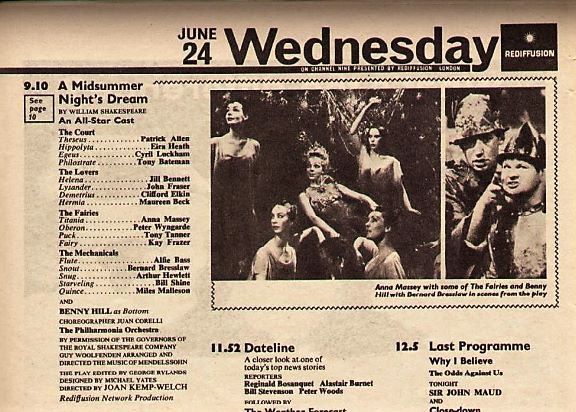
![Dream_avi_snapshot_01_06_28_[2014_01_11_12_38_19]](https://peterwyngarde.uk/wp-content/uploads/2016/07/dream_avi_snapshot_01_06_28_2014_01_11_12_38_19.jpg)
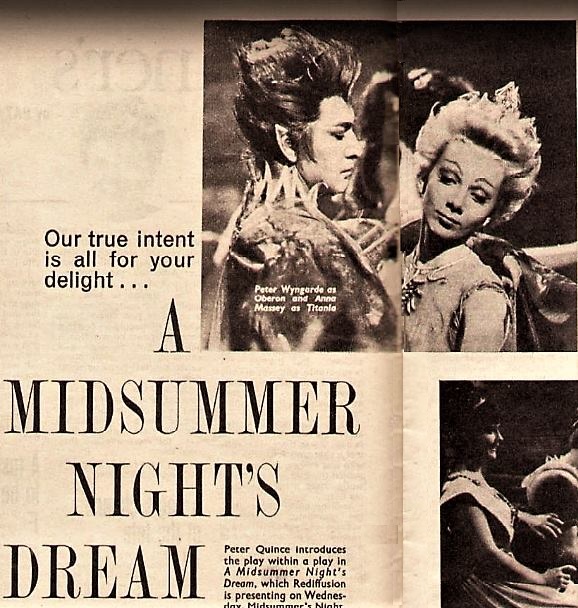


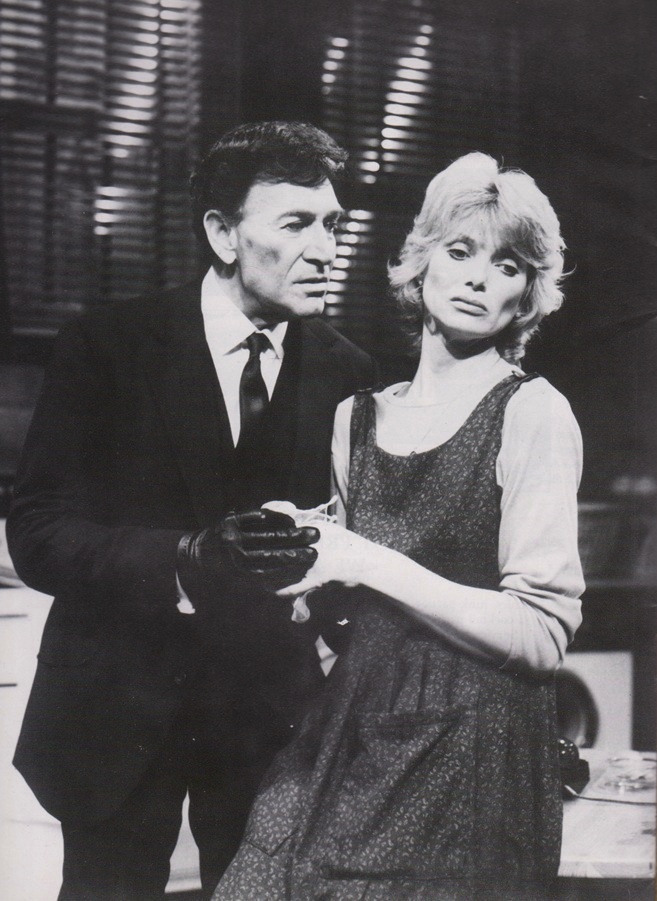

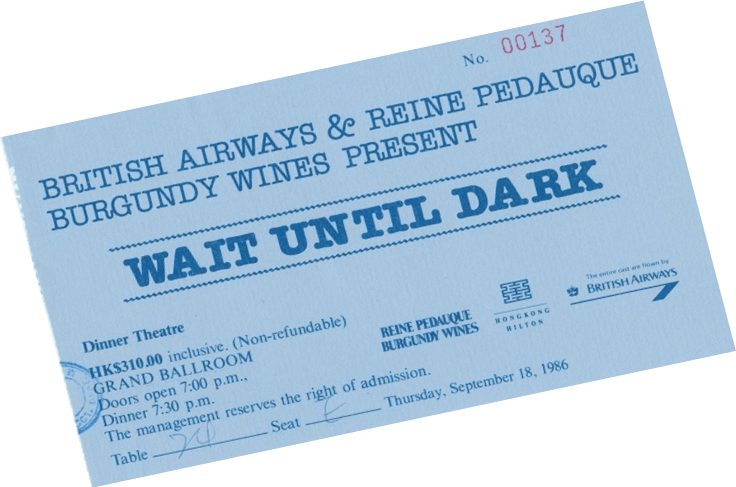
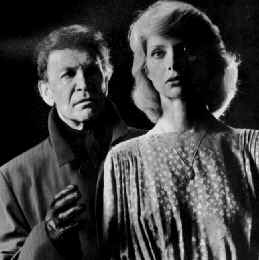
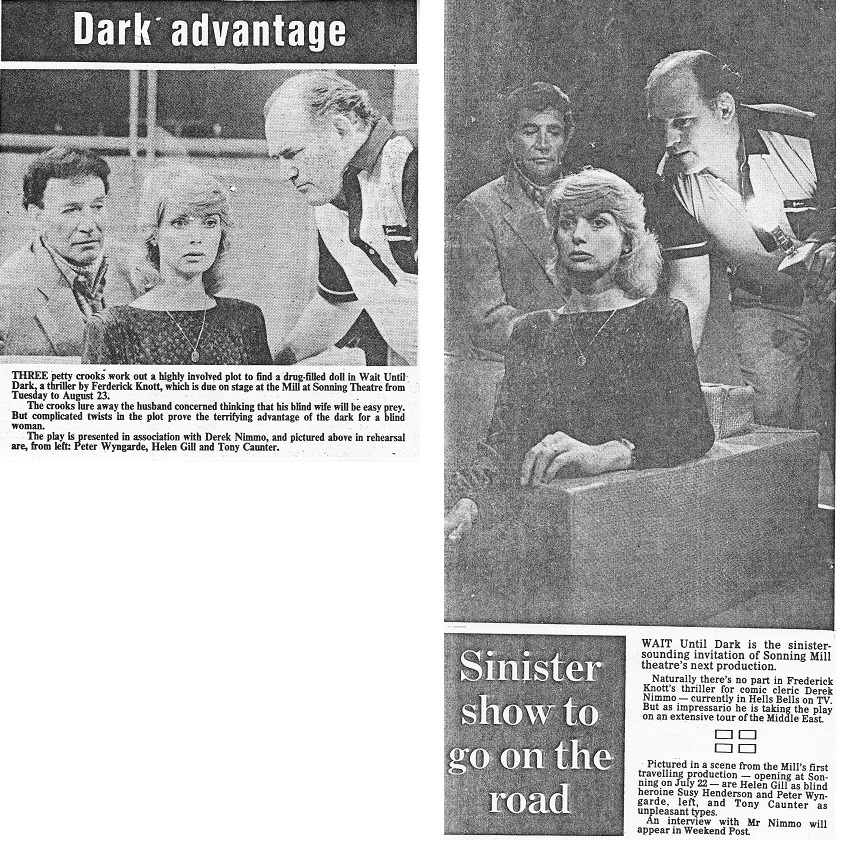
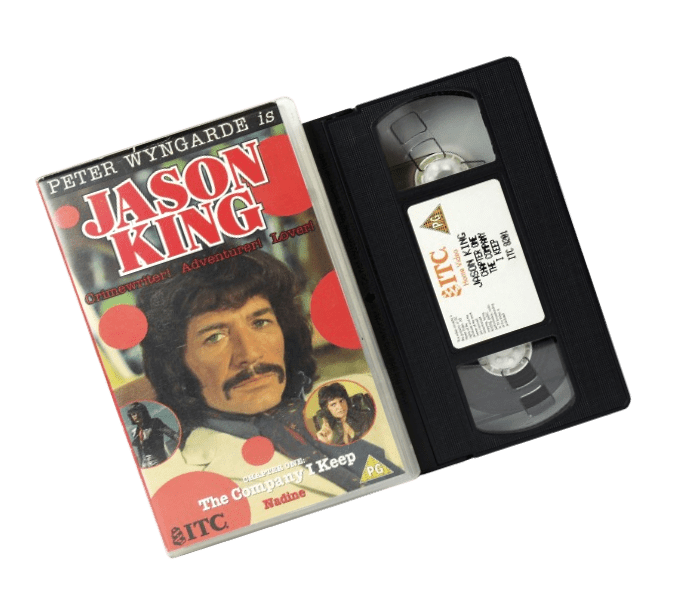
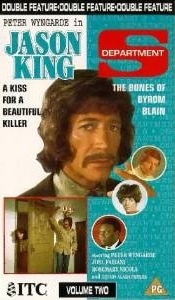


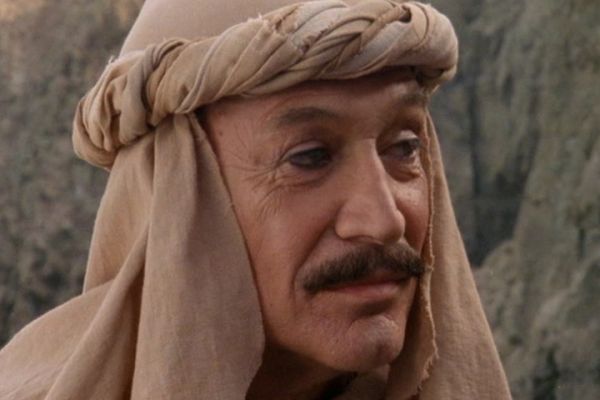

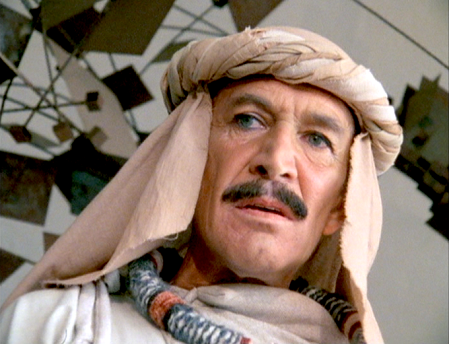


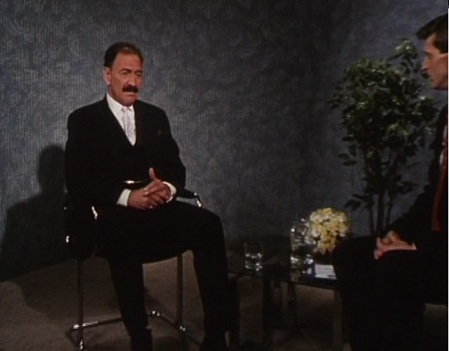


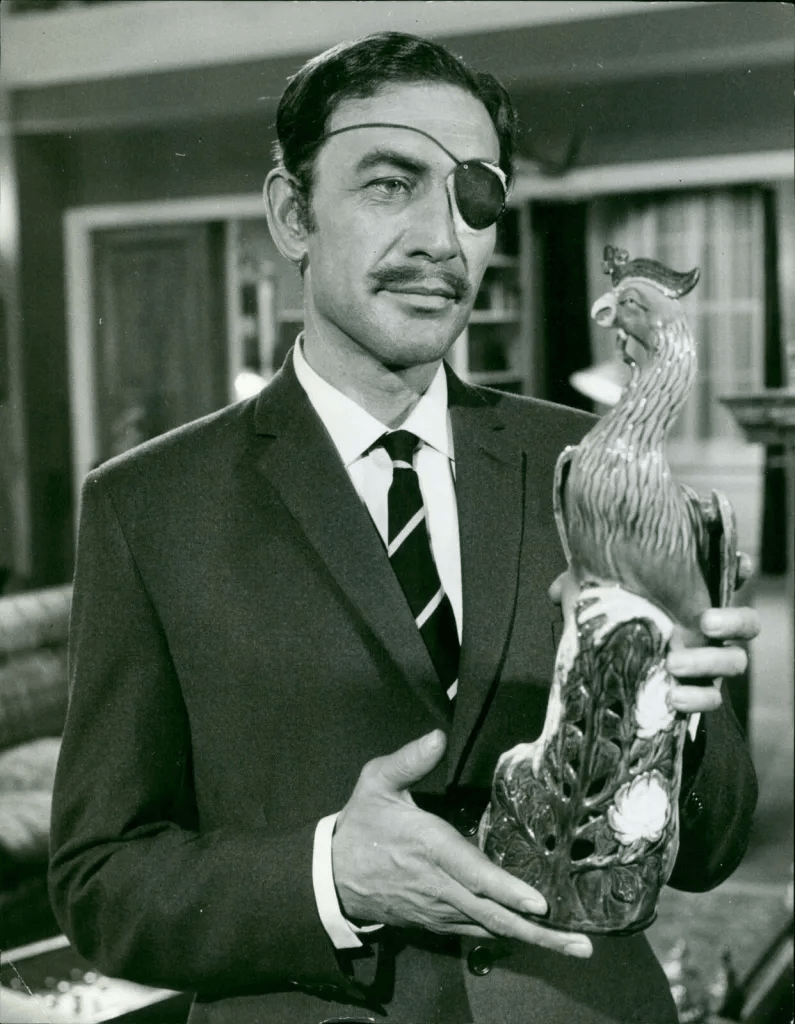
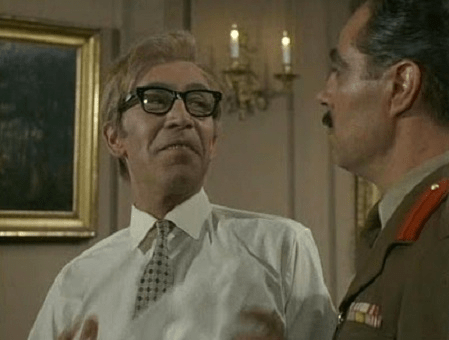
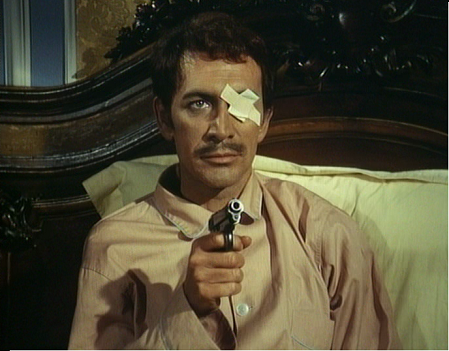
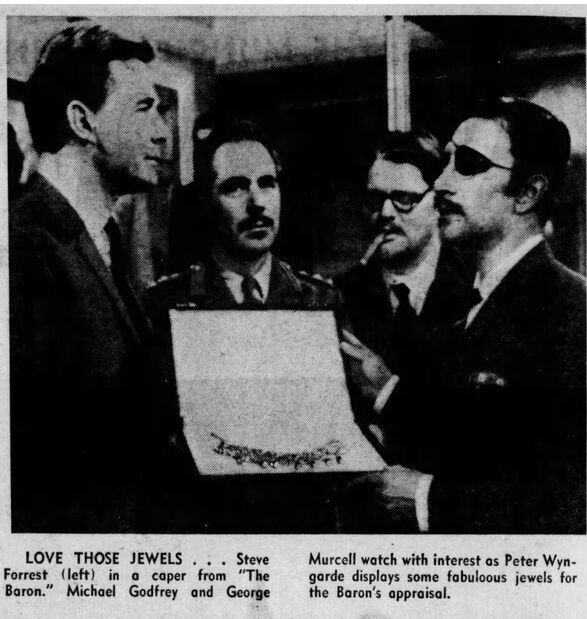


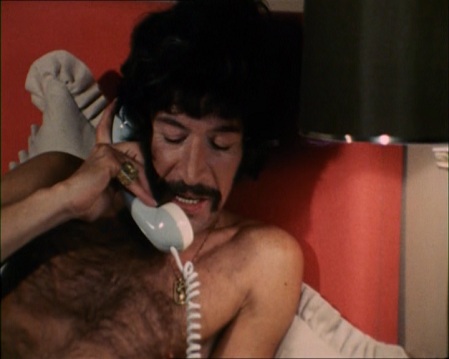
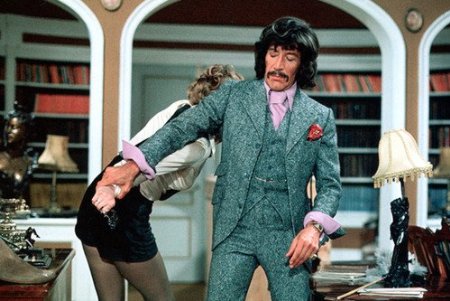
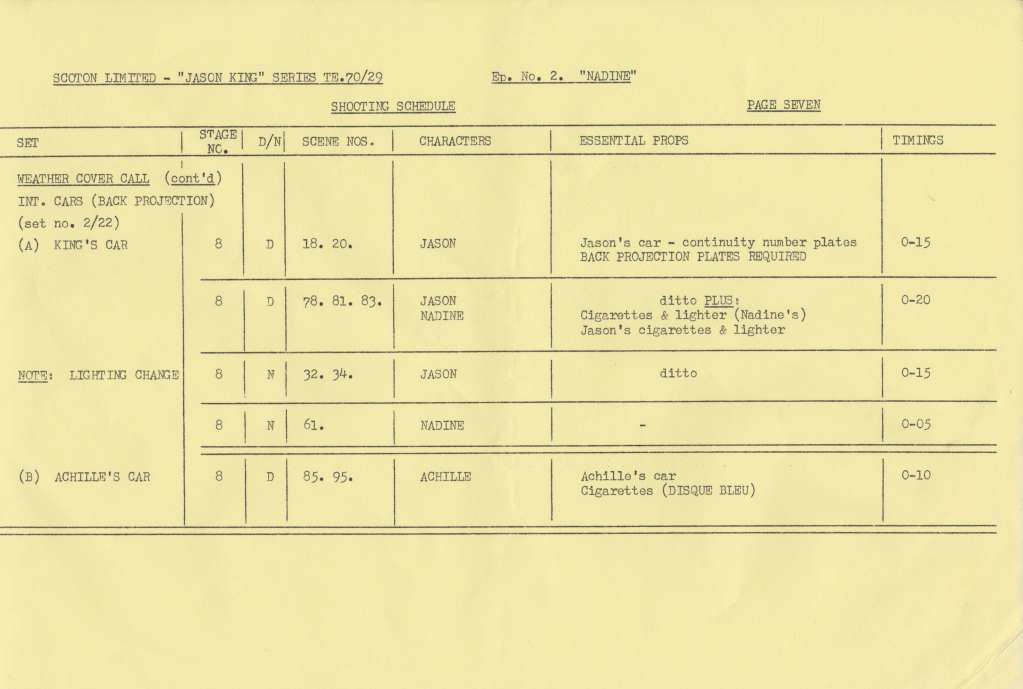

 PETER WYNGARDE: The Official Website