

When Opinion Masquerades as Research: The Bloggers Who Keep Myths Alive
By Tina Wyngarde-Hopkins
Many readers and aspiring writers back in the olden days became frustrated with mainstream magazines because they often felt the content was repetitive, predictable and aimed at the widest possible audience. People with niche interests, whether in science fiction, music, comics or film, frequently found that their passions were ignored or poorly represented by commercial publishers. Rather than simply complaining about what was available in the local newsagents,some enthusiasts believed they could create something more exciting, original and relevant themselves. This desire led them to produce ‘Fanzines’ – independently made magazines that allowed ordinary people to share their ideas, opinions, artwork and creative writing with like-minded readers.
Fanzines offered a freedom that mainstream publications could rarely match. Without the constraints of advertisers, corporate owners or large circulation targets, creators could focus on the subjects they cared about most. They could experiment with unconventional designs, publish honest reviews and encourage contributions from fellow fans. For many people, producing a fanzine was not only a way to fill a gap in the publishing world but also an opportunity to build communities around shared interests. In doing so, they proved that enthusiasm, creativity, and determination could sometimes produce publications that felt more authentic and engaging than their mainstream counterparts.
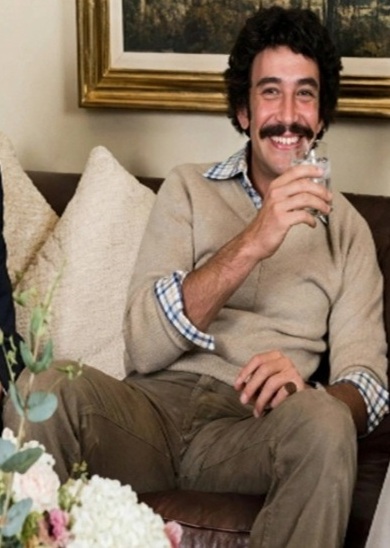
Left: Peter Wyngarde – incessantly misrepresented by bloggers
With the inception of the Internet, blogs became the natural successors to the fanzines of previous generations. Anyone with a computer and an internet connection could become a publisher, free from the gatekeepers of traditional media and able to reach a global audience at little or no cost. Bloggers enjoyed many of the same freedoms that fanzine creators had cherished, namely, the ability to pursue niche interests, challenge accepted narratives and explore subjects that mainstream publications overlooked. At their best, blogs fostered originality, independent thought and lively communities built around shared passions rather than commercial priorities.
Yet the very freedom that made blogging so appealing has often been squandered. Instead of using their platforms to investigate, analyse and create, many bloggers have settled for endlessly recycling old stories, resurrecting long-discredited myths and repeating rumours as though repetition alone could turn speculation into fact. In the rush for attention, clicks and validation, some have preferred familiarity over originality and sensationalism over accuracy. The result is that much of the blogosphere has become an echo chamber, where outdated claims and recycled gossip circulate endlessly’ a far cry from the pioneering spirit that once inspired people to strike out on their own and publish something genuinely new.
As I continue examining the material written about Peter online, I have looked closely at a number of articles produced by bloggers to demonstrate how heavily many of them still rely upon old, timeworn myths and long-discredited rumours. Rather than engaging with original sources, documented evidence or more recent research, these writers often repeat claims that have been circulating for decades, giving fresh life to stories that should have been laid to rest years ago. In doing so, they provide a steady stream of recycled content for search engines to index and promote, ensuring that another generation of readers encounters speculation, misinformation, and gossip masquerading as fact. The result is a self-perpetuating cycle in which hearsay is continually reinforced, while those who seek a more accurate understanding of Peter’s life and career are forced to navigate through an ever-growing mass of distortions created as much by mischief-makers as by careless repetition.
I’m using excerpt from the following article which appeared on the Utterly Interesting blog in June 2026 (author unknown), not solely because it is the most recently published (at the time of writing), or that it’s any better or worse than any other, but because it may as well be any other article about Peter from any other random blog because it uses the very same sources and the very same quotes (out of context) as all the others. It will illustrate how most bloggers continue to perpetuate untruths about Peter long after many of the rumours, falsehoods and misunderstandings surrounding his life have been challenged by documented evidence.
| The Extraordinary Life of Peter Wyngarde, the Man Who Was Jason King (2026 – author unknown) Who was Peter Wyngarde? “The short answer is: nobody really knows. That’s not a figure of speech. Wyngarde spent decades constructing a version of himself that turned out to be largely fictional. He claimed to have been born in Marseille, the son of a British diplomat named Henry Wyngarde, and said he’d read Law at Oxford. His death certificate lists his birthplace as Singapore. No diplomat named Henry Wyngarde has ever been traced. Oxford has no record of him. His real name was almost certainly Cyril Goldbert, a fact only confirmed publicly when he appeared in court under it in 1975. His father wasn’t a diplomat. He was a merchant seaman of Ukrainian heritage, his mother Eurasian. What is verifiable is that he spent much of his childhood in Shanghai, a fact that would shape him in ways he rarely talked about.” For a more detailed response to the above, I recommend you read our article, ‘The Double Standards Of Biography‘. Vivien Leigh, Alan Bates, and the question of who he really was “After liberation in 1945, Wyngarde made it to England and threw himself into acting without any formal training. By the late 1950s he was working at a high level. In 1958 he appeared alongside Vivien Leigh in Duel of Angels at the Apollo Theatre. They took the production to Broadway in 1960, where Wyngarde won a San Francisco Award for Best Actor and a Tony nomination for Most Promising Newcomer. He and Leigh became lovers after she ended her affair with Peter Finch. He later called her the love of his life. Running parallel to this was a decade-long relationship with actor Alan Bates. The author Donald Spoto, in his biography of Bates, confirmed the two were in a relationship while flat-sharing through much of the 1960s. Wyngarde later described himself as “50% vegetarian, 100% bisexual,” which in context reads less like a witty deflection and more like the closest thing to honesty he ever offered on the subject. He’d also been briefly married to actress Dorinda Stevens in the early 1950s. None of it fits a tidy narrative, which was probably the point. Like Lord Boothby whose private life was an open secret in certain London circles for decades, Wyngarde operated in a world where what people knew and what they said publicly were two very different things. There was also Bette Davis. Wyngarde told the story of being summoned to her dressing room at Pinewood Studios. From behind a plume of smoke, her opening line was: “I hear you have a big cock.” She handed him a note: “Be here at 8.30.” He claimed he declined. Whether the story is accurate in every detail is impossible to say, but it says something about the world he was moving in. He also said he fell in love with Felicity Kendal, who appeared in Jason King in 1971. Kendal remembered him as “a scream and great fun.” Those are different kinds of memory.” The Long Aftermath “TV work dried up almost entirely. He appeared sporadically: a Two Ronnies sketch, a Doctor Who guest role. His most substantial screen appearance after 1975 was in the 1980 Flash Gordon film, playing Klytus, head of Ming the Merciless’ secret police. His face was hidden entirely behind a metal mask. He was recognisable only by his voice. By 1982 he was reportedly living on social security. He continued to work in theatre and showed up on chat shows when invited, always sharp and always evasive, and seemingly constitutionally incapable of a dull sentence. In later life he took up pistol shooting and entered national competitions. He quit drinking and smoking in the early 1980s, took up jogging, and went to the gym four times a week. He was, by all accounts, still performing right up to the end. The conviction ended his television career almost overnight. The tabloids made sure everyone knew what the man behind the moustache had actually been doing on a Saturday night. He later referred to the people who’d damaged his career as ‘small-minded.’ He never directly addressed the case beyond that. In July 2023, the conviction was quashed by the Home Office under legislation designed to clear historical convictions for consensual same-sex acts. It is now officially treated as if it never happened.” This “50% vegetarian, 100% bisexual” quote has been used by journalists and biographers ad infinitum, but not one single person has been able to identify where it was originally recorded and by whom. |
In response to the above, see the following articles on this website:
‘You’ve Read The Book – Now Read It In Peter’s Own Words‘: Documents written in Peter’s own hand that concern his relationships.
‘The Life Amongst Strangers Companion‘: Here you can read what Peter thought of the dirty tricks played by author, Donald Spoto and the lies he told about him in his book, ‘Otherwise Engaged: The Life of Alan Bates’
The Double Standards of Biography: How Peter has been singled out from a plethora of actors who embellished their biographies, and why
‘Donald Spoto: Destroyer of Reputations‘: An article on the unreliability of author Donald Spoto’s work.
‘When Fiction Becomes Fact’: How the tabloid press have distorted reality.
‘The British Press and the Web’: How British newspapers have become reliant on Wikipedia as a primary source.
The following lists will show you how much work Peter actually did, post 1975:
The Utterly Interesting blogger cited the Official Peter Wyngarde Appreciation Society website among their sources, which would appear to suggest a desire for accuracy and balance. Yet, curiously, he/she completely ignored Peter’s own published writings in which he made his position on his relationship with Alan Bates abundantly clear. No mention was made of my 30-year relationship with Peter, has confirmed by a plethora of actors and writers. Equally absent was any meaningful discussion of Peter’s well-documented anger at Donald Spoto’s portrayal of that relationship in the 2007 biography Otherwise Engaged: The Life of Alan Bates. When an author has left behind his own account of events, it seems difficult to justify overlooking such primary-source evidence in favour of repeating speculation and hearsay.
This raises an uncomfortable but unavoidable question: Was these omissions simply the result of poor research, or were these facts disregarded because they failed to support the narrative the blogger wished to present? Any serious examination of Peter Wyngarde’s life should surely take into account evidence that challenges popular assumptions, rather than selectively choosing material that reinforces them. By excluding Peter’s own statements while repeating claims that he himself disputed, the blogger created an account that appears less concerned with historical accuracy than with preserving a familiar and sensational story. Whether intentional or not, such selectivity risks misleading readers and perpetuating misconceptions that a fuller consideration of the available evidence might have corrected.
Journalists and bloggers repeatedly return to the claim that Peter Wyngarde’s career effectively ended after 1975, usually pointing to the relative scarcity of his television appearances in the years that followed. Such assertions reveal a remarkably narrow view of what constitutes a successful acting career. Television may have been the medium through which Peter achieved his greatest public fame, but it was never the sole measure of his professional life. Those who knew his career well understood that his first and greatest love was the theatre. To judge his post-1975 career purely through the lens of television appearances is to ignore a substantial part of his artistic identity and to overlook the stage work that continued to provide him with both challenge and fulfilment.
What is particularly frustrating is the way this simplified narrative has been repeated so often that it has acquired an air of unquestioned truth. One is left wondering whether these writers were genuinely so close-minded that they regarded television as the only arena that mattered, or whether they were deliberately shaping the facts to fit a more dramatic storyline of decline and downfall. The notion that a performer’s career can only be validated by constant television exposure says more about the assumptions of the commentators than it does about Peter himself. By disregarding his enduring commitment to theatre, they create a misleading impression that his career had somehow ceased to exist, when the reality was considerably more complex and far less convenient for those determined to promote a predetermined narrative.
The fact remains that a comprehensive record of Peter’s professional work after 1975 is available on this website, making it possible for anyone with a genuine interest in accuracy to examine the full extent of his later career. This material clearly demonstrates that his professional life did not simply come to an abrupt halt, as so many articles and blog posts routinely suggest. What I find difficult to understand is why a blogger who had already drawn information from the official website chose not to mention this readily available evidence. If the site was considered reliable enough to be cited as a source in other instances, why was the information that challenged the article’s central argument omitted? Whatever the explanation, the omission leaves readers with an incomplete and misleading impression of a career that continued long after the point at which so many commentators insist it ended.
Yet again, a blogger has chosen to dredge up the Gloucester incident involving Peter – an event that took place more than half a century ago. While he/she acknowledges the quashing of the convicion, and even mentions Home Office guidelines that it should be treated as if it never happened, he/she still chose to write about it. One cannot help but wonder what purpose is served by revisiting the same ground time and again. Everything that could reasonably be said about the matter has already been said, analysed, debated and repeated countless times. For many Wyngarde admirers, the endless resurrection of this episode has become both predictable and wearisome, particularly when it so often overshadows discussion of his achievements as an actor and his substantial body of work. Are these writers not tired of returning to the same well-worn story, decade after decade, while ignoring so much else that might be explored? Evidently not!

Above: Peter with Helen Gill in the stage play, ‘Wait Until Dark‘. He received many of his greatest critical plaudits for his work post 1975
What makes this repetition even more questionable is that the accepted narrative surrounding the incident has itself become distorted through years of embellishment, misquotation and careless repetition. As has been highlighted elsewhere, details have frequently been exaggerated, assumptions have hardened into supposed facts and speculation has been presented as certainty. Each new retelling seems less concerned with historical accuracy than with keeping alive a story guaranteed to attract attention. At some point, one has to ask whether there is any genuine value in continuing to recycle an incident from over fifty years ago, especially when the facts have become so muddied by retelling. In view of the fact that the conviction was quashed several years ago, the time has finally come to put the matter to rest and allow Peter’s life and career to be judged on a broader and more balanced basis than a single episode that has long since been exhaustively examined.
The blogger I focus on here had an opportunity to write something genuinely new and fresh about Peter, yet chose instead to travel the most familiar and overused route imaginable. As a result, their resulting article is disappointingly dull, not because there was a lack of material to explore, but because they seemed determined to ask the same questions that have already been asked a thousand times before. There was no apparent curiosity about Peter’s later career, his stage work, his own writings, his artistic ambitions or the many aspects of his life that remain largely overlooked. Instead, readers were presented with yet another reheated version of a well-worn narrative that has been circulating for decades. It felt less like original research and more like an exercise in repeating received wisdom without challenging it.
Most tiresome of all of this writer and his fellow bloggers is the fixation with Peter’s sexuality;, a preoccupation that increasingly smacks of voyeurism rather than serious biographical inquiry. One cannot help feeling that some writers are far more interested in peering through the keyhole than in understanding the man or appreciating his work. The subject has been discussed, debated, speculated upon and endlessly recycled for so many years that it is difficult to imagine what fresh ground remains to be covered. Indeed, it sometimes seems that even The Sentinelese – the most remote tribe on the planet – could hardly have escaped hearing these same stories! Yet despite their age and familiarity, certain bloggers continue to return to them with remarkable persistence, as though nothing else about Peter’s long and varied life were worthy of attention. In doing so, they are not only squander opportunities for meaningful exploration but also contributing to the growing sense that repetition has replaced genuine scholarship.
When over the years I’ve contacted bloggers who have published misinformation or repeated long-discredited myths about Peter, I have often been met with a response that is almost one of shock or disbelief. More than once, the writers in question have hurried to assure me that they are, in fact, admirers of Peter and have been fans of his work for many years. I’ve found this reaction both surprising and perplexing. If they genuinely admire the man and respect his legacy, why have they chosen to repeat stories that have been challenged, corrected, or completely disproven by the available evidence? Why do they continue to give oxygen to rumours that have done so much to overshadow his considerable achievements as an actor and caused him so much pain in his life?
The contradiction is difficult to ignore. On the one hand, these bloggers profess their appreciation for Peter; on the other, they perpetuate some of the most vile, salacious and unfounded stories associated with his name. By presenting gossip as fact and speculation as history, they contribute to a distorted public image that bears little resemblance to the real individual. Certainly, I find it difficult to recognise the person they write about, and I knew Peter for almost three decades! I am left wondering whether this is simply a case of careless research, a desire for sensationalism, or an unwillingness to question long-established narratives. Whatever the reason, the result is the same: myths are recycled, untruths acquire an undeserved veneer of credibility, and readers are left with a version of Peter Wyngarde shaped more by scandal and rumour than by truth and evidence.
You can find more examples of nonsence posted by bloggers by clicking below….


