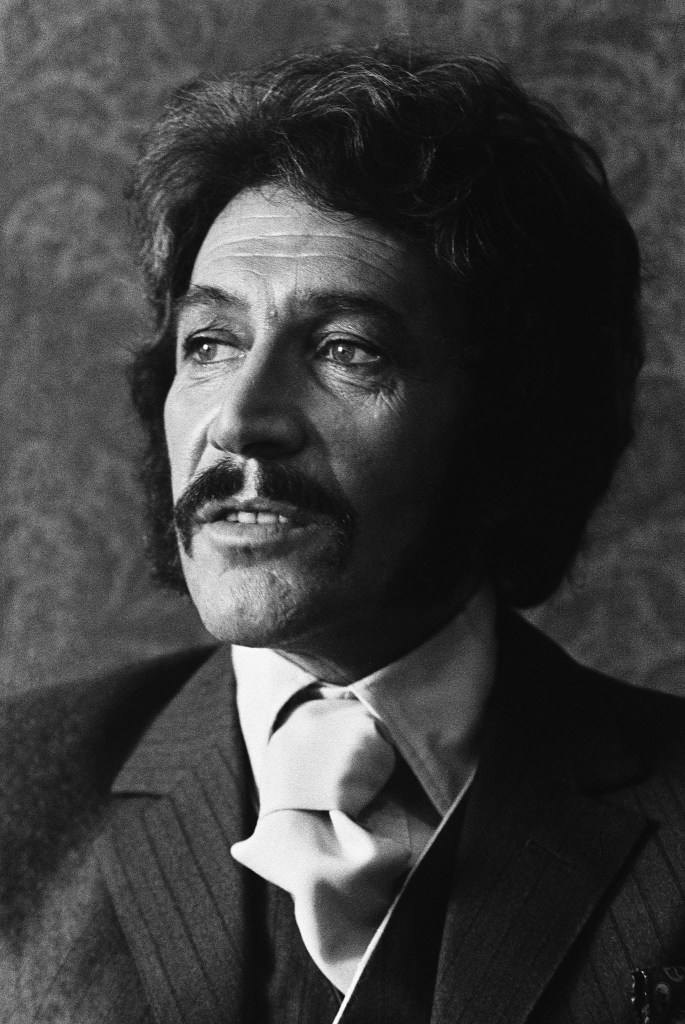
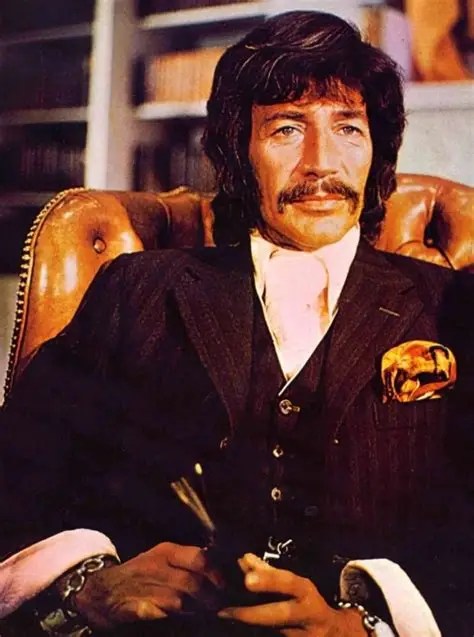
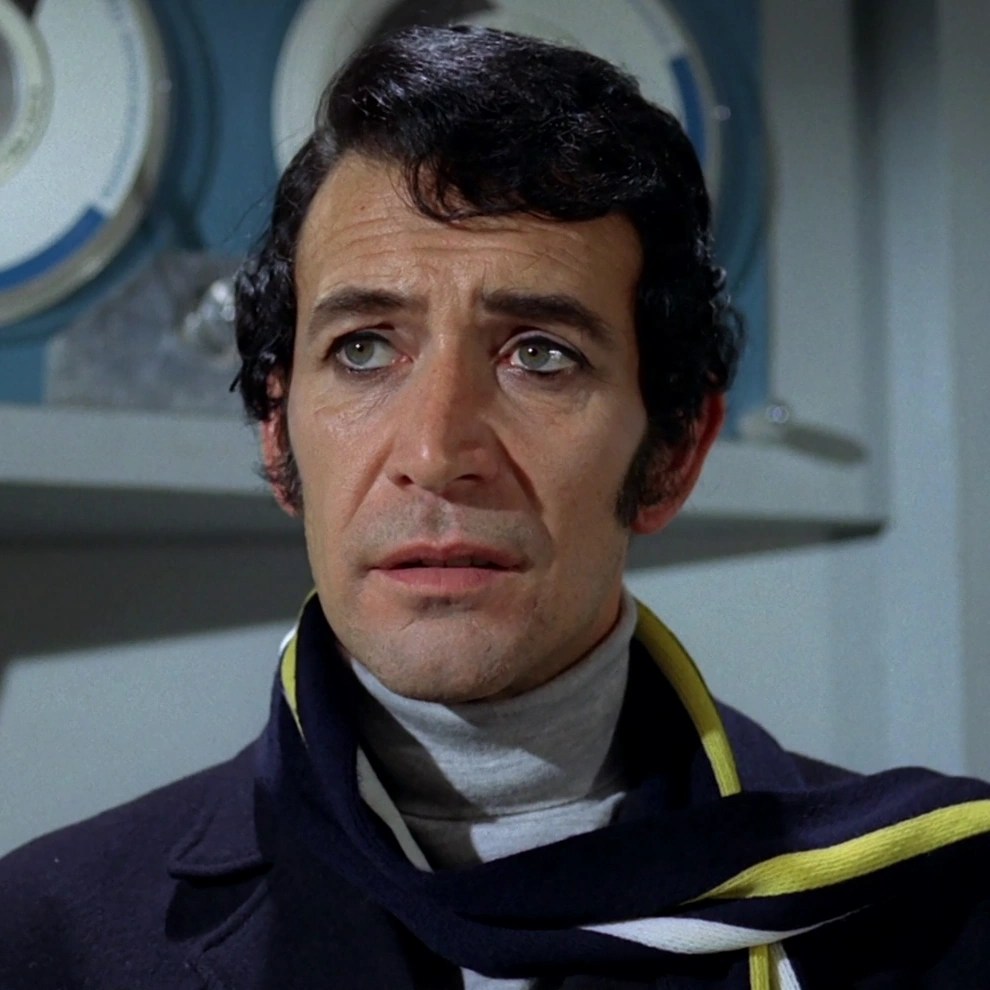
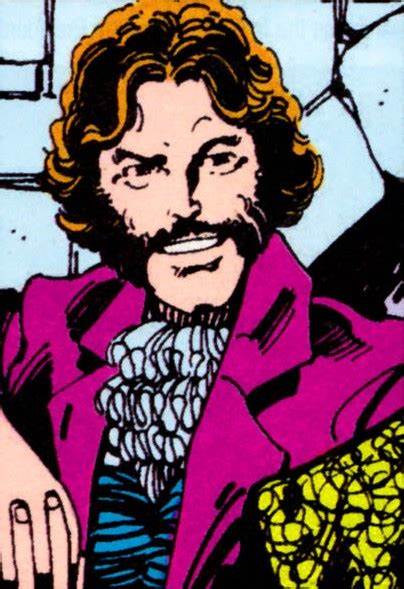
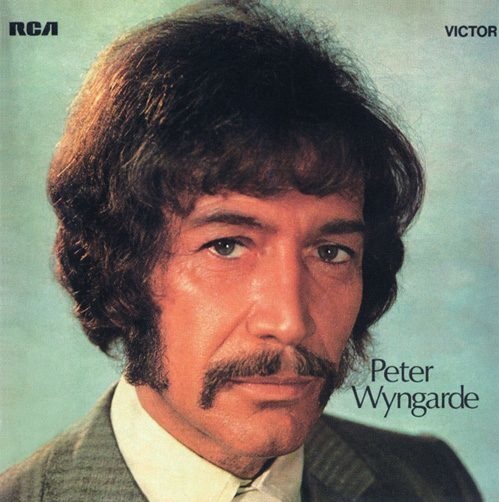
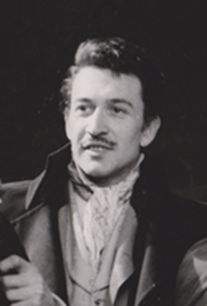
“That’s one of the nice things about Cornwall. It’s like living abroad; you can get away with murder abroad.” Paris Beaumont
Some Background
Festival, originally named Festival ’61, was a Canadian entertainment anthology television series that aired on CBC Television for nine seasons, from October 1960 to March 1969.
The series highlighted cultural productions encompassing a variety of theatrical, literary, and musical presentations. It included both classic and contemporary plays, operas, ballets, orchestral works, and television adaptations drawn from Canadian and international repertoires, performed by esteemed professional companies such as the Stratford Festival, the Metropolitan Opera, and the National Ballet of Canada, among others.
Season 6 consisted of 32 episodes and featured the story, ‘Ashes To Ashes’ – a supposed ‘spoof’ penned by Marc Bradel and directed by Eric Till. ‘Ashes To Ashes’ was episode 17 of Season Six, and 148.overall.
“Darling, I’ve poisoned you.” Paris Beaumont
The Story
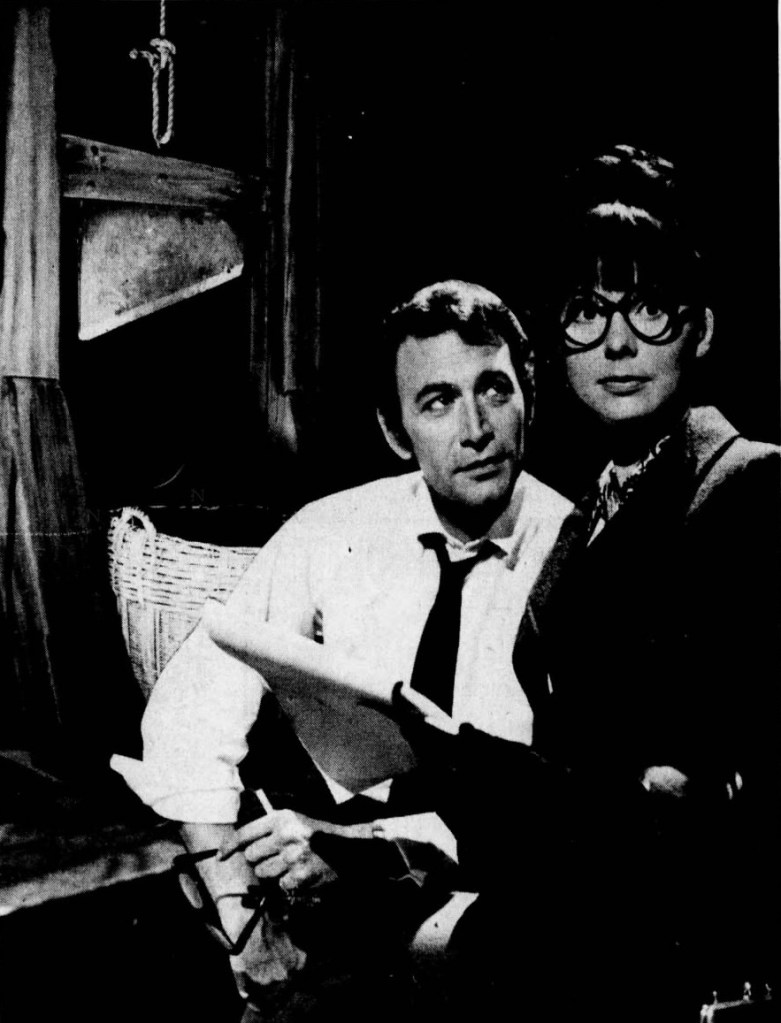
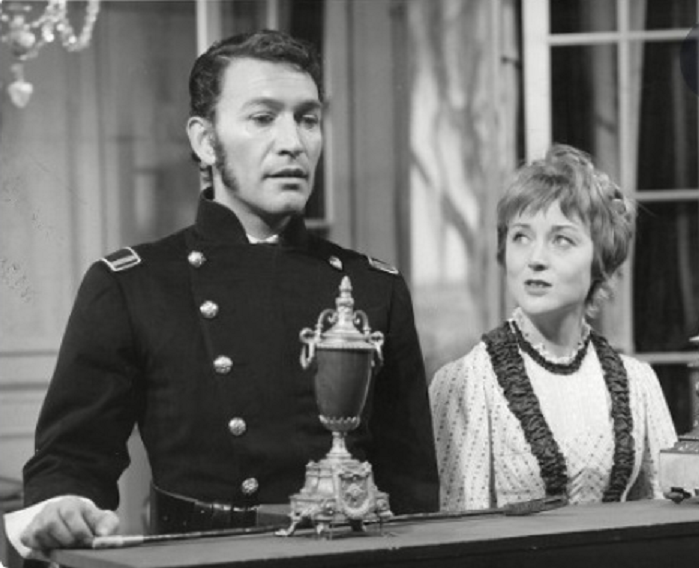
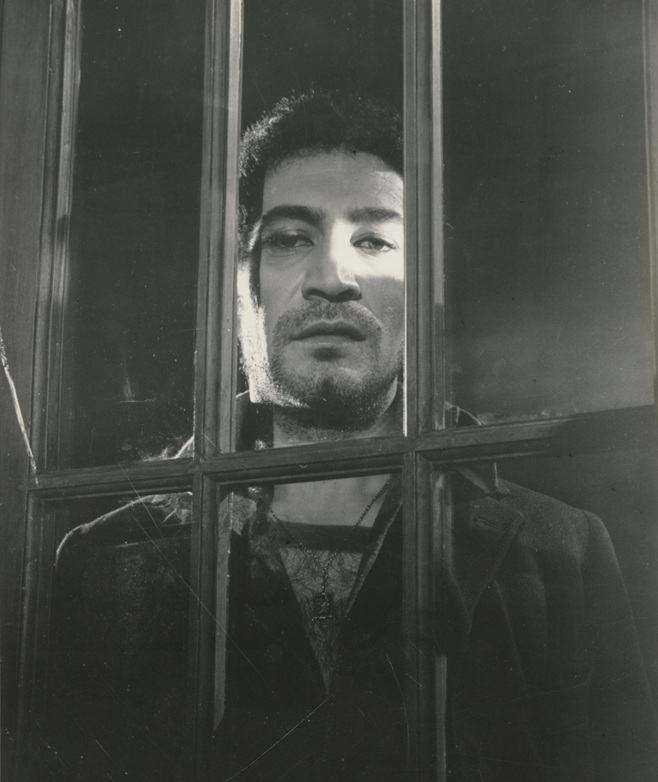
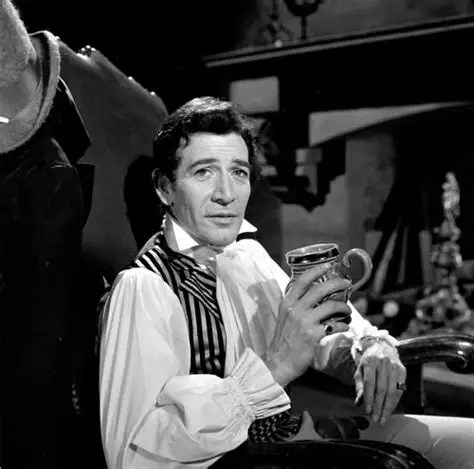
Barbara Manson (Pat Galloway) – a no-nonsense advertising executive, encounters the charming artist, Paris Beaumont (Peter Wyngarde), in an unexpected location: the Chamber of Horrors at Madam Tussaud’s in London. An instant attraction develops between them, leading to a swift romance that culminates in marriage.
Paris takes Barbara to his remote cottage perched on the edge of a steep Cornish cliff, where they establish their home. The first warning sign appears almost immediately after they enter their new residence, as Paris expresses his fondness for the isolation, stating, “One can get away with murder.”
The young bride’s initial excitement shifts to intrigue when she stumbles upon a suitcase filled with women’s clothing. Paris is compelled to admit that he was previously married.—a detail he had withheld from Barbara until this moment, Further unease arises when Barbara discovers an urn containing ashes in the house while Paris is away; he dismisses her concerns by asserting that the urn holds the ashes of his cherished dog, Susan.
Above: Peter and Pat Galloway in the Madam Tussauds Chamber of Horrors
When Helen (Joyce Campion) and George Statten (Bernard Behrens), two of Paris’s friends come to visit while Barbara is home alone, she asks them about his first wife, and they confirm that she left him.
When he is not tending to his backyard kiln, which he uses to fire his sculptures (“Anything you put in there is reduced to ashes in minutes, darling”), he can be found sharpening knives in the kitchen, all the while expressing his fascination with the ideal “ritual of murder.”
When Barbara discovers not only a second urn, but a tin containing arsenic in the garden shed, she begins to descend into an abyss of terror,suspecting that the ashes contained in it are those of her husband’s first wife, and that she might well be his next victim.
The audience is left to decide whether Paris is a killer, or whether his new wife is merely driving herself mad with paranoia.
“Do you think I got rid of Marion, or something?” Paris Beaumont
A Spoof… Or was it?
I am curious about how many viewers of the Festival felt a bit irritated after Ashes To Ashes was screened? Many Canadian critics certainly were.
The production of this episode was outstanding; the cinematography, the narrative, and the manner in which the audience was gradually drawn into identifying with the protagonist, whose suspicions about her charming husband slowly escalated into a sense of dread, were executed with remarkable skill and expertise.
We were immersed in the heroine’s world, where the carefully curated elements of her reality became increasingly unsettling. These elements were chosen as her psyche descended deeper into a state of fear, and even when they were not overtly perceived, they were still selected with her perspective in mind. The initial humor of the situation transformed into a more profound sense of terror that enveloped the heroine.
The urn containing the ashes of her husband’s dog, the suitcase belonging to his previous wife whom he claimed had abandoned him, and the second urn’s appearance, along with the knives and shards, all contributed to a narrative that, despite our refined sensibilities, we interpreted as malevolent. This was sufficient to evoke a delightful sense of terror, and we became increasingly complicit as the story progressed.
We all have an affinity for thrillers; we all enjoy suspense and the thrill of being frightened by the night and the storm.
However, the standard has been established by Hitchcock, who positions the storyteller above us, mocking and ridiculing us for being gullible. Suddenly, someone leans back in an easy chair, laughing heartily at what drives these mortals. We were never informed whether he actually murdered her; we were left to speculate. As we pondered, we were led to realize that it was merely a trivial tale. We had been deceived, as someone gleefully informed us that it was just a story. “Do you think he killed her?” someone inquired, a glimmer of mischief in their eye.
Now, whether this individual is the writer Mark Brandel or the director/producer Eric Till, it should be conveyed to them that it is simply not amusing.
The entire premise was intended to be a spoof; we were meant to recognize that every line was a parody, every situation a satire. How were we supposed to know? Don’t ask me; how could I know? I read the press release that explained that the audience was meant to guess.
Thus, it was superb, as I mentioned, but the joke fell flat for the simple reason that no one informed us in any manner, and there was no internal evidence to guide our guesses. It simply did not work and was therefore a failure for those who attempted to execute it.
What this incidentally highlights is that the techniques used in suspense or mystery thrillers can often be seen as stereotypical and clichéd.
Nevertheless, we are drawn to them because we care; it amuses us to invest our emotions, and we find enjoyment in being frightened, just as we did when our grandfather would sit us on his knee and recount tales of dark and stormy nights. We would pause, anticipating what he would say next, and we would still ask, ‘And then what happened?’
Additionally, it suggests that a parody of terror and suspense must be a farce; otherwise, it risks being mistaken for the genuine article, which is ultimately what we desire to experience as real.
Critics Comments
“As the lethal charmer, Wyngarde was superbly convincing, I would doubt that a single member of the feminine side of Festival’s audience would hesitate for a moment would dash off to his Cornwall cottage with him. Urns, knives, kilns and all.” The Ottawa Citizen – 3rd February, 1966
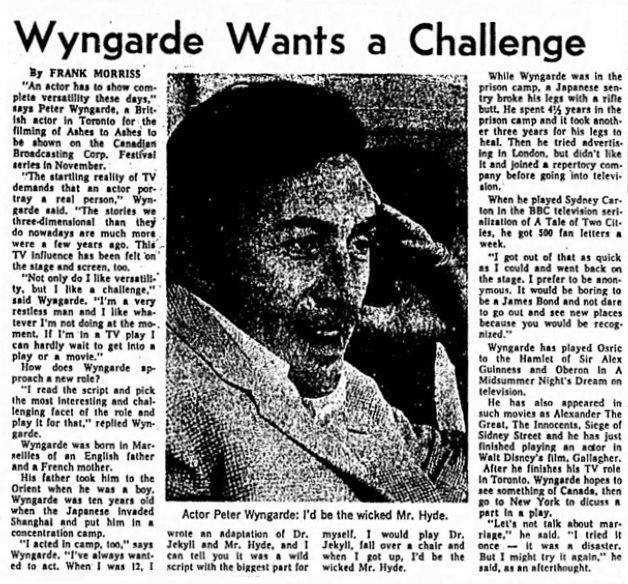
Above: From the Globe and Mail (Canada): 9th September, 1965
“I cannot tell you how shocked I was when I read what unbelievable things that American biographer had said about me.“ Peter Wyngarde
Written by Tina Wyngarde-Hopkins
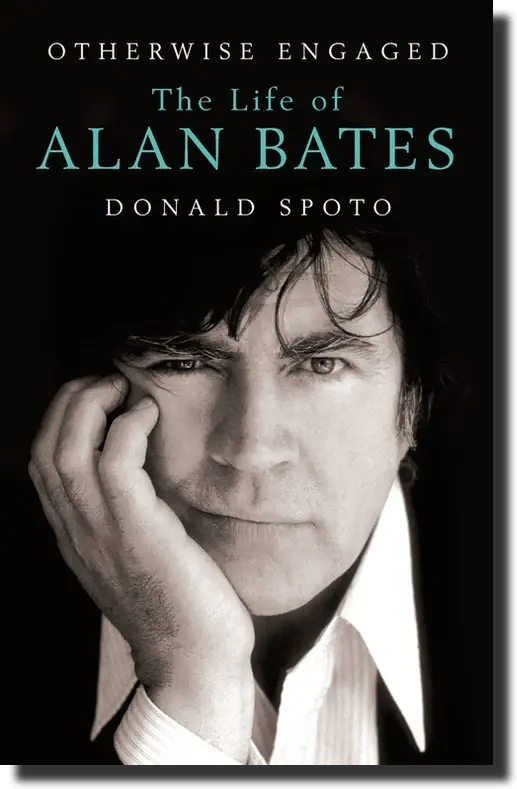
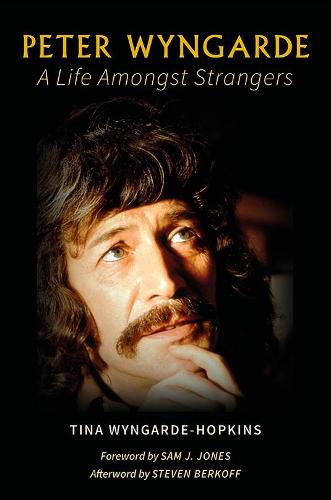
As widely recognised, I have maintained a critical stance regarding author Donald Spoto’s biographical work, Otherwise Engaged; The Life of Alan Bates (Hutchinson – 2007). This book was referenced in my own biography, Peter Wyngarde: A Life Amongst Strangers(Austin-Macaulay – 2020),with numerous supporters also contesting his interpretations—particularly those passages addressing Peter – both through this platform and on other forums.
Spoto’s biographical account has exercised considerable influence over public perception of Peter Wyngarde. The author contended that Peter had shared a flat at No.1, Earls Terrace, London for approximately ten years (from 1956 to 1966) with fellow actor Alan Bates. Furthermore, he asserted that their arrangement transcended a mere practical arrangement based on financial considerations – that is, the reduced expense of two aspiring thespians sharing accommodation – and instead constituted, in Spoto’s assessment, a romantic partnership.
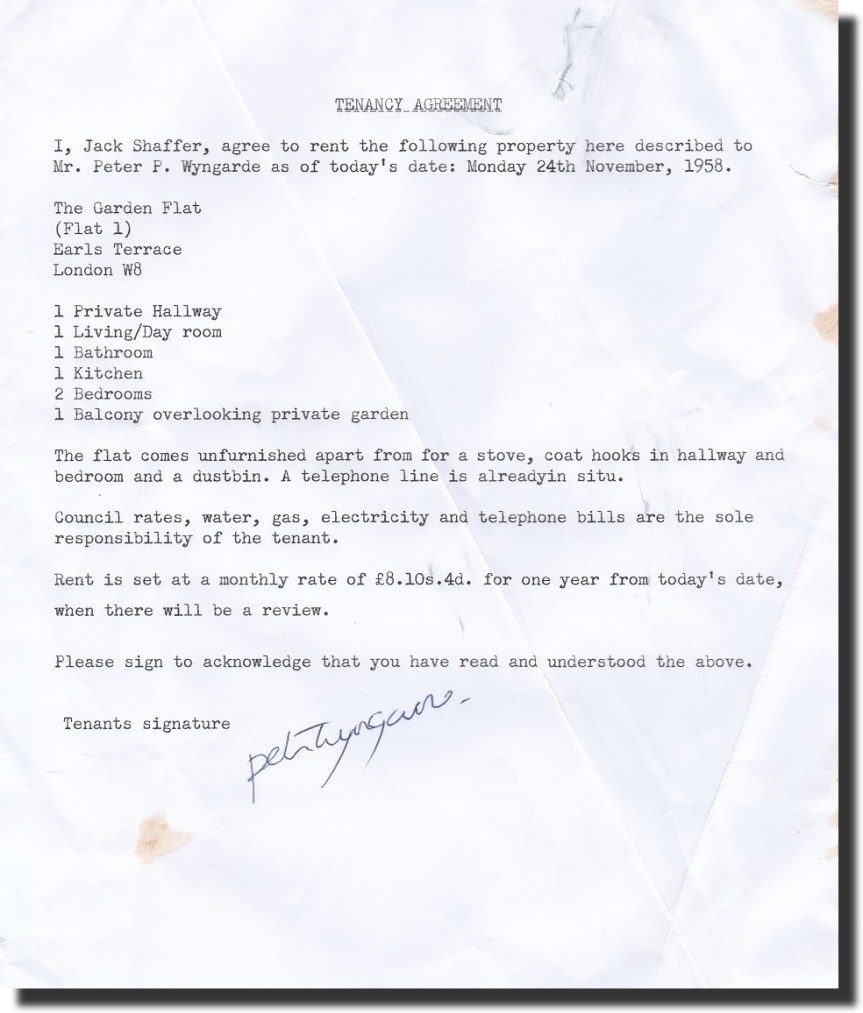
Contrary to the assertion that both men relocated to the apartment together, documentary evidence demonstrates that Peter established residency there in November 1958 (as evidenced by the original Tenancy Agreement signed by Peter on November 24th, 1958 – see below). Prior to this date, Peter had first been residing with his partner, Ruby Talbot, at 11, Newton Row, London, then latterly at his weekend home in Kilndown, Kent. Given that Bates was engaged in work in the United States from the autumn of 1958 through to the spring of 1959, he could not have relocated to the flat from his previous residence in Battersea (London) before March or April of 1959 at the earliest. Notably, Bates first appears on the Electoral Register as a resident at Earls Terrace in 1960.
From 1958 through to the latter part of 1960, Peter maintained a romantic relationship with acclaimed actress Vivien Leigh, with whom he had performed in the theatrical production ‘Duel of Angels‘ during both a British tour and a subsequent tour of the United States. Between 1960 and 1962, Bates cohabitated with prominent American film star Rock Hudson in California. He subsequently vacated Earls Terrace in 1965 upon acquiring a house at 122 Hamilton Terrace in St. John’s Wood. The purported “decade” of shared accommodation that Spoto asserted they’d maintained was, in actuality, a period spanning fewer than SEVEN years. Subsequently, as Peter characterised their arrangement, the two actors resembled “ships passing in the night” owing to their respective touring commitments and professional engagements, which encompassed both domestic and international schedules.
It all looks rather different now….
When being interviewed by Spoto in 2003 in connection with the author’s research for the Bates biography, Peter executed an agreement stipulating that he would be permitted to review the intended publication prior to the book going to print. The author subsequently reneged on this contractual obligation by proceeding to print without establishing further contact with Peter. Upon reading the author’s characterisations of him, and the assertion that he and Bates had had a decade-long romantic relationship, Peter was incandescent with rage.
Right: Otherwise Engaged: The Life of Alan Bates. The book that spawned a thousand ridiculous myths about Peter Wyngarde
“The American author [Spoto] signed a letter to say he would adhere to my request about omitting material, but managed to send it to me after the book was published which was of course too late.“ Peter Wyngarde
Donald Spoto, a prolific biographer of celebrities, was born in New Rochelle, New York, in June 1941. He obtained his Ph.D. in New Testament studies from Fordham University in 1970 and subsequently devoted more than ten years to academic positions as a theology professor and teacher at institutions including Fairfield University and the University of Southern California before transitioning to a career in full-time writing. Although his work was recognised in certain circles, his practice of attributing psychological interpretations to his subjects’ creative output frequently resulted in assertions that remained disputed or unsubstantiated.
Spoto was frequently characterised as a “gossipmonger” and faced criticism from reviewers for emphasizing sensational and darker narratives concerning Hollywood personalities. Notwithstanding his own propensity for salacious content and investigative muckraking, he condemned the ostensibly hypocritical “Cottage Industry” of gossip journalism – critiquing predecessors such as Anthony Summers for fabricating sensationalised, unsubstantiated gossip for commercial gain. He contended that such lurid writing constituted a “deplorable” undermining of factual accuracy that disregarded the personal standing of actual individuals. Regrettably, he failed to apply these same standards to his own work when writing Otherwise Engaged: The Life of Alan Bates.
Although presenting himself as an authority on Alfred Hitchcock’s filmography, his 1999 biography entitled The Dark Side of Genius: The Life of Alfred Hitchcock (Da Capo Press) received substantial criticism from both admirers and scholars of the renowned British director and producer.
The primary objections to the work centered on pervasive misquotations of sources and inaccurate representations of production environments. Film historians have identified numerous instances in which Spoto either misquoted sources or selectively omitted contextual information to portray Hitchcock in an unfavourably, distorted manner. Notably, Spoto characterises an incident involving Hitchcock striking actress Joan Fontaine as indicative of a hostile, exploitative workplace, despite documented evidence demonstrating that Fontaine had specifically requested the physical contact to enhance her performance authenticity.
In Spellbound by Beauty (Cornerstone – 2008), Spoto extensively examined Hitchcock’s purported sexual preoccupation with actress Tippi Hedren. Although Hedren corroborated these assertions, other actresses who collaborated with Hitchcock – including Kim Novak, Doris Day, and Barbara Leigh-Hunt – publicly disputed Spoto’s depiction, asserting they could not identify the malevolent individual Spoto portrayed. Contemporary scholarly evaluations, such as Tony Lee Moral’s A Century of Hitchcock: The Man, the Myths, the Legacy (The University Press of Kentucky – 2026), contend that Spoto and actress Tippi Hedren functioned as unreliable sources motivated by personal animosity, transforming routine Hollywood tensions and theatrical exaggeration into a prejudicial, asymmetrical account.
Historian Tony Lee Moral authored two separate works (Hitchcock and the Making of Marnie and The Making of Hitchcock’s The Birds) expressly designed to challenge Spoto’s chronologies and assertions, demonstrating that archival production documentation from the 1960s fundamentally contradicted the narrative framework Spoto established years afterward.
Spoto’s distorted characterisation of Hitchcock also provoked considerable objection from the director’s family, associates and professional collaborators – including Hitchcock’s daughter Patricia Hitchcock, producer Herbert Coleman, and associate Norman Lloyd – all of whom maintained they could not recognise the vindictive, sadistic administrator depicted by Spoto, maintaining instead that he demonstrated warmth, courtesy, and professionalism.
Beyond those inaccuracies already mentioned, additional errors have been identified in Spoto’s works that further undermine the credibility of his scholarship and analytical rigour in his Hitchcock studies. In The Art of Alfred Hitchcock: Fifty Years of His Motion Pictures (Hopkinson and Blake, 1976), Spoto claims to have devoted over 1,500 hours to viewing and reviewing Hitchcock’s films. However, he subsequently identifies the character portrayed by Joan Fontaine in Suspicion as having the surname “McKinlaw,” when the correct surname is actually “McLaidlaw.” Furthermore, he identifies Anthony Dawson’s character in Dial M for Murder as “Swan Lesgate,” whereas the character’s true name is “Swann” with two n’s, despite his temporary assumption of the alias “Captain Lesgate” during the film’s narrative. Additionally, the renowned director F.W. Murnau is referred to as “Fred W. Murnau,” a designation by which he was never known.
Scholars have frequently observed that Spoto demonstrated a tendency to construe cinematic themes and artistic decisions as direct autobiographical revelations of personal aberrations, psychological disturbances, or concealed aggression, relying predominantly upon popular psychological frameworks rather than substantiated documentary analysis.
In Spoto’s work entitled Laurence Olivier: A Biography (HarperCollins – 1993), the author asserted that Olivier maintained an intense, decade-long homosexual relationship with American comedian Danny Kaye (sound familiar?). This assertion was vigorously contested by Olivier’s surviving spouse, Joan Plowright, alongside numerous intimate associates and contemporary biographical scholars who contended that no substantive factual or documentary evidence existed to corroborate such an extended romantic involvement. Subsequent authorised biographers similarly refuted Spoto’s claims, emphasising that he possessed no verifiable factual documentation, correspondence, or credible witness accounts to substantiate either the chronological framework or the existence of the purported relationship.
Subsequent biographers, including Terry Coleman in his officially sanctioned family biography titled Olivier(Bloomsbury Publishing – 2005), systematically refuted this assertion. Coleman and fellow writers demonstrated that credible evidence supporting a decade-long romantic relationship does not exist, and contended that Spoto advanced this narrative chiefly to substantiate an expansive psychological framework concerning Olivier’s bisexuality while simultaneously minimising the significance of Vivien Leigh’s documented bipolar disorder diagnosis.
Consistent with certain other celebrity biographies authored by Spoto, reviewers identified a pervasive absence of meticulous verification regarding established historical chronologies, minor details, and peripheral figures connected to Olivier’s personal history.
Although Spoto’s 1993 book Marilyn Monroe: The Definitive Biography – The Life and Death of The Hollywood (Arrow – 1994) received considerable acclaim for refuting conspiracy theories connected to John and Robert Kennedy, it nonetheless presented its own substantive factual and analytical deficiencies. Academic examination by Monroe researchers, including David Marshall, demonstrated that Spoto modified or condensed particular chronologies pertaining to Marilyn’s final years to align with his predetermined interpretive framework.
In an effort to exonerate the Kennedys, Spoto advanced the proposition that Marilyn’s death resulted from an accident involving a chloral hydrate enema, which was purportedly administered by her housekeeper, Eunice Murray, who was acting under the guidance of her psychiatrist, Dr. Ralph Greenson. Medical professionals and historians have contested this hypothesis as excessively conjectural, medically unconvincing, and devoid of conclusive forensic substantiation. Others described Spoto as “arrogant and ignorant of the facts,” regarding Monroe, and of having a “condescending attitude” towards those associates of her’s who dared to challenge him.
During the writing process, Spoto engaged genealogist Roy Turner to contribute to his investigative efforts. According to Monroe archivist David Marshall, Turner stated that he had furnished Mr. Spoto with extensive detailed research materials; however, upon the book’s publication, Spoto had modified portions of that research – not comprehensively, but selectively enough to ensure narrative consistency with the author’s underlying thesis. Does this not parallel what Peter reported regarding Otherwise Engaged: The Life of Alan Bates; specifically, that the majority of the information he provided during an interview preceding the book’s publication was either altered or excluded to accommodate one of the work’s central premises, namely the alleged intimate relationship between Bates and Peter?
Detractors of Spoto’s biographical work, Possessed: The Life of Joan Crawford (Arrow – 2012), contended that Spoto’s approach oscillated between excessive sensationalism and problematic overcorrection. He devoted substantial energy to systematically refuting the narrative established by Christina Crawford’s Mommie Dearest (Grafton – 1989); a strategy that prompted critics to observe he minimised Crawford’s well-documented behavioural shortcomings in order to present an artificially sanitised portrayal. His assertion that Crawford exclusively employed expensive, cushioned coat hangers became a point of contention used to undermine Christina’s account that her mother wielded wire hangers as instruments of physical abuse. Likewise, his biographical treatment of Grace Kelly encountered considerable critical scrutiny for demonstrating “uncharacteristic restraint,” offering an excessively refined, formal, and romanticised account of her existence while disregarding extensively documented personal adversities.
Peter: Libelled by Donald Spoto
Biography is one of the most influential forms of historical writing. For actors, a well-researched biography can preserve their achievements and introduce their work to new generations. However, when a biography is based on poor research, unreliable sources or the author’s personal assumptions, it can do significant damage to an actor’s reputation. Inaccuracies often become accepted as fact, creating a distorted image that can overshadow a performer’s personal life and career accomplishment. This is exactly what happened to Peter since the publication of Otherwise Engaged: The Life of Alan Bates.
One of the greatest dangers of poor biographical research is the spread of false information. Readers often assume that a published biography has been carefully checked and verified. When an author includes incorrect dates, fabricated incidents, or unsubstantiated rumours, these claims can quickly enter the public record. Future writers, journalists, and online contributors may repeat the errors, making them difficult to correct. As a result, a mistaken story can become more widely known than the truth. I personally have suffered abuse and years of attacks from certain individuals online – none of whom had any direct contact with Peter or ever met him – who had taken Spoto’s word as gospel, and yet I’ve refused to back down since Peter is sadly no longer here to defend himself.
Actors are particularly vulnerable to this problem because their lives are often surrounded by myth and speculation. The entertainment industry has always generated gossip, and some biographers are tempted to include sensational stories in order to attract attention. Unfortunately, a dramatic claim is not necessarily an accurate one. A rumour repeated often enough can become accepted history, even if there is no evidence to support it. When this happens, an actor’s professional achievements may be overshadowed by stories that are exaggerated or entirely fictional.
Poor research can also lead to unfair judgements about an actor’s character. A biographer who relies on a limited number of sources may present a one-sided portrait of their subject. Personal conflicts, professional disagreements, or isolated incidents can be portrayed as defining characteristics rather than being placed in their proper context. Readers then receive an incomplete picture, which may paint the actor as difficult, arrogant, or unreliable when the reality was far more complex. In Spoto’s Alan Bates biography, Peter was portrayed as a “Svengali” type character, who bullied Bates rather than attempting to help him. This characterisation has however been challenged by those who knew both actors during the 1950’s and 60’s, with one describing Peter as being “more sinned against than sinning”.
Another problem occurs when authors fail to understand the historical context in which an actor worked. Standards, business practices, and social attitudes change over time. Actions that seem unusual today may have been common in a previous era. Without proper context, a biographer risks judging historical figures by modern expectations and creating a misleading interpretation of their behaviour. This can unfairly damage reputations and obscure the challenges actors faced during their careers.
The consequences of inaccurate biographies extend beyond the actor’s legacy. Family members, friends, and loyal admirers may be distressed by the publication of claims that are misleading or untrue. In some cases, these inaccuracies can influence academic research, documentaries, and media coverage for years. Certainly in the case of Otherwise Engaged: The Life of Alan Bates, journalist and bloggers alike have quoted liberally from the book in reference to Peter. Alas, once an error has entered the public consciousness, correcting it can be extremely difficult.
For these reasons, biography writers have an important responsibility. Thorough research, careful fact-checking, and a commitment to fairness are essential. A biography should seek to illuminate rather than sensationalise. By presenting evidence honestly and acknowledging uncertainty where facts are unclear, writers can help preserve an actor’s true legacy. When these standards are ignored, the result is not simply a flawed book but a distorted historical record that can unjustly tarnish an actor’s reputation for generations.
It’s telling that Donald Spoto concentrated his writings on famous personalities who had already passed on so were unable to challenge his claims. He knew full well that you can’t libel the dead – at least in the eyes of the law.
Spoto demonstrated sensationalist tendencies and exhibited minimal concern for the veracity of his work. Consequently, he has damaged and, in many cases, destroyed professional reputations. His dismissive response to those who questioned his methodology reflected his self-importance and disregard for the harm inflicted upon others. Spoto functioned less as an impartial historian and more as an academic purveyor of unsubstantiated claims. His characteristic methodological deficiency involved establishing a compelling psychological narrative first – whether concerning Alan Bates’s ambiguous sexuality, Joan Crawford’s complete vindication, or Hitchcock’s psychological struggles – subsequently adjusting, excluding, or distorting historical evidence until it aligned with his predetermined conclusion.
Spoto died of a brain haemorrhage in Køge, Denmark, on 11th February 2023, at the age of 81.
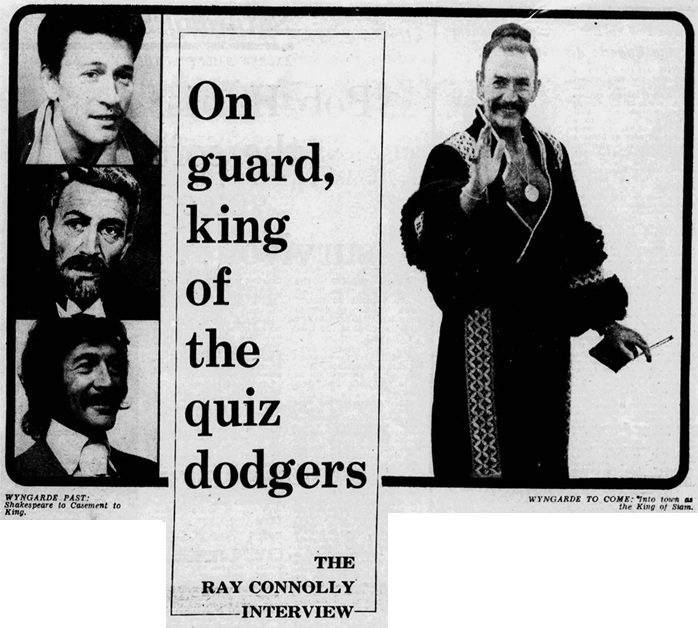
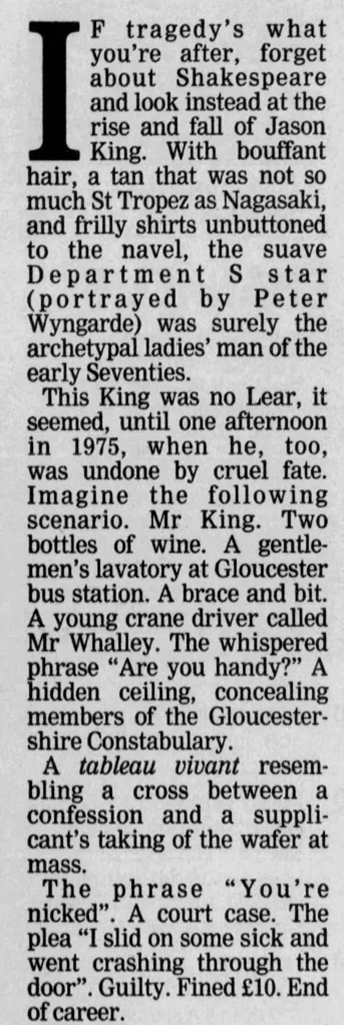
Among the most disreputable and objectionable interviews that Peter was compelled to participate in occurred in 1973, which was conducted by Ray Connolly – a journalist who, at the time, was employed by the London Evening Standard.
Notwithstanding his acceptance of Peter’s hospitality and his prompt indulgence in the fine cuisine that Peter purchased for him at an swish restaurant in London’s Covent Garden, Mr. Connolly subsequently demonstrated a patronising demeanour toward his magnanimous host that was derisive and harsh, even by the standards of tabloid journalism at the time.
I decided to provide a copy of the interview to Brian Grant, a psychologist of my acquaintance (see ‘Are Trolls Like These Destroying Fandom‘), to find out what his professional assessment of the published article was. The following is his response.
__________________________________
THE ANATOMY OF MALE JEALOUSY
Male jealousy directed toward another man typically originates from perceived threats concerning romantic relationships, social standing or professional accomplishment. This emotional reaction can emerge in both romantic contexts and in platonic or professional settings such as rivalry over status or achievement. In this particular case, Mr. Connolly appeared notably disturbed by the considerable female admiration Mr. Wyngarde was receiving at the time this interview took place (perhaps his wife was a Wyngarde devotee,which subsequently provoked an internal fury that he felt necessary to discharge in this article) – “For reasons unclear to me” Connolly hissed, “Mr. Wyngarde appears to have cultivated a substantial following of female viewers…” Yes men definitely can be bitchy!
Although popular culture occasionally stereotypes certain forms of social conflict, gossip or catty commentary as characteristic of women or gay men, these behaviours are fundamentally universal human traits. Heterosexual men experience envy, insecurity, petty conflicts and personal animosity comparable to anyone else, and they regularly express these sentiments through venting or making passive-aggressive observations about other men. In this article, Mr. Connolly clearly demonstrates overt jealousy regarding Peter’s appeal to his female audience.
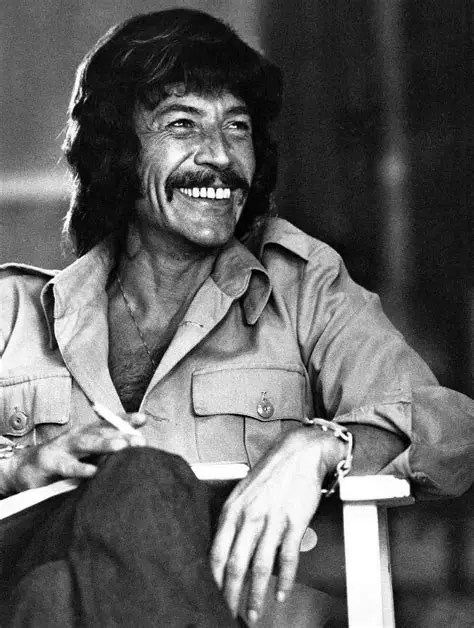
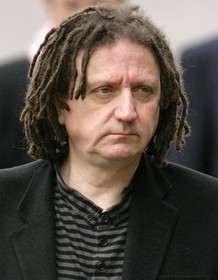
Right: Ray Connolly around the time this interview was conducted.
This envy is further evident in Connolly’s cutting remarks concerning Mr. Wyngarde’s attire. The de rigeur newspaper journalist’s wardrobe during that period consisted of static-prone bri-nylon shirts and ties, beige relaxed-fit corduroys trousers (which made them sound like a steam train pulling out of a station as their thighs rubbed together), and battered lace-up Hush Puppies – the entire ensemble coming courtesy of Freeman’s catalogue. It is scarcely surprising that Mr. Connolly appeared so resentful regarding his counterpart’s sartorial choices. Most likely, Mr. Wyngarde’s suit alone would have probably exceeded Connolly’s annual earnings at the Evening Standard many times over.
Connolly persisted in demonstrating his disdain toward Mr. Wyngarde through commentary – reminding readers that his subject was “middle-aged” and had “thinning hair” (notably, Wyngarde was approximately 15 years Connolly’s senior at that time). It merits consideration that ridicule predicated upon physical characteristics typically serves as a manifestation of the critic’s own values and disposition rather than constituting a genuine assessment of the individual subjected to the criticism. Mature men often possess attributes including intellectual depth, professional achievement, fortitude, and personal assurance that remain imperceptible through superficial observation alone. One does wonder what the 33-year old Connolly of 1973 vintage might think of the 86-year old Connolly today, with his snow white “thinning hair” and creviced face?
Jealousy directed toward other men who have attained superior career accomplishments, financial success or social recognition represents a widespread phenomenon. This sentiment is evident in the assertion, “For years he {Wyngarde} made a moderate living as a straight actor. The Old Vic – bits in television, a small part in Jack Clayton’s The Innocents…” In reality, Mr. Wyngarde had established himself as one of the most esteemed and notably highest paid actors in British television during the 1960s, and had earned considerable respect from numerous prominent figures in British cinema and theatre. Connolly’s passive-aggressive approach – specifically, employing disparaging humour, dismissive remarks or diminishing the accomplishments of the perceived competitor (given that most heterosexual men regard ALL other men as competitors) – and his ‘detractor disposition’ of persistently minimising another man’s achievements in a conspicuous manner strongly suggests underlying envy.
We then reach the inevitable moment in Connolly’s article when he questions whether Mr. Wyngarde had actually been married, as had been referred to in previous interviews. “There is also an element of mystery about the marriage he says took place when he was 22.Who was she I wanted to know.” You could almost hear the bile rising in Connolly’s throat at this point,
Multiple psychological considerations warrant examination in this context. Was Connolly interrogating Wyngarde’s sexual orientation? The evidence strongly suggests so, but he clearly hadn’t the intestinal fortitude or strength of conviction to say it outload. Connolly had previously referenced Wyngarde’s frequent romantic conquests and philandering behaviour as documented in earlier newspaper and magazine accounts through the observation, “Me thinks the gentleman doth protest too much.” It is a recognised psychological phenomenon that individuals occasionally project their own internal anxieties onto others. By directing scrutiny toward another person’s sexual identity, one may circumvent the necessity of confronting one’s own personal doubts or apprehensions. Whether such displacement occurred in this particular instance remains unknown to all but Mr. Connolly himself.
Evidently, Wyngarde’s desire to shield his former spouse from unwarranted intrusion by Connally’s aggressive Fleet Street colleagues was construed as conduct of a more troubling nature. Within the corrosive milieu of tabloid journalism where Connolly operated, refusal to address a personal inquiry is regarded with distrust rather than acknowledgement of a valid right to privacy. A person who maintains confidentiality regarding certain aspects of their lives may be characterised as evasive or as possessing undisclosed information, despite merely prioritising personal discretion. As early as the 1960s, numerous observers were beginning to recognise what appeared to be an escalating presumption of entitlement to access particulars concerning others’ private affairs. Although inquisitiveness itself is not unprecedented, contemporary society was arguably beginning to obscure the demarcation line between public and private domains. Throughout numerous decades, journalistic coverage has regarded the private lives of prominent figures as entertainment content. The public had grown accustomed to discourse regarding romantic relationships, medical conditions, financial matters, family disagreements and individual adversities. This progressively fostered the perception that personal boundaries constitute impediments rather than protections.
As documented by Tina Wyngarde-Hopkins in her book ‘Peter Wyngarde: A Life Amongst Strangers‘ (Page 242), should Connolly had sought to carry out even the most rudimentary research before publishing his article rather than casting unwarranted aspersions, he would have found in the Electoral Register from the early 1950’s that Peter Paul Wyngarde and Dorinda Wyngarde (née Stevens) had lived as husband and wife, initially at 11 Oxford Mews and, latterly, at 9, Holland Park Road, London.
Left: Peter’s wife, Dorinda Stevens
A particular statement from this interview has since been appropriated by other members of the press to construct a misleading narrative regarding Wyngarde’s personal history. The statement in question reads: “As a child it was difficult to differentiate between sometimes between fact and fiction.” In 2018, a disgraced part-time columnist used this line in an obituary he’d written for The Guardian following Wyngarde’s death that same year – utilising this quotation to imply that all of Wyngarde’s biographical accounts were fabricated. As was the intent, the remark had been extracted entirely from its original context. Wyngarde was, in fact, recounting his observations as a young boy during his internment in Japanese-occupied China during World War II. The complete statement actually reads as follows: “As a child it was difficult to differentiate between sometimes between fact and fiction. You can imagine how difficult it was to see people who normally would be very reasonable, to fight and fall out over food.” When examined in its entirety, this passage conveys a substantially different interpretation than the one the peevish Guardian writer sought to establish.
Over the years, well-known personalities have learned to speak with extreme caution when being interviewed by tabloid journalists, simply because an offhand remark, a joke or a comment made out of context can often become the focus of an entire story. Something said in THIS context can be moved in the finished article to THERE, making what was said appear completely at odds to what was meant. Any arising complaint will ultimately be met with, “Well, YOU said it!” It’s really just smoke and mirrors.
This particular article demonstrated considerably greater focus on Ray Connolly personal traits than on Wyngarde’s, functioning as an exemplary demonstration of prejudicial bias and envious sentiment rather than serving as objective journalism. Connolly had predetermined his course of action way before entering that Covert Garden restaurant; before shaking Wyngarde’s hand, and certainly while filled his belly with the haute cuisine generously paid for by his host.
Connolly had been tasked by his editor to write about a famous heartthrob actor, but from the opening paragraph it was clear that fairness was not his purpose. Rather than discussing Wyngarde’s celebrated performances, enduring popularity or charitable work, he devoted his attention to innuendo and personal criticism. The article was peppered with sly remarks and loaded questions, suggesting that the journalist had already decided what he wanted readers to believe before he had written a single word.
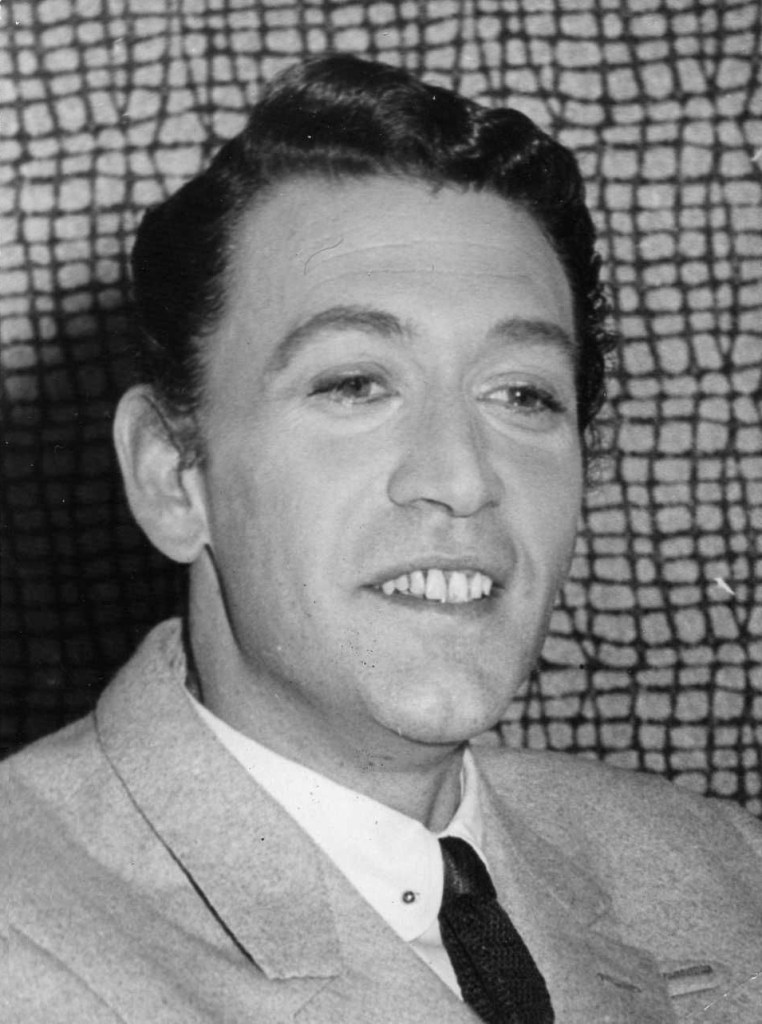
Right: Peter. Disrespected and unfairly represented by a sneering hack
As the article progressed, the writer’s own prejudices were to become increasingly obvious. He treated Wyngarde’s privacy as though it were suspicious and implied that any departure from his narrow view of masculinity required explanation. Instead of respecting personal boundaries, he invited readers to speculate about matters that were entirely unrelated to the actor’s professional achievements. In doing so, he revealed more about himself than about the man he was interviewing.
Beneath the hostility there was definitely a strong streak of jealousy. The actor had enjoyed decades of public affection, success and admiration, while the journalist could only observe from the side lines. Unable to diminish the actor’s accomplishments, he attempted to cast aspersions on his private life. The resulting article was less a work of journalism than a display of resentment, exposing a writer who mistook malice for insight and gossip for reporting.
Does this really matter over 50 years on?
More than fifty years after it first appeared, this vindictive newspaper article is still causing significant damage to Peter’s reputation. In the modern era, many people assume that the passage of time naturally weakens the impact of negative publicity, yet this is not always the case. When journalists continue to cite or reference an old and hostile article, its claims are repeatedly introduced to new audiences who may have little knowledge of the wider context. As a result, allegations, insinuations and rumours that should have long since been examined or challenged can become frozen in the public record, gaining an undeserved appearance of permanence and credibility.
The problem is compounded when later writers rely on previous articles rather than undertaking original research. A single biased account can gradually evolve into an accepted narrative simply through repetition. In the case of a well-known performer such as Peter, whose career spanned decades and encompassed numerous celebrated performances, an old newspaper story can unfairly overshadow artistic achievements and professional accomplishments. Readers encountering references to the article today may assume that its conclusions are historically accurate, even if the original piece was influenced by prejudice, sensationalism or incomplete information. This creates a distorted picture of the individual and risks reducing a complex life and career to a single controversial episode.
The continued use of such material also raises important questions about journalistic responsibility. Historical sources should be examined critically, not merely recycled because they make for dramatic copy. When journalists repeat the claims of a decades-old article without investigating its reliability, they effectively prolong its influence and potentially its injustices (in some cases, as with the Guardian writer mentioned by Brian Grant, this was intentional). For Peter, whose legacy continues to attract interest from fans and researchers, responsible reporting requires a balanced assessment of all available evidence rather than reliance on a single hostile source. Only through careful scholarship and fair-minded journalism can the historical record accurately reflect both the achievements and the challenges of a public figure’s life.
Published in The London Evening Standard on 6th October, 1973
Back in 2014, a rather misinformed freelance journalist proposed that Peter Wyngarde’s legacy would be confined exclusively to his portrayal of General Klytus in the 1980 science fiction masterpiece, ‘Flash Gordon’. I respectfully disagree with this assessment, and the following explanation demonstrates why...
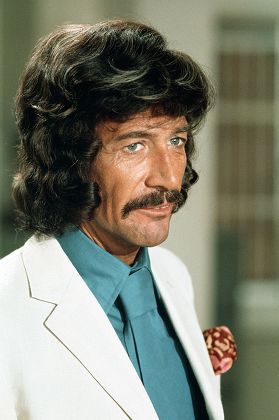
Within the annals of British entertainment, certain performers are commemorated for their sustained achievement, others for their critical recognition, and still others for having fashioned a character so singular that it permeated popular culture. Peter Wyngarde occupies a more exceptional category. He accomplished all of these distinctions whilst maintaining an enigmatic presence that has become increasingly captivating throughout the years. Primarily recognised for his interpretation of the ostentatious crime novelist and adventurer Jason King in the television programme Department S and its derivative series Jason King, Peter established a legacy that transcends any individual performance. His impact manifests across television, fashion, popular culture, and the conception of the compelling anti-hero.
Notwithstanding his death in London on 15 January 2018, his standing has persisted because he functioned as considerably more than a performer. He represented an icon, a puzzle, a survivor, and an embodiment of a particular form of sophistication that appears nearly impossible to emulate within contemporary entertainment. The factors contributing to his enduring remembrance are manifold, yet collectively they constitute the narrative of an extraordinary individual whose existence proved as compelling as the roles he inhabited.
In contrast to numerous actors who originate from relatively orthodox circumstances, Peter’s existence appeared to derive from the narrative of an adventure chronicle. Accounts of wartime endurance, worldwide relocation, and societal displacement furnished him with an impression of veracity when he subsequently embodied refined adventurers and mysterious outsiders. Spectators perceived an exceptional quality within him. Prior to achieving prominence, he possessed a cosmopolitan character that distinguished him from his peers.
This distinctive formative experience facilitated the development of the composure that would characterise his professional identity. Peter consistently projected an air of distinction. Whether performing on stage, appearing on television, or participating in discourse, he conveyed the assurance of an individual who had experienced a substantially more expansive existence than the majority could envision.
Jason King distinguished himself from the majority of television protagonists of his period through his refined demeanor rather than physical toughness, his intellectual sophistication rather than mere athleticism, and his clever repartee rather than emotional restraint. He exhibited an ostentatious approach to fashion, conducted himself with considerable panache, and engaged with existence through a synthesis of self-assurance and comedic sensibility that rendered him profoundly compelling.
The character possessed considerable potential for becoming an exaggerated caricature. Under the direction of a less accomplished performer, Jason King might have been relegated to historical footnote status, yet Peter possessed the acumen to calibrate extravagance with authenticity. He elevated the character to mythic proportions whilst maintaining plausibility.
This equilibrium demanded extraordinary technical proficiency. Audiences simultaneously experienced amusement, admiration, and investment in Jason King’s endeavors. Achieving this tripartite response represents a considerable challenge and fundamentally explains the character’s enduring cultural resonance.
Even in contemporary times, many years following the programme’s conclusion, Jason King maintains recognition as one of the most iconic figures in British television heritage.
Contemporary society exists within an environment saturated by celebrities whose public personas are meticulously curated by professional representatives and digital communication specialists. Conversely, Peter cultivated an identity that possessed authentic originality.
Throughout the early 1970s, he became inextricably linked with elegance, refinement, and aesthetic excellence. His sartorial selections garnered considerable public interest, and period documentation characterises him as a fashion influencer whose cultural impact transcended the television audience. His audacious clothing selections and refined public presentation established him as among Britain’s most prominent public figures.
Peter’s distinguishing characteristic resided in his conceptualization of fashion as an integral component of artistic expression. The precisely tailored outerwear, striking neckwear, meticulously maintained facial hair, and apparent ease all functioned as essential elements of the public identity that audiences recognised.
While numerous performers adopt prevailing fashion movements, Peter functioned as their originator.
His legacy persists in subsequent fictional personalities who amalgamate theatrical presentation with self-possession. Cultural analysts have frequently identified parallels between Jason King’s aesthetic sensibilities and the subsequent espionage character archetypes that subsequently achieved prominence in entertainment media.
The contemporary audience’s capacity to instantaneously recognise a “Jason King aesthetic” exemplifies the degree to which Peter successfully integrated himself into the visual vernacular of his era.
Another factor contributing to Peter’s enduring memorability is the persistent absence of comprehensive biographical clarity regarding his life.
Historical documentation has been marked by disagreements concerning his birth circumstances, educational background, and personal affairs. Varying scholarly and biographical sources have offered divergent narratives regarding his origins, formative years, and intimate history.
For most entertainment personalities, such biographical ambiguity would represent a liability. However, for Peter, this uncertainty functioned as a distinguishing asset.
He deliberately maintained an aura of enigma during an era preceding the emergence of social media, which has rendered contemporary public figures substantially transparent. The audience possessed the opportunity to construct theories about him because supplementary narratives, alternative accounts, and unresolved inquiries perpetually existed.
In numerous ways, he appeared to embody less the characteristics of a traditional performer and more the qualities of the mysterious personas he brought to life. Admirers developed an interest extending beyond his artistic interpretations to encompass the enigmatic nature of Peter as an individual.
This enigmatic quality maintains its capacity to generate scholarly and popular interest in the years following his passing. Subsequent audiences encounter his work and develop fascination with the inconsistencies and uncertainties characterizing his biographical narrative.
A fundamental criterion for assessing any creative professional’s cultural importance is the persistence of their artistic contributions amid evolving aesthetic preferences.
Television underwent substantial transformation throughout Peter’s professional tenure. He experienced the progression from monochromatic transmission to polychromatic broadcasting, from geographically constrained theatrical production to progressively refined technical capabilities. Nevertheless, his artistic legacy endured.
Television programs featuring Peter sustained the engagement of devoted audiences well beyond their initial transmission periods. Physical media distributions, periodic reruns, fan-oriented gatherings, and digital platforms functioned to sustain his professional standing. His interpretive work achieved recognition among viewers encountering his performances for the first time, independent of their original broadcast chronology.
Numerous television personalities become captives of their historical moment. Their prominence diminishes as aesthetic preferences shift. Peter circumvented this predicament because his magnetism remained independent of transient cultural movements. Magnetism, intelligence, self-assurance, and distinctiveness maintain their enduring appeal. Therefore, his portrayals retain their exceptional quality when examined by contemporary audiences.
Cult television depends upon compelling figures. Audiences repeatedly engage with programmes featuring personalities without parallel. Jason King exemplifies this criterion.
The character’s prominence within cult television circles has sustained Peter’s ongoing recognition. Devotees of established television regularly acknowledge his significance to British cultural heritage, and his performances serve as a reference point in examinations of genre television spanning the 1960s and 1970s.
Cult recognition frequently establishes a more resilient legacy than widespread commercial success. General audiences may transition elsewhere, but devoted followers maintain and promote their preferred content. Peter derives substantial advantage from this dynamic. Each successive cohort of television scholars, archivists, and aficionados eventually discovers Jason King and appreciates the character’s exceptional nature.
The outcome constitutes a legacy perpetually reinvigorating itself. Adherence to convention has generated remarkably few permanent cultural figures.
Peter proved significant because he declined to remain inconspicuous. His portrayals demonstrated audacity, his presentation was remarkable, and his relationship with celebrity was atypical.
Within contemporary entertainment, distinctiveness receives frequent discussion yet inconsistent implementation. Numerous performers conform to established conventions in appearance, vocal delivery, and conduct. Peter persistently rejected such conformity.
He demonstrated erudition during periods when intellectual skepticism prevailed. He championed refinement when rugged aesthetics dominated cultural preferences. He valued theatrical expression when naturalistic approaches predominated. This commitment to differentiation rendered him unforgettable. Audiences may not invariably endorse unconventional performers, yet they seldom disregard them.
Any comprehensive evaluation of Peter Wyngarde’s legacy must acknowledge the difficulties he encountered.
His professional trajectory experienced a substantial decline that, regrettably, impacted both his career prospects and his public standing. Nevertheless, hardship frequently demonstrates one’s true character.
While he did not restore the prominence he possessed during his most successful period, he persisted in his work and retained the support of devoted followers who valued his artistic abilities and determination. His commitment fostered the deep appreciation numerous admirers held for him.
There exists something profoundly authentic about performers who overcome adversity rather than experiencing unbroken prosperity. Their trials lend substance to their accomplishments. In Peter’s situation, struggle elevated rather than diminished his standing among those who held him in high regard.
Within the performing arts sector, certain artists gain respect from peers due to their professionalism and commitment. Peter’s extensive career spanning theatre, cinema, and television reflected a genuine devotion to the art of performance rather than superficial stardom. He treated each role with gravity and brought sophistication to his interpretations.
This commitment solidified his standing among discerning analysts of British theatre. Even when examining his most theatrical roles, commentators and admirers recognised the fundamental artistry that rendered those performances compelling. Numerous performers can convey self-assurance. Relatively few can convey self-assurance while simultaneously demonstrating fragility, humour, acuity, and nuance. Peter accomplished this consistently.
That accomplishment warrants acknowledgment and strengthens the enduring nature of his legacy.
Peter’s enduring appeal derives substantially from what he embodies. For contemporary audiences, he represents a period in which television adventure maintained a distinctive elegance and romantic quality. His televised universe encompassed international journeys, upscale accommodations, refined attire, witty repartee, and sophisticated intrigue. The authenticity of that world remains largely irrelevant. What audiences retain is the emotional resonance of the experience.
Peter established himself as one of the most influential representatives of a cosmopolitan sophistication fantasy. Engaging with his performances provided viewers with temporary respite into a realm where each location appeared captivating and every interaction suggested possibility. Such fantasies persist in their appeal because they fulfill fundamental human aspirations. Consequently, performers connected to these fantasies maintain their significance within cultural discourse.
Certain performers are recalled for a distinctive visual signature. Others are remembered for their vocal qualities. Peter possessed both attributes. His voice conveyed authority, intelligence, irony, and magnetism. When combined with his remarkable physical presence, it formed a comprehensive artistic identity that audiences found immediately distinctive. Distinctiveness holds considerable importance in popular culture.
When an actor achieves identification within moments, their likelihood of attaining enduring prominence increases substantially. Peter accomplished precisely this degree of distinctiveness. Individuals unfamiliar with complete Jason King episodes frequently recognise his photographs. The facial hair, coiffure, sartorial choices, and demeanour have become emblematic.
Relatively few performers establish such a powerful visual legacy.
Peter’s permanent place in cultural memory is further secured by the commitment of his fans.
Peter’s enduring legacy is substantially reinforced by the unwavering commitment of his dedicated admirers.
Official repositories, biographical works, private collections, television scholars, and passionate devotees have consistently labored to safeguard documentation regarding his personal history and professional accomplishments. Comprehensive collections, published volumes, recorded conversations, and critical examinations guarantee that subsequent generations will retain the capacity to explore and appreciate his contributions.
Fan communities fulfill a vital role within cultural preservation. They prevent prominent individuals from fading into historical obscurity. In Peter’s situation, these preservation initiatives have demonstrated remarkable effectiveness. His artistic output remains readily available, actively discussed, and widely celebrated well beyond the initial broadcast dates of his most prominent performances.
Provided that enthusiasts persist in introducing new audiences to Department S and Jason King, his cultural significance will endure indefinitely.
Certain fictional characters transcend their source material and attain the status of cultural icons. Jason King exemplifies this phenomenon.
The character manifested assurance devoid of malice, refinement without pretension, and elegance without reservation. Audiences held him in high regard because he demonstrated a complete engagement with existence. Significantly, Jason King also embodied a masculine identity distinct from conventional action-adventure protagonists. He possessed style, eloquence, imaginative capacity, and psychological openness while maintaining undeniable personal magnetism. This distinctive synthesis contributed to his revolutionary impact in understated yet profound ways.
Contemporary viewers frequently value the character specifically because he diverges from traditional heroic archetypes. Through Jason King, Peter established something permanent: a representation of individuality that maintains contemporary relevance.
The majority of celebrated performers ultimately represent either historical nostalgia or contemporary rediscovery. Peter embodies both categories simultaneously.
Veteran audiences cherish his memory because they witnessed his ascent to prominence directly. Emerging audiences encounter him via classic television broadcasts, digital streaming platforms, documentary productions, and guidance from devoted fans. This multifaceted appeal remains exceptionally rare.
Any comprehensive evaluation of Peter’s legacy must acknowledge the substantial difficulties he encountered.
His professional trajectory experienced a considerable decline that, regrettably, impacted both his career prospects and his public standing. Nevertheless, hardship frequently demonstrates one’s true character.
While he did not achieve a return to the prominence he once commanded during his most successful period, he persisted in his work and retained the devotion of supporters who valued his artistic abilities and determination. His commitment fostered the deep affection his admirers maintained for him.
There exists something profoundly authentic about performers who navigate adversity rather than experiencing unbroken triumph. Their difficulties enrich their accomplishments. In Peter’s situation, struggle elevated rather than diminished his standing among those who held him in high regard.
Within the performing arts sector, certain artists gain respect from their peers through their professionalism and commitment to their craft. Peter’s extensive career spanning theatre, cinema, and television reflected a genuine devotion to acting as an art form rather than mere stardom. He treated each role with seriousness and brought intellectual depth to his interpretations.
This commitment solidified his standing among discerning critics of British theatrical performance. Even when examining his most theatrical roles, observers and enthusiasts recognised the considerable skill underlying those compelling portrayals. Numerous actors can convincingly project assurance. Relatively few can project assurance while simultaneously demonstrating fragility, humour, intellect, and nuance. Peter accomplished this consistently.
This accomplishment warrants acknowledgment and strengthens the enduring nature of his professional reputation.
A significant component of Peter’s appeal derives from what he embodied. For contemporary audiences, he represents a period when television adventure possessed distinctive sophistication and allure. His television universe encompassed global expeditions, upscale accommodations, refined fashion, witty repartee, and sophisticated mystery. Whether such a world genuinely existed is largely irrelevant. Audiences retain the emotional resonance of that experience.
Celebrities whose prominence relies exclusively on nostalgic sentiment frequently diminish as their initial audiences pass away. Conversely, celebrities sustained solely through contemporary discovery may fail to establish meaningful emotional connections with older demographics. Peter uniquely benefits from both of these advantages concurrently.
He persists as a treasured recollection for certain audiences while simultaneously representing an engaging discovery for others. This dual appeal virtually ensures sustained engagement with his artistic contributions.
The fundamental criterion for cultural persistence is straightforward: does the public maintain interest? In Peter’s situation, the response is unequivocally affirmative. Contemporary audiences continue to appreciate the identical attributes that established his prominence in previous decades:
Originality
Confidence
Wit
Mystery
Style
Charisma.
These qualities transcend temporal boundaries.
Technology evolves. Fashion transforms. Broadcasting methods shift. Human attraction to remarkable individuals persists unchanged. Whenever audiences engage with Peter’s performances, they promptly identify that he possessed an element incapable of artificial creation. Authentic star quality remains as uncommon in contemporary times as it was throughout his career.
Peter shall endure in collective memory because he transcended the role of accomplished performer. He exemplified a survivor of extraordinary adversity, a talented artist, a fashion trendsetter, a cult television phenomenon, and among the most singular personalities to grace British television. His interpretation of Jason King established his permanent position in television heritage, yet the resilience of his legacy derives from a more fundamental source: distinctiveness.
Rare are the performers who have unified mystery, ability, sophistication, and fortitude with such completeness. Years following his most celebrated accomplishments, audiences persist in examining him, rediscovering his performances, and acknowledging his contributions. His impact manifests in subsequent television personalities, his aesthetic remains instantly identifiable, and his biographical narrative continues to captivate those who encounter it.
The entertainment sector generates numerous celebrities but produces comparatively few legendary figures. Peter attained legendary status through his refusal to embrace mediocrity. He commanded presence in every environment, every moment, and every performance with unmistakable authority. The progression of years has not diminished this commanding presence. In fact, it has amplified its significance.
Provided that society continues to esteem charisma, originality, and the perpetual allure of distinguished television programming, Peter’s designation shall remain in public consciousness.
THE TELEVISION FIRSTS AND THE CHARACTERS THAT WILL LIVE ON FOREVER
Lieutenant Jan Wicziewsky. ‘South’ (1959)
The 1959 British television play South, which premiered on ITV’s Play of the Week series on 24 November 1959, holds a distinctive and significant position in the annals of British television history. Adapted by Gerald Savory from Julien Green’s 1953 play Sud, this production is now widely acknowledged as the earliest extant British television drama to treat homosexuality as a principal theme. Though largely overlooked throughout subsequent decades, its recovery by the British Film Institute illuminated its groundbreaking contribution to questioning established social conventions during an era when homosexual conduct remained prohibited in Britain.
Located in the American South during the period preceding the Civil War, South chronicles the narrative of Lieutenant Jan Wicziewsky, a Polish expatriate residing on an estate managed by an affluent household. The introduction of Eric MacClure, an attractive military officer, compels Jan to address sentiments he has endeavoured to restrain. During a period when television seldom portrayed same-sex attraction in any capacity, the play examined themes of yearning, isolation, selfhood, and constraint with considerable gravity and compassion. Although the terminology of homosexuality could not be articulated explicitly on television, audiences of that period comprehended the psychological struggle underlying the narrative.
The importance of South derives not exclusively from its thematic content but equally from its historical moment. In 1959, societal discourse regarding homosexuality remained profoundly contentious. The Wolfenden Report had advocated for legislative modification two years prior, yet substantive transformation would not materialise until the Sexual Offences Act of 1967. Within this societal context, South constituted a courageous cultural intervention. It prompted viewers to identify with an individual whose suffering originated not from wrongdoing or ethical transgression but from his powerlessness to openly declare his affection. Consequently, the production constitutes a pivotal moment in the progressive development of LGBTQ+ portrayal in British cultural media.
Central to the theatrical production’s resonance was Peter’s interpretation of Jan Wicziewsky. As an already seasoned performer, Peter demonstrated remarkable emotional depth, embodying Jan’s surface-level assurance alongside his concealed psychological distress. The character undergoes a transformation from aristocratic composure to mental deterioration as he grapples with sentiments that contemporary society compelled him to suppress. Both critical reviewers and subsequent historians have commended the performance for its nuance and sophistication, particularly considering the limitations imposed on television drama during that era.
Peter’s selection for the role held particular importance because accepting such a part entailed substantial career jeopardy during the late 1950s. The production faced opposition from certain media outlets, mirroring prevailing social attitudes of the time. Nonetheless, his commitment to portraying the character with integrity and compassion established Jan as among the earliest sympathetically drawn gay characters featured on British television. Rather than reducing the role to conventional stereotypes, Peter presented him as a poignant romantic protagonist whose internal conflict possessed universal appeal transcending the historical context of the narrative.
In contemporary assessment, South stands as a pivotal moment in television heritage. Its examination of prohibited romance, alongside Peter’s audacious and persuasive portrayal of Jan Wicziewsky, secured its enduring importance. What was once an obscure television production is presently acknowledged as a significant pioneering contribution toward more forthright and representative programming on British broadcasting platforms.
Peter Quint.The Innocents (1961)
Jack Clayton’s The Innocents (1961) is widely acknowledged as among the most exceptional psychological horror films in cinema history. Drawing from Henry James’s novella The Turn of the Screw, the film is distinguished by its evocative atmosphere, refined cinematography, and perplexing ambiguity. Although Deborah Kerr’s portrayal of the conflicted governess Miss Giddens rightfully receives considerable recognition, Peter’s role as Peter Quint constitutes one of the film’s most striking and profoundly disturbing aspects.
Peter assumes the role of Peter Quint, the spectral former valet who previously worked at the isolated Bly estate. Despite Quint’s limited duration on screen, his presence significantly shapes the entire narrative arc. He is characterised as a cunning and ethically bankrupt individual whose pernicious influence had affected both the household staff and the young boy Miles. Following his demise, Quint’s supernatural presence appears to persist in haunting the estate, functioning as a fundamental element of dread and enigma.
Peter’s interpretation stands out for its measured approach. Rather than employing exaggerated movements or overtly menacing conduct, he establishes an aura of threat through composure, facial expression, and sheer presence. His initial appearance, positioned silently upon a tower while gazing downward at Miss Giddens, represents one of the most frightening sequences in British film history. The scene is understated, yet profoundly disquieting. Peter’s penetrating stare communicates an eerie sense of intention, causing both the governess and viewers to question whether they are observing a genuine supernatural entity or a psychological projection of her consciousness.
A notable strength of Peter’s portrayal lies in the enigmatic quality he imparts to the character. The film deliberately refrains from providing conclusive evidence regarding the genuine existence of Quint’s apparition. Consequently, each manifestation permits multiple interpretations. Peter undertook the challenging responsibility of portraying a character that existed simultaneously as both corporeal and incorporeal, material and phantom-like. His performance accomplishes this equilibrium with remarkable precision, enabling audiences to superimpose their own apprehensions and understandings upon the character.
The actor’s distinctive physical appearance substantially enhanced the role’s impact. Possessing dark complexion, penetrating gaze, and formidable presence on screen, Peter emanated an impression of refinement intermingled with menace. Peter Quint is not depicted as a traditional monster. Rather, he demonstrates charisma, intellect, and allure—attributes that render him considerably more sinister. Peter conveyed a corrupting presence that persisted beyond the character’s demise, reinforcing the film’s central concerns regarding innocence threatened by adult depravity.
During the production of The Innocents, Peter was in the early stages of establishing his professional standing. The Innocents exemplified his capacity to make a profound impact through a secondary role. His performance revealed a captivating magnetism that would subsequently define his career.
More than sixty years following its theatrical premiere, The Innocents maintains its status as a seminal work of psychological horror, and Peter’s portrayal of Peter Quint persists as among its most unsettling characterizations. Through judicious acting choices, enigmatic magnetism, and disturbing presence, Peter contributed to the creation of a spectre whose memory persists long after the film concludes. His performance constitutes a fundamental element in The Innocents’ continued recognition as a cinematic masterwork of horror.
Jason King. Department S (1969-70) & Jason King (1971-72)
Jason King stands as one of the most distinctive and culturally significant characters to have emerged from British television. Following his introduction in the late 1960s within Department S, he progressed to his own highly successful spin-off series, establishing himself as a character that synthesised glamour, wit, eccentricity, and self-assurance in a manner that captivated audiences and established a lasting influence on popular culture.
Jason King possessed immediate and striking recognizability. His prominent moustache, ostentatious clothing choices, bespoke suits, and assured demeanour distinguished him from the conventional television protagonists of his period.
During an era when numerous screen detectives and adventurers were portrayed as uncomplicated action-oriented figures, King presented an alternative proposition. He functioned as a bestselling crime novelist who frequently discovered himself embroiled in the identical categories of mysteries featured in his literary works. This characteristic afforded the character an exceptional degree of refinement and introspection that resonated with viewers seeking more sophisticated entertainment than conventional television programming offered.
The cultural significance of Jason King derives substantially from his function as an embodiment of transforming Britain during the late 1960s and early 1970s. The nation was adopting progressive perspectives regarding fashion, celebrity status, and individual self-expression. King epitomised a realm that was vibrant, internationally-minded, and self-assured. He undertook international journeys, associated with prominent figures, and navigated effortlessly through an environment comprising luxury accommodations, remote destinations, and mysterious circumstances. For viewers, he furnished an idealised representation of contemporary existence that mirrored the period’s preoccupation with aesthetic refinement and international sophistication.
Jason King played a pivotal role in transforming television’s conception of masculinity. In contrast to conventional male protagonists who prioritised toughness and emotional restraint, King distinguished himself through his uninhibited flamboyance and theatrical demeanour. He demonstrated a genuine appreciation for refined clothing, culinary excellence, and opulent living, while simultaneously celebrating his own persona with evident pride. Despite these characteristics, he maintained exceptional courage, intellectual acuity, and practical competence. This distinctive amalgamation disrupted conventional gender expectations and expanded the parameters of what a masculine television protagonist could represent. In numerous respects, King foreshadowed subsequent characters who synthesised self-assurance, comedic sensibility, and sartorial sophistication into their characterizations.
The legacy of Jason King manifests itself across numerous subsequent television and cinematic creations. His commanding presence, incisive repartee, and lavish aesthetic established a foundation for characters who incorporated style as a fundamental component of their magnetism. Traces of King’s influence are evident throughout subsequent detective narratives, espionage thrillers, and comedic productions alike. He substantiated that audiences possessed the capacity to embrace protagonists characterised by eccentricity and nonconformity while simultaneously maintaining charisma and audience connection.
General Klytus. Flash Gordon (1980)
Peter’s portrayal of General Klytus in the 1980 film Flash Gordon, while not representing his most prominent career role, has emerged as one of his most consequential performances in exposing the distinguished actor to audiences born well after his television prominence. Although many established admirers recognise Peter from his role as the mysterious Jason King, contemporary viewers have progressively encountered his capabilities through cult film restorations, digital streaming platforms, and growing enthusiasm for classic science fiction entertainment.
Produced by Dino De Laurentiis and helmed by director Mike Hodges, Flash Gordon constituted an audacious and vibrant interpretation of the renowned comic strip character. Throughout subsequent decades, the film has cultivated a passionate audience base owing to its opulent aesthetic presentation, ironic comedic sensibility, and celebrated musical composition by Queen. Among the film’s striking ensemble of characters stood General Klytus, the merciless military administrator of Emperor Ming’s military apparatus, executed with unmistakable command by Peter.
Concealed beneath a striking golden mask and intricate attire, Peter depended predominantly on his authoritative vocal delivery and commanding physical demeanour to actualise Klytus. Inferior performers might have encountered difficulty establishing significance while obscured by such comprehensive prosthetic and wardrobe elements. Peter, conversely, elevated the character into among the film’s most striking antagonists. Each utterance was articulated with a frigid, refined malevolence that harmonised flawlessly with Mongo’s extravagant aesthetic.
The distinguishing element of Peter’s interpretation resides in its authenticity and dedication. Flash Gordon honors its comic-book foundations completely, yet Peter declines to approach the content frivolously. Rather, he furnishes Klytus with authentic menace and commanding presence. This gravitas serves to stabilise the film’s more imaginative components and substantially strengthens its persistent popularity.
For younger audiences encountering Flash Gordon in contemporary times, Klytus emerges as one of the film’s most visually distinctive and unforgettable characters. The striking golden mask, paired with Peter’s sophisticated and expressive vocal performance, establishes a villain that diverges significantly from those prevalent in many modern science fiction productions. In an era characterised by digital visual effects, the handcrafted costumes and grandiose performances that characterise the film offer a compelling alternative.
The digital landscape has proven instrumental in introducing Peter to contemporary audiences. Conversations across cinema discussion boards, digital social networks, and documentary-style video content examining cult films consistently feature the ensemble cast of Flash Gordon. Numerous younger spectators who first encounter Klytus subsequently investigate Peter’s broader professional trajectory, uncovering his pioneering contributions to television programming throughout the 1960s and 1970s. Consequently, Flash Gordon functions as an entry point to a substantially more comprehensive understanding of his professional accomplishments.
The film’s sustained appeal at fan conventions, curated screenings, and commemorative events has further elevated Peter’s prominence among younger demographics. Each theatrical revival exposes fresh audiences to a performer whose magnetic presence has endured undiminished throughout the decades since the film’s initial release.
Peter’s interpretation of General Klytus illustrates how even a secondary character role can establish an enduring influence on popular culture. Through the sustained acclaim of Flash Gordon, he continues to engage viewers who were not yet born at the time of the film’s premiere. Consequently, successive generations are encountering an artist of exceptional presence and sophistication, guaranteeing that Peter’s professional legacy persists with considerable vitality.
Flash Gordon is now considered by critics to be Sci-Fi classic. General Klytus is the stand out character in the film, which will ensure that Peter Wyngarde will never be forgotten!
PETER’S CULT TV IMMORTALITY
John Cleverly Cartney. The Avengers – A Touch of Brimstone (1966)
Among the numerous unconventional antagonists featured in the acclaimed 1960s television programme The Avengers, few have made as profound an impact as Peter’s interpretation of The Honourable John Cleverly Cartney in the esteemed episode A Touch of Brimstone. This episode is frequently recognised as among the most exceptional in the series’ catalogue, and Peter’s portrayal constitutes a principal factor in its continued prominence in critical discourse and public appreciation.
Upon initial examination, Cartney presents himself as the quintessential embodiment of aristocratic sophistication. Refined, articulate, intellectually accomplished and impeccably groomed, he embodies all the hallmarks characteristic of a conventional English gentleman of standing. However, concealed beneath this refined veneer exists a formidable and cunning personality who derives satisfaction from degradation and ethical transgression. This dichotomy between superficial charm and underlying menace constitutes the character’s fundamental appeal. Peter recognised that an authentically persuasive antagonist need not resort to constant vocalisation or explicit intimidation. Rather, he employed his imposing demeanour, sonorous vocal quality and inherent self-assurance to render Cartney simultaneously alluring and disquieting.
Among the most striking dimensions of this performance is its dramatic presentation. Cartney functions essentially as the principal orchestrator of a contemporary iteration of the notorious Hellfire Club; an institution dedicated to gratification, transgression and ultimately murder. He directs the club’s extraordinary ceremonies with the sovereignty of a monarch and the artistic sensibility of a theatrical performer. Peter demonstrates evident enthusiasm for each utterance, imbuing Cartney with an exaggerated stature that harmonises seamlessly with The Avengers’ distinctive synthesis of espionage, imaginative storytelling and satirical commentary.
The compelling chemistry between Peter and Diana Rigg’s Emma Peel constitutes a principal factor in the episode’s sustained acclaim. Cartney demonstrates fascination with Emma upon their initial encounter, and their dialogue exchanges radiate sophistication, peril, and reciprocal acuity. In contrast to numerous television antagonists of that period, Cartney acknowledges Emma as an equally formidable adversary. Their confrontations establish a dramatic tension that propels the narrative forward and furnishes several of the episode’s most striking moments.
The episode itself acquired notoriety due to its provocative subject matter. Incorporating allusions to the historical Hellfire Club, depictions of ritualistic conduct, and visual elements deemed audacious for 1960s television, A Touch of Brimstone transgressed the conventional boundaries of mainstream programming. Certain sequences featuring Cartney underwent modification for particular broadcasts – most notably, the (in)famous ‘Whipping Scene’ – and the episode was deemed excessively contentious for initial distribution in America. Peter’s courageous portrayal occupies the focal point of this controversy, furnishing the narrative with considerable dramatic intensity.
Most significantly, Cartney exemplifies the calibre of refined antagonist in which Peter demonstrated exceptional proficiency. His magnetism proves sufficiently potent that audiences frequently retain him in memory with equivalent vividness as the protagonists. The character subsequently emerged as one of the most significant roles throughout Peter’s professional trajectory, exemplifying the attributes that would subsequently establish his prominence as Jason King. Certain scholars have proposed that the episode’s representation of the Hellfire Club exerted influence upon subsequent cultural productions, encompassing comic-book adaptations of this concept (see later in this article).
More than six decades subsequently, John Cleverly Cartney persists as an indelible figure because Peter Wyngarde elevated what might have remained a conventional television antagonist into a captivating, intellectually sophisticated, and perilously alluring entity. His performance encapsulates the fundamental characteristics that distinguished The Avengers: refinement, intellectual acuity, sophistication, and an engagingly sinister quality.
Number 2. The Prisoner – Checkmate (1967)
Among the numerous esteemed performers to assume the role of Number Two throughout the iconic television series The Prisoner, Peter distinguished himself as particularly impactful. Featured in the episode Checkmate, which premiered in 1967, Peter delivered a distinctive combination of refinement, acumen, and threatening presence to the character, establishing one of the series’ most striking portrayals of the Village’s enigmatic principal administrator.
Developed by and headlining Patrick McGoohan, The Prisoner represented a departure from conventional television drama of its period. Situated within the cryptic Village, the narrative chronicled the endeavours of Number Six, a retired intelligence operative committed to resisting institutional pressure to disclose his reasons for departure. A particularly compelling element of the programme was its succession of Number Twos, each implementing distinct strategies to undermine Number Six’s resolve. In Checkmate, this responsibility belonged to Peter.
The distinguishing factor of Peter’s portrayal is his remarkable magnetism. In contrast to certain Number Twos who depended upon explicit coercion, his character radiates poise, sophistication, and conviction. He seldom demonstrates agitation or hostility. Rather, he observes circumstances with the composed certainty of an individual persuaded that the institution he represents is fundamentally insurmountable. This measured approach establishes the character with an understated influence that proves remarkably persuasive. Rather than asserting dominance through volume or intimidation, Peter captures attention through his mere presence.
The episode constitutes among the most cognitively stimulating entries in the series. Centred upon an elaborate human chess game, Checkmate examines questions regarding standardisation, influence, allegiance, and selfhood. Number Six becomes persuaded that he can identify detainees from administrators through their conduct and perspectives. Throughout his endeavour to orchestrate an escape, he recognises that surface appearances prove misleading and that he has once more become an instrument in a comprehensive scheme. Peter’s Number Two orchestrates these psychological operations with detached interest and calculated precision.
Peter demonstrated exceptional suitability for the role owing to his proficiency in portraying intelligent and enigmatic characters. Possessing an already established reputation for his distinctive screen presence, he infused Number Two with an air of sophistication that distinguished him among the series’ numerous antagonists. His refined aesthetic, measured articulation, and penetrating gaze harmonised seamlessly with the surreal milieu of The Village. Consequently, his Number Two emerges not as a mere functionary but as a strategic mastermind methodically orchestrating moves across a chessboard.
The performance’s sustained acclaim derives additionally from the interpersonal dynamic between Peter and Patrick McGoohan. The confrontation between Number Two and Number Six transcends mere physical engagement. It constitutes a struggle of intellectual faculties and personal determination. Peter comprehended this interplay with precision, depicting Number Two as an antagonist who derives genuine satisfaction from the intellectual challenge presented by Number Six. Their interactions resonate with palpable tension and reciprocal esteem, thereby amplifying the episode’s philosophical dimensions.
Despite his appearance in merely a solitary episode, Peter’s interpretation of Number Two endures as a preeminent achievement within The Prisoner and remains an enduring fan favourite. His refined, strategic, and compelling performance encapsulated the quintessential elements that distinguished the series: intellectual rigor, enigmatic quality, and psychological complexity. More than fifty years subsequently, his Number Two persists in being regarded as among the most captivating personas ever to inhabit the Village.
Jason Wyngarde. Character in the X-Men series of comic books – Marvel.
The domain of comic books constitutes an intricate composition derived from numerous sources of inspiration, and Marvel Comics’ character Jason Wyngarde, alternatively referred to as Mastermind, exemplifies this principle. Although the character represents the collaborative creation of visionary creators including Stan Lee, Jack Kirby, and Roy Thomas, a noteworthy yet frequently disregarded inspiration for his development and characterisation originates from the distinguished performer Peter Peter. The remarkable similarity and the identical name shared between the performer and the mutant antagonist indicate an intentional correspondence, one that endows Jason Wyngarde with particular significance and a dimension of theatrical malevolence.
Peter, predominantly recognised for his portrayal of the refined and mysterious Jason King in the television programs Department S and Jason King, demonstrated a distinctive screen presence. He conveyed an impression of cultivated sophistication, frequently accompanied by an ominous quality. His portrayals were characteristically refined, cosmopolitan, and cunning, demonstrating expertise in deception and psychological manipulation. This carefully constructed and widely acknowledged persona functioned as a substantial foundation for Marvel’s interpretation of Mastermind.
Upon Jason Wyngarde’s introduction into the X-Men narrative, he was depicted as a formidable mutant possessing the capacity to manufacture illusions, an attribute that corresponded directly to the theatrical characteristics and deceptive qualities frequently evident in Peter’s dramatic performances. The designation itself, “Wyngarde,” represented an explicit reference, a deliberate selection intended to invoke the performer’s established reputation. This constituted considerably more than a superficial nomenclatural decision; it functioned as a mechanism to furnish the character with preexisting connotations of elegance, acumen, and compelling menace.
The visual presentation of Jason Wyngarde in his initial appearances demonstrated notable similarities to Peter Wyngarde, particularly the actor’s characteristic lengthy, dark hair and consistently refined sartorial presentation. This visual correspondence strengthened the association, facilitating reader recognition of the comic book character through the actor’s established public persona. The underlying suggestion was that Jason Wyngarde, comparable to his namesake, possessed exceptional mastery of deception and psychological manipulation, functioning as an individual capable of securing trust through charm before exposing his authentic, malevolent nature.
Additionally, the character’s development frequently depicted him functioning covertly, directing circumstances through strategic deception rather than overt physical confrontation, analogous to a proficient actor executing a multifaceted dramatic role. His underlying objectives were predominantly centered on acquiring power and dominion, characteristics readily attributable to the sophisticated yet morally questionable personas that Peter demonstrated with considerable skill. The connection transcended nomenclature and physical appearance, encompassing the fundamental comprehension of what constitutes a captivating, though antagonistic, character.
Ultimately, Peter functioned as a foundational archetype for Jason Wyngarde. The actor’s public image furnished a structural framework for a villain characterised not by crude physical force, but by intellectual cunning, psychological manipulation, and an undeniable, though perilous, magnetism. This reciprocal dynamic between performer and fictional character enabled Marvel to construct an antagonist who was immediately identifiable and profoundly disquieting, exemplifying the considerable influence of judicious source material selection.
Peter Wyngarde album (1970)
When individuals recall Peter Wyngarde, their thoughts typically gravitate toward his distinguished television performances, most notably the extravagant Jason King. Nevertheless, the majority remain unaware that during 1970, he produced one of the most extraordinary albums ever issued by a British television personality. Designated simply as Peter Wyngarde, this recording persists as a captivating artifact, merging spoken narrative, popular music, satirical elements, social critique and dramatic presentation into a composition fundamentally distinct from any work generated by a television celebrity during that historical period.
Launched during the apex of Peter’s prominence, the album diverged substantially from the conventional assortment of accessible melodic compositions that audiences might reasonably have anticipated from an accomplished performer. Rather, it embodied the performer’s distinctive temperament, intellectual pursuits and readiness to embrace creative experimentation. The consequent product constituted a recording that perplexed numerous auditors while simultaneously garnering recognition from others for its remarkable boldness. Rather than positioning himself as a vocalist in the conventional manner, Peter engaged with the album as an interpreter and narrator, presenting elaborate dramatic passages and intensely theatrical renderings of musical compositions.
The album’s nomenclature itself intimated that this would constitute no standard commercial release. The compositions addressed subjects encompassing attraction, interpersonal dynamics, cultural transformation and contemporary society, frequently employing provocative and intentionally disquieting methodologies. Compositions including “Hippie and the Skinhead” and “Neville Thumbcatch” illustrated Peter’s preoccupation with the evolving societal circumstances of late-1960s Britain, whereas supplementary compositions synthesised romantic elements, comedic sensibility and analytical observation in unpredictable configurations.
What distinguishes this album is its deliberate resistance to conventional musical classification. The work has been characterised as an amalgamation of spoken word, comedic elements, novelty recording, and pop music. Rather than emphasising melodic vocal performance, Peter predominantly recites, narrates, and executes material with the theatrical intensity that established his compelling screen presence. Engaging with the album resembles attending an idiosyncratic solo theatrical presentation rather than experiencing a conventional pop recording.
Contemporary listeners frequently struggled to comprehend such an unconventional artistic endeavor. According to subsequent releases and retrospective analyses, the album’s contentious subject matter and distinctive approach resulted in restricted commercial viability, and it subsequently acquired a reputation as among the most peculiar celebrity recordings ever produced. Certain sources indicate that the initial release was discontinued after merely several days, further enhancing its esteemed position among collectors.
Following decades of its initial release, the album has cultivated a devoted following. Collectors, enthusiasts of obscure cultural artifacts, and admirers of Peter’s artistic trajectory have embraced the recording specifically because of its exceptional distinctiveness. What previously appeared perplexing now emerges as a courageous artistic undertaking by an actor committed to pursuing his individual creative vision rather than commercial viability. A CD reissue has facilitated the introduction of the album to contemporary audiences interested in exploring this overlooked segment of Peter’s professional history.
Currently, the album exemplifies Peter’s artistic independence. Comparable to his most accomplished screen performances, it demonstrates stylistic sophistication, provocative content, eccentricity, and undeniable impact. Whether interpreted as an overlooked artistic achievement, a captivating curiosity, or simply one of the most extraordinary recordings ever created by a television performer, Peter Wyngarde persists as one of the most compelling documents of Peter’s distinguished professional legacy.
Flash Gordon Soundtrack. Queen (1980)
Performers frequently aspire to achieve one exceptional performance that will establish their enduring presence in popular culture. For Peter, this distinction was realised multiple times throughout his work in theatre, cinema, and television. However, one particular element of his professional legacy continues to introduce him to successive generations well beyond his death: his portrayal of General Klytus in the 1980 film Flash Gordon and, more notably, the manner in which his voice became indelibly integrated into Queen’s celebrated soundtrack album.
Upon its release in 1980, Flash Gordon presented an elaborate science-fiction spectacle characterised by vibrant cinematography, grandiose characters, and compelling performances. Among these was Peter’s interpretation of Klytus, the masked principal enforcer serving Emperor Ming’s dominion. Concealed beneath the intricate costume and metallic headpiece, Peter fashioned a character who embodied both menace and refinement. His characteristic vocal quality, articulate pronunciation, and authoritative presence contributed substantially to establishing Klytus as among the film’s most striking figures.
The significance of Peter’s involvement is particularly noteworthy because his contribution transcended the film’s theatrical presentation. Queen’s Flash Gordon soundtrack distinguished itself from conventional film music albums of that period. Rather than simply presenting the musical composition, the album incorporated dialogue excerpts from the film throughout numerous compositions. Consequently, the performers’ voices became an essential component of the auditory experience. Klytus’s dialogue, articulated by Peter with his characteristic commanding presence, remains interwoven throughout the album’s structure.
This distinction holds considerable importance because the soundtrack has maintained relevance far exceeding its cinematic origins. The album achieved placement within the UK Top Ten and continues to represent one of Queen’s most distinctive artistic endeavors. Successive audiences have encountered it through multiple formats including vinyl recordings, compact discs, digital acquisitions, and streaming platforms. With each return to the soundtrack, listeners experience not merely Queen’s musical compositions but also the vocal performances of the film’s cast members, encompassing Peter’s portrayal of Klytus.
Unlike numerous actors whose performances can only be revisited through film viewing, Peter’s work persists in two distinct forms. Fans may watch Flash Gordon, yet they can also encounter elements of his performance via a commercially successful soundtrack composed by one of the world’s most esteemed rock bands. This distinctive combination ensures that his voice reaches audiences who may never have viewed the film whatsoever.
Achieving immortality in popular culture presents considerable challenges, yet Peter accomplished this feat with remarkable success. Through Flash Gordon and Queen’s acclaimed soundtrack, his distinctive voice persists in resonating throughout the generations. Provided that listeners continue to play the album and audiences encounter the film, a dimension of Peter’s performance shall endure, guaranteeing that the actor maintains an indelible position in both cinematic and musical history.
Biography – Peter Wyngarde: A Life Amongst Strangers (2020)
For many actors, fame is fleeting. Even the most celebrated performers can find their achievements fading from public memory as generations pass and tastes change. Yet some artists achieve a form of immortality, not only through their work but through the preservation of their lives and legacy. In the case of Peter Wyngarde, the biography Peter Wyngarde: A Life Amongst Strangers has played a crucial role in ensuring that one of Britain’s most distinctive actors will continue to be remembered and appreciated for decades to come.
Peter’s career was remarkable in both its range and its individuality. He appeared in acclaimed television productions such as The Prisoner, The Avengers, Department S, Jason King, and Flash Gordon. Possessing a unique combination of elegance, charisma and mystery, he became one of the most recognisable faces on British television during the 1960s and 1970s. Yet despite his fame, much of the man behind the public image remained elusive.
That is where Peter Wyngarde: A Life Amongst Strangers assumes its importance. More than a conventional celebrity biography, the book serves as a permanent record of an extraordinary life. It explores not only Peter’s acting career but also the complexities of his personality, his relationships, his triumphs, his disappointments and the challenges he faced throughout his life. In doing so, it presents a fuller and more human portrait than audiences could ever gain from his screen appearances alone.
One of the great strengths of the biography is that it rescues Peter from the danger of becoming merely a nostalgic footnote. Many younger fans may know him only as Klytus in Flash Gordon, while others may recognise him from his memorable appearances in cult classics like The Champions and The Saint. The book demonstrates that his contribution to British popular culture was much broader than any single role. It highlights his work in theatre, television, film, music and broadcasting, revealing the depth of his talent and ambition.
The biography also places Peter within the wider context of twentieth-century entertainment history. Through its examination of his life and career, readers gain insight into changing attitudes within British society, the evolution of television drama and the pressures faced by public figures living under intense scrutiny. As a result, the book preserves not only the memory of Peter himself but also the era in which he worked.
Perhaps most importantly, A Life Amongst Strangers ensures that future generations can encounter Peter as a real person rather than simply a screen image. His wit, intelligence, eccentricity and determination emerge vividly from its pages. Readers who may never have seen Department S or The Prisoner can discover him through the biography and then seek out his performances for themselves.
True immortality in the arts comes from being continually rediscovered. Every time a new reader opens Peter Wyngarde: A Life Amongst Strangers, they encounter a fascinating life story that might otherwise have been forgotten. The book acts as both a tribute and a bridge between generations, ensuring that the achievements of Peter remain accessible long into the future.
For that reason, the biography stands as one of the most important contributions to Peter’s legacy. It guarantees that while the actor may no longer be with us, his story, his achievements and his singular presence will continue to captivate readers for generations to come.
The Official Peter Wyngarde Appreciation Society (1991 – )
In the modern age, an actor’s legacy depends upon more than television archives, film libraries and printed biographies. Increasingly, it is the internet that determines whether a performer remains a living presence in popular culture or gradually fades into obscurity. For Peter, one of Britain’s most charismatic and distinctive actors, The Official Peter Wyngarde Appreciation Society website has become the most important guardian of his legacy. In many respects, it is helped to ensure his cultural immortality.
Peter enjoyed a remarkable career that spanned theatre, film and television. From his groundbreaking performance as Jan Wicziewsky in South to memorable appearances in The Avengers, The Prisoner, Department S, Jason King and Flash Gordon, he left an indelible mark on British popular culture. Yet, like many actors of his generation, there was always a danger that his achievements could become scattered across fading archives and distant memories of stage performances.
The Appreciation Society website has changed that. By gathering information about Peter’s life and career into a single accessible resource, it has created a permanent digital home for his legacy. Fans, researchers and newcomers alike can discover details about his performances, interviews, recordings and public appearances. Instead of relying on fragmented, often erroneous, information spread across the internet, visitors are presented with a comprehensive portrait of a fascinating and complex performer.
One of the site’s greatest strengths is its ability to introduce Peter to new audiences. Every year, people discover classic television through streaming services, DVD releases and online recommendations. A viewer intrigued by Jason King or fascinated by Klytus in Flash Gordon can quickly learn more about the actor behind those roles. The website acts as both an archive and a gateway, encouraging fresh generations to explore his work.
The site is also important because it preserves material (personal letters, handwritten album lyrics and original TV and theatrical contracts) that might otherwise be lost. Reviews, rare photographs, production details, historical articles and personal recollections all contribute to a richer understanding of Peter’s career. Such material often disappears over time as publications close, websites vanish and memories fade. By preserving these resources, the Appreciation Society performs a valuable historical service, not only for fans, but authors and film, television and theatrical archivists.
Equally significant is the sense of community the website and social media groups creates. Great actors achieve immortality not simply because they were talented but because people continue to care about them. The Appreciation Society provides a focal point for admirers from around the world, enabling them to share memories, discuss performances and celebrate achievements. In doing so, it keeps Peter an active presence rather than a forgotten figure from a bygone era.
The website also helps correct misconceptions and provides context for aspects of Peter’s life that have sometimes been misunderstood. By presenting well-researched information, it allows visitors to appreciate both the man and the performer. This balanced approach strengthens his reputation and ensures that future assessments of his career are based on evidence rather than myth.
Perhaps most importantly, the Appreciation Society website demonstrates that Peter still matters. Long after his final performance, people continue to watch his work, discuss his achievements and celebrate his individuality. The site serves as a digital monument, one that is constantly renewed every time a visitor arrives to learn more about him.
True immortality is not simply being remembered. It is continuing to inspire curiosity, admiration and discussion long after one’s lifetime. Through its dedication to preserving and promoting his legacy, The Official Peter Wyngarde Appreciation Society website has played a vital role in ensuring that Peter remains not merely a figure from television history, but a living part of cultural memory.
THIS IS WHY PETER WYNGARDE WILL NEVER BE FOROTTEN!
PETER WYNGARDE WAS NOT GAY. THIS IS A MYTH CONJOURED UP BY THE BRITISH TABLOIDS
PETER WYNGARDE DID NOT HAVE A ROMANTIC RELATIONSHIP WITH ALAN BATES. THIS WAS A LIE PERPITRATED BY DONALD SPOTO IN HIS BOOK, ‘OTHERWISE ENGAGED: THE LIFE OF ALAN BATES’
PETER WYNGARDE WAS NOT ARRESTED OR CAUSTIONED IN KENNEDY GARDENS OR ELSEWHERE. THIS IS A LIE CREATED BY WIKIPEADIA AND COPIED BY THE BRITISH TABLOIDS.
THE 1975 CONVICTION AGAINST PETER WYNGARDE WAS LATTERLY QUASHED BY THE HOME OFFICE (UK GOVERNMENT) AS BEING “UNPROVEN”.
He once said in an interview, long before interviews became minefields, that acting was “like a religion and the actor is the priest“. It wasn’t fame he wanted; it was expression. It was the chance to step into someone else’s skin and understand the world from a different angle. That hunger carried him through his early days in reparatory theatre; through the years of bit parts and auditions, through the rejections that every actor collects like bruises.
His breakthrough on television came in the BBC production of ‘Rope‘, broadcast on 5th January 1950. The performance was raw, slightly unpolished, and devastatingly human. Critics praised him.” Casting directors called his agent. Audiences wrote letters. Awards followed as the decade progressed. Suddenly, Peter Wyngarde was not just a promising actor—he was the actor everyone wanted.
The 1950’s and 60’s were decades during which Peter’s career was a string of successes that seemed almost effortless. He moved between television, radio, the theatre and film with a fluidity that few actors manage. He played soldiers, villains, ghosts and romantic leads. He had a way of making every role feel lived‑in, as though he had carried the character around with him for years before stepping onto a stage or set. Directors trusted him. Co‑stars admired him. Audiences loved him.
But fame is rarely satisfied with admiration alone. It demands access. It demands intimacy. It demands pieces of a person that were never offered.
Peter’s reluctance to participate in the celebrity ecosystem— few interviews, no public relationships—only intensified the hunger around him. The tabloids began to fill the silence with invention. His determination to protect the privacy of his ex-wife was viewed with suspicion. A harmless disagreement with a director became rumours that he was a difficult character. His sharing a flat with a fellow actor became proof of a secret homosexual romance.
Every well-known personality has a moment when the tide shifts, when the whispers become shouts, when the narrative slips out of a person’s hands. For Peter, that moment came in September 1975 when he was arrested at Gloucester Bus Station and charged with Gross Indecency. The tabloid press, of course had a field day and from that moment on everyone felt they had permission to say whatever they pleased about him, regardless of how outlandish or untrue. Until then he’d been viewed as ‘Ladies Man’. Women around the world had swooned over the Jason King character he’d created. He was regularly voted the Sexiest Man Alive and 35,000 Australian woman had recently voted him ‘The Man We Would Most Like To Lose Our Virginity To.’
Ever since then, whenever the name Peter Wyngarde was mentioned by the press you could guarantee the Gloucester story would be brought out for another airing, with an extra pinch of spice added; for instance, something Peter allegedly said to the police officers at the time of arrest, despite the fact that none of these utterings were ever logged by Gloucester Constabulary and the journalist peddling the line not being there at the time to hear it with his own ears.
Producers panicked. Sponsors withdrew. Journalists camped outside his home. Anything anyone might have said in his defence was drowned out by the noise. Personal appearances were cancelled, and he was spat on in the street by people who only days earlier had idolised him. His reputation, once sterling, was now tarnished by a narrative he had no part in creating. Within days, Peter was being accused of all manner of things. The truth had already been lost in the media mêlé as hysterical Fleet Street hacks jostled for their pound of flesh. The myth had already taken root.
And then came the second blow: a fabricated tale in the now defunct scandal rag, The News of the World, which had been sold to them by a former disgruntled employee and convicted fraudster. This was published just weeks before the trial at Gloucester Magistrates Court on Friday 17th October, 1975. Peter’s refusal to comment was interpreted as guilt. His silence became a canvas onto which strangers painted their assumptions.
The pressure mounted. Friends were few. The phone stopped ringing. He more or less withdrew from public life for a time. He stopped attending industry events. He turned down roles. He spent long stretches of time alone, trying to understand how a career built on authenticity might’ve been undone by fabrication.
At first, he tried to ignore what was being said about him in the press. He told those friends who’d remained loyal that these stories didn’t matter, that people would forget them, that the work would speak louder. But the world was changing. He never bargained for an invention called the internet—a machine that would never sleep, never pause, never question whether what it consumed was fact. Gossip sites multiplied. Anonymous accounts spread rumours faster than they could be disproven. And Peter Wyngarde—private, introverted, earnest—became a target precisely because he refused to play the game.
It is easy to talk about fame in abstract terms—public image, reputation, perception—but the reality is painfully concrete. Peter Wyngarde was a man whose life was dismantled piece by piece by people who had never met him. The tabloids saw him as a commodity while spiteful online gossips viewed him as entertainment. But his friends saw the toll it took: the sleepless nights, the anxiety, the shrinking of a once‑expansive spirit.
There is a particular cruelty in watching your own life become a story you don’t recognise. Peter once described it years later, as “being trapped behind glass while everyone argues about who you are.” He felt erased, replaced by a caricature created by strangers.
And yet, even in the darkest period, he never lost his love for acting. What he lost was the belief that the world would allow him to continue. But continue he did. He didn’t disappear as many of those ‘friends’ and associates did when he most needed their support. He rebuilt. Slowly, quietly, deliberately. He returned to the theatre first, where audiences still appreciated his talent, He took roles that challenged him; roles that reminded him why he had chosen this path in the first place. Critics noticed and bestowed on him some of the most glowing plaudits of his career. It reignited conversations about his talent. The word spread. The industry began to remember the actor behind the salacious headlines, yet all the narrowminded, scandal-hungry tabloids and their gossiping groupies remembered was ‘The Scandal’.
This article is not a tragedy, though it contains tragic moments. It is not a cautionary tale, though it warns of the dangers of a culture that feeds on rumour, lies and myths. It is, above all, a story of reclamation.
Peter’s story is not unique. It’s happening to actors, musicians, sportsmen—anyone whose life is visible enough to be distorted. But Peter’s journey is particularly compelling because he never sought fame, never courted controversy, never invited the scrutiny that consumed him. He was, in many ways, an accidental celebrity. He was just a man who loved to act.
I wrote this article because the truth matters. Because the human being behind the headlines deserves to be seen clearly. Because the cost of gossip is too often invisible until it’s too late. And because Peter Wyngarde’s resilience is a reminder that a person’s worth is not determined by misguided public opinion.
To understand Peter’s story, we must also understand the world that shaped it. The tabloids did not act alone. They were fuelled by a culture that craves scandal, that rewards speculation, that treats celebrities as characters rather than people. Online gossip thrives because it offers the illusion of intimacy—access to someone’s life without their permission. But behind every rumour is a real person. Behind every headline is a life that can be damaged, derailed, or destroyed.
Peter’s life was not impacted by a single lie, but by thousands of small ones. A whisper here, a tweet there, a headline crafted for clicks. Individually, they seemed harmless. Collectively, they became a storm. My article is not an indictment of the media, though it critiques it. It is not an attack on the public, though it challenges the way we consume stories. It is a portrait of a man who was caught in the crossfire of a culture that often forgets its own power.
This piece is an attempt to honour Peter’s talent, to reclaim the narrative, to separate the man from the myth, and to show the world the truth that’s been buried beneath decades of unrelenting din.
Ultimately, Peter’s journey is a story of survival—not just of a career, but of identity. He survived the tabloids. He survived the gossip. He survived the erosion of his reputation by foul-mouthed trolls. And he emerged not unscathed, but stronger, wiser, and more determined to live on his own terms. His story is not about perfection. It is about perseverance. It is about the courage to continue when the world misunderstands you. It is about the quiet strength required to rebuild a life that others have attempted to tear apart. It’s about the power of truth in a world that often prefers fiction.
As you move down this page, you will see the man, not the myth and, perhaps, by the end, you will understand why Peter’s story matters—not just for him and those that love and still grieve for him, but to all of us who live in a world where a rumour can become a truth simply because enough people repeat it.
This is not just the story of an actor. It is the story of a culture. It is the story of reclaiming a man’s life. It is the story of what happens when the world forgets that fame does not erase humanity.
Welcome to his truth..
The Tabloid Press And The Dark Art Of Scandal
The tabloid press has perpetually depended upon a singular, compelling catalyst: SCANDAL!. Its trajectory represents the transformation of curiosity into commercial enterprise, the conversion of gossip into journalistic content, and the appropriation of individuals’ private affairs—particularly those of prominent figures—as public domain. Their preoccupation with scandal constitutes not an incidental consequence of journalistic practice but rather the fundamental mechanism driving their operations, a characteristic that has profoundly influenced contemporary media landscape.
Tabloid journalism is characterised by sensationalism; the methodology of presenting exaggerated or unsubstantiated narratives specifically engineered to stimulate prurient curiosity. This methodology frequently obscures the distinction between factual reporting and fictional narrative, emphasising emotional resonance at the expense of factual precision.
The tabloid format itself became inextricably linked with scandal, although the skirts of some of the ‘broadsheets’ have not wholly remained unsullied. The relentless pursuit of sensational stories has frequently directed tabloid journalism toward ethically problematic practices, such as “Checkbook Journalism”, which has encouraged paid sources to exaggerate and fabricate so that the purchaser gets exactly what he wants to hear.
These methodologies reveal a core truth: tabloids operate not merely as recorders of controversy but as deliberate architects of it. By acquiring restricted information, cultivating networks of informants, and periodically breaching legal boundaries, tabloids ensure a continuous supply of exaggerated content.The sensationalist media’s voracious appetite for scandal is fundamentally rooted in inherent human psychological mechanisms. Scandal furnishes a malicious satisfaction derived from witnessing the decline of prominent or celebrated individuals (‘Build them up—knock them down’) which might momentarily relieve the reader from the monotony of their ordinary, humdrum existence.
The following represents a small selection of some of the more absurd and extraordinary claims directed at Peter by the press over an extended period. These unsubstantiated assertions have progressively infiltrated public awareness through various digital platforms, including encyclopedic references such as Wikipedia, as well as through blogs, fake news sources and discussion forums dedicated to gossip. The journalists in question failed to furnish any substantive evidence in support of these allegations, yet readers were nonetheless expected to accept the claims at face value. Regrettably, a considerable number did, and not only that, they disseminated these statements across digital platforms, incorporating their own distinctive interpretations to spice up the narrative.
It should be noted that I wrote to all the journalists named below for the purposes of this article to request a comment on the claims made in their respective articles, but not a single one of them had the good grace (or moral fortitude?) to respond.
Is that really Jason King, the suavest man on TV?
Written by James Tapper.The Daily Mail.21 March 2010
Wyngarde’s camp style was later adopted by the comic Mike Myers as the basis for his own spoof-sleuth creation, Austin Powers. But Wyngarde’s career ran off the rails in October 1975. when he was fined £75 for gross indecency, under his real name Cyril Louis Goldbert.
Jason King still reigns, just less of a woman’s man
Written by Marco Giannangeli . The Daily Express.28 March, 2015
Actor Peter Wyngarde, who played the suave author-cum-spy in Department S and Jason King between 1969 and 1972, was once mobbed by 30,000 hysterical Australian women at Sydney airport, although his career stalled in 1975 when he was fined for gross indecency in a bus station toilet.
Before Austin Powers there was ‘Jason King’ – and the fabulous Peter Wyngarde who has died aged 90
Witten by Sean O’Grady.The Independent – 18 January 2018.
It was only much, much later that I read, I think in Private Eye, the reason for Wyngarde’s switch from ubiquity to obscurity. It was an incident that took place in the rather unglamorous and unerotic surroundings of the gents’ loos at Gloucester Bus Station. Wyngarde was caught, very possibly by some sort of a police entrapment, engaged in what was described as an act of gross indecency with a man.
Wyngarde maintained his innocence and proffered the explanation, for why he had been discovered prone in a cubicle, that he had slipped backwards on a piece of soap carelessly left on the floor. He was given a token fine, but this television career, at any rate, was simply over.
Peter Wyngarde, flamboyant actor known for Jason King and Flash Gordon
Written by Brian Pedreigh. Published in The Herald, 18th January, 2018
As Jason King, Wyngarde became a style icon, with his droopy moustache, hair that looked like a bearskin hat and a wardrobe of wide-lapelled, hree-piece suits, cravats and open-necked shirts in colours so bright they might hurt sensitive eyes. Wyngarde was a sex symbol, mobbed by women and idolised by the gay community. Although Wyngarde was married for a while, there were persistent rumours of gay relationships, including one with Alan Bates.
It has been suggested he had a showbusiness nickname of Petunia Winegum, though his appreciation society argued that the name was created for a Two Ronnies sketch. In 1975 he was convicted of “gross indecency] with a lorry driver in a public toilet and was fined £75.
His mother was French and married a Russian called Henry Goldbert. JG Ballard, author of Empire of the Sun, said he remembered “the future Peter Wyngarde” in Shanghai as a boy called Cyril Goldbert.
Peter Wyngarde, star who played 1960s TV sleuth Jason King, dies
Written by Daniel Sugerman. The Jewish Chronical. 18th January 2018
Evidence suggests that Mr Wyngarde’s original name was Cyril Goldbert. Having apparently spent most of his childhood in the Far East, he arrived in the UK in the 1940s, where his next of kin and UK contact was listed as Mr H Goldbert.
Henry Goldbert was Russian-Jew. who had become a naturalised British citizen while living in Singapore. According to some opinions, Henry Goldbert was Peter Wyngarde’s father.
An International Man of Mystery
Written by Andrew Stuttaford. The National Review. 17th February, 2018.
By then, sex had done rather more than that: In 1975, Wyngarde was found guilty of committing an act of “gross indecency” with a truck driver in a provincial British bus station This followed an official warning for something similar the previous year. Wyngarde blamed a “mental aberration” (the first incident had been a “misunderstanding”)[. He received a token fine, but the spell was broken. His career never recovered. Prejudice played its part, but the scandal had shattered an image inextricably connected to that of King’s globe-trotting Casanova. Making matters worse, within a year or so, the bleakness of late-1970s Britain, and the fashions that came with it, had reduced King to an embarrassing memory too recent for nostalgia to rescue. Wyngarde’s mannered style of acting only reinforced the impression that time had passed him by. A battle with alcohol and a reputation for being “difficult” won’t have helped either. His best-known role after his fall was in Flash Gordon, where he played the sinister General Klytus face hidden behind a golden mask.
Peter Wyngarde obituary – 1927 – 2018: Flamboyant TV star who inspired Austin Powers
Written by Jane Warren. The Telegraph. 19th January, 2018
In 1975 Wyngarde was fined £75 under his real name Cyril Louis Goldbert for “gross indecency” with a lorry driver in the toilets of Gloucester bus station.
This followed a caution for similar activities in Birmingham. Although he appeared on stage in South Africa and Austria after the bus-station episode his TV career came to a standstill and he took consolation in drink.
Gordon’s Alive: Flash Gordon at 40
Written by Pete Voder Haar.The Houston Press..23rd September, 2020
Wyngarde himself was a fascinating individual (he passed in 2018), with a childhood shrouded in mystery (of his own making) and a deeply weird personal life. A star on British TV in the 1970s.
Written by Etan Smallman and Adam Jacot De Boinod. The Daily Mail. 23rd August, 2021
Peter Wyngarde (1927 – 2018). The British actor made his name as sleuth Jason King in the series Department S. The character’s use of the phrase, “groovy, baby” inspired the Austin Powers films. Wyngarde, who had an affair with actor Alan Bates.
Peter Wyngarde’s wayward life exposes the true cost of being a ‘cult actor’
Written by Simon Heffer. The Telegraph. 18th May, 2025
His prosecution for an indecent act at a bus station in 1975 helped derail a once brilliant career, though Wyngarde still found work from time to time until the 1990s. His series are often shown on repeat channels, and if you want a taste of cult, they are unmissable.
The Daily Star (Date of publication and author unknown)
Later on, director Matthew Vaughn wanted Wyngarde for roles in two of his films – 2005’s Layer Cake[1] and 2011’s X-men: First Class – but was wrongly told both times the actor had died.
While Wyngarde dated a string of women and called Vivien Leigh the love of his life, it was assumed in the acting community he was gay.
He was arrested twice for gross indecency in a public toilet, one incident involving a lorry driver.A reformed alcoholic, he was declared bankrupt in the 80s and lived partly on benefits.
The Truth
As can be seen, the main topics that these writers are fixated with are:
The Gloucester Bus Station Incident and the subsequent ‘quotes’
The alleged incident in Birmingham in 1974
Peter’s alleged “derailed” career
The ‘nickname’, Petunia Winegum
The alleged homosexual relationship with Alan Bates
So, lets examine those points:
ARREST/CAUTION IN KENNEDY GARDENS IN 1974
On 28th September 2010, a contributor the the Peter Wyngarde ‘Biography’ on Wikipedia stated that Peter had been cautioned for importuning in Kennedy Gardens, Birmingham, in 1974. This person identified his source as Stephen Richards 2003 book, ‘Crime Through Time’ (Mirage Publishing). However, no such mention of this episode is made in the book.
It was also claimed that Peter gave an interview following this alleged incident to the Birmingham-based Sunday Mercury, but there is no record of any such interview ever taking place.
The Wikipedia entry was subsequently removed by another user around June 2016. However, by that point the vultures at The Mirror had noted it and repeated it in a supposed obituary* following Peter’s passing in January 2018 (you can see the full article here).Given that contributors to the Wikipedia Peter Wyngarde ‘Biography’ consider the tabloid press to be an indisputable source, they reuploaded the story immediately after the publication of the Mirror article on 18th January 2018.
When I was researching my book, I contacted West Midlands Police (Birmingham City police when this incident was said to have occurred) to get clarification. I was told that they had no record of any such event taking place. This has not stopped online gossips from attributing statements supposedly made by Peter to the police officer(s) who were said to have issued the “Caution” – “It was a mental aberration” being the most popular.
Over the years, internet trolls have claimed that Peter had been arrested in places including Newcastle (“He used to hang around outside the gents opposite the city centre police station”), Southampton (same scenario), Portsmouth, Liverpool, Nottingham, Dover and even Hyde Park Corner! I did once comment to one of these illiterate knuckle-draggers that it might be more simple to just to name the places where they believe he wasn’t arrested. Certainly, the list would be much shorter!
THIS INCIDENT DID NOT HAPPEN!
*Newspaper obituaries are often pre-written long before the subject’s death.
THE ARREST IN GLOUCESTER IN 1975
Peter was arrested at Gloucester Bus Station in 1975. FACT!
When researching ‘Peter Wyngarde: A Life Amongst Strangers’, I managed to obtain copies of both of Peter’s ‘statement’ and the court transcripts.
Despite Sean O’Grady’s claims in his article in The Independent (see above) there was absolutely no mention whatsoever in any of the aforementioned documents of Peter professing to have slipped on a piece of soap that had been, “carelessly” or otherwise left on the floor. In fact, the arresting officer states in his statement that he had looked under the doors of two adjoining cubicles and observed “a pair of feet in both”. Nowhere in that statement did he state that he’d discovered one of the cubical occupants “prone” on the floor! Given that this particular assertion is unique to Mr. O’Grady’s article, it can on be concluded that he made this up in order to add zest to his story.
Following the arrest, Peter was taken to Gloucester Police Station where a statement was prepared by the arresting officer. Peter refused to sign it as he felt it did not represent what had actually taken place.
He was given the opportunity to accept the charges there and then. This would have resulted in a fine and a criminal record. While the incident might well have passed unnoticed by the gutter press, Peter declined because he wished to look his accusers in the eye across a court of law and be afforded the opportunity to give his version of events.
It was categorically stated in court by Peter’s solicitor, Laurence Keen, under oath that his client was NOT “homosexual”.
Photographs taken by Mr. Keen of the facilities where the arrest took place were presented to the court. They showed that all the doors were hanging off; cubical walls were in a state of collapse and with large holes in them, and none of the doors had locks on them. Mr. Keen asked: “How could any police officer say with 100% certainty what may or may not have to taken place here involving ANY member of the public, when the building is in such a shameful state of disrepair?” It was agreed by the Bench that the facilities was in an appalling state and should have been closed long since. Nevertheless, Peter was pronounced guilty. He DID NOT plead guilty has has been claimed by the press and online bloggers.
In a statement to the press immediately afterwards, Mr. Keen said that Gloucester Constabulary had been “looking for a scapegoat to justify the inordinate amount of public money that had been sunk into policing this “poachers trap”. Peter was that scapegoat.
The conviction was latterly quashed by the Home Office as being “unproven”. This is a matter of public record.
Over the years numerous claims have been made and quotes attributed to Peter by people who were not there when this event took place. It has been asserted online that Peter had supposedly said to the other party arrested that day, “Are you handy?” Apart from the arresting officers and the parties who were arrested, there was no one else in the facility. Since no such utterance was mentioned in the police report, there is absolutely no evidence whatsoever that this was ever said.
THE DEPLORABLE TWISTING OF WORDS AND FACTS PLAY EMPLOYED BY THE PRESS
Above (Left): The Daily Mirror – 25th May, 1996. (Right): The Evening Standard – 14th July, 1997
The hack responsible for the piece of fiction on the left clearly had so much confidence in what he/she was saying that he/she chose not to put his/her name to it! Meanwhile, the one on the right was penned by the notorious Victor Lewis-Smith, who shuffled off this mortal coil back in December 2022, no doubt much to the relief of his many victims.
Neither of these vultures were there when this incident occurred, and they certainly didn’t read the Police Report and subsequent statements as there is absolutely no mention of any of this guff in any of them.
According to one obituarists, he was “known for his biting wit, hoax calls, and irreverent media critiques”. In most other circles, however, Lewis-Smith had a reputation as a cultural troublemaker. His TV reviews in the Evening Standard and elsewhere were known for going after celebrities and public figures with a rabid intensity, which racked up heaps of complaints from readers and the people he was writing about.
Left: Lewis-Smith. The face that launched a thousand sickbags
His vile accusations and unverified claims ended up costing him big time legally. Take Gordon Ramsay, for instance – he scored a £75,000 libel settlement in 2006 after Lewis-Smith claimed he and his production company were faking scenes on Ramsay’s Kitchen Nightmares.
Comedian Mark Steel called Lewis-Smith out publicly for straight-up copying material from his live performance word-for-word in an Independent Christmas piece – even though he’d previously trashed that same show in print.
His aggressive prank calls and fake broadcasts which he claimed were merely satirical, were viewed very differently by others. Critic, Paul Donovan in The Sunday Times wasn’t having it, calling them “repugnant” because of how they messed with and deceived people.
Early on, working with his co-collaberator, Paul Sparks, he pushed out claims that kids’ shows like Captain Pugwash and Mary, Mungo and Midge had hidden vulgar or Chaucerian language in them – stuff that was completely made up.
While Sean O’Grady asserted that Peter had claimed to have “slipped backwards on a piece of soap carelessly left on the floor”, Lewis-Smith insists that the excuse was, “I slid on some sick and went crashing through the door.” Another Fleet Street vulture elsewhere declared it was “toilet paper”. So which one was it? Well, actually, it was NONE OF THEM! Peter never uttered any such words!!!
As for Lewis-Smith’s contention that members of the Gloucester Constabulary had been hiding behind a false ceiling … OH-PURLEEZ! Again, no mention of such a thing was recoded by the police.
As already debunked in this article, the “Are you handy?” line was trotted out by Lewis-Smith and latterly seized upon by another flatulent gentlemen of the gutter press and repeated, ad infinitum, over the years (see here).Monkey see, monkey do?!
PETER’S ALLEGED HOMOSEXUAL DECADE-LONG RELATIONSHIP WITH ALAN BATES
According to author Donald Spoto’s 2007 biography, ‘Otherwise Engaged – The Life of Alan Bates’ (Hutchinson – 2007), Peter and Bates moved into a flat at No.1, Earl’s Terrace, Kensington in 1956. This is NOT TRUE. Peter moved into the property ALONE in November 1958 – signing the tenancy agreement on Monday 24th November 1958 (see the original Tenancy Agreement that Peter signed, here). At the time, Bates was appearing in a long-running play in New York, therefore could only have moved into the flat in the Spring of 1959 at the earliest. Indeed, he only appeared on the Electoral Roll as living there from 1960.
Between 1957 and 1959, Peter was living with his girlfriend, Ruby Talbot at 11, Newton Row, London (again, a matter of public record).
Between 1958 and 1961, Peter was in a relationship with Vivien Leigh, with whom he appeared in the play, ‘Duel of Angels’, both in the West End and on Broadway. In 1962, Bates went to live in America with Rock Hudson for two years. In 1965, Bates bought his own house at 122, Hamilton Terrace, St. John’s Wood, and so moved out of the flat in Earls Terrace. Rather than the two men “living together” for 10-years, it was more like 6 years, and then rarely at the same time, since both regularly worked abroad during that time or were engaged separately in long running theatrical tours.
At the time, it was not unusual for jobbing actors to share accommodation to help keep their expenditure down while working in London. Indeed, Alan Bates also shared flats with Peter O’Toole, Richard Briars, Keith Baxter and Brian Bedford. However, no salacious rumours have ever arose about that.
Parts of Spoto’s book was serialised by The Daily Mail in 2007. As a result, the inaccuracies peddled by the author ended up being published in other newspapers, on Wikipedia and online bloggers.
THE SUPPOSED NICKNAME, ‘PETUNIA’ WINEGUM’
The source of this “nickname” was,again, a machination of author by Donald Spoto in, ‘Otherwise Engaged: The Life of Alan Bates”. He claimed that it had been widely used by others within the acting fraternity since “the mid- 1950’s”, Again, this is wholly inaccurate. The name was actually coined by actor, Roy Kinnear (who himself had once shared a flat with Alan Bates), while he and Peter were filming different episodes of The Avengers at Elstree Studios in the 1960’s (Kinnear, ‘The See-Through Man’ and Peter, ‘Epic’). This was confirmed by Dame Diana Rigg in an interview in the 1980’s, so it couldn’t possibly have been “widely used” in the 1950’s.
The name was latterly used by The Two Ronnies in a sketch in the early 1970’s.
PETER’S ALLEGED HOMOSEXUALITY
Brian Pedreigh asserted in his Herald article (see above) that “Although Wyngarde was married for a period, persistent rumours circulated regarding gay relationships, including one allegedly involving Alan Bates,” yet he failed to provide a single name other that Bates, nor any substantiating evidence to support this assertion. He appeared to operate under the assumption, common among journalists of his category, that readers would simply accept his assertions without question. I contacted Mr. Pedreigh to inquire whether he might be prepared to furnish such evidence for inclusion in this article. Predictably, he chose not to respond.
While he would concede that Peter had indeed been “married for a period” (specifically five years, a duration considerably longer than numerous other entertainment industry marriages, though characterising the relationship’s length as merely “a period” conveniently reinforced his narrative), he selected to identify Bates while deliberately omitting any reference to Peter’s relationships with women. These included his first girlfriend, Violet la Perna (a photograph of them together appears in my book), Pamala Galloway, a young actress during her time in repertory theatre at Richmond in the 1950s, Ruby Talbot, another actress he encountered in repertory theatre with whom he resided at 11 Newton Row, London (a matter of public record), his five-year relationship with Vivien Leigh, his associations with Mary Ure, Anna Massey, Diana Dors, and Nyree Dawn Porter, relationships with models Elisabeth Skjortekjole and Kay Shanton, and those with individuals outside the acting profession. Naturally, this information contradicted the sensationalised narrative he sought to construct.
As already mentioned earlier in this piece, I wrote to both Pete Voder Haar regarding his characterisation of Peter’s personal life as “deeply unusual” and Simon Heffer to request clarification concerning his description of Peter as having led a “wayward existence.” As anticipated, neither responded.
This ‘inflict as much harm as desired while deliberately avoiding accountability’ mentality exhibited by journalists such as Voder Haar, Heffer, and Pedreigh put me in mind of the animated character Mr. Magoo, who would ride off into the sunset with complete indifference to the destruction he had created in his path. They demonstrate no distinction from the intellectually limited individuals who make inflammatory statements on fan forums with excessive confidence regarding subjects they possess no knowledge of – subsequently disappearing when confronted to substantiate their claims or remain silent.
In their 5th January 1958 edition, The Sunday People published interviews with Peter and South African actor and singer Denis Lotis which had taken place at Granada Television Studios in Manchester, where the discussion revolved around the portrayal of romantic roles for men in films. The two men were characterised in this manner…
In the wake of the Gloucester incident, however, the very same newspaper was to describe Peter as “effete” and “camp.” What had altered? Peter remained unchanged; he was the same person he’d always been. The only difference was in how he was perceived by the knuckle-dragging macho men in Fleet Street who, not so long before, had probably aspired to be like him when attempting to attract “birds” at their local Top Rank club on a Saturday night .
I’ve reflected occasionally upon whether those gentlemen of the press, ensconced comfortably within their newspaper offices and quick to disparage others as “effete,” would have demonstrated comparable resilience had they been confined as children in a Japanese Prisoner of War Camp throughout a five-year period. Would they have endured malaria, beriberi, or survived the ordeal of having both feet fractured by their guards before being subjected to weeks in solitary confinement? Moreover, what if they had been compelled to assume paternal responsibility immediately afterwards for two younger siblings when no more than children themselves; labouring relentlessly to meet their needs whilst relinquishing their own personal ambitions? I very much doubt it! Peter certainly did not manifest such “effete” characteristics under those demanding circumstances!
THE SUPPOSED “DERAILED” CAREER FROM 1975 ONWARDS
Peter worked consistently from 1975 onwards as an actor, director and producer. This website has lists of all his film, radio, theatre and television, plus many detailed reviews of the plays he appeared in, which lays bare the myth that Peter’s work completely dried up following the Gloucester Incident.
Other Points
Peter NEVER, EVER claimed “social security benefits”! This bizarre claim was made by a journalist from The Daily Mirror (Surprise! Surprise!) in the early 1980.
And as for Daniel Sugerman assertion in The Jewish Chronical that Peter’s father was both Russian and Jewish. This originate in a rabidly antisemitic fake news ‘site in 2015. Peter’s Dad was, in fact, Ukrainian-British and Roman Catholic.
The Online Pile-On
The tabloids’ fixation with Peter inevitably spilled into the dark recesses of online spaces where gossip culture thrives. Anonymous accounts dissected quotes attributed to him which, in reality, had never passed his lips, and fan forums debated his “true sexuality,” often projecting traits from his characters (Jan Wicziewsky in ‘South’, for instance) onto him — a phenomenon media analysts identify as a common distortion in celebrity storytelling.
The story of a public figure being dragged through the digital mud is hardly new, but few cases illustrate the human cost of misinformation as sharply as the ordeal faced by Peter. Since the very inception on of the World Wide Web, he has been the target of relentless online hostility, not because of anything he actually did, but because of a single tabloid fabrication that metastasised across the internet. His experience reveals how fragile reputations have become in the age of viral gossip, and how difficult it is for truth to catch up once lies take root.
As already covered, the catalyst for this onslaught was tabloid sensationalism decades earlier. Online gossip sites seized the rumour and amplified it. Social media accounts—some anonymous, some malicious, some simply populated by people who had nothing better to do with their lives—spread unsubstantiated claims with gleeful abandon. What once had been a story concocted by a disgruntled former employee and convicted criminal, was now “fact” in the minds of thousands. Trolls had built entire narratives around him, weaving new accusations from the original falsehood.
Peter himself tried to correct the record. His representatives issued statements. Friends and colleagues defended him. But the internet has a peculiar relationship with truth: once a lie becomes entertaining, it becomes sticky. People who had never seen Peter, never read a verified report, never engaged with evidence, felt entitled to condemn him. The mob had found a target, and the mob was not interested in nuance.
What makes this story particularly tragic is how preventable it was. The tabloid that published the lies in the first place no longer exists, so there is now no chance of them ever publishing a retraction, and even if they had it would have doubtless been buried in a corner of their website, seen by almost no one. The contents of the original article, meanwhile, continues to circulate. Trolls cite subsequent newspaper story’s and Wikipedia – the latter of which rely on the press as an incontrovertible source – as “proof” whenever Peter’s name surfaces. Even today, a quick search reveals threads and posts repeating the debunked claims as if it were established fact.
This phenomenon—where misinformation outlives correction—is well documented. Psychologists call it the Continued Influence Effect; the tendency for people to cling to false information even after it has been disproven. In Peter’s case, the effect was amplified by the architecture of social media, which rewards outrage, simplifies narratives, and encourages pile-ons. Once a person is labelled a villain online, the label becomes nearly impossible to remove.
Peter’s ordeal raises uncomfortable questions about the culture we have created. Why are we so quick to believe the worst about public figures? Why do we treat rumours as entertainment? Why do we allow anonymous hostility to shape real-world consequences? And perhaps most importantly, what responsibility do we bear when we participate—even passively—in the spread of misinformation?
Peter’s friends, colleagues and our Appreciation Society continues to work tirelessly to advocate for stronger accountability in journalism and for better digital literacy among audiences. We argue that readers must learn to distinguish between verified reporting and sensationalist fiction, and that platforms and forum admins should do more to curb the spread of demonstrably false claims.
I have for many years cited authors such as Donald Spoto* andthose that have liberally quoted from his book, (‘Otherwise Engaged: The Life of Alan Bates) who have increasingly weaved online gossip and misinformation into non‑fiction because it reveals how people now form beliefs, react to rumours, and negotiate truth in a digital world. The most compelling shift is that gossip—once whispered privately—has become a public archive. Writers can trace how a rumour spreads, who amplifies it, and how platforms reward emotional, sensational content. This gives non‑fiction a new investigative texture: the story isn’t just what happened, but how the internet (and the tabloids) DECIDED what happened.
This trend raises ethical questions. Writers must decide when amplifying a rumour helps illuminate a system and when it risks legitimising falsehoods. That tension—between documenting misinformation and avoiding becoming part of it—is now central to modern non‑fiction.
The rise of the internet promised a democratisation of media, offering spaces where ordinary people could bypass corporate gatekeepers to discuss pop culture in real time. Yet, rather than fostering a more thoughtful or objective culture of commentary, online gossip forums have systematically absorbed, replicated, and turned up the volume on the worst impulses of legacy tabloid journalism. The toxic methodologies of scandal-mongering have not merely leaked into digital spaces; they have found their perfect evolutionary environment within them.
Here are just a couple of examples of the mentality of the internet gossip
Two of my most bizarre encounters with the dazed and confused, came back in September 2021.They came courtesy of Fank and Margaret – both strangers to each other and yet both were spouting the same old cr*p!
Our first case concerns a 75-year-old gentleman whom we shall refer to as Bill, for that was his name. He claims that Peter is a “Pervert” because – to quote him – “He was convicted of Gross Indecency in 1975 inGloster (sic).”
While that may be so, such a conviction alone does not necessarily mean that someone is a “Pervert”. Therefore, I inquired of this rather confused old man what further evidence he possessed to substantiate his severe accusation.
“Well, he was also cautioned for the same offence in Birmingham (see earlier in this article about this alleged episode). That makes him a perv,” he asserted with all the conviction of his own intellect. Really?! And from where did he obtain this information?
“It’s on Google.”
“And where, pray, did Google source it from?” I probed. Unsurprisingly, ol’ Bill was unable to provide an answer. And so I regaled him with what had happened regarding this story being the machination of a Wikipedia contributor (you can read more about this here)
So what was effect did this revelation have on the gullible old fool now that he realised he’d not only been barking up the wrong tree, but was in the wrong forest entirely?
“But it still says it on Google,” he whimpered. Oh dear, oh dear!
I felt compelled to clarify to Bill that Google is merely a search engine that will continue to churn out such nonsense as long as arrogant, misguided gossips like his good self persist in disseminating any piece of unverified drivel they encounter. I inquired how he would feel if some fool with too much idle time began to circulate any scandalous nonsense they found online about one of his loved ones. Needless to say the silly old sod had no response to that either.
The second portion of absurdity on the agenda came from a woman called Margret, who asserted that her brother had, at some point, lived “near” Peter in London. He’d claimed to have seen our man in a his car – cruising around Kensington and Chelsea with his “toy boys.” When I questioned this, Margare’ abruptly shifted the identity of the alleged ‘eyewitness’ from her “brother” to herself: “The young men,” she insisted, “all appeared to be foreign.” How on earth could she possibly ascertain that? Were they all adorned in keffiyehs or silk kimonos while playing the Balalaika? And when exactly did this occur? “In the late 60s or early 70s. He [Peter] then went to ground.” Oh, really!
In the late 1960s and early 1970s, the sole vehicle owned by Peter was a two-seater Austin-Healey ‘Frogeye’. Therefore, unless he was reenacting a scene from the classic British game show, ‘It’s A Knockout’, I find it difficult to comprehend how many “foreign toy boys” could possibly fit into such a car?!
Left: An illustration of what Peter’s car likely resembled in the 1960s… at least according to dear old Margaret.
I presume that the point she intended to convey was that Peter frequently drove around the Royal Boroughs of London accompanied by a group of young, exotic men, which, in her perspective, unequivocally indicated that they were his romantic partners. Did this, in her view, provide a comprehensive understanding of Peter’s existence? I suppose I will never ascertain this, as Margaret would abruptly ‘go to ground’ once she recognised that she had backed herself into a corner. Now, if I were to be uncharitable, I might speculate that her sudden withdrawal was related to her argument collapsing under scrutiny, but let us extend her the benefit of the doubt, shall we?
For the benefit of Margaret if no one else – during the late 1960s and early 1970s, Peter was at the pinnacle of his fame. He was the highest-paid actor on British television and was performing to sold-out audiences in the West End of London. How this is interpreted as ‘going to ground’ remains a mystery, but it is likely that the old dear was becoming somewhat confused.
It appears that, over the years, humanity has diminished its capacity for independent thought – as demonstrated by individuals like Bill, who will read a statement from an anonymous source online and accept it as truth without question. Furthermore, they will not hesitate to replicate and disseminate it. It never seems to occur to people like him to investigate how the person who originally posted this information obtained it; were they directly involved in the event they’re discussing, or did they witness it firsthand? Did they have a personal relationship with Peter? Did they attend a court hearing in person, or do they possess privileged information such as court documents, witness statements, or transcripts? Given that 99.999% of the time the answer to such questions would be a definitive “No!”, what justification does ANYONE have to circulate scandalous rumours? Certainly, people like Bill and Margret would not approach a random person on the street and accuse his or her spouse, sibling, child, nephew, niece, cousin, or friend was a “Pervert”. I suspect that Bill would find himself with a broken nose if he attempted such a thing, which likely explains why he opts to make unfounded, outrageous claims about others while hiding behind a computer screen in the comfort of his own home!
Read more online lies and invention in our article, ‘That Vacant Look‘ and the Open Letter sent to the admin of the Facebook group,UK Nostalgia Vice in September 2026 after a particularly nasty attack on Peter by some of their members.
Click here for further reading on the detrimental effect lies and misinformation in newspaper articles continue to affect public’s perception of Peter Wyngarde:
PETER WYNGARDE WAS NOT GAY. THIS IS A MYTH CONJOURED UP BY THE BRITISH TABLOIDS
PETER WYNGARDE DID NOT HAVE A ROMANTIC RELATIONSHIP WITH ALAN BATES. THIS WAS A LIE PERPITRATED BY DONALD SPOTO IN HIS BOOK, ‘OTHERWISE ENGAGED: THE LIFE OF ALAN BATES’
PETER WYNGARDE WAS NOT ARRESTED OR CAUSTIONED IN KENNEDY GARDENS OR ELSEWHERE. THIS IS A LIE CREATED BY WIKIPEADIA AND COPIED BY THE BRITISH TABLOIDS.
THE 1975 CONVICTION AGAINST PETER WYNGARDE WAS LATTERLY QUASHED BY THE HOME OFFICE (UK GOVERNMENT) AS BEING “UNPROVEN”.
L‘Aiglon represented the 15th episode of Series 4 of the BBC’s Sunday Night Theatre. In the initial five years of its airing, each production was broadcast on Sunday evenings and subsequently re-performed live the following Thursday. This practice was partly due to the technical constraints of the time and the theatrical foundation of early television drama.
Among the earliest collaborations between Rudolph Cartier, who directed L’Aiglon, and Nigel Kneale were produced for this series, including L’Aiglon itself.
The vast majority of the series’ run from 1950 to 1959, which consisted of 721 plays, is absent from television archives; it’s believed that only 27 of these plays still exist as telerecordings. Unfortunately, L’Aiglon is one of the plays that has been lost.
The Story
The story begins in the court of Vienna, Austria, where Count Franz von Prokesch-Ostenapoleon Franz, the Duke of Reichstadt (Peter Wyngarde) son of Napoleon I and Empress Marie-Louise (Eileen Peel), resides in a gilded exile. Affectionately referred to as L’Aiglon (The Eaglet), this delicate yet astute young prince is regarded less as royalty and more as a mere political pawn.
Franz harbors aspirations of returning to France as its emperor, yet his health is precarious. He devises a plan to escape from his ever-watchful guards, but his scheme is uncovered, and he is thwarted in his attempt to flee. He comes to the realization that he lacks the strength and courage to make the sacrifices required to emulate his father, Napoleon. Ultimately, he succumbs to pulmonary tuberculosis.
His grandfather, Emperor Franz I (Milton Rosmer), along with the iron-willed Austrian Chancellor, Prince Metternic (Andre Van Gysengham), maintains strict oversight over him. Metternich is resolute in his efforts to eradicate the boy’s French identity—compelling him to communicate in German and erasing his Bonapartist lineage—to thwart any possibility of his return to France to reclaim his father’s imperial throne.
Left: Peter as Count Franz von Prokesch-Ostenapoleon
In spite of the court’s oppressive indoctrination, Franz remains profoundly inspired by his father’s illustrious military legacy. He clandestinely studies Napoleon’s historic campaigns and longs to escape Austria to realize his destiny as the legitimate ruler of France.
He discovers enthusiastic supporters within his close circle, including his fervent cousin Countess Camerata (Margot Van der Burgh)and Séraphin Flambeau (Wilfred Lawson), a devoted former grenadier of Napoleon’s Grande Armée who has cleverly infiltrated the palace disguised as a French tailor. Together, they establish a covert network and devise an audacious escape plan.
During an extravagant masquerade ball at Schönbrunn Palace, the conspiracy is set into motion. Countess Camerata dons a military uniform identical to that of the Duke, serving as a clever decoy to divert the attention of Metternich’s overly vigilant guards.
Franz and Flambeau manage to slip into the night and ride towards the border. They reach the historic battleground of Wagram, renowned for being the site of one of Napoleon’s most significant military victories. As they stand on the moonlit plains, Franz is engulfed by a sense of tragic fervor, haunted by ghostly visions of the bloody battlefields and the resonances of his father’s illustrious past.
However, the romantic illusion is swiftly shattered. Metternich’s efficient secret police catch up with the fugitives before they can enter French territory. To evade the disgrace of capture and interrogation, the loyal Flambeau takes his own life right on the historic battlefield.
A shattered and defeated Franz is taken back to Vienna, his spirit utterly crushed. The physical strain of the escape worsens his existing tuberculosis. Weak, disheartened, and confined to his bed, the Eaglet quickly deteriorates. He passes away at the tragic age of twenty-one, ensnared by his unfulfilled aspirations. In a final act of political erasure, Metternich decrees that the prince be interred in an Austrian military uniform, thereby stripping him of his identity as a Bonaparte even in death.
Some Notes
L’Aiglon was written by Edmond Rostand who also wrote Cyrano De Bergerac.
Austrian born Rudolph Cartier also directed ‘The Dybbuk‘ (1952), in which Peter played Channon and‘Will Shakespeare – An Invention’(1953) – both with Peter in the lead role.
PETER WYNGARDE WAS NOT GAY. THIS IS A MYTH CONJOURED UP BY THE BRITISH TABLOIDS
PETER WYNGARDE DID NOT HAVE A ROMANTIC RELATIONSHIP WITH ALAN BATES. THIS WAS A LIE PERPITRATED BY DONALD SPOTO IN HIS BOOK, ‘OTHERWISE ENGAGED: THE LIFE OF ALAN BATES’
PETER WYNGARDE WAS NOT ARRESTED OR CAUSTIONED IN KENNEDY GARDENS OR ELSEWHERE. THIS IS A LIE CREATED BY WIKIPEADIA AND COPIED BY THE BRITISH TABLOIDS.
THE 1975 CONVICTION AGAINST PETER WYNGARDE WAS LATTERLY QUASHED BY THE HOME OFFICE (UK GOVERNMENT) AS BEING “UNPROVEN”.
How to skewer online know-it-all’s in one easy lesson
Recently, my attention was drawn to a post about Peter on a Facebook group page called UK Nostalgia Vibes. While it started out reasonably civilised, it soon descended into the usual carnage with every clown and knuckle-dragger within earshot giving us the benefit of their professed ‘privileged knowledge’.
The following comes courtesy of some faceless woman by the name of Gaynor Field, who regaled us with a tale that her “ex husband” spun to her and which she, clearly having no disenable powers for independent thought, greedily consumed and regurgitated it for our delectation.
Right: From the original UK Nostalgia Vibe post.
Field: (Describing Peter): “Bent as a nine bob note. My ex husband and his workmates were working on a whole row of houses in Chelsea, can’t remember what it was called now, but Madonna had one, they had an underground car park, swimming pools in the basement, etc, and he (Peter?) would be outside every morning, cup of tea/coffee and fag in hand, wearing little white hot pants and staring at all the different tradesmen, “Morning boys”, he’d say, my ex said he made his skin crawl, this was in the late 80’s.
My Reply: I was with Peter for 30 years, right up to his death in 2018, and I can assure you that he wasn’t “as bent as a nine bob note” then!
The properties to which you refer were at Earl’s Terrace in Kensington, not Chelsea. The houses and flats there were completely refurbished in 1996, not in the late 80’s. I know that as a fact because I was living with Peter there at the time.
He did often wear shorts, but never “little white hot pants”, as he jogged every day – often twice day – and also played tennis. In this picture (left) you can see the type of shorts he wore. I bought two pairs for him myself. As anyone can see, these are everyday men’s sports shorts, NOT “little white hot pants”. And for the record, Peter quit smoking in 1979, so wouldn’t have had “a fag in his hand” either.
I remember very well the workmen being there as I spoke with them myself on occasion. I recall one of them telling us about his wife who’d been a life-long Jason King fan. Peter and I would often make tea for them and take out biscuits. It’s desperately sad that this was construed by your “ex” as something more sinister (no good deed ever goes unpunished?!). I suggest that what your “ex” told you says far more about him than it ever could about my Peter. Perhaps your “ex” was secretly pissed because Peter showed no interest in him and so concocted this story in lieu of a full-on hissy fit(?) Either way, it makes my skin crawl to hear such nonsense!
Poor Gaynor’s “ex” was evidently the end product of blind belief in tabloid tittle-tattle, combined with his own in-bred bigotry. He construed a friendly “Hello” as something more sinister, and not only that, he went home and spun a yarn to his silly, gullible wife who, years later, repeated it on a gossip forum.
I find that people like dear ol’ Gaynor, when challenged by someone who was actually there and knows what they’re talking about, will either slither back under the stone where they came from in the hope that no-one has noticed what a complete prick they’re made of themselves, or when they realise they’ve been skewered, they’ll resort to foul-mouth abuse and personal insults because they have nowhere else to go.
Gullible Gaynor’s Score’s On The Doors are:
Resorted to foul language and personal abuse when she realised she’d been skewered?
Quickly crawled back under the stone from whence she came
Was wracked with remorse at being so cowardly as to tell outrageous lies about someone who was no longer here to defend himself
X
✔
X
Here’s a few more corkers for your delectation…
Robert Watson: He (Peter) was just a little bit gay though.
Me: He wasn’t during the 30 year relationship I had with him. Or when he was in relationships with Dorinda Stevens, Vivien Leigh, Mary Ure, Anna Massey, Kay Shanton (model). Diana Dors, Elisabeth Skjorekjole (model), Sally Home, Nyree Dawn Porter, Lady Victoria Berkley… the list goes on. I suspect you never came within a 1,000 radius of him during his lifetime, OR anyone who knew him. Your spectacular insight is doubtless based on tabloid tittle-tattle, internet gossip and that font of all knowledge, Wikipedia.
Robert Watson:: ok (sic) calm down’
Me: You do know that penis enlargers are widely available online. You don’t have to attack people who are no longer here to defend themselves and lash out at women to feel like a man.
On realising that he’d had his chair kicked out from under him, Watson went to the only defence he had, misogyny. The “ok calm down” jibe, I assume, is internet parlance for, “Right! I’m taking my ball home now because I realise I’ve been skewered and have nowhere else to go!”. Another case of those knowing the least knowing it the loudest.
Watson’s Score’s On The Doors are:
Resorted to foul language and personal abuse when he realised he’d been skewered?
Quickly crawled back under the stone from whence he came
Was wracked with remorse at being so cowardly as to tell outrageous lies about someone who was no longer here to defend himself
✔
X
X
Knuckle-Dragger Score (out of five)
No Name: “I saw him (Peter) at a film fair. He was wearing a baseball cap that he’d written FCUK on the front of it in gold ink” (This post attracted the grand total of 4 laughing emojis, not counting Mr. No Name’s own).
The inane laughter ended abruptly when I said, “The cap was a gift from his 9-year old godson who had terminal cancer. Not so hilarious now!”
Mr. No-Names Score’s On The Doors are:
Resorted to foul language and personal abuse when he realised he’d been skewered?
Quickly crawled back under the stone from whence he came
Was wracked with remorse at being so cowardly as to tell outrageous lies about someone who was no longer here to defend himself
X
✔
X
Knuckle-Dragger Score (out of five)
George Bowlocks: Heartthrob. He was a joke!
Me: Really? He was one of the most respected actors of the British stage; won praise from all quarters, and was presented with some of the most coveted awards in international theatre and television. Out of interest, what have you achieved to afford you the luxury of sitting in judgement of others?
George Bowlocks: We thought he was hilarious when I was at school. A peacock.
Me: I’m sure he would’ve reciprocated given the opportunity.
George Bowlocks: That makes no sense. Do you mean he would have thought we were a peacock? Also, what are converted awards?
Me: No. He would’ve thought you were a joke, And for the record, the word is COVETED not CONVERTED. Perhaps if you and your mates had paid more attention when you was at school and spent less time poking fun at people you considered a “joke”, you may well have spotted that!
When he realised he’d painted him into a corner, poor ol’ George began blathering on about women “creaming their knickers” over Peter in the 1970’s. When he finally clocked that he was screaming abuse at someone who’d had a 30-year relationship with Peter as opposed to an hysterical fan, he vanished in a puff of smoke. I dare saythat charmer like this would’ve had to worry about women “creaming” their draws over him!
Bowlock’s Score’s On The Doors are:
Resorted to foul language and personal abuse when he realised he’d been skewered?
Quickly crawled back under the stone from whence he came
Was wracked with remorse at being so cowardly as to tell outrageous lies about someone who was no longer here to defend himself
✔
X
X
Knuckle-Dragger Score (out of five)
Price: I met him in the 70s and he was much more interested in my boyfriend than any of the women. He was positively rude to me.
Me::Genuinely, you’re the first person I’ve ever come across who claims that Peter was rude to them. He has only ever been described as charming, gentlemanly and kind. Perhaps he was having a bad day, or didn’t much like the company of certain people….
Price: possibly. I certainly didn’t like him. Maybe he thought I was in his way!
Me: How so – like you were sitting in his seat? Or blocking the corridor?
Lesley’s Score’s On The Doors are:
Resorted to foul language and personal abuse when she realised she’d been skewered?
Quickly crawled back under the stone from whence he came
Was wracked with remorse at being so cowardly as to tell outrageous lies about someone who was no longer here to defend himself
X
✔
X
Knuckle-Dragger Score (out of five)
Clearly, most of the above are just intellectually-challenged big-gobs who, rather than leave us just think they might be idiots, they can’t resist the temptation to post detritus like this and PROVE it! Inevitably, the subject of the Gloucester Bus Station incident in 1975 came around, which was quashed by the British Home Office in 2023. According to several all-knowing participants in this conversation, Peter was supposedly also arrested in Newcastle, Southampton, Portsmouth, Birmingham (see ‘ToTheHeartOf’ It’) and even Hyde Park Corner! Sweet Jesus! I’m surprised Peter found the time to do any acting!
It’s unlikely that any one of the above when challenged actually understood what was being said to them.there were some that were contrite when they realised that they’d been looking down the wrong of the wrong end of the telescope all these years. Others were damn right disgusting.
There were a few moments of hilarity, however. One chap claimed that Peter had lived at some castle in Northumberland (the name of which evades me) at some point or other in his life. This was news to me, and I said so. “Oh, yes,” this bloke continued. “He used to do public appearances up there. A friend of mine owns the place” He then promptly produced a screengrab of a post by his friend. Turns out said castle is a hotel, and that Peter had stayed there a couple of times when he was working at the Forum Billingham Theatre. Me: “So he DIDN’T “live” there!”
Needless to say, the original post was shared several times to other Facebook groups, which in turn drew out another wave of indolent muckrakers and halfwits who professed to be in the know. One of them stated in reference to a photo of Peter that had been posted, “As camp as Christmas”. And yet, as I pointed out, this supposed camp, effete man still managed to bed a harem of women, all of whom I named (see earlier in this post).“Well,” came the response from this oaf, “he may’ve been with them, but he still preferred his own type,” And so I asked him given the profound insight he professed to have, if he might care to provide the names of these men. Certainly, Peter’s friends who I’ve remained in contact with, not to mention me myself, would appreciate being enlightened by someone with such privileged insight. Despite giving him my email address so he could send this information without him having to suffer too much inconvenience, I’m yet to hear from him. No surprise there! As with all the characters mentioned here, there was not a single one of them who were able to put their money where their mouth is when required to do so.
There’s a psychological condition called the Dunning-Kruger Effect – some of you may’ve heard of it. Part of it explores how people with low ability and knowledge will often talk with faux authority about things they really know nothing about. I think that condition fits these people and scenarios aptly.
While Peter collected critical acclaim for his work, both domestically and internationally, the type of people who seem to delight in spreading misinformation and lies about him while sniggering and snorting from behind the safety of their computer screen, have probably achieved little (if anything) of note throughout their worthless existence. They appear to measure success by the number of laughing emojis they can collect. What a delight it is to see those inane grins wiped off their faces when they’re confronted with the truth.
😂😂😂
See the Open Letter that was sent to the admin of the UK Nostalgia Vibe, his reply and Wyngarde fans reaction here.
During the week beginning 31st August 2026, the admin of a Facebook group entitled, UK Nostalgia Vibe posted an item about Peter. What may’ve started out as an innocent point of interest soon, and predictably, turned into a free-for-all.
Like flies attracted to a freshly laid cowpat, every idiot in town seemed to believe it was their their civic duty to air their misguided opinion on Peter and his private life. Typically, this post was shared to other groups where, predicably, the same thing happened (the admin of one of these groups at least had the common decency to intervene and remove the post before it was further dragged into the cesspit by the human detritus who’d hijacked it).
There are certain rules and regulations set out by Facebook that ALL group admins must adhere to. Basically, as an administrator, you are responsible for what your members post and must act swiftly to remove any abusive and libellous comments made by their members. If you don’t, the kind of scenes that I personal was witness to are likely to get out of hand.
This is an open letter that was compiled with the blessing of some of Peter’s friends with whom I’ve remained in contact. It was sent to the admin of UK Nostalgia Vibe on Sunday 6th September 2026.. Whether they chose to read it, publish it or delete it, that’s ultimately there choice, but at least it’s been said.
TO:
All the dullards, knuckle-draggers, mindless morons, airheads, clowns, halfwits and ignoramuses who insist on posting poisonous lies and infantile innuendo about Peter Wyngarde on social media.
There appears to be just a handful of topics that you insist upon dredging up each and every time you happen to see Peter’s name online. These are (in no particular order)…
His arrest in 1975.
The alleged innumerable other arrests/cautions/convictions.
Peter’s supposed 10-year romantic relationship with Alan Bates
The ‘nickname’, Petunia Winegum which, it’s you insist, was “Well know within the acting profession.”.
The endless bizarre encounter, usually of the homosexual nature.
I: Peter was arrested in Gloucester in 1975. FACT. II: He was taken to Gloucester Police Station where a statement was prepared by the arresting officer. He refused to sign it as it did not represent what had actually taken place. III: He was given the opportunity to accept the charges there and then. This would have resulted in a fine and a criminal record, but the incident would’ve probably passed unnoticed by the gutter press. He declined because he wished to look his accusers in the eye across a court of law and be afforded the opportunity to give his version of events. IV: It was categorically stated in court by his solicitor, Laurence Keen, under oath that Peter was NOT “homosexual”. V: Photographs of the facilities where the arrest took place were presented to the court. They showed that all the doors were hanging off; cubical walls were in a state of collapse and with large holes in them, and none of the doors had locks on them. Mr. Keen asked: “How could any police officer say with 100% certainty what may or may not have to taken place here involving ANY member of the public, when the building is in such a shameful state of disrepair?” It was agreed by the Bench that the facilities were in an appalling state and should have been closed long since. Nevertheless, Peter was pronounced guilty. VI: In a statement to the press immediately afterwards, Mr. Keen said that Gloucester Constabulary had been “looking for a scapegoat to justify the inordinate amount of public money that had been sunk into policing this “poachers trap”. Peter was that scapegoat. VII: The conviction was latterly quashed by the Home Office as being “unproven”. This is a matter of public record.
N.B. It has been stated in the media and elsewhere that Peter pleaded guilty. HE DID NOT!
So, NO – Peter was not caught “bumming” or committing any of the other “lewd act” that has been attributed to him by some of you online.
2:
In 2012, Wikipedia claimed that, in 1974, Peter had been arrested and cautioned for “cottaging” in Kennedy Gardens, Birmingham. The individual responsible for posting this cited his source as a book entitled, ‘Crimes Through Time: The Black Museum’ by Stephen Richards (Mirage Publishing – 2003). However, no mention of such an incident appeared in that book.
When the conglomerate that runs the Peter Wyngarde ‘Biography’ on Wikipedia realised that this allegation was untrue, they removed it from their website, but by that juncture, the gannets at The (Daily) Mirror had seized upon it and rehashed it in more than one issue of their ‘paper. Given the symbiotic relationship that exists between the UK media and Wikipedia – i.e. lazy journalists relying on W.P. when writing articles rather than doing any proper research of their own. In turn, W.P. insist that the press are an irrefutable source – when the group that jealously guard the W.P. Peter Wyngarde ‘Biography’ saw the story republished by The Mirror, they immediately reuploaded it back onto their website.
When writing my book, ‘Peter Wyngarde: A Life Amongst Strangers‘ (2020), I contacted West Midlands Police (known as Birmingham City Police at the time this incident was alleged to have taken place) to enquire if they had any record of any such arrest or caution taking place. They did NOT! IT NEVER HAPPENED!
Since this lie was first published by Wikipedia in 2012, the story has taken on a life of its own. Over the years, innumerable places and incidents have been dreamed up by people online and spread by the incredulous halfwits that immediately accept everything they read is gospel. According to them, Peter was arrested, charged and/or convicted for importuning in places as far afield as Nottingham, Birmingham, Southampton, Portsmouth, Hyde Park Corner… the list goes on and on. NONE of them are true! In fact, when some of these incidents were said to have taken place, he wasn’t even in the country!
3:
According to author Donald Spoto’s 2007 book, ‘Otherwise Engaged – The Life of Alan Bates’ (Hutchinson – 2007), Peter and Bates moved into a flat in Earl’s Terrace, Kensington in 1956. This is NOT TRUE. Peter moved into the property ALONE in November 1958 (you can see the original tenancy agreement on our website here ).
At the time, Bates was appearing in a long-running play in New York, therefore could only have moved into the flat in the Spring of 1959 at the earliest, Indeed, he only appeared on the Electoral Roll as living there from 1960.
Between 1957 and 1959, Peter was living with his girlfriend, Ruby Talbot at 11, Newton Row, London (again, a matter of public record).
Between 1958 and 1961, Peter was in a relationship with Vivien Leigh, with whom he appeared in the play, ‘Duel of Angels’, both in the West End and on Broadway. In 1962, Bates went to live in America with Rock Hudson for two years. In 1965, he bought his own house at 122, Hamilton Terrace, St. John’s Wood, so moved out of the flat in Earls Terrace. Rather than the two men “living together” for 10-years, it was more like 6 years, and then rarely at the same time (both worked abroad during that time and were engaged in long running theatrical tours)!
At the time, it was not unusual for jobbing actors to share accommodation to help keep their expenditure down while working in London. Indeed, Alan Bates also shared flats with Peter O’Toole, Richard Briars, Keith Baxter and Brian Bedford. I have never read any salacious gossip online about any of the above.
4:
The supposed “nickname” – ‘Petunia Winegum’ which, it’s claimed (again by Donald Spoto) had been widely used by others in the film, TV and theatre industries since the 1950’s, Again, this is wholly inaccurate. The name was coined by actor, Roy Kinnear (who himself had once shared a flat with Alan Bates), while he and Peter were filming different episodes of The Avengers at Elstree Studios in the 1960’s (Kinnear, ‘The See-Through Man’ and Peter, ‘Epic’). This was confirmed by Dame Diana Rigg in an interview in the 1980’s, so it couldn’t possibly have been “widely used” in the 1950’s.
The name was latterly used by The Two Ronnies in a sketch in the early 1970’s.
5:
Peter was NOT homosexual.
His first girlfriend’s name was Violet la Perna (there is a photograph of them together in my book).
For several years, he dated a young actress while in Rep at Richmond theatre in the 1950’s called Pamala Galloway.
He married to the actress, Dorinda Stevens. The marriage lasted over 5-years. He then moved in with his next girlfriend, Ruby Talbot, at 11, Newton Row, London.
He had a 5-year relationship with Vivien Leigh. He also had relationships with Mary Ure, Anna Massey, Diana Dors and Nyree Dawn Porter, in addition to models, Elisabeth Skjortekjole and Kay Shanton. There were several ladies outside of the acting profession.
Despite me challenging many of you who have made statement concerning Peter’s sexuality, not a single one of you has been able to produce a single scrap of evidence to substantiate what you’ve been shouting your mouth off about. Despite everything that’s been said, I still believe in the kind of fairness and respect that you have never once afforded to Peter, that’s why I’ve repeatedly offered you the opportunity to produce what it is that you base your assertions concerning Peter’s alleged relationships with men (beyond what you’ve read in the gutter press and on social media forums, of course). I’ve said many times that both I and those friends of Peter’s with whom I’ve remained in contact, would very much appreciate you enlightening us as to your professed privileged insight.
In almost every instance, you have been surprised – even shocked – when your misguided assertions have been challenged by someone who actually knew Peter. In these instances, you have either slithered back under the stone from where you came in the vain hope that no one has noticed what a fool you’ve made of yourself, or you’ll make a last-ditched attempt to save face by screaming foul-mouth obscenities and personal insults. In view of the arrest in 1975, you appear to believe that you now have permission to say whatever you damn well please about Peter because, to your mind at least, he deserves it. Your vitriol is born out of decades of misinformation and crass, online gossip which you yourselves have eagerly lapped up and repeated. If any one of you had so much of an ounce of sense, not to mention an ounce of integrity, you would at least make rudimentary enquires about the legitimacy of what you’ve read before scurrying off to repeat it.
Have you any idea what it’s like for someone like me who had a 30-year relationship with Peter; who loved and still mourns him, to read this vile rubbish? Probably not, because where there’s no sense there’s no feeling! Just try to imagine how you might feel if you were to read similar wild allegations about one of your loved ones!
I’m certain that there’s not one amongst you who would have had the guts to look Peter in the eye when he was alive and say the kind of things you’ve been spouting online, but then cowards prefer to cower behind a computer screen where there’s no chance of them being held accountable for what they say. I do wonder how you’re able to face your own families when you’ve been systematically posting such filth about someone who can no longer defend himself on a public forum. I mean, how do you advise your children and grandchildren on moral values and how they should behave towards others?
Peter never knowingly hurt a living soul. As a child he fought to survive for five years in a Japanese Internment Camp; suffering disease, torture and malnutrition. While still battling Malaria and the broken bones in his feet inflicted by Japanese guards, and no more than a child himself, he was left to take care of his two younger siblings, before pulling himself up by his bootstraps to reach Broadway and the West End. I’ll wager that the vast majority of you have achieved little or nothing in your own miserable existence, so mocking a dead man and spreading spurious gossip is the only way you’re able to get yourself noticed and make yourself feel important. While Peter received worldwide acclaim for his work and won the approval of audiences and critics alike, you appear to measure success by how many laughing emojis you’re awarded by the other wastrels that surround you – all at someone else’s expense.
Even for those of you who can read, the likelihood of what I’ve said here actually registering with you is probably next to zero – not least because you need at least a single brain cell to experience empathy or to show understanding. Unlike you, I’m not a vindictive person, so I’ll just say that I hope the nefarious creatures you associate with, and those whose approval you seek, are a little less vitriolic about your loved ones when they pass. My hopes aren’t high, since those who dish it out are seldom able to take it!
Tina Wyngarde-Hopkins and friends of Peter Wyngarde – 6th September, 2026
All the dullards, knuckle-draggers, mindless morons, airheads, clowns, halfwits and ignoramuses who insist on posting poisonous lies and infantile innuendo about Peter Wyngarde on social media.
There appears to be just a handful of topics that you insist upon dredging up each and every time you happen to see Peter’s name online. These are (in no particular order)…
His arrest in 1975.
The alleged innumerable other arrests/cautions/convictions.
Peter’s supposed 10-year romantic relationship with Alan Bates
The ‘nickname’, Petunia Winegum which, it’s you insist, was “Well know within the acting profession.”.
The endless bizarre encounter, usually of the homosexual nature.
I: Peter was arrested in Gloucester in 1975. Fact. II: He was taken to Gloucester Police Station where a statement was prepared by the arresting officer. He refused to sign it as it did not represent what had actually happened. III: He was given the opportunity to accept the charges there and then. This would have resulted in a fine and a criminal record, but the incident would’ve probably passed unnoticed by the gutter press. He declined because he wished to look his accusers in the eye across a court of law and be afforded the opportunity to give his version of events. IV: It was categorically stated in court by his solicitor, Laurence Keen, under oath that Peter was NOT “homosexual”. V: Photographs of the facilities where this arrest took place were presented to the court. They showed that all the doors were hanging off; cubical walls were in a state of collapse and with large holes in them, and none of the doors had locks on them. Mr. Keen asked: “How could any police officer say with 100% certainty what may or may not have to taken place here by ANY member of the public, when the building is in such a shameful state of disrepair?” It was agreed by the Bench that the facilities were in an appalling state and should have been closed long since. Nevertheless, Peter was pronounced guilty. VI: In a statement to the press immediately afterwards, Mr. Keen said that Gloucester Constabulary had been “looking for a scapegoat to justify the inordinate amount of public money that had been sunk into policing this “poachers trap”. Peter was that scapegoat. VII: The conviction was latterly quashed by the Home Office as being “unproven”. This is a matter of public record.
N.B. It has been stated in the media and elsewhere that Peter pleased guilty. HE DID NOT!
So, NO – Peter was not caught “bumming” or committing any of the other “lewd act” that have been attributed to him by idiots online.
2:
In 2012, Wikipedia claimed that, in 1974, Peter had been arrested and cautioned for “cottaging” in Kennedy Gardens, Birmingham. The individual responsible for posting this cited his source as a book entitled, ‘Crimes Through Time: The Black Museum’ by Stephen Richards (Mirage Publishing – 2003). However, no mention of such an incident appeared in that book.
When the conglomerate that runs the Peter Wyngarde ‘Biography’ on Wikipedia realised that this allegation was untrue, they removed it from their website, but by that juncture, the gannets at The (Daily) Mirror had seized upon it and rehashed it in more than one issue of their ‘paper. Given the symbiotic relationship that exists between the UK media and Wikipedia – i.e. lazy journalists relying on W.P. when writing articles rather than doing any proper research of their own while and, in turn, W.P. insist that the press are an irrefutable source – when the group that jealously guard the W.P. Peter Wyngarde ‘Biography’ saw the story republished by The Mirror, they immediately reuploaded it back onto their website.
When writing my book, ‘Peter Wyngarde: A Life Amongst Strangers‘ (2020), I contacted West Midlands Police (known as Birmingham City Police at the time this incident was alleged to have taken place) to enquire if they had any record of any such arrest or caution taking place. They did NOT! IT NEVER HAPPENED!
Since this lie was first published by Wikipedia in 2012, the story has taken on a life of its own.Over the years, innumerable places and incidents have been dreamed up by idiots online and spread by the incredulous halfwits that immediately accept everything they read online is gospel. According to them, Peter was arrested, charged and/or convicted for importuning in places as far afield as Nottingham, Birmingham, Southampton, Portsmouth, Hyde Park Corner… the list goes on and on. NONE of them are true! In fact, when some of these incidents were said to have taken place, he wasn’t even in the country!
3:
According to author Donald Spoto’s 2007 book, ‘Otherwise Engaged – The Life of Alan Bates’ (Hutchinson – 2007), Peter and Bates moved into a flat in Earl’s Terrace, Kensington in 1956. This is NOT TRUE. Peter moved into the property ALONE in November 1958 (you can see the original tenancy agreement on our website here ).
At the time, Bates was appearing in a long-running play in New York, therefore could only have moved into the flat in the Spring of 1959 at the earliest, Indeed, he only appears on the Electoral Roll as living there from 1960. Between 1957 and 1959, Peter was living with his girlfriend, Ruby Talbot at 11, Newton Row, London (again, a matter of public record).
Between 1958 and 1961, Peter was in a relationship with Vivien Leigh, with whom he appeared the play, ‘Duel of Angels’, both in the West End and on Broadway. In 1962, Bates went to live in America with Rock Hudson for two years. In 1965, he bought his own house at 122, Hamilton Terrace, St. John’s Wood, so moved out of the flat in Earls Terrace. Rather than the two men “living together” for 10-years, it was more like 6 years, and then rarely at the same time (both worked abroad during that time and were engaged in long running theatrical tours)!
At the time, it was not unusual for jobbing actors to share accommodation to help keep their expenditure down while working in London. Indeed, Alan Bates also shared flats with Peter O’Toole, Richard Briars, Keith Baxter and Brian Bedford.
4:
The supposed “nickname” – ‘Petunia Winegum’ which, it’s claimed (again by Donald Spoto) had been widely used by others in the film, TV and theatre industries since the 1950’s, Again, this is wholly inaccurate. The name was coined by actor, Roy Kinnear (who himself had once shared a flat with Alan Bates), while he and Peter were filming different episodes of The Avengers at Elstree Studios in the 1960’s (Kinnear, ‘The See-Through Man’ and Peter, ‘Epic’). This was confirmed by Dame Diana Rigg in an interview in the 1980’s, so it couldn’t possibly have been “widely used” in the 1950’s.
The name was latterly used by The Two Ronnies in a sketch in the early 1970’s.
5:
Peter was NOT homosexual.
His first girlfriend’s name was Violet la Perna (there is a photograph of them together in my book).
For several years, he dated a young actress while in Rep at Richmond theatre in the 1950’s called Pamala Galloway.
He married to the actress, Dorinda Stevens The marriage lasted 6-years. He then moved in with his next girlfriend, Ruby Talbot, at 11, Newton Row, London (a matter of public record).
He had a 5-year relationship with Vivien Leigh. He also had relationships with Mary Ure, Anna Massey, Diana Dors and Nyree Dawn Porter, in addition to models, Elisabeth Skjortekjole and Kay Shanton. There were several ladies outside of the acting profession.
Despite me challenging many of you who have made statement concerning Peter’s sexuality, not a single one of you has been able to produce a single scrap of evidence to substantiate what you’ve been shouting your mouth off about. Despite everything that’s been said, I still believe in the kind of fairness and respect that you have never once afforded to Peter, that’s why I’ve repeatedly offered you the opportunity to produce what it is you base your assertions concerning Peter’s alleged relationships with men (beyond what you’ve read in the gutter press and on social media forums, of course).I’ve said many times that both I and those friends of Peter’s with whom I’ve remained in contact, would very much appreciate you enlightening us as to your professed privileged insight.
In almost every instance, you have been surprised – even shocked – when your misguided assertions have been challenged by someone who actually knew Peter. In these instances, you have either slithered back under the stone from where you came in the vain hope that no one has noticed what a fool you’ve made of yourself, or you’ll make a last-ditched attempt to save face by screaming foul-mouth obscenities and personal insults.In view of the arrest in 1975, you appear to believe that you now have permission to say whatever you damn well please about Peter because, to your mind at least, he deserves it.Your vitriol is born out of decades of misinformation and crass, online gossip which you yourselves have eagerly lapped up and repeated. If any one of you had so much of an ounce of sense, not to mention an ounce of integrity, you would at least make rudimentary enquires about the legitimacy of what you’ve read before scurrying off to repeat it.
Have you any idea what it’s like for someone like me who had a 30-year relationship with Peter; who loved and still mourns him, to read this vile rubbish? Probably not, because where there’s no sense there’s no feeling! Just try to imagine how you might feel if you were to read similar wild allegations about one of your loved ones!
I’m certain that there’s not one amongst you who would have had the guts to look Peter in the eye when he was alive and say the kind of things you’ve been spouting online, but then cowards prefer to cower behind a computer screen where there’s no chance of them being held accountable for what they say.I do wonder how you’re able to face your own families when you’ve been systematically posting such filth about someone who can no longer defend himself on a public forum. I mean, how do you advise your children and grandchildren on ethical values and how they should behave towards others?
Peter never knowingly hurt a living soul. As a child he fought to survive for five years in a Japanese Internment Camp; suffering disease, torture and malnutrition. While still battling Malaria and the broken bones in his feet inflicted by Japanese guards, and no more than a child himself, he was left to take care of his two younger siblings, before pulling himself up by his bootstraps to reach Broadway and the West End. I’ll wager that the vast majority of you have achieved little or nothing in your own miserable existence, so mocking a dead man and spreading spurious gossip is the only way you’re able to get yourself noticed and make yourself feel important. While Peter received worldwide acclaim for his work and won the approval of audiences and critics alike, you appear to measure success by how many laughing emojis you’re awarded by the other wastrels that surround you – all at someone else’s expense.
Even for those of you who can read, the likelihood of what I’ve said here actually registering with you is probably next to zero – not least because you need at least a single brain cell to experience empathy or to show understanding. Unlike you, I’m not a vindictive person, so I’ll just say that I hope the nefarious creatures you associate with, and those whose approval you seek, are a little less vitriolic about your loved ones when they pass. My hopes aren’t high, since those who dish it out are seldom able to take it!
Tina Wyngarde-Hopkins and friends of Peter Wyngarde – 6th September, 2026
Response From UK Nostalgia Vibe
Saturday, 11th September, 2026
I was quite taken aback that an innocent post about a 1970s actor would result in the publication of an open letter Couple of things for context:
1) Facebook is a wild west. I neither defend nor promote any of the views of our audience – the comment section is an open forum. The comments about PW are no more or less positive/negative in my opinion than in any of the other posts we put out. People can be mean and people can be sweet.
Hence, the best I can do is provide context, and do my best not to promote falsehoods
I’m not able to publish your open letter. But I may write another FB post and link to your letter.
I appreciate you contacting us and if there are any ways we can help, let me know.
Regards
(No signature’ was provided on this occasion)
Reply Tina Wyngarde-Hopkins
Thank you for getting back to me.
My letter wasn’t aimed at you personally or the original post – only at some of the idiots that latched on to it. What was being said on there in some instances was utterly appalling. I genuinely did wonder if anyone was going to step in and say, “Enough’s enough!” Sadly, that never happened.
I run a Fecebook group myself, which is part of the Official Peter Wyngarde Appreciation Society. We’ve had our moments with the moronic element that frequents social media, but I’ve learned over the years that if you give such types an inch, they’ll take a mile. I now run a ‘One strike and you’re out’ policy, and thankfully we seem to have rid ourselves of the type of lowlifes that I witnessed last week.
I’ve seen all the articles in the press about Peter (thank you for the link) – all written by people who never came within a country mile of him or anyone he knew. There’s no “mystery” about him. My book, ‘Peter Wyngarde: A Life Amongst Strangers’ was published in 2020 and became an international best seller, and our website has more information on it than on any other actor or musician on the planet but, alas, journalists appear too lazy to conduct any proper research these days. They’d rather sit with their feet up on their desk and rely on Wikipedia instead for the ‘facts’.
I wrote the book in the hope it would dispel the rubbish written about Peter online. Sadly, some people are so credulous that they’ll believe anything they read without enquiry, and spread it without a moment’s hesitation – hence the type of scenes witnessed last week.
As you may or may not have noticed, I did challenge many of them* – something I’m sure they didn’t expect. They responded one of two ways: either they slithered back under the stone they’d come from, or resorted to using foul language and hurling abuse (a sure sign they had nowhere else to go). Whichever, none of them could muster anything above a gaseous whimper when they realised they’d been skewered.
As I said when I contacted you, some of Peter’s family and friends were prepared to report those responses to your post to Meta – not least because of the homophobic and misogynistic content of some of them – but I asked them not to in lieu of any response I might receive from you.
I’ll pass on your message to them. I’ve since published the Letter on our website at www.peterwyngarde.uk, to which there has been a huge response. I’ll add the emails and comments received in due course Thank you anyway for taking the time to reply. It may be just a well that you didn’t publish my letter as I suspect few of those involved in this horrendous episode would have the intelligence to understand what was being said.
Thanks for your considered response. I know that none of this was directed personally.I do beg to differ however about the ‘mystery’ element however. I have a spreadsheet with around 800 names of celebs which I use for research and possible content ideas for the FB page
PW is, if not at the top of the list, is certainly in the top 3, with regards to trying to find a verifiable consensus about who a particular person is.
I realise you run a fan-site but the very nature that it’s a fan-site means it’s not an objective source – ie opinions there are only ever going to get written by friends, not enemies! Yes, there are biographies, and there are hagiographies too. Most of the time, ‘facts’ are easily cross-referenced across multiple sources. This is not the case with Peter.
I’m making no judgements, merely observations. And to truthful, I actually love the mystery – even the fact you took Peter’s name adds intrigue to the whole story. What happened, in my view, in this Facebook post, is a reflection of all of this. ie ‘facts’ not adding up, and in response, some folks parroting half-truths, perhaps whole-truths, but without any real certainty of either.
As I mentioned in the previous message, Facebook is a cess-pit. But the comments about PW were, in my opinion, almost on the level of benign – ie just random folk chatting as they do down the pub. I didn’t sense any vitriol, hatred, nothing of that sort. Believe me, I’ve seen 1000x worse things posted in public on this platform
So, I understand you feel protective. But honestly, I see this as a reality check. People talk, people gossip, people speculate, some people are nasty. This is the world we live in – get a crash helmet, as they say.
I may or may not write about Peter in the future again. But TBH, I don’t have much appetite for it, despite being genuinely intrigued by what seems a fascinating life. Reason being, I feel his life was not an open book (and again I make no judgement) and I wouldn’t want to publish anything that I could not back up with solid citations
Once again thanks for you civility – it’s a rare thing on this platform! I wish you all the best
Jeff
Fans Comments
Well, I do think a signature, owning what you’ve written, would be expected.
I’m not sure the word ‘innocent’ applies to comments made. Each is made with intent, good or bad, which can also be either in the eye of any reader.
I don’t think comments are put out to solicit the innocent. I think they are there to stimulate reaction, and sometimes the more extreme the better; such is the nature of some parts of social media.
I do think those posting forget that a well-known personality or star are only public property up to a point. They are also feeling human beings who have/had people who are close to them. Just because that person is no longer with us does not mean they don’t have someone still living who knew them, was close to them and can be hurt by careless unjust talk.
So ‘man of mystery’ may fit his acting persona, esp in some roles, as befitted many stars of old. They were even created so.
Peter Wyngarde seems to me to be one of the most genuine people outside of his roles, and not a total man of mystery when you consider Tina knew him well for at least 30+ years and wrote an excellently detailed biography with Peter’s input along the way.
The person who wrote this letter about Peter being mysterious seems to have taken their misinformation from newspapers. I’m surprised they haven’t heard of Tina’s book, but they certainly can’t have read it. Time they did. I’ll say just one thing in this person’s favour. They replied. Still should have signed the letter…
Jane Ramsden
The UK Nostalgia UK admin describes the exchanges generated by his post as being akin to a group of people chatting over a pint in the pub. Utter RUBBISH! A private conversation between friends in a bar is confined to those within that group. The discussion in question, if it can be described as such, took place on an open forum which was likely, and did, draw out an increasing number of illiterate morons to what became a feeding frenzy.
I was under the impression that Facebook group admins have a duty to monitor what is posted by their members and to remove any kind of profanity and personal abuse. Why was this not done? Why did ‘Jeff’ sit idly by and allow this to go on? If I was Tina, I’d have encouraged Peter’s old friends report it to Meta.
I’ve been a member of the Official Peter Wyngarde Appreciation Society Facebook group for over 10 years, and during that it’s always been a really friendly place where no one has to resort to screaming insults or running other people down.
‘Jeff’ is right about one thing. Social media is a cesspit and the reason it is so is because admins of social media groups don’t do enough to ensure that those people who are unable to behave like reasonable human beings are kicked out. They’re the ones that are turning the internet into a place where normal, decent people no longer wish to venture.
I suspect that if ‘Jeff’ doesn’t get a grip and step in when these things start getting out of hand as they did last weekend {5/9/26], someone will end reporting his group to Facebook/Meta. I don’t know how long UK Nostalgia Vibe has been online, but it would be a shame if F.B. did end up removing it from their platform.
Kudos to Tina for standing up to these idiots
J. Makin
Sounds a bit of a cop out to me…John Church
I don’t know why he bothered writing it and it adds insult to injury. Justin Davidson
Jeff appeared to be put out that someone should contact him to set him straight on this. It shouldn’t have to take a third party to point out his obligations as a group admin to keep an orderly ship.
I agree with J. Makin [see above]. Jeff’s assertion that what went on was the social media version of some mates talking in a pub. Oh, please! It’s not the same at all! A conversation in a pub is usually private, and if it happens to get a bit rowdy and ends up dragging others into it, any landlord worth his salt would intervene, either by telling the participants to keep it civil or leave. THAT’S what Jeff should have done, but he chose not to It’s this kind of inaction by those who can that has turned social media is such a sh*thole.
And what in Christ’s name was someone who acknowledges that social media is a cesspit doing inviting comment by posting something about the sexuality of someone he didn’t know, had never met and is no longer here to defend himself? It genuinely beggers belief.
Marcus Price
PETER WYNGARDE WAS NOT GAY. THIS IS A MYTH CONJOURED UP BY THE BRITISH TABLOIDS
PETER WYNGARDE DID NOT HAVE A ROMANTIC RELATIONSHIP WITH ALAN BATES. THIS WAS A LIE PERPITRATED BY DONALD SPOTO IN HIS BOOK, ‘OTHERWISE ENGAGED: THE LIFE OF ALAN BATES’
PETER WYNGARDE WAS NOT ARRESTED OR CAUSTIONED IN KENNEDY GARDENS OR ELSEWHERE. THIS IS A LIE CREATED BY WIKIPEADIA AND COPIED BY THE BRITISH TABLOIDS.
THE 1975 CONVICTION AGAINST PETER WYNGARDE WAS LATTERLY QUASHED BY THE HOME OFFICE (UK GOVERNMENT) AS BEING “UNPROVEN”.
The plot involves an unusual and cynical love triangle that is strictly governed by social conventions.
Leone Gala (Anthony Quayle) is a detached and highly intellectual individual who has distanced himself from his volatile wife, Silia (Gwen Watford). Overwhelmed by a sense of entrapment and profoundly annoyed by her husband’s complete apathy, so seeks to shatter his icy demeanor and takes Guido Venanzi (Peter Wyngarde) as her lover.
Stila sees her chance to when, one evening, a band of drunken soldiers inadvertently burst into her apartment, believing it to be a brothel. Their ringleader is a well-known swordsman in the area. She perceives a chance to exploit “the rules of the game” – the stringent codes of bourgeois honour – to compel her husband into a lethal duel, with the hope that he will be slain. Leone calmly agrees to extend the challenge, but applies the same rules as Stila with devises a brilliant and devastating counter-strategy by choosing Guido as his Second.
Guido attempts to dissuade Leone from engaging in the perilous duel, but Leone remains resolute. Frustrated and constrained by the rigid formalities of the event, Guido escalates the duel’s conditions to demonstrate his own honour, inadvertently sealing his own fate.
As the duel commences, Leone strategically steps aside, adhering to the technicalities and “rules of the game” that he has cleverly manipulated. Since Guido established the stringent terms and is serving as the substitute, he is compelled to take Leone’s place on the field, resulting in his death.
Leone is completely exonerated under the established laws of society and honour, having skillfully distanced himself while employing those same rules to eliminate his adversary.
In Retrospect
“The Rules of the Game” aligns closely with the modern European tradition of incisive reflections on the complexities of gender relations. It is also a quintessential Pirandello piece, illustrating characters ensnared in the ambiguous space between reality and appearance.
When Leone Gala remarks to Guido, who may or may not be the lover of his wife Silia (though he is certainly a very attentive visitor), “You only see her the way she seems,” this observation applies to all the characters. Guido, who presents himself as a man of action, remains passive when a group of drunken soldiers intrudes and assaults Silia. Leone, who is deeply engrossed in philosophical contemplation, ultimately reveals himself to be the most cunning and pragmatic survivor of the group. Silia, despite her dramatic temperament, sexual magnetism, and influence over men, admits to her dissatisfaction with her identity as a woman – except when it involves inflicting pain on men.
Silia’s discontent partly stems from her confinement within the concept of ‘Womanliness,’ where she embodies the roles of temptress, ghost, wife, mistress, spoiled child, and matriarch – each shaped by male perceptions, akin to the scrutinizing gaze of a libertine. She represents a series of locked doors – even to herself—similar to many of Pirandello’s other characters, for whom the idea of identity is both profound and elusive.
The narrative is set in the 1930s, a period marked by the rise of fascism in Italy, and the characters’ dialectical confusions further reflect a social and political framework that is faltering and losing its rationale for existence.
Leone, who has the majority of the definitive lines, frequently emphasizes the significance of adhering to one’s own “concept,” asserting that his is one of ethereal renunciation. (At one point, he tells Silia, “To save you, I had to renounce those emotions of love and hate. I had to detach myself.”) However, his renunciation of “the judgments and entanglements of a ridiculous world” is paradoxically intertwined with his uncritical acceptance of it, as he proclaims to others, “I agree to everything.”
Leone appears to have a response for every inquiry, and those around him seem eager to contemplate his insights. While “Rules of the Game” may not serve as a purely theatrical exploration of human mystery like “Six Characters in Search of an Author,” it comfortably resides within the Continental tradition, where stimulating dialogue can often substitute for action.
Pirandello’s unexpected conclusion, in which Leone’s self-interest shifts from enlightened to malevolent, serves as a stark warning regarding the destruction that self-centered individuals can inflict without experiencing any repercussions themselves.
PETER WYNGARDE WAS NOT GAY. THIS IS A MYTH CONJOURED UP BY THE BRITISH TABLOIDS
PETER WYNGARDE DID NOT HAVE A ROMANTIC RELATIONSHIP WITH ALAN BATES. THIS WAS A LIE PERPITRATED BY DONALD SPOTO IN HIS BOOK, ‘OTHERWISE ENGAGED: THE LIFE OF ALAN BATES’
PETER WYNGARDE WAS NOT ARRESTED OR CAUSTIONED IN KENNEDY GARDENS OR ELSEWHERE. THIS IS A LIE CREATED BY WIKIPEADIA AND COPIED BY THE BRITISH TABLOIDS.
THE 1975 CONVICTION AGAINST PETER WYNGARDE WAS LATTERLY QUASHED BY THE HOME OFFICE (UK GOVERNMENT) AS BEING “UNPROVEN”.
Produced by Robert Maugham at the Yvonne Arnaud Theatre, Guilford. September-October, 1966
Character: Hugo Barrett
The story is set in Chelsea, London. Present day.
The Story
Tony Williams (Barry Justice), a prosperous resident of London, claims to be involved in a project aimed at constructing cities in Brazil. He moves into his newly acquired townhouse in Chelsea and employs Hugo Barrett (Peter Wyngarde) as his manservant. Although Tony possesses wealth, he lacks resolve, discipline, and a true understanding of his own life, a fact that Barrett perceives within moments of their introduction.
Barrett seems to adapt effortlessly to his new role, and a subtle bond forms between him and Tony, while they maintain their respective social positions. However, the dynamics begin to change when Tony’s girlfriend, Sally Grant (Jennifer Daniel), meets Barrett, who she dislikes immediately..She grows suspicious of him and urges her fiancé to terminate Barrett’s employment, but he declines. This causes tension between the couple, and while they argue and their relationship begins to fall apart, Barrett is always in the background.I
In the meantime, Barrett organizes the household with a level of efficiency that flatters Tony, simultaneously fostering his dependence on Barrett.
Barrett presents Vera to the household as his sister, persuading Tony that a maid is necessary to help with housework. Tony accepts this explanation that they are siblings without question. Vera, being young and alluring, quickly initiates a calculated seduction of Tony. When the couple return from a foreign holiday unexpectedly and find Barret and Vera in bed together, Tony furiously dismisses the pair of them – but not before Vera makes known that she has been sleeping with Tony behind Sally’s back. Sally reacts by breaking of her engagement to Tony and leaves.
By this stage, Tony has grown dependent on both Barrett and Vera. He starts to drink excessively, a habit worsened by Sally’s refusal to take his calls. One day, Tony runs into Barrett at a pub, where Barrett weaves a story about Vera having deceived them both. He implores Tony to reinstate him as his manservant, and Tony agrees.
Once back in his old position, Barrett starts to drink openly and to introduces unsavory characters into the home. He speaks to Tony with a casual disrespect, occasionally showing little regard for politeness. Tony,, succumbing to alcohol and lethargy, endures every humiliation.
Slowly, the two characters begin to reverse their roles, with Barrett assuming greater control while Tony regresses into a state of infantilism. Barrett also subtly brings Vera back into the household. Sally arrives, attempting to persuade Tony to return to her. She discovers him completely reliant on Barrett, who provides him with alcohol and prostitutes. As she navigates through the grim scene, she unexpectedly kisses Barrett, who responds to her advances with force.
As his behavior becomes increasingly violent, Sally fights to escape his grasp, while Tony, emerging from his drunken haze, tries to step in. Unfortunately, he stumbles and falls to the floor, prompting laughter from Mabel (Edina Ronay), one of the prostitutes. In a fit of rage, Tony lashes out, leading Barrett to command everyone to leave. Before exiting, Sally strikes Barrett with the jeweled collar of her coat. Barrett, taken aback, quickly regains his composure and drapes her coat over her shoulder as she departs. He then ascends the stairs where Vera awaits him, passing by Tony, who is slumped on the floor, clutching a glass of whiskey.
After Thoughts
Barrett is a shrewd and sophisticated servant who gradually takes control of the household and its residents. He orchestrates the seduction of Vera and capitalizes on Tony’s vulnerabilities to disrupt the traditional master-servant relationship. As the balance of power changes, he remains eerily composed and turns the house into a venue for psychological manipulation.
Vera is Barrett’s fiancée, who becomes embroiled in the evolving power dynamics of the household. Although she appears to be an innocent bystander, she employs seduction to maneuver and influence the relationships surrounding her. Her involvement complicates allegiances and intensifies the moral complexity at the core of the narrative.
Susan is Tony’s girlfriend who perceives impending danger and confronts Barrett’s increasing dominance. She evaluates Tony’s connections and moral character, ultimately finding herself marginalized as the struggle for power escalates. Her exit signifies the disintegration of Tony’s previous alliances and the victory of manipulation over genuine affection.
The Servant delves into the true nature of control within a domestic environment. Barrett’s presence disrupts Tony’s sense of authority and gradually alters the power dynamics. Tony’s reliance intensifies as alcohol and submissiveness weaken his hold on independence. The interaction of control, skill, and societal roles fuels the primary conflict.
Barrett weaves a complex web of deceit that obscures the distinctions between servant, lover, and confidant. By creating false personas and exploiting Tony’s vulnerabilities, he transforms the household dynamics. Vera’s allure further complicates the situation, turning love into a means of exerting power. The domestic narrative evolves into a performance aimed at undermining stability.
As allegiances splinter, Susan’s skepticism and Tony’s desire for connection clash with Barrett’s dominance. The romance and camaraderie that once grounded the household disintegrate into manipulation and degradation. The film reaches a climax where vulnerability is weaponized, and the social structure unravels.
Barrett persuades Tony to employ a maid, allowing him to introduce Vera, his fiancée, into the home. His explicit intention is to have Vera seduce Tony as part of his strategy to gain leverage and control over his employer. By ensnaring Tony in a sexual liaison with Vera, Barrett establishes a secret that he can later exploit against him.
Some Background
Following the triumph of the 1963 film adaptation of ‘The Servant’, author Robin Maugham chose to adapt the narrative into a stage play. This production at the Yvonne Arnaud Theatre was regarded as a preliminary performance before its transfer to the Garrick Theatre West End.
At that time, director Ronald Hayman had limited experience in theatre, and, as was often the case with Peter, he found himself directing the director!
Hayman urged Peter to adopt an East London accent for his portrayal of Barrett, a task that proved challenging for him. He argued that if Peter were to pursue this endeavor, it would likely resemble Dick Van Dyke’s portrayal of Bert the chimney sweep in ‘Mary Poppins’, ultimately distracting the audience. This led to a clash between the director and the actor.
In the end, the cast became disillusioned by with Hayman and, inevitably the play inevitably didn’t move to the West End.
Above: From the Surrey Mirror and County Post – 2nd September, 1966
PETER WYNGARDE WAS NOT GAY. THIS IS A MYTH CONJOURED UP BY THE BRITISH TABLOIDS
PETER WYNGARDE DID NOT HAVE A ROMANTIC RELATIONSHIP WITH ALAN BATES. THIS WAS A LIE PERPITRATED BY DONALD SPOTO IN HIS BOOK, ‘OTHERWISE ENGAGED: THE LIFE OF ALAN BATES’
PETER WYNGARDE WAS NOT ARRESTED OR CAUSTIONED IN KENNEDY GARDENS OR ELSEWHERE. THIS IS A LIE CREATED BY WIKIPEADIA AND COPIED BY THE BRITISH TABLOIDS.
THE 1975 CONVICTION AGAINST PETER WYNGARDE WAS LATTERLY QUASHED BY THE HOME OFFICE (UK GOVERNMENT) AS BEING “UNPROVEN”.