Series: ITV Play Of The Week
Broadcast: Monday, 27th January 1964
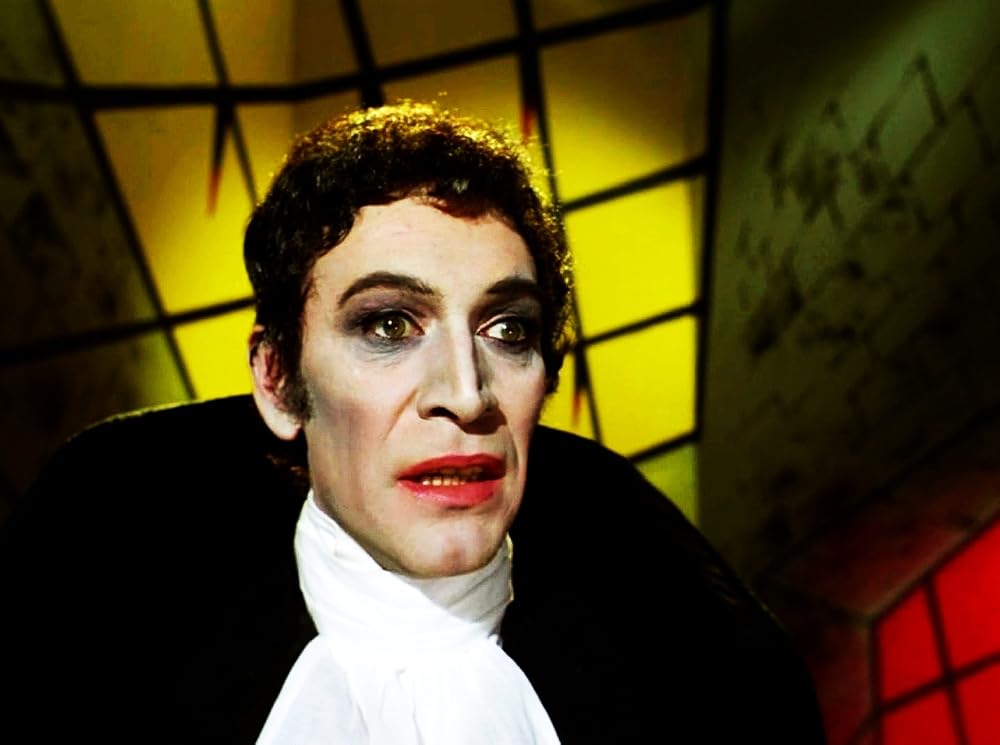
Character: Jacques Casanova
The Setting & Synopsis
Tennessee Williams’ Camino Real remains one of the most challenging, controversial, and compelling works within the American theatrical canon. Upon its debut in 1953, the play confounded many critics and audiences who had come to admire Williams for the emotional realism exhibited in The Glass Menagerie and A Streetcar Named Desire. Rather than delivering another intimate Southern drama, Williams presented a surreal, dreamlike allegory populated by historical figures, literary characters, and symbolic wanderers adrift in a decaying world. While it never achieved the popular success of his more traditional dramas, Camino Real has gradually been recognised as one of Williams’ most ambitious and poetic achievements.
At its core, Camino Real examines themes of freedom, human dignity, isolation, and the struggle to maintain hope within a hostile environment. Set in an unnamed Latin American city, the “Camino Real” of the title is neither entirely tangible nor wholly imaginary; rather, it serves as a crossroads between life and death, reality and dream, and the past and present. Williams described the setting as a place where those who have lost their way find themselves stranded. There is no simple exit from the Camino Real, and its inhabitants exist in a state of permanent uncertainty.
The narrative centres primarily on Kilroy (Donald Madden). Tennessee Williams’ Camino Real remains one of the most challenging, controversial, and compelling works within the American theatrical canon. Upon its debut in 1953, the play confounded many critics and audiences who had come to admire Williams for the emotional realism exhibited in The Glass Menagerie and A Streetcar Named Desire. Rather than delivering another intimate Southern drama, Williams presented a surreal, dreamlike allegory populated by historical figures, literary characters, and symbolic wanderers adrift in a decaying world. While it never achieved the popular success of his more traditional dramas, Camino Real has gradually been recognised as one of Williams’ most ambitious and poetic achievements.
At its core, Camino Real examines themes of freedom, human dignity, isolation, and the struggle to maintain hope within a hostile environment. Set in an unnamed Latin American city, the “Camino Real” of the title is neither entirely tangible nor wholly imaginary; rather, it serves as a crossroads between life and death, reality and dream, and the past and present. Williams described the setting as a place where those who have lost their way find themselves stranded. There is no simple exit from the Camino Real, and its inhabitants exist in a state of permanent uncertainty.
The narrative centres primarily on Kilroy, a former American boxing champion whose name evokes the famous World War II graffiti, “Kilroy was here.” In contrast to the other residents—who are largely exhausted, defeated, or resigned to their fate—Kilroy arrives possessing vitality, innocence, and a steadfast determination to progress. He subsequently serves as the audience’s guide through this surreal landscape.
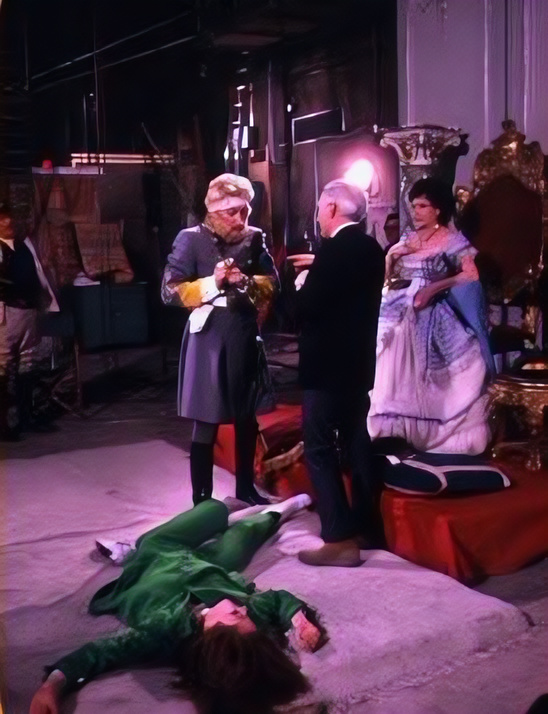
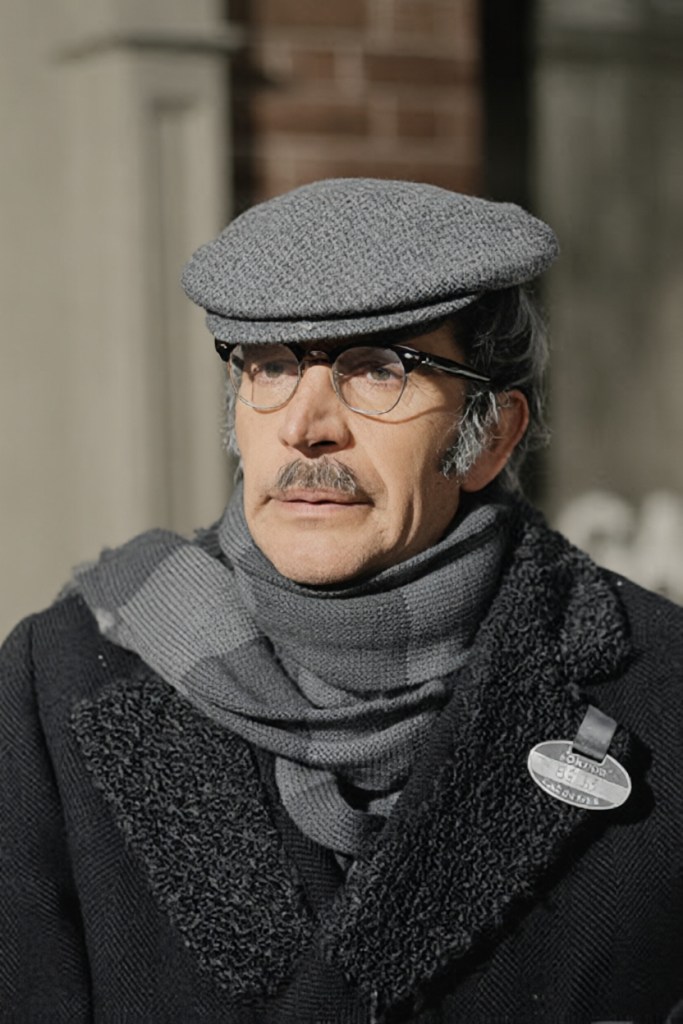
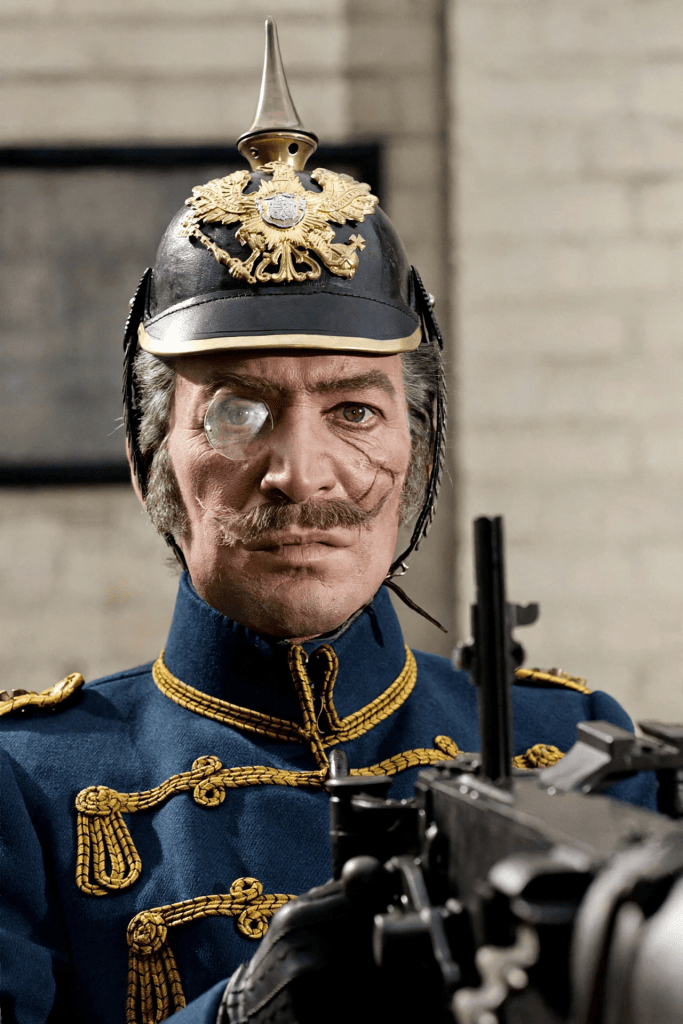
Surrounding him is an extraordinary assembly of characters drawn from history and literature. Don Quixote (Donald Eccles) and Sancho Panza appear alongside Jacques Casanova (Peter Wyngarde), Lord Byron (Philip Madoc), Marguerite Gautier (Pamala Brown) of La Dame aux Camélias, and the legendary courtesan Esmeralda (Diane Colento). Their presence immediately signals a departure from conventional realism. Williams constructs a world where the great romantics, dreamers, lovers, and rebels of history have converged, only to discover that their ideals are no longer welcome.
The Camino Real itself is governed by corruption and fear. Authority is embodied by Gutman (Vladek Sheybal), the owner of the luxurious Siete Mares Hotel, and by a brutal police apparatus that monitors the population. Life is heavily regulated, and those who challenge the established order are swiftly suppressed. The atmosphere is one of quiet oppression, where freedom survives only in memory or imagination.
The play’s structure is particularly distinctive. Rather than unfolding via a conventional plot, Camino Real consists of a series of episodes, which Williams termed “blocks.” These scenes integrate poetic dialogue, symbolism, comedy, romance, and political commentary. Consequently, the work often feels like a sequence of dreams connected by recurring themes rather than a straightforward linear narrative.
For some viewers, this structure may initially prove frustrating, particularly for those seeking clear explanations or logical development. However, it is precisely this fragmentation that provides the play with its power. Williams is less concerned with storytelling in the traditional sense than with creating an emotional and philosophical landscape where ideas and images can resonate.
Kilroy emerges as one of Williams’ most intriguing protagonists. Unlike the tortured intellectuals and fragile dreamers common in the playwright’s other works, Kilroy is a man of action. While he may initially appear simple or even naïve, his essential goodness eventually reveals itself as heroic. In a world characterised by compromise and surrender, Kilroy represents a stubborn, enduring humanity.
Tennessee Williams frequently populated his plays with characters whose sensitivity rendered them vulnerable to destruction. Kilroy shares this fragility, yet he couples it with a remarkable resilience, insisting upon the maintenance of compassion even when surrounded by cruelty. Consequently, his journey through the Camino Real serves as a crucible to determine whether innocence and generosity can survive within a cynical world.
The play’s supporting characters contribute significantly to its depth. Don Quixote, perhaps the most vital secondary figure, functions as a spiritual counterpart to Kilroy. Much like Cervantes’ legendary knight, he refuses to abandon his idealism despite overwhelming evidence that the world no longer honours noble aspirations. His presence reinforces the play’s central inquiry into the value of hope during an age of disappointment.
Williams treats Don Quixote with extraordinary affection; rather than depicting him as ridiculous, he presents him as a symbol of courage and imagination. In many respects, Don Quixote embodies the qualities that Williams himself cherished: romanticism, generosity, and a resistance to conformity.
The women of Camino Real are similarly emblematic. Marguerite Gautier, Esmeralda, and Gypsy (Patience Collier) represent various facets of beauty, desire, vulnerability, and endurance. As is common in Williams’ body of work, women often serve as repositories of tenderness within an increasingly harsh environment. Their interactions with the male characters provide some of the production’s most poignant moments.
Visually, Camino Real offers substantial opportunities for imaginative staging, as the setting functions almost as a living character. Williams envisioned a theatrical environment characterised by music, dance, sudden appearances, symbolic imagery, and abrupt shifts in tone. Directors have often approached the work with divergent interpretations, emphasizing either its political allegory, its romantic poetry, or its existential despair.
Indeed, the political dimension of the play remains one of its most debated aspects. Written during the early years of the Cold War, Camino Real reflects Williams’ anxieties regarding authoritarianism, social conformity, and the dehumanizing effects of modern society. The city thus becomes a metaphor for any political system that suppresses individuality and imagination.
However, to reduce the play to a political statement would be to overlook its emotional complexity. Williams was never primarily a political dramatist; his deepest concerns always centred on human connection, loneliness, and the search for meaning. The political oppression depicted in Camino Real is significant largely because it threatens qualities Williams considered essential to humanity: kindness, love, creativity, and freedom.
The language of the play is among Williams’ most lyrical, with dialogue that occasionally resembles prose poetry more than conventional dramatic speech. Certain images recur throughout the work: birds trapped in cages, dying roses, enclosed spaces, and distant journeys. These symbols cultivate an atmosphere of melancholy beauty that persists long after the curtain falls.
Some critics have argued that the poetry occasionally overwhelms the drama, suggesting there are moments when the play prioritises ideas and imagery over character development. This criticism is not without merit; Camino Real can feel self-indulgent in places, with symbolism that becomes opaque and a pace that feels uneven.
Nevertheless, these excesses contribute to the work’s fascination. Williams was willing to take risks that many successful playwrights would have avoided. Rather than repeating formulas that had already brought him acclaim, he attempted something startlingly original. While the result may not be entirely successful in every respect, it remains unforgettable.
The original Broadway production received a mixed reception, as many critics were uncertain how to evaluate such an unconventional work. Over time, however, attitudes have softened considerably. Modern audiences, accustomed to experimental and non-linear theatre, often find Camino Real more accessible than its original viewers did.
Today, the play can be viewed as a bridge between traditional drama and the avant-garde theatrical movements that flourished in subsequent decades. Its dreamlike structure, symbolic characters, and rejection of realism anticipated developments associated with the Theatre of the Absurd and other experimental forms.
Ultimately, Camino Real is not a play that seeks easy approval. It challenges audiences to abandon conventional expectations and enter a world governed by emotion, metaphor, and imagination. While it may lack the flawless dramatic architecture of A Streetcar Named Desire or the devastating intimacy of The Glass Menagerie, it possesses a unique grandeur and ambition.
Viewed today, Camino Real stands as one of Tennessee Williams’ boldest artistic achievements. It is a haunting meditation on freedom, idealism, and survival in a world that often appears hostile to all three. Rich in poetic imagery, populated by unforgettable characters, and fuelled by Williams’ profound compassion for society’s outsiders and dreamers, the play remains a rewarding, provocative, and deeply moving theatrical experience. As an exploration of humanity’s refusal to abandon hope, even in the most oppressive circumstances, Camino Real continues to illuminate the extraordinary breadth of Williams’ dramatic vision.
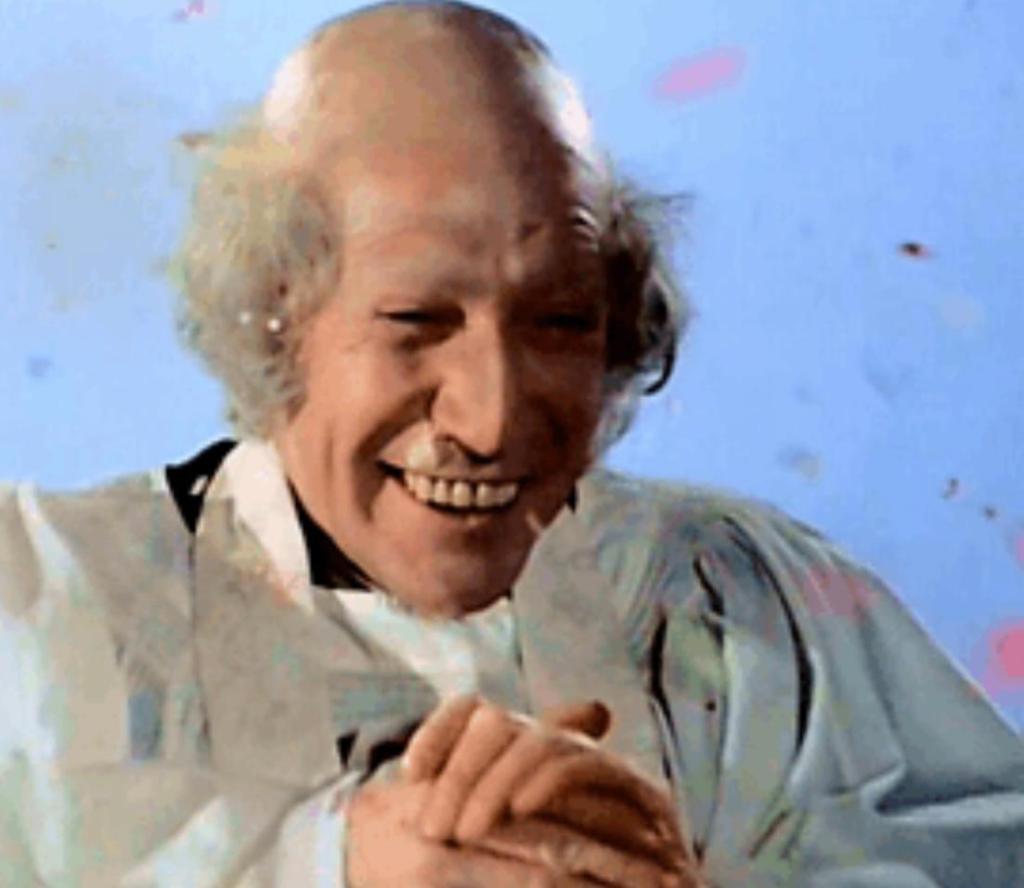
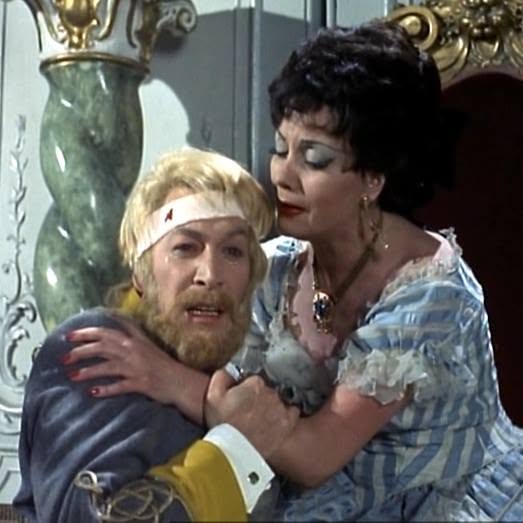
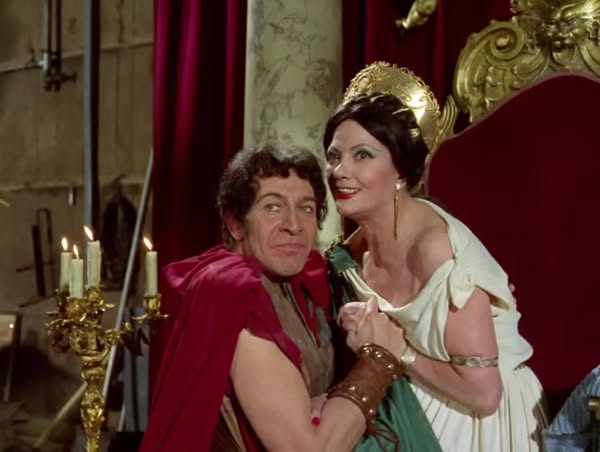
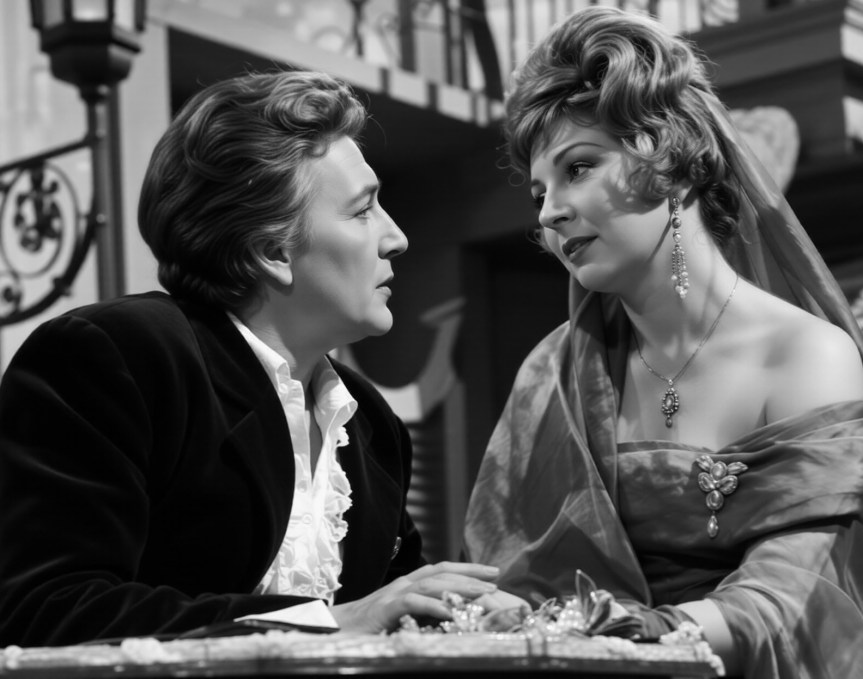
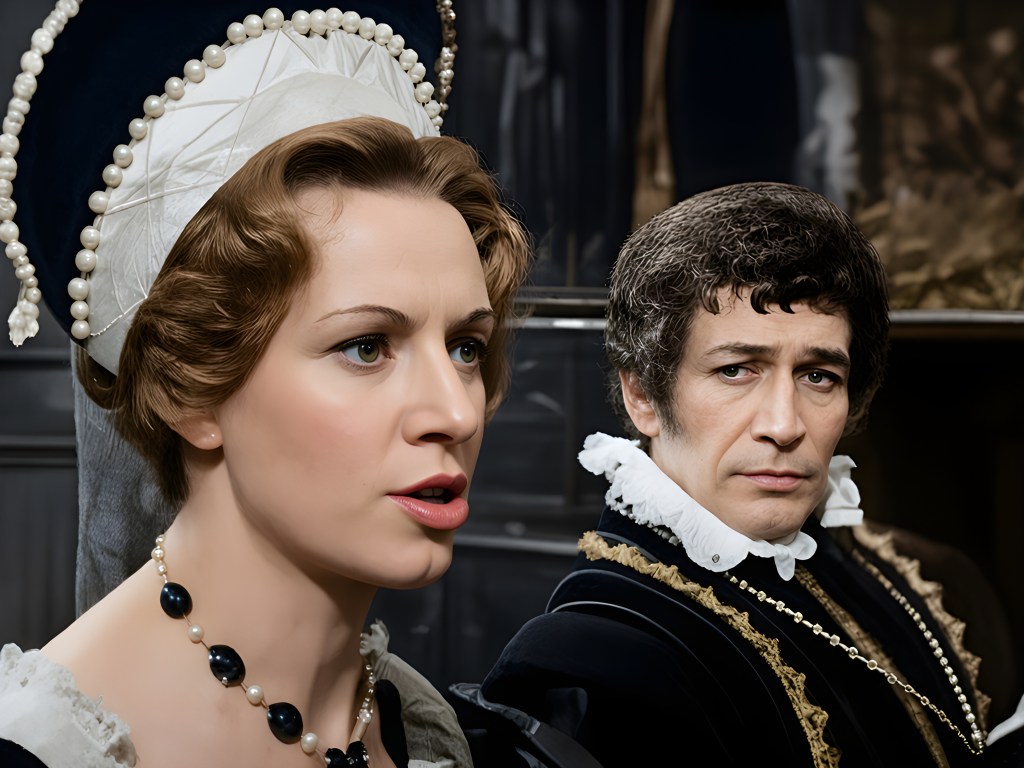
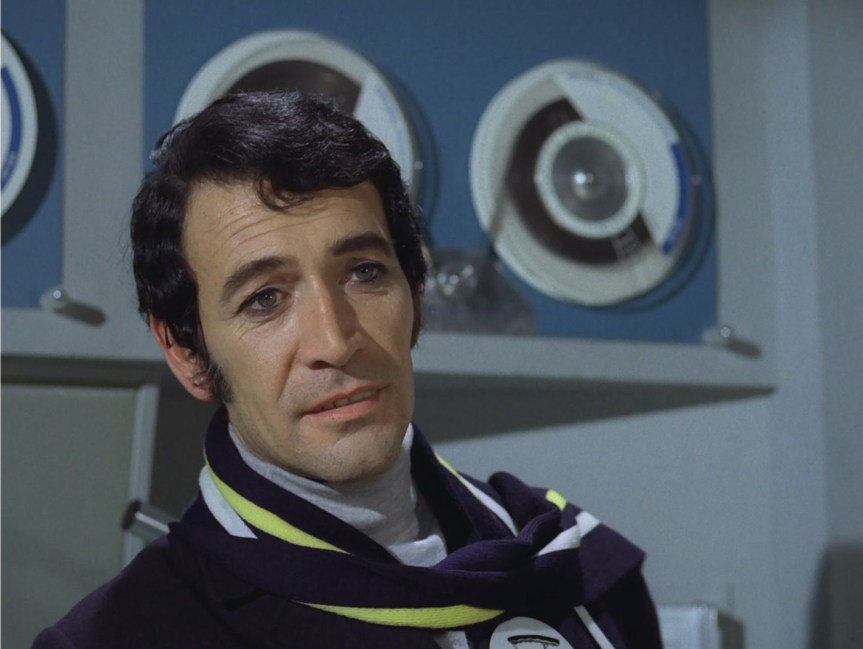
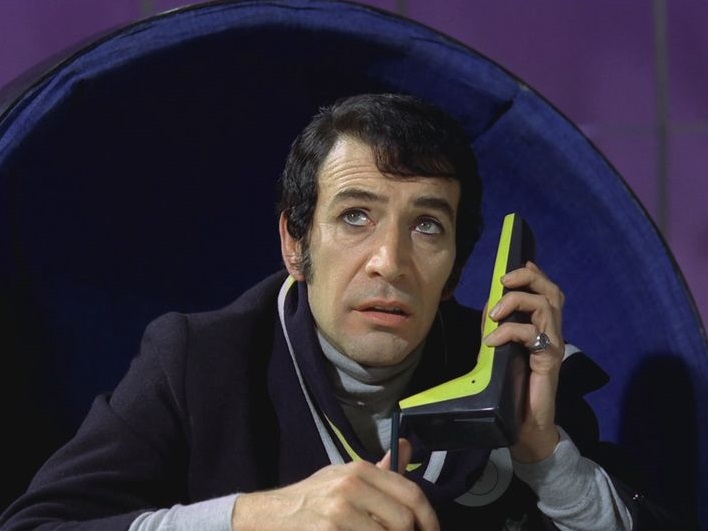
Above: Peter as Jacques Casanova with Pamela Brown as Marguerite Gautier, or ‘Camile’
Focus on Jacques Casanova
In Camino Real, the character of Jacques Casanova serves as one of the play’s most poignant and melancholy figures. Derived from the historical eighteenth-century adventurer, writer, and legendary libertine Giacomo Casanova, Williams transforms the renowned lover into a symbol of fading romanticism and human vulnerability. Rather than presenting Casanova as the triumphant seducer of popular legend, Williams depicts him as an aging man confined to a world that no longer values the attributes he once embodied. His presence significantly contributes to the play’s themes of lost ideals, isolation, and the struggle to maintain dignity within an increasingly hostile and cynical society.
When viewers encounter Casanova within the surreal environment of the Camino Real, he is far removed from the glamorous figure of history. He is no longer the youthful adventurer whose name became synonymous with romance and conquest; instead, he is presented as a weary exile, conscious of the passage of time and the erosion of his former influence. This sense of decline imbues the character with a touching humanity. Williams strips away the mythic reputation to reveal an aging man attempting to retain a sense of self-worth in a place populated by dreamers, failures, and wanderers.
Like many inhabitants of the Camino Real, Casanova is a refugee from a vanished world. The Camino Real itself functions as a symbolic wasteland where historical figures and literary characters find themselves stranded after their glory has faded. Casanova represents one of the most vivid examples of this condition. He recalls an era when passion, elegance, and romance were prized – values that hold little currency in the harsh and oppressive atmosphere that dominates the play.
Williams treats Casanova with considerable sympathy. Although the character possesses traces of vanity and nostalgia, he is never reduced to a parody. There is an inherent sadness in his attempts to recapture lost youth, yet there is also dignity. He belongs to a generation of romantics whose ideals are disappearing. In this respect, Casanova transcends his status as a historical figure to become a symbol of all those who refuse to surrender entirely to the mechanised and dehumanised realities of the modern world.
One of the most significant relationships involving Casanova is his connection to Marguerite Gautier, another character drawn from classic literature. Their interactions highlight the play’s recurring concern with beauty and transience. Both characters represent forms of romantic idealism that are under threat; they are figures who have experienced passion and longing, yet now find themselves confronting age, disappointment, and mortality. Williams utilises their bond to explore the painful gap between cherished memories and present reality.
Casanova’s dialogue is often infused with a wistful quality, recalling a world of elegance and emotional intensity that seems irretrievably lost. While younger characters, such as Kilroy, bring vitality and hope to the narrative, Casanova embodies experience and regret. Yet, Williams does not portray him as merely tragic. His continued belief in romance, despite overwhelming evidence of its decline, grants him a certain nobility.
Thematically, Casanova serves as a counterpart to Don Quixote. Both men are dreamers who persist in defending values that society has largely abandoned: while Don Quixote champions chivalry and idealism, Casanova champions love, beauty, and sensual living. Their presence reinforces Williams’ broader argument that imagination and humanity are essential weapons against oppression and despair.
Ultimately, Jacques Casanova emerges as one of the most touching characters in Camino Real. He is not the legendary conqueror celebrated by history, but rather a lonely and reflective man confronting the loss of youth and purpose. Through him, Tennessee Williams explores the fragility of dreams and the enduring need for romance in a world that often appears indifferent to it.
Some Background
In his own words, Tennessee Williams “Kicks over the traces” in ‘Camino Real’, the play he had favoured most of the 20 he’d written to date. Its appeal for him was in its “Unusual degree of freedom”.
Theatrically, he took liberties with convention and threw open his stages to a rich assortment of characters, including a mingling of literary real-life romantics. It was colourful, eloquent and stimulating.
There was, of course, no direct explanation, for this unlikely mixture of characters. “To go to Camino Real with the inflexible demands of a logician is unfair to both parties,” wrote the author in a foreword to the play published in the New York Times before its premier on Broadway in March, 1953. “But stay with it for the first three minutes,” said television director Henry Kaplan, “and you’ll be caught up and captivated by the goings on the plaza.”
The plaza is the central square of the town where the play is set, with its luxurious hotel on one side, and on the other, its “flop house” and “loan shark”. Outside the town is the Terra Incognito – a formidable arid wasteland – through which anyone wanting to leave must pass.
“But it requires innocence to get away and most people when they take stock of their life has taken its toll of innocence, has corrupted them, or that we’ve given way to excesses,” said Peter of the play. “So not many people are able to get away. Certainly not Casanova, the old rake, who led so an exhausting life that he’s too tired to even look for a way out. Instead he drinks.”
He also courts Marguerite Gautier – Camille. “And there’s no way out for her either – especially now that she’s taken to drugs,” said Pamela Brown. “She’s an aging voluptuary.”
PETER WYNGARDE WAS NOT GAY. THIS IS A MYTH CONJOURED UP BY THE BRITISH TABLOIDS
PETER WYNGARDE DID NOT HAVE A ROMANTIC RELATIONSHIP WITH ALAN BATES. THIS WAS A LIE PERPITRATED BY DONALD SPOTO IN HIS BOOK, ‘OTHERWISE ENGAGED: THE LIFE OF ALAN BATES’
PETER WYNGARDE WAS NOT ARRESTED OR CAUSTIONED IN KENNEDY GARDENS OR ELSEWHERE. THIS IS A LIE CREATED BY WIKIPEADIA AND COPIED BY THE BRITISH TABLOIDS.
THE 1975 CONVICTION AGAINST PETER WYNGARDE WAS LATTERLY QUASHED BY THE HOME OFFICE (UK GOVERNMENT) AS BEING “UNPROVEN”.