REVIEW: Duel of Angels

British Tour 1958/59

Opened: Apollo Theatre, London, April 24, 1958

Character: Count Marcellus

US tour – presented by Roger L. Stevens and S. Hurok

Opened: Helen Hayes Theatre, New York, April 19, 1960.

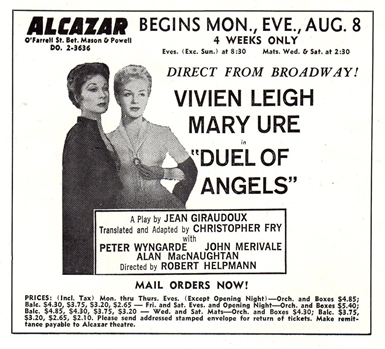
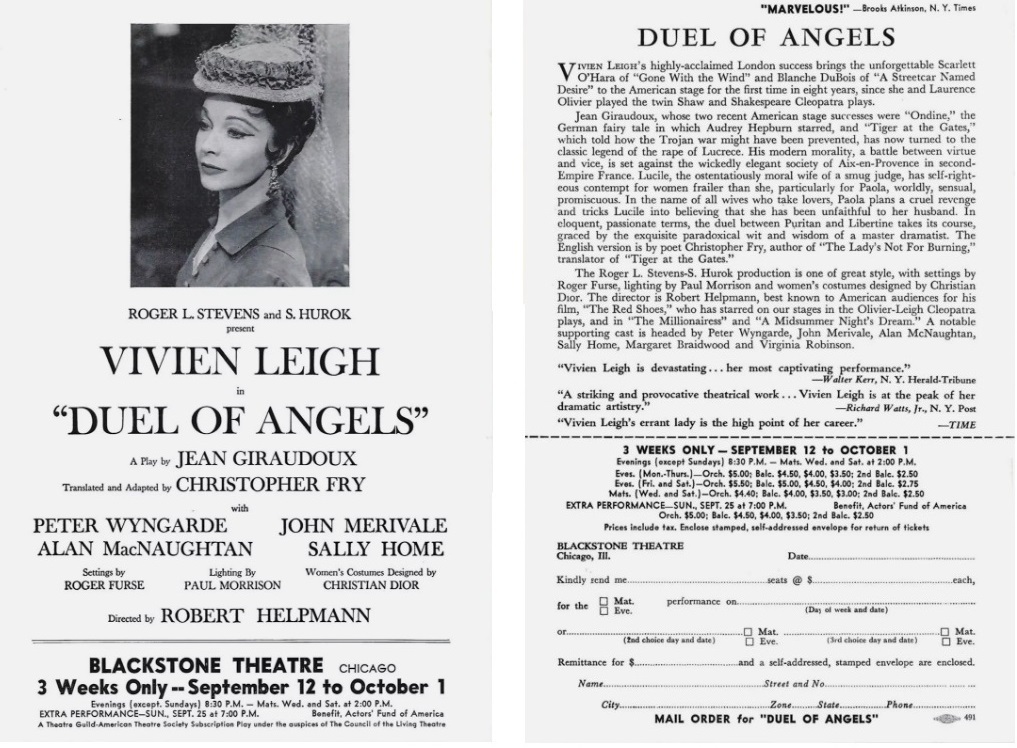
American Tour 1960 (selected theatres): Alcazar Theatre, San Francisco – Blackstone Theatre, Chicago – Blackstone Theatre, Chicago – Helen Hayes Theatre, Broadway, New York – National Theatre, Washington D.C. – Shubert Theatre, New Haven, Connecticut

Character: Count Marcellus

e715ec70db217daff14341b03a33f218

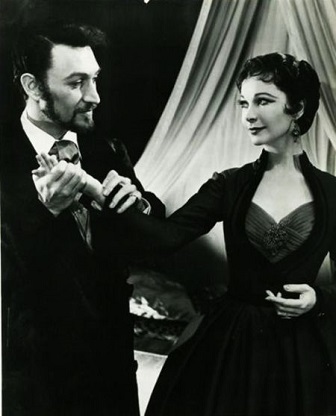
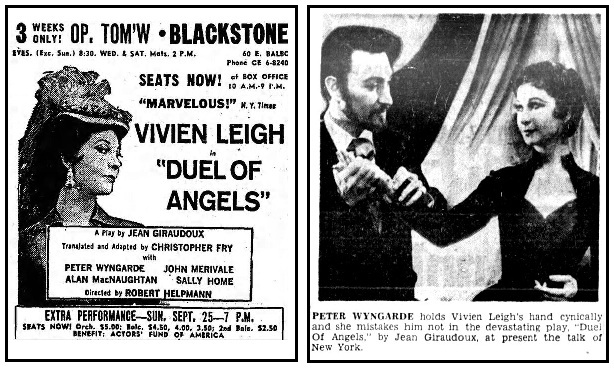
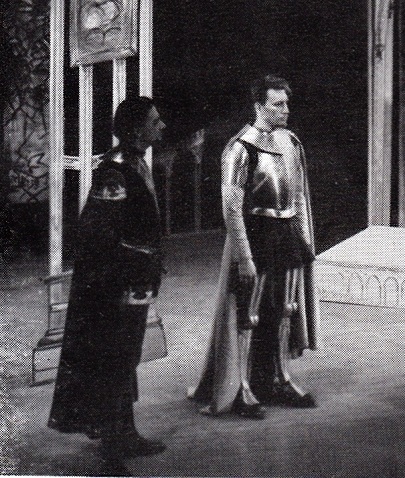
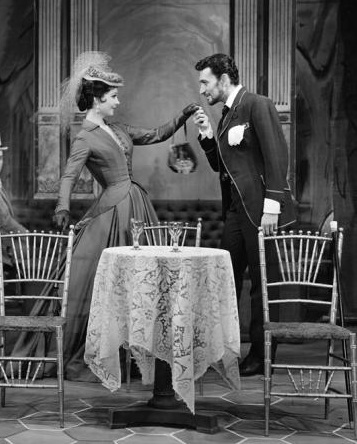
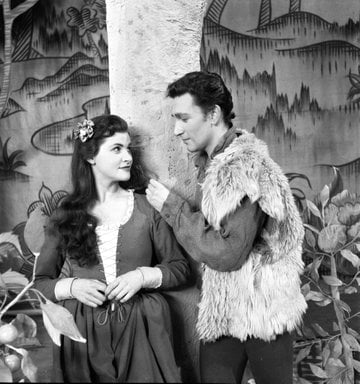
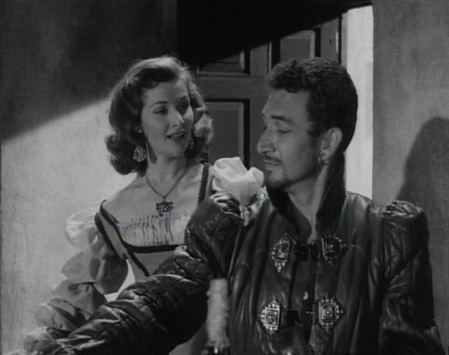
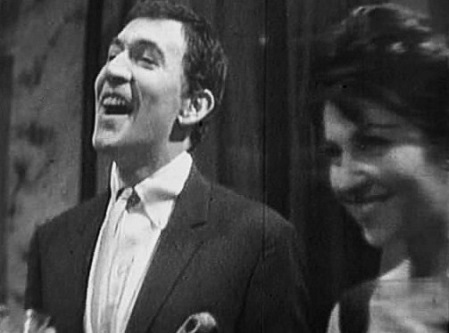
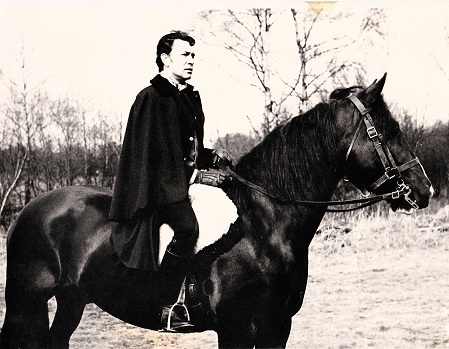
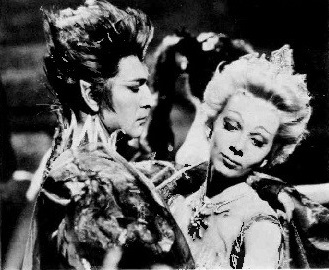
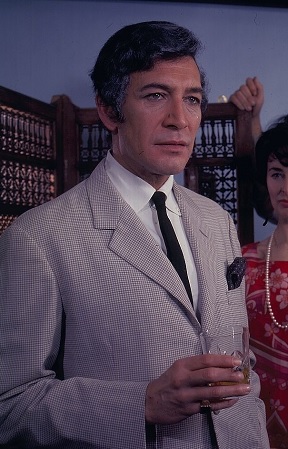
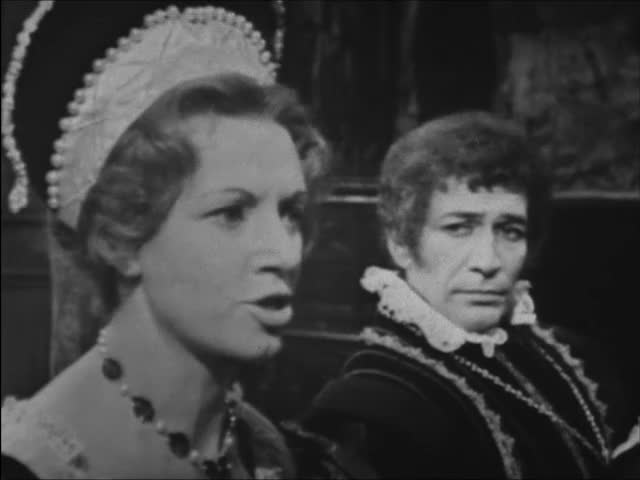
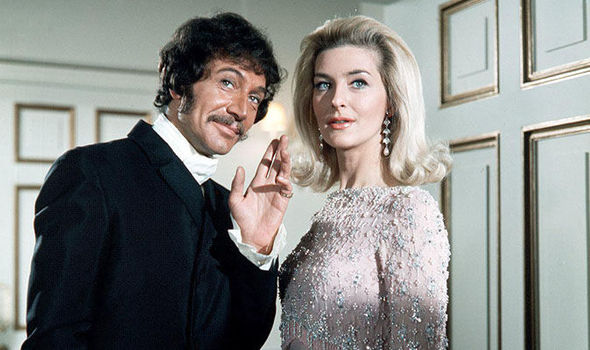
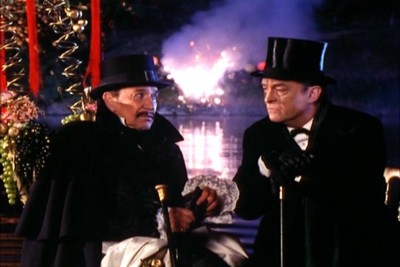
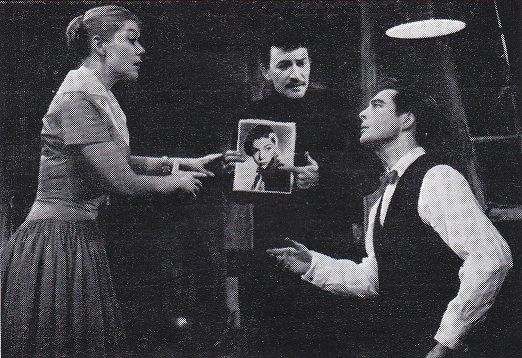
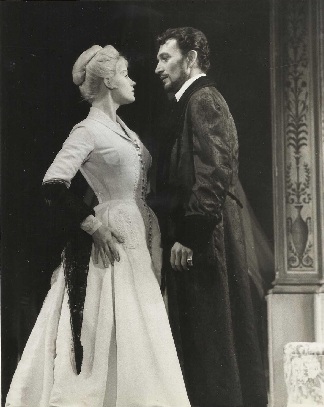
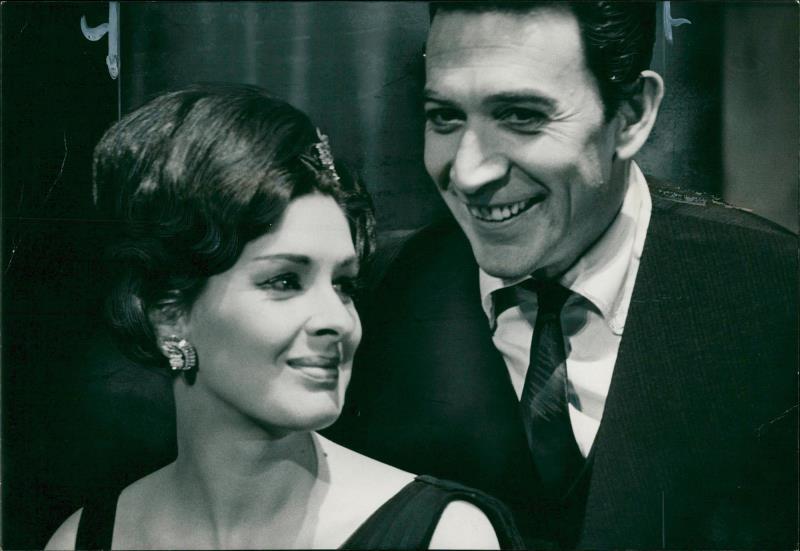
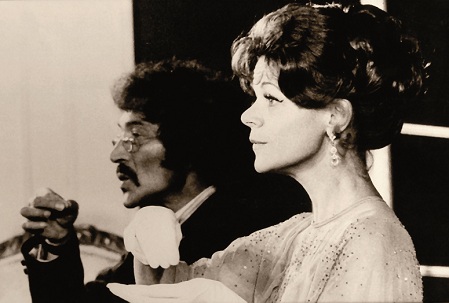
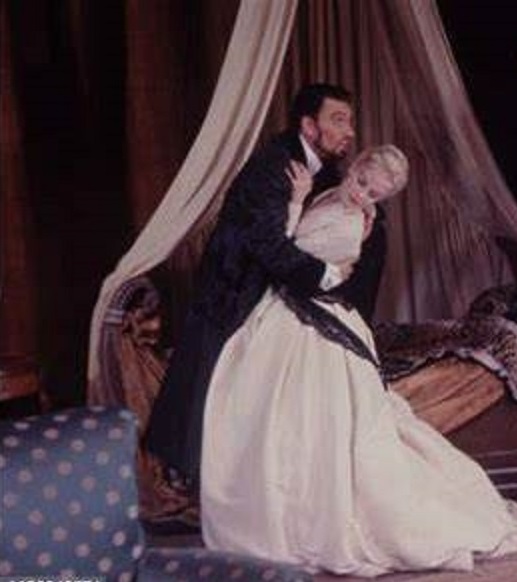
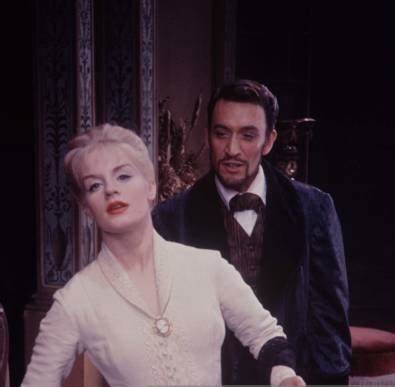
 Above: Peter as Count Marcellus and Vivien Leigh as Paola

  • The Terrace of the café
  • A room at Marcellus’ house
  • Mr. Justice Blachard’s study

“There is nothing more impressive as a good horseman climbing the stairs” Poala about Count Marcellus

Some Background

‘Duel of Angels’ by Jean Giraudoux, was another theatrical skirmish between the sexes that seemed so popular throughout the late Fifties and Sixties. On this occasion, however, it lined up firmly on the side of woman, and pours destructive barrages of scorn of the disparaging moral standards of men.

Giraudoux was clearly fascinated by the legend of the lady, Lucretia, whose reputation for integrity was a hot topic in ancient Rome. However, when she was coerced into adultery by the tempestuous Sextus, she revealed her wrongdoing to her husband the following morning, and then ended her own life. Giraudoux asks in his play why she did it, and was it really worth it?

The Story
OIP (5)

The action of ‘Duel of Angels’ is moved from the Eternal City to the small French town of Aix-en- Provence in 1968, where the authors Lucretia is represented by Lucile (Claire Bloom/Mary Ure) [1], the prim wife of Justice Blanchard (Robin Bailey/Alan MacNaughtan) [2] – a straitlaced reforming judge, who has vowed to rid the town of vice.

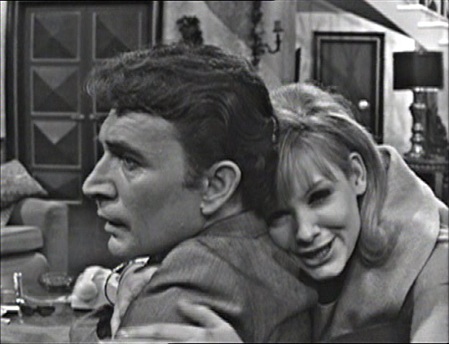
Right: Peter as Marcellus, with Mary Ure as Lucile.

So determined is Lucile not to compromise her moral code, that she will not so much as communicate with anyone who she believes to be guilty of unfaithfulness.

“Try asking her for sugar”, one of the townsfolk announces, “and if you’ve just been reading the Decameron she won’t touch it!”

Particularly disturbed by this woman’s aggressive virtue is Poala (Vivien Leigh) – a married woman who has slept with all but a handful of men in the town. In complete opposition the Lucile, she believes that all women should be united in their collusion to deceive men.

Matters take a turn when Lucile is motivated to telling Paola’s husband of her cheating, and so she must take her revenge. Whilst the Judge’s wife sits sipping ice water on the terrace of a café, Poala hatches her plan

ANGELS

To this end she decides to drugs Lucile and has her taken to the bedroom of the handsome Count Marcellus (Peter Wyngarde) – a man with a certain reputation in the town. Believing that the Count has raped her, Lucile’s desperation leads her to demand that her husband must restore her honour. However, when he finds that his wife has dishonoured him – even under the influence of drugs, has a most unsympathetic attitude – regarding her as hopelessly tainted. However, before Blanchard can exact revenge on Marcellus, the Count falls fowl to bullet fired by Armand [3] – Poala’s jealous husband.

The resulting altercation leaves the Count dead and Lucile’s husband a fugitive, but this is not the worst of it. Only after Marcellus death does she learn that he had never so much as laid a finger on her. Lucile now realises that Paola was right all along; it’s men that use the innocence of their wives only to reinforce their own self-esteem.

Disillusioned by her husband, and finding only finding immorality around her, she takes poison in order to claim her final victory of virtue over deceit and degradation.

Barbette [4] is left with the difficult speech in which the author shifts the ultimate blame on to the stupidity and grossness of men.

“Vice has a mission to perform today, and no man alive is going to make him relinquish it!” Count Marcellus.

In Retrospect

Jean Giraudoux, whose play was translated from French into English by Christopher Fry, was apparently willing to allow the spotlessness represented by Lucille to show, not only an aspect of cruelty, but also an aspect of silliness. In the second act, her conviction that her chasteness has been sullied leads to the conviction that she must be the wife of the man who had violated her. It becomes, in her view, the duty of him then to then kill himself.

Marcellus, Poala’s former lover, is confronted by her husband, Armand. The two men are obliged to fight a duel. “As soon as I opened my window I could see that today is a day of reckoning,” Armand tells him. “The sky is clear blue and an invisible line cuts sheer across it; you can tell at once it’s a judgement sky”
ANGELS

The manner in which she tries to wash out the stain by bringing about the death of Marcellus rises to a point of melodramatic excitement, but the third act brings the audience back to earth when it realises that there was really no motive behind this survival of the enduring virtue. Ironically, it’s only after Marcellus’ death that she herself is driven to suicide – not from shame, but from the exposure of the deception.

The woman who would rather die than acknowledge evil may have been beaten in the duel, but only her vanquisher knew the bitterness that often eats at the victorious. Lucile, dressed from head to toe in white, expressed the fall of the gentle being, whose sense of purity the world had outraged, most admirably. Paola meanwhile – attired in all crimson, let the world’s shame discreetly appear in the acceptance of her rival’s death.

Giraudoux’s play was as unsparing as it was brilliantly theatrical. It was a melodrama, as Paola put it, which was played out by a set of characters who didn’t realise they were in a farce.

ANGELS2

Caricatures from (left) The Daily Telegraph: Lucile and Paola, watched by Count Marcellus and, (right), the Count in The Tatler – both 1958.

Critics Comments

Special Awards

While playing Count Marcellus in Duel of Angels on Broadway, Peter won a Tony Award for being ‘The Most Promising Newcomer’.

He also picked up another award that same year – The ‘San Francisco Award for Best Actor in a Foreign Play’ – again for his portrayal of Count Marcellus.

A Bit Of Trivia

The play which, in the original French was entitled ‘Pour Lucrece’, was originally to be called’ Vice With Virtue’.

 All the ladies costumes in the play were designed and made by Christian Dior.
ANGELS-1

ANGELS6

Left: Programme from the Helen Hayes Theatre on Broadway, 1960, with ticket stub


REVIEW: St. Joan

Presented by John Fernald at the Art’s Theatre Club, Cambridge: 20th September to September 25th, 1954

The Art’s Theatre, London: Opening night – Wednesday, 29th September, 1954

Character: Dunois

The Story

Part I

  • Vaucouleurs
  • Chinon
  • The River Loir

Part II

  • The Headquarters of the Earl of Warwick
  • The Cathedral of Rheims

Part III

  • The Bishop’s Court, Rouen
  • Epilogue, twenty-five years later

Shaw characterised Saint Joan as “A Chronicle Play in 6 Scenes and an Epilogue”. Joan, a simple peasant girl, claims to experience visions of Saint Margaret, Saint Catherine , and the archangel Michael, which she says were sent by God to guide her conduct.

Scene 1 begins with Robert de Baudricourt complaining about the inability of the hens on his farm to produce eggs. Joan (Siobhan McKenna) claims that her voices are telling her to lift the siege of Orleans, and to allow her several of his men for this purpose. Joan also says that she will eventually crown the Dauphin (Kenneth Williams) in Rheims cathedral. De Baudricourt (Kevin Stoney) ridicules Joan, but his servant feels inspired by her words. De Baudricourt eventually begins to feel the same sense of inspiration, and gives his consent to Joan. The servant enters at the end of the scene to exclaim that the hens have begun to lay eggs again. De Baudricourt interprets this as a sign from God of Joan’s divine inspiration.

DUNOIS

In Scene 2, Joan talks her way into being received at the court of the weak and vain Dauphin. There, she tells him that her voices have commanded her to help him become a true king by rallying his troops to drive out the English occupiers and restore France to greatness. Joan succeeds in doing this through her excellent powers of flattery, negotiation, leadership, and skill on the battlefield.

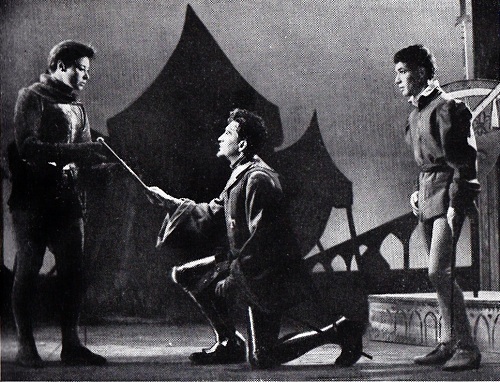
In Scene 3, Dunois (Peter Wyngarde) and his page are waiting for the wind to turn so that he and his forces can lay siege to Orléans. Joan and Dunois commiserate, and Dunois attempts to explain to her more pragmatic realities of an attack, without the wind at their back. Her replies eventually inspire Dunois to rally the forces, and at the scene’s end, the wind turns in their favour.

Ultimately she is betrayed, and captured by the English at the siege of Compiègne. Scene 6 deals with her trial. Chaplain John de Stogumber (David March) is adamant that she be executed at once. The Inquisitor (Charles Lloyd Pack), the Bishop of Beauvais (Oliver Burt), and the Church officials on both sides of the trial have a long discussion on the nature of her here-say. Joan is brought to the court, and continues to assert that her voices speak to her directly from God and that she has no need of the Church’s officials. This outrages de Stogumber. She acquiesces to the pressure of torture at the hands of her oppressors, and agrees to sign a confession relinquishing the truth behind her voices. When she learns she will be imprisoned for life without hope of parole, she renounces her confession.

Joan accepts death at the stake as preferable to such an imprisoned existence. De Stogumber vehemently demands that Joan then be taken to the stake for immediate execution. The Inquisitor and the Bishop of Beauvais excommunicate her and deliver her into the hands of the English. The Inquisitor asserts that Joan was fundamentally innocent, in the sense that she was sincere and had no understanding of the church and the law. De Stogumber re-enters, screaming and severely shaken emotionally after seeing Joan die in the flames, the first time that he has witnessed such a death, and realising that he has not understood what it means to burn a person at the stake until he has actually seen it happen. An soldier had given Joan two sticks tied together in a cross before the moment of her death. Brother Martin Ladvenu (Desmond Jordan) also reports that when he approached with a cross to let her see it before she died, and came too close to the flames, she had warned him of the danger from the stake, which convinced him that she could not have been under the inspiration of the devil.

In the Epilogue, 25 years after Joan’s execution, a new trial has cleared her of heresy. Brother Martin brings the news to the now-King Charles (Kenneth Williams). Charles then has a dream in which Joan appears to him. She begins conversing cheerfully not only with Charles, but with her old enemies, who also materialise in the King’s bedroom. An emissary from the present day (at the time of the play, the 1920s) brings news that the Catholic Church is to canonise her, in the year 1920. Joan says that Saints can work miracles, and asks if she can be resurrected. At this, all the characters desert her one by one, asserting that the world is not prepared to receive a saint such as her. The last to leave is the English soldier (Barry Lowe), who is about to engage in a conversation with Joan before he is summoned back to hell at the end of his 24-hour respite. The play ends with Joan ultimately despairing that mankind will never accept its saints.

Peter Remembers St. Joan

“I was in St Joan in which I played Dunois. Kenneth Williams, as many of you will know, was the Dauphin and was marvellous. Certainly the best Dauphin by far; a spoilt coiled spring of vulnerability, and irrepressibly funny. But the great quality was his faith in Joan.

Most English actors fail compliment their women. The one thing that made Joan unique was the fact that she was a woman. If she wasn’t, how could you assess her as a saint?! Kenneth William’s Dauphin treated her as a woman first. While Siobhan McKenna’s Joan was one of the great performances, I believe it was inspired by this simple premise.

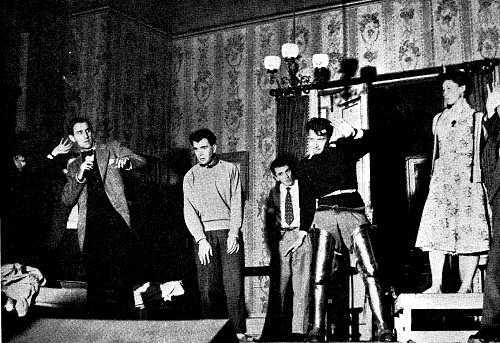
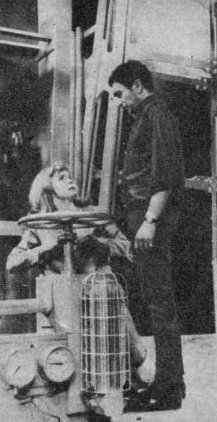
Above: Peter (second from the right) and the rest of the cast rehearsing St Joan at the Art’s Theatre, London. Note Peter wearing leg armour, which he did from an early stage in rehearsals to get used to their weight.

In the cathedral scene when the Dauphin is to be crowned, Kenneth had one of the longest and most difficult of speeches which required intense concentration. On the first night this was even more intense, and nerve racking. It was a great speech and he delivered it beautifully.

For his coronation Dunois, my character, was resplendent in full armour as leader of France’s military might. Rightly or wrongly I was placed by the production centre stage – a position I knew Kenneth would much preferred he was in! He was wrong, as his speech was much more effective when it was by his throne, with Joan by his side. If he’d have delivered it centre stage, it would have appeared as a “purple passage” and lost its sincerity and reality.

No one else spoke in this scene as we were like the peers and the government listening to the ritual proceedings of the coronation. It was the triumphant scene, before Joan’s fall from grace and reincarnation. But it lasted twenty minutes and we all had to stand still, as well as listen, intently.

I believe that both Assistant Director, Sir Peter Hall, and the plays’ author, George Bernard Shaw, were wrong about the relationship between Dunois and Joan.

Dunois treated her as she was to herself: a peasant girl. He was to her a glorious, handsome soldier, who was capable of giving her all of the man that he was, with the help of God”.

In Retrospect

joan-1

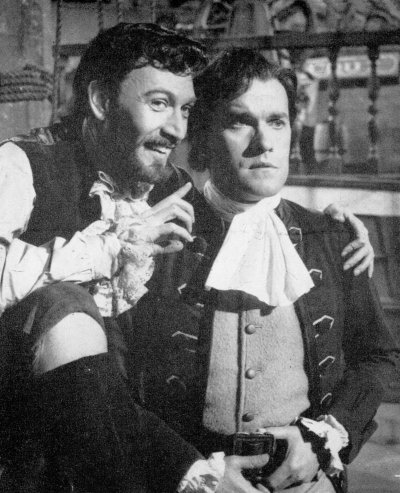
Right: Peter as Dunois (kneeling), hands his orders to Joan

Probably of all Shaw’s plays ‘Saint Joan’ has the best chance of lasting, not only for being free from faded argument but also for the sustained excitement of its treatment of history.

It is all admirable theatre, made all the more gripping on account of Shaw’s fairness to the judges and his characteristic refusal to use Joan as a romantic pawn. In 1964, a full-scale revival was overdue; in the meantime audiences were grateful to the Art’s Theatre for its courage in putting so massive a play on its small stage, and in finding such an impressive cast.

Voices were heard just as freely in Connemara as in the Voges, and an Irish Joan was a reasonable innovation. Siobhan McKenna, who carried a natural ring of poetry, had no difficulty in persuading audiences that filled the Art’s that Joan’s link with the Saints was the driving force in her life. Sybil Thondike made her a more plausible leader; here Joan’s domination of her men sprung mainly from her simple mysticism.

It would’ve been too much to ask that in a pocket production the play should get its full effect at every point, but director John Fernald wasted nothing at his disposal, and Paul Mayo’s skeleton sets suggested all that was needed, without fuss.

Kenneth William’s Dauphin made an odd and interesting study of senile adolescence. Meanwhile, Dunois, the French general who suffered most from Joan’s military unorthodoxy and who yet remained devoted, was played by Peter both attractively and with great passion. The humorous superciliousness of Douglas Wilmer’s Warwick was excellent.

No one, it seems, are ever certain about the Epilogue to this play. It is an old quarrel, in which Shaw made his answers to his critics. He felt obliged to show that his heroine didn’t finish at the stake; but in the theatre this mixed roll-call of ghosts and dreamers still seemed somewhat of an anti-climax. Surely Warwick’s final “The last of her? I wonder!” says everything to everyone with the merest smattering of history.

Saintly Facts

26993643_1701278576589433_409948127193292725_n

Quite early during rehearsals, Peter took to wearing armour so that he wouldn’t feel strange in it during performances. (Please see additional photographs of Peter in leg armour).

The first dress rehearsal took place at The Art’s Theatre, Cambridge, before moving to the West End. It was reported in Plays and Players that when the final curtain fell, ‘There was hardly a dry eye in the house, amidst the deafening applause and shouting’.

Every night at the Art’s Theatre was a sell-out, and the run had to be extended.

George Bernard Shaw describes Peter’s character of Dunois as: “A good-natured and capable man who has no affectations and no foolish illusions”

When the play moved to St. Martin’s in 1955, Peter left the cast to film his role as Pasaunius in Alexander the Great.

Critics Comments

Dunois2

TV AND THEATRE NOTICES

THEY’LL ARRIVE TOMORROW: Irving Theatre, London

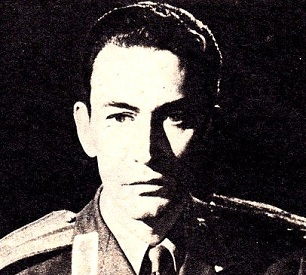
“Mr Peter Wyngarde, as the commanding officer, makes perhaps the strongest impression.” Theatre World

YOUNG

Peter as ‘The Ghost of a Young Man’ in The Enchanted

THE ENCHANTED: The Arts Theatre, London

“…Peter Wyngarde portrays the ghost with a style and grace rarely witnessed in the theatre. He is as attractive facially, vocally and artistically as a young Olivier…” Plays and Players

NO LAUGHING MATTER: The Arts Theatre, London

“…Peter Wyngarde, too, manages to forget his Anglo-Saxon reserve and give full life and conviction in his portrayal of the outraged husband…” The Times

THE GOOD WOMAN OF SETZUAN: The Royal Court Theatre, London

“…Peter Wyngarde is an attractive, well-voiced rogue of a lover…” Plays and Players

SOUTH

As Jan in South

 SOUTH: TV (UK)

 “I wish I had more space to write about this play, but needless to say, Peter Wyngarde as Jan Wicziewsky, the man who couldn’t talk of his love like other men, gave a stunningly brilliant performance; controlled and deliberately pitched.” Edwin Clarke – The Daily Mail

CYRANO DE BERGERAC: Bristol Old Vic

“Peter Wyngarde’s Cyrano must be the best performance he has given. He has the grand romantic manner that makes a truly great Cyrano, and he makes this hero – whose only weakness is his dread of his own ugliness – dominate the stage.” The Daily Telegraph

“…each character was decisively and sympathetically established in this persuasive production by actor Peter Wyngarde, and the relationships between them were responsibly handled in the fluctuating mood of this antipathetic household.Plays and Players

“This is largely a one-part play, and Peter Wyngarde is a Cyrano who is sure to carry this production to success. He has the authority, the individualism, and the impeccable pride of the man set apart from other fellows.” The Daily Telegraph

 THE TAMING OF THE SHREW: The Bristol Old Vic

“Peter Wyngarde was romantic, dashing and in perfect control as Petruchio. He made a great play with changes of speed in his voice, and these changes were highly effective. He and Patricia Heal as Kate were beautifully matched, and with such a fine pair at centre stage little could go wrong.” Theatre World

 THE PURITAN AND THE CAVALIER: TV (USA)

“…Mr Peter Wyngarde was completely captivating in the brilliance of his characterization.” The New York Times

DUEL

With Vivien Leigh in Duel of Angels

DUEL OF ANGELS: The Apollo Theatre, London. The Helen Hayes Theatre, New York.

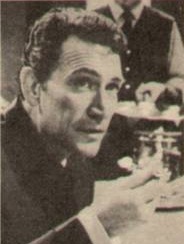
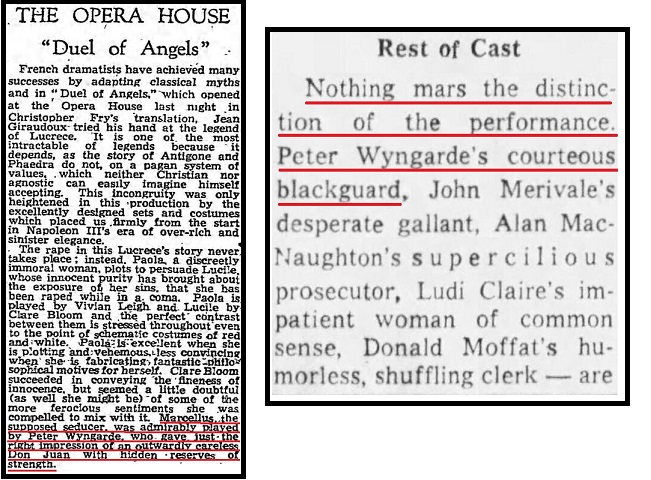
“The stage is bright when Peter Wyngarde, the male counterpart of evil is working. He is a virtuoso actor with a mesmerizing sixth sense for timing.” The Chicago Herald

“Peter Wyngarde cuts a cynical, bright figure as Count Marcellus, flamboyant libertine who unwittingly becomes Miss Leigh’s accomplice in deluding Mary Ure as Lucile. He has a distinctive stage voice, reminiscent of Jose Ferrer.” The Times

SIEGE

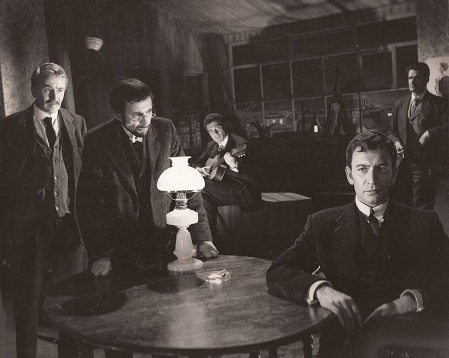
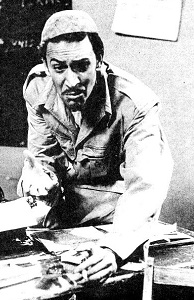
Peter (far right) as Peter Piatow in Siege of Sidney Street

THE SIEGE OF SIDNEY STREET. Film

“Both as the icy fanatic and the passionate lover, Peter Wyngarde is utterly convincing. The dark brown voice can also be as warm as a caress; ruthless as a razor slash.”

The Daily Telegraph

NIGHT OF THE EAGLE (A.K.A. Burn, Witch, Burn)

 In a compelling central performance, Peter Wyngarde completely sells Norman Taylor as a no-nonsense, self-assured sceptic who is determined to confront and combat superstition wherever he finds it, and his battle of wills with his wife is both tense and believable. Wyngarde was a well-established TV actor and already had horror credentials before appearing in this British classic, delivering more than a few shocks as the ghostly presence of Peter Quint in Jack Claytons The Innocents. His performance in the final sequence is spectacular, his whole body conveying sheer terror as he is pursued through the deserted corridors of the college.” The British Film Institute

THE WIDOWS OF JAFFA: TV (UK)

“This play was written with fire and insight, and distinguished too, by a beautiful performance by Mr Peter Wyngarde, whose voice is a gift even rarer than his striking looks.” The Sunday Times

 SHERLOCK HOLMES: The Illustrious Client – TV (UK)

“Peter Wyngarde as Baron von Gruner delivers: he is charming and attractive, cunning, sadistic, deadly as a poisonous snake, while moving cat-like around the room. The scene were Holmes confronts von Gruner is a delight, and it’s here that Wyngarde shows the best of his acting ability. This alone is worth the whole film!” The Times

THE FURTHER ADVENTURES OF GALLAGHER: A Case of Murder: TV (USA)

“When I saw the first cut of Gallagher, I thought Peter Wyngarde was absolutely great. Really, truly. The people who saw him in this picture flipped over his work. He came through like a comet blazing across the sky, so help me. I’m not kidding! The producer (Ron Miller), said he wouldn’t allow the cutter to touch any of Peter’s scenes – it was too beautiful a performance.” Walt Disney

 MOTHER ADAM: British Tour

“Peter Wyngarde gives a performance of near genius – a great actor in the very best sense of the word.” Harold Hobson – Theatre Critic

 “…as for Peter Wyngarde, in this play he approaches with a quiet, unassuming step, very close to greatness.” The Times

KING8

As the King in The King and I

THE KING AND I: The Adelphi Theatre, London.

“Peter Wyngarde touches depths of understanding not always encountered in a musical. This is a spectacle indeed.” The Daily Express

 “…Peter Wyngarde is personal, charming and finally moving. It wouldn’t surprise me if the show announced limited run stretches on and on well into the New Year, and beyond.” The Daily Telegraph

 PRESENT LAUGHTER: Theatre Royal, London

“Wyngarde himself bears no relation to his famous Jason King, with the possible exception of his immaculate wardrobe. Instead he produces some masterful touches sometimes by a word, an action, or as in one possible case, an expression.” The London Evening Standard

FLASH GORDON: Film

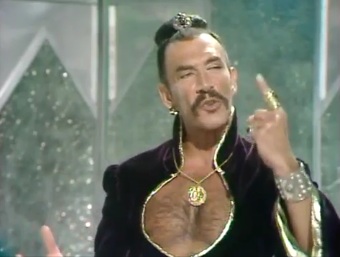
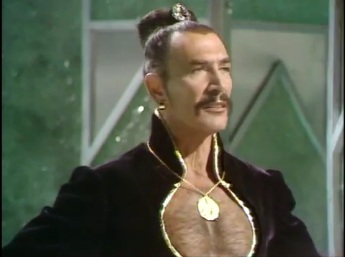
“Regardless of whether you’re a fan of science-fiction or not, those who delight in studying the diverse acting talents of Mr Peter Wyngarde and his multi-faceted performances must agree that he did a marvellous job in creating the malevolent, sadistic, and incredibly evil Klytus without the benefit of facial expressions. His totally chilling inflection and faultless performance in this most challenging of roles is yet another shining example of Wyngarde’s tremendous acting ability.” Empire

DOCTOR WHO – Planet of Fire: TV

“Top honours for this story must go to Peter Wyngarde, oozing faith, fire and fanaticism in a quite brilliant performance.” BBC Doctor Who Magazine

 THE MEMOIRS OF SHERLOCK HOLMES – The Three Gables: TV

“Peter Wyngarde played Langdale Pike – a Victorian Nigel Dempster in ‘The Three Gables’, which opened the first season of ‘The Memoirs of Sherlock Holmes’. As always, Peter was distinguished by his rapier wit and style. A memorable performance.” June Wyndham-Davis – Producer, ‘The Three Gables’.


TELEVISION PLAYS

All broadcast dates are for the United Kingdom, unless otherwise stated

1950 Sunday Night Theatre

Episode: Rope

Broadcast: 8th January, 1950

Character: Charles Granillo

1952 The Dybbuk

Broadcast: 21st October, 1952

Character: Channon

1953 Sunday Night Theatre

Episode: As You like It

Broadcast: 15th March, 1953

Character: Sylvius

Above: Peter with Pamela Alan as Phoebe.

1953 Sunday Night Theatre

Episode: L’Aiglon (‘The Eaglet’)

Broadcast: 12th April, 1953

Character: Prokesch

1953 Sunday Night Theatre

Episode: Will Shakespeare: An Invention

Broadcast: 24th May, 1953

Character: William Shakespeare

1953 An Evening Diversion

Broadcast: 17th November, 1953

Character: Lacy, The Earl of Lincoln

N.B. Shown as part of BBC Television’s celebration of the Anniversary Of The Session Of Her Majesty Queen Elizabeth I.

1953 Sunday Night Theatre

Episode: Rose Without A Thorn

Broadcast: 27th December, 1953

Character: Francis Derham

1954 Liebelei

Broadcast: 15th June, 1954

Character: Lt. Fritz Lobheimer

LIEBELER

Above: The cast and crew of ‘Liebelei’. (Peter is fourth from the right in the back row).

1954 Stage By Stage: The Relapse (A.K.A ‘Virtue In Danger’)

Broadcast: 7th December, 1954

Character: Worthy

N.B. Broadcast from the stage of the Television Theatre before an invited audience.

1955 Terminus

Episode: Hour of Decision

Broadcast: 4th June, 1955

Character: Tommy Glen

1955 International Theatre

Episode: The Salt Land

Broadcast: 8th November, 1955

Character: Arich

1955 The Alabama

Broadcast: 20th November, 1955

Character: Captain Raphael Semmes

1956 Nom-de-Plume

Episode: Honesty Is The Best Policy

Broadcast: 25th March, 1956

Character: The Marchese Fabio Coli

1956 Nom-de-Plume

Episode: The Man From The Sea

Broadcast: 18th May, 1956

Character: Blunt

1956 Nom-de-Plume

Episode: Child Of Her Time

Broadcast: 8th June, 1956

Character: Monsieur Latouche

1956 The Gambler

Broadcast: 9th August, 1956

Character: Marquis de Grieux

19560 Assignment Foreign Legion

Episode: The Debt

Broadcast: 28th December, 1956

Character: Charles Designe

1956 Television Playhouse

Episode: The Bridge

Broadcast: 20th December, 1956

1957 Jesus of Nazareth

Character: John the Baptist

Part 1. ‘The Beloved Son’ – Broadcast: 25th February, 1957

Part 2: ‘Preparing the Way’ – Broadcast: 4th March, 1957 

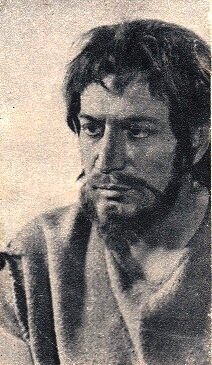
Above: Peter as John the Baptist

1957 Overseas Press Club – Exclusive!

Episode: The George Polk Case

Broadcast: 28th February, 1957

Character: Andreas Bakolas

20140428-183355

Above: As Andreas Bokolas in ‘The George Polk Case’

1957 Play of the Week

Episode: Enemy of the People

Broadcast: 20th March, 1957

Character: Hovstad

1957 ITV Television Playhouse

Episode: Evening in Hochsberg

Broadcast: 4th April, 1957

Character: Nicholas Florian

1957 Jack Hylton’s Monday Show

Episode: Hotel Riviera

Broadcast: 2nd June, 1957

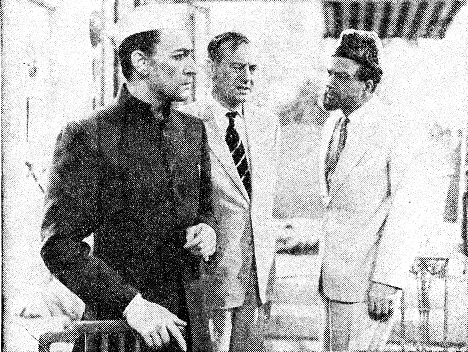
Character: The Young Maharajah

1957 The Widows of Jaffa

Broadcast: 7th June, 1957

Character: Mustafa

MUSTAFA

Above: Peter as Mustafa in The Widows of Jaffa

1957 A Tale of Two Cities

EPISODES:

Recalled to Life: 29th July, 1957

The Jackal: 4th August, 1957

The Gathering Storm: 11th August, 1957

The Honest Tradesman: 18th August, 1957

The Storm Breaks: 25th August, 1957

Darkness: 1st September, 1957

A Hand at Cards: 8th September, 1957

The Footsteps Die Out Forever: 15th September, 1957

Character: Sidney Carton

4318573_tina bate_In-Store Restoration Art_0_0_x1

Above: Peter as Sidney Carton in ‘A Tale of Two Cities’

1957 Nom-de-Plume

Episode: Elephants Don’t Disappear

Broadcast: 31st August, 1957

Character: Eric Weiss

1957 English Family Robinson

Episodes:

*(The Little World – Broadcast: 3rd November, 1957

 *(Night of the Tigers)– Broadcast: 7th November, 1957

* (The Third Miracle) – Broadcast: 14th November, 1957

Free Passage Home – Broadcast: 21st November, 1957

Character: Doctor Bannerji

*All episodes in series are listed here. Peter appeared in the final instalment only.

family

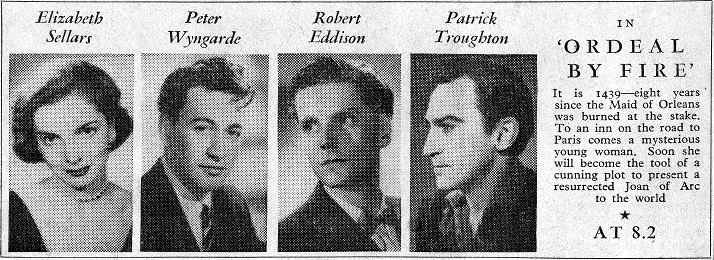
1957 Ordeal By Fire

Broadcast: 31st October, 1957

Character: Jerome Taillard

ORDEAL

1957 ITV Television Playhouse

Episode: Love Her To Death

Broadcast: 13th December, 1957

Character: Lionel Collins

1958 Armchair Theatre

Episode: The Shining Hour

Broadcast: 5th January, 1958

Character: David Linden

1958 General Electric Theatre

Episode: Time To Go Now

Broadcast: 19th January, 1958

Character: Raymond DeTresk

Above: As Raymond DeTresk

1958 The Light is Dark Enough

Character: Richard Gettner

Broadcast: 26th January, 1958

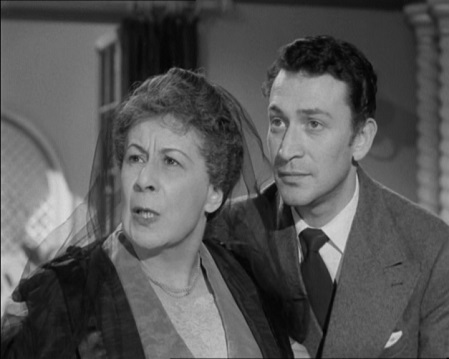
N.B. Dame Edith Evans, who played Countess Rosmarin Ostenburgh, made her television debut in this play.

GORGEOUS

Above: Peter as Richard Gettner in The Light is Dark Enough

1958 Sword of Freedom

Episode: The Sicilian

Broadcast: 21st April, 1958

Character: Colonna

SWORD

Above: Peter as Colonna in ‘The Sicilian’

1958 The Adventures of Ben Gunn

EPISODES:

The Parson’s Son. Broadcast: 1st June, 1958

The Taking of the Walrus. Broadcast: 8th June, 1958

The Winning of the Treasure. Broadcast: 15th June, 1958

How The Treasure Was Buried. Broadcast: 2nd June, 1958

The Honest Seaman. Broadcast: 29th June, 1958

Marooned. Broadcast: 6th July, 1958

Character: John Silver

Above: Peter (left) as John Silver

1958 The Royal Family of Broadway

Broadcast: 2nd August, 1958

Character: Anthony Cavendish

1959 About Religion

Episode: Down to Earth

Broadcast: 4th January, 1959

Narrated by Peter Wyngarde

1959 The Education of Mr Surrage

Episode: The Education of Mr Surrage

Broadcast: 20th January, 1959

Character: Geoffrey Vallance

1959 The Taming Of The Shrew

Broadcast: 26th March, 1959

Character: Petruchio

N.B. Recorded at the Bristol Old Vic. Shown in edited, 60-minute version by ITV regional channel, T.W.W.

1959 The Saturday Special: Epilogue To Capricorn

Episodes:

All On Tape. Broadcast: 31st October, 1959

Manhunt. Broadcast: 7th November, 1959

Point Of No Return. Broadcast: 14th November, 1959

Child’s Play. Broadcast:  21st November, 1959

Time Factor. Broadcast: 28th November, 1959

Traitor’s Gate. Broadcast: 6th December, 1959

Character: Paul Vauxhall

1959 Engineer Extraordinary

Broadcast: 18th November, 1959

Character: Isambard Kingdom Brunel

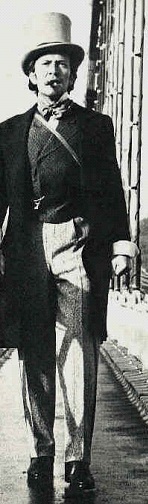
BRUNEL

Above: As Isambard Kingdom Brunel in ‘Engineer Extraordinary’

1959 Play of the Week

Episode: South

Broadcast: 24th November, 1959

Character: Lieutenant Jan Wicziewsky

PETER100

Above: Peter (Right) as Jan Wicziewsky in ‘South’

1960 On Trial

Episode: Sir Roger Casement

Broadcast: 8th July, 1960

Character: Sir Roger Casement

CASEMENT

Above: As Sir Roger Casement in ‘On Trial’

1961 Play of the Week

Episode: Negative Evidence

Broadcast: 7th February, 1961

Character: Major Peter Brayling

Above: Peter (right) as Major Peter Brayling. With John Ronane

1961 The Taming Of The Shrew

Broadcast: 24th March, 1961

Character: Petruchio

N.B. Recorded at the Bristol Old Vic

1961 One Step Beyond

Episode: Nightmare

Broadcast: 27th, June 1961

Character: Paul Roland

Above: Peter as the troubled artist, Paul Roland

1962 The Sunday Night Play

Episode: Loyalties

Broadcast: 29th April, 1962

Character: Ferdinand de Levis

N.B. Peter was nominated Actor of the Year for his performance as De Levis

1962 ABC Armchair Theater

Episode: Night Conspirators

Broadcast: 6th May, 1962

Character: Werner Loder

Above: As Werner Loder in ‘Night Conspirators’

1962 Out Of this World

Episode: Cold Equations

Broadcast: 14th July, 1962

Character: Captain Martin Barton

untitled

Above: As Captain Barton in ‘Cold Equations’

1962 About Religion

Episode: Dinner With The Devil

Broadcast: 23rd December, 1962

Character: Nicholas Traber

dinner2

Above: Peter as the Devil in ‘Dinner With The Devil’

1963 Play of the Week

Episode: Darkness at Noon

Broadcast: 15th January, 1963

Character: Colonel Glenkin

GLENKIN

Above: As Glenkin in ‘Darkness At Noon’

1964 Esso World Theatre

Broadcast: 13th January, 1964 (WOR-TV, USA)

Character: Mirabelle (in ‘The Way of the World)/Himself (‘One Warm Saturday’)

As part of an ensemble cast, Peter Wyngarde performs scenes from ‘The Way of the World’ and reads ‘One Warm Saturday’

1964 Play Of The Week

Episode: Camino Real

Broadcast: 27th January, 1964

Character: Jacques Casanova

1964 Rupert of Hentzau

EPISODES:

The Queen’s Goodbye. Broadcast: 19th April, 1964

Return to Zenda. Broadcast: 26th April, 1964

Audience With the King. Broadcast: 3rd May, 1964

The Wheel of Chance. Broadcast: 10th May, 1964

A Perilous Reunion. Broadcast: 17th May, 1964

The Decision of Fate. Broadcast: 24th May, 1964

Character: Rupert

HORSE

Above: As Rupert in ‘Rupert of Hentzau’

1964 A Midsummer Night’s Dream

Broadcast: 24th June, 1964

Character: Oberon

1964 A Choice of Coward

Episode: Present Laughter

Broadcast: 10th August, 1964

Character: Garry Essendine

GARY ESS

Above: As Garry Essendine in ‘Present Laughter’

1965 R3

Episode: The Forum

Broadcast: 2nd January, 1965

Character: Dr Henri Lefebvre

1965 The Rules of the Game

Broadcast: 15th February, 1965

Character: Guido

1965 Sherlock Holmes

Episode: The Illustrious Client

Broadcast: 20th February, 1965

Character: Baron Adelbert Gruner

Above: As Baron Von Gruner in ‘The Illustrious Client’

1965 Walt Disney’s Wonderful World of Colour: The Further Adventures of Gallagher

Episode: A Case of Murder

Broadcast (USA): 26th September, 1965

Character: Sir Richard Westerby

1965 The Troubleshooters

Episode: A Nice Girl – Is She For Sale? (AKA ‘Mogul’ in USA)

Broadcast: 17th November, 1965

Character: Sheik Mohammed bin Falik

Above: Peter as Sheik Mohammed bin Falik

1966 Festival

Broadcast: 2nd February, 1966 (USA)

Character:

1966 The Avengers

Episode: A Touch of Brimstone

Broadcast: 19th February, 1966

Character: The Honourable John Cleverly Cartney

cartney

Above: Peter as John Cleverly Cartney in the Avengers episode, ‘A Touch of Brimstone’

1966 Man In Room 17

Episode: First Steal Six Eggs

Broadcast: 29th April, 1966

Character: Paul Panacek

ROOM 17

Above: As Paul Panacek in ‘First Steal Six Eggs’

1966 Lucy In London

Broadcast: 24th October, 1966 (USA only)

Character: Himself

8

Above: Peter with Lucille Ball in ‘Lucy in London’

1966 The Saint

Episode: The Man Who Liked Lions

Broadcast: 18th November, 1966

Character: Tiberio Magadino

The Saint - S05E08 - The Man Who Liked Lions dvd-xvid-vamps_avi_snapshot_18_00_[2013_02_07_20_56_35]

Above: As Tiberio Magadino in ‘The Man Who Liked Lions’

1966 The Baron

Episode: The Legions of Ammak

Broadcast: 18th November, 1966

Character: King Ibrahim/Ronald Noyes

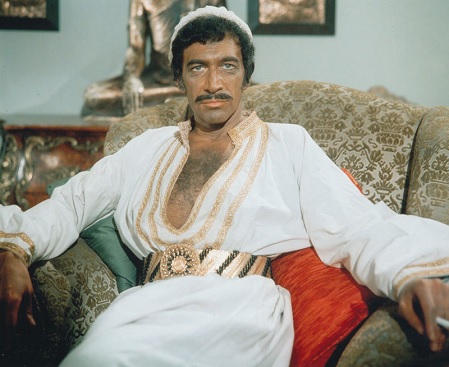
bar3

Above: As King Ibrahim in ‘The Legions of Ammak’

1967 Turn Out the Lights

Episode: The Boyhood Haunt

Broadcast: 6th January, 1967

Character: Richard Merlin

1967 ITV Play of the Week

Episode: The Crossfire

Broadcast: 7th February, 1967

Character: Hugo de Croissillon

CROSS

Above: As Hugo de Croissillion in ‘The Crossfire’

1967 The Avengers

Episode: Epic

Broadcast: 1st April, 1967

Character: Stewart Kirby

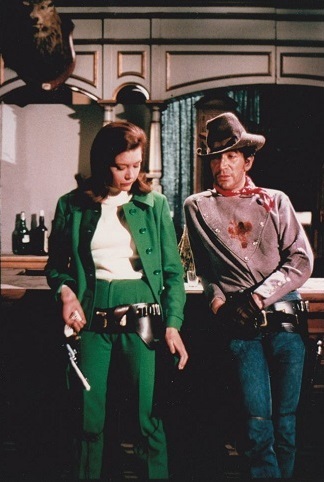
Above: Peter as Stewart Kirby with Diana Rigg as Emma Peel in The Avengers episode, ‘Epic’.

1967 The Saint

Episode: The Gadic Collection

Broadcast: 25th June, 1967

Character: Turen

TUREN

Above: As Turen in ‘The Gadic Collection

1967 Love Story

Episode: It’s A Long way Back To Transylvania

Broadcast: 7th September, 1967

Character: Konrad Von Kroll

PETER-6

Above: As Konrad Von Koll in ‘It’s A Long way Back To Transylvania’

1967 I, Spy

Episode: Let’s Kill Karlovassi

Broadcast (USA): 11th September, 1967

Character: George

ISpy24

Above: As George in ‘Let’s Kill Karlovassi’. With Ruth Roman.

1967 The Revenue Man

Episode: The Exile

Broadcast: 3rd November, 1967

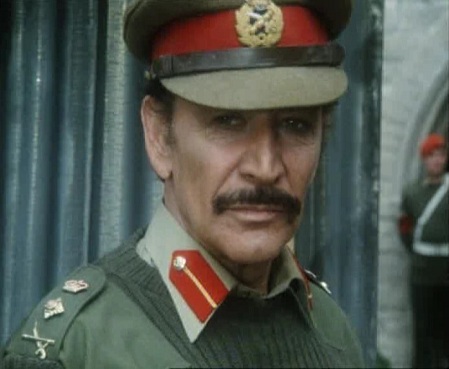
Character: General Daniel

1967 The Champions

Episode: The Invisible Man

Broadcast: 2nd October, 1967

Character: Dr John Hallem

MON PIERRE

Above: As Dr. John Hallen in ‘The Invisible Man’

1967 The Prisoner

Episode: Checkmate

Broadcast: 27th November, 1967

Character: Number 2

Above: Peter as Number 2 in the Prisoner episode, ‘Checkmate’

1967 Queen of Scots

1969 Department S

EPISODES:

Six Days – 9th March, 1969

The Trojan Tanker – 16th March, 1969

A Cellar Full Of Silence – 23rd March, 1969

The Pied Piper of Hambledown – 30th March, 1969

One Of Our Aircraft Is Missing – 6th April, 1969

The Man In The Elegant Room – 20th April, 1969

Black Out – 27th April, 1969

Who Played The Dummy? – 1st October, 1969

The Treasure of the Costa Del Sol – 8th October, 1969

Les Fluers Du Mal – 22nd October, 1969

The Shift That Never Was – 29th October, 1969

The Man From X – 5th November, 1969

Dead Men Die Twice – 12th November, 1969

The Perfect Operation – 26th November, 1969

The Duplicated Man – 3rd December, 1969

The Mysterious Man In The Flying Machine – 10th December, 1969

Death On Reflection – 17th December, 1969

The Last Train To Redbridge – 14th January, 1970

A Small War Of Nerves – 21st January, 1970

The Bones of Byrom Blain – 28th January, 1970

Spencer Bodily Is Sixty Years Old – 11th February, 1970

The Ghost Of Mary Burnham – 18th February, 1970

A Fish Out Of Water – 25th February, 1970

Soup Of the Day – 4th March, 1970

A Ticket To Nowhere – 11th March, 1970

The Double Death of Charlie Crippen – 24th April, 1970

Character: Jason King

Above: Peter as Jason King in Department S. With Caroline Blakiston.

1970 Homicide

May 1970 (Australia)

Character: Himself

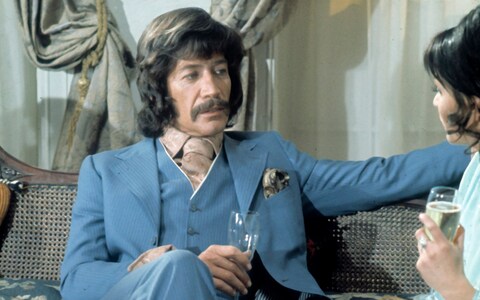
1971 Jason King

EPISODES:

Wanna Buy A Television Series? – 15th September, 1971

A Page Before Dying – 22nd September, 1971

Buried In the Cold, Cold Ground – 6th October, 1971

A Deadly Line In Digits – 13th October, 1971

Variations On A theme – 20th October, 1971

As Easy As ABC – 10th November, 1971

To Russia With Panache! – 17th November, 1971

A Red, Red Rose Forever – 1st December, 1971

All That Glistens (Part One) – 8th December, 1971

All That Glistens (Part Two) – 15th December, 1971

Flamingos Only Fly On Tuesdays – 29th December, 1971

Toki – 5th January, 1972

The Constance Missal – 12th January, 1972

Uneasy Lies The Head – 19th January, 1972

Nadine – 2nd February, 1972

A Kiss For A Beautiful Killer – 9th February, 1972

If It’s Got To Go, It’s Got To Go – 16th February, 1972

A Thin Band Of Air – 3rd March, 1972

It’s Too Bad About Auntie – 10th March, 1972

The Stones of Venice – 17th March, 1972

A Royal Flush – 24th March, 1972

Every Picture Tells A Story – 31st March, 1972

Chapter One: The Company I Keep – 7th April, 1972

Zenia – 14th April, 1972

An Author In Search Of Two Characters – 21st April, 1972

That’s Not me, It’s Someone Else – 28th April, 1972

Character: Jason King

Above: Peter as Jason King in ‘Jason King’

1977 Scenes From Shakespeare: The Merchant of Venice

Character: Shylock

Broadcast: (WOR-TV, Austria) August, 1977

N.B. Directed by Peter and recorded at the English Theatre, Vienna, by Austrian Educational Television.

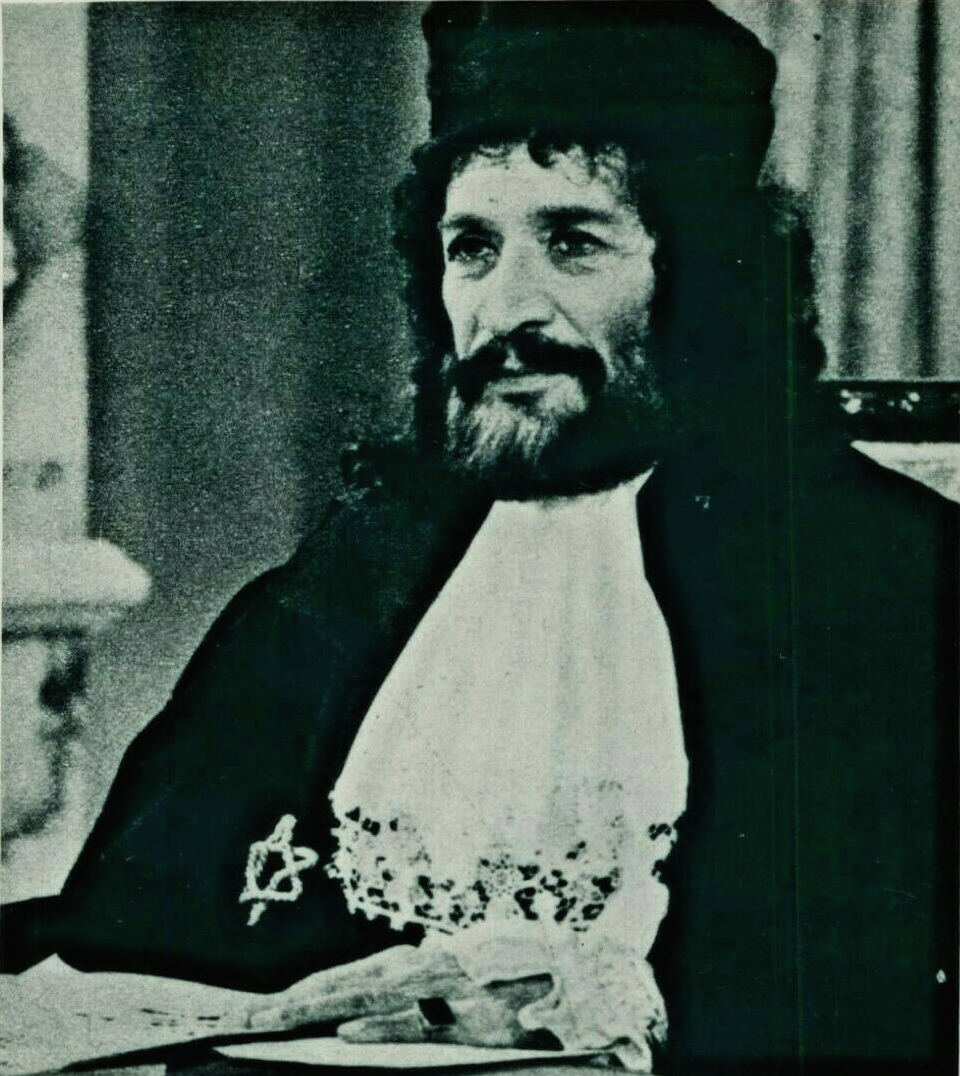
Above: Peter as Shylock

1984 Crown Court

Episode: The Son of His Father

Part 1 Broadcast: 17th January, 1984

Part 2 Broadcast: 18th January, 1984

Part 3 Broadcast: 19th January, 1984

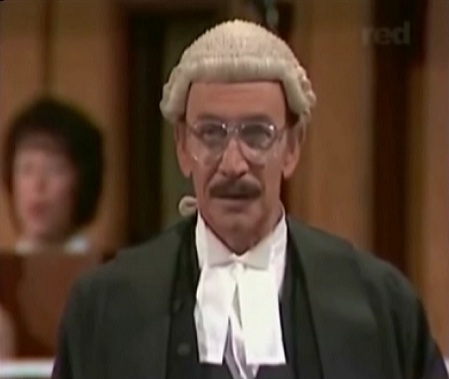
Character: Sir Charles Marchington QC

COURT

1984 Doctor Who

Episode: Planet of Fire

Part 1 Broadcast: 23rd February, 1984

Part 2 Broadcast: 24th February, 1984

Part 3 Broadcast: 1st March, 1984

Part 4 Broadcast: 2nd March, 1982

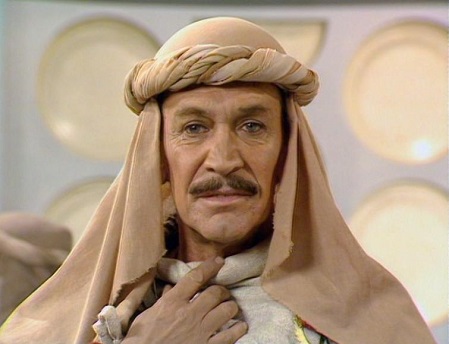
Character: Timanov

Timanov

Above: Peter as Timanov in the Doctor Who episode(s), ‘Planet of Fire’

1984 The Hammer House of Mystery and Suspense

Episode: And the Wall Came Tumbling Down

Broadcast: 19th November, 1984

Character: Daniel Haswell/General Haswell

WALL

1985 Bulman

Episode: I Met A Man Who Wasn’t There

Broadcast: 14th August, 1985

Character: Lol Gallio

BULMAN2

Above: As Lol Gallio in ‘Bulman’

1988 The Comic Strip Presents

Episode: The Yob

Broadcast: 12th March, 1988

Character: Mr Kendel

Above: Peter as Mr Kendel in ‘The Yob’

1994 The Memoirs of Sherlock Holmes

Episode: The Three Gables

Broadcast: 7th March, 1994

Character: Langdale Pike

WyngardeSherlockHolmes16

Above: Peter as Langdale Pike and Jeremey Brett as Sherlock Holmes in ‘The Three Gables’.

1997 Freddie & Zapper – Virtual Reality

Click below for…

THEATRE PERFORMANCES

THEATRE

“Watch that young man. He is the best emerging actor in the country!”

Sir Tyrone Guthrie – Theatrical Director

theatre-card

(Above): Card produced to promote Peter’s appearances in rep

Peter’s first appearances on stage was in Youth Theatre in the 1940’s. This is a complete list of all his appearances.

PLAYx4

Quality Street

Buxton Playhouse Theatre – 1946

Character: Ensign Blades

When We Were Married

Character: Gerald Forbes

The Embassy Theatre, London. July 1946

Pick-Up Girl

Character: Door Attendant/Policeman Owens/A Young Man.

British National Tour – Autumn/Winter 1946.

N.B. In earlier performances of ‘The Pick-Up Girl’, Peter was billed in the role of “The Door Attendant”, but was later credited in the part of both ‘Policeman Owens’ and ‘A Young Man’.

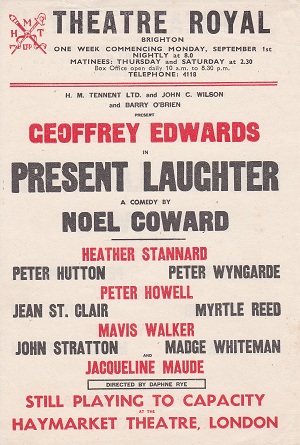
Present Laughter

Character: Morris Dixon

British Tour – Autumn 1947

LAUGHTER


Macbeth

Character: A Messenger/A Murderer

Colchester Repertory Theatre. February 1948


Deep Are The Roots

Character: Chuck Warren

Colchester Repertory Theatre. March 1948


The Government Inspector

Character: Osip

Royal Court Theatre, York. May 24th, 1948

Julius Caesar

Character: Julius Caesar

Royal Court Theatre, York. May, 1948


Residents Only

Character: Mr. Maydigger

Royal Court Theatre, York. June 1948

x2-original-york-theatre-royal_360_9d0ee872306abe59a65035dcdbdbb132


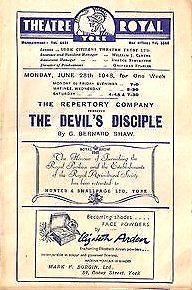
The Devil’s Disciple

Character: Chaplain Brundenell

Royal Court Theatre, York. June 1948


Fly Away Peter

Character: Pan

Colchester. January 1949


Othello

Character: Sylvius

Nottingham Playhouse


By Candle Light

55510760_10156964867415540_6990740546247458816_n (1)

Peter with Jenny Harvey in ‘By Candle Light’  

Character: Baron Egon Von Felsen. 

The Playhouse, Nottingham


Tobias And The Angel

Character: Raguel

The Playhouse, Nottingham


The Paragon

The Playhouse, Nottingham.


The Apple Cart

Character: Nicobar, The Foreign Secretary

The Playhouse, Nottingham


The Winslow Boy

Character: Sir Robert Morton

The Playhouse, Nottingham. June 1949


Fresh Fields

Character: The Chinese Servant

The Playhouse, Nottingham


The Merchant of Venice

Character: The Duke of Venice

The Playhouse, Nottingham

Shadow and Substance

Character: A Young Clergyman

The Playhouse, Nottingham


Othello

Character: Cassio

Nottingham Playhouse. January 1949

The Embassy Theatre, London. May-July 1949  

The Happiest Days of Your Life

Character: Dick Tassell

The Richmond Theatre. January, 1950

The Long Shadow

Character:

The Richmond Theatre. January, 1950

Lovely To Look At

Character: Edward Winthrop

Richmond Theatre. February 1950

P.C. 49 – The Case of the Shocking Shadow

Character: Andre Cheval

The Richmond Theatre. May 1950

The Magistrate

Character: Captain Horace Gale and Mr. Wormington

Richmond Theatre. May 1950

Claudia

Character: Jerry Seymour

The Richmond Theatre. June 1950

Goodbye Mr Chips

Character: Mr Chipping

The Richmond Theatre. July 1950

The Man From Toronto

Character: Robert Gilmour

Richmond Theatre, October, 1950

Someone At The Door

Character: Bill Reid

Richmond Theatre. October 1950

Bonaventure

Character: Willy Pentridge

Richmond Theatre, October, 1950

REP3

Peter as Willy Pentridge, with cast in Bonaventure

Mr Gillie

Richmond Theatre, November, 1950

Character: Tom Donnelly

Hamlet

Character: Voltimand/Third Player

The New Theatre, Bromley. February 1951

N.B. This production of ‘Hamlet’ at the New Theatre, Bromley, was produced as part of the Festival Of Britain celebrations.

Loaves and Fishes

Character: Bertram Railing

The New Boltons Theatre Club, London. March 1951

The Taming Of The Shrew

Character: Tranio

The Marlow Theatre. May 1951

Ten Little Niggers

Character: Phillip Lombard

The Grand Theatre, Southampton, August 1951

The Happy Family

Character: Herbert Filch

The Grand Theatre, Southampton, September 1951

Love From a Stranger

Character: Nigel Lawrence

The Grand Theatre, Southampton, September 1951


Murder Without Crime

Character: Matthew

The Grand Theatre, Southampton, October 1951


Black Coffee

Character: Inspector Japp and Sir Claude Amory

Grand Theatre, Southampton, November 1951


Young Wives Tale

Character: Victor Manifold

The Grand Theatre, Southampton, November 1951


They’ll Arrive Tomorrow

Character: Jonah

The Irving Theatre, London. June 1952


The Loyal Traitors

Character: The Communist

The Arts Theatre, London. January, 1953


September Tide

Character: Evan Davies

Marlow Theatre, Canterbury  

No Laughing Matter (A.K.A. ‘Histoire de Rire’)

Character: Gérard Barbier

The Arts Theatre, London. July, 1954.

Laughting4

Peter (Centre) in ‘No Laughing Matter’


The Enchanted (A.K.A. ‘Intermezzo’)

Character: The Ghost/A Young Man.

The Arts Theatre, London. March 1954

YOUNG

Peter as the Ghost of a Young Man in ‘The Enchanted’


Saint Joan

Character: Dunois

The Arts Theatre, London. September 1954


Journeys End

Character: Stanhope

The Irvine Theatre. July 1954

progra6


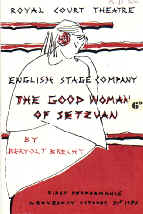
The Good Woman of Setzuan

Character: Yang-Sun

The Royal Court Theatre, London. October 1956


 Duel of Angels

Character: Count Marcellus

British Tour. April 1958/59

The Taming Of The Shrew

Character: Petruchio

The Old Vic, Bristol – February 24th – March 10th, 1959.

N.B. Recorded and shown by ITV (T.W.W.) in an edited 60-minute version on March 26th, 1959.

PETRUCHIO

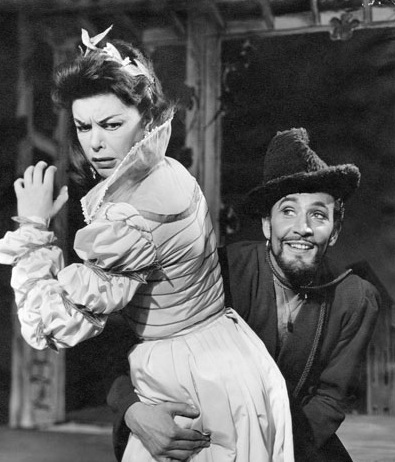
As Petruchio in ‘The Taming of the Shrew’

Cyrano De Bergerac

Character: Cyrano

The Old Vic, Bristol – May 1959

CYRANO

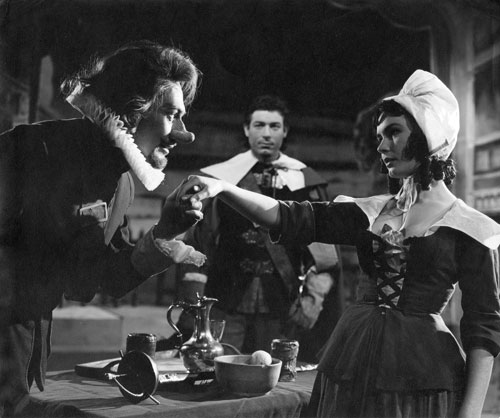
As Cyrano in ‘Cyrano De Bergerac’

Duel of Angels

Character: Count Marcellus

American tour. 1960

ANGELS

Peter with Mary Ure in ‘Duel of Angels’

Long Day’s Journey Into Night

Produced and Directed by PETER WYNGARDE.

The Bristol Old Vic. March 17th – April 7th, 1959

N.B. The play, was recorded and broadcast on television.

King John

Character: King John

The Mother House, London


The Merchant of Venice

Character: Shylock

The Mother House, London


Macbeth

Character: Macbeth

The Mother House, London


Night Conspirators

43534335_2410338488992893_4440484065048526848_n

Character: Werner Loder

Regional Tour


Time Remembered

Character: Prince Albert Troubiscoi

New Theatre Bromley. September 1964


The Philanderer

Character: Leonard Charteris

The New Theatre, Bromley. June 1965

The Spies

Character: Chrystal

Richmond Theatre, May 1966


The Servant

Character: Barrett.

The Yvonne Arnaud Theatre, Guilford. September/October 1966.

The Duke of York’s Theatre, London


The Two Character Play

Character: Felice

The Hampstead Theatre Club. December 1967

N.B. The world premiere of the play was on December 11th, 1967.

progra8

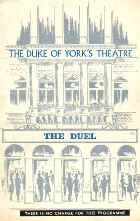
 The Duel

Character: Nickolay von Koren

The Duke of York’s Theatre, London. April 1968


Butley

Character: Ben Butley

The Metro Theatre, Melbourne, Australia. April 1971.

N.B. The production of ‘Butley’ at the Metro Theatre, Melbourne, was the World Premier of Charles Dyer’s play.

progra18


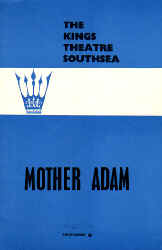
Mother Adam

Character: Adam

Regional Tour. August-November, 1972


The King and I

Character: The King

The Adelphi Theatre, London.

British National Tour – October 1973

KING

Peter as The King in The King and I

Water, Water, Everywhere

Royal Pavilion Music Room, Brighton. 1974

(Part of the Brighton Festival. Theme: The Sea)

Present Laughter

Character: Garry Essendine

British National Tour. Autumn 1974

N.B. Peter also directed this play.


Dracula

Character: Vivorde Szekels/Count Dracula

British National Tour. Spring 1975

Present Laughter

Character: Garry Essendine

The Yvonne Arnaud Theatre, Guildford

28th October to 15th November, 1975

N.B. PETER also directed this play.


Time and the Conways

Directed by Peter.

The Yvonne Arnaud Theatre, Guildford. December 1975

The Merchant of Venice

Character: Shylock

British National Tour. March-April, 1976

Dear Liar

Character: George Bernard Shaw

The English Theatre, Vienna. July, 1976

N.B. Play had to reopen in September to accommodate both the public and subscribers of the English Theatre who missed it earlier in the year.

Peter Wyngarde & Brinkmann in Dear Liar

As George Bernard Shaw in ‘Dear Liar’

Anastasia

Character: Prince Bounine

The Cambridge Theatre, London. September 1976.

Big Toys

Character: Richie Bosenquet

The English Theatre, Vienna. July, 1977

N.B. European premier. Directing, casting and male costume designs by PETER.

The Merchant of Venice

FotoJet (2)

Character: Shylock

The English Theatre, Vienna. August, 1977

N.B. Directed by Peter and recorded at the English Theatre, Vienna, by Austrian Educational Television

Deathtrap

Character: Sidney Bruhl

The Baxter Theatre, Cape Town, South Africa, 1978

Underground

Character: Alexander Howard.

The Royal Alexandra Theatre, Toronto, Canada. March-May 1983

British Tour.

Light Up The Sky

Character: Carlton Fitzgerald

The Old Vic, London. September 1985.

Aladdin

Character: Abanazar.

His Majesties Theatre, Aberdeen. December 1984/January 1985.

Babes In The Wood

Character: The Sheriff of Nottingham.

Richmond Theatre. December 1985/January 1986.

Guilty Conscience 

Character: The Prosecutor

The Theatre Royal, Windsor. June/July 1986.

Wait Until Dark

Character: Harry Roat.

The Mill Dinner Theatre, Sonning, UK. July 22 – August 22.

National Tour, South Africa. 1989

The Hilton International hotel, Singapore: August 26th-September 2nd.

The Regent Hotel, Kuala Lumpar: September 4th-27th.

The Travel Lodge Hotel, Papua New Guinea: September 22nd-October 7th.

The Siam InterContinental, Bangkok: October 9th-13th.

The Nile Hilton, Cairo: October 18th-23rd.

The Jordan InterContinental Hotel: October 25th-28th.

The Athens Hilton, Athens: October 30th-November 3rd.

The InterContinental Hotel, Dubai: November 6th- November 13th.

The Hilton International Hotel, Manaman: November 15th-20th.

The InterContinental Hotel, Muttrah: November 22nd-27th.

The InterContinental Hotel, Abu Dhabi: November 30th-December 4th.

The InterContinental Hotel, Al Ain: December 6th.

wait_h9

As Harry Roat in ‘Wait Until Dark’

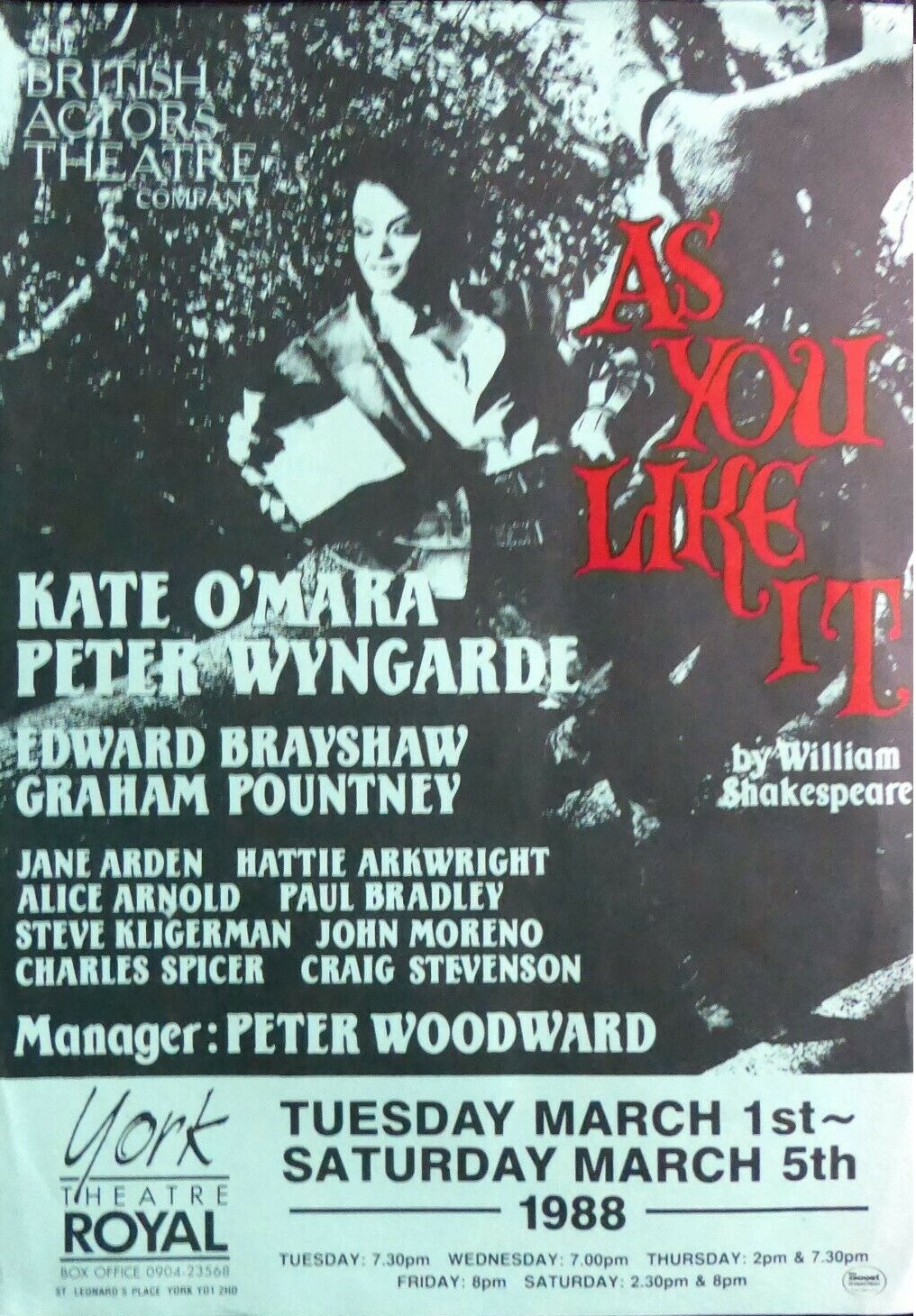
As You Like It

Character: Duke Fredrick

March/April 1988

UK National Tour

s-l1600 (7)

The Country Wife

Character: Jack Pinchwife

The Mermaid Theatre, London – December 1990

WIFE

The Cabinet of Doctor Caligari

Character: Doctor Caligari

The Playhouse Theatre, Liverpool – September 1995

N.B. Peter appeared in just one half of the opening night performance of ‘The Cabinet Of Doctor Caligari’ at the Playhouse Theatre in Liverpool on Tuesday, September 19th, 1995, before withdrawing from the show with a serious throat infection.


See also…

Radio Plays and Interviews 

Television Appearances


© Copyright The Hellfire Club: The OFFICIAL PETER WYNGARDE Appreciation Society: https://www.facebook.com/groups/813997125389790/


PETER WYNGARDE: Introduction

Forget what you’ve read on Wikipedia and other misinformed blogs! This is the REAL Peter Wyngarde…
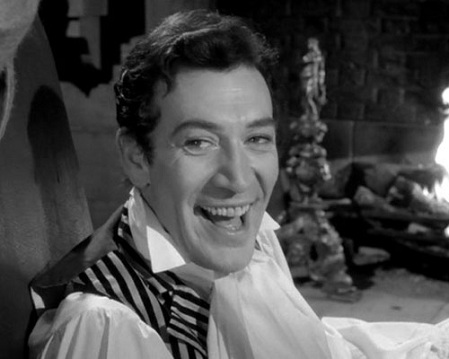
THE HELLFIRE CLUB: THE OFFICIAL PETER WYNGARDE APPRECIATION SOCIETY: https://www.facebook.com/groups/813997125389790/

BIOGRAPHY

PETER PAUL WYNGARDE was born on Wednesday, August 23rd, 1933, in Marseille, Southern France. He is the son of an English father and French mother.

Owing to his father’s work, Peter spent much of his early childhood moving from country to country, and was educated in a number of different schools. One city that left a lasting impression on him was Shanghai where he’d been left temporarily in the care of a Swiss family while his father was away on business. Amidst the turmoil and confusion, news broke that the Japanese had captured the city, and when soldiers of the Imperial Army began arresting all British citizens, Peter found himself interned in Lunghau Civilian Assembly Centre [2].

Morale was low in the camp. However, when a radio was smuggled in, as one of the youngest detainees, Peter was used as a runner to spread the news between billets about the Allies progress, and the mood soon lifted. On one occasion while on his rounds, he was caught by a guard, who punished him by breaking both his feet with a rifle butt, and then throwing him into solitary confinement.

One concession the Japanese did allow was for the prisoners to put plays on in the canteen, and it was here that Peter got the acting bug. However, with the dropping of an atomic bomb on Hiroshima, the war was suddenly over. The American’s finally liberated the camp and Peter, along with hundreds of his fellow internees, boarded a cargo ship for Liverpool.

Suffering from malnutrition, Beriberi and Malaria, he was taken to a sanatorium in the Swiss mountains where he remained for nearly two years. After completing his education in Switzerland, France and England, Peter reluctantly honoured his parents’ wishes, and entered university, where he began studying law, but dropped out soon after in favour of a career in advertising. After a brief spell with an agency in London, he walked into an audition, read the part, and was cast as the understudy for the lead in a play in Brighton.

Whilst in Rep at The Grand Theatre in Southampton, he met and fell in love with a young actress, Dorinda Stevens (birth name: Dorothy May Stevens), of whom he said: “She was the most beautiful girl on the block, and I got her!” They married in small church in Sicily. The marriage lasted over six years.

In the mid 50’s, he met up-and-coming actor, Alan Bates, with whom he formed a strong professional bond based on a mutual love of acting [3]. At the time, Peter was living in Kent, where he owned a next door to the actress, Dame Edith Evans. For convenience, the two actors rented a flat in London to use when either one of them was appearing in the West End.

While touring with ‘Duel of Angels’ (1958-1960), Peter and his leading lady, Vivien Leigh, became inseparable, and were soon romantically involved. Their Co-star, Claire Bloom, suggested later that Ms Leigh had set her sights on Peter from the outset. “All the girls in the play adored Peter”, she said in a letter to a student author [5]. ”He was a beautiful boy who we’d have all loved to take to bed! Vivien had her heart sent on him right from the start, and she managed to seduce him.”

There’s a rather cryptic reference to the pair in Lawrence Olivier’s biography, ‘Confessions of an Actor’, which reads: “My diaries bear witness of determined encroachments on my resolve; Vivien departs, Vivien back; Peter away, Peter back (this was evidence of another encroachment form another quarter).” Further reading: ‘Damn you, Miss Scarlett: The Private Lives of Vivien Leigh and Lawrence Oliver’ by Darwin Porter and Roy Moseley . Published Feb. 2011.

Whilst some misinformed sources suggest that Peter had become typecast by his spell in ‘Department S’ and ‘Jason King’, paperwork in the current possession of Peter’s Personal Assistant (see below), bear witness to the number of producers who were eager to cast Peter in new plays and revivals in the West End.

In the early 1980’s, he quit smoking and drinking, and embarked on a healthier lifestyle; jogging daily and visiting the gym four times a week. He also took up Pistol Shooting, entering and winning many local and national competitions. He’s also a master swordsman, who has fought many times at the world-renowned Green Club. He also enjoys watching Formula 1 racing, tennis, boxing and adores Classic cars.

He is a prolific writer, and still works.

 CAREER

Naturally gifted, Peter Wyngarde had no formal training. His very first role was in in ‘Pick-Up Girl’ – a play about juvenile delinquency, in which he was cast in a triple role of ‘A Young Man’, ‘The Door Attendant’ and ‘Policeman Owens’. Once old enough, he began learning his trade in Reparatory Theatre in Colchester, York, Chester, Nottingham and Southampton. His first role on the London stage was with the Nottingham Repertory Company at the Embassy Theatre as Cassio in ‘Othello’. From there, he moved to the world famous Old Vic in Bristol, where he played the lead role in both ‘Cyrano de Bergerac’ and ‘Taming of the Shrew’ (Petruchio), and also tried his hand at directing – most notably with ‘Long Day’s Journey into the Night’.

Whilst playing Dunois in George Bernard Shaw’s ‘St. Joan’ in the West End, Peter was invited over to the U.S. to take a screen test for the part of Pausanius in Robert Rossen‘s epic feature film, ‘Alexander the Great’ opposite Richard Burton and Fredric March.

Disillusioned with Hollywood, Peter returned to his first love – the British stage. He was immediately cast as Yang Sun, a Chinese pilot, in Bertold Brecht’s, ‘The Good Woman of Setzuan’, at the Royal Court Theatre in London. It was here that he first made the acquaintance of the Olivier’s – Lawrence and his wife, Vivien Leigh, the latter of whom he later played opposite in the critically acclaimed ‘Duel of Angels’.

In 1957, he was cast as Sidney Carton in a 7-part TV adaptation of Charles Dickens ‘A Tale of Two Cities’. As a result, he received over 4,000 letters from adoring fans, and got his first real taste of being a sex symbol.

Following its hugely successful run at the Apollo Theatre in London in 1958, ‘Duel of Angels’ was to transfer to the American stage. Although reluctant at first to reprise the role of Count Marcellus – mainly because he felt he wouldn’t be able to bring anything new to the part, Vivien Leigh, who’d become extremely close to Peter, managed to change his mind, and so in 1959 he made his American debut at the Helen Hayes Theatre on Broadway. During the tour of the States, he won both the ‘San Francisco Award for Best Actor in a Foreign Play’, and a Tony in the ‘Most Promising Newcomer’ category – both for his portrayal of Count Marcellus.

On his triumphant return to Britain in 1960, he was almost immediately cast as the enigmatic ‘Peter the Painter’ in Monty Berman’s production of ‘The Siege of Sidney Street’ – a film which was based on the true story of the British Government’s legendary battle with a notorious gang of Slavonic anarchist, whose reputation throughout Europe for robbery and murder lead to one of the bloodiest confrontations in British criminal history.

Between numerous starring roles in television productions such as Independent Television’s popular ‘Armchair Theatre’ and ‘Play of the Week’, Peter made two more big-screen appearances in the 1960’s – both Albert Fennell productions. The first, in 1961, was ‘The Innocents’ – a feature-length adaptation of the Henry James’ book, ‘Turn of the Screw’, which was followed in 1962 by the classic supernatural thriller, ‘Night of the Eagle’ (A.K.A. ‘Burn, Witch, Burn’) which was, once again, based of a novel – this time Fritz Leiber’s, ‘Conjure Wife’.
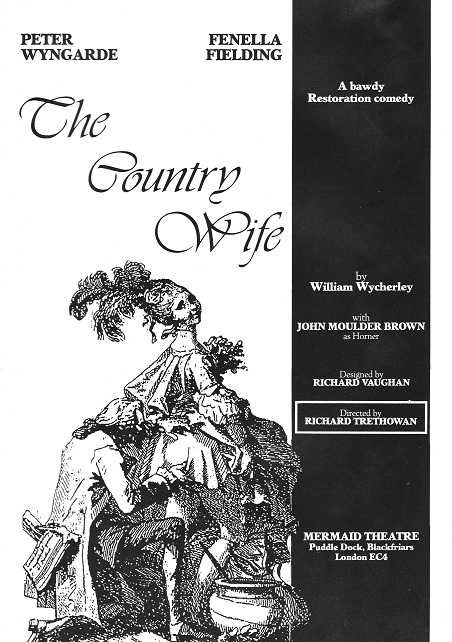
From July of 1960 to March of 1969, Peter appeared in no fewer than thirty television plays, and twice won the coveted Actor of the Year award from the Guild of Television Producers and Directors (UK), in addition to being nominated for an Emmy for his portrayal of Stewart Kirby in the Avengers episode, ‘Epic’. He also made memorable guest appearances in such classic series as The Avengers, The Baron, The Saint, The Champions and The Prisoner, which today have a huge cult following.

In 1969, Peter was cast in what was undoubtedly his most famous role as author-cum-investigator, Jason King, in the ITC action series, ‘Department S’, and soon became the idol of thousands of women the world over. So overwhelming was his effect on television viewers that in 1971, a brand new series – ‘Jason King’ – was devised, which allowed the handsome novelist to go adventuring without restriction.

When the series came to an end in 1972, Peter decided to return to the theatre and, after being greeted at Melbourne Airport by 30,000 screaming fans, he took the city by storm in the World Premiere of ‘Butley’, which played to packed houses every night. Once back in London, he took the lead role in Charles Dyer’s ‘Mother Adam’ at the Hampstead Theatre, of which the highly respected theatre critic, Harold Hobson, said: “Peter Wyngarde gives a performance of near genius – a great actor in the very best sense of the word”. [7].

In 1973, he embarked on a British tour in Rodgers and Hammerstein’s ‘The King and I’ opposite Sally Anne Howes, appearing in all 260 performances. The following year, he once again took up the mantle of actor/director with ‘Present Laughter’, stopping off along the way to host the 1974 ‘Miss Television’ Contest.

In late 1975, Peter headed out to Austria to work at the English Theatre in Vienna, to both act in and direct productions of ‘Dear Liar’ and ‘Big Toys’, before returning to the big screen in an Austrian film (‘Himmel, Scheich Und Wolkenbrunch’) in the role of a latter-day Rudolph Valentino. The following year, he returned to the British stage in the Lawrence Parnes production of ‘Anastasia’, and to South Africa in 1978 to play Sidney Bruhl in Ira Levin’s new play, ‘Deathtrap’.

In 1980, he was cast as the evil General Klytus in Dino De Laurentiis’s lavish 1980’s sci-fi blockbuster, Flash Gordon. In 1984, after an absence of almost 12 years, Peter returned to the small screen, appearing in the four-part Doctor Who installment, ‘Planet of Fire’, which was followed in short succession by the Hammer House of Mystery and Suspense story, ‘And The Wall Came Tumbling Down’, and a memorable guest-starring role in Granada Television’s ‘Bulman’.

In 1989, Peter returned to the stage playing hard-man, Harry Roat, for a nine-months tour of South Africa, Asia and the Middle East in ‘Wait Until Dark’, and in the same year he was cast as the unsavoury character, Sir Robert Knights, in the stylish, yet explicitly violent British thriller, ‘Tank Malling’.

Although scarcely ever agreeing to be interviewed due to his being repeatedly misrepresented by the media, Peter consented to appear on SKY TV’s ‘Jameson’ Show’ in the early 90’s, and in 1994, he made a welcome return to British TV screens in Granada Television’s popular ‘The Memoirs of Sherlock Holmes’ series opposite Jeremy Brett.

The long-overdue release of both ‘Department S’ and ‘Jason King’ on video in 1993 helped rekindle interest in the debonair Mr Wyngarde, with repeats of the series being shown on satellite and cable channels, and public pressure resulting in the re-release of his 1970 album on CD [8].

In recent years, Peter has made numerous TV appearances, which include ‘Astleys Way’, ‘Dee Time’, ‘100 Greatest TV Characters’, ‘Don’t Knock Yourself Out’ and narrated the acclaimed Timeshift documentary, ‘How To Be Sherlock Holmes: The Many Face Of The Master Detective’ in 2014.

Peter remains one of the most popular British actors of all time, with a thriving fan club (The Official Peter Wyngarde Appreciation Society)[9] and a devoted worldwide following. His appearances at TV and Sci-Fi conventions have drawn thousands of attendees, eager to meet and shake the hand of a true acting legend.