


Written by Alex Thorpe
Have you ever read a really good book which the vast majority of people concur with you over, but then you spot a really peevish review that has you wondering if the person responsible for it has read the same thing as you?
I bought Tina Wyngarde-Hopkins biography/memoir, ‘Peter Wyngarde: A Life Amongst Strangers‘ on the day of publication in February 2020. I read the whole thing; all 532 pages in just two sitting as I just found it too compelling to put down. With hand on heart I can say it is the best book of its kind I’ve ever read. It’s candid, detailed and honest; written from the standpoint of someone who actually knew Wyngarde intimately. Ms. Wyngarde-Hopkins has taken further steps in publishing many of the documents referred to in the book (see the A Life Amongst Strangers Companion) and provided strong supporting evidence in the form of Peter’s letters and personal writings (see You’ve Read The Book… Now Read It In Peter’s Own Words ). I know of no other author who has done this.
With this in mind, I’ve been stunned to read some of the nonsense posted online by persons unknown about the book in so-called ‘reviews’. I say this because none of the people who have written this stuff appear to have any real conviction in what they’re saying. Why? Because they choose not to put their real names to it,
I know what you’re all thinking: ‘Everyone is entitled to an opinion’, and you’re right. The Oxford English Dictionary’s definition of the noun ‘Opinion’ goes something like this: “A view or judgement formed about something, not necessarily based on fact or knowledge”. I ask you to keep the final section of that sentence in mind as you read the following ‘review’ for ‘A Life Amongst Strangers’ which was posted on Amazon on 27th December 2023 by someone calling his or her self ‘City Bookworm’:
| As other reviewers have mentioned, this is a decidedly odd and not very well written book; it’s also something of a rewrite of history. It was fairly common knowledge within the theatrical world of that era that PW was gay, and has subsequently come out that PW had a 10 year off-on relationship with the actor Alan Bates. This has been corroborated by many respected actors and others. So, it seems delusional at best — and homophobic at worst — that the book goes to such great lengths to try and prove PW WAS NOT GAY! Aside from that, it’s a poorly written biography of muddled chronology and facts, and overall very disappointing. |
What I’m about to do now is break down this ‘review’ into sections; highlighting some of the grandiose statements contained within it:
“As other reviewers have mentioned, this is a decidedly odd and not very well written book“: The first half of this sentence refers to four other ‘reviews’ posted on Amazon back in 2020; one of which was uploaded on the day BEFORE the book was even published, which is dubious to say the least. It accuses Ms. Wyngarde-Hopkins of treating Wyngarde’s “blood family” unfairly. Alas, the person who wrote it and who concealed his or her self behind the username ‘Fisherman Fred’, provides not a single instance of this alleged mal treatment. According to Ms. Wyngarde-Hopkins, she didn’t know this “blood family” existed until the day of Wyngarde’s funeral on 25th January, 2018, and he never once mentioned them throughout the time she knew him. By their own admission, they’d never seen or spoken to him since 1974!
Another of these ‘literary appraisals’, it turns out, was penned by a disgruntled former member of The Official Peter Wyngarde Appreciation Society Facebook group page, who was unceremoniously booted out in 2019 for his involvement with a group of anti-Semitic and homophobic trolls. A third was drawn up by someone called ‘Paul Kemp’, whose grammatically inept account was typed ENTIRELY IN CAPITAL LETTERS – this to advise the rest of us about BAD WRITING! Sadly, ‘City Bookworm’ does not reference the ninety 5-Star reviews of ‘A Life Amongst Strangers’ that are diametrically opposed to his or her view.
When I asked Tina Wyngarde-Hopkins if I could write this article, and enquired as to her feelings when reading something like like this, she told me that when Steven Berkoff (the multi award-winning actor, writer and director agreed to pen the afterword for her book), he’d had nothing but praise for both its content and for her writing skills. In fact, he was staggered that this was her first book! This was corroborated by Wyngarde’s long-time friend and agent, Thomas Bowington, who recounted: “Berkoff had made a beeline for me at a theatre related event in London to wax lyrical about the book: “A wonderful, fascinating book!” he boomed. He, of course. is qualified to judge.”
“Well done Tina. This is an essential work for anyone who values this extraordinary man and his work.” Steven Berkoff
“It was fairly common knowledge within the theatrical world of that era that PW was gay,…” As Ms. Wyngarde-Hopkins has oft pointed out, both on this website and elsewhere, this alleged “common knowledge” myth was dragged into the public arena by author, Donald Spoto, in his 2007 biography, ‘Otherwise Engaged: The Life of Alan Bates’. In letters written by Peter Wyngarde in 2009 and 2011 (see the ‘A Life Amongst Strangers Companion‘), he describes how shocked he was at what Spoto had written about him in his volume and, by all accounts, had considering suing author for libel.
“I cannot tell you how shocked I was when I read what that American biographer had said those unbelievable things about me.”
And,
“The American author signed a letter to say he would adhere to my request about omitting material, but managed to send it to me after the book was published which was of course too late.“
As for the “fairly common knowledge within the acting world that Wyngarde was gay…” assertion, ‘City Bookworm’, not unsurprisingly. fails to provide a single shred of evidence to reinforce this.
“…and has subsequently come out that PW had a 10 year off-on relationship with the actor Alan Bates.” Again, this is a fable founded in Donald Spoto’s aforementioned biography, where it is claimed that Wyngarde and Bates shared a flat in London from 1956 until 1966, which is something a lot of young jobbing actors did at the time and probably still do. Nevertheless, Mr/Miss/Ms. ‘Bookworm’ states that this was an “on/off relationship” (more “Off” than “On” I would suggest). In her book, Ms. Wyngarde-Hopkins provides evidence that Bates did not take up residence in Wyngarde’s flat until either late in 1958 or early 1959 due to work commitments in the USA (you can see the original rental agreement that Wyngarde signed in late 1956 here). Meanwhile, between 1958 and ’60, Wyngarde was in a romantic relationship with Vivien Leigh. This is well documented. Between 1960 and 1962, Bates went to live with Rock Hudson in California for 18 months. He then moved out of the flat to a house he’d purchased for himself in St. John’s Wood, London. Suddenly the 10 years claimed by Mr. Spoto becomes nothing more than a few months, when the two passionate lovers(!) were relegated to no more than ships passing in the night. (According to the Electoral Roll, Bates was registered as living at Wyngarde’s flat between 1959 and 1964, not 1956 to 1966 as Donald Spoto insisted upon).
“This has been corroborated by many respected actors and others.” ‘Again, ‘City Bookworm’ declines to provide a single solitary name from this seething mass of theatricals to substantiate his/her claim, so I suppose we’re just expected to take their word for it.
“So, it [‘A Life Amongst Strangers’] seems delusional at best — and homophobic at worst — that the book goes to such great lengths to try and prove PW WAS NOT GAY!” Tina Wyngarde-Hopkins had a 30 year relationship with Peter Wyngarde. This has been corroborated by many “respected actors and others”, all of whom were named in ‘A Life Amongst Strangers’. and elsewhere. I would very much like to ask ‘City Bookworm’ how quoting directly from letters written by Wyngarde in his own hand; publishing photographs of PW with various girlfriends, and referring to legal documentation that can be readily found in the public domain qualifies as going “to such great lengths to try and prove PW WAS NOT GAY!” What did he/she expect the author to do – falsify correspondence, tamper with legal documentation kept in the public archives and photoshop images of Wyngarde at male only orgies just to validate someone else’s mistaken beliefs?
Aside from all of the above, the most offensive thing about this ‘review’ is the assertion that the book, and one must suppose the author herself, is “homophobic” which, to paraphrase ‘City Bookworm, is insulting at best and libellous at worst!
“Aside from that, it’s a poorly written biography of muddled chronology and facts, and overall very disappointing.” Well, we can dismiss the “poorly written” statement out of hand based on Steven Berkoff comments (see above) and those of the highly respected Hollywood Reporter that described it as being, “Scholarly written”. I’m not sure where the “muddled chronology” claim comes from either, as the work has a pretty straightforward timeline: i.e. it begins with Wyngarde’s birth and ends with his death in 2018. Simples! It’s hardly Ms. Wyngarde-Hopkins fault if Mr/Ms. ‘City Bookworm’ struggled to follow it. Perhaps it would’ve helped if he/she had given us a few examples of these “muddled facts,” and explained what he/she had used as a yardstick to measure the anomalies he/she alleges: 50-year-old tabloid tittle-tattle, perhaps? Internet gossip? Who knows!

While ‘A Life Amongst Strangers’ goes a long way in dispelling many of the myths that have built up around Peter Wyngarde over the decades, the thing that appears to have rattled ‘City Bookworm’ cage most is that it fails to validate his/her preexisting ideas of what the actor’s true sexuality was. Unquestionably, this person’s primary focus seems on Wyngarde’s sex life, which comes across as rather voyeuristic. Unquestionably, they don’t appear to have much interest in anything beyond what he did in bed. I feel it’s safe in this instance to coin the term Confirmation Bias, which psychiatrist attribute to people who reject anything that is not consistent with their own preexisting beliefs. It could therefore be said that ‘City Bookworm’ has a misguided – nay “deluded” – opinion of Wyngarde, which left them vexed enough to post this a spiteful ‘review’.
It has also occured to me that Mr/Ms. ‘Bookworm’ is probably a card-carrying member of the LGBTQ++++ community his/her self, and is p*ssed because they had always counted Wyngarde as one of their own (before anyone starts sounding off, I’m gay myself). He/she definitely appears resentful of Ms. Wyngarde-Hopkins decades-long relationship with the actor.

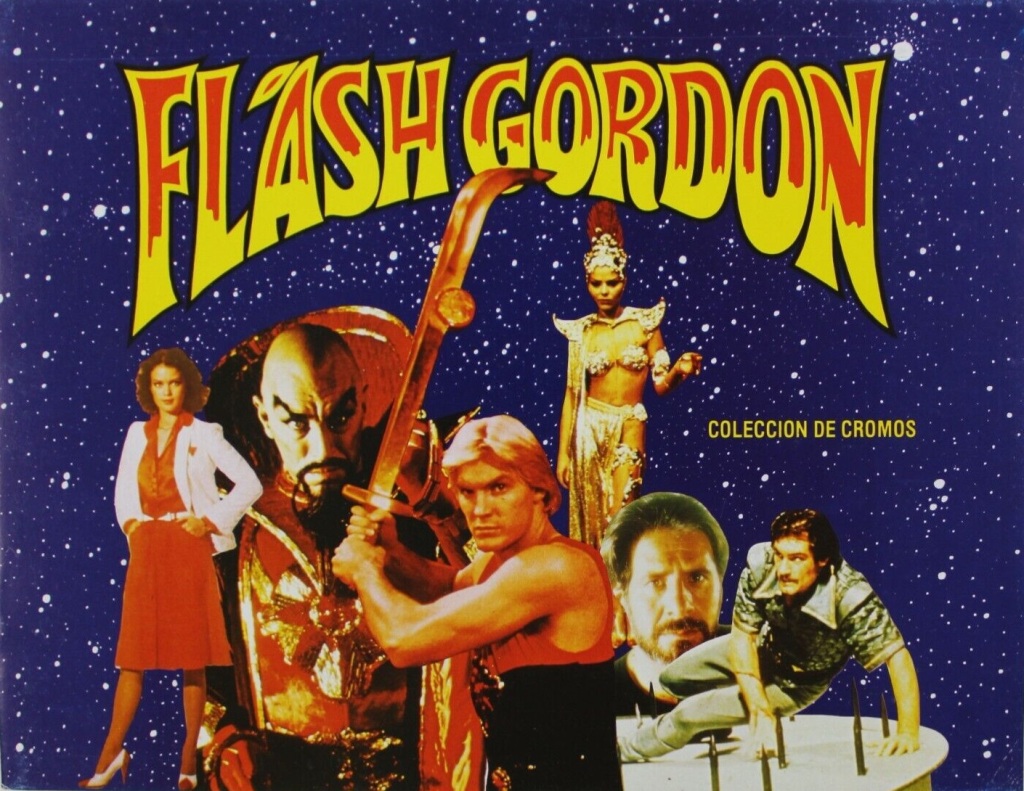
I’ll take a wild stab in the dark here and say that dear old ‘City Bookworm’ probably never came within a 100 mile radius of PW or anyone who knew him, but is sufficiently conceited to shout down “the person who knew him best” (a description given to Tina Wyngarde-Hopkins by Flash Gordon himself, Sam J. Jones). We now seem to be living in a world where there are no longer facts, only opinions. What is being created is a wholesale denial of truth in almost every sphere of life. We suddenly find ourselves in a situation where people with absolutely no authority, personal experience or knowledge of a subject are attempting to beat down those that have.
I often wonder why people who trash other’s books don’t write one of their own to show us all how it should be done. Or is it really just another case of those that can’t, criticise?
With very special thanks to Pam, Tina and Thomas of the Official Peter Wyngarde Appreciation Society






















 PETER WYNGARDE: The Official Website