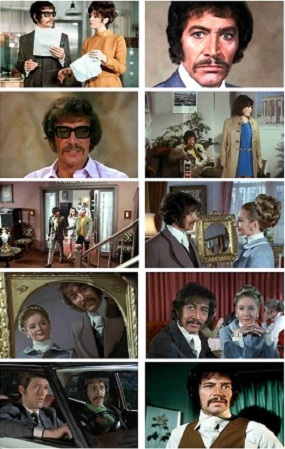
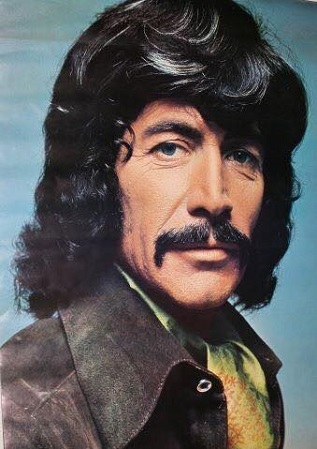
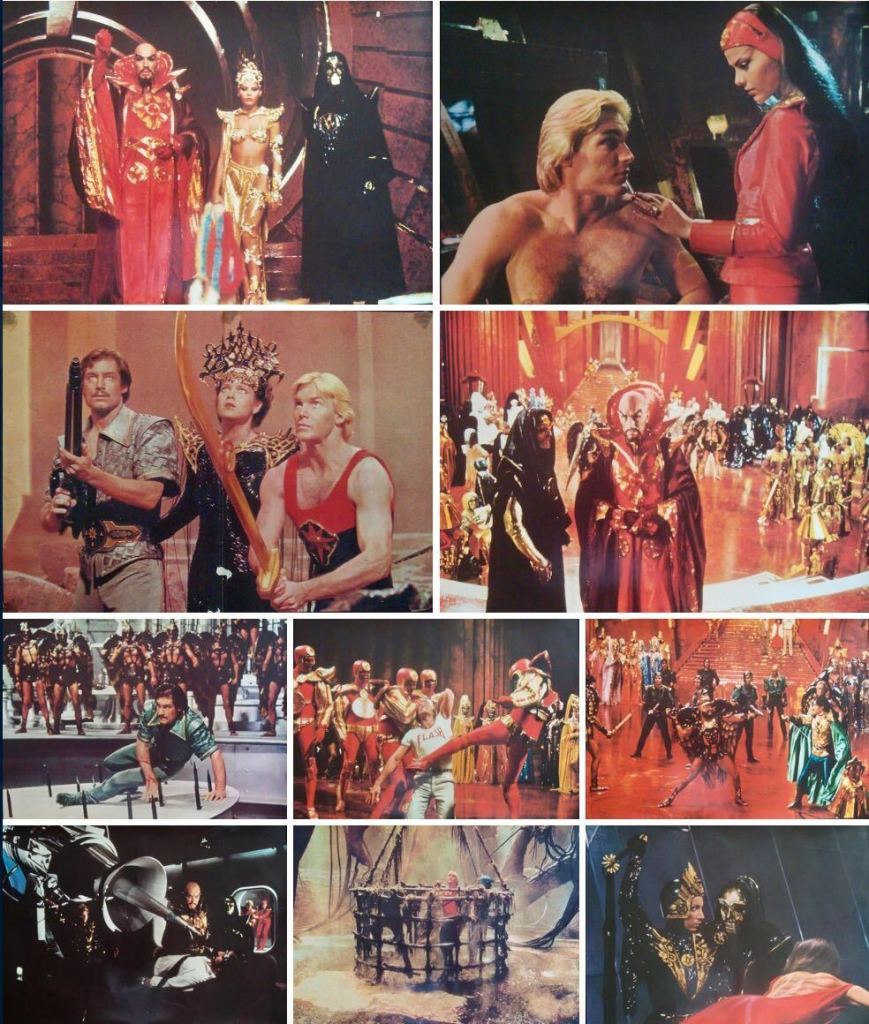
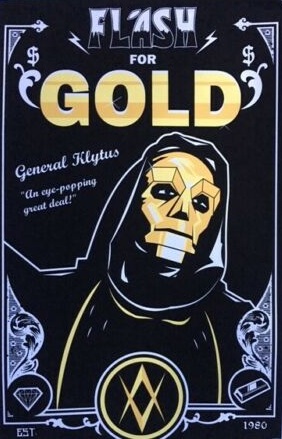
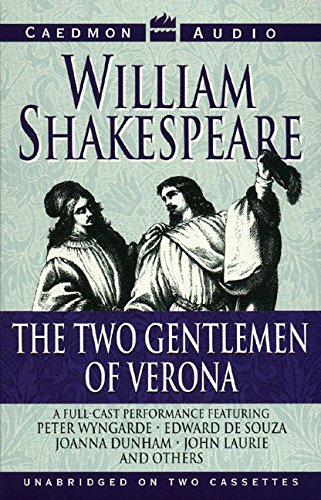
Above: The Two Gentlemen of Verona. 2 x 60 minute tapes (Unabridged). HarperCollins Audio Books. ISBN 0-00-105024-9
Picture Badges
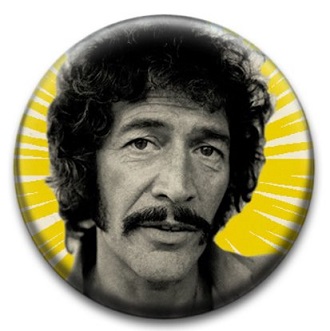
Above: Limited Edition Official Peter Wyngarde Appreciation Society badge. Buy here
Above and Below: 25mm Pin back badges by RetroBadge.
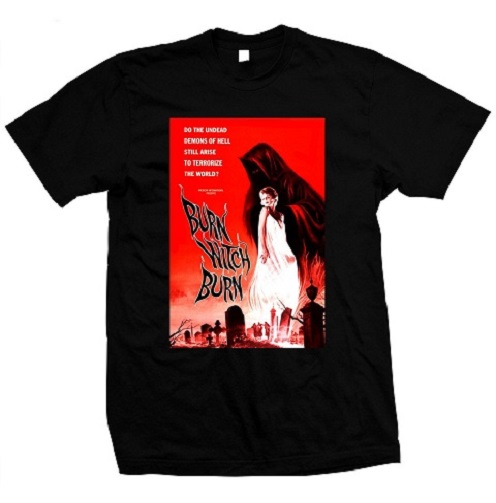
Below: Burn, Witch, Burn badge by Vicious Delights, USA
Film & TV Books
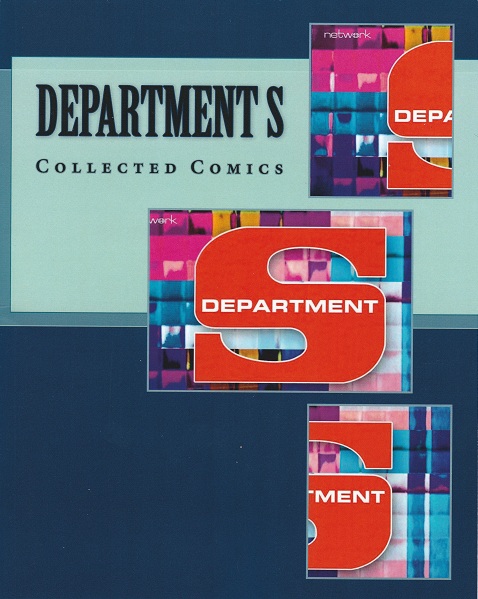
The complete Department S comic strip collection. Limited editions. Only 20 made.
Above: Bright Darkness: Lost Art of the Supernatural Horror Film by Jeremy Dyson. Published in August 1997 by Continuum (formerly Cassell Academic). 224 Pages. ISBN-10: 0304700371. This book makes a detailed study of the supernatural in films. Features a colourised still of Peter and Janet Blair from ‘Night of the Eagle/Burn Witch Burn’ on the cover.
Above: Department S. Edited by Hefa Film, distributed by Techno Films. Episode title: “The Last Train to Redbridge”.
Above: Techno Films 400′ colour/sound home movie of ‘Jason King’. This is part one of an episode titled “Die Steine Von Venedig (“The Stones Of Venice”). This 400′ single-striped sound print is German language. Below: ‘Uneasy Lies The Head’
Coat Hanger
Above: A curiosity from the 1970’s – a Jason King coat hanger
Collector Cards
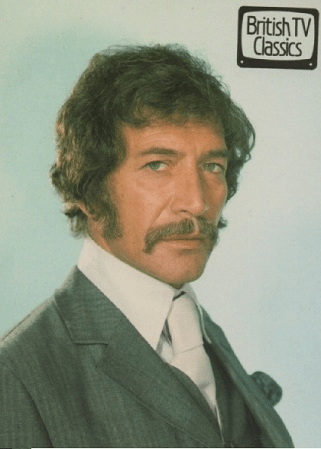
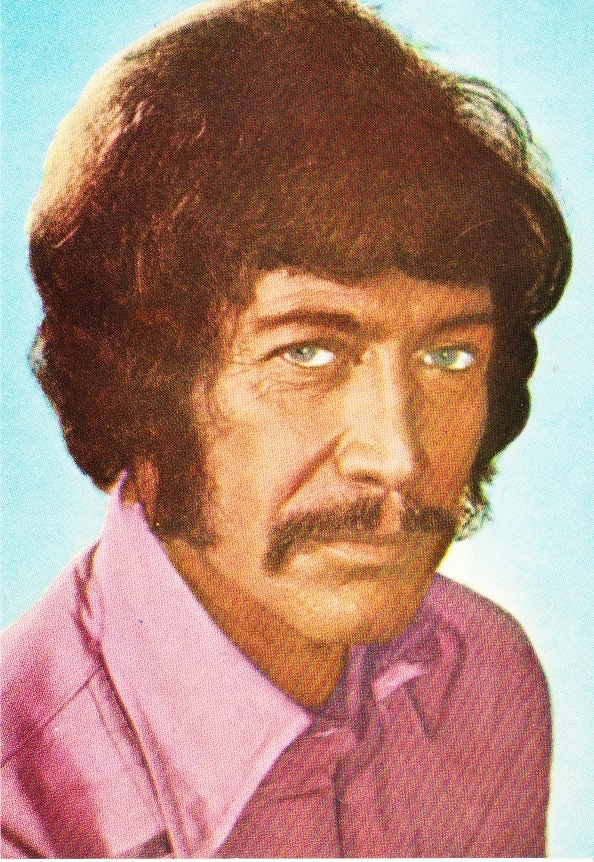
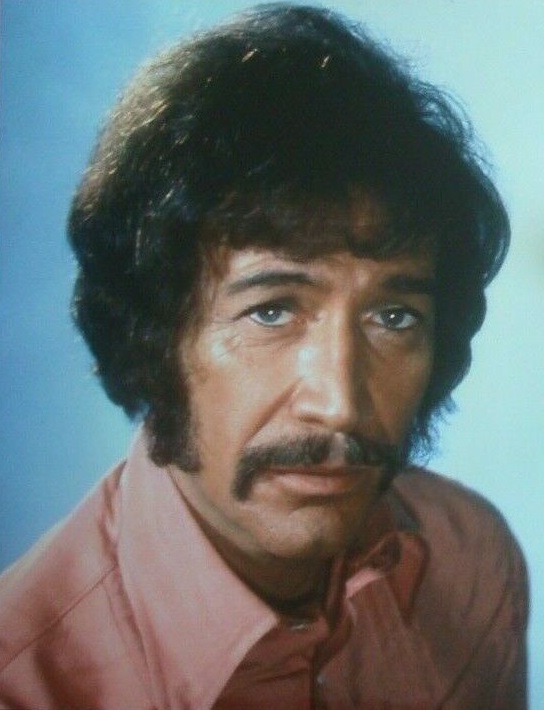
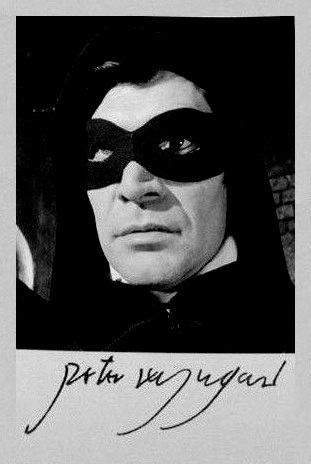
Above Left: Postcard-sized picture ofPeter with facsimile signature, which were sent to fans by ITC and ICM (agent) on request of autographed photograph. 1962. Middle: Postcard-sized picture of Peterwith facsimile signature, which were sent to fans by ITC and ICM (agent) on request of autographed photograph. 1970. Right: Postcard-sized picture of Peter with facsimile signature, produced by Carl Gresham at personal appearances.
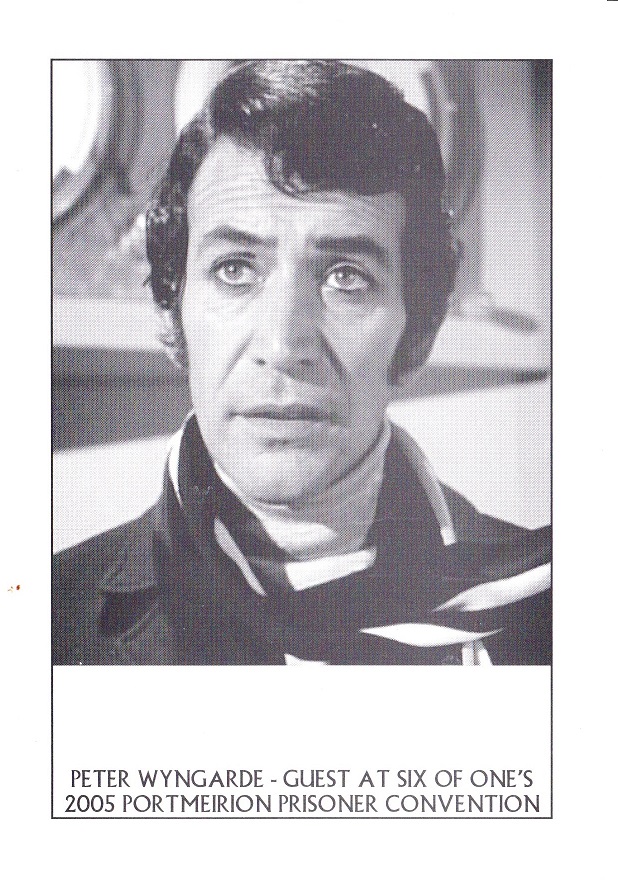
Above: Issued by Six of One – the Official Prisoner Appreciation Society – in 2005. Peter had been invited to the Society’s annual convention at Portmeirion but, sadly, he was unable to make it. This card is therefore something of a rarity.
Above: This card was issued during Peter’s tour of Denmark in 1972
Above: A card that was available to fans requesting autographs during the ‘Underground’ tour, 1983
Comic Books
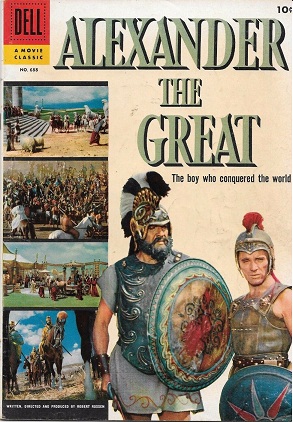
Below: Original four-colour ‘Alexander the Great’ film tie-in. No. 688. USA 1956
Department ‘S’: Televise Favorieten – Volume 6′. Published in Holland in 1969, features four different Department S cartoon strips entitled:’De Verwenen Geleeden’ (The Disappeared Scientists), ‘Gouldkapers Aan Boord’ (Gold Stealers On Board), ‘Het Poppenmysterie’ (The Puppet Mystery), and ‘Diplomaat Vermist’ (The Missing Diplomat).
Below: Flash Gordon Comic: 1980 (below) adapted by Bruce Jones and supported by amazing art by award-winning Al Williamson.
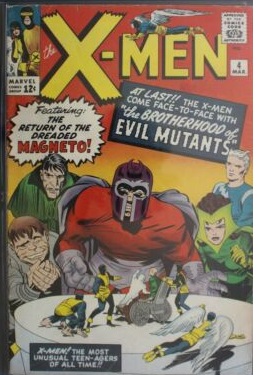
Above: 4th March, 1964 issue of Marvel’s, ‘The X Men’. First ever appearance of the character, ‘Mastermind, who would latterly be revealed as ‘Jason Wyngarde’.Currently selling for £2,700.
Below:
Vol. 1 – No.129: ‘God Spare The Child’. Published: January 1980.
Vol.2 – No.130: ‘Dazzler’. Published: February 1980.
Vol.3 – No.131. ‘Run For Your Life’. Published: March 1980.
Vol.4 – No.132: ‘And Hellfire Is Their Name’. Published: April 1980.
Vol.5 – No.133: ‘Wolverine Alone’. Published: May 1980.
Vol.6 – No.134. ‘Too Late The Heroes!’ Published: June 1980.
The Essential X-Men – Book 2. A black and white anthology of the above mentioned Marvel comics featuring the Jason Wyngarde character. Published in the U.S.A. by Marvel Comics. $14.95 (UK £10.95).
The Uncanny X-Men – The Dark Pheonix Saga. X-Men comics featuring the Jason Wyngarde Character. Published in the U.S.A. by Marvel Comics. $15.95 (UK – £11.99)
Above: One-off Jason King figure made by D-List Dolls, March 2020
Events Programmes
Above: Fear in the Fens Festival 2019 programme
Fan Zines
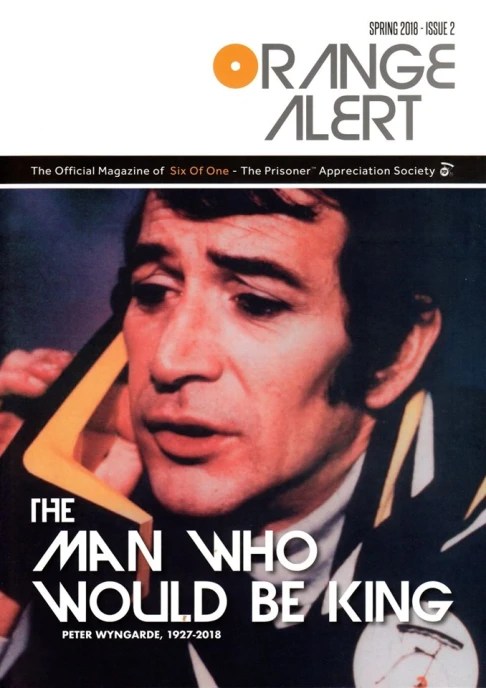
Above: Orange Alert: The magazine of ‘Six of One’ – the Official Prisoner Appreciation Society
Camera Obscura ‘Peter Wyngarde Special’ (Above). Issue No.23. 20 Page A4, black and white. Published in 1996 by the Birmingham branch of the Prisoner appreciation society, ‘Six of One’. Includes articles on actors who had appeared in both The Prisoner and Department S; transcript of Peter’s 1993 appearance on Pebble Mill; biography and analysis of Peter’s portrayal of No.2 in Checkmate.
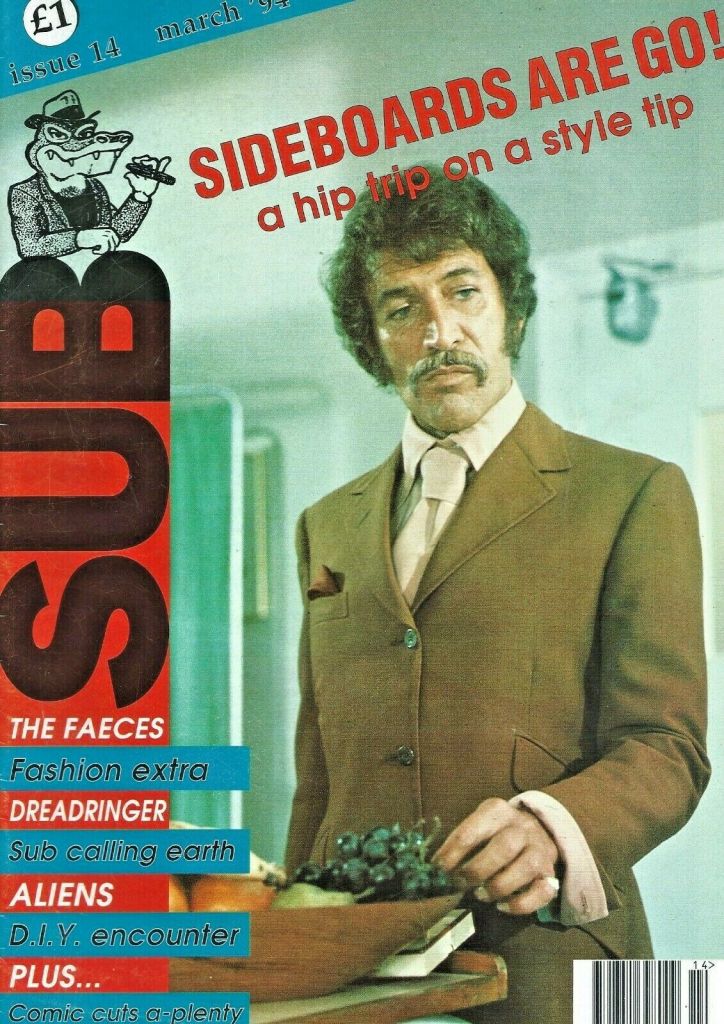
SUB Magazine – UK Fanzine
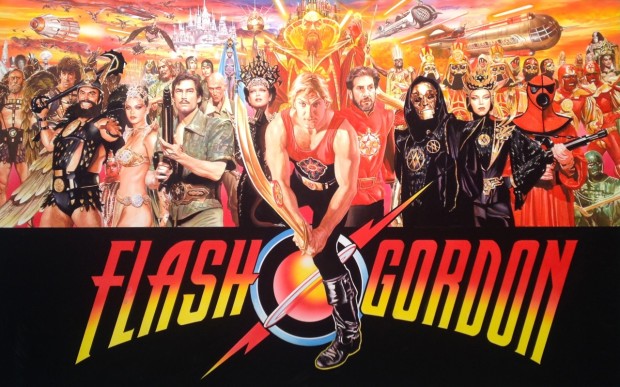
Flash Gordon 35th Anniversary Collectables
Above: Specially designed poster by Alex Ross
Above: Promotional poster for the event on 25th November, 2015
Above: Souvenir brochure and, Below, inside
Below: Schedule of Events
Front of House and Lobby Cards
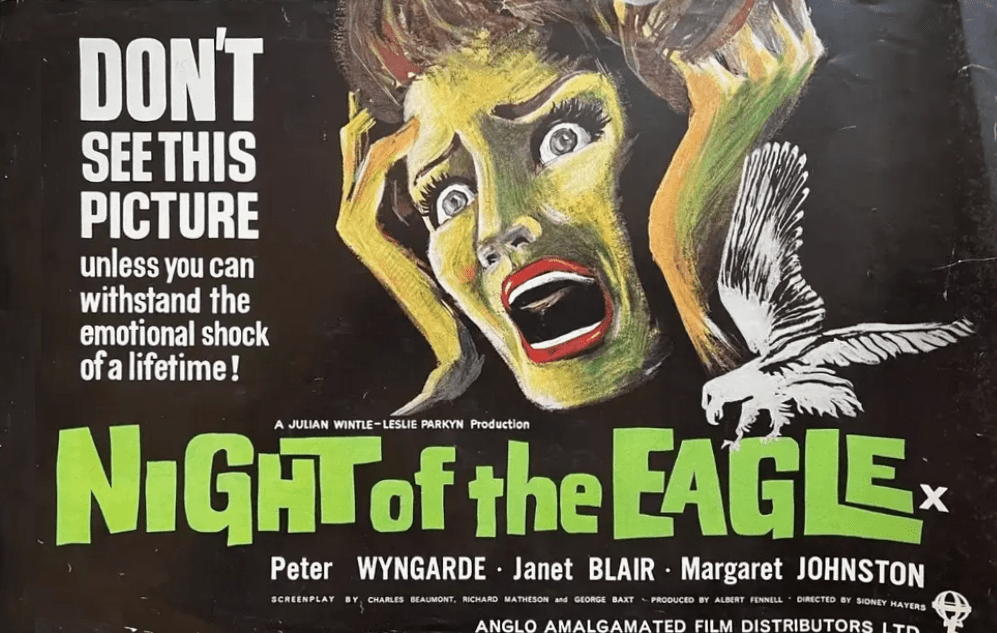
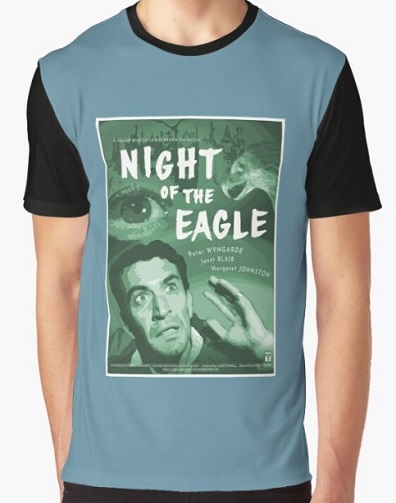
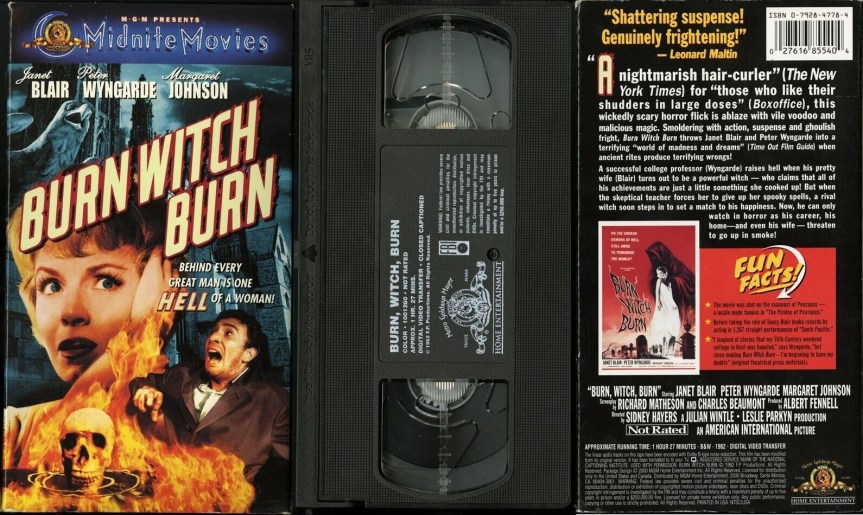
Above (clockwise): American card for ‘Burn, Witch, Burn’ – British card for ‘Night of the Eagle’ – German card for ‘Himmel, Scheich und Wolkenbruch’ – American Flash Gordon Lobby Card.
Click here to see more Front of House Stills and Lobby Cards
Above: Book of matches promoting Peter’s appearance in ‘Butley’ at the Bourke Theatre, Melbourne.
One of 100 different 2⅛” x 1½” (approx 50mm x 3mm) matchbox labels featuring TV and music stars. It shows (and names) Peter, and at the top right-hand corner is the number F43. At the bottom right corner there is the emblem of a butterfly and the name Vlinder, who was the manufacturer. 1976.
Jason King Mirror
Above: An incredible, and likely unique, 1970’s original retro vintage mirror in the form of Peter’s character Jason King (from the 1971 series of the same name). Cardboard construction, the front decorated in a psychedelic duo-tone pattern, the mirrors forming part of Peter’s sunglasses. Copyright marks to base for C.I.R. Torino. A rare and impressive display piece. 64cm tall.
Model Cars
Above: Manufactured in Germany. All-metal Bentley Continental as driven by Jason King in Department S. With accompanying plastic lamp-post and road-block.
Above: Diecast 1950’s Rolls-Royce Silver Cloud manufactured by the British toy company, Budgie Models, for H. Seener Ltd. Ref 102.
Above: 1:43 scale silver Bentley Continental with display box, from Code 3 models.
Above: 1:43 scale maroon Bentley Continental with display box, from Code 3 models.
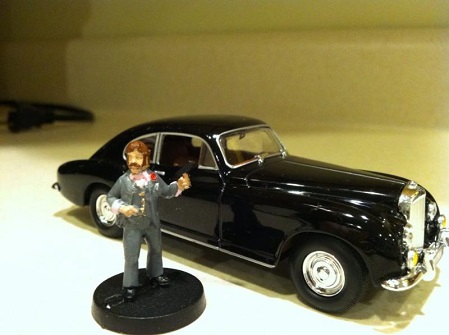
Above: Model Bentley Continental with Jason King figure.
Novels: Film & TV Tie-Ins
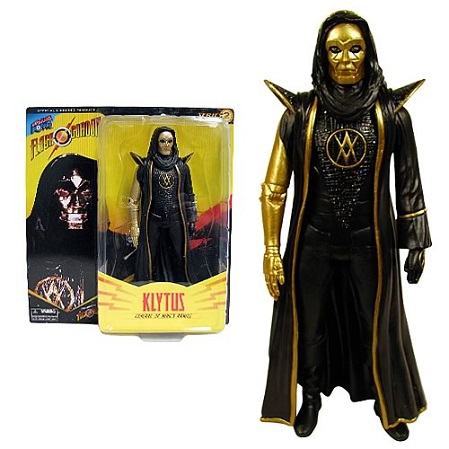
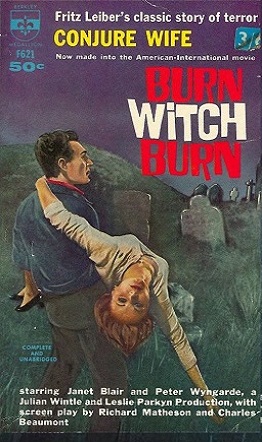
Above (left to right): ‘The Siege of Sidney Street’. Written by Fredrick Oughton, 1960. ~ ‘Burn, Witch, Burn’: 1st Berkley, 1962 Richard Matheson. ~ ‘Flash Gordon’ by Arthur Byron Cover (1980). Based on the screenplay by Lorenzo Semple JR. ISBN:0-450-05191 9.
Above: (West) German publication by Fernseh-Buch. Written by Mit Bildtell.
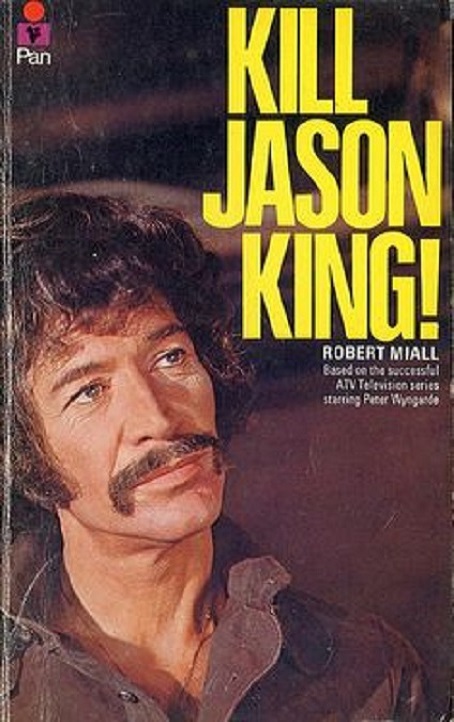
Above Left: ‘Jason King – Published by Pan Books (1971). Written by Robert Miall. ISBN:0-330-231650. Story based on two episodes from the series – ‘A Deadly Line In Digits’ and ‘The Company I Keep’. Above Right: ‘Kill Jason King’ – Published by Pan Books (1971). Written by Robert Miall. ISBN: 0-330-234196. Story based on two episodes from the series – ‘As Easy As A.B.C.’ and ‘A Red, Red Rose Forever’.
Above: ‘Doctor Who – Planet of Fire’. Published by Target Books. (1984). Written by Peter Grimwade. ISBN: 0-426-199405.
Above: Produced by Bally, this ‘Flash Gordon’ arcade game in 1980 to coinciding with the release of the movie based on the comic strip character. There were about 10,000 of these games made.
Playing Cards
Above: Manufactured in Argentina (2019). The Three of Hearts clearly shows Charles Middleton as Ming the Merciless from the 1930’s series, which is a rather glaring error!
Pop-Up Book
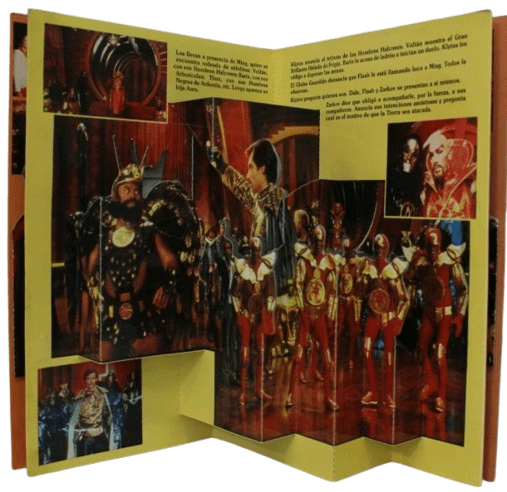
Above & Below: Spain 1981. Flash Gordon Pop-Up Books.
Classic Postcards
Jason King (Above) & Stewart Sullivan/Sir Curtis Seretse/Annabelle Hurst. Published in 1990 by Engale Marketing of Preston, Lancashire, as part of a 16-card ITC set.
Psychedelic card featuring Peter as Jason King. Published by Klassic Kards of London, England in 1993
Another card from the 1990’s (publisher unknown)
Above: Set of 10 Department S cards from Cassy. (2016)
Large Posters
Above: Two posters from Pace International (London). The poster to the left was the best seller for Pace in the UK that year in 1971.
Above: 30in x 25in colour print by Sandecor of Sweden, 1972
Above: 18×26 (46×66 cm) Fotobusta poster created for the Italian release of Flash Gordon by Renato Casaro. One from a set of eight.
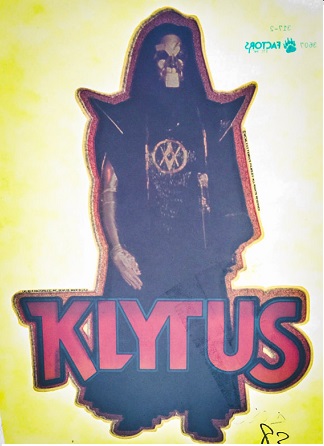
Above: Set of Italian 18×26 (46×66 cm) ‘Flash Gordon’ posters – 4 of which feature Peter as General Klytus.
Posters (Additional)
In 1971, Scotch-Ege chose five of the biggest stars of the day, which included Peter, Jimi Hendrix, Steve McQueen, Elvis Presley, and Bridget Bardot – to help promote their magnetic tape and audio cassettes. The 39in x 25in posters were given away in exchange for three tabs taken from cassette index cards. The promotion was advertised in such publications as Melody Maker, Rolling Stone and the NME.
Above: Hand printed General Klytus promo poster. USA.
Poster Magazines
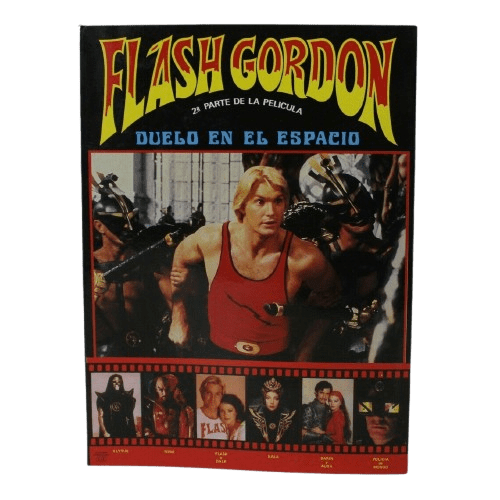
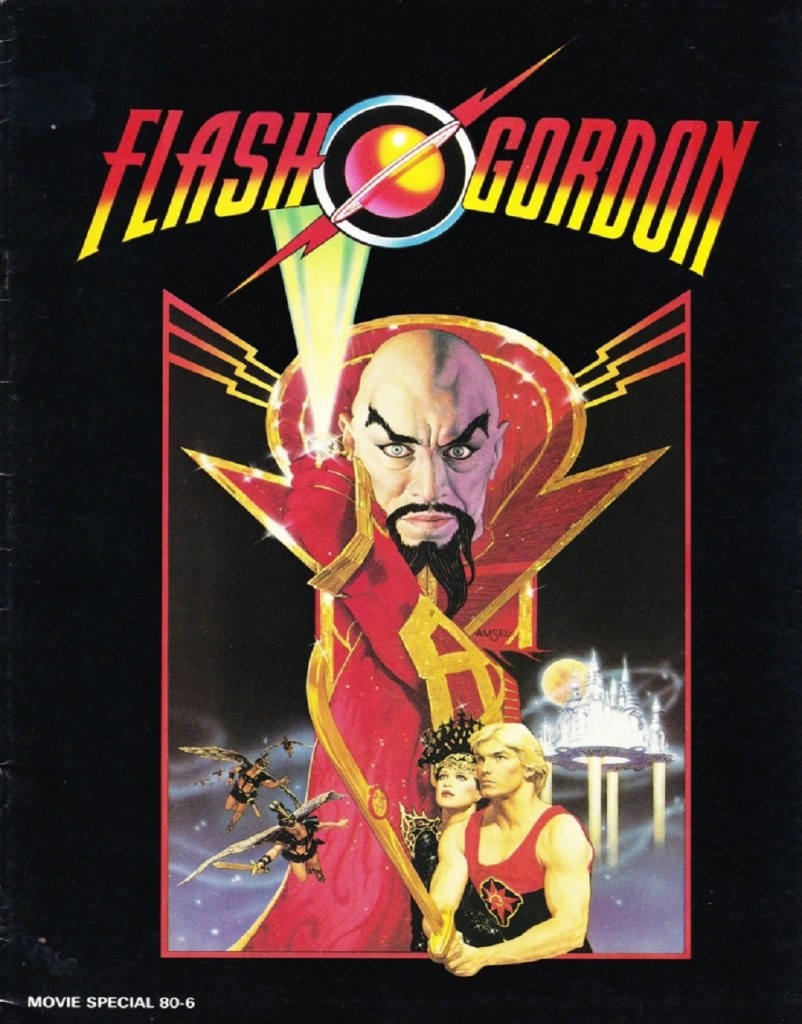
Below: 1980. Fold out poster-magazine to tie in with the film release
Promotional Posters
Above: A promotional poster featuring general Klytus – used by the American rock band, Faith No More in 2015
Promotional Material Television
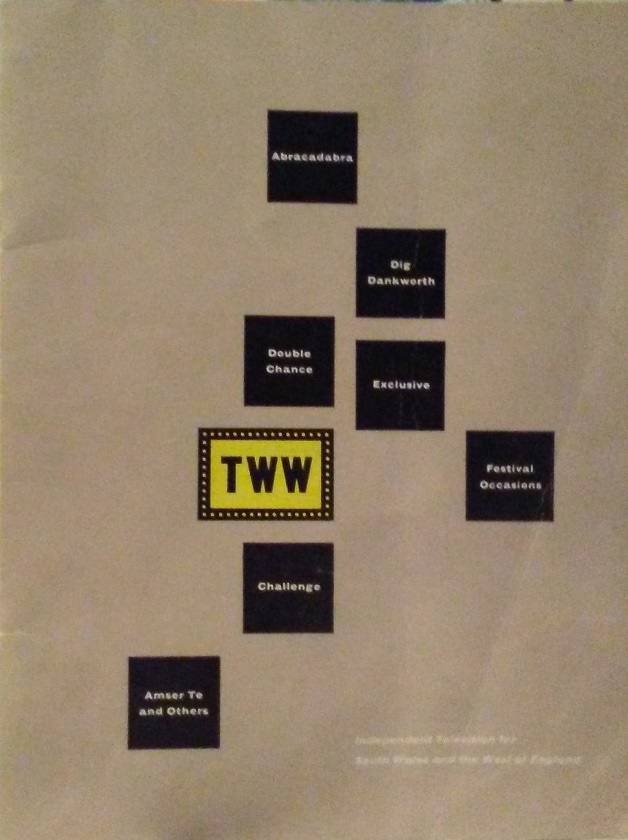
Above: Brochure from Television Wales and the West, TWWwas a British commercial television company based in Bristol that served South Wales and West of England between 26 October 1956 until 1968. This particular booklet features the programme, ‘Excusive’, which Peter appeared in during the late 1950’s. Below: Inside.
Promotional Material ITC
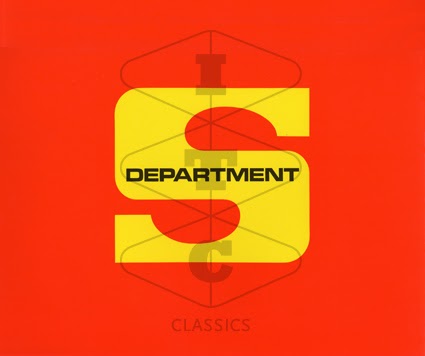
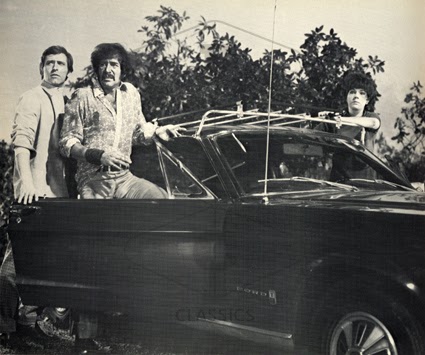
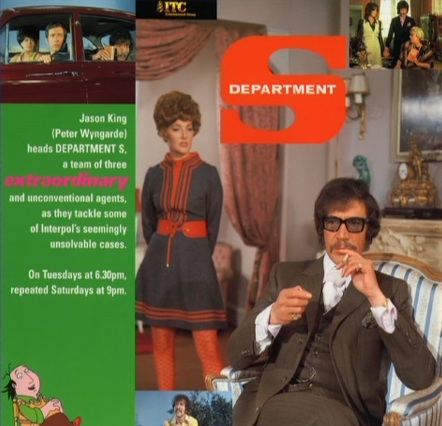
Above: Department S Press Book: Published in 1969 for the American market. 34-Page guide to the series featuring profiles on the main characters. Black and white photograph on a glossy cover.
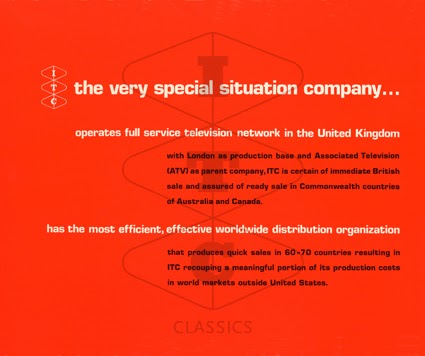
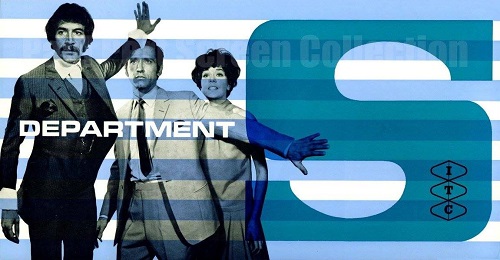
Above: Department S – A4 Landscape gatefold publicity card (Above): Published in 1969. Black and white photographs on front and back cover.
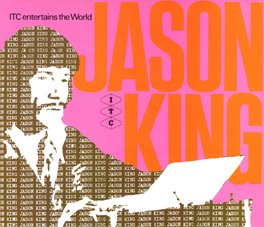
Above: Jason King Press Book (Above): 15-Page guide to the series featuring profiles on Peter and the production staff. Colour photographs on a glossy cover.
Above: front and reverse: ITC Jason King promotional card – 1971
Above: Press Pack. Printed in 1995 to publicise re-showing of Department ‘S’ on satellite television.
Press Photos
Press Books & Flyers
Above and Left: ‘Alexander the Great’ – from (West) Germany and Norway.
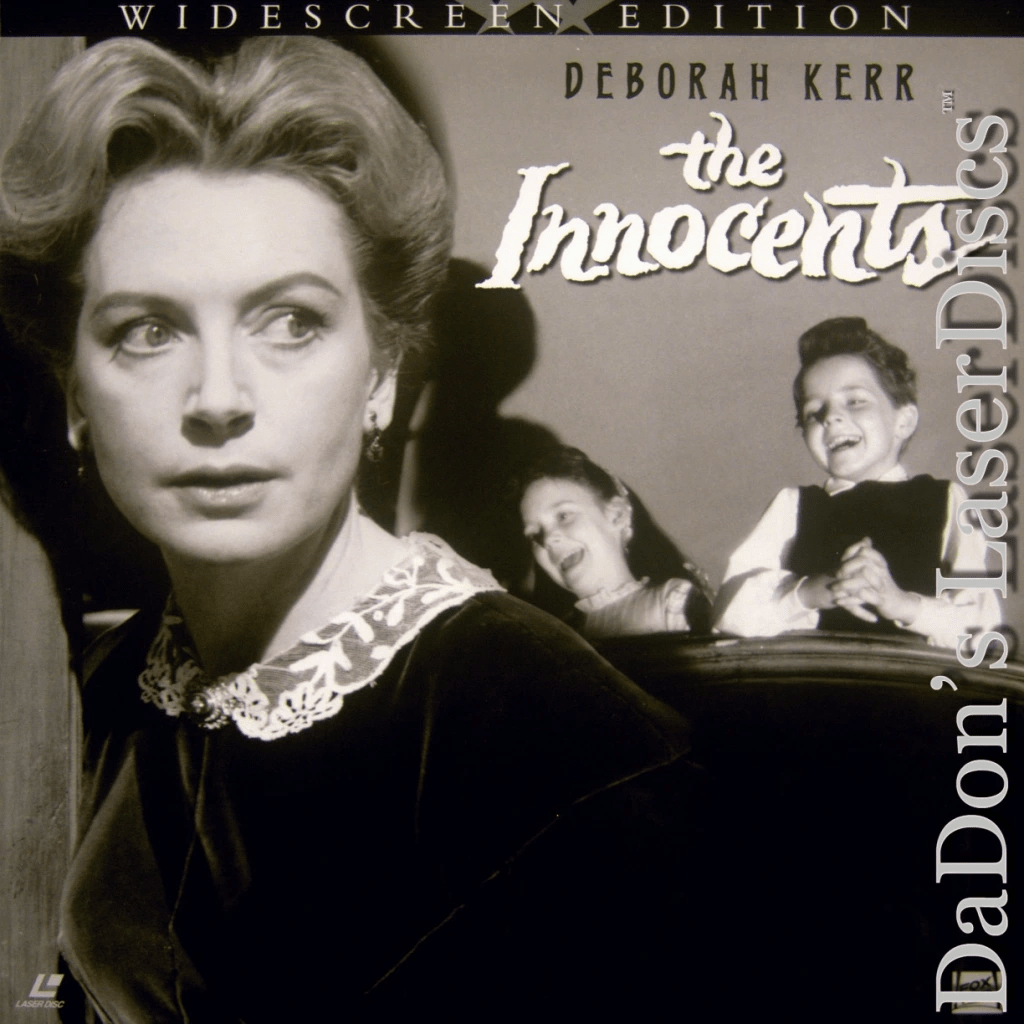
Above: American publicity sheet for ‘The Innocents’.
Above: Promotional booklet for ‘The Siege of Sidney Street’ from Denmark
Above: American ‘Burn, Witch, Burn’ publicity sheet.
Above: British publicity booklet for ‘Night of the Eagle’
Above: ‘Flash Gordon’ pressbook. Left: Front cover. Right: Inside – Generals, Kala & Klytus
Above: American brochure. Right: From Japan
Records & CD’s
For all Peter Wyngarde-related recording on vinyl (7″ & 12″) and CD, please click here
Film Scripts
Above: Original script for ‘The Innocents’, signed by Peter, Deborah Kerr, Megs Jenkins, Michael Redgrave, Pamala Franklin and Martin Stephens.
12″ Single
Above: Of Japanese manufacture. 33rpm. Ultra rare!
Above: Peter very own personal acetate demo disc. The acetate would have been given to him by the production team to allow him to listen to the album in the privacy of his own home. The album is an early mix, without all the bells and whistles of the finished, released album on RCA.
Title: “Peter Wyngarde”
Label: Emidisc Records.
Year of Release: 1970.
Country of Manufacture: United Kingdom.
Sleeve Design: original studio bag.
Label design: original ‘Emidisc’ first press paper labels.
Sheet Music
Sheet music of Edwin Astley’s theme to Department S. Issued in Britain in A4 format with a black and white photograph of the three main characters on the cover. Published by New World Music Limited of New Bond Street, London. It originally cost 3 shillings (15p).
Cards & Albums
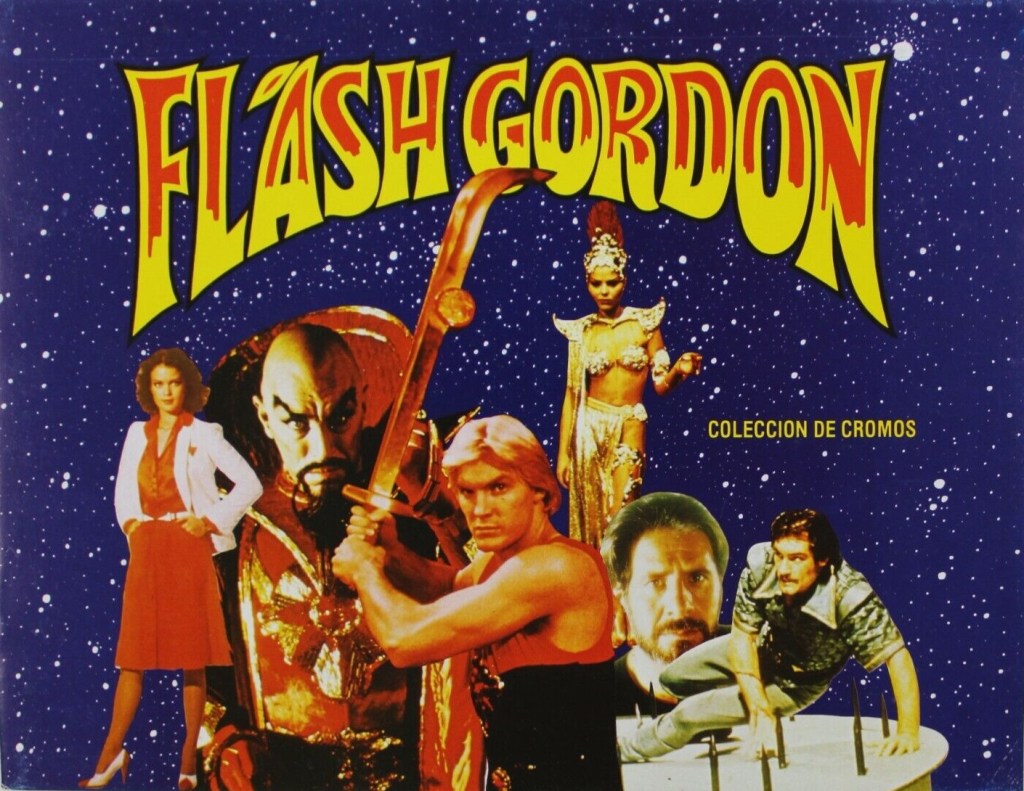
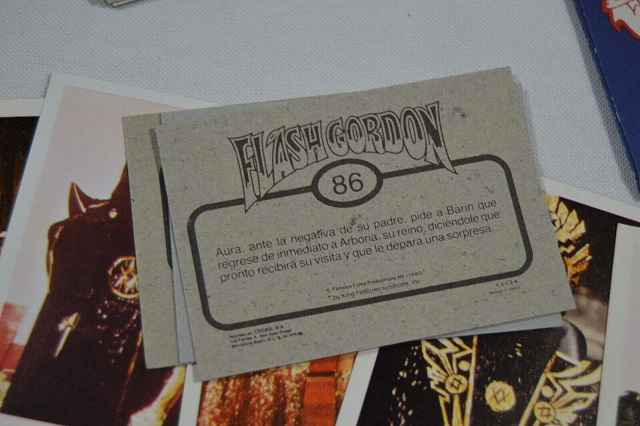
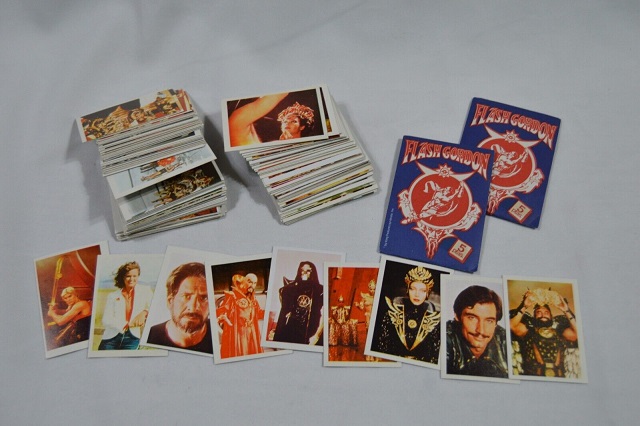
Above: Flash Gordon collector album from CEDAG S.A., Spain,1980. Holds180 stickers in total.
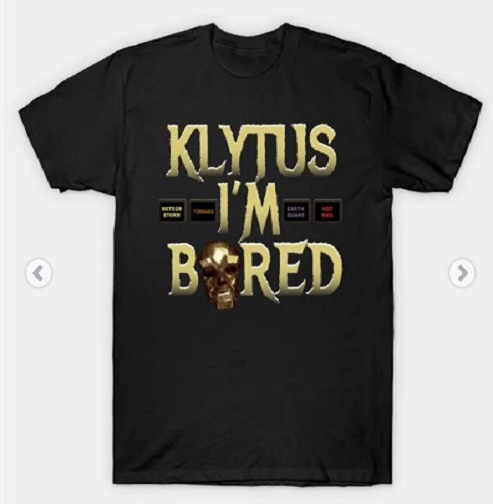
‘Jason King’, ‘Number 2’ and ‘Night of the Eagle’ shirts by Suchdesign
Trading Cards
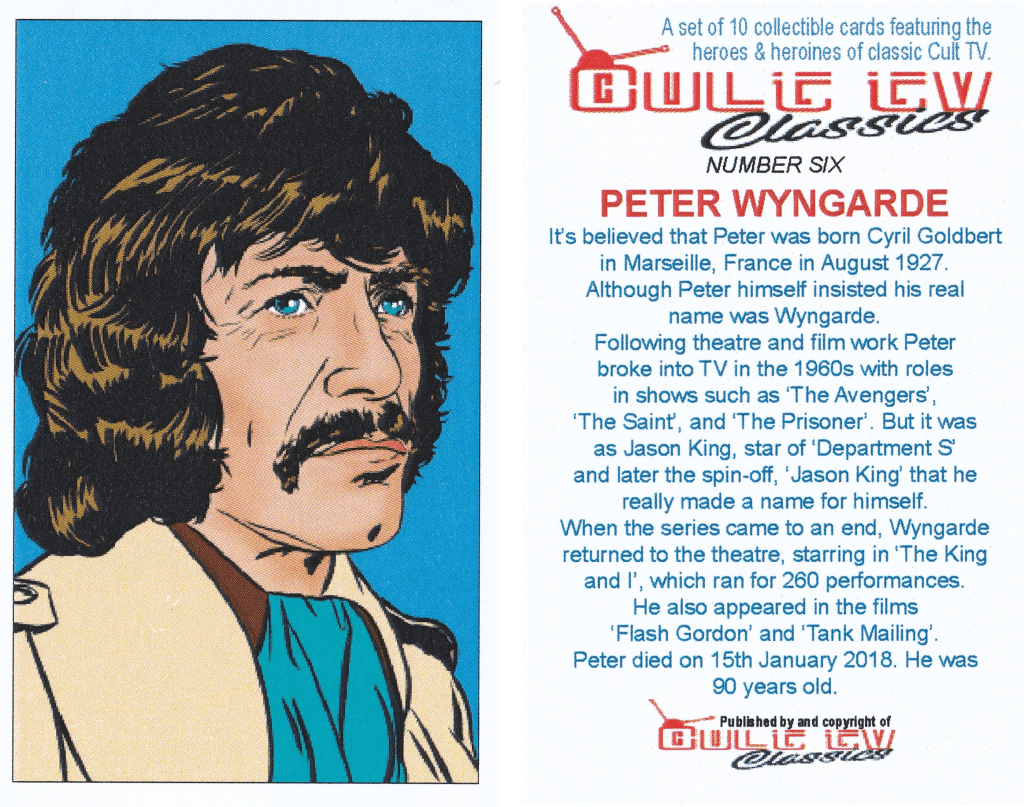
Above: ‘The Avengers collectors card: Peter as John Cleverly Cartney in ‘A Touch of Brimstone’
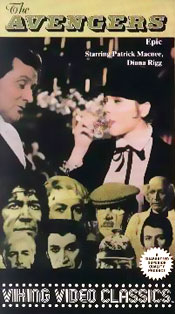
Above: Trading card from the Avengers In Colour Series by Cornerstone – 1993. There were ninety-nine cards issued in this particular collection, but the numbering follows on from the previous series from 1992. This is Card No. 94 and features Peter and Isa Miranda in a scene from ‘Epic’.
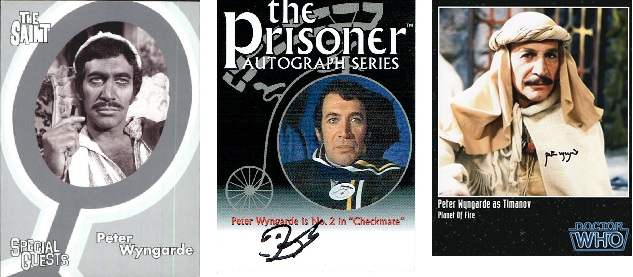
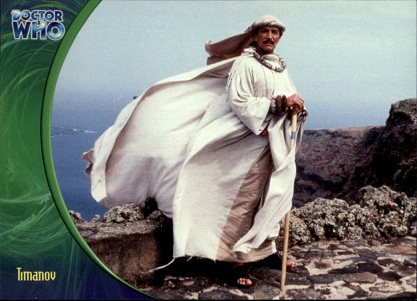
Above Left: No.63 of The Saint trading card collection by C-Cards Inc. features Peter in the role of Turen in ‘The Gadic Collection’. Middle: The Prisoner Autograph series card. Right: Doctor Who collectors series.
Above: Strictly Ink: Series Three, No. 20 features Peteras Timanov
Above: Set of 72 “Base” cards by Cards Inc. featuring scenes and characters from The Prisoner. No.27 features Peter as Number Two.
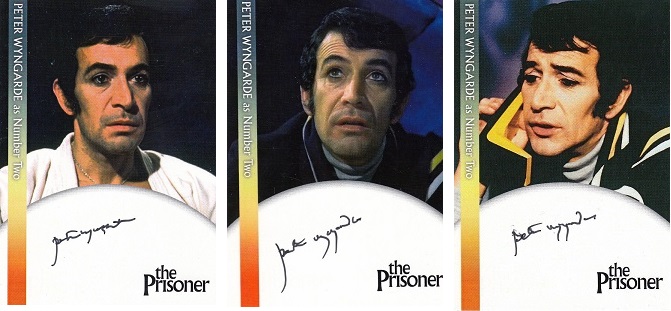
Above: The Prisoner 2018 Autograph Cards by Unstoppable Cards
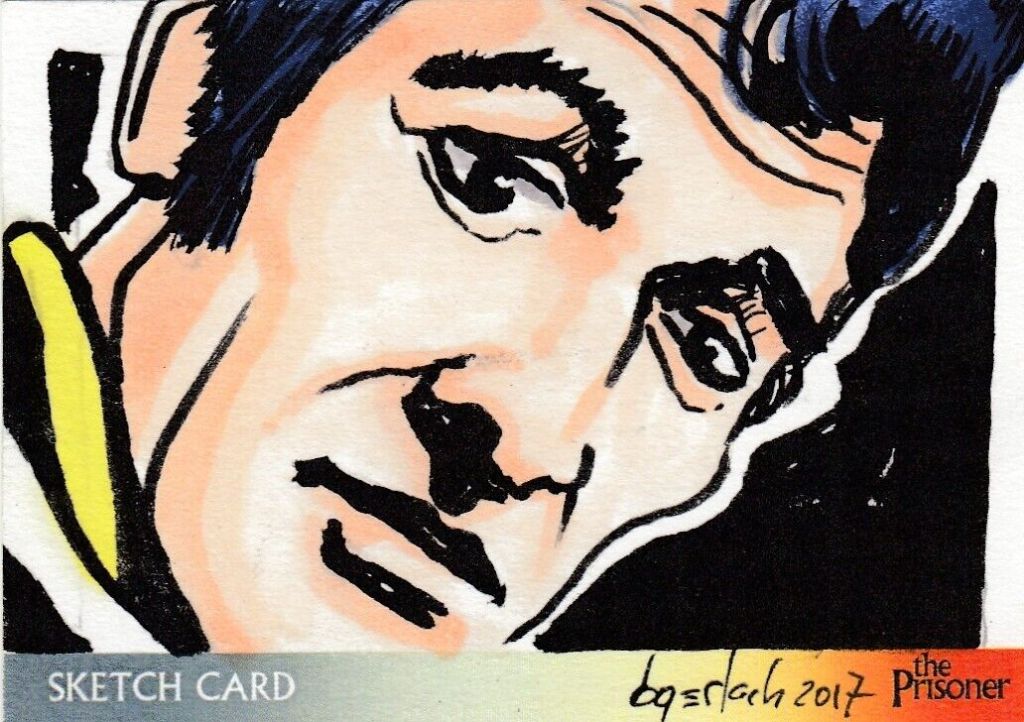
Above: Prisoner ‘Sketch Card’ by Unstoppable, 2018. Peter as Number 2.
Above: 2018 Sketch Card of Peter as Number 2 by Bruce Gerlach – published by Unstoppable Cards for the 50th Anniversary of The Prisoner.
Above: Original aceo collector card.
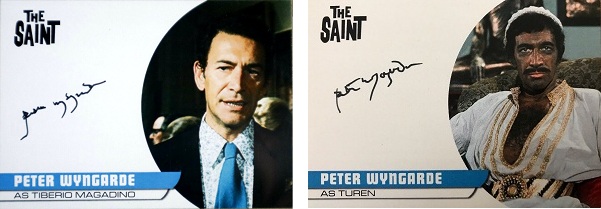
Above: Autograph card of Peter as Teberio Magadino (PW1) Turen (PW2). The card is part of The Saint Series 2 set of trading cards released by Unstoppable Cards in November 2018.
Above: Part of The Complete Avengers Series 1 set of trading cards, released by Unstoppable Cards in August 2019. Autograph card of Peter as John Cartney. Only 36 produced.
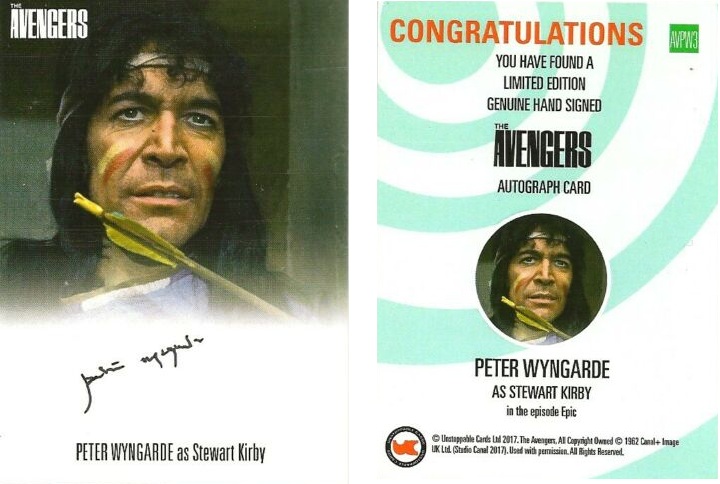
Above and Below: Part of The Complete Avengers Series 2 set of trading cards, released by Unstoppable Cards in August 2019. Autograph card of Peter as Stewart Kirby. Only 36 produced.
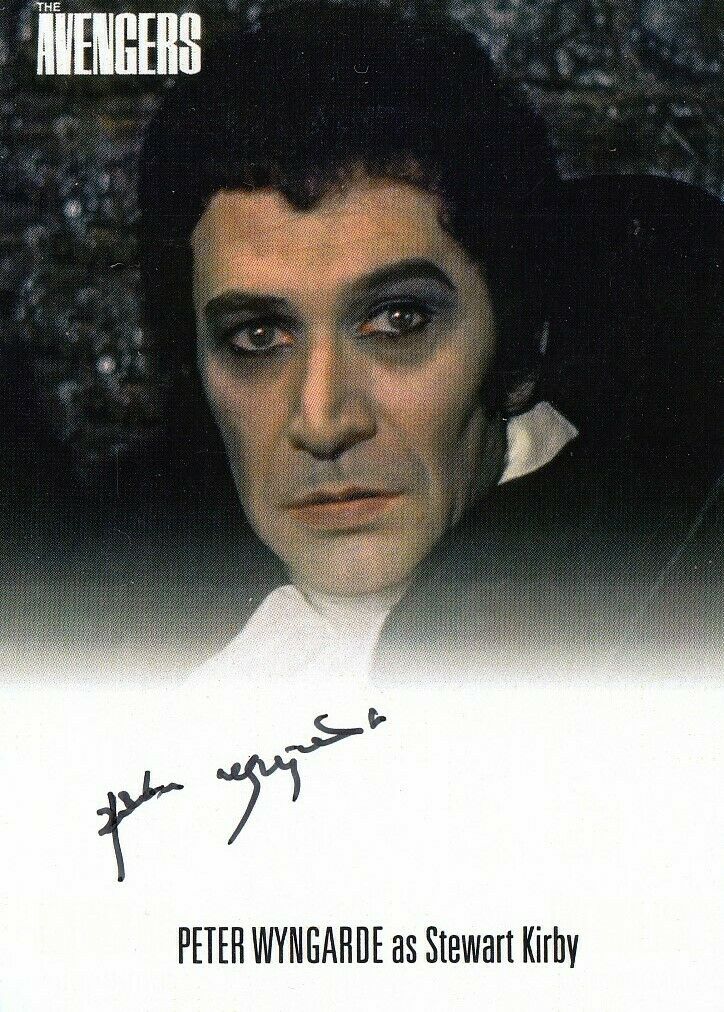
Below: Part of The Complete Avengers Series 2 set of trading cards, released by Unstoppable Cards in May 2020. Autograph card of Peter as Stewart Kirby. Only 36 produced.
Above: The complete Avengers series 2 – Scott Fellowes (John Cartney/Emma Peel) ‘Sketch Card’ 1/1. This card is part of The Complete Avengers Series 2 set of trading cards, released by Unstoppable Cards in May 2020.
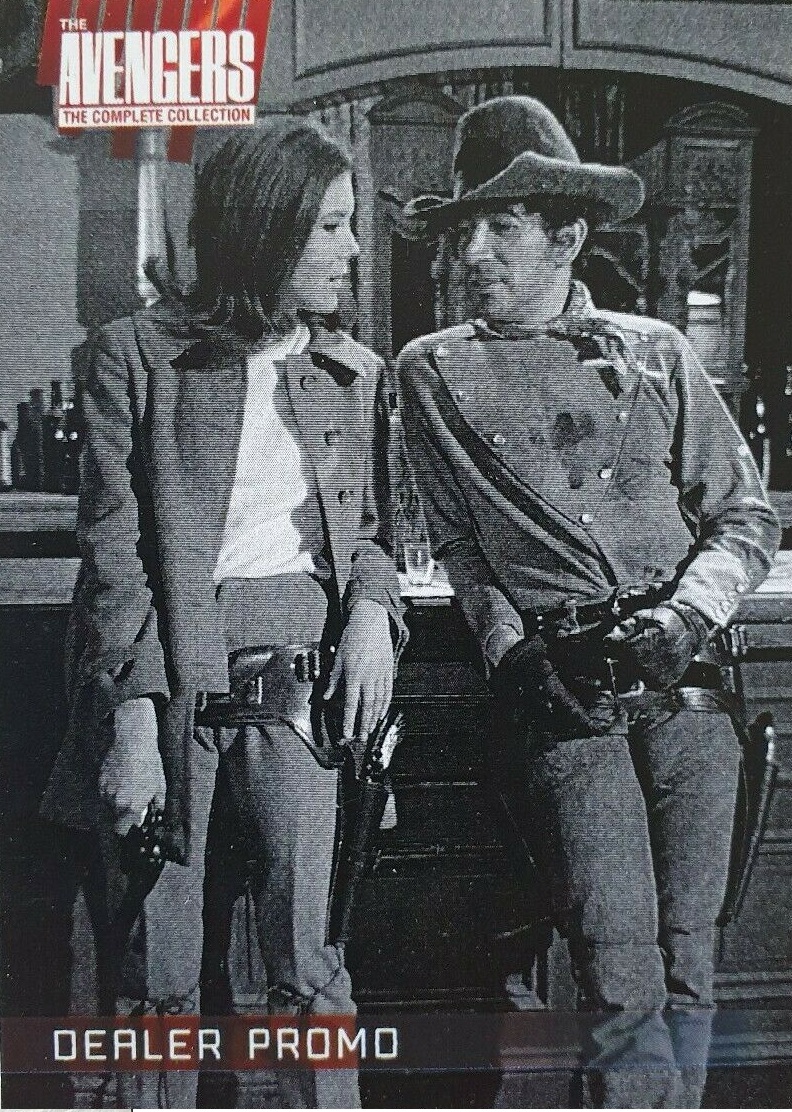
Above: This exclusive dealer promo card (AS2) was released by Unstoppable Cards for their ‘The Avengers Complete Collection Series 2’ Trading Card Collection.
Above: Collector card issued by the English Theatre in Vienna in 1977. The photograph features original autographs of Peter and Ruth Brinkmann – stars of ‘The Merchant of Venice’.
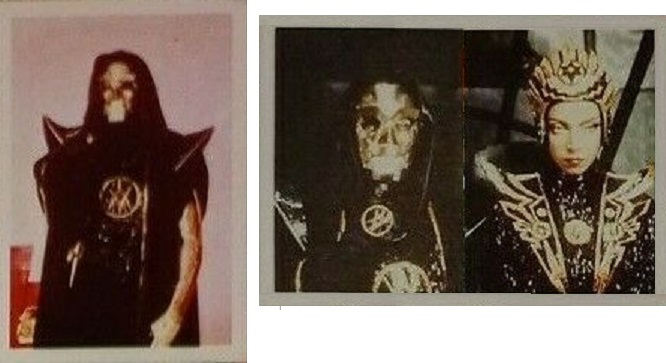
Above: Klytus Collector Card – issued by Weetabix, 1981. 1 of 18 cards – which feature movie scenes from Flash Gordon. Cards measuring 90 mm x 42 mm, with a description of the scene on the reverse. Issued in strips of three or six, depending on packet size.
Above: Front and rear of Classic TV Classics – Card No.6. 2019
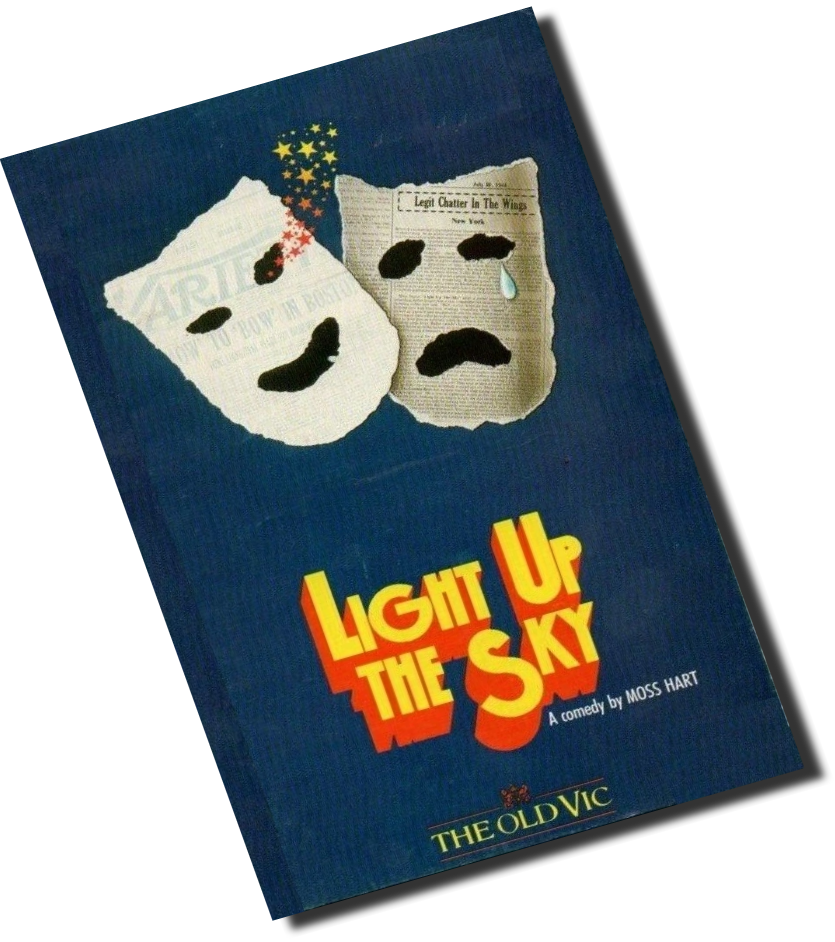
Presented by Bill Kenright Ltd. – The Old Vic, London: September 1985
Character: Carlton Fitzgerald
The action of the play is set in the living room of Irene Livingstone’s suite in the Ritz-Carlton Hotel in Boston, Massachusetts, USA.
Act I:
5.30pm
Act II:
11.45pm that evening
Act III:
3.30am
The Story
Moss Hart’s Light Up the Sky remains one of the most entertaining and affectionate comedies ever written about the theatre. First produced in 1948, the play serves as a sharp satire of theatrical egos, backstage volatility, and the profound emotional instability that accompanies the launch of a new production. Set entirely within a suite at Boston’s Ritz-Carlton Hotel during an off-Broadway preview, the play offers audiences a humorous and insightful glimpse into the world behind the curtain.
The enduring appeal of Light Up the Sky lies in the fact that its comedy is derived from recognizable human frailties rather than far-fetched scenarios. Hart portrays the actors, writers, producers, and directors with a blend of affection and ruthless honesty. Because Hart was a member of this community, he possesses a deep understanding of their vanity, self-doubt, and occasional absurdity. Consequently, the play critiques the theatrical community without descending into cruelty.
The plot is elegantly simple: a group of theatre professionals gather before and after the opening-night performance of a new play. Initially, confidence is high; the producer and creative team are convinced of the show’s success. However, when the audience’s response appears lukewarm, optimism rapidly shifts to despair. Those who were previously praising the production suddenly scrutinise every detail, from the script to the casting. Yet, as favourable reviews arrive, these attitudes pivot once again, and the characters rush to claim the success they had recently condemned.
This premise allows Hart to expose the fragility of human confidence. The speed with which the characters oscillate between triumph and disaster is both comedic and painfully believable. Their reactions highlight a dependence on external approval and illustrate how quickly artistic conviction can vanish in the face of criticism.
A primary strength of the play is its ensemble of eccentric characters, Sidney Black (Robert Morse), the producer, is flamboyant and enthusiastic, yet often out of his depth. Having invested heavily in the production, he swings between boundless optimism and near hysteria. His character serves as a poignant reminder that confidence does not always equate to competence.
Equally memorable is Stella Livingston* (Maxine Audley), the temperamental star of the show. Self-absorbed and convinced of her own importance, she embodies the stereotype of the theatrical diva. However, Hart writes her with such wit that she remains endearing rather than irritating, and her exaggerated reactions provide many of the production’s biggest laughs.
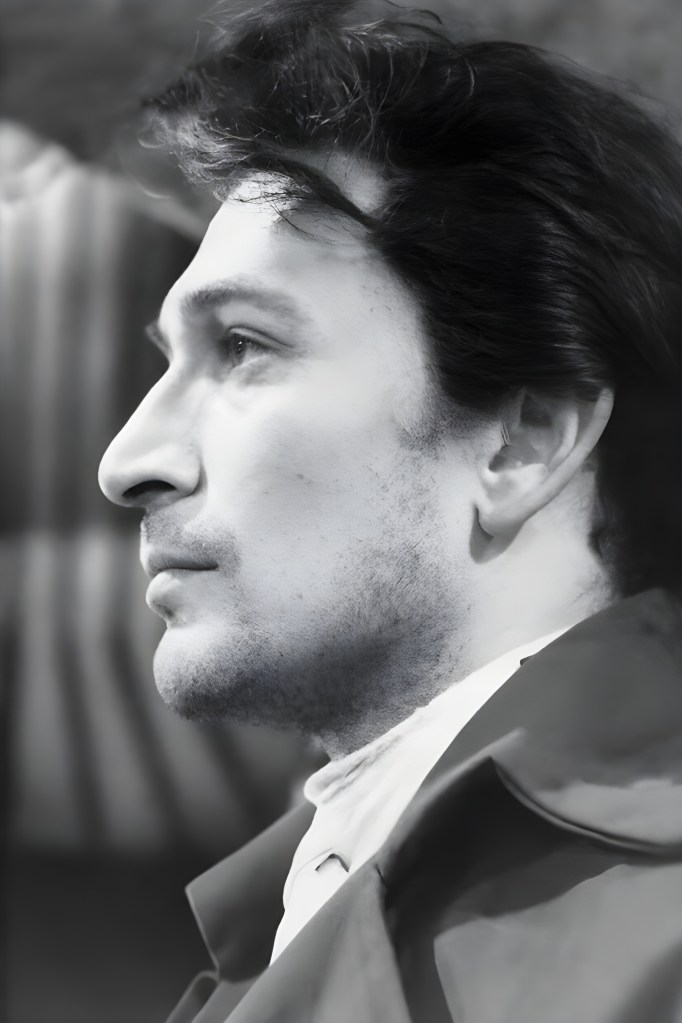
The director, Carleton Fitzgerald (Peter Wyngarde), provides further comic relief. As an intensely sensitive artist perpetually on the verge of emotional collapse, he responds to every setback with melodramatic despair. Hart effectively skewers the image of the “tortured genius,” making Carleton’s recurring crises increasingly humorous as the play progresses.
At the centre of the drama is the young playwright, Peter Sloan (Jack Elliot). Unlike his seasoned colleagues, Peter arrives with genuine idealism. He believes in the intrinsic value of his work, only to receive a harsh education in the realities of the theatre world. Through Peter, Hart examines the vulnerability of any artist who places their work before public judgment.
While primarily a comedy, the play maintains a serious undercurrent. Beneath the witty dialogue lies a commentary on the nature of artistic creation. Hart suggests that the theatre is sustained by a volatile mixture of talent, vanity, courage, and blind faith. He posits that while the industry depends on the opinions of others, genuine creativity requires the courage to ignore them.
The dialogue remains one of the play’s greatest assets. Hart possessed an exceptional ear for comic conversation, and the script sparkles with sharp observations and rapid-fire exchanges. The characters interrupt and contradict one another in a manner that feels entirely natural. Even today, the humour retains its freshness because it is rooted in universal human behaviour.
The play’s pacing is also noteworthy. Hart structures the action with precision, steadily building tension as misunderstandings accumulate. The audience is drawn into the emotional chaos, recognizing aspects of their own behaviour in the characters’ flaws. By the time the final revelations arrive, the comedic payoff feels earned.
Perhaps the most appealing aspect of Light Up the Sky is its fundamental affection for its subject. While Hart satirises theatrical excesses, he never loses sight of the passion that drives his characters. Their anxieties and absurdities stem from a deep investment in their craft – a quality that is ultimately admirable.
The play also serves as a fascinating time capsule of post-war American theatre. While its references reflect a specific era, its themes remain universal. Anyone who has worked in a creative field or experienced the emotional volatility of a major project will recognise the feelings Hart so skilfully portrays.
Ultimately, Light Up the Sky is more than a backstage comedy; it is a perceptive examination of ambition, ego, and the unpredictable nature of success. Through colourful characters and sparkling dialogue, it remains one of Moss Hart’s finest achievements, continuing to delight audiences with its humanity and its loving portrayal of the wonderfully irrational world of the theatre.
*Irene Livingston in other productions of the play.
Focus on Carlton Fitzgerald
Carleton Fitzgerald is one of the most memorable and entertaining characters in Light Up the Sky, Moss Hart’s witty backstage comedy regarding the triumphs and disasters of theatrical life. As the director of a new Broadway-bound production, Carleton embodies the traits traditionally associated with theatrical genius: sensitivity, artistic passion, nervous intensity, and a tendency toward emotional excess. Through him, Hart creates an affectionate yet satirical portrait of a director perpetually balanced between confidence and catastrophe.
From his first appearance, Carleton establishes himself as a figure of considerable comic importance. He approaches every aspect of the production with immense seriousness, viewing the play not merely as entertainment but as a significant artistic achievement. However, this devotion is accompanied by a notable lack of emotional stability. Carleton experiences every setback as a personal tragedy and every success as a miraculous vindication; his reactions are rarely measured, often escalating to the point of comedy.
A defining trait of the character is his susceptibility to anxiety. Throughout the play, he is preoccupied with how the production will be received, and even minor issues can trigger spirals of self-doubt. This nervous temperament serves as an effective vehicle for Hart’s satire of the industry. The theatre is depicted as a profession where emotions run dangerously high, and Carleton serves as the primary example of this phenomenon.
While Hart mocks the character’s dramatic tendencies, he never presents Carleton as merely ridiculous. Beneath the humour lies a genuine admiration for his commitment to the craft. His anxieties stem from passion rather than vanity; unlike other characters driven by personal prestige or financial gain, Carleton is deeply invested in the artistic quality of the work.
The character is particularly effective due to the contrast between his professional authority and personal insecurity. As director, he occupies a leadership position and should theoretically be the most composed individual in the room; instead, he is often the most volatile. While others look to him for reassurance, he frequently requires it himself—a contradiction that drives much of the play’s comedy.
Carleton’s interactions with the company reveal further layers to his personality. He shares producer Sidney Black’s tendency toward dramatic overreaction, though they express their anxieties differently. While Sidney is loud and blustering, Carleton is intensely emotional and artistic. Together, they create some of the play’s most humorous moments as they react to rumours and imagined disasters.
His relationship with the star, Irene Livingston, is equally engaging. Both possess strong personalities and inflated artistic sensibilities, making their exchanges a constant source of amusement. Although they both view the production as vitally important, they are vulnerable to the same fears. Their conversations often reveal the fragile egos hidden beneath their theatrical confidence.
Perhaps the most endearing aspect of Carleton Fitzgerald is his humanity. For all his melodrama, audiences recognise a familiar struggle in his behaviour. Most people have experienced moments of self-doubt or fear of failure; Carleton simply experiences these emotions on a theatrical scale. His tendency to imagine the worst possible outcome makes him both comic and sympathetic.
Hart uses Carleton to expose the inherent unpredictability of the theatre. The director’s emotional journey mirrors the larger narrative, oscillating rapidly between hope and despair. These sudden shifts illustrate the uncertainty that surrounds every new production.
There is also a deeper truth beneath the comedy: Carleton represents the artist’s vulnerability. Because directors, writers, and actors invest so much of themselves in their work, criticism can be difficult to bear. His overreactions demonstrate how personally creative individuals experience professional setbacks. Hart acknowledges this reality even while laughing at it.
Ultimately, Carleton Fitzgerald is one of the most successful comic creations in Light Up the Sky. Talented, insecure, and endlessly dramatic, he embodies both the absurdity and the passion of the theatrical profession. Through Carleton, Moss Hart celebrates the artists who devote their lives to the stage while gently poking fun at their eccentricities. The result is a character who remains entertaining and deeply human long after the final curtain falls.
Recalled to Life: Broadcast: Sunday, 29th July, 1957
The Gathering Storm. Broadcast: Sunday, 4th August 1957
The Jackal. Broadcast: Sunday, 11th August 1957
The Honest Tradesman. Broadcast: Sunday, 18th August 1957
The Storm Breaks. Broadcast: Sunday, 25th August 1957
The Darkness. Broadcast: Sunday, 1st September 1957
A Hand of Cards. Broadcast: Sunday, 8th September 1957
The Footsteps Die Out. Broadcast: Sunday, 15th September 1957
Character: Sydney Carton
“It is a far, far better thing that I do now than I have ever done, it is a far, far better rest that I go to now than I have ever known” – Sydney Carton
Published by Charles Dickens in 1859, A Tale of Two Cities remains one of the most prominent historical novels in English literature. Set against the turbulent backdrop of the French Revolution, the narrative unfolds in both London and Paris during the late eighteenth century. Through the exploration of sacrifice, resurrection, love, justice, and revenge, Dickens provides a vivid depiction of a society fractured by inequality and violence.
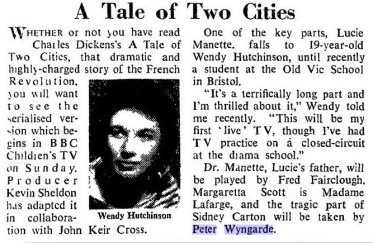
Both the novel and Episode One (‘Recalled To Life’) opened in 1775 with the iconic line, “It was the best of times, it was the worst of times.” Jarvis Lorry (Mervyn Johns), a representative of Tellson’s Bank, travels from London to Paris on a mission of significant importance. He is accompanied by Lucie Manette (Wendy Hutchinson), a young Frenchwoman raised in England under the belief that her father was deceased. However, Mr. Lorry reveals the startling truth: her father, Doctor Alexandre Manette (Fred Fairclough), is alive. For eighteen years, the Doctor had been imprisoned without trial in the Bastille; having been recently released, he now resides in Paris in a fragile and confused state.
Upon arriving in Paris, Lucie and Mr. Lorry locate Doctor Manette in the attic of a former servant, Ernest Defarge (Kenneth Thornett). The trauma of long-term imprisonment has left the doctor severely distressed, leading him to adopt the habit of shoemaking as a means of surviving his captivity. Through Lucie’s devoted care, her father is restored to health, and they subsequently establish a peaceful life in London. This reunion serves as a cornerstone for one of the novel’s primary themes: resurrection, or the reclamation of life after profound suffering.
Several years later, Lucie attends the trial of Charles Darnay, a young French aristocrat accused of spying against Great Britain. Darnay faces the threat of execution until a remarkable coincidence intervenes. Sydney Carton (Peter Wyngarde), a talented but disreputable barrister, bears a striking physical resemblance to the defendant. This similarity casts doubt among the witnesses, leading to Darnay’s acquittal. Following the trial, Darnay develops a close relationship with Lucie and Doctor Manette.
Sydney Carton also harbours feelings for Lucie, though he perceives himself as unworthy of her affection. Intelligent yet cynical, Carton leads a wasted existence, retreating into alcohol and self-pity. Nevertheless, Lucie treats him with kindness and compassion, inspiring in him a desire for self-improvement. Although she eventually marries Charles Darnay, Carton remains devoted to her, pledging that he would sacrifice anything for her happiness.
It is eventually revealed that Darnay is a member of the French aristocratic Evrémonde family. Unlike his cruel relatives, however, Darnay rejects his title and wealth, disgusted by the oppression of the peasantry. The Evrémonde brothers had long abused their power, exploiting the poor without regard for human suffering. One victim of their brutality was a peasant family whose tragic fate would later have far-reaching consequences.
As social conditions in France deteriorate, resentment toward the aristocracy intensifies. Ernest Defarge and his wife, Madame Defarge, emerge as leaders of the revolutionary sentiment. Madame Defarge is particularly resolute and ruthless, secretly recording the names of those she deems “enemies of the people” by knitting them into coded patterns. Her hatred is deeply personal, rooted in the suffering her own family endured at the hands of the Evrémondes.
The French Revolution eventually erupts, beginning with the storming of the Bastille and the subsequent collapse of the old social order. Aristocrats are hunted, imprisoned, or executed. While the revolution begins as a movement against oppression, it gradually descends into indiscriminate violence and vengeance. Through this, Dickens portrays both the systemic injustices of the aristocracy and the terrifying excesses of the revolutionary mob.
Despite his efforts to distance himself from his family’s legacy, Charles Darnay becomes entangled in these events. Upon learning that a former servant is imprisoned in France, he travels to Paris to provide assistance. However, upon arrival, Darnay is arrested as an emigrant nobleman and incarcerated. His life becomes endangered as the revolutionary authorities seek retribution against anyone associated with the aristocracy.
Doctor Manette travels to Paris with Lucie and Mr. Lorry. Due to his history as a victim of the Bastille, Manette is respected by the revolutionaries and initially succeeds in securing Darnay’s release. However, Darnay is soon re-arrested after new evidence emerges—a document written by Doctor Manette years earlier during his imprisonment.
This document reveals the truth behind Manette’s incarceration: as a young physician, he had witnessed terrible crimes committed by the Evrémonde brothers against a peasant family. When he attempted to expose them, they used their influence to have him imprisoned in the Bastille. Among the victims were Madame Defarge’s relatives. Based on this testimony, the revolutionary court condemns Darnay, despite his personal innocence regarding the crimes of his ancestors.
While Darnay awaits execution, Sydney Carton devises a daring and selfless stratagem. Leveraging his physical resemblance to Darnay, Carton gains entry to the prison to secretly exchange places with him. He then sedates Darnay and arranges for his clandestine transport out of Paris, accompanied by Lucie, Doctor Manette, and their family.
Simultaneously, Madame Defarge seeks further retribution by targeting Lucie and her daughter. This determination leads to a fatal confrontation with Lucie’s devoted servant, Miss Pross. In the ensuing struggle, Madame Defarge is killed, bringing her relentless pursuit of vengeance to an end.
Carton remains in Darnay’s stead to face execution by guillotine. Having spent much of his life perceiving himself as worthless, his final act provides his existence with newfound meaning and purpose. As he faces death, he reflects upon the future happiness of Lucie, Darnay, and their children, as his sacrifice ensures their survival and redemption.
The novel concludes with Carton’s renowned vision of a more hopeful future. He imagines that his sacrifice will be remembered with gratitude and that future generations will honour his memory. His final thoughts culminate in one of the most celebrated lines in literature: “It is a far, far better thing that I do, than I have ever done.”
Through its compelling characters and dramatic historical setting, A Tale of Two Cities explores the destructive nature of injustice and revenge while celebrating love, compassion, and self-sacrifice. Sydney Carton’s transformation from a despairing failure to a heroic saviour stands at the heart of the novel, rendering it one of Dickens’s most enduring and poignant works.
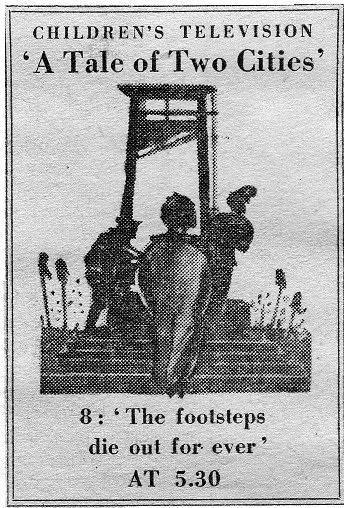
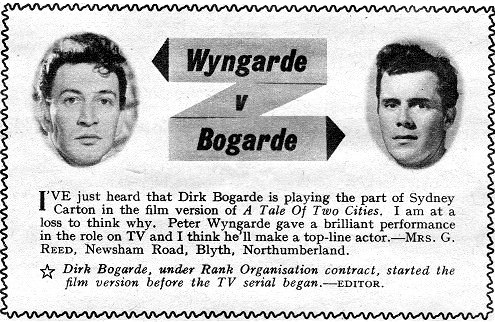
Above: From the Radio Times – 1957
A Bit Of Trivia
Certainly, Peter’sdepiction of Carton resulted in the BBC receiving around 4,500 letters – almost all from women – who immediately fell in love with the actor while watching this eight-part serial. According to the Beeb, they had never taken delivery of more letters address to a single actor in one of their own production, either before or since.
‘A Tale of Two Cities’ was filmed entirely in the Medieval French city of Bourges, and was shown as part of the BBC’s Children’s Hour.
Veteran British actor, Julian Orchard, played three different characters in the play, including Jacques, and two other unnamed men.
Critics Comment
“The TV production was very well done, and I think that in Peter Wyngarde, the actor who portrayed Sydney Carton, the dissolute barrister, we have yet another new British top-liner.”June Morrow – Woman’s Own
A Far Better Thing?
Fresh from his success in the BBC serial ‘A Tale of two Cities’ comes Peter Wyngarde. He is in Rudolf Cartier’s important Thursday play, ‘Ordeal By Fire’.
Many Viewers have written to me about Peter Wyngarde playing of Sydney Carton in the Dickens serial. And thousands more have written to him and the BBC.
It’s good, therefore, to see the TV companies snap him up. But Rudy Cartier already knows Wyngarde’s work well. He had him as Will Shakespeare, in the Clemence Dunn play, some years ago.
Peter has been seen in a dozen or so TV plays in the past few years and in each he has caught the eye – and held it. It’s time he had the really big break now.
Broadcast: BBC Home Service – Friday, 30th August, 1957
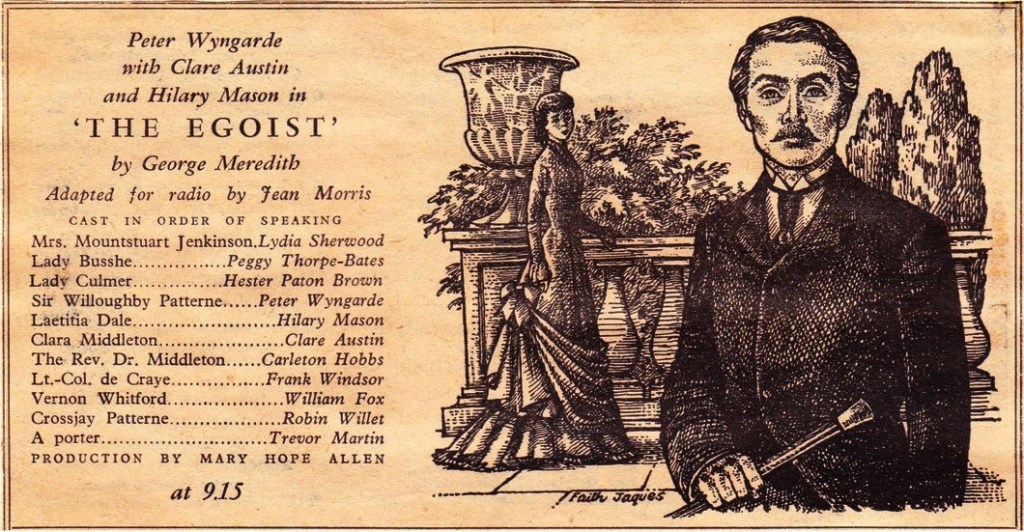
Character: Sir Willoughby Patterne
Taken from The Radio Times – 1st September, 1957
The Story
This “comedy in narrative” begins with the engagement of Sir Willoughby Patterne – “The Egoist” of the title (Peter Wyngarde) to one Constantia Durham. Constantia manages to escape such a fate, however, running away with one Captain Oxford. In order to keep up appearances, Sir Willoughby soon seems to be courting Laetitia Dale, who has been a long time devotee of his. The town quickly supports Sir Willoughby’s egoistic need to be in control of his situation by singing the praises Laetitia.
The months pass by, and soon Sir Willoughby takes a trip to see the world. Upon his return, it is revealed soon that he is no longer interested in Laetitia; the town gossips speculate that Sir Willoughby will meet with Mr. Dale in order to propose marriage of his daughter, but instead, he speaks to him only of renewing his lease of a cottage on his grounds. Meanwhile, Sir Willoughby goes to London, and brings back his cousin, Vernon Whitford, to serve as his secretary at Patterne Hall. A literary scholar, Whitford had very little money of his own, and so was forced to accept money from his rich Baronet cousin. At Patterne, Whiteford devotes his time to walking at times with Laetitia, and also with educating Crossjay Patterne, a young boy who is a relative of Sir Willoughby’s living at Dale cottage. Whitford discerned that Crossjay’s talents suited him for the navy, but the fees for such training were beyond his own resources. Sir Willoughby would spare no such expense either, for he wished Crossjay would be made into a gentleman.
‘Willoughby Patterne is a subtle yet larger-than-life image of egotism, possessiveness, and self-deception; the play narrates how he is at last broken down by the women on whom he plays.’
Soon, Sir Willoughby makes the fateful acquaintance of the beautiful, young Clara Middleton (Clare Austin). Sir Willoughby successfully woos Clara, and she is dazed into accepting an engagement. She protests, however, that she would like some time to see the world before marrying, but Sir Willoughby refuses. Hardly ever listening to Clara, Sir Willoughby talks to her about how they are above “the world” together, and seeks to win her into his egoistic orbit and subordinate all of her desires so that they accord with his. Clara protests that she would like to love “the world” and serve it so that it might be better, but Sir Willoughby discards such notions as naive and childish. He tries to exact an oath from Clara that she will be committed to him even if he should die, but Clara manages to refuse granting such an oath. It is clear that things are not going to be going as Sir Willoughby might wish them to go.
Meanwhile, Sir Willoughby has managed to secure the confidence of Clara’s scholarly father, the Reverend Dr. Middleton. Dr. Middleton is every inch the well-meaning but out-of-touch scholar who speaks in jargon-filled phrases. Unfortunately, he has very traditional patriarchal ideas and does not listen to his daughter’s pleas for traveling before marriage. Dr. Middleton becomes quite settled in, relishing the company of Vernon Whitford, and also Sir Willoughby’s collection of expensive wines.
Thus, Clara’s only comfort comes to be Crossjay, who, in love and in awe of her, seeks only to do her bidding and to make her happy (even when she leaves him under a tree and it begins raining, he does not budge because she has told him to stay). Things with Clara and Sir Willoughby take a turn for the worse when he refuses her counsel on Crossjay as suited for the navy.
When Clara makes the acquaintance of Laetitia Dale, Clara realizes that the devoted Laetitia would be a better match for the egoistic Sir Willoughby. Eventually, Clara goes to Sir Willoughby to apprise him of this and to petition for her own freedom, but Sir Willoughby sloughs off Clara’s words as merely an instance of her jealousy of Laetitia. Try as she might, Sir Willoughby refuses to countenance that she might actually want to be free of him. Much to Clara’s dismay, Sir Willoughby contracts a plan to marry Laetitia to Vernon Whitford so that he might relieve Clara of her supposed jealousy. Clara is supposed to apprise Vernon of this plan, but instead of doing so, she tells him about her predicament and wish for freedom. Vernon is not particularly responsive or encouraging of her freedom, and Clara becomes more and more distressed. Clara also unburdens herself to Laetitia (not to much avail, though Laetitia seems to begin to have an inkling of Sir Willoughby’s egoism, feeling the “power” of Clara’s speech against him).
At this point, Sir Willoughby’s dashing friend, the Colonel de Craye comes to town in order to serve as best man in his wedding. When he comes to town driven in by the slightly drunk Flitch, the carriage is accidentally upset as Flitch swerves to avoid Clara on one of her walks. The porcelain vase which the colonel has brought as a wedding present is broken in this accident (the infamous Mrs. Mountstuart who is gifted at capturing people’s characters in single phrases had once called Clara “a rogue in porcelain”; thus this incident signals that things do not bode well for Sir Willoughby). Indeed, the colonel walks the rest of the way to Patterne with Clara, and the two seem to strike up a friendly relationship. Furthermore, the colonel quickly perceives that all is not well with Clara and Sir Willoughby. Sir Willoughby, hit by suspicions of the colonel, imagines that perhaps Clara has not only spoken to Laetitia and Whitford of her dissatisfactions with him, but also with the colonel.
Unable to take her captivity any longer, Clara contrives to run away, first writing to her bridesmaid and friend Lucy Darleton to secure a place to stay in London. She tells her father that she merely needs a vacation, and at first, Clara manages to convince him to assent to it and also to talk to Sir Willoughby on her behalf. Unfortunately, Sir Willoughby manages to waylay the susceptible Dr. Middleton with expensive wine, and Clara’s plans to leave with her father’s blessing and companionship are foiled. Clara decides to run away anyways, and sneaks out to the railway station with Crossjay as a guide. A rainstorm follows, and soon the men of the house go off to try to find her. Whitford is the first to find her, and he does not force her to come home, but instead gives her some medicine to prevent her catching cold and then counsels her to think also on the cost of leaving behind her father and Crossjay. Clara is nettled, but still thinks to go through with her plan. Vernon consents, and even helps her out by distracting Mrs. Mountstuart, who was also at the station, meeting one Professor Crooklyn who will attend a dinner party of hers. It happens that the colonel also goes to the station, having guessed that Clara might be there. At the last minute, Clara decides to ride back to Patterne Hall with the colonel.
Though De Craye helps to cover for Clara, Sir Willoughby manages to find out from Professor Crooklyn that Clara had drank brandy with a certain gentleman at an inn. Sir Willoughby jumps to the conclusion that Clara was in love with De Craye, and that the two were plotting to run away together. Clara continues to ask Sir Willoughby for her freedom, but he continues to refuse. At long last, he is worn down and starts to convince himself that perhaps he should prefer Laetitia over Clara. After some mulling over this new thought, Sir Willoughby consults Laetitia on the matter at midnight one night and she refuses him, much to his surprise. Crossjay, who has been banished from Patterne because of his aiding Clara in her escape happened to have snuck back in that night and listened to the conversation between Sir Willoughby and Laetitia.
Crossjay’s loyalty to Clara leads to his scheming to tell Vernon of what has happened. De Craye, however, gets to Crossjay first and manages to guess what he has to tell. De Craye lets Clara know, and she now has ammunition against Sir Willoughby when he once again tries to convince her to marry him. In front of her father, Clara tries to get Sir Willoughby to admit that he has proposed to Laetitia. Pushed into a corner, Sir Willoughby eventually has to give up his game. Because he (mistakenly) believes De Craye to be the “other man,” Sir Willoughby tells Clara that she may be free only if she were to marry Vernon. It turns out that Vernon is actually in love with Clara, and so the two of them are engaged. Laetitia is eventually compelled to give in to Sir Willoughby, her father needing money and the rest of the town exerting further pressure on her. Still, Laetitia gets the last word in that she identifies Sir Willoughby as an egoist, and also vows that she does not love him. When Sir Willoughby agrees to accept her conditions, she agrees to marry him. Additionally, she compels him to forgive Crossjay as well as the driver, Flitch (whom he has also banished). Sir Willoughby assents to all, and “salutes [his] wife!” True to comic form, the narrative ends with tidily with these two pairs.
In Retrospect
I’ve found it hard to conceive the modern novel. In it is concentrated the restless probing energy of analysis which the author, George Meredith, had made all his own. And though written in his unmistakable style, with tense wit, poetic overtones, concise phrase and discursive exploitation, it owns a compact form which distinguishes it among his novels and makes it the best work through which to approach him.
He once declared: “It is a comedy, with only half of me in it, unlikely therefore to take either the public or my friends”. He meant that it lacked one of his bold dedicated characters like Sandra or Beauchamps; but there is a sense in which he’d packed himself into the book as into no other. R.L. Stevenson, to whom author read some chapters, was said to have commented that Sir Willoughby Pattern , was Meredith himself. The man himself replied: “No, my dear fellow. I’ve taken him from all of us, but principally from myself”.
Pattern is a subtle yet larger-than-life image of egotism, possessiveness, self-deception; and the book narrates how he is at last broken down by the women on whom he plays. But he is more than a grand comedic image. In him Meredith depicts, with tingling immediacy, the very stuff of an involved self- consciousness, which ceaselessly falsifies reality and yet at the same time is perversely sensitive to the life on which preys.
This is what makes ‘the Egotist’ a foundation work of the analytic novel. In a letter to Henley Stevenson wrote: ‘Willoughby is of course a pure discovery; a complete set of nerves, not hitherto examined, and yet running all over the human body – a suit of nerves. Clara is the best girl I ever saw anywhere.’ It might be added that she heads the long series of emancipated young women who were to push into a novel.
Virginia Woolf said of The Egoist: ‘Meredith pays us a supreme compliment to which as novel-readers we are little accustomed… He imagines us capable of disinterested curiosity in the behaviour of our kind.’ In this, the most dazzlingly intellectual of all his novels, Meredith tries to illuminate the pretensions of the most powerful class within the very citadel of security which its members have built. He develops to their logical extremity his ideas on egoism, on sentimentality and on the power of comedy. Meredith saw egoism as the great enemy of truth, feeling and progress, and comedy as the great dissolver of artifice. The Egoist is the extreme expression of his recurrent theme: the defeat of egoism by the power of comedy.
Details ofPeter’s works outside of his Film, Radio, Theatre and Television roles.
1964 Cyrano De Bergerac
Listening Length: 2 hours and 30 minutes
Program Type: Audiobook
Version: Unabridged
Publisher: Caedmon
Language: English
Number of Discs: 3
Role: The Comte De Guiche
Cast: Ralph Richardson, Anna Massey, John Fraser, Ronald Fraser and Michael Gwynn.
Track list:
Disc 1: 1. Act 1: A Performance at the Hôtel de Bourgogne 2. Act 2: The Bakery Of The Poets
Disc 2: 1. Act 3: Roxane’s Kiss (Beginning) 2. Act 3: Roxane’s Kiss (Concluded) 3. Act 4: The Cadets Of Gascoyne (Beginning)
Disc 3: 1. Act 4: The Cadets Of Gascoyne (Concluded) 2. Act 5: Cyrano’s The release came with a portfolio, which includes notes on and photos of several notable productions of the play and the entire script of the play.
Among the various distinguished recordings released by Caedmon Records during the 1960s, Cyrano de Bergerac serves as a particularly exemplary illustration of the label’s commitment to disseminating classic literature and drama to a broader audience. Based upon Edmond Rostand’s celebrated verse drama, this 1964 production captures the romance, wit, heroism, and melancholy that have established the play as one of the most beloved works in global theatre. While the recording naturally lacks the visual splendour of a stage performance, it compensates through compelling vocal interpretations and a rigorous emphasis on the beauty of Rostand’s language. For enthusiasts of classic theatrical recordings, it remains a fascinating and highly rewarding listening experience.
The narrative centres upon Cyrano, a brilliant soldier, poet, and duellist whose extraordinary talents are overshadowed, in his own estimation, by his prominent nose. Secretly enamoured with his cousin Roxane, he believes himself too physically unattractive to merit her affection. Consequently, he lends his eloquence to the handsome but inarticulate Christian, assisting him in wooing Roxane through letters and speeches of breath-taking poetic beauty. The play’s synthesis of comedy, romance, and tragedy remains as potent in audio form as it is on stage, and the Caedmon adaptation succeeds in preserving the emotional depth of Rostand’s masterpiece.
A significant merit of the recording is the calibre of the supporting cast, among whom Peter Wyngarde makes a memorable impression as the Comte de Guiche. Although de Guiche is not the central protagonist, he is nonetheless a pivotal figure. Ambitious, intelligent, and accustomed to exercising his will, he represents both a romantic rival and a political obstacle. While it would have been simple to portray the Count as a conventional antagonist, Peter imbues the role with considerable complexity.
Even at this stage of his career, Peter possessed one of the most distinctive voices in British acting. Rich, cultivated, and immensely expressive, it was ideally suited to recorded drama. Absent the benefit of facial expression or physical presence, he conveys de Guiche’s authority solely through vocal nuance. His delivery is measured and controlled, reflecting the confidence of a man accustomed to command; yet, beneath this aristocratic refinement lies an undercurrent of frustration and wounded pride that Peter reveals with great skill.
Particularly impressive is the manner in which Peter avoids reducing de Guiche to a mere antagonist. He recognizes that the Count is, in many respects, a prisoner of his own passions. His desire for Roxane is genuine, even if his methods are often manipulative. The performance reveals a man whose power cannot secure the one thing he truly desires. There is an unmistakable sadness beneath the character’s arrogance, which Peter interprets perfectly. As a result, de Guiche emerges not as a caricature, but as a recognisably human figure – flawed yet sympathetic.
Listeners familiar with Peter’s later portrayals of sophisticated and charismatic characters, most notably Jason King, may recognize the qualities that would eventually make him such a popular screen presence. His natural elegance, immaculate diction, and commanding vocal authority are all evident here. Furthermore, there is a restraint to the performance that demonstrates his versatility; rather than dominating the production, he serves the ensemble and contributes to the overall dramatic balance.
The audio format further highlights an aspect of Peter’s talent that was occasionally overshadowed by his striking physical appearance. Throughout his career, critics frequently praised the musical quality of his voice and his ability to communicate character through speech alone. In Cyrano de Bergerac, listeners can appreciate these gifts in their purest form. Every line is carefully judged, and every emotional shift is subtly conveyed. The result is a performance that rewards close listening and demonstrates why Peter was so highly regarded in theatre and radio, as well as in television and film.
Beyond Peter’s contribution, the production succeeds because it respects the intelligence of its audience. Rather than radically abridging or simplifying Rostand’s text, it preserves much of the play’s verbal richness. The language remains glorious, retaining the humour, poetry, and emotional resonance that have endured for over a century. The performers approach the material with sincerity and conviction, allowing the listener’s imagination to construct the world of seventeenth-century France.
Indeed, there is something uniquely effective about experiencing Cyrano de Bergerac through sound alone. The absence of visual spectacle places a greater emphasis on the text and the performances. Rostand’s poetry becomes the primary attraction, and the listener is invited to enter directly into the emotional lives of the characters. The Caedmon recording demonstrates the power of audio drama when entrusted to skilled actors and strong source material.
The recording currently holds significant historical value, as it preserves the artistry of a generation of classically trained performers distinguished by their exemplary command of language. For fans of Peter Wyngarde, it provides a compelling insight into an actor in the process of refining the qualities that would subsequently garner him international acclaim. His portrayal of de Guiche is intelligent, nuanced, and impeccably delivered, further demonstrating the versatility and sophistication that defined his finest work.
In conclusion, Caedmon’s 1964 recording of Cyrano de Bergerac remains a profoundly rewarding adaptation of Rostand’s classic play. Characterized by its poetic richness, atmosphere, and emotional resonance, the production captures the essence of the original text while utilizing the inherent intimacy of the audio medium. Peter’s depiction of the Comte de Guiche is one of the recording’s primary strengths, showcasing a performer capable of imparting depth, humanity, and authority to a complex supporting role. For those appreciative of classic drama, vintage spoken-word recordings, or the work of Peter, this enduring production merits rediscovery.
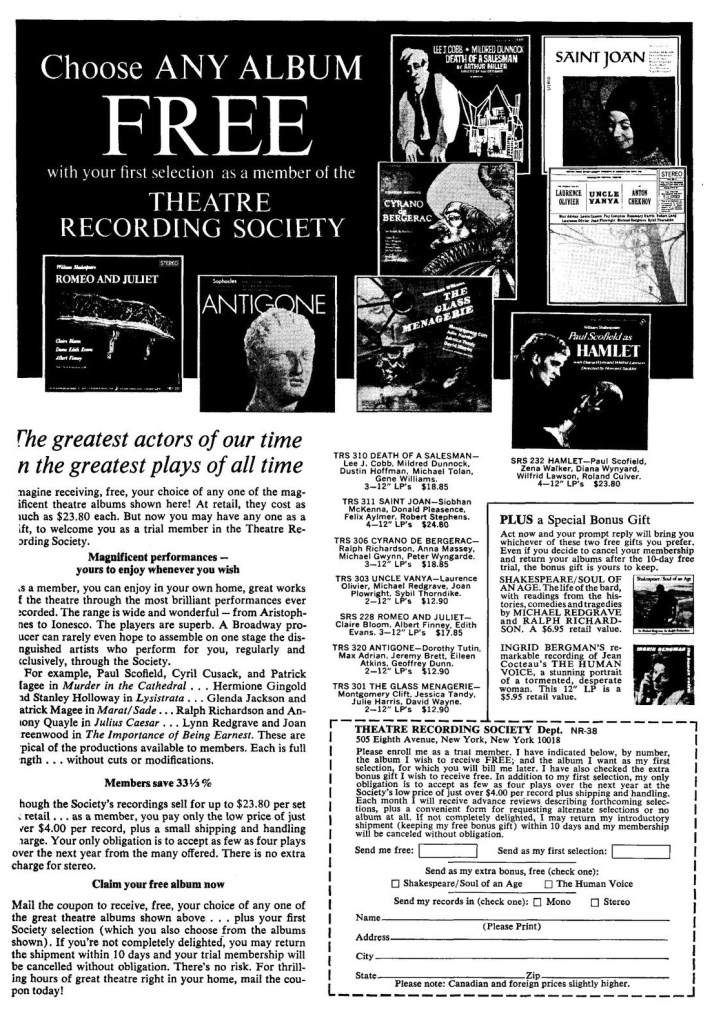
Above: Contemporary mail order advertisement from The National Review
Note: Peter’s name in the sleeve notes is misspelt as, Peter Wyngard.
1965 The Two Gentlemen of Verona
Listening Length: 1 hour and 55 minutes
Program Type: Audiobook
Version: Unabridged
Publisher: Caedmon – 1965
Language: English
Number of Discs: 3
Catalogue Number: SRS-202-M
Shakespeare Recording Number: SRS-202-(3)
Peter played Valentine in this production.
Cast: Edward De Souza, Joanna Dunham and John Laurie.
Above right: Cassette edition (unabridged). Released by HarperCollins on 22 April, 1995
Among the numerous Shakespearean recordings released over the decades, both the original vinyl release by Caedmon, and the later HarperCollins’ audio cassette presentation of The Two Gentlemen of Verona offers listeners the opportunity to rediscover one of the Bard’s earliest and most charming comedies through the artistry of a distinguished cast. Of particular interest to admirers of Peter Wyngarde is his portrayal of Valentine, the play’s romantic hero and moral centre. The recording serves as a reminder that long before he achieved enduring fame as Jason King, Peter had already demonstrated a remarkable affinity for classical drama and verse-speaking.
The Two Gentlemen of Verona occupies a fascinating place within Shakespeare’s canon. It contains many themes that would later reappear in the playwright’s more substantial works: friendship, love, betrayal, mistaken identity, loyalty, and forgiveness. At its core are two young gentlemen, Valentine and Proteus, whose friendship is tested when both become entangled in romantic complications. Valentine travels to Milan, where he falls deeply in love with Silvia; Proteus eventually follows, and despite his devotion to Julia, becomes infatuated with Silvia himself. What follows is a blend of romance, comedy, and emotional conflict that showcases Shakespeare’s developing dramatic gifts.
In the role of Valentine, Peter brings warmth, intelligence, and youthful idealism to the character. Although Valentine is often overshadowed in critical discussions by the more complex and flawed Proteus, he remains a crucial figure. His sincerity and generosity provide the ethical foundation upon which much of the drama rests. Peter clearly understands this dynamic, avoiding the temptation to render Valentine as merely noble or virtuous. Instead, he presents a genuinely human character whose optimism and emotional openness make him both appealing and believable.
One of the most striking aspects of Peter’s performance is his effortless command of Shakespearean language. His voice, possessing the rich texture and precision that would later become familiar to television audiences, appears ideally suited to verse. Every line is articulated with clarity, yet the delivery is neither forced nor academic. He treats Shakespeare’s words as a living language rather than a literary recitation, allowing the underlying emotions to emerge naturally.
This capability is particularly evident in Valentine’s romantic scenes with Silvia. Peter captures both the excitement and vulnerability of a young man experiencing profound love. His performance conveys genuine tenderness without descending into sentimentality. There is a freshness and sincerity to his portrayal that renders Valentine’s devotion entirely convincing, helping the listener understand why Silvia reciprocates his affection so completely.
The audio format places a particular emphasis on vocal performance, and Peter rises magnificently to the challenge. Stripped of costumes, scenery, and physical gesture, he must create the character solely through voice. His interpretation demonstrates the skills that had earned him considerable acclaim on stage long before his television success. Through subtle changes in tone, pacing, and emphasis, he paints a vivid portrait of a man whose idealism is tested but never destroyed.
Listeners familiar with Peter’s later screen roles may be surprised by the relative simplicity and earnestness of Valentine. There is little trace here of the flamboyance, irony, or larger-than-life charisma that would define Jason King. Instead, we hear an actor committed to serving Shakespeare’s text and exploring the emotional truth of a fundamentally decent young man. The performance reveals another dimension of Peter’s talent, demonstrating both his versatility and his classical foundations.
The supporting cast contributes significantly to the success of the recording, delivering a spirited and engaging interpretation of Shakespeare’s comedy. The interplay between Valentine, Proteus, Julia, and Silvia constitutes the emotional core of the drama, while the comic sequences provide an effective contrast. Throughout the production, a judicious balance is maintained between humour and sincerity, allowing Shakespeare’s wit to flourish without diminishing the play’s emotional gravity.
This recording is particularly noteworthy for its preservation of a Shakespearean performance style that integrates technical precision with emotional accessibility. The actors exhibit a profound respect for the language, ensuring it never becomes a barrier between the characters and the audience. In this regard, Peter’s portrayal of Valentine serves as an exemplary model of classical acting; his performance is elegant without being mannered, and expressive without becoming excessive.
For Peter’s fans around the world, the recording provides compelling evidence of the attributes long praised by theatre critics. His vocal authority, linguistic sensitivity, and ability to convey complex emotions through a seemingly effortless technique are all prominently displayed. It is evident why he was so highly esteemed within classical theatre circles and why directors consistently entrusted him with demanding literary roles.
Ultimately, Caedmon and HarperCollins’ The Two Gentlemen of Verona serves as both an enjoyable Shakespearean recording and a significant showcase of Peter’s talent. His Valentine is noble yet engaging, romantic without being sentimental, and heroic while remaining fundamentally human. The performance serves as a reminder that, beneath the charisma and glamour that later established him as a television icon, lay a gifted classical actor with a profound understanding of language and character. For those interested in Shakespeare, audio drama, or the remarkable career of Peter Wyngarde, this recording remains a rewarding and illuminating listen.
Comments
Wyngarde’s performance as Valentine highlights his command of Shakespearean language and stage presence, reflecting his broader theatrical career, which included roles such as Osric in Hamlet and Petruchio in The Taming of the Shrew.
This 1965 recording is notable for Peter Wyngarde’s performance, but also as a collectable item for fans of classic theatre and vintage recordings. It remains a valuable example of mid-20th-Century Shakespearian audio productions, preserving the youthful energy and lyricism of Shakespeare’s early work.
1969 Sea Borne Treasure’ – Reel 2
Role: Narrator
Released by British Pathé in 1969, Sea Borne Treasure – Reel 2 was part of the company’s established tradition of producing documentaries and newsreels that synthesized educational content with visual spectacle. The film explored the field of maritime archaeology and underwater exploration, subjects that garnered significant public interest during the 1960s as advancements in diving technology permitted the investigation of long-lost shipwrecks and submerged historical sites in unprecedented detail. Today, Sea Borne Treasure is notable not only for its subject matter but also for the narration provided by Peter Wyngarde, whose distinctive voice lent the production both authority and dramatic flair.
By 1969, Peter had established himself as one of Britain’s most recognisable actors. Although he was on the threshold of international fame via Department S, his capabilities extended beyond on-screen performance. Possessing a resonant voice and impeccable diction, he was an ideal candidate for documentary narration. In Sea Borne Treasure – Reel 2, he guides the viewer through underwater discoveries, transforming a factual report into an engaging and atmospheric experience.
The efficacy of Peter’s narration lies in his ability to balance information with drama. Rather than merely describing events, he conveys the sense of mystery and adventure inherent in the recovery of artifacts from the ocean floor. His delivery captures the excitement of uncovering centuries-old relics while simultaneously emphasizing their historical significance. Consequently, the narration enriches the visual material and draws the viewer further into the narrative of the recovered treasures.
The film reflects the era’s fascination with exploration and discovery. During the 1960s, audiences were captivated by ventures into previously inaccessible frontiers, whether in outer space or the deep sea. Sea Borne Treasure leveraged this enthusiasm, presenting underwater archaeology as a sophisticated blend of historical investigation and modern technology. Through a combination of underwater footage and informative commentary, the production illustrates the painstaking work involved in locating, examining, and recovering objects from submerged sites.
For Peter fans, the documentary offers a compelling example of a lesser-known aspect of his professional career. While his performances in stage productions, television dramas, and feature films rightly attract significant attention, his work as a narrator demonstrated a different, yet equally valuable, skill set. Without appearing on screen, he succeeded in commanding attention through voice alone, sustaining interest throughout the duration of the film.
Today, Sea Borne Treasure – Reel 2 remains an intriguing historical document, preserving both the optimism of late-1960s documentary filmmaking and the artistry of one of Britain’s finest vocal performers. Although brief by contemporary standards, it serves as an excellent showcase for Peter’s remarkable speaking voice, a quality long praised by critics and audiences alike. His narration elevates the material, providing a sense of sophistication and adventure that remains engaging decades after its initial release.
Viewed in retrospect, the film serves as a reminder that Peter’s talents extended far beyond the charismatic screen characters for which he is best remembered. Whether performing Shakespeare, starring in television dramas, or narrating documentary shorts, he brought intelligence, elegance, and a distinctive sense of style to every project he undertook.
1987 Queen: ‘The Magic Years’ Volume 1
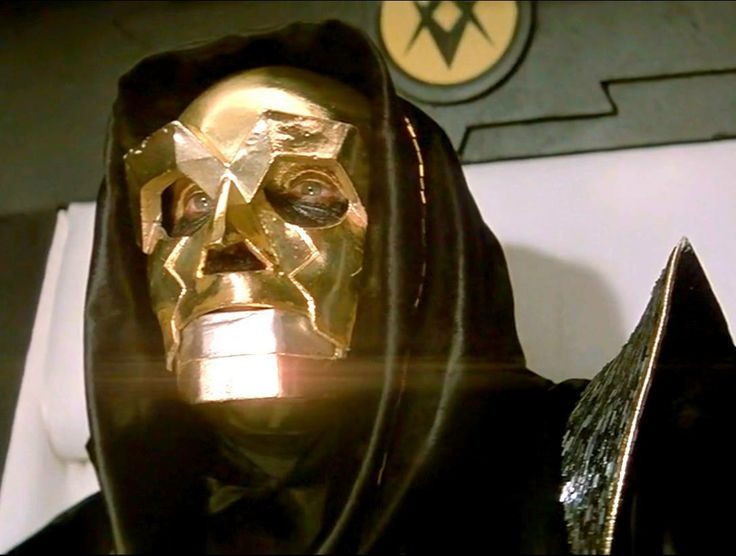
One of the more unexpected yet delightful appearances by Peter Wyngarde occurred in the 1987 video documentary Queen: The Magic Years – Volume 1. Produced as a retrospective celebrating the first fifteen years of Queen’s extraordinary success, the documentary chronicled the band’s ascent from ambitious newcomers in the early 1970s to one of the most prominent rock acts in the world. Before the narrative begins in earnest, viewers are presented with a brief introduction by Peter, appearing as General Klytus – the role for which he was so memorable in the 1980 film Flash Gordon. Although the appearance is brief, it remains a notable moment for admirers of both Peter and Queen.
This connection was entirely appropriate. Queen’s music had become inextricably linked with Flash Gordon via their celebrated soundtrack album, featuring a dramatic, synthesizer-driven score that complemented the film’s vibrant science-fiction spectacle. While actors such as Max von Sydow, Brian Blessed, and Peter Wyngarde helped establish the vivid world of Planet Mongo on screen, Queen’s compositions provided much of the film’s energy and atmosphere. Seven years later, the return of Klytus in The Magic Years served as a playful reminder of one of the most successful collaborations between a rock ensemble and a motion picture.
Peter transitioned effortlessly back into the character. Even within a short introduction, he displayed the qualities that had made Klytus such a compelling screen presence. His rich, commanding voice immediately evoked the sinister and calculating chief adviser to Emperor Ming. There was a sense of theatrical relish in the performance, suggesting that Peter was well aware of how beloved the character had become. The appearance was short, yet it possessed the same blend of menace, authority, and tongue-in-cheek grandeur that distinguished Klytus from the film’s extravagant supporting cast.
For many younger viewers discovering Queen through home video during the late 1980s, this documentary may have been their first encounter with Peter. Those familiar only with the band’s music were introduced, however briefly, to one of Britain’s most distinctive actors. Conversely, admirers of Peter enjoyed seeing him revisit a role that had introduced him to an entirely new generation of fans. By the mid-1980s, Klytus had already achieved cult status, and the character’s appearance in the documentary helped sustain that popularity.
The introduction is also significant as it demonstrates the genuine affection for the world of Flash Gordon. Rather than treating the film as a mere professional assignment, Queen’s retrospective embraced its legacy. Having Klytus welcome viewers into the program acknowledged the enduring bond between the band and one of their most famous projects. In doing so, the documentary celebrated not only Queen’s achievements but also the broader popular culture phenomenon surrounding their work.
Despite its brevity, Peter’s appearance in Queen: The Magic Years – Volume 1 remains a charming and memorable curiosity. It combined two of the great cult icons of the late twentieth century: Peter’s unforgettable General Klytus and Queen’s flamboyant musical legacy. The moment lasted only a few minutes, yet it perfectly captured the charisma, vocal authority, and theatrical style that made Peter such a unique performer. For fans of both Peter and Queen, it remains a small but treasured piece of entertainment history.
The clip was also used in the extended version of their single, ‘Flash’ (1980).
[1]: Queen: The Magic Years was on video cassette only in 1987.
2003 Commentary: A Small War Of Nerves
Format: PAL
Language: English
Region: Region B/2
Number of discs: 6
Classification: 12
Studio: Umbrella
DVD Release Date: October 2003
Run Time: 1417 minutes
A notable feature of the 2003 Umbrella Entertainment Department S 35th Anniversary Special Edition DVD set was an exclusive audio introduction by Peter Wyngarde for the episode “A Small War of Nerves.” The recording provided enthusiasts with a rare opportunity to hear Peter reflect upon one of the series’ most distinguished instalments and offer personal recollections of its production more than three decades after the initial broadcast.
As was typical when Peter discussed his professional work, the piece is characterized by charm, humour, and fascinating anecdotes. He begins by identifying the episode’s “main attraction” as Anthony Hopkins, who guest-starred in the story. Peter expresses significant admiration for Hopkins’ talent, noting that the role required an actor capable of conveying drama through subtlety, sensitivity, and charisma. He observes that there was universal agreement when Hopkins was suggested for the part, describing his performance as “superb” and praising the sincerity and nervous energy he brought to the role.
The introduction further allows Peter to engage in theatrical and cinematic reminiscence. He recalls conversations with the episode’s director, Leslie Norman, whose distinguished career included tenure at Ealing Studios. This leads to a self-deprecating account of Peter’s first screen test, directed by Norman many years prior. Peter vividly describes his reaction to seeing himself on screen for the first time, jokingly characterizing his early performance as exaggerated. In his typical fashion, he transforms this memory into an amusing anecdote, demonstrating the wit and storytelling ability that made his interviews so compelling.
The commentary is particularly enjoyable due to the evident affection Peter retained for Department S. Unlike some actors who distance themselves from past successes, he spoke enthusiastically about the program and the individuals involved in its creation. In discussing “A Small War of Nerves,” he conveys a clear sense of pride in the quality of the episode and the calibre of the performers. His remarks reveal an actor deeply concerned with casting, characterization, and dramatic structure.
For long-time admirers of Peter, the introduction is especially valuable as it captures his distinctive personality. His rich, resonant voice remains unmistakable, and his observations combine intelligence with humour. His delivery possesses the elegance and theatrical flair that audiences admired during his tenure as Jason King. Even when recounting embarrassing moments from his early career, he does so with warmth and sophistication.
The recording has acquired additional significance over time by preserving Peter’s reflections on a defining production of his career. By 2003, Department S had established itself as a cult classic, and fans were eager for first-hand memories from its most iconic star. Rather than simply introducing the episode, Peter provides insight into the creative process and pays generous tribute to the colleagues whose contributions helped make the series memorable.
Today, his commentary on “A Small War of Nerves” remains one of the most treasured extras of the 35th Anniversary DVD set. It is informative, amusing, and deeply personal, offering a glimpse not only into the making of a classic episode but also into Peter Wyngarde himself: an actor of immense talent and intelligence with an enduring affection for the work that established him as a television legend.
2007 Don’t Knock Yourself Out
For admirers of the landmark 1967 television series The Prisoner, the documentary Don’t Knock Yourself Out constitutes essential viewing. Produced in 2007, this feature-length film examines the conception, production, and enduring legacy of one of the most daring and enigmatic dramas ever broadcast. By synthesizing archive material, behind-the-scenes footage, and newly recorded interviews with cast members, production personnel, and contemporary commentators, the documentary serves as both an informative historical record and a celebration of a television phenomenon.
The challenge of producing a documentary on The Prisoner is considerable. More than half a century after its initial broadcast, the series remains a subject of scholarly and fan debate. It has inspired a multitude of interpretations, with viewers continuing to contest its symbolism, political undertones, and famously ambiguous conclusion. Rather than attempting to impose a definitive explanation, Don’t Knock Yourself Out judiciously focuses on the programme’s origins and the individuals responsible for bringing it to the screen.
The production benefits significantly from the participation of those directly involved with the series, as well as actors and media figures who situate the programme within its broader cultural context. These interviews reveal the complexities of production, the ambitions of its creator and star Patrick McGoohan, and the profound impact the series exerted upon audiences in Britain and abroad.
What emerges most clearly is the remarkable ambition of The Prisoner. During an era when television drama frequently adhered to established formulas, McGoohan and his collaborators produced something genuinely revolutionary. The series’ fusion of espionage, fantasy, political allegory, and psychological drama challenged viewers in ways that remain striking to this day. The documentary captures this spirit effectively, illustrating why the series continues to be so influential.
Among the many contributors is Peter Wyngarde, whose participation provides a particular highlight. Peter, of course, played Number 2 in The Prisoner episode, ‘Checkmate’, so his contribution is immensely valuable as he belonged to the generation of British television actors who defined the medium during the 1960s. The inclusion of a performer so closely associated with sophisticated and intelligent television drama enriches the documentary’s perspective.
By 2007, Peter had become one of the most recognisable surviving figures from television’s golden age. Best known for Department S and Jason King, he provided the documentary not only with personal recollections of the period but also with a profound understanding of the creative environment from which The Prisoner emerged. His observations help place the series within the wider landscape of British television during an era of extraordinary experimentation.
As is often the case, Peter proves to be a compelling interview subject. His voice – cultivated, authoritative, and immediately recognisable – commands attention from the moment of his appearance. Few actors possessed such a distinctive manner of speaking, and his contribution adds a welcome touch of elegance and theatricality to the proceedings.
One of the pleasures of observing Peter in documentary interviews is his ability to convey enthusiasm without sentimentality. He understood television history because he had helped shape it; consequently, his comments carry significant weight. Unlike modern commentators observing from a distance, Peter speaks as someone who experienced the industry during its most formative years.
His presence also highlights the remarkable interconnectedness of British television in the 1960s. Although The Prisoner, Department S, and Jason King differed significantly in style, they emerged from the same creative culture. Peter’s appearance serves as a reminder that The Prisoner was part of a broader flowering of ambitious British television drama.
Furthermore, Peter’s contribution is marked by intelligence. Throughout his career, he demonstrated a thoughtful appreciation of acting and storytelling, qualities that are evident in his interview. He approaches the subject with the insight of both a performer and an observer, helping viewers grasp the significance of The Prisoner’s achievements.
The documentary itself is admirably comprehensive. Featuring interviews with numerous actors, producers, and crew members, it assembles a detailed account of the programme’s development. Rare archive footage adds authenticity and historical value, while the pace remains sufficiently brisk to maintain interest throughout its ninety-four-minute duration.
One particularly effective aspect is the balance between reverence and analysis. While the documentary clearly admires The Prisoner, it does not treat the series as beyond criticism. Instead, it examines the practical realities of production while acknowledging the creative risks that rendered the series so distinctive.
The title, Don’t Knock Yourself Out, reflects the eccentric humour and individuality of the programme. Much like the series itself, the documentary embraces complexity rather than attempting to simplify it – an approach that proves particularly rewarding for long-time admirers seeking a more profound exploration of the production.
For enthusiasts of Peter’s work, the documentary possesses additional value as one of his final filmed appearances. It permits viewers to appreciate the qualities that established him as such a memorable performer: his intelligence, wit, eloquence, and unique screen presence. Even among a distinguished group of contributors, Peter remains instantly recognisable.
Viewed from a contemporary perspective, his participation feels especially significant. As many of the preeminent figures associated with classic British television have since passed away, such interviews have become increasingly precious. Peter’s contribution preserves not only his reflections on The Prisoner but also the charisma and personality that made him such a beloved figure.
Ultimately, Don’t Knock Yourself Out exemplifies what a documentary regarding The Prisoner should be: informative, entertaining, thoughtful, and respectful of the programme’s enduring mystery. It captures the excitement of a series that transformed television while allowing those who witnessed its impact to recount the history in their own words. For fans of The Prisoner, it is a fascinating examination of a television masterpiece; for admirers of Peter Wyngarde, it offers the further pleasure of seeing one of Britain’s most distinctive actors reflect upon a defining achievement of 1960s television culture.
Peter’s segment is included as an extra on the ‘Jason King; The Complete Series’ DVD boxset (UK).
2008 A Piece of Monologue
Role: Reader
In September 2008, Peter delivered a reading of Samuel Beckett’s haunting short work, A Piece of Monologue, at the Barbican Pit Theatre in London. Commissioned by Marie Gabriella Blunck, the performance represented one of the most intriguing and unexpected appearances of peter’s later career. The event paired one of Britain’s most distinctive actors with one of the twentieth century’s most uncompromising dramatic texts, resulting in a memorable encounter between performer and playwright.
A Piece of Monologue is a brief yet intensely powerful meditation on memory, mortality, and isolation. Written by Beckett between 1977 and 1979, the work features a solitary speaker reflecting upon a lifetime measured by funerals, fading memories, and the relentless passage of time. The play opens with the striking line, “Birth was the death of him,” immediately establishing the bleak yet poetic tone that characterizes the entire piece. The speaker stands alone, recounting fragments of existence while confronting the certainty of death.
The text is deceptively simple; it lacks a conventional plot, character interaction, and virtually all physical action. Instead, Beckett strips the theatre to its essence: a solitary voice speaking into the darkness. Consequently, the performance relies entirely upon the actor’s ability to communicate meaning, atmosphere, and emotional truth through language alone.
For Peter, this presented a significant challenge. Audiences had long associated him with flamboyant and charismatic performances. Whether portraying the sophisticated Jason King, commanding villains, or larger-than-life aristocrats, Peter possessed an unmistakable screen presence. However, Beckett’s speaker requires the opposite approach: restraint rather than extravagance, and introspection rather than display.
Yet, it was precisely this contrast that rendered Peter’s reading so compelling. His rich, distinctive voice had always been one of his greatest assets; in Beckett’s text, where every word carries immense weight, that voice became the primary instrument of expression. The sonorous quality, precise diction, and extraordinary control that characterized Peter’s career were ideally suited to Beckett’s meticulously constructed language.
The play’s central figure reflects upon “two and a half billion seconds” and “thirty thousand nights,” contemplating a lifetime in terms that are simultaneously vast and heartbreakingly small. The speaker recalls funerals, vanished loved ones, and photographs removed from walls one by one until almost nothing remains. The cumulative effect is devastating, as Beckett creates a portrait of a man gradually stripped of his connections to the world, left alone with memory itself.
Peter’s age and experience undoubtedly added another dimension to the performance. By 2008, he had enjoyed a professional career spanning more than half a century, experiencing both extraordinary success on stage, television, and film, as well as personal and professional disappointments. Such a background likely deepened his understanding of Beckett’s meditations on time, loss, and remembrance.
One of Beckett’s greatest gifts was his ability to find poetry within bleakness. Although A Piece of Monologue concerns death, it is also profoundly concerned with life. The speaker remembers childhood, parents, faces, rooms, and rituals. While these memories may be fragmentary, they testify to a life lived, suggesting that even as existence diminishes, memory continues to illuminate the darkness.
This quality made Peter an especially appropriate interpreter. Throughout his career, he excelled at conveying intelligence beneath the surface of his performances, understanding how to communicate an inner life through subtle inflections and carefully judged pauses. Beckett’s text requires precisely this level of sensitivity.
The setting of the Barbican Pit Theatre was particularly suitable. Beckett’s drama thrives in intimate surroundings where audiences can fully concentrate upon the spoken word. The Pit’s atmosphere would have reinforced the sense of closeness and concentration required by the text, allowing every nuance of Peter’s delivery to be appreciated.
The commission by Marie Gabriella Blunck also carried significance. By pairing a celebrated actor with one of Beckett’s most demanding works, the project offered audiences a rare opportunity to encounter Peter in a very different artistic context than the one with which he is most frequently associated.
For Peter’s admirers, the reading served as a powerful reminder of his theatrical roots. Long before his television fame, he had established himself as a serious stage actor, earning acclaim in both classical and contemporary roles. Beckett’s monologue required the same discipline and technical mastery that had distinguished his finest theatre work decades earlier.
There is something especially poignant about Peter’s reading of a text so preoccupied with memory. Beckett’s speaker reflects upon faces that have disappeared and lives that have passed into history. Today, the performance itself has become part of theatrical memory – another fleeting moment preserved largely through recollection and documentation.
The event demonstrated qualities that were sometimes overlooked by those who focused exclusively on Peter’s more glamorous screen appearances. Beneath the elegance and charisma was an actor of considerable intellectual depth and technical accomplishment
Note: ‘A Piece of Monologue’ was written by Samuel Beckett
2010 Epic Commentary
Format: Pal
Language: English
Subtitles: None
Region: 2
Aspect Ratio: 4:3 – 1.33:1
Number of Discs: 7
Classification: PG
Studio: Optimum Home Entertainment
Date of Release: 25 Oct. 2010
Run Time: 960 Minutes
One of the most compelling special features of The Avengers: The Complete Series 5 DVD collection is the audio commentary for the episode “Epic,” provided by Peter Wyngarde, who guest-starred as the flamboyant actor Jason Montefiore. Included as a primary extra in the 2010 Optimum Home Entertainment release, the commentary serves as a fascinating record of Peter reflecting upon his contribution to one of the most celebrated episodes of the Emma Peel era.
Upon listening to Peter’s commentary, the listener is immediately struck by his warmth, intelligence, and remarkable recall. Rather than merely recounting anecdotes, he examines the creative process behind the episode and the professional atmosphere at ABC Television during the production of The Avengers. “Epic” was a particularly apt episode for Peter to discuss, as it allowed him to indulge his passion for the theatre. The narrative is a witty parody of historical costume dramas and Shakespearean melodrama, and Peter clearly appreciated the production’s playful approach to performance and illusion. His observations reveal a professional who took his work seriously while remaining mindful of the inherent humour of the piece.
For Peter’s fans, the commentary is especially valuable as it provides direct insight into his working methods. Throughout his career – spanning classical theatre, prestige television dramas, and popular series such as Department S and Jason King – Peter approached characterisation with meticulous attention to detail. In this commentary, he demonstrates that same thoughtful approach, discussing acting choices, his fellow performers, and the craftsmanship involved in bringing the episode to fruition. Eschewing self-promotion, he frequently praises the talents of his colleagues, revealing a generosity that may surprise those whose perception of him was shaped solely by the larger-than-life persona of Jason King.
The commentary further highlights Peter’s deep affection for The Avengers. By the production of Series Five, the programme had become one of Britain’s most stylish and inventive television exports. Peter appreciated the series’ blend of sophistication, fantasy, and wit – qualities that perfectly complemented his own screen presence. His enthusiasm is evident throughout, and he speaks knowledgeably regarding the production values, writing, and performances that rendered the programme so distinctive.
For contemporary viewers, the track holds added historical significance. Peter provided relatively few recorded interviews discussing his career in such depth; consequently, his commentary on “Epic” serves as an invaluable document, preserving his reflections on acting, television, and a period of British entertainment that he helped define. It captures the articulate, cultured, and highly professional performer whom critics had admired since his repertory theatre days, reminding the listener why he was so highly regarded by his industry peers.
More than a simple accompaniment to a classic episode, Peter’s commentary on “Epic” stands as a masterclass in an actor discussing his craft. For devotees of both The Avengers and Peter himself, it remains one of the most rewarding and illuminating extras included in the complete series collection.
2010 Night Dragon
Artist: Graham Roos
Track 1: ‘Quest’ Audio CD (Blue Biro – ASIN: B003FMV0HC)
Role: Reader (with Fenella Fielding)
“Night Dragon” is a compelling collaboration of spoken word and music by Graham Roos, featuring the distinctive voices of Peter Wyngarde and Fenella Fielding. The piece is included on Roos’s 2010 album, Quest, where it is credited as “Night Dragon (Featuring Peter Wyngarde & Fenella Fielding)” and possesses a duration of approximately 4 minutes and 12 seconds.
The collaboration is particularly significant as it reunites two of Britain’s most recognizable and theatrical voices. Peter, celebrated for his commanding presence and rich vocal delivery, and Fenella Fielding, renowned for her alluring and often mischievous tone, imbue the recording with an atmosphere of mystery and sophistication. Their performances elevate the piece beyond a conventional musical track, rendering it more akin to an audio drama or a poetic fantasy.
As noted in the accompanying description on YouTube, “Night Dragon” features the voices of Peter and Fielding and was sourced from the album Quest. The recording exemplifies why both actors maintained such enduring appeal; even in the absence of visual performance, each demonstrates a profound ability to evoke character, mood, and intrigue solely through vocal expression.
For Peter’s fans, “Night Dragon” serves as a valuable example of his later creative endeavours beyond the film and television roles for which he is most remembered. His unmistakable voice – characterised by authority, elegance, and subtle dramatic nuance – remains a powerful instrument throughout the piece. Simultaneously, Fenella Fielding’s contribution provides a refined counterpoint, blending glamour, mystery, and theatricality.
Although detailed information regarding the narrative content of “Night Dragon” is not readily available in published sources, the track remains a fascinating curiosity within the recorded legacies of both performers. It stands as a unique collaboration between three highly individual artistic personalities: Graham Roos, Peter Wyngarde, and Fenella Fielding.
Peter being interviewed for the Vivien Leigh documentary.
In 2013, the Victoria and Albert Museum acquired the extensive archive of Vivien Leigh, comprising letters, diaries, photographs, scripts, and other personal memorabilia documenting the life and career of the celebrated actress. To commemorate this significant acquisition, the museum produced a documentary exploring Leigh’s extraordinary career and legacy. This film was subsequently broadcast via the British Airways in-flight entertainment service.
Of particular interest to fans of Peter Wyngarde is his participation in the documentary as one of the interviewees reflecting upon Leigh’s contributions to theatre and cinema. The production featured exclusive interviews with figures associated with the golden age of British and Hollywood cinema, thereby preserving first-hand recollections from performers of that remarkable era.
Peter’s involvement was notably appropriate given his own distinguished theatrical background. Throughout his career, he demonstrated a profound appreciation for classical acting traditions and performers of exceptional talent. His contribution to the film provided a valuable link between the generation represented by Vivien Leigh and subsequent generations of British performers who continued to admire her achievements.
The documentary examined Leigh’s life through materials held within the newly acquired archive, including personal correspondence, diaries, and photographs. This collection illuminates not only Leigh’s celebrated performances in films such as Gone with the Wind and A Streetcar Named Desire, but also her extensive stage career and her renowned partnership with Laurence Olivier.
For those following Peter’s later work, his appearance in the 2013 documentary represents another compelling example of his activities beyond his better-known film and television roles. Much like his 2008 reading of Beckett’s A Piece of Monologue, this appearance demonstrated his enduring commitment to projects celebrating theatrical history and the preeminent performers of the twentieth century.
Regrettably, while sources confirm the existence of the documentary, the acquisition of the archive, and the film’s production in association with the museum, detailed publicly available documentation regarding the full production history and a comprehensive list of participants’ contributions remains unavailable.
2012 Burn, Witch, Burn
Among the most significant additions to the Blu-ray release of Burn, Witch, Burn (titled Night of the Eagle in the United Kingdom) is a specially commissioned on-camera interview with the film’s lead actor, Peter Wyngarde. Produced as a bonus feature, the interview allows audiences to hear Peter reflect upon a production that has since been regarded as one of the preeminent British supernatural thrillers of the 1960s.
For admirers of Peter, this recording is particularly noteworthy as opportunities to observe him discussing his body of work had become increasingly rare. By the time of the Blu-ray’s issuance, Burn, Witch, Burn had attained cult status among horror enthusiasts, and Peter remained one of the few surviving principal cast members. Consequently, his contributions provide an invaluable first-hand account of the production and a critical window into a formative period of British genre cinema.
Throughout the interview, Peter exhibits the intelligence, wit, and elegance that characterized his public persona throughout his career. Reflecting across the decades, he speaks with evident affection regarding the film and its creators. His recollections suggest an actor who understood the reasons for the film’s enduring appeal; while produced during an era dominated by Gothic horror, Burn, Witch, Burn distinguished itself through psychological tension and atmospheric dread rather than relying solely upon conventional shocks. Such sophistication appealed greatly to Peter, whose performance as Professor Norman Taylor remains one of the highlights of his cinematic career.
The interview further serves as a reminder of Peter’s considerable reputation prior to the success of Department S and Jason King. While many younger viewers first encountered him through those iconic television roles, Burn, Witch, Burn showcases him as a serious leading man capable of anchoring a feature film. His portrayal of Norman Taylor—a skeptical academic whose rational worldview disintegrates in the face of supernatural forces—required a precise blend of authority, vulnerability, and intellect, which Peter delivered with great efficacy.
The interview is particularly engaging due to the enthusiasm with which Peter discusses the filmmaking process. Even decades after the event, his passion for the craft remains unmistakable. His distinctive voice, still rich and expressive, recalls why he was regarded as one of Britain’s most compelling performers. The charisma that established his stardom remains fully intact, rendering the interview as much a celebration of Peter himself as it is of the film.
For film historians, the feature is valuable for preserving the perspectives of an actor whose career spanned post-war repertory theatre, classic British television, and cinema. Having worked alongside many of the most respected actors, directors, and writers of his generation, Peter’s observations offer fascinating insight into the professional standards and working methods of the British film industry during the early 1960s.
The inclusion of this interview significantly enhanced the Blu-ray release. Marketed as featuring a “brand new on-camera interview with star Peter Wyngarde,” the segment served as one of the edition’s primary attractions.
Ultimately, the interview stands as an important document in its own right. Moving beyond its role as a promotional extra, it captures Peter reflecting on a film that has grown in reputation over the decades. Elegant, articulate, and engaging, he demonstrates the same qualities that made him such a compelling screen presence. For admirers of Burn, Witch, Burn, it offers an invaluable glimpse behind the scenes of a classic thriller; for admirers of Peter, it provides the precious opportunity to once again encounter one of Britain’s most distinctive and charismatic actors.
Life After Flash, directed by Lisa Downs, transcends the role of a mere nostalgic retrospective on the 1980 science-fiction spectacle Flash Gordon. While the documentary celebrates the enduring appeal of this cult classic, its primary achievement is the examination of fame, disappointment, perseverance, and redemption through the lived experience of the film’s lead, Sam J. Jones. Across its 94-minute duration, the film integrates interviews, archival footage, and behind-the-scenes recollections to construct an affectionate yet analytical portrait of both the production and its contributors.
At its core, the documentary chronicles Jones’s life following his iconic portrayal of Flash Gordon. Rather than focusing exclusively on the production history, Downs explores the personal and professional repercussions of Jones’s highly publicized dispute with producer Dino De Laurentiis. The film reveals how a role that should have catalysed a major Hollywood career instead became both a blessing and a burden.
One of the film’s most significant strengths is its warmth; the approach is devoid of bitterness. Instead, the documentary presents Jones as a man who endured setbacks but ultimately maintained his dignity and perspective. Even viewers with little prior attachment to the franchise may find themselves drawn into his narrative. Consequently, the film serves as a meditation on resilience as much as a celebration of fandom.
Naturally, admirers of the original film are well-rewarded. The documentary assembles an impressive array of cast members, creators, and admirers, including Melody Anderson, Brian Blessed, Topol, Richard O’Brien, Deep Roy, Brian May and, of course, our own and Peter Wyngarde. Their recollections help reconstruct the unique atmosphere of the production and explain why the film continues to attract new generations of viewers decades after its release.
For Peter’s fans, the documentary holds particular significance. Although his screen time is relatively limited compared to other principal cast members, his contribution remains among the most memorable. Peter’s appearance serves as a reminder of the immense presence he brought to the role of Klytus, one of the most visually striking and sinister characters in the film.
By the time Life After Flash was produced, Peter had become one of the last surviving major figures of a remarkable generation of British actors whose careers extended back to the golden age of post-war theatre, film, and television. His participation therefore carries historical weight. He was an actor whose career encompassed everything from Shakespeare and serious drama to cult television and fantasy cinema, and here he reflects upon one of the most unusual productions of his career.
The documentary wisely allows Peter’s natural charisma to emerge. His voice remains instantly recognisable – rich, elegant, and commanding – recalling the qualities that made him such a distinctive performer. Even within the interview format, one senses the intelligence and theatricality that defined his professional work.
What emerges most strongly from Peter’s contribution is his appreciation for the uniqueness of Flash Gordon. While many critically acclaimed films fade from public memory, Flash Gordon continues to inspire affection because it embraced spectacle, imagination, and unapologetic extravagance. Few actors understood theatrical excess better than Peter, and his observations help explain why the film’s reputation has grown over the years.
The documentary also provides an opportunity to reassess the character of Klytus. Hidden behind one of cinema’s most memorable masks, Peter created a character whose menace depended largely upon vocal performance and physical presence. Although viewers often remember the costume before the actor, Life After Flash reminds us how much of Klytus derived from Peter’s performance. His ability to project authority and threat transformed what might have been a purely visual creation into a genuinely memorable screen villain.
Another highlight of the film is seeing how warmly Peter is regarded by his peers. The documentary never treats him as a mere curiosity of the past; instead, he appears as an integral contributor to the story of Flash Gordon. For long-time admirers of his work, there is considerable satisfaction in seeing his role properly acknowledged.
Beyond Peter’s contribution, the documentary succeeds by capturing the extraordinary affection surrounding Flash Gordon. The cast members clearly enjoyed the production, and audiences continue to enjoy the result. The interviews reveal not merely nostalgia, but a genuine enthusiasm that proves infectious.
The production is also notable for avoiding the trap of becoming a simple catalogue of anecdotes. While there are many entertaining stories about the making of the film, Downs continually returns to the central theme of life after fame. In doing so, she creates a documentary with broader relevance; the story of Sam J. Jones becomes one of perseverance, identity, and redemption.
Visually, the documentary effectively balances archival footage, convention appearances, and contemporary interviews. Longtime admirers are provided with behind-the-scenes insights and reflections on the film’s cultural legacy, while those unfamiliar with the work receive sufficient context to appreciate its significance. Furthermore, the pacing remains engaging throughout.
Perhaps the most poignant aspect of Life After Flash is its inherent humanity. Rather than dwelling on missed opportunities, the film celebrates survival, friendship, and the enduring bond between performers and their audiences. The documentary posits that professional success is not always measured by box-office figures or critical acclaim; occasionally, the lasting connection between a film and its devotees carries far greater weight.
For admirers of Peter’s work, the documentary is particularly valuable as one of his final major filmed appearances. He is captured as articulate, reflective, and unmistakably charismatic. His contribution reinforces a sentiment long held by his colleagues and admirers: that beneath the fame of Jason King and the striking image of Klytus stood a genuinely accomplished actor whose presence enriched every production in which he appeared.
Ultimately, Life After Flash is an engaging, affectionate, and surprisingly moving piece of cinema. It succeeds both as a celebration of a beloved cult film and as a thoughtful examination of life beyond stardom. While Sam J. Jones’s narrative provides the emotional centre, the appearances of cast members such as Peter Wyngarde add depth, perspective, and considerable charm. For fans of Flash Gordon, it is essential viewing; for Peter’s legion of fans, it offers the pleasure of seeing one of Britain’s most distinctive actors reflect upon a role that introduced him to an entirely new generation of admirers.
It was well-known amongst Peter’s friends that he was a fantastic cook. Here are three of his own favourite recipes.
First, a dish which Peter described as being “frankly Swank and great for scoring in the ‘up with the Joneses’ game”.
Superbird
A chicken (or pheasant)
A few rushes of Burton
A bottle of white table wine
Half a cup of stock
Two sticks of celery
A large onion
Two medium carrots
Honey.
Make cuts in the cheque in or pheasant and slotting bits of bacon. Put bird in a casserole dish and pour over the white wine. Add stock. Fry celery in a little butter to soften and add to casserole. Add chopped carrots. Cooking oven for 45 minutes (gas mark 4, 350). Remove from oven and spread honey generously over pheasant or chicken. Return to oven and cook for a four further 45 minutes.
Now a dish that Peter said would make your friends squirm with embarrassment to think of all the trouble you have taken for them.
Sausage Special
Rice for 4
16 Sausages (two for each serving)
8 ounces of prawns or shrimps
Small fresh crab
Two medium onions
Six medium size tomatoes
One red or green pepper
Garlic.
Boil rice and drain well. Same time grilled sausages to drain excess fat and drop into pieces about an inch long. Fry onions gently until they’re just transparent. Chopped Peppers and fry until just soft. Skin tomatoes and slice. For all the ingredients including prawns and crab into a casserole and stir them gently so that they are mixed together. Sprinkle with garlic. Cooking oven (gas mark 4, 350) for 40 minutes.
For special dinner parties, Peter would produce his…
Wyngarde Special
Beef marinade
2 Pounds of beef
Half a bottle of red table wine
A tablespoon of vinegar
2 Medium onions
2 Leeks
3 carrots
3 Tomatoes
1 Pound of potatoes
Half cup of beef stock.
Chop beef into 2 inch chunks. Covering a dish with red wine and vinegar and leave in fridge for three days. On the day to be served, slice onions comment leeks, carrots and potatoes into large pieces. Put me, wine marinade and stock in a casserole and add vegetables. Cooking oven (gas mark 5, 375) for an hour.
Happy cooking!
Read more about Peter’s cooking prowess by clicking below:
N.B. Peter played Prince Albert Troubisco in two different productions of Léocadia. The first was broadcast on Sunday 1st August, 1954 (repeated on Friday 15th October 1954) as part of BBC Radio’s Third Programme segment. The second production was broadcast under the title, ‘Time Remembered’ on the BBC’s Home Service, on Monday 25th January, 1965 (repeated on Sunday 1st January 1967).
1954 Cast
Prince Albert Troubiscoi: Peter Wyngarde The Duchess of Pont-au-Bronc: Gladys Young Amanda, a milliner: :Dorothy Gordon Theophilus, a butler: Alexander Gauge Lord Hector: Norman Shelley Giuseppe, an ice-cream man: Ian Sadler The Taxi-driver: John Ruddock Ferdinand, a head waiter: Geoffrey Wincott Germain, a gamekeeper:Michael Collins Landlord of ‘The Chime of Bells: Edgar Norfolk
1965 Cast
Prince Albert Troubiscoi: Peter Wyngarde The Duchess of Pont-au-Bronc: Margaret Rutherford Amanda, a milliner: Judi Dench Theophilus, a butler: Eric Anderson Lord Hector: Stringer Davis Giuseppe, an ice-cream man: Timothy Harley The Taxi-driver: John Ruddock Ferdinand, a head waiter: David March Germain, a gamekeeper: Timothy Hariey Landlord of ‘The Chime of Bells: Garard Green
The Story
Jean Anouilh’s Léocadia (published in English as Time Remembered) stands as one of the playwright’s most enchanting and poignant works. A romantic fantasy, the play offers a delicate exploration of the intersections between memory, grief, illusion, and love. First performed in 1940, the production exhibits the wit, elegance, and emotional subtlety characteristic of Anouilh at his peak. While the primary narrative concerns a young prince unable to escape the memory of a lost love, it is the eccentric and touching figure of Prince Albert Troubiscoi (Peter Wyngarde) who provides the drama’s emotional core. Through this character, Anouilh presents a portrait of a man caught between the past and the future, torn between a devotion to a ghost and the possibility of renewal.
The premise is deceptively simple. Prince Albert Troubiscoi has never fully recovered from the death of Léocadia Gardi, a beautiful singer with whom he shared a brief but intense romantic affair. Although their relationship lasted only three days, those moments became immortalised in Albert’s memory. He has elevated Léocadia to an ideal, transforming her from a flesh-and-blood woman into a perfect legend. Unable to move forward, he remains emotionally stagnant, dwelling in the past while those around him seek a means to restore him to life.
The action unfolds within the estate of the Duchess (Margaret Rutherford), Albert’s aunt, a formidable and imaginative woman who devises an elaborate scheme to cure him of his obsession. She recruits Amanda (Judi Dench), a young milliner who bears a striking resemblance to Léocadia, to gradually recreate the circumstances of Albert’s original romance. The resulting sequence is both a charming romantic comedy and a thoughtful meditation on how memory shapes individual identity.
At the center of the narrative stands Prince Albert Troubiscoi. In a less skilled hand, Albert might have become a figure of ridicule—a lovesick aristocrat incapable of recognizing reality. However, Anouilh treats him with remarkable sympathy and complexity. Albert is not weak or foolish; rather, he is profoundly wounded. His grief has become so intertwined with his sense of self that the prospect of letting go feels akin to betrayal.
Albert’s romantic idealism renders him one of Anouilh’s most intriguing protagonists. He has preserved every detail of his brief relationship with Léocadia until it achieved the status of myth; consequently, the actual woman became less significant than the memory constructed around her. This distinction lies at the heart of the play: Albert is no longer in love with Léocadia herself, but rather with the idea of her.
The role demands considerable skill from an actor. Albert must be charming enough to engage the audience, melancholy enough to evoke sympathy, and naive enough for his predicament to remain believable. His dialogue often blends poetic longing with moments of self-awareness that reveal his underlying intelligence. He understands the absurdity of his situation, yet remains powerless to escape it.
One of the most captivating aspects of Prince Albert is his vulnerability. Unlike many theatrical princes, he possesses little authority over his emotional life. His title and social position are virtually irrelevant when confronted by grief. This vulnerability renders him deeply human, reflecting a universal tendency to idealise the past and cherish memories long after they have ceased to reflect reality.
Albert’s interactions with Amanda form the dramatic heart of the play. Initially, he views her merely as another reminder of Léocadia. Yet as their relationship develops, he begins to respond to her as an individual rather than a substitute. Amanda’s warmth, honesty, and spontaneity gradually challenge his carefully preserved fantasy. Through these encounters, Albert undergoes a subtle but significant transformation.
The Duchess’s elaborate manipulation raises intriguing questions about the ethics of memory. Is it right to deceive Albert for his own good? The play never offers an easy answer. Instead, Anouilh focuses on Albert’s gradual awakening. What matters is not the success of the scheme itself but Albert’s willingness to embrace the unpredictable nature of real life over the comforting certainty of nostalgia.
Stylistically, Léocadia possesses an almost dreamlike quality. The dialogue sparkles with wit while retaining an undercurrent of sadness. Scenes often feel suspended between reality and fantasy, reflecting Albert’s own uncertain emotional state. The atmosphere is enhanced by the recurring motifs of music, gardens and carefully reconstructed memories. These elements create a world where the boundaries between truth and illusion become tantalisingly blurred.
Anouilh’s writing is particularly effective in depicting how memory edits experience. Albert recalls only perfection. Every recollection is polished and refined until it resembles a fairy tale. The audience gradually comes to understand that his memories reveal more about his emotional needs than about Léocadia herself. This insight gives the play considerable psychological depth beneath its seemingly light surface.
The supporting characters contribute significantly to the play’s success. The Duchess, in particular, is one of Anouilh’s most delightful creations. Amusing, manipulative and surprisingly compassionate, she orchestrates events with the confidence of a theatrical producer. Yet even she recognises the danger of living entirely in the past. Her determination to save Albert stems from genuine affection rather than mere interference.
What makes Prince Albert especially compelling is that his journey is not one from ignorance to knowledge but from stasis to movement. He does not discover some hidden truth about Léocadia. Instead, he learns that the past, however beautiful, cannot sustain a life indefinitely. Memory may comfort, but it cannot replace human connection.
The ending is handled with remarkable delicacy. Rather than offering a simplistic romantic resolution, Anouilh suggests the possibility of renewal. Albert’s willingness to look beyond his treasured memories represents an act of courage. He does not abandon Léocadia entirely; instead, he allows her memory to assume its proper place within his life rather than dominating it.
Viewed today, Léocadia remains a deeply affecting exploration of grief and remembrance. Its themes are timeless. Nearly everyone has experienced the temptation to idealise a lost relationship, a vanished era or a happier period of life. Anouilh captures this impulse with insight and compassion, never mocking those who struggle to let go.
As Prince Albert Troubiscoi, Anouilh gives us a character of considerable tenderness and emotional resonance. He is at once romantic dreamer, grieving lover and reluctant adult facing the necessity of change. His journey from obsession to hope provides the play with its emotional momentum and lasting significance. Through Albert, Léocadia becomes far more than a charming romantic comedy. It becomes a poignant examination of how people remember, mourn and ultimately rediscover the courage to live.
More than eighty years after its premiere, Léocadia (Time Remembered) continues to enchant audiences with its elegance, wit and emotional intelligence. At its heart stands Prince Albert Troubiscoi, one of theatre’s most touching embodiments of a man struggling to separate the beauty of memory from the reality of life. His story remains as moving and relevant today as when Anouilh first brought it to the stage.
From The Radio Times
At last somebody is going to put out and lose Léocadia! After the enormous success here of l’invitation au Château (Ring Round the Moon) one wanted for a production of this even more delicious blend of comedy, fantasy and poetry. Would the Oliviers do it? (They later essayed a far less rewarding piece in rather the same vein). Surely, Peter Brook would see equally dazzling opportunities here, and Oliver Messel be drawn by those scenic directions which call for a Chateau, and the classical park to which an eccentric Duchess has imported the inn, the ice-cream stall and the taxi-cab (now ivy-covered) that remind her nephew of his great love affair? And what a chance for a composer in the musical requirements that are so much part of the piece! Surely some management would score a triumph with this enchanting work?
But no: the first production here has been left to the enterprise of the BBC, which, at least in the drama, is now the strongest bastion this side of the Entante Cordiale. And, incidentally, Léocadia should finally put paid to those who persist in regarding Anouilh as nothing but a sex-obsessed advocate of the death wish (rather as if one were to read only, say, Timone of Athens, and conclude that Shakespeare was a gloomy fellow), for it is compact of humour, and makes fun of those very ideas of life-rejection with which one sometimes hears the author associated. Indeed, the underlying point of Léocadia is surely that life is immensely worth living. There is certainly a bitter, cruel, misanthropic side to Anouilh, but it is purblind to deny that there also runs through his work a strain of thought, of which Léocadia is early evidence and his new play about Joan of Arc the most recent, averring that life must be faced, not shunned. And that is hardly a pessimistic doctrine.
From The Times
Léocadia was written in 1939, the last of Anouilh’s pièces roses (Shaw-like, he categorises his work as noir, rose, or brilliant. The plot deals with a Prince who mourns a dead opera singer, Léocadia, and spends his time palely loitering in the park where his aunt, the Duchess (Gladys Young), has reconstructed the places linked with the brief romance; now she employs Amanda, a little milliner from Paris, to impersonate the dead diva for three days.
But no brief summary of events can convey the enchanted quality of the play that is wildly funny, and genuinely moving, moon-touched and then mocking, tender, ironical and farcical by turns; in short, a little masterpiece. The Duchess is the grandest of Anouilh’s grandes dames, and there is a charming duffer called Lord Hector (Norman Shelley), a name so much more impressively pronounced French fashion!
A play making such adroit use of all the theatres resources cannot be easily or fully transported to radio, but Raymond Raikes may be trusted to make us feel that we have waited too long for this first production.
Peter Wyngarde The “Just Right” Actor
The decision to broadcast Jean Anouilh’s romantic comedy Léocadia (Third, Sunday and Thursday) set a problem for the producer Raymond Raikes; he had to find an actor who was ‘just right’ to play the important part of the Prince. Since the play had been translated from the French, an actor with a French background was the ideal choice and it was with this thought in mind that, sometime later, Raikes chanced to watch a television production of Liebelei. Impressed by the acting of Peter Wyngarde and thinking that, at any rate, he looked French, Raikes made some inquiries and discovered that the young man was the nephew of Louise Jouvert, the famous French actor.
At the same time, Peter Wyngarde, learning that Léocadia was to be broadcast, telephoned his agent and said, in effect: ‘I must play the part of the Prince; it’s been one of my ambitions for years’. Result: Peter plays the Prince – the first major radio role of an actor who says he learned to act during his years as a P.O.W. in Burma[1]. He was taken prisoner in 1941.
John Hart has composed special music for Leo cardia, including a waltz, road to love, which will be played on a type of zither which has never before been erred on the air in this country.
In June 1970, Peter was invited to doa short promotional tour in Norway, where Department S had been a huge success.
Above: Norway’s biggest-selling newspaper reports on the arrival of Peter to the capital, Oslo.
Above: Peter with a young boy at a hospital in Oslo who was desperate to meet him.
Above: Peter with another fan at the hospital.
Above: Meeting more patients from the same hospital
Above: Taking to the river in a boat fit for a King!
Above: Peter with his all female “Bodyguards” – each wearing a Jason King T-shirt.
Above: Peter with a couple of his ‘Bodyguards’
Above: Peter addressing the crowd as one of his ‘bodyguards’ looks on.
Right: Peter makes the cover of the June 1970 issue of Aktuell magazine in Norway. It tells of how over 30,000 fans had turned out in Oslo to greet him.
Left: A news article from the time of his visit to Oslo. The photograph appears to show Peter handing a pen back after signing an autograph.
Below: Peter walking with his bodyguards
Above: A ‘bodyguard’ gets a special “Thank You” from Peter.
Above: The Norwegian press reported on the tour, daily.
Read about Peter’s other promotional tours by clicking below:
Please note that some of the additional information provided here by the journalist named below may not be accurate, so it should be treated with caution.
June 2019
What follows is one of the most difficult interviews I’ve ever conducted. It also happens to be my favourite. As I’m reading it back, one which was conducted a year or so before Peter’s passing and will prove to be his last, I can still see the sparks flying. I wanted to try and keep Peter happy whilst also trying to make sure that I didn’t buckle under the weight of his sometimes barbed responses.
As a photographer and interviewer, I’ve been lucky to meet many of the people whom I idolised as a child, from Doctor Whos, on TV to big names on the big screen. It’s always a joy when you meet the actors who played these characters many years later to find they’re even larger in life. Such was the case with Peter Wyngarde.
Peter’s agent Thomas Bowington, who kindly arranged this interview and so brilliantly took over from Ed Mason at the London Film Fair many years ago, still thinks that I should have omitted certain questions, especially as regards to the casting of Night Of The Eagle, though mentioning the unmentionable play didn’t help!
This is an interview I wanted to go out as it was, as unexpurgated and unabridged as possible, so there it is. Hopefully it’s a fitting testament to the man. He may have been many characters on stage and screen but the most fascinating character was Peter himself and I’ll never forget having the privilege to sit and talk to him that early afternoon in November near Guy Fawkes Night, where the fireworks in the darkening skies outside were matched by those in the hotel lobby where we sat!
Peter Wyngarde’s to early life could be a film in itself and is certainly more eventful than many so-called biopics we see today. Due to his father being in the diplomatic service the young Peter found himself as well travelled as some of the playboys he later came to play as an adult. However, his later childhood was far from glamorous.
While his parents were away in India and the young Peter was staying with family friends in Shanghai, the Japanese Army invaded and took over its International Settlement. He, along with this surrogate family was interned in the notorious Lung Hua concentration camp.
Conditions in the camp was set to be horrific. Right as JG Ballard stated in his autobiography ‘Miracles Of Life’, Cyril Goldbert, the future Peter Wyngarde, was a fellow internee at Lung Hua camp.
Ballard later wrote of these times in his book ‘Empire Of The Sun’, filmed by Steven Spielberg. Peter’s younger siblings, Adolph Henry and Marion Simone, were under Swiss protection and thus exempt from internment and avoided some of the terrible things Peter endured, which included having his feet broken by rifle butts for running errands in the camp for other prisoners, and being put into confinement. To escape this harsh reality Peter began to work in the camp gardens then moved onto performing, giving the inmates his own version of Doctor Jekyll And Mr Hyde and by doing so transforming himself from Goldbert to Wyngarde.
After the camp was liberated, Peter was sent to a Swiss clinic for two years to recuperate from malnutrition, beri beri and malaria. He then finished his education in Switzerland, France and England. After studying law and advertising he returned to his love of acting and was cast as an understudy in place sfrom Birmingham to Brighton.
From there he progressed quickly to leading roles in Taming Of The Shrew as well as treading the boards at the Old Vic in Bristol and turning his hand to directing with A Long Day’s Journey Into Night.
In 1956, just over a decade since the end of hostilities and his internment, he found himself in the United States starring alongside Richard Burton and Fredric March (who once won an Oscar for playing Dr Jekyll and Mr Hyde himself) in Robert Rossen’s epic Alexander The Great. This is the point where we take up the story with Peter himself.
Peter, after returning from Hollywood with what you described as disillusionment after filming Alexander the Great, you became friends with Laurence Olivier through your friendship with his then-wife (Vivien Leigh). It was Olivier who tempted you back to the States to star on Broadway where you won ‘The Best Actor In A Foreign Play’ [award] in 1959. How did this all come about?
I thought it was earlier than that. I did a play at the Theatre Royal in Windsor, fantastic theatre. They had both come to see Heather Stannard as he was looking for a leading lady for a new play written especially by Christopher Fry at the time. We were suddenly told, Lord and Lady Olivier are in to see the play. Of course everyone started to pick up like rats after that! Ihad the idea to play my part like Paul Scofield (A Man For All Seasons) for some reason, so that’s what I did. I don’t know why. I’ve done terrible things like that before like play a character in the style of Noël Coward for some reason, which got me the sack. I did it rather well I thought. However on this occasion Olivier ignored me completely as he was there to see Heather Stannard.
Then I did The Good Woman Of Setzuan by Berthold Brecht, with Dame Peggy Ashcroft. She (Vivien Leigh) had told me I had to audition for a play she was going to do (Duel of Angels) with Fry. I did the audition as it was the great Jean-Louis Barrault (Les Enfants De Paradise) who was directing and we got on very well.
You returned to England to start in the controversial Siege of Sidney Street as well as in such popular TV programmes as Armchair Theatre before starring in The Innocents with Deborah Kerr. Although it was a small part you made quite an impact as Peter Quint.
Small part! What do you mean small part?
I mean in screen time, in The Innocents. What was Deborah Kerr like to work with?
Well, we both thought one day to star in the unmentionable play together.
Macbeth?
(Rather annoyed). You shouldn’t mention that! Get yourself up there and turn around three times! (This is an old actor superstition so as not to curse the player or the actor or the theatre, I don’t know people seem to have died during Hamlet and Macbeth through the years).
My apologies! JK Rowling obviously stole that for Voldemort in ‘Harry Potter’!
(Unamused at the reference). I’m serious. Do it.
(After doing it in the hope the interview will continue). Back to The Innocents?
Deborah Kerr was marvellous. She was a wonderful actress and very professional. We’re talking about a film that was taken from probably the best short ghost story ever written. However, I think she was miscast, as the Governess should be someone who is unattractive. She should be someone almost ugly who adores these children. She was incredible.
As you said, the film was based on the Henry James classic ‘The Turn of The Screw’ and was also very controversial at the time in its depiction of children possessed by adult spirits, especially in the scene where the young child kisses his nanny, which is even more shocking today. It’s a very striking film and its look and especially your character within it benefits from it being shot in black and white, giving it a very dreamlike look, especially in the scenes where you appear at a rain-soaked window! What are your memories of making the film?
We did a thing in the scene you mentioned where she comes along the corridor and pauses, which they initially shot without me. When we saw the rushes it simply didn’t work. Jack Clayton (director) turned to me and said, ‘See what you can do with it’. There was no reaction from her character to the situation she was in and she left the scene very disappointed and angry with herself. So I said, don’t be angry Deborah, let’s do it again. So, we shot the scene again with me in it. We went to see these rushes the next day and I took my small dog with me. When it gets to the scene where she’s walking down the corridor and Quint is behind the glass he (the dog) starts growling so something was happening! So she told me afterwards that she felt the hair standing up on the back of her neck and it worked, not simply because I was in it but that we were both in it playing the characters correctly.
Yes, the most famous still from the film is that scene, with Quint half hidden behind the rain-streaked window, it’s incredibly atmospheric. Your next film was and still is, one of the most undervalued films in horror history Night of the Eagle (aka Burn Which Burn). It is the final piece of the jigsaw that makes up the great trilogy of supernatural films of the late 50s and early 60s; the oldest being your previous film The Innocents and Jacks Turner’s Night of The Demon (aka Curse of the Demon), with Dana Andrews, based on the an M.R. James short story Casting The Runes. Although you were the mute threat in The Innocents, you are the dashing and erudite leading man. Your naturalistic performance and those of the entire cast elevate this film into an absolute classic of the genre. Are you a surprised as I am that a film of such strength, penned as it was by Charles Beaumont, George Baxter and the great Richard Matheson, wasn’t a hit at the time?
Well, the reason it wasn’t a success is because it was absolute rubbish. The original script was simply terrible. Crap.
But the script was by Richard Matheson, one of the great horror and fantasy writers of all time (I Am Legend and The Incredible Shrinking Man)!
Matheson? A crap cunt!
Really? I think he’s a genius and one of my favourite writers.
Well, if the script I got was anything to go by, I certainly don’t! I threw the script out of the window! I then walked down to High Street Kensington (where this interview is taking place ) in a rage, because I thought it was such a load of rubbish, when I saw this car in the window of Crooks. It was a Bristol 405. I went in and said, “I like that car, how much is it?” He said ‘£5,7s and tuppence,’ so I phoned up my bank and said ‘How much money have I got? And they said ‘’13 shillings and sixpence’, so I phoned up my agents and said, ‘So, you know that MARVELLOUS script I received today, it’s fantastic, can we please do it (laugh). That’s how we did it. What I did was throw all the rubbish out.
So, you had a lot to do with its overall film? As I said I think it’s one of the most naturalistic performances of that. The lines seemed to be acted on rather than acted out? That’s the thing I think that elevates the film from those although more stagy offerings.
Well, he (Matheson) got all the credit; he’s dead now isn’t he? It was rubbish. B movie to the fore. We went to see the premiere at the Hippodrome in Piccadilly and there was absolutely nobody in the audience. I went with John Schlesinger, Alan Bates and someone else. There was nobody in the cinema! It was the premiere! Nobody saw it at all and nobody went to see it again.
I believe you were the third Peter that was offered the main role after Peter Finch and Peter Cushing had passed on it.
I don’t know where you get this information. Peter Finch and Peter Cushing were with my agent. Where did you get this crap?
Well, mainly because it’s well documented in several books and articles, but the good thing is that you have just dispelled that, if that’s the case will stop if that’s not so?
Can we move on to something else?
Certainly. You moved away from film to TV for most of the 60s. Saying that the programmes you starred in are probably as iconic as any film from that celebrated decade, the parts as you did in The Avengers, I Love Lucy, The Champions, The Baron, I Spy, The Saint and famously as Number Two in The Prisoner. The episode of The Avengers called A Touch of Brimstone, based on the Hellfire Club, is now one of its most celebrated and notorious as it was banned in certain places. What was it like to work on?
Marvellous. It was great fun. I did two or three, that’s right, two. Yes, they banned that one in America. Are we going to go through my career? I know all these things. Why are you asking?
Because a lot of people will be interested in your views on them, Peter. For example, that one episode leads to you having a Marvel Comic character named and based on you.
Surprised and now rather interested really? What was that?
It’s a character in the very popular X-Men comics, called Jason Wyngarde (aka Mastermind), a cross between Jason King which followed and your own surname.
Oh yes, I know of that. I think they’re marvellous, although it should have the knighthood mentioned. They shouldn’t leave that out.
What was Diana Rigg like to work with?
Marvellous, completely professional. Now, we started getting off on the wrong foot and there are other things I’d like to talk about now we’ve got all that fluff out of the way.
Certainly, please go ahead.
Both Diana and Deborah were wonderful. Vivien was wonderful. They are all professional actresses who happened to be universal stars and who also happened to be totally professional people and what I learned from them was how to behave as an actor. Respect to them and the audience. Vivien always taught me that when you come onto the stage you must remember that there is an audience there who have paid to see you. So, the first thing you have to do is charm them.
I’d really like to touch on The Prisoner if we could, as it has such a huge following. You were good friends with Patrick McGoohan I believe?
Brilliant. It was an absolutely brilliant idea and conception. He had an enormous talent I thought. I was just sorry he went to Hollywood. I think he should have stayed here if he could have beard it. He had so much talent not only as an actor but as a director and conceptionalist.
The fact that he already had an usually popular programme like Danger Man and took it off in a completely different direction was incredibly brave.
(Ruffled again) Oh, so you’re telling him how he should do it now are you?
No, I’m saying how wonderful it was and how clever he was back then. To go to the men with the money and say, ‘this is where I want to take this simply wouldn’t happen now.
No. Men like Lew Grade. He didn’t know what was on his mind and nobody else did either. The concept was wonderful.
Did you have any input yourself?
No, I followed him religiously because it was his conception. It was wonderful and original. It was exciting and bizarre, but mainly because it was so original. I wish I had gone on in it, that’s the other thing, I regretted that the characters didn’t go beyond as it could have been very interesting.
Yes, fans bemoan the fact that only so few were made but isn’t it better to have something so encapsulating then dragging something out and diluting the premise? I think it’s a masterstroke, although the ending was never absolute, like many of the plots themselves. Did you stay in touch with Patrick when he went to Hollywood?
No. There was no reason sadly. I think he made a mistake going to Hollywood.
Peter, could you touch on your recording career? I’m a huge fan of the self-titled album you released in the early 70s, which found a new audience in the late 90s when it was re-released as ‘Sex Raises Its Ugly Head’![1].
It’s a horrible title
Very strange. Again, it was quite controversial at the time, due to the song ‘Rape’.
Yes, I know. They wouldn’t play it on the BBC. It was so silly.
Perhaps they simply didn’t see it as the pastiche I believe it was meant to be. The faux spoken opening when you let the girl in and turn the lights down and ask what perfume she’s wearing must have given them a clue! The stand-out track for me and one of my favourite tracks of that decade is ‘Neville Thumbcatch’, one of the great story songs and a psychedelic masterpiece. It’s played a lot on BBC6 so they obviously get it now!
Well, thank you but not guilty! That was the producers. I agree they made a masterpiece and it’s my favourite piece on it too. It came about through RCA, who phoned my agent and said “Would Peter do some songs or something”. He said “What do you mean” and they said, “Well, for example, would you ask him to sing some Frank Sinatra songs”. I said I can’t see why, as he’s done it awfully well himself! Why on earth would you want me to cripple my voice as he sings so fantastically? How dare you ask me? So they asked what could you do? I said “I’d like to do something where I’m entertaining someone, she arrives and comes through the door and we take it from there”. It’s a camp send-up of Jason King!
Did you have a large contribution to the overall feel of the album?
Well, I wrote most of it myself, bar ‘Neville Thumbcatch’. It was supposed to be Jason King sending himself up.
I find it interesting that you did that at the height of that character’s popularity. That was quite audacious. Did the impact of Jason King simply just get too big?
Yes, several times out of all proportion! It got to the stage where I couldn’t walk in any capital in Europe without getting mobbed. It was like The Beatles. For example in Norway or Denmark, I can’t remember which one. I was given the Royal Suite, which I thought was ridiculous. I mean why? Just because I’m an actor playing a part should I be given this ridiculous honour? I didn’t like it at all. I remember going on the balcony and looking down and there were all these people, which is why I’m convinced any actor could become president for the same reason.
Were you surprised at the sheer amount of success? Department S was where the character started but it wasn’t long before he had his own show?
David Frost at had programme on a Saturday night, The Frost Report, which was going rather well but it was waning, it was going down and down, and some little guy, I’ve never met him, saw Department S and liked it so much he swapped it for the Frost programme and that’s how it went out, without any warning. After, the BBC, lines were jammed with people asking who is this Jason King, we want more of him.
Which led to the character’s own show. You must have been in every magazine then. What was it like to be the rock star of prime time TV, with your image staring back at you from nearly every magazine cover?
It was impossible to walk in the street. I simply couldn’t do it, everyone was coming up to me. The reason I think it happened at the time – it was wanted. That’s what people wanted at that time. That’s what happened with The Beatles, The Rolling Stones. I became an icon for no reason, by the fact that they wanted it at the time. They wanted someone who was well dressed, charming and he was funny and could send himself up. It was that quality that they really liked, the thing of someone completely different.
Was he the anti-James Bond?
Exactly, he was sending himself up. It was just what people wanted and it was perfect timing. It wouldn’t work now.
Well people thought Austin Powers was just a send up of James Bond but I think it was just as inspired by Jason King as Bond. Did the success enable you to do exactly what you wanted and were you tempted to go back to the theatre?
I’m mad about films. I love films more than anything. I also love acting. For me my ideal thing is directing. I did a little on Jason king but what I love is directing and writing. I did a lot of rewriting on Jason King. I was doing that every night and I think that’s why they were successful as there wasn’t a character like it.
In one of your most famous roles you wore a mask at all times, as Klytus in Flash Gordon. Although you have your face covered, there’s a sense of power that emanated from behind that mask, a sense of nobility. But you must have thought ‘What can I bring to this part as I’m behind the mask?’
Yes. Well it was a tremendous amount of trouble. Nothing was happening. When we first started, my voice came back as it was stopped by the mask. When we saw the rushes it was terrible and they said, “You can’t wear that bloody mask as we can’t hear you”. Nothing came through it, no power, nothing. It was very difficult. The mask just went for several thousand recently. The chap who bought it brought it to the 35th Anniversary to show me. When he handed it to me I thought he was giving it back to me as a present, but he took it away again!
We mentioned Lew Grade but what was Dino de Laurentiis like to work with?
(Laughs). What a man! One day I was on the set. I was always on the set as the Fellini set and costumes were all around. And his secretary came to me and said he wants you to have tea with him on Thursday so I thought, I wonder what’s happening here as a long time ago I was put under contract at Paramount and in the first film I was asked to do I was an English policeman in Hong Kong. It was unbelievably trashy, to do with smuggling or something and I said, “Up yours, this really isn’t for me”, so they suspended me. The next script that came along was War and Peace and I thought I must do this. At the same time my neighbour Peter Schaffer (Sleuth, The Wicker Man) offered me a film script called The Salt Land which was a wonderful part so I started to do it. They were sort of Orson Welles spoken by John Gielgud. Impossible. Impossible to play. John Clements who was producing it said, “You can’t play this it’s impossible. You’ll need the presence of Welles and the vocal energy of Gielgud too! so I tried and of course I couldn’t do it. I couldn’t do Welles but it needed that stature. That kind of gravitas.
Halfway through I was called by Paramount as King Vidor was directing a test with Audrey Hepburn (for War and Peace). So I went over to do the test in Rome and that was it. Then just as we were finishing The Salt Land I got a call to say I needed to be in Rome the next morning but I still had at least a week to finish on The Salt Land. So I had to make up my mind either to finish this, THEN go to Rome as I wanted to do it. I’d done a lot on The Salt Land and I wanted to see how it came out but they said – delivered and intonated like a Victorian father, “If you don’t come out to Rome, goodbye to your Paramount contract, goodbye to War and Peace and goodbye to working with them again. So I was sacked. I finished The Salt Land and lost the contract and the part in War and Peace. Who played it? Henry Ford! Completely miscast. He was 100 years older than he should have been, and American with it.
Dino de Laurentiis was that film producer! Now we cut a Flash Gordon which he was also producing. But never told him that I was the one who was sacked but I was obviously worried. If I nearly had a heart attack. Actually, he just said nice things about me. I’d got to the office and his secretary said he had been away on business and was held up at Heathrow but not to leave, saying, “Please don’t go”. It turned out that why he’d gone to Amsterdam is that part of a set hadn’t been finished and they needed more money to get it finished! So he finally turned up and (said in Italian accent), “Sorry I’m so late but what I want to do with you is to make you The Invisible Man!” It would have been wonderful, if of course, if Flash Gordon had been a success. It wasn’t.
It did well in Europe but it didn’t do well elsewhere, because of a little cunt, a little prick of a cunt, did some videos of the whole film and sold them to a big American dealer. We were all going to do the US premieres. I was going to do New York because of my being on Broadway, and Max Von Sydow and the James Bond guy (Timothy Dalton), he was going to do Atlanta or something but we were all told to wait and then the whole lot was cancelled because of all these illegal videos. I wish I could find him now, I’d choke him!
So, in fact, one person ruined the film for everyone involved in its making. Did you like the film?
Flash Gordon? I loved it! It had a marvellous opening. I got the first laugh! What was it – ‘Klytus, what plaything can you offer me today/’ and I said, what was it again? “A planet in the SK system. It’s inhabitants call it EAARTTHHH”. That’s right. He started the whole thing off. It was a wonderful film.
You said at the 35th Anniversary showing that it was a group experience. Well there’s a money maker right there, just like The Rocky Horror Show!
They should re-release it. It’s much better in the cinema with audience participation.
Were there plans to continue the character from Flash Gordon? It has been rumoured that there were.
I’m not sure we should mention that, but as it’s so long ago, I’ll tell you. I’d rather not tell too many secrets as it isn’t that known publicly. The idea was that after the spike went into Ming’s chest and he falls down at the end, a black hand comes in with the Klytus insignia and then there’s a question mark. That’s because what the author wanted to do was to have Klytus come back and because of the power of the ring, build an empire of his own and it happens, in Atlantis, under the water! That’s what would have happened if it wasn’t for that little cunt spoiling things, especially for me. I suppose that it could still be done but that’s up to them. Nothing to stop it. The underwater theme would have been wonderful with all those gigantic sets.
There was a series with Ray ‘Crash’ Corrigan, made the same year (1936) that the original Flash was released that had a lot in common with that, it was called Undersea Kingdom, so perhaps that’s where the idea for that came from. So that idea was there before all this. It was full of all sorts, even robots!
It would have been wonderful. Are we finished now?
Certainly, and I’m glad we went off on a tangent as we did.
Well, that was down to you!
(Laughs). Peter, before you go could I ask one thing? If Jason King, like Austin Powers, had been frozen in the late 60s and re-emerged today, what do you think he’d say about life in London; in the London of today in his ineffable style?
He’d just go straight back to sleep! It’s all about TV now. If you are seeing enough of that, people will see you as an idol, even if you are in a toothpaste commercial. Imagine what would have happened if Hitler had television? Just think about it. The horror of that thought is terrifying. If Germany had had television then we’d have been kaput! What’s going to happen with Trump? That’s the proof in itself. That’s one reason why Jason would simply want to go back to sleep! (Laughs).
_____________________
I would like to thank Thomas Bowington of Bowington Management for arranging the interview as well as his help in understanding and who, as a friend as well as agent, Peter the man rather than just Peter the icon.
As Thomas said, Peter gave very few interviews so this last one really was a journey on a road less travel. Covering the ground we did, hopefully gave us all a better view of things, especially now insightful.
Interview by Mark Mawston.
Notes:
[1]. The CD was actually entitled, ‘When Sex Leers It’s Inquisitive Head’.
Please note that some of the additional information provided here by the journalist named below may not be accurate, so it should be treated with caution.
Monday, 25th May, 1970
Marriage Keeps Peter Single
An Australian female fan magazine voted him ‘The Man We’d Like To Lose Our Virginity To’ and his hotel was besieged with applicants. “Which is all very complimentary,” says Peter Wyngarde, who recently returned from a personal appearance tour of Australia. “But it only aggravates my basic problem: I desperately want children of my own but I can’t bear the thought of getting married again. I know that nowadays a wedding ring has become unfashionable, and although I’ll swing along with the best of the 70s crowd, when it comes to being a father, I’m positively Victorian”.
We were talking in Peter’s flat… a bachelor haven stacked with tasteful bric-a-brac, off beat antiques and expensive cut glass, enhanced by the faint tang of expensive leather.
Two teenage girl organisers of his fan club had just called, leaving engraved pencils and membership cards. Peter was overwhelmed. “What a marvellous lot kids are these days,” he mused. “I’m often on the verge of contemplating marriage so that I might one day have children like them. Then I recall my own unhappy married life and I cry off the idea. My wife and I were divorced some years ago after 5 years of marriage and she now lives in Rome. But the past is the past and I don’t see any point in talking about it even to mentioning her name”.
And his age? “What does it matter? “How does he ward off the onslaught of one of the largest female fan followings in show business? “It can be difficult,” he says. I’m staggered to find myself swamped with female affection after my role in TV’s Department S. One girl offered a pair of panties for me to sign, so I did – on the back. Of course, there’s always the thought that it’s not really me thereafter, but my TV Jason image”.
The phone rang. Peter ignored it. “I had to install an answering machine because no matter how I changed my number the girls always found it. They still put messages on the tape, but it’s not as embarrassing as having to answer calls personally. Some of them are so obscene I can’t believe I’m listening to a woman”
“But it’s not this genuine fans who do the worst pestering. For instance, arrived home on one occasion to find a £750 package of China. I thought it was a wonderful present until I found out that a couple of girls had ordered it in my name.
“Another time I was told by a window cleaner that I had cost his pal a divorce. It seems that this lad started dressing and making up to look like I do on TV. The girls apparently liked it. He became a raver and his wife divorced him and blamed me. I’m grateful for that Jason image, an yet I’m worry at making it stick too close.
“I’ve been invited to do my own singing show, but what intrigues me most is the offer of a horror film. In this I play a deformed character with an acid-scarred face who can only jabber. At the end of the film he’s cured by miracle surgery and only then would it be imperative for me to act in person. So I’m going to suggest that an understudy plays me until the last scene and I’ll just pop into the studio for a day to finish off the film. Movie making the easy way and… and do you know, I wouldn’t be at all surprised if the film company agreed!”
Neither would I… unless there’s a protest from the leading ladies!