INTERVIEW: Cable Guide

This image has an empty alt attribute; its file name is r-15.jpg

Please note that some of the additional information provided here by the journalist named below may not be accurate, so it should be treated with caution.


September 1995

It’s His Department

Peter Wyngarde might be living quietly in London these days, but his character, Jason King, is riding high in the popularity stakes.

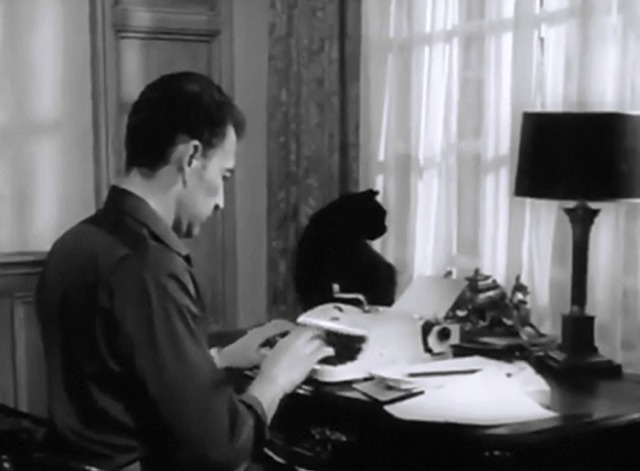
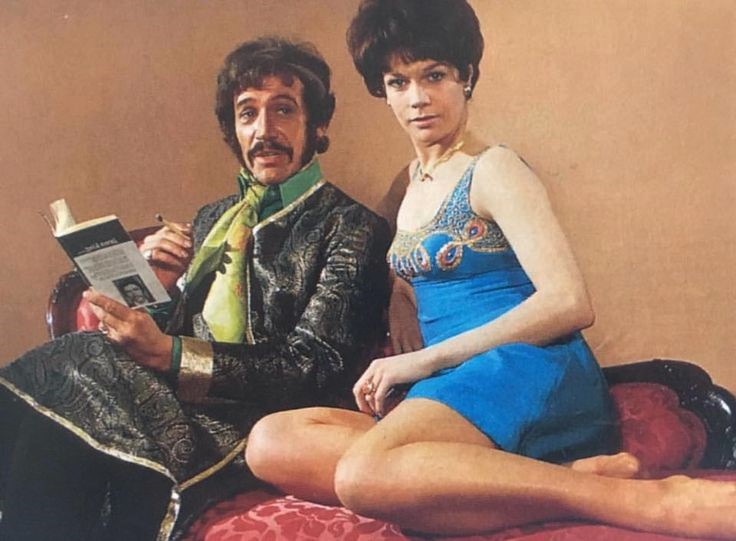
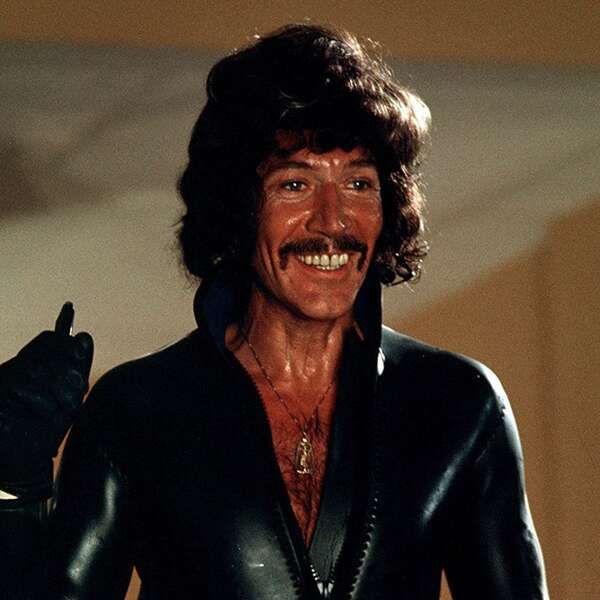
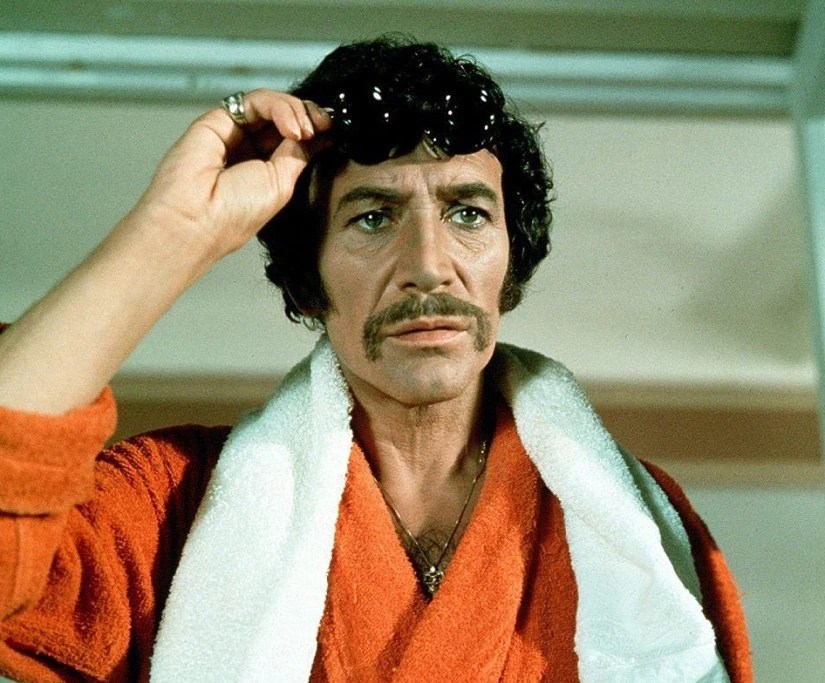
Jason King was one of the most flamboyant and charismatic of screen heroes. He not only changed the way men dressed, but could also be credited with changing the face of television.

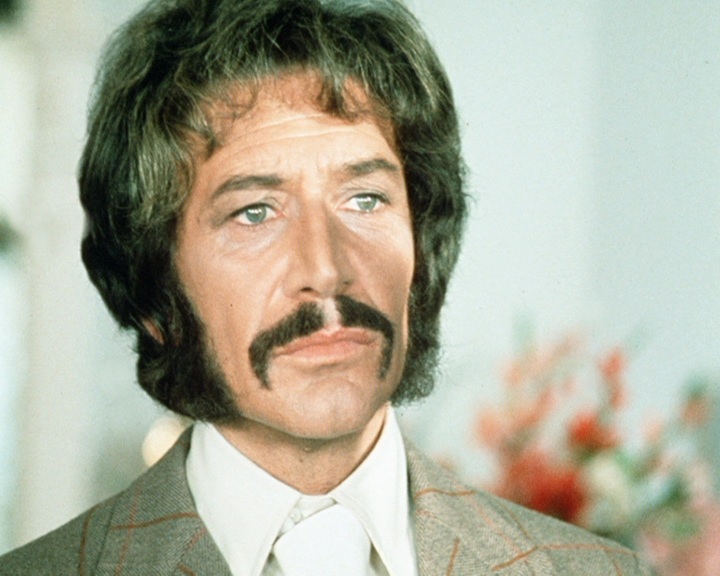
The colourful writer and investigator, played by Peter Wyngarde, first in Department S and then in his own series, remains a cult figure.

It was Wyngarde who brought his own sense of style to Jason King and also persuaded the television bosses to film on location – something very rarely done in the 60s and early 70s.

Says the actor, now almost 70-years-old and living quietly in London, “I wanted us to stop doing those terrible studio backdrop scenes, but I was told that location filming was just too expensive.

“Eventually they agreed to send just me and a lighting cameraman away. We went to Vienna and did shots by the wheel that featured in The Third Man and a man appeared dressed in black with a hat pulled down over his face, looking just like Orson Welles. He was actually selling watches, but it was wonderful stuff.

“We went to Rome and came across this gaggle of nuns and I just ran into the middle of them like some terrible rooster among all these hens,” he says. “Then we would write storylines to fit in with the locations shot.”

The result of this inspired improvisation was a very different looking series. The idiosyncratic King was very much the creation of Wyngarde himself.

“When Department S was being planned, I was told that I was going to be an Oxford professor sitting at his desk who solved problems for two Americans. I thought that was a bit dull. Then I had this bright idea of basing him on Ian Fleming.

“The clothes were a sort of extension of me. I was a bit of a Peacock then. I love clothes, but I didn’t much like the kind of fashions that were

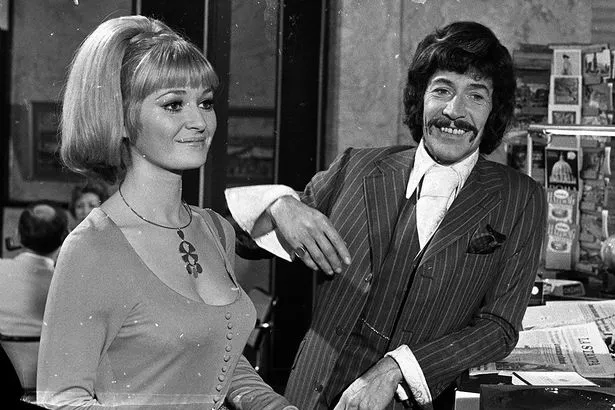
about. Then I saw a picture off an Edwardian riding coat and I thought it had real style, so I did some drawings and had a similar coat made. A conventional tie never look right with it and I had the idea of making the shirt and tie the same colour.”

That idea started a popular fashion, as did the trademark of turning back cuffs, which actually evolved by accident.

“We were filming in Venice in a gondola and one of my cufflinks felt off into the water,” recalls Peter. “The camera was rolling so I just turned back my shirt cuffs over the sleeve of my jacket and that was how it began.”

The influence of Jason King in his heyday was almost frightening. He was an all-action hero but, at Peter’s insistence, he had no guns.

“I was in a park once. Some kid playing and one of them kicked another one really hard in the crotch. I asked him what he thought he was doing. This kid just rolled back his cuffs and said, ‘I’m Jason King, who are you?’ And I thought, that’s it, I’m never going to ever to carry a gun.”

INTERVIEW: Action TV

Please note that some of the additional information provided here by the journalist named below may not be accurate, so it should be treated with caution.


Spring 2000

An Exclusive Interview with Peter Wyngarde

When did your passion for acting begin?

Well, I think it was probably as a small boy. I can always remember wanting to do plays and things when I was a child. It is rather funny but my first real inspiration, I suppose, was Mickey Mouse. I saw one of the cartoons and thought it was just fantastic. I remember wishing I could be this big mouse. I suppose I had the big ears and all I really needed was the red pants and black shoes, and as far as I was concerned, as a child, I would be Mickey.

One of your first appearances was in The Salt Land, an instalment of International Theatre.

Oh yes, that was very interesting. It was about this extraordinary patriarch character who led these people in Jerusalem. Now I’m not Jewish and I thought that the only way I could play this part was to go to a synagogue and to watch and learn to see what these people do. I really tried to immerse myself in the culture which is something that I always try to do in any part I play. We finally shot it at Shepperton Studios. It was terribly good. The only problem was at that particular moment in time I was asked to do War and Peace. I was under contract to Paramount. It was to be my first Hollywood film for them. I was to play the role of Peter. I did all the make-up test, met Audrey Hepburn.It was one of the leads and I then had about three months before filming began. This was in June or July as I recall. At the same time as this I was asked to do The Salt Land. Paramount had originally told me that I wasn’t needed until sometime in September so it was three months away and I thought I’ll have time to do The Salt Land first with no problem.

Then I got the call to say I must begin work on War and Peace the next day. I told Paramount that as much as I wanted to do War and Peace, I was committed to other work over here but as soon as it was finished I would come over. Paramount with furious and there was this big court case about it. In the end Henry Fonda played my character and that was that. I was told to be ready in September and I had three months to do the TV play but Paramount suddenly brought everything ahead by about two months so that caused the problem. Anyway that was the end of that. It was because of all the aggravation that I remember it. I was very friendly with the cast of The Salt Land. The guy who played my brother was an actor called David Peel, who was a top BBC radio star. He had a fantastic voice. He was very good looking and actually he was about 15 years older than me but played my younger brother.

What about the Isambard Kingdom Brunel TV drama from the late 50s, Engineer Extraordinary?

Oh yes, I loved that. The thing I remember about that was the fact that I am innumerate. I’m just not good at maths and I really can’t add up. We had this teacher at school called Mr. Jones and he would come into class and ask, “How did you get on with your own work?Have you all done it?” We would all say, “Yes Sir. We’ve done it.” He would then go through it all on the blackboard thinking we had done it and we would copy it down as fast as we could. He was always very impressed, but we actually learned very little, hence my problem with figures. So there is a whole group of adults who came from his classes over the years who could not add up.

Getting back to the Brunel thing, there were lots of calculations and equations and that sort of thing and I had to tell them that I was going to have problems. What we did in the end was to have monitors around the studio with all the calculations on so I would wander around and when I had make the calculations in my head as Brunel I would glance at the monitor and say something like, “It has to be 39 foot wide and 10 foot across and we must calculate the combined stress ratio by 5 and…” you know the sort of thing. That was sort of Marlon Brando acting, you know, with boards with dialogue written on them. Apparently he’d always done it like that but for me it was just because of the immense amounts of numbers and equations in the script. I have to say that it was probably one of the best performances I gave. Marlon must be right.

Night of the Eagle?

Directed by Sidney Hayes and regarded now as something of a cult film, I have many memories of that one. Janet Blair was in it and she was a pretty big American star at the time. In the States it was called Burn Witch Burn. The two big stories that stick in my mind are firstly the one about the scene when I’m supposed to throw a Bunsen burner at this bird. The lighting cameraman told me to throw it straight at the camera. Well, I said, “If I do that I’ll smash the lens won’t I?” he said that he didn’t think I could get it

even halfway towards him. The director called, “Action”, and I hurled the Bunsen and smash; one broken lens which cost them more than the whole film’s budget to replace. Remember this was my first real big starring role and I wanted it to be good.

One of the things that I always thought looked a bit phoney was that theatrical look of fear that actors try to do. During my time in the internment camp even as a young child I knew only too well that look of genuine terror and fear. I wanted to capture this on film. I was intent on having no stuntman and that was that. Anyway, I am supposed to be attacked by this eagle and it was huge, a Golden Eagle actually. We were shooting at Elstree and I wanted to see the bird before I actually shot the scene. And went over to where it was and trying to be dreadfully amusing I asked the handler if I could meet my co-star? The door opened and there was this bloke with this enormous bird. It was gigantic with a 15 foot wingspan. We had a chat and this guy was very nice and when I left he turned and I saw the other side of his face which I hadn’t seen before. One eye was missing.

I then began to wonder if I had done the right thing saying that I was intent on doing it all myself but I was committed to doing it and would have looked such a fool if I now backed out. So I had a drink to calm myself down. I was really feeling pretty scared I must say. I went down onto the set and heard that the bird hadn’t been fed for a couple of days and they were packing bits of meat into my costume. The crew were behind a protective steel screen and I was thinking this is it, the end of my career: ‘Wyngarde eaten by big bird’. But then I looked at the crew behind the screen and I thought, I’ll show you, and we shot the scene and it really worked but I was shit scared. Sidney was a wonderful director actually and we work together very well.

Did you enjoy making the TV play A Midsummer Night’s dream?

Oh yes, that was terrific. Joan Kemp Welsh directed it and she was wonderful. It was in black and white and I think if it was in colour it would be still shown today. We had a great cast, Benny Hill was Bottom and he was fantastic. So many of those comedians were really good actors. I worked with Ronnie Barker on a number of occasions and like Benny he was also an exceptional actor and an absolute joy to work with. The Oberon character really managed to make it seem as if he had come out of the earth, you know kind of growing from the earth itself. Excellent production and all due to Joan.

Tell us about your first guest role in The Avengers?

The wonderful Avengers, A Touch of Brimstone and the lovely Diana Rigg in all that gear. I still see her regularly, she really is something else and her daughter is very beautiful as well. I think that particular episode was a kind of turning point for her and the series in general. The Honor Blackman ones were very popular and she was still being compared to her when all of a sudden this episode came along and it allowed her to be really sexy. In fact I don’t think anyone had been quite that sexy on television before.

The whipping scene is the bit that is so well remembered and actually it was amazing, it really was. I also enjoyed Patrick’s company a great deal; the man is an angel. I was determined to make my character a real match for Steed. Most of his adversaries were either big rough types with no brains or physically weak but clever masterminds. I wanted to be elegant and quicker, but also tough and resourceful and I think we kind of pulled it off. I think one of Patrick’s faults is that he’s actually too nice to be an actor. You’ve got to be a bit of a so-and-so sometimes, but Patrick is just so lovely and charming.

What were your personal thoughts on the famous whipping scene?

Well, I loved every minute of it, (laughs). No, seriously, it was obviously very kinky and it was meant to be. Since the Kathy Gale days, there was always this slightly campy and kinky side to The Avengers. Before The Avengers, I had this reputation for being a bit of a sadist (laughs), quite unfounded of course. After that episode I was in great demand, off screen too (laughs uproariously).

Have you any recollections of The Baron and The Champions?

Yes, I remember The Baron very well. Steve Forrest was a really nice guy, but he was typical of Hollywood actors at the time. They had this extraordinary way of behaving. Many Hollywood people thought that if you were an actor you must be a faggot. Now it’s gay, then it was faggot. Lots of these American stars were so scared of being thought of as faggots that they did their best to look macho and manly. So they were always in the gym or getting into fights or getting out their guns or riding motorbikes and racing cars, you know the sort of stuff. It’s ridiculous really. Now, of course no one is bothered but it still happens. Steve wasn’t gay but he did a lot of that sort of things. I really felt that he just wasn’t very interested in the part. He was Dana Andrews younger brother and I think he kind of did certain things because he was in the shadow of his more famous older brother. I suppose all brothers are like that whether you’re in films are not. I’ve seen Steve in things since then, but he was a nice guy.

One of the biggest memories for me of those ITC programmes was the amount of familiar faces you would see around the set. One of my real mates was the lighting cameraman I mentioned earlier. He was a bloke called Frank Watts. He was a lovely guy and worked on a lots of those shows including Department S and Jason King. He’s dead now, what a lovely man. I do remember a little of The Champions but nor a great deal. I did so many of those things and because I was with many of the same type of actors and technicians it all becomes a bit of a blur to be honest. So many of those scripts were interchangeable between the series too.

Tell me about your appearances in The Saint?

Roger was a real professional and an absolute scream to work with. I guess that with the whole weight of a show on your shoulders you either crumble or you loosen up and have a bit of fun. Roger most certainly was the type of person who liked to have a bit of fun. The first one I did was The Man Who Likes Lions. I was this sort of gangster who had this thing about Ancient Rome and we threw this party and Simon Templer comes and we end up having this broad sword fight. Obviously, Roger was this big strapping sort of bloke and he was a bit of a piss-taker. I was half his size and playing this camp kind of character. And I decided that for once the tables would be turned on Mr. Moore.

During our rehearsals for the fight I was sort of acting like a bit of a wimp. You know I was saying stuff like, “Oh Roger sweetie, do you have to bang my shield so hard with your sword” and “Can’t we rest for a minute, I’m so tired.” Anyway, I could see Roger winking over at his mates in the crew and mouthing to them what he thought of me, if you know what I mean. Now what Roger didn’t know was that after many years of fencing on stage in different productions I had become something of a swordsman. I really enjoyed it as a sport and later on when I was doing things like Jason King, I would fence with one of the key stuntmen, a guy called Paul Wesson – he was quite a mate of mine in those days. I fence just for fun you know like you might play squash or something. Anyway, we were about to do this scene for real. I had convinced Roger and his pals that I was just about ready to shoot the scene but was still very nervous. A couple of other people on the set were wise to my little plan so I knew it would be a good gag to pull on Roger. So there we are and you’ve got Roger, the man who is The Saint and had been in Ivanhoe, and me this apparent fairy who can’t fight and doesn’t like all the noise of the swords.

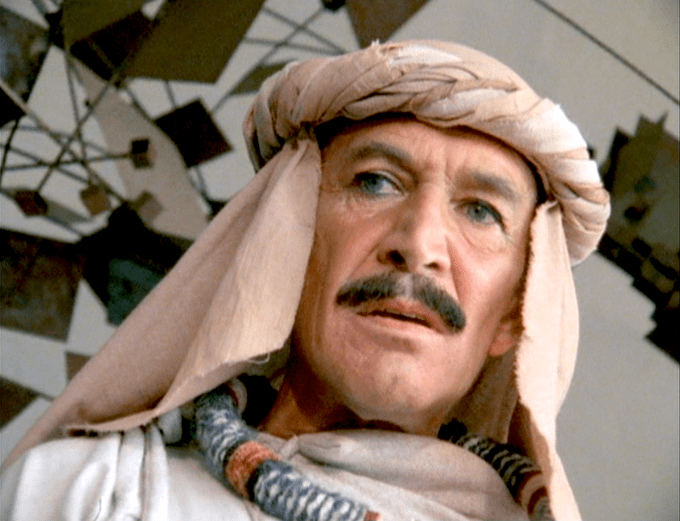
The director calls, “Action,” and I lay into Roger like a whirlwind and he’s looking at me in fear and surprise and actually it looks fantastic because he really looks like he’s fighting for his life. In the end he ends up falling into the pit that supposed to have a lion in it and I’m standing looking down, pissing myself with laughter. Roger, being such a great sport called me all the names under the sun and then pissed himself as well. We reshot the final part of the fight because it is my character that has to fall into the pit. It really was a great atmosphere on The Saint and it was primarily down to Roger and his marvellous sense of humour. I did another one a little later that I don’t remember too much about it, apart from the fact that I was playing an Arab or something and I was all blacked up and looked a bit ridiculous. But we all had a laugh about the sword fight.

Tell us about Epic, your second appearance in The Avengers?

Yes, that’s right, it was a colour one with James Hill directing. That was wonderful, wonderful because I played this actor and, as part of the story, I played 10 or 11 different characters. I played a cowboy and an Indian, a 1920s gangster, a sort of Dracula character, a gladiator and a few others. It was great fun. Obviously being with Patrick and Diana again was lovely and the chance to do all those characters

was marvellous. Around that time I also did I, Spy and I must say that Bill Cosby was one of the most talented men I’ve ever worked with. He was a natural and a really terrific bloke. I actually learned a great deal from Bill about film making. He knows his stuff technically let me tell you; even then he knew the lot. I really didn’t like Robert Culp. He was a bit of a big head and full of himself. Bill Cosby was one of those people who has time for everyone, you know, from the caterers to the director, he was that sort of fella, not Culp. Still I guess some people are like that. We were both nominated for Emmy Awards actually and we met up again, me with The Avengers team and Bill for I, Spy.

What was it like to work on Checkmate, an episode of The Prisoner?

Now McGoohan was a really dedicated film maker. He knew exactly what was going on on the set, in the make-up room, in the edit room, you name it. I suppose you needed someone who knew what it was all about because I certainly didn’t. Once more, and I know it must sound boring, but he was a lovely man to work with. The Prisoner was his baby and he wanted to see how every element of it was developing and growing. It was marvellous to see a man with such vision and dedication at work. I must say that quite often people have moaned about me always having opinions and views on how things should be done, but I can honestly say that when I was working with McGoohan I never questioned them once. That was because I knew more than any other person I’ve worked with, he knew exactly what he wanted from you and he knew how to draw it out of you, if it needed drawing out. I would go with the flow as you might say. It was a pleasure.

Don Chaffey directed the one I was in, but Patrick watched every single move that was being made and it was him that you sort of look to for anything you needed. He made you realise that if you did what he told you, it would work. I felt very comfortable with Patrick even though I didn’t really understand the show. As it went on I kind of began to grasp what he wanted. The other aspect which was wonderful was how the programme looked. That place in Wales was beautiful but sadly I never filmed there myself. I really loved the idea of the chess with the people being the pieces. It was all very clever, I was just very fascinated by the whole set up. Even though I had done The Saint and The Avengers and all those others, I really felt that this was something rather special.

McGoohan obviously impressed you very much. Are there any other actors who made this kind of impression?

The people I have worked with the I’ve really made shows work with is Pat in The Avengers and Jeremy Brett in Sherlock Holmes. They kind of said, now do you want to come along with me and enjoy it and do something good, or do you want to do something else and forget it? They were sort of like McGoohan too, they are very special people actually. Although Roger was The Saint it wasn’t his show. It was a kind of team thing, I know Roger directed some episodes of The Saint, but he wasn’t like The Prisoner or Pat in The Avengers. The girls came and went but there was always Pat. Sadly Jeremy isn’t with us anymore, I enjoyed working with him a great deal on Sherlock Holmes.

Would you like to tell us about this?

Yes, of course, in one way was kind of like The Saint. Now Roger was marvellous and he brought the character up to date. I had grown up seeing Louis Hayward and George Sanders in The Saint films so my idea of The Saint wasn’t really Roger. The same thing applied to Sherlock Holmes. I’d enjoyed the old Basil Rathbone films although I wasn’t so keen on the ones that were set in the War when they sort of made them all contemporary. Basically after reading the stories you had a kind of idea of what Holmes should look like and Rathbone pretty much worked for me.

Now later on when Peter Cushing did it I was really disappointed. He was a fine actor and a lovely, lovely man but I thought he was too short and I personally felt he was sort of artistic but not imposing and intellectual enough. I worked with him on Alexander the Great and he was a wonderful man. I am a very visual person and that’s why I thought Jeremy was so good in the role. I mean he was Sherlock Holmes. He was a marvellous actor and I enjoyed working with him on the show very much. I think what I found over the years is that the best actors are the best people and the shit actors are the shit people. It sounds terrible to say that but I really have found it to be true.

Tell us about your famous character Jason King and the series in which he first appeared Department S?

I was doing a play called The Duel, based on a short story by Chekhov, at the Duke of York Theatre. Before we actually opened I was sent some scripts for this programme called Department S. I didn’t really think too much about them actually. They were quite good but I just didn’t want to do another television series. I’d done a serial, A Tale Of Two Cities and another series called Epilogue to Capricorn and all the other things we’ve spoken about and I was really keen to do something else. I didn’t want to commit myself to a series. I was just about to open in this play which I was hoping would run for quite some time. Nyree Dawn Porter was in it with the superb Michael Bryant. We had a really fantastic cast and I was excited about it. After the first night’s performance I threw a party with all the cast and some of my friends along with the producer and director of Department S, Monty Berman and Cyril Frankel. The evening was wonderful and we were really enjoying ourselves not thinking of the time, when someone said, the reviews will be out now, let’s grab the papers. And off they went. By now it was the early hours of the morning. When they came back I said, “No, I won’t look at the notices.” It’s just something that I’ve never done. There is always some little twit on a newspaper who thinks they can tell readers how actors should be doing this or that. On the other hand you have the situation where you may get a really good review and you get a big head when really you’ve just done the job you get paid to do properly anyway. That in my opinion is the whole problem with reviews. So, they never told me what was written in the papers but I could tell by their faces they weren’t as good as we would have hoped. Actually, they weren’t too bad but I thought what the hell, I’ll do this series. I picked up a napkin and wrote,’ I, Peter Wyngarde agree to do your series Department S,’ and signed it. This would act as the contract and I asked it to be passed to Monty Berman and he looked at it and said, fine, and that was that.

The character was not originally visualised as the flamboyant, smoothie that we all remember.

Well, that’s right. He was supposed to be this sort of eccentric professor who is a bit of a crank who just sat around and a couple of times per episode, would give the others an idea or work something out for them. He was a bit of a crusty old thing and at first I thought, this is great, I’ve only got to sit around, do a bit of filming and I’m one of the stars of the show. After a while I realised that I wanted something more from the role.

Now I have to say that I always did like people like Marlon Brando and James Cagney who seem to be able to play all these different roles but just seemed to be playing themselves. It’s quite a talent and I thought to myself that I’d like to try this with the Department S role. So in the end the character Jason King was really Peter Wyngarde at that time in my life. He was a kind of flamboyant extension of myself really and certainly more of me than anyone else had done. So I went to see Cyril and Monty and I told them that I saw this characters being a kind of extension of myself and also Ian Fleming, who was involved with the real Department S in Naval Intelligence in the War. He was a sort of elegant, refined man who knew all the various aspects of espionage and crime but also has this knowledge of good food and wine. They both liked the idea and it was up to us to give this character a name. I came up with Jason because it was just a name I liked and Michael Bryant’s wife came up with King. It sounded just right so Jason King was born.

What about your stunning wardrobe?

Well, the clothes were just amazing. I’ve always liked to do my own clothes if I could and this was the opportunity to really do something special. My father had a wonderful tailor in Savile Row and I went to him with these designs that I’d put together and had the suits made up and I was very pleased with them. Talking about the suits, there is a fantastic story which I must tell you. We had been doing Department S for about six weeks, when some Americans came over to see how it was coming along. I think Lew Grade was looking to sell it to them. Lew was fantastic and had this wonderful relationship with this type of people all over the world and the Americans loved him. Anyway, they came over and there was the head of the American ABC and, just before he came to visit, for the first time ever, Lew had seen a complete episode. This was to give him a bit of a background on what it was he was due to be selling them. Lew said to Monty Berman, “Oh yes, Department S, fantastic, but you’ve got to get rid of that one with the Viva Zapata moustache. I mean, those clothes and that hair, the Americans won’t like all that, they’ll think he’s a faggot.

So I was on my way to being written out. Can you believe that? So, these executives from the States arrived and they said, “Hey Lew, this show’s great and a that guy is just incredible and those suits are fantastic. Who’s is tailor? Lew Grade was obviously as pleased as Punch and said, “I’m so glad you like it and by the way the tailor is my tailor too. Would you like his number?” This top American said, sure I’ll take 25 suits in the same style but different colours. When the suits arrived, Lew got a phone call. “What the are these God-damn suits? They look like boxes. These aren’t like the ones the guy was wearing in Department S.” To which Lew replied, “They are exactly the same as Joel Fabiani wears in the show and he had them made by my tailor.”  To which the executive replied, “Not Fabiani. The other guy, with the Viva Zapata moustache.” Lew was absolutely mortified because he just assumed that the Americans wouldn’t like anything relating to this flamboyant English character with curly hair and a moustache. Of course I thought it was hilarious. Lew gets on the phone to me after making up some story about getting the tailor’s phone number mixed up and begs me to tell him where I got the suits made. In the end Lew paid for another load to be done for the head of ABC and I was reinstalled.

How did you find your co-stars?

Well, I wasn’t that close to Rosemary really, but she was alright I suppose, but Joel was charming. We really had a good relationship both on screen and off. He was quite a good mate. We originally had this idea that he was this kind of kooky hippie agent in swinging London with the round tinted glasses and long hair and jeans and I was this flamboyant sort of dandy. Even though he was the actual secret agent and I was the assistant really, he could never get into places

and had to clamber over walls or squeeze through half open windows. However, Jason would be invited in and elegantly walk into these stately homes or offices and be welcomed with open arms because he was this famous writer who everybody wanted to meet and be seen with. Now I really think that would have been fantastic. It was a kind of early buddy relationship that you saw so much of later.

We would have lots of scenes with him getting annoyed with me about things and arguing and stuff, and we were both planning to do it like that. Then of course the partnership became a sort of three-way thing with Rosemary and then Joel’s wife heard about all this and saw my costumes and his sort of casual look and said, “Joel, you don’t look smart enough. Peter will get all the press and you need to look smart as well.” Poor Joel changed his mind and ended up looking just like all the other ITC men, you know like The Baron and all those who came out of Lew’s sable. I stood out because I was different. If he had stuck to that original idea of one ridiculously smart and one very casual, we both would have taken the public’s attention. As it was he just became another bland television hero who they had all seen a million times before. It was a great shame because he was a fantastic guy and a really good actor. As the series went on it was my character that people warmed to and then later Lew decided to do the Jason King series.

Is it true you weren’t very keen to do this?

Yes, that’s right for, I done Department S and I’d really had my fill of it by then. Lew kept asking me and I told him that I really didn’t think that Jason King was strong enough on his own to carry an entire series. I told him about mine and Joel’s original idea for the series and suggested we do something as a duo or with a new girl, but Lew insisted it should be Jason on his own. The character, in my opinion, is larger than life and I thought he was just a bit of light relief. For instance, Jason would enter a ski competition, come last, end up on his arse but still manage to walk away with a trophy and two girls on his arm. Jason King was sort of bizarre and in a sort of way ‘Avengerish’; you know sort of reality but not quite. I was comfortable doing that but having Jason in the real world, week after week, on his own was something that I didn’t think would work.

How did Lew convince you?

Well, he said to me (with Wyngarde doing a fantastic impersonation of Lew Grade), “Peter, let me tell you something. To me, Roger Moore is a hero. Look at him, he’s tall, he’s a good-looking boy. He wears a nice suit and he talks nice. Now you, you’ve got this hair, you’ve got this drooping moustache, these funny suits and you talk funny, too posh Peter, too posh. But my wife, she likes you. Will you do Jason King again?” Now after he told me all this I just won’t refuse. He had a way of convincing people to do things for him. He really was wonderful and actually his wife was a very lovely lady.

You made one major request prior to shooting the series I understand.

Yes, I did. Jason was supposed to be this globe-trotting character who was in Paris one week and in Berlin the next and Venice the week after. That’s a wonderful thing for a series because it allows you to use different types of characters and costumes and sets and all of that stuff. The show was actually going to be called ‘The World of Jason King’. Now all of these locations are fantastic but the whole thing looks just dreadful when you have an establishing shot of, say the Eiffel Tower for example, and then a terrible looking rear projection shot of a character against a background of Paris. I said if I’m going to do this show I want to go to these places so it looks real. Obviously it costs a huge amount of money to take crew abroad and shoot and there were stories set all over Europe. It would have cost poor old Lew millions.

I was determined to do it in one form or another and in the end we agreed that I would travel around Europe with Cyril Franklin and Frank Watt, the lighting cameraman. We went to Paris and Venice and all these places and filmed me going into hotels, getting out of cars, walking down different streets and generally doing all of the things that could be used as the series was being made to give the impression that I was really in these places. I think we did two trips a month or two each time. We had a marvellous time and got a great deal of very valuable footage. Sometimes we might see something going on and we’d shoot Jason looking at it like a parade or something, anything that could be used later. It cost a fair amount of money but it was probably a fraction of the cost of getting a full crew out on location. It added to the authenticity of the programme when it was all added into the finished episodes. It made the budget of the show appear even larger. Often writers will look at the footage we had shot and then create a story around it.

Did you did you remember any memorable incidents?

Oh yes, the time we were in Vienna was marvellous, it was just like the film The Third Man. There is this huge fairground wheel and we thought that it looked quite interesting. I had a little microphone attached to my lapel and I said to Frank, right, I’m going to walk towards the wheel and look around – just keep filming. Everything was fine and all of a sudden I saw this man and he was the double of Orson Welles, he really was. He was very tall and had the hat and the long black coat. Frank couldn’t believe it. I told him to keep filming while I walked towards him because he looked an interesting character. When we neared him we just somehow lost him, it was so strange, he just seemed to disappear. Anyway, right next to the wheel was a scale model of it and we decided to film me as Jason looking at the model. The next minute I notice this man on the wheel itself looking down at us. When the wheel stopped this man comes walking over to us and we’re thinking this is too good to be true, it’s The Third Man. He looks straight into my eyes and says, “You want to buy a watch?” It was just a priceless moment. He pulled back his sleeve and exposed seven or eight watches strapped to his arm.

What are the favourite things you’ve done since the 60s?

I did the Sherlock Holmes we spoke of earlier and I did Doctor Who, but I really enjoyed Flash Gordon. I thought Mike Hodges was a great director and Dino de Laurantiis really put some money into it. I thought it was great fun to watch and we had a great deal of fun making it. I was disappointed with the ending because the original ending had me picking up the ring in the dust. They added the question mark but it was supposed to be Klytus. They were intending to do a sequel with Lorenzo Semple’s story, which was actually written by the way. Klytus comes back as the leader of an army of creatures from below the surface of the planet. They want to take over this surface because there is a population explosion and they’ve outgrown their cities and Klytus leads them.

We were all sent all over Europe and America to promote the first film and go to the premiers. Max von Sydow went to Los Angeles, I went to New York. I think Sam was in Europe with one of the girls and it was a really big thing. Then pirate videos began to appear all over the place and it turned out that they had, I believe, come from someone at Shepperton who had sent copies to America. Everyone had seen it by the time of the premiers and it sort of killed it really. In England and the rest of the world it was a huge hit and was the top film for many weeks.

Peter, thank you for allowing us to speak with you.

It was my pleasure. I’ve enjoyed it a great deal.

Interview by Martin Gainsford

INTERVIEW: Look-In

Please note that some of the additional information provided here by the journalist named below may not be accurate, so it should be treated with caution.


Saturday, 18th December, 1971

The King Holds Court

Jason King is a smart dresser. So is Peter Wyngarde. They have other things in common. “King is an adventurer,”said Mr Wyngarde, in his rich Christmas pudding voice. “It’s all the things that most people would like to be, including myself but don’t, or can’t because they have a mortgage to pay and a job to hold down! What makes him human is that he can laugh at himself – he doesn’t always win!”

Winning for Peter Wyngarde has not come easily. For years he made a good but unspectacular living from parts in television plays and series such as The Saint, The Baron, The Prisoner, The Avengers. He appeared in numerous stage plays – heavy classical roles in Shakespeare, comedy and thrillers. Women posted fan letters by the thousands when he played the tragic part of Sydney Carton in a television production of A Tale of Two Cities. They were grief-stricken when Carton nobly sacrificed his own life at the guillotine to save the young hero. But still no one really recognised that Wyngarde was ideal for the kind of sleek sleuth he now presents in a TV series Jason King, the follow up programme to Department S.

Peter Wyngarde now lives in the basement flat in Kensington, London, that is crowded with knick-knacks an antiques.

He seems to enjoy his life. He gets a lot out of it and he gives a lot back. He paints to help him relax and he draws caricatures during breaks on set. “I draw the crew, other actors, anybody who is around.” Does he show his subjects the result? “Oh,” he ponders, wiggling his moustache. “Only if I know there won’t be hurt by them”.

He treats success modestly and still seems overwhelmed at being recognised.

What’s it like to have complete strangers rushing up to you? “Abroad it’s quite fantastic,” he said, his eyes twinkling as he answers the question. “They scream and run after you, the traffic stops, they grab your hand and pump it up and down, somehow managing to slap you on the back at the same time. It’s impossible to go into a restaurant without being aware that every mouthful is being watched!” He laughed. He has a generous laugh.

“Do you know…” he continued, “it was getting so bad I decided to go out in disguise. I was staying in a hotel in Australia. I put on a false beard, flattened down my hair and wore a pair of granny glasses!” He was looking mischievous now, the master of disguise, the actor acting to save his privacy. “I was sure I wouldn’t be recognised, but I’d only gone a few steps when my instinct told me I was being followed. I ran. They ran. I dashed into the hotel service lift. They followed. They were two girls and they thrust their autograph books at me. I signed one and then signed the other, I asked them how they’d recognise me. There was a silent. Then in a kind of flat, voice, one of them said, ‘Oh, it’s not John Lennon!’

Just the kind of situation Jason King will get himself into and out again!

Interview by Cathy Cox.

INTERVIEW: TV Times

Please note that some of the additional information provided here by the journalist named below may not be accurate, so it should be treated with caution.


29 May-4 June, 1971

The Peter Pan World of Peter Wyngarde

The Man Without A Past

15 years ago, Peter Wyngarde played Sydney Carton in a TV production of A Tale of Two Cities. He received 2,500 fan letters, one of them from a woman who replaced a Van Gogh from over her fireplace with his photograph.

It is interesting to see, in retrospect, in the curious prudishness of the Fifties, Wyngarde became a heartthrob by playing the past, while today, after a solid middle-of-the-order TV career in which “heavy” and “typical bastard” parts abound, he has emerged a heartthrob once more – playing the present. You can’t, after all, have anything more ‘now’ than Jason King: ask the 35,000 women that mobbed him in Sydney, Australia.

To look at Wyngarde as he was – playing Petruchio in The Taming of the Shrew, or flicking a deft sword in Cyrano de Bergerac (his first big stage success), or receiving rave notices in London’s West End and on Broadway in Duel of Angels with Vivien Leigh – and to look at him now, you almost see two different men.

Then he looked like any continental actor (he is Anglo-French), his hair tightly waved, cropped short, and his teeth bared in a lover’s smile or a swine’s sneer, dominating his face.

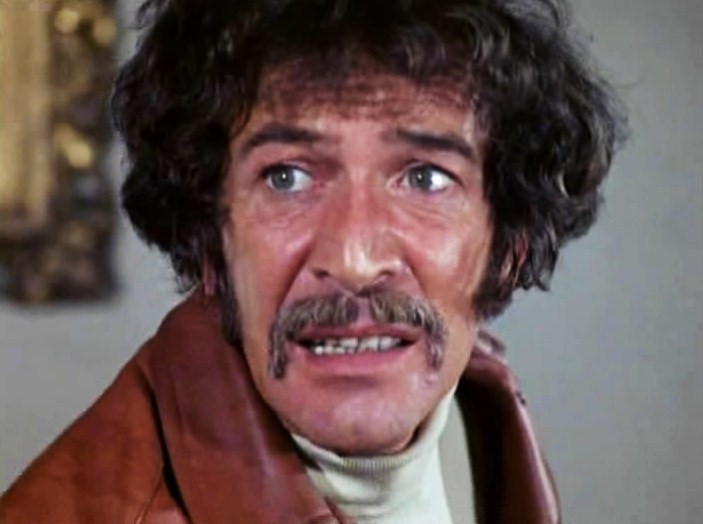
Now Wyngarde looks like no one but himself, unless you want to be cruel and see a likeness to gypsy guitarist Manitas de Plata. The hair, greying quickly, rings the face like an Edwardian libertine’s and the teeth have become secondary to the droopy moustache.

Time has made the face thinner, the nose more equine and deeply sculptured the flesh beneath the eyes. Time may not be cruel but it is inexorable. It’s passing, however, bothers Wyngarde not a jot: he has had to live to get a face that way. Not that he’ll talk about his past. He has no Proustian compunction to remember it, at least not in public: and he never strays beyond those areas he has already clearly defined and bartered for publicly in the journalists marketplace.

“I don’t believe in the past,” he told me with simple abruptness when we met for lunch in one of London’s most “in” restaurants. “I never think of it unless people force me into it. I prefer to be a man without a past, and my entire philosophy is based on that. The present is what interests me. I’m really just beginning to live now. That man of 15 years ago certainly has nothing to do with me. Each phase of my life has been left and is now dead. The kernel stays the same, put the development must be allowed to extend. I feel, if anything, that I have had to mature very slowly, not only now am I at the stage where most men are in the early 20s. Imagine someone in their early teens and comparing that with what he is in his early 20s, and you may grasp why I am such a different person from the man I was”.

The man is father to the boy and the boy Wyngarde has been extensively written about. At the age of 12, when Shangai fell to the Japanese, he was captured in the Chinese town of Lung-Hau (his diplomat father was away on a mission) and had left him with friends and was put into a concentration camp. He was there for four years and was tortured by rifle butts on the bare feet for carrying messages between huts. It took two years in a Swiss sanatorium for him to recover from malaria, malnutrition and his injuries. The major clues to the man is buried there.

“It might sound odd, but although I went through hell at that camp, I was barely aware of it at the time,” Wyngarde said. “It was only in later years that I realised just how bad it must have been. My young mind flapped down and shut out a lot of it. That is something to do with my desire not to remember the past. Not just that, but any period. Perhaps I’ve overdone it and I now apply it even to the good things. But that’s it. That’s why I think I matured slowly. I wasn’t just deprived of much of my childhood, I lost a lot of my adolescence, too. If you take that vital stage away from a person’s development then the whole process of becoming a man is vigorously distorted. I almost feel that I am having my adolescence now. No doubt about it. But I don’t think it has anything to do with being a television star. It would have been the same if I’d been in any kind of job. In many ways it’s much more fun than having your adolescence when you’re in your physical teens. For instance, I can talk to young people well, marvellously. All my real friends are very young. And I’m always in the company of young people. To tell you the truth, when I’m with an older person I nearly always feel about 18. More often than not, I feel very shy, too. One night I was at a private dinner were there were some very important people, all wealthy and getting on a bit. Throughout the whole evening I felt like the young son of the household being allowed in for his first adult dinner”.

Television has a way of making Wyngarde look like a small boy, physically. In fact, he’s well-built, if lean, and a little over middle height. What kind of a person he was as a young man it is difficult to hazard: he was in his mid-20s when the newspapers and magazines began to pick him up in the late 50s, and then they were more interested in his two cars and his breakfast habits and his fencing practise in the garage than him. Perhaps that was only he allowed them to be interested in. Wyngarde, in any case, refuses to be led into any area of his past which might give away his age, an attitude which can only partly be explained by his repugnance for the past. The little boy again?

One has much greater sympathy with his refusal to discuss marriage, other than in the abstract. He was married, he says: it lasted five years and that’s the end of it. To whom he was married and when, is nobody’s business but his own. Different sources have him married at ages varying from 22 to 38. “It’s the past,” he shrugged, refusing to be drawn. “It’s over there somewhere. Would I get married now? I don’t want to get hurt again”. And then he added, the small boy given way to Jason King which tends to happen when Wyngarde is under pressure, “Life is too short to spend with one woman”.

If he refuses to turn his head to look behind him, Wyngarde is eager-eyed for the future – the future which becomes the present before rushing into the past. What of Wyngarde’s future?

“I must do movies,” he said, “and not just because of whatever money might be in it, either. Put it like this, we live through our ears and through our eyes. Now, in this simplest form, the theatre is sound, spoken word. And by comparison, in its simplest form, film is sight. I have come to realise that my natural creativity is a visual one. That’s why I want to make films. Don’t get me wrong, I’m not knocking television. It is a magnificent medium for a visual actor. But with television I am not all that fond of the basic principle of using four cameras. I think that in a way that’s like doing a painting with four painters. One painter with one brush stroke can give greater simplicity. To me, films are all about economy along with an ability to experiment to a greater degree. The whole trend nowadays is to create character. Now the only thing that gives character to a modern audience is action. Just to put someone there to mouth words is no longer good enough. There must be action, too. Moving pictures defined themselves. I believe that in that special sphere lies the best means of satisfying my need for self-expression”.

At the moment, Wyngarde is having fun (he’s fond of that word) and he’s making the most of it. He has the tax bills to prove it. On that subject: “I love living in London and I hope I won’t be forced to leave purely for tax reasons. Actors spend many years struggling and then only a few make it into good money. We bring a fortune into the country and I do think the whole tax thing should be reappraised, don’t you?”

And Wyngarde, one time hopeful in advertising and the law (he tried writing too) and self-confessed fantasist, smiled… a small boy smiling from a lived-in face.

Interview by T.C. Rhode.

INTERVIEW: The TV Times

Please note that some of the additional information provided here by the journalist named below may not be accurate, so it should be treated with caution.


22-28 May, 1971

Love, Peter Wyngarde and Eastern Promise

Jason King is the writer-investigator who helps Department S solve its more bizarre cases. Jason King is played by Peter Wyngarde. In between filming a new series to be called The World of Jason King, Wyngarde talked about himself, trading stamps, stardom… and about The Hand of Fatama.

In the gently elegant, detached and vaguely aristocratic way of his, Peter Wyngarde is rather interested to see what’s going to happen…

There he was, on location in Morocco as Jason King for The World of Jason King and in between shooting he found himself in the local marketplace when suddenly, he was confronted by a fortune teller.

“He was like John the Baptist, with grey hair and incredible blazing eyes,” he says

Surrounded by a shoving, pushing crowd, Wyngarde gave a coin to the seer. “This man actually told me that I was going to have three children, very soon, one after the other, and that I wouldn’t be married! That, I think, is the answer to anyone who asked me if I am ever likely to get married again”.

For all that, at the idea of siring children is strong.

“As long as they keep their independence and I keep mine,” he says, obviously recalling his broken marriage. “I believe greatly in independence, and if I did marry again we would have to live in separate houses”.

And who would look after the children? Wyngarde? “Oh no, I expect one of the various mothers would. I think I’m the hunter, you see, if you keep a hunting creature in its cage it will lose its individuality”.

This probably sums up the public image of Peter Wyngarde. Women all over the world drive themselves into frenzies over him; write to him the kind of letters that make the Kama Sutra look like a convent school text book.

One Australian magazine voted him The Man Whom Women Would Most Like To Lose Their Virginity To. “But women who throw themselves at me don’t interest me,” he explains. “I feel I must be the one to do any chasing that’s got to be done”.

He stretches his long, lean legs in the vivid scarlet velvet-corduroy trousers. His shirt is pale cream, etched with leaping gnomes and elves. A healthy-looking man, with his deep sun-tan and droopy moustache.

It is difficult to appreciate that as a child he was brutally tortured in a Japanese prisoner of war camp. For three years, from the age of 14, he suffered deprivations that many an adult succumbed to.

When he was freed, he was riddled with sickness, shrunken with malnutrition. He could only get around with the aid of crutches, his feet shattered after an interrogation session conducted with rifle butts.

“The part of my childhood is almost completely gone from my mind. I have rejected it. The pain and the danger have been pushed right out of my mind.”

Wyngarde was born near Marseilles, his mother French and his father, an English diplomat. He was in Shanghai when the Japanese attacked. When they drove him away in a truck he thought he was going off on a lovely holiday. It took two years in a Swiss hospital to recuperate from this particular “holiday”. Later, in London, he turned his hand to finding a worthwhile job. First it was the law, but he lost interest. Then he tried writing, but gave it up to become an actor. Now, he is reverting more to writing. He has written a screenplay which he plans to direct if Jason King gives him a chance.

His career has brought him recognition in repertory, television, films, the West End and Broadway. Then came Department S and stardom.

His long dark hair with a streak of grey, bobs enthusiastically. “Tell me, have you seen Budgie?” He is referring, of course, to Adam Faith’s new TV series.

“I like that chap very much indeed. He makes me roar with laughter. I first met him at a party many years ago and he turned to me and said, ‘We’re all right Pete, ‘cause we’ve got the cheekbones. It’s the cheekbones that count. They catch the eye highlights.’ Of course he’s perfectly right. Good cheekbones are a tremendous help to an actor”.

He touched the medallion hung around his neck. “I got in Morocco along with the prediction’s. It’s The Hand of Fatima, and legend goes that while you have it you’ll never be without sex. The true translation from the original should be that you would never be without love, but there is no equivalent word in the Arabian dictionary. So I’ve translated it myself”.

Does he find it difficult to live up to the big star image. “I don’t attempt to. I think it’s pointless. To prove it to you; I was doing a recording session in Soho and every morning I would put on a pair of jeans and an old sweater and grab the first taxi. One driver didn’t say a word all the way, which is unusual for a British taxi driver. When I was paying him, he said, ‘Excuse me, but I hope you don’t mind me asking, but you did get the award for The Best Dressed Man In England, didn’t you?” True, Wyngarde did get such an award but treats it in the same way as all the other trappings of stardom and adulation. “It’s all part of the training. Actors are brought up and taught to act the part of being a star. It’s as much part of the job as saying your lines”.

His famed drooping moustache blossomed first in the Chekov play, The Duel, at the Duchess Theatre in London, two-and-a-half years ago. Its origins, despite those who may have ideas about Mexico and Zapata, are Russian.

“The character was supposed to be a Tartar, and the moustache helped round off the character.” And from that, Jason King was born.

He laughs a languid laugh – that manages to become so animated to the point of schoolboy glee. We walked back to his dressing room from the set where he has just completed a scene from The World Of Jason King.

“This,” he says, “is an indication of a person’s real personality” – and he produces a massive bunch of keys. Pendants and discs separate the keys into bunches

“Have you ever seen so many keys? Ever? And every single one has a purposeful. These three are keys to the flat, that’s the key to the cottage, that’s for the dressing room, that’s the key to the garage…”

In the garage is his beloved Bentley which he bought from a surgeon. “It’s the last of a classic line made in 1958 and I adore it”.

With the car – at 12 miles a gallon – came a bonus which appealed to his bargain-hunting instincts. “Green Shield Stamps”, he declared. “I collected thousands and thousands of them with the petrol and oil. I was saving up to get a scooter. Then someone broke into the car and stole stole the lot! Oh, I’m mourned those stamps”.

In Wyngarde’s London home is the accumulation of years of bargain hunting. But probably his greatest interest is antique clocks. Even as we talk a man is busy hanging Wyngarde’s latest acquisition – a 1320 Swiss Buco – at his home. For 10 minutes, Wyngarde talks to me about hanging the weighted chains. “Collecting clocks is a sign of madness. Make of that what you will”.

When he next gets a break from work he plans to take up flying. “I’ve got 7 hours, but I consider I’ll be starting from scratch. I don’t think one should take a pilot’s licence, one needs to do the navigation too – and that means a bit of swatting”.

Recently he toyed with the idea of buying a new kind of mini helicopter for £2,000. “I thought I’ll get one of those and buy a place up in Norfolk and I’ll be able to commute to the studios”. Approaching the airfield with his chequebook he looked up to the sky. There it was, his longed for mini helicopter, hovering overhead. As he watched, it fell apart and crashed. “It was a tremendous tragedy, the pilot was killed. But I don’t think one should let these things play on one’s mind or we would worry about every car or train crash or, even, scheduled air flight”.

“One of Wyngarde’s great relaxations is writing. “I tried painting. I was good at it as a child but when I tried it some time ago, I realised it was really a whim”. These days, it seems that most personalities spend every spare moment on a golf course. Not Wyngarde. “I’ve only played once, in the teeth of an hailstorm. My partner said I should take it up. He said I had a good swing. I said I don’t care what I’ve got, I don’t want to play it again!” And he hasn’t. “I don’t understand it”.

He does enjoy fencing, tennis and swimming. “But really, I’m very happy finding a wild bit of country with a wild beach and lots of sun. I don’t need too many people around me”.

It is time for him to see the film rushes of The World of Jason King. We leave the dressing room, and he locks it from his great bunch of keys. I hadn’t notice before, but there on the door, designed as a knocker, is a huge Hand of Fatima.

Interviewer unknown.

INTERVIEW: Number 6 Magazine

Can you remember how you got the part of number two in checkmate?

Indeed. Pat (McGoohan particularly wanted me to do it he – asked me himself. He was very hazy about the whole thing in the beginning, but had considered a permanent Number 2, which he wanted me to be. He really didn’t know what direction the programme was going to go in, but finally decided that a change of administrator added to the air of mystery, but he definitely wanted me.

Did they give you any indications as to how he wanted you to play the part?

He said “play yourself”, which I was horrified at, as it is quite hard being yourself. It’s much easier acting! I thought he was as nutty as a fruit cake, but trusted his judgement. He was jolly secretive about the project, but I do remember that the script was stuck to rigidly. However, he did often ask me to say things in a certain way and to talk slowly…

I expect the finished product surprised you?

Indeed it did, but as Pat also directed the episode[1], I suppose that’s no surprise, really. But it did end up very differently!

Did anything in particular strike you?

The sets – especially Number 2’s room. I loved sitting in the chair watching the screen on the wall. I also found the ‘eye’ in the control room very menacing indeed.

How authentic was the karate shop?

Very! I practise for an hour each morning – something which I expanded for Department S. Pat loved authenticity although I know others might say differently, I found him very easy to work with. We had been friends for years – a long time before The Prisoner.

How long did you work on the episode?

Two weeks, I think.

Did you keep any mementos?

No. I did consider using the plimsolls for tennis, but as they were yachting shoes, I didn’t (they had bad associations for me as I had almost been killed on a yacht in a gale off the South Coast on my way to Cherbourg, two weeks before I started filming The Prisoner.

Your part was studio only?

Yes. I would dearly love to have visit Wales[2], as it looked beautiful. Ronald Radd was there – he was a very dear friend. I acted with him in A Tale Of Two Cities. I know he thoroughly enjoyed The Prisoner. His death (in 1976) was a shock.

How did you get on with Angelo Muscat?

Although I remember him being around, I didn’t have much to do with him. To be honest, I thought some of his appearances were stock footage. I do remember Rosalie Crutchley – she is a dear friend too. We have worked together a lot. Her nickname is ‘Bun’ – I don’t know why!

Well thank you for chatting to me.

It was a pleasure.

Interview by Tony Worrall

NOTES:

[1]: ‘Checkmate’ was actually directed by Don Chaffey.

[2]: Peter finally made it to Portmierion in October 2017 for the ‘Fall Out – The Prisoner At 50’ celebration. Click HERE for more information.

This interview was taken from The Prisoner Appreciation Society magazine, Number 6, and was reproduced by kind permission of six of one.

INTERVIEW: Titbits

Please note that some of the additional information provided here by the journalist named below may not be accurate, so it should be treated with caution.


February 1973

“Life’s Too Short For Marriage”

Peter Wyngarde, TV’s heart-throb hairy hero, Jason King, has revealed what happens when he’s not working. His thoughts turned to marriage – especially after a night on the town.

The 40-year-old once married star said, “When I’m acting I am very happy not to get married. But when I’m not working, I think ‘maybe I will…’ it happens on those nights, or morning after, when you crawl drunkenly into a solitary bed.”

Peter’s first marriage, at 22, lasted only five years. Since then he has said he would remain single because “Life is too short to spend with one woman.” But he told me, “I have discovered that when you shout too strongly about something you become vulnerable. I met a girl in Australia last year and I got involved. Marriage? It nearly happened. Luckily Bali leered its romantic head at me and I managed to escape.”

Peter, who gets marriage proposals by the sackful admits to having one or two girlfriends. But he emphasised. “I don’t play the field like some people I read about. I’m more discreet. Sex is vital – I’m a physical person. Next comes intelligence, unless the girl is so lovely and dotty I wouldn’t give a damn if she couldn’t spell two words. But one must think of the future, when it’s no good just banging away all night and then finding out in the morning that you’re left with is somebody were all you can do is read the papers, including the sports pages!”

Peter is the star all the women love, but the only companion in his elegant Kensington flat is his faithful dog – an Afghan Hound called Yousef – and an impressive collection of antique clocks. “I’m a loner,” he said. I always feel lonely on festive occasions like Christmas and New Year’s Eve. I think of the people I’ve met during the year and who I’d love to be with again. People I really care for and have been close to. But I don’t twiddle my thumbs saying, ‘I’m lonely’. I occupy myself in some way. I write a lot.”

Australian women voted Peter the man they would most like to lose their virginity to. But he winces when called a sex symbol. “God help us!” he shuddered. “Most of us have sex appeal, but mine is probably a little more blatant, more visual. I don’t see myself as anything in particular, I don’t think actors should. They should be chameleon’s – change colour with their surroundings. It’s much more important to look at other people than yourself. I’m more concerned about other things, like relationships. And much more tolerant than I was. I used to be very intolerant of things that didn’t go my way. I sulked or made an awful lot of noise. Now I’m more inclined to see other points of view. Acting has done that for me. It has held me to learn more about people and kept me growing as a person through performances.”

Peter, a completely unpompous professional, says that he is having more fun now than ever before. “After slogging away you suddenly get international recognition. It’s lovely to find people responding to your kind of openness, were before they would say, ‘Who the hell is that? That’s too much that one.’ I adore travelling and meeting people. I go to a lot of parties, so I’m told the morning after! I’m sure the time will come when I won’t be invited. Then I have to give parties.”

This spring Peter returns to the West End stage, after five years, in a new two-character play Mother Adam. Hermione Baddley co-stars as his mother. It is the third of Charles Dyer’s trio of plays about loneliness.

“I’m hoping to do a Jason King film, but I want to do this play first,” he said. “It’s fantastically written. It’s about a mother and son living in their own extraordinary world. Adam is completely different to King. Adam has the world’s problems on his shoulders. His exoticism is in his language; he has tremendous humour.”

Peter spoke to me during rehearsals at the British Legion club in Kings Road, Fulham, London. Gone was Jason Kings peacock look. Instead, Peter wore a chunky woollen sweater and flared trousers. He explained these are rehearsal clothes. “I am a flamboyant person. Years ago people looked at me as if I was peculiar. I have a lot of energy and tremendous drive. Most people control themselves and count to 10 before they burst forth, but I can’t count!”

As we talked, middle-aged women sipped gin and tonic in a nearby bar, unaware that Peter was within kissing distance. Unlike the 35,000 women who mobbed him in Sydney, Australia. His smile faded a little as he recalled it: “I was on a plane with a pop group, when we arrived I saw these millions of women. I thought they were meeting the group and I wished them luck as they walked in front to me. Suddenly the women crashed the barriers and charged towards me. I thought that they’d mistaken me for one of the group. But they weren’t interested in them. I wish they had been. They stripped me and knocked me unconscious. It was the most frightening mass hysteria thing that has ever happened to me.”

Interview by Douglas Mirl.

INTERVIEW: The Daily Express

Please note that some of the additional information provided here by the journalist named below may not be accurate, so it should be treated with caution.


Friday, 2nd April, 1993.

Confessions of Felicity, the Jason King bimbo

The starlets who found fame in the 70s harem of a TV style icon.

It was the decade that style forgot. The one that dared to flare. Now it’s back in favour in a major way as the kitsch excesses of the 70s revival are shrewdly aimed at the under 30s, who never wore tatty old Afghan coats the first time around. Last weekend, massed ranks of Mexican moustaches, platoons of Noddy Holder platform boots and white satin Abba-esque loon pants were on the march. The faithful fans who light candles to such seminal 70s TV series as Jason King and Sapphire and Steel made a pilgrimage to the to the Shepperton Moat House in Middlesex to celebrate the video releases of their screen heroes and heroines from the vaults of Lord Lew Grade’s former company, ITC.

And the man behind the grooviest Mexican moustache of them all is thriller writer and amateur sleuth, Jason King – flamboyantly played by Peter Wyngarde, whose dashing adventures ran to four years of 60 minute episodes from September 1971. At the same time, these hit action-adventure shows introduced to our TV screens a new kind of young woman. While the 60s invented the dollybird, the glam rock era of the early 70s refined the concept with the making of the Bimbo. She was paid to look vacant, but gorgeous.

A Jason King Girl was, after all, the television equivalent of being a Bond girl. And for some of our top actresses, these early days are embarrassingly coming back to haunt them. As the award-winning Felicity Kendal prepares to open in friend Tom Stoppard’s long-awaited new play, ‘Arcadia’, on April 13th at the National Theatre, her past playfully returns to spook her. Hush, hush, whisper, whisper, who dares… yes demure Felicity Kendal’s was once a Jason King Girl.

But Felicity is in good company, for among her sisters in the court of the heavily medallion King are Stephanie Beacham, star of The Colbys and Dynasty. Edward Woodward’s actress wife Michelle Dotrice and the ever-smouldering Kate O’Mara (who was just beginning to ignite seriously), all served their apprenticeship in the adventures of super sleuth, Jason King.

Felicity was completely unaware of the show’s relaunch on video this month. She roared with laughter and said, “What a hoot! I think I wore lots of hippy clothes. Peter Wyngarde was a scream and great fun”. Felicity was only 22, look like the Princess of the Pixies with her long honey-coloured hair and bat wing sleeves in the role of Toki, an adorable but unattainable girl pursued by King in Paris. The elfing image stayed with her for years and influenced all her TV roles until she matured from the caring, self-sufficient neighbour Barbara in The Good Life into the serious award-winning classical actress who is now playwright Tom Stoppard’s favourite leading lady.

Women were Jason King’s fashion accessories. His ever-changing harem wore tarantula eyelashes, bovine expressions and even wore bikini’s to do the housework for him. He well remembers Felicity’s first day on the set to play ‘A girl for whom a king would abdicate’.

“My lovely Felicity – I fell in love with her. I found she was madly attractive,” recalls Wyngarde, in his deep, well-spoken tones, whose elegant style won him the Best Dressed TV Star of the 70s around the world.

“She is an was one of the most attractive things around. I was in love with her and so were 50 million viewers. The whole crew fell for her. She was quite unique, because it was rare to find intelligence and beauty. Everyone loved the ladies on the set, because they were young and glamorous with long legs, which were quite appealing. I endorsed all the ladies they were getting. They were one of the perks of the game. It’s lovely to have beauty around, whatever kind.”

Stephanie Beacham was obviously not thrilled to hear that her days as a Jason King decoration were being revisited in the 90s, even though she went onto even camper glories in The Colbys. She was crowned with a glittering diadem as an upmarket Madam. And she has kept the same glamorous image ever since. “Oh my God, that’s ancient history,” screeched her representative. No you can’t talk to her because she’s filming in Los Angeles”.

Wyngarde added, “Stephanie had a unique quality – sophistication, coolness and intelligence”. It helped out the series to have women with such qualities. “Everyone was supposed to look like a bimbo but Felicity and Stephanie certainly weren’t. We did have a lot of bimbos to fill some of the scenes as extras.

“Kate O’Mara vibrated sex around the studio. Sex sex, and sex again – you could sense it coming down the stairs,” said Wyngarde. “She had a wonderful face and figure and she’s a terribly sweet girl. Although she had these gorgeous looks, green eyes with black hair, she had this hockey school captain manner. But she could suddenly change it and become a sultry sex kitten. She could be a chameleon and after all that’s what acting is all about”.

Another of his leading ladies was Michelle Dotrice. “She had a wonderful sense of comedy”, said Wyngarde, explaining: “Comedy is nothing to do with the person who says the lines it’s to do with listening and reacting. She had a kind of innocence and yet intelligence”. So why was almost every woman on TV made to look so dumb? “It was all to do with fashion. They didn’t want girls looking as if they had a brain. A man had to have the brains. Remember, it was pre-yuppie time. A man had to have the brains and to be dominant, while the woman were just extra-terrestrial bits hanging around,” he explains. “It was pre-macho days. Men were dominating in a suit. Now they have to be dominating in their boxer shorts”.

King’s elegant wardrobe frequently competed with the costumes of his ladies. His personally tailored single-breasted suits cost £500 a time and had to be figure hugging, apart from the slight flair covering platform heeled boots. But not so tight that he couldn’t karate his way out of trouble. His shirt cuffs were always turned back without cufflinks. He never carried a gun, only smoked his own brand of Russian cigarette’s, and drank champagne and whisky, but not together. Jason King was an all action, devilish ladykiller with large sideboards who inspired a million suburban imitators still lurking in Top Rank suits on Saturday nights. A spin off from another adventure series, Department S, it turned Wyngarde into a highly influential star. To prove it, Jason became the most popular choice of nomenclature for boys born in 1971. Despite becoming a TV hero, with his stylish clothes copied by men including pop stars like Barry Gibb and receiving hundreds of adoring fan letters a week from women, Wyngarde admitted he lost out on making a fortune.

“I’m not very good with business,” he said over breakfast at his Kensington hideaway. “I had a standard contract fee. They syndicated the shows in America and I didn’t get a penny extra. With my London tailor, I designed the Jason King suits based on an 18th Century riding jacket. When the series became successful around the world, everyone was trying to copy them. In Hamburg, it was terrible. I found there was seven shops advertising Jason King suits and I wasn’t earning anything from them”. Did it make him feel bitter? “Not bitter,” he replied. “I had a great deal of fun doing it. It brought me a great deal of fame at that time, and I enjoyed doing them. It was really a sendup of Ian Fleming and James Bond”.

At one time he had 56 Jason King suits in his wardrobe, but now there are only two left. “I’ve given them all away. After spending four years changing into about four suits every day of the week, the last thing I want to do now is put one on”.

Interview by David Wigg and Maureen Paton.

INTERVIEW: Weekend

Please note that some of the additional information provided here by the journalist named below may not be accurate, so it should be treated with caution.


16-22 April, 1969

The Terrifying Past Of Jason King

How Peter Beat The Torturers

Again and again the rifle boats of the Japanese guards smashed down on the little boys bare feet. “Tell us about the bombing,” they hissed between each blow, “or you will never walk again!”

The young Peter Wyngarde, captured when the Japanese army overran the Chinese town of Lung Hua, said nothing. He couldn’t understand the question.

Today, the 40-year old Peter is a successful actor. As Jason King, is the star of the new ATV crime series Department S. But, in a macabre, twisted way, he owes his success to the torture and degradation he suffered in that Japanese hell camp 26 years ago.

He still bears the scars mentally as well as physically and even now, has nightmares which, for sheer horror, outstrip any scene he ever had to play onstage.

The guards shattered both of Peter’s feet before they realised he couldn’t tell them anything. Then they flung him into a cramped cell with a constantly dripping tap within earshot.

There is no escape, except into the realms of a little boy’s fantasy. Alone in the darkness, Peter pretended he was the Prisoner of Zenda. Sometimes he imagined he was not there at all and was a cowboy and riding the Prairie.

For five weeks, as he crouched in his cell, the steady drip of the tap became background music to the world’s great plays with himself, of course, always playing the lead. When he dropped off to sleep, that drip-drip-drip became the applause.

Peter says, “It was only by creating a fantasy world for myself that I could shut out the misery around me. I still do, to some extent.

“Everyone is a schizophrenic. The great thing about being an actor is that you are able to play out your fantasies”.

Peter Wyngarde, son of a diplomat, was only a child when he was taken to the prison camp. Because he was so small, he was used as a messenger between the prisoner’s huts, passing on news with the progress of the war that had been taken down from a secret radio.

He recalls, “It was all ‘Boys Own’ adventure stuff to me and I didn’t really take in the messages, nor did I understand which planes were bombing which cities. But when the Jap’s caught me they wouldn’t believe that and tortured me to get any information I had”.

Afterwards, Peter took his mind off his injuries by reading everything he could get his hands on and most of the books were by Shakespeare and Robert Louis Stevenson. Then he wrote his own version of Dr Jekyll And Mr Hyde and organised a bunch of prisoners to play in it. He, of course, played both Dr Jekyll and Mr Hyde.

For the first time he heard what real applause was like, as the prisoners called the boy back onto the rickety bamboo stage for curtain call after curtain call. Except there wasn’t any curtains there.

When he was set free, the boy actor/producer was in a bad way; just a bundle of skin and bone. His parents sent him to sanatorium in Switzerland where he spent several months getting over malnutrition, malaria and the injuries to his feet.

As one executive once said of young Wyngarde: “He seems to live in a life of fantasy or something. I can’t make him out it’s all”

He then started the traditional round of repertory companies. “What can you do?” they demanded. Innocently, Peter would trot out the parts he knew well… The Prisoner Of Zenda, The Merchant Of Venice and Dr Jekyll and Mr Hyde.

His first acting job came to nothing and, if you ask him how he came to get it, Wyngarde is frank.

“I think they felt sorry for me,” he says. “At the time I still looked like something out of Belsen. I was a poor actor just a good show off”. He was fired and, dejected, he decided to study law.

Today, it might have been a country solicitor, immersed in the intricacies of wills and testaments but for the fantasies that every now and again would take over his thoughts.

His law books would be forgotten as he acted out the roles of the bewigged, fearless Wyngarde Q.C., cajoling a reluctant jury to the gasps of admiration from the courtroom, nodding curtly to the man he had saved from the gallows before tugging at his gown and sweeping out.

His failure in law made him even more determined to be an actor. First, he set about

improving his frail appearance (“The way I looked, it seemed that only part open to me was Oliver Twist before he asked for more!”). He did regular exercises to build up his physique and slowly the Wyngarde dream world began to assume some sort of reality.

He found success with provincial repertory companies, received rave notices for his Cyrano De Bergerac at the Bristol Old Vic.

He took the West End by storm with Vivien Leigh in Duel of Angels. In America he was acclaimed on Broadway and more and more plum parts came the way of the tortured kid who still suffered from nightmares. Then came his first appearance on British television, first as Sydney Carton in A Tale of Two Cities, followed by parts in The Saint and The Avengers.

In his present role is Jason King in Department S – a series of 1-hour films being screened by several TV companies – Peter plays a successful thriller writer who solves crimes that have baffled the police. It is a part that fits him as well as his floppy moustache – and it should. That moustache, the bushy sideboards and the flamboyant clothes he wears in the series are the same as Peter wears off camera.

But then there’s a lot of Peter Wyngarde in Jason King. When he plays the part, he is still working off the fantasies which began in the dark days he spent in the Japanese prison camp only now, he’s getting paid for it.

Interviewer Unknown.

INTERVIEW: Doctor Who Magazine

Please note that some of the additional information provided here by the journalist named below may not be accurate, so it should be treated with caution.


Wednesday, 23rd September, 1998

When cult actor Peter Wyngarde flew to Lanzarote to film scenes for Planet of Fire, this month BBC video release, he never imagined it end up on the run from the local policia…

Even when young, Peter Wyngarde was a larger-than-life character. “I was a terrible, outrageous little show off. A precocious, hideous little child”. Born in Marseille in 1933, the last thing his upbringing could be described as is conventional. When he was just six he found himself held in a Japanese prisoner of war camp, and it was here that he discovered his love of performing. “I remember the camp doctor, he was a marvellous fellow, who read stories to the children in the camp. One of those stories was Dr Jekyll and Mr Hyde. I was so taken with it that I decided to dramatize it for the monthly camp show”. For this, Peter kidnaped the camp commandant’s pet rabbit on which his Dr Jekyll would try out his fabled elixir!

Peter went on to become a well-established stage and screen performer and, in 1969, found himself cast as the hero in a new ITC series, an event predicted by Welsh clairvoyant who told him, “Very soon you are going to be in front of millions, not hundreds, not thousands, but millions. Millions and millions of people are going to be watching you”.

Not long after, and just before opening in London in Checkov’s The Duel, he was asked by Monty Berman and Dennis Spooner to appear in their new television series, Department S, but his character was largely undefined. “The original fellow was to be a professor, but that wasn’t me. So I went to Sevenoaks to stay with friends Michael Bryant (later a Doctor Who director) and his wife for the weekend. I told him that I have come up with a name for this character. By the end of the weekend I had thought of Jason, Michael’s wife had thought of King, and Michael had come up with the Bentley as the only car this character would be seen in”.

Jason King became famous for his highly fashionable, if somewhat outrageous clothes sense, and Peter admits responsibility for choosing the cuffs, shirts and ties worn on screen. Perhaps his haute couture was responsible for a poll which voted him ‘The Man Australian Women Would Most Like To Lose Their Virginity To’!

After 28 episodes of Department S, his character had so captured the imagination of the viewing public that Peter was offered a second series solo, this time called simply Jason King. “Actually what happened was Lew Grade, who was head of ITC, called for me and said, ‘I want to talk to you’. I thought he was going to tell me they were not repeating Department S. When I went to see him he said to me, ‘I don’t like you. My idea of a hero is somebody blond with blue eyes, like Roger Moore. You, with your funny dark hair, moustache, and terrible clothes are not my idea of a hero at all, but I have to tell you that my wife loves you so you have to do another series’”.

Jason King came to the end of its run early in 1972, and marked the beginning of a long period where the flamboyant Wyngarde was rarely seen on television screens. But, come 1983, he accepted the part of Timanov in the Doctor Who story Planet of Fire. “Somebody said to me, ‘You’ve done The Avengers, The Saint, The Prisoner and The Baron, you must do Doctor Who. I had no idea what Doctor Who was about, mainly because I was working a lot and you didn’t get a chance to see much television. I made a point of watching some episodes and found I liked it. I liked William Hartnell enormously. The first episode I was offered I didn’t do because there was too much studio work and I hate studio. However, with Planet of Fire the character was interesting, and there was the idea of going to Lanzarote. You only have to tell me once that we are going where the sun is and I’m there before I’ve even read the script. In fact the script on this occasion was a bit tricky. We changed a lot of the lines; some of them were a bit corny. I found the idea of the story fascinating and that was what appealed to me. Once you have the idea you can take it from there and rewrite the dialogue”.

Laughing, he explains that this is the reason people don’t employ him: “Directors are terrified of me when I do rewrites. They think I’m going to take over, and usually I do. I think you have to do that but nobody else thinks so, especially not the directors”.

Planet of Fire was directed by Fiona Cummings, and Peter is the first to acknowledge her input. “What is so marvellous about her is that she likes actors. Most of the directors that one gets in touch with these days don’t like actors. She assesses what kind of actor you are, always remembering that she and the writer want to bring to it. Then if she finds an actor who is rather over imaginative, she listens to whatever is good and takes it whilst at the same time getting rid of the rubbish. I will present a whole bag of tricks, and she would say what she liked. I’m surprise she doesn’t do more. I think there are two reasons for this. Firstly, she isn’t 12 years old as a lot of today’s directors appear to be and, secondly, she knows her job too well. You see they have to find someone they can blame; someone to carry the can if things go wrong. Fiona was great to work with and I wouldn’t have enjoyed it half as much without her”.

Lanzarote itself is a place of breath-taking beauty, and Peter decided to make the most of his time. “I rented a Jeep, and would drive myself out to the locations miles away from civilisation. Of course I’d get hopelessly lost until I’d find people looking at me rather strangely and pointing towards where the tents had been set up for the days filming. It was great fun. I remember my first scene with Edward [Highmore playing Malkon] was up in this wonderful lookout. That was a sensational place that Fiona had found. It was incredible, the views were wonderful”.

Once the film work is out of the way it left little time for the cast and crew to play, but Peter had one last trick up his sleeve before leaving Lanzarote. “When we arrived at our hotel we passed this pool in the grounds and saw these two little turtles going round and round like tigers in a cage, paddling up and down. I didn’t think it was very nice having turtles in a small pool like this, so as a joke I suggested we should get them out, and put them back in to sea. One or two of the company said, ‘don’t be ridiculous, you can’t do that’. None of them had any spirit of adventure, except Dallas Adams who played Professor Foster. We decided to do it very late at night so that we wouldn’t get into trouble. At about 4:00 O’clock on our last morning in the hotel, Dallas woke me up and said, ‘Come on, this is it.’ He’d worked out when the security guards went by and decided that this was the best time to do it. So I got out of bed, got some shorts on and went down to rescue these turtles. When we got there, however, we couldn’t move them. They weighed a ton. Just as we managed to get one out of the pool we saw torch light, so like the hero I am I ducked behind some sort of statue, while Dallas went off and asked the guard for a light to keep him quiet. As I crouched there I wondered, what would Jason King do in this situation? Once the guard had gone we got back to lugging these turtles. Mine was only a baby but it was huge, and it nipped me. Eventually I got it over the top of the pool and started trying to push it in the direction of the beach. There was quite a little distance between the hotel and the beach but I finally got my one on the sand. I started back to help Dallas with the other one. When we got the two of them down to the sea do you know what the silly things did? They turned around and started to head back to the hotel after we’d spent an hour pushing them down to the sea. Finally, we got them away and the next morning there was hell. Everybody was talking about it. They thought that they had been stolen for their meat, which is apparently very delicate and tastes like veal. When we went to book out there was Policia in the hotel reception. I looked at Dallas, he looked at me and said, ‘Let’s get out of here before we get nailed’.

We left with Edward not far behind. He had borrowed my Jeep a couple of days before and crashed it into another car while driving on my licence. He was equally sure that they had come for him. So there we were, the three of us like terrible fugitives trying to get on this plane to get away from these guys. What was worse was when we got to the airport there was more there. I don’t think they were really anything to do with us at all, but they kept looking over and checking our passports. At the time I think we were all convinced we were going to end up in a Spanish prison. Myself and Dallas for stealing the turtles, and poor Edward for hitting someone’s car.

To this day, Peter has never actually seen Planet of Fire. “I never watch myself. In fact it’s only recently that I’ve been watching any of the Jason King episodes, because I used to have to watch rushes every day on that show, and that was enough to put me off watching myself for the rest of my life!”

Interview by Liam-Michael Rudden.