


Among the most disreputable and objectionable interviews that Peter was compelled to participate in occurred in 1973, which was conducted by Ray Connolly – a journalist who, at the time, was employed by the London Evening Standard.
Notwithstanding his acceptance of Peter’s hospitality and his prompt indulgence in the fine cuisine that Peter purchased for him at an swish restaurant in London’s Covent Garden, Mr. Connolly subsequently demonstrated a patronising demeanour toward his magnanimous host that was derisive and harsh, even by the standards of tabloid journalism at the time.
I decided to provide a copy of the interview to Brian Grant, a psychologist of my acquaintance (see ‘Are Trolls Like These Destroying Fandom‘), to find out what his professional assessment of the published article was. The following is his response.
__________________________________
THE ANATOMY OF MALE JEALOUSY
Male jealousy directed toward another man typically originates from perceived threats concerning romantic relationships, social standing or professional accomplishment. This emotional reaction can emerge in both romantic contexts and in platonic or professional settings such as rivalry over status or achievement. In this particular case, Mr. Connolly appeared notably disturbed by the considerable female admiration Mr. Wyngarde was receiving at the time this interview took place (perhaps his wife was a Wyngarde devotee, which subsequently provoked an internal fury that he felt necessary to discharge in this article) – “For reasons unclear to me” Connolly hissed, “Mr. Wyngarde appears to have cultivated a substantial following of female viewers…” Yes, men definitely an be bitchy too!
Although popular culture occasionally stereotypes certain forms of social conflict, gossip, or catty commentary as characteristic of women or gay men, these behaviours are fundamentally universal human traits. Heterosexual men experience envy, insecurity, petty conflicts and personal animosity comparable to anyone else, and they regularly express these sentiments through venting or making passive-aggressive observations about other men. Mr. Connolly clearly demonstrates overt jealousy regarding Peter’s appeal to his female audience.
Right: Ray Connolly around the time this interview was conducted.

This envy is further evident in Connolly’s cutting remarks concerning Mr. Wyngarde’s attire. The de rigeur newspaper journalist’s wardrobe during that period consisted of static-prone bri-nylong shirts and ties, beige relaxed-fit corduroys trousers that made them sound like a steam train pulling out of a station as their thighs rubbed together, and battered lace-up Hush Puppies – the entire ensemble coming courtesy of Freeman’s catalogue. It is scarcely surprising that Mr. Connolly appeared so resentful regarding his counterpart’s sartorial choices. Most likely, Mr. Wyngarde’s suit would have exceeded Connolly’s annual earnings at the Evening Standard many times over.
Connolly persisted in demonstrating his disdain toward Mr. Wyngarde through commentary – reminding readers that his subject was “middle-aged” and had “thinning hair” (notably, Wyngarde was approximately 15 years Connolly’s senior at that time). It merits consideration that ridicule predicated upon physical characteristics typically serves as a manifestation of the critic’s own values and disposition rather than constituting a genuine assessment of the individual subjected to such criticism. Numerous mature men possess attributes including intellectual depth, professional achievement, fortitude, and personal assurance that remain imperceptible through superficial observation alone. One does wonder what the 33-year old Connolly of 1973 vintage might think of the 86-year old Connolly today, with his snow white “thinning hair” and creviced face?
Jealousy directed toward other men who have attained superior career accomplishments, financial success or social recognition represents a widespread phenomenon. This sentiment is evident in the assertion, “For years he {Wyngarde} made a moderate living as a straight actor. The Old Vic – bits in television, a small part in Jack Clayton’s The Innocents…” In reality, however, Mr. Wyngarde had established himself as one of the most esteemed and notably highest paid actors in British television during the 1960s, and had earned considerable respect from numerous prominent figures in British cinema and theatre. Mr. Connolly’s passive-aggressive approach – specifically, employing disparaging humour, dismissive remarks or diminishing the accomplishments of the perceived competitor (given that most heterosexual men regard ALL other men as competitors) – and his ‘detractor disposition’ of persistently minimising another man’s achievements in a conspicuous manner strongly suggests underlying envy.
We then reach the inevitable moment in Connolly’s article when he questions whether Mr. Wyngarde had actually been married, as had been referred to in previous interviews. “There is also an element of mystery about the marriage he says took place when he was 22,” Connolly sniffed. “Who was she I wanted to know.”
Multiple psychological considerations warrant examination in this context. Was Connolly interrogating Wyngarde’s sexual orientation? The evidence strongly suggests so. Connolly had previously referenced the frequent romantic conquests and philandering behaviour documented in earlier newspaper and magazine accounts through the observation, “Me thinks the gentleman doth protest too much.” It is a recognised psychological phenomenon that individuals occasionally project their own internal anxieties onto others. By directing scrutiny toward another person’s sexual identity, one may circumvent the necessity of confronting one’s own personal doubts or apprehensions. Whether such displacement occurred in this particular instance remains unknown to all but Mr. Connolly himself.
Evidently, Wyngarde’s desire to shield his former spouse from unwarranted intrusion by Connally’s aggressive Fleet Street colleagues was construed as conduct of a more troubling nature. Within the corrosive milieu of tabloid journalism where Connolly operated, refusal to address a personal inquiry is regarded with distrust rather than acknowledgement of a valid right to privacy. An individual who maintains confidentiality regarding certain aspects of their lives may be characterised as evasive or as possessing undisclosed information, despite merely prioritising personal discretion. As early as the 1960s, numerous observers were beginning to recognise what appeared to be an escalating presumption of entitlement to access particulars concerning others’ private affairs. Although inquisitiveness itself is not unprecedented, contemporary society was arguably beginning to obscure the demarcation line between public and private domains. Throughout numerous decades, journalistic coverage has regarded the private lives of prominent figures as entertainment content. The public had grown accustomed to discourse regarding romantic relationships, medical conditions, financial matters, family disagreements and individual adversities. This progressively fostered the perception that personal boundaries constitute impediments rather than protections.
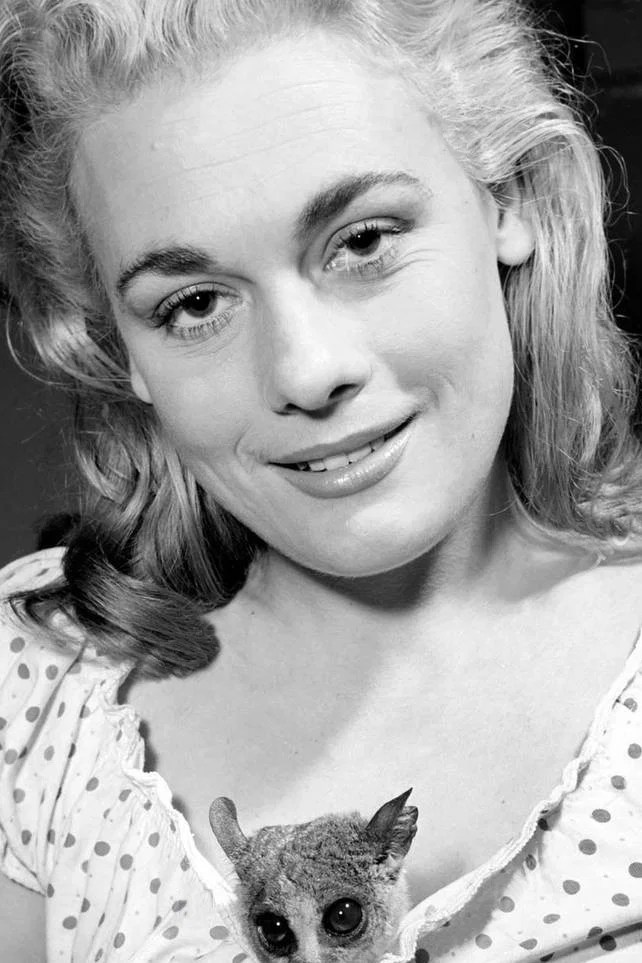
As documented by Tina Wyngarde-Hopkins in her book ‘Peter Wyngarde: A Life Amongst Strangers‘ (Page 242), should Connolly had sought to carry out even the most rudimentary research before publishing his article rather than casting aspersions, he would have found in the Electoral Register from the early 1950’s that Peter Paul Wyngarde and Dorinda Wyngarde (née Stevens) had lived as husband and wife, initially at 11 Oxford Mews and, latterly, at 9, Holland Park Road, London.
Left: Peter’s wife, Dorinda Stevens
A particular statement from this interview has since been appropriated by other members of the press to construct a misleading narrative regarding Wyngarde’s personal history. The statement in question reads: “As a child it was difficult to differentiate between sometimes between fact and fiction.” In 2018, a disgraced part-time columnist used this line in an obituary he’d written for The Guardian following Wyngarde’s death that same year – utilising this quotation to imply that all of Wyngarde’s biographical accounts were fabricated. As was the intent, the remark had been extracted entirely from its original context. Wyngarde was, in fact, recounting his observations as a child during his internment in Japanese-occupied China during World War II. The complete statement actually reads as follows: “As a child it was difficult to differentiate between sometimes between fact and fiction. You can imagine how difficult it was to see people who normally would be very reasonable, to fight and fall out over food.” When examined in its entirety, this passage conveys a substantially different interpretation than the one the peevish Guardian writer sought to establish.
Over the years, well-known personalities have learned to speak with extreme caution when being interviewed by tabloid journalists, simply because an offhand remark, a joke or a comment made out of context can often become the focus of an entire story. Something said in THIS context can be moved in the finished article to THERE, making what was said appear completely at odds to what was meant. Any arising complaint will ultimately be met with, “Well, YOU said it!” It’s really just smoke and mirrors.
This particular article demonstrated considerably greater focus on Ray Connolly personal traits than on Wyngarde’s, functioning as an exemplary demonstration of prejudicial bias and envious sentiment rather than serving as objective journalism. Connolly had predetermined his course of action way before entering that Covert Garden restaurant; before shaking Wyngarde’s hand, and certainly while filled his belly with the haute cuisine generously paid for by his host.
Connolly set out to write about a famous heartthrob actor, but from the opening paragraph it was clear that fairness was not his purpose. Rather than discussing Wyngarde’s celebrated performances, enduring popularity or charitable work, he devoted his attention to innuendo and personal criticism. The article was peppered with sly remarks and loaded questions, suggesting that the journalist had already decided what he wanted readers to believe before he had written a single word.
Right: Peter. Disrespected and unfairly represented by a sneering hack
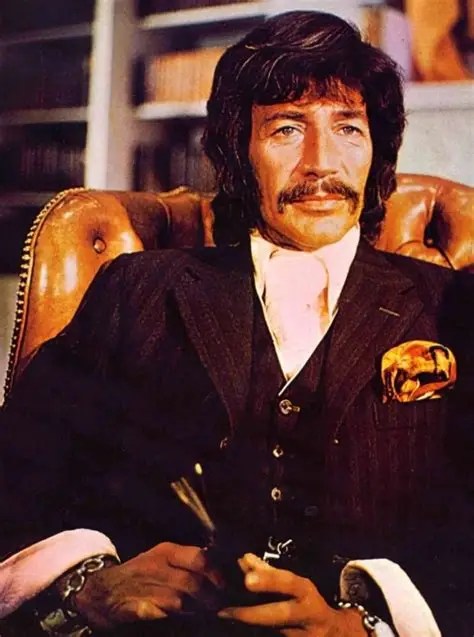
As the article progressed, the writer’s own prejudices were to become increasingly obvious. He treated the actor’s privacy as though it were suspicious and implied that any departure from his narrow view of masculinity required explanation. Instead of respecting personal boundaries, he invited readers to speculate about matters that were entirely unrelated to the actor’s professional achievements. In doing so, he revealed more about himself than about the man he was interviewing.
Beneath the hostility there was definitely to be a strong streak of jealousy. The actor had enjoyed decades of public affection, success and admiration, while the journalist could only observe from the side lines. Unable to diminish the actor’s accomplishments, he attempted to cast aspersions on his private life. The resulting article was less a work of journalism than a display of resentment, exposing a writer who mistook malice for insight and gossip for reporting.
Does this really matter over 50 years on?
More than fifty years after it first appeared, this vindictive newspaper article is still causing significant damage to Peter’s reputation. In the modern era, many people assume that the passage of time naturally weakens the impact of negative publicity, yet this is not always the case. When journalists continue to cite or reference an old and hostile article, its claims are repeatedly introduced to new audiences who may have little knowledge of the wider context. As a result, allegations, insinuations and rumours that should have long since been examined or challenged can become frozen in the public record, gaining an undeserved appearance of permanence and credibility.
The problem is compounded when later writers rely on previous articles rather than undertaking original research. A single biased account can gradually evolve into an accepted narrative simply through repetition. In the case of a well-known performer such as Peter, whose career spanned decades and encompassed numerous celebrated performances, an old newspaper story can unfairly overshadow artistic achievements and professional accomplishments. Readers encountering references to the article today may assume that its conclusions are historically accurate, even if the original piece was influenced by prejudice, sensationalism or incomplete information. This creates a distorted picture of the individual and risks reducing a complex life and career to a single controversial episode.
The continued use of such material also raises important questions about journalistic responsibility. Historical sources should be examined critically, not merely recycled because they make for dramatic copy. When journalists repeat the claims of a decades-old article without investigating its reliability, they effectively prolong its influence and potentially its injustices. For Peter, whose legacy continues to attract interest from fans and researchers, responsible reporting requires a balanced assessment of all available evidence rather than reliance on a single hostile source. Only through careful scholarship and fair-minded journalism can the historical record accurately reflect both the achievements and the challenges of a public figure’s life.
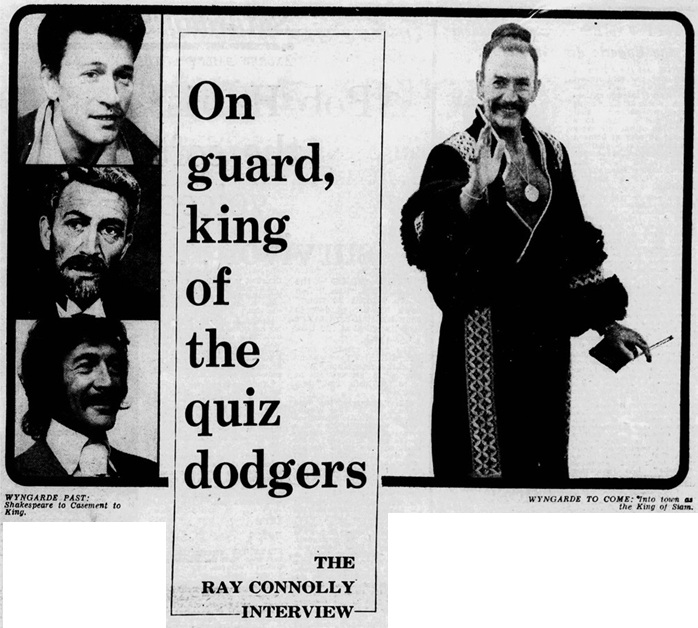
Published in The London Evening Standard on 6th October, 1973


