Forget what you’ve read on Wikipedia and other misinformed blogs! This is the REAL Peter Wyngarde…
THE HELLFIRE CLUB: THE OFFICIAL PETER WYNGARDE APPRECIATION SOCIETY: https://www.facebook.com/groups/813997125389790/
BIOGRAPHY
PETER PAUL WYNGARDE was born on Wednesday, August 23rd, 1933, in Marseille, Southern France. He is the son of an English father and French mother.
Owing to his father’s work, Peter spent much of his early childhood moving from country to country, and was educated in a number of different schools. One city that left a lasting impression on him was Shanghai where he’d been left temporarily in the care of a Swiss family while his father was away on business. Amidst the turmoil and confusion, news broke that the Japanese had captured the city, and when soldiers of the Imperial Army began arresting all British citizens, Peter found himself interned in Lunghau Civilian Assembly Centre [2].
Morale was low in the camp. However, when a radio was smuggled in, as one of the youngest detainees, Peter was used as a runner to spread the news between billets about the Allies progress, and the mood soon lifted. On one occasion while on his rounds, he was caught by a guard, who punished him by breaking both his feet with a rifle butt, and then throwing him into solitary confinement.
One concession the Japanese did allow was for the prisoners to put plays on in the canteen, and it was here that Peter got the acting bug. However, with the dropping of an atomic bomb on Hiroshima, the war was suddenly over. The American’s finally liberated the camp and Peter, along with hundreds of his fellow internees, boarded a cargo ship for Liverpool.
Suffering from malnutrition, Beriberi and Malaria, he was taken to a sanatorium in the Swiss mountains where he remained for nearly two years. After completing his education in Switzerland, France and England, Peter reluctantly honoured his parents’ wishes, and entered university, where he began studying law, but dropped out soon after in favour of a career in advertising. After a brief spell with an agency in London, he walked into an audition, read the part, and was cast as the understudy for the lead in a play in Brighton.
Whilst in Rep at The Grand Theatre in Southampton, he met and fell in love with a young actress, Dorinda Stevens (birth name: Dorothy May Stevens), of whom he said: “She was the most beautiful girl on the block, and I got her!” They married in small church in Sicily. The marriage lasted over six years.
In the mid 50’s, he met up-and-coming actor, Alan Bates, with whom he formed a strong professional bond based on a mutual love of acting [3]. At the time, Peter was living in Kent, where he owned a next door to the actress, Dame Edith Evans. For convenience, the two actors rented a flat in London to use when either one of them was appearing in the West End.
While touring with ‘Duel of Angels’ (1958-1960), Peter and his leading lady, Vivien Leigh, became inseparable, and were soon romantically involved. Their Co-star, Claire Bloom, suggested later that Ms Leigh had set her sights on Peter from the outset. “All the girls in the play adored Peter”, she said in a letter to a student author [5]. ”He was a beautiful boy who we’d have all loved to take to bed! Vivien had her heart sent on him right from the start, and she managed to seduce him.”
There’s a rather cryptic reference to the pair in Lawrence Olivier’s biography, ‘Confessions of an Actor’, which reads: “My diaries bear witness of determined encroachments on my resolve; Vivien departs, Vivien back; Peter away, Peter back (this was evidence of another encroachment form another quarter).” Further reading: ‘Damn you, Miss Scarlett: The Private Lives of Vivien Leigh and Lawrence Oliver’ by Darwin Porter and Roy Moseley . Published Feb. 2011.
Whilst some misinformed sources suggest that Peter had become typecast by his spell in ‘Department S’ and ‘Jason King’, paperwork in the current possession of Peter’s Personal Assistant (see below), bear witness to the number of producers who were eager to cast Peter in new plays and revivals in the West End.
In the early 1980’s, he quit smoking and drinking, and embarked on a healthier lifestyle; jogging daily and visiting the gym four times a week. He also took up Pistol Shooting, entering and winning many local and national competitions. He’s also a master swordsman, who has fought many times at the world-renowned Green Club. He also enjoys watching Formula 1 racing, tennis, boxing and adores Classic cars.
He is a prolific writer, and still works.
CAREER
Naturally gifted, Peter Wyngarde had no formal training. His very first role was in in ‘Pick-Up Girl’ – a play about juvenile delinquency, in which he was cast in a triple role of ‘A Young Man’, ‘The Door Attendant’ and ‘Policeman Owens’. Once old enough, he began learning his trade in Reparatory Theatre in Colchester, York, Chester, Nottingham and Southampton. His first role on the London stage was with the Nottingham Repertory Company at the Embassy Theatre as Cassio in ‘Othello’. From there, he moved to the world famous Old Vic in Bristol, where he played the lead role in both ‘Cyrano de Bergerac’ and ‘Taming of the Shrew’ (Petruchio), and also tried his hand at directing – most notably with ‘Long Day’s Journey into the Night’.
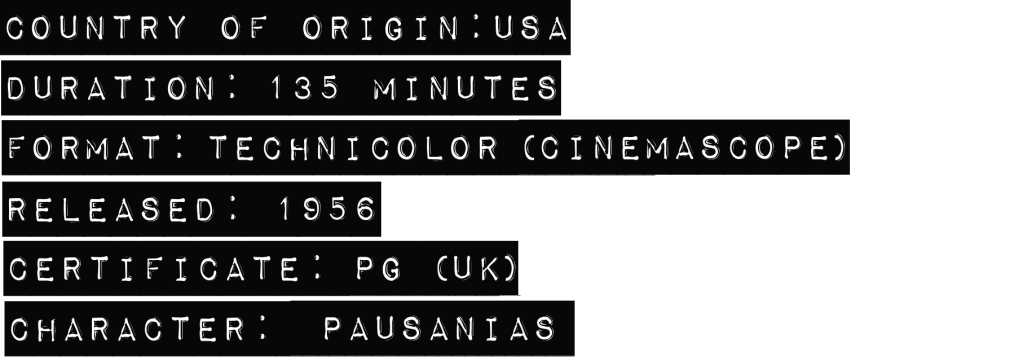
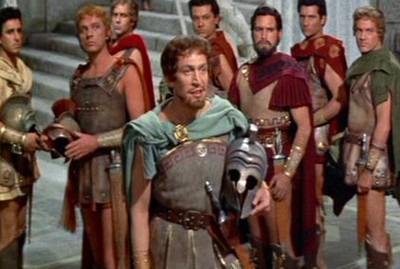
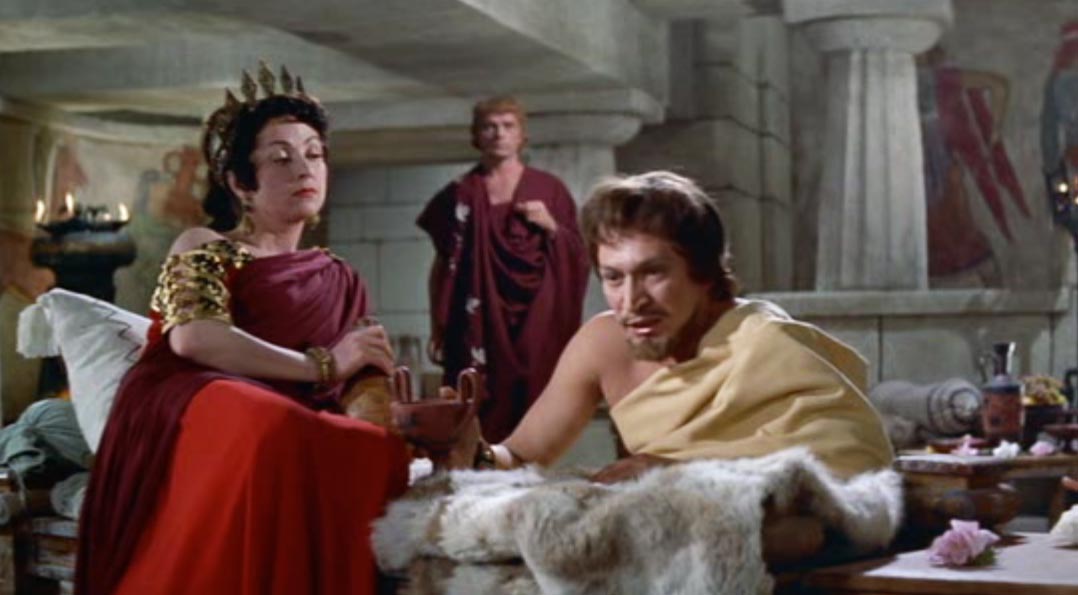
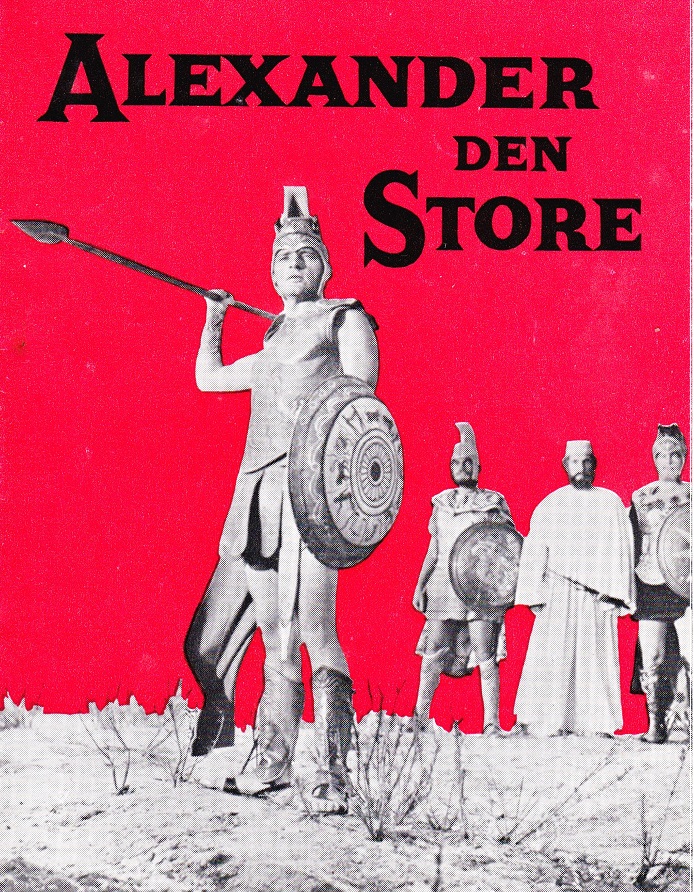
Whilst playing Dunois in George Bernard Shaw’s ‘St. Joan’ in the West End, Peter was invited over to the U.S. to take a screen test for the part of Pausanius in Robert Rossen‘s epic feature film, ‘Alexander the Great’ opposite Richard Burton and Fredric March.
Disillusioned with Hollywood, Peter returned to his first love – the British stage. He was immediately cast as Yang Sun, a Chinese pilot, in Bertold Brecht’s, ‘The Good Woman of Setzuan’, at the Royal Court Theatre in London. It was here that he first made the acquaintance of the Olivier’s – Lawrence and his wife, Vivien Leigh, the latter of whom he later played opposite in the critically acclaimed ‘Duel of Angels’.
In 1957, he was cast as Sidney Carton in a 7-part TV adaptation of Charles Dickens ‘A Tale of Two Cities’. As a result, he received over 4,000 letters from adoring fans, and got his first real taste of being a sex symbol.
Following its hugely successful run at the Apollo Theatre in London in 1958, ‘Duel of Angels’ was to transfer to the American stage. Although reluctant at first to reprise the role of Count Marcellus – mainly because he felt he wouldn’t be able to bring anything new to the part, Vivien Leigh, who’d become extremely close to Peter, managed to change his mind, and so in 1959 he made his American debut at the Helen Hayes Theatre on Broadway. During the tour of the States, he won both the ‘San Francisco Award for Best Actor in a Foreign Play’, and a Tony in the ‘Most Promising Newcomer’ category – both for his portrayal of Count Marcellus.
On his triumphant return to Britain in 1960, he was almost immediately cast as the enigmatic ‘Peter the Painter’ in Monty Berman’s production of ‘The Siege of Sidney Street’ – a film which was based on the true story of the British Government’s legendary battle with a notorious gang of Slavonic anarchist, whose reputation throughout Europe for robbery and murder lead to one of the bloodiest confrontations in British criminal history.
Between numerous starring roles in television productions such as Independent Television’s popular ‘Armchair Theatre’ and ‘Play of the Week’, Peter made two more big-screen appearances in the 1960’s – both Albert Fennell productions. The first, in 1961, was ‘The Innocents’ – a feature-length adaptation of the Henry James’ book, ‘Turn of the Screw’, which was followed in 1962 by the classic supernatural thriller, ‘Night of the Eagle’ (A.K.A. ‘Burn, Witch, Burn’) which was, once again, based of a novel – this time Fritz Leiber’s, ‘Conjure Wife’.
From July of 1960 to March of 1969, Peter appeared in no fewer than thirty television plays, and twice won the coveted Actor of the Year award from the Guild of Television Producers and Directors (UK), in addition to being nominated for an Emmy for his portrayal of Stewart Kirby in the Avengers episode, ‘Epic’. He also made memorable guest appearances in such classic series as The Avengers, The Baron, The Saint, The Champions and The Prisoner, which today have a huge cult following.
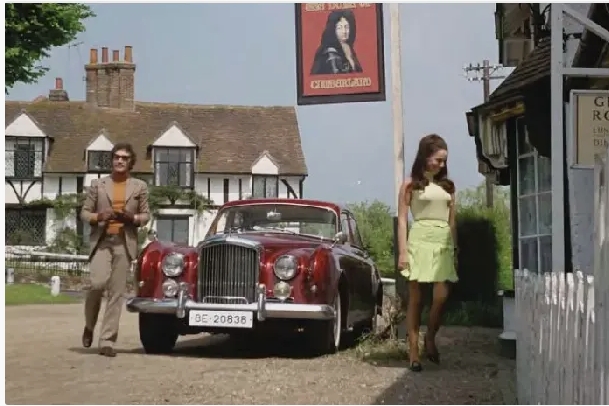
In 1969, Peter was cast in what was undoubtedly his most famous role as author-cum-investigator, Jason King, in the ITC action series, ‘Department S’, and soon became the idol of thousands of women the world over. So overwhelming was his effect on television viewers that in 1971, a brand new series – ‘Jason King’ – was devised, which allowed the handsome novelist to go adventuring without restriction.
When the series came to an end in 1972, Peter decided to return to the theatre and, after being greeted at Melbourne Airport by 30,000 screaming fans, he took the city by storm in the World Premiere of ‘Butley’, which played to packed houses every night. Once back in London, he took the lead role in Charles Dyer’s ‘Mother Adam’ at the Hampstead Theatre, of which the highly respected theatre critic, Harold Hobson, said: “Peter Wyngarde gives a performance of near genius – a great actor in the very best sense of the word”. [7].
In 1973, he embarked on a British tour in Rodgers and Hammerstein’s ‘The King and I’ opposite Sally Anne Howes, appearing in all 260 performances. The following year, he once again took up the mantle of actor/director with ‘Present Laughter’, stopping off along the way to host the 1974 ‘Miss Television’ Contest.
In late 1975, Peter headed out to Austria to work at the English Theatre in Vienna, to both act in and direct productions of ‘Dear Liar’ and ‘Big Toys’, before returning to the big screen in an Austrian film (‘Himmel, Scheich Und Wolkenbrunch’) in the role of a latter-day Rudolph Valentino. The following year, he returned to the British stage in the Lawrence Parnes production of ‘Anastasia’, and to South Africa in 1978 to play Sidney Bruhl in Ira Levin’s new play, ‘Deathtrap’.
In 1980, he was cast as the evil General Klytus in Dino De Laurentiis’s lavish 1980’s sci-fi blockbuster, Flash Gordon. In 1984, after an absence of almost 12 years, Peter returned to the small screen, appearing in the four-part Doctor Who installment, ‘Planet of Fire’, which was followed in short succession by the Hammer House of Mystery and Suspense story, ‘And The Wall Came Tumbling Down’, and a memorable guest-starring role in Granada Television’s ‘Bulman’.
In 1989, Peter returned to the stage playing hard-man, Harry Roat, for a nine-months tour of South Africa, Asia and the Middle East in ‘Wait Until Dark’, and in the same year he was cast as the unsavoury character, Sir Robert Knights, in the stylish, yet explicitly violent British thriller, ‘Tank Malling’.
Although scarcely ever agreeing to be interviewed due to his being repeatedly misrepresented by the media, Peter consented to appear on SKY TV’s ‘Jameson’ Show’ in the early 90’s, and in 1994, he made a welcome return to British TV screens in Granada Television’s popular ‘The Memoirs of Sherlock Holmes’ series opposite Jeremy Brett.
The long-overdue release of both ‘Department S’ and ‘Jason King’ on video in 1993 helped rekindle interest in the debonair Mr Wyngarde, with repeats of the series being shown on satellite and cable channels, and public pressure resulting in the re-release of his 1970 album on CD [8].
In recent years, Peter has made numerous TV appearances, which include ‘Astleys Way’, ‘Dee Time’, ‘100 Greatest TV Characters’, ‘Don’t Knock Yourself Out’ and narrated the acclaimed Timeshift documentary, ‘How To Be Sherlock Holmes: The Many Face Of The Master Detective’ in 2014.
Peter remains one of the most popular British actors of all time, with a thriving fan club (The Official Peter Wyngarde Appreciation Society)[9] and a devoted worldwide following. His appearances at TV and Sci-Fi conventions have drawn thousands of attendees, eager to meet and shake the hand of a true acting legend.








 PETER WYNGARDE: The Official Website