In shooting order, ‘The Treasure of the Costa del Sol’ was the 20th installment of ‘Department S’ to be made at Elstree Studios, but was the 10th episode to be broadcast on television – on Wednesday, 8th October, 1969
N.B.: The figures in brackets indicate Scene Numbers.
WEEK ONE
TUESDAY AUGUST 27th, 1968:
Filming starts at 6.45am prompt, on Sound Stage No.1 at Associated Elstree Studios in Borehamwood. The first scene (25) to be shot is the interior of the Department S office in Paris. The characters involved are Jason King, Steward Sullivan and Annabelle Hurst. The Props Department have provided the following items, which are placed on a table: A plastic fish, a locket and chain with a small photograph of a woman inside it; a tattered notebook; a pack of cigarettes for Jason, and a sheaf of reports. The entire scene takes 25 minutes to shoot, but lasts just 2 minutes on-screen.
The following five scenes (34, 36, 38, 40 & 62), which are again set inside the Department S office involve, firstly Annabelle, then Annabelle and Stewart. Although shot together, in the completed episode, they will appear to be set on different days.
The next three scenes (98, 100 & 102) are set in Annabelle’s hotel room. The Props Manager arrives with a small electronic device which is described as a ‘Transmitter/Receiver’. A note book and ball point pen is placed on the table beside it. All three main cast members are involved. In total, only four minutes and 55 seconds of footage is shot.
WEDNESDAY AUGUST 28th, 1968:
The day begins with the completion of the scenes started the previous day (104) in Annabelle’s hotel room. An additional 40 seconds of action is captured on film. Peter then moves on to Sound Stage No.6, nowhere a set has been built to represent his hotel room. Since these scenes (33, 35, 37, 39 & 41) are meant to be taking place in daylight, a lighting change is required.
The following segment (85) once again take place in Jason’s hotel room., where Sullivan has now joined him. A make-up lady arrives to paint a streak of blood on Peter’s cheek – the result of an altercation with a guard dog which has not, as yet, been shot. Also on set is the Wardrobe Mistress, who places crumpled suit on the bed, which we will see Peter wearing as he runs from the dog in the finished episode.
Two further scenes (87 & 101) are shot on this set, but subtle changes are made to the props; a small silver flask and a pack of cigarettes are brought in and then replaced moments later with a map and pencil. 4 minutes and 25 seconds of footage is captured on film.
THURSDAY AUGUST 29th, 1968:
Today, the action is due to take place on Sound Stage No.1, which has now been transformed into a luxury villa with elegant furnishings and intricate engravings adorning the walls. Rosemary Nicols takes the day off since her character is not required for the next seven sequences (73, 79, 86, 99, 103, 121 & 123), which are scheduled to be shot today.
It is night-time. At the villa, the characters are: Camilo Garria, Elaine, Achillie, Adolfo and Maxime. Members of the Props Department bring in and remove an array of items where and whenever necessary. These include (amongst other things) a telephone, wine glasses, plastic food on dinner plates and brandy bottles. Peter and Joel join the ensemble to complete the days shoot which lasts in excess of nine hours… or 4 minutes and 15 seconds of screen time.
FRIDAY AUGUST 30th, 1968:
Director, John Gilling, assembles the cast – including Peter, Rosemary Nicols and Joel Fabiani, on Sound Stage No.1 for a briefing before attempting to record two final scenes of the week (94 & 128). A lighting change is required., as these sequences are to take place in daytime. Staff from the Make-Up and Props Departments work frantically to create an illusion of passing days between scenes. By the end of yet another exhausting day, Mr. Gilling has managed to capture another 3 minutes and 40 seconds of footage.
TOTAL SCREENTIME FOR THE WEEK: 16 minutes and 6 seconds.
MONDAY, SEPTEMBER 2nd, 1968:
No filming takes place, as this is a Public Holiday.
TUESDAY, SEPTEMBER 3rd, 1968:
Sound Stage No.6 has been turned into the cabaret lounge of the hotel where the Department S operatives are staying. The Props Department have set out masses of flowers, drinks, menu cards and champagne ice-buckets on all the tables, at which a small number of extras are seated.
Only Peter’s character is required for today’s shoot, which involves two scenes (43 & 63), featuring Jason and Elaine. Peter Thomas and David Prowes are also on set. 4 minutes and 10 seconds of screen time is captures.
WEDNESDAY, SEPTEMBER 4th, 1968:
Peter’s first port of call on this morning is the Make-Up Department to have a rather nasty-looking bruise applied to his jaw. He then makes his way over to Sound Stage No.6, where he completes a 10-second sequence (69), which involves him stepping out of a lift and knocking on Elaine’s apartment door. Unusually, the next scene (70), follows on directly from the last, and David Prowes, Peter Thomas, John Louis Mansi and Isla Blair all join Peter on set.
As Peter takes a well-earned break, Rosemary Nicols, Joel Fabiani, John Louis Mansi and George Pastell complete another small piece (95), which is set in the studio of Camilo Carria’s villa. Moments later, Peter and Joel take center stage on the same set to play out a 15-second scene (122), which will appear in the completed episode as taking place several hours AFTER the sequence filmed previously (i.e. 95).
A rather frantic scene (124) in Garria’s studio involving Peter, Joel Fabiani and John Louis Mansi is next on the agenda before the three actors are moved on to the set of Garria’s villa (125), where a huge printing press is placed centre stage. As stunt doubles for David Prowes, George Pastell and Peter Thomas take their places, the Props Department begin staking the wall cupboards with wads of counterfeit American dollars. Two pistols – one for Fabiani and the other for Pastell’s stand-in.
THURSDAY, SEPTEMBER 5th, 1968
On this day, the action moves back to Sound Stage No.1, where part of the floor space has been laid out as a restaurant with small iron and marble tables, complete with coffee cups and wrapped sugar cubes. In the first scene (28), Peter takes his cue at one of the tables, where he is seated opposite Jean Abbott, who is playing a young woman called Estelle.
Meanwhile, on the opposite side of the floor, Joel Fabiani and Dennis Alaba peters are playing out three brief sequences (57, 59 & 61), which is set in a cable car with a huge mountain backdrop.
Remaining on the same Sound Stage, a mockup of a motor launch has been erected, and skin-diving equipment is brought in. Three Extras play out the following eight segments (107, 127, 132, 140, 144, 148, 150 & 152) – some of which are seen from Jason’s perspective, who is watching the action through a pair of binoculars.
FRIDAY, SEPTEMBER 6th, 1968
Once again the main cast members find themselves on Sound Stage No.1, onto which Sullivan’s Vauxhall Ventora, Jason’s Bentley Continental and an American car have been brought. A huge matte backdrop has been erected, and various items constantly arrive courtesy of the Props Department, including diving suits, an underwater spear gun and an automatic pistol. David Gregory who is playing Cal, and Peter Jay Elliot as Thorn, arrive on set and begin work on their first four scenes (3, 5, 7, 11).
Next up are Rosemary Nicols and Joel Fabiani for their scenes (92 & 97), which take place in Sullivan’s car. They are then joined by Peter for a further two sequences (110 & 113), before Peter and Nicols leap out of the vehicle, leaving Fabiani to complete the scene (25 & 27) alone. These pieces make use of the matte backdrop, onto which a piece of ‘Stock Footage’ last used in the Department S episode, ‘One of Our Aircraft Is Empty’, is projected.
While Rosemary Nicols and Joel Fabiani leave the set for the day, Peter is required to take part in a further five scenes (48, 52, 54, 66 & 31) – the first three of which are with David Prowes and Peter Thomas, and the fourth and fifth, alone. All are set in the Bentley.
The final and longest sequence of the day finds Peter and Olivier Hamnett, who plays Anita, on the hotel balcony, which is furnished by the Props Department with potted palms and various flowers.
MONDAY, SEPTEMBER 9th, 1968
On this day, both the cast and crew move out of the studio lot to film the first of eight scenes (6, 8, 10, 12, 14, 17, 21 & 23). The Props Department provides the necessary equipment: air bottles, diving suits and plastic fish for David Gregory and Peter Jay Elliot. A police motorcycle with Spanish number plates is rode onto the lot, and a special FX rig-up for a harpoon gun is tested. An Extra dressed as a Spanish Police Patrolman joins the cast.
Both Peter and his ‘Fight Double’ now arrive with David Prowes for two brief sequences lasting just 20 seconds. The Bentley is then driven across the lot to another site where Rosemary Nicols and Joel Fabiani – the latter of whom is dressed in a skin divers suit, join Peter for nine individual sequences (130, 134, 136, 138, 142, 145, 147, 149 & 154). These are all set against a coastal backdrop, and add up to a mere 1 minute and 30 seconds of action.
TUESDAY, SEPTEMBER 10th, 1968
For just one scene only (89), Rosemary Nicols and Joel Fabiani step back onto the set of the hotel restaurant, where a sheaf of photographs of Achille, Adolpho, Maxime and Camilo Garria have been placed on one of the tables. ‘Extras’ dressed as a waiter and a small gaggle of customers take their places on set.
Meanwhile, out on the Lot, Peter acts out four brief segments (75, 77, 81 & 83), in which he is seen dashing through the grounds of Garria’s villa. He’s then joined by Fabiani for two further scenes (117 & 119) – again, in the villa grounds.
While Fabiani makes a brief visit to the Make-Up Department, Peter, David Prowes and Peter Thomas make their way over to the studio car park to film five more sections (45, 47, 49, 65 & 67), in which Jason is set upon by two thugs.
With Joel Fabiani dressed in a frogman suit, he and Peter record three more short sequences (115, 20 & 143) – the latter of which features Fabiani in an underwater scene, which is filmed through a large plastic sheet to give the effect of water.
This is the final day that the three main cast members – Peter, Rosemary Nicols and Joel Fabiani – are required on set.
WEDNESDAY, SEPTEMBER 11th, 1968
Today Post Production of the episode begins, with a number of inserts being filmed – including the views of three notebooks (26, 29 & 32), in which the following words are written:
(I) ‘Estelle, Madrid 247-12-21’
(II) ‘Anita, Marbella 846333’
(III) ‘Camille, Barcelona 254.53.59
Other shots include photographs of girls (32), Cal’s hand holding a set of plans (5), and Sullivan’s hand holding a wad of $20 bills (39).
THURSDAY, 12th SEPTEMBER, 1968:
Peter Thomas and both Peter and Joel Fabiani’s doubles, work on a total of even short sequences (72, 74, 76, 78, 80, 82, 84, 93, 111, 118, 120), which are set in the grounds of Garria’s villa – the majority of which are made up of ‘Point of View’ shots, as seen by Jason as he is chased across a wooded area of the villa gardens by two guard dogs. Sullivan’s car and two huge Bull Mastiff’s are amongst some of the props used during the day’s shoot.
FRIDAY, 13th SEPTEMBER, 1968:
On the final day of filming, David Gregory and Peter Jay Elliot are the first on the lot to record two scenes (2 & 4) for the episode’s opening teaser. They’re latterly joined by the Extra seen earlier playing the Spanish Police Patrolman. Together they film three short pieces (15, 18 & 22). Stunt doubles for Peter, Joel Fabiani, David Prowes and Peter Thompson now arrive on set to complete the final seven shots (51, 91, 96, 109, 112, 114 & 116) of the week’s schedule outside the villa.
The cases are inexplicable, baffling, and illogical.They have to be to interest…
Department ‘S’ was the world’s most unusual police department. An off-shoot of Interpol based in Paris. It stepped into cases which could not be handled or solved bay any other authority. They were mysteries which may have been caused by a natural occurrence, a calamity, a disaster or by premeditated or spontaneous crime.
Each case was apparently inexplicable, baffling everyone with its total lack of logic.
This was the premise of ITC’s Department ‘S’ series, produced by Monty Berman. It was a complete departure from all other mystery-adventure programmes, and served as a precursor to the popular X-Files series of the Nineties.
The mysteries themselves were only part of its fascination. The appeal of the series lay, more than anything else, in the three principal characters, played by Peter Wyngarde, Joel Fabiani and Rosemary Nicols. They had many ways of approaching the task of solving mysteries. Jason, Stewart and Annabelle worked together in close harmony, but their methods were sharply contrasting.
Department ‘S’ therefore had a many-sided appeal. The stories were intriguing with plenty of action, which provided the viewer with the challenge of spotting the solution to each mystery as the three operatives unravelled one knot after another. Even the most illogical of situations had a logical answer…
Department S was a complete departure from all other mystery/adventure series of the Sixties and Seventies, as the mysteries themselves were only part of the fascination. Its appeal lay, more than anything else, in its principal characters: Two men and one woman. Contrasting personalities as well as styles, each with an individual approach to proving that even the most illogical situations have a logical explanation. Three different ways of approaching each crime, with three outstanding personalities.
“Whenever I feel the urge to exercise, I lie down until it passes!” Jason King
Peter on Jason King
“When I used to see that person up there on the screen and I knew it was me, I still couldn’t not believe it was me. I thought: ‘What the… no one could have a nose like that. And that voice! I mean, what are you doing! Why are you an actor!
“Originally, Department S was based on a very good idea by Ian Flemming. He was working for MI5, which was a special department – it wasn’t Department S – but it was something very similar to it. So we took all the stories which had happened during the war and other domestic stories which had taken place. We got them together and tried to find a solution to the ones that were never solved. And that’s how Department S started.
“I thought that the clothes that were going around for guys at the time were boring. One day I saw a drawing of a 17th Century riding jacket, and thought ‘That looks good. There’s a kind of style to that There’s something about that; it looks good’. And I started doing some drawings, and slowly it became the kind of jacket that Jason wore.
“I remember saying to the producer, ‘Look, we’ve got to go on more locations – we’ve got to stop with this terrible back-projection thing with me in the car and you see this thing wobbling behind. The audience isn’t fooled – you can’t fool them,. We’ll go to Rome and walk down the Spanish Steps, and something will happen, because no matter what anyone says, the camera doesn’t lie. There was a moment where I had to go and do some parachuting, and I said: ‘This is not good. Let’s go and do it for real.’ I was showing off again, of course!”
Department S Characters
Department S was a complete departure from all other mystery/adventure series of the Sixties and Seventies, as the mysteries themselves were only part of the fascination. Its appeal lay, more than anything else, in its principal characters: Two men and one woman. Contrasting personalities as well as styles, each with an individual approach to proving that even the most illogical situations have a logical explanation. Three different ways of approaching each crime, with three outstanding personalities.
Department S Personnel Files
Jason King
Birthplace: Darjeeking, India. Occupation: Author of thriller novels and Interpol Agent. Previous Occupation: Freelance Journalist. Forensic Adviser to the Hong Kong Police Force. Height: 5 fee 11 inches. Weight: 11 Stones and One Pound. Colour of Eyes: Blue. Colour of Hair: Dark Brown.
Jason King is a novelist – a successful writer of thriller novels, and a man with a vivid imagination. His keen interest in crime has lead him to Department ‘S’.
Jason is a man with a flamboyant personality. He uses his imagination and know-how in theorizing what has happened in each case that befalls the Department. He looks at it as if it were a situation devised for one of his books – asking himself what his hero, Mark Caine, would do and think under the same circumstances. His wildest guesses might spin into the realms of fantasy, but in doing so, he often hits upon the truth… or at least one aspect of it.
Stewart Sullivan
Place of Birth: New York City. Occupation: Interpol Agent. Previous Occupation: F.B.I. Agent. Height: 5 feet, 11 inches. Weight: 12 Stones. Colour of Eyes: Blue. Colour of Hair: Light Brown.
Stewart Sullivan is a more down-to-earth character than Jason. He is well-built, with a shrewd mind and considerable athletic ability. He believes in a direct approach. His brain works for him, as do his fists. He will often shoot down King’s wild and imaginary theories, yet at the same time, will seize upon those ideas which strike him as the most practical.
Annabelle Hurst
Place of Birth: Sevenoaks, Kent. Occupation: Interpol Agent. Previous Occupation: Computer Analyst with the Metropolitan Police Force. Height: 5 feet, 7 inches. Colour of Eyes: Blue. Colour of Hair: Auburn.
Annabelle’s approach is the most scientific of the Department ‘S’ team. She is an expert computer programmer, with a highly intelligent mind. She is always alert to observe even the smallest detail which her colleagues might overlook. She will delve conscientiously through accounts, and believes in getting laboratory reports on every piece of evidence she finds – be it a strand of hair or a cold cup of coffee.
Sir Curtis Seretse
Place of Birth: Nigeria. Occupation: United Nations Representative. Height: 6 feet, 2 inches. Weight: 15 stones and 5 pounds. Colour of Eyes: Brown. Colour of Hair: Black.
Sir Curtis is a member of the Diplomatic Mission from the African state of Nigeria attached to the United Nations. His duties include liaising between his department and Interpol. He is therefore responsible for the three Department ‘S’ operatives who are assigned to special cases.
Episode Guide
Six Days
First Broadcast: 9 March, 1969
Location: Aboard Astair flight Golf-Alpha-Zulu-Echo-Bravo, Karachi to London
Date: July 17th
An airplane lands at Heathrow 30 minutes early, according to all indications on board. When the plane lands the crew is met by anxious airport officials, notifying them that they are not 30 minutes early, but six days overdue. Department S has a vested interest in the flight, because Sir Curtis was aboard. As they begin investigating, people start dying.
The Trojan Tanker
First Broadcast: 16 March, 1969
Location: Bedfordshire, England
Date: July 22nd
A tanker is involved in an accident. A witness swears he saw a woman in the back of the tanker, but when the police look there is no one inside. The tanker, however, is not carrying fuel, but rather is elaborately rigged as a living space. A search for the missing woman leads Jason to an old friend, and eventually to France.
A Cellar Full Of Silence
First Broadcast: 23 March, 1969
Location: London, England
Date: June 20th Four men dressed in various costumes are gunned down in a cellar. The gun of one had been fired, the bullet turning up in the body of a man found in the trunk of a submerged car. Stewart pays a call on a crime broker to see who hired the men and how the crimes relate to a house in St. John’s Woods, where a woman is being kept sedated because she thought she saw four men wearing disguises committing a robbery in the house.
The Pied Piper Of Hambledown
First Broadcast: 30 March, 1969
Location: Hambledown, Hampshire, England
Date: April 16th
A woman goes to bed early, taking a sedative, to get enough sleep for a beauty contest. When she wakes up the next morning her entire village is deserted. The only clues Department S can find are a man with a shotgun in a home on the outskirts of the village and a freshly-painted mailbox post.
One Of Our Aircraft Is Empty
First Broadcast: 6 April, 1969
Location: London Airport
Date: April 30th
Sky Tripper 190 requests auto land clearance at Heathrow Airport in London. When boarded, the plane is totally empty. While investigating Stewart locates the body of the pilot, and Annabelle sees a reclusive industry CEO boarding the plane in a photograph.
The Man In The Elegant Room
First Broadcast: 13 April, 1969
Location: Islington, London, England
Date: May 12th
A real estate agent, taking a man to see a warehouse, discovers a room constructed inside the warehouse. Worse, a dead body and a babbling man are locked inside the room. Stewart tries to interrogate the man, but he is killed before anything can be made of his babbling.
Handicap Dead
First Broadcast: 20 April, 1969
Location: Colindale Golf Course, Scotland
Date: June 6th
Stewart attends a golf tournament in Scotland. The tournament leader is found dead near the course. The Department is unofficially involved until someone breaks into the dead man’s living quarters and steals his golf clubs.
Black Out
First Broadcast: 27 April, 1969
Location: London, England
Date: May 26th
A chef goes to the opera in London. Three days later he is found by Mexican authorities in the desert, still his formal attire, unaware of what happened after he left the opera. A case of mistaken identity, leading the Department to Jamaica for turtle in the shell while Sir Curtis is off to America to witness a rocket launching. How are they connected?
Who Played The Dummy?
First Broadcast: 1 October, 1969
Location: The Sierra de Guadarrama, Spain
Date: September 12th
A car, apparently out of control, rushes to its doom in a mountainous, uninhabited area of Madrid. And its only occupant is a tailor’s dummy sitting at the wheel. The chief clue is the expensive tie on the dummy, a British-made tie that Jason notices on someone else in town.
The Treasure Of The Costa Del Sol
First Broadcast: 8 October, 1969
Location: The Costa del Sol, Spain
Date: July 31st A man goes scuba diving while his friend waits in the car. The man returns from the dive with a fish, and his friend shoots him. Before he dies he is able to return fire with a spear gun, killing the shooter. A policeman happens upon the scene and finds the diver’s catch: a plastic fish with $100,000 inside.
The Man Who Got A New Face
First Broadcast: 15 October, 1969
Location: Cap d’Antibes, France
Date: August 16th
A man takes enormous risk by sneak onto the grounds of an estate. He steals nothing, taking the gamble instead to glue a classic theatrical comedy mask onto a sleeping man’s face. The man wakes and sees the mask, dying of a heart attack trying to remove it. Since the man was a friend of Sir Curtis, he wants the Department to investigate who performed “this bad joke”–and why.
Les Fleurs Du Mal
First Broadcast: 22 October, 1969
Location: Rome, Italy
Date: September 26th
A small package has the key to the disappearance of $5 million taken in a robbery. The man charged with delivering the package to a man in Paris is curious, so he opens the package to find three flowers and a cryptic passage from a book. He does not know what the message means only that people involved in the robbery are being murdered, including the prime suspect in the robbery.
The Shift That Never Was
First Broadcast: 29 October, 1969
Location: Stepney, London, England
Date: October 10th The police are called to investigate a manufacturing company manager’s claim that no one showed up for work on a Wednesday in spite of neighbours’ claims that everything at the plant appeared to be perfectly normal. The shift substitution somehow ties to the opening of a nuclear-powered generating station.
The Man From X
First Broadcast: 5 November, 1969
Location: London, England
Date: February 2nd
A couple, necking in a car, are shocked to find a man in a spacesuit coming at them. He falls dead before he reaches their car. The Department wants to know what a man in a spacesuit was doing in London at night, and how it might tie to a planned robbery.
Dead Men Die Twice
First Broadcast: 12 November, 1969
Location: Southern France
Date: July 19th
A man’s home is invaded by armed intruders’ intent on killing him. He has a heart attack and dies before they can, however. The two men go to the morgue to see the body, where they put two bullets into the corpse. Department S investigate the shooting of the body of a man who bears a striking resemblance to a notorious criminal who allegedly died three years earlier.
The Perfect Operation
First Broadcast: 26 November, 1969
Location: City of Southwark Hospital, London
Date: October 24th
A British government official suffers a brain haemorrhage. While in surgery, his surgeon is replaced by another man. Instead of killing the official, the substitute doctor completed the operation. The Department must find out why, while Jason disputes the official government records that state the official has never been to Istanbul.
The Duplicated Man
First Broadcast: 3 December, 1969
Location: Foreign Office, London
Date: February 16th.
A plane carrying a British MI5 agent explodes over the English Channel. Witnesses on a boat crossing the Channel see the plane explode and are certain no one survived. Sir Curtis, however, is confident the agent jumped from the plane prior to the explosion, and sends the Department out to find the agent. The Department’s activity catches the interest of Russian agents, who are also certain the agent – who was also working for the Russians – is still alive.
The Mysterious Man In The Flying Machine
First Broadcast: 12 December, 1969
Location: Paris, France
Date: March 8th
A man murders another man on a flight. He then orders no one to move and opens the airplane door, jumping – to the floor of a warehouse. Other men aboard the “plane” chase and shoot the killer in the warehouse. The Department is called in to learn who would build such an elaborate set in order to murder someone.
Death On Reflection
First Broadcast: 17 December, 1969
Location: Bond Street, London, England
Date: January 18th
Sir Curtis attends an auction. A mirror that he suspects is worth no more than £2,500 goes for £9,000. He is perplexed as to why, and even more concerned when the man who bought the mirror at auction is murdered.
The Last Train To Redbridge
First Broadcast: 14 January, 1970
Location: London
Date: November 22nd
A tube train arrives at its final destination for the evening. A conductor finds a car filled with dead people, and he is overcome by something in the air and dies as well before he can leave the car or notify anyone. As Annabelle is escorting the widow of one of the victims from the morgue, the widow is abducted at gunpoint. Jason further complicates matters by being abducted by the people responsible, while Stewart and Annabelle try to figure out why the massacre happened and who was behind it.
A Small War Of Nerves
First Broadcast: 21 January, 1970
Location: Wiltshire, England
Date: April 20th
Greg Halliday is fed up with his work as a chemical engineer creating weapons that can obliterate the population of large cities. He leaves his job with a canister of the deadly chemical. The Department is out to find him before others who want the chemicals get to him — or before Halliday uses the weapon himself.
The Bones of Byrom Blain
First Broadcast: 21 January, 1970
Location: Marling Dale, Cheshire, England
Date: April 4th
When a chauffeur opens the door for his passenger, a diplomat named Byrom Blain, he discovers a skeleton instead. The Department is called in, but they cannot stop other diplomats from turning into skeletons — including Sir Curtis.
Spencer Bodily Is Sixty Years Old
First Broadcast: 11 February, 1970
Location: London, England
Date: May 8th
A man commits suicide beneath a tree in a park. He has no identification and is completely untraceable. To complicate matters, the coroner’s report indicates the dead man is 60 years old – even though his physical appearance makes him appear to be in his 20s. Before the Department can question the autopsy, the corpse is stolen.
The Ghost Of Mary Burnham
First Broadcast: 18 February, 1970
Location: London
Date: January 4th
John Burnham’s wife was murdered in the parking garage as they were leaving for the evening. However, John continues to see Mary and receive phone calls from her. Who killed Mrs. Burnham and why is a matter of utmost importance for the Department to solve, since, as Sir Curtis tells Stewart in giving him the case, “John Burnham is an important man to the world.
A Fish Out Of Water
First Broadcast: 18 February, 1970
Location: Beirut, Lebanon
Date: March 22nd
The body of an Interpol agent is found near the shore shortly after he arrives in Beirut for vacation. Stewart is upset, not only because the man was a friend but also because Sir Curtis accepts the report that the death was accidental. Stewart rejects that, claiming his friend was an expert diver. Stewart must control his emotions and work around his supervisor’s order to not work on the case in order to discover the truth.
Soup Of The Day
First Broadcast: 4 March, 1970
Location: Liverpool, England
Date: May 2nd
Department S is called upon to investigate a most unusual burglary: four men break into a warehouse and break through a stone wall, all to steal one crate of Portuguese fish soup. The crime becomes more confusing when the stolen soup cans are found discarded less than a day after they are stolen.
A Ticket To Nowhere
First Broadcast: 11 March, 1970
Location: London Airport, London, England
Date: December 6th
A pilot coming in for a landing spies a man on the runway. He is unable to miss the man, killing him. Jason, at the airport to fly to Paris, stumbles onto the situation by befriending the deceased’s niece. In Paris, the Department is charged with the task of finding a missing scientist who has perfected an advanced form of brainwashing. When Jason finally arrives in Paris, he realizes the man discovered on the runway dressed in pyjamas is their missing scientist.
The Double Death Of Charlie Crippen
First Broadcast: 24 April, 1970
Location: Bay of Naples, Italy
Date: August 14th
Assassins attack a limousine with a land mine, but the “man” killed turns out to be a mannequin. Jason nicknames the mannequin “Charlie Crippen” while the Department sets to find out who did the attack, and who the real target is.
Peter’s original script ‘A Cellar Full Of Silence’
Department S In date order
If you wish to watch the Department S episodes in 'Date Order' - those being the dates under the title at the beginning of each episode - here is your guide:18 - 20 - 19 - 22 - 23 - 25 - 27 - 4 - 26 - 5 - 28 - 24 - 6 - 8 - 7 - 3 - 2 - 15 - 1 - 10 - 9 - 12 - 11 - 13 - 14 - 21 - 17 - 16.
Click below for more about Department S and Jason King…
Sociology professor Norman Taylor seems fortunate indeed. He has a smart, beautiful wife, Tansy, who helps him with his research. They share a pleasant house, flashy sports car and well-appointed coastal cottage. He is popular with his students at Hempnell College, respected by his academic colleagues and acknowledged as a front-runner for the college’s chair in sociology. He does not realise that he and Tansy are bitterly resented and envied by his colleagues’ wives, especially Evelyn Santelle and Hilda Gunnison. Only the crippled Flora Carr, who works at the college with her husband Lindsay, seems to take a more charitable view.
Norman’s pleasant complacency is disrupted when he discovers that Tansy has been practising witchcraft. Her belief in magic originates from a field trip to Jamaica two years’ before, when they became acquainted with a warlock who succeeded in bringing a young girl back from the dead, albeit at the cost of her mother’s life. True to his almost religious faith in rationalism, Norman insists that Tansy burn all his magical paraphernalia, despite his wife’s fearful objections. She warns him that they are the targets of malicious spells cast by someone at the college.
That evening Norman receives an amorous phone call from an infatuated female student, Margaret, who subsequently accuses him of raping her. Bill, her distraught boyfriend, threatens him with a gun. Norman easily disarms Bill and the rape accusation is soon proved to be false, but Norman’s problems continue. When he plays an audiotape of one of his lectures received in the mail, it carries a strange distortion that seems to summon something to his house. Tansy stops the tape, but the strange throbbing sound resumes when Norman answers the phone. His wife disconnects the call just in time to prevent catastrophe. Norman attributes Tansy’s fear to an over-active imagination.
Realising that she will never persuade Norman of the danger they face, Tansy gets him drunk and performs a ritual that substitutes her life for his. The next morning he wakes to find her gone, but learns from Hilda that his wife is on her way by bus to their coastal cottage. A recording left by Tansy makes it clear she plans to sacrifice herself in his place. Although he catches up with the bus carrying Tansy, a near-collision with a truck delays him. When he eventually reaches the cottage, there is no sign of Tansy, but he finds her notes on a magical ritual used to break curses. The ritual must be performed in ‘the house of the dead in the place of the dead’.
In a crypt in the local churchyard, Norman performs the ritual and Tansy is saved from drowning in the ocean. She seems to be in a trance. He takes her back to their home, where she suddenly wakens, removes a carving knife from a kitchen drawer, and limps to the chair where Norman was dozing. During the subsequent struggle, Norman disarms Tansy, who collapses. After returning her to bed and locking the bedroom door, Norman takes the distorted audiotape with him to the college.
There, having recognised his bewitched wife’s limp, Norman confronts Flora and accuses her of hypnotising Tansy out of resentment and jealousy. Flora mocks his rationalistic explanation of all the misfortunes that have recently befallen him. She arranges Tarot cards to represent the Taylors’ home and Tansy, then sets alight the cards. A fire is immediately started outside Tansy’s bedroom. Fearing the worst despite his scepticism, Norman runs from Flora’s office to return home. Flora plays the throbbing audiotape over the college’s public announcement system. It brings to life the stone eagle on the college roof above the main entrance. The eagle pursues Norman back into the college.
Lindsay’s arrival at his wife’s office forces Flora to turn off the tape, sparing Norman’s life. Finding that the damage caused by the giant eagle has vanished, Norman returns to his house. It is engulfed in flames, but Tansy is safe thanks to the local fire department. Lindsay tells Flora, as they leave the college, that Norman has been appointed to the chair in sociology. The stone eagle above the college entrance inexplicably topples from its perch and crushes Flora.
A successful school teacher discovers that his wife has been dabbling in white magic and that his house is filled with good luck charms and talismans. As he is a non-believer in the occult, he burns the whole lot in the fire. Unfortunately for him, an enemy with a grudge is now free to use all of their black magic to attack the teacher and his wife – with devastating results.
In Retrospect
Very much regarded as a classic of the genre, Night of the Eagle is a well-shot black and white chiller with plenty of spooky moments to enjoy. Made in an era when the best horror moments still came from subtlety and a brooding atmosphere, the film conjures up a nightmarish world of spells and powerful forces beyond our comprehension. Some fine acting from the distinguished cast help to make us care for the characters and believe the events that play out.
The film kicks off happily enough, with teacher Norman Taylor, a resolute non-believer in the supernatural, lecturing his students on superstition and the like. Soon, however, he discovers that something is amiss at home and his house is filled with dead spiders, locks of hair, dirt from cemeteries and allsorts. He destroys all of these, much to his wife’s horror, and then the real nightmare begins. Taylor’s life begins to fall apart. He is accused of raping a female student at the school, and his wife suffers a nervous breakdown. Eventually he is forced to revaluate his opinion on the black arts when he realises that the misfortune he is suffering is the work of an emery masquerading as a close friend.
Strong on atmosphere, Night of the Eagle is packed with suspense and tension as the horror of the situation escalates up until the finale. The trappings of a good score and nice photography make this easy on the eye and ear, andPeterhimself is very good as the lead who ends up being absolutely terrified and a broken man. Janet Blair, on the other hand, is a little irritating – unfortunately at this particular period in the cinema actresses who had to display fright had a tendency to overact (widening their eyes, screaming, etc.) which can look a little dated. The supporting cast are fine, with Margaret Johnston as a creepy, limping fellow teacher who has a few secrets to hide.
Probably the best-remembered part of this film is the ending, which sees Peter trying to save his wife from their burning home. Along the way, one of the stone eagles on the roof of the school comes to life and chases him through the corridors, until he is saved at the last moment. A simple effect, this, but a clever and memorable one. During this chase, Peter rubs up against his blackboard and a phrase previously written on there – “I do not believe” becomes simply “I do believe”. A lovely little touch in what is a very nice film indeed, not totally brilliant but providing enough thrills and chills to be an above average entry in the genre.
Film Facts
The working title for the film was ‘Torment’, but was changed to Night of the Eagle. Burn, Witch, Burn was always meant to be the title for the American release.
The indoor scenes where shot at Beaconsfield Studios in Buckinghamshire, while the outdoor locations where at Cape Cornwall, St Just, Cornwall; Porthcurno Beach, Porthcurno, Cornwall; and Interesting? Yes No Taplow Court, Berkshire.
Night of the Eagle was the second film adaptation of Fritz Leiber’s classic horror story, ‘Conjure Wife’. In 1944, Lon Chaney played Professor Taylor in ‘Weird Woman’, opposite Evelyn Ankers as his wife.
During the filming of one scene, Peter was accidentally hit by a lorry but was, thankfully, uninjured.
Peter Cushing was actually producer Albert Fennell’s first choice to play Professor Taylor, but he fell ill just prior to the start of filming in 1961, and so Peter was called in to replace him.
There was another scene in the original script in which Peter, as Norman Taylor, had to find a gramophone needle that had played only Scriabin’s 9th Piano Sonata, otherwise known as the Black Mass. However, director Sidney Hayers decided to cut it from the final film.
In the United States, where the film was released under the title, ‘Burn, Witch, Burn’, special “De-Witching” ceremonies were performed by cinema managers before every screening, and sachets of salt were given out to patrons who hadn’t already been “hexed”.
The eagle which appears in the film was called Lochinvar, and had been loaned from London Zoo.
In 1993, a special edition widescreen version of the film was released on video in the United States containing a three minute introduction, written by Paul Frees and narrated by Orson Welles.
Below: A rare still from one of the deleted scenes from the film
“I DO NOT BELIEVE!” Written emphatically on a blackboard in the presence of his students, Professor Norman Taylor dispels belief in witchcraft and all trappings of the supernatural. However, Taylor’s wife, Tansy (Janet Blair), has been liberated from so much scientific logic by a mind-expanding experience in Jamaica, where a witch doctor literally brought the dead back to life, and it is Taylor’s discovery of her convictions that serves as the catalyst for Burn, Witch Burn. Made in England in 1961 as Night of the Eagle, this renowned thriller has achieved cult status – along with Jacques Tourneur’s Night Of The Demon (1957) and Terence Fisher’s The Devil Rides Out (1967) – as one of the finest examples of black magic ever put on the screen. Its reputation has steadily gained momentum and it is only now, with the release of this LaserDisc, that the film is readily accessible to a new generation of connoisseurs and aficionados of terror.
Burn, Witch, Burn was directed by Sidney Hayers, whose only other excursion into fantastic cinema was 1960’s Circus of Horrors, starring Anton Differing. Hayers went on to helm many memorable episodes of “The Avengers” in Britain and continues to this day, yet Burn, Witch, Burn remains his most accomplished work. The fortuitous collaboration of writers Richard Matheson (The Incredible Shrinking Man), Charles Baumont (Masque Of The Red Death) and George Baxt turned Fritz Leiber, Jr.’s thrice-filmed novel “Conjure Wife” into a taut, gripping screenplay. Superb production values were overseen by Julian Wintle and Leslie Parkyn. Leiber’s work first hit the screen in Universal Pictures’ Weird Woman (1944), starring Evelyn Ankers and Lon Chaney in the second instalment of the studio’s famed “Inner Sanctum” series. This adaptation is certainly not faithful to its material, making Burn, Witch, Burn the definitive version of the novel (in 1980, a third filming – somewhat pirated, as the Leiber original was not given screen credit – appeared as the horror/comedy Witches Brew starring Richard Benjamin, Teri Garr and Lana Turner). Interviewed exclusively for this LaserDisc presentation, the still-vivacious Janet Blair remembers the production with enthusiasm and respect. She recalls her first day of shooting was Tansy’s drowning scene off the northern coast of England.
“It was bitterly cold and I had to go over this rocky cliff and continue to walk into the ocean for what seemed to be for me an eternity. By the time I was retrieved out of the water, I was frozen and soaked to the bone. One of the grips ran up to me and made me drink from a thermos which was filled with brandy. Being a non-drinker, I immediately spat it out. So much for the glamorous work of a movie star! “Originally I was told Peter Finch was to be by leading man, but lost no time in becoming utterly bewitched by my co-star, Peter Wyngarde, who was so dramatic and sexy that I nearly forgot I was acting! I do believe this was one of Peter’s largest film roles at the time, and I remember after a day’s shooting he drove me to my hotel and continued that atmosphere of a happily married couple. I adored working with him.”
Also commenting for this disc release, director Sidney Hayers fondly recalls the shooting as very quick and fun to do. After some initial misgivings about the casting of Wyngarde and Blair, he was quite pleased to find these two professionals had great chemistry together. He remarked that even Ms. Blair said at the time she gave this role her all and considered it to be some of her finest work.
Hayers also remembers that the actress playing the true villainess of the piece, Margaret Johnston, had by then become a theatrical agent representing one of the actors in the film. Hayers persuaded her to play the unbalanced Flora, ruthlessly driven to practice the black arts against the happy couple, thereby creating one of the screens most memorable wretches.
The giant stone eagle which terrorises Peterwas in actuality an eight-foot Styrofoam figure that could do no harm should it fall from great heights. The script called for full camera as this prop is transformed from its solid state into a living, winged gargoyle. As Hayers puts it, “It is Peter Wyngarde’s acting and intense focus that really allows the audience to suspend disbelief.” Neither Ms. Blair nor Mr. Hayers have seen the film in thirty years, and were most gracious to share their thoughts on the film’s amazing longevity with horror fans. Now, for the first time on the home screen, Burn, Witch, Burn is presented in its proper 1.75:1 aspect ratio, giving the viewer the chance to see the film as originally intended. Also featured here are the film’s original British title sequence (Chapter 33) and Paul Frees’ deliciously demonic rendering (created strictly for the American version) of the incantation that will protect one from deadly contact with the supernatural evil of Burn, Witch, Burn. “DO YOU BELIEVE?”
Additional Comments
“…Warner have bundled these under the ‘classic’ banner, but there’s only one truly great film here. ‘Eagle’ isn’t but it’s still highly accomplished. Wyngarde(who went on to play moustachioed TV crime fighter Jason King) is excellent as a college professor caught in a web of domestic strife and witchcraft. It benefits greatly from having the crispest transfer in the set, the cool monochrome helping to ramp up the tension…”
DVD Review says: “Night of the Eagle – Highly entertaining – probably Hayers’ best film, not that there is much competition. Oh, I don’t know – one or two of his episodes of ‘The Professionals’ were… Yeah, all right, I’ll shut up now… Peter Wyngarde is shot from the waist up, because he insisted on wearing immodestly tight trousers. Ah, Peter Wyngarde – now there was real man. Spirit of 1969 – where are you now, Peter, when we need you and your devilishly handsome moustache the most?”
Cast Views
Peter… “Can an actor’s life be affected by a fictional supernatural screen role?” asks Peter Wyngarde, star of Night of the Eagle.
Answering his own question, the handsome young actor avows that while a year ago he would have thought an affirmative ridiculous, today he has real doubts after starring in two successive tales of the supernatural.
“I laughed at stories that my fifteenth century weekend cottage in Kent was haunted, but since making ‘Burn, Witch, Burn’ and before that other “spook” thriller, The Innocents, I’m beginning to have my doubts,” Peter says.
The young actor revealed that during the making of both pictures he would often wake up in the middle of the night sweating – that the roles got right under his skin and made him think of the terrifying subject matter.
Night of the Eagle’ and The Innocents have made me over-susceptible to ghosts, strange noises and things that go bump in the night,” Peter says. “And now I’m beginning to wonder how I stand up under the influences of witchcraft and the supernatural which have dominated these motion picture roles.”
Janet Blair… Interviewed exclusively for this Laser Disc presentation, Janet Blair remembers the production with enthusiasm and respect. She recalls her first day of shooting was Tansy’s drowning scene off the northern coast of England.
“It was bitterly cold and I had to go over this rocky cliff and continue to walk into the sea for what seemed to be for me an eternity. By the time I was retrieved out of the water, I was frozen and soaked to the bone. One of the grips ran up to me and made me drink from a thermos which was filled with brandy. Being a non-drinker, I immediately spat it out. So much for the glamorous work of a movie star!
“Originally I was told Peter Finch was to be by leading man, but lost no time in becoming utterly bewitched by my co-star, Peter Wyngarde, who was so dramatic and sexy that I nearly forgot I was acting. I do believe this was one of Peter’s largest film roles at the time, and I remember after a day’s shooting he drove me to my hotel and continued that atmosphere of a happily married couple. I adored working with him.”
Sidney Hayers… Also commenting for this laser disc release, director Sidney Hayers fondly recalls the shooting as very quick and fun to do. After some initial misgivings about the casting of Peter and Janet Blair, he was quite pleased to find these two professionals had great chemistry together. He remarked that even Ms Blair said at the time she gave this role her all and considered it to be some of her finest work.
Hayers also remembers that the actress playing the true villainess of the piece, Margaret Johnston, had by then become a theatrical agent representing one of the actors in the film. Hayers persuaded her to play the unbalanced Flora, ruthlessly driven to practice the black arts against Tansy, thereby creating one of the screen’s most memorable wretches.
The giant stone eagle which terrorisesPeter was in actuality an eight-foot Styrofoam figure that could do no harm should it fall from great heights. The script called for full camera as this prop is transformed from its solid state into a living, winged gargoyle. As Hayers puts it, “It is Peter Wyngarde’s acting and intense focus that really allows the audience to suspend disbelief.”
CRITICS COMMENTS
This low-budget, British import, with Janet Blair and a small cast, is quite the most effective “supernatural” thriller since Village of the Damned. The New York Times
The film is never less than gripping, and past a certain point, you have no idea where this movie is going. With neither the budget nor the technology for flashy effects, the filmmakers had to fall back on quality acting, writing, directing, and editing. They succeeded. Film Threat
A smart shocker, scripted by Twilight Zone regulars Richard Matheson and Charles Beaumont.Chicago Trbune
Sidney Hayers shoots the whole thing with an almost Wellesian flourish, and the script (by Charles Beaumont and Richard Matheson) is structured with incredible tightness as the sane, rational outlook of the hero (Wyngarde) is gradually dislocated by the world of madness and dreams. Time Out
Director Sidney Hayes can be needlessly rhetorical at times, relying on a campus statue of an eagle to create a sense of menace (the UK title was Night of the Eagle), but this is still eerily effective.Chicago Reader
THE AWARDS
Hugo Award – Best Dramatic Presentation
Above: The Daily News, New York – 7th July, 1962
Above: Lansing State Journal, Michigan, USA – 12th October, 1962
Below: A very interesting review of the film by Tania Donald
Below: Burn, Witch, Burn Blu-Ray Review
Click below for more more Night of the Eagle/Burn Witch Burn information…
There are probably more cartoon characters based on Peter Wyngarde than any other actor, here are those that are known to us.
The X-Men Jason Wyngarde
The Villainous adversary of The X-Men, based partly on Peter Wyngarde, and the characters of Jason King and Sir John Claverly Cartney.
Name: Jason Wyngarde
Real Name: Mastermind
His first appearance: Uncanny X-Men 4
Death: Uncanny X-Men Annual 22
Who is Jason Wyngarde? A mutant with sophisticated illusionary powers, Jason Wyngarde always appeared to try be more than what he was. He first attempted a shot with Magneto’s original Brotherhood of Evil Mutants, and later to join the Hellfire Club casting a more handsome disguise for himself. Suffering from low self-esteem and later a bout of insanity brought about by Dark Phoenix, Mastermind was always trying to use his powers for selfish reasons until his death from the Legacy Virus.
His Most Famous Quote: “Teacher’s pets!” A dour Mastermind is annoyed at all the favouritism Magneto is showing Quicksilver and the Scarlet Witch.
What Are His Special Powers: Jason Wyngarde was a sophisticated illusionist, able to create images that would appear very real to people, even enough to cause psychosomatic damage. With the help of the White Queen’s Mindtap Mechanism, Wyngarde was able to put illusions directly into the mind of Phoenix.
His Most Heinous Act: Spending time with Phoenix to corrupt her into becoming the Hellfire Club’s Black Queen is probably Mastermind’s best known dastardly deed. He also was responsible for a series of covert attacks on the X-Men, including inducing Mariko to reject Wolverine at the altar, Storm’s “punk” phase, and Rogue running away from Mystique to join the X-Men.
His Adversaries: As a mutant, Mastermind primarily went up against the X- Men, both on his own and as part of teams. He also once battled Excalibur when he tried to tap into the Phoenix force through Rachel Summers.
His Allies: He got along well enough with Magneto and came close to being accepted into the Hellfire Club. Mastermind was also able to make peace with Jean Grey shortly before his death, genuinely sorry for the misery he had caused. In the Age of Apocalypse timeline, Jason was part of Forge and Nate Grey’s team of traveling performers/rebels.
The New Mastermind: Wyngarde’s previously unknown daughter, Martinique, has taken up the name Mastermind out of respect for her father. Blessed with similar illusionary powers, she has battled Wolverine, Gambit and Daredevil.
Appearances of Jason Wyngarde in Marvel Comics and their current availability:
Vol. 1 – No.129: ‘God Spare The Child’. Published: January 1980.
Vol.2 – No.130: ‘Dazzler’. Published: February 1980.
Vol.3 – No.131. ‘Run For Your Life’. Published: March 1980.
Vol.4 – No.132: ‘And Hellfire Is Their Name’. Published: April 1980.
Vol.5 – No.133: ‘Wolverine Alone’. Published: May 1980.
Vol.6 – No.134. ‘Too Late The Heroes!’ Published: June 1980.
The Essential X-Men – Book 2.
A black and white anthology of the above mentioned Marvel comics featuring the Jason Wyngarde character. Published in the U.S.A. by Marvel Comics. $14.95 (UK – £10.95).
The Uncanny X-Men – The Dark Phoenix Saga.
X-Men comics featuring the Jason Wyngarde Character. Published in the U.S.A. by Marvel Comics.
TV 21 Department S strip
Department Scartoon strip
TV Century 21, later renamed TV21 (from issue 155), TV21 and Tornado (from issue 192), TV21 and Joe 90 (from issue 243), TV21 (from issue 278) and TV21 and Valiant (from issue 347), was a weekly British children’s comic published by City Magazines during the 1960’s and 70’s.
The comic dropped the “Century” from its title in January 1968, after 155 issues, and became known as TV21. The previous year, the character the latter half of the 1960s. The comic dropped the “Century” from its title in January 1968, after 155 issues, and became known as TV21.
The previous year, the character of the “indestructible” Captain Scarlet, the hero of Captain Scarlet and the Mysterons (1967 – 68), had made his first appearance. The backstory of the Mysterons, Scarlet’s Martian enemies, was being revealed in TV Tornado, another City Magazines publication. In September 1968, after 192 issues, TV21 merged with TV Tornado to form TV21 and Tornado.
Mr Six
From the mind of acclaimed writer Grant Morrison! Join disaffected British teen Dan McGowan as he encounters the clandestine group known as the Invisibles and discovers the strange underside of the world in this mind-bending series!
First appeared in the DC Vertigo comics, ‘The Invisible’ comics. First published in 1994, Mr Six appeared in 23 issues.
His alias’s were: Big Malkie Brian Malcolm Jon Six Mister Six Mr. Malkie
Division X
‘6 And A Half Dozen Of The Other’
Division X have been reformed and are brought to the House of Fun to investigate the happenings there, and to find out what is going on in the Mother of Parliaments. Someone has found some magic matter. They manage to track some paranormal material back to Quimper in Soho. While they are meeting him a woman gives a video tape to Jack Flint. They watch it and it shows a woman who looks like Princess Diana and the Moon Child/Shoggoth in delicate circumstances. Quimper has vanished by now, but he speaks to them through a woman at his club. The conspiracy goes right to the top, and it is up to Division X to go to the top too….
It is glaringly obvious that the character of Mr Six as seen in issue No.6 of ‘Division X’ is based on Jason King, as played by Peter in Department S, with Jack Flint and George Harper being inspired by Jack Regan and George Carter as played by John Thaw and Dennis Waterman in The Sweeney.
Flash Gordon
Faithfully adapted by Bruce Jones and supported by amazing art by award-winning Al Williamson, the Flash Gordon comic of the movie would appear in various guises all over the world. Arguably most common Stateside was the softcover album by Western Publishing on newsstands as the film hit theatres – Hardcovers were to follow as the release travelled across the pond to the UK and beyond. The adaptation would last be seen across three issues of the Whitman comic book.
Look In
Jason King made a guest appearance in a three-part comic strip entitled ‘Sky-Jackers’, in issues 47, 48 and 49 of the junior TV listings magazine, Look-In in 1972. (See below).
Televise Favorieten Department S
Published in Holland in 1969, features four different Department S cartoon strips entitled:
‘De Verwenen Geleeden’ (The Disappeared Scientists),
‘Gouldkapers Aan Boord’ (Gold Stealers On Board),
‘Het Poppenmysterie’ (The Puppet Mystery),
‘Diplomaat Vermist’ (The Missing Diplomat).
Bullet Fireball
Fireball, whose real name was never revealed, but who bore more than a passing resemblance to Peter Wyngarde, going up against villains such as Catriona Klangsburg (alias the Cat) while protecting Britain’s interests. He was raised as the legal ward of Lord Peter Flint (the former World War II era super-spy code-named Warlord) after the deaths of his parents, and his “Uncle Pete” continued to be a help and inspiration to him in his adult career.
Could it be… ?
‘Napoleon Dynamite’
Right: Professor Koontz, Napoleon’s so suave British science teacher in the American cartoon series, ‘Napoleon Dynamite’.
Professor Howe And The Plastic Peril
130-page paperback by Jamie Hailstone – published 1st June, 2018. It couldn’t be anyone else…!
Doctor Who The Third Doctor
Published by Titan – we find John Pertwee’s Doctor is in a London gentlemen’s club, playing chess, and nattering to a fellow member who looks uncannily like a young Peter Wyngarde.
2000 AD
Here’s a fellow with some rather obvious creative inspiration who may not have strolled your way before … ‘Dandridge’ appeared in the foremost UK anthology comic 2000AD between 2009 and 2013.
Over the years Peter has inspired a number of semi-professional bands to write and record tribute songs in recognition of the impact he made on Seventies culture. Here are just a few of the more memorable ones and the stories behind them.
BITTER SWEET COMPANYEdmund Kötscher, Rudi Lindt and Peter Ström
This (West) German musical conglomerate released this single via Columbia (Catalogue No.: 1 C006-29 926) in 1972 in the ‘Schlager’ style.
BREADWINNER:Morris De Cony, Fay Allright, Mr. Rubbish and Bob McGrath.
A British-based pop-combo, whose brand of music has been described as not unlike “Ray Coniff filtered through the eyes of a social outcast like Charles Manson…”. Their fascination with Peter began when percussionist/singer/composer, Bob McGrath, found a copy of his infamous album under a tree in the New Forest. After playing it to friends in a local art group, he sent a questionnaire to Peter via his agent for inclusion in a fanzine, ‘One More War’.
‘If Wyngarde Was A Woman’. “On a Seagull’s wings I fly, With Pete up to the sky, Please don’t ask me why, Oh, if Wyngarde was a woman.
If Wyngarde was a woman, I’d sail the seven seas, To find her jewels and spices, And other sexy treats.”
THE PAISLEY WHEELCHAIR EXPERIENCE: Freddie, Karen, Elizabeth, Helen, Amado, The Pogeria Twins.
This Slough-based “avant-garde cabaret” combo were, during the late 90’s, one of the hottest bands on the London pub and club circuit, boasting a set which included such numbers as ‘Shaken Not Stirred’, which paid homage to the legendary Jason King and his TV contemporaries.
In 1997, the band released a limited-edition CD featuring four tracks entitled: ‘The Return of Jason King’, ‘Medallion Man (Disco Mix), and ‘Tank Top Wearers Lament’. Each copy of the CD, which was issued in a black and white sleeve featuring photographs of Peter as Jason, were personally signed by the great man himself and sold exclusively via the Official Appreciation Society.
‘The Return of Jason King’, which was written by Freddie Valentine, calls for the resurgence of the Seventies crime-fighter to help rid our streets of muggers and teenage tearaways:
‘The Return of Jason King’
Crime is everywhere, there are muggers on the street, Who will stab you in the back to get the trainers off your feet. Well, we need a superhero, someone who can swing, The nation cries out! Return of Jason King!
Because, His big moustache, His brandy glass, His car is fast His clothes are flash How we love his ‘tache, And his brandy glass, And his car so fast And his clothes so flash.
The return of Jason King, He won’t wear a wedding ring, He’ll go shagging everything, He really is the king – the king of cool. Jason has returned, He’s been gone for quite a while, So, he’s fighting crime, With glamour, wit and style. Well, we want our superhero, someone who can swing, The Paisley’s cry out! Return of Jason King!
I see a man in a silver Bentley, he’s smoking a six-foot cigarette, He’s very smart, He’s immaculately dressed, He’s got a droopy moustache, writing Mark Caine novels earn him his cash, He speaks Italian, Japanese and French… He’s Jason King of Department S.
“With regard to the ‘The Return of Jason King’ CD,” says Freddie Valentine of the Paisley’s.,”all copies were sold within in two and half months of its release! As we vowed to make this a collector’s item for JK fans, we have resisted the temptation of pressing up more copies! So the people that have a copy, have one of only 40 in the whole universe!!!”
Trivia fact: One of the last copies was taken by Mike Flowers of Mike Flowers Pops! Aside from the 40 copies signed by the great man himself, there were ten promo copies which were given to easy listening DJ’s in London clubs, where the song got a nice bit of exposure!
Another band of interest to Peter Wyngarde fans is The Adventures of Parsley. They are a space-age Hammond Organ combo from London who perform various TV and film themes wearing authentic Space 1999 outfits. Their album ‘Top TV Themes’ includes a great version of the Department S theme, and they have even covered The Paisley Wheelchair Experience’s ‘The Return of Jason King’ single in their live set!
MINX: Jez Fielder
In the autumn of 1999, this Sussex-based rock band recorded a “medium-paced pop cheeser” entitled simply ‘Jason King’, which was written by the bands’ lead-singer, Jez Fielder.
‘Jason King’
His strides are swingin’ All the ladies singing And he’s wearing French Cologne (I say!) A Large Moustache and a bouffant hairdo A gold and marble phone (What’s the matter with it?) He wines and dines them And sixty-nine’s them (Try this new pâté, mmmm) And all the ladies swoon for him But the chaps all think he’s gay Jason King He’s the man with the tan in the Kaftan
Jason King Get up and do your funky thing Jason King He’s the hair with the flares oh yeah hair hair Jason King Hello! Hello! Get up and do you’re thing!
The man with the Canary Kaftan speedboats up the Seine Behold the man with the brazen tan He’s thinking of Mark Caine (Chapter Nine) But if there’s no bestseller in the making he’s the best At infiltrating syndicates just call Department S (I wonder what they do for the rest of the week?)
Repeat Chorus
Velvet lapellations of a lavish purple hue If you point a loaded gun at him he’ll say, “How do you do!” The claret never clashes with his caviar cravat, You won’t find bigger whiskers on a huge dyspeptic cat (Zut alors! What a thing to say)
Repeat Chorus
Recent contact with Jez Fielder revealed that the band are now no more, and the song was never released.
Gloucester-based Indie band released a one-off single in 1997 entitled ‘Shake and Shout’, which fans of Department S will instantly recognise as the disco frequented by one Jason King in the ‘Man From X’ episode.
Initially named ‘Guns For Hire’ and formed in 1980, ‘Department S’ changed their name to escape any links with the spreading ‘Ska’ & Two Tone craze that was sweeping the country. The name was chosen due to the various members fond memories of the TV show and the fact that it seemed to tie them to no particular youth movement.
After releasing one single as ‘Guns For Hire’, the band released 3 singles under the new name. ‘Is Vic There?’ and ‘Going Left Right’ both charted in the UK, while ‘I Want’ fared better in Europe. They split up in 1982.
PAUL LINDEBOOM:
Paul is a musician from Holland who records in his own studio at home, playing all the instruments himself.
One of his songs, ‘Flux Spleen Kittens’ has a strong connection with Peter Wyngarde , since it features a sample of the drum beat from the first track on Peter’s album, ‘Come In’.
“The song came about after I heard the Wyngarde album at a friend’s house,” says Paul. “After sampling the drum beat, I added lead and bass guitar, plus loads of synths to the track. The whole intro to ‘Come In’ gave me a feeling of something that was way ahead of its time. Bearing in mind that the album was recorded in 1970, it still fits today’s musical colours perfectly.”
ROBIN GIBB
Although not strictly a tribute song, these lyrics were written for Peter by Bee Gee, Robin Gibb, in 1970 for his self-titled album. Sadly, the song was never recorded.
One candle….shining…no, not so bright…. Now, where shall I put it? Here? Ah! Hello ! Come in, come in, come in…. Now it wasn’t difficult to find was it? No, come in here….this way… Let me take your coat.
Mmm – that’s beautiful! What is it? No, no…don’t – don’t tell me… Let me guess. It’s…er…mmm, yes, I thought it was… What? Well come closer and I’ll whisper it to you. It’s… yes? Well of course – I’m always right!
Do go in… No, the lights haven’t fused – it’s candlelight. Now what would you like to drink – I’ve started on Champagne. That is a beautiful dress! Do sit down… No, not over there – it’s too far away… Come over here it’s closer to everything.
It’s lovely to see you – here’s to a pleasant evening… And a few surprises. There we are. Are you comfortable? Now where shall we begin?
Words and Music by Hubert Valverde and Peter Wyngarde – EMI Harmonies Ltd/BMG Music Publishing Ltd
2. You Wonder How These Things Began
Well, this begins with a Glen. It begins with a season, Which, for want of a better reason, We’ll call…April. It begins with a forest, where the woodchucks woo ,And leaves wax green, And the vines entwine moonlight lovers.
Try to see it – not with your eyes, because they’re wise, But with your ears – the cool, green breathing of the leaves And hear it with the inside of your hand, The soundless sound of shadows.
Celebrate Sensation! Recall it’s secret place – You’ve been there…you remember? That special place? Where someone held your hand? And love was sweeter than the berries or the honey, Or the stinging taste of mint… It is April – before a rainfall. Perfect time to be in love…
Words and Music by Schmidt and Jones – Warner Chapell Music Ltd
3. Rape
Rape – rape, rape, rape! Rape – rape – rape, rape, rape! It’s utterly amazing how many different kinds of rape there are!
There’s Italian Rape… Uno, due, tres, quatro, cinque, quante Lira. Look into my eye-a-balls, you will see the fire! How much Lira have you gott-a ? Only a quarter? Oh Madonna, you didn’t oughta – for that I’ll have your daughter!
(breaks into mock Japanese…)
Japanese Rape, of course!
American Rape is full of hate and we’re told, practically every minute of the hour. And the way we’re going we’ll never be late, Except for that date, with impatient Black Power!
(breaks into mock Chinese…)
Beginnings of Chinese Rape – endless! One does need time, as any Englishman will explain, If only to apologise for the agonising convenience caused To Mother Nature’s forbidden walls!
In France of course, where fun is greedy, The women are a little more seedy. And rape is hardly ever necessary. So even if the Franc is down, la plume de ma tante is always up and around!
In Germany it isn’t always remembered, What with Liszt, Wagner and Tannhauser, The Rape is synonymous with whips, bunkers and Mauser. Which makes it all comparatively kinky – With gas thrown in to get rid of the stinky!
In Russia it’s far too cold for anything so bold! And being notoriously political (if a trifle hypocritical) Rape becomes piratical,
And Czechoslovakia far more suitable! Which makes the whole thing rather nasty, tasteless and hasty. But as Jason King would say, it depends so much on what you…fancy!
Words and Music by Hubert Valverde and Peter Wyngarde – EMI Harmonies Ltd/BMG Music Publishing Ltd
4. Jenny Kissed Me
Jenny kissed me when we met, jumping from the chair she sat in. Time, you thief who loved to get sweets into your list, put that in. Say I’m weary. Say I’m sad. Say that health and wealth have missed me. Say I’m growing old, but add – Jenny kissed me…
Words and Music by Hunt and Smith – EMI Harmonies Ltd
5. The Way I Cry Over You
Like a child who cries for her mummy, Like the man who loses his money, Like the clown who cries though he’s funny, And the way I cry over you. Like a beggar who roams over back streets, And the shadow that follows behind.
If the faith of love that he’s after, Like the tears that fall from his eyes, Is the way I cry over you.
That’s how I want you. And how I need you. I want you near me, again. Like the leaves that cry in the Autumn, Like the sky that clouds in a gloom.
Like a river that flows without ending, And the tears that fall from my eyes Like the rain that comes without warning, And the breeze that a blind man can feel. And the sun that shadows a rainbow. Like an empty dream in your mind. It’s the way I cry, over you.
Words and Music by F. & H. Valverde – EMI Harmonies Ltd
6. Unknown Citizen
He was found by the Bureau of Statistics to be One against whom there was no official complaint, And all the reports on his conduct agree That, in the modern sense of an old-fashioned word, he was a saint, For in everything he did he served the Greater Community.
Except for the War till the day he retired He worked in a factory and never got fired, But satisfied his employers, Fudge Motors Inc.
Yet he wasn’t a scab or odd in his views, For his Union reports that he paid his dues, (Our report on his Union shows it was sound) And our Social Psychology workers found That he was popular with his mates and liked a drink.
The Press are convinced that he bought a paper every day And that his reactions to advertisements were normal in every way. Policies taken out in his name prove that he was fully insured, And his Health-card shows that he was once in hospital but left it cured.
Both Producers Research and High-Grade Living declare He was fully sensible to the advantages of the Instalment Plan And had everything necessary to the Modern Man, A phonograph, a radio, a car and a Frigidaire.
Our researchers into Public Opinion are content That he held the proper opinions for the time of year; When there was peace, he was for peace; when there was war, he went.
He was married and added five children to the population, Which our Eugenist says was the right number for a parent of his generation, And our teachers report that he never interfered with their education.
Was he free? Was he happy? The question is absurd; Had anything been wrong, we should certainly have heard. Written by W.H. Auden – Curtis Brown Ltd
7. It’s When I Touch You
See, but I do not see. It’s not your hair, your eyes, your lips, your face that gleams, When I – tell those lies. It’s then, When I – touch you.
Maybe you want to care, but once bitten, twice shy, And you seem nowhere there, and I, Just another lie. It’s then, When I – touch you.
Seems you’re far away, your body’s breath on me. Seems you want to stay, and a part longs to.
It’s then, when I, When I, When I, When I – touch you. Words and Music by Hubert Valverde and Peter Wyngarde – EMI Harmonies Ltd/BMG Music Publishing
SIDE TWO
1. The Hippie and the Skinhead
(Spoken): Oh, have you seen this? Now where is it? Oh yes, here it is. Yes, this letter was printed in the Sunday Times, London, 28th September 1969. Shall I read it to you? It was headed, “Skinheads In Skirts” – “We are two girls who according to your article are skinheads. We don’t think you know much about us. Round our way the boys wear big boots, like you say, called Bovver Boots. We’re called Bovvers, Mods, Peanuts and a variety of other names. The boys have crops, like the boys in your picture, not crew cuts, and braces are worn with their Levis. We do work hard, unlike the hippies – I say we because we girls are Mods, or Bovvers, or Peanuts as well as the boys. If you want to see real, clean, decent ones, come to Bookham. We don’t like long hair, hippies, flowery clothes and anything which attracts attention. As for us girls, we wear skirts that are long by today’s standards. M of us have crops – hair that is short on top with long back and sideboards. We wear maxi cardies, stretch lace blouses and we don’t wear make-up anymore. We’re just out for a good time. ” Miss Jane Skinner and Chris Webb, aged 15, Great Bookham.
Song – Billy was a queer, pilly, sexy Hippy, He wore gear – frilly, hairy, zippy. Mohair in the winter, less hair in the summer.
His mac was black, scarf immaculate – Tied loosely (knots interfered with promiscuity!) Beads that went all the way to eternity, Specially on his trips around three-thirty Did Billy the queer, pilly, sexy Hippy.
Then one night he went a-troll with Dilly, To spend a penny and met a Skinhead – Kenny. Kenny was one-too-many, A Skinhead who hated plenty.
But Billy loved his Puritanical gear, His boots, his braces, his hair, And something else which was quite rare.
Kenny was a dour, pimply, silly drear, Whose only joy was knocking down a queer.
So the moment his beetle-esque brows rose in frenzy, Billy gulped, zipped up, and looked less trendy.
The crew-cut Ken and all his men stomped out in Roundhead style, Their boots as small as size being ten, they had to walk in Indian file.
Billy ran up the stairs to the street And suddenly found he was surrounded by feet.
What was night became the day that lovely Ken didn’t want to play, Instead he looked like some bad trip, not at all like any hopeful kip.
Which made poor Billy realise that Peanuts just don’t vitalise! Thud! Thud! Sock! Thud, thud, thud again went the magnificent Ken. Fling into face – grab hair quickly, Snip, snip, snip! Till all was prickly – flat – (Ken : “Short! Just like mine!) What? Oh, Poor Billy, no more hat, size nine! But stop! Halt! Go back! Re-run reel… What’s that between Ken’s clammy hand? A load of hay? Familiar material? (Ken: A wig!) Detached from yellow band? (Ken : No, no – I must be canned!) Underneath this golden mass is a head as bare… (Ken: As bare as my arse!) And what’s this now? Barer still, Peeping out – and another thrill! From torn blouse and buttons spill… (Ken: A pair! A pair o’ Skin’eads! Cor – what a pair! She’s a bird – she’s a bird! A bird!) So Ken became a less dour, silly, pimply drear, Coz Billy certainly was no pilly, sexy Hippy….queer?
Written by Hubert Valverde and Peter Wyngarde – EMI Harmonies Ltd/BMG Music Publishing Ltd
2. Try To Remember To Forget
That moment I – Touched your lingering gaze, And felt your eyes regret their moment’s dew.
And why they shouldn’t be suspect of my intent. (It was hardly new.) So many times – Before I tried to run, Of all you’d spent, every single day.
You’ll find it hard to remember to forget. (It wasn’t you). Most things I said I was made to do, Make love to all who paid the price, like you.
To wine and dine and next in line, A rope, with a view. Who’s lonely now, there’s those endless waits, Roaming, with one motivation.
A horse, a horse – your kingdom for a horse, To ride – your woman’s invitation. You’ll find it hard to remember… To forget.
Words and Music by Hubert Valverde and Peter Wyngarde – Sticks Music
3. Jenny Kissed Me (reprise)
Jenny kissed me… Jenny KISSED me… And it was… Ahhhh!
Words and Music by Hunt and Smith – EMI Harmonies Ltd
4. Widdecombe Fair
(Singers) Dance – to Widdecombe Fair we go. Get on with the show… And watch the spinning wheel turn round, It don’t make a sound…
Words and Music by Vic Smith – Sticks Music Ltd
5. Neville Thumbcatch
Neville Thumbcatch worked daily at the mill, And at weekends, his allotment by the hill. He sank his snout in Mother Nature’s bower, Growing some radishes and the occasional flower. Poor Mrs Thumbcatch meanwhile waited back at home, Her only comfort was an alabaster gnome. Her husband lost sight of the wood amongst the trees, He was a man of Nature who forgot his birds and bees.
(Chorus)
Neville Thumbcatch you! Neville Thumbcatch you!
Best things in life are free so just forget the cost. Enjoy your pride and you won’t miss just what you’ve lost! So Mrs Thumbcatch left as soon as she was able. She took the dog, the cat and the budgie they called Mabel.
She said at last her future now was free from doubts, With George the milkman she’d have kids, not Brussels sprouts! Now his allotment is a place that’s never seen, Because he has to tidy up and cook, and clean.
Sometimes sadness comes and then it’s gone, As the Neville Thumbcatch show goes on… And on…and on…and on…and on…and on…and on…and on…
(Repeat chorus)
Written by Smith and Bain – Sticks Music
6. Over Again (Flight Number 10)
I think I’ve been waiting too long, I just don’t know why. My life has been spent behind doors – On platforms, exits and walls.
And now I’m alone in this world, It seems I’ve been waiting in vain, For someone to come to the door, Once again.
(Spoken)
Flight Number Ten from….where? She would take the last flight. I wonder who they’re waiting for? Can’t be flight number ten.
I wish that boy would stop picking his nose! Why is waiting so…bare? Wait a minute – what’s that? What’s the announcer saying? Flight….404. No, that’s not it…
I think I’ve missed her often before, I just don’t know why. My hopes and my doubts hurting more, My life wasted and gone.
When that train, boat or that plane, Refused to arrive in the rain, To alter my life all the same, Once again.
(Spoken)
I know I’ve been waiting too long. I just can’t remember why. My life has been spent behind doors, On platforms, exits and walls.
And now I’m alone in this world, It seems I’ve been waiting in vain, For someone to come to the door… Never, ever again. Flight Number Ten Words and Music by Hubert Valverde and Peter Wyngarde – EMI Harmonies Ltd/BMG Music Publishing Ltd
7. Pay No Attention
Walk into my eyes and watch me smile, But pay no heed of lips that do beguile.
Wander through my mind and lie upon, And lie upon my heart
(Spoken)
Pay no attention to this part – it is the end. It is the end…
Maybe I can see you leaving now, For we, we must depart. Words and Music by Vic Smith and Peter Wyngarde – EMI Harmonies Ltd/BMG Music Publishing Ltd
8. April
(Spoken): You may think I have not those intimate, improbable thoughts that shade your eyes, Softer than your own soft awakening. For on that moment when you felt ensnared with music more shared than words, And failed to touch that shy smile upon your lips,
More stinging than the taste of mint – Looked deeper than your wildest dreams upon disillusion of your heart. Or sighed more sadly than your own wise eyes.
If you have, then think not I own my shame – It is yours, my lady. We will share them and those who dare to say my singing was meant to hurt – In spite of smiles more sly than kind.
We will do all this with words, That shall forfeit thoughts like fear, hate, must I insist and how… Why is April more than less a month of love And all the rest a restless wander of my soul?
Words and Music by Vic Smith and Peter Wyngarde – Sticks Music/BMG Music Publishing Ltd
Album Details: Released by RCA Victor (1970) – Catalogue Number: SF 8087.
Produced By: Vic Smith and Hubert Thomas Valverde.
Original Value: 39 Shillings and 11d (Approximately £2.00).
Single: 7″ RCA 1967.
Retail Price: 5 Shillings (25 pence).
Released by: RCA Victor (1970) – La Ronde De L’Amour/The Way I Cry Over You
Format: Gatefold sleeve with portrait photograph on the front and with a picture of Peter facing a wall full of graffiti referring to the track ‘Rape’. In the centre, is a full-length photograph of the waxwork dummy of Peter, which was said to have been displayed at Madam Tussauds in London.
Recorded at: Olympic Sound Studios in Surrey, England.
It’s a little known fact that RCA weren’t the first major record company who were interested in getting Peter’s dulcet tones onto vinyl.
In August 1969, Alan Keen Music, who were a division of Marque Music (London) Limited, were the first to approach Peter. The idea in this instance was to release just a single (7”) to begin with, which would be of a self-penned composition entitled, ‘Where, Why Did You Go’.
The contract was signed by Peter on 20th August, 1969, which assured that he’d receive 10% of the retail selling price for the sheet music, 50% of all net sums in respect of royalties both inside and outside the UK, plus 50% of the broadcasting, performing and television fees or royalties.
For reasons known only to themselves, Alan Keen Music failed to release the single – perhaps because a few weeks later, PYE Records Limited had entered the fray with its own one-year contract (starting in September 17th, 1969) for one 7” single.
PYE’s terms weren’t quite as generous as Alan Keen’s, since Peter was only being offered a measly 10% or royalties in the UK, and 2% from overseas sales.
RCA appeared on the scene in March 1970, with the offer to release a single – ‘Le Ronde De L’Amour’, plus an album of self-penned songs. The suggestion that RCA (Sunbury Music Limited) had made the album as a tax write-off is utter nonsense based on the terms of the contract between Peter, Vic Smith and the publishing company. The agreement, which was completed on 1st March, 1970, was entered into on the following terms:
That Peter would receive 7% of the retail selling price in the UK; 6% in the rest of the world.
The contract would last for one year, with an extension option of a further year.
RCA would require to release two albums each year from which it was hoped they would wish to take a single.
And that the budget for each album would not exceed £2,000.
The original track listing was as follows:
Side One:
Come In
Where Shall We Begin?
Rape
Silent Thanks To Noisy Yanks
To Call a Man a Man’
You May Think I Have Not (It’s Then When I touch You)
Colour TV
Side Two:
Merry Christmas
Nurse, Your Hands Are Cold
Taxi Drivers Talk Too Much
Flight No.10 (Once Again)
Try to Remember to Forget
Pay No Attention
Hippy and the Skinhead (Originally entitled ‘The Letter’)
THE FINAL TRACK LISTING WAS:
Entrac
Come In
You Wonder How These Things Began
Rape
La Ronde De L’Amour
Jenny Kissed Me
The Way I Cried Over You
Unknown Citizen
It’s Then When I Touch You
Sectrac
Hippie and the Skinhead
Try To Remember To Forget (Riviera Cowboy)
Jenny Kissed Me And It Was…
Widdecombe Fair
Neville Thumbcatch
Once Again (Flight Number 10)
Lastrac
Pay No Attention
April
SONGS THAT DIDN’T MAKE THE FINAL CUT
D.J.’s
If I Have Made, My Lady (Ballad)
Marie (Ballad)
Merry Sexmas (sung as if drunk)
Nurse, Your Hands Are Cold
Robinson Crusoe’s Story
Silent Thanks To Noisy Yanks
Taxi Drivers Talk Too Much
The Duel
To Call a Man a Man (Ballad)
Walk Into My Eyes (Ballad)
A Personal Message from Jason King
(Taken from the original sleeve notes)
Peter Wyngarde’s personal blend of sophistication and the incurable ability to laugh at himself is epitomized in this album. The outrageous is never far behind and irrepressible when sex leers its inquisitive head as in Rape and the Hippie and the Skinhead. Cynicism has a sneaking glance too and the cruelty of such lyrics as Flight Number 10 and Try To Remember To Forget to Forget are given such a romantic sound that on first hearing they appear disarmingly innocuous which they certainly are not. This was intentional with the invaluable help of Hubert Valverde whose music has the intangible lyricism that makes a love song that is felt and seen when it is heard.In Vic Smith they have found a partner who has brought his own cool mastery of connection – blending the two talents into a unique combination without distracting when he subtly injects his own particular sound in the marvellous arrangements. But of course it is Peter Wyngarde’s unique and personal magnetism that shines through. I can think of no other album that has brought such continuous pleasure than this outrageously funny, original and versatile one.
Jason King
TRACK REVIEW
SIDE ONE
Track 1: Come In.
Written by Peter Wyngarde Hubert Valverde.
Opens with a strident percussion rhythm, which fades to uncover a familiar voice singing excerpts from a later track, ‘La Ronde De L’Amour’. Peter is evidently making preparations for a female guest – this establishes the album’s leaning towards the romantic side of his image, obviously building upon the Jason King following of the time. The lyric – penned by Peter himself, displays all the modesty of his alter-ego who, as the connoisseur of all things sensual, a single sniff is all that is required to determine his lady’s particular brand of perfume. However, one wonders as to the status of his companion with the inclusion of the line, “No, the lights haven’t fused, it’s candlelight!” The track establishes a relaxed, intimate mood, but implies that all might soon change. “Here’s to a pleasant evening… and a few surprises!
Track 2: You Wonder How These Things Began.
Written by Schmidt and Jones.
No initial surprises as we move swiftly on to track two. Here the sensualist theme continues as Peter offers up a softly spoken piece of poetry backed by a gentle harp, celebrating the communion with nature that comes with Spring time and first love: “Recall the secret place? You’ve been there, you remember? Where someone held your hand, and love was sweeter than the berries or the honey, or the stinging taste of mint.” This place obviously made an impression on Peter, as we find him utilizing its strong imagery later on in one of his own lyrics. This track concludes gently with him that it is “a perfect time to be in love.”
Track 3: Rape.
Written by Peter Wyngarde and Hubert Valverde.
Without so much as a pause for breath, we go straight into the next track – the strident beat returns and we find ourselves heading at speed into the most controversial piece on the entire album: ‘Rape‘. Guttural exclamations and female screams lead us to Peter, who informs us that “It’s utterly amazing how many different kinds of rape there are!” We are then treated to his perceptions of rape around the world – Italy, Japan, America, China, Britain, France, Germany and Russia – no major power escapes observation.
Left: Peter’s original handwritten lyrics for Rape.
On paper it all sounds rather nasty – but here I have to agree with Jason’s sleeve notes. I find the piece outrageously funny. German rape is a particular favourite: “In Germany it isn’t always remembered, what with Liszt, Wager and Tannhauser. The rape is synonymous with whips, bunkers and Mausers, which makes it all comparatively kinky, with gas thrown in to get rid of the stinky.” There is without doubt some strong and evocative imagery in ‘Rape’, and it is definitely not a track to play full blast in the car with the windows down! I won’t even begin to try to justify it inclusion on the album – only Peter can do that, but I would say that it should not be dismissed out of hand. If it really bothers you, try replacing the word “rape” with “sex”, and listen for the humour once again. After all, as Jason King would say, “It depends so much on what you fancy!
Track 4: La Ronde De L’amour.
Written by Straus and Decreux.
The fourth track brings us to yet another slice of the unexpected, as Peter treats us to a wonderful rendition of ‘La Ronde De L’Amour’. Unfortunately, my French won’t stretch to a full translation, but I will say that it does have female recommendation as being a beautiful offering – sentiments with which I cannot disagree. It is quite a change after the shock of the previous track to come to something as gentle as this. If, as I suspect, the inclusion of this song was inspired by the film from which it is taken, this is a clear demonstration of the softer side of Peter’s nature, and easily dispels the possible perception which could be garnered solely from hearing ‘Rape’.
Track 5: Jenny Kissed Me.
Written by Hunt and Smith.
Another piece of poetry forms the basis for track five, ‘Jenny Kissed Me’. This is a short but very sweet piece which is led in by an incongruous semi-fanfare which will again form the basis of a later track. ‘Jenny…’ itself is supported by a soft acoustic guitar, and there’s nothing further I can say, since the piece is so short that to give a true impression it would have to be quoted in its entirety. It is however, lovingly delivered by Peter, who also gives us a more swinging version on Side Two.
Track 6: The Way I Cary Over You.
Written by F. & H. Valverde.
Swirling violins introduces track No.6 – a spoken piece of intimacy. ‘The Way I Cry Over You’ – again, powerful imagery: “Like the rain that comes without warning, or the breezethat a blind man can feel. Or the sun that shadows a rainbow. Like an empty dream in your mind. It’s the way I cry over you.” You cannot help but feel that in the hands of a lesser performer, these words could not be done justice. Yet Peter’s gentle, restrained delivery manages to be both poignant and dignified at the same time, giving true depth to this lover’s lamentation.
Track 7: Unknown Citizen.
Written by W.H. Auden.
Unknown Citizen’ brings us to yet another change in style from Peter. As a poem by W.H. Auden, this could have been done as a straight recital. However, by slipping into yet another character, Peter dives into the mood of the poet – adopting his best accent of civil servant pomposity to deliver this seemingly innocent eulogy to a model citizen. The gravity of tone set by this character makes the satirical sting in the tail all the more painful: “Was he free? Was he happy? The question is absurd. Has anything been wrong? We really should have heard.”
Track 8: It’s Then When I Touch You.
Written by Peter Wyngarde and Hubert Valverde.
Once again it’s back to romance for the final track on Side One. This segment is again a sensual experience – as manifested within the title – as Peter’s lyric examines another facet of human relationships; the hesitancy and insecurity of longing: “Maybe you want to care, once bitten, twice shy.”
SIDE TWO
Track 1: Hippie and the Skinhead.
Written by Peter Wyngarde and Hubert Valverde.
The flip side opens with, arguably, the best track of them all – ‘Hippie and the Skinhead’, which had been inspired by a letter from two skinhead girls to the Sunday Times in 1969, who’d written in to put the record straight concerning a previously published article about their aspect of youth culture. The letter demonstrated the age old intolerance of anything “different”, and quite obviously had fired Peter’s imagination as he wrote a wonderfully humorous and biting lyric. The music cranks up into a full-blooded Country and Western stomp (complete with banjo!), with Peter launching himself wholeheartedly into the tongue-twisting verse: “Billy was a queer, pilly, sexy hippy. He wore his gear – frilly, hairy, zippy. Mohair in the Winter, less hair in the Summer. His mac was black, scarf immaculate, tied loosely, knots interfered with promiscuity.” Thus the spirit of the song is set.
Definitely tongue-in-cheek – and slightly provocative. The story develops when Billy meets a skinhead…“Kenny was a dour, pimply, silly drear, whose only joy was knocking down a queer.” The resulting altercation leaves Kenny clutching Billy’s hippy locks (a wig!): “A pair! A pair O’Skinheads! Cor! What a pair! She’s a bird!” So Peter not only pokes fun at the similarly androgynous fashions of the time, but also delivers the clear message that what you see isn’t always what you get. Be careful when judging that book by its cover! ‘Hippie and the Skinhead’ is a great track – the humour just comes bursting through. A good one for slightly tipsy parties
Track 2: Try To Remember To Forget.
Written by Peter Wyngarde and Hubert Valverde.
The second track on Side Two is one of those detailed in the sleeve notes as initially appearing innocuous whilst possessing, in reality, a rather sharp and cruel lyric. ‘Try To Remember To Forget’ is once again penned by Peter, and carries for some reason the subtitle ‘Riviera Cowboy’. Soft orchestration again backs up a marvellous voice, which renders with feeling a whimsical lyric which would appear to have its roots in a matter of personal history. That is the authors’ way of telling you that he finds the words thoroughly confusing. Nevertheless, it’s still a nice song, which fits in well with the other romantic themes of the album.
Track 3: Jenny Kissed Me And It Was…
Written by F. & H. Valverde.
I’m going to say little about this track, other than it is short, sweet and sensual. Indeed, there is so much heart-felt relish in the closing sigh that if the track is based on personal experience, I envy the author!
Track 4: Widdicombe Fair.
Written by Vic Smith.
Reversed recordings and a chunky piano-sound reminiscent of John Lennon’s ‘Imagine’, herald another change in style as we slip into a brief burst of floating psychedelia. This track seems to be more than a segue into the next humming chorus leading us deftly into…
Right: Original RCA press advert for the album
Track 5: Neville Thumbcatch.
Written by Smith and Bain.
The song opens with a tinkly electronic piano and deep resonant cello, reminding me of experimental Beatles tracks. It tells the story of Neville, who is such a hard worker and keen amateur gardener, that he totally forgets that he has a wife at home. Needless to say, this doesn’t make for a happy family life, and soon Mrs Thumbcatch – a woman whose sole comfort is an alabaster gnome, leaves: “She said at last her future now was free of doubts, with George the milkman, she’ll have kids not Brussels Sprouts.” With his wife gone, Neville is kept away from his beloved allotment by the necessary housekeeping.“Thumbcatch…”, although not written by Peter, is another facet of humanity on which he reflects. A circus fanfare motif appears throughout the latter part of the song. “As the Neville Thumbcatch show goes on…and on…and on…”
Track 6: Once Again (Flight Number 10).
Written by Peter Wyngarde Hubert Valverde.
As the thick funk bass line of ‘Neville Thumbcatch’ dwindles away, so is the tragic loneliness of the last track replaced by the isolation of ‘Once Again’. Subtitled ‘Flight Number 10’, this Wyngarde lyric has the author waiting for his lady at the airport: “Flight Number 10 from…where? She would take the last flight!”
An appropriate sense of isolation is built up by the light punctuation of the music, which gradually builds up to a crescendo then diminishes to a supporting background string-sound. This is the second track which, according to the sleeve notes, has an underlying cruelty in its lyric: “I know I’ve been waiting too long, I just don’t know why. My life has been spent behind doors, on platforms, exits and wharfs.” With such poignant words, I think that the only cruelty that might be perceived here is the cruelty of the situation in which the author finds himself. Again, Peter delivers his material in a manner most suitable to the subject. It again demonstrates his awareness of basic human nature that he manages to find humour in the midst of disappointment: “I wonder what they’re waiting for? Can’t be flight Number 10? Wish that boy would stop picking his nose!”
Track 7: Pay No Attention.
Written Peter Wyngarde by Vic Smith.
And so to the end…‘Pay No Attention’ arrives in a fit of Medieval jollity, and yet another mood change. Frivolously, this little piece of self-indulgence lifts the mood, perhaps attempting to end on a high note: “Pay no attention to this part. It is the end. It is the end!” The track trots along with its reeds and pipes, building up to a full orchestration, which finally gives way to a contemporary sound, heralding the beginning of…
Track 8: April.
Written by Peter Wyngarde Vic Smith.
‘April’ retouches themes from Side One’s ‘You Wonder How These Things Began’. Here, however, the romantic images are dropped in a lyric by Peter that must qualify as being the most intense on the album: “You may think I have not those intimate, improbable thoughts which shade in your eyes.” This track speaks of sharing shame and disillusion. It intimates a brooding nature behind the façade we have witnessed over the past fifteen tracks – perhaps even a hidden torment? “Why is April more or less the month of love, and all the rest a restless wander of my soul?” But suddenly the entertainer emerges, and we are sent off with a happy reprise of Olde Worlde music from ‘Pay No Attention’. And that is the end!
Above Left: Peter with members of staff from Selfridge’s department store in London’s Oxford Street, prior to signing copies of his album at the store’s Record Department.
Album Reissue On CD
For four years fans waited with baited breath whilst one record company after another did battle over the reissue of Peter’s album on CD. Then, in 1998, Sheffield based R.P.M. finally came up with the goods under the title, ‘When Sex Leers Its Inquisitive Head’, which came complete with a re-designed sleeve and re-mastered sound.
R.P.M. were renowned as a company who liked to pitch a curved ball. Sometimes it was the restoration of a long lost classic, such as ‘The Teenage Opera’; occasionally it was a barely musical but kitsch experience along the lines of the 1970 ‘England World Cup Album’; or it could be a real slice of classic pop culture like the fabulous ‘Jamie Jones Singles Collection’. So it shouldn’t have come as much of a surprise the R.P.M. has again took one of pop’s more bizarre offerings – Peter’s one and only recording venture, and album steeped in myth and controversy.
RCA, who issued the original album, gave total artistic control to Peter, the Valverde Brothers and producer, Vic Smith. The result ended up being an album that was banned by the BBC due in large part to the “Rape” cut that seems to make light of the act.
“Well, I did promise at the beginning of the album a pleasant evening… with a few surprises!” Peter said with a grin. “The song was never meant to be about physical rape. People take things so literally these days and ignore the humour in it. I’m not saying that rape is meant to be taken light-heartedly. My album was meant to be a bit of fun, that’s all!”
It’s been suggested by some misinformed journalists that the album was withdrawn within a week of its release. THIS IS NOT TRUE. In fact, it completely sold out in just 3 days, resulting in Peterbecoming one of RCA’s most successful acts ever (second only the Elvis Presley) based on initial album sales.
“It sold out in next to no time,” Peter explains, with a sardonic smile. “But RCA point-blankly refused to press any more. I was fuming, as I’d been given a three-album contract with the company, who promised to release one LP every 12 months. The excuse was that production was being moved from Middlesex, I think, to Hollywood in Gloucestershire. They told me that everything would have to go on the backburner, but I just believe that they got cold feet”.
Above: Original RPM magazine advertisement for the ‘When Sex Leers Its Inquisitive Head’ CD
In spite of this, and due to the divisive nature of the album, the decision was made to make no further pressings. Since its original release, the album has achieved a legendary status over the years, with some copies of the album fetching as much as £400+ on the collector’s market.
When, in the 1990’s, it was decided that the time was ripe to re-issue the record, the various labels found to their dismay that it’d become mired in contractual complications, so R.P.M. alone certainly couldn’t have found the resources to free it up. Indeed, the title was scheduled to appear on Creation’s re-issue label, Rev-Ola in 1997, until the powers that be at the label (in the form of CEO, Alan McGhee) said “No way!”, and R.P.M. were able to offer it a more suitable home.
Peter’s masterful portrayal as Jason King, the TV sleuth masquerading as a crime-fighting shag-monster, was so rooted in its rakish era that a revival seemed as likely as the return of the classic Bentley Continental he drove.
The character of Jason King, who was first created for ITC’s ‘Department S’ series back in 1969, epitomised “easy” culture; a decorative hirsute look comprising of sideburns, moustache, and a matching collar-and-tie of raw silk, and suits that made heads turn right around.
For women, most of whom were still chained to the kitchen sink, Jason King was the Romeo who’d come to liberate them from suburban domesticity. All of which makes Peter’s vinyl love-letter, even more bizarre.
A collection of contemporary standards it is not. The album includes songs which explode into rages of male sexuality, crouching in an aesthetic abandon that set off the alarm bells even in those permissive climes. Labels had long been sniffing around, hoping to get Peterinto the studio.
“I’d known the Valverde Brothers for a while, and had written some lyrics for them which they used on tour. They’d been on at me for years to collaborate with them, but I hadn’t really taken it seriously. When RCA came up with an offer, they told me I could do whatever I liked – that’s what really appealed to me. I saw the record as an entertainment in its own right; to be enjoyed tongue-in-cheek.
“I think they (RCA) expected eight or nine Sinatra cover-versions, but we wanted to do something new. The album’s success really took them by surprise. They were mired in a scenario similar to ‘The Producers’, were the only really successful act they had on their books at the time was Elvis Presley, and the plan was that my record would go down as a tax loss. It rocked them on their heels when the opposite happened and it became a tax gain!
The central idea was to string the songs together into one long suite and none were more interesting than the opening trio of ‘Come In’, ‘You Wonder How These Things Begin’ and ‘Rape’. Truly the album’s centre-piece, it’s this suit which has given the album such cult notoriety that collectors will happily shell out £400+ for an original copy. Peter defends the piece on which his musical infamy is based:
“Is it politically incorrect? I’ve really no idea. It’s about all kinds of rape. There’s so much rape going on; rape within bureaucracy, rape at so many government levels, rape of countries. You know, even attempting to explain it totally defeats its purpose.”
The records’ outrageousness often overwhelms what would still be one of the most curious episodes in popular music. The listener is unlikely to forget ‘The Hippy and the Skinhead’, in which Peter reads out a letter written to The Times by two Home Counties Skinhead girls, or the tale of ‘Billy the Queer, Pilly Sexy Hippy’, sung over an incongruous Nashville backing. And there’s even something for discerning lovers of the late Sixties British rock as he takes on The Attack’s ‘Neville Thumbcatch’, which was written by Vic Smith.
Until the release of ‘When Sex Leers Its Inquisitive Head’ the ‘Peter Wyngarde’ album had largely been circulated on enthusiastically-copied cassettes. That was because of how quickly RCA snuffed it out. Over 45 years later, perhaps the rest of the world has finally caught up with Peter’s postmodernist bent. And as with all R.P.M.’s releases, this reissue had been specially crafted. Careful sound restoration has been couple with another of their large fold-out inlays, covered in pictures and notes, which Peter penned as if written by Jason King for the original sleeve, are all included in full.
Catalogue No.: RPM 187
The CD How it nearly didn’t happen
As reported in the Official Peter Wyngarde Appreciation Society quarterly magazine:
Winter 1994: Rumour has it that Creation Records are planning to re-release Peter’s wonderful self-titled album on compact disc in the near future, via their Rev-Ola label.
Summer 1995: Creation Records tell us that the reason for the delay in releasing Peter’s self-titled album on CD as hoped, is down to their inability to track down his original contract with EMI.
Winter 1996: Following Creation’s failed attempt to re-issue Peter’s self-titled album on CD back in 1994, Island Records are now showing a keen interest in putting the recording back on the market.
At the time of writing, Island’s Bernard McMahon is having discussions with Peter regarding the missing part of his original contract with RCA which, as many of you may remember reading in earlier issues of this magazine, was one of the reasons behind Creation’s failure to re-issue the album originally
Spring 1997: After what has seemed like an eternity in the making, Creation Records have finally named the day for the release of Peter’s album on CD as Monday, 12th May, 1997.
At the time of going to print, Creation were negotiating with Peter in regard to his taking part in a signing session at one of London’s leading record stores, but as yet, nothing has been confirmed.
Summer 1997: After almost five years of battling it out with EMI for the right to re-issue Peter’s album on CD, London-based Creation Records have decided NOT to release the LP after all!
Although Creation have not as yet bothered to let us in on the ‘official’ reason behind their suddenly getting cold feet, their reasoning appears to be based on a press leak which suggested that many newspapers and magazines might slate the album because they felt that the track, ‘Rape’, might now be considered “politically incorrect’.
As a result of Creation’s decision, a number of interviews between Peter and various music-related publications – including Melody Maker, had to be cancelled during the latter part of April.
Winter 1997: According to a letter that I received on Friday, October 25th, (1997) Creation Records appear to have had a change of heart concerning the re-issue of Peter’s LP on CD. This appears to have a lot to do with the fact that they’ve finally secured the licence to “immediately” release the recording – pipping RCA themselves to the post.
Spring 1998: Having recently released the highly successful collection of recordings from the BBC archives, which included Sandie Shaw’s ‘Live in the 80’s’, and Ian Gillan’s ‘The BBC Sessions’, R.P.M Records have indicated that they may now be interested in taking over where Creation/Rev-Ola left off last year, and re-issue Peter’s album on CD.
Although nothing has as yet been confirmed, rumours are circulating that there could be a “late Spring” release.
Autumn 1998: Early indications are that Peter’s new CD is selling extremely well. The Virgin Megastore in London’s Oxford Street announced sales upwards of 25 units during its first week of release, and the HMV shop – also in Oxford Street, displayed posters and a standee to promote it.
However, in spite of an initial invitation to all members of the Hellfire Club to attend the launch party in London prior to release, I am yet to receive confirmation of a date, time or venue.
Dutch media campaign from 1970 for Aqua Brava men’s grooming products, which included aftershave, soap, shampoo, deodorant and talcum powder.
1971 Tabac
The Tabac range of men’s toiletries was given its first-ever national campaign, running from the week beginning November 12th, 1971, until Christmas of that year, fronted by a £30,000 magazine burst and the broadcasting of live action advertisements on TV and in cinemas in the London area.
A spokesman for Pembertons told newspapers at the time that Peter had been specifically chosen to feature in the advertisements as market research had revealed that upwards of 70% of all men’s toiletries were actually purchased by women on behalf of their husbands and boyfriends, and that they felt that his association with the product would have a huge effect on future sales.
Having already invested in a £40,000 account with Pembertons, Eylure had hoped to boost Tabac into prominence within the “middle-market” area which, at the time, was dominated by Shoulton’s Old Spice range of products.
It was later reported that as a direct result of Peter’s involvement in the campaign, Tabac aftershave was the biggest-selling men’s fragrance in the United Kingdom during the Christmas 1971 period.
The Tabac range had been taken over by the unlikely-named Etlure Eyelash and Eye Make-Up Company in January of 1971, and had not had a British agency before. The minimal advertising that had been undertaken in the past has been limited to Europe, as it had originated in (West) Germany.
Peter had been approached by the London-based advertising agency, Pembertons, following his hugely successful role as Jason King in Department S, which had been commanding massive audiences from its very first episode.
In addition to the two live-action segments for screening on TV and in the cinema – both of which had been scripted by Peter himself, the campaign also included space in several magazines, including Honey, Vogue, Good Housekeeping, She and Petticoat, which included a “money-off” incentive in conjunction with Penthouse.
The TV screenings began in London on November 23rd, 1971, and ran until December 22nd of that year.
Above: Magazine advert variant
The story of how Peter was recruited
It was back in the early 1970’s that strong-smelling aftershaves, which had long been considered somewhat unmasculine, were suddenly all the rage.
One of the forerunners on the market was a new fragrance called Tabac which, along with such brands as Brute, Hi Karate and Old Spice, had sold reasonably well in Europe, but was in desperate need of a boost in Britain.
Thanks to the ingenuity of one high-flyer in the marketing department of the German-based cosmetics company, Peter Wyngarde was approached to help promote the product – tempted by the offer of an “undisclosed fee”, AND the ownership of a brand new Rolls-Royce!
With Peter now in their corner, the company couldn’t fail but make an impression with the male population of the UK, and with somewhat of a flourish, the new TV advertising campaign was launched.
The initial idea was to find Peter entering a high-end gentleman’s hair salon, where he’d request a trim and a shave – not forgetting a dab or two of Tabac before exiting the establishment. However, Peter’s reaction to the ‘script’ was less than favourable as he believed it lacked both wit and imagination. He immediately submitted his own proposal, which would have him passing two gentlemen on a London street – one of whom would turn to the other and say: “Peter Wyngarde smells… ”. Upon hearing this rather uncomplimentary remark, Peter would turn on his heel in disgust just in time to hear the man finish his sentence with, “…GREAT!”
The idea was, of course, accepted and the campaign, which began just prior to Christmas, 1971, proved to be an enormous success, with high street stockists announcing record sales.
With their grateful thanks, the Germans rewarded Peter with a lifetime’s supply of Tabac, which ensured that the wonderful Mr Wyngarde would always smell… GREAT
1974 Gower Kitchen Furniture
“For people prepared to go out and get business, it’s still there,” said Philip Gower, Chairman and Managing Director of the Halifax-based Gower Kitchen Furniture in 1974.
Gower was speaking about the state of business following a highly successful merger with the Armitage-Shanks group, and was confident that sales of the newly-launched Gower LA range of self-assembly kitchen units would meet the £1.8 million figure projected by September of the following year – particularly as they’d managed to enlist the services of Peter to help promote the Module 21 units, which the company described as an “above-average quality KD kitchen unit.”
The advertising campaign began in earnest in April of 1974, with half-page space being bought in such high-profile publications as the Radio and TV Times, and most national daily newspapers.
Within three and a half weeks of its launch in Stratford-Upon-Avon, the manufacturers reported that orders for the Module 21 Kitchen Unit had reached £274,000, which was a huge uplift from the all-time low which had rocked the industry only six months earlier.
In one of the newspaper advertisements, Peter told prospective customers: “Module 21 is essentially designed to suite all sizes and shapes of kitchen, and there are nine worktop finishes and seven door colours featured in the range.”
Above: Original Gower Kitchen brochure featuring Peter, from January 1974
Thanks mainly to Peter, the year-long campaign proved so successful that Gower were able to open a brand new 125,000 square feet factory and warehouse in Halifax, West Yorkshire, in 1975, costing in excess of £1,000,000.
1970/74 Milk Tray
Peter was the voice behind the famous “And all because the lady loves Milk Tray” line for the famous Seventies advertising campaign.
As the story opens, the camera focuses upon a life-size movie promotional poster for “The Bad, Bad Lady” starring actress Damita Syn, shown dressed in glamorous, but long outdate attire. Standing beside the poster is Miss Syn in the identical dress and elegant pose. The camera pans to an immense and impressive trophy, which had been awarded in the past to film director/producer Z. Z. von Schnerk, and then to another old promotional poster for a movie starring Stewart Kirby, entitled “Sophisticated Scoundrel.” Stewart Kirby (Peter Wyngarde) is seated on the couch–a rather distinguished, laid-back looking fellow, with flowing silver hair, dressed in a smoking jacket and passively enjoying his pipe and a glass of wine. A third gentleman is standing before Z.Z. von Schnerk and Damita who appear to be sizing him up for a movie part. When they ask Stewart for his opinion of the actor for the “non- speaking” part, he sedately steps up to the man, puts on his glasses, peers directly into the actor’s eyes, and agrees, although he drolly comments that the actor is “a bit tall.” A “screen test” is called for, and without a word, Stewart pulls a pistol, s hoots and kills the actor with one shot. “Non-speaking,” chides Damita as the moaning actor falls to the floor.
Across town, dapper investigator John Steed arrives at Mrs Emma Peel’s home just in time to find her leaving to meet an unknown contact. She explains to Steed that she has just received a phone call whereby an anonymous caller has asked to meet her on Fitzroy Lane, stating that it was urgent.
Parked on a rural country lane, Steed and Mrs Peel await the rendezvous with the mysterious caller. Soon an old Preacher comes peddling along on a bicycle and politely tips his hat as he passes the car. “False alarm,” says Mrs Peel, who does not see the Preacher stop to make an adjustment to the parcel in his basket–a parcel that appears to conceal a camera. Returning to her apartment, she plays the tape of the mysterious caller for Steed. The voice is strong and masculine; the words spoken with the eloquence, articulation and enunciation of a trained Shakespearean actor. The caller insisted that he had to see her, to meet him five tenths of a mile down Fitzroy Lane . . . it’s life and death, Mrs Peel . . . I must see you.” Since Mrs Peel is about to go visit a friend, Steed makes a dinner date with Mrs Peel for six o’clock that evening.
At the derelict von Schnerk studios, the three “has-beens” view a film–the one just taken by the Preacher (also known as Stewart Kirby) of Mrs Peel and Steed on Fitzroy Lane. Z.Z. is ecstatic–he has found his “leading lady” for his newest film endeavour, to be titled “The Destruction of Emma Peel.”
AboveLeft: Peter as Stewart Kirby.
A mysterious gloved hand is seen cutting a wire in Mrs Peel’s car engine, and when it next fails to start for her, a taxi coincidentally pulls up at the same time. Conveniently, Mrs Peel directs the moustachioed, bespectacled cabbie (a.k.a. Stewart Kirby) to her destination, but soon realizes she is being kidnapped as gas seeps into the rear compartment. Behind locked gates and an electric fence, Stewart unloads Mrs Peel w ho eventually awakes on a living room floor. Puzzled, she begins to explore what turns out to be a movie studio set.
In a scene of deja vu, she stumbles upon what looks like her own car, which still won’t start; and the same taxi reappears with the familiar cabbie politely tipping his hat to her as he drives past. Next a black limousine, the peeling of wedding bells, a contrived gale-force wind, a blowing a wedding vale, and an engraved invitation to the wedding of Mrs Peel set the stage for her next, almost dream-like encounter. She ponders the invitation with some amusement until she spies a familiar-looking Preacher, standing at the top of a hill, beckoning her onward. When she reaches the top of the hill, the Preacher pushes her over backwards and she rolls down the hill where she finds herself in a graveyard. Each headstone is inscribed with her name–R.I.P Emma Peel. Behind the wheel of a hearse, the undertaker (a.k.a. Stewart Kirby), who bears an uncanny resemblance to the Preacher, calls out, “Mrs Peel . . . we’re waiting for you,” then slowly drives away.
Continuing her exploration of the studio, Mrs Peel discovers the body of the unfortunate actor killed by Kirby–propped up in a director’s chair marked “John Steed.” She hears a woman’s voice and soon finds Damita, dressed like a Queen, seated on a throne, and knitting. In a dramatic entrance, a gladiator bursts onto the scene and shouts to Mrs Peel, “Leave her alone . . . I told you before, stay away from Mother!” In a touching scene of reunion, Damita calls to him, “Alexander.” Alexander (a.k.a. Stewart Kirby) falls before her, “Mother, mother,” he cries. When she asks him how went the war, he exclaims, “It was hell, Mother, the noise, the people . . . and how has my wicked little sister been behaving, Mother?” “She’s evil,” replies the Queen. “Shall we be rid of her, Mother?” “Yes,” she responds, and Alexander attacks and tries to strangle Mrs Peel. Emma Peel, however, is playing for real, and gets a few good licks to her opponent before the Queen hits her with a sword and knocks her unconscious. Stewart is looking slightly frazzled from his pounding by Mrs Peel.
This slideshow requires JavaScript.
Above: All the characters Peter played in this episode
Bizarre encounters with a variety of characters continue for what are now obviously scenes for Z. Z. von Schnerk’ s newest film extravaganza. Armed with a six-shooter, Emma’s next showdown is with a gunslinger (a.k.a.–you guessed it, Stewart Kirby!) in an Old West saloon. After downing a shot of whiskey, he drawls, “Tell you what . . . give you three seconds . . . get out of town. “Catching on to the game, Mrs Peel anticipates the action, and guns down her opponent. “Beautiful, perfect . . . this picture will be my ultimate masterpiece” proclaims Z.Z.. Wiping the sweat from his brow, Stewart staggers off the s et, exhausted.
“Meanwhile, back at the ranch,” John Steed arrives to pick up Mrs Peel for their date, and finding her gone, again listens to the voice on the tape recorder. Back at the von Schnerk studio, over a glass of wine, Stewart and Damita listen half-heartedly as Z.Z. proclaims that this picture would restore them to their former pedestals of glory.
BelowRight: A break during filming. Peter chats with director, James Hill.
Mrs Peel’s next encounters are with a German soldier (a.k.a. Stewart Kirby of course) wielding a machine gun, a horseman brandishing a sword (ineptly played by Damita), and Indians! As an Indian warrior rushes towards Mrs Peel, she shoots three times, and he falls three times, before she realizes she’s shooting blanks. The Indian (a.k.a. Stewart Kirby) physically attacks Mrs Peel who knocks him senseless before escaping into the back reaches of the studio. “You were supposed to win, Kirby,” shouts Z.Z. to a most dishevelled, exhausted and obviously frustrated Stewart. “Why didn’t you tell her that!” pants Stewart, his rich British accent out of character with his Indian costume. “Time for the climax . . . the real death of Emma Peel,” Z.Z. proclaims.
As the wayward trio views the film thus far, it is obvious that Stewart Kirby has always gotten the worst of it during his encounters with Mrs Peel. “She’s an Amazon,” he exclaims . . . “I’m not a stunt man!” Meantime, Mrs Peel encounters a policeman patrolling the studio grounds and she leads him to the body, still in the director’s chair; however, the policeman turns out to be a film extra, an “artiste,” and not a real bobby. When Z.Z., Damita and Stewart discover the intruder, Z.Z. exclaims that the script didn’t call for a policeman. “Well, you’ve got one now,” states Stewart as he placidly sips his wine. “We’ll write him out, permanently,”announces Z.Z.
Soon the policeman and Emma Peel come face to face with a most sinister looking gangster armed with a machine gun. After some amusing banter, the gangster (yup, right again, a.k.a. Stewart Kirby) blows the cop away, permanently.
Back at Mrs Peel’s apartment, Steed finally remembers where he has heard the mysterious voice before as he recalls the famous “To be or not to be, that is the question” Shakespeare line as spoken by the once-famous actor Stewart Kirby.
Again Mrs Peel encounters Damita, now dressed as a southern belle, again sitting on her throne, knitting. A wounded Confederate soldier (yessuh, a.k.a. Stewart Kirby) staggers onto the scene and mustering his best southern accent, addresses Mrs Peel, “I told you before, stay away from Maw!” “Edgar . . . home from the war . . . was it so awful?” Damita asks. He replies, “It was hell, Maw, the noise, the people . . . those darn Yankees. How’s my baby sister been?” “She’s evil,” replies Damita. “I’ll kill her for you Maw . . . they taught me Maw, those darn Yankees, they taught me.” Emma Peel stands by in pleasant anticipation of yet another chance to whip her inept opponent in an almost identical scene as with the gladiator. Again Damita appears to knock out Mrs Peel with a sword, and the rumpled, bedraggled Stewart drags Mrs Peel off to prepare her for the final scene.
With Mrs Peel tied to a chair, Z.Z. introduces himself and reveals his intent, explaining that he is making a movie, perhaps a bit “down beat” but highly authentic because the heroine dies. “I will make you a star . . . posthumously,” he exclaims.
Having put the pieces of the puzzle together, John Steed arrives at the studio and carefully makes his way over the electric fence. He finds a copy of the movie script, “The Destruction of Emma Peel,” and then the body of the actor who is dressed in a suit and hat identical to his own.
Back inside the studio, the set is fitting of the finest horror movie classic–a torture chamber, buzz saw and Poe’s swinging pendulum. Mrs Peel helplessly awaits the final act, as a Dracula-like character, “Herr Doctor,” (a.k.a. Stewart Kirby) and his assistant, Natasha (a.k.a. Damita) approach their victim. “(I must) experiment on living tissue” proclaims the good doctor, “her death must have more poetry . . . it will take time and yet be inevitable. What do you think of that?”
“I think I’m in danger of becoming a split personality,” she calmly replies. Z.Z. stops the action. Stewart is now showing obvious signs of great physical stress and strain from the rigors of this movie; and, never being far from a bottle, thankfully takes a long swig from his pocket flask. Z.Z. orders the two out to fetch the corpse–unaware that the ” body” is now actually the very much alive John Steed. “You’re not feeling the part, Mrs Peel,” says Z.Z. as her chair moves closer to the blade. “I have a feeling I will be feeling it,” she says, eyeing the saw. Z.Z. calls for music then jumps to the nearby piano and strikes up a tune in the melodramatic style of a silent movie. The two wheel in the “live” body of John Steed who leaps into action. Stewart dons his glasses and aims a chair at Steed’s head, but it hits Damita instead. Steed catches Stewart, rips off his wig, removes his glasses, and knocks him out cold. Unfortunately, Z.Z. has a real gun; but during the brief struggle, he accidentally shoots himself and gasps with his dying breath, “Cut, print!”
The story has a happy ending, and Mrs Peel tells Steed the part she liked best in the movie was when Kirby tried to hit Steed over the head with a fake chair, and then demonstrated the act. Problem was, the chair she used was a real one, and Steed is k nocked out. The closing scene shows Mr s. Peel and Steed in a living room, trying to decide which movie to see that evening. Mrs Peel nixes the old Stewart Kirby flick, and they opt instead to go over to her place. With that, Mrs, Peel kicks down the wall of the living room, revealing that they are still on a movie set.
In Retrospect
I had no pre-conceived expectation about my newest video acquisition–I’d never seen The Avengers, and the video sleeve gave little insight about the premise behind the series. Therefore, it was “cold turkey” for me as I settled down to view my first Peter Wyngarde performance since Checkmate. (OK, I’ll confess I had seen Flash Gordon just three days before receiving Epic, but it’s hard to study a man in a mask!).
The opening credits led me to believe Epic was going to be a straightforward, private-eye sort of adventure story featuring a rather stuffy, proper Englishman and the obligatory attractive, rather passive, wimpy female assistant. Naturally, I was drawn immediately to Peter’s character, Stewart Kirby, a ” has-been” of the silver screen. His tasteless dark-framed glasses, smoking jacket, pipe and silver hair were befitting of an actor who had been put out to pasture–a man content to while away his days with his compatriot “has-been,” Damita Syn and a bott le of wine. Unfortunately, mad director/producer Z.Z. von Schnerk had other plans for the two–he would make a movie to restore them all to their former glory, “The Destruction of Emma Peel.” It soon became evident that the fun was about to begin.
There was no end to my pleasure and amusement as I watched Stewart Kirby try again and again to out-manoeuvre and conquer the crafty Mrs Peel (he reminded me of “Wile E. Coyote” of “Roadrunner” cartoon fame). In 53 minutes he portrayed ten different characters, including a preacher, cabbie, undertaker, gladiator, gunslinger, German soldier, Indian, gangster, Confederate (rebel) soldier, and a mad doctor. Some characters were played more seriously than others, with my personal favourite being the Confederate soldier. Being a “darn Yankee” that has spent the last twenty-five years in the Deep South (Mississippi), I was especially amused by Peter’s “Southern” accent–it was delightful. With each encounter with the far-from-wimpy Mrs Peel, Stewart became more and more bedraggled and haggard, a condition which may have been exacerbated by his obvious affinity to drink–like between every scene–I counted nine!
Patrick MacNee plays John Steed, a man who obviously entertains some personal feelings about his attractive cohort, but never calls her anything but “Mrs Peel” (played by Diana Rigg). His role is relatively insignificant in the story until his final daring rescue of Mrs Peel from von Schnerk’s buzz saw and the murderous mad doctor (who is dressed like Dracula and bears an uncanny resemblance to another rogue known only as No. 2) and his trusty assistant, Natasha. Of course, in the end, the dashing hero Steed foils the villains, and the heroine is snatched from the jaws of death just in the nick of time.
With the multitude of costume changes and the wide variety of characters, I suspect the filming of this episode really was an epic and just as physically demanding for Mr Wyngarde as it was for the fictitious Stewart Kirby. Overall, I found Epic to be wonderfully entertaining, face-paced and a delightfully charming way to become better acquainted with Peter’sacting versatility; and I am proud to add this video to my collection.
In his own words, Tennessee Williams “Kicks over the traces” in ‘Camino Real’, the play he had favoured most of the 20 he’d written to date. Its appeal for him was in its “Unusual degree of freedom”.
Theatrically, he took liberties with convention and threw open his stages to a rich assortment of characters. They ranged from a mingling of literary real-life romantics – Casanova (Peter Wyngarde), Marguerite Gautier (Pamela Brown), Byron (Philip Madoc) and Don Quixote (Donald Eccles) – to a wandering American prize fighter with a heart of complaint, Kilroy (Donald Madden), a gypsy (Patience Collier) and her daughter, Esmeralda (Diane Cilento), and many others. It was colourful, eloquent and stimulating.
Above: Peter as Jacques Casanova with Pamela Brown as ‘Camile’
There was, of course, no direct explanation, for this unlikely mixture of characters. “To go to Camino Real with the inflexible demands of a logician is unfair to both parties,” wrote the author in a foreword to the play published in the New York Times before its premier on Broadway in March, 1953. “But stay with it for the first three minutes,” said television director Henry Kaplan, “and you’ll be caught up and captivated by the goings on the plaza.”
The plaza is the central square of the town where the play is set, with its luxurious hotel on one side, and on the other, its “flop house” and “loan shark”. Outside the town is the Terra Incognito – a formidable arid wasteland – through which anyone wanting to leave must pass.
“But it requires innocence to get away and most people when they take stock of their life has taken its toll of innocence, has corrupted them, or that we’ve given way to excesses,” says Peter of the play. “So not many people are able to get away. Certainly not Casanova, the old rake, who led so an exhausting life that he’s too tired to even look for a way out. Instead he drinks.”
He also courts Marguerite Gautier – Camille. “And there’s no way out for her either – especially now that she’s taken to drugs,” said Pamela Brown. “She’s an aging voluptuary.”


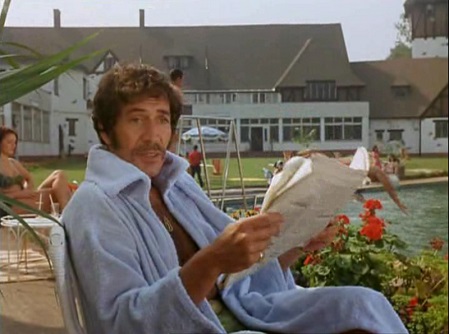
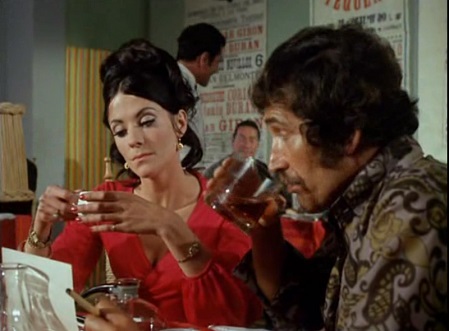
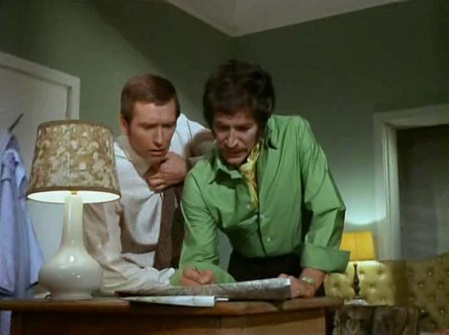

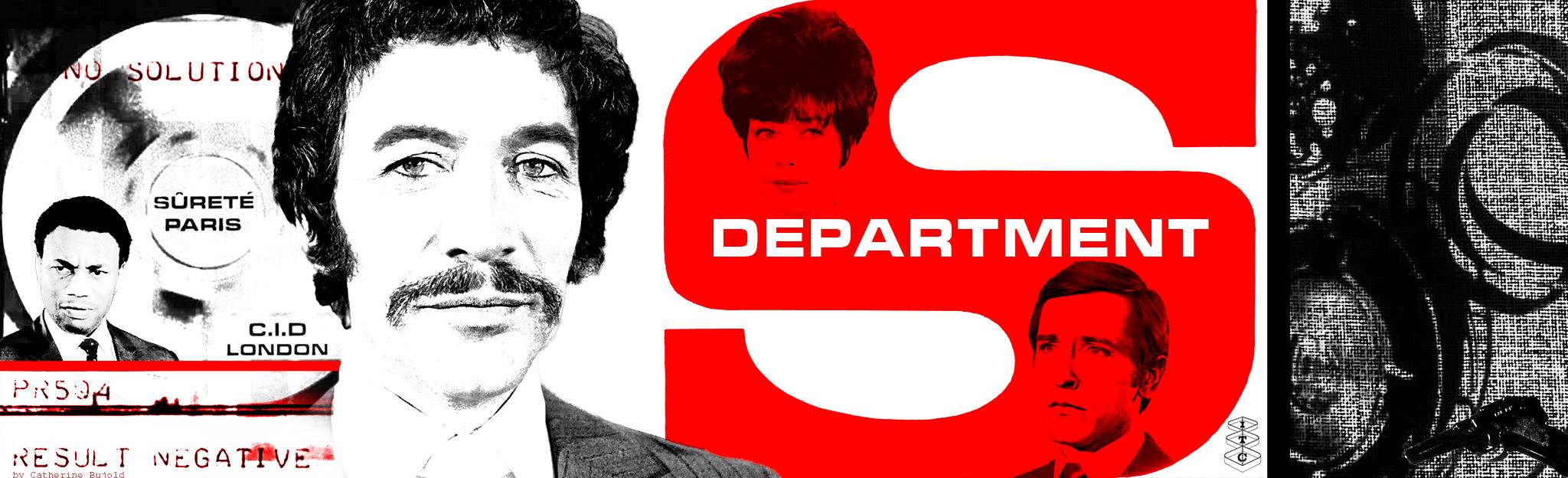
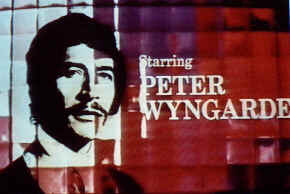

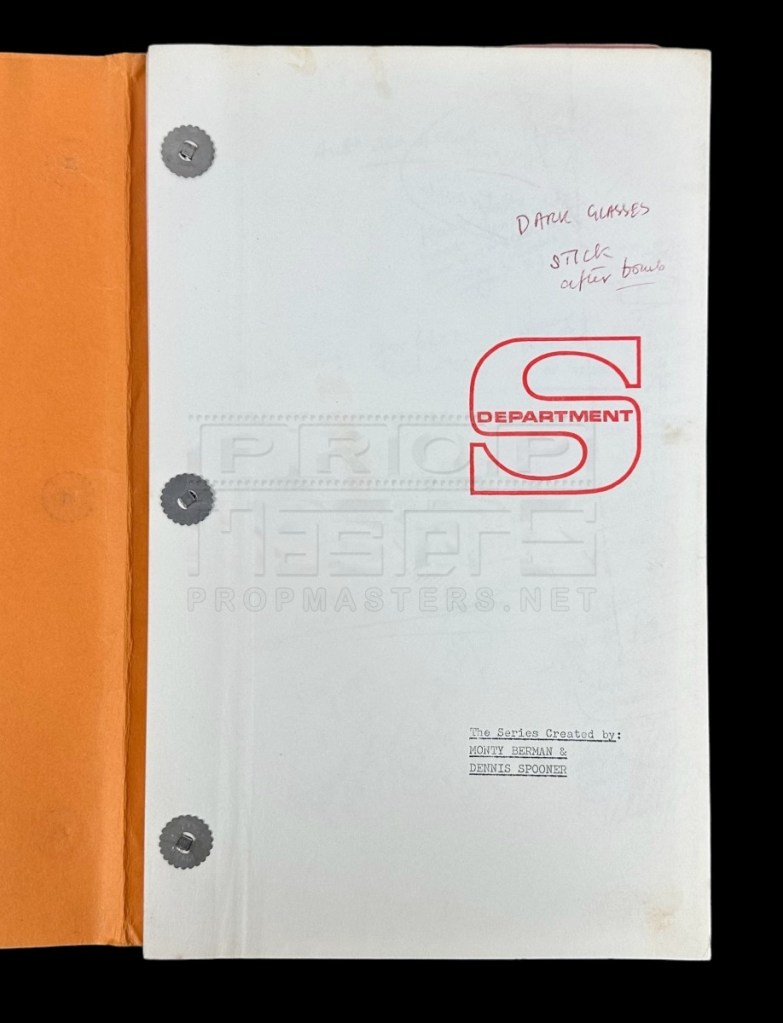
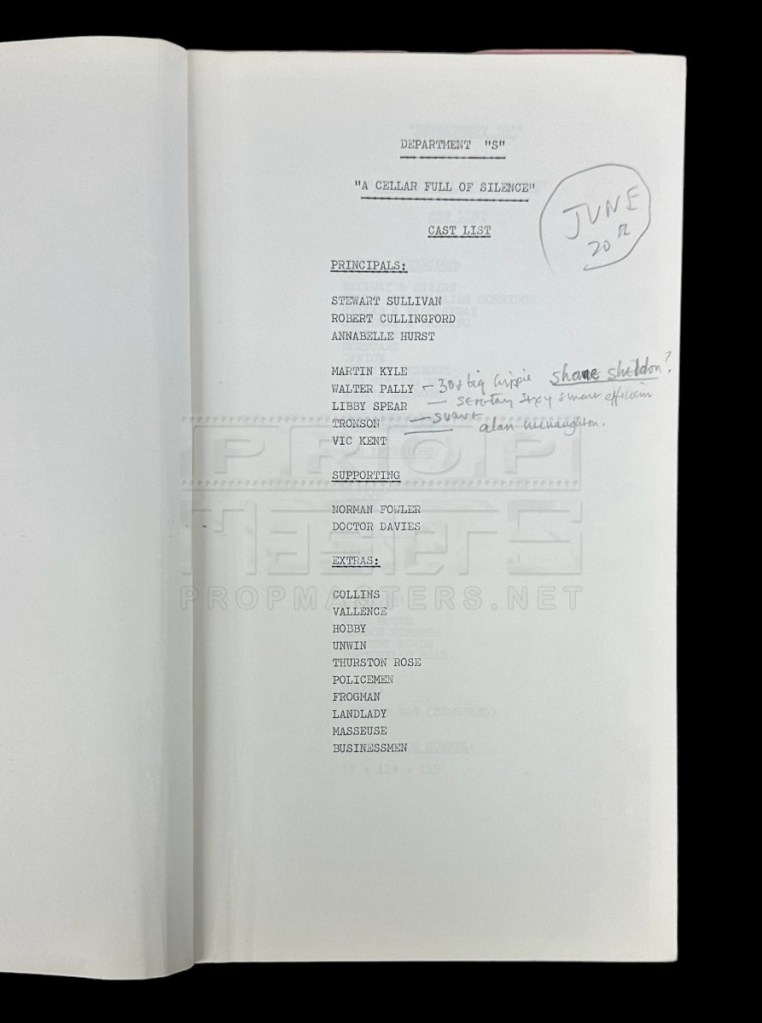


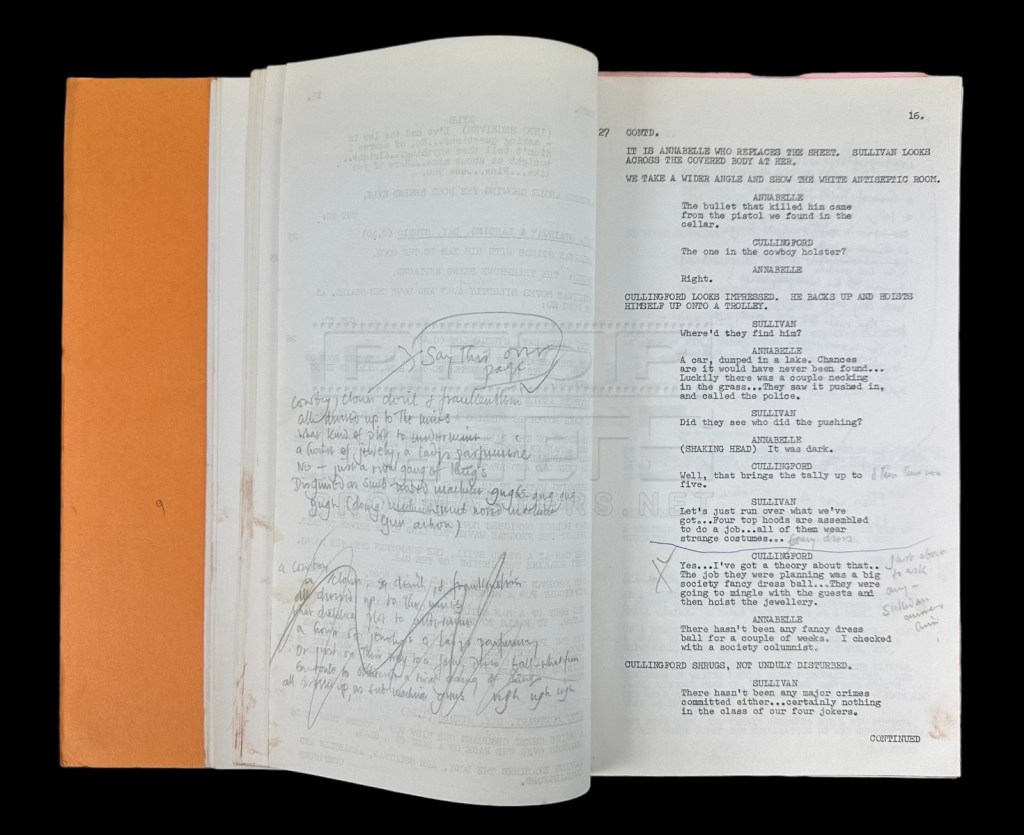
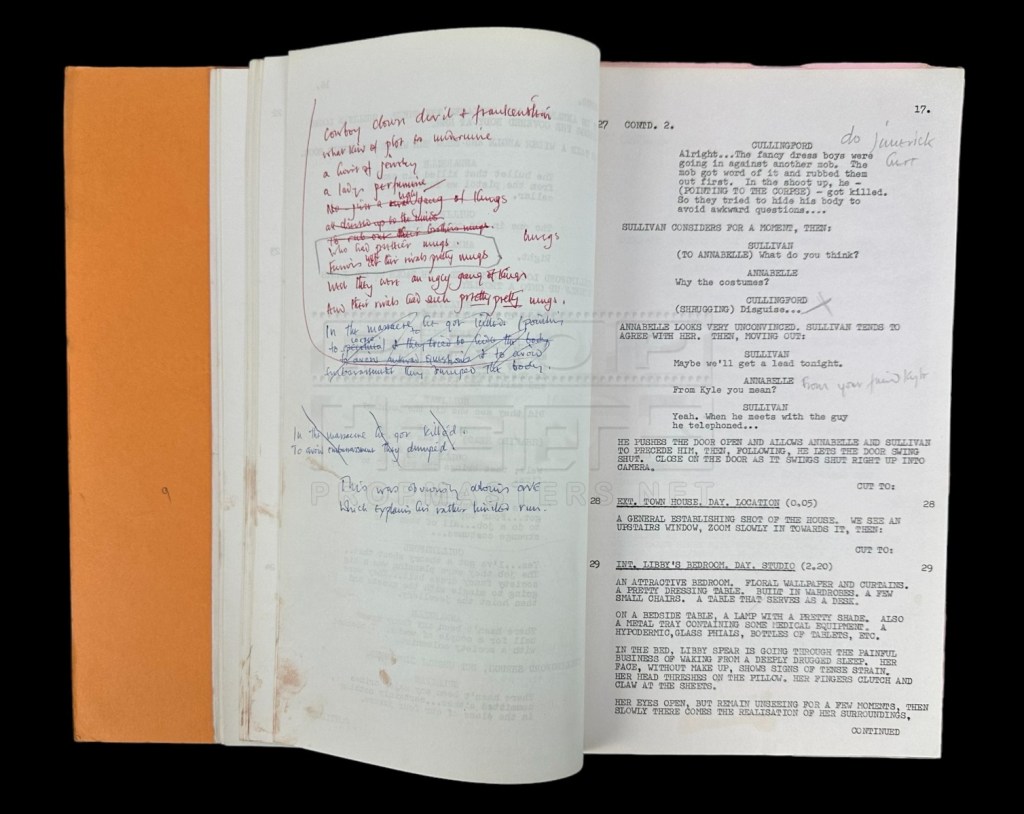
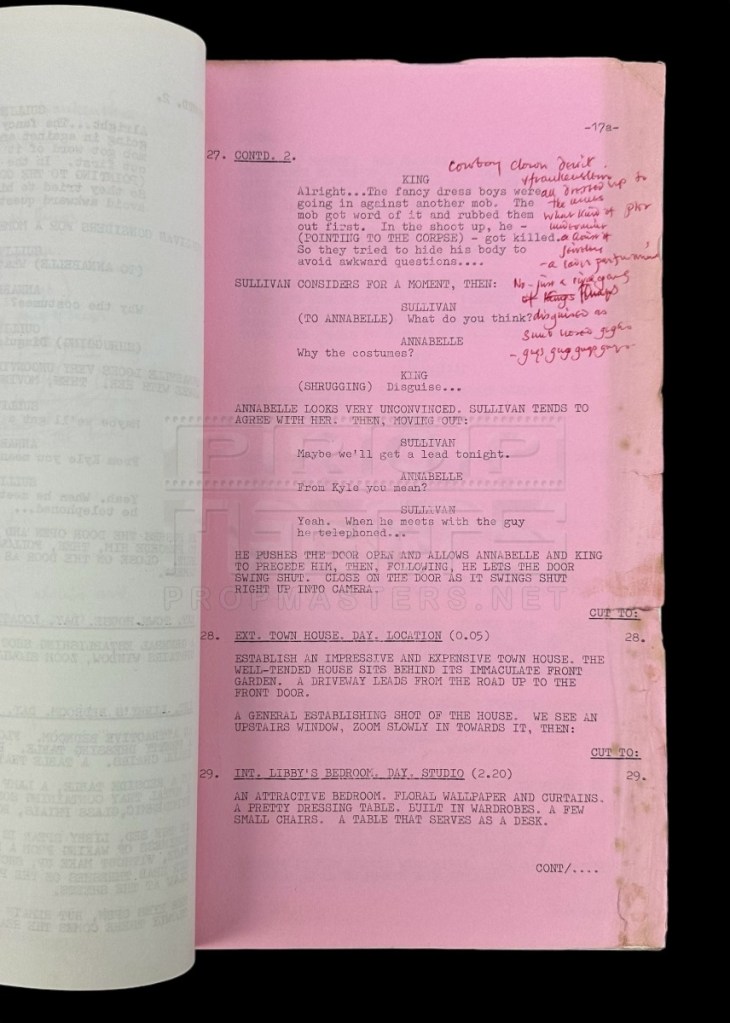


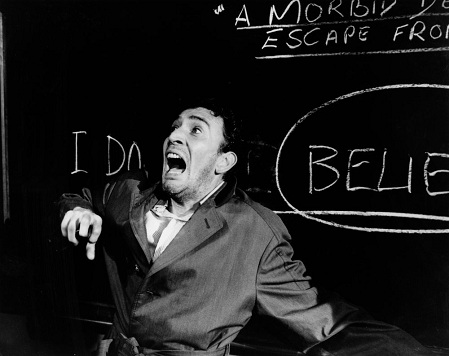
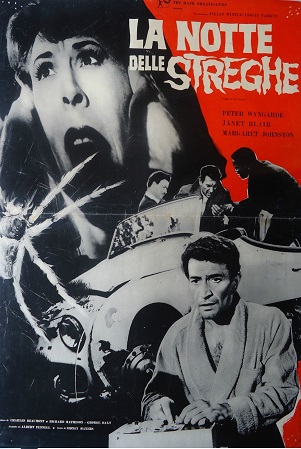


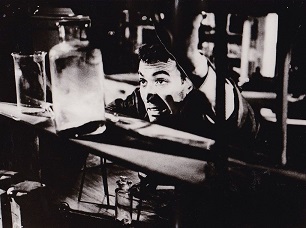
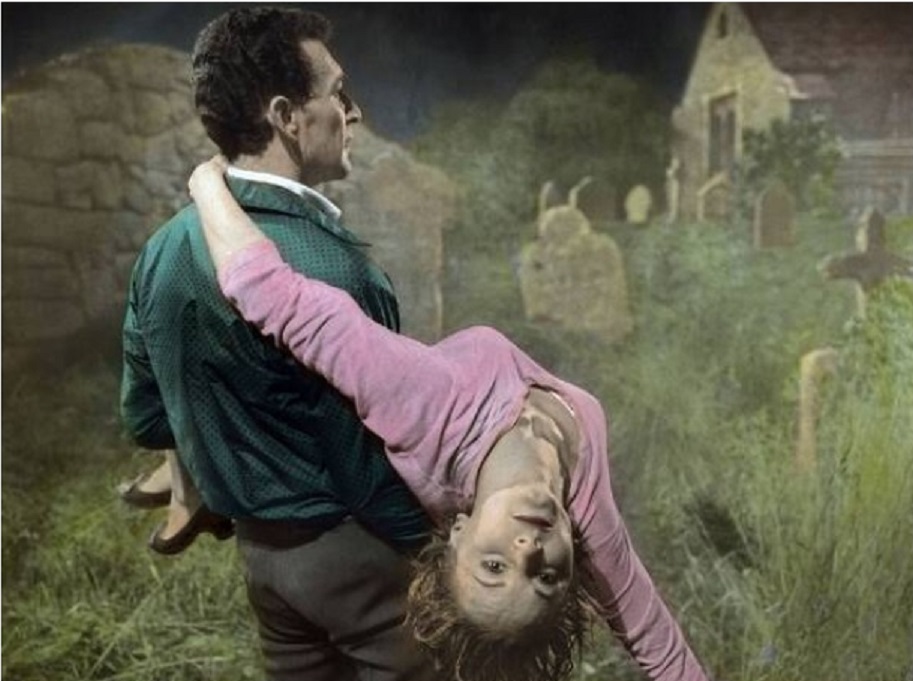
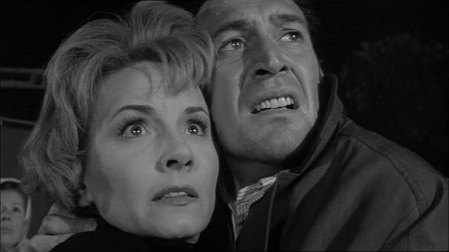


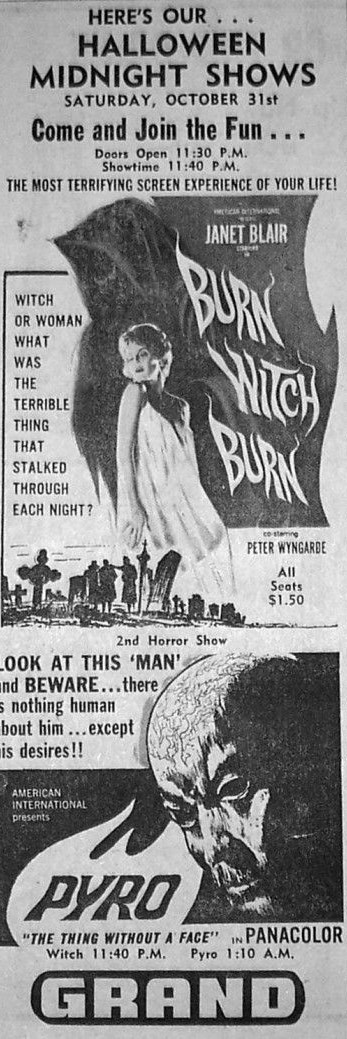

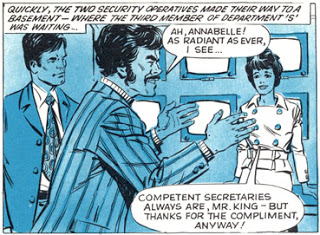

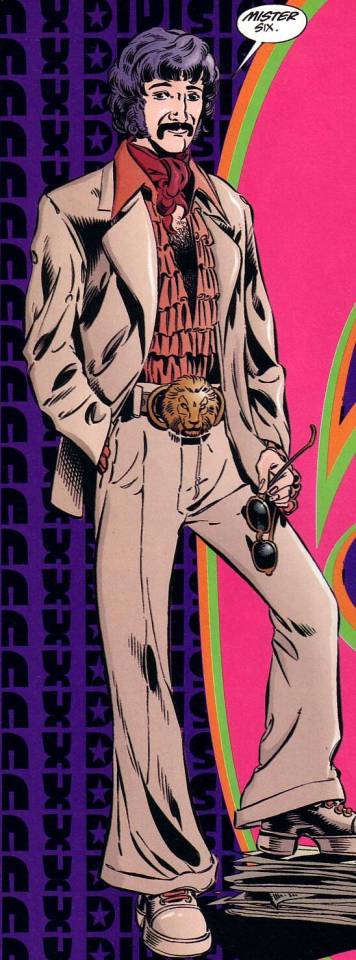

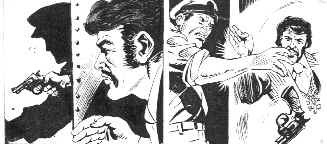
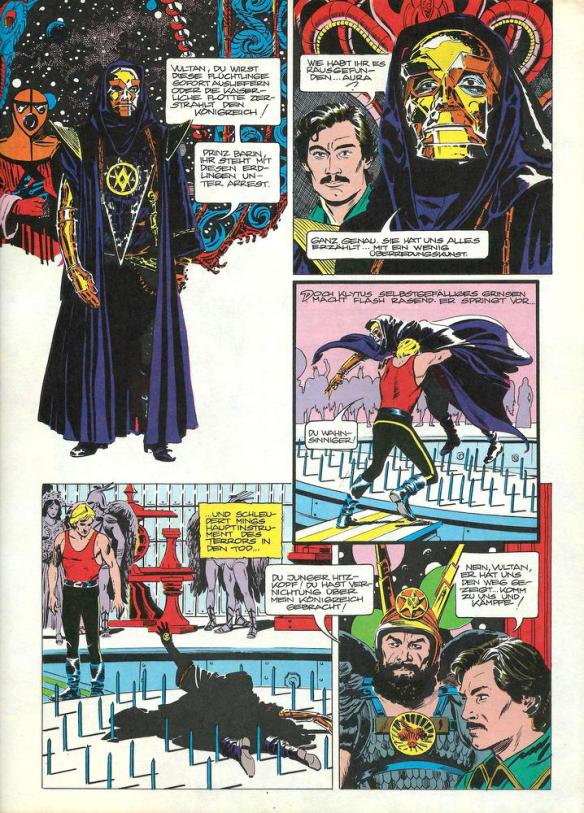


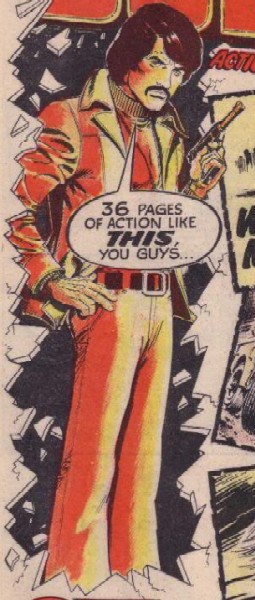
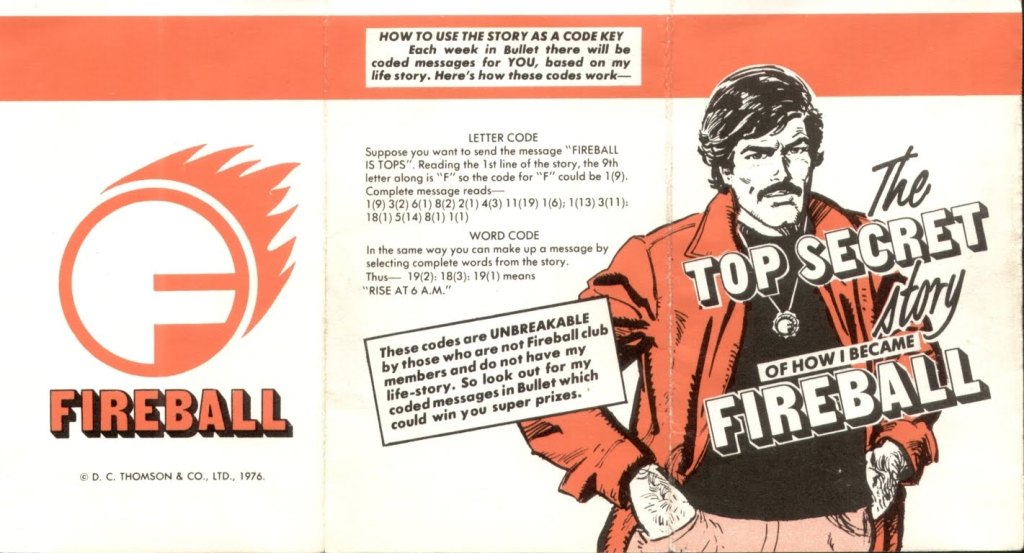
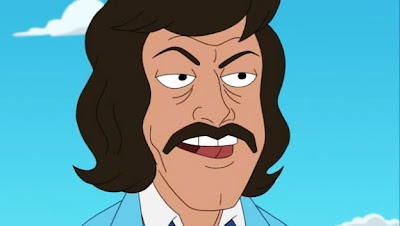


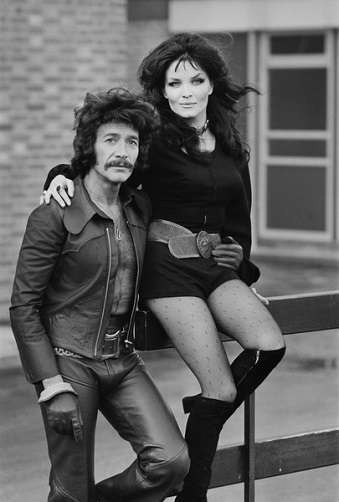
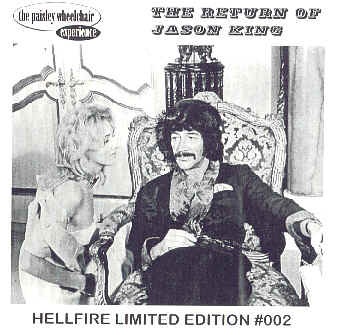

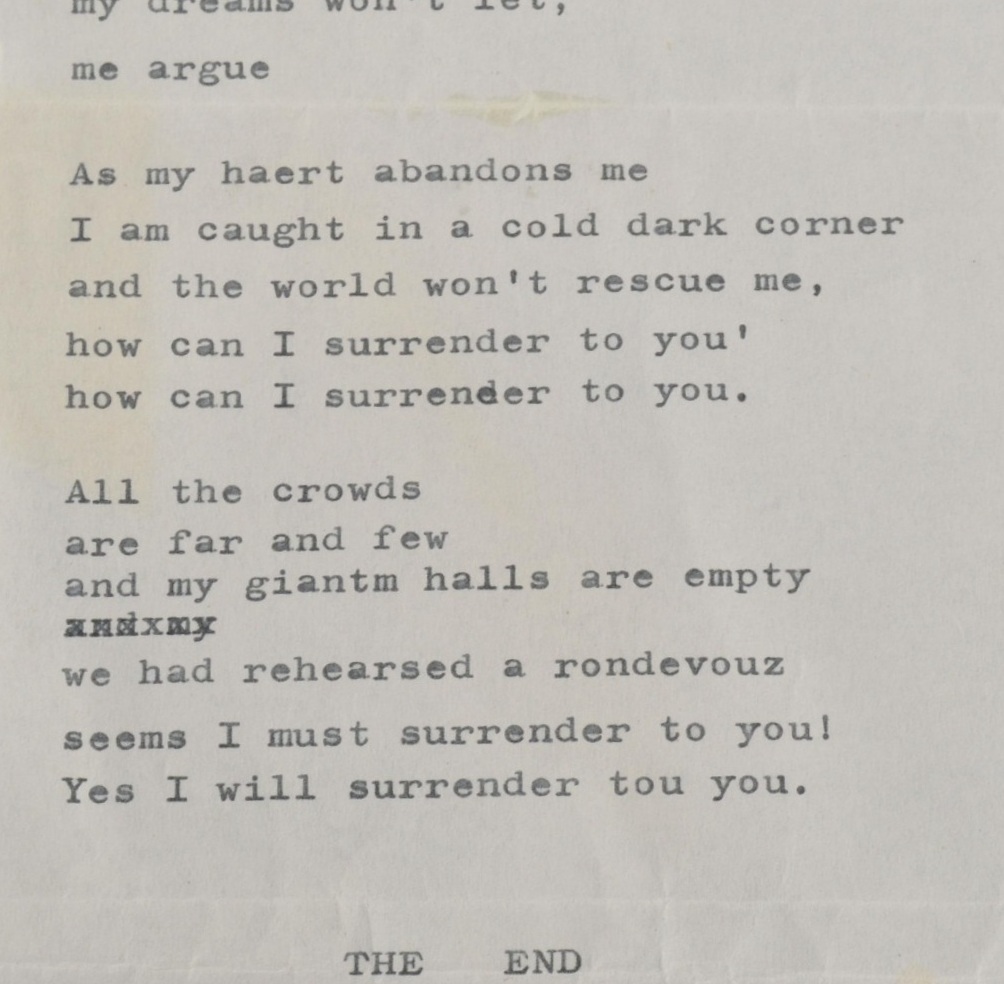
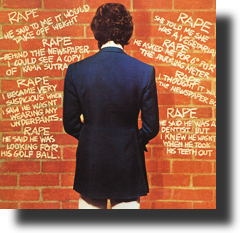
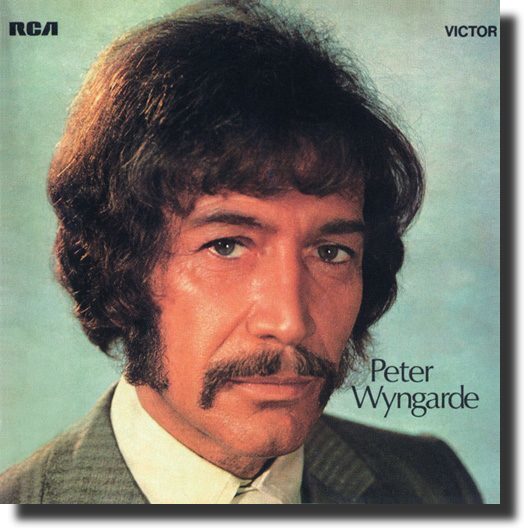
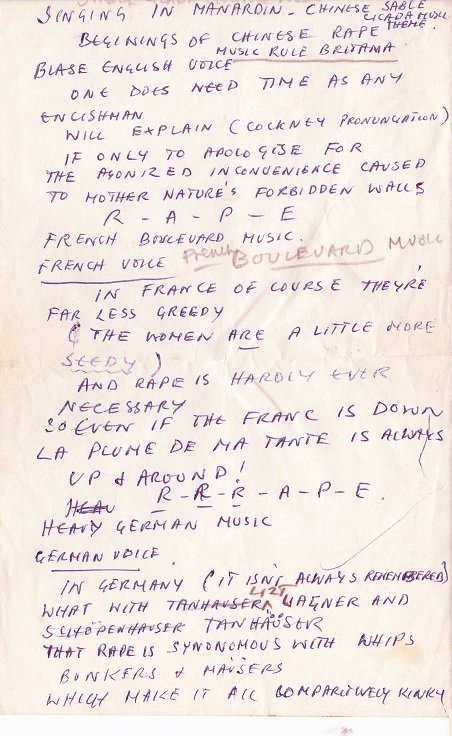
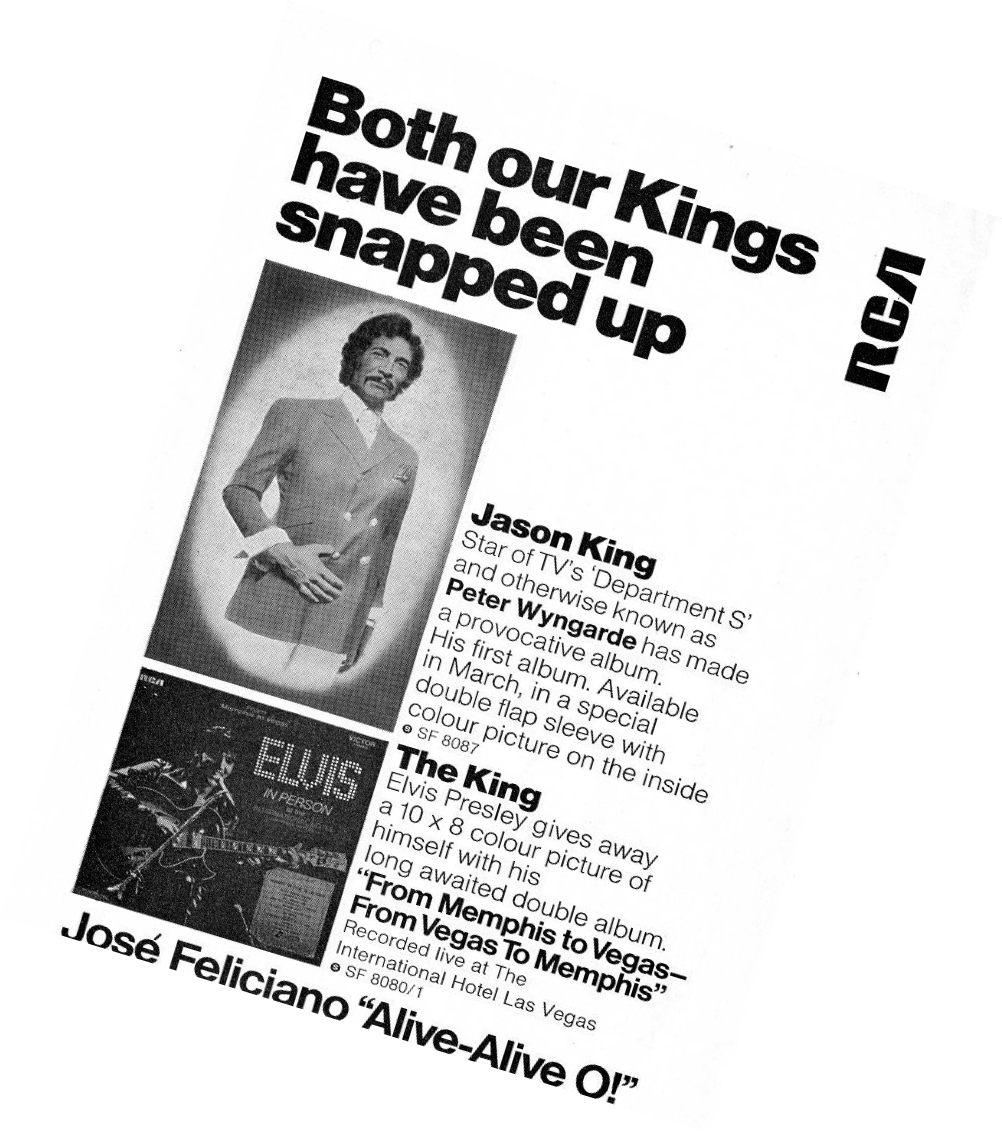
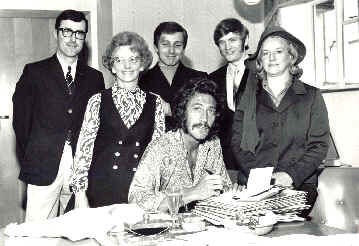
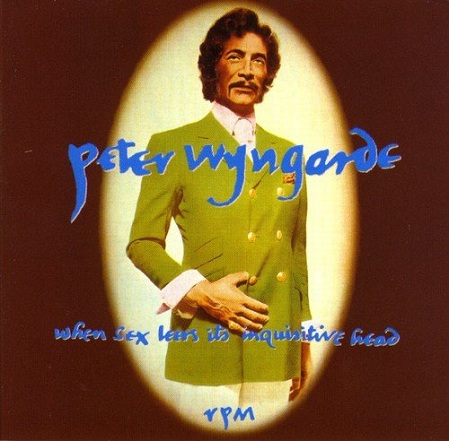

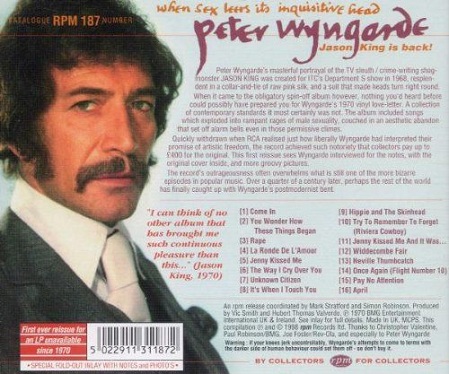
 Winter 1997: According to a letter that I received on Friday, October 25th, (1997) Creation Records appear to have had a change of heart concerning the re-issue of Peter’s LP on CD. This appears to have a lot to do with the fact that they’ve finally secured the licence to “immediately” release the recording – pipping RCA themselves to the post.
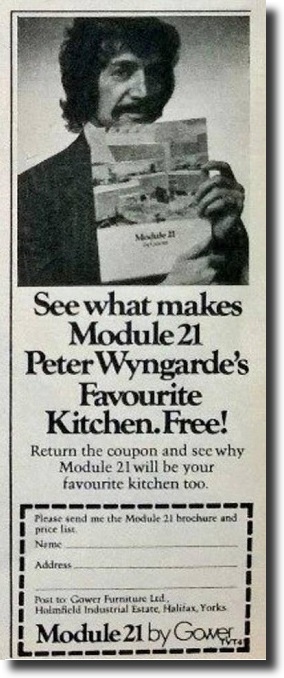
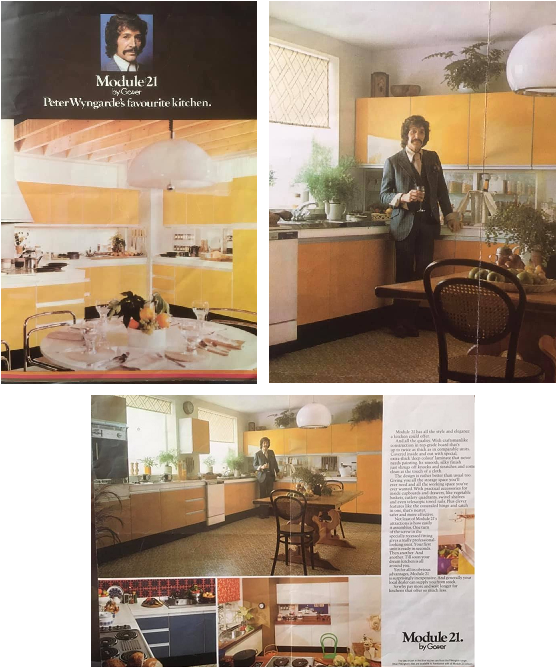

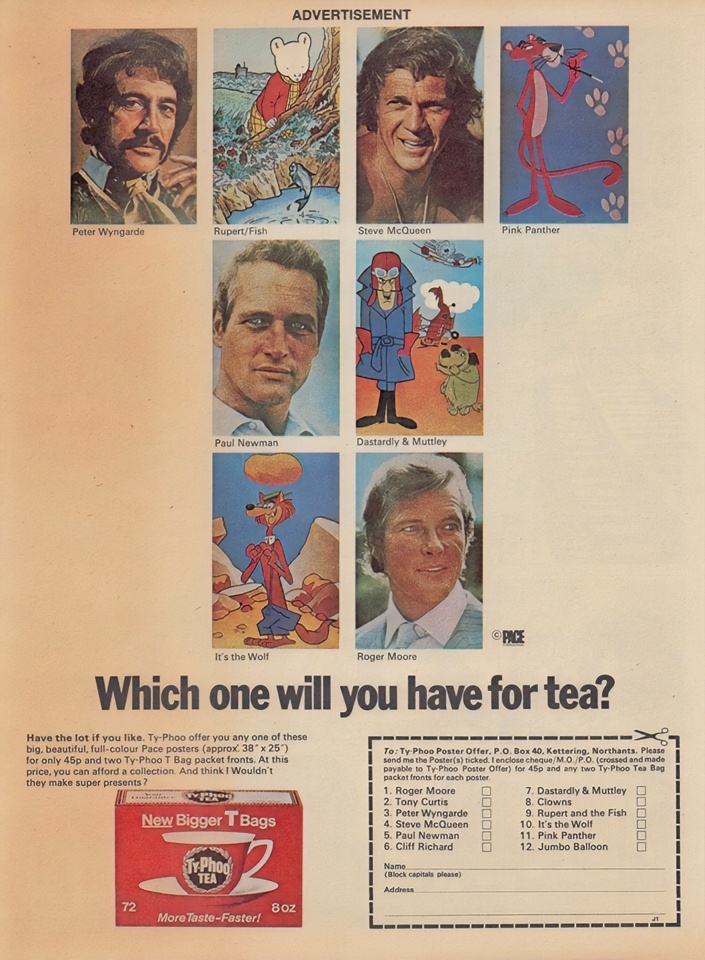


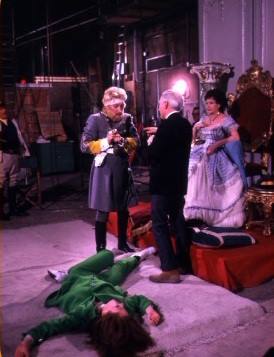
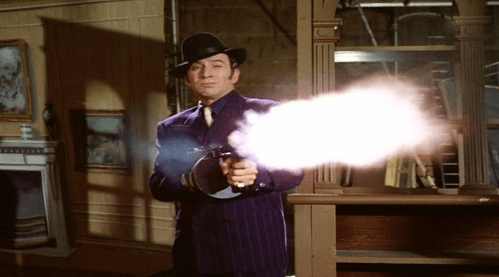

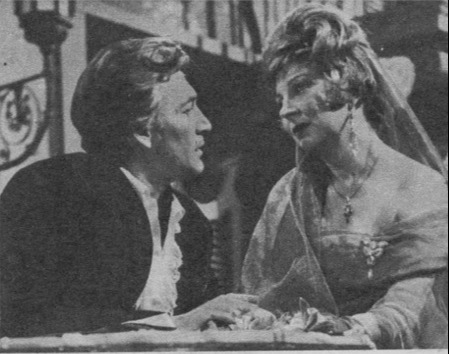
 PETER WYNGARDE: The Official Website