FAN FICTION: Langdale Times

‘The Pen Is Mightier Than the Sword’

Written by Gavin Llewellyn

Tidings!” exclaimed this sartorially elegant figure as it spun from the window in a display of erratic delight which cast a fervent glow into the dim reaches of that splendid parlour. All around lay souvenirs of bygone days, from the outer most reaches of the civilization to the comparative triviality of continental travelling. Tapestry and book, bone and dagger were curious bedfellows, united by the common thread of ownership to produce a veritable explosion of the variegated voyages to which they owed their present circumstance. The day was not yet middle aged, but the sunlight, that distinctive, unrelenting force which threatened the treasures of this opulent sanctuary, was already pounding the beige blinds at half-mast and now the elegant figure straightened to its maximum height, for it never succumbed to the often-enticing urge to relax its shoulders when the feet were burdened with a full load.

The distinguishing characteristics, for it is as well to give an account of these in early course in order that the reader might form a picture of the man whose vigorous external exertions we are disposed to expound, unremarkable as free standing objects, but upon the countenance of that outstanding gentlemen, the incontrovertible signature of that peerless amalgam of aristocracy current, sagacity, intelligence, magnetism, enchantment and boldness, provoking in the minds of all who had had the providential good fortune to behold him a portrait of an adventurer, a Buccaneer, a chevalier, a daring-do, dashing, debonair defier of dastardly deeds, a majesty amongst men, his exquisitely sculptured receptacles for four or five terrestrial senses, his magnificently crafted skull the vault into whose depths there was no-one who could claim to have looked for untold, unearthly senses, his mysterious ocular organs glinting with the celestial profundity of the oceans he had crossed; a mirror of the adventures he had seen, his magnificently his capacious moustache an umbrella for his enigmatic lips, the crowning glory of this sacredly credible compendium flirting expression into the gently swirling waves of dark brown hair which wandered courteously about but with an elegance which told of the Patrician patrimony.

“And to you, my good friend”, expressed ‘the dear friend’ who was seated adjacent to the fireplace, reaping the rewards of a glass of the finest whisky. Who raised this same glass as a token of his esteem.

“Tidings – the collective noun for a group of magpies”. The tone of this explication was far from patronising, for the cheerfulness with which it was enunciated was its sole occupant. a testament to the general appreciation kindled in the heart of that supreme being for the versatility of the English language. ‘The dear friend’ was unmoved by the infusion of some of his companion, but congratulated him with another, non-verbal to toast and a polite smile. We are, per chance, justified in hypothesising that the amplitude of ‘the dear friend’s’ waist played a not insignificant rȏle in his reluctance to become injected with ardour which so obviously drove his chum along life’s contorted carriageways.

“I shall use the term in my next column – probably after tonight’s farcical gathering of players at the Marquis of Albury’s party. Do you know, it is the third this month? He must be up to something. Causing the favours of some rich widow no doubt, a vain attempt to replenish his diminishing fortune”.

“But I thought that the Marquess of Albury was one of the richest men in the country”. There was a constantly burbling quality to ‘the dear friend’s’ voice which was the likely successor to decades of underlying addiction to a variety of restorative beverages.

“A wealth which ias negligently dissipated in several, injudicious investments and ventures, Barney. Combined with a puerile affection for entertainment”.

“So, you are attending tonight to help relieve him of some additional capital?” A mirthful Inflexion coated this interrogative.

“Rapidly reoccurring ennui is, rather unfortunate, the by-product of supreme intelligence”, the man standing with his back to the illumination sighed.

***

Tables brimmed and wine flowed, and ladies and gentlemen of the highest echelons frolicked merrily when the orchestra began flirting jauntily with its instruments. The proceedings were conducted with such great ebullience, in fact, that several spillages and the trampling of chicken bones under foot went quite unnoticed.

For the courtly (we can hardly say cultivated when so exquisite a comportment is the inevitable heritage awaiting one) gentlemen whose exploits it is our time-honoured privilege to recount for the general beneficent instruction of indubitably and manifestly inferior mortals, however, the evening passed without great amusement. The rubicund, bloated gentleman who had to be supported to the wings was a trifling diversion. The anorexic lady with the spectacles who performed the splits in the middle of a catastrophic rendition of a popular dance gave rise to no more than a flicker of mirth on the urban and unique countenance. He lounged lethargically with a glass in hand, with opulent, antique ring out sparkling the pale liquid which he poured indifferently (for he had sampled superior specimens) into the foresaid receptacle. All the while, the music chanted as if it had leapt into an ethereal plane which rendered it independent of the unrelenting minstrels. Still the cavorting and cascading continued. Would it ever cease? Would that some dramatic and singular enlighten the heart of the Observer. For that gentleman had already begun to construct diverse modes of embellishing the proceedings for the entertainment of the readers of whom he had spoken to his ‘dear friend’, Barney.

He had noted the presence of a lady upon whom he had reflected that he had not had the pleasure of gazing and for the next hour scrutinised her every move with the instinctive attentiveness of an eagle. A new face could not distract from the established monotony of the occasion and our subject began to feel verily enlivened at her not insignificant diffidence amongst the other guests. We have stated ‘other’ without qualification, but at this juncture, it was a lingering doubt whether the said different lady was in fact herself a guest. This lady, whose acquaintance the subject of this account have decided instantly to make, appeared to flitter from group to group as if in search of the person whose selflessness had procured the attendance of a stranger at the event that continued all around. She smiled timidly at the gentleman whose urbanity stood out from the crowd, which distinctiveness, we reflect, might very well have been the cause of her attempt to gain the confidence of one who gave the appearance of uncommon lack of involvement in the recreations. The gentleman assessed her character and intentions with a solitary, but all-pervading sweep of his angelic, sparkling blue eyes and returned her smile with more confidence than she had mustered when it had been her turn.

“You’re enjoying the festivities?” She spoke with a perceptible accent.

“I am sure they are nothing compared to the galas you have in Spain.” His voice was rich and velvety, pouring over the word suavely like the continuous flow of water that polished a bed of stones. A fleeting look of terror scudded across a face, an emotion which she quickly concealed with a nervous smile. For him, however, it was all the confirmation he required (if any were necessary) that the lady was not here entirely of her own volition. He sensed that her presence was a means to an end, a painful, but necessary experience in her tumultuous life.

“I do not attempt to conceal a truth from so evidently perceptive a gentleman. Our initial trepidation was overcome by bravado.”

“You have come a long way, Senora,” he brandished xenarthrally.

“It is a long tale, my good Sir, and now I must bid you farewell.” Her attempt to terminate the germination and of their connaissance was stifled abruptly, without the remotest tendency to physical obstruction:

“Isabel.” His eye held her motionless, creating a moratorium in which she came to realise that the only path which lay open to her was the one which consisted in a confidence. He had an aspect which precipitated her decision to tell him everything. There existed in the bold lines of his countenance and experience in such matters, a sagacious quality which left no doubt in her mind that a consultation with this gentleman would very likely be profitable. She checked herself again, however, and for a scintilla temporis, that cloud of hesitation returned to overshadow her momentary buoyancy.

“My name. How…?”

“I am fully acquainted with your predicament, Senora.” Her eyes flickered nervously over the company. “Do not concern yourself with them, for they are quite unaware of your presence, your identity.” His flamboyant, engulfing gesture, indicating the crowd, gave him a languid and carefree feature which invested her with a trace of the same. The festivities around them were suddenly a mere backdrop.

All attention was now fixed upon him. Nothing else mattered. No one else mattered. She did not care what anyone else did, for her fate was instantly an immovably in his hands.

“Allow me the pleasure of introducing myself. My name is Pike, Langdale Pike.” He pulled her across to the floor where the room was spinning round the heads of the more indulgent revellers. They danced. “We are conspicuous by our absence. It would not be fitting to leave now, for we should certainly be witnessed. Not all those present are in quite the state of ecstasy as they would have you believe.” Not another word was uttered between them until the grand clock suspended from the north wall of the ballroom struck a solemn 12 and two-by-two, the dancing partners took refuge in the red drawing room. “We can leave now.”

“You are not like other people here tonight.” It was a simple statement which somehow sufficed to express her whole attitude towards her exploits and her circumstances. They sat, sequestered, in an arbor – the noise of chatter and the gossip which would have normally taken up the final hour of the soiree of this most illustrious gentleman; that gentleman we have the good fortune to know as Langdale Pike, behind them, a quiet reminder of that other world they had temporarily left behind. Langdale Pike smiled cognizantly. “Do you come here often?”

“The day I am not in attendance at the scene of such depravity and debauchery, the world as we know it will have fallen victim to the most brilliant of diseases and ‘tis well that I should not be here to cast my eye upon it.” His enunciation conveyed a mystique to his words which she seemed to understand only too well.  “But then, you too are acquainted with the singular breed of unhappy circumstance…” He teased out her story, the personal tragedy of which he had yet to be appraised.

“Why is it you do not join in the party? Are you hiding from something?”

“Those that participate are hiding. I am their observer. My presence guarantees their continuity. I am, you might say, the arbiter of fact and law. They can relax because it is I who will hold them together. Each is bound unto me and I exercise no favour which is not equal to them all.”

“You sound like my father.”

“Fernando XII?” He was not asking for verification. “And now, pray tell me, how is it that I can be of assistance to one such as yourself?”

“Help me to rescue my country from the forces which will send it spiralling into the depths from which it once rose to a greatness never to have been equalled.”

“Your views, Signora, I can contest, but my resources, I fear, are inadequate for the tournament which you propose.”

“Your Sir Francis Drake was a capable man.”

“And a pirate with all Her Majesty’s Navy behind him. I, au contraire, have but my wits about me and great service though they have done me today, I cannot promise that they will match up to your exacting expectations.”

“But you will try to help me.” The faltering of her step unbalanced her response.

“Confide in me as others have done, I shall endeavour to help in anyway which lies open to me.”

“It is my son, Alphonso, who is in need of your help.” Langdale Pike inclined his head gravely. “I shall speak without presumption of the knowledge of my affairs which you seem to possess, for it may be that my exposition sheds new light upon the subject.” Her audience was immobile. “The liberals to whom I turned after my father’s death, thereby provoking the war in my country, did, some years ago, revolt against me, causing me to flee from my people who are now forced to hate me, and from my country which was my inheritance. The government of the Republicans, as they so treacherously named themselves, have attempted to hold the fabric together, but it is a rent which cannot be stitched by any such means and it is our renitence which might prove the factor which precedes, as harbinger, our restoration as with your own history.”

“If your General Prim is as poor a tactician as our Lord Protector and his successor, I’m sure that time will tell of its own accord.”

“You speak of time as though we abound in it. I have no claims now that I have neglected my duty at the time when its fulfilment was most wanted. But my son, for him I pray that the restoration will come soon. I know it is what my people want – his people.” For the first time, she was plaintive and Langdale Pike could sense the great urgency with which she beseeched him to become a thread in this complicated, political twine that had entangled her. His earlier observation on the faculties of that temporal calibrator by which we conduct our every effort had established the veracity of her claims and he was prepared to involve himself inextricably.

“Have you expressed these fears to anyone else?”

“You are the first.” Her frankness gave him conviction for a cause.

“Then Signora, permit me awhile and I shall see if I can grab contribute in some way to a solution. If you hear nothing in fortnight, you will know that the resources which I command have not been equal to the task and you will have to continue your search.” The tumble of words in the very depths of her eyes told him of her eternal gratitude. “You are not alone?”

“No, I have been fortunate enough to avail myself of the hospitality of Lady Anthea smartt and I’m content with the assurance that I may continue to do so for the coming weeks. Thank you.” She had gathered herself and departed, as swiftly as she had arrived. Langdale Pike resumed his observations and circulations with renewed vigour.

***

At his club in St. James’ Square the following day (for many a daylight hour spent profitably in discourse and divers, intellectual pursuits at that place so prominent in Mr. Pike circle), Langdale Pike whiled away three parts of the day with a studious collation of hypotheses, extracted subtly and enthusiastically from his sundry acquaintance. The evening following was occupied with the scripting of an unusual work (unusual, that is, for Mr. Pike) which, two days following, was caused to appear in the press along with other, learn learning articles and opinions.

It described the benefits to be derived from that incomparable combination of monarchy with bicameral government, that which admitted of both legislative and discursive activities and the supreme watchfulness and guidance of one whose prowess in such matters was indisputably foremost in the minds of all politicians. It gave an account of the tragic circumstances which had surrounded the United Kingdom’s attempt at a commonwealth over two centuries previous and of how that sorrowful state of affairs was brought to a satisfactory conclusion in 1660, thus laying the foundations for the modern system of unvanquishable and unfading democracy.

Further testimony, provided for those whose intellectual ambitions drove them to read such an article in its entirety, as Langdale Pike was certain those who counted on the Iberian Peninsula would, was adduced in the form of vitriolic vilification of those societies which had not yet aspired to such a civilised state of government. He foretold the downfall of all, iconoclastic communities which failed or refused to adhere to this primordial and so axiomatic an order. He spoke of the fruitfulness of republicanism without the constitutional theory upon which to base it. So far did it go, that those targets which were struck with its force could not fail to be impressed in no small way by its inexorable voracity and Langdale Pike was confident that the excessively smooth to the point of being unctuous gentleman (if we are at liberty to called that title) whom he had been engaged in feigned admiration of his companion the preceding evening and whom nobody had confessed to having invited, and whom no-one could identify and who had vanished quite mysteriously afterwards would ensure that is masters did, at least, avail themselves of the opportunity to be so impressed.

So it was that Langdale Pike meddled in international affairs and one unctuous gentlemen of manifestly alien antecedence reported for duty loyally to Madrid and that only a week later, a great commotion engulfed the Spanish nation and caused numerous, other nations of democratic persuasion to proclaim the eternity of monarchy and Alphonso XII was crowned King of Spain.


© Copyright The Hellfire Club: The OFFICIAL PETER WYNGARDE Appreciation Society: https://www.facebook.com/groups/813997125389790/

FAN FICTION: ‘The Captive Hearts’

A Prisoner Story by Carly Dennison

WHO WAS IT? WHO WAS IT? WHO WAS IT? WHO WAS IT? WHO WAS IT?…”

And so droned the mechanical voice of my tormentor; a grinding, piercing, wrenching voice from an unknown source hidden behind a blackened screen, that tore into my brain until I could bear it neither physically nor mentally any longer.

“WHO WAS IT? WHO WAS IT? WHO WAS IT?…! Faster! Faster! Faster! The strobe lights accompanying the words endlessly performed their terrible dance.

“WHO WAS IT? WHO WAS IT?…” My hand clenched the armrests of the chair I was manacled to; my fingernails embedded into the cold leather.

“WHO WAS IT? WHO WAS IT?…” the voice persisted. “WHO WAS IT? WHO WAS IT? WHO WAS IT?…”

My whole body heaved and fell under the unrelenting cacophony of sound, lights and wracking pain. Blood trickled down my face from wounds made by electronic probes attached to my forehead, and with each static charge that stung the flesh of my body, I craved the relief that death might bring me. And though I knew that by betraying him this rest I longed for might come more swiftly, I dare not – I WOULD NOT – speak his name!

My whole body heaved and fell under the unrelenting cacophony of sound, lights and wracking pain. Blood trickled down my face from wounds made by electronic probes attached to my forehead, and with each static charge that stung the flesh of my body, I craved the relief that death might bring me. And though I knew that by betraying him this rest I longed for might come more swiftly, I dare not – I WOULD NOT – speak his name!

Through all of this: the brutal agony: the cold unrelenting, forbidding, inhumanity of it all, I still loved him. Even then, as he stood united with my tormentors, I could not feel anything but the most pure and tender love for him. More than anything else, I wanted to look upon him just one more time, but I knew that in my delirium the merest glance might give him away. And when at the very moment I finally began to fall into unconsciousness, I felt for the most fleeting of moments the touch of his gentle hand as it brushed against mine. For an instant my eyes met his. Those blue, once emotionless eyes were at last filled with such sorrow that all I’d been through in this cold, heartless place faded into nothingness. It was then, and only then, that I knew he had truly loved me.

“WHO WAS IT? WHO WAS IT…” Suddenly, my whole being came over with an overwhelming sensation a serine peace. It was as if all the pain had been lifted from me and, for a moment, I was back in the warm sunshine of that Cambridge summer 5 years earlier…

___________________________

I’d been just a very ordinary girl from a very ordinary village in North Wales; in fact, I was what some people might call a bit of a “Plain Jane” back then. My father owned a small garage near Conwy and had taken out a loan to help finance my studies. I remember so clearly how delighted he and mum were when I won that scholarship at Cambridge University.

I travelled down to the City alone by train in the September of 1957 and recall a somewhat befuddled feeling of excitement and trepidation as I entered the grounds of Queen’s College, the first leaves of Autumn crunching beneath my feet while I cautiously walked in the direction of the Bursar’s office.

I travelled down to the City alone by train in the September of 1957 and recall a somewhat befuddled feeling of excitement and trepidation as I entered the grounds of Queen’s College, the first leaves of Autumn crunching beneath my feet while I cautiously walked in the direction of the Bursar’s office.

I’d been allotted a room overlooking the beautiful River Cam, which ran alongside the accommodation block and through The Backs of King’s College. I’d been fortunate to find myself sharing with a friendly girl from Bury St. Edmunds who was pretty and kind – a trait that made her

popular with many of the male students. It was through her that I was invited to attend the May Ball at Trinity College the following year and it was there that I saw him for the very first time.

He was tall, devastatingly handsome and had the bluest, most mysterious eyes I’d ever seen. He was the kind of man who turned heads; he had an aura about him – an aura that oozed an insatiable sensuality and brooding menace. From the very moment I saw his face I was smitten, but not for one moment did I ever fool myself into believing that he would notice me. Nevertheless, I was under his spell and as he weaved his magic by merely BEING, little did I know that he would have the most cataclysmic effect on my life.

___________________________

During the Summer break, I decided to stay on in Cambridge rather than go home, so I took a part-time job in a tearoom in the city centre to tide me over. It was one late July afternoon that I saw him again; his college scarf draped across his elegant shoulders and a rolled-up umbrella in his hand even though there wasn’t so much as a cloud in the sky. He stood in the doorway of the café and after glancing around for a moment as if he was deciding whether he should grace us with his presence, he finally strolled inside, taking a seat at a table by the window.

As I looked across at him, motionless, I felt a sharp dig to my ribs: “Go on, girl”, insisted the manageress – “He won’t bite!” But I could barely put one foot in front of the other. Eventually, I gathered my composure just enough to walk over to him and, nervously clearing my throat, asked: “What can I get for you, sir?”. “Tea. Cream. No sugar,” he replied in the most exquisite tone. “He spoke to me!” I thought as I floated towards the kitchen. At last, he knew I existed!

I dutifully, and extremely nervously, served him his order but, as fate would have it, some old dear and her husband arrived at that very moment and decided to try one of our ‘famous’ Ploughman’s Lunches, which had to be freshly prepared. By the time I’d completed the task and hurried back from the kitchen, he’d gone. I never saw him again… until I was brought to ‘The Village’.

___________________________

After graduating from Queen’s in the September of 1969, I took up a position as a Chemical Analysist at Imperial College, London. With a great deal of hard work, not to mention a fair measure of good luck Professor Collins, one of my old lecturers, recommended me for a position with the Ministry of Defence at a military instillation in North Yorkshire, and within 18 months of my arrival, I was working on a rather hush-hush project alongside a hand-picked unit of scientists from N.A.T.O.. Nevertheless, suddenly and quite without warning, the project was shelved, and all the scientists that had been working on it were, hastily dispersed. It was shortly afterwards that I suffered a minor “accident” on the A1 near Catterick, when I was run off the road by a undertaker’s hearse of all things. It was shortly after that I arrived here, in ‘The Village’.

I’d been told to prepare my “master’s” quarters at The Green Dome in time for the arrival of the new Administrator and had watched the helicopter touch down on the landing pad through the main window. Only moments later, during a brief exchange between the “old” and “new” Number 2, I heard a familiar voice – the tone of which had the effect of making me stand motionless for several seconds – while my heart beat so ferociously that I feared it might leap from my chest. Only when I entered the living area did I know for sure: it was HIM!

At first, he didn’t notice my presence as I pottered about the room making sure that his every comfort was attended to. But then, as I collected up my cleaning equipment and started to make quietly away, I happened to glance in his direction to find those familiar blue eyes studying my every movement. ‘Had he recognised me?’ I thought – trying in desperation to reach the door without tripping over my own two feet. ‘No, of course he hadn’t – how could he?’ All I’d ever been was a shadow he once walked around.

That evening I sat alone in my accommodation thinking only of Him. Who was he now? Why was he here? Was he a “prisoner” too? No, he couldn’t possibly be. My mind wandered all night; I barely slept a wink.

The following morning, I made my way to the Green Dome to prepare breakfast; my heart filled with excited foreboding. He was already up and about when I arrived and was standing with his back to me – looking down through the window at the Village below; the master of all he surveyed. Suddenly he turned and gently laid down the teacup and saucer he’d been holding onto a grand, highly polished oak table. He looked at me directly.

Dressed in a black blazer and with what appeared to be the same college scarf I remembered him wearing in our Cambridge days draped over his left shoulder, he looked almost identical in appearance to the last occasion I’d seen him in the tea shop back in Cambridge. For several seconds it was if time had stopped as we looked at each other from opposite sides of the room. What strange quirk of fate had brought us together in this place? Whatever it was, I wasn’t about to find out there and then, as he was simply to turn on his heel and walk from the room without so much as uttering a word.

___________________________

For several weeks I worked for him without any pleasantries or instruction, until one morning he quite unexpectedly asked me to join him for breakfast. If we had been in Cambridge I’m sure I’d have nervously declined because of my insecurity, but here I dared not refuse, so I thanked him timidly and pulled up a chair at the oak table.

Within moments I felt that I’d known him all my life. In spite of the extent of our previous exchanges being limited to an occasional nod of the head which, I assumed, was his way of expressing his satisfaction with my work, we discussed literature, poetry, art and the sciences like old friends, and every now and then his blue eyes appeared to smile.

With every passing day our friendship grew, until soon we would not only share breakfast, but long walks through the woods and, often, secret rendezvous in the caves that ran for miles under the Village. And then one beautiful moon-lit evening he finally took my hand in his and kissed me with such a sweet gentleness that I could hardly believe this to be the same man who I’d witness many times crush my fellow inmates like flies.

I recoiled, not through lack of desire; God knows I’d yearned for this moment for so long. In spite of him only ever treating me in the gentlest manner, he terrified me, and I could not – DARED not – accept his advances. I turned and ran deeper and deeper into the woods.

From the sound of the crunching leaves and twigs in my wake, I knew that he was less than a few paces behind me, and for all my efforts to evade him, I realised very quickly that escape was impossible. Inevitably. I turned myself over to him.

“Why did you run?” he enquired in a pained tone – his blue eyes filled with sadness. “You must know I would never hurt you.” I did not. I could never be sure that he was not spinning some deceitful, cruel web to entrap me, at which he’d cast me aside for his sport. Ever so tenderly, he lifted my chin with his long, lithe fingers and drew my eyes to his.

“Can’t you see, I love you”, he breathed softly, his words almost whispered. Though I tried to fight it, I could feel a tear leave my eye which cascaded down my cheek onto his hand. “Please! Please,” I begged, “Don’t hurt me. Please don’t hurt me!” And with that, I fell into his arms, where I had once prayed but never dared hope I’d one day be.

He held me so close to him that I could feel his heart beating against my cheek. I shook uncontrollably with such a terror than I had never known. This man wielded the power of life and death over me; he could crush me, destroy me, tear my heart from me and walk away without so much as a backward glance and yet I was prepared to yield without protest. I was totally within his power, both emotionally and physically. ‘Why would I need to give him my heart and my soul when he could just take them whenever he chose?’ Did he truly want me or was this some kind

of new experiment he’d devised to relieve me of the information I supposedly carried in my head? How would I ever know? How could I ever trust him? Love him?

He held me so close to him that I could feel his heart beating against my cheek. I shook uncontrollably with such a terror than I had never known. This man wielded the power of life and death over me; he could crush me, destroy me, tear my heart from me and walk away without so much as a backward glance and yet I was prepared to yield without protest. I was totally within his power, both emotionally and physically. ‘Why would I need to give him my heart and my soul when he could just take them whenever he chose?’ Did he truly want me or was this some kind of new experiment he’d devised to relieve me of the information I supposedly carried in my head? How would I ever know? How could I ever trust him? Love him?

We stood together, motionless – I, almost ridged with fear; he, taking short, shallow breaths.

As the night began to draw in and the smell of damp earth filled my nostrils, I finally raised my head from his chest where it had been resting and looked deep into his eyes. “I had a dream all those years ago when we were in Cambridge,” I said quietly, “that one day God would allow me to be with you, although I knew it was a foolish dream. How could someone like you love someone like me? I’m nothing – less than nothing – especially in this place. Here, you are more powerful than God himself. Please be careful with my dream.”

___________________________

On the morning of the following day, I woke with him for the very first time – our bodies still entwined as in the moment that we’d had fallen into our slumber. I’d enjoyed the most peaceful, serine sleep of my life and for the first time, I felt that as long as I was with him, nothing and no-one could ever hurt me.

As on every morning for the past two months, we shared breakfast in his rooms. I’d then wrap his college scarf around his neck and kiss him passionately. He’d go off to his duties as Number 2 and I would return to my place within the Village system. But today, unlike most other days, I breezed through my duties safe in the knowledge that when all my fellow inmates were back in their ‘cells’ for the night following curfew, I’d be with HIM.

___________________________

As the weeks and months rolled on, we began to find it increasingly difficult to devise ways to conduct our relationship without putting wise the ever-vigilant Village Guardians. We’d arrange to meet quite by accident in the Village tea rooms and had both, quite by coincidence of course, enrolled at the same art class held at the Recreation Hall twice weekly.

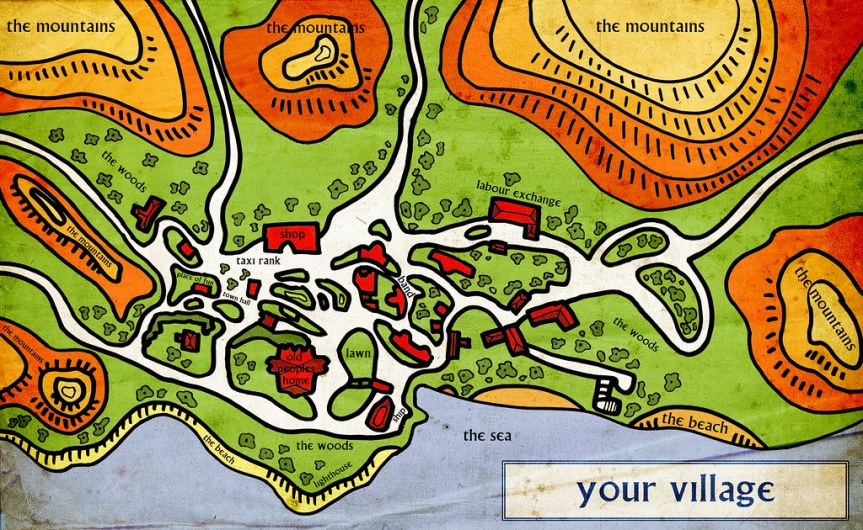
But then came the news we’d both dreaded. A message arrived from a higher place that a “new” Number 2 had been appointed to take charge of the Village at the end of the month: “Preparations should be made for the switchover.” He broke the news to me as we walked along a stretch of beach close to the lighthouse at the eastern-most tip of the Village perimeter. I was devastated, and almost inevitably, the tears began to flow. ‘How could I go on here without him? How could I face another day in this God-forsaken place when he’d gone?’

“My darling,” he began in an attempt to console me. “Whatever it takes, I will find a way to come back to you – I swear!”.

I drank from his sweet lips as if I were a dying man in a desert who’d at last been given water, and I held him so tight that I felt I might’ve crushed him. Though I dared not let go for fear of never holding him again, I was shattered. Totally. Completely. All I could see before me was a lifetime of never knowing where he was or if I would ever see him again.

For several days we only able to see each other in passing as, for one reason or another, we’d both been preoccupied with preparing for the arrival of the new Number 2. It was during this time that another spectre arose: I was pregnant.

___________________________

It seemed almost an eternity before we we’re able to find a reason for us to be alone together again, and only then for the briefest moment. He finally sent for me under the pretext of a reprimand for shoddy work. When I arrived at the Green Dome I found his lunch guest, No.96 – a fellow Guardian – just preparing to leave; we passed each other in the grand hallway without so much as a glance. I eagerly told him my news.

For the very first time I saw fear in hiseyes as he digested my words. His initial reaction was to walk out onto the balcony where he stood transfixed; peering down on the hustle and bustle of daily life in the Village below. After what seemed like an age, he finally turned and strode cautiously to a large metal filing cabinet and took out a bound file inscribed starkly with the legend, ‘Sterilization Project’. At that very second there was a buzz at the door which prompted him to slip the volume into a briefcase. “Come!” he barked. The door slid open and in stepped No.12 – the Grocer who I’d always suspected was a Guardian. He looked at me shiftily.

As the case was handed to me he brushed my hand with his finger, then said sternly: “And make sure you take it to the clerk right away!” I nodded and left – the Grocer’s eyes boring into my back as I walked towards the door. I’d delivered such cases before for various No. 2’s, but once outside the Dome I quickly realised that this one had intentionally been left unlocked. Once safely inside my accommodations, I discovered that the document was an inventory of all the men   that had been brought to the Village over the past 20 years – every one of whom had been sterilized on arrival. I immediately realised what this mean for both of us.

“But why?” I asked when, some days later, I found an appropriate opportunity to return the file.

“To avoid this kind of thing; to discourage relationships such as ours. It disrupts the status quo, you see. It complicates matters.”

“Then how…?”

“…Oh, it doesn’t include Guardian’s” he interjected. “Just Prisoners. Did you never wonder why there are no children in the Village?” I had but had never thought to question it. Afterall, I’d been taught from the moment I arrived there that ‘Questions were a burden on others.’

“Then what are we to do,” I asked desperately. Even now I half expected some mad scientist or member of the Village authorities to suddenly emerge from his or her hiding place to congratulate themselves on the success of their latest experiment. Mercifully, that didn’t happen, Instead, the once confident man to whom I’d given myself, body and soul, stood before me like a lost child toying with the shooting stick he’d often wielded like a sceptre.

“Do you love me?” he asked, his voice barely a whisper.

“Yes,” I replied, taking one step closer to him. “Yes, of course I do!”

“Then we must get out of this place. I can’t leave you here to face this alone.”

“But how?” He held out his arms and ran into them. “I’ll find a way. I promise. “

___________________________

Later that evening, my whole being began to fill with utter dread as I heard the familiar whir of helicopter blades that announced the arrival of the new Number 2 who would take up residence in the Green Dome. I leapt from my bed and threw open the window from where I could see a dim light breaking from his window.

The sudden unexpected shrill of the telephone caused me to jump. Cautiously, I picked up the receiver to hear a familiar voice. “We must go NOW!” it said. “Get whatever food you can and meet

me at the back of the Labour Exchange. I’ll shut down the CCTV system from here. (A pause). I love you.” The line went dead.

Later that evening, my whole being began to fill with utter dread as I heard the familiar whir of helicopter blades that announced the arrival of the new Number 2 who would take up residence in the Green Dome. I leapt from my bed and threw open the window from where I could see a dim light breaking from his window.

The sudden unexpected shrill of the telephone caused me to jump. Cautiously, I picked up the receiver to hear a familiar voice. “We must go NOW!” it said. “Get whatever food you can and meet me at the back of the Labour Exchange. I’ll shut down the CCTV system from here. (A pause). I love you.” The line went dead.

I grabbed some clothes and a few provisions; a packet of biscuits and some fruit and I ran the short distance between my residence to the Bureau as quickly but cautiously as I was able. Though I’d managed to elude the ever-vigilant searchlight from the watch tower, my only fear now was that the thumping of my heart would give me away to one of the many patrols that weaved through the Village streets after Curfew.

He was already waiting for me at the rear entrance of L-Shaped building when I arrived, and after taking my hand firmly in his, we stooped to avoid the prying beam from the Watch Tower and ran as hard as our legs would take us towards the woods at the eastern edge of the Village.

Taking a small electronic device from his pocket and pointing it at a wire fence that stood guard in a clearing beyond the last trees, which hummed and spit the occasional spark in our direction, we crawled on all-fours beyond the Village parameter and to what I hoped would be freedom. Once outside, we simply ran, until our hearts cracked and legs could take us no further. Our home for the night, it appeared, would be a disused gamekeepers lodge that had nestled unnoticed under the leer of a nearby mountain range. Once inside, we hungrily ate the biscuits and melted icicles to ease our thirst – knowing all too well that the Village authorities would soon be on our heels.

We drifted into an exhausted sleep.

___________________________

A cold, icy blast brought us suddenly to our senses the next morning. Still wrapped in each other’s arms, we peered through a broken window across the vast expanse of snowy mountains. It was then that we heard the voices.

Quickly, I darted towards the door of the hut and, fumbling with frozen fingers, managed to untie the piece of rope that had kept it in place against the biting gale that had raged outside the previous night. I scrambled back to him on all fours as the voices grew increasingly louder. I immediately began to wrap the rope around my left wrist, and then putting both my hands behind my back, tuned to him: “Tie it. For God’s sake…”

For a moment I saw all the sorrow of the world in his eyes. A tear fell onto his cheek, rolled slowly down his finely chiselled features and fell gently onto the dusty wooden floor of the hut. Taking his hand in mine I told him that this,was the only way. One day he would have left the Village and never returned. Without him my life; my existence in that place would have been unbearable. At least this way we were able to spend at least one night of freedom together.

Without so much as uttering another word we just knew inside everything that needed to be said; from one heart to another – from my soul to his. Again, I offered him my partially bound wrists. He took the ends of the ropes between his slender fingers and pulled them tight.

___________________________

“…WHO WAS IT? WHO WAS IT? WHO WAS…..” Silence.

Through the haze of pain, I saw a masked figure make its way slowly towards me carrying a tray. On it lay a syringe. A gloved hand caressed it with its fingers while, from behind, someone placed a strap around my right arm and pulled it tight until my own fingers lost all feeling. The masked figure leaned towards me, the syringe in hand.

And then, through this agonising assault, I heard his voice as he took the syringe from the gloved hand: “This one is mine!” he said firmly. He must’ve known that I would want it to be him and not some faceless “thing” to take my life.

Ever so gently he brushed the sweat and blood-soaked hair from my eyes and lifted my head so that I might look at him just one last time. I thought of the life that we might have had together with our child.

“I love you!” I thought.

“I know!” he replied.


© Copyright The Hellfire Club: The OFFICIAL PETER WYNGARDE Appreciation Society: https://www.facebook.com/groups/813997125389790/

REVIEW: The Ermine

Broadcast: BBC Radio – Saturday, 2nd April 1955

Character: Franz

The Story

The Ermine, although the first of Anouilh’s plays to attract widespread recognition, is perhaps the least innovative in its presentation, its originality residing primarily in Anouilh’s announcement and treatment of themes that would soon come to characterize his theatre. Cast in a naturalistic mold, The Ermine contrasts the wealthy Monime (Beth Boyd) with the underprivileged, ambitious Frantz (Peter Wyngarde), who will stop at nothing, even murder, in order to win her hand. Monime, however, does not decide that she loves Frantz until after he has claimed responsibility for the crime and turned himself in to the authorities. Such hopelessness, usually polarized between rich and poor, would continue to haunt Anouilh’s would-be lovers throughout the rest of his career as a playwright.

From The Radio Times

It was by now become almost a tradition that a play by Jean Anouilh should first be broadcast and then be staged in this country. That was true of Point of Departure which was staged in 1950 having been produced for radio by Raymond Raikes. It was true of Léocadia which Raikes produced for radio last July and which, as Time Remembered, is now running in London.

This week Raikes produces The Ermine, the first of Anouilh’s pièce noires, which he wrote when he was only 21. It will be interesting to see whether this, too, finds its way to the theatre.

The leading role will be played by Peter Wyngarde, who played the Prince in Léocadia. We met this handsome young actor last week and found him excited, on the one hand, about The Ermine (“an astonishing play for one so young”), and on the other, with the prospect of seeing Spain for the first time on Sunday, when the play is to be broadcast in the Third Programme, you will be on his way to Madrid where he is to appear in a film being made the about the life of Alexander the Great. This will be his first film appearance, so he’s spending much time reading about film making and making sketches of the character he is to playful stop

“I always do that,” he said, “and particularly for radio where I think an actor must have a clear idea of the physical appearance of the man is representing.

From Plays & Players

This month has brought the first performance in England of the earliest Anouilh play on the latest Gabriel Marcel. No two plays could be further apart.

The Ermine contains all the bitterness which he developed in his later days. The importance of money, the insistence on the transient transients of love, all very personal; while Marcel writes his play on a theme and moulds the play into Catholic dogma.

Anouilh’s The Ermine was written in 1931 and was the first play to set Paris talking about this young man who was then Louis Jouvert’s secretary.

His characters are not causey or complacent, but full of their own savage vitality. Even at this early stage of Anouilh’s philosophy was apparent, with this defiance of the normal social code.

The theme, of a young man who commits murder to gain sufficient money to make his love for a pure young girl possible, is reminiscent of Dostoievsky, but carried out only as Anouilh could any purge of purity through suffering.

The passage where Monine offers herself to Frantz is wonderfully sensitive and alive.

The translation by Miriam John is not very fluid, but is faithful enough to give an idea of the original. The production by Raymond Raikes had not enough atmosphere to come alive without the visual element.

However, Peter Wyngarde as Frantz had all the variety of pace and tempo which makes a long, difficult part possible. He had a false and quality which is right for this sort of playful stop best boys lack the depth which makes an Anouilh heroine so pathetic, but was good enough. Dorothy Homes-Gore made the Duchess who is murdered, into a pathetic creature, in spite of her behaviour. Raymond Raikes production was most effective and the cast played with absolute sincerity.

The Ermine: Written by the translator of the play

One recurrent theme in the work of Jean Anouilh cannot be ignored. It is the theme of pureté. The characters who plead for it are normally aiming at a kind of perfection, not compatible with the moral and social tenants the size if they live in. At least, the means to it are not compatible. They’re not out to reform society, but to ‘perfect’ themselves or some emotion they are involved in.

Frantz, in The Ermine, Anouilh’s first published play, described such people, as ‘constantly battling against hordes of hidden forces that attacked them from within or from the world outside’. The forces attacking Frantz from the outside world are those of poverty; from within, those of pride.

Anouilh’s writing has been described as the ‘explosion of a passionate rancour’. This description, although harsh, bears the seeds of truth, a may also explain, curiously enough, why Anouilh has more attentive and sympathetic audiences in England than his contemporaries have done. Anouilh is emotionally ‘involved’ with his main characters.

The title of The Ermine is the key to its author’s attitude towards his ‘hero,’ Frantz. I was convinced the title add a dual suggestion, and after some discussion with the producer, I was asked to find out from Anouilh what he really had intended. Luckily. For I had been barking up the wrong tree. In his reply Anouilh said that he had given the play this title because the ermine, confronted by a muddy stream, will, no matter what the consequences, refuse to dirty its fur. Whether or not this is a fact about the ermine (a symbol of purity), it is interesting as pointing the extent to which the author is emotionally ‘involved’ with Frantz. The Ermine shows us Anouilh with one foot in melodrama and the author taking the first stride on the road to Antigone.

MEMORABILIA: Old and New

This page is a work in progress, which will be added to when ‘new’ items come to light.

 Action Figures

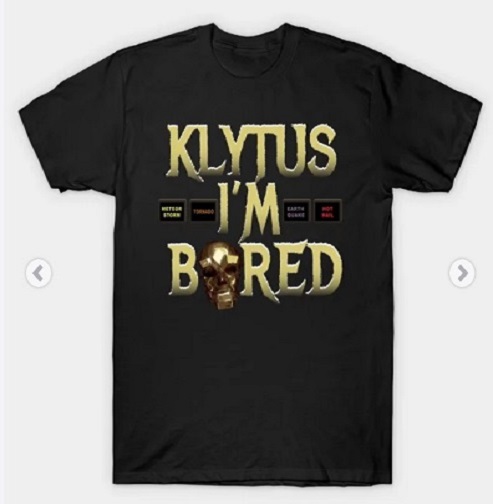
Below: Klytus – General of Ming’s Armies. AF-725546. 72. Manufactured by Biff! Bang! Pow!

BBP02010lg

Below: Dying Klytus – manufactured by Biff! Bang! Pow!

a45c53f821063fbea3d3631333b5ac15
12_19e18498-7e46-45fe-81ca-15d58c17a1b6_grande

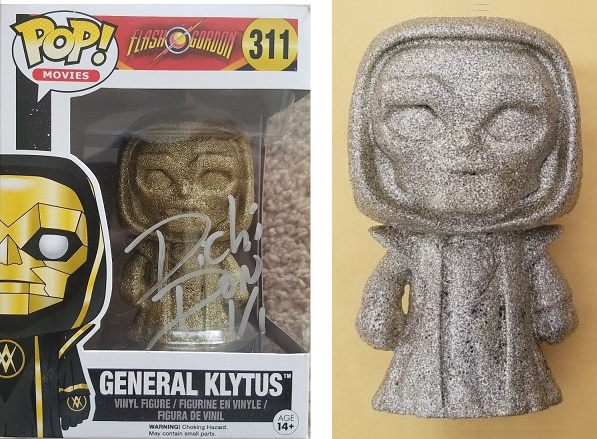
Below: Klytus Pop! Funko POP! Movies Flash Gordon General Klytus Vinyl Action Figure 311

  • General Klytus collectable vinyl figure
  • From Flash Gordon
  • Funko POP! model
  • Highly detailed collectable
  • Approx. 9.5cm tall
s-l1600 (3)

 Above: Custom Signed 1/1 Funko POP General Klytus Gold By Chicago Artist Dichi Don

Audio Tapes

6105FjuAMfL__SL300_

Above: The Two Gentlemen of Verona. 2 x 60 minute tapes (Unabridged). HarperCollins Audio Books. ISBN 0-00-105024-9

Badges

Above: Limited Edition Official Peter Wyngarde Appreciation Society badge. Buy here

41rKFsTryUL

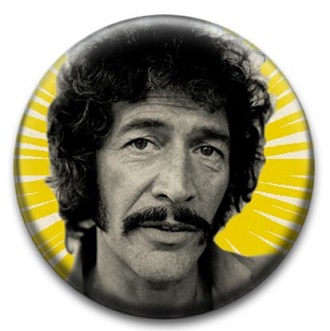
Above and Below: 25mm Pin back badges by RetroBadge.

Below: Burn, Witch, Burn badge by Vicious Delights, USA

Books

IMG_20180910_0001

The complete Department S comic strip collection. Limited editions. Only 20 made.

Above: Bright Darkness: Lost Art of the Supernatural Horror Film by Jeremy Dyson. Published in August 1997 by Continuum (formerly Cassell Academic). 224 Pages. ISBN-10: ‎0304700371. This book makes a detailed study of the supernatural in films. Features a colourised still of Peter and Janet Blair from ‘Night of the Eagle/Burn Witch Burn’ on the cover. 

 Cine Film 

Above: Department S. Edited by Hefa Film, distributed by Techno Films. Episode title: “The Last Train to Redbridge”.

Above: Techno Films 400′ colour/sound home movie of ‘Jason King’.  This is part one of an episode titled “Die Steine Von Venedig (“The Stones Of Venice”).  This 400′ single-striped sound print is German language. Below: ‘Uneasy Lies The Head’

Coat Hanger

Above: A curiosity from the 1970’s – a Jason King coat hanger

Collector Cards

COLLECTOR

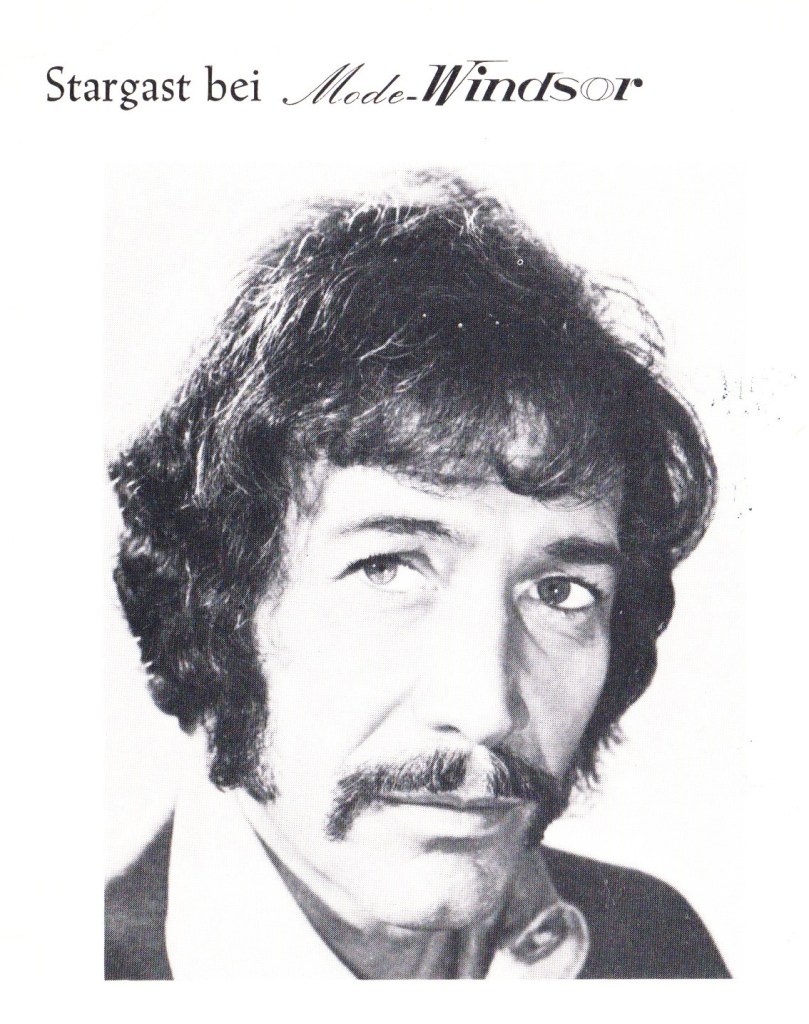
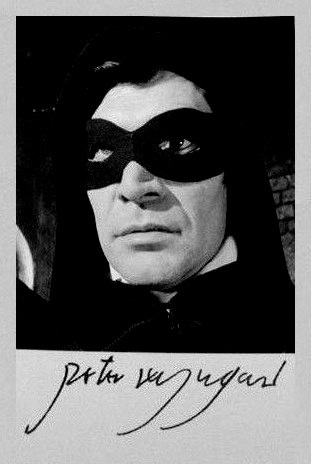
Above Left: Postcard-sized picture of Peter with facsimile signature, which were sent to fans by ITC and ICM (agent) on request of autographed photograph. 1962. Middle: Postcard-sized picture of Peter with facsimile signature, which were sent to fans by ITC and ICM (agent) on request of autographed photograph. 1970. Right: Postcard-sized picture of Peter with facsimile signature, produced by Carl Gresham at personal appearances.

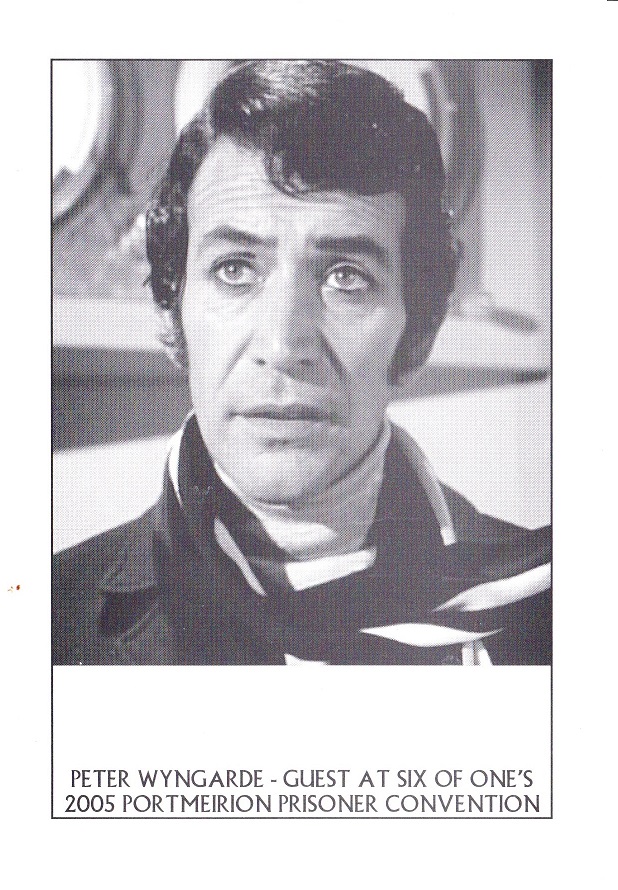
Above: Issued by Six of One – the Official Prisoner Appreciation Society – in 2005. Peter had been invited to the Society’s annual convention at Portmeirion but, sadly, he was unable to make it. This card is therefore something of a rarity.

Above: This card was issued during Peter’s tour of Denmark in 1972

Above: A card that was available to fans requesting autographs during the ‘Underground’ tour, 1983

Comic Books

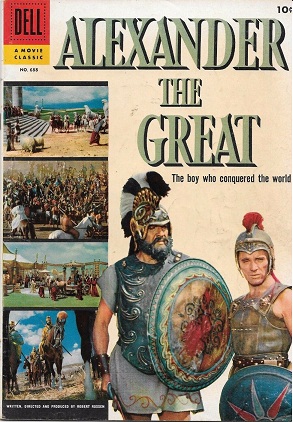
Below: Original four-colour ‘Alexander the Great’ film tie-in. No. 688. USA 1956

s-l1600 (16)

Department ‘S’: Televise Favorieten – Volume 6′. Published in Holland in 1969, features four different Department S cartoon strips entitled:’De Verwenen Geleeden’ (The Disappeared Scientists), ‘Gouldkapers Aan Boord’ (Gold Stealers On Board), ‘Het Poppenmysterie’ (The Puppet Mystery), and ‘Diplomaat Vermist’ (The Missing Diplomat).

Below: Flash Gordon Comic: 1980 (below) adapted by Bruce Jones and supported by amazing art by award-winning Al Williamson.

FlashComic7

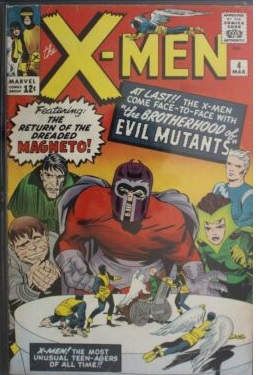
The X Men (Marvel Comics) – featuring Jason Wyngarde.

Above: 4th March, 1964 issue of Marvel’s, ‘The X Men’. First ever appearance of the character, ‘Mastermind, who would latterly be revealed as ‘Jason Wyngarde’.Currently selling for £2,700.

Below:

  • Vol. 1 – No.129: ‘God Spare The Child’. Published: January 1980.
  • Vol.2 – No.130: ‘Dazzler’. Published: February 1980.
  • Vol.3 – No.131. ‘Run For Your Life’. Published: March 1980.
  • Vol.4 – No.132: ‘And Hellfire Is Their Name’. Published: April 1980.
  • Vol.5 – No.133: ‘Wolverine Alone’. Published: May 1980.
  • Vol.6 – No.134. ‘Too Late The Heroes!’ Published: June 1980.

The Essential X-Men – Book 2. A black and white anthology of the above mentioned Marvel comics featuring the Jason Wyngarde character. Published in the U.S.A. by Marvel Comics. $14.95 (UK £10.95).

The Uncanny X-Men – The Dark Pheonix Saga. X-Men comics featuring the Jason Wyngarde Character. Published in the U.S.A. by Marvel Comics. $15.95 (UK – £11.99)

Department S Doll

Above: One-off Jason King figure made by D-List Dolls, March 2020

Events Programmes

thumbnail_image1 (1)

Above: Fear in the Fens Festival 2019 programme

Fanzines

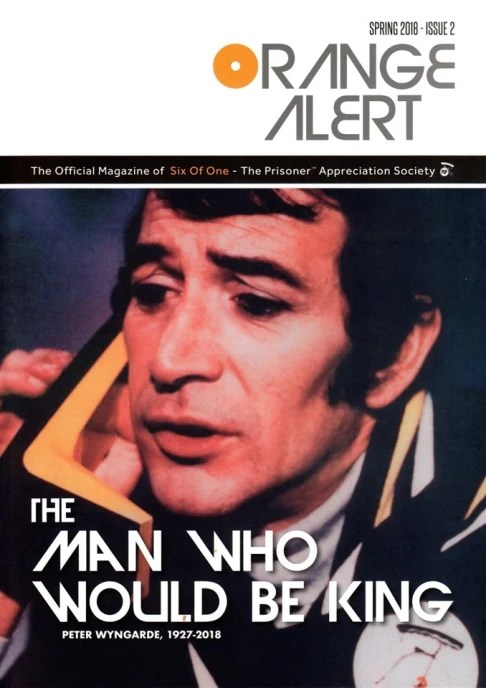
Above: Orange Alert: The magazine of ‘Six of One’ – the Official Prisoner Appreciation Society

MAG

Camera Obscura ‘Peter Wyngarde Special’ (Above). Issue No.23. 20 Page A4, black and white. Published in 1996 by the Birmingham branch of the Prisoner appreciation society, ‘Six of One’. Includes articles on actors who had appeared in both The Prisoner and Department S; transcript of Peter’s 1993 appearance on Pebble Mill; biography and analysis of Peter’s portrayal of No.2 in Checkmate.

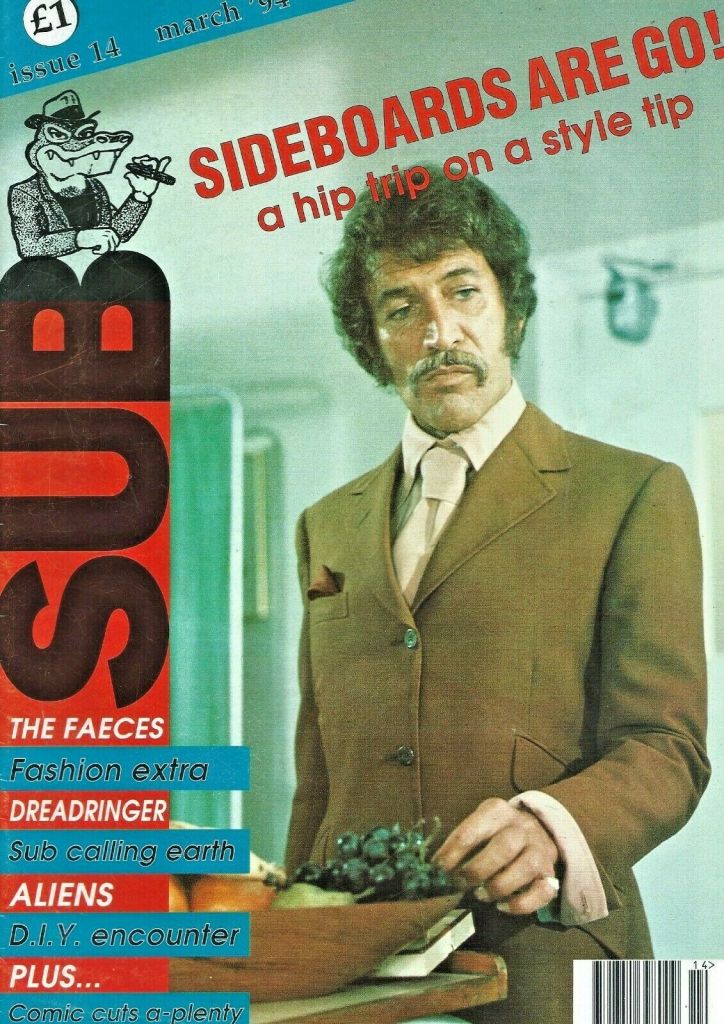
SUB Magazine – UK Fanzine

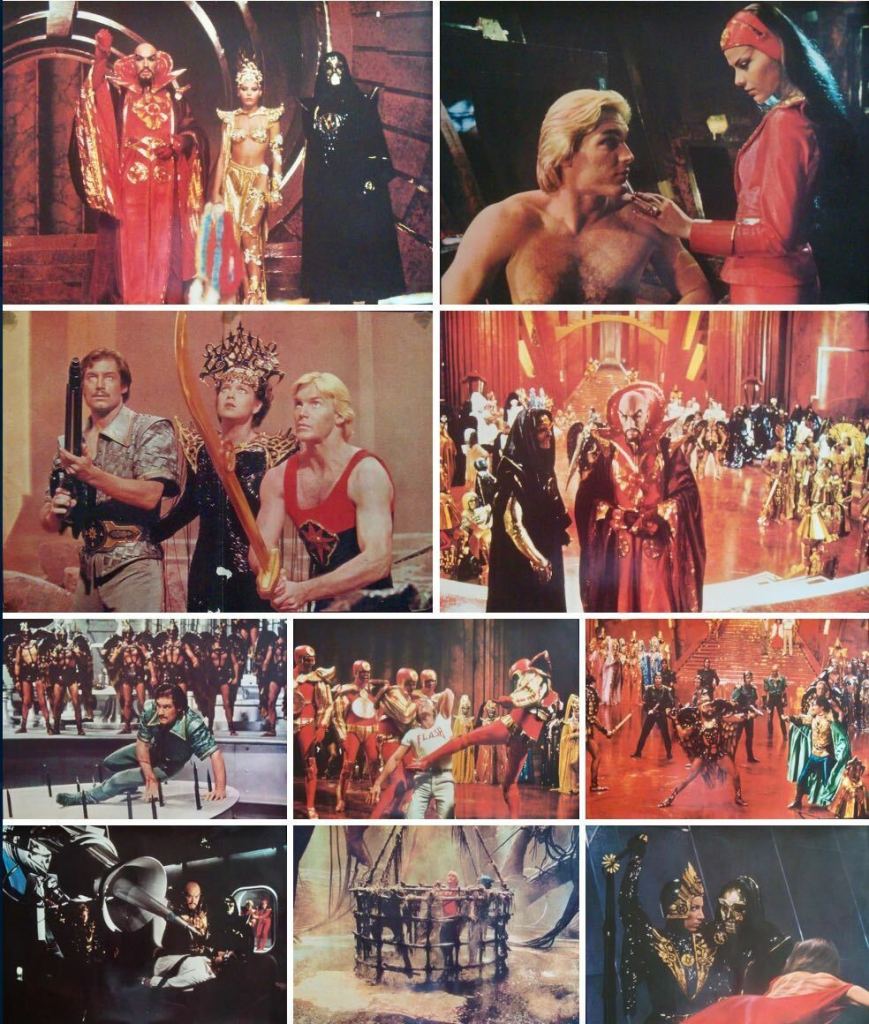
Flash Gordon 35th Anniversary Collectables

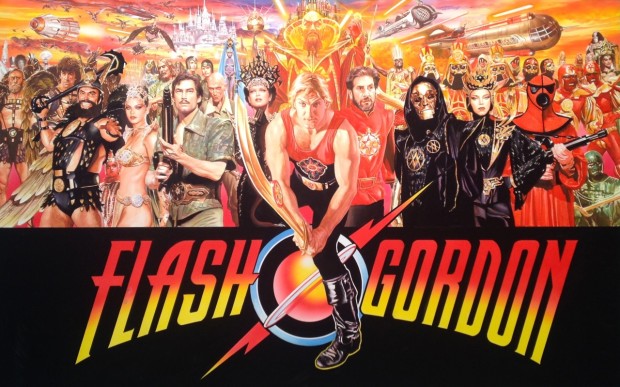
Above: Specially designed poster by Alex Ross

Above: Promotional poster for the event on 25th November, 2015

Above: Souvenir brochure and, Below, inside

Below: Schedule of Events

Front of House Stills and Lobby Cards

LOBBY

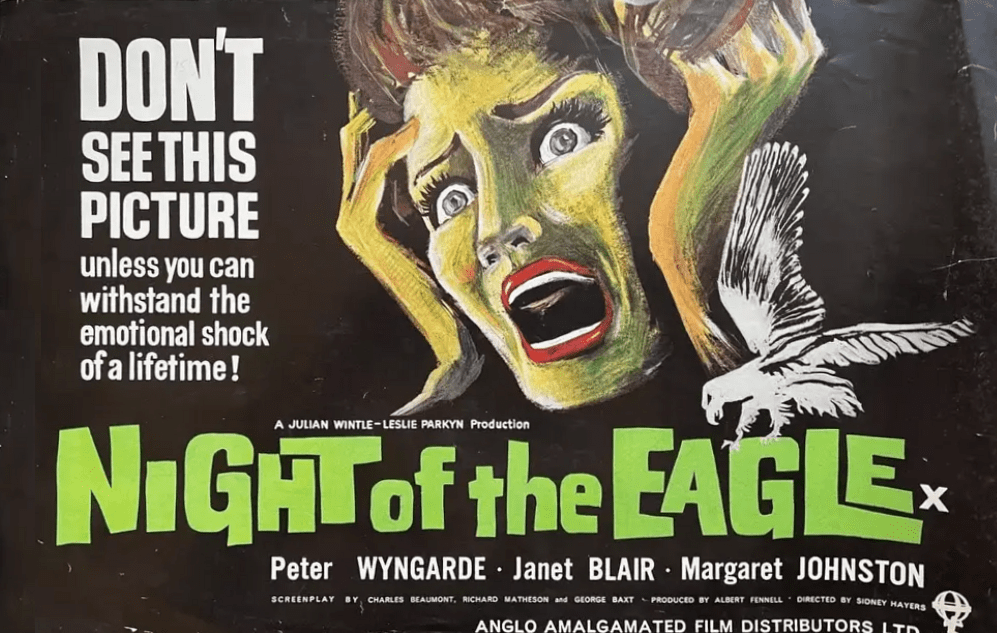
Above (clockwise): American card for ‘Burn, Witch, Burn’ – British card for ‘Night of the Eagle’ – German card for ‘Himmel, Scheich und Wolkenbruch’ – American Flash Gordon Lobby Card.

Click here to see more Front of House Stills and Lobby Cards

Gaming Pieces

Below: 28mm miniatures from Crooked Dice Game Design Studio. The set is a mixture of characters from the 1980 movie and the Buster Crabbe serials.

91290626_3297748116910921_1108607960487034880_n

Top-right: Peter’s character, General Klytus

Iron-on Transfer

il_570xN_947171480_sswc

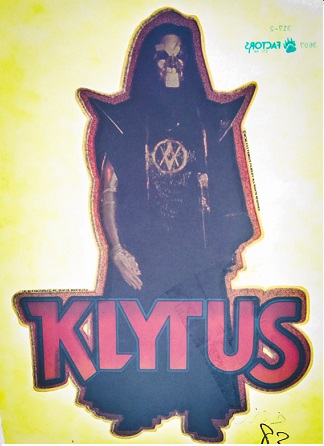
Above: Circa 1980. Original Klytus iron-on transfer (USA).

Laser Discs

Above Left: ‘The Innocents’ laser disc – US release. Right: ‘Burn, Witch, Burn’ laser disc – US release

Click below for more DVD, BluRay and Laser Discs

Magazines

MAGAZINES

Click below for more magazine covers

Matches and Matchbox Labels

Above: Book of matches promoting Peter’s appearance in ‘Butley’ at the Bourke Theatre, Melbourne.

match

One of 100 different 2⅛” x 1½” (approx 50mm x  3mm) matchbox labels featuring TV and music stars. It shows (and names) Peter, and at the top right-hand corner is the number F43. At the bottom right corner there is the emblem of a butterfly and the name Vlinder, who was the manufacturer. 1976.

Mirror 

f438855b-6835-4f89-856b-ab7d0153f01b

Above: An incredible, and likely unique, 1970’s original retro vintage mirror in the form of Peter’s character Jason King (from the 1971 series of the same name). Cardboard construction, the front decorated in a psychedelic duo-tone pattern, the mirrors forming part of Peter’s sunglasses. Copyright marks to base for C.I.R. Torino. A rare and impressive display piece. 64cm tall.

Model Cars

BENTLEY

Above: Manufactured in Germany. All-metal Bentley Continental as driven by Jason King in Department S. With accompanying plastic lamp-post and road-block.

Above: Diecast 1950’s Rolls-Royce Silver Cloud manufactured by the British toy company, Budgie Models, for H. Seener Ltd. Ref 102.

Above: 1:43 scale silver Bentley Continental with display box, from Code 3 models.

s-l1600 (3)

Above: 1:43 scale maroon Bentley Continental with display box, from Code 3 models.

516344_md-JasonKingandBentley

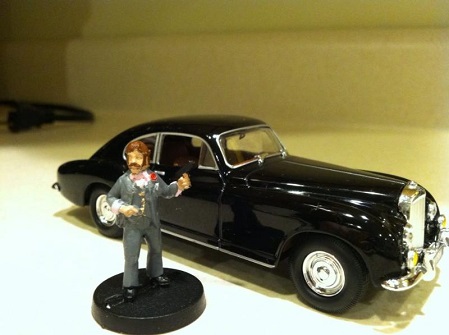
Above: Model Bentley Continental with Jason King figure.

Novels: Film and TV Tie-Ins

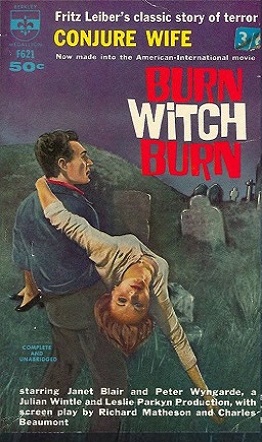
Above (left to right): ‘The Siege of Sidney Street’. Written by Fredrick Oughton, 1960. ~ ‘Burn, Witch, Burn’: 1st Berkley, 1962 Richard Matheson. ~ ‘Flash Gordon’ by Arthur Byron Cover (1980). Based on the screenplay by Lorenzo Semple JR. ISBN:0-450-05191 9.

Above: (West) German publication by Fernseh-Buch. Written by Mit Bildtell.

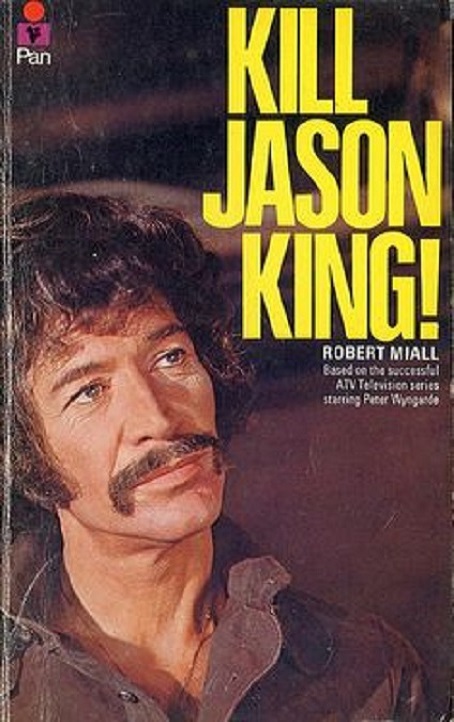
Above Left: ‘Jason King – Published by Pan Books (1971). Written by Robert Miall. ISBN:0-330-231650. Story based on two episodes from the series – ‘A Deadly Line In Digits’ and ‘The Company I Keep’. Above Right: ‘Kill Jason King’ – Published by Pan Books (1971). Written by Robert Miall. ISBN: 0-330-234196. Story based on two episodes from the series – ‘As Easy As A.B.C.’ and ‘A Red, Red Rose Forever’.

Above: ‘Doctor Who – Planet of Fire’. Published by Target Books. (1984). Written by Peter Grimwade. ISBN: 0-426-199405.

Pinball Machine

Above: Produced by Bally, this ‘Flash Gordon’ arcade game in 1980 to coinciding with the release of the movie based on the comic strip character. There were about 10,000 of these games made.

Playing Cards

Above: Manufactured in Argentina (2019). The Three of Hearts clearly shows Charles Middleton as Ming the Merciless from the 1930’s series, which is a rather glaring error!

Postcards

Jason King (Above) & Stewart Sullivan/Sir Curtis Seretse/Annabelle Hurst. Published in 1990 by Engale Marketing of Preston, Lancashire, as part of a 16-card ITC set.

Psychedelic card featuring Peter as Jason King. Published by Klassic Kards of London, England in 1993

Another card from the 1990’s (publisher unknown)

Above: Set of 10 Department S cards from Cassy. (2016)

Posters

posters

Above: Two posters from Pace International (London). The poster to the left was the best seller for Pace in the UK that year in 1971.

13510960_10153905905979125_5318121268091225174_n

Above: 30in x 25in colour print by Sandecor of (West) Germany, 1972

s-l1600 (5)

Above: 18×26 (46×66 cm) Fotobusta poster created for the Italian release of Flash Gordon by Renato Casaro. One from a set of eight.

Above: Set of Italian 18×26 (46×66 cm) ‘Flash Gordon’ posters – 4 of which feature Peter as General Klytus.

In addition…

In 1971, Scotch-Ege chose five of the biggest stars of the day, which included Peter, Jimi Hendrix, Steve McQueen, Elvis Presley, and Bridget Bardot – to help promote their magnetic tape and audio cassettes. The 39in x 25in posters were given away in exchange for three tabs taken from cassette index cards. The promotion was advertised in such publications as Melody Maker, Rolling Stone and the NME.

s-l500

Above: Hand printed General Klytus promo poster. USA.

Poster-Magazine

Below: 1980. Fold out poster-magazine to tie in with the film release

25977402646_c65af47daa_b

Promotional Posters

85220207_10159478435852586_1566816194273476608_n

Above: A promotional poster featuring general Klytus – used by the American rock band, Faith No More in 2015

Promotional Material: Television

Above: Brochure from Television Wales and the West, TWW was a British commercial television company based in Bristol that served South Wales and West of England between 26 October 1956 until 1968. This particular booklet features the programme, ‘Excusive’, which Peter appeared in during the late 1950’s. Below: Inside.

Publicity Material: ITC

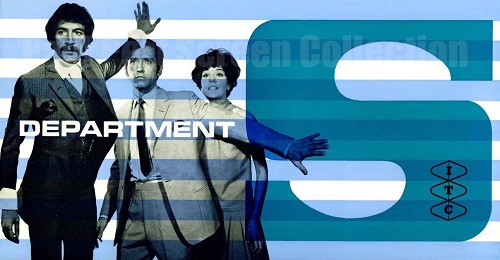
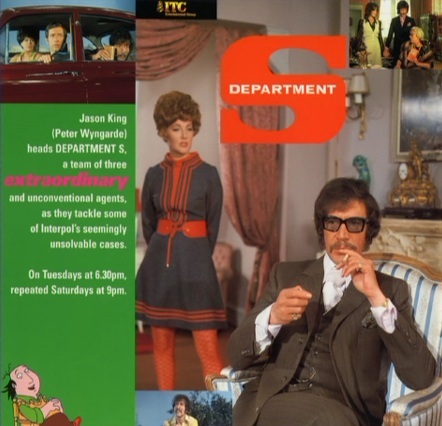
Above: Department S Press Book: Published in 1969 for the American market. 34-Page guide to the series featuring profiles on the main characters. Black and white photograph on a glossy cover.

13064526_1758394801043096_256303634886138168_o

Above: Department S – A4 Landscape gatefold publicity card (Above): Published in 1969. Black and white photographs on front and back cover.

jktvheader

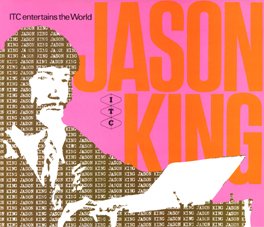
Above: Jason King Press Book (Above): 15-Page guide to the series featuring profiles on Peter and the production staff. Colour photographs on a glossy cover.

Card2

Above: front and reverse: ITC Jason King promotional card  – 1971

130

Above: Press Pack. Printed in 1995 to publicise re-showing of Department ‘S’ on satellite television.

Press Photos

s-l500gt3iekef

Press Books and Flyers

Above and Left: ‘Alexander the Great’ – from (West) Germany and Norway.

Above: American publicity sheet for ‘The Innocents’.

Above: Promotional booklet for ‘The Siege of Sidney Street’ from Denmark

s-l500

Above: American ‘Burn, Witch, Burn’ publicity sheet.

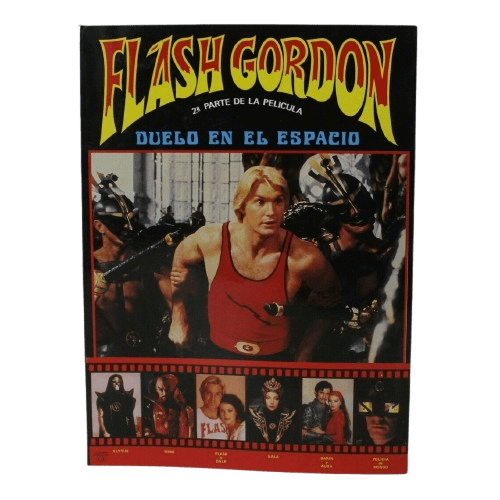
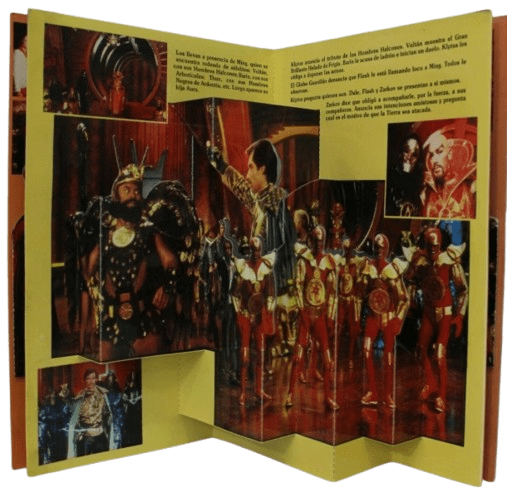
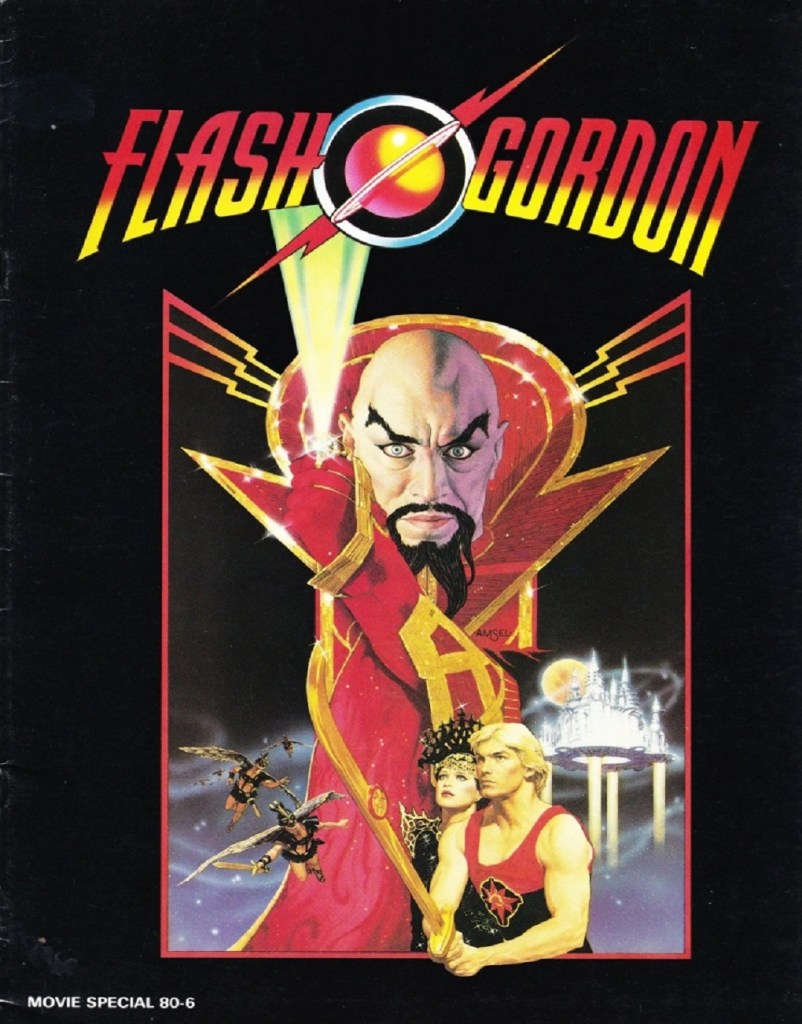
Above: ‘Flash Gordon’ pressbook. Left: Front cover. Right: Inside – Generals, Kala & Klytus

Above: American brochure. Right: From Japan

Records and CD’s

For all Peter Wyngarde-related recording on vinyl (7″ & 12″) and CD, please click here

12″ Single

s-l1600 (5)

Above: Of Japanese manufacture. 33rpm. Ultra rare!

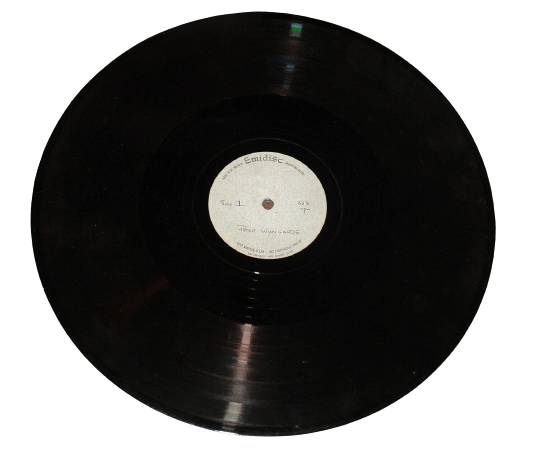
Above: Peter very own personal acetate demo disc. The acetate would have been given to him by the production team to allow him to listen to the album in the privacy of his own home. The album is an early mix, without all the bells and whistles of the finished, released album on RCA.

  • Title: “Peter Wyngarde”
  • Label: Emidisc Records. 
  • Year of Release: 1970.
  • Country of Manufacture: United Kingdom.
  • Sleeve Design: original studio bag.
  • Label design: original ‘Emidisc’ first press paper labels. 

Sheet Music

Sheet music of Edwin Astley’s theme to Department S. Issued in Britain in A4 format with a black and white photograph of the three main characters on the cover. Published by New World Music Limited of New Bond Street, London. It originally cost 3 shillings (15p).

Cards and Albums

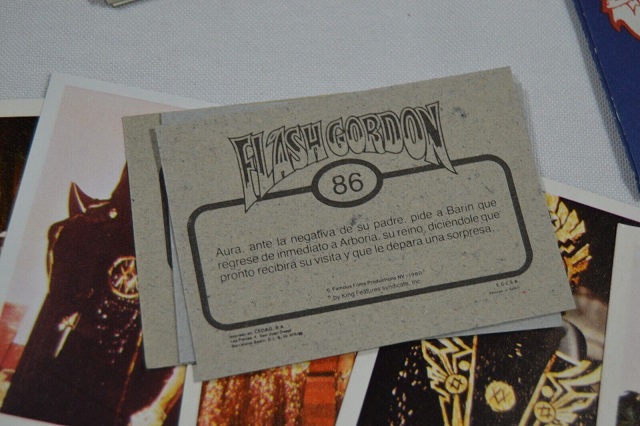
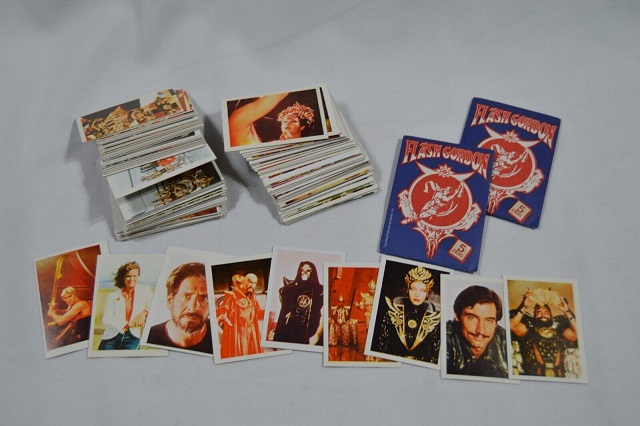
Above: Flash Gordon collector album from CEDAG S.A., Spain,1980. Holds180 stickers in total.

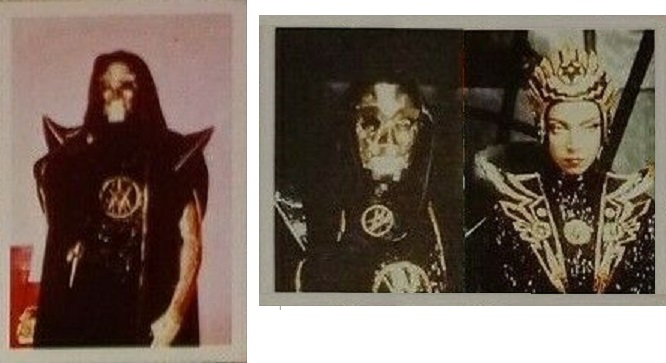
Above: General Klytus and Klytus & Karla cards.

Theatre Memorabilia

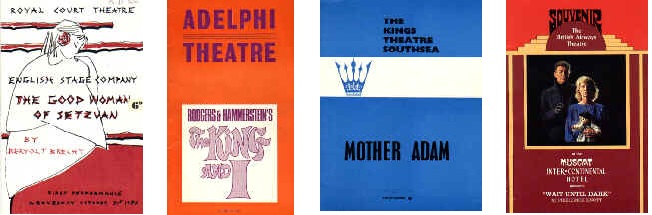
PROGRAMMES

Varied: Programmes and posters.

Click below for Theatre Posters

T-Shirts

Department S ‘T’

The Prisoner: Checkmate

Burn, Witch, Burn by DammitTees, USA

The Official Peter Wyngarde Appreciation Society

Jason King from Kustom Tees

Morrissey UK Tour 2018

‘Jason King’, ‘Number 2’ and ‘Night of the Eagle’ shirts by Suchdesign

Trading Cards

Cards

Above: ‘The Avengers collectors card: Peter as John Cleverly Cartney in ‘A Touch of Brimstone’

Above: Trading card from the Avengers In Colour Series by Cornerstone – 1993. There were ninety-nine cards issued in this particular collection, but the numbering follows on from the previous series from 1992. This is Card No. 94 and features Peter and Isa Miranda in a scene from ‘Epic’.

CARDS

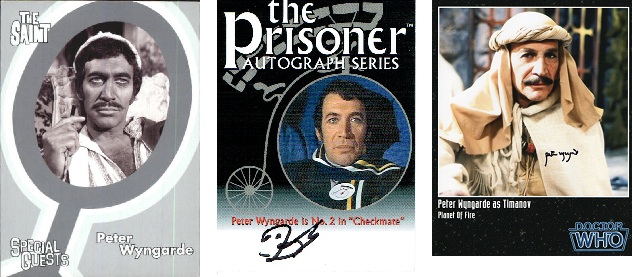
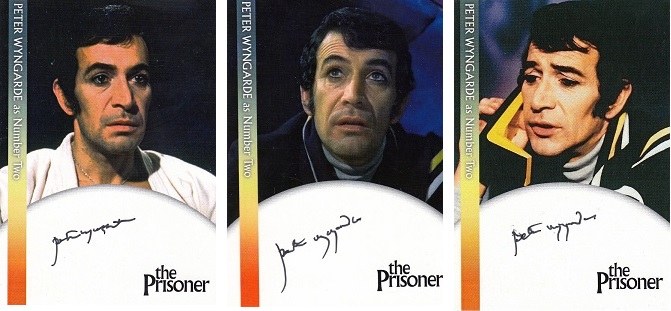
Above Left: No.63 of The Saint trading card collection by C-Cards Inc. features Peter in the role of Turen in ‘The Gadic Collection’. Middle: The Prisoner Autograph series card. Right: Doctor Who collectors series.

front

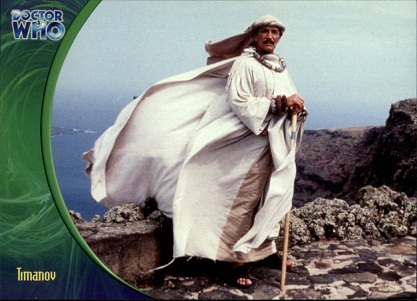
Above: Strictly Ink: Series Three, No. 20 features Peter as Timanov  

Above: Set of 72 “Base” cards by Cards Inc. featuring scenes and characters from The Prisoner. No.27 features Peter as Number Two.

Above: The Prisoner 2018 Autograph Cards by Unstoppable Cards

the_prisoner___number_2_by_10th_letter_dcf3box-250t

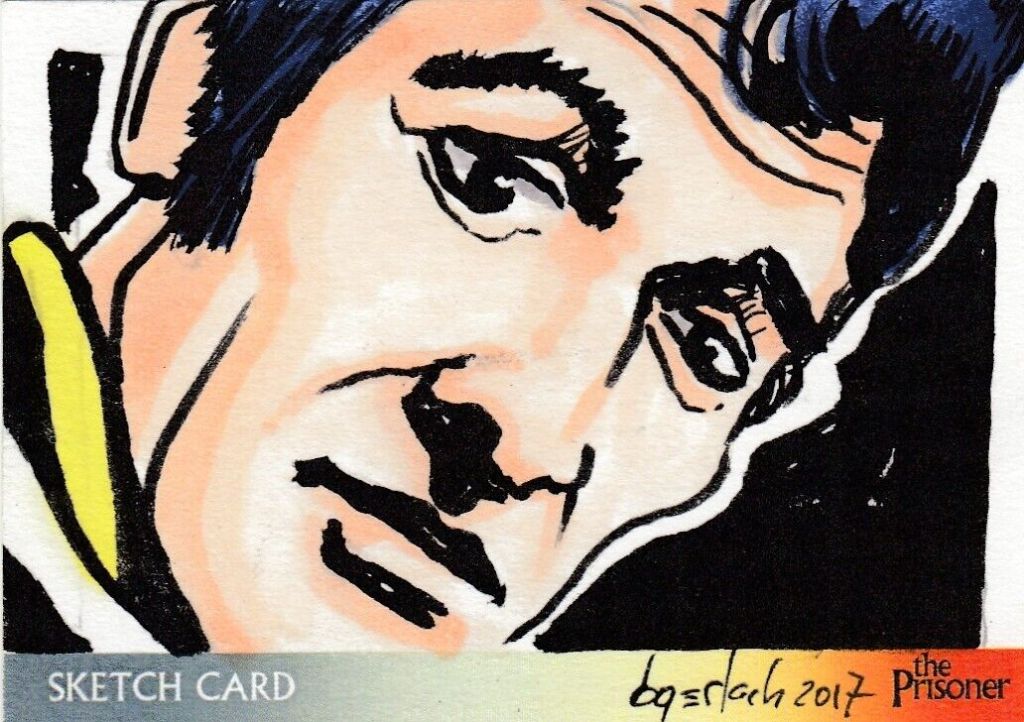
Above: Prisoner ‘Sketch Card’ by Unstoppable, 2018. Peter as Number 2. 

Above: Original aceo collector card.

s-l1600 (11)

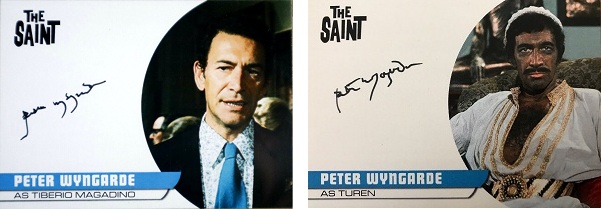
Above: Autograph card of Peter as Teberio Magadino (PW1) Turen (PW2). The card is part of The Saint Series 2 set of trading cards released by Unstoppable Cards in November 2018.

Above: Part of The Complete Avengers Series 1 set of trading cards, released by Unstoppable Cards in August 2019. Autograph card of Peter as John Cartney. Only 36 produced. 

s-l500-1

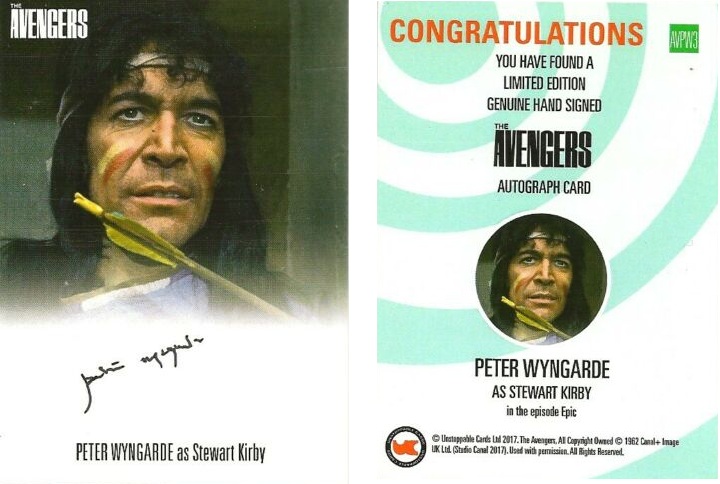
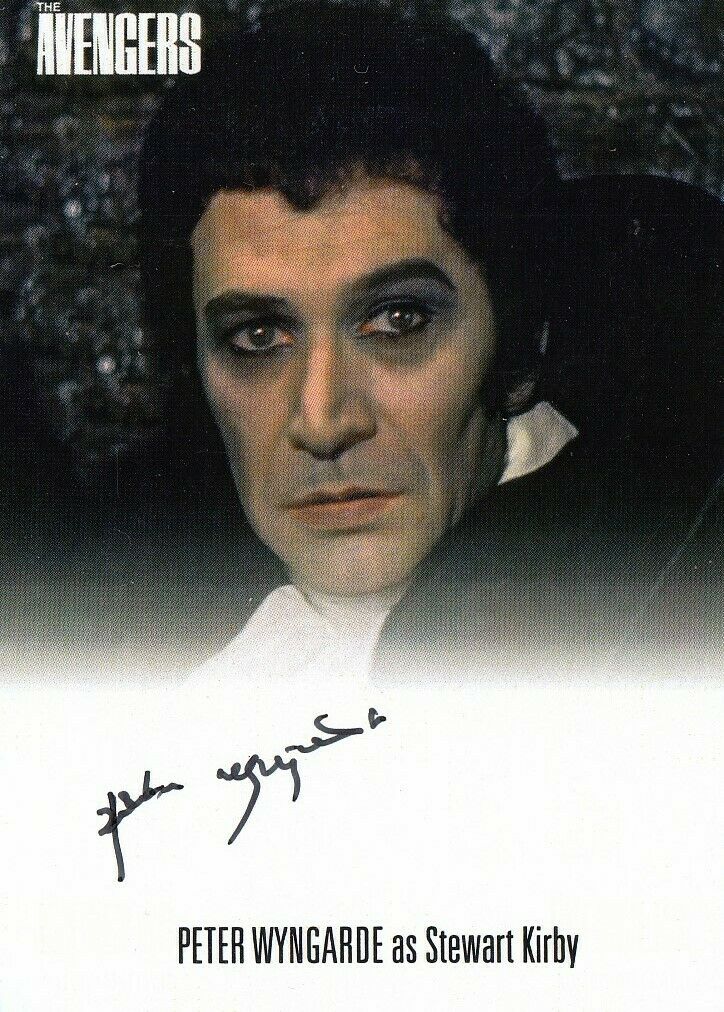
Above and Below: Part of The Complete Avengers Series 2 set of trading cards, released by Unstoppable Cards in August 2019. Autograph card of Peter as Stewart Kirby. Only 36 produced. 

s-l1600 (7)

Below: Part of The Complete Avengers Series 2 set of trading cards, released by Unstoppable Cards in May 2020. Autograph card of Peter as Stewart Kirby. Only 36 produced. 

s-l1600 (8)

Above: The complete Avengers series 2 – Scott Fellowes (John Cartney/Emma Peel) ‘Sketch Card’ 1/1. This card is part of The Complete Avengers Series 2 set of trading cards, released by Unstoppable Cards in May 2020.

s-l1600 (10)

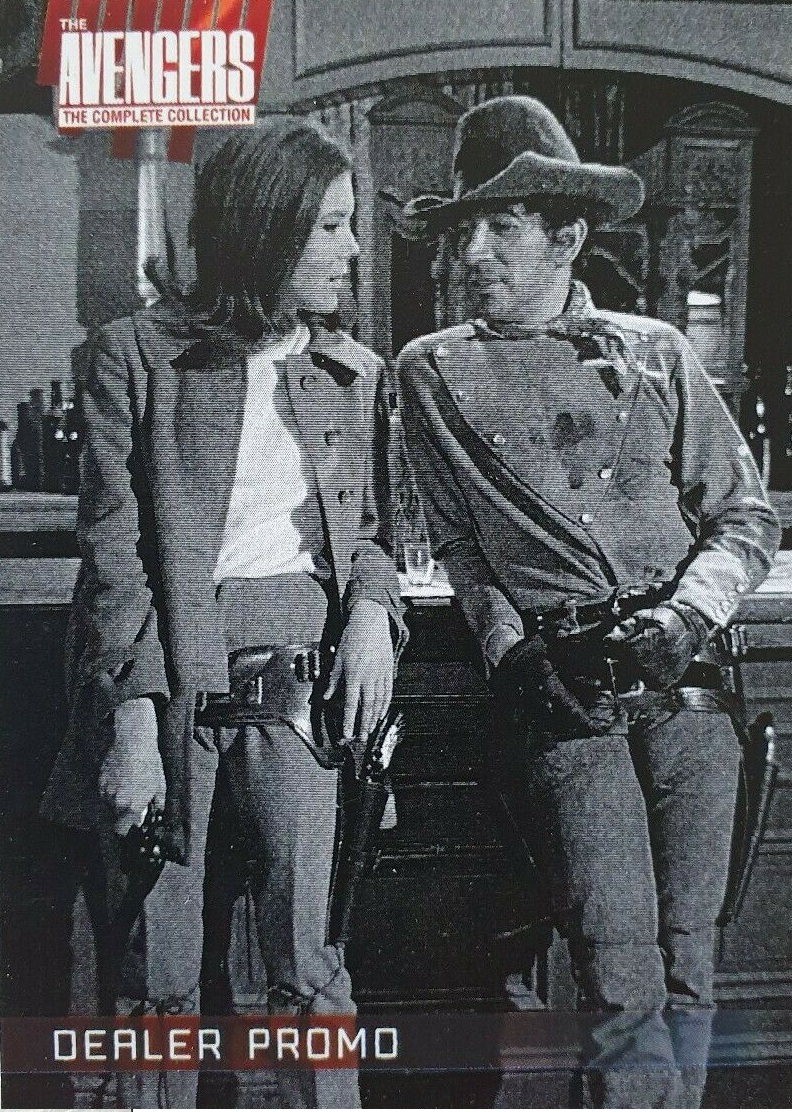
Above: This exclusive dealer promo card (AS2) was released by Unstoppable Cards for their ‘The Avengers Complete Collection Series 2’ Trading Card Collection.

Above: Collector card issued by the English Theatre in Vienna in 1977. The photograph features original autographs of Peter and Ruth Brinkmann – stars of ‘The Merchant of Venice’.

KLYTUSCARD

Above: Klytus Collector Card – issued by Weetabix, 1981. 1 of 18 cards – which feature movie scenes from Flash Gordon.  Cards measuring 90 mm x 42 mm, with a description of the scene on the reverse. Issued in strips of three or six, depending on packet size.

Above: Front and rear of Classic TV Classics – Card No.6. 2019

Video Cassettes

department-s-six-daysthe-trojan-tanker-16460l

51DXYVW8GRL

Above: ITC Home Video releases

Click below for more on ITC video releases

viking_5_epic

Above: The Avengers ‘Epic’. Released as a single episode in the USA in 1993. HSV 1604

Above: Early 1980’s release of ‘Burn, Witch, Burn’ on video cassette (USA), with introduction by Orson Welles

Click below for more Peter Wyngarde collectables

REVIEW: Light Up The Sky

Presented by Bill Kenright Ltd.The Old Vic, London – September 1985

Character: Carlton Fitzgerald

The Story

The action of the play is set in the living room of Irene Livingstone’s suite in the Ritz-Carlton Hotel in Boston, Massachusetts, USA.

Act I:

  • 5.30pm

Act II:

  • 11.45pm that evening

Act III:

  • 3.30am

Light Up The Sky had all but disappeared from most theatrical memories by the time this production was staged, which was all the more strange when you consider who it was vaguely about: in there were characters owing more than a little to Billy Rose, Gertrude Lawrence and Nöel Coward, and though as a ‘greasepaint comedy’ it lacked the brilliant energy inventiveness of ‘The Man Who Came To Dinner, which had been written by Moss Hart and George S. Kaufman a decade earlier, it was based on a much greater reality about the great bloody awfulness of being in Boston with a tricky play and an even trickier leading lady.

But the real fascination with ‘Light Up The Sky’ was that it came from the author’s heart… and then perhaps through his clenched teeth. Perhaps, in the end, this play was about morality in the theatre, just as The Front Page was about the morality of journalism. And though Kaufman might have doctored the final act and thereby given the theatre a classic farce, what Hart had given the audience was a lot more about his attitude to the American theatre where he lived.

Kate O’Mara also appeared in the play as Frances Black.

REVIEW: A Tale of Two Cities

EPISODES:

  • Recalled to Life: Sunday, 29th July, 1957
  • The Gathering Storm. Broadcast: Sunday, 4th August 1957
  • The Jackal. Broadcast: Sunday, 11th August 1957
  • The Honest Tradesman. Broadcast: Sunday, 18th August 1957
  • The Storm Breaks. Broadcast: Sunday, 25th August 1957
  • The Darkness. Broadcast: Sunday, 1st September 1957
  • A Hand of Cards. Broadcast: Sunday, 8th September 1957
  • The Footsteps Die Out. Broadcast: Sunday, 15th September 1957

 Character: Sydney Carton

 “It is a far, far better thing that I do now than I have ever done, it is a far, far better rest that I go to now than I have ever known” – Sydney Carton

Some Background

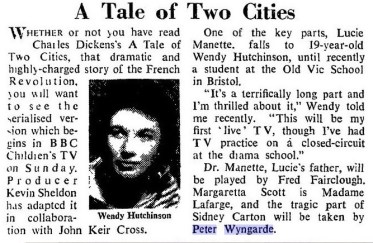
Charles Dickens story of ‘A Tale of Two Cities’ is probably so familiar to anyone reading this review that it would be difficult to tell you anything that you didn’t already know. But no matter how acquainted one is with the story, there is still something wonderfully moving in its famous climax on the steps of the guillotine – especially when the man playing the part of the novel’s hero, Sydney Carton, is real-life hero, Peter Wyngarde.

Certainly, Peter’s depiction of Carton resulted in the BBC receiving around 4,500 letters – almost all from women – who immediately fell in love with the actor while watching this eight-part serial. According to the Beeb, they had never taken delivery of more letters address to a single actor in one of their own production, either before or since.

4318573_tina bate_In-Store Restoration Art_0_0_x1

There is a great deal in the comment made by dramatist and poet, G.K. Chesterton, that a man rereads a detective novel because he has forgotten the plot, but that he rereads a Dickens’ novel because he has remembered the plot.

Right: Peter as Sydney Carton

There are fewer characters in ‘A Tale of Two Cities’ that in Dickens’ earlier books, but they are all memorable: the pathetic Dr Manettes, kind Mr Lorry, the terrible Defarges and their equally dreadful enemy, St. Evrémonde (Heron Carvic), good Gerry Cruncher, (played by Ronald Radd) of the secret fishing expeditions, and the formidable Miss Pross (Joan Ingram) with her mysterious attacks of “The Jerks”.

But of all the characters in the story, Sydney Carton – the self-indulgent young lawyer who said of himself, “I shall never be better than I am” and yet, one day, superbly was.

It was a joy to meet all these wonderful creations of Dickens’ imagination through the distinguished cast that producer, Kevin Sheldon, assembled for this production.

The Story

The story begins just prior to the French Revolution in 1775 when bank clerk, Jarvis Lorry (Mervyn Johns), travels to Paris to help reunite Dr Alexandre Manette (Fred Fairclough) with Lucie (Wendy Hutchinson), his long-lost daughter. Manette had recently been released from prison having served an 18- year sentence in the infamous Bastille.

Lorry intends to bring the Doctor with his 17-year-old daughter together at the room he’s been renting over a wine shop in the City. The Doctor, it emerges, cannot remember anything about of his life prior to his imprisonment, but on meeting his devoted Lucie for the first time, begins to regain his memory.

TALE OF

Five years later, the Doctor has built a successful medical practice in his house in London. Lucie, meanwhile, has become engaged to a Frenchman by the name of Charles Darnay (Edward de Souza), who has turned his back on his former aristocratic life in France for a new life in England. We learn that Darney’s real name is Evrémonde and that he’d formally been put on trial for treason. Fortuitously, he was saved from the gallows by a young barrister, Sydney Carton (Peter Wyngarde), who also happens to be the spitting image of the Frenchman.

Although the Doctor is delighted when his daughter finally marries Darney, he’s completely unaware that his new son-in-law’s father and uncle had been the parties responsible for his imprisonment.

As a result of the continued persecution of the lower orders by the French aristocracy, an uprising begins in France, at which point Darney decides that he must return to his homeland in an attempt to save Monsieur Gabette – a former household servant of his. On his arrival in Paris, Darney is recognised, rearrested and imprisoned for the supposed crimes of the Evrémondes family.

When Dr Manette learns of Darney’s fate, he and Lucie race to Paris where, with the help of Sydney Carton, they manage to negotiate the temporary release of the young nobleman.

Unbeknown to all concerned, Carton has been hopelessly in love with the Doctor’s daughter since their first meeting, and seeing her with her infant daughter – bereft at the thought of Darney’s execution, Carton take his place at the prison and is brought to the guillotine in his stead.

CARTON2

A Bit Of Trivia

‘A Tale of Two Cities’ was filmed entirely in the Medieval French city of Bourges, and was shown as part of the BBC’s Children’s Hour.

Veteran British actor, Julian Orchard, played three different characters in the play, including Jacques, and two other unnamed men.

imageedit_2_7210538938

Critics Comment

“The TV production was very well done, and I think that in Peter Wyngarde, the actor who portrayed Sydney Carton, the dissolute barrister, we have yet another new British top-liner.” June Morrow – Woman’s Own

A Far Better Thing?

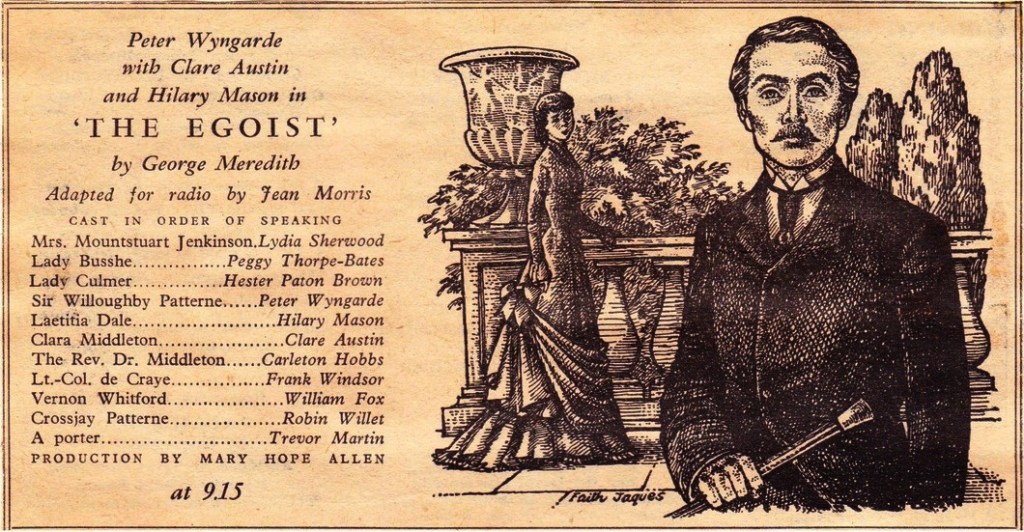
REVIEW: The Egotist

Broadcast: BBC Home Service – Friday, 30th August, 1957

Character: Sir Willoughby Patterne

Taken from The Radio Times – 1st September, 1957

The Story

This “comedy in narrative” begins with the engagement of Sir Willoughby Patterne – “The Egoist” of the title (Peter Wyngarde) to one Constantia Durham. Constantia manages to escape such a fate, however, running away with one Captain Oxford. In order to keep up appearances, Sir Willoughby soon seems to be courting Laetitia Dale, who has been a long time devotee of his. The town quickly supports Sir Willoughby’s egoistic need to be in control of his situation by singing the praises Laetitia.

The months pass by, and soon Sir Willoughby takes a trip to see the world. Upon his return, it is revealed soon that he is no longer interested in Laetitia; the town gossips speculate that Sir Willoughby will meet with Mr. Dale in order to propose marriage of his daughter, but instead, he speaks to him only of renewing his lease of a cottage on his grounds. Meanwhile, Sir Willoughby goes to London, and brings back his cousin, Vernon Whitford, to serve as his secretary at Patterne Hall. A literary scholar, Whitford had very little money of his own, and so was forced to accept money from his rich Baronet cousin. At Patterne, Whiteford devotes his time to walking at times with Laetitia, and also with educating Crossjay Patterne, a young boy who is a relative of Sir Willoughby’s living at Dale cottage. Whitford discerned that Crossjay’s talents suited him for the navy, but the fees for such training were beyond his own resources. Sir Willoughby would spare no such expense either, for he wished Crossjay would be made into a gentleman.

‘Willoughby Patterne is a subtle yet larger-than-life image of egotism, possessiveness, and self-deception; the play narrates how he is at last broken down by the women on whom he plays.’

Soon, Sir Willoughby makes the fateful acquaintance of the beautiful, young Clara Middleton (Clare Austin). Sir Willoughby successfully woos Clara, and she is dazed into accepting an engagement. She protests, however, that she would like some time to see the world before marrying, but Sir Willoughby refuses. Hardly ever listening to Clara, Sir Willoughby talks to her about how they are above “the world” together, and seeks to win her into his egoistic orbit and subordinate all of her desires so that they accord with his. Clara protests that she would like to love “the world” and serve it so that it might be better, but Sir Willoughby discards such notions as naive and childish. He tries to exact an oath from Clara that she will be committed to him even if he should die, but Clara manages to refuse granting such an oath. It is clear that things are not going to be going as Sir Willoughby might wish them to go.

Meanwhile, Sir Willoughby has managed to secure the confidence of Clara’s scholarly father, the Reverend Dr. Middleton. Dr. Middleton is every inch the well-meaning but out-of-touch scholar who speaks in jargon-filled phrases. Unfortunately, he has very traditional patriarchal ideas and does not listen to his daughter’s pleas for traveling before marriage. Dr. Middleton becomes quite settled in, relishing the company of Vernon Whitford, and also Sir Willoughby’s collection of expensive wines.

Thus, Clara’s only comfort comes to be Crossjay, who, in love and in awe of her, seeks only to do her bidding and to make her happy (even when she leaves him under a tree and it begins raining, he does not budge because she has told him to stay). Things with Clara and Sir Willoughby take a turn for the worse when he refuses her counsel on Crossjay as suited for the navy.

When Clara makes the acquaintance of Laetitia Dale, Clara realizes that the devoted Laetitia would be a better match for the egoistic Sir Willoughby. Eventually, Clara goes to Sir Willoughby to apprise him of this and to petition for her own freedom, but Sir Willoughby sloughs off Clara’s words as merely an instance of her jealousy of Laetitia. Try as she might, Sir Willoughby refuses to countenance that she might actually want to be free of him. Much to Clara’s dismay, Sir Willoughby contracts a plan to marry Laetitia to Vernon Whitford so that he might relieve Clara of her supposed jealousy. Clara is supposed to apprise Vernon of this plan, but instead of doing so, she tells him about her predicament and wish for freedom. Vernon is not particularly responsive or encouraging of her freedom, and Clara becomes more and more distressed. Clara also unburdens herself to Laetitia (not to much avail, though Laetitia seems to begin to have an inkling of Sir Willoughby’s egoism, feeling the “power” of Clara’s speech against him).

At this point, Sir Willoughby’s dashing friend, the Colonel de Craye comes to town in order to serve as best man in his wedding. When he comes to town driven in by the slightly drunk Flitch, the carriage is accidentally upset as Flitch swerves to avoid Clara on one of her walks. The porcelain vase which the colonel has brought as a wedding present is broken in this accident (the infamous Mrs. Mountstuart who is gifted at capturing people’s characters in single phrases had once called Clara “a rogue in porcelain”; thus this incident signals that things do not bode well for Sir Willoughby). Indeed, the colonel walks the rest of the way to Patterne with Clara, and the two seem to strike up a friendly relationship. Furthermore, the colonel quickly perceives that all is not well with Clara and Sir Willoughby. Sir Willoughby, hit by suspicions of the colonel, imagines that perhaps Clara has not only spoken to Laetitia and Whitford of her dissatisfactions with him, but also with the colonel.

Unable to take her captivity any longer, Clara contrives to run away, first writing to her bridesmaid and friend Lucy Darleton to secure a place to stay in London. She tells her father that she merely needs a vacation, and at first, Clara manages to convince him to assent to it and also to talk to Sir Willoughby on her behalf. Unfortunately, Sir Willoughby manages to waylay the susceptible Dr. Middleton with expensive wine, and Clara’s plans to leave with her father’s blessing and companionship are foiled. Clara decides to run away anyways, and sneaks out to the railway station with Crossjay as a guide. A rainstorm follows, and soon the men of the house go off to try to find her. Whitford is the first to find her, and he does not force her to come home, but instead gives her some medicine to prevent her catching cold and then counsels her to think also on the cost of leaving behind her father and Crossjay. Clara is nettled, but still thinks to go through with her plan. Vernon consents, and even helps her out by distracting Mrs. Mountstuart, who was also at the station, meeting one Professor Crooklyn who will attend a dinner party of hers. It happens that the colonel also goes to the station, having guessed that Clara might be there. At the last minute, Clara decides to ride back to Patterne Hall with the colonel.

Though De Craye helps to cover for Clara, Sir Willoughby manages to find out from Professor Crooklyn that Clara had drank brandy with a certain gentleman at an inn. Sir Willoughby jumps to the conclusion that Clara was in love with De Craye, and that the two were plotting to run away together. Clara continues to ask Sir Willoughby for her freedom, but he continues to refuse. At long last, he is worn down and starts to convince himself that perhaps he should prefer Laetitia over Clara. After some mulling over this new thought, Sir Willoughby consults Laetitia on the matter at midnight one night and she refuses him, much to his surprise. Crossjay, who has been banished from Patterne because of his aiding Clara in her escape happened to have snuck back in that night and listened to the conversation between Sir Willoughby and Laetitia.

Crossjay’s loyalty to Clara leads to his scheming to tell Vernon of what has happened. De Craye, however, gets to Crossjay first and manages to guess what he has to tell. De Craye lets Clara know, and she now has ammunition against Sir Willoughby when he once again tries to convince her to marry him. In front of her father, Clara tries to get Sir Willoughby to admit that he has proposed to Laetitia. Pushed into a corner, Sir Willoughby eventually has to give up his game. Because he (mistakenly) believes De Craye to be the “other man,” Sir Willoughby tells Clara that she may be free only if she were to marry Vernon. It turns out that Vernon is actually in love with Clara, and so the two of them are engaged. Laetitia is eventually compelled to give in to Sir Willoughby, her father needing money and the rest of the town exerting further pressure on her. Still, Laetitia gets the last word in that she identifies Sir Willoughby as an egoist, and also vows that she does not love him. When Sir Willoughby agrees to accept her conditions, she agrees to marry him. Additionally, she compels him to forgive Crossjay as well as the driver, Flitch (whom he has also banished). Sir Willoughby assents to all, and “salutes [his] wife!” True to comic form, the narrative ends with tidily with these two pairs.

In Retrospect

I’ve found it hard to conceive the modern novel. In it is concentrated the restless probing energy of analysis which the author, George Meredith, had made all his own. And though written in his unmistakable style, with tense wit, poetic overtones, concise phrase and discursive exploitation, it owns a compact form which distinguishes it among his novels and makes it the best work through which to approach him.

He once declared: “It is a comedy, with only half of me in it, unlikely therefore to take either the public or my friends”. He meant that it lacked one of his bold dedicated characters like Sandra or Beauchamps; but there is a sense in which he’d packed himself into the book as into no other. R.L. Stevenson, to whom author read some chapters, was said to have commented that Sir Willoughby Pattern , was Meredith himself. The man himself replied: “No, my dear fellow. I’ve taken him from all of us, but principally from myself”.

Pattern is a subtle yet larger-than-life image of egotism, possessiveness, self-deception; and the book narrates how he is at last broken down by the women on whom he plays. But he is more than a grand comedic image. In him Meredith depicts, with tingling immediacy, the very stuff of an involved self- consciousness, which ceaselessly falsifies reality and yet at the same time is perversely sensitive to the life on which preys.

This is what makes ‘the Egotist’ a foundation work of the analytic novel. In a letter to Henley Stevenson wrote: ‘Willoughby is of course a pure discovery; a complete set of nerves, not hitherto examined, and yet running all over the human body – a suit of nerves. Clara is the best girl I ever saw anywhere.’ It might be added that she heads the long series of emancipated young women who were to push into a novel.

Virginia Woolf said of The Egoist: ‘Meredith pays us a supreme compliment to which as novel-readers we are little accustomed… He imagines us capable of disinterested curiosity in the behaviour of our kind.’ In this, the most dazzlingly intellectual of all his novels, Meredith tries to illuminate the pretensions of the most powerful class within the very citadel of security which its members have built. He develops to their logical extremity his ideas on egoism, on sentimentality and on the power of comedy. Meredith saw egoism as the great enemy of truth, feeling and progress, and comedy as the great dissolver of artifice. The Egoist is the extreme expression of his recurrent theme: the defeat of egoism by the power of comedy.

Click below for more radio plays…

ADDITIONAL WORKS

Details of Peter’s works outside of his Film, Radio, Theatre and Television roles.

1964 Cyrano De Bergerac

  • Listening Length: 2 hours and 30 minutes
  • Program Type: Audiobook
  • Version: Unabridged
  • Publisher: Caedmon
  • Language: English
  • Number of Discs: 3

Peter played the part of the Comte De Guiche 

Cast: Ralph Richardson, Anna Massey,  John Fraser, Ronald Fraser and Michael Gwynn.

1965 The Two Gentlemen of Verona

  • Listening Length: 1 hour and 55 minutes
  • Program Type: Audiobook
  • Version: Unabridged
  • Publisher: Caedmon – 1965
  • Language: English
  • Number of Discs: 3
  • Catalogue Number: SRS-202-M
  • Shakespeare Recording Number: SRS-202-(3)

1969 Sea Borne Treasure’ – Reel 2

Role: Narrator

Documentary about the finding of natural gas in the North Sea.

1987 Queen: ‘The Magic Years’ Volume 1

Role: Introduction

Peter appeared as General Klytus to introduce the first of a three-part documentary about the legendary rock band, Queen entitled, ‘The Magic Years’[1]. The clip was also used in the extended version of their single, ‘Flash’ (1980).

[1]: Queen: The Magic Years was on video cassette only in 1987.

1964 A Piece of Monologue

Role: Reader

Commissioned by explorative performer, artist and screen and stage designer Marie Gabriella Blunck. The piece was used as part of a performance for the ’08 Season at the Barbican Pit Theatre, London, in September of 2008.

2003 Commentary: A Small War Of Nerves

  • Format: PAL
  • Language: English
  • Region: Region B/2 
  • Number of discs: 6
  • Classification: 12
  • Studio: Umbrella
  • DVD Release Date: October 2003
  • Run Time: 1417 minutes

2007 Don’t Knock Yourself Out

This documentary about the classic TV series The Prisoner (1967) includes rare behind the scenes footage, archival interviews and newly recorded interviews with production personnel and key cast, including Peter.

Peter’s segment is included as an extra on the ‘Jason King; The Complete Series’ DVD boxset (UK).

2010 Night Dragon

Track 1: ‘Quest’ Audio CD (Blue Biro – ASIN: B003FMV0HC)

Role: Reader (with Fenella Fielding)

Listen to the piece here

2012 Vivien Leigh Documentary

Peter being interviewed for the Vivien Leigh documentary.

Commissioned by the Victoria and Albert Museum

In 2013, the Victoria and Albert Museum acquired the archive of the British film and theatre actress, Vivien Leigh.

Comprising of many never before seen records, letters, personal diaries, photographs, scripts and her numerous awards, it tells the story of her extraordinary life.

This documentary was commissioned by the V&A in the same year and was shown as part of a touring exhibition about Vivien Leigh’s life and career. Also made available to watch on British Airways in-flight entertainment service, ‘High Life’.

2012 Burn, Witch, Burn

A new twenty four-minute interview with Peter that reveals several renowned stars had been interested in starring in the role of Peter Quint in The Innocents, including Alec Guinness, Cary Grant, and Peter O’Toole. Peter received the script for The Night of the Eagle during the period of acclaim for The Innocents. He states he hated the script, but wanted to purchase a new car, and so agreed to star after the script was pared down on supernatural elements Peter found to be silly. He speaks of working with talented actresses like Janet Blair and Margaret Johnson.

Read a transcript of the commentary here

2016 Life After Flash

Life After Flash is a 90 minute documentary about Sam J. Jones and the movie that made his name. Also contains interviews with Brian Blessed, Melody Anderson, Mike Hodges and many more. 

More of Peter’s work…

MASTER CHEF

One Good Dish Deserves Another!

It was well-known amongst Peter’s friends that he was a fantastic cook. Here are three of his own favourite recipes.

First, a dish which Peter described as being “frankly Swank and great for scoring in the ‘up with the Joneses’ game”.

Superbird

  • A chicken (or pheasant)
  • A few rushes of Burton
  • A bottle of white table wine
  • Half a cup of stock
  • Two sticks of celery
  • A large onion
  • Two medium carrots
  • Honey.

Make cuts in the cheque in or pheasant and slotting bits of bacon. Put bird in a casserole dish and pour over the white wine. Add stock. Fry celery in a little butter to soften and add to casserole. Add chopped carrots. Cooking oven for 45 minutes (gas mark 4, 350). Remove from oven and spread honey generously over pheasant or chicken. Return to oven and cook for a four further 45 minutes.

Now a dish that Peter said would make your friends squirm with embarrassment to think of all the trouble you have taken for them.

Sausage Special

  • Rice for 4
  • 16 Sausages (two for each serving)
  • 8 ounces of prawns or shrimps
  • Small fresh crab
  • Two medium onions
  • Six medium size tomatoes
  • One red or green pepper
  • Garlic.

Boil rice and drain well. Same time grilled sausages to drain excess fat and drop into pieces about an inch long. Fry onions gently until they’re just transparent. Chopped Peppers and fry until just soft. Skin tomatoes and slice. For all the ingredients including prawns and crab into a casserole and stir them gently so that they are mixed together. Sprinkle with garlic. Cooking oven (gas mark 4, 350) for 40 minutes.

For special dinner parties, Peter would produce his…

Wyngarde Special

  • Beef marinade
  • 2 Pounds of beef
  • Half a bottle of red table wine
  • A tablespoon of vinegar
  • 2 Medium onions
  • 2 Leeks
  • 3 carrots
  • 3 Tomatoes
  • 1 Pound of potatoes
  • Half cup of beef stock.

Chop beef into 2 inch chunks. Covering a dish with red wine and vinegar and leave in fridge for three days. On the day to be served, slice onions comment leeks, carrots and potatoes into large pieces. Put me, wine marinade and stock in a casserole and add vegetables. Cooking oven (gas mark 5, 375) for an hour.

Happy cooking!

Read more about Peter’s cooking prowess by clicking below:

REVIEW: Léocadia

Broadcast: BBC Home Service – Sunday, 1st August, 1954 & BBC Home Service – Monday, 25th January, 1965 

Character: Prince Albert Troubiscoi

The Story

Léocadia (A.K.A. ‘Time Remembered’) tells the story of a young Prince Albert Troubiscoi (Peter Wyngarde) who had fallen madly in with an opera singer, Léocadia Gardi.

Although the young regent only knew her for three days, when she is accidently strangled by her own scarf following an impassioned discussion about art, the inconsolable Prince on only through his memory of the beautiful young woman.

His doting aunt, the Duchesse d’Andinet d’Andaine (Gladys Young) decides to reconstruct all the places that her nephew and his lady-love had spent those precious three days — employing actors to play all the parts of the people the couple had encountered during those three short days of happiness.

The girl chose by the Duchess to, hopefully lay to rest Léocadia ghost is Amanda (Dorothy Gordon) – a poor milliner from Paris who bears an uncanny resemblance to the singer. She’s asked to seduce the Prince with the hope that she might help heal his broken heart.

To begin with, Albert clings desperately to his memories, but as he slowly begins to fall in love with Amanda, he starts to realise that his melancholy reminiscences of Léocadia are all to do with his concerns about the ephemeral nature of life. Soon the anguish he has been feeling give iway to his new-found feelings for Amanda and, inevitably, the imaginary world created by his aunt, the Duchess, begin to crumble

From The Radio Times

At last somebody is going to put out and lose Léocadia! After the enormous success here of l’invitation au Château (Ring Round the Moon) one wanted for a production of this even more delicious blend of comedy, fantasy and poetry. Would the Oliviers do it? (They later essayed a far less rewarding piece in rather the same vein). Surely, Peter Brook would see equally dazzling opportunities here, and Oliver Messel be drawn by those scenic directions which call for a Chateau, and the classical park to which an eccentric Duchess has imported the inn, the ice-cream stall and the taxi-cab (now ivy-covered) that remind her nephew of his great love affair? And what a chance for a composer in the musical requirements that are so much part of the piece! Surely some management would score a triumph with this enchanting work?

But no: the first production here has been left to the enterprise of the BBC, which, at least in the drama, is now the strongest bastion this side of the Entante Cordiale. And, incidentally, Léocadia should finally put paid to those who persist in regarding Anouilh as nothing but a sex-obsessed advocate of the death wish (rather as if one were to read only, say, Timone of Athens, and conclude that Shakespeare was a gloomy fellow), for it is compact of humour, and makes fun of those very ideas of life-rejection with which one sometimes hears the author associated. Indeed, the underlying point of Léocadia is surely that life is immensely worth living. There is certainly a bitter, cruel, misanthropic side to Anouilh, but it is purblind to deny that there also runs through his work a strain of thought, of which Léocadia is early evidence and his new play about Joan of Arc the most recent, averring that life must be faced, not shunned. And that is hardly a pessimistic doctrine.

From The Times

Léocadia was written in 1939, the last of Anouilh’s pièces roses (Shaw-like, he categorises his work as noir, rose, or brilliant. The plot deals with a Prince who mourns a dead opera singer, Léocadia, and spends his time palely loitering in the park where his aunt, the Duchess (Gladys Young), has reconstructed the places linked with the brief romance; now she employs Amanda, a little milliner from Paris, to impersonate the dead diva for three days.

But no brief summary of events can convey the enchanted quality of the play that is wildly funny, and genuinely moving, moon-touched and then mocking, tender, ironical and farcical by turns; in short, a little masterpiece. The Duchess is the grandest of Anouilh’s grandes dames, and there is a charming duffer called Lord Hector (Norman Shelley), a name so much more impressively pronounced French fashion!

A play making such adroit use of all the theatres resources cannot be easily or fully transported to radio, but Raymond Raikes may be trusted to make us feel that we have waited too long for this first production.

Peter Wyngarde The “Just Right” Actor

The decision to broadcast Jean Anouilh’s romantic comedy Léocadia (Third, Sunday and Thursday) set a problem for the producer Raymond Raikes; he had to find an actor who was ‘just right’ to play the important part of the Prince. Since the play had been translated from the French, an actor with a French background was the ideal choice and it was with this thought in mind that, sometime later, Raikes chanced to watch a television production of Liebelei. Impressed by the acting of Peter Wyngarde and thinking that, at any rate, he looked French, Raikes made some inquiries and discovered that the young man was the nephew of Louise Jouvert, the famous French actor.

At the same time, Peter Wyngarde, learning that Léocadia was to be broadcast, telephoned his agent and said, in effect: ‘I must play the part of the Prince; it’s been one of my ambitions for years’. Result: Peter plays the Prince – the first major radio role of an actor who says he learned to act during his years as a P.O.W. in Burma[1]. He was taken prisoner in 1941.

John Hart has composed special music for Leo cardia, including a waltz, road to love, which will be played on a type of zither which has never before been erred on the air in this country.