REVIEW: Sir Arthur Conan Doyle’s Sherlock Holmes – ‘The Illustrious Client’

Broadcast: Saturday, February 20th, 1965

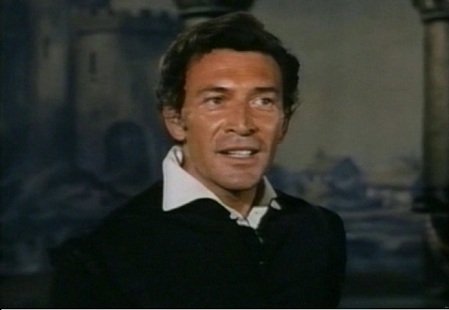
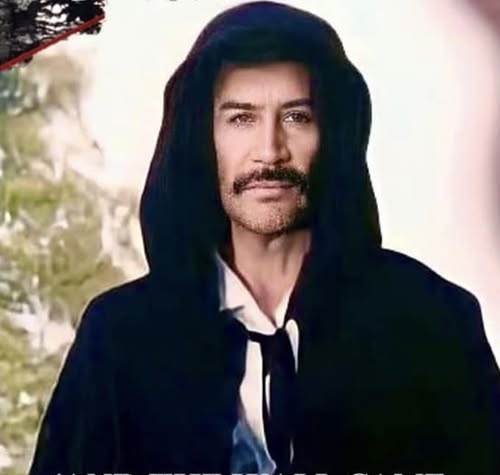
Character: Baron Adelbert von Gruner

The Story

The Illustrious Client’ is part of the BBC’s Sir Arthur Conan Doyle’s series, which was originally broadcast in 1963. Not counting the pilot (‘The Speckled band’) it shows all the hallmarks of ageing television productions; grainy film, simplistic camera staging, over-the-top acting and a rather rushed plot. Nevertheless, for all of that, it does have its own style, finer moments and some competent performances. Indeed, I found that I rather enjoyed the episode since I’m a sucker for a good villain!

Picture it: Victorian England at the end of the Nineteenth century. London backstreets; swirling mists… not caused by oppressive weather, but rather some water thrown on hot coals. Let me explain…
GRUNER5

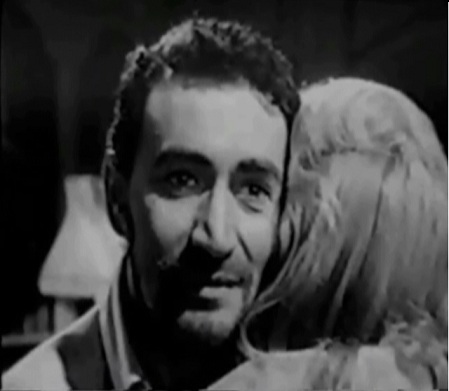
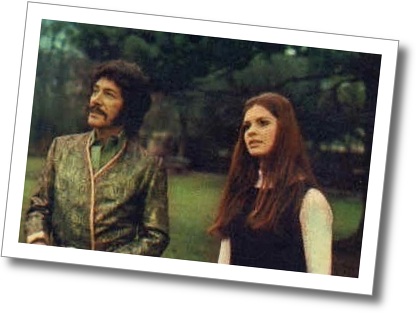
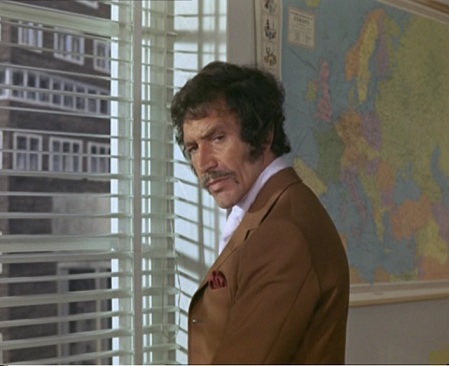
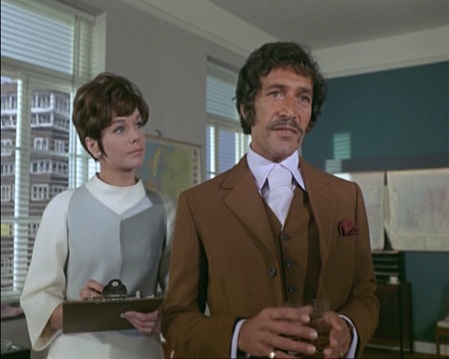
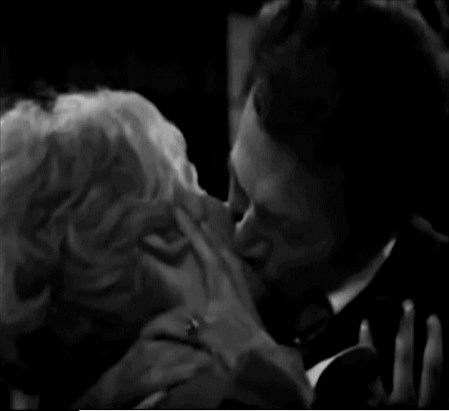
Right: Peter as Von Gruner with Jennie Linden as Violet de Merville

You see, Holmes and Watson are having a sauna. Now before you get your tablets out and start composing an email in complete disgust, I can assure you that their intentions are completely honourable. After all, this is the 1890’s filmed in the 1960’s, so we’re not quite at The Tudors era of production where anything goes, and goes at it all of the time! This is entirely civilized and above board. Right then, Holmes and Watson and some other chaps are enjoying their sauna when news reaches them that their services are required in a matter of some delicacy (are they always?!) Cut to 221b Baker Street.

It appears that Violet, the daughter of General de Merville, has become entangled with a certain Baron Adelbert von Gruner; a devious man and ‘one to whom violence is familiar, who will stick at nothing to gain his ends’. Sir James – the General’s aide, also adds: “I should say there is no more dangerous man in Europe”. The Baron’s intentions are, of course, not as honorable as he would have Violet believe. It’s said that’s just murdered a former wife and several others, which is all idle speculation, naturally, but the honour and life of poor young Violet must be saved at all costs. Does Violet not know of his deeds? I hear you cry. Well, as a matter of fact she does, but she’s heard an alternative and entirely fictional version from the Baron himself, and being hopelessly in love with him, that’s all she needs. The game is afoot!

In a club of ill repute, Holmes and Watson consult Shinwell Johnson – a crook who happens to have his ear to the ground. He agrees to put the word out for something to pin on the Baron – specifically something connected to his numerous female companions. This is a poorly-produced scene with blaring music in the background which makes it difficult to hear what’s being said. The singer, a Cockney girl, is dressed in something that wouldn’t look out of place on a Madonna tour (Jean Paul Gaultier has a lot to answer for!). For me, she seems to spend too much time on getting her London-in-the-1990’s accent right to be bothered with making the lyrics understandable. And I’m sure the lines were outrageously funny, but we’ll never know. However, Shinwell’s dark murmurings of the Baron set the scene.
p05v9gns

Note: Von Gruner is the male equivalent of Basic Instinct’s Catherine Trammell (minus the lesbianism, of course!): a man who toys with women; was suspected of murder but deftly evaded capture, and is rich. We should be on our guard.

At last we have our first taste of Baron von Gruner and Violet de Merville. He is everything we suspected: intellectual, focuses, predatory, manipulative, and murderous. She is everything we feared: blinded by love, dominated, and more than a little bit stupid (I’ll forgive her for these later. Well, I’m allowed to change my mind, aren’t I?) The Baron is obviously not desirous of Violet, and makes a heart-felt attempt to strangle the poor girl for attempting to enter his secret study then, just as suddenly, loses interest. Despite this, Violet wants him to tell her that he loves her. All he can manage is: “I want you more than anything else in the world”, which is all Violet is going to get. Oh well, he is the star of the piece after all and can’t be seen to be too available, can he?

So why is the Baron so protective of his study? Why doesn’t Violet run to the nearest copper and cry ‘attempted murder’? Why is the Baron wearing the very same boots that Sir John Cleverly Cartney wore in The Avengers? All this and more in the next episode of Soap…

Sorry – I got a bit carried away there. Anyway, the scene is now prepared for Holmes to lock horns with our very own bad boy, and we’re not disappointed. He arrives at the Baron’s home and the pair size each other up while the camera wiggles to and fro to get a better angle. The Baron warns his foe to “draw off at once” and promises the Detective a damn good thrashing if he continues to meddle in his affairs. This is also the scene when we realise why his fiancé is being so daft – Post Hypnotic Suggestion! So the Baron is the David Blaine of Victorian England. It could be worse, but not for violet. But, still, I forgive her (I said I would, didn’t |I?). The Baron projects a confident exterior but we can tell that he’s at least respectful of Holmes’ investigative flair, if not threatened by it. He should be, though, since this is Holmes show after all and the ‘Baddie’ is bound to be defeated. I was a little concerned about the “au revoir” exit Homes makes. It’s not really as tough as a “just you wait!” or a “I’ll get you yet!”, is it? But on we go…

And it’s time for the introduction of the other good character piece of the episode: Miss Kitty Winter, played by Rosemary Leach. Kitty is one of the Baron’s earlier conquests and she’s out for revenge. She reveals that he is every bit as despicable as we feared and that she’d be quite prepared to warn Violet of his previous history. But Holmes needs something concrete to pin on the Baron. Kitty knows of a black book in which he keeps intimate details of his female conquests. So now we have something to work with. Yet as Kitty is leaving she tells Holmes that she doesn’t want payment from him for this or any other information, but would rather “like to see him in the mud with my foot in his cursed face”. Sounds like trouble to me, but Holmes is not at all concerned. OK, so we’ll pretend we didn’t hear that for the sake of the plot.
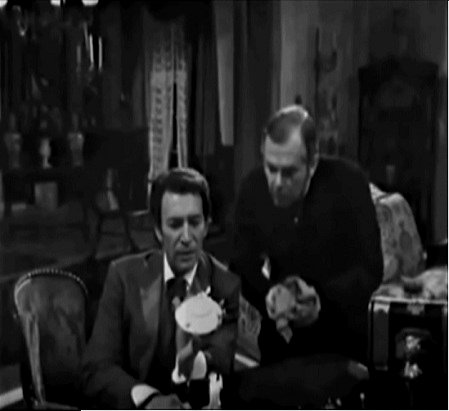
GRUNER2

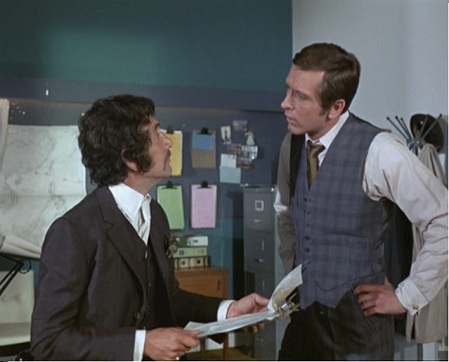
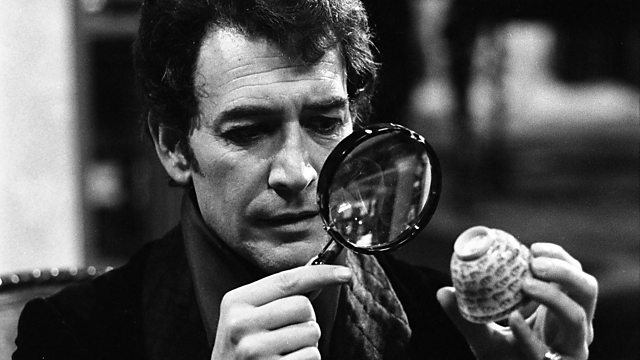
Left: Baron von Gruner quizzes Dr Watson on Ming-era pottery

Off we go to see Violet and to warn her that her husband-to-be is a bit of a lad… oh, and a homicidal maniac to boot, but the young lady is having none of it. It would appear that Baron von Gruner is quite adept at his hypnotism.

Kitty is incensed at Violet’s lack of attention to her warnings, and comments: “I don’t give a tinker’s cuss if you live or die”, and at this juncture I’m inclined to agree. There’s’ nothing more infuriating in a drama than to have a weak character, however heavily the plot depends upon it (I shall revoke my absolution – well, it is a gentleman’s prerogative to change his mind!). Surely Arthur Conan Doyle should’ve put more flesh on her? Anyway, we leave Violet for a moment with Kitty’s warning: “You’ll be sorry you didn’t listen to me, my fine lady!”. And she probably would, except that Sherlock Holmes is bound to win through seconds from disaster.

Outside on the street, Holmes has just seen Kitty off in a Hackney Carriage when two thugs see off Holmes in a rather tame tousle compared to today’s standards. (I have to admit that seeing Douglas Wilmer face down in a puddle of water rather pleasing, and he’s supposed to be the hero!). Something is surely amiss. Ah – I know what it is. Holmes is not dead after all, oh no! He was on his guard and put up a brave fight. Good ol’ Holmes!

In the interim, the Baron spots an article entitles “Murderous attack on Sherlock Holmes” in his newspaper, prompting a most evil smirk to appear across his face. We get the impression that he would’ve liked to have seen the attack at close quarters.

Meanwhile, Watson tends to Holmes, who evidently wasn’t quite as badly beaten as we’d been lead to believe. As a result of the attack, he sees to it that Kitty is taken into his protection in case the Baron should have any further murderous inclinations. However, the Showgirl is the last thing on von Gruner’s mind, as it appears he’s already taken steps to skip the country for the Big Apple. This decision seems rather strange to me, given that he’s still of the belief that Holmes has been dealt a fatal blow, and that his marriage to Miss De Merville can go ahead without a hitch.

Always hot on the Austrian’s heels, Holmes discovers that Baron’s plans and announces to Watson that they have three full days before he sails to the Colonies to sort him out (let’s hope they do better than Time Team!). But they do have a secret weapon: Watson is to become an expert in Chinese Potter – a passion of the Baron’s – in twenty-four hours. Oh dear, what was Arthur thinking…?

The cracks are now beginning to show in Violet’s hypnotism and the Baron has to give a little top-up before he sets off for the States, while Watson cries, “Ming, Ming, Ming!” It can only get better.

At last the final scenes. Kitty is “Prepared for anything”, and Watson has indeed become a pottery expert, although I don’t feel he’d fare well on Antiques Roadshow somehow, but he claims that he could hold an intelligent conversation on the subject nonetheless. Well, I’m all for confidence, and besides it’s in the interest of the plot to suspend our disbelief, isn’t it? Watson is to go undercover.

And so off we go with Watson to see the Baron, who suspects that the visitor is not quite what he claims to be. Watson, it must be said, does little to dissuade him; mumbling something about the Tang vase presented to him for inspection, and hastily moving on to the reason for his call, which is the Ming saucer he wished to sell to the Baron. After only a couple of shots at Watson’s amour, von Gruner discovers that he knows little about Chinese pottery, and that he’s indeed a spy. A revolver is produced. Is Watson about to be horribly dispatched?
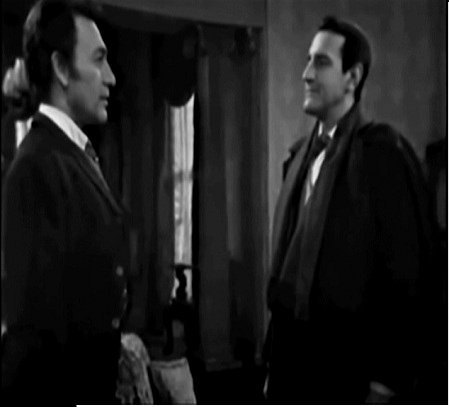
GRUNER4

Right: Sherlock Holmes confronts the Baron

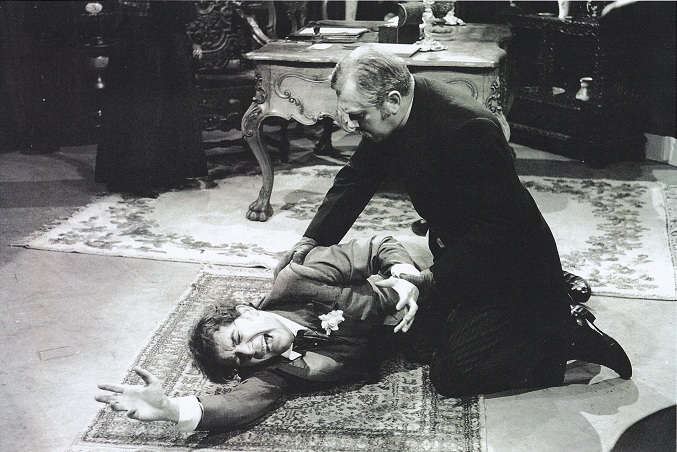
A sudden noise from the study. “Ah, I see,” exclaims the Baron. “There is more than the one of you!”. Of course, we should’ve known; Watson was merely a momentary distraction whilst Holmes and Kitty attempt to find the infamous ‘Black Book’. The Baron bursts into the study. Holmes ducks bravely behind a curtain; Watson dashes to the rescue, whilst kitty saves the day by throwing her little acid concoction into the Baron’s face, leaving him writhing around in agony.

All rather grim, really.

Back at Baker Street, we’re rushed through the loose ends of the mystery. Kitty manages to escape with only a month in the slammer for melting the Baron’s face, whilst Holmes succeeds in evading the charges of burglary since he apparently has friends in high places. Good heavens! was British Law so corrupt even then?! I’m afraid so.

In Retrospect
GRUNER

Now I bet you’re dying to know what our very own Mr. Wyngarde was like in this production. His accent was a curious blend of Gary Oldman in ‘Dracula’ and the late Alan Rickman, which sounds as if it would be quite distracting, but it actually works wonderfully. Well, apart from one phrase used when discussing the hypnotism: “No vinking lites and darkened rrrrooms” which, to me, sounded a bit like Jamie Lee Curtis doing her ‘Inge from Sweden’ bit in ‘Trading Places’.

It’s clear to me that Peter the most ability in the drama – showing a marvelously rapid progression of expressions during the close-up’s in headed exchanges, and creating particularly idiosyncratic gestures and movements when he, as the Baron, inspected his collection of pottery. Von Gruner is one of those characters who, I assume, would be very difficult to play convincingly. An actor would either triumph or flounder disastrously in the rile and I for one am grateful that Peter carried it so well, since the only other outstanding performance came from Rosemary Leach as Miss Winter.

Douglas Wilmer as Holmes. Hmm. Not convinced at all. His mannerisms and body language were far too camp for my liking. I know that Holmes is supposed to be more than a little dramatic and rather conceited, but Wilmer made me want to give him a taste of the back of my hand. Give me Jeremy Brett any day!

Nigel Stock as Watson fared much better, but was written as too much of a bungling idiot. I mean, this man is supposed to be a doctor of medicine, and yet here he is, running around going “doh!” like Homer Simpson! No, it was a fine attempt, but again the scriptwriters needed a good kick up the rear.

The plot was fairly rushed, but did have some good twists and turns, such as kitty’s revenge and Holmes attempted murder, despite not really having a crime to solve as such. I feel this would’ve been much more impressive if Wilmer had been replaced and the duration extended somewhat, but at the time of production there was, of course, numerous constraints on the cast and crew.


Personal Views

“There is nothing more important than trifles!” Sherlock Holmes once said – and so, at the beginning of my short essay on The Illustrious Client, starring Douglas Wilmer, Nigel Stock, and with Peter Wyngarde as the guest villain, I’d like to make two things clear: the title of this article is absolutely none-canonical, while the episode is. Holmes often said: “My dear Watson,” as well as “elementary”, but they were never said together. It’s one of the great misquotes of film and literature, as is “Play it again, Sam,” for example.

I was glad to read in the above piece by Ian Smith was a ‘review’ in its truest sense, since many articles on Peter’s film and TV work are merely re-telling’s of the story. However, as a Holmsian of many years, I had to chuckle at some of his comments.

There’s no doubt that he’s a good and amusing writer, so there’s no point in discussing that. But his knowledge of the world of Sherlock Holmes seems to be rather marginal – or he simply used some of his writing abilities to make fun of the episode, because he disliked it(?)?

I certainly agree that Peter Wyngarde made the best with the part of the “Austrian murderer”, von Gruner. In fact, his portrayal is more than a match for that of Eric Porter’s Professor Moriarty in the Jeremy Brett series. If you’ve seen the Anthony valentine version of von Gruner with Brett’s Holmes, you would see how well Peter delivers the character. He is charming and attractive, cunning, sadistic, deadly as a poisonous snake, whist moving almost cat-like around the room. Valentine, on the other hand, looked rather like an old gigolo who’s best times are behind him; you just couldn’t understand why Violet, or indeed ANY woman, would go for him. It couldn’t possibly be for his old-world continental; charm because he had none!

Valentine plays his game like a clever amateur. Peter is in full control of it. The scene where Wilmer’s Holmes confronts von Gruner is a delight, and both Wyngarde and Wilmer show the best of their acting abilities; this alone is worth the whole film! By the way, as a German, I can say that Peter manages the accent fairly well.

I was surprised to read in Ian Smith’s review that he found Wilmer “camp”. This tag might fit the scene where Holmes leaves the Turkish bath like a Roman senator, but nowhere else. I won’t argue either who was the better Holmes; Brett or Wilmer. In my opinion, Brett was wonderful, but Wilmer was superb. There’s no doubt that the latter plays Holmes as the ‘Thinking Machine’ that Sir Arthur Conan Doyle described, with all the mannerisms found in the books.
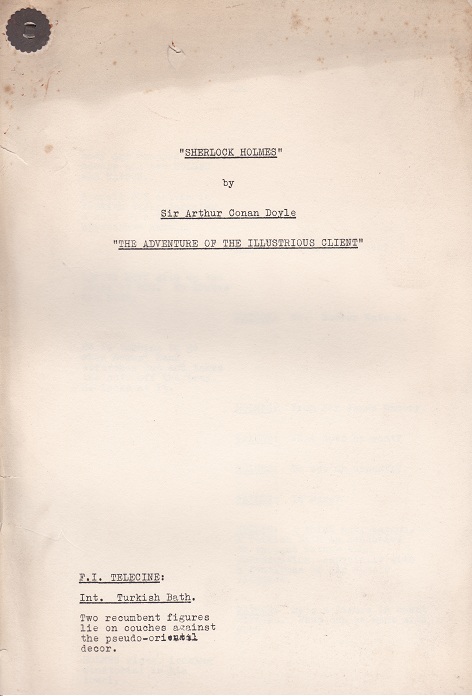
SCRIPT

On the other hand, Jeremy Brett went quite over the top on a few occasions, and clearly went too far in some of the later episodes.

I still feel that Jeremy Brett and Peter Cushing were the best Holmes, but Wilmer comes close.

I also agree with Ian Smith’s comments on Rosemary Leach’s performance as “that hell-cat” Kitty Winter. She gives a good performance, but on the other hand, I wouldn’t go for her myself, and I can’t see why von Gruner would be attracted to her either. She would clearly have no chance of winning a beauty context!

Written by Uwe Sommerlad

Above Left: Peter’s script from the episode. As you will note, the story was originally entitled ‘The Adventure of the Illustrious Client’.

REVIEW: One Step Beyond – ‘Nightmare’

Broadcast: Tuesday 27, June 1961 (USA)

Character: Paul Roland

Some Background

One Step Beyond, which ran from 1959 to 1961, was created by Merwin Gerard and produced by Collier Young. Each of the 90 episodes were introduced by John Newland – ‘Your guide to the supernatural’, who also directed every one of the stories.

Sometimes billed as Ancola Presents: One Step Beyond – Ancola being the series sponsor, this ABC network show was staged as a sort of docu-drama, since each of the episode were said to have been based on true stories.

While the earlier episodes were all shot in in the USA, the final thirteen installments – including ‘Nightmare’, were filmed at MGM Studios in Borehamwood, England. The idea to bring the show to Britain was John Newland’s, as he felt that it would give the series a new lease of life, and because “Great Britain offered good actors, good situations and good settings”.

‘Nightmare’, being episode 34 of Season 3, was one of those filmed in Borehamwood and on location in Scotland. “We had some pretty wild weather while we were up on the north coast of the Highlands,” Peter remembers. “It was raining, freezing cold, and the sea was lashing the cliffs. I think we were all glad to get back on the bus after that one!”

NM3

The Story

Come – you’ll witness things strange, unexpected, mysterious, but not to be denied. Join me now and take One Step Beyond…’

So goes the introduction to this episode.

The first scene opens of in the studio artist, Paul Rowland (Peter Wyngarde), who’s working a portrait of Lady Diana Metcalf (Ambrosine Phillpots) – an elderly woman, who’s sitting across the room from him. She’s obviously a lady of means, as she’s dressed in an expensive gown and with a string of pearls wrapped several times around her neck.

Paul is oblivious to her, as he is of our host John Newland, who conveys the following:

‘There is a great deal more going on here than just an artist painting a portrait – a great deal more.

The world of the psychic co-exists with the physical world; sharing every instance of time, every speck of space. But what an uneasy co-existence. For always the psychic seems like some wild thin; always straining at its own dimension. Always threatening to explode into the other world – the physical world.

Sometimes it does…’

NM4

Right: Peter as troubled artist, Paul Roland.

Whilst Paul concentrates intently on his work, the elderly lady entertains him with stories of her mother – also a painter, and of all the artists she had met over the years. She goes on to regale him with the tales of how she came by the striking string of pearls, and of her husband, and family ties.

Throughout her monologue, Paul remains transfixed on his work, and not even mention of his forthcoming wedding to socialite, Jill Barrington, can entice his stare from the canvas. “Everyone knows,” Lady Diane continues. “The dashing young artist from Paris is going to marry her. It’s in all the gossip columns”. Again, there’s not so much as a flicker of interest from Paul.

As we’re brought closer to him, we see how emotional he is over the picture he’s creating on the canvas. In the background, we now hear the woman make mention of the fact that, not once since Paul began working had he ever so much as glanced at her.

“Are you working from memory?” she enquires. When she again receives no response, she gets up from her seat and walks over to him. Paul, in turn, moves away from his easel and stands, staring out through a window.

The elderly woman is shocked when she at last sees what Paul’s been drawing all this time: It’s the face of a beautiful young woman surrounded by flowers, but with a hideous devil-like beast in the background. “If you don’t mind me saying, you haven’t exactly caught me!” her Ladyship comments, sarcastically. “Or am I meant to be that wretched creature peering over her shoulder?”

Paul remains stoic – his gaze unmoving from the window. With this, Lady Diane grabs her coat and bag, but before leaving enquires if the artist if he’s ill. He gives her a momentary glance, before his eyes return to the window.

“Henry (her husband, we presume) always said artists were mad!” she barks before heading for the door. “But I thought he was being reactionary!” And with that, she turns on her heel and stomps out.

Now alone in his studio, Paul walks slowly towards the easel, and gently strokes the face of the young woman he’s drawn in charcoal. “Claire”, he whispers softly. “Claire”.

Later that same evening, Paul’s fiancé Jill (Mary Peach), arrives to find the studio in darkness. She’s carrying a selection of holiday brochures, as she’s hopes that the two of them might finally decide upon a destination for their honeymoon in seven days’ time.

On hearing her call his name, Paul appears in the doorway that leads to his living room. He and Jill embrace, and they take a seat together. She reminds him that May 7th, the date he’d insisted upon for the wedding, was almost upon them. She comments how tired he looks, and handing him the brochures, insists that a holiday would do him good.

Apathetically, he flicks through the pamphlets, prompting Jill to ask if he cares at all about their upcoming nuptials. When she gets no response from him, she resolves to enquire if he loves her at all. When once again Paul declines to reply, she gets up to look at the picture he’s been working on, and when she sees that it’s not Diana Metcalf, asks who the young woman is.

When instead of giving her a name as expected, Paul merely asks her why she wishes to know, Jill becomes irritated – querying whether the girl in the portrait is her “rival”. Paul tells her quietly that she wouldn’t know her if he were to tell her, and that he can’t tell her anything anyway.

Since she’s not willing to accept such a glib answer, Jill heads for the door, snapping: “Well, I’ll leave you alone with her!”

Paul calls her back, and in a somewhat confused state, discloses that he’s never seen the woman before in his life. Unwilling to believe him, and angry at his indifference towards her and the wedding, she departs in a temper.

The next time we see Paul he’s mixing paint on a pallet in his studio, and is about to begin applying the oils to the drawing of the young woman he’d been working on earlier. It’s then that his agent, Geoffrey Heathcote (Ferdy Mane) arrives. It’s obvious that Lady Metcalf has been in touch with him, as he remonstrates with the artist for insulting a valuable client. Paul, however, remains detached from everything that’s being said to him, and instead concentrates entirely on the painting.

At Jill’s apartment later that evening, there’s a knock at the door which wakens her from her sleep. She finds Paul on the doorstep and he asks if he can come inside.

At first he tells her that she’s right – with only six days to go to their wedding, they really need to decide on a destination for their honeymoon. She, however, is more interested in his recent inexplicable behaviour, whereupon he swears once again that he’s never seen the girl in his drawing before.

He goes on to tell her that he’s been commissioned to paint three portraits, but that each has ended with him sketching that girl; “It’s as though she’s trying to possess me,” he confesses. “I can’t draw anything without her face staring at me”.

Her anger at him now turning to sympathy, and recommends that they call a doctor, but Paul refuses. He then attempts to turn the topic of conversation from the girl back to the wedding. With less than a week to go, he tells her, they really must concentrate on the honeymoon. But where to go; Paris, Berlin or Venice, perhaps?

Jill, however, is still concerned for his wellbeing, but he reassures her that he’s merely been working too hard and is overtired; their getting away for a few days will do him the world of good.

NM1

Left: Jill comforts her fiancé, Paul

He then begins to touch her face in the same way he’d done with the drawing of the girl in his studio, and as he takes Jill in his arms, he begins to talk about the little cottage they’d bought by the sea: “It’s the prettiest in Cornwall – you said it yourself”, he says. Jill, though, is bemused, since they don’t have a cottage, in Cornwall or anywhere else. Her confusion is intensified further still when he makes mention of the boat he’d bought and then, worst of all, refers to her as Claire.

Immediately, Jill goes to the phone and starts to dial the doctors number. Completely oblivious to her actions, Paul picks up his jacket and starts heading for the door. He smiles, believing her to be calling the travel agent: “Where did we decide to go?” he asks as he opens the door to leave. “Venice?”

The following day, Jill visits Geoffrey Heathcote to share with him the events of the previous evening. The agent confides that that he’s been handing painters for years and that he genuinely likes Paul.

She tells him that she believes that her fiancé desperately needs the help of a doctor; not just a regular GP, but a psychiatrist. Geoffrey confides to her that he has a plan, but that if it fails, they could both be in trouble. Nevertheless, they decide to try anyway.

Back at the Studio, Paul is again working on the painting of the young woman, when there’s a knock at the door. When he fails to respond, the visitors – Geoffrey Heathcote and Psychiatrist (Patrick Holt), decide to let themselves in. As they do so, Paul throws a blanket over the painting to hide it from view.

Geoffrey asks Paul why he’s stopped answering his phone. given that he’s been trying for hours to contact him. He tells the young artist that the Doctor is a buyer for a museum, and that he could be interested in buying some of his paintings. Paul merely continues wiping paint from his hands, without a word.

The Doctor tells Paul that he’ll be leaving for London in the morning, so if their visit is not convenient, he could rearrange at a later date. Once again, Paul doesn’t respond. However, as the Doctor approaches the easel where the artist has been working, Paul whips the blanket from over the painting to allow the Doctor to see it.

The first thing that he notices is the creature that’s peering over the young woman’s shoulder, and he asks Paul what it is. But instead of answering the Doctor’s question, the young man grabs a pallet knife and begins slashing at the painting before running from the studio to his living quarters and slamming the door behind him.

Geoffrey now joins the Doctor to look at what’s left of the painting, and asks his companion what he makes of Paul’s behaviour. The Doctor says that he’s obviously disturbed, and that they should try to persuade him to go to his private nursing home for a few weeks where he can be observed.

The Doctor then notices a hand towel that Paul had been using to clean his hands and sees that it’s been knotted several times like a garrote. He also points to the creature in the painting which he refers to as a “gargoyle”, saying that in art especially, such effigies are often used as a symbol of evil. The Doctor concludes that the woman in the painting is merely a figment of Paul’s imagination, upon whom he can display violence so that he doesn’t have to reveal the identity of the real person: that person being his fiancé, Jill.

The Doctor discloses to Geoffrey that it’s imperative that they find out what exactly is behind Paul’s apparent psychosis, and so they try knocking at the young man’s door in an attempt to speak to him, but they’re merely met with silence.

A car rounds the bend on a narrow coastal road; Jill is at the wheel with Paul in the passenger seat. She asks him where exactly they’re going: “Cornwall”, he replies, adding that she should continue along the same road whilst he takes a nap.

Eventually they reach the tiny village of Cadgwith, which is nestled along the edge of a cove. As the car pulls up near by a cliff edge, Paul gets out and surveys the scene. His eyes are immediately drawn to a little stone cottage, where he walks slowly up the path and knocks on the door. After a moment or two, the door is answered by Claire (Jean Cadell) – a little old lady who, on seeing Paul, whispers the name ‘John’ and falls faint into his arms.

NM2

Right: Claire collapses when she comes face-to-face with her beloved ‘John’.

A doctor is called who attends to the lady; saying that her heartbeat is now growing stronger and that she’ll soon regain consciousness.

Whilst Paul takes a look around the cottage, the Doctor informs him that that the Claire is something of a recluse; never leaving her home from one year to the next. Her fiancé, he continues, died during the Great War, and that she’d spent the past 40 years mourning him. The house, he explains, would’ve been their honeymoon cottage.

Just then, Paul spots an old photograph of Claire with her fiancé, who’s in uniform. He’s the spitting image of Paul!

Over the photo’ frame is a lace scarf. The Doctor explains that it was a local custom for the groom to give his intended such a gift exactly seven days before their wedding. On each day thereafter, the bride would open one of the knots. Paul notices that only five of the knots had been undone: “That’s because he died two days before the wedding”.

At that moment, Claire begins to regain consciousness, so Paul sits beside her on the sofa. She smiles lovingly at him, and they embrace. As he leaves the cottage, the young artist looks as if an enormous weight has been lifted from him. He smiles to himself, and walks back to the car.

We’re now returned to the Narrator, who brings us up to date with what happened to Paul and Jill after their trip to Cornwall. He tells us that that the two married as planned and that Paul’s fame as an artist rose year on year.

Claire, the old lady in the tiny coastal village, passed away some years ago. She lies buried, we’re told, in a small churchyard next to her beloved John.

But how to explain the inexplicable experience of Paul Rowland, whose journey had been into a life he’d apparently lived before? There are millions of people around the world, John Newland informs us, who’d tell you that the explanation is quite obvious. Reincarnation. A single flame – passed from torch to torch throughout eternity.

“Others may give another psychic explanation, but such phenomena has been reported again and again through the ages”.

The most famous person ever to unearth evidence of his own reincarnation, it’s said, was the 19th Century poet, Gabriel Rossetti: “For there exists today an absolute likeness of Rossetti and the woman he loved, painted some 300 years before his birth”.

REVIEW: Pick-Up Girl

Youth Theatre Production. National Tour – Autumn/Winter 1946/47

Character(s): A Young Man/The Door Attendant/Policeman Owens

The Story

The story, which was written by Elsa Shelley, is set entirely in a juvenile court, and is set in the United States during the present day (for reasons known only to the Author herself, the American location was retained).

The play was premiered in Britain in May of 1946, having been produced by the New Lindsay Theatre Club, and transferred to the West End in July of the same year. Producer and director, Peter Cote, brought in a youthful cast – possibly to appeal to a younger audience, for this revival.

pick-up

In the very early performances, Peter played ‘The Door Attendant’ – a very minor role even in a youth theatre production, but managed to gain promotion throughout its run, by playing both ‘A Young Man’ and, after Bryan Spielman left the cast, taking over as ‘Policeman Owens’.

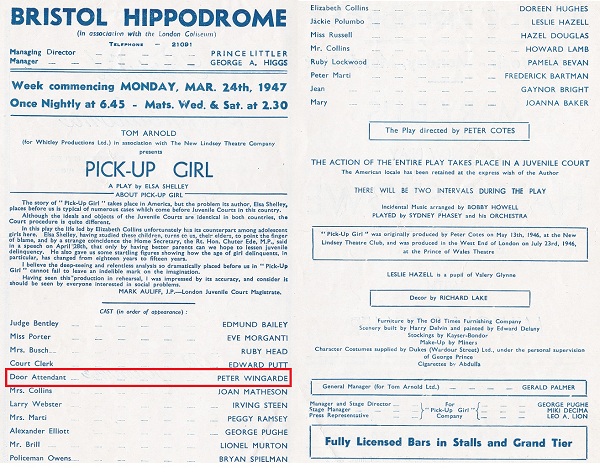
Interestingly, in all the programmes that were produced for the English tour misspelled Peter’s name – listing him as Peter Wingard.

Although the ideals and objectives of Juvenile Courts both here in Britain and in the United States are identical, court procedure in America is quite different, and those processes had to be explained by a serving magistrate (Mark Auliff J.P.) in the programme, given that audiences weren’t quite so familiar with U.S. courtroom dramas back then as we are now.

The eponymous ‘Pick-Up Girl’, Elizabeth Collins, was played by Doreen Hughes who, Mr Auliff pointed out, had her counterparts in this country. Elsa Shelly, we were told, had spent years studying child criminals, and had used the play to point out that the age of female delinquents in particular, had dropped from 18 to just 15.

Mr Auliff continued by saying that he’d seen the play in rehearsal, and was impressed by its accuracy – recommending it to anyone who had an interest in ‘social problems’. “I believe that the deep-seeing and relentless analysis so dramatically placed before us in ‘Pick-Up Girl’,” he continued, “cannot fail to leave an indelible mark on the imagination”.

pick

Above: Press advertisement for the play in Leeds

pick2

Original programme from The Bristol Hippodrome. Notice Peter’s name has been misspelt.

What happens on tour Stays on tour!

The tour of ‘Pick-Up Girl’ visited many of the major towns and cities of England in 1946/47, including Birmingham, Bristol and… Blackpool.

The company were put up in a typical B&B close to the famous Grand Theatre on Church Street, where the play was to be performed. One of the older actresses in the group who’d been cast to play Mrs. Marti and was eventually replaced by Peggy Ramsey (see the story above), had managed to get her claws into Peter and wouldn’t let go.

“Everywhere I went, she was there,” he says. “At lunch, dinner – whatever, she always succeeded in getting a seat next to me. In the end I decided to s**g her and get it over with”.

The trouble was that the bed in they chose creaked so much that everyone within a 25-mile radius knew what was going on: “It was really off-putting,” Peter recalls, “but all she kept yelling was ‘Oh God! Oh God! Don’t stop! Don’t stop!’”

On the following morning when he went down for breakfast, Peter found all the other members of the cast – which included Edmund Bailey, all sitting quietly in the dining room. That was until everyone last one of them to man started up with: ‘CREAK! CREAK! CREAK! CREAK!…’ At which Bailey inquired: “SO – what did you get up to last night, Peter?”

“I didn’t know what to do with myself as I munched my cornflakes,” he admits. “They didn’t let me forget it in a hurry either!”

Left: The book by Elsa Shelley on which the play was based.

OUT ON THE TOWN WITH PETER

Over the years, Peter attended hundreds of parties and events. This on-going section will tell the stories behind some of his adventures…

Please scroll down for the latest additions.


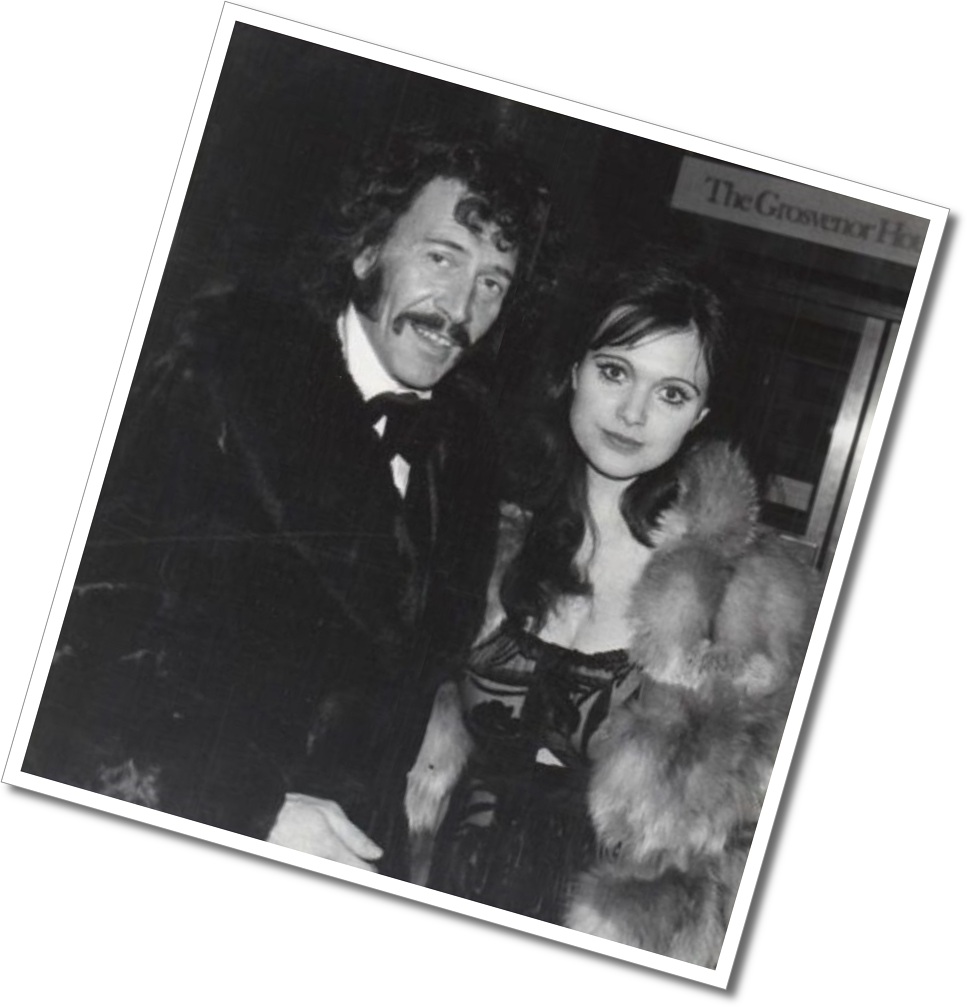
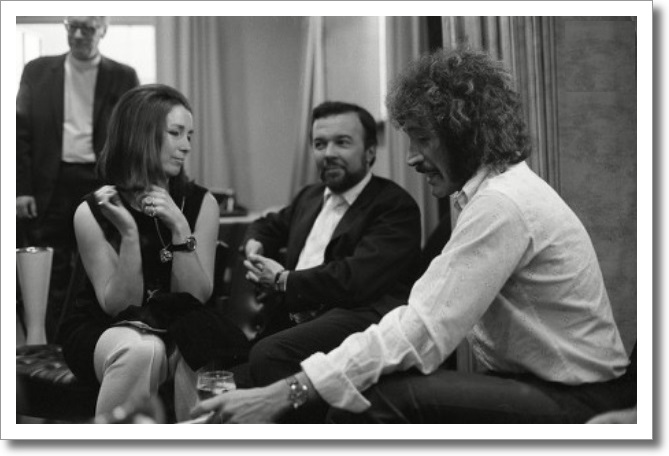
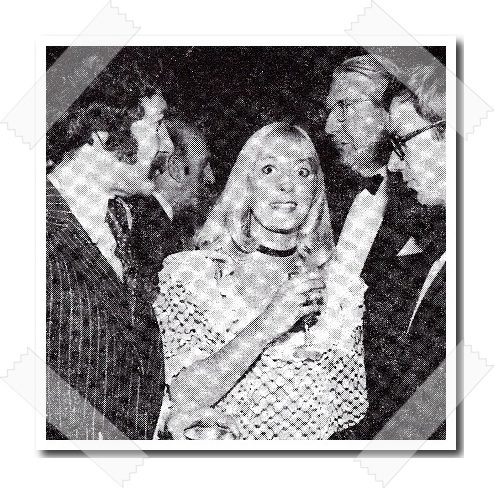
Peter with actress, Madeline Smith, at an event at the Grosvenor Hotel in London, 1973


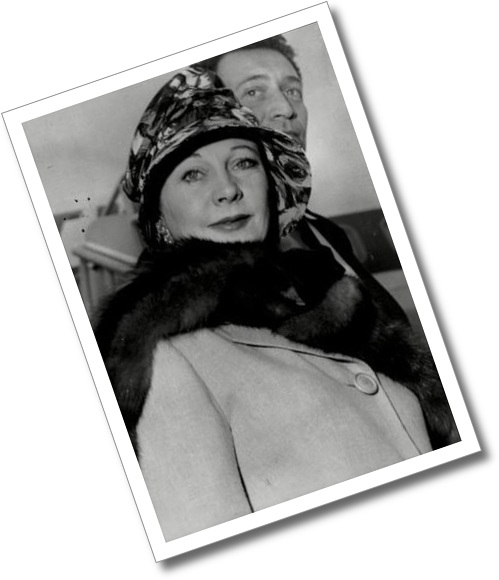
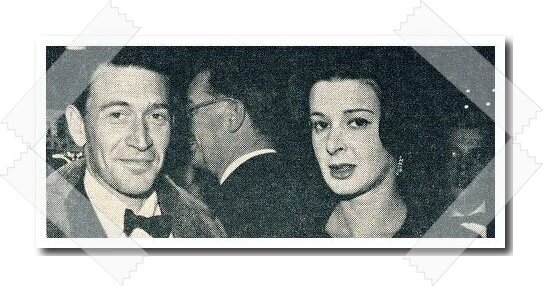
Who could that be peeking out from behind Vivien Leigh at London Airport in 1960?

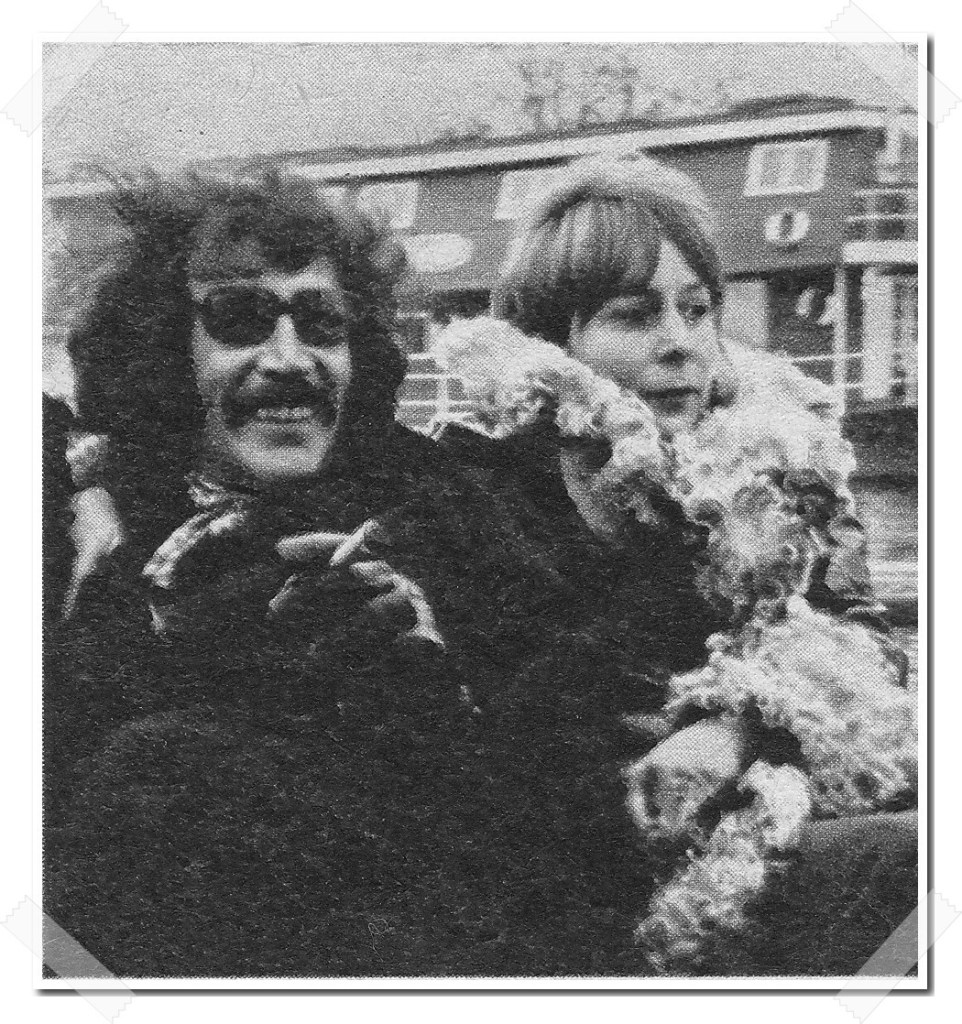
Peter in London with his Norwegian girlfriend – model, Elisabeth Skjortekjole

In the gardens behind Peter’s home in Earl’s Terrace, London

And a candid photo of Peter and Elisabeth in Berlin, 1971


Peter and actress Susan Hampshire volunteered to wait on tables at a Silver Jubilee charity meal for OAPs at Annabelle’s Café on Fulham Road,

Peter at the ‘Man of the Year’ ceremony in (West) Germany, 1971

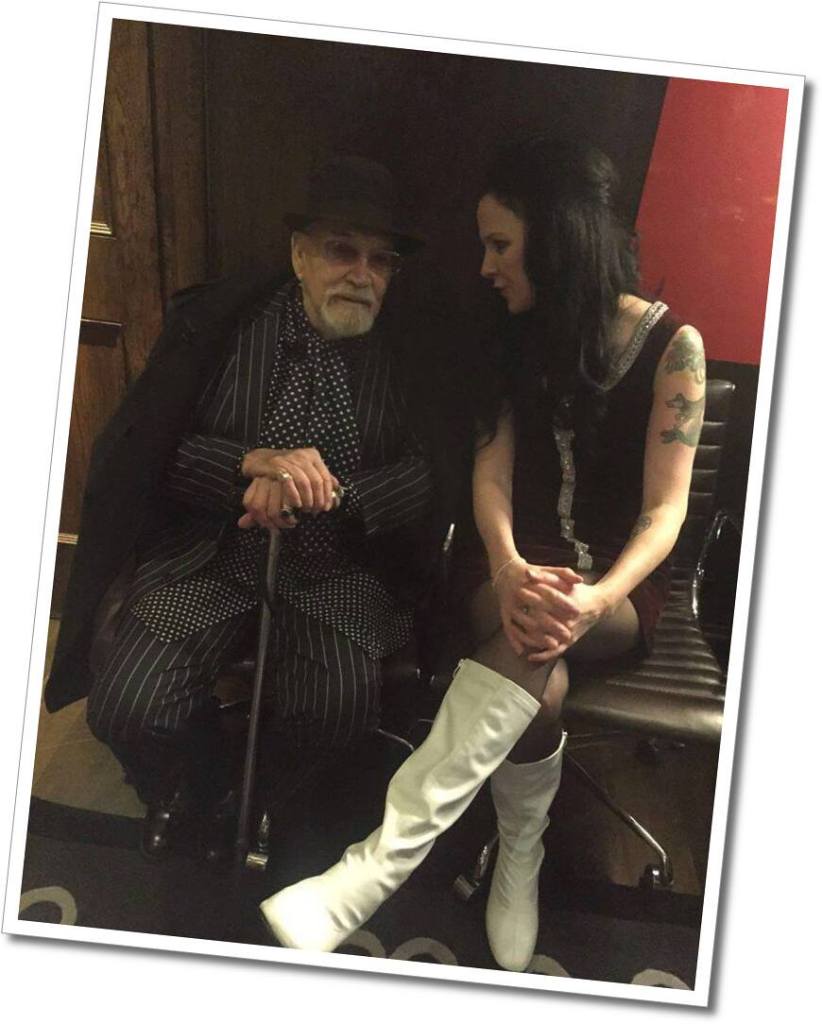
Peter with Fenella Fielding at the John Steed ball in honour of the late Patrick Macnee at the Eight Club in London – 30th January, 2016.
Peter with friend at the Ball.

A SURPRISE ENCORE WITH A CUDDLE FROM THE KING

The London Evening News – Thursday, 10 October, 1973

Peter at a party after the triumphant first night revival of The King and I.

Dawn was almost breaking before Sally Ann Howes and Peter Wyngarde got to their beds today after their triumphant West End first night in The King and I. It had been an emotional occasion at the Adelphi Theatre, with audience applause thundering out and curtain call after curtain call.

One of the most emotional moments of all – which was totally unexpected by the stars – came when the curtain rose one more time to find the two of them hugging each other with delight. Peter explained:

Backstage after all the congratulations from people like Cicely Courtneidge, who looks upon herself as a second mother to Sally Ann Howes, the stars exchanged presents.

He, using a line from the script, gave her a large model elephant. “I think it’s brought us both good luck”, he told her.

She, remembering that the King wears glasses in the show, gave his a pair of Georgian spectacles. Said TV’s Jason King: “When I get the lenses taken out , I will wear them in future performances”.

Both of them went on to a series of parties to mark the opening. There were public ones and private celebrations. Peter got to two of them but missed a third. “With a matinee due today,” he said, “I felt I had to sleep some time”.

It was his first West End musical, and he was at the theatre early to mentally adjust himself from London to Siam – leaving one world for another.

“It was wonderful hearing the adulation for the music,” he said. “I was so nervous that I must’ve gargled a hundred times before going on stage.

“But it was exhilaration rather than fear. My last words to Sally were, “look into my eyes while we’re out there.”


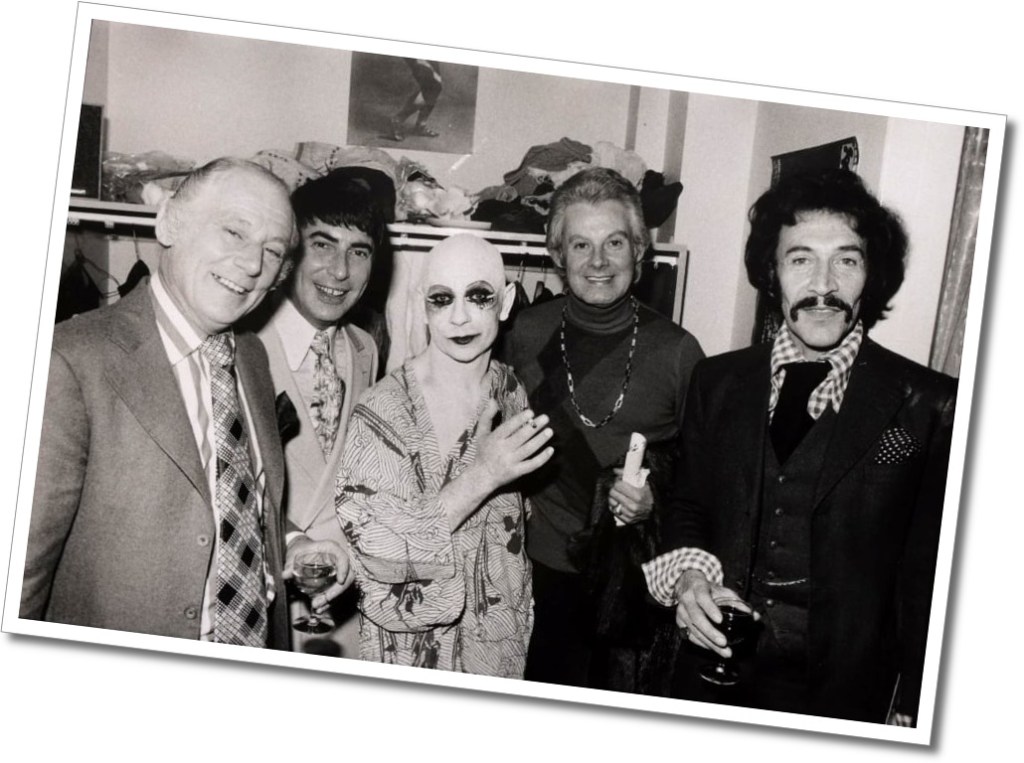
Peter with Danny La Rue, mime artiste, Lyndsey Kemp and Patrick Cargill oat the Variety Artistes Benevolent Fund raiser, 1974.


Peter (just in shot to the right), with Roger Moore and Princess Muna of Jordan during her visit to Elstree Studios on 7 July, 1966.

Taken in a park in a park off the Edgeware Road in London, Peter celebrates the revival of Roger’s and Hammerstein’s ‘The King and I’ on June 8th, 1973. Behind him is his Co-Star, Sally Anne Howes, and a selected number of his 108 Royal Children.The cast and orchestra of 60 played in Leeds, Southsea, Wolverhampton, Nottingham, Hull and Manchester before opening in London in October 1973.


The London Evening Standard – Thursday, 21st September, 1972

Actor Peter Wyngarde, star of the television series Jason King, and singer Dana Gillespie were among guests who fled a fire early today at a Piccadilly nightclub.

Firemen, some wearing breathing apparatus, rescued five people trapped by the flames. The rescue was hampered because firemen were unable to get their appliances into Mason’s Yard, off Jermyn Street, to tackle the blaze at the three-story Music Workshop Club. But after dragging an escape ladder across the yard, they rescued two men from the roof and helped three others from the top floor flat down an internal staircase.

Lee Jackson, a 25-year-old flautist with Jackson heights, was playing at the club when the alarm was raised. He said: “We had just finished our set when the manager yelled fire, but he’s known as a practical joker, so we ignored him.”

Peter Wyngarde, who was unhurt in the blaze said: “I smelt smoke, so raised the alarm and left.”


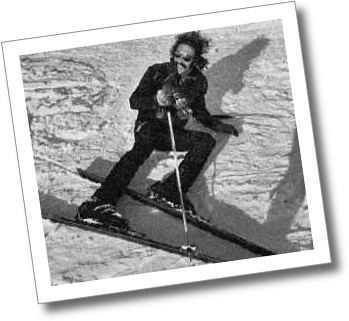
In 1973, whilst Peter was on a promotional tour of Germany and Austria, he took a couple of days off to go skiing in Switzerland.

Whilst there, he met a group of underprivileged British kids and their teacher, who’d been taking on by a charity. As a kindly gesture, he paid for the group to go up the mountain by cable car.

Julia Young, who was then part of the class told the Hellfire Club recently: I met Peter when I was on a charity skiing trip in Switzerland. He wanted to do something for our group and tried to arrange skiing lessons but his PR people wanted to big up the charity angle and he refused. Instead he arranging sleighs to take us to his hotel, and he had a tea party for us in the lobby. Such a wonderful, kind and generous man. He gave me hope that celebrities can be nice people as well”.


Peter at the Munich Beer Festival, 1973

Getting into the spirit of the forthcoming presentation of ‘The King and I’ at the Adelphi Theatre, London.

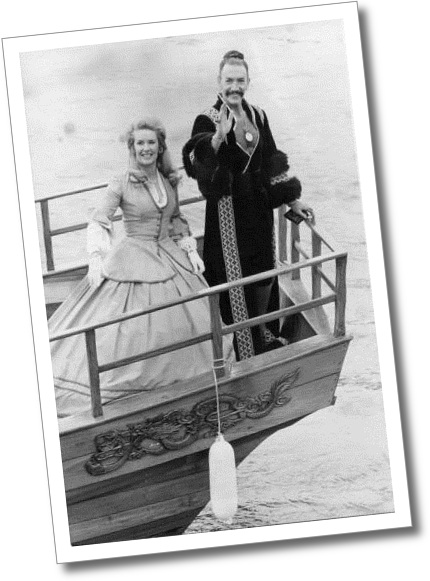
Peter and his Co-star, Sally Anne Howes took a Chinese junk called the Hoi Lung (‘Sea Dragon’) up the Thames to Tower Bridge on Thursday, 13th September, 1973. Reporters and photographers were invited to join the two stars from their press launch for the two-hour trip down the river.

For the shoot, both Peter and Sally

Anne wore full theatrical costumes. His comprised of a knee-length velvet Kimono with a cloak trimmed with gold braid, a 900-year old Moroccan bracelet and clogs.


Peter with the late pop singer, Lyndsey de Paul, at a party at the Empire Pool, Wembley, on 12th September, 1975, in honour of rock star, Alice Cooper.

Peter with Victoria Berkley, at the premier of ‘Flash Gordon’, 1980

Each of the stars of the film went to a premier in different cities around the world. Peter was chosen to attend the New York showing.


This photo’ of Peter and actress, Edina Ronay, was taken at the premier of ‘Georgy Girl’ in London, 1966


This photograph of Peter and his beau, Suzanna Leigh, was taken at the Plaza Theatre, Lower Regent Street, London, on February 2nd, 1972, where Roman Polanski’s ‘Macbeth’ was being held in aid of The Association For Spina Bifida and Hydrocephalus.

The production, which starred Jon Finch in the title role; Francesca Annis as Lady Macbeth, and Martin Shaw as Banquo, was performed in the presence of Princess Anne.

See the entire ensemble that Peter was wearing at the premier HERE


MANY HAPPY RETURNS OF THE DAY FOR CHARLIE CHAPLAIN

There was a standing ovation for Charlie Chaplain at the charity premier of ‘Modern Times’ ay the Paramount Theatre on Saturday, 19th February, 1972.

Princess Alexandra and her husband, Angus Ogilvy, where there to enjoy the film, with our very own Peter Wyngarde – a lifelong Chaplain fan.

The critics appeared to enjoy it too. They were there along with Peter, Joseph Cotton, Jenny Agutter and Duncan Sandys when they met the 82-year old silent movie legend afterwards at the pub named after him at the Elephant and Castle in London.

Later that evening, there was a gala dinner party at the Savoy at which the stars were entertained by the Princess and her husband.

Peter commented to waiting pressmen that he thought the power cuts which had plagued Britain that particular year were made all the more ironic after attending the premier: “Many a true word is spoken in jest,” he quipped.


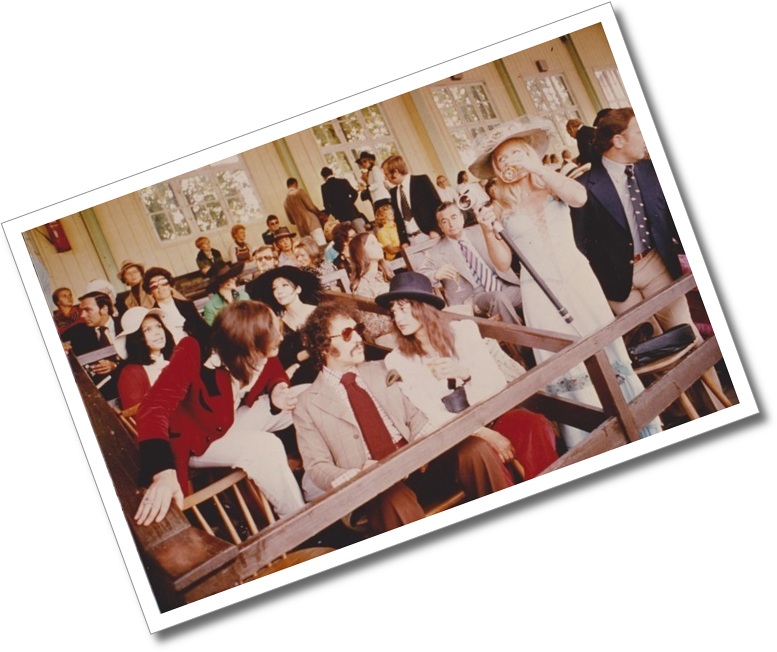
A candid snap of Peter with lady friend at the races in Melbourne, 1972

Peter meets Her Royal Highness Princess Michael of Kent after the Royal Charity Premier of ‘Flash Gordon’ at the ABC Cinema in Shaftsbury Avenue, London – 10th December, 1980.

The charities that benefited from the screening were The Variety Club of Great Britain, The Army Benevolent Fund, The International Social Services of Great Britain and The Charities Aid Foundation.


Here Peter is seen with the actress, Ann Lynn, on 4th July, 1969, at a theatre gala in London. On seeing this photo’ some years later, Peter couldn’t believe he could ever wear such a shirt, let alone allow anyone to photograph him in it!!!


Peter with actress, Anya Castaldini, at a photo call for the play, ‘Butley’.

Peter with lady friend, Margit Rieti

Peter with fellow actor, Stanley Baker, at the Annual Variety Club dinner – November, 1973

This image has an empty alt attribute; its file name is imageedit_71_2125471634.jpg

The Duke of Gloucester chats with Peter and Delia Sainsbury backstage at the Theatre Royal, Bristol, on Tuesday, 10th September, 1974, after a performance of ‘Present Laughter’. With them is Charles Clarke, the theatre’s owner. The Theatre Royal had chosen.

Present Laughter’ to re-open their splendid Georgian theatre of September 9th, following a summer refurbishment.

The Duke, who was the guest of honour at the ‘black-tie’ occasion, joined invited guests of the management and company at a champagne party on stage after the show.

There were many civic dignitaries from Bath, Bristol and elsewhere to lend importance to the occasion, which brought hopeful signals for a new and profitable lease of life for the grand old theatre.

N.B. Apologies for the quality of the photo’, as it has come from a newspaper and hasn’t copied well. However, I thought you’d rather see it as is as opposed to not at all.

SCRIPT TO SCREEN: Department S – ‘Six Days’

First Broadcast: March 9th, 1969

The script is bound in a handsome light-blue folder with the Department S logo printed in black in the lower left corner. The episode title, Six days, is printed on the middle of the cover.

Inside the cover are 88 pages of different colours; 51 white, 33 pink, 3 blue and 1 yellow. The different colours signify changes and revisions, common practice in the TV and film business.

The first page of the script has the Department S logo printed in red and the typed message: The Series Created by: Monty Berman and Dennis Spooner. 

Page two has “Six Days” Screenplay by Gerald Kelsey, and Kelsey’s autograph.

Page 3 says:

  • Produced by Monty Berman
  • Script Supervision by Dennis Spooner

A Scoton Production, A.B.P. Elstree Studios, Boreham Wood. Herts. Elstree 1600.

Page 4 presents us with the cast list, divided into Principals, Supporting and Extras.

Page 5 is the set list, divided into Studio interiors, Car Interiors, Studio Lot, Locations, Stock and Process shots. The latter are specified for scenes 51, 58, 60, 62, 67 and are all back projection for car interiors.The script proper begins on page 6.

The last three pages of the script are blue which shows that the end had been changed, it also states that scenes 154, 155, 156, 157 and 158 are deleted. If anyone has any idea what the original ending was supposed to be I would be grateful for any information.

On the first of the three blue pages someone has written Rosemary Nichols, a sign maybe that the pages I now have were originally intended for her. On the back of the last page of the script are a lot of handwritten stuff, indicating that the script was perhaps used by the second unit director. This is likely since they concern location shoots at Heathrow Airport. Apart from lists of scenes to shoot it says that lunch break is between 12:30 and 1:30. It also has some instructions for establishing shots using Sullivan’s double for Episode 7, “One of Our Aircraft Is Empty”, that obviously were shot at the same time.

When comparing the script to the episode we all know and love I found that all actors followed the scripted dialog almost to the letter with one exception… a certain Peter. Almost all his lines appear differently on tape than they do in the script. I can only add that the Jason King in the script is a great deal more boring than the one we see on screen, this is probably further proof that the character was modelled on, and by, Peter himself! In the following I will not point out very small differences, no doubt adapted by actors to make the dialogue flow more naturally, I will however present the more significant changes made by Peter.

The pre-credit sequence follows the script almost slavishly as does the beginning of the episode up to scene 27 which occurs immediately after Sullivan has driven Seretse to London. In the script two scenes follow that are not in the finished episode. Since one of them includes the first glimpse of our hero I chose to present them “in extencio”.

six-2

SCRIPT

INT. HOTEL ROOM. NIGHT. STUDIO

ANNABELLE WEARING HER TOP COAT, IS POURING TWO DRINKS. SULLIVAN IS DEEP IN THOUGHT SITTING.

ANNABELLE

And all the passengers tell the same story?

SHE CROSSES WITH THE DRINKS AND HANDS HIM ONE. SULLIVAN NODS.

SULLIVAN

Right ….. Thanks. TAKES DRINK.

SULLIVAN

…..Cheers. – but it’s impossible. THEY SIP DRINKS.

ANNABELLE

One for our fiction department, eh?

SULLIVAN

I’ve been trying to reach him.

Where is he?

ANNABELLE

Out of town, plotting his latest masterpiece.

CUT TO:

INT. AIRCRAFT. FLIGHT DECK. DAY. STUDIO

ON KING: SITTING IN THE PILOT’S SEAT, AND MANIPULATING THE CONTROLS.

SOUND: JET AIRCRAFT.

IF WE THINK THAT HE IS FLYING THE AIRCRAFT WE SEE OUR MISTAKE AS WE PULL BACK. THEAIRCRAFT SOUND IS OF A JET PASSING. KING SLUMPS, VERY BORED, BACK INTO THE SEAT:

KING

…and I’d have finished it if Stewart hadn’t dragged me back. It’s a great plot – even for me. Full of mystery.

ANOTHER ANGLE.

ANNABELLE, NOTEPAD IN HAND, IS COPYING THE READINGS ON THE AIRCRAFT DIALS.

ANNABELLE

More than this one?

KING

Much more. This is simple isn’t it?

ANNABELLE STOPS WRITING AND TURNS.

ANNABELLE

Oh?

KING

Someone flew the plane…. the rest got knockout drops in their soup.

ANNABELLE

You think soup!…….Not coffee?

KING

A detail! The kite was landed and they were all kept drugged up to the eye-balls ’till they let them go.

ANNABELLE

They?

KING

The people responsible.

ANNABELLE

But who are they?……and why?

KING

Look, don’t expect me to do it all.

ANNABELLE GIVES HIM A LOOK. SHE PICKS UP A SCREW TOP BOTTLE AND AN ENVELOPE.

ANNABELLE

Well, if you’ve no other brilliant theories, make yourself useful…..

KING

Eh?

ANNABELLE

Samples of the fuel and the mud from the under-side of the fuselage, please!

KING FINDS THAT HE HAS GOT THEM. HE LOOKS HORRIFIED:

KING

Mud!!!!!!

With scene 30 we are back in the airline executive office and Sullivan’s conversation with Carter, the pilot, as in the screened version.

SCREEN

KING

Ah, Stewart. The controller said that Golf Echo Bravo was listed missing twenty three hours after the last radio connection. Now if…

SULLIVAN

It doesn’t make sense.

KING

I haven’t even explained……

SULLIVAN

Walsham reported the loss of some company formula. Secrets…..

KING

From the plane? SULLIVAN NODS.

KING

There must be easier ways….

SULLIVAN

And it doesn’t take six days to remove a few papers from a briefcase.

KING

I don’t believe a word of it. Must be easier ways of stealing these dreary man-made fibres.

SULLIVAN

Six days to take a few papers from a briefcase.

KING

Exactly!

The next difference appears at scene 34, when Sullivan meets Hallet in his library. On screen the first part is missing:

HALLET

Sullivan, you’ll appreciate that after six days out of action I’ve…….

SULLIVAN

Aren’t you concerned?

HALLET

What?

SULLIVAN

To know what happened during those six days?

HALLET

I know no more than I told you.

The rest of act one is exactly as scripted.

Act two begins with Sullivan meeting Seretse outside the embassy. Look carefully at this scene and you will notice that the man getting out of the car and coming up to the Rolls is not Joel Fabiani, but a double. The scenes with Sullivan in the car are all shot in the studio using back projection.

We now come to the scene between Jason and Annabelle in Pecks’ office. A comparison may prove interesting.

SCRIPT

KING IS AT A TYPEWRITER TAPPING AWAY WITH TWO FINGERS.

ANNABELLE IS AT THE TELEPHONE TAKING NOTES ON A PAD AS SHE TALKS

ON THE WALL THERE IS A LARGE SCALE WALL MAP OF EUROPE AND ASIA WITH THE AIRLANES CLEARLY MARKED.

ANNABELLE

(INTO RECIEVER) Then the drug was added after the food was removed from the containers…? Right, thanks.

SHE HANGS UP

ANOTHER ANGLE

KING RIPS HIS SHEET OF PAPER OUT OF THE TYPEWRITER AND SITS LOOKING AT IT WITH A SMUG SMILE ON HIS FACE.

ANNABELLE PICKS UP A LARGE REFERENCE BOOK AND FLIPS OVER THE PAGES.

KING

If someone was interested in one of those three he probably booked after him.

ANNABELLE WITH INTEREST

ANNABELLE

Hey, you’ve got something. Did many book later?

KING

Stefan Borowitsch, and Two. Stefan Borowitsch, and Andre Durres. They both Andre Durres. They joined the aircraft in Rome.

ANNABELLE

Anything known?

KING

Interpol have nothing… I have friends…

ANNABELLE

Take your word for it. What have you got?

KING

Borowitsch is a Latvian… he’s also a jet pilot, you…

ANNABELLE REACTS, IMPRESSED

KING

Best topical reference library in the world – the Fleet newspapers.

ANNABELLE

So that’s where you got it?

KING

He crashed in the Baltic a couple of years ago.

ANNABELLE

Careless! What about Durres?

ON KING: PLEASED WITH HIMSELF

KING

He was with him.

TANNOY VOICE

Passengers for B.O.A.C. flight four two four for Rome and Cairo make their way to of their flight no. 430make their way to customs and emigration.

REPEATED IN FRENCH

SULLIVAN

(INTO RECIEVER) … Yes, Jason … Borowitsch and Durres.

ANNABELLE IS AGAIN STUDYING HER REFERENCE BOOK.

KING

(INTO RECIEVER)… Borowitch is was the only passenger who’s a pilot. Yes, I thought so… thank you. You know your trouble, Annie dear? Obsessed with science.

One of the catches with science is its incestuous obsession with itself… science for science sake.

ANNABELLE

Science isn’t doing so badly.

KING

Enlighten me. Enlighten me.

ANNABELLE

The mud from the underside the fuselage contains a red volcanic dust.

KING

(AFTER PAUSE) Fancy.

ANNABELLE

It didn’t come from Karachi, It didn’t come from or Rome, or any other airport, Karachi, or Rome, or anywhere they officially landed.

KING

So all we have to do is find an airport where there’s a red volcanic dust…

ANNABELLE

I have!

SHE GETS UP AND CROSSES TO THE WALL MAP. KING FOLLOWS HER.

ANNABELLE

Look (POINTS) Albania. They came right over it.

KING

Bully for science! Of course, only one snag. Albania is east of Rome.

ANNABELLE

Not that Far East.

KING

Mmmmm, they might have flown back.

ANNABELLE

The mud says they did! But interesting when we get the R/T tapes from Rome and Milan.

SCREEN

KING

Seretse booked first, then Hallet, and then Walsham. If someone was interested in one of those three he probably booked after him.

ANNABELLE

Hey, you’ve got something. How many did book later?

KING

Two. Stefan Borowitsch, and Andre Durres. They both joined the plane in Rome.

ANNABELLE

Anything on them?

KING

Interpol have nothing… I have some chums…

ANNABELLE

I’ll take your word for it.

KING

A couple of Fleet Street journalists… thanks you… best gossip columnists in the world.

ANNABELLE

What did they say?

KING

Stefan Borowitsch is a Latvian… he is also a jet pilot… he crashed in the Baltic a couple of years ago.

ANNABELLE

Careless! What about Durres?

KING

He was with him.

TANNOY VOICE

Pan American Airways announce the departure of their flight No. 430 for Rome and Cairo. Will passengers please make their ways to customs and emigration.

SULLIVAN

Yes, (INTO RECIEVER)… Yes, Jason… Borowitsch and Durres ….

(NO BOOK, SHE’S USING A CLIPBOARD)

KING

One of the catches with science is its incestuous obsession with itself… science for science sake.

ANNABELLE

Science isn’t doing so badly.

KING

Enlighten me. Enlighten me.

ANNABELLE

The mud from the underside the fuselage contains a red volcanic dust.

KING

Astounding!

ANNABELLE

I found it!

KING

Fancy!

ANNABELLE

Look (POINTS) Albania. They flew right over it.

KING

Albania is east of Rome. That’s a geographical fact. You mean they could have flown back. (AFTER PAUSE) Fascinating!

From here on everything is as scripted to the end of Act 2, except the scene where Annabelle plays back the tape from Italy. The sequence on the film has been shortened compared to the script.

The third act begins with the office scene. It runs very much as scripted, the changes in dialogue seem to have been done on the spot to make the dialogue flow better. The scene between Sullivan and Seretse that follows is missing in the script which goes directly to the scene in Hallet’s study. It does pop up later as we will see; it has probably been moved up for better dramatic effect.

Durres and Walsham are very good at following the script in the apartment scene that follows, but when we cut to the car interior Annabelle (!) surprises by leaving a whole line out; she says “Think of my reputation!”. In the script she adds “Looks bad when a girl chases men”.

She is back in good form however in the following scene in Walsham’s apartment following the script to the letter. In the brief cut-away to Hallet however, there is a small difference; The papers he is photographing reads top secret on the right hand page and AN AGREEMENT BETWEEN GREAT BRITAIN AND THE UNITED STATES OF AMERICA on the left. The script says it should be TOP SECRET ANGLO AMERICAN NAVAL TREATY (MEDITERRANIAN BASES). When we cut back to Annabel the Bank of Switzerland statement shows a balance of 444.000 Sfr, the script says £37.000. The last “in” entry on screen is 120.000fr the 17 -7-68, in the scripts it is £10.000 on the 17 of the month.

During the conversation between Annabelle and Janet a bit of dialogue is missing starting immediately after the cut-away to Jason in the car. It looks like this has been cut out to save time and the picture of Jason inserted instead to avoid a jump-cut. This missing piece of dialogue goes like this:

  • After Annabelle has left the apartment the script has the scene between Sullivan and Seretse discussed above. The next scene, between Jason and Annabelle in the car is very different:

INT. KINGS CAR. NIGHT. STUDIO. (BACKING) KING IS AT THE WHEEL AS THE DOOR OPENS AND ANNABELLE, STILL WEARING THE WIG, GETS IN.

ANNABELLE DRAGS OFF THE WIG.

SCRIPT

SCREEN

There is not change to script until…

EXT. ANNABELLE GETS INTO CAR WHERE KING HAS BEEN WAITING.

KING

Good grief, I thought it was someone trying to pick me up.

ANNABELLE

Don’t panic. You’re safe.

KING

It’s an improvement.

ANNABELLE

Thank you.

KING

What happened?

ANNABELLE

His girlfriend the stewardess arrived. Since we’ve met before I played the other woman. I think I’ve ruined a beautiful romance.

KING

Poor thing. Is she still there?

ANNABELLE

I thought she ought to write him a farewell note. Shall we get going?

KING

If she’s that upset she might give away a bit more. Finish that off.

KING

It is my home.

JANET

Yes, but who are you?

KING

Sir Charles Hallet… give you any trouble.

NO CHANGE TO SCRIPT UNTIL…

KING

Did you like Albania?

JANET

Very much, but…

KING

It’s my home

JANET

Yes, but who are you?

KING

Sir Charles Hallet… give you any trouble?

JANET

Well, I didn’t have anything to do with him.

KING

And the other passengers?

JANET

Sleeping.

KING

Ahaa… my dear, when we Albanians make up our minds we never change them. I too make you a proposition. I want to use you again.

NO CHANGE TO SCRIPT UNTIL… 

KING

How did Hallet seem after… er treatment?

JANET

Normal.

KING

Normal? Be interesting to know exactly what they did.

JANET’S VOICE

Can’t tell you exactly. I wasn’t there. I gather it’s wasn’t there. I think it’s a new method they’ve a new method they’ve discovered…

NO CHANGE TO SCRIPT UNTIL… 

WALSHAM

Who are you?

KING

Kiria?

WALSHAM

Who is he?

JANET

I don’t know. I…

KING

Stot na goyam.

KING GETS UP TO LEAVE.

WALSHAM

What did you tell him?

JANET

How was …

KING

Dushka. Smielnia.

The rest of the act is as scripted apart from Walsham’s last line on screen which isn’t in the script.

Act four contains one of the highlights of this episode. After the questioning of Janet and the brief shot in Hallet’s library we are on the street, looking into King’s car. As the script says Annabelle is at the wheel. Later when the car pulls out from the curb and drive past the camera King is driving. In the close-up where King says He’s stopping! (in the script it’s Annabelle who says it) Annabelle is back in the driver’s seat. As the car stops and King jumps out the worst double in the business is used, he doesn’t look anything like Mr Wyngarde!

From here on everything is as scripted except Jason King’s (and the episodes) last line which in the script reads:

Me (THEN) I think it’s time I went back and finished my novel…

With grateful and sincere thanks to Anders Edenholm.

More about Department S…

REVIEW: Out of this World – ‘Cold Equations’

Broadcast: Saturday, July 14th, 1962

Character: Captain Martin Barton

Some Background

Out Of This World was the brainchild of Canadian, Sydney Newman, and Irene Shubik as a spin-off of the highly successful Armchair Theatre series of plays (1956-1974).

The run of 14 episodes, all of which were hosted by the legendary horror star, Boris Karloff, began on 24th June, 1962 and featured stories from some of the best sci-fi writers of the day, including Issac Asimov, Terry Nation, John Wyndham and Philip K. Dick.

‘Cold Equations’, was based on a short story by American science-fiction writer, Tom Goodwin, which was first published in ‘Astounding’ magazine back in August of 1954. This ABC production, which became the third episode proper of ‘Out Of This World’, was the first time the tale had been put onto film, although several adaptations have since followed.

Broadcast in July of 1962, the episode was destroyed* in the late 1960’s but, thankfully, an amateur recording of the play was made on the night of broadcast and preserved on a reel-to-reel tape recorder. That soundtrack was latterly obtained by the British Film Institute, who restored and digitalised it.

The episode, which was directed by Peter Hammond, was filmed at Teddington Studios in London in early 1962. At a duration of 49-minutes, the drama was divided into three acts and shown in a one-hour slot at 10pm on Saturday, 14th July, 1962. At the time of broadcast, Peter said that there’d evidently been a lot of advances in space travel and rocket technology since the B-movies of the 1950’s: “I needed none of the spacesuits and paraphernalia used by the astronauts of today,” he told the TV Times. “I just wore a plain black jumpsuit throughout.

The Story

When the scientists of a research unit on the planet Woten report that they’re all suffering with symptoms relating to the deadly Kala Fever Stardust, the nearest Earth vessel to the planet, readies a one-man Emergency Dispatch Ship (EDS) to rush serum to the technicians.

Since the incubation period of the disease is just 24 hours from the first symptoms appearing until death, nothing is left to chance when preparing the ship for its 80,000 mile mission of mercy. Every gram of equipment; each mile of its journey, has been worked out according to the most minute physical and mathematical specifications.

barton4

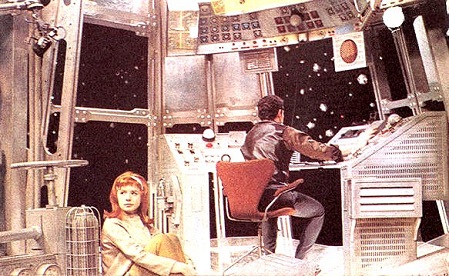
Left: Peter as Captain Barton discovers a stowaway on his ship

Captain Martin Barton (Peter Wyngarde), who has been chosen to carry out the mission, runs through his pre-flight checks, and when satisfied that all is in order, requests permission from the Stardust to depart.

Only a short time into his journey, the Captain notices an abnormal reading on his control panel, and immediately reports back to the Mothership that there’s been a 20oC rise in the temperature of the Supplies Locker. Personnel on the Stardust initially suppose that the anomaly has been caused, either by the EDS’ jets during take-off, or from a circuit failure. Since both these theories are highly unlikely, Barton rebuffs them – reasoning that there can be only one other cause of such an acute temperature change: he has a stowaway on-board.

Directly, Barton approaches the Locker and demands that the interloper show his or herself. He’s stunned when, after a brief pause, a teenage girl appears from between the storage racks to give herself up.

The youngster introduces herself as Lee Cross (Jane Asher), and when Barton demands to know what she’s doing on-board, she tells him that she just wanted to see her brother, Gerry, who’s part of a government survey crew based on Woten for the past decade. The 18-year-old, a newly qualified linguist, tells Barton that she’d been travelling on the Stardust to the planet of Mimir, where she’d recently secured a new job, and had slipped onto the EDS when no one had been paying attention.

Barton is furious, not least at the girl’s somewhat flippant attitude towards her situation – her response to his fury being to enquire if she might be required to pay a fine.

barton3

Right: Peter sitting at the Controls of EDS 34GII and, (centre), Jane Asher.

When he asks if her brother is aware of her new position on Mimir, she tells him that he’d been informed weeks earlier by Spacegram. Barton’s anger is swelled still further when he’s latterly told that Gerry is due to be posted to Mimir the following year. Why, the Captain demands, had she taken such a risk to board his ship when she would see her brother in a few months’ time anyway?

Lee, who until now had been oblivious to the trouble she was in, apologies profusely to Barton who, for now, has returned to the pilot’s chair. Lee notices that there’s been a sudden increase in speed, and enquires why. The Pilot reveals that since the ship is now carrying additional weight, he may not have enough fuel on-board to reach his destination.

Barton flicks a switch on his communicator and signals Stardust. He asks to speak with Commander Delhart (Peter Williams), in the vain hope that he might have a solution to the dilemma currently facing him. Delhart, however, bluntly reminds Martin of Paragraph L, Section 8 of the Interstellar Regulations relating to stowaways on Emergency Vessels: that any such person must be jettisoned immediately.

On hearing this, Lee becomes hysterical, as she can’t understand why such a severe punishment should befall her for what she perceives as relatively minor violation.

In the meantime, Barton tries to impress on his superior that the intruder is just a kid, but Delhart is resolute, and demands to know when Barton intends to carry out the “execution”. The Captain protests, but when Delhart insists, Martin takes the girls Identity Disc from around her neck and commences to read aloud from it: “T8374 dash Y84….” However, before Martin is able to continue, the Commander again insists on having the time of execution.

Barton stalls for a moment, then once again starts reciting from the Disc: “Name: Lee Cross; Sex: Female… “, but the cold voice stemming from the ships communicator becomes ever more instant: “Time of execution MUST be given before ID details!” The pilot, however, continues reading.

“This is most irregular!” bemoans the Commander.

“Then we do it in a ‘highly irregular way!”, the pilot responds, defiantly: “Hair: red; Eyes: blue; Date of Birth: 7 July 2060…”.

By this time, Lee is in a blind panic – begging Barton to make his commanding officer reconsider, but the Pilot’s hands are tied. Nevertheless, he launches one last angry salvo at Delhart: “The subject is a girl. Are you capable of understanding that?” The communicator, nonetheless, falls silent.

Martin now tries to calm the panic-stricken girl, who still can’t understand why she must face such a harsh penalty. Quietly, Barton attempts to explain their situation – revealing how the Kala Virus can kill within 24 hours of the first symptoms appearing, and how the medication supplies of the stricken Group 1 had been destroyed in a recent tornado.

“But don’t the others in Group 2 have the serum?” Lee enquires.

Barton acknowledges that they do, but because they’re based 8,000 miles away across the Western Sea, they wouldn’t be able to reach the others in time. Martin now hands her as copy of the Interstellar Regulations, which explains the amount of weight his vessel can carry given the quantity of fuel they have on board. If it were to run out, he explains, they’d both die.

Once again he contacts Stardust to ask if they would calculate his direction and velocity. They advise that he must reduce speed at exactly 19.10 – the time that Lee would be forced to leave the ship.

At last the girl begins to grasp the hopelessness of her situation: either she dies alone in the icy vacuum of space, or she takes seven other people with her. Martin reveals to her that, since the Stardust is now out of reach and the next nearest cruiser is over 40 light-years away, no one is in a position to help her.

barton1

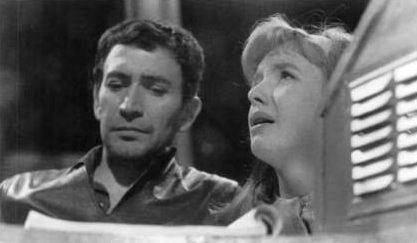
Left: Captain Barton tries to comfort Lee as she comes to terms with her fate

Quietly, Lee confides that, when she boarded the ship, she had no idea what she was getting herself into. She knows now that what she did was stupid, but all she ever wanted was to see her brother. Only an hour earlier, she’d been safe on the Stardust, which was now continuing on its journey to Mimir, whilst she’s left with nothing but the blunt realisation that she’ll never see her family again.

Martin does his best to comfort the girl. The frontier, he says, is huge and scattered, and that the 16 men on Woden have an entire world to themselves. Gerry had recounted such stories to her many times; tales of exploration groups and survey parties – all of them fighting alien environments.

“And did he tell you that those environments fight back?” Barton asks, mournfully. Out in space, there was no room for mistakes. It was the responsibility of people like Martin Barton and Gerry Cross to make it safe for new settlers.

Lee tearfully surveys her surroundings, and remarks on the size of the cruiser they’re travelling in – commenting that it appeared to have more than enough room for its two passengers. She hadn’t given a thought to the fuel, since her only consideration had been for her brother.

When once there seemed to be so much time, the stark realisation that she only has 25 minutes of her life remaining suddenly hits home. As if in a vain attempt to take her mind off her impending fate, she turns to Captain Barton and enquires about the ships controls; pointing to various dials and switches on the console and asking what functions they performed. Yet, before he’s able to respond, her thoughts turn to her parents, and she asks if it might be possible for her to write a letter to them. Barton nods, but then suggests that there might be a possibility to make contact with Gerry on Wotan.

After several discouraging attempts, Barton finally manages to reach the Research Unit and at once asks to speak with Gerry Cross. Frustratingly, however, he’s informed that Cross is out in the field, but is expected back any moment. An assurance is given that a return call will be made the minute he gets back, and so an expectant Lee begins to write the letter to her parents.

Tearfully, the girl tells Barton how desperately she needs to hear her brother’s voice one last time. She admits that she’s afraid, and that she feels herself to be a coward. Directly, Martin determines that cowardice and fear are two separate things, and that she’s most certainly not a coward.

As she finishes her letter, she asks Barton – if her brother were to make a mistake out there in space, would he have to die for it? The Pilot says that, regrettably, life is like that along the Frontier. The Girl admits that she’d always thought of danger as fun, like it’d been when she watched a film at her local 3D cinema. But now it was for real, there was no going home after the show ended.

Worriedly, Barton tells her that Gerry would need to contact them soon, given the fact that they’d shortly be out of communications range. Even then, there’d be scant time for them to talk – briefer even than the time she had left. In that case, Lee laments, the moment the call ends, she wished to leave the craft. After all, what would be the point in her waiting around?

At that very second, Barton receives the long-anticipated response from Woden. Initially, Gerry is reluctant to believe that his sister could be on-board the EDS; the fact that the connection between the Research Station and the cruiser is so poor, doesn’t help. When finally Cross accepts that he is in fact speaking with his sister, he’s shocked to learn of her status as a Stowaway, given his understanding with interstellar law.

Gerry asks if he might speak with the Pilot, who gives the Researcher his coordinates and fuel status. Barton tells Cross that it would be impossible for him to turn back, but assures him that he’s done everything in his power to help the girl.

barton2

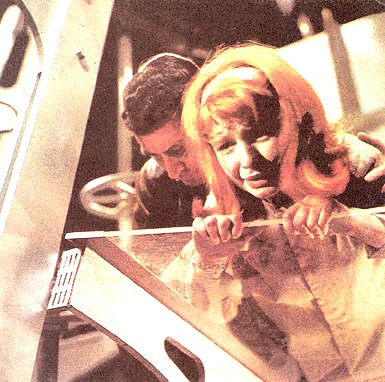
Left: Captain Barton prepares to eject Lee out through the escape hatch

As the signal to the Cruiser inevitably fades, Barton urges Lee to say a final goodbye before it’s too late. When the link between them finally breaks, Lee begins her silent trudge towards the air lock. Once inside, she turns to face Barton and nods as if to say “I’m ready”. Without any further exchange, the Pilot reaches for the leaver that sends the girl out into the freezing reaches of space.

Slowly and despondently, Captain Barton Returns to the pilot’s chair, where he presses the transmitter button that raises the Stardust. Calmly he reports that at 19.09 hours, Lee Cross was jettisoned from the ship: “Details of stowaway previously recorded”.

*All the episodes of the series were wiped, apart from one – ‘The Little Robot’.

barton5

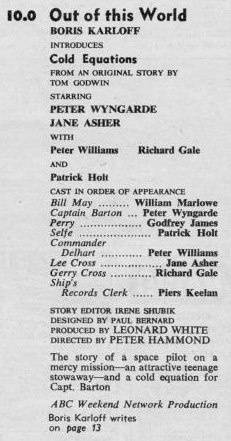
Above: A contemporary cutting from The TV Times

REVIEW: Walt Disney’s Wonderful World of Colour: The Further Adventures of Gallagher

Broadcast: Sunday, 26th September, 1965 (USA)

Character: Sir Richard Westby

westby8

Some Background

The original six-part series, which was simply entitled ‘Gallagher’, made its American TV debut in early 1964, and was followed later that same year by ‘The Adventures of Gallagher’.

One of ten children growing up at the turn of the century, Gallagher is determined not to stay a copyboy for long. Despite the complaints of Mr Crowley – editor of the Daily Press, who is forever maddened by Gallagher’s inability to keep his mind on his real job (but secretly admiring the boy’s “get up and go”), Gallagher is incessantly chasing clues and gathering information in the vain hope that Crowley will someday appoint him a reporter. Gallagher’s closest friend at the paper is senior journalist, Brownie, who’s often forced to cover up or excuse Gallagher’s schemes, as well as trying to persuade Crowley to re-hire the boy.

A third series – ‘The Further Adventures Of Gallagher’ went into production in March/April, 1965, and Peter was invited to play the part of Sir Richard Westby – a successful actor who arrives in town with his touring theatrical company to perform a work of Shakespeare. However, Westby’s reputation as a self-important womanizer has preceded him, and it wasn’t long before he’s made himself a great number of enemies in town.

The Story

westby7

In the opening scene, we see Gallagher (Roger Mobley) – a Copyboy and budding reporter at the Daily Press newspaper, walking down the street of a 1900 American town. He’s on his way to the Bijou Theatre to see a matinee presentation of Hamlet, starring renowned English actor, Sir Richard Westby (Peter Wyngarde).

Above: Peter as Sir Richard Westby as Hamlet in the final scene of the play

Outside the theatre, a sign proudly announces that the performance is completely sold out, and as Gallagher takes his seat inside, we’re treated to various sections from the play, including the dramatic finale, which leaves the rather well-to-do-patrons fixated. As Westby’s utters the immortal words “Horatio, I am dead!”, and his head falls, the curtains close and audience rise as one to applaud his magnificent performance.

None in the theatre that afternoon has been more affected by the play than young Gallagher, who acts out some of the scenes he’s just witnessed en route back to the offices of the Daily Press – fencing with a waiting cab driver, and quoting Shakespeare to a local policeman on his beat.

When finally he arrives at the newspaper office the Editor, Jefferson Crowley (Edmond O’Brien), demands to know where the lad has been all afternoon. He reveals cheerfully, that his colleague, Brownie (Harvey Korman), had given him his Press Pass to the theatre, since he himself had no wish to see the play.

When Crowley enquires why Brownie had not attend the theatre as instructed, the journalist explains that he’d seen Westby “massacre” Hamlet in New York the previous year, and had written a review based on that – not on the Bijou Theatre performance.

At that very moment, in strides a very aggrieved Sir Richard Westby, carrying a copy of the day’s edition of the Daily Press: “WHO is Mr Brown?” he demands, and turns his gaze in Brownie’s direction. “Are YOU Mr Brown?” the actor persists; “Are you the wretch that wrote this illiterate misrepresentation of my performance?” The thespian then reaches over and slaps the Reporter across both cheeks with the rolled-up newspaper he’d been carrying.

westby2

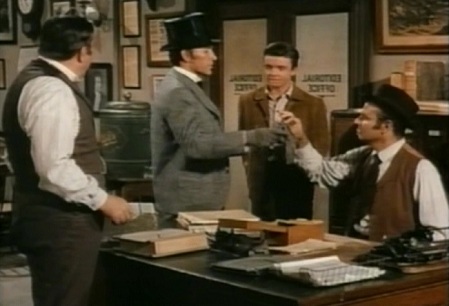
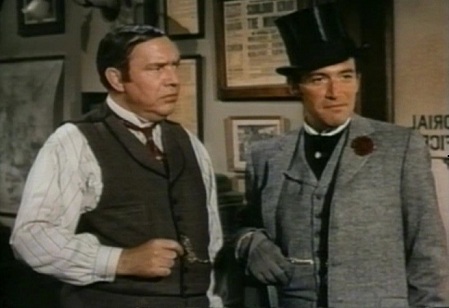
“Who is Mr Brown?”: (Left to Right) Crowley, Sir Richard, Gallagher and Brownie at the Daily Dress office

Brownie is stunned, and looks to Crowley to clarify the meaning of such an assault: “It means that we’re going to be sued!” the Boss laments.

Westby disagrees, however: “Nothing so maudlin, Sir.” And with a wry smile, adds: “This is a matter of honour, and I demand satisfaction!”

Crowley chortles knowingly, and asks Westby how much his “honour” will cost the newspaper: “His life… or mine,” the Englishman expounds. He then turns to Brownie, adding: “You, Sir, have the choice of place, time and weapons.” And with this, he throws a glove down on the desk in front of the beleaguered hack. “This, Sir, is my gauge. Pick it up or forever be branded a coward!”

Brownie is overcome: “A duel?” Crowley immediately picks up the glove and thrusts it into his employees hand with delighted, given that such a contest was like to cost the newspaper not a dime!

As Sir Richard stalks dramatically from the office, the Editor can hardly contain himself. He rushes over to his Printer, Pete (Jon Lormer), who he instructs to change the headline for the late edition to announce the news of Westby’s challenge to Brownie.

On publication of the ‘paper, Crowley receives a call from the local police department, to advise him that duelling is illegal, and that death as a result of such a contest would be viewed as murder. He’s then instructed, in no uncertain terms, to cease with any further mention of combat in future editions.

Crowley, however, advises the police lieutenant on the other end of the line that no crime had as yet been committed, and as such, he was free to print whatever he saw fit. On replacing the receiver, the Editor directs Gallagher to take a note to Sir Richard at the theatre, informing him that Brownie accepts his challenge.

westby4

Left: Gallagher delivers a note to Westby at the Theatre

When the boy arrives backstage at the Bijou, he’s directed to Westby’s dressing room, where he finds the actor running through a script. He hands over the message, which Sir Richard reads with delight. “Absolutely superb!” he bellows theatrically, realising that he and Crowley are both on the same page. As long as the story of the proposed duel continues, the more theatre tickets and newspapers will be sold – benefiting both parties in the process.

Crowley assigns Gallagher to stakeout the theatre and to report back on any unusual activity. Whilst watching Sir Richard perform from the wings, a young woman dressed all in green and with a veil covering her face, sweeps in and waits for the actor to leave the stage. As she lifts her veil, Westby immediately recognises her as “Katherine” (Victoria Shaw). He takes her hand and kisses it, saying that it had been ten years since they’d last met.

westby5

Right: Sir Richard meets his former fiancé, Katherine.

The young reporter immediately calls his Editor, who instantly envisages the headline: ‘Who Is The Lady In Green?’ Meanwhile, Katharine boards a carriage, which Gallagher follows to a large house on the outskirts of town. As the young lady climbs from the carriage, the driver – John (John Marley), spots the Copyboy and grabs him by the scruff of the neck.

Gallagher asks to know who the lady is and what is her connection to Sir Richard, but John remains tight-lipped. The boy suggests that since many women send Westby flowers and love notes, there’s no mischief in his asking a reasonable questions. “For those women to have their name printed in a paper does no harm,” John barks in reply. “But for her – scandal!”

On hearing their voices, Katherine rounds the coach to see what’s happening. Gallagher introduces himself, and after conversing with the young lady awhile, agrees not to publish her name or anything about her visit to the theatre.

At that moment a man’s voice calls out to Katherine and demands to know what’s going on. The voice belongs to her brother, Charles Van Raalte (Liam Sullivan), who requests to know what she’s doing out so late. When finally she responds, she declines to impart to him that she’d been to see Sir Richard. Instead, she tells him that she’d been unable to sleep and had asked John to take her for a drive. Meanwhile, the Coach Driver, who is still holding onto Gallagher with a vice-like grip, intimidates to the boy that a terrible end awaited him should any word of that night’s events pass his lips.

Back at the newspaper office, Crowley finds Gallagher rifling through the archive files, where he’s managed to unearth several old cuttings about the Van Raalte family. One of the headlines reads: ‘MRS J.P. VAN RAALTE DENIES ENGAGEMENT OF DAUGHTER’. Based on Sir Richard’s response to her at the theatre, it appears that he and Katharine had at one time been engaged to marry. When the boy is caught red handed by his Boss, he says nothing of his find – instead he declares that he’d merely been looking for a baseball result. Crowley, who’s angry to hear this, sends the young man back to the theatre to continue his assignment – telling him not to come back until he has some news.

At that moment, Charles Van Raalte arrives at the Daily Press office and asks to speak with Crowley. He demands that the paper drop the story of the duel between Sir Richard and Brownie, but Crowley refuses.

Meanwhile over at the theatre, Gallagher is watching the latter stages of the latest performance of Hamlet which, again, sees Sir Richard engaged in a sword fight to the death. As he steps back towards the stage curtain, his face is suddenly filled with pain and he staggers forward into the arms of the actor playing Horatio.

westby6

Left: “I am dead, Horatio”

When the audience and other players realise that Sir Richard’s death scene is for real, there are screams throughout the theatre. Gallagher, who is still concealed in the wings sees a man, wearing a black cloak and top hat, scurrying towards the Stage Door – his arm raised to cover his face. As he pushes past the young reporter, Gallagher makes a grab for him, but only succeeds in tearing something from the man’s cloak.

Directly, the boy rushes back to the Press Office, where he runs into Crowley who’s just leaving for the police station. The Editor informs Gallagher that Brownie has been arrested for Westby’s murder, so when the Copyboy divulges that he’s seen the killer, Crowley frogmarches the young man into the 7th Precinct with him.

Once inside the Station, Gallagher reveals to the officer in charge that he’d seen the killer as he’d made his escape, and although he was unable to identify him, he knew for certain it wasn’t Brownie. He then explains how he’d grabbed at the stranger and tore a fastener from the man’s cloak as he’d passed. Since Brownie had been at the opera that night, and is wearing a cloak similar to the one worn by the assailant, they check the Reporter’s attire and find the fastener intact. However, the Police Lieutenant informs Crowley that his officers have already questioned both the cast and crew at the theatre, and were satisfied that none of them had a motive to kill Sir Richard. In that case, they intended to lock Brownie up for the night.

On leaving the Precinct, Gallagher heads straight back to the theatre – entering the building through a first floor window. Although he’s initially startled by the sudden appearance of the Copyboy Pops, the Night Watchman and general dogsbody, recognises the lad and agrees to help him search for the missing fastener that had been torn from the murderers cloak.

Pop’s tells Gallagher that, after sweeping up the theatre after the final performance, all the garbage was put outside in the bins at the rear of the building. Happily, the boy is able to find what he’s looking for, but when he’s spotted by a police officer rummaging through the trash, he’s forced to make a run for it, back to the Daily Press Office.

While there, Gallagher takes another look at the newspapers he’d found earlier, and studies a sketch of Charles Van Raalte who he figures might be the person responsible for Sir Richard’s demise. After carefully placing the papers back in their rightful place, he beats a hasty retreat back to the theatre.

Once there, he begins to tell Pop’s of his suspicions, but is interrupted by the arrival of a carriage from which Katherine emerges. It soon becomes clear that Gallagher has arranged to meet her there, as she has her brothers’ cloak with her. The boy reminds the young lady of a line from Hamlet: “The play is the thing we’re in. I’ll catch the conscience of the king,” which the young lady acknowledges.

Gallagher explains to Katherine how the killer had dashed past him from behind the curtain directly after Westby was stabbed, and he shows her the fastener he’d torn from the cloak. When they check it against the cloak owned by Charles, they find that part of the fastener is missing, but Katherine can’t believe that her brother is responsible for such a heinous crime.

At that moment, John emerges through the Stage Door and confirms that Katherine is correct – Charles is indeed innocent, since it was HE who killed the actor.

The Carriage Driver says that he’d served both Katherine and he mother faithfully for many years, and that Sir Richard had been an evil man who’d brought disgrace and scandal down on the Van Raalte family. If it hadn’t been for Gallagher’s interference, he suggests, this might’ve been the perfect crime.

Katherine tells Gallagher to run, but John manages to block his exit, and forces the young man to about turn and take flight up on the gantry above the stage. Aloft amongst the ropes, pulleys and ladders, the boy swiftly climbs with John, knife drawn, in hot pursuit.

The day is saved, though, when Crowley arrives with the police, who are able to apprehend and arrest John. The Editor tells Katherine and his Copyboy that he’d found the papers Gallagher had unearthed earlier, and knew that Charles would be at the opera that night. On realising that the budding young reporter would’ve returned to the theatre, he’d contacted the police who’d headed down there… and just in the nick of time.

In Retrospect

ONE DAY IN THE LIFE OF PETER WYNGARDE

On the set of the Jason King episode, ‘To Russia With… Panache’

This is a snapshot of what a typical day was like for Peter whilst he was working on the Jason King series.

Thursday, June 3rd, 1971 – Six days into shoot

pw1

Left: Peter running through his lines on the set of Jason King

5.30am: Peter is woken by the sound of his alarm clock. He gets out of bed and takes a shower. He has breakfast, consisting of porridge and tea.

6.15am: He leaves his home in West London with his Afghan Hound, Yousef, to make the 13-odd mile journey by car to EMI-MGM Elstree Studios on Clarendon Road, Borehamwood.

7.30am: After first popping into his private dressing room (No. 515), Peter makes his way over to the make-up department, where Pamela Salem, who plays Alexandra in the episode, is already in the chair.

7.45am: Director, Paul Dickson, is supervising the preparation of the set on Sound Stage No.9. He calls for the five Stand-In’s who’re needed to set up the first scene of the day, which is the completion of a sequence started on the previous day (inside the Kremlin Committee Room). An actor by the name of Andrew Dempsey fills in for Peter, who is still in make-up.

8.30am: Peter, John Malcolm, Michael Poole, Stefan Gryff, Tutte Lemkow and Pamela Salem all arrive on the sound stage, following Mr Dickson’s Unit Call. The very first sequence involves John Malcolm in the role of Colonel Kolkow, plus six extras dressed as Russian guards.

9.30am: Peter makes a beeline across the studio floor for his regular morning cup of “Rosie Lee”, as the tea lady and her trolley appears on set.

9.45am: Stunt Coordinator, John Sullivan, arrives to rehearse a fight sequence involving Peter and Michael Poole. Two fight doubles – Paul Weston for Peter and Bill Cornelius for Poole, are introduced to the actors. A nurse is on hand both during rehearsals and the shoot in case an injury should befall any of the four men.

21

Right: Peter with his beloved Afghan Hound, Yussef in his dressing room at Elstree Studios

10.00am: A member of the Props Department arrives with a number of items for the set, including a briefcase, papers, handguns and blanks, mats, mattresses, breakaway furniture, handcuffs and a telephone. Peter, Michael Poole and their stunt-doubles run through the scene once more before the Director calls for quiet on the set.

12.45pm: The Unit breaks for lunch. Peter slips out of his suit and into more casual attire – which usually includes an old woollen jumper and either shorts or tracksuit bottoms. He takes Yousef for a run within the Elstree grounds. Once back in his dressing room, he picks out an album from his vinyl collection and places it on the turntable of his record player.

Peter uses the remainder of his lunch break to answer some mail, so he has the studio restaurant send his meal up to his dressing room on a tray. This includes sandwiches and a can of Coco-Cola.

A fax arrives for him from ATV regarding interview requests from Hazel Slater of Woman’s Own magazine, and from Margaret Pride of Reveille for the following Saturday – June 5th.

2pm: The first scene of the afternoon involves Peter, Michael Poole and Milton Reed. Peter is required to wear a frogman’s suit, and props including a large packing case and a carrier full of gold-plated jewellery.

3.15pm: The Director calls a halt to filming whilst the 1st Unit view the mornings ‘Rushes’ at Preview Theatre No.3. Meanwhile, the 2nd Unit move onto sound stage No.8 to add additional scenes involving Jason’s Bentley.

3.30pm: An Inter-Departmental Communication is issued by Production Supervisor, R.C. Liles to Jeremy Summers, Cyril Frankel, Billy Herlthy and Gino Marotta, requesting that no one from the Studio contact Peter “For any reason” on the following day, when he’s not scheduled to work on the series.

20

4.00pm: The final scene of the day involves Peter, John Malcolm, Michael Poole, Pamela Salem, Elizabeth Counsell, and fight-doubles Bill Cornelius and Paul Weston. Two guns and a pair of handcuffs are requested from the Props Department.

Left: A candid shot of Peter relaxing in his dressing room during a break in filming

5.30pm: At the end of a gruelling day at the studio, Peter has recorded a grand total of 11 minutes and 30 seconds of screen time!

6.00pm: Peter leaves the studio for home with Youssef – looking forward to a well-earned weekend off.

NIGHT OF THE EAGLE: Then and Now

15123475_10154668128378745_8089467113942487950_o

Above: From trailer for Night of the Eagle

SCENES FILMED IN TAPLOW, BUCKINGHAMSHIRE

eagle3


  Entrance to Taplow Court – a mid-19th Century mansion off Cliveden Road

eagle014


  The eponymous stone eagle atop Hempnell College, and Taplow Court

eagle6

  Above and Below: Forecourt of Taplow Court

eagle9

eagle016

 Professor Taylor and students leaving Hempnell College

eagle2

   Front entrance of Taplow Court

eagle112

Crossing Cliveden Road. In the background is the Gatehouse at Taplow Court

eagle1

The Taylor’s house: Peter said that the property was derelict at the time of filming, and was “Full of cobwebs, spiders and other creepy-crawlies”.

eagle010

At the door of the house: “While we were filming the scene where the house burns down, Janet (Blair) received a call from her husband in Hollywood. Her own home was burning!” Peter

eagle011

Peter passes ‘Queen Ann’s House’ in the village of Taplow. Both the house and sign are still there

eagle013

Crossing Clivenden Road near Taplow Court Gatehouse

eagle015

Peter remonstrating with the truck driver near the junction of Cliveden Road and Berry Lane

eagle7

SCENES FILMED IN HERTFORDSHIRE

eagle4

Peter at the junction of Dagger Lane and Aldenham Road , near Haberdashers’ Aske’s School, Elstree, Hertfordshire

SCENES FILMED IN CORNWALL

eagle116

Treyaron Bay: The house which doubled as Norman and Tansy’s holiday home is still there today, and stands just off Cape Cornwall Road to the west of Saint Just

eagle117

Treyaron Bay

eagle113

Above Left: Peter at the Taylor’s holiday home. In the distance is Kenidjack Castle

Below Right: Porth Ledden with Kenidjack Castle on the cliffs

eagle017

Outside the Taylor’s holiday home: The landmark in the distance is a chimney stack built in 1864; a remnant of Cape Cornwall Tin Mine

Peter near Port Ledden

With grateful and sincere thanks to Andy Ellis for sharing some of his photos. Other pictures C/O The Hellfire Club

Click below for more on Night of the Eagle…

REVIEW: Hammer House of Mystery And Suspense: And The Wall Came Tumbling Down

Broadcast: Monday, 19th November 1984

Character: Daniel Haswell

In the early 1980’s Hammer, the leading producers of British horror movies across the previous three decades, attempted to restore themselves to their former glory through the medium of television. Having achieved some success with their first ‘Hammer House of Horror’, plans were made in conjunction with 20th Century Fox (as financiers) to create a second series. Fox insisted on a longer format, with an eye to gaining primetime exposure in the USA. Thus was born ‘The Hammer House of Mystery and Suspense’.

The series was made with the US market in mind – hence each story contained at least one American household name. In addition to this, the series also boasted an impressive list of British stars, such as Susan George, Stephanie Beecham, George Sewell and last, but definitely NOT least, Mr Peter Wyngarde – his story was entitled ‘And The Wall Came Tumbling Down’.

The Story

The action opens on a busy building site in the environs of London. In the centre of the site stands an old, de-consecrated church, which is scheduled for demolition. A works supervisor, Peter Whiteway, and instructs a man called Brinkley to proceed with the removal of an interior wall within the church. Taking a jack-hammer, Brinkley does as he’s told. Peering in to the hole he’s just made we see, from the workman’s viewpoint, a small room, and on the rear wall a strange painting. Our gaze then drops to the floor and we can clearly see two skeletons – one seated against the wall, the other lying on the floor.

Not surprisingly, Brinkley is disturbed at the sight, but as he begins to withdraw he sees a thick, blood-like substance oozing from the fissure. Suddenly the unfortunate Brinkley finds himself tangled in the airline of the hammer, in his haste to get away. It then becomes apparent that this is no accident as the pipe binds him even further. Twisting around his entire body before finally, and deliberately, strangling him to death. In the background, we become aware of an ominous and mournful chanting as the hole continues to release blood and the show’s opening titles commence.

Immediately after the titles, we find ourselves transported back in time to London of 1649. A young man, Martin Yardley, is seen at the feet of a Priest. He is highly agitated and is begging for the holy man’s blessing, but the Priest doesn’t understand why he wants it. Martin tells him that he’s painted a picture of the Devil in God’s house – meaning he’s a member of a Black Magic Coven. The Priest refuses to give his blessing unless Martin reveals the names of his fellow worshippers. The thought of betraying his fellows is daunting to the young man and he cries out for the blessing. He is again refused. Eventually, he begins to blurt out a short list of names: David Pritchard, Sarah Graycott, Matthew Rayner… Abruptly, a figure appears at the window – it’s a hooded man with a cool but menacing expression. The startled Martin, cries out and runs out into the stormy night.

The following day reveals the Witch Finders have done their work, as we see the named people tied to stakes ready for execution. Martin panics when sees the hooded man again, calling “Daniel!” and makes for the forest, where he sees the man ahead of him, blocking his way. We jump again as we see the Priest making ready with the cleansing flame. Cut back to Martin who, again, sees his pursuer in front of him, beckoning. He makes for the church, but as he leans back against the door, the handle is turned from the outside. Exhausted, he walks towards the transept, where he’s confronted by his own work; a mass of blurred colours. Sickened by his own heresy, he turns away only to see a group of figures clad in white robes walking towards him. As he recoils in fear, a man steps out of the shadows in the archway behind him. It’s Daniel (Peter Wyngarde).

Martin is quickly overpowered and is laid on the floor of the transept. Here Daniel confronts him – saying that, because of his betrayal, three members of their coven had suffered terrible deaths. For his crime, Martin’s own life must be forfeit – they will be walled into an alcove of the church, until they can return their lord’s vision of destruction through the painting. This wall, Daniel informs him, will be stained with the blood of his victims. Fleetingly, we return to the burnings in time to hear David Pritchard scream a curse at the Priest: “I will destroy your Church!” We then return to the church to witness the last stones being placed into the wall as Daniel calmly looks out for the last time.

Swiftly, we’re transported back to the present day as a police car pulls up on the building site. Simultaneously, a young couple arrive at the gates of the site – a blonde girl and a man who looks identical to Martin Yardley. They chat to the site guard – the young man informing him that he used to live in that area, and had just come to look at St Peter’s Church one last time before it is demolished. The guard seems somewhat surprised, given that the Church had not been called St Peter’s for some time.

In the church, the police are investigating the demise of the workman, Brinkley – concluding that he’d simply become tangled in the airline of the hammer. They then notice the blood-like stain on the wall, and realise that it couldn’t have come from Brinkley as there is no wound on his body. They also wonder who might’ve switched off the hammer that killed him? At this pint Whiteway looks into the alcove and sees the painting.

daniel2

A few moments later, we see an ambulance drive away from the church just as a young woman arrives by car. She’s initially refused entry, but then produces a Defence Ministry pass and is allowed in. She introduces herself to Whiteway as Caroline Trent, and explains to him that she’s there to study the architecture of the church, and that it can’t be demolished until whilst her department try to get a preservation order. The site boss is rather abrupt with her, telling her that she’s not allowed inside the church until tomorrow, after an inquest into Brinkley’s death has taken place.

Meanwhile, the young couple who had been at the gates earlier have walked off. The young man tells his girlfriend that they can go back later – he remembers a way into the site from his childhood spent there. As they walk through the streets that are being prepared for demolition, he tells her how important the Church has always been to him.

Back at the site, the telephone rings – Whiteway’s secretary tells him it’s General Haswell, whom Whiteway explains to Caroline is the Commander of the NATO nuclear base that is to be built on the site. Haswell is pressing for a visit, but Whiteway contrives to put him off.

The young couple have now reached their interim destination – Kemble Street, home of the man’s grandmother. Granny gives her grandson, Alan, a warm welcome. He introduces the young woman as Kim. On the walls of the living room are several paintings various aspect of St Peter’s Church – sometimes these have been nightmares that Alan had suffered, involving something that’s just around the corner; something that will happen soon. Each time he’d woken up, and had been unable to recall what the dream had been about, but ever since he was a child he’d painted scenes of that Church. Before setting off again for the building site, Alan shows his grandmother the engagement ring he’s bought for Kim.

Back at the site, Whiteway takes another look at the painting inside the Church, which seems to be changing. Alan and Kim, carrying a folio of his paintings, sneak back onto the site through a back entrance. Unfortunately for them, they’re spotted by Whiteway who gives chase, forcing them to run and drop one of the paintings. After Whiteway has given up his pursuit, the determined pair make their way back in. This time they’re successful, and Alan tells Kim how, as a child, he and two other kids had stayed in the Church overnight, to protect the Harvest Festival display. But whilst he’d felt entirely comfortable there, the other two youngsters couldn’t wait to get home.

Kim, it appears, agrees with Alan’s young friends, and tells him that she finds the place “creepy”. At that, she notices the hole in the wall made by Brinkley, and stoops to look at the painting on the wall. Without looking himself, Alan tells Kim that there’s a painting behind the wall, and mentions the name ‘Martin’. Taking out the engagement ring, he turns to give it to her, but as he does he suddenly throws it to the ground, saying: “Let’s get out of here!” At that moment, Kim appears to him in 17th Century dress, with what appear to be a crowd of monks surrounding her. From behind her, Daniel appears, dressed in red robes. This is a Black Magic consecration ceremony, with a sacrifice for the Devil to inaugurate the Church as meeting place for the coven.

Abruptly, we switch to Kim, who appears to be entirely unaware of what’s happening. She runs to recover the Engagement Ring. The ‘Kim’ of 1649 we find is called Catherine Parkes – the girlfriend of Martin Yadley, and she’s to be sacrificed. As Kim picks up the ring, we see Daniel behind her – dagger poised – ready to strike. He kills her, leaving her dead on the floor, clutching the ring as Alan looks in horror at the bloodied drill-bit he has in his hand. He drops the object and flees in terror.

The following day, we see a tramp scouring a nearby site for firewood. When he returns to his hut, he finds Alan asleep inside. The tramp sits down and tries to engage with the young man in friendly chat. The tramp bears an uncanny resemblance to the Priest of 17th Century St Peter’s. Alan is in a state of shock and refuses to speak.

daniel3

At the demolition site, Whiteway is about to show Caroline around the church when General Haswell rings again. He’s put off one more, and the two discuss Haswell as they walk to the church. Miss Trent believes that Heswell is the type who’d happily start World War III, given the opportunity – “He’s a button-pusher”. Just as they reach the church, they notice the picture that Alan had dropped the previous day. Caroline picks it up and sees that it’s a painting of one of the church windows.

Meanwhile in the hut, Alan sees flashes of the witches burning. He falls down at the tramps feet and begs for forgiveness.

At the same time, Caroline confesses that the fight to save the church is ultimately doomed, given that it has nothing of any architectural importance. In reality, she’s only there because of the buildings psychic reputation – something which she thinks will prevent it from being demolished.

Back at the hut, Alan hears what he believes to be the peel of church bells and becomes agitated.

Whiteway and Trent again peer into the hole in the wall, which appears to have grown smaller so that the painting can no longer be seen. She tells him that in the 17th Century, a Black Magic Coven took over a number of de-consecrated

churches, and set up their own altar to worship the Devil. On discovery of these alters, they were walled up in their entirety. Whiteway dismisses this, claiming that it is merely a reinforcing wall. “Reinforcing what?” she asks. Wandering across to look at one of the stained glass windows, Caroline stumbles upon Kim’s body. Back at the hut, Alan screams out Kim’s name and runs out.

When the police inevitably arrive, Whiteway informs them that he’s seen a young couple on the site earlier. Meanwhile, Caroline tells the Police Inspector that she’s noticed some odd markings around the church, and that there’s something similar on the dead girl’s forehead. These marks, she explains, are the sign of a Black Market coven. But the Inspector soon loses interest when she admits that the coven existed hundreds of years before. Unperturbed, Miss Trent says that these are paranormal revenge killings, and that the evil within the church has grown since the de-consecration. She wonders how many more deaths it will take to convince the authorities.

Meanwhile, Alan has been running through the ruins of the surrounding streets. As he comes to a rest he scratches the sign of the Cross into the dust at his feet. In flashbacks, we see Daniel outside the church window.

The police arrive at Alan’s Granny’s house in the hope of finding her Grandson there, but without success. They notice the paintings of the church on her living room walls, and show her the picture that had been dropped at the building site. They take her pictures away for inspection. At the building site, General Haswell finally succeeds in arranging his visit, and makes a date to tour the area on the day after tomorrow. An unimpressed Whiteway consoles himself by taking Caroline to lunch. Then, referring to the General, he sighs: “After all, better the devil you know!”

In flashback, as Alan reruns the earlier scene between Martin and Daniel – once again, the latter is one step ahead. Alan runs onto the site and is spotted by Whiteway, just as he and Caroline are about to leave. They give chase in his car, but are too late to stop Alan running to his Grandmother’s house and straight into the hands of the police.

At the police station, Alan is questioned, and he tells the story of how it was Daniel who killed Kim/Catherine Parkes in an initiation ceremony. Obviously the authorities find this hard to believe., and dismiss the story as evidence of insanity. They rationalise that it was, in fact, a crime of passion; she’d refused his proposal of marriage, so he’s killed her with the drill-bit. Subsequently, Alan is confined to a cell in a secure hospital.

In the meantime, Carole Trent tells Whiteway that she intends to visit Father Harris – the last priest of St. Peter’s. Unfortunately, he dismisses her theory by saying that Alan in clearly insane. Nevertheless, she persists that evil forces are at work, and is determined to help the young man.

She return to the church where she discovers that the hole in the wall is now gone. Taking a pair of scissors from her bag, she scratches them against the wall. As she does, a piercing scream comes from the stonework, and the scissors are torn from her hand. Momentarily, the church bells begin ringing. At the same time Whiteway receives confirmation that no preservation order will be granted on the church, so demolition can begin. He walks over to the church to give Caroline the news.

Suddenly inside the church, the ‘Monks’ once again appear, and Daniel walks slowly towards Miss Trent, backing her into a doorway. Above her head, a heavy stone statue of an angel begins swaying dangerously as Daniel drives her beneath it. In the following instant, Whiteway arrives. She screams and he manages to push her out of the way just as the angel smashes down to the ground. “I’m beginning to believe you,” he confesses.

daniel5

The next morning, at a nearby rest home, meets Father Harris who reveals that, although he spent 27 years at St. Peter’s, he never really felt settles; the church, he says, had a chequered history, and a certain “atmosphere”. However, he’s unable to recollect any unusual happenings; Alan, he says, was just a choir boy, and that the Yardley’s, like many other families in the area, could trace their line back several hundred years. It was a very close community.

He also tells her that he is privy to the story of the coven and the subsequent ‘walling-up’ incident. Caroline shows him Alan’s painting of the church which Whiteway had found on the site. He identifies it as a 15 Century stained glass window, which clearly has the mark of the coven etched into the hand of Christ.

Father Harris is curious as to where she acquired the picture, and when she tells him it’d been painted by Alan, he tells her that her claim is impossible, given that the window in question was destroyed during a Second World War bombing raid long before Alan was born.

Whiteway and Trent’s next port of call is Alan’s Grandmother’s home, where Caroline shows her the painting. Granny tells them the police have taken all of her pictures… except for the ones in the loft. Miss Trent asks if they might see them, and the old lady agrees, adding that they aren’t very good. In fact, they’re just vague swirls of colour. However, when she shows them to Whiteway, he recognises them as being similar to the painting behind the wall in the church.

Caroline now determines to share her full story with him. After Martin’s betrayal of his fellows back in the 17th Century, the altar was walled up since the coven was unable to continue with it plan. However, she now believes that their plan is now coming to fruition, and that the forces contained behind the wall are attempting to prevent any interference. Typically, Whiteway dismisses this, reminding her that Heswell is due his visit to the site tomorrow and immediately afterwards, the Church will be demolished.

In his cell, Alan continues to suffer nightmares and visions. Meanwhile, his Granny pays a visit to St. Peter’s to pray for him. As she takes her place on one of the pews, we begin to hear the ‘Monks’ chanting again, and a shadow approaches her. As she turns, the dark entity envelops her, and the young prisoner sits bold upright in his bed and screams, “Gran!”

The nest morning, as the watch the elderly lady’s body being removed from the Church, Trent and Whiteway look at each other and wonder what might happen next. At the same time, Alan is being interviewed by a psychiatrist. The young man protests that he’s not mad – saying that the church is some kind of sign to him, but that he doesn’t know what he’s meant to do. He picks up a newspaper from the desk and reacts instantly. He hits the doctor and affects his escape via the window. He succeeds in reaching the tramps hut and confronts the man inside: “I want to deal with you!”

Having been put off for what has seemed like an age, General Haswell finally arrives at the site of his new NATO base. With all the ceremony that is according a general, he rolls up in a black limousine. Across the site, at his childhood entrance, Alan is watching – disguised in the tramps clothing. The General emerges from his car, and as he turns to summon Whiteway, we finally see his face – it is Daniel Haswell!

The General strides into the Church – ignoring both Trent and Whiteway as he does so. He observers that this is the building that has been causing the delay. Behind him, Alan enters the Church: “Daniel Haswell. We finally meet again”. From Alan’s viewpoint we see, in flashback as the General turns, the 17th Century Coven Leader.

Alan confronts Haswell, enquiring if they are still to carry out their pact; will his lords vision of destruction be realised through the guise of the defence base? Haswell reminds Alan that the painting behind the wall was his work, that it was a joint vision, and that they now have a second chance to see it through.

Haswell offers Alan “salvation”, but he refuses, saying that 300 years have not changed him, and that he realises what he must do. With that, he hurls himself at Haswell with all his might, so that the two of them are pushed into and through the wall. As the bricks crash down, we see Haswell lying beneath them, dead. Simultaneously, the painting on the wall begins to disappear, and is replaced by the vision of an atomic explosion. Whiteway and Trent, both standing in an archway, realise what Alan had to do, “To save us from destruction”.

As they turn to leave the scene behind them, Caroline runs her hand across the Coven symbol etched into the side of the arch, then bangs her fist onto it.

Personal Observations

The role of Daniel Haswell is another of those restrained villainy type of roles in which Peter Wyngarde can excel. Indeed, I would go so far as to say that his performance is the only thing that redeems this entire production! Although Haswell is responsible for the only moments of overt terror in this piece, this does not detract from the brooding malevolence which seems to seep from those eyes whenever we see the silent warlock. As with his previously reviewed performance in ‘Night of the Eagle’, Peter gives the role its due and plays it in a way that allows the audience to suspend its feelings of disbelief – the basic premise on which all fantasy films either live or die.

daniel4

Sadly this suspension of disbelief is blow away very quickly after Peter’s first appearance – this is because the plot’s lynchpin – the tried and trusted fantasy formula of reincarnation. Unfortunately, instead of giving us a basic hero/villain reincarnate to contend with, Dennis Spooner’s script throws us an entire community back from the dead – giving heavy weight to Father Harris’ comment that this WAS a very close community!

This, for me at least, is where this play loses credibility, but this may not be entirely attributable to the author as his work was apparently heavily rewritten by the Series Script editor, John Peacock.

Also, the film suffers somewhat by having too many characters, none of which are fully developed. Thus we are forced to accept scant descriptions of many relationships contained therein. Characters seem to be introduced simply to move the plot along – as if the writer had merely sat down and penned this at great speed, circumventing any problems by throwing in a new body.

The relationship between Whiteway and Trent is so intertwined that it gives the impression this was actually one character split down the middle so that casting could benefit by putting in a British and American star and get the best of both markets. What it really does, however, is simply make the Whiteway character look superfluous.

I’m afraid this production strikes as being very bitty. As is the cure with ‘Flashbacks’ stories, we often find ourselves being moved here, there and everywhere in an attempt to keep the relevant information in the forefront. Why the shifts back to the Site office each time Haswell calls? Why the scene with the tramp, and why does he have to resemble the 17th Century Priest?

More niggling questions spring to mind: Why would Alan’s Gran go to the scene of Kim’s murder to pray, when the church had been de-consecrated for years, and how was she not spotted by security guards making her way there? Indeed, why did Alan run back to his Grandmother’s house in the first place – surely he’d have realise that the police would be looking for him?

But if you can skip over plot holes and live with the skimpy characterisation, there is always Peter to save the day, which he does admirably in his ice-cool portrayal of the vengeful Haswell.

To close on ‘And The Wall Came Tumbling Down’. This review is obviously personal, so don’t just take my word for it – see it for yourself. At the risk of sounding like a last minute turncoat, I DID like the ending!

Written by Al Samujh