INTERVIEW: Leeds and West Riding magazine

Please note that some of the additional information provided here by the journalist named below may not be accurate, so it should be treated with caution.


September 1973

Tea and honey…

with the King of Siam

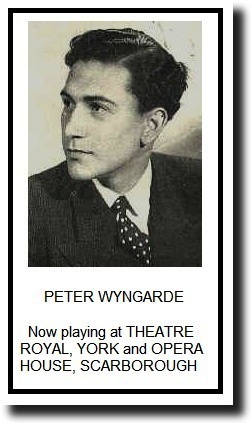
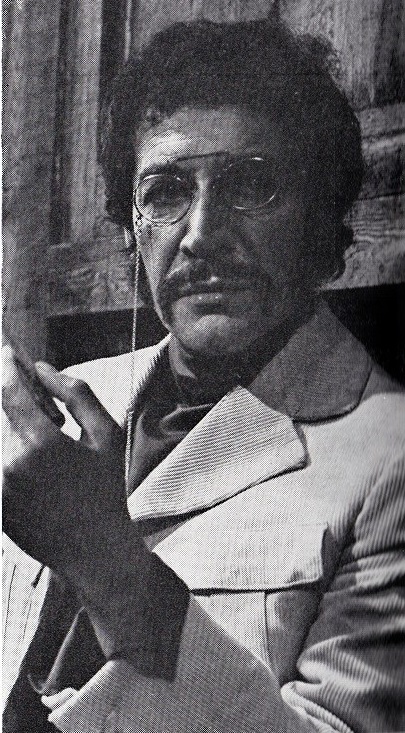
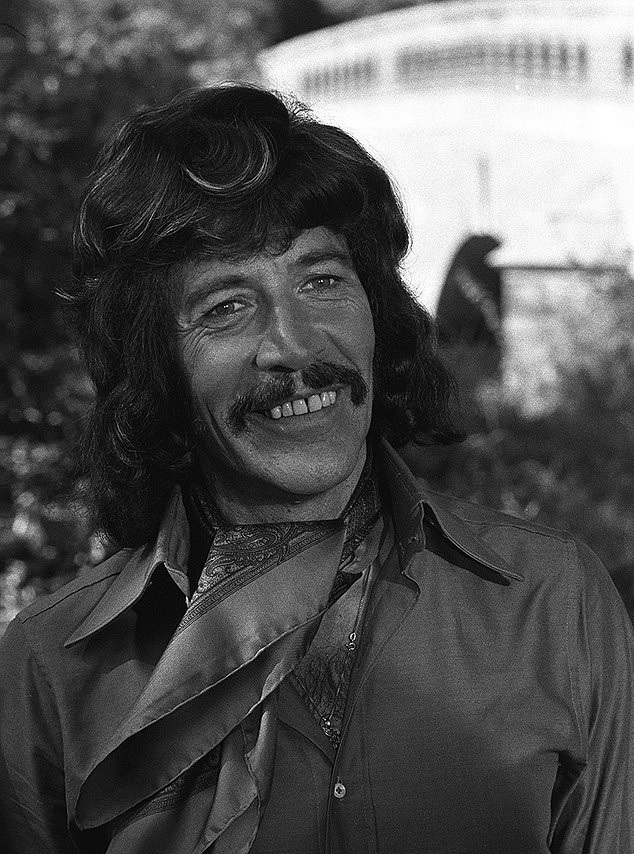
It was not the sultry, ultra-sophisticated Jason King I’d love women the world over all the stern, anti-feminists, oriental King and I Peter Wyngarde that I met for afternoon tea on a sunny Yorkshire hotel terrace last week. No dark glasses. No dramatics in dress. No champagne with oysters. The man himself – in casual, rolled up jeans and open floral shirt with unfreaked hair combed soft just as it grows is more devastating than all the images we have of him on stage and screen rolled into one.

Eyes incredibly blue, smile with a disarming friendliness, this is a man happy in the sun, and at peace with the world. It’s communicating peace too; a shared contemplation of blue skies, green gardens and the grey stonework of the fine mediaeval building behind us. “I like to find somewhere like this, quiet and away from it all.

“This part is 13th Century common and from that line though this side was added in 1845 – quite well I thought,” he explained with a sweep of his arm. The art of the actor is put aside – for the moment he is content to forget all matters theatrical and recount some of the history of the Hall. This is only a second stay here yet already he is familiar with pedigree and past, characteristics of the care and attention to detail prevalent in all his work.

Obviously Peter Wyngarde (king of small screen, stage and fashion), has a great feeling for all buildings and the great outdoors. He squirms bare feet into sparse sandals and squares up to a tiny table to do homage to another great love… tea! Lid carefully lifted; pot softly stirred (“I think it will be alright”) and a hitherto quite indifferent liquid poured to perfection.

He waits patiently – and a girl brings honey. That the Wyngarde way to take tea, I mentally kicked myself for having plonked white cube sugar in my (which I hate) and resolve to make with the honey for a second cup – which I did – and it’s delicious!

When the girl returns (ostensibly for the tray, but really to request a handful of autographs), books are duly signed but the pot is not relinquished until it yields up a third cup. “Don’t take it just yet. Tea is a firm favourite of mine and, as you know, I drink it by the bucketful,” he reminds her. Despite attentive pouring, the final offering comes with a floating leaf or two. The now empty teapot is carefully observed. “Oh, I see what is the matter. You’ve used quick brew tea and the strainer isn’t right for that kind of tea,” he tells her gently.

I remember several nights previously watching this man’s communication with a packed house at Leeds Grand Theatre as the iron King Mongkut. Here and now, he takes time to make a moment of history of one young aspiring waitress. Probably all her future customers will benefit. Certainly, the plain-ordinary English cuppa is elevated to immeasurable heights when truly appreciated. Nor does it need to be served in a chaste silver pot, by chased bronzed Amazon’s, on a mountain top in the French Riviera for this man to take pleasure. Despite the seductions of screen life, Peter Wyngarde preserves intact the art of enjoying the simplistic.

This month, the lavish touring The King and I, in which he stars, visits the Theatre Royal, Nottingham (September 3rd – 15th), and the
New Theatre, Hull (September 17th – 29th) then on to the Palace Theatre, Manchester, from October 1st before opening in London.

It played to packed-solid houses at Leeds Grand Theatre for two weeks in July, and before that with phenomenal success for a full four-week season in the Forum Theatre Billingham.

“I like touring, especially in provincial theatres. They’re not really having a very good time of it. It’s a good thing when one can use the name one has made on television to draw an audience. For instance, we filled a theatre at Billingham every night for four weeks and still people were turned away. We could have stayed there much longer. It is wonderful. But I understand that since we left, they had to close a show midweek. I don’t know what the answer is. You see last nights (this was in Leeds) we had a house full of young people. They loved it. The show is new to them! They went overboard for the songs shouted for uncles comment cheered, just like a pop concert. It’s marvellous”.

He ponders some more on the difficulties surrounding live theatre day today. “A lot of the traditions have gone. When a country loses its traditions, its lost”.

He counters my suggestion that perhaps the pull of so many other leisure entertainment lures “people away from the theatre with the reply, “I believe in competition. It’s healthy. But you see, television can be rather like a two-headed monster. It can strip away the mystery – bear the technicalities. When I go to the theatre, although I’ve been in it myself for so many centuries, I still want to believe that it’s true. It’s magic. One has to retain that. If you’re going to show the cameras, and the way this and that is achieved of course, the magic is lost”.

He takes a cigarette (one of the ten he’s allowed each day – doctor’s orders) and shows me the nicotine deposit in his cigarette holder. “Look at that. That’s from just, how many I had today – three/four cigarettes. I know it’s very bad for me. But I get so cross and irritable if I don’t smoke. Unbearable”.

The thought that he has to look after his voice now that he’s a singer, makes him laugh out loud. “Well, it’s not really a singing part. Mine are speaking-out songs, if one can call it that. The ‘Puzzlement’ piece is a tongue twisting one at that. Does it come over alright?” he asks.

Has he been in a musical before? “Yes, I played in Brecht’s The Good Woman Of Setzuan. I took the part of Yang Sun, a Chinese pilot. It’s strange, I hadn’t thought of it ‘til now, that in the two musical plays I’ve been in, I should play an oriental”.

What about clothes? One of the several awards he has gained with Jason King is ‘The Best Dressed Man In Britain’.

“Yes, clothes are very important to me. I think see things mostly in shapes, through the eye not the ear. Perhaps that means I have no right to be in musicals! I draw a shape. I see characters as shapes and before I know it, I’m designing clothes”. His interpretation in The King and I is powerful and moving. He has given a barbaric splendour to the two full-length caftans, heavily encrusted with embroidery, and ablaze with colour. “You should read the original book, it’s remarkable,” he advises.

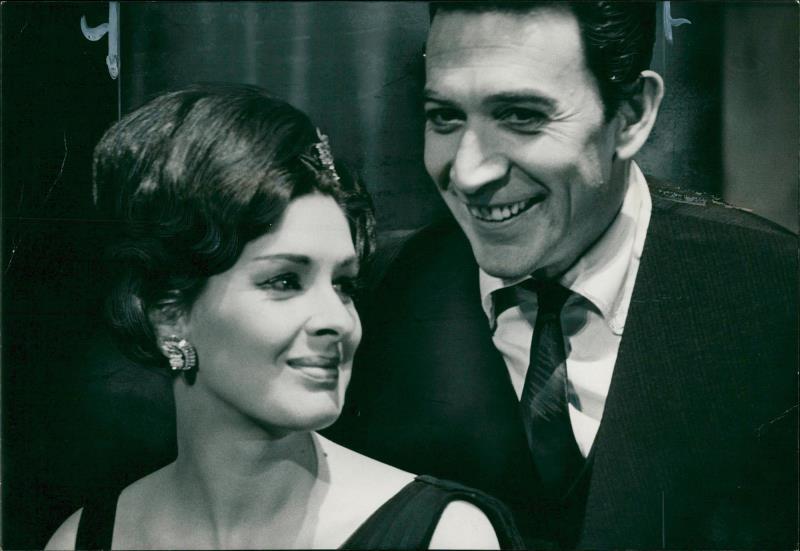
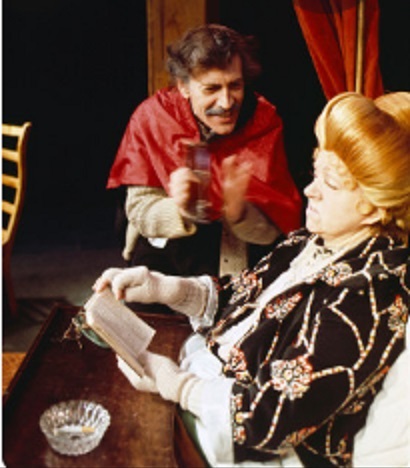
Above: Peter with his King and I Co-star, Sally Ann Howes

“The King was truly a tremendous man. He was 63 when he became King, you know. He spent 20 years in a Buddhist monastery, preparing himself to rule Siam, which he knew he would be called upon to do. He was far ahead of his time and did, in fact, have this prim Victorian governess to teach English to his children. She was really the last person to be sent to such a place. Of course, it’s been changed for the stage

– most stories have to be to some degree, but you have to put forward as much of the truth as you can.

“I don’t play the role romantically – he was a very hard man – he didn’t understand the meaning of love; didn’t acknowledge such a thing existed. He’s perplexed by his feelings. The whole thing is of great puzzlement to him. There’s the scene in the library, where he says, ‘But why should I be called upon to discuss matters of importance with… a woman!’ The beginning is there then, it’s definitely there, and he’s greatly puzzled by it. And when he dies her love for him is there too”.

Herein lies is sensitive rendering of the role – he understands the man and the media with which he works himself.

Early this year, in Leeds, we saw him do the same sort of thing in Charles Dyer’s Mother Adam, a part which he says he very much wanted to do, and one that he recalls took a lot longer to get to grips with. He firmly believes that an actor should be a Vagabond (“like the travelling players of longer go”). And says that in the past four years, he’s travelled more than anyone else he knows. Where does this very much travelled man feel most at home? “That’s an interesting question,” he parries. “Well as I said, I love the sun. I love doing nothing in the sun, and I adore Fiji. Went there for a week instead seven! But I should say that it is here in England that I feel most at home. That’s funny because I get very cross sometimes at the way things get done”.

A plane flies over at that moment and ‘at-home’ Peter Wyngarde points a finger skywards, shades his eyes with one hand, and becomes a small boy again. “I take great delight in watching planes go by and recognising what they are. I used to make models when I was a small boy. I know them all,” he says with a grin.

Earlier he’d said, “I think when you’re working in the theatre at night, you shouldn’t do anything at all during the day”. But this busy-doing-nothing time was now drawing to a close. “I’m afraid I shall have to go now. This is sort of a ritual hour,” he said. Tea and honey time, was over.

And the King went away to prepare for the tasks ahead for a new he would be called upon to do many things.

Interview by Joy Jones.

INTERVIEW: TV Times

Please note that some of the additional information provided here by the journalist named below may not be accurate, so it should be treated with caution.


Saturday, 10th August, 1985

Return Of The King

35,000 Australian women once voted him the man they would most like to be seduced by. In the early 70s he was the hottest property on ITV, and responsible for a generation of tots being christened ‘Jason’. Even today, when he phoned TV Times, the blasé switchboard girl paused and asked, “Are you THE Peter Wyngarde?”

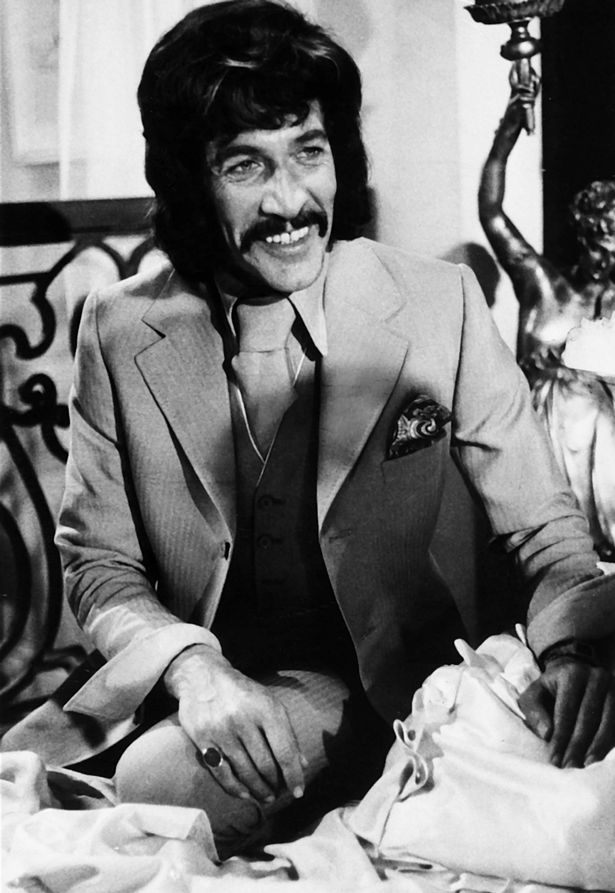
He was, of course, the super with-it star of the series Department S and Jason King, all languid elegance, snappy suits, curly hair and drooping moustache. And then he more or less disappeared.

During the last 10 years he has popped up only occasionally; a film role here, a stage play there, between stretches out of work. But a couple of months ago he suddenly sizzled back to ITV screens as the devil himself in a Hammer House Of Horror Mystery And Suspense story. And on Wednesday he plays an almost equally nasty piece of work in Bulman, also on ITV.

“I’m Gallio, a crook,” says Wyngarde. “I play him with a terribly phoney American accent – like a very old George Raft. In fact, I took the moustache off for the role because Raft never had a moustache. And I really get to sock someone.

“It’s nice playing villains. People don’t expect it of me, but they forget that before Jason King I had done 110 television plays; that’s 110 different characters. But even today Jason King follows me around. I can take my moustache off, cut my hair, but people still recognise me as him.

Both Department S and Jason King keep cropping up on late night television all over the world. There is even talk, says Wyngarde, that Channel 4 may rerun them. “A lot of people would like to bring them back, and it would be lovely money for me”.

At the age of 52, Wyngarde is fed up just sitting around in London. “In fact, I’m thinking of going to America unless more work comes along here. And the sort of work I like is being done in America.

When in August, he asks, is his Bulman episode being shown? “The 14th? That’s just after my mother’s birthday. She will be pleased to see me again”.

Interview by Adrian Furness.

RADIO INTERVIEWS, NARRATIONS and SPECIALS

1954 Variety Playhouse

Peter and Zena Marshall perform an excerpt from ‘The Rose Without a Thorn’ by Clifford Bax

Broadcast: 25th December, 1954 at 13.10

1958 Toast Of The Town

Toastmaster, Eamonn Andrews, spotlights ‘Duel of Angels’, and features the performance of a scene from the Jean Giraudoux play. Peter played Count Marcellus.

Broadcast: BBC Home Service – 7th June, 1958 at 20.15

1960 Movie-Go-Round

Soundtrack from: The Siege of Sidney Street

Broadcast: 6th November, 1960 at 14.45

1960 Guest Spot

Interview with Peter by Anne Holden

Peter talked about his role as Count Marcellus in ‘Duel of Angels’

Broadcast: Saturday, 13th August, 1960 on Radio KFAX (New York)

1960 Guest Spot

Interview with Peter by Al Covaia

Peter talked about his role as Count Marcellus in ‘Duel of Angels’

Broadcast: Wednesday, 10th August, 1960 on Radio K00 (New York)

1960 Movie-Go-Round

Peter recalls his favourite movie themes

Broadcast: BBC Radio – 6th November, 1960 14.45

Repeated on BBC Radio 2 – 23rd February, 1974 as Star Sound and on BBC Radio 2 – 7th January, 1975 at 20.02 

1970 Department S Special

Interview with Peter

Broadcast: Radio Luxembourg – January 14th, 1970

1971 BBC Radio Manchester

Interview

6th November, 1971

1973 Women’s Hour

Interview

Broadcast: BBC Radio 2 – January 26th, 1973

1973 Weekend Women’s Hour

Interview

Broadcast: BBC Radio 4 – March 31st, 1973 at 15.00

1974 Star Sound

Peter recalls his favourite movie themes

Broadcast: BBC Radio 2 – 23 February, 1974 at 18.03

1974 John Dunn’s Late Night Special

Interview

Broadcast: BBC Radio 2 – 19th November, 1974 at 22.02

1974 The Rias Parade

Variety Show

Broadcast: (West) Germany – 29th November, 1974

1983 The Showman

Peter is interviewed by Harry Martin

Broadcast: Australia 1983

1993 A Game Of Two Halves

Peter discusses his favourite year

Broadcast: BBC Radio 5 – 29th March, 1993 at 14.30

1996 The Afternoon Shift

Interview

Broadcast: BBC Radio 2 – June 4th, 1996

1994 The Judy Spier’s Show

Interview

Broadcast: BBC Radio 4 – August 1994

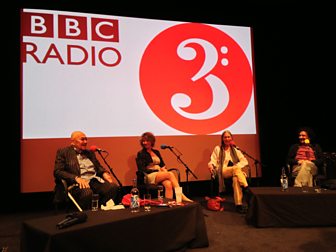
2017 Nightwaves: The Innocents Special

Peter and other guests talk about the classic film, ‘The Innocents’. Broadcast live from The British Film Institute (BFI).

Broadcast: BBC Radio 4 – 2nd December, 2013

Peter (far left) at the BFI live broadcast

2018 The Arts Show

Broadcast: BBC Radio Ulster – 18th January, 2018

Marie-Louise looks back on the life of Peter Wyngarde

Click below for…

RADIO PLAYS, READINGS & INTERVIEWS

blur_edges7

1951 The Wonderful Year: 1851

Broadcast: Sunday, 4th February, 1951 and Friday, 2nd November, 1951

1953 The Nobel Spaniard

Character: The Duke of Hermances (a Spaniard)

The play takes place in the dining room of the Proudfoot family’s villa in Boulogne in 1950

Broadcast: 4th August, 1953

1954 Artists In Crime

Character: Nigel Bathgate

A serial in five episodes, dramatised by Giles Cooper from the novel by Ngaio Marsh

The action of the play takes place during the late 1920s.

Part 1: Broadcast: 11th August, 1953 at 20.30

Part 2: Broadcast: 18th August, 1953 at 20.30

Part 3: ‘Question and Answer’ – Broadcast: 24th August, 1953 at 20.30

Part 4: ‘The Man at the Table’ – Broadcast: 31st August, 1953 at 20.30

Part 5: ‘The Final Touches’ – Broadcast: 7th September, 1953 at 20.30

1954 Léocadia

Character: Prince Albert Troubiscoi

A comedy by Jean Anouilh Translated by Patricia Moyes Radio production by Raymond Raikes

Broadcast by the BBC Home Service – 1st August, 1954 at 16.30

1954 Rosalynde

Character: Rosander

Broadcast by the BBC Home Service – 8th August, 1954

1954 Variety Playhouse: A Rose Without A Thorn

Broadcast: BBC Radio – 27th December, 1954 at 20.40

Character: Francis Dernham

N.B.: A second performance of the play was broadcast on 31st December, 1954 at 19.30 

Story Synopsis: In what was billed as “One of the finest historical plays written in modern times”, Clifford Bax conducted a sympathetic and unerring dramatic enquiry into the love of King Henry VIII for Katherine Howard.

The King’s fourth marriage – to the pathetic and bewildered Anne of Cleves – has come to grief as the play opens, and Henry’s questing eye has already been taken by another lady of the Court when he asks the young Courtier, Thomas Culpeper: “Is her reputation as fair as her face?”

The unhappy Tom, who is himself enamoured by Katherine, acknowledges that is; and it is at that moment, perhaps, that the King is falsely persuaded that he’s found ‘the rose without a thorn’.

The play is thereafter concerned with a royal passion, foolishly idealised, and doomed to tragedy because it knows no compromise with jealousy.

Bax treats Katherine’s dilemma, of past feeling and present indiscretions, with a delicate understanding. He also allows the King as much dignity, sensitivity and charm as can be allowed to a man who avenged to wounds to his pride as a husband – as he rebuffed the challenges to his authority as a king – by a lavish recourse to the executioners block.

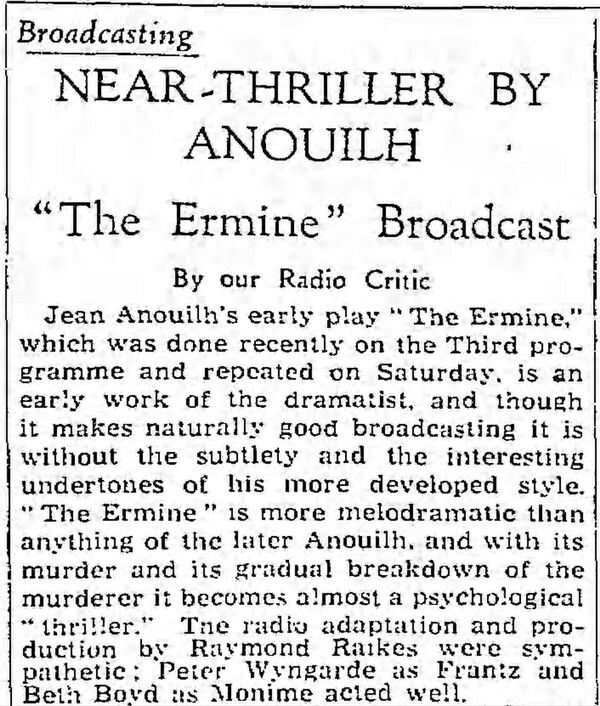
1955 The Ermine

Character: Frantz

A play in three acts by Jean Anouilh

Translated by Miriam John Radio adaptation and production by Raymond Raikes Broadcast: BBC Radio – 2nd April, 1955 at 18.35

ERMINE

1956 The Golden Bowl

Character: The Prince

Part 1: ‘The Prince’

Part 2: ‘ The Princess’

The novel by Henry James dramatised by Mary Hope Allen The principal scenes take place in London and at Fawns House at the beginning of the century. 

Broadcast: BBC Home Service – 10th January, 1956 at 19.30

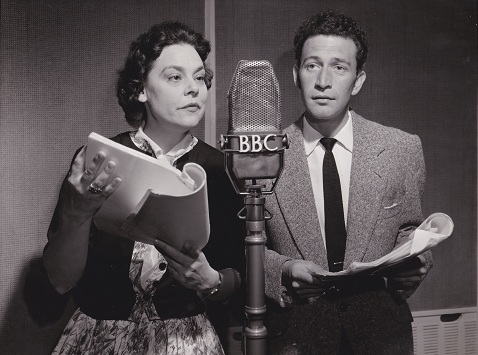
RADIO

Above: Peter as the Prince and Irene Worth as Charlotte Stant reading ‘The Golden Bowl’ – adapted from Henry James’ novel, and recorded for transmission in the BBC’s Third Programme on October 2nd, 1955.

1956 Also Amongst the Prophets

Broadcast: BBC Home Service – 5th February, 1956 at 15.00

Character: David

Story Synopsis: The Old Testament story of Saul, the first king of Israel, is shot through with tragic irony. The corruption of power was thrust upon this innocent young man by a prophet who himself was bitterly opposed to kingship. ‘And the Spirit of the Lord will come upon thee,’ said Samuel, and thou… shalt be turned into another man.’ But Saul, after his early successes, was turned into another man in a tragic sense; ‘ for thou hast rejected the word of the Lord, and the Lord hath rejected thee from being king over Israel.’ Abandoned by Samuel, Saul becomes gradually madder and unhappier, and his one consolation is in David – until jealousy makes him David’s enemy. He swings to and fro between love and hate, between sanity and madness, and, as he swings, is propelled towards disaster by his own actions and by circumstance.

1956 Honesty Is The Best Policy

Character: Marchese Fabio Colli

A tragi-comedy by Luigi Pirandello translated by Frederick May Adapted by Helena Wood Produced by Mary Hope Allen

Broadcast: BBC Home Service – 25th March, 1956 at 21.25

Repeated on 31st March, 1956

1956 The Wood Demon

Introductions to the four acts spoken by Peter

Broadcast: BBC Home Service – 4th November, 1956 at 15.00

1956 The Oresteia

Character: Orestes – son of Agamemnon

Part 1: ‘Agamemnon’ – Broadcast: 23rd November, 1956 at 21.45

Part 2: ‘The Choephori’ – Broadcast: 24th November, 1956 at 21.45

Part 3: ‘The Libation Bearers’ – Broadcast: 25th November, 1956 at 21.45

Part 4: ‘The Eumenides’ – Broadcast: 26th November, 1956 at 21.45

A new translation by Philip Vellacott with music by Antony Hopkins. Arranged for broadcasting and produced by Raymond Raikes

Broadcast by the BBC Home Service

1957 Uncle Vanya

Scenes from country life in four acts by Anton Chekhov Translated from the Russian by David Tutaev Radio adaptation and production by Raymond Raikes Other parts played by members of the BBC Drama Repertory Company Introductions to the four acts spoken by Peter.

Broadcast: BBC Home Service – 1st February, 1957 at 20.50

Repeated: October 1972

1957 The Egotist

Character: Sir Willoughby Patterne

Broadcast: BBC Home Service – 30th August, 1957 at 21.15pm

1957 Captain Of The Dragoons

Character: Captain Charles Carey

Part 1. Swords and Pistols For Two

Part 2. Secret Service

Part 3. A Pinch of Snuff

Part 4. The Traitor

DRAGOONS

Written by John Keir Cross from the novel by Ronald Welch 

Part 1: ‘Swords and Pistols For Two’ Broadcast: BBC Home Service – 2nd October, 1957

Story Synopsis: Captain of Dragoons is a stirring tale of adventure and intrigue set in the time of John Churchill , first Duke of Marlborough. The young Captain Charles Carey is called upon, against his will, to serve his country as a secret agent in French territory. He is entrusted with a perilous mission, calling for all his skill as a swordsman and his full reserves of courage and resource. “Perhaps my hand trembles a little from my wound in the duel. The pistol swings round towards me; and, suddenly, as I touch it …”

Part 2: ‘Secret Service’ Broadcast: BBC Home Service – 9th October, 1957 at 17.00

Part 3: ‘A Pinch of Snuff’ Broadcast: BBC Home Service – 16th October, 1957 at 17.00

Part 4: ‘The Traitor’ Broadcast: 23rd October, 1957 at 17.00 

1957 The Alabama

Character: Captain Raphael Semmes

The story of an ocean raider Written and produced by Kenneth Poolman

Broadcast: BBC Home Service – 20th November, 1957 at 20.00

1959 A Woman Killed With Kindness

Character: Master Wendoll

Broadcast: British Home Service – 25th February, 1959 at 20.00

Repeated: Under the title ‘National Theatre of the Air’ by the BBC Home Service on 20th August, 1961 at 20.30, and as ‘The Sunday Play’ by The BBC Home Service on 3rd April, 1966 at 14.30

1964 The Balcony

Character: The Chief of Police

Written by Jean Genet translated by Bernard Frechtman ‘We’ve reached the point at which we can no longer be actuated by human feelings. Our function will be to support, establish, and justify metaphors.’ Produced and adapted for radio by John Tydeman

Broadcast: BBC Home Service – 6th December, 1964 at 20.55

1965 Time Remembered

Character: Prince Albert Troubiscoi

Produced by Charles Lefeaux The action takes place in the house and grounds of the Duchess of Pont-au-Bronc’s country estate in Brittany

Broadcast: BBC Home Service – 25th January, 1965  20.30

1970 The Sleeping Prince

Character: The Regent

Written by Terence Rattigan adapted for radio by Gerry Jones

The fairy story of a Gaiety Girl invited to supper by the Regent of Carpathia, in London for the Coronation of King George V. A casual encounter involves her not only in romance, but in the turmoil of Europe just before the First World War.

Broadcast: BBC Home Service 7th January, 1967.

Repeated: 27th September, 1970

1991 Mort

Broadcast: BBC Radio 4 – 28th August, 1991

2007 The Pickerskill Detentions

Character: Mr Mike Poulson-Jabby

By Andrew McGibbon.

Story Synopsis: Dr Henry Pickerskill, retired English Master of Haunchurst college for boys, looks back on his most memorable detentions.

Pickerskill’s doctoring of a hated school textbook amuses him greatly, and goes unnoticed until an unfortunate detention in the late fifties where the subversive book is mistakenly used by another teacher.

Broadcast: BBC Radio 4 – 28th February 2007 at 23.15

Listen to the play HERE

Click below for…


THEATRE PLAYS

1946 Quality Street

Buxton Playhouse Theatre – 1946

Character: Ensign Blades

1946 When We Were Married

Character: Gerald Forbes

The Embassy Theatre, London. July 1946

1946 Pick-Up Girl

Character: Door Attendant/Policeman Owens/A Young Man.

British National Tour – Autumn/Winter 1946.

N.B. In earlier performances of ‘The Pick-Up Girl’, Peter was billed in the role of “The Door Attendant”, but was later credited in the part of both ‘Policeman Owens’ and ‘A Young Man’.

1947 Present Laughter

Character: Morris Dixon

British Tour – Autumn 1947

1948 Macbeth

Character: A Messenger/A Murderer

Colchester Repertory Theatre. February 1948

1948 Deep Are The Roots

Character: Chuck Warren

Colchester Repertory Theatre. March 1948

1948 The Winslow Boy

Character: Dickie Winslow

Colchester Repertory Theatre: 1st – 6th March 1948

1948 The Government Inspector

Character: Osip

Royal Court Theatre, York. May 24th, 1948

1948 Julius Caesar

Character: Julius Caesar

Royal Court Theatre, York. May, 1948

1948 Residents Only

Character: Mr. Maydigger

Royal Court Theatre, York. June 1948

1948 The Devil’s Disciple

Character: Chaplain Brundenell

Royal Court Theatre, York. June 1948

1949 Fly Away Peter

Character: Pan

Colchester Reparatory Theatre: January 1949

1949 The Importance Of Being Ernest

1949 Rope

1949 Othello

Character: Sylvius

The Embassy Theatre. June 1949

N.B. Part of the Repertory Theatre Festival, held at the Embassy Theatre, Swiss Cottage, London between 31st May and 24th June, 1949. Companies from Bristol, Glasgow, Manchester and Nottingham took part. At the time, Peter was with the Nottingham Theatre Trust, based at the Nottingham Playhouse.

1949 The Paragon

Character: The Unknown Man

Colchester Reparatory Theatre. January/February, 1949

1949 As You Like It

Character: Oliver

Theatre Royal, Windsor. March, 1949

1949 Tobias and the Angel

Character: Raguel

The Playhouse, Nottingham. April, 1949

1949 By Candle Light

55510760_10156964867415540_6990740546247458816_n (1)

Above: Peter with Jenny Harvey in ‘By Candle Light’  

1949 The Apple Cart

Character: Nicobar, The Foreign Secretary

The Playhouse, Nottingham. July 1949

1949 The Winslow Boy

Character: Sir Robert Morton

The Playhouse, Nottingham. July 1949

1949 Fresh Fields

Character: The Chinese Servant

The Playhouse, Nottingham

1949 The Merchant of Venice

Character: The Duke of Venice

The Playhouse, Nottingham

1949 Shadow and Substance

Character: A Young Clergyman

The Playhouse, Nottingham

1949 Othello

Character: Cassio

The Embassy Theatre, London. May-July 1949 

1950 The Happiest Days of Your Life

Character: Dick Tassell

The Richmond Theatre. January, 1950

1950 The Long Shadow

Character: Geoffrey Delamere

The Richmond Theatre: January, 1950

1950 Lovely To Look At

Character: Edward Winthrop

Richmond Theatre: February 1950

1950 Edward, My Son

Character: Sergeant Kenyon

Richmond Theatre. February 1950

1950 Mountain Air

Character: George Beesdale

Richmond Theatre. March 1950

1950 French Without Tears

1950 P.C. 49 – The Case of the Shocking Shadow

Character: Andre Cheval

The Richmond Theatre. May 1950

1950 The Magistrate

Character: Captain Horace Gale and Mr. Wormington

Richmond Theatre. May 1950

1950 Claudia

Character: Jerry Seymour

The Richmond Theatre. June 1950

1950 Goodbye Mr Chips

Character: Mr Chipping

The Richmond Theatre. July 1950

1950 And The Whistle Blew

1950 The Patsy

1950 The Man From Toronto

Character: Robert Gilmour

Richmond Theatre, October, 1950

1950 Someone At The Door

Character: Bill Reid

Richmond Theatre. October 1950

1950 She Stoops To Conquer

1950 Bonaventure

Character: Willy Pentridge

Richmond Theatre, October, 1950

Above: Peter as Willy Pentridge, with cast in Bonaventure

1950 Mr Gillie

Richmond Theatre, November, 1950

Character: Tom Donnelly

1951 September Tide

Richmond Theatre: February 1951

1951 Loaves and Fishes

Character: Bertram Railing

The New Boltons Theatre Club, London. March 1951

1951 Hamlet

Character: Voltimand/Third Player (who acts the part of the murderer, Lucianus)

The New Theatre, Bromley. May 1951

N.B. This production of ‘Hamlet’ at the New Theatre, Bromley, was produced as part of the Festival Of Britain celebrations.

1951 The Taming Of The Shrew

Character: Tranio

The Marlow Theatre. May 1951

1951 Ten Little Niggers

Character: Phillip Lombard

The Grand Theatre, Southampton, August 1951

1951 French Without Tears

Character: Hon. Alan Howard

The Grand Theatre, Southampton, August 1951

1951 The Happy Family

Character: Herbert Filch

The Grand Theatre, Southampton, September 1951

1951 Love From a Stranger

Character: Nigel Lawrence

The Grand Theatre, Southampton, September 1951

1951 Murder Without Crime

Character: Matthew

The Grand Theatre, Southampton, October 1951

1951 Murder Without Crime

Character: Inspector Japp and Sir Claude Amory

Grand Theatre, Southampton, November 1951

1951 Young Wives Tale

Character: Victor Manifold

The Grand Theatre, Southampton, November 1951

1951 Murder On The Nile

1952 They’ll Arrive Tomorrow

Character: Jonah

The Irving Theatre, London. June 1952

Above: Peter as Jonah

1953 The Loyal Traitors

Character: The Communist

The Arts Theatre, London. January, 1953

1953 September Tide

Character: Evan Davies

Marlow Theatre, Canterbury 

1953 The Nobel Spaniard

1954 No Laughing Matter (A.K.A. ‘Histoire de Rire’)

Character: Gérard Barbier

The Arts Theatre, London. July, 1954.

Laughting4

Above: Peter (Centre) in ‘No Laughing Matter’

1954 The Enchanted (A.K.A. ‘Intermezzo’)

Character: The Ghost/A Young Man.

The Arts Theatre, London. March 1954

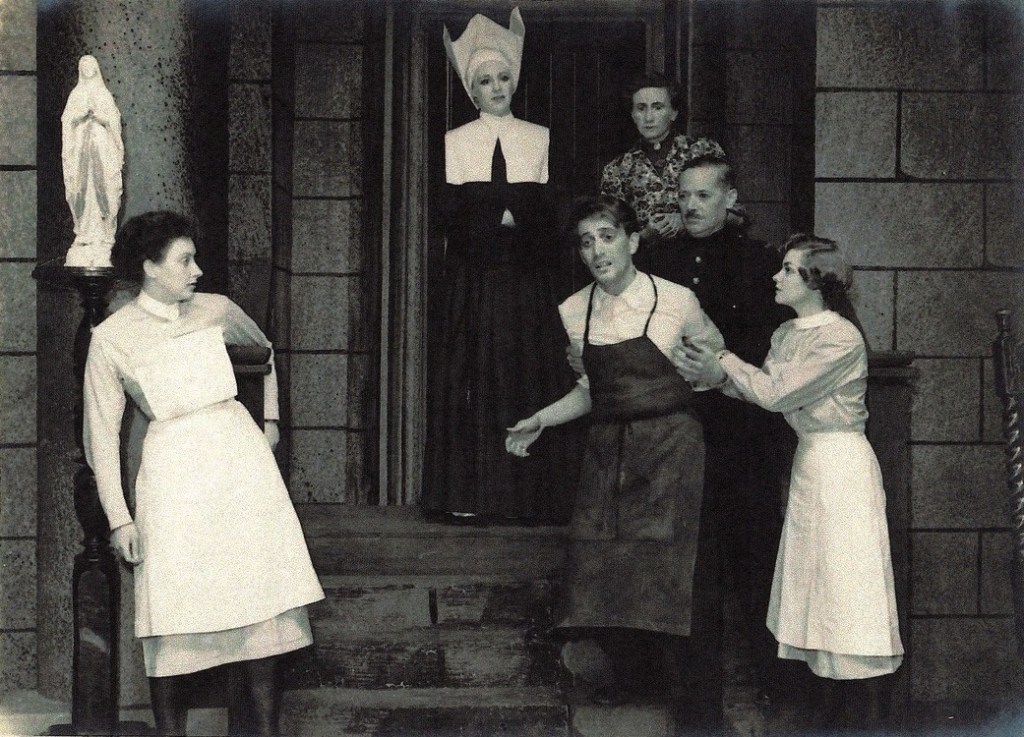
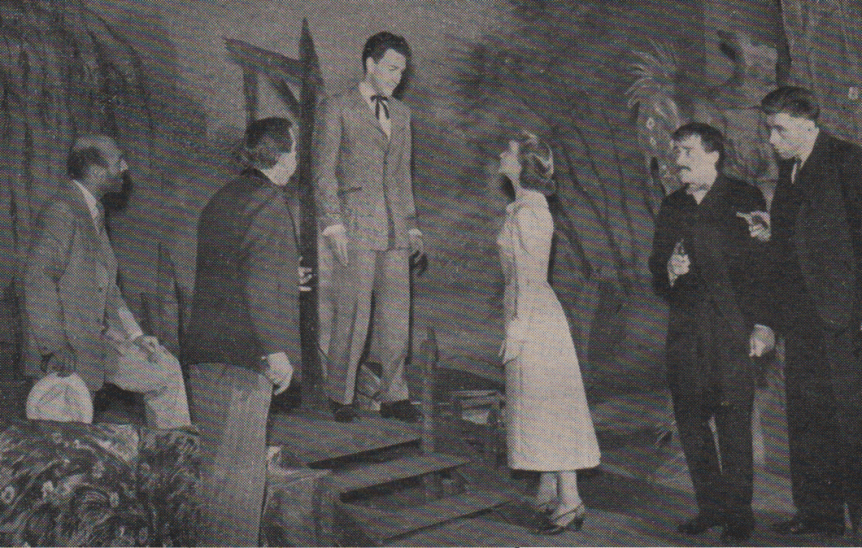
Above: Peter (centre, on steps) as the Ghost of a Young Man in ‘The Enchanted’

1954 Saint Joan

Character: Dunois

The Arts Theatre, London. September 1954

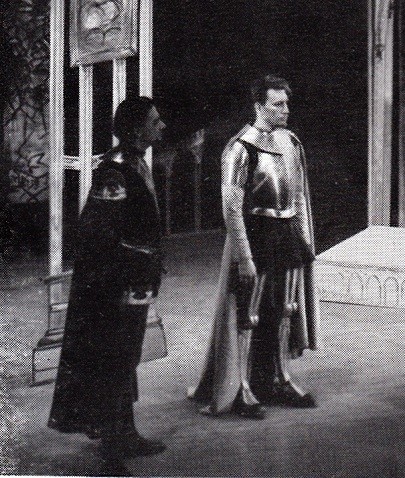
Above: Peter (right – in full armour) as Dunois

1954 Journeys End

Character: Stanhope

The Irvine Theatre. July 1954

1956 The Good Woman of Setzuan

Character: Yang-Sun

The Royal Court Theatre, London. October 1956

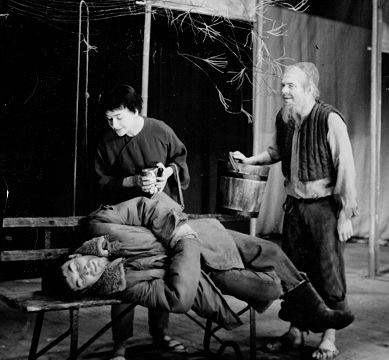
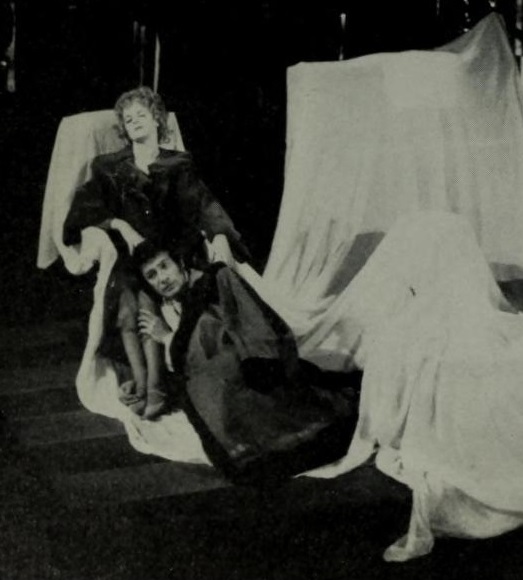
Above: Peter (lying) as Yang-Sun

1958/59 Duel of Angels

Character: Count Marcellus

British Tour. April 1958/59

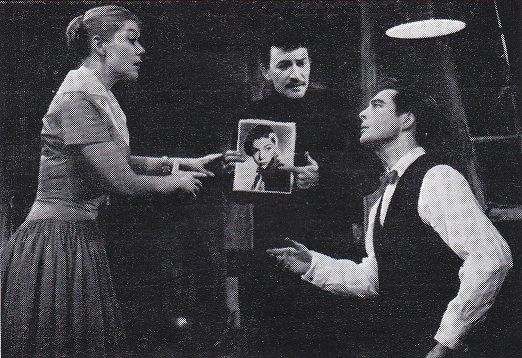
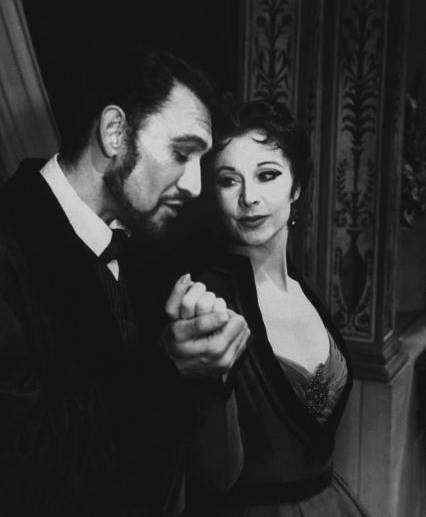
Above: Peter as Count Marcellus with Vivien Leigh

1959 The Taming Of The Shrew

Character: Petruchio

The Old Vic, Bristol – February 24th – March 10th, 195.

N.B. Recorded and shown by ITV (T.W.W.) in an edited 60-minute version on March 26th, 1959.

PETRUCHIO

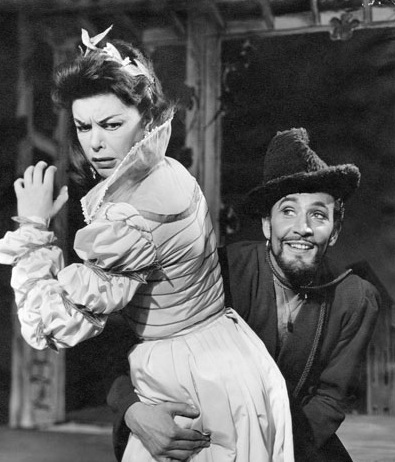
Above: As Petruchio in ‘The Taming of the Shrew’

1959 Cyrano De Bergerac

Character: Cyrano

The Old Vic, Bristol – May 1959

CYRANO

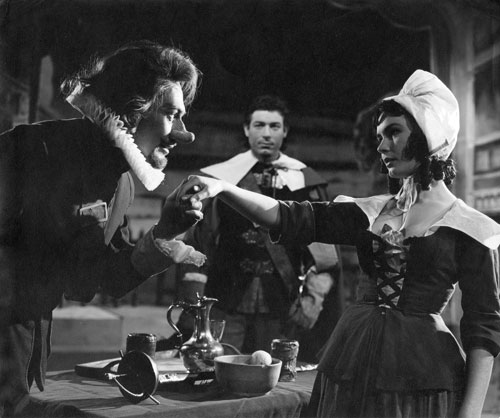
Above: As Cyrano in ‘Cyrano De Bergerac’

1960 Duel of Angels

Character: Count Marcellus

American Tour. 1960

ANGELS

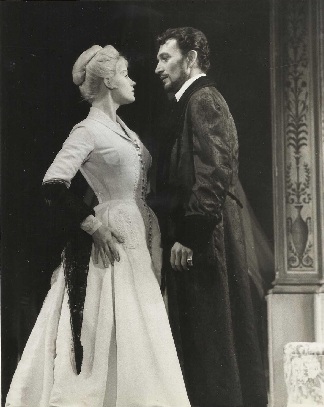
Above: Peter with Mary Ure in ‘Duel of Angels’

1962 King John

Character: King John

The Mother House, London

1962 The Merchant of Venice

Character: Shylock

The Mother House, London

1962 Macbeth

Character: Macbeth

The Mother House, London 1962

1964 Night Conspirators

Character: Werner Loder

Regional Tour, 1964

43534335_2410338488992893_4440484065048526848_n

Above: Peter as Werner Loder, with Sally Home

1964 Time Remembered (A.K.A. Léocadia)

Character: Prince Albert Troubiscoi

New Theatre, Bromley. September 1964

1965 The Philanderer

Character: Leonard Charteris

The New Theatre, Bromley. June 1965

1966 The Spies (A.K.A. The Game As Played)

Character: Chrystal

Richmond Theatre, May 1966

1966 The Servant

Character: Barrett.

The Yvonne Arnaud Theatre, Guilford. September/October 1966

The Duke of York’s Theatre, London

1967 The Two Character Play

Character: Felice

The Hampstead Theatre Club. December 1967

N.B. The world premiere of the play was on December 11th, 1967.

Above: As Felice in ‘The Two Character Play’, with Mary Ure

1968 The Duel

Character: Nickolay von Koren

The Duke of York’s Theatre, London. April 1968

Above: Peter as Nickolay von Koren

1972 Butley

Character: Ben Butley

The Metro Theatre, Melbourne, Australia. May 1972.

N.B. The production of ‘Butley’ at the Metro Theatre, Melbourne, was the World Premier of Charles Dyer’s play.

Above: Peter as Ben Butley

1972 Mother Adam

Character: Adam

Regional Tour. August-November, 1972

1973 The King and I

Character: The King

The Adelphi Theatre, London.

British National Tour: October – December, 1973

Above: Peter as the King of Siam

1974 Present Laughter

Character: Garry Essendine

British National Tour. Autumn 1974

N.B. Peter also directed this play.

1975 Dracula

Character: Vivorde Szekels/Count Dracula

British National Tour. Spring 1975

1975 Present Laughter

Character: Garry Essendine

The Yvonne Arnaud Theatre, Guildford

28th October to 15th November, 1975

N.B. Peter also directed this play.

1976 The Merchant of Venice

Character: Shylock

British National Tour. March-April, 1976

1976 Dear Liar

Character: George Bernard Shaw

The English Theatre, Vienna. July, 1976

N.B. Play had to reopen in September to accommodate both the public and subscribers of the English Theatre who missed it earlier in the year.

Above: As George Bernard Shaw in ‘Dear Liar’

1976 Anastasia

Character: Prince Bounine

The Cambridge Theatre, London. September 1976

Above: Peter as Prince Bounine

1977 Big Toys

Character: Richie Bosenquet

The English Theatre, Vienna. July, 1977

N.B. European premier. Directing, casting and male costume designs by Peter.

1977 The Merchant of Venice

Character: Shylock

The English Theatre, Vienna. August, 1977

N.B. Directed by Peter and recorded at the English Theatre, Vienna, by Austrian Educational Television

1978 Deathtrap

Character: Sidney Bruhl

Tour of Southern Africa 1978

1983 Underground

Character: Alexander Howard.

The Royal Alexandra Theatre, Toronto, Canada. March-May 1983

British Tour

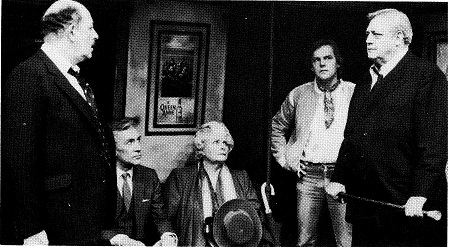
Above: (From left to right): Alfred Marks, Peter, Elspeth March, Eric Carte and Raymond Burr.

1985 Light Up The Sky

Character: Carlton Fitzgerald

The Old Vic, London. September 1985

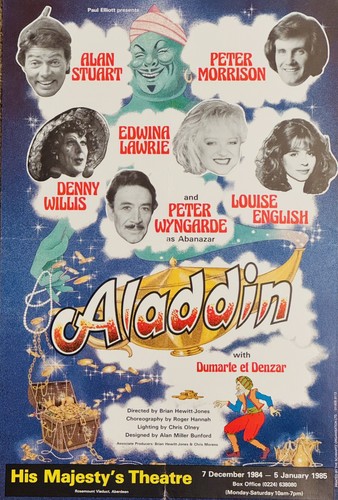
1984/85 Aladdin

Character: Abanazar

His Majesties Theatre, Aberdeen. December 1984/January 1985.

1985/86 Babes In The Wood

Character: Sheriff of Nottingham.

Richmond Theatre. December 1985/January 1986.

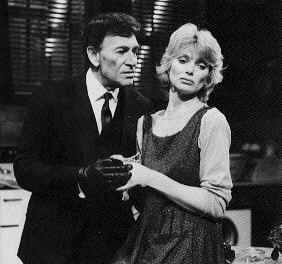
1986 Guilty Conscience

Character: The Prosecutor

The Theatre Royal, Windsor. June/July 1986.

1989 Wait Until Dark

Character: Harry Roat.

The Mill Dinner Theatre, Sonning, UK. July 22 – August 22, 1989

National Tour, South Africa. 1989

The Hilton International Hotel, Singapore: August 26th-September 2nd.

The Regent Hotel, Kuala Lumpar: September 4th-27th.

The Travel Lodge Hotel, Papua New Guinea: September 22nd-October 7th.

The Siam InterContinental, Bangkok: October 9th-13th.

The Nile Hilton, Cairo: October 18th-23rd.

The Jordan InterContinental Hotel: October 25th-28th.

The Athens Hilton, Athens: October 30th-November 3rd.

The InterContinental Hotel, Dubai: November 6th- November 13th.

The Hilton International Hotel, Manaman: November 15th-20th.

The Hilton International Hotel, Manaman: November 15th-20th.

The InterContinental Hotel, Muttrah: November 22nd-27th.

The InterContinental Hotel, Abu Dhabi: November 30th-December 4th.

The InterContinental Hotel, Al Ain: December 6th.

wait_h9

Above: As Harry Roat with Helen Gill in ‘Wait Until Dark’

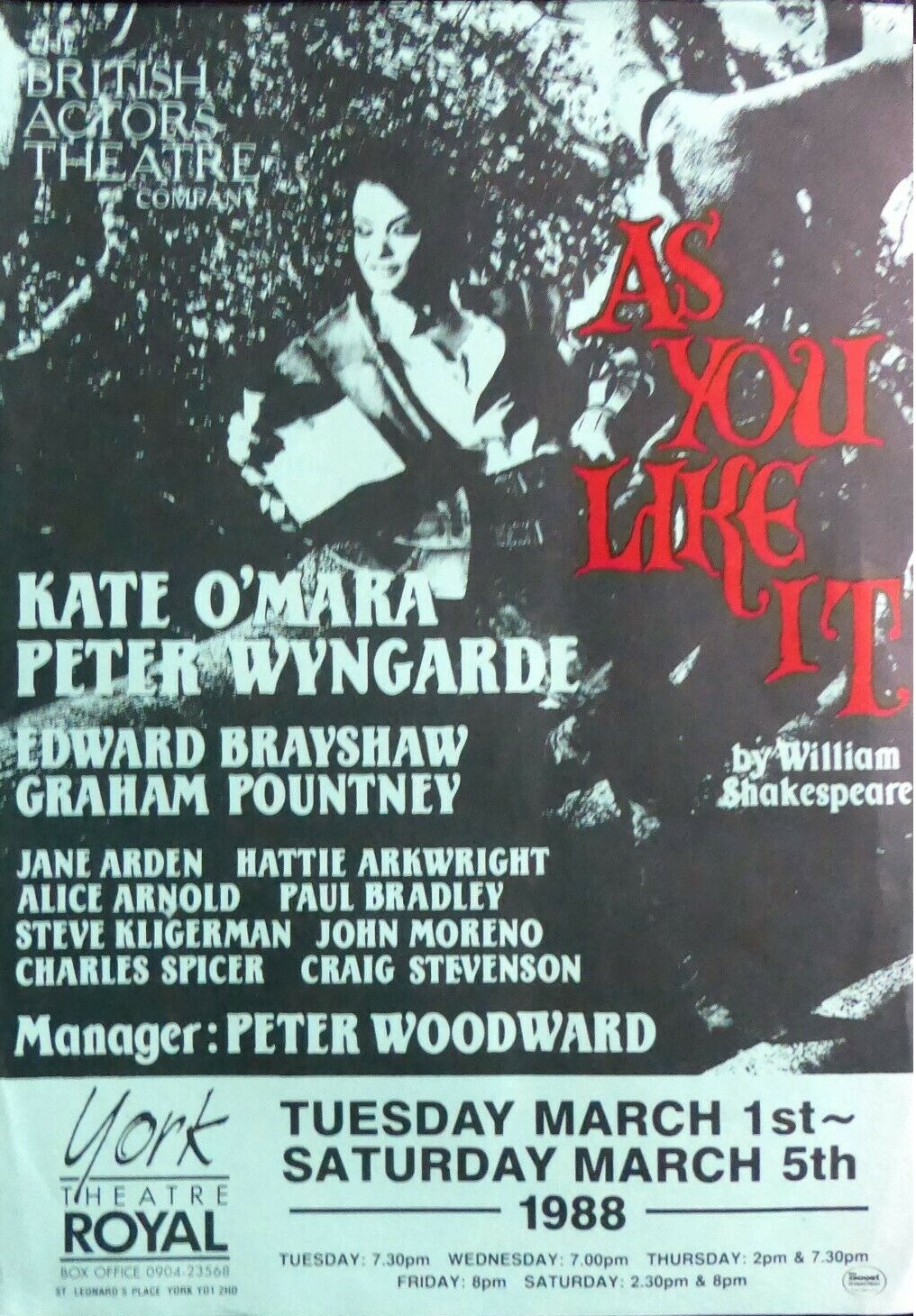
1988 As You Like It

Character: Duke Frederick

March/April 1988

UK National Tour

s-l1600 (7)

1990 The Country Wife

Character: Jack Pinchwife

The Mermaid Theatre, London – December 1990

1995 The Cabinet Of Doctor Caligari

Character: Doctor Caligari

The Playhouse Theatre, Liverpool – September 1995

N.B. Peter appeared in just one half of the opening night performance of ‘The Cabinet Of Doctor Caligari’ at the Playhouse Theatre in Liverpool on Tuesday, September 19th, 1995, before withdrawing from the show with a serious throat infection.


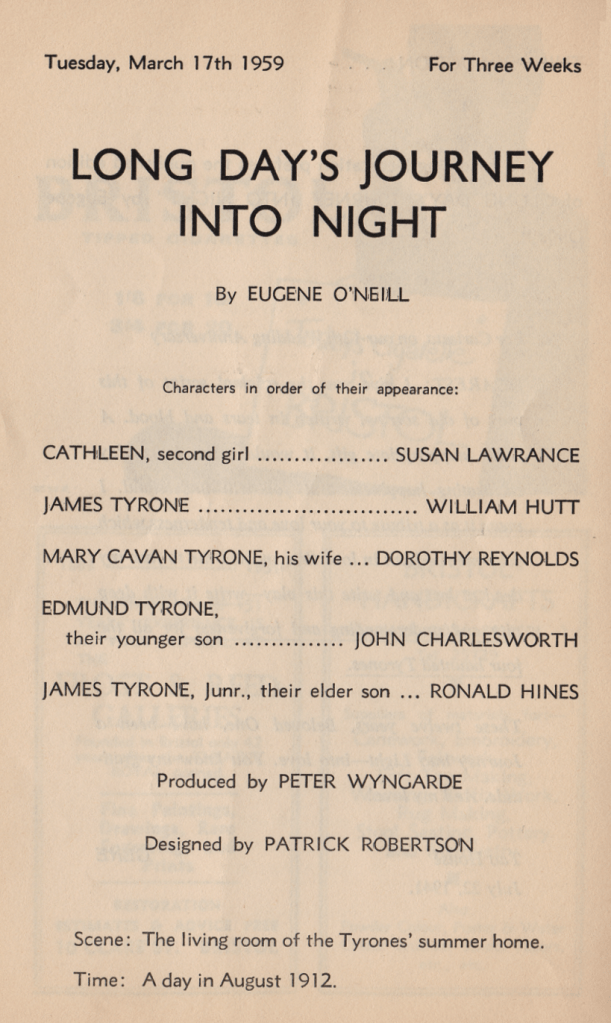
1959 Long Day’s Journey Into Night

Produced and Directed by Peter Wyngarde.

The Bristol Old Vic. March 17th – April 7th, 1959


DIRECTED BY PETER WYNGARDE

1975 Time And The Conway’s

The Yvonne Arnaud Theatre, Guildford. December 1975


READINGS

1970 A Celebration of Tudor Verse

1974 Water, Water Everywhere

Click below for…

TRANSCRIPT: The Judy Spiers Show

Please note that some of the additional information provided here by the journalist named below may not be accurate, so it should be treated with caution.


Broadcast: BBC Radio 4 – August 1994

The programme opens with a sound bite from the Jason King episode, ‘A Red, Red Rose Forever’,

Voice of Fan 1: “I just remembered him as a quintessential English gentleman; a sort of James Bond character but as it was on TV, it was so slightly cheaper value. I also remember him wearing all the fab gear”.

Voice of Fan 2: “Jason King would usually pull up in a flared car of some sort – the tyres would be flared, and he’d sort of waft out, keeping his hand on his head to keep his wig in place; his moustache would be vibrating succulently. He’d have a bird on his arm and be smoking a corduroy cigarette. He’d usually be wearing some sort of double-breasted affair and fantastic shoes, no doubt”.

Voice of Fan 3: “He got the clothes. He got the girls. He was the man!”
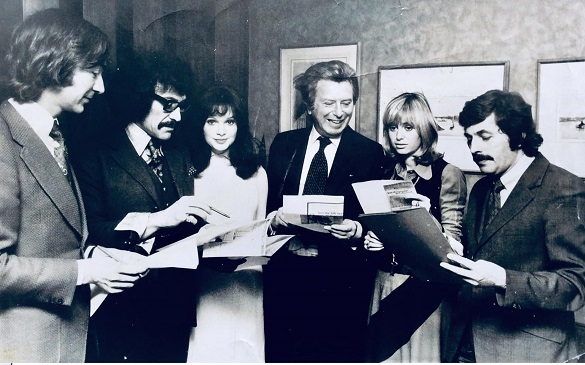
Voice of Host: “Even though they were knee-high to a grasshopper when Jason King graced our screens, these guys do remember him. Fab! Jason also had a way with words”.
Voice of Fan 2: “I recall he had a thing of ending every sentence with, ‘Do-dee dee-dee’“ [1]

Voice of Host: “As well as being Prince of mix and match. No wonder as the release date of Jason King on video nears, that so many people remember the flamboyant adventurer and notorious lover of women who could solve crimes even Interpol battled with”.

Voice of Fan 2: “I remember he was in this love-scene with a famous actress at the time, and I remember him saying to her, “You really turn me on,” and her replying, “You’re really fab!”

Voice of Host: “Everyone at the time looked like him; you could hardly walk down the street without tripping over a droopy moustache. Peter Wyngarde is the actor who played this Sultan of style”.

Peter: “I thought the funniest thing of all was the fan mail you got from girlfriends and wives, saying things like: ‘My husband looks exactly like you,’ and you’d get this photograph of him and he’d look like Godzilla. It was absolutely unbelievable!

“There was this man with more hair on his head than anybody has ever had in their lives on top of their head, and a moustache that went down to their knees. It was unbelievable. They also had these great grinning teeth. And they’d say, ‘Could you sign his photograph – not my photograph – his photograph. People exaggerate what they think they see”.

Voice of Host: “And what about the clothes?”

Peter: “The idea was to give me more height, so I double the height of the collar and I made it much higher, that’s all it was. And instead of a tie which I believe displays a person’s personality; if you look at the people that have little tiny knots you know what else they have which is tiny! You know there’s no freedom and that they are so introverted they almost disappear into themselves,

Voice of Host: “He would often draw designs for his suits on brown paper which were sent to his own tailor. the pink high-neck shirt with gigantic matching tie bursting out from the jacket of the caramel suit; the high waisted trousers and the snooker players waistcoats. He was busy on set as there were at least eight changes of clothes per episode from Tweedy suit to sheepskin jacket to tight jumper; powder blue suit in the morning, red kaftan at night. Ohhh, the flick of his jacket as he strolled across the parquet floor to tick off a villain. The way the trouser leg hung just so”.

Peter: “I think you’ve got to dress to make yourself look better, if possible – to make the body look better. The fact that I used a riding jacket of the 18th Century gave it a kind of elegance in a very masculine way, which I was also after, you know, so that the jacket became longer, the trousers became narrow, and I wore riding boots, so you had this wonderful line. It was an elegant line; it had something, and I was doing alright in my private life with this, so why not use it in my public life. It was a very classic line”.

Voice of Host: “So what happened to the suits? Apparently, some were just given, so always look out when trawling the charity shops, you may get lucky and find a genuine Wyngarde suit that he’d once given to Oxfam. There’s even a rumour that an original pair of Jason King trousers are doing the rounds at various raves”.

Peter: “I can’t find any now as they’ve all disappeared with different people. Sometimes I’d say, ’Where’s that lovely steely grey one? I haven’t seen that for ages”.

Voice of Host: “Would you recognise without any shadow of doubt one of your suits?”

Peter: “Immediately! That’s why I knew when I went to Germany, France, Sweden and I’d see ‘Jason King Suits’ in shop windows, I said: ‘That’s not my suit!’  But everyone says it is. ‘No. It’s terrible. This is wrong, this is wrong this is…’ I could tell right away. They didn’t know the cut. The secret was the cut. I know that secret to this day so if I’m kidnapped, you know what happened.”

Voice of Host: “With Jason, the dandy writer of crime fiction who had better brains than all of MI5 put together, surely, he should have moved from crime into a fashion slot or joined the style police and kept the colour wheel firmly on beige”.

The world of cheese certainly won’t let him be forgotten.

Voice of Retro Clothes Shop Owner: “We have a screen that shows a photo’ of Peter Wyngarde around every 5 seconds to subliminally entice people into our 1st floor shop”.

INTERVIEW: Bravo

Please note that some of the additional information provided here by the journalist named below may not be accurate, so it should be treated with caution.


December 1974

The Bravo Truth Game

Peter Wyngarde makes a surprise confession: “I’m waiting for my third great love!”

Why does he sometimes dream at night of a James Bond character who looks just like Jason king? Why can’t he stand women who don’t have a sense of humour? And why does he consider it important that a man is able to fib convincingly?

Question: what is your greatest ambition?

Peter: To be a better actor and a better person.

Question: Which personality of our time do you most admire?

Peter: The Italian film director, Luchino Visconti. His film, Death In Venice, is a feast to the eyes.

Question: What does appetent happiness mean to you?

Peter: To lie on a beach in the sunshine, being lazy, not to wear anything about walls or crimes, and to wait for a lovely evening.

Question: What makes you unhappy?

Peter: Physical and mental pain, humiliation, human misery.

Question: Are there any experiences in your life that you’d rather have missed?

Peter: None at all. Every experience, even a bad one, has its advantages.

Question: What is your greatest talent?

Peter: Energy and concentration.

Question: What about faults?

Peter: I’m too impatient an easily hurt.

Question: What do you think about marriage?

Peter: I was very young when I married and it went wrong. I think that everyone should be in love at least three times. Unfortunately, this wouldn’t be possible if you were wearing a wedding ring.

Question: Have you already at these three loves?

Peter: I’m still waiting for the third!

Question: What is your favourite food?

Peter: Fresh fish and lots of salads.

Question: Favourite drink?

Peter: French country wine.

Question: What quality do you appreciate most in a woman?

Peter: Humour. If a woman can’t laugh, she’d get on my nerves!

Question: What quality do you consider most important in a man?

Peter: To charmingly unconvincingly tell fibs!

Question: What is your favourite book?

Peter: The one I’m reading at the time.

Question: Who are your favourite favourite composers?

Peter: Beethoven, Mozart and Schubert.

Question: Favourite actors?

Peter: Laurence Olivier, Marlon Brando I’m Vivien Leigh, who died much too young.

Question: Do you have a dream part?

Peter: I dream of a part much along the lines of James Bond but not so terribly serious, more playful Jason King.

Question: Imagine you were living on a desert island for a year and you were only allowed to take three things with you. What would they be?

Peter: Three women a cool blonde, a fiery black haired one, and a gentle brunette.

Question: Have you been telling the truth in this Questionnaire?

Peter: If I said yes, you think I was lying. Therefore, I shall say no!

TRANSCRIPT: Freddie Francis – The Innocents

Seeing things in black and white

On Sunday 6th April 1980, at the Gate 2 Cinema in Notting Hill, London, The Guild of British Camera Technicians arranged a showing of The Innocents, the black and white, Cinemascope production, directed by Jack Clayton. Its distinguished cinematographer, Freddie Francis who had, at the time, recently completed shooting another black and white production, The Elephant Man, kindly made himself available for a question-and-answer session after the showing. The following is a transcript of that session in relation to The Innocents:

F.F.: What a terrible dupe that print turned out to be. I’m glad my operator Ronnie Taylor was not here to see what they did to his work. I myself am a very non-technical person – I love taking photographs but I don’t know what goes on when they prepare a film for television. What I cannot understand, because I am a very simple soul, is why they didn’t come to someone like Jack Clayton, or even Ronnie for advice when converting from film to television. Then we wouldn’t be subjected to watching such atrocities as we just have done. However, bearing in mind that was not a representative copy of the film, if anyone has any questions at all please go ahead.

Q.: Was it all shot on PLUS X?

F.F.: Yes, I can’t remember using any faster film.

Q.: What about the interiors – were they shot in an actual house?

F.F.: No, they were all shot at Shepperton. The interesting thing was it was the early days of Cinemascope, when there was all sorts of rules and regulations set out. Some of you may remember the days when you couldn’t get closer than 10 feet. Of course we did, by shooting some of the interiors at 16 and 22. As you can imagine, it got a bit warm at Shepperton.

Q.: You were working for depth a lot weren’t you? Even though I hear you couldn’t always see the person on the other side of the screen?

F.F.: Yes, this was a trouble. One of the great things that we achieved for the first time with great depth of field and these panning and scanning people in their wisdom shows you one person at a time.

Q.: Who were the two focus pullers, do you remember?

F.F : Yes, I do. Ronnie Maasz and Bernie Ford.

Q.: Can you explain to people who don’t understand about the setup, just how the two focus pullers work?

In those days you had a combination lenses such as with Panavision etc,; then you had an anamorphic, which was a separate entity, mounted on the front of the camera, in this case an BNC Mitchell. You want to pull focus on the anamorphic lens as well as on the standard lens; therefore you needed two focus pullers. I don’t know how that sound used to cope, with all the dialogue going on between the two focus pullers! However, it seemed to work.

Q.: Did you use a filter at all?

F.F.: Well, this is a terrible thing, something about the picture projection that makes me angry. We had to make the film in black and white which was fair enough. Then, because the film was financed by 20th century, we ought to make it in Cinemascope. Both Jack Clayton and myself felt the Cinemascope was a terrible format for this picture. You are now going to be saying, why am I beefing about it being shown in 1.85? Well, as we had to make it Cinemascope, we had to do something to make it interesting. So I devised a special front, in addition to the anamorphic and standard lens. It involved the use of graduated filters – two filters being slid in from either side. This enabled us to filter, or graduate off, the sides of the picture. Although this sounds quite normal now, it had a wonderful effect with this film, because you were never quite sure what you could see at the sides due to the gradual diffusion at the edge. This greatly enhanced the claustrophobic feeling of the picture. Unfortunately, here today you didn’t get that effect except on the odd occasion. One terrible example is where we have a wonderful two-shot in centre frame (with the edges going off) and they have decided to frame up one person – on the wrong side of the screen. Nevertheless, we had these filters made up, with the special front, and this enabled us to change them during the actual shot, bringing them in and out. I don’t know which of the two focus pullers was responsible for that. On the side of the screen which you missed today you would have seen all of this – I would like you to see it properly someday.

So, in answer to your question, yes we were using filters throughout. Sometimes even painting filters as we went along, to give special strange effects.

Q.: The effect with the candle – was that one of your made-up filters?

F.F.: We just had nets on – we didn’t know about such things as ‘star filters’ in those days. In fact, another problem we had to face was the fact we were shooting interiors at 16 and 22, so the candles presented a bit of a problem. We were shooting single wick, and double with candles. In fact at times we even went up to five wicks, which meant that the candles were more powerful than the lights at times!

(VOICE OFF, A NOTE OF PATHOS: Can we go back to shoot interiors at between 16 and 22?)

As a matter of fact, Tim, (who is working with me on my next film) and I were discussing the film with the director. It is to be in two parts – with long flashback sequences; we have a modern part and a period part. I’ve just agreed with the director that we are going to shoot the period part (which is 75% of the film) at as wide an aperture as we can get. (Groans).

Q.: Why have you decided to do that?

F.F.: I can’t tell you too much at the moment because you are not supposed to know about it! Let’s say that it is a film within a film, and a period section has to be very romantic, whilst the present day is harsh. The type of stylised romantic lighting I have chosen for the 100 years ago part, requires a wide-open aperture. Also, I feel that in the good/bad old days of film, shooting wide open gave a romantic aura to a film.

I remind him of all this when he is grumbling about his lot – imagine trying to work with two focus pullers!

When I started there were all sorts of strange lenses i.e., Astro lenses, which were F2 this was great because everything seemed slightly soft, so therefore, everything looked equally sharp. I personally think that since then lenses have been getting awful, because they are getting too sharp, but that is just my point of view!

Q.: In the shot by the lake, in the rain, with Miss Jessel out in the reeds – when the Governess asks, “Where’s Flora? – did you use a filter on that; the background looks more contrasty.

F.F.: I am going back 20 years, but I am pretty sure that we didn’t shoot that it was a made up shot in the foreground. People were put in afterwards. The lake stuff was shot without filters to the best of my recollection.

Q.: The background looks like it has been taken with a longer lens than the foreground. The closer figures looked normal.

F.F.: I am sure that this was a made-up matte. In other words, we shot the background as normal and then the matte was made as late as the editing stage. In fact I don’t even know where that happened.

I do know the lake stuff was shot without filters because it was mostly bad-weather stuff anyway – and that is the stuff you can’t filter. There comes a time in B/W as you know, where you are wasting your time because there is nothing to filter.

Q.: Looking at The Innocents I think that it would have lost something if made in colour. It cries out for B/W.

F.F.: I can’t agree with this. We’ve just made a film The Elephant Man in black and white, and because it was turn of the century everyone thinks B/W is its medium. However in retrospect one wonders what could have been done in colourful stop I only said this because on the film I’m just about to do (in colour) people keep asking me “do you think we ought to do it in B/W?”. People seem to have a preconceived idea that the films made around the 1800s should always be made in B/W. I like them in black and white, but I think a good job can also be made of them in colour.

Q.: Why was this one made in B/W, was it a studio decision?

F.F.: I’m almost certain, it was the studios decision. But remember that in those days the decision was usually whether it could be made… in colour. B/W at that time was more or less the norm. The big castle came with Cinemascope. It was a very intimate story with a small cast of players, and everything everyone thought it was wrong to do it in Cinemascope. Recourse if you took 20th Century’s money, you took those Cinemascope anamorphic lenses as well. You had no way out. Which is why we designed our system of lenses.

Q.: Paradoxically now it is almost more expensive to make things in B/W is it not? Unless you print on colour start. In fact I believe Kodak or stopping the run of B/W.

F.F.: Tim and I have had so many problems on this film with B/W you would think it was something new. I sometimes get the impression and maybe I should have my solicitor that could call out ‘we don’t want films in B/W.’ We had complete and utter non-co-operation. We got to the stage where there was not a single usable 1000 feet roll of B/W in the world. So Kodak said, could we carry on with 400 feet rolls – which we did. However, eventually the wasn’t even 400 feet B/W PLUS X left – or any PLUS X left at all. Then someone there had the effrontery to turn around to say to me – “Why can’t you use Double X?” To which I replied, we can’t use Double X because I don’t want to use it AND we just happened to be in the middle of sixteen sequences which we have already shot in PLUS X. So they had to go back to recoat some. And the stock they’re coated was at least twice as fast as a stock we had been shooting on – so a great time was had by all!

Q.: I got that feature 35mm B/W is nothing to Rochester – very small part of the total output. The Motion Picture represents such a small percentage of the world demand for 35mm B/W you think the massive use in the amateur/stills field would guarantee that there should be a huge amount of PLUS X available all the time, on tap, ready to use.

F.F.: I think that all I was quoted at Rochester, they don’t coat it over here at all so I understand. So, it’s quite a drama now to shoot on B/W.

Q.: But they do talk about printing on colour stock.

F.F.: Of course. Our release printing is going to be done on Gaevert. I do feel that Brian is right – certain films do call for B/W, and I think you should be able to choose. The guy who is responsible for setting up The Elephant Man – Mel Brooks, is a great one for B/W.

Q.: How does working with B/W on The Elephant Man compare with working back then on The Innocents with B/W? Were there any essential differences?

F.F.: Well all our recent stuff went to Denham labs (about whom I can’t speak highly enough) and they had trouble on The Elephant Man because all the B/W equipment was out of date. however, Denham did a wonderful job with the processing, but I was surprised at the lack of grain on the PLUS X now, not that I thought it was ever excessive. The quality that Denham got out of PLUS X was amazing.

Q.: I suppose that the main differences now are in the lenses, there being so much faster. I can’t remember many then that were as fast as current Panavision lenses.

F.F.: Oh no, no.

Q.: And obviously light souses have changed, too, haven’t they?

F.F.: Yes, of course. I haven’t photographed a film since Night Must Fall and they have changed tremendously. One of the things I did notice coming back to photographing films after such a long lay-off is the sparks[1]. situation. At the time we shot The Innocents everyone had sparks from the studios, but now it’s all freelance and everyone is on their toes. I found the sparks were absolutely fantastic compared to what they used to be. This was very heartening, and certainly made life easier for me. Now you have a light for everything you may need – it’s horses for courses, you can pick and choose lights for any situation. However, in those days you had just the ordinary studio light; 2K’s and 5K’s and brutes, and that was it.

Q.: The shot of Deborah Kerr going up the stairs with the candles, when she is on the first part of her search, she goes through about five or six keys; was that just from one or two sources flagged off, or was each section keyed separately?

F.F.: It is hard to remember what I do recall is that I had a wonderful gaffer/sparks called Maurice Gillet, who I am sure you all know is tremendous. I know there were men on dimmers all over the place – we’ve got a man on a dimmer hidden in a grandfather clock. The answer is to be that there was lots and lots of tiny sources for that shot.

Q.: How long was the shooting schedule?

F.F.: About 10 weeks, which indoors days was a fairly long schedule.

Q.: was it shot in 1960?

F.F.: Yes.

Q.: Do you think the studio exteriors were more successful in B/W than they might have been in colour?

F.F.: I think that there is no difference (in quality) with interiors exteriors. B/W or colour. But if it’s a case of matching, if you have to match locations in the studio, I think you stand a better chance with B/W. Did I made that terribly complicated? We had a few exteriors which was shot at a place called Brighton Park[2] which we then had to match on the silent stage at Shepperton and I think that it was easier in B/W than it would have been in colourful. A strange answer to your question. It’s not whether it is easier. In B/W or colour to match exteriors in a studio the great problem relates to whether you have space or not.

Notes:

[1]. A lighting technician on a film set.

[2]. The outside location shots on The Innocents were actually filmed at Sheffield Park.

INTERVIEW: The Sunday People

Please note that some of the additional information provided here by the journalist named below may not be accurate, so it should be treated with caution.


Sunday, 28th November, 1971

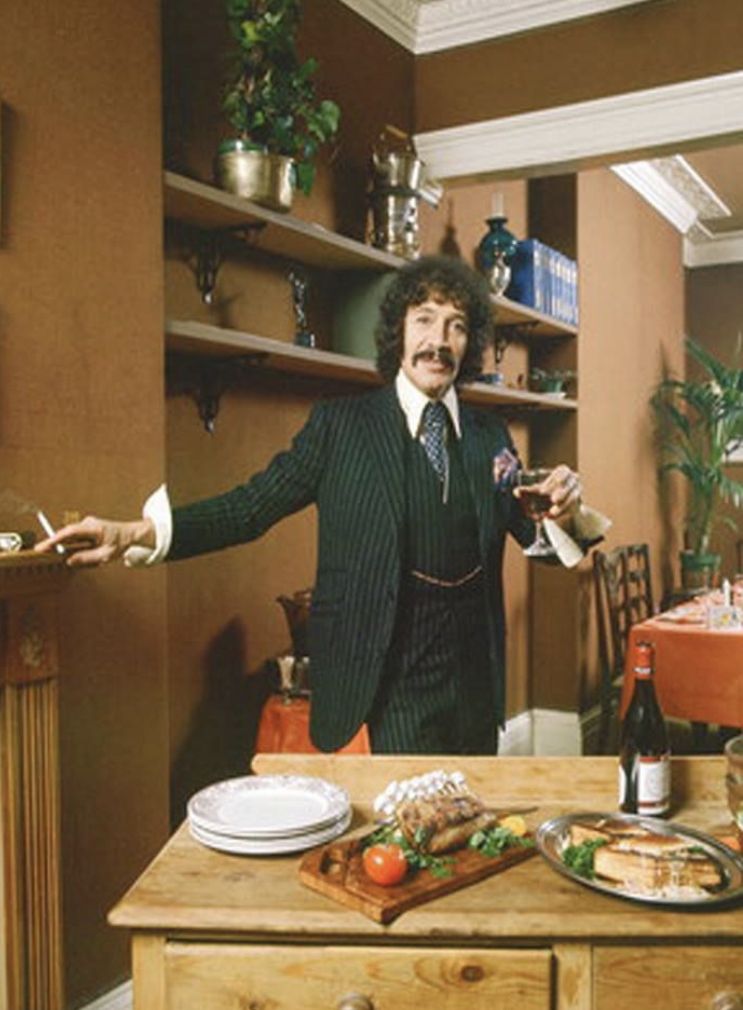
He’s not just a pretty face – he’s great over a hot stove too!

Sexy he certainly is. With hardly a day passing without him receiving at least a few dozen proposals of marriage, a large smattering of decidedly improper offers and great sacksfuls of letters telling him he’s gorgeous. He has even outstripped Paul Newman in poster popularity as a world heart throb.

But when I called on Peter Wyngarde it wasn’t to make a grab for his trousers and, honestly, that’s what happens to him all the time, and I didn’t ask him to autograph the top of my tights and that, too, is a common request.

Instead, we chatted at his London bachelor flat to discuss his prowess as a cook.

As television’s hairy hero Jason King, now promoted from a bit part in Department S to solo starring in a series all of his own, Peter’s private life interest in food is pretty serious. But as he said, sprawled like a broody marjah on a much-cushioned settee, “Truth is people only seem interested in my sex life. Women just want to take me to bed. And men want to know where I get my suits cut.

“I suppose the fact that I’m quite a good cook doesn’t fit in with the sex image. Well, I mean, what woman would dream of being carried off into the night by a fella who’s been up to his elbows in flour!

“Mind you, I don’t want it to get around that I’m giving up sex for food. Believe me, I need sex. But then, one can always get plenty of that, thank goodness.

“No, the only thing is that I get a bit frazzled by the way women go after me. I truly don’t understand why – especially when you consider that it is all ages of women, starting at 4 and going up for 98”.

Manfully, though, he has learned to live with himself as a sex symbol.

Despite his following of armchair mistresses, inside the suave, sophisticated television Jason King there beats the heart of a real-life Peter Wyngarde, who actually enjoys a spot of slaving over a hot stove.

“It is a great relaxation for me,” he said, only just managing to find enough give in his skin-tight trousers to enable him to cross his legs.

“The thing is I’m a split personality over food. On one hand I’m hooked on the health food bit you know, nuts and whole wheat and all that. At least once a day I tried to eat a purely healthy, vegetarian meal. But then for my other meal I adore exotic food.

“I also love cooking for my friends, giving lavish dinners which might take hours and hours to prepare”.

As might be expected, Peter is a very unconventional cook. Like many things he does he creates on a whim and swears that he has never referred to a cookery book in his life.

“I do tend to add ingredients just as I fancy,” he said, “I don’t like rigid planning.”

He likens cookery to the way he chose his dog. “One day I woke up and decided to have a dog and I wanted to name him Yousef,” he explained.

“Incredibly that day I heard of a superb litter of champion Afghan Hounds. So I went along to have a look and there were these twelve puppies in the one litter. I stood there facing all 12 of them and yelled ‘Yousef’ and, you know, one toddled over to me. That was the one I went home with. Of course, I admit I was lucky with Yousef. But mostly my cooking works out on that principle, too.

“But, seriously, I think the secret of success with everything, cookery or what have you, is to be adventurous; a bit of a gambler. In that respect Jason King influences me tremendously. Though he’s only a fantasy character he has a lot to offer in real life”.

For a start he’s not hung up on the age bogey. “Now, I have noticed that young people never think about age. It’s only the old ones that mention it. They’re the ones that count birthdays and wonder constantly if someone is 30, 50 or 106.

“It’s the old ones that make the rules about what is the right behaviours for certain ages. In fact, age is all in the mind”.

As it happens, Peter wouldn’t pinpoint his own age accurately. He explained that his mother had confused his passport with his brother’s and he wasn’t sure whether he was four years younger or older than his brother.

He would not, however, say what he was four years younger or older than. “I really have forgotten all about it,” he said.

In some branches of his private life, though, Peter is not so forgetful or casual. He has organised himself very well with two cars, a Bentley and a Bristol, a London flat, a home in Spain, and odd bits of property all over the place.

“I am,” he said, “a pretty self-sufficient person. I’m quite happy to go for days even weeks without seeing a soul. I’m looking for an isolated cottage right now so I can do just that.

“You see, I don’t consider getting married. I was once and it was disastrous. Matter of fact, I learned to cook when my wife left me. But I must admit that it was only when I became Jason King that I learned to cook well.”

Interview by Patricia Boxhall.