

Series: ITV Play Of The Week
Broadcast: Wednesday 18th November, 1959
Character: Isambard Kingdom Brunel.
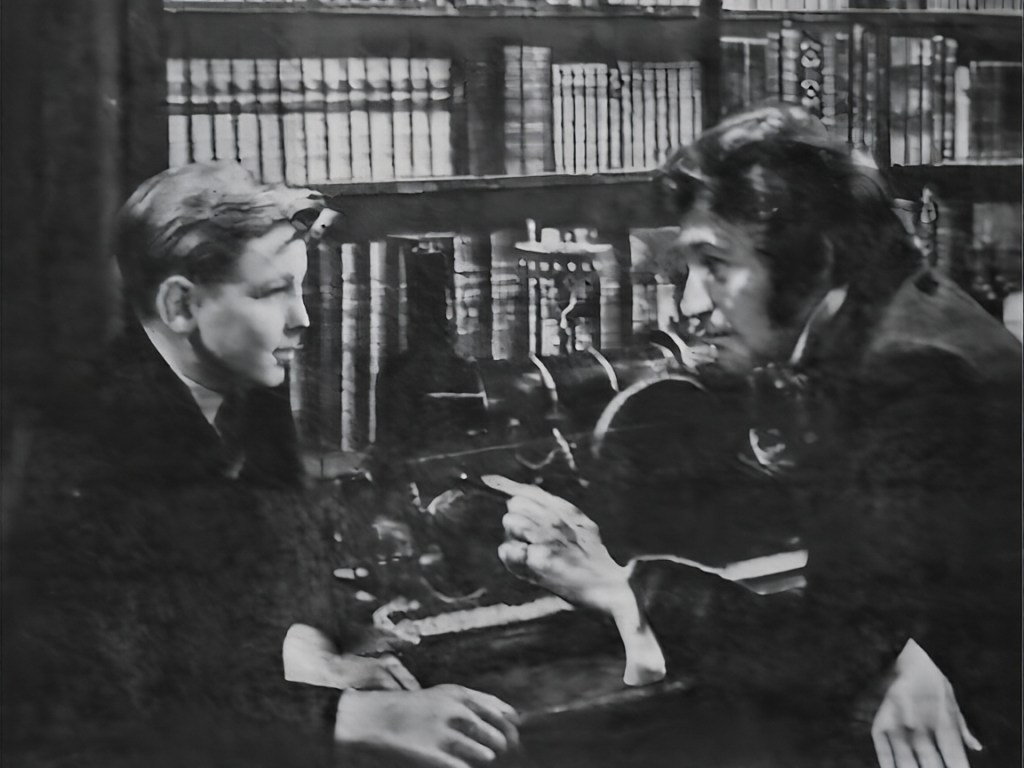
Among the more intriguing lost productions of Peter Wyngarde’s early career is Engineer Extraordinary, a drama cantered on the preeminent Victorian engineer Isambard Kingdom Brunel, broadcast by Television Wales and West (TWW) on 18 November 1959. Peter starred in the title role, portraying one of Britain’s most distinguished engineering pioneers.
Regrettably, as is the case with many live or early television productions of the 1950s, Engineer Extraordinary does not appear to have survived in the archives. Consequently, very little detailed information regarding the script or production has been preserved. It is known, however, that the programme was directed by John Wynn-Jones and written by Kem Bennett, with a cast that included Angela Brooking, Peter Craze, and Norman Tyrrell.
The selection of Brunel as a subject was an inspired choice for a television drama. Born in 1806, Brunel achieved fame through ambitious projects that transformed Victorian Britain, most notably the Great Western Railway, the Clifton Suspension Bridge, and the steamships Great Western and Great Eastern. By the late 1950s, his reputation was enjoying a revival as Britain reflected upon its industrial heritage and technological prowess. While the specific contents of the script remain undocumented, it is reasonable to assume the drama focused on Brunel’s vision, determination, and defiance of conventional limits – qualities that rendered him a naturally compelling dramatic subject.
For Peter, the role occurred at a pivotal stage in his career. In 1959, he had yet to achieve the nationwide fame later brought by his portrayal of Jason King in Department S. At the time, he was establishing a reputation as a versatile actor capable of bringing intelligence and charisma to historical and romantic roles. Portraying Brunel would have allowed him to exhibit the authority, confidence, and commanding presence that later became hallmarks of his screen persona.
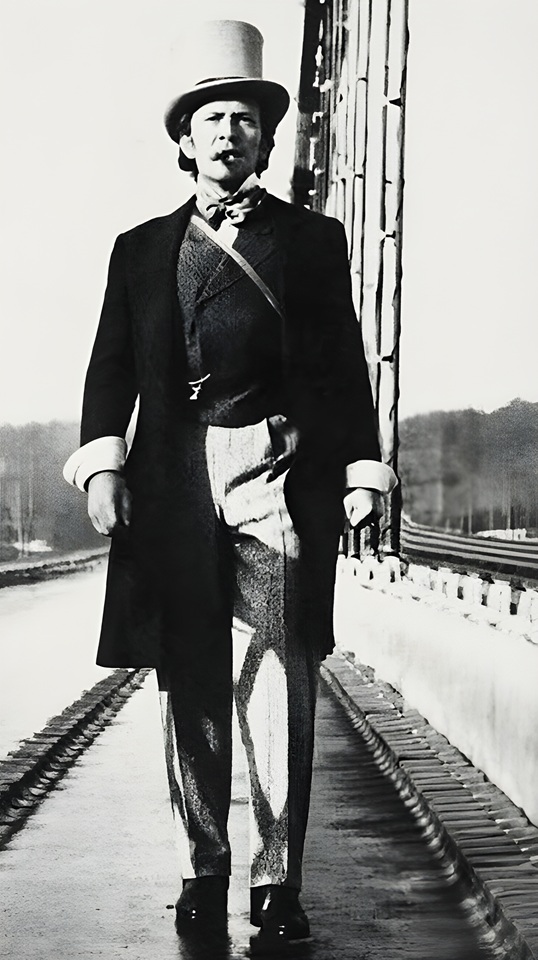
The casting is particularly noteworthy because Peter possessed a striking physical appearance and an aristocratic bearing that might not immediately suggest the famously cigar-smoking Victorian engineer. Yet, this contrast likely served the production well. Brunel was not merely a practical engineer, but a visionary entrepreneur and a prominent public figure. Peter’s natural elegance and forceful personality would have effectively communicated Brunel’s ability to persuade investors, direct vast projects, and overcome persistent setbacks.
Contemporary viewers would have recognized Brunel as a national hero whose achievements symbolized British ingenuity. Television drama in the 1950s often sought to educate as well as entertain; thus, Engineer Extraordinary likely blended biographical storytelling with a celebration of technological progress. Such productions brought historical figures to life for audiences who may have known their names, but little of their personal struggles.
The production also reflects the ambitions of TWW, one of the newer ITV regional companies. By presenting a drama centred on a major historical figure associated with industry, TWW demonstrated a commitment to producing serious, culturally significant programming rather than relying solely on light entertainment.
Today, Engineer Extraordinary survives primarily as a historical footnote in Peter’s filmography. The absence of recordings prevents modern viewers from assessing the quality of his performance. Nevertheless, the production remains significant for placing a young actor at the centre of a drama about one of Britain’s greatest innovators, illustrating the diversity of roles Peter undertook prior to his stardom.
Though lost, Engineer Extraordinary stands as an example of the ambitious single dramas that characterized British television during the 1950s. For Peter’s fans, it represents a fascinating early leading role, allowing him to embody the energy and imagination of Isambard Kingdom Brunel – a man whose achievements helped shape the modern world.
Peter’s Thought’s
“I loved making Engineer Extraordinary. The thing I remember about that was the fact that I am innumerate. I’m just not good at maths and I really can’t add up. We had this teacher at school called Mr. Jones and he would come into class and ask, “How did you get on with your own work? Have you all done it?” We would all say, “Yes Sir. We’ve done it.” He would then go through it all on the blackboard thinking we had done it and we would copy it down as fast as we could. He was always very impressed, but we actually learned very little, hence my problem with figures. So there is a whole group of adults who came from his classes over the years who could not add up.
Getting back to the Brunel thing, there were lots of calculations and equations and that sort of thing and I had to tell them that I was going to have problems. What we did in the end was to have monitors around the studio with all the calculations on so I would wander around and when I had make the calculations in my head as Brunel I would glance at the monitor and say something like, “It has to be 39 foot wide and 10 foot across and we must calculate the combined stress ratio by 5 and…” you know the sort of thing. That was sort of Marlon Brando acting, you know, with boards with dialogue written on them. Apparently he’d always done it like that but for me it was just because of the immense amounts of numbers and equations in the script. I have to say that it was probably one of the best performances I gave. Marlon must be right.”
Some Notes
Engineer Extraordinary is the only drama ever to be made about Brinel’s life.
Mike Hodges would work on this production. Hodges later directed Flash Gordon in which Peter played General Klytus.


