

Gender, Power and Provocation in The Avengers’ Most Controversial Episode
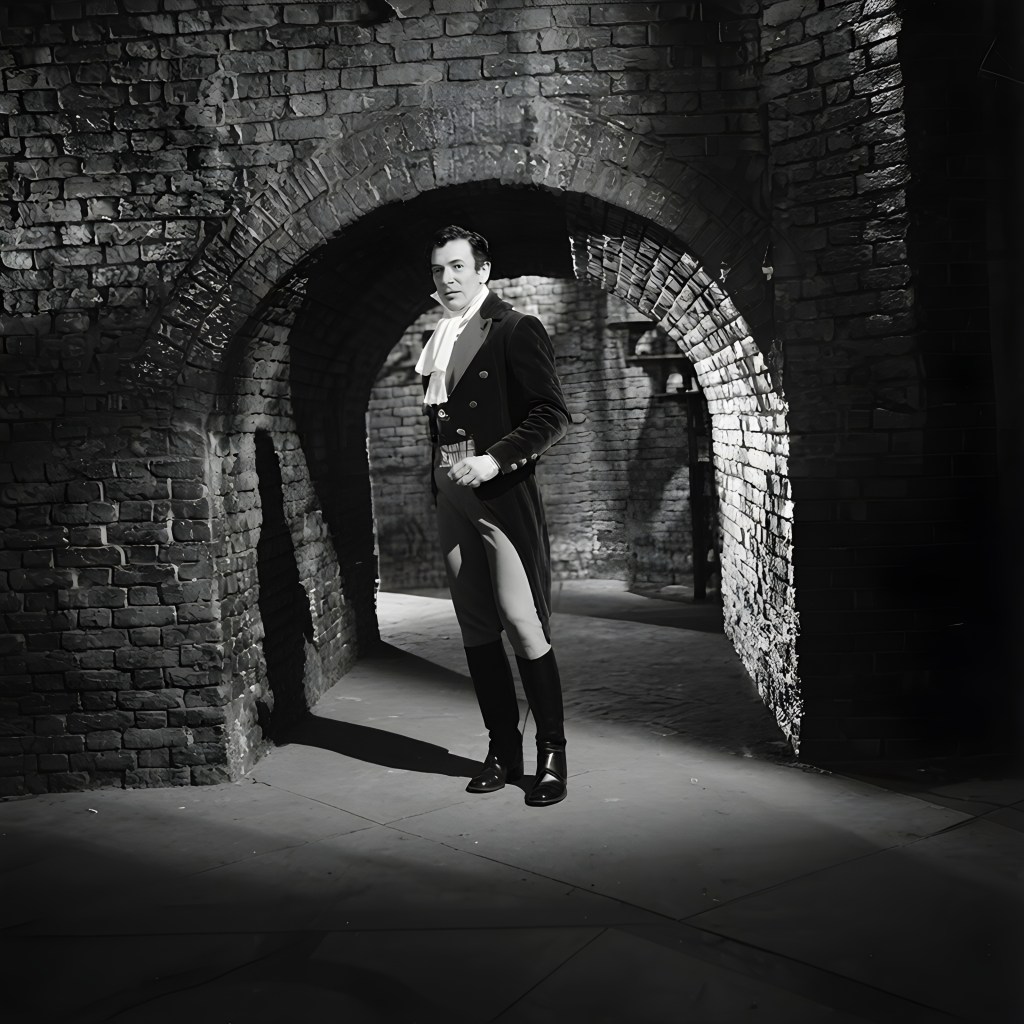
The infamous “whipping scene” in The Avengers episode “A Touch of Brimstone” remains one of the most discussed moments in British television history – not necessarily due to the explicit content shown, but because of what it suggested to audiences in 1966. To understand why the sequence involving Peter Wyngarde’s John Cleverly Cartney and Diana Rigg’s Emma Peel generated such controversy, one must consider the social climate of the era. While mid-1960s Britain was becoming increasingly liberal, television remained tightly regulated. Themes of sexuality, domination, and unconventional relationships were considered highly sensitive, and “A Touch of Brimstone” ventured into territory that most contemporary programming avoided.
At the heart of the controversy was the power dynamic between Cartney and Peel. Throughout the episode, Emma infiltrates the decadent “Hellfire Club,” a secret society defined by excess and corruption. Cartney, the club’s charismatic leader, as portrayed by Peter, is a man of intelligence, refinement, and authority. Peter’s commanding screen presence ensures that Cartney dominates nearly every scene, exercising control not through physical force, but through psychological manipulation and social status. This made him a compelling yet unsettling antagonist.
The whipping sequence was particularly provocative because it depicted a powerful man asserting dominance over a woman. While modern audiences are accustomed to far more explicit material, the mere suggestion of such behaviour was alarming in 1966. The scene explored themes of humiliation and submission that were rarely addressed on television, and although little actual violence was shown, the implications were unmistakable to viewers of the time.
Much of the scene’s impact is attributed to Peter’s performance. Because Cartney is portrayed as witty, cultured and self-assured rather than a crude brute, the sequence became more troubling for the audience. Had the villain been overtly monstrous, viewers might have dismissed him more easily; instead, Peter made Cartney attractive and sophisticated, creating a complex mixture of fascination and discomfort.
Diana Rigg’s portrayal of Emma Peel further intensified the impact of the scene. As an intelligent, capable, and independent character, Emma was a landmark for female representation on British television. Because audiences viewed her as the equal of her male counterparts, seeing such a strong character placed in a position of vulnerability created a dramatic tension that was largely unprecedented for viewers.
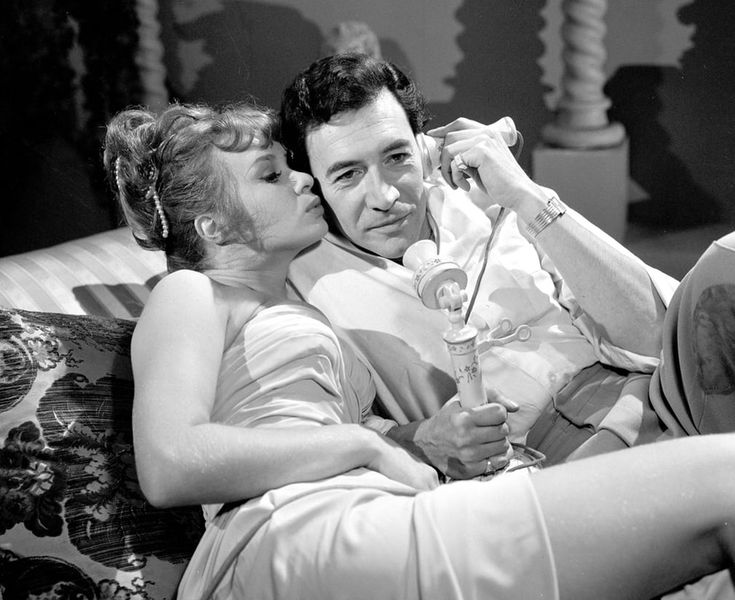
Emma Peel was not the only woman subjected to Carney’s aggressive behaviour. Sara Bradley – played by Carol Cleveland as Carney’s girlfriend – was treated with a marked lack of gentleness. In one scene, Carney is seen using his foot, while wearing knee-high riding boots, to shove Sara back onto the bed they had previously occupied. The sequence is filmed to emphasise Carney’s arrogance, dominance, and contempt even for his partner, thereby reinforcing the episode’s themes of male power and moral corruption.
The visual presentation also played a significant role. ‘A Touch of Brimstone’ is noted for Emma Peel’s black leather “Queen of Sin” costume, one of the most iconic outfits in television history. Combined with the Hellfire Club setting, the attire contributed to an atmosphere of erotic danger that pushed the boundaries of what producers were permitted to broadcast. Consequently, the controversy extended beyond the whipping itself to encompass the broader themes of power and temptation.
Furthermore, the sequence’s ambiguity increased its provocative nature. By relying on suggestion rather than explicit depiction, the episode allowed viewers to imagine what occurred beyond the camera’s view. Television censors recognised the power of implication, and much of the concern regarding the episode focused on what was being suggested rather than what was literally visible.
From a modern perspective, it is noteworthy that Emma Peel remains a strong figure throughout the narrative. She is not a passive victim; her presence in the Club is part of a calculated investigation, and she maintains her courage and intelligence. Nevertheless, the image of a male villain holding authority over such a prominent female character was shocking to many in the mid-1960s.
The social climate of the 1960s is essential to understanding these reactions. As traditional assumptions regarding male authority and female obedience were increasingly questioned, a scene involving symbolic male domination attracted significant attention. To some, it was exciting drama; to others, it was inappropriate.
The episode’s reception in the United States highlights its controversial status. For many years, ‘A Touch of Brimstone’ was not aired by the American network that broadcast The Avengers, as executives deemed the content too provocative. This decision only enhanced the episode’s reputation, turning it into a legendary piece of media among fans.
Ultimately, the controversy surrounding the whipping scene stemmed from its intersection of authority, sexuality, danger and gender politics – elements that television of the era typically kept separate. The confrontation between Emma Peel and John Cleverly Cartney touched upon social anxieties that extended far beyond the plot of a single episode. More than sixty years later, the sequence remains a fascinating snapshot of a society in transition.
Why Women Love A Bad Boy
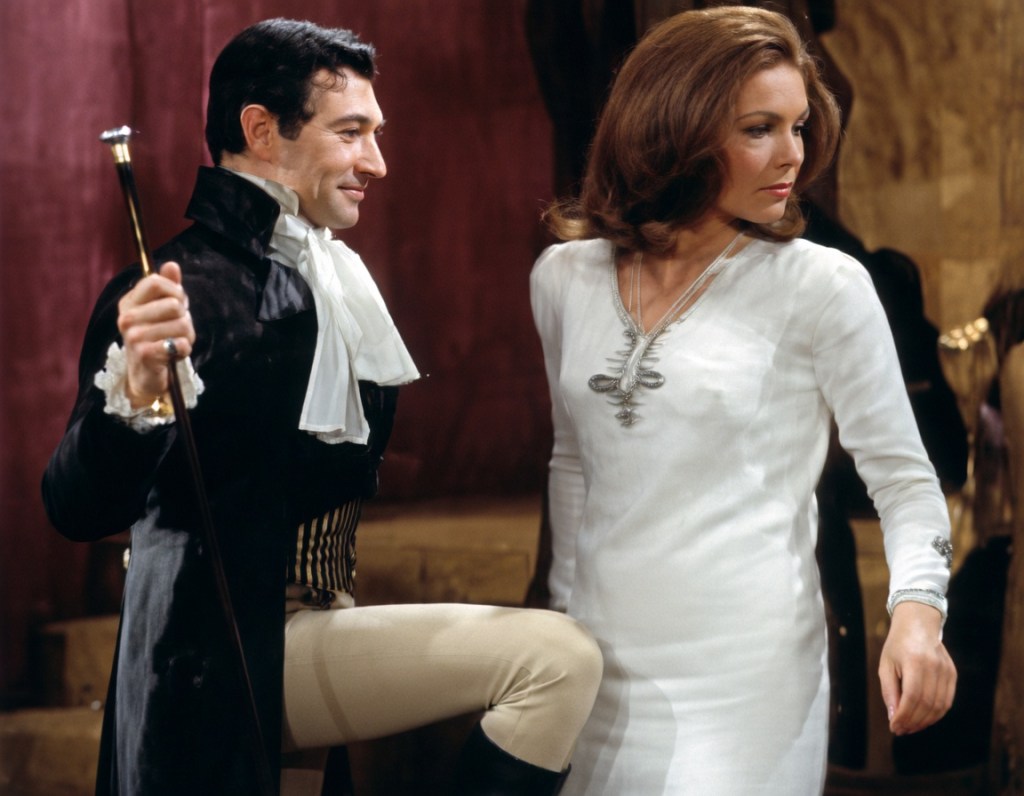
One of the reasons John Cleverly Cartney remains such a fascinating character in The Avengers episode ‘A Touch of Brimstone’ is that audiences often found themselves attracted to him despite fully recognising that he was the villain. Even after the infamous Whipping Scene involving Emma Peel, many viewers, particularly female admirers of Peter Wyngarde, continued to regard Cartney as irresistibly sexy. This was not because audiences approved of his actions, but because attraction to fictional characters is often far more complicated than a simple judgment of right and wrong.
The first and most obvious factor was Peter himself. By 1966, he had already established a reputation as one of Britain’s most charismatic actors. Possessing striking looks, a deep, distinctive voice and an extraordinary screen presence, he had a natural ability to command attention. When he entered a scene, viewers watched him. His performance as Cartney is a masterclass in confidence and authority. Even when portraying someone morally corrupt, Peter imbued the character with wit, intelligence and sophistication. Audiences were often responding to the actor’s charisma rather than endorsing the character’s behaviour.
Cartney also fitted the long-established tradition of the “dangerous man” in romantic fiction and popular culture. Throughout literature, film and television, audiences have often found charismatic villains compelling. From Heathcliff to Rhett Butler and countless cinematic anti-heroes, there is something dramatically appealing about characters who break rules, challenge conventions and refuse to conform. Cartney embodies these qualities. He is fearless, unconventional and completely self-assured. While viewers would never want to encounter such a figure in real life, they could enjoy the excitement he generated within the safe boundaries of fiction.
Another important factor was Cartney’s intelligence. He is not a thug or a brute. Instead, he is cultured, articulate and highly educated. He leads through personality and intellect rather than physical force alone. Many viewers found this sophistication attractive. Cartney inhabits a world of aristocratic privilege, secret societies and elaborate rituals. He appears to possess knowledge and confidence that place him above ordinary people. Such qualities have long been associated with fascination and glamour, even when attached to morally dubious characters.
His confidence is perhaps his most seductive quality. Cartney never appears uncertain or hesitant. He carries himself as though he owns every room he enters. Confidence, when combined with charm and intelligence, can be enormously attractive. Audiences often respond instinctively to characters who know exactly who they are and what they want. Cartney possesses this certainty in abundance. Even his enemies recognise the force of his personality.
Importantly, many women who found Cartney attractive did not necessarily view him as a realistic romantic figure. Fiction allows audiences to separate fantasy from reality. The appeal of a dangerous character often lies in observing them rather than wishing to become involved with them. Cartney is exciting because he represents a world of risk and intrigue that most people never encounter. His attractiveness therefore stems partly from escapism. He offers a glimpse into an exotic and forbidden world.
The contrast between Cartney and Emma Peel also contributed to his appeal. Diana Rigg’s Emma is one of television’s strongest female characters. Intelligent, resourceful and fearless, she is never portrayed as a helpless victim. As a result, viewers see their conflict as a clash between two powerful personalities rather than a simple story of dominance. Much of the episode’s dramatic energy comes from watching these equally formidable figures confront one another. Cartney’s attraction is heightened because he faces someone capable of matching him.
The Whipping Scene itself has to be understood within the context of the episode’s broader themes of power and corruption. While it became the moment most discussed by critics and censors, many viewers saw it primarily as part of a larger dramatic confrontation. What remained memorable was not simply the act itself but the psychological tension surrounding it. Peter’s performance creates a villain who exerts influence through presence and personality. The scene became controversial precisely because his character was so persuasive and compelling.
There is also the matter of style. Cartney is one of the most stylish villains ever to appear in The Avengers. His clothes, mannerisms, speech and confidence make him almost impossible to ignore. Peter understood the importance of performance and theatricality. Cartney enjoys his own wickedness and wears it with flair. This sense of style softens neither his actions nor his villainy, but it does help explain why audiences found him captivating.
Modern audiences sometimes struggle to understand why viewers in the 1960s reacted so strongly to the character. Yet part of the answer lies in the fact that television villains of the period were often comparatively straightforward. Cartney was different. He possessed depth, charm and complexity. He could be humorous one moment and threatening the next. Such unpredictability made him more interesting than many conventional heroes.
Ultimately, women continued to find John Cleverly Cartney attractive after the events of ‘A Touch of Brimstone’ because they were responding to a combination of Peter’s charisma, the character’s intelligence, confidence and sophistication, and the enduring appeal of the fictional “bad boy”. Attraction to fictional characters is rarely a moral endorsement. Rather, it is often a response to qualities such as charm, mystery, power and screen presence.
More than sixty years later, Cartney remains one of the most memorable villains in The Avengers. His actions ensure that he is never a hero, but Peter’s extraordinary performance gives him a magnetism that audiences continue to find compelling. It is this combination of danger, elegance and charisma that explains why John Cleverly Cartney remains one of television’s most fascinating and enduringly attractive villains.
See below for more on A Touch of Brimstone


