


Broadcast: Saturday, 12th March, 1988
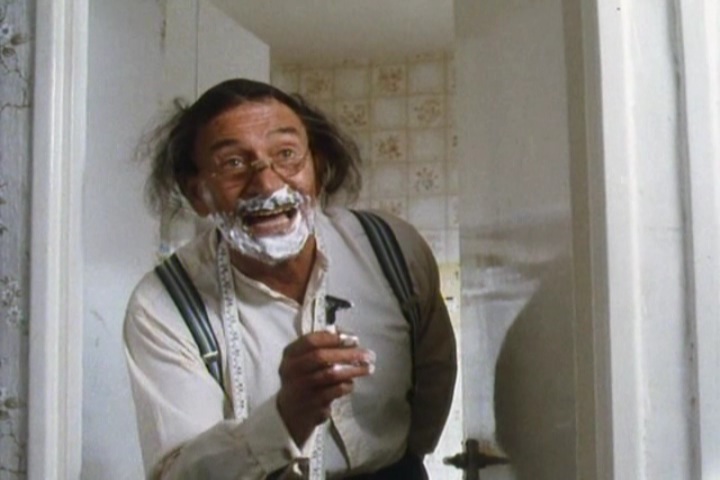
Character: Mr. Kendel
Few episodes of The Comic Strip Presents… capture the anarchic spirit of 1980s alternative comedy as effectively as “The Yob.” First broadcast in 1988, the episode is a bold blend of social satire, science-fiction parody, and class commentary. Written by Keith Allen and Daniel Peacock, with Allen in the lead role, the production takes a deliberately absurd premise and pushes it to its logical, and often ridiculous, extremes.
At its core, “The Yob” serves as a parody of The Fly, replacing biological horror with social and cultural friction. The protagonist, Patrick Church, is a pretentious music video director who views himself as a rare genius. While attending a UB40 concert, he accidentally becomes entangled in an experimental transportation process after mistaking a scientific chamber for a portable toilet. The resulting accident fuses his personality with that of a football hooligan, triggering a gradual transformation from an intellectual sophisticate into a foul-mouthed, beer-swilling “yob.”
The strength of the episode lies in its commitment to mocking all parties equally. The cultured elite are portrayed as vain and ludicrously self-important, while the hooligan culture into which Patrick descends is depicted as aggressive, tribal, and absurdly macho. Rather than taking a side, the narrative exposes the hypocrisies and absurdities found at both ends of the social spectrum.
Keith Allen is perfectly cast as Patrick Church. In the opening scenes, he portrays the character as an extravagantly pretentious figure whose artistic ambitions far exceed his actual talent. Patrick’s disdain for those around him is evident in his speech, clothing, and general mannerisms. Allen leans into the role, creating a character so grating that viewers almost welcome his downfall. As the transformation progresses, Allen commits fully to the physical comedy; while his descent into yobbery is played broadly, this approach suits the material perfectly.
The satire directed at the media and entertainment industries is particularly effective. Patrick inhabits a world obsessed with image, trends, and self-promotion. The music-video industry depicted is populated by egotists who speak in grand artistic terms while producing work of dubious value. By transforming a cultural tastemaker into a hooligan, the writers suggest that the divide between sophistication and vulgarity may be narrower than generally admitted.
The science-fiction elements are intentionally farcical. Unlike traditional sci-fi narratives that attempt to establish believable internal logic, “The Yob” embraces complete absurdity. The scientific experiment serves merely as a catalyst for the comedy; once the transformation begins, the episode focuses entirely on the social consequences. The humor derives not from the mechanics of the experiment, but from watching a man who regarded himself as superior become everything he despised.
The supporting cast contributes significantly to the episode’s success. Adrian Edmondson, playing one of the scientists, provides the ideal amount of manic energy. The surrounding characters react with increasing bewilderment as Patrick’s behavior deteriorates, helping to ground the most outrageous moments. This ensemble ensures that the world remains lively and unpredictable.
Notably, “The Yob” is willing to court controversy. Much of its humor is intentionally provocative, reflecting the rebellious nature of 1980s alternative comedy. While modern audiences may find certain aspects less comfortable, the episode remains an illuminating snapshot of an era when comedians sought to challenge social conventions through shock and humor.
Visually, the program benefits from parodying the glossy music-video aesthetic dominant during the decade. The contrast between fashionable style and crude behavior becomes a recurring source of comic tension, frequently undercutting moments of apparent sophistication with eruptions of chaos or violence.
Among the memorable supporting performances is Peter’s appearance as Mr. Kendel. Though his role is small, Peter brings his customary authority and comic timing to the proceedings, adding a touch of eccentricity to a production already overflowing with colourful characters. In a world where normality is entirely absent, he fits perfectly into the surreal landscape.
The primary achievement of The Yob is that, beneath its outrageous exterior, lies a surprisingly astute commentary on class and identity. Patrick’s transformation suggests that much of what is perceived as refinement or culture is, in essence, a performance. By stripping away external trappings and social conditioning, the episode implies that the boundaries between different social groups are less rigid than they appear. While these themes are not explored with great subtlety, such nuance is hardly the episode’s objective.
Ultimately, The Yob is chaotic, irreverent, and frequently humorous. It exemplifies the “anything-goes” ethos that established The Comic Strip Presents… as a significant force in British comedy. Although not every joke lands and some material has inevitably aged poorly, the episode remains an entertaining blend of parody, satire, and social commentary. Much like its protagonist, the piece barrels forward with little regard for restraint or conventional taste; however, this reckless energy is precisely what ensures its enduring appeal.
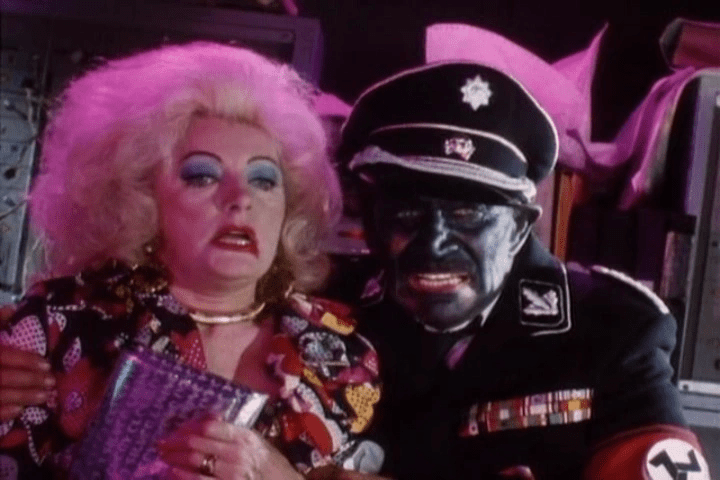
A Bit Of Trivia
- This episode featured a number of well-known faces and future stars, including: Lilly Allen, Warren Clarke and Julian Firth amongst others.
- Derrick Branche, who played a character called Chris Bell, was a school friend of Freddie Mercury.


2 thoughts on “REVIEW: The Comic Strip Presents…: ‘The Yob’”