The action of the play takes place in the Convent of Our Lady of Rheims; a French Nursing Order, at Denzil St David, and in a village some miles from Norwich, England. It’s 1947.
ACT I: The Great Hall of the Convent, around 6pm.
ACT II
Scene 1: Sister Mary’s Room, two hours later
Scene 2: The same, next evening
ACT III
Scene 1: The same, next afternoon
Scene 2: The Great Hall, three hours later
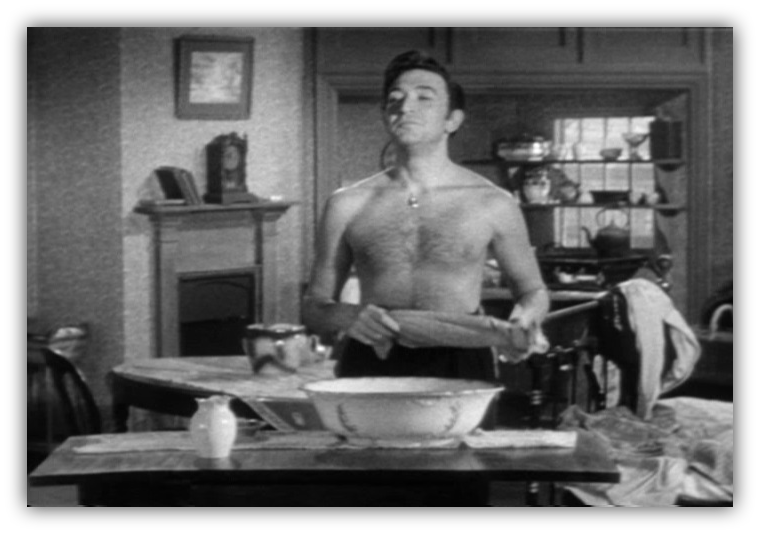
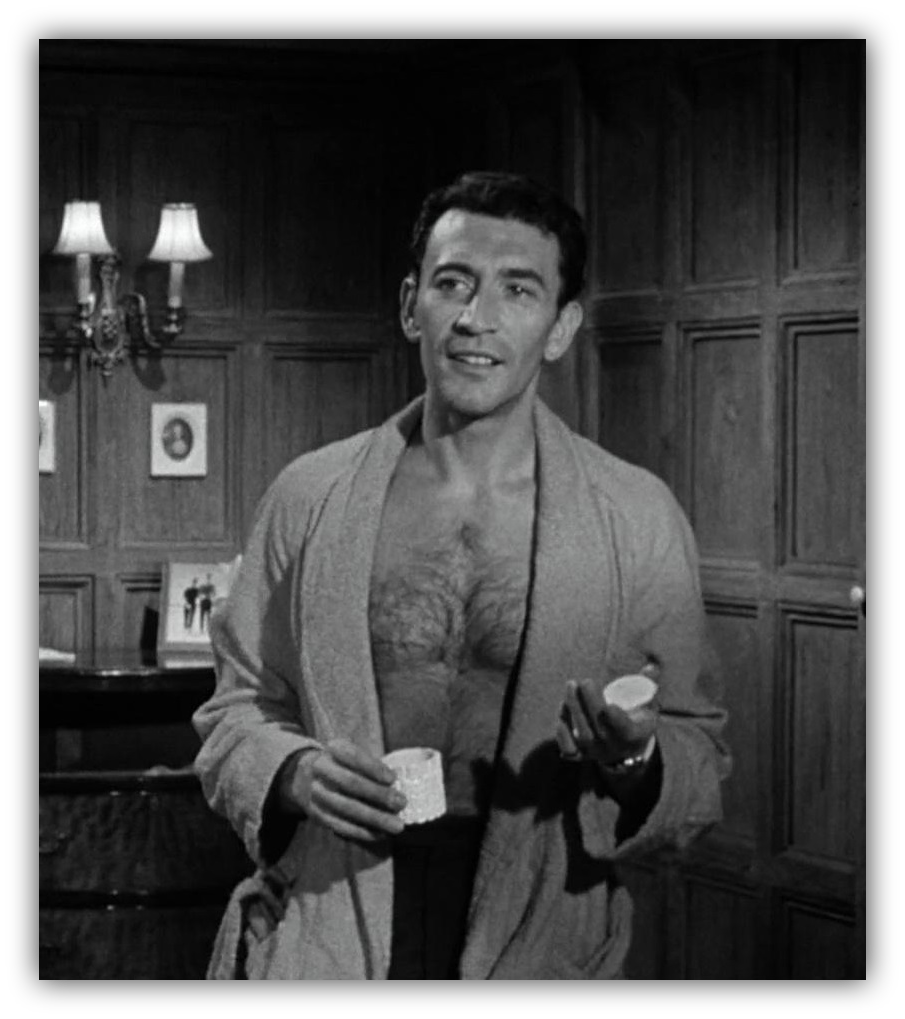
Willy Pentridge (Peter Wyngarde) is a Autistic man who is employed as an odd-job man at a convent.Although he’s considered an “idiot” by some of the more bigoted in the local village he is, in fact, very perceptive and not a stranger to the occasional wise word. Indeed, Nurse Brent says of him: “He knows more about the weather than normal people”, whilst Nurse Phillips declares: “I hate the horrible Willy prowling around!”
A murder of a young man takes place at the Convent, for which his sister- Sarat Carn, is accused, judged and sentenced to execution. Against the wishes of the Mother Superior, Sister Mary goes to see her and agrees to help with her appeal which, inexorably, fails.
The Sister inevitably pits her instinct concerning Sarat’s innocence contrary to the authority of the Mother Superior,who speculates that the Order might’ve lost the Sister spiritually: “For you matters are never simple or uncomplicated.”
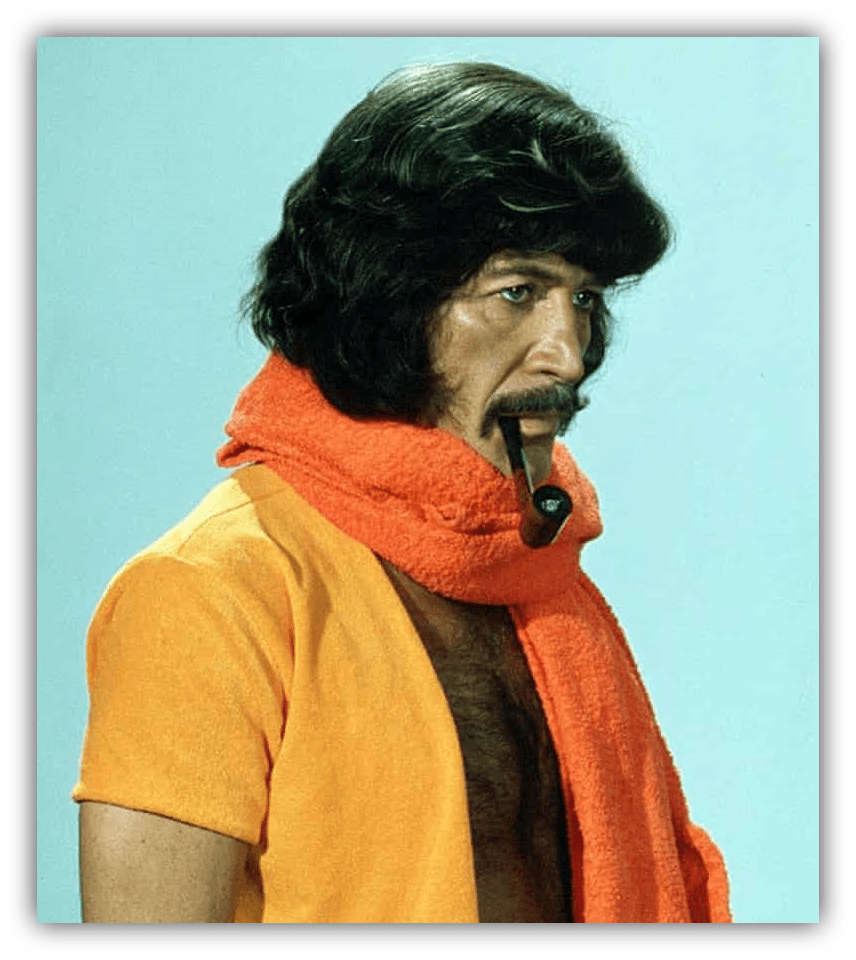
Right: Peter as Willy Pentridge
To add to the woes of the assembled Order, news arrived that a dyke some miles away is in danger
of breaching, which would result in hundreds of people from the local area heading for the Convent which is built on higher ground.
Whilst Sarat is lead away to her execution, all the participants concerned with the issue of the murder charge gather in the Great Hall of the Convent. Here, Sister Mary and Willy converse about life and coincidence in an almost timeless manner, leading to her upholding that “for everything there is a season”. It’s soon after that the real murderer is revealed. of breaching, which would result in hundreds of people from the local area heading for the Convent which is built on higher ground.
Whilst Sarat is lead away to her execution, all the participants concerned with the issue of the murder charge gather in the Great Hall of the Convent. Here, Sister Mary and Willy converse about life and coincidence in an almost timeless manner, leading to her upholding that “for everything there is a season”. It’s soon after that the real murder is revealed.
Thanks to the investigations carried out by Sister Mary and her associate, Josephine, it’s learned that Jeffries’ – the doctor who’d attended Sarat’s brother and who, incidentally, acted as a witness for the for the prosecution at the young woman’s trial, might’ve been responsible for administering certain drugs to her brother.
Notes:
There is a lot of action that take place ‘off-stage’, such as Willy helping to restore the cottage of a local villager, and the actions of several named characters that are never seen by the audience – including a gentleman by the name of Jason Kingham(!), who is Sarat’s fiancé.
The primary theme of the play appears to be the importance of the accepted over the judiciousness of power. This is fundamental to Sister Mary’s struggle with the Mother Superior and vital too, the positioning of Willy, the supposed moron, and the nurses that function on the basis of authority – especially Nurse Phillips who states that the “tolerance” of someone like Willy “undermines authority”.
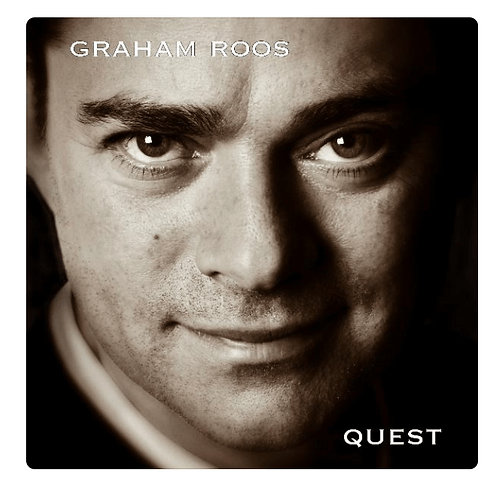
This is a track from Graham Roos 2010 album, ‘Quest’, which features the voices of Peter Wyngarde and Fenella Fielding
Graham Roos is a multi award winning writer and director.
He was born in Sheffield and won an Art Scholarship to Rugby School. His career has spanned the media of art, theatre, film, music, radio, opera and publishing.
Quest – CD of spoken word, with the voices of Fenella Fielding, Peter Wyngarde, Martin Hancock, Sam Fox, James Dreyfus.
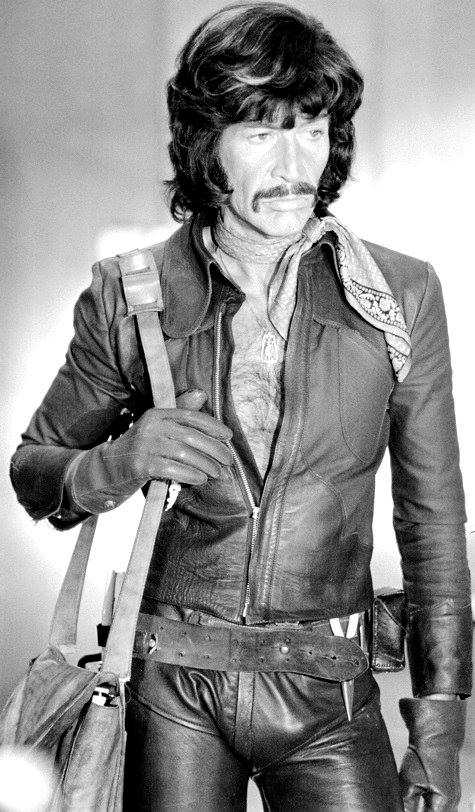
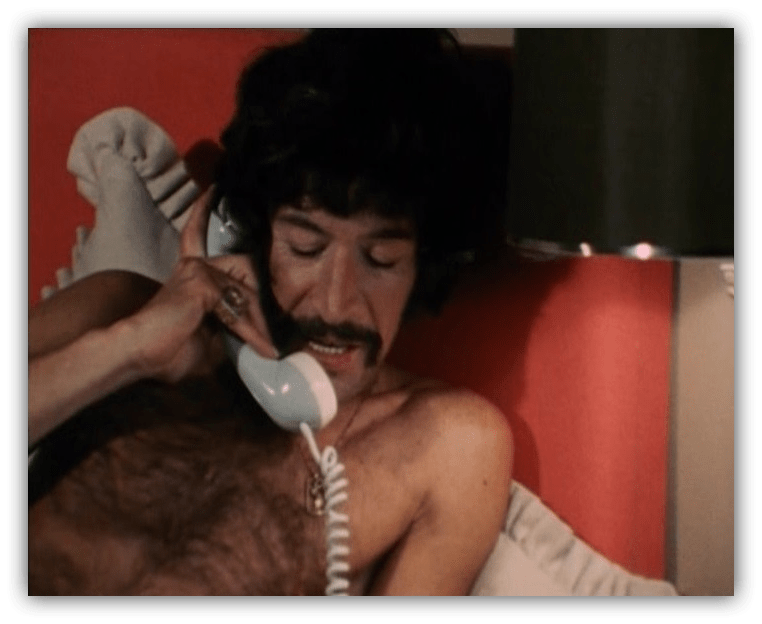
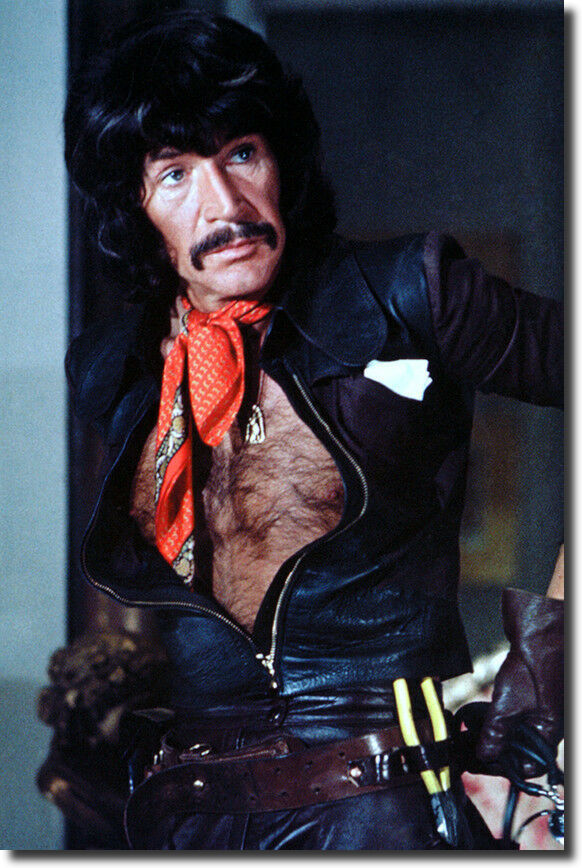
To begin, for my first ever picture on the blog. Do have a proper look at this exhibition of early 70’s utter cool (a famous promo pic from the time). And note – who else can carry off leather pants in this way, and a moustache, and still be astonishingly intelligent and a slightly louche action hero also?
Now, I don’t mean for a moment to be merely dribbling over one of the most gorgeous actors, in a horrible sexist way. I would sincerely love to meet Peter Wyngarde and have, umm, a croissant and some orange juice (was thinking he’s rather older now, and may not fancy champagne or coffee, he’s in his 80’s now) with him. I would love to chat and hear stories, and just listen to the marvellous George Sanders-esque voice . I truly think the man is one of the best actors we had, before some people got hot under the collar that despite always being a ladies man on TV, he got arrested for some business in a toilet in Gloucester with a truck driver in 1975. (The fact that his acting colleagues often called him – we hear, here and there – ‘Petunia Winegum’ as a nickname, testifies to the fact that being gay wasn’t a secret amongst people that knew him.) Since some people weren’t ready to handle the fact that the leather trousers were active in a way they hadn’t expected, his career suffered and got halted, really. What a total bloody shame! After all those sudden 1965-67ish appearances in staples like The Avengers, The Saint, Armchair Theatre and The Prisoner, he drifted away. Just when it was all getting going.
My earliest Peter Wyngarde memory is a masked Peter Wyngarde, as seen in Flash Gordon. Which is one of the most perfect films ever made and I wouldn’t change a hair on its head whatsoever. (This will be elaborated on in that other post I threatened about my 5 favourite films ever, to come). How many people dislike this film so strongly is completely beyond me? What does it matter that the actor playing Flash Gordon apparently wasn’t acting very well? I thought he did fine, they didn’t paint him as a great brain – more as a character that had heart and energy; Sam Jones did fine with that brief, I reckon. What is there to dislike about the intense, insane over colourisation: all that GOLD, and green, and red, and orange, and shininess everywhere?? Every time I watch it I am cheered up even if the sound is down! And if the sound is up, I get to hear Ornella Muti (who Alias Octa always described as ‘born to fuck’, in a true teenage boy way) purring and sulking, Melody Anderson cheerleading and offering Suzanne Danielle the elixir that will make a night with the Emperor Ming doable (his sexual weirdness is hinted at several times, in a rather titillating way). And then there’s Emperor Ming himself, Max von Sydow, who despite his marvellous face makeup and great costuming, still manages attract my attention by doing more evil hand rubbing acting than anyone I have since seen in a film; more pregnant pauses before evil sneering. And of course, Brian Blessed yelling ‘DIVE!’ (which I have recently taken to yelling at Fluffhead in the living room as we have a mattress on the floor at the moment – at my command, in badly executed Blessed-eze, Fluffhead will run full steam at the mattress and propel himself headfirst onto it bellowing with joy, and holding his Josie Jump toy from ‘Ballamory’ – as she jumps too…). And the Queen soundtrack…the Love Capsule music is always overlooked and so sensually splendid I bought the whole soundtrack just for that, those few seconds…
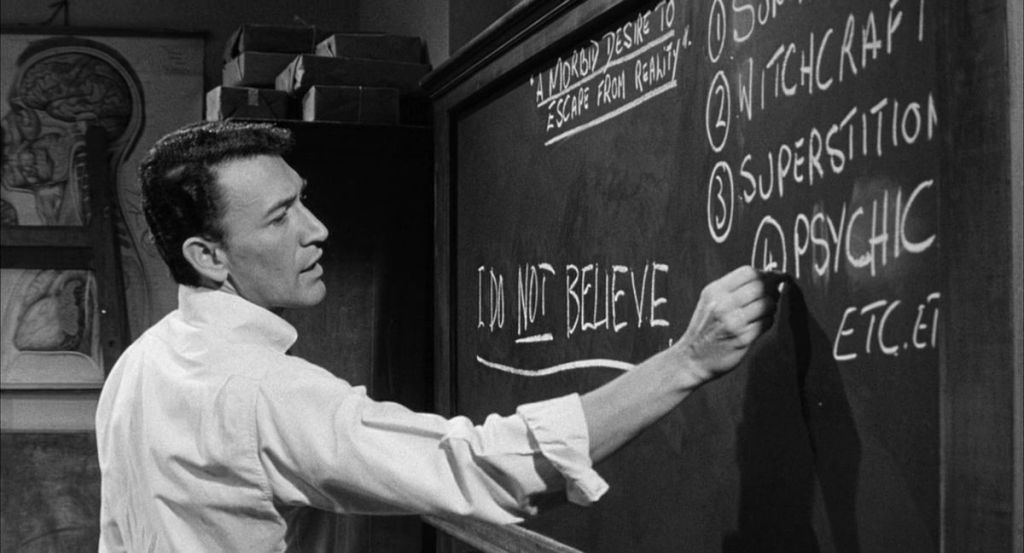
The other favourite film was Night of the Eagle (1962). I can’t recommend this film highly enough. You must have gathered by now, that I have a (debatably healthy or not) strong interest in all things inexplicable currently, and labelled ‘supernatural’. So any film, with a hint of this, and there I am, to have a look and a think about it. Remember long ago when BBC2 late at night used to have those truly excellent summer horror film seasons on Saturdays, I’m sure I’ve mentioned them before? With one old-ish thing first, like I Walked With A Zombie or Cat People, and then a more ‘modern’ one after – anything from a Christopher Lee Dracula, to a Legend of Hell House? That’s where I first saw Night of the Eagle. Spoiler alert!! About a scientific and sceptical professor who is doing very well in his rising career at a small university, but is unaware this is because his wife is working protective voodoo on his behalf; as she is actually battling the forces of greedy and voracious bad magic, summoned up by the Head Teacher, Margaret Johnston. At the end she summons a huge thoughtform eagle to get rid of Wyngarde’s character, but a wonderful contrivance with an old eight track player sends it against her instead, hence the title. End of Spoiler. This is the face of Peter Wyngarde I had been very familiar with for years – Which doesn’t look at all like the first picture, does it? I had no idea it was the same person. It’s a genuinely scary film, with some good jumpy moments. I think you should all buy it, and it is available (under a fiver on Amazon UK); but for the skint amongst us, go and feast your eyes on the acting talent that is this man, on YouTube – the whole film is up there at the moment. For years, this film was sought after by me, until Alias Alan got me a copy for Xmas a few moons back.
Another thing I had been wanting for ages (I had it when first released but then sold it, as I do tend to do when needing money; and then of course it went out of circulation and now goes for silly money on ebay) was the Hammer House of Mystery and Suspense (1984). I had been remembering my favourite episode of this (about a haunting that turns out to have been from the future not the past – ahhhhhhhh, clever!) for a while, and had a yen to see it again. Stanley went to trouble and found the lot for me online. I started to watch them in the day, while Fluffhead and I read ‘Spot at Home’ and ‘Pip the Puppy’ and I tried repeatedly to teach him how to draw a flower with a pencil, since he loves curvy shapes at the moment. I was dazzled by the brilliance of the episode ‘Checkmate’, good old Susan George, and I usually hate espionage things (its all very Traditional Boy-Aimed Crud in my opinion, excepting Day Of The Jackal, which I find amazing), and then an episode came on with That Voice! Putting down my toast and honey (my other current obsession, honey), I see that Peter Wyngarde is there, complete with wonderful moustache, and robed as a devil worshipping priest. I think it’s slightly likely that he was a little bored by this acting assignment, as I have rarely seen him loucher in something; then again, it’s a very slight story (which I won’t bother to relate). There’s a funny scene near the end of the episode (‘And the Wall Came Tumbling Down’) where Wyngarde’s character is supposed to be dead on the floor. The scene’s focus is away from him, to the actors still alive, upright and talking, gesturing. Of course, I was just staring at Peter Wyngarde on the floor, loving those cheekbones and eyebrows. I don’t know how long the scene may have taken to film, but he gets bored being on the floor and makes a face, licking his lips and the tip of his moustache very obviously. It made me laugh out loud.
People make much of how kitsch these series are today; how camp, how unreal, how …silly. Now. You’re talking here, with someone who violently adores Flash Gordon, so are these things going to bother me in the slightest? I really think not. It is all silly, and light; and yet so disarming. Fun. Escapist. Occasionally very clever in terms of story telling, and even thought provoking. The ensemble of the team of the Department S series was great, and it’s quite shameful that it was only the one series. Boo. But then was Jason King, so at least my favourite character is still about.
He would say things like ‘I abhor violence’, before gracefully launching himself across a room to box someone’s ears in that very theatrical and obviously unreal way they did in those TV days. And his hair would not ruffle; his handkerchief would remain dandily in the pocket. And you can’t see it, but his sleeve turnbacks would also remain blissful and unperturbed. I have no idea why this is so important to me; I think it ties in to my sense of screaming for order in a life of chaos! The series’s weren’t just the usual formulaic ITC action-quirky international star of the week vehicles (well, that WAS the formula, but…). Wyngarde’s portrayal of Jason King managed to make me actually want to BE him as this character. As in, I added Jason King to my mental list of TV and film characters whose traits I really would do to acquire in life.
He managed to be astonishingly arrogant, yet also vulnerable and emotional. Intelligent, and strangely clueless at times. And so stylish in terms of fabric and colour that I think it really did get burned into my brain forever and affect the way I see clothes even now (no, I don’t want to dress like Geord Sand as a result; but I really care if the colours go or not, and if the whole thing looks put together!) (You wouldn’t know this at all from the way I dress since Fluffhead; but what can I say – there’s a raging mixed up vintage style in there, and it will explode out when I am free to be rufflier, later in life.
I think what I saw there, in his portrayal of that character was an amazing ability to disregard the categorisations of other people, and sail through life as HIMSELF. To not be afraid, to not be cowed, to speak out and say your piece and hold your head up whilst doing so. And not be afraid to be clever. (Yes, I read a lot into what I see; the brain just won’t go off.)
And then you see Peter Wyngarde’s actual life, and see that for the time he was in, he was too big to handle, too large for the life around him, for the narrow minded amongst us. He did get cowed, in the sense that his career got stalled so badly he had to go and do theatre work abroad (grand, but what a shame we lost him HERE) and it never really recovered here when he got back. He did loads, go and see on Internet Movie Data Base, or the Hellfire Hall website, or YouTube…I could’ve watched so much more of him. Bloody tragic. I’m sure I’m not alone in that. I have friends on Facebook who have memories of him in pubs in Brighton in the 60’s: apparently he dressed just as wonderfully in real life, complete with the imported Sobraine cigarettes, cravats, and undisputed wit. There’s a fan page for him on Facebook, where a picture of him was recently posted as he is now – in his 80’s the man still reeks of poise and confidence; it’s just in the bearing; and the leather trousers he is still wearing. Ooooooooo – I envy that, I admire that!
Long Live the Peter Wyngarde of the past, the present, and the imagination… King of Cool, and Much Under-rated Brilliant Actor. May I take on those traits I see in him, and glide through life with the same casual insouciance and verve. I wish I may.
Few actors epitomised the gaudy stylishness of the 1960s and early 1970s better than the charismatic Peter Wyngarde, who passed away on January 15th after a short illness at the age of 90.
By Paul Mount – 18 January, 2018
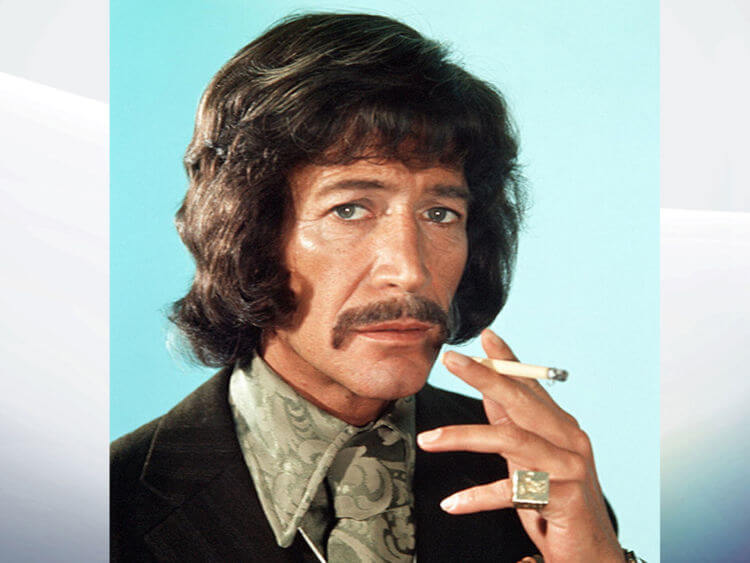
Although he kept his true age – and, indeed, much of his own personal biographical history (he spent time as a child during the Second World War at an internment camp for children near Shanghai) – shrouded in mystery, Peter Wyngarde (his birth name, at least, is accepted as Cyril Goldbert) was a regular on many of the classic ITV adventure series of the 1960s including The Saint and The Avengers and he appeared as No 2 in ‘Checkmate’, an episode of Patrick McGoohan’s The Prisoner in 1967. But he became an “overnight sensation” in 1969 when he was cast as flamboyant thriller author/investigator Jason King on ITC’s Department S (think X Files without the torches…or monsters or alien invasion conspiracies) alongside Rosemary Nicholls and Joel Fabiani. TV had never seen a hero quite like King, with his extravagant champagne-quaffing lifestyle, extraordinary fashion sense and luxurious handlebar moustache – although he was nearly an entirely different character, as he told Hellfire Club (named after his appearance in the legendary ‘A Touch of Brimstone’ episode of The Avengers in 1966), the Peter Wyngarde Appreciation Society, just last year. “When Department S was being planned, I was told that I was going to be an Oxford professor sitting at his desk solving problems for two Americans. I thought it was a bit dull. Then I had the bright idea of basing him on Ian Fleming. The clothes were sort of an extension of me. I was a bit of a peacock then. I loved clothes, but I didn’t much like the kind of fashions that were about for guys in those days. Then I saw a picture of an Edwardian riding jacket and I thought it had real style, so I did some drawings and had a similar coat made.” King was an instant hit, a worldwide sex symbol, and the character was resurrected in a less-successful and more mundane series (Jason King) in 1971.
Wyngarde more or less disappeared from TV screens during the rest of the decade but his career flourished on stage and he had little time for critics who insisted that his career had become derailed. “That’s because they haven’t the intellect to notice that there are mediums other than television,” he told Hellfire Club. “If you’re not on the box every week they think you’ve disappeared! My first love was always the stage, and after Jason King ended, I couldn’t wait to return to the theatre. I feel that if some journalists had a brain, they’d be dangerous!”
Notable screen roles followed though. In 1980 he played Klytus in Flash Gordon and appeared in the 1984 Doctor Who serial ‘Planet of Fire’ alongside Peter Davison’s fifth Doctor. “I’d been asked to appear in the series in the 1970’s, but it was due to be filmed entirely on a soundstage, which I’d have hated, so I turned it down. When ‘Planet of Fire’ came about, I was told that we’d be filming almost exclusively on location (the serial was filmed in Lanzarote), so I jumped at the chance. It gave me the opportunity to do a lot of sunbathing between my scenes, which I love.” In 1994 he appeared as Langdale Pike in Granada’s acclaimed Memoirs of Sherlock Holmes series with Jeremy Brett as the Great Detective. He left a stage production in 1995 after contracting a throat infection and much of his subsequent work involved providing voiceovers and narrations and attending fan events celebrating the ‘golden age’ of classic and cult television.
A vibrant, outspoken and outrageous talent – “He was one of the most unique, original and creative actors that I have ever seen,” said his agent/manager Thomas Bowington – Peter Wyngarde might not have scaled the professional heights of some of his contemporaries and Jason King might not have been the work he’d have preferred to have been remembered for but in both Department S and his own series he created a character and an image which in many ways helped define both a generation and a decade.
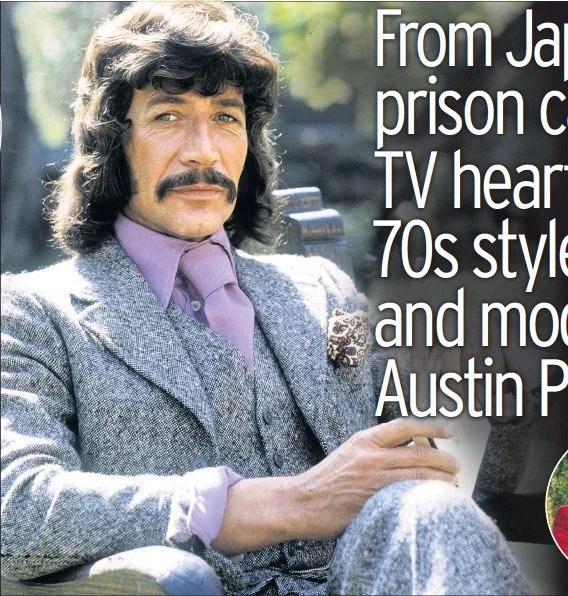
A STYLE legend to the end, actor Peter Wyngarde was still laying down the law on fashion from his hospital bed in his final days. The Jason King star, whose medallion man dress sense ruled the 1970s and helped spawn Austin Powers, remained adamant that a shirt collar should always remain unbuttoned.
But beyond the sideburns, chest hair, lapels and moustache was the sharp mind of a former inmate of a Japanese prison camp whose life was as eventful as any of the shows he starred in.
After Peter died on Monday, aged 90, manager Thomas Bowington said: “Peter was one of the most unique, original and creative actors that I have ever seen.
“There were few things in life he didn’t know. I sometimes called him the King because he simply knew everything.
“He was a mentor on everything, from sports cars to how to make a good cup of tea and how to do a tie and shirt.
“Even in hospital he was saying that you shouldn’t button the upper button on a shirt. He was the most exceptional person I met in my life and a great mentor and teacher.”
Peter’s real name, the date and place of his birth and his parents’ nationalities and occupations are unclear.
But the most commonly accepted story is that he was born Cyril Goldbert at his aunt’s home in Marseilles in 1927.
His parents split and his dad – believed to have been a British diplomat – took him to Shanghai in 1937, months before war broke out between China and Japan.
Peter was imprisoned by the Japanese invaders aged 16 in 1943, possibly having been mistaken for his father, who was away working and had left Peter with a neighbouring Swiss family.
He once recalled: “I was herded into a truck for an internment camp for civilians about 40 miles outside Shanghai.
“All the other children were members of British families, but I was alone.”
He spent the rest of the war as a Japanese prisoner alongside novelist JG Ballard, who later wrote Empire of the Sun about their experiences. Peter
became a runner in the camp, passing news to inmates in neighbouring huts, until he was caught. As punishment a guard broke both his feet with a rifle butt and he had four weeks in solitary confinement. But he continued to pass on coded messages in plays staged in the prison canteen. He said: “The main character, Macbeth, was Churchill. “Some important news event, like the D-Day Landings, would become, ‘Our heroes have arrived among the Gauls and taken over Brittany.” At the end of the war he sailed to Liverpool, where the prisoners were welcomed home by King George VI, who shook Peter’s hand – and, he later claimed, pinned a medal on his chest.
The malnourished teen was sent to a sanatorium in Switzerland to recover. On his return he studied law at Oxford University for three months, before winning a place at RADA.
There he trained as an actor alongside Albert Finney, Peter O’Toole and Alan Bates – who became his flatmate.
One of his first small film roles put him alongside Bette Davis, who asked to see him between shoots.
He said: “She had a cigarette in a holder. From behind a huge plume of smoke I heard her snarl, “I hear you have a big c**k”. And with that, she handed me a note: ‘Be here at 8.30!’
“It had the address of her hotel and the room number. Apparently she went through every actor and technician under the age of 25 at the studio.”
Peter was in 1956 film Alexander the Great with Richard Burton, and in
the 1960s appeared in The Avengers and The Saint. But his big break came in 1969 when he got the role of novelist-turned-detective Jason King in spy series Department S.
His character was written as a deskbound Oxford professor, but Peter had other ideas. He said: “I thought it was a bit dull.
“I had the bright idea of basing him on Ian Fleming. The clothes were sort of an extension of me. I’d go to the tailor with my designs. I was a bit of a peacock.”
His wide-lapelled three-piece suits, turned-back cuffs and matching shirt-and-tie combos helped inspire Mike Myers’ spoof spy Austin Powers.
Peter became a heart-throb and style-setter, once beating Cliff Richard and George Best to be crowned Britain’s best-dressed man.
Soon he was the star of his own spin-off show, Jason King, with love interests played by actresses including Kate O’Mara, Felicity Kendal and Stephanie Beacham.
Peter said of them: “They were the television equivalent of a Bond girl.”
He told how he “fell in love with” Felicity on her first day, saying: “She is and was one of the most attractive things around.”
He enjoyed a brief music career, but his 1970 spoken-word album When Sex Leers Its Inquisitive Head, including a single entitled Rape, was branded “inappropriate” and withdrawn from sale after four days. It did not dent his popularity, though, and in Australia he was mobbed by 30,000 female fans at Sydney Airport.
But Peter’s career was destroyed after he was convicted of “gross indecency” with a lorry driver in the toilets of Gloucester bus station in 1975. Married to actress Dorinda Stevens for three years in the 1950s, Peter said he was straight and denied claims of a relationship with Alan Bates. He said: “I’ve never had any doubt about my sexuality. I’m mad about women.”
But he disappeared from television and battled alcoholism, admitting later: “I drank myself to a standstill.”
After quitting booze he made a comeback in the 1980s, in Doctor Who: The Planet of Fire, and as General Klytus in Flash Gordon.
Manager Mr Bowington said the star continued working until the end and had several roles and appearances lined up before he passed away.
But he never returned to the peak of his powers, and said his career was ruined by “small-minded people”.
He died at the Chelsea and Westminster Hospital in Central London having been ill for several months – an uncharacteristically ordinary end to a most extraordinary life.
Please note that some of the additional information provided here by the journalist named below may not be accurate, so it should be treated with caution.
Sunday, 19th December 1993
The distinguished British actor said Jason King had champagne and strawberries for breakfast, just as he did.
Jason King went from national idol to national joke the day the first narrow lapel was sold in Carnaby Street in 1977. It was for that reason, I was told when attempting to set up an interview, that Peter Wyngarde, the actor who played him, was wary of meeting the press. All we ever talked about was Jason King, the kipper-tied, crushed-velveted, flared-trousered, ridiculous star of ITV’s Seventies detective series Department S. Wyngarde, it was explained to me, was a classical actor of many parts.
Given this warning, and the fact it is about a thousand years since Department S, I hadn’t expected even to recognise Wyngarde. Imagine my surprise, then, when I spot at the other end of the hotel where we are to lunch – Jason King, complete with a scaled-down version of the Zapata moustache, a raw silk shirt and a flash suit. The toll the years have taken (he claims not to know his age but it must be 60-odd) only becomes apparent when he removes his fedora to reveal a dramatic reduction in the bouffant.
‘I decided Jason King was going to be an extension of me,’ he says over his dietetically-correct lunch. ‘I was not going to have a superimposed personality. I was inclined to be a bit of a dandy, used to go to the tailor with my designs. And my hair was long because I had been in this Chekhov play, The Duel, at the Duke of York’s.’
The pilot of Department S was reshown, firmly within inverted commas, by BBC 2 on August Bank Holiday. A previewer brilliantly described a typical plot as having King drive his Rolls to a country mansion occupied by a mad colonel and mini-skirted daughter, drink a bottle of claret, smoke 50 cigarettes, and flirt with the daughter before arresting everybody. Not every detail is correct, however. Wyngarde points out it was a Bentley, not a Roller, and champagne, not claret.
Wyngarde boasts that he is the last of the matinee idols, an incurable romantic. He was married once, briefly, at the age of 22, and had a love affair with Vivien Leigh: wooing women has never been a problem. ‘My problem,’ he says, ‘is that they fall in love with Jason King and find I am really Dracula.’
Is he really Dracula?
‘I am, in a way, very sadistic. There is a sadistic streak in me, but I think women quite like it. You have got to be tough with them, really tough and then they love you for it. Treat them with any amount of charm, that’s how you start – then you throw off the frock coat and put on the bearskin. I love being the caveman. The reason I think I am sadistic is that men have a side that hates their mothers. Having so many women is a revenge against your mother.’
He was taken from his mother when he was tiny. She was, he says, beautiful, a Claudette Colbert lookalike and racing driver, ‘quite a gel and chased by men all over the place’. His father, a diplomat, divorced her and took Peter with him to China only months before war with Japan broke out. While separated from him, Wyngarde was captured and taken to the same internment camp as J. G. Ballard. The alternative explanation for his ‘sadism’ lies there, in Lung-hui. He has an indelible memory of two adults fighting over a quarter inch of ribbon fish.
Back in England, after public school and the briefest period reading law at Oxford, he began acting in rep. By his account, his was a prodigious but unreliable talent. One day, having just seen Rebecca at the cinema, he played the racket-swinging juvenile lead in a drawing-room comedy in the style of a moody Olivier: ‘All the other actors thought I’d gone mad and I was sacked.’ On another occasion, in a Somerset Maugham play, he broke into a popular song of the time ‘A Room with a View’. He was sacked again. Nevertheless, he made it to the West End.
His stories, told the long way round, present him as more misunderstood than misunderstanding. He lost the lead in a production of King John by telling the director how he should direct it. In St Joan he insisted that Shaw had missed Joan’s sexuality. Having been promised the title role in the film Alexander the Great, he lost out to Richard Burton and, compensated with a subsidiary part, was left on the cutting room floor when the studio objected to the homo-eroticism of their scene together.
Department S and the spin-off, Jason King, brought Wyngarde all the fame he could want, and then some. Voted by Australian women the man they most wanted an affair with, he arrived at Sydney airport in 1970 and was mobbed. ‘It was one of the most terrifying experiences I can remember. They got me to the ground, tore my clothes, debagged me and cut my hair off (he points downwards). I was in hospital for three days.’
Feeling he could take the part of Jason King no further, he left after two series. What happened next? Readers with sufficient memory will recall a trivial, but embarrassing, court conviction in 1975, an incident I have agreed not to dwell upon. He says only that it upset him deeply at the time, but that he does not feel it affected his career. In the late 1970s and 1980s his career nevertheless described a steep decline: small parts, small films, panto. He blames type-casting.
‘In the late 1970s the whole character had gone into a kind of icebox. He was still loved but he was no longer hot. But all the scripts called for Jason King. It was the lack of imagination of producers. And if you’re a perfectionist – horrible expression – which is what I am, producers don’t like it, because they are so mediocre.’
So how does he rate himself? ‘Extremely high. I mean why am I doing it if I don’t think it’s important?’
Wyngarde’s anecdotes not only exhaust my reserves of tape but stretch over two lunches. He is full of the future too. He has just filmed an episode of Granada’s Sherlock Holmes (his cameo was enthusiastically applauded when it was shown last month as part of the National Film Theatre’s Holmes season) and he wants to direct.
‘Someone said, ‘It’s so sad about you, Peter – if only you had said ‘yes’ more often’, he tells me over lunch number one. Peter Hall apparently once complained that Wyngarde ‘was not a company man’. I have no idea whether this is the real reason for his fall. And, likeable though he is, I doubt if Peter will ever be quite honest enough with himself to discover the true cause either.


 Right: Peter as Willy Pentridge





















 PETER WYNGARDE: The Official Website