During his career, Peter worked with many legends of the cinema, stage and television. This is a directory of some of the more memorable ones.
Alfie ALLEN: The Comic Strip Presents… The Yob (TV), 1988
Keith ALLEN: The Comic Strip Presents… The Yob (TV), 1988
Lily ALLEN: The Comic Strip Presents… The Yob (TV), 1988
Patrick ALLEN: The Widows of Jaffa (TV), 1957; A Midsummer Night’s Dream (TV), 1964
Nicholas AMER: Nom-de-Plum – Child of Her Time (TV), 1956:
Harry ANDREWS: Alexander the Great (Film), 1956
Anthony ANDREWS: Time and the Conway’s (Stage), 1975
Tony ANHOLT: Jason King – A Thin Band Of Air (TV), 1972
Peter ARNE: Night Conspirators (TV) 1963; Department S – The Double Death of Charlie Crippen, 1969: Department S – Soup Of The Day (TV), 1969
Anne ASTON: Jason King – Wanna Buy A Television Series? (TV), 1972
Dame Peggy ASHCROFT: The Good Woman of Setzuan (Stage),1956
Jane ASHER: Out of this World Cold Equations (TV),1962
Peter BARKWORTH: The Revenue Men – The Exile (TV), 1967
Alexandra BASTEDO: The Champions – The Invisible Man (TV), 1968; Department S – The Man Who Got A New Face (TV), 1969;
Ralph BATES: Jason King – Variations On A Theme (TV), 1972
Hermione BADDELEY: The Gambler (TV) 1956; The Innocents (Film), 1960; Mother Adam (Stage),1972
George BAKER: Rupert of Henzu (TV), 1964 – (See below left: Peter with Barbara Shelley and George Baker)
Stanley BAKER: Alexander the Great (Film), 1956
Lucille BALL: Lucy in London (TV),1966
Trevor BANNISTER: Turn Out The Light – A Boyhood Haunt (TV), 1967
Ronnie BARKER: Nom-de-Plum – Child of Her Time (TV), 1956: The Two Ronnies Christmas Special (TV), 1984
Alfie BASS: A Midsummer Night’s Dream (TV), 1964
Stephanie BEACHAM: Jason King – Chapter One: The Company I Keep (TV), 1972
Norman BIRD: Night of the Eagle/Burn Witch Burn (Film), 1962
Ed BISHOP: The Saint – The Man Who Likes Lions (TV), 1972
Norman BIRD: Night of the Eagle/Burn Witch Burn (Film), 1962
Isla BLAIR Department S – The Treasure Of The Costa Del Sol (TV), 1969; Jason King – A Red, Red Rose Forever (TV), 1972
Janet BLAIR: Night of the Eagle/Burn Witch Burn (Film), 1962
Brian BLESSED: Flash Gordon (Film), 1980
Clare BLOOM: Rosalynde (Radio play), 1955; Alexander the Great (Film), 1956; Duel of Angels (Stage), 1958
James BOLAM: Present Laughter (TV),1964
Peter BOWLES: Department S – Six Days (TV), 1969
Wilfred BRAMBLE: The Widows of Jaffa (TV), 1957
Bernard BRESSLAW: Nom-De-Plum – The Man From The Sea (TV), 1956: The Spies (Stage),1966: A Midsummer Night’s Dream (TV), 1964
Jeremy BRETT: The Memoirs of Sherlock Holmes – The Three Gables (TV),1993
Johnny BRIGGS: Department S – The Perfect Operation (TV), 1969
Tony BRITTON: The Rose Without A Thorn (TV), 1953
Brenda BRUCE: No Laughing Matter (Stage), 1957
Michael BRYANT: Jesus of Nazareth, 1956; The Duel (Stage),1968
Alfie BURKE: Peter and Burke were in the same repertory company, and performed together in numerous plays
Raymond BURR: Underground (Stage),1983 (See right: Peter with Raymond Burr)
Richard BURTON: Alexander the Great (Film), 1956
Patrick CARGILL: Negative Evidence (TV), 1961: The Revenue Men – The Exile (TV), 1967; Babes in the Wood (Stage), 1986
Tony CAUNTER: Department S – The Man In The Elegant Room (TV), 1969: Wait Until Dark (Stage), 1989
Christopher CAZENOVE: Time and the Conways (Stage), 1975
Warren CLARKE: The Comic Strip Presents… The Yob (TV), 1988
Carol CLEVELAND: The Avengers – A Touch of Brimstone, 1966
Fay COMPTON: The Sleeping Prince (Radio) 1967
Kenneth CONNOR: As You Like It (Radio), 1953; Stage By Stage – The Relapse (A.K.A. Virtue in Danger) (TV), 1954
Tom CONTI: The Queen of Scots (TV), 1961
Adrianne CORRI: Sword of Freedom (TV), 1957: Epilogue To Capricorn (TV),1959; Department S – The Man Who Got A New Face (TV), 1969;
George COULOURIS: R3 – The Forum (TV), 1965; The Prisoner – Checkmate, 1967
Peter CRAZE: Engineer Extraordinary (TV), 1959 (See below left: Peter with Peter Craze)
Rosalie CRUTCHLEY: The Gambler (TV) 1956; A Tale of Two Cities (TV), 1957; The Prisoner – Checkmate (TV), 1967: Crown Court – The Son Of My Father, 1984
Ronnie CORBETT: The Two Ronnies Christmas Special (TV), 1984
Bill COSBY: I, Spy – Let’s Kill Karlovassi (TV),1966
Robert CULP: I, Spy – Let’s Kill Karlovassi (TV), 1966
Peter CUSHING: Alexander the Great (Film), 1956
Timothy DALTON: Flash Gordon (Film), 1980
Stuart DAMON: The Champions – The Invisible Man (TV), 1967; Department S – Handicap Dead (TV), 1969
Windsor DAVIES: Turn Out The Lights – A Boyhood Haunt (TV), 1967
Dame Judi DENCH: Time Remembered (Radio), 1965
Edward DE SOUZA: A Tale of Two Cities (TV), 1957; Two Gentlemen of Verona (Audio Book), 1965; Department S – The Double Death of Char lie Crippen (TV), 1969;
George DEVINE: The Good Woman of Setzuan (Stage), 1956
Basil DIGNHAM: Sword of Freedom – The Sicilian (TV), 1957; The Champions – The Invisible Man (TV), 1968; Department S – The Duplicated Man (TV), 1969; Department S – The Perfect Operation (TV), 1969; Department S – One Of Our Aircraft Is Empty (TV), 1969; Jason King – Variations On A Theme (TV), 1972
Vernon DOBCHEFF: Casino Real (TV), 1963
Amanda DONOHOE: Tank Malling (Film),1989
Michelle DOTRICE: Jason King – Buried in the Cold Cold Ground, 1972
Gabrielle DRAKE: The Servant (Stage), 1967
Paul EDDINGTON: Negative Evidence (TV), 1961 (See below righ: Peter with Paul Eddington)
Adrian EDMONDSON: The Comic Strip Presents… The Yob (TV), 1988
Denholm ELLIOTT: The Man In Room 17 – First Steal Six Eggs (TV),1966
Michael ELPHICK: Department S – Who Plays The Dummy? (TV), 1969
Clifford EVANS: Jason King – Every Picture Tells A Story (TV), 1972: Jason King – A Kiss For A Beautiful Killer (TV), 1972
Dame Edith EVANS: The Light is Dark Enough (TV),1958; This Book Is News (TV), 1958
Fennella FIELDING: The Country Wife (Stage), 1990; Graham Roos album, ‘Quest’ – Track: ‘Night Dragon’ (2010).
Gerald FLOOD: Crown Court (TV), 1983; Underground (Stage), 1983
Steve FORREST: The Baron – The Legions of Ammak (TV), 1969
William FRANKLYN: Guilty Conscience (Stage), 1986
Liz FRASER: Jason King – An Author In Search Of Two Characters (TV), 1972
Ronald FRASER: Nom-De-Plum – The Man From The Sea (TV), 1956
Caron GARDNER: Department S – Black Out (TV), 1969
Julian GLOVER: Jason King – Variations On A Theme (TV), 1972
Colin GORDON: Night of the Eagle/Burn Witch Burn (Film), 1962; Department S – A Small War of Nerves (TV), 1969
Hannah GORDON: Light Up The Sky (Stage), 1986
Dulcie GRAY: Time and the Conways (Stage),1975
Nigel GREEN: The Bridge (TV), 1956; Jason King – As Easy As A.B.C. (TV), 1972
Sir Alec GUINNESS: Hamlet (Stage), 1951
Michael GWYNN: Department S – A Ticket To Nowhere (TV), 1969; Jason King – All That Glisters parts I & II (TV), 1972
Patricia HAINES: Night Conspirators (Stage),1963; Department S – The Trojan Tanker (TV), 1969
John HALLEM: Department S – The Man In The Elegant Room (TV), 1969; Jason King – A Thin Band Of Air (TV), 1972; Flash Gordon (Film), 1980
Sheila HANCOCK: Bulman – I Met A Man Who Wasn’t There (TV), 1985
Jenny HANLEY: Department S – The Bones of Byrom Blain (TV), 1969
Edward HARDWICKE: The Memoirs of Sherlock Holmes – The Three Gables (TV),
Juliete HARMER: Department S – A Ticket To Nowhere (TV), 1969; Department S – The Man In The Elegant Room (TV), 1969; Jason King – Uneasy Lies The Head (TV), 1972
Laurence HARVEY: As You Like It – (Radio play), 1953
Linda HAYDEN: Underground (Stage), 1983
Patricia HAYES: The Hammer House of Mystery and Suspense – And The Wall Came Tumbling Down (TV), 1984
James HAYTER: The Duel (Stage), 1968
Joan HEAL: The Taming of the Shrew (Stage), 1959 (See below left, Peter with Joan Heal)
Don HENDERSON: Bulman – I Saw A Man Who Wasn’t There (TV), 1985
Ian HENDRY: The Crossfire (TV),1967
Benny HILL: A Midsummer Night’s Dream (TV),1964
Jan HOLDEN: Present Laughter (TV), 1964; Guilty Conscience (Stage), 1986
Sally HOME: Rupert of Hentzau (TV), 1963; Night Conspirators (TV, 1962; Dracula (Stage), 1975
(Sir) Anthony HOPKINS: Department S – A Small War of Nerves (TV), 1969
Michael HORDEN: Alexander the Great (Film), 1956
Donald HOUSTON: Department S – The Ghost of Mary Burnham (TV), 1969′ Jason King – A Deadly Line In Digits (TV), 1972
Sally Anne HOWES: The King and I (Stage), 1976
Gareth HUNT: The Hammer House of Mystery and Suspense – And The Wall Came Tumbling Down (TV), 1984
Freda JACKSON: Duel of Angels (Stage), 1960
Colin JEAVONS: Nom-de-Plum – Child of Her Time (TV), 1956: The Avengers – A Touch of Brimstone (TV), 1966
Mervyn JOHNS: A Tale of Two Cities (TV), 1957
Stratford JOHNS: Department S – The Man In The Elegant Room (TV), 1969;
Margaret JOHNSON: Night of the Eagle/Burn Witch Burn (Film), 1962
Freddie JONES: Jason King – A Deadly Line In Digits (TV), 1972
Sam J. JONES: Flash Gordon, 1980
Yootha JOYCE: Turn Out The Lights – A Boyhood Haunt (T), 1967; Jason King – If It’s Got To Go, It’s Got To Go (TV), 1972
John JUNKIN: Jason King – That Isn’t Me, It’s Someone Else (TV. 1972
Felicity KENDAL: Jason King – Toki (TV), 1972
Jean KENT: Love Her To Death (TV), 1957; Epilogue to Capricorn (TV), 1959
Deborah KERR: The Innocents (Film), 1960
David KILLICK: The King and I (Stage), 1974; Dracula (Stage), 1975; Present Laughter (Stage), 1975
(Sir) Ben KINGSLEY: Turn Out The Lights – ‘The Boyhood Haunt’ (TV), 1967
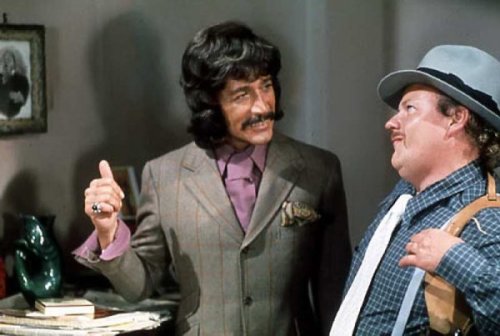
Roy KINNEAR: Jason King – An Author In Search Of Two Characters (TV), 1972 (See below right: Peter with Roy Kinnear)
Ronald LACEY: Department S – The Soup of the Day (TV), 1969: Jason King – Regular character, 1972
Dinsdale LANDEN: Jason King – It’s Too Bad About Auntie (TV), 1972
John LAURIE: The Queen of Scots (TV), 1961; The Two Gentlemen of Verona (Audio Book), 1965
Wilfred LAWSON: Liebelei (TV), 1954: Will Shakespeare (TV), 1953; L’Aiglon (TV), 1953
Rosemary LEACH: Sherlock Holmes – The Illustrious Client (TV),1966
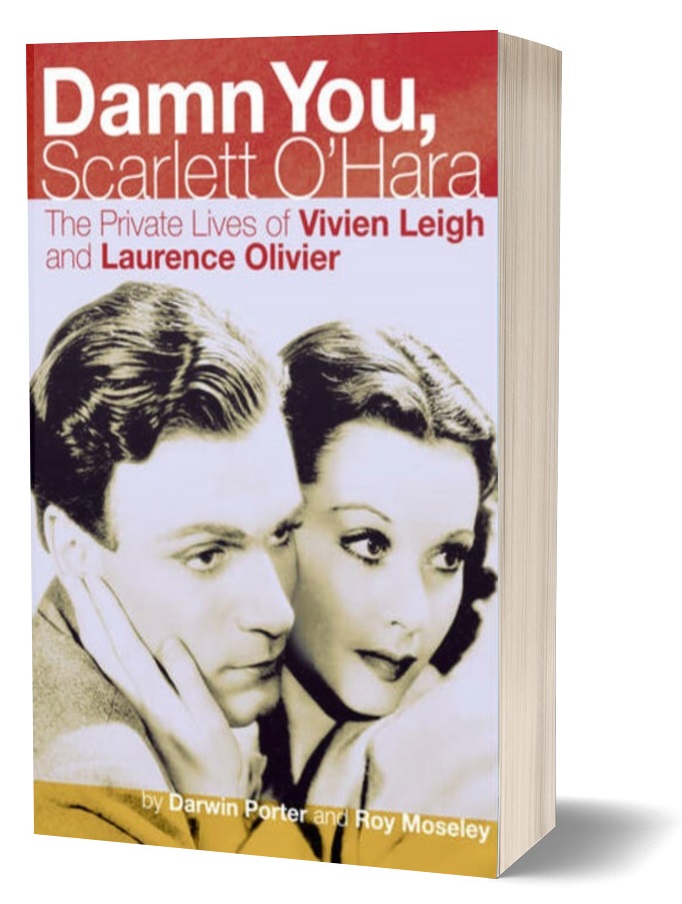
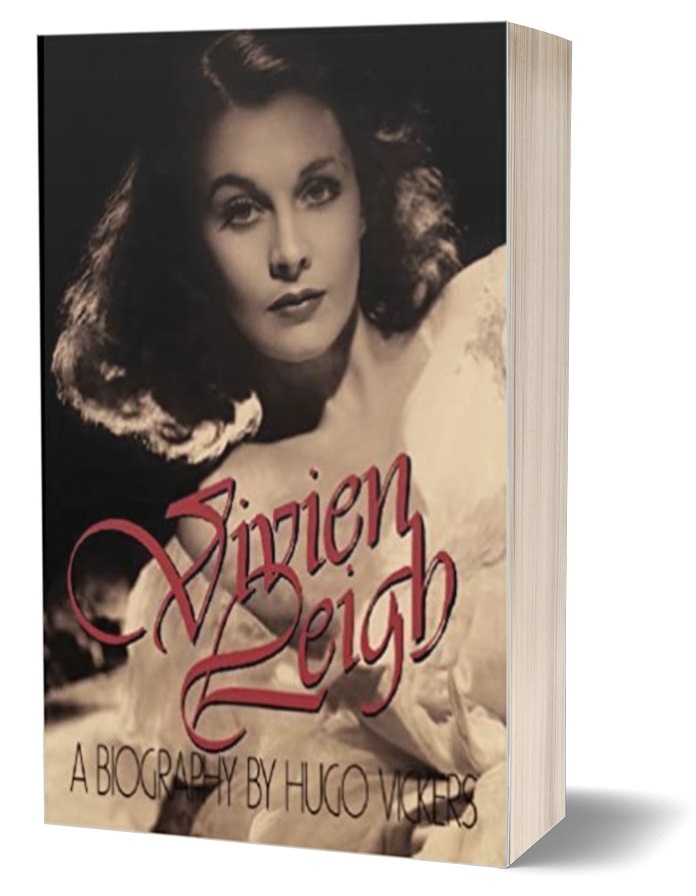
Vivien LEIGH: Duel of Angels (Stage), 1958/1960
Ronald LEIGH-HUNT: Nights Conspirators (Stage & TV): Department S – The Perfect Operation (TV), 1969; Underground (Stage), 1983
John Le MESURIER: Jason King – If It’s Got To Go, It’s Got To Go (TV), 1972
Tutte LEMKOW: The Dybbuk (TV), 1952; L’Aiglon (TV), 1953; Will Shakespeare (TV), 1953; Siege Of Sidney Street (Film); Jason King – To Russia With… Panache! (TV), 1972
Sue LLOYD: Present Laughter (Stage), 1975; Department S – Black Out (TV), 1969: Jason King – An Author In Search Of Two Characters (TV), 1972
Charles LLOYD PACK: The Enchanted (Stage), 1953; St Joan (Stage), 1954; Jesus of Nazareth, 1956; Evening in Hochsberg (TV), 1957: Jason King – The Constance Missal (TV), 1972
David LODGE: The Avengers – Epic (TV), 1967
Arthur LOWE: Turn Out The Lights (TV),1967
Cyril LUCKHAM: Night Conspirators (Stage & TV), 1963; A Midsummer Night’s Dream (TV), 1964; Department S – The Perfect Operation (TV), 1969
Patrick MACNEE: The Avengers – A Touch of Brimstone (TV); The Avengers – Epic (TV), 1967
Philip MADOC: Casino Real (TV), 1963; Jason King – A Page Before Dying (TV), 1972
Elspeth MARCH: The Duel (Stage) 1968; Anastasia (Stage),1976; Underground (Stage), 1983
Fredric MARCH: Alexander the Great (Film), 1956
David MARKHAM: Rope (TV), 1950
Millicent MARTIN: The Sleeping Prince (Radio) 1967
Alfred MARX: Jason King – Nadine (TV), 1972
Jean MARSH: Department S – The Perfect Operation (TV), 1969
Anna MASSEY: Esso World Theatre (TV),1966; A Midsummer Night’s Dream (TV), 1964
Patrick McGOOHAN: The Prisoner – Checkmate (TV), 1967
Siobhán McKENNA: St. Joan (Stage), 1956
Leo McKERN: Also Amongst The Prophets (TV), 1955; The Widows of Jaffa (TV), 1957 (See below, left: Peter with Leo McKern and Patrick Allan at rehearsals for, The Widows of Jaffa)
Keith MICHELL: Loyalties (TV), 1962
Bernard MILES: This Book Is News (TV), 1958
Spike MILLIGAN: Babes in the Wood (Stage), 1986
Isla MIRANDA: The Baron – The Legions of Ammak (TV), 1966; The Avengers – Epic (TV), 1967
John MOFFAT: The Adventures of Ben Gunn (TV), 1958
Geraldine MOFFAT: Department S – Six Days (TV), 1969; Jason King – The Constance Missal (TV), 1972
Kieron MOORE: The Siege of Sidney Street (Film), 1961; Department S – Dead Men Die Twice (TV), 1969; Jason King – Toki (TV), 1972
Sir Roger MOORE: The Saint – The Man Who Likes Lions (TV), 1966: The Saint – The Gadic Collection (TV), 1967 (See below right: Peter with Roger Moore in The Saint – The Man Who Likes Lions)
Peggy MOUNT: Brighton Festival – Royal Pavillion (Stage), 1974
Patrick MOWER: Department S – The Soup of the Day (TV), 1969; Jason King – Nadine (TV), 1972
Barbara MURRAY: The Rose Without A Thorn (TV), 1953; Present Laughter (TV), 1964; Department S – Dead Men Die Twice (TV), 1969; Jason King – A Red, Red Rose Forever (TV), 1972
Patrica NEAL: The Royal Family of Broadway (TV), 1958
Hildegaard NEIL: Present Laughter (Stage),1975; Jason King – Flamingoes Only Fly On Tuesdays (TV), 1972
Anthony NICHOLLS: Night of the Eagle/Burn Witch Burn (Film), 1962; Department S – The Ghost of Mary Burnham (TV), 1962
Bill NIGHY: Crown Court – The Son Of My Father (TV), 1984
Derek NIMMO: Duel of Angels (Stage), 1958
Merle OBERON: Assignment Foreign legion – The Debt (TV), 1956
Edmond O’BRIEN: Walt Disney’s Wonderful World of Color: The Further Adventures of Gallagher (TV), 1965
Richard O’BRIEN: Flash Gordon (Film), 1980
Kate O’MARA: Department S – Who Plays The Dummy (TV), 1969; Jason King – A Kiss For A Beautiful Killer (TV), 1972; Light Up The Sky (Stage) 1985; As You Like It (Stage), 1988
Julian ORCHARD: A Tale of Two Cities (TV), 1957
John OSBOURNE: The Good Woman of Setzuan (Stage), 1956
Richard O’SULLIVAN: The Queen of Scots (TV), 1961
Lance PERCIVAL: Jason King – Uneasy Lies The Head (TV), 1972
Esme PERCY: Rosalynde (Radio play), 1955; The Good Woman of Setzuan (Stage), 1956
Bill PERTWEE: Babes in the Wood (Stage), 1986
Ingid PITT: Jason King – Nadine (TV), 1972 (See below left: Peter with Ingrid Pitt)
Donald PLEASENCE: The Dybbuk (TV), 1952
Joan PLOWRIGHT: The Good Woman of Setzuan (Stage), 1956
Olaf POOLEY: English Family Robinson – Free Passage Home (TV), 1957: The Adventures of Ben Gunn (TV), 1958; Jason King – A Page Before Dying (TV), 1972
Nyree Dawn PORTER: The Duel (Stage), 1968
Eric PORTMAN: The Crossfire (TV), 1967
Mike PRATT: Jason King – A Red, Red Rose Forever (TV), 1972
Dennis PRICE: Jason King – Regular Character (TV), 1972
David PROWSE: The Champions – The Invisible Man (TV), 1968; Department S – The Treasure of the Costa del Sol (TV0; 1969
Edmund PURDOM: Sword of Freedom – The Sicilian (TV), 1957;
Ronald RADD: The Bridge (TV), 1956; Ordeal By Fire (TV), 1957; A Tale of Two Cities (TV), 1957; Night Conspirators (Stage & TV), 1963; The Prisoner – Checkmate (TV), 1967; Department S – The Perfect Operation (TV), 1969; Jason King – Chapter One: The Company I Keep (TV), 1972 (See below right: Peter with Ronald Radd in The Prisoner)
Ronald REAGAN: General Electric Theatre – Time To Go Now (TV), 1958
Sir Michael REDGRAVE: The Innocents (Film), 1960
Wendy RICHARD: Turn Out The Lights – A Boyhood Haunt (TV), 1967
Sir Ralph RICHARDSON: Cyrano de Bergerac (Audio Recording), 1964; Esso World Theatre (TV), 1964
Dame Diana RIGG: The Avengers – A Touch of Brimstone (TV), 1966; The Avengers – Epic (TV), 1967
Edina RONAY: The Servant (Stage), 1966; Department S – Les Fluers Du Mal (TV), 1969; Department S – One Of Our Aircraft Is Empty (TV), 1969; Jason King – A Thin Band Of Air (TV), 1972
Michael ROBBINS: On Trial – Sir Roger Casement (TV), 1960; Turn Out The Light – A Boyhood Haunt (TV), 1967: Department S – The Man In The Elegant Room (TV), 1969
Toby ROBINS: Department S – The Man In The Elegant Room (TV), 1969; Jason King – Chapter One: The Company I Keep (TV), 1972; Jason King – That Isn’t Me, It’s Someone Else (TV), 1972; Present Laughter (Stage), 1975
Anton RODGERS: Department S – One Of Our Aircraft Is Empty (TV), 1969; Jason King – All That Glisters parts I & II (TV), 1972
Guy ROLFE: Department S – Death On Reflection (TV), 1969;
Ruth ROMAN: I, Spy – Let’s Kill Karlovassi (TV), 1966 (See below left: Peter with Ruth Roman)
Margaret RUTHERFORD: Time Remembered (Stage), 1964; (Radio Play), 1965
John SAVIDENT: Department S – The Double Death of Charlie Crippen (TV), 1969
John SCHLESSINGER: Will Shakespeare (TV), 1953
Tony SELBY: Department S – The Man From X (TV), 1969
1958
Elizabeth SELLARS: Will Shakespeare (TV), 1953; Ordeal By Fire (TV), 1957; The Shining Hour (TV),
Barbara SHELLEY: Rupert of Henzu (TV),1964; The Revenue Men – The Exile (TV), 1967
Frank SINGUINEAU: The Widows of Jaffa (TV), 1957; Night of the Eagle (Film), 1962
Donald SINDEN: The Siege of Sidney Street (Film),1960
Madeline SMITH: Jason King – All That Glisters parts I & II (TV), 1972
Sir Patrick STEWART: Cyrano De Bergerac (Stage), 1959
Sheila STEAFEL: Hotel Riviera (TV), 1957
Nigel STOCK: Sherlock Holmes – The Illustrious Client (TV), 1965 (See below right: Peter with Nigel Stock)
Dudley SUTTON: Department S – Handicap Dead (TV), 1969
Ann TODD: Duel of Angels, (Stage), 1958
Chaim TOPOL: Flash Gordon (Film), 1980
Patrick TROUGHTON: Nom-De-Plum – The Man From The Sea (TV), 1956; Ordeal By Fire (TV), 1957; Night Conspirators (Stage), 1963; Jason King – That’s Not Me, It’s Someone Else (TV), 1972
Mary URE: Duel of Angels (Stage), 1960; The Two Character Play (Stage), 1967 (see below left: Peter with Mary Ure in Duel of Angels)
Anthony VALENTINE: Department S – The Soup of the Day (TV), 1969
Wanda VENTHAM: Department S – The Man From X (TV), 1969
Richard VERNON: The Man In Room 17 – First Steal Six Eggs (TV), 1966
Max VON SYDOW: Flash Gordon (Film), 1980
Billie WHITELAW: Terminus – Hour of Decision (TV), 1955
Kenneth WILLIAMS: St Joan (Stage), 1954
Douglas WILMER: Rosalynde (Radio play), 1955; St Joan (Stage), 1954; Sherlock Holmes – The Illustrious Client (TV), 1965
Ray WINSTON: Tank Malling (Film), 1989
John WOODVINE: The Taming of the Shrew (Stage), 1959; Turn Out The Lights – A Boyhood Haunt (TV), 1967
Jeremy YOUNG: Department S – The Pied Piper of Hambledown (TV), 1969


























 PETER WYNGARDE: The Official Website