INTERVIEW: 19

Please note that some of the additional information provided here by the journalist named below may not be accurate, so it should be treated with caution.


September 1972

Peter Wyngarde Or Is It Really Jason King?

Spend an evening with him and decide for yourself who is influencing whom and, at the same time, discover the vulnerable side of this colourful actor.

“Are you ready for a couple of parties tonight in Kilburn and South Ockendon?” That assured voice that needs absolutely no further description to viewers of Department S. He said it as if rare magic awaited in these two exotic locales. “Debbie wants to come too,” he went on, “and as a blonde in a chiffon see-through blouse might amuse them, maybe we should take her. But this time we’ll have to take a dictionary for her to study in the car. Otherwise, it takes so long explaining the meaning of every other word”.

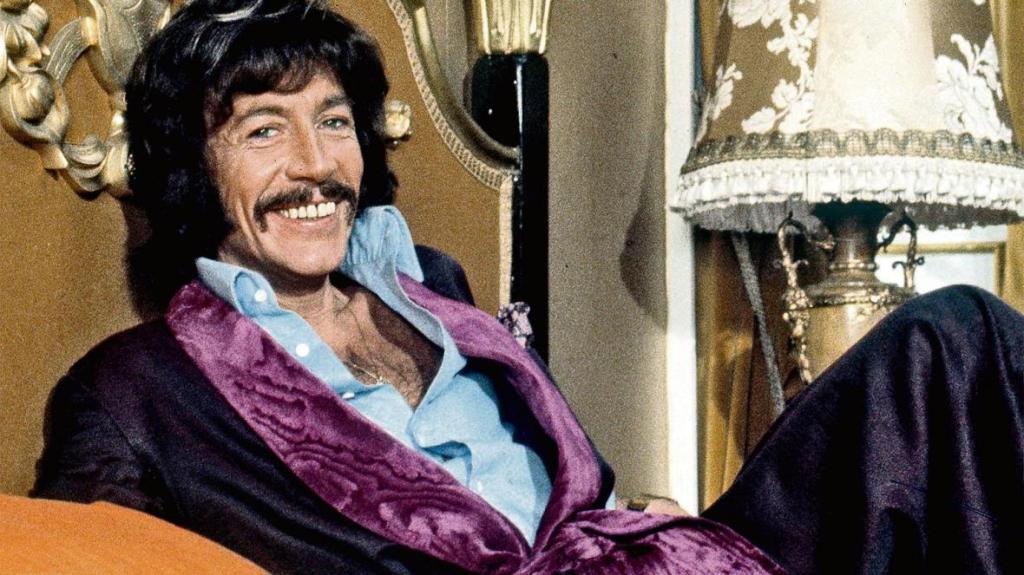
It was raining heavily when I reached the Wyngarde flat, on the ground floor of a Georgian house in London’s fashionable Kensington. Debbie – a breath-taking if more than slightly dizzy model in her early 20s opened the front door – hurriedly kissed my cheek and rushed back to the lounge where Peter was lying across a buttoned leather couch looking tanned and terrific. The tan came from two months in Australia where his series has topped everything else in the ratings. It wasn’t too difficult for him to look terrific as our favourite blonde laid herself beside him, closed her eyes, and wrapped her arms around him as if every moment had to be savoured.

I began wondering if playing Jason King on the show was really just Peter Wyngarde playing himself, when his large Afghan hound, Yousef, trotted forward, grabbed a mouthful of Debbie’s black crepe trousers and started pulling determinedly. Diverting his attention, Peter produced a rubber ball, threw it in the corner and the four legs shot quite determinedly after it.

“Let me get you a little drink,” offered Debbie, “‘cause I need another little gin”.

On the coffee table I notice to copy of ‘Which?’ magazine in which the Consumer Association reports on products they have tested each month. “I’ve been reading all about witches lately because my aunt was one,” Debbie said. Peter started an explanatory sentence and then stopped as if realising that it wouldn’t really help.

Yousef had begun running around the room as if it were a greyhound stadium, and lamp shades were rocking precariously.

Peter led him away before throwing a white feather boa over Debbie’s shoulders and whisking us through a few yards of torrential rain to his Bentley. We’d been driving several minutes before I realised that the amply-filled gin glass was still being nursed lovingly in her hands.

Party No.1 in Kilburn was being given by a young man called Brian Chatham who ran a pop group called Flaming Youth[1] that Peter raved about. The first Wyngarde LP was issued recently, mostly comprising of his talking – with the exception of one track, a French number, which revealed an equally impressive singing voice. Peter is considering several offers to perform in cabaret, with Flaming Youth lending moral support.

We didn’t stay long at the first party. For as I interviewed a shapely Bunny Girl about the Playboy club, Debbie was refilling her glass enough to make a formidable stain when she emptied gin and tonic by accident – she solemnly assured us – down another model’s red dress.

“Shall I drop you off at your place now?” he questioned when we were back in the Bentley, holding the wheel with Jason King decisiveness. Debbie whispered that she was perfectly alright as she cuddled closer to him.

Party No.2 took some finding. We finally located it on the ground floor of a block of flats in South Ockendon; it was being given by Danny someone, Peter’s painter and decorator.

“It’s a bit of a safari,” he explained as we arrived, “but I’ve been invited to five previous excitements there and never made it. If I don’t this time, someone is bound to accuse me of being too big time to bother”.

Debbie might have been Brigitte Bardot for the impact she cast. Within two minutes, a dozen tough-looking males in suits were listening to her hold forth as she stood sipping from the same glass in the kitchen, directly beneath a bare 150-Watt bulb. Various other gentlemen of the parish dragged their nervous, but excited, wives into the Wyngarde presence stating: “When you’re on she won’t leave the telly alone”. After this had happened a dozen times, Peter began to wane visibly, I was chatting to a local welder about a little period during which he had been detained in Brixton Prison, when Peter pleaded in a desperate voice: “I must go soon and make sure Yousef takes those powders for his stomach disorder”.

We found that, for some obscure reason, Debbie was standing on the kitchen table demonstrating a dance routine she had performed on a TV commercial recently. A selection of heavily-panting young men were watching her every movement as Peter folded his arms, leaned against the door and almost yawned as he inquired: “Do you plan to stay, Madam, or do your entire act?”

Distant thunder sounded ominously as we finally drove off, most of the party goers were standing on the curb in the pouring rain waving to us. “It was fun,” Debbie sighed before falling asleep, and I eased the glass from her fingers.

When we stopped at her block in Chelsea, Peter gently lifted her into his arms and carried her upstairs. Then we drove back to his place and he made coffee.

We chatted for a while about Debbie’s dizzy performance. I told him that with exuberant beauties like that around, plus is efficient housekeeper, Blossom Daniels – a cheerful and attractive brunette in her 30s who comes in most afternoons – I couldn’t see him settling down to marriage. He was married one – in his early 20’s.

A church clock announced 4am somewhere and, as Peter lay in his favourite position across his leather couch, he patted Yousef each time a chime sounded. “We were too young and I was too much in the middle of my struggling-for-recognition days for it to have lasted.

“I often feel I’d love children,” he continued slowly and thoughtfully, but I’m so set in my ways I wouldn’t be easy to live with now. The only marriage that I could see working for me is where we lived in our own separate establishments and came together for a few days a week. I’ve had my freedom for so long that I relish it more than anything. Also, I’m far more suspicious of women than I used to be. I’ve been let down by them in the past and it’s left me hesitant now of getting involved”.

In the past he’d mentioned a girl he’d been in love with, and an affair that lasted three years[2]. I asked him if he was thinking of that time and the actress, who we’ll call ‘Elaine’.

He nodded and studied the ceiling a while: “Maybe I’ve been too career minded sometimes. I’ve never hesitated to do acting jobs that took me away for months on end. Elaine was in a long run in the West End while I recorded several TV plays in New York, and the day I returned she went on tour for months. Many actresses seem to tell themselves that their love-life is something that they can come back to, and devote time to, when they are big stars. Our relationship was a fatal combination as I was probably telling myself the same thing.

“I’ve read about, and can understand, the strain of wartime marriages and the problems couples had staying faithful to someone they didn’t see for months, or even years, on end. One needs to be very undersexed to stay faithful to someone who is out of sight for long periods. She hasn’t made it big yet, but she could still do it. Luck is such an important factor in show business”.

Peter eyes were closed and I waited for him to continue. He didn’t and, eventually, as I crept away, I felt that his memory of it was slowly diminishing. For as I open the door and faced the early morning rain, his regular breathing told me he was asleep.

Interview by Mike McGrath.

INTERVIEW: Cult TV Magazine

Please note that some of the additional information provided here by the journalist named below may not be accurate, so it should be treated with caution.


January 1998

To Play The King

I think my mother wanted twins you know,” Peter Wyngarde laughs. “That would explain why she called me Peter-Paul”. Whatever the truth behind his claim, Wyngarde certainly leaves you with the impression that even as a child he was a larger than life character. “I was an outrageous little show off!” he says grinning. “A precocious, hideous little child!”

Born in the French town of Marseille in 1933, Wyngarde’s childhood was anything but conventional. At the age of six he found himself a ‘guest’ in Japanese Prisoner of War Camp, and it was here that he discovered the love of performing that has stayed with him since. “I remember the camp doctor: he was a marvellous fellow who would read stories to the children in the camp, Wyngarde recalls of his time in captivity. One was Dr Jekyll and Mr Hyde. I was so taken with it that I decided to dramatises it for the monthly camp show.

“In these camps the officers had little garden plots,” he continues. One day I was wandering past the plot outside the commandant’s headquarters, I saw this little rabbit nibbling at some lettuce. As Dr Jekyll tests his experiments on animals first I decided to commandeer this rabbit for my play. So I brought this little rabbit on stage. Unfortunately it was a timid thing and the story required it to go beserk when given the elixir by Dr Jekyll.

“To do this in front of an audience I had to pretend that he’d gone wild. I crouched down behind the table on which I was doing my experiments making terrible noises and throwing up feathers and things… As I was doing all this I looked into the wings and there I saw the commandant yelling and shouting at me and making these awful Japanese noises. He’d recognised his rabbit and was furious.

“At this point in my play I returned the rabbit to the cardboard box I used as a hutch, and then got up from behind the table having become this horrible raving monster that was Mr Hyde,” Wyngarde continues gleefully. “To this day I don’t know if it was because of the Japanese belief in ghosts or what but the commandant looked at me as if I’d gone mad demented and then run away! It was wonderful but the best thing was nobody in the audience knew all this drama was going on backstage.”

Premonitions of success

From this original introduction to the world of acting, Wyngarde went on to become an established stage and screen performer with guest appearances in numerous series and television plays. That all changed in 1969 when he found himself cast in as the hero in an ITC series.

“I remember I was on tour in Wales with an American play called Pick-Up Girl,” Wyngarde says, launching into another anecdote. “I was understudying the lead at the time and I remember I went to see a Welsh clairvoyant with a girlfriend. The first thing this woman said was very strange. She told me there was somebody on my right shoulder looking after me. Now my father had died about a year before and she described him absolutely perfectly, then she said, ‘Very soon you are going to be in front of millions, not hundreds, not thousands but millions – millions and millions of people are going to be watching you.”

To play the fop

Not long after this prediction, Wyngarde found himself appearing at the Duke of York theatre in London in checkoffs The Duel[1]. Shortly before it opened he was approached by producers Monty Berman and Dennis Spooner to appear in the new television series Department S. Wyngarde’s initial reaction was muted

“The last thing on earth I wanted to do was a television series,” he says. “I don’t know why – I’d already done two. One was called Epilogue to Capricorn which is a title I’ve always remembered because I liked it so much. The title didn’t have anything to do with the story we just made it up as we went along. That was tremendous fun, it was a Cliff-hanger you see and you never knew what was going to happen next. Eventually in the penultimate episode I was blown up. By the last episode the audience couldn’t wait to see if I’d survive. Of course I came back wounded and bandaged appropriately – and as attractively – as possible.

“Anyway I was in a bit of a state after the first night of The Duel,” Wyngarde continues. “I remember I’d thrown a party to celebrate the opening and invited Monty Berman. After a first night the newspapers arrive in the early hours with the reviews. I’d learned that reading reviews caused one to change one’s performance, therefore I never read my own reviews. I warned the rest of the cast about this saying, ‘I didn’t want anybody to tell me what the notices are. You can all read them while I go off to the toilet and type myself but when I come back I don’t want to know anything about them.’

A change of heart

“I came back about half an hour later and had never seen such terrible faces,” Wyngarde chuckles. “I didn’t need to read the notices! As it happened it was totally untrue, the notices were actually terribly good, but the cast was so determined not to show they were happy that they had me thining, ‘Oh my God, we’re going to close tomorrow’. There and then I got hold of my napkin and I wrote on it, ‘I PETER WYNGARDE AND PREPARED TO DO YOUR NEW TELEVISION SERIES. SIGNED PETER WYNGARDE. I PASSED IT TO MONTY BERMAN AND THAT’S HOW I GOT THE PART IN DEPARTMENT S.”

Wyngarde had no idea just out important that 14-word napkin was to become. In the meantime, a lot of work still had to be done to create the character of Jason King. Unlike today’s television dramas which are all well scripted in advance, Wyngarde was given carte blanche to invent his own character.

“The original fellow was to be a professor but that wasn’t for me,” he recalls. “So I went to Sevenoaks to stay with friends – Michael Bryant and his wife – for the weekend. I told them that I had to come up with a name for this character. By the end of the weekend I had thought of Jason, Michael’s wife at thought of King, and Michael had come up with the Bentley as the only car this character would be seen in.”

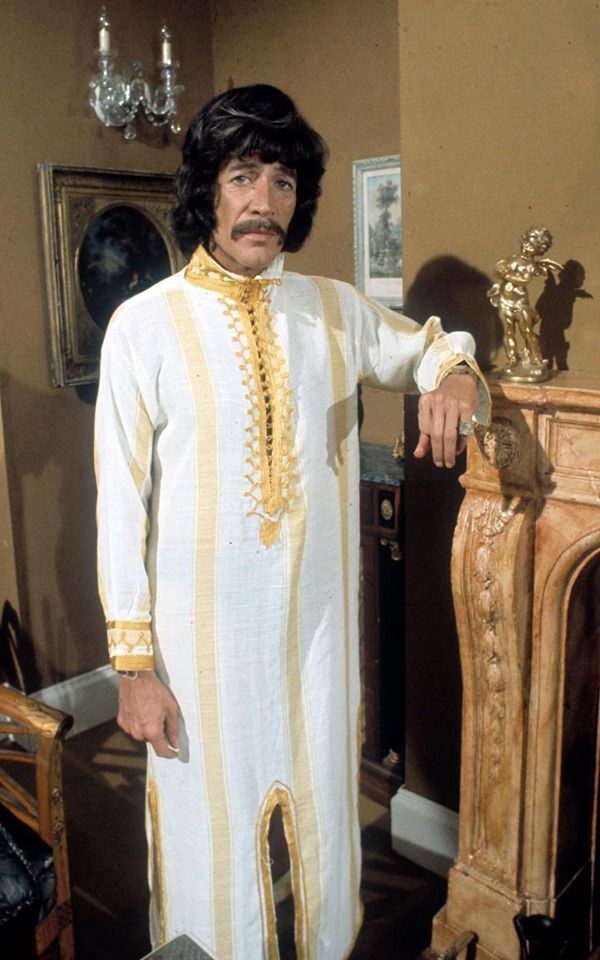
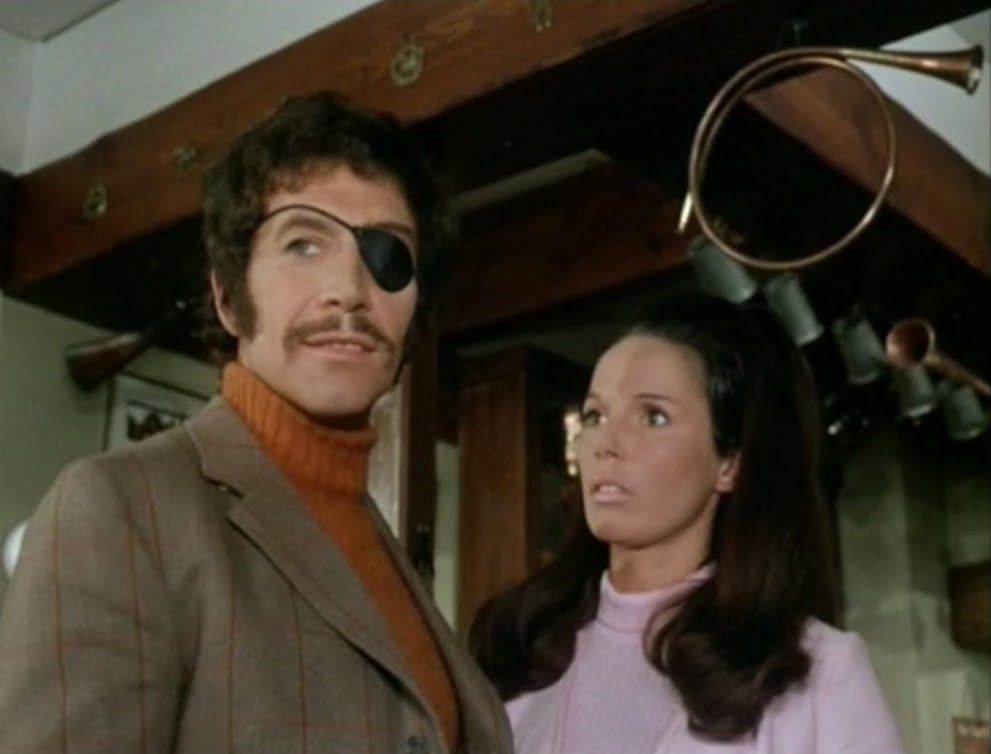
Jason King also became famous for his highly fashionable – if somewhat outrageous – clothes sense. When he stops laughing at the memory, Wyngarde confirms that he himself has to admit responsibility for choosing the coughs, shirts antis worn on screen.

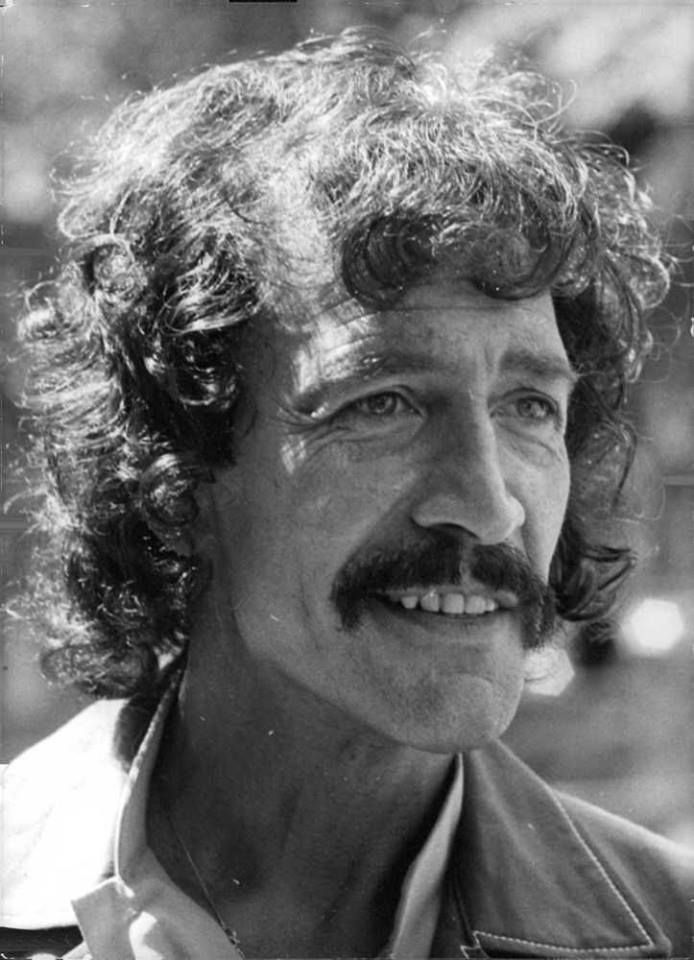
This image has an empty alt attribute; its file name is methode_times_prod_web_bin_f52f6416-fc75-11e7-a64e-221285d37bf1.jpg

Sex appeal

Whatever you say about his dress sense though, Wyngarde or at least Jason King topped a poll which voted him the man most Australian women would like to lose their virginity to.

“I didn’t know about that at the time of course, Wyngarde says with a chuckle. I’d been asked to launch the new Channel 7 in Australia as apparently I was the most popular character around at the time. When I boarded my plane for Sydney I saw these five guys and it was obvious from the long blond hair and clothes that they were a pop group. I was in my usual torn jeans and tatty old T-shirt -that’s how I normally travelled. After all, if you have to change into suits five times then the last thing you want to wear the rest of the time is a suit. So there I was in this tatty gear hiding behind a pair of dark glasses,” Wyngarde continues. Nobody recognised me. I thought it was wonderful. As we were about to land I looked out of the window and I saw millions of women. I immediately assumed they were waiting for the pop group. I never thought for one moment it had anything to do with me.

“I sat there thinking, those poor little buggers are going to be killed,” he laughs. “I watched them leave the plane and followed a short distance behind. Suddenly I saw these screaming women surge forward. I did a detour thinking they’d continue after the band, but when I looked back they weren’t going for those five guys at all. They were going for me!

“Well they got me to the ground, tore my clothes, cut my hair, and landed me in hospital for three days,” he concludes with the wince. “Everything was cut and I still got a scar to prove it. It was as if I was a feast… to be eaten raw. It was terrifying.”

Going solo

This popularity was a sign of things to come. After 28 episodes of Department S Wyngarde was offered a second series. This time, however, it was to be called simply Jason King, and was to star him alone. However, Wyngarde reveals that one person in particular wasn’t as an enamoured with the character as the public.

“Lew Grade, who was then out of ITC, phoned me up,” Wyngarde explains. “I thought he was going to tell me they were not repeating Department S. When I went to see him he said to me, ‘I don’t like you. My idea of a hero is somebody blond with blue eyes, like Roger Moore. You with your funny dark hair, moustache, and terrible clothes are not my idea of a hero at all, but my wife loves you, so you have to do another series.

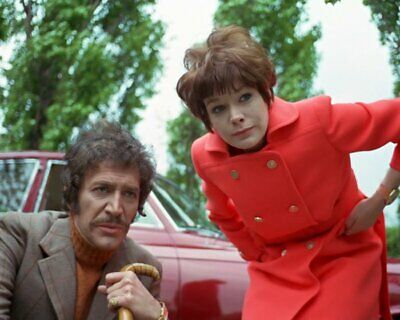
“At that point I had no idea they were going to drop Joel Fabiani and Rosemary Nichols, my Co-stars in Department S,” he continues. “That was a shock and I objected – I said I wouldn’t do it unless the other two were reinstated. However, it was explained to me that dropping them was mainly a question of expense. I could either have better stories and locations on my own, or the other two back and studio-bound stories.

“So I was really sort of blackmailed because I knew we had to go out on location to make the series work,” Wyngarde argues. “Having said all that, I don’t think the 26 Jason King episodes were as good as the Department S ones they are the better type of story.”

Whither Wyngarde?

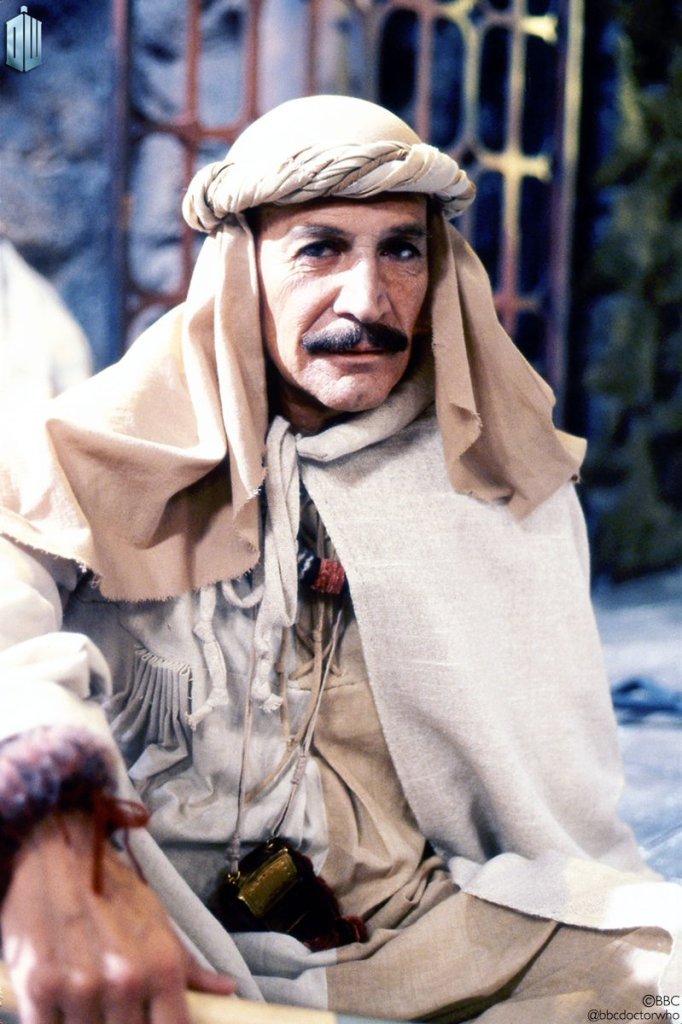
Jason King finished its run in May 1972 and was followed by a long period in which the flamboyant actor was sadly missing from television screens, although he did pop up in the 1980 remake of Flash Gordon. This was rectified in 1984 when he accepted the part of Timanov in the Doctor Who story Planet of Fire.

“Somebody said to me you’ve done The Avengers, The Saint, The Prisoner and The Baron, you must do Doctor Who,” Wyngarde says of his decision to return to cult television. I had no idea what Doctor Who about, mainly because I was working a lot and you didn’t get a chance to see much television. I made a point of watching some episodes and found I liked it. The first story I was offered I didn’t do because there was too much studio work, and I hate studio work. However, with Planet of Fire the character was interesting, and there was the idea of going to Lanzarote. You only have to tell me we’re going where the sun is and I am there before I’ve even read the script!

“In fact, the script on this occasion was a bit tricky,” he says. “We changed a lot of the lines – some of them were a bit corny. I found the idea of the story fascinating and that was what appealed to me. Once you have the idea you can take it from there and rewrite the dialogue.”

Wait a minute. Actors rewriting the script? Laughing, Wyngarde explains that this is the reason people don’t employ him.

“Directors are terrified of me when I do rewrites,” he chuckles mischievously. “They think I’m going to take over, and I usually do. I think you have to do that but nobody else thinks so, especially not the directors!”

Interview by Liam-Michael Rudden

____________________

Notes:

[1] In fact, The Duel was staged 22 years after Pick-Up Girl

INTERVIEW: Burn Witch Burn

In 2014, Peter recorded a 24-minute interview for the US blue-ray release of Burn Witch Burn – A.K.A. Night of the Eagle. This is a transcript of that interview.

“When my agent sent me the original script, then called Burn, Witch, Burn, I didn’t like it very much. It was very much in the not-as-good-as-Hammer-film category and frankly I threw it out of my window! The Innocents had received considerable critical acclaim – and my performance as Peter Quint in particular – so I was a bit cock-a-hoop and another horror (but not nearly as good) on top of two others I was offered brought about this suicidal career abandonment.

“More in pique than anger I left my flat and walked down the High Street where my action was confirmed when I was recognised by several passers-by, convincing myself that I’d made the right decision in turning down Burn, Witch, Burn! Actors are such insecure creatures that a look of recognition from a complete stranger meant more than a serious analysis of an author’s hard-earned book.

“And then the object of my whole change of plan appeared suddenly before me. It was smiling at me in the courtyard of a famous brand of motor car’s showroom. It was also the most beautiful sports car I had ever seen in my life: The hand-built 2-litre Bristol 405. I fell in love and simply had to have it. The builder and designer and former racing driver Anthony Crooke didn’t need to give me any spiel – I was convinced. The price at that time, exorbitant for any car, was £5,000 17sh and 6d! I asked if I could use his phone and called my bank. I had £12 10sh 0d in my account. I then called my agent [and said] ‘Dennis, you know the script you sent me called Burn, Witch, Burn? Well, I’ll do it for £5,000 17sh 6d! Call me back on…’ and I gave him the number of the showroom.

“At that time that was a hefty amount for an unknown – remember Vivien Leigh got £12,000 for Gone with the Wind, and it was a good half hour later before I knew I was doing the film. Luckily I had a wonderfully sympathetic and clever director in Sydney Hayers who endeared himself to me forever when he said ‘You know just ‘cause I don’t speak posh like you doesn’t mean I ain’t educated – I’m a BA Cambridge, ya know!’ Together we had a go at the overloaded script and hopefully brought it to its final cult version.

“Poor Mr Bloch, I believe, had the same treatment with Psycho by Sir Alfred Hitchcock, which means his is the real credit, as a film script is simply a blueprint for a director to interpret. A bit like a menu, which the chef’s brilliance concocts and we enjoy according to our tastes.

“On a more pragmatic note was the horrifying experience I underwent with the eagle. I thought as my other co-star in the film [after Janet Blair] was the eagle I would like to introduce myself. So I went up to the third floor of the building we were using as dressing rooms at Elstree Studios.

“I knocked on the door and heard a grunt which I discovered later to belong to the trainer. I said I was playing the professor who encountered the eagle and wanted to meet her/him if it were convenient. The dressing room was opened after the sound of a bolt and key being dislodged and I was confronted with a huge pair of talons the size of two of Mike Tyson’s fists holding onto the gloved hand of his/her trainer. (I never found out what the sex was). The bird was hooded and the trainer’s face obscured by the door. It had a 3ft wing span, as the trainer informed me, and was a Golden Spanish Eagle. In spite of appearances [he said] it was one of the gentlest and well-behaved birds he had ever trained. He then tickled it under its enormous and frightening-looking beak and made purring noises before inviting me to do the same.

“I thanked him but declined, making some pathetic excuse about my lunch being served, which was a cue for him to suggest I fed the bird. It was then that he opened the door further to reveal his face and a dark cavern where his right eye had once been. His right hand produced a chunk of raw meat, which he shoved at me to take as he removed the bird’s hood.

“’Put it on me hand,’ he gruffly ordered in a thick Scots accent. ‘Quickly,’ he added, ‘or it’ll think yer hand’s for afters!’

“I didn’t need much encouragement and as the bird started tearing into his lunch I thanked the trainer and made a swift exit.

“When I did the series Department S and later Jason King I had the best stunt double in the business, Paul Weston, but on the Eagle I was still a vain, hot-headed and stupid young actor. I’d never seen an actor show real fear on the screen. So, in spite of meeting my co-star briefly I decided I would do the scene when the (now) giant eagle flew down from the top of the school building and attacked me.

“I’d asked Sydney to position the camera so it caught the real emotion as the bird came for me. A steel frame was put in front of the cameraman, Frank Watts, to protect him but I had no such defence. Instead a huge chunk of steak was strapped to my back as I lay behind the statue whose head the bird toppled on its thunderous descent on me. Can you believe anybody else but an actor being so stupid?

“Needless to say we only had one take and if the insurance company knew the film would’ve been cancelled. I took full responsibility and of course the crew were thrilled. They were getting the real McCoy. Frank, who worked on both series afterwards, said he’d never been so scared, so you can imagine how I felt.

“But the eagle was, rightly, the real trooper in spite of not having been fed for four days. It made straight for the camera, got its talons into the meat which looked like my back and left the shot as professionally to the applause of the cast and crew!

“The last day of shooting – the burning of the house – was a traumatic experience. As Janet (Blair) and I watched she was called urgently to the phone and, as the flames rose to the challenge of a sudden gust of wind, I saw a very white-faced Janet moving towards me and I just managed to hold her as she collapsed.

“Her husband in Beverly Hills had phoned her to say their house had just burned down to the ground. Thank God her children were safe. She caught the next plane for L.A.”

INTERVIEW: Rosemary Nicols – Anne Sharpe

She was the actress who claimed to be “The spy Jason King left out in the cold” Rosemary Nicols, alias Annabelle Hurst in Department S.

After landing the plum role of Anna Sargeyevna classic serial, ‘Fathers and Sons’, shown on BBC 1 in October of 1971 Rosemary, then 29, all but disappeared from our screens after marrying her 53-year-old fiancé, Freddie Mullaly and starting a new life in Malta. Her hopes that the part of Anna Sargeyevna would change her career was short lived, although her feeling towards the series which made her an household name would remain with her for much longer.

“I was not only delighted to get out of Department S, but relieved too,” says Rosemary. “After 14 months trying to make sense out of all that nonsense, the script to Father and Sons came as a real tonic”.

Although Rosemary says that she found her Co-star Joel Fabiani to be “OK”, she claims that there was a great deal of rivalry between Peter Wyngarde and herself, and was not unduly troubled when the series came to an end.

“28 shows were quite enough,” she admits. “In any other series each of the main characters have a chance to be the central person in about one in three episodes. That just never happened in Department S, and I got awfully fed up playing a constant second fiddle to Peter Wyngarde”.

During an interview in 1997, Peter said that both he and Joel Ms. Nicols difficult to work with. “We didn’t hit it off with ‘knickers’ as we called her, because she decided she was going to be the star of the show and actors don’t like that”

On the same week that Fathers and Sons was broadcast, Rosemary had her first novel published, and says that this was a turning in her career. Annabel Hurst was now nothing but a distant memory.

“I tried to develop the role as far as I was allowed, but it was obvious Annabelle had to have a lot more to do and say if she was to be anything effective.

“But they just didn’t let that happen. There was obviously a distinct Jason King bias, and I knew I was only there to add glamour to the show, so I wasn’t a bit sorry when they dropped me from the spin-off series”.

Anne Sharpe appeared in a total of six episodes of Jason king between September 1971 and March 1972. Her role was of Nicola harvester Jason King’s publisher.

How did you come to be involved with Jason King series?

I was cast to play a running part in the series as Nicola harvester. I was tested for the part.

Was the role that you played meant to be a one off initially, or were you aware from the outset that you’d be a regular cast member?

I was more or less told that the character would pop up throughout the series, but I was not sure exactly which episodes until a few weeks in advance.

How did you find working with Peter Wyngarde?

Wonderfully professional he has a great sense of humour.

Was paying anything to clean lyrics Jason king off screen?

No. Is a serious thinking person who sends himself up.

How much import did Peter have into the storyline in script?

Not a lot. He only added little character injections to his part.

From the episodes in which you appeared, do you have a favourite?

No, not really. It is so long ago now I really can’t remember.

Have you seen any of the episodes since they were released on video, and if so, what do you think of them 20 years on?

No, I was not aware that there were any videos made.

Would you like to have the opportunity to work with Peter again at some point in the future?

Most certainly theatre work perhaps, as he has a great stage presence, and wonderfully melodious voice.

Can you recall any amusing incidents which occur during filming of the serious?

No, as this was over 20 years ago. Since then, I have become a wife and a mother, more or less given up the show business scene.

INTERVIEW: TV Times (Australian edition)

Please note that some of the additional information provided here by the journalist named below may not be accurate, so it should be treated with caution.


Saturday 20th August, 1969

It’s Super-Bodgie To The Rescue

Department S is one of the world’s most unusual police departments. It is an offshoot of Interpol in Paris and is asked to handle the sort of cases that baffle everyone else. One of the bureau’s investigators is just as unusual. He is Jason King, a dandy and a crime novelist who dabbles in criminology. The role is played by Peter Wyngarde who, by sheer flamboyance, as turned the show, seen on the Seven Network in Australia, into a personal triumph. George Tremlett in London, talks to Peter Wyngarde, who turned to TV after a stage and movie career.

Words ebb and flow like Welch poetry, with dramatic flourishes of a the silk cuffed hand, a raised eyebrow, a smile and sudden change of accent. It’s impossible to capture Peter Wyngarde in a phrase.

He’s a visual speaker: an artist with words: a born raconteur, telling self-deprecating stories with neat epigrams.

Do you know any Australian anecdotes I asked him?

“Only Bobby Helpmann,” he said with a mischievous grin, pausing for a laugh, and adding that he thought I was going to be a genuine, 100%, third generation Aussie myself.

“Then I could have been terribly rude to you. I was looking forward to it. There’s that lovely Mick Jagger going out there to play Ned Kelly and they’re screaming because he’s not a big butch farmer! And yet nobody minds Richard Green playing Robin Hood and he’s nearly a

dwarf. Oh dear. I shouldn’t have said that, should I? Anyway, he’s terribly short and not 6 foot 6 inches as you would expect Robin Hood to be. And then I couldn’t believe it when I read that the Hair album was being banned as obscene. If the Australian’s think that Hair obscene, they’ll think Jason King is filthy!

Well, maybe not filthy. Just unusual. F.C, Kennedy, TVT’s critic, has christened him Super-Bodgie after witnessing his incredible feats in Department S.

“I’ve never been to Australia. I was asked to go there with Vivien Leigh in Duel of Angels, but I turned it down and I’m glad I did. When the play got to Melbourne, members of the audience started walking out because they’d gone to the theatre expected to see Scarlett O’Hara. The only thing that they were interested in was her dress which was made by Dior. It’s fantastic that a country as large as Australia can be so parochial and insular. They need more young people running the country. We’re 20 years out of date in this country, but they’re 40 years out of date. It’s like the British Raj in the 1930s… There, will that do! Have I been outrageous?”

“Jason King is a 1970s character and that’s how I’ve always tried to portray him,”

Although the thought may offend, the words never do. His style is so puckish, his wit so rare – like an Oscar Wilde turned loose in the mod, hip, flowery, summery London of Beatledom and Kings Road fashions. That isn’t an actor you see in Department S, that’s Mark Caine and Jason King playing Peter Wyngarde – the parts are all interchangeable. He is them; they are he. The mannerisms are all his; the moustache and the thickly flowing hair are his (grown for a stage play and kept); the clothes are his – he was dressing at Mr Fish before the series made the styles so fashionable.

“Now I get letters from people asking where I get my shirts,” he said, with what appeared to be almost distaste.

Indeed one wonders what he really thinks of the fan clamour that is becoming so intense that Wyngarde now finds it difficult to step outside his front door. The other day he pulled up at a traffic light, noticed out of the corner of his eye a car full of staring people and turned slowly and elegantly round, and stuck out his tongue.

“Jason King is a 1970s character and that’s how I’ve always tried to portray him,” said Wyngarde, as we talked first in the studio, and then over lunch in the artistes restaurant at ATV.

This is his first TV series, but he’s no newcomer to the medium; starting in rep and working through seasons at the Royal Shakespeare theatre, the Old Vic, Bristol Old Vic and an 18 month stage run with Vivien Leigh, he’s gone on to play just about every kind of TV part. He’s been in Shakespeare adaptations The Taming Of The Shrew and A Midsummer Night’s Dream,. and he’s had cameo parts in The Saint, The Baron, The Prisoner and The Avengers. Hadn’t he been in Romeo and Juliet, too, I asked?

“No, that was Peter Finch,” he said. “Everybody says I am like him. When we were both younger, I was always taken for him. I understudied for him once in a play, and one night he was a bit late for a performance and I went on for the first five minutes until he came and nobody noticed the difference.”

Wyngarde says he himself has an unfortunate knack of missing performances, which led to one tumultuous scene with Vivien Leigh: “I’d missed one show because I’d been gambling for two days at Lake Tahoe in Nevada, and then I missed a plane and had to charter another one,” he said. “There I was in the plane and I turned to the chap sitting next to me and saw he had gone absolutely white, so I looked out, too, and we were surrounded by pine trees, and there was the wing but no propeller. I suddenly thought to myself, ‘We’re going to crash,’ and we did.” The next plane, hurriedly chartered, was piloted by a Gabby Hayes style character, who sat in the cockpit, chewing and muttering and it was only when we encountered a thick black fog over San Francisco that Wyngarde discovered that the pilot didn’t believe in radar! “And then the most amazing thing happened, something which I’ve never been able to explain to this day. He got me down safely, which in itself was remarkable, and as I left the plane, there was a big black car with a big black chauffeur, all dressed in black, and he stepped forward in the dense fog and said Mr Wyngarde? It was like something out of film. I said yes, got in and he drove me straight to the theatre, but to this day, I don’t know who told him to go to the airport.”

He arrived just in time for the performance, but afterwards was summoned to Vivien Leigh’s dressing room.

“She was in a terrible, terrible rage. ‘How dare you?” she raged. “I’ve never been treated like this by an actor before. I didn’t want you to come to America in the first place… and they didn’t want you and you do this to me. You’re late for show after show. No actor has ever treated me like this before.” And then she paused, hesitated, and said, “Except for one and he fell flat on his face!” And then she roared with laughter, and it was all forgotten.”

Stories, stories, stories… they kept on flowing while Wyngarde talked, skirting around the subject of his four years internment by the Japanese during the War: telling me in great detail, complete with accents, how an underworld gang boss invited him to go into business with him.

“He told me if I’d like to invest some money, he could guarantee me £8,000 pounds a year tax free – but I told him I’d got problems enough already,” said Wyngarde.

Interview by George Tremlett.

INTERVIEW: Competitors Journal

Please note that some of the additional information provided here by the journalist named below may not be accurate, so it should be treated with caution.


12th July, 1969.

Peter Wyngarde was in the process of writing a short note of congratulation on the back of a photograph of a very pretty girl. The picture was of a young mother who likes his TV Department S series so much, that she had named her baby Jason after Jason King, the novelist detective Peter has made one of the most popular characters on television. “Which is as it should be,” Peter said, approvingly. “Jason King is the man who matters. It’s right that people talk about him and not me.”

Whatever you like to think of him as, Jason King or Peter Wyngarde, he has become one of the most romantic images on TV. In the series the flamboyant, philandering Jason is a heart throb who has women at his feet, as they say. And women viewers feel much the same way about Peter, apparently.

Peter accepts all this philosophically. He doesn’t believe it will typecast him for the simple reason that it’s Jason King viewers have in mind – the character not the actor.

Nevertheless, he admitted that he and Jason have a lot in common because he was cast early enough in the production of Department S to be able to put his own ideas into the way the character should be played. He told me: “I suggested the name of Jason King, the name of his detective hero, Mark Cain, and have even thought up the titles of his books.

“His clothes are based on those I was wearing before I took over the role and a lot of the clothes are, in fact, my own”.

Peter has his own theory about the popularity of Jason King: “The character belongs to this century – to 1970. He is an original, not a carbon copy of other characters.

“Like me, Jason is an impatient man, and that is why he has a quick brain. Maybe I haven’t the same quick brain, but I have the sort of imagination that makes it easy for me to portray such a man!

“Jason is romantic, and I suppose you could say I am too. And I am capable of sending myself up, just as he does – and other people too”.

Their style and the drooping moustache are both part of the character built up by Peter.

Is he wearing a wig? He has easy answer to those who suggest that he is. He bends forward and invites them to tug his hair as hard as they like!

The last episode of this series was being filmed when I talked to Peter, and there are going to be millions of disappointed viewers when the programme comes to an end in the not-too-distant future. “There’s no talk of renewing the series,” said Peter. “So as far as I am concerned, I definitely don’t want to do anymore”.

He feels that he has been Jason King long enough, but he agreed that it was a pity that such a beautifully conceived character should be allowed to die. Even Mark Caine, the character within a character, has caught the imagination of the viewers.

And Jason King has certainly earned a prominent place in that far too small a gallery of distinctive TV heroes.

Interview by J.K. Newnham.

INTERVIEW: The South Wales Echo

Please note that some of the additional information provided here by the journalist named below may not be accurate, so it should be treated with caution.


Saturday, 8th September, 1973

Sex appeal? It’s really so simple

says the man who has more of it than most

It was a relief to see that the hair was as dark, thick and curly as ever that the black, bull moustache still swept as arrogantly across his face as ever. Rumour is that Peter Wyngarde is to play the Yul Brynner role in The King And I. And Brynner, of course, went bald for the part.

Peter, I’m pleased to say, is keeping his hair on, and he looked amused at my concern.

“I’m just going to have it tied back” he explained, “and with the make-up it really looks very own oriental.

“I’m very excited about this part because it’s different from anything I’ve done before. And, of course as I’ve been identified as Jason King for so long now it will be a refreshing change.”

It is hard to imagine the seemingly slender, elegant Wyngarde in the mighty Brynner role. At least it is until you take a closer look at the physique underneath the slim fitting wool sweater and the hip hugging grey trousers.

For he has a surprisingly powerful build. In fact, in the days before television’s Jason King he played Petruchio in The Taming Of The Shrew and wielded a very successful sword in Cyrano De Bergerac.

And he was only a young boy when he was captured by the Japanese in Shanghai and survived for years in a concentration camp. That’s how tough he really is…

“I have always believed in keeping myself in shape,” he says. “Ever since the mid-50s when I was in a play and a Hollywood tycoon turned up in my dressing room says said that he wanted me to play Alexander the Great in a new epic movie.

“He told me to get my haircut and build my body up, so I signed on at the gymnasium where I worked out twice a day for six months.

“Then Richard Burton was picked for the party instead”.

Later, a world tour of Duel Of Angels with Vivien Leigh followed, and Peter was such a success that he worked constantly for the next few years.

“Mind you, there is exercise and exercise… and I don’t believe in overdoing it,” he added cryptically.

It was in 1967 that the idea for Jason King was born and Wyngarde became a star right from the moment this series it the television screens.

And this is what brings us to the other quality which is essential for the role of the King of Siam… sheer, undeniable, raw sex appeal. All of which – as his fan mail shows – Peter Wyngarde possesses a plenty.

A group of Texas school girls claimed that he is ‘The Guy They Would Most Want To Be Lost In Space With’ and the dozens of proposals that find their way into his mail every week come from places as far afield as Fiji and the South of France.

“Women cannot bear not to be wanted, you see. I’ve watched it happen over and again. You look a girl up and down, appraising face, figure, legs the lot and then turn back to your drink or whatever you’re doing, and a couple of seconds later she’s right there beside you.

“And she wants to know why it is that you didn’t follow up that first glance. So then, maybe you are interested and you take her out a couple of times.

“And, again, if you get caught up in other things for the next few days and don’t telephone, she’ll be right there wondering why.

“The sad thing is, he went on, “that it isn’t always a deliberate attempt to intrigue the girl. It’s simply that men have so much more on their minds apart from love.

“It was Byron who said: ‘Man’s love is of man’s life a thing apart. ‘Tis woman’s all existence’. And there’s a lot of truth in that.

“A man can love a woman without thinking of her every waking moment. You see he has time for the football match, or a game of darts in the pub, or a drink with the boys. And it’s something that women just don’t understand”.

The King of Siam has countless wives to contend with, but Wyngarde was married only once in his early 20s. It lasted less than five years. Now he contemplates marriage only occasionally.

“It’s when I’m not working and I get bored and I tend to become involved.

“There was a girl I met in Australia last year who came very close to making me think that waking up and looking at her every morning for the rest of my life would be the most marvellous thing in the world”. And what happened?

Again that smile. “I fled and woke up to look at the sunrise over Bali instead”.

It was a good answer, I thought.

Interview by Mary Kaye.

INTERVIEW: Petticoat

Please note that some of the additional information provided here by the journalist named below may not be accurate, so it should be treated with caution.


18th March, 1972

Peter Wyngarde! Yes, he’s just like Jason King

Peter Wyngarde smells! This fact is constantly broadcast in glossy magazine ads and coy television commercials. It must be the mark of a man’s success that he can afford such risky exposure advertising aftershave or whatever it is. The slightest suggestion of something unsavoury, even it is it is just a gimmicky ploy to catch attention, is enough to send most strong men running – fearing for their image. But Peter Wyngarde can look happy about it. Millions of men would give their all to look, act, sound –  and, somebody obviously believes, smell like him because he has the sort of sex appeal they can only dream about. In Australia he was voted The Man Girls Would Most Like To Lose Their Virginity To.

He is staggered by the range of his appeal, especially when it has the sort of frightening repercussions it did in Australia. At Sydney airport he was knocked flat by a horde of 35,000 stampeding females who tore at his clothing and shattered his notorious cool.

He throws up his hands in horror when remembering the Australian incident. In retrospect and now seated causally in his West London living room enjoying herb tea and date cake – it seemed too appalling to be true. “God knows what they were after,” he says rolling his eyes. “I told them not to let anyone know I was coming. I just said, give me a couple of days to get over the flight. You know you look terrible after a 36-hour flight. That was in case anybody might have come.

“Just before we landed I notice this pop group in front of me. When I got off and saw these thousands of people waving and shouting, I thought it was for them, naturally. So I let them go first, I was walking across the tarmac behind them when suddenly this crowd broke the police barriers and came storming across towards us. I’d been doing that stupid thing with a newspaper so I wouldn’t be recognised, you know this!” (He demonstrates behind the marble coffee table peering at me from behind a broadsheet),

If he is surprised by the extent of his appeal, you can believe the shock it’s given the TV moguls who were dubious about his portrayal of Jason King in Department S in the first place. And wanted to drop him. It was too unconventional, too flamboyant and outrageous, just not the usual style of romantic television hero.

“I didn’t have short hair or wear tight trousers,” he explains dryly. But the ratings proved everybody wrong and ATV decided that the next series would be centred upon the character of Jason King and named after him. The first episodes of this series are now being shown.

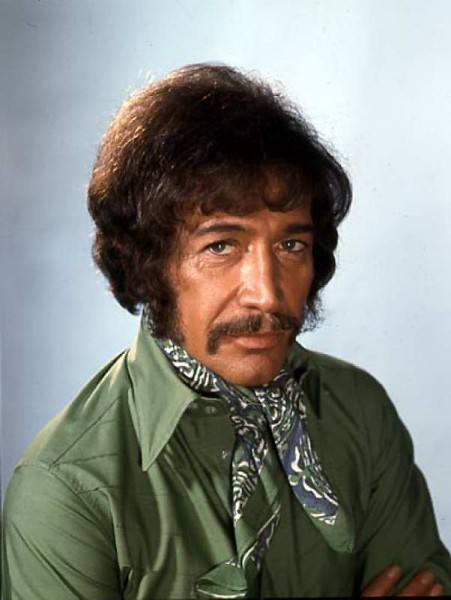
In many respects there is little difference between Peter Wyngarde and the character that has made him famous. To begin with, there is not a timid green-serge suited dresser looking behind the fabulous wardrobe you see on the box. Off the screen, even if he’s not acting Jason King, he certainly looks like him. He can safely be called a trendy, even if he is the one who starts the trends, with his long wavy brown hair, bushy sideburns and delicious moustache. He is slim, tall and boney-faced with curiously long features and wrinkles under his green eyes. His looks could be called romantically handsome, and he has a passion for exotic clothes velvets and things.

His standard of living might not be quite as grand as Jason King’s, but he is proud of his luxury flat that was originally built for Napoleon. “Not that it’s very important, but it’s nice don’t you think?” The flat is in a square that was part of a complex built in preparation for Napoleon’s invasion, with lots of secret corridors and passageways. It was to house the Emperor’s entourage. Wyngarde’s flat, the Emperor himself.

“Normally it has an Edwardian effect, but today it looks like a Victorian junk shop. The housekeeper is sick,” he explains casting a despairing eye around the perfectly ordered room. The conversation is easily switched back to Jason King. Wyngarde is a good talker.

“I suppose he’s a sort of romantic extension of myself. But I switch off once I’m away from the cameras. I don’t want to get a split personality. Actors so easily becomes schizophrenic”.

There are several reasons for accepting the role in Department S three years ago. He had rejected several offers to do a television series before. Like many actors his list of priorities was theatre before television.

“I was very broke at the time. I hadn’t earned any money because I had been working on a Chekhov play called The Duel which I very badly wanted to do. I’d actually set aside six months to do it and turn things down so I could. It was a personal success but the play was generally loathed. I was very annoyed with the critics, disillusioned, broke as I said and I liked the character of Jason King. So I took it on.”

The characters is based on Ian Fleming. King’s Mark Caine being James Bond and on Wyngarde himself. He dreamed up the names, applied parts of himself where they fitted and literally threw himself into the role, delighting in the old world of fantasy and reality.

Doing this series change the whole perspective on the acting world and its place in it. Whereas he once thought the theatre to be the be all and end all, he began to realise he was more of a film person and was good at it. He lost the rather aloof insular attitude of stage actors towards film and television work, and in spite of the fact that before Department S he had appeared in more than 120 TV plays, he had always regarded himself as a stage actor.

His stage debut was made via a Japanese internment camp in China, law school and a brief career in advertising. He walked into an audition in Brighton, read a scene from a play, and was engaged as an understudy. He moved on the repertory companies in Nottingham, Penge, Canterbury and Colchester and made his first London appearance in rival of Somerset Maugham’s Loaves and Fishes.

His brief spell in Hollywood was disastrous. His role in Alexander the Great was so drastically cut that the fruits of nearly a year’s work was rarely seen. It was a huge disappointment. Thoroughly disenchanted with film making he returned to the theatre in Duel of Angels with Vivien Leigh and only ever made three other feature films The Siege of Sidney Street, Night of the Eagle and The Innocents.

Television began to offer a lot of work, like the title role of Will Shakespeare and appearances in plays like As You Like It, Jesus of Nazareth, The Relapse and all the usual series.

He is more sympathetic than most stars to the constant recognition from his fans. “I quite like being smiled at in the street by people I don’t know. I think you have to expect it. I mean, I come into their living rooms nearly every week of the year so of course I’m rather familiar. I smile back.”

Despite the fact that during the past five years he has gone from competent actor to international television star, Peter Wyngarde

doesn’t think he has changed very much. “I’ve been told I haven’t changed since I was at Nottingham Rep.15 years ago. But I suppose that the one big change, that’s in my attitude towards working in television as opposed to theatre.”

His public life has changed substantially. Apart from the constant recognition, the promotional tours and receptions, there are also functions like the Miss World Contest. This year he was invited to be one of the judges and accepted with relish at the prospect of so many beautiful girls.

On the subject of his own sex appeal he has little to say. “I wouldn’t attempt to define it. It would be silly. If I analysed it, it would probably go away. Someone once told me that I had a beautiful voice. So I said right, the first thing to do is forget it. You can’t afford to get self-conscious about things like that. It’s fatal. Do you know what I mean?”

Despite his television success, he has by no means abandoned the theatre. He has plans to play Don Juan. And despite the success of Jason King the womaniser, crime writing and solver, he wouldn’t mind giving the character a little more depth.

“I think I would like him to be a little more politically involved; to have a more cosmopolitan intelligence. I don’t mean politics in the heavy sense of the word, but treated with a satirical humour if he could be allowed to get away with it”.

Regardless of what he does in the future, with or without Jason King, Peter Wyngarde will never be able to give up. And that’s the man Australian girls would most like to go to bed with. He’ll always be remembered for that!

Interviewed by Barbara Toner

INTERVIEW: The Hong-Kong Sunday Morning Post

Please note that some of the additional information provided here by the journalist named below may not be accurate, so it should be treated with caution.


14th September, 1986

What Wyngarde Learned From Cosby

Unlikely as it may seem, comedy superstar Bill Cosby has played a major part in the career of actor Peter Wyngarde.

Wyngarde, appearing in the Hilton Playhouse is Wait Until Dark at the Hong Kong Hilton from today until Saturday, was once a guest on Cosby’s 60s detective series I, Spy.

“I watched him religiously, how he worked. His method taught me more about movies than anyone else. He showed me how to relax on screen ;all this was unconscious, it didn’t know I was watching him, he explained.”

Wyngarde, best known for his role as Jason King in televisions Department S, is exactly what you expect an actor to be – flamboyant with a voice that carries down corridors. Tall, fit and tanned, and able to dominate any conversation.

“Twenty-five years is the time it takes you to become an actor,” he said. He has little sympathy for those who ask how to become an actor, preferring the question,’ How do I become a better one?’

Acting was an instinctive career choice, and he felt the best way to learn his trade was through life’s experiences. The Royal Academy of Dramatic Arts, where his classmates included Alan Bates, Albert Finney, and Peter O’Toole, didn’t suit him.

“I left because I didn’t think it was the best place to learn quickly,” he said. His unconventional bold approach led him to reparatory theatre, where he stayed no longer than three months with each company, often less. “I was in The Letter by Somerset Maugham, playing a coolie with the line ‘Missy, Missy – Master he come fort tiffin’. I got bored and after the line, started singing ‘A Room With A View’ as I went off. I was sacked.

He later worked with Vivien Leigh, who was instrumental in getting him off a West End

blacklist. She wanted him as her leading man in Duel of Angels and it was only when director Jean Louis Barrault insisted that he had the role that he was removed from the blacklist. The ban was as a result of appearing in a Noël Coward play.

“The prop letters used in plays are usually silly ones but in this play they were from out of work actors looking for work. I found this disgusting so I ripped them up. When the secretary carried them onstage they were all these little bundles of paper. Quick as a flash Coward said, ‘Oh dear, the rats have been at work.”

However, Coward was angry and Wyngarde was sacked and blacklisted. He greatly enjoyed his Jason King role “Because Jason is a very romantic extension of myself.”

The programme was based on the rumoured adventures of Ian Fleming, James Bond’s creator. As to the success it brought him, “I freely admit I miss it dreadfully.”

Despite playing more than 100 television parts from Brunel to Arabs, he has felt typecast for 15 years. He has taken up directing, most recently The Merchant of Venice for Austrian TV. He has already been in several films but would like to do movies, “I am now prepared for them.”

“Filming is exciting. It’s when the impossible may happen,” he explained.

Interview by Patricia Moore.

INTERVIEW: TV Mirror and Disc News

Please note that some of the additional information provided here by the journalist named below may not be accurate, so it should be treated with caution.


14th December, 1957

The letters poured into the TV mirror post box. Who is he? When are we going to see him again? How old is he? Is he married? and so on. Inevitably the signature was Mrs or miss

A new idol had been found: actor Peter Wyngarde.

As I waited for Mr Wyngarde at his favourite coffee bar in London’s Park Lane, a woman fainted. I wondered if she knew he was coming and had passed out at the thought, but when he arrived no one looked at him twice

“It’s fantastic” he said in the slow, dreamy voice once described as “black magic” by Patricia Laffan. “In New York if you’ve had half a dozen starring roles on television, you’re a national figure. But me, I walk down the street here and few people show signs of recognition. I must look different on television.”

But what about all the fan mail? What does it feel like to suddenly become the object of so much admiration? “It’s absolutely wonderful,” he told me. “After my part as Sydney Carton in A Tale of Two Cities on BBC TV, I got 5,300 fan letters, all from the dear gentle sex. One of them said she used to have a Van Gogh painting over a fireplace. She’s now replaced it with a picture of me. I’m delighted to think I’ve replaced Tommy Steele and Van Gough in the hearts.”

The only time before that he received a lot of mail was when he wore a pair of blue jeans that were too tight.

Wyngarde fans have a double treat this week. On Friday is in ITV’s Love Her To Death, by Linden Brook, in which he plays Lionel Collins, a young and poor man married to a rich woman. The marriage is on the rocks, when his old flame turns up…

Then on Monday, BBC, he reads a short story entitled Truffles which is set in a French colony. “Short stories I find tremendously difficult,” he says. “You’ve got to create all the atmosphere yourself.”

Wyngarde is well built, of medium height, with wiry black hair (and when I met him bushy sideboards). He was wearing a light grey suit of slightly continental cut. He was born 29 years ago, his mother French, his father English. He’s looks, his manner, his clothes, all add up to two words: sex appeal.

“When I’m doing TV drama,” he explained, “I deliberately played down sex appeal, I suppose you must call it that, unless it’s needed for the plot. I believe actors should try and steer away from their natural trait. They’ll still show through in your final performance, but they’ll be much more realistic if you restrain them.”

That’s the actor. Now the man. He has a telephone at his bedside, gets up late – ten-ish, eats huge breakfast. Sample: “Grapefruit, cereal with a pint of hot milk – I like it gooey – two eggs and bacon, or kippers. I used to have chops, but I got too fat.”

He smokes American cigarettes, drinks whiskey. He is a Catholic, wears at his belt a medallion blessed by the Pope during Holy Year. He’s not married, but wedding bells are on the horizon. So is a trip to America. But Mr Wyngarde was reluctant to talk about any of this.

He plays tennis moderately, fences in the huge garage attached to his furnished Mews flat, has two cars – both pre-war. He loves painting (pictures), says he finds mixing the colours relaxing which fits in well with his philosophy: “All I want to do really is enjoy life.”

But he must be wondering if his new found fans will let him.