INTERVIEW: The Daily Express

Please note that some of the additional information provided here by the journalist named below may not be accurate, so it should be treated with caution.


Friday, 2nd April, 1993.

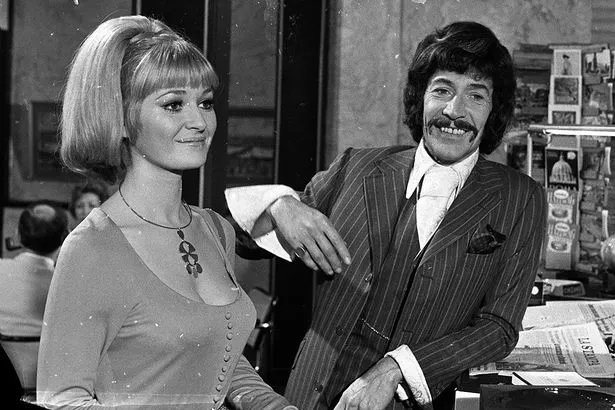
Confessions of Felicity, the Jason King bimbo

The starlets who found fame in the 70s harem of a TV style icon.

It was the decade that style forgot. The one that dared to flare. Now it’s back in favour in a major way as the kitsch excesses of the 70s revival are shrewdly aimed at the under 30s, who never wore tatty old Afghan coats the first time around. Last weekend, massed ranks of Mexican moustaches, platoons of Noddy Holder platform boots and white satin Abba-esque loon pants were on the march. The faithful fans who light candles to such seminal 70s TV series as Jason King and Sapphire and Steel made a pilgrimage to the to the Shepperton Moat House in Middlesex to celebrate the video releases of their screen heroes and heroines from the vaults of Lord Lew Grade’s former company, ITC.

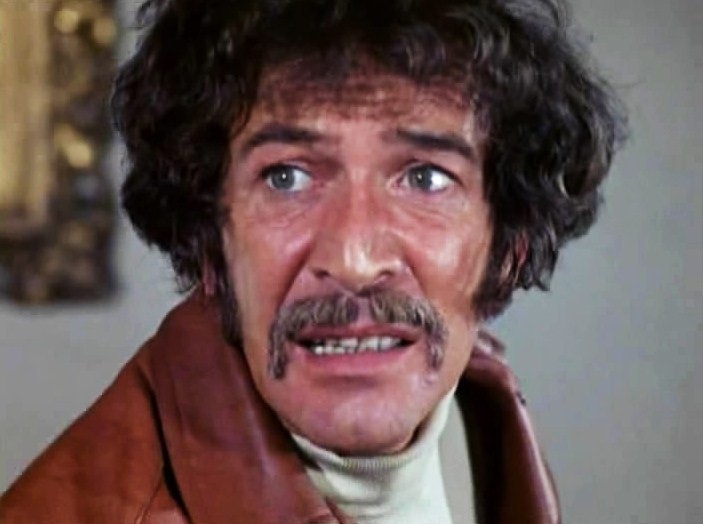
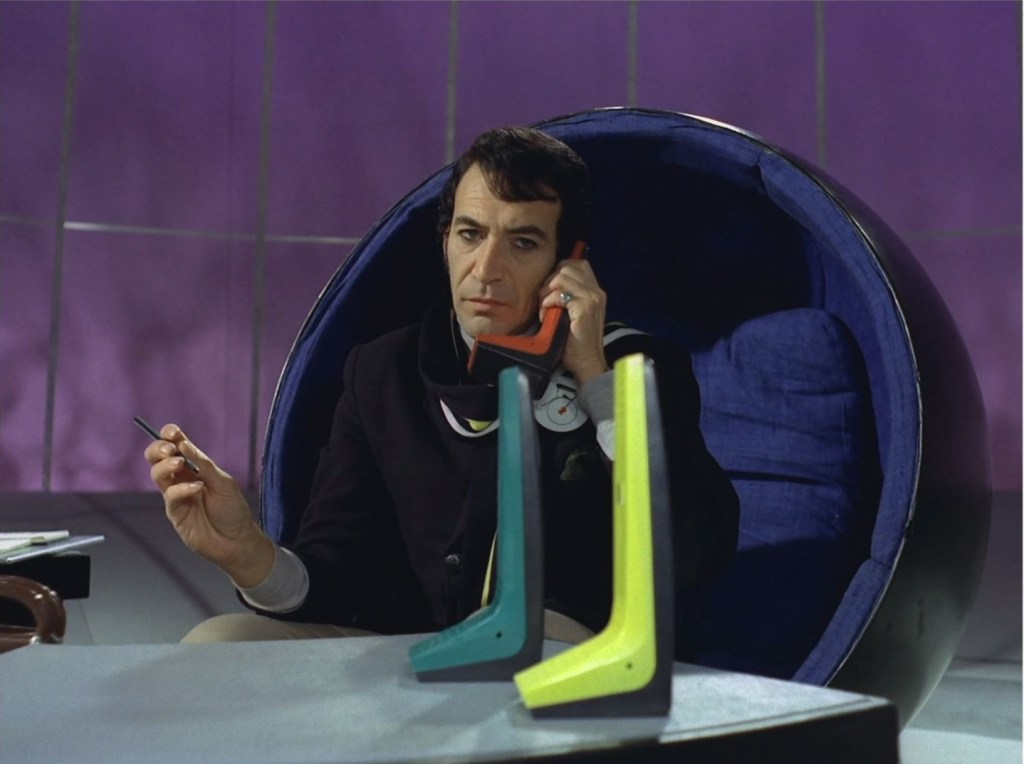
And the man behind the grooviest Mexican moustache of them all is thriller writer and amateur sleuth, Jason King – flamboyantly played by Peter Wyngarde, whose dashing adventures ran to four years of 60 minute episodes from September 1971. At the same time, these hit action-adventure shows introduced to our TV screens a new kind of young woman. While the 60s invented the dollybird, the glam rock era of the early 70s refined the concept with the making of the Bimbo. She was paid to look vacant, but gorgeous.

A Jason King Girl was, after all, the television equivalent of being a Bond girl. And for some of our top actresses, these early days are embarrassingly coming back to haunt them. As the award-winning Felicity Kendal prepares to open in friend Tom Stoppard’s long-awaited new play, ‘Arcadia’, on April 13th at the National Theatre, her past playfully returns to spook her. Hush, hush, whisper, whisper, who dares… yes demure Felicity Kendal’s was once a Jason King Girl.

But Felicity is in good company, for among her sisters in the court of the heavily medallion King are Stephanie Beacham, star of The Colbys and Dynasty. Edward Woodward’s actress wife Michelle Dotrice and the ever-smouldering Kate O’Mara (who was just beginning to ignite seriously), all served their apprenticeship in the adventures of super sleuth, Jason King.

Felicity was completely unaware of the show’s relaunch on video this month. She roared with laughter and said, “What a hoot! I think I wore lots of hippy clothes. Peter Wyngarde was a scream and great fun”. Felicity was only 22, look like the Princess of the Pixies with her long honey-coloured hair and bat wing sleeves in the role of Toki, an adorable but unattainable girl pursued by King in Paris. The elfing image stayed with her for years and influenced all her TV roles until she matured from the caring, self-sufficient neighbour Barbara in The Good Life into the serious award-winning classical actress who is now playwright Tom Stoppard’s favourite leading lady.

Women were Jason King’s fashion accessories. His ever-changing harem wore tarantula eyelashes, bovine expressions and even wore bikini’s to do the housework for him. He well remembers Felicity’s first day on the set to play ‘A girl for whom a king would abdicate’.

“My lovely Felicity – I fell in love with her. I found she was madly attractive,” recalls Wyngarde, in his deep, well-spoken tones, whose elegant style won him the Best Dressed TV Star of the 70s around the world.

“She is an was one of the most attractive things around. I was in love with her and so were 50 million viewers. The whole crew fell for her. She was quite unique, because it was rare to find intelligence and beauty. Everyone loved the ladies on the set, because they were young and glamorous with long legs, which were quite appealing. I endorsed all the ladies they were getting. They were one of the perks of the game. It’s lovely to have beauty around, whatever kind.”

Stephanie Beacham was obviously not thrilled to hear that her days as a Jason King decoration were being revisited in the 90s, even though she went onto even camper glories in The Colbys. She was crowned with a glittering diadem as an upmarket Madam. And she has kept the same glamorous image ever since. “Oh my God, that’s ancient history,” screeched her representative. No you can’t talk to her because she’s filming in Los Angeles”.

Wyngarde added, “Stephanie had a unique quality – sophistication, coolness and intelligence”. It helped out the series to have women with such qualities. “Everyone was supposed to look like a bimbo but Felicity and Stephanie certainly weren’t. We did have a lot of bimbos to fill some of the scenes as extras.

“Kate O’Mara vibrated sex around the studio. Sex sex, and sex again – you could sense it coming down the stairs,” said Wyngarde. “She had a wonderful face and figure and she’s a terribly sweet girl. Although she had these gorgeous looks, green eyes with black hair, she had this hockey school captain manner. But she could suddenly change it and become a sultry sex kitten. She could be a chameleon and after all that’s what acting is all about”.

Another of his leading ladies was Michelle Dotrice. “She had a wonderful sense of comedy”, said Wyngarde, explaining: “Comedy is nothing to do with the person who says the lines it’s to do with listening and reacting. She had a kind of innocence and yet intelligence”. So why was almost every woman on TV made to look so dumb? “It was all to do with fashion. They didn’t want girls looking as if they had a brain. A man had to have the brains. Remember, it was pre-yuppie time. A man had to have the brains and to be dominant, while the woman were just extra-terrestrial bits hanging around,” he explains. “It was pre-macho days. Men were dominating in a suit. Now they have to be dominating in their boxer shorts”.

King’s elegant wardrobe frequently competed with the costumes of his ladies. His personally tailored single-breasted suits cost £500 a time and had to be figure hugging, apart from the slight flair covering platform heeled boots. But not so tight that he couldn’t karate his way out of trouble. His shirt cuffs were always turned back without cufflinks. He never carried a gun, only smoked his own brand of Russian cigarette’s, and drank champagne and whisky, but not together. Jason King was an all action, devilish ladykiller with large sideboards who inspired a million suburban imitators still lurking in Top Rank suits on Saturday nights. A spin off from another adventure series, Department S, it turned Wyngarde into a highly influential star. To prove it, Jason became the most popular choice of nomenclature for boys born in 1971. Despite becoming a TV hero, with his stylish clothes copied by men including pop stars like Barry Gibb and receiving hundreds of adoring fan letters a week from women, Wyngarde admitted he lost out on making a fortune.

“I’m not very good with business,” he said over breakfast at his Kensington hideaway. “I had a standard contract fee. They syndicated the shows in America and I didn’t get a penny extra. With my London tailor, I designed the Jason King suits based on an 18th Century riding jacket. When the series became successful around the world, everyone was trying to copy them. In Hamburg, it was terrible. I found there was seven shops advertising Jason King suits and I wasn’t earning anything from them”. Did it make him feel bitter? “Not bitter,” he replied. “I had a great deal of fun doing it. It brought me a great deal of fame at that time, and I enjoyed doing them. It was really a sendup of Ian Fleming and James Bond”.

At one time he had 56 Jason King suits in his wardrobe, but now there are only two left. “I’ve given them all away. After spending four years changing into about four suits every day of the week, the last thing I want to do now is put one on”.

Interview by David Wigg and Maureen Paton.

INTERVIEW: Weekend

Please note that some of the additional information provided here by the journalist named below may not be accurate, so it should be treated with caution.


16-22 April, 1969

The Terrifying Past Of Jason King

How Peter Beat The Torturers

Again and again the rifle boats of the Japanese guards smashed down on the little boys bare feet. “Tell us about the bombing,” they hissed between each blow, “or you will never walk again!”

The young Peter Wyngarde, captured when the Japanese army overran the Chinese town of Lung Hua, said nothing. He couldn’t understand the question.

Today, the 40-year old Peter is a successful actor. As Jason King, is the star of the new ATV crime series Department S. But, in a macabre, twisted way, he owes his success to the torture and degradation he suffered in that Japanese hell camp 26 years ago.

He still bears the scars mentally as well as physically and even now, has nightmares which, for sheer horror, outstrip any scene he ever had to play onstage.

The guards shattered both of Peter’s feet before they realised he couldn’t tell them anything. Then they flung him into a cramped cell with a constantly dripping tap within earshot.

There is no escape, except into the realms of a little boy’s fantasy. Alone in the darkness, Peter pretended he was the Prisoner of Zenda. Sometimes he imagined he was not there at all and was a cowboy and riding the Prairie.

For five weeks, as he crouched in his cell, the steady drip of the tap became background music to the world’s great plays with himself, of course, always playing the lead. When he dropped off to sleep, that drip-drip-drip became the applause.

Peter says, “It was only by creating a fantasy world for myself that I could shut out the misery around me. I still do, to some extent.

“Everyone is a schizophrenic. The great thing about being an actor is that you are able to play out your fantasies”.

Peter Wyngarde, son of a diplomat, was only a child when he was taken to the prison camp. Because he was so small, he was used as a messenger between the prisoner’s huts, passing on news with the progress of the war that had been taken down from a secret radio.

He recalls, “It was all ‘Boys Own’ adventure stuff to me and I didn’t really take in the messages, nor did I understand which planes were bombing which cities. But when the Jap’s caught me they wouldn’t believe that and tortured me to get any information I had”.

Afterwards, Peter took his mind off his injuries by reading everything he could get his hands on and most of the books were by Shakespeare and Robert Louis Stevenson. Then he wrote his own version of Dr Jekyll And Mr Hyde and organised a bunch of prisoners to play in it. He, of course, played both Dr Jekyll and Mr Hyde.

For the first time he heard what real applause was like, as the prisoners called the boy back onto the rickety bamboo stage for curtain call after curtain call. Except there wasn’t any curtains there.

When he was set free, the boy actor/producer was in a bad way; just a bundle of skin and bone. His parents sent him to sanatorium in Switzerland where he spent several months getting over malnutrition, malaria and the injuries to his feet.

As one executive once said of young Wyngarde: “He seems to live in a life of fantasy or something. I can’t make him out it’s all”

He then started the traditional round of repertory companies. “What can you do?” they demanded. Innocently, Peter would trot out the parts he knew well… The Prisoner Of Zenda, The Merchant Of Venice and Dr Jekyll and Mr Hyde.

His first acting job came to nothing and, if you ask him how he came to get it, Wyngarde is frank.

“I think they felt sorry for me,” he says. “At the time I still looked like something out of Belsen. I was a poor actor just a good show off”. He was fired and, dejected, he decided to study law.

Today, it might have been a country solicitor, immersed in the intricacies of wills and testaments but for the fantasies that every now and again would take over his thoughts.

His law books would be forgotten as he acted out the roles of the bewigged, fearless Wyngarde Q.C., cajoling a reluctant jury to the gasps of admiration from the courtroom, nodding curtly to the man he had saved from the gallows before tugging at his gown and sweeping out.

His failure in law made him even more determined to be an actor. First, he set about

improving his frail appearance (“The way I looked, it seemed that only part open to me was Oliver Twist before he asked for more!”). He did regular exercises to build up his physique and slowly the Wyngarde dream world began to assume some sort of reality.

He found success with provincial repertory companies, received rave notices for his Cyrano De Bergerac at the Bristol Old Vic.

He took the West End by storm with Vivien Leigh in Duel of Angels. In America he was acclaimed on Broadway and more and more plum parts came the way of the tortured kid who still suffered from nightmares. Then came his first appearance on British television, first as Sydney Carton in A Tale of Two Cities, followed by parts in The Saint and The Avengers.

In his present role is Jason King in Department S – a series of 1-hour films being screened by several TV companies – Peter plays a successful thriller writer who solves crimes that have baffled the police. It is a part that fits him as well as his floppy moustache – and it should. That moustache, the bushy sideboards and the flamboyant clothes he wears in the series are the same as Peter wears off camera.

But then there’s a lot of Peter Wyngarde in Jason King. When he plays the part, he is still working off the fantasies which began in the dark days he spent in the Japanese prison camp only now, he’s getting paid for it.

Interviewer Unknown.

INTERVIEW: Doctor Who Magazine

Please note that some of the additional information provided here by the journalist named below may not be accurate, so it should be treated with caution.


Wednesday, 23rd September, 1998

When cult actor Peter Wyngarde flew to Lanzarote to film scenes for Planet of Fire, this month BBC video release, he never imagined it end up on the run from the local policia…

Even when young, Peter Wyngarde was a larger-than-life character. “I was a terrible, outrageous little show off. A precocious, hideous little child”. Born in Marseille in 1933, the last thing his upbringing could be described as is conventional. When he was just six he found himself held in a Japanese prisoner of war camp, and it was here that he discovered his love of performing. “I remember the camp doctor, he was a marvellous fellow, who read stories to the children in the camp. One of those stories was Dr Jekyll and Mr Hyde. I was so taken with it that I decided to dramatize it for the monthly camp show”. For this, Peter kidnaped the camp commandant’s pet rabbit on which his Dr Jekyll would try out his fabled elixir!

Peter went on to become a well-established stage and screen performer and, in 1969, found himself cast as the hero in a new ITC series, an event predicted by Welsh clairvoyant who told him, “Very soon you are going to be in front of millions, not hundreds, not thousands, but millions. Millions and millions of people are going to be watching you”.

Not long after, and just before opening in London in Checkov’s The Duel, he was asked by Monty Berman and Dennis Spooner to appear in their new television series, Department S, but his character was largely undefined. “The original fellow was to be a professor, but that wasn’t me. So I went to Sevenoaks to stay with friends Michael Bryant (later a Doctor Who director) and his wife for the weekend. I told him that I have come up with a name for this character. By the end of the weekend I had thought of Jason, Michael’s wife had thought of King, and Michael had come up with the Bentley as the only car this character would be seen in”.

Jason King became famous for his highly fashionable, if somewhat outrageous clothes sense, and Peter admits responsibility for choosing the cuffs, shirts and ties worn on screen. Perhaps his haute couture was responsible for a poll which voted him ‘The Man Australian Women Would Most Like To Lose Their Virginity To’!

After 28 episodes of Department S, his character had so captured the imagination of the viewing public that Peter was offered a second series solo, this time called simply Jason King. “Actually what happened was Lew Grade, who was head of ITC, called for me and said, ‘I want to talk to you’. I thought he was going to tell me they were not repeating Department S. When I went to see him he said to me, ‘I don’t like you. My idea of a hero is somebody blond with blue eyes, like Roger Moore. You, with your funny dark hair, moustache, and terrible clothes are not my idea of a hero at all, but I have to tell you that my wife loves you so you have to do another series’”.

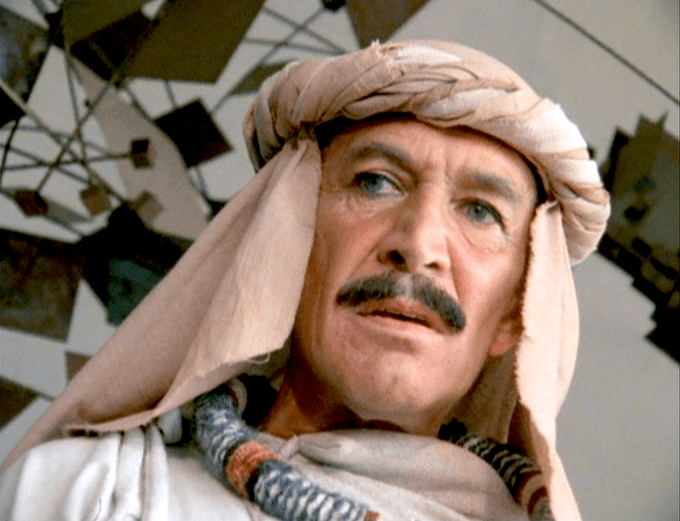
Jason King came to the end of its run early in 1972, and marked the beginning of a long period where the flamboyant Wyngarde was rarely seen on television screens. But, come 1983, he accepted the part of Timanov in the Doctor Who story Planet of Fire. “Somebody said to me, ‘You’ve done The Avengers, The Saint, The Prisoner and The Baron, you must do Doctor Who. I had no idea what Doctor Who was about, mainly because I was working a lot and you didn’t get a chance to see much television. I made a point of watching some episodes and found I liked it. I liked William Hartnell enormously. The first episode I was offered I didn’t do because there was too much studio work and I hate studio. However, with Planet of Fire the character was interesting, and there was the idea of going to Lanzarote. You only have to tell me once that we are going where the sun is and I’m there before I’ve even read the script. In fact the script on this occasion was a bit tricky. We changed a lot of the lines; some of them were a bit corny. I found the idea of the story fascinating and that was what appealed to me. Once you have the idea you can take it from there and rewrite the dialogue”.

Laughing, he explains that this is the reason people don’t employ him: “Directors are terrified of me when I do rewrites. They think I’m going to take over, and usually I do. I think you have to do that but nobody else thinks so, especially not the directors”.

Planet of Fire was directed by Fiona Cummings, and Peter is the first to acknowledge her input. “What is so marvellous about her is that she likes actors. Most of the directors that one gets in touch with these days don’t like actors. She assesses what kind of actor you are, always remembering that she and the writer want to bring to it. Then if she finds an actor who is rather over imaginative, she listens to whatever is good and takes it whilst at the same time getting rid of the rubbish. I will present a whole bag of tricks, and she would say what she liked. I’m surprise she doesn’t do more. I think there are two reasons for this. Firstly, she isn’t 12 years old as a lot of today’s directors appear to be and, secondly, she knows her job too well. You see they have to find someone they can blame; someone to carry the can if things go wrong. Fiona was great to work with and I wouldn’t have enjoyed it half as much without her”.

Lanzarote itself is a place of breath-taking beauty, and Peter decided to make the most of his time. “I rented a Jeep, and would drive myself out to the locations miles away from civilisation. Of course I’d get hopelessly lost until I’d find people looking at me rather strangely and pointing towards where the tents had been set up for the days filming. It was great fun. I remember my first scene with Edward [Highmore playing Malkon] was up in this wonderful lookout. That was a sensational place that Fiona had found. It was incredible, the views were wonderful”.

Once the film work is out of the way it left little time for the cast and crew to play, but Peter had one last trick up his sleeve before leaving Lanzarote. “When we arrived at our hotel we passed this pool in the grounds and saw these two little turtles going round and round like tigers in a cage, paddling up and down. I didn’t think it was very nice having turtles in a small pool like this, so as a joke I suggested we should get them out, and put them back in to sea. One or two of the company said, ‘don’t be ridiculous, you can’t do that’. None of them had any spirit of adventure, except Dallas Adams who played Professor Foster. We decided to do it very late at night so that we wouldn’t get into trouble. At about 4:00 O’clock on our last morning in the hotel, Dallas woke me up and said, ‘Come on, this is it.’ He’d worked out when the security guards went by and decided that this was the best time to do it. So I got out of bed, got some shorts on and went down to rescue these turtles. When we got there, however, we couldn’t move them. They weighed a ton. Just as we managed to get one out of the pool we saw torch light, so like the hero I am I ducked behind some sort of statue, while Dallas went off and asked the guard for a light to keep him quiet. As I crouched there I wondered, what would Jason King do in this situation? Once the guard had gone we got back to lugging these turtles. Mine was only a baby but it was huge, and it nipped me. Eventually I got it over the top of the pool and started trying to push it in the direction of the beach. There was quite a little distance between the hotel and the beach but I finally got my one on the sand. I started back to help Dallas with the other one. When we got the two of them down to the sea do you know what the silly things did? They turned around and started to head back to the hotel after we’d spent an hour pushing them down to the sea. Finally, we got them away and the next morning there was hell. Everybody was talking about it. They thought that they had been stolen for their meat, which is apparently very delicate and tastes like veal. When we went to book out there was Policia in the hotel reception. I looked at Dallas, he looked at me and said, ‘Let’s get out of here before we get nailed’.

We left with Edward not far behind. He had borrowed my Jeep a couple of days before and crashed it into another car while driving on my licence. He was equally sure that they had come for him. So there we were, the three of us like terrible fugitives trying to get on this plane to get away from these guys. What was worse was when we got to the airport there was more there. I don’t think they were really anything to do with us at all, but they kept looking over and checking our passports. At the time I think we were all convinced we were going to end up in a Spanish prison. Myself and Dallas for stealing the turtles, and poor Edward for hitting someone’s car.

To this day, Peter has never actually seen Planet of Fire. “I never watch myself. In fact it’s only recently that I’ve been watching any of the Jason King episodes, because I used to have to watch rushes every day on that show, and that was enough to put me off watching myself for the rest of my life!”

Interview by Liam-Michael Rudden.

INTERVIEW: The Daily Star

Please note that some of the additional information provided here by the journalist named below may not be accurate, so it should be treated with caution.


Monday, 14th November, 1983

King Jason Rules Again

He was a cult figure of the swinging 60s. The guy every young blood tried to look like. And the fella 35,000 Australian women voted the man they would most like to be seduced by. But it is more than a decade since Jason King, the super smoothie with the droopy moustache disappeared from our screens. Now Peter Wyngarde, the actor who played the cultured hero of Department S on the follow up series Jason King, is back.

Peter, now 50, and still rakishly handsome, will be making his comeback in a new Doctor Who saga. At the same time, Channel 4 is preparing to screen reruns of the old series that made Jason King a household name.

But Peter still secretly dreads the character that made him famous. “Suddenly Jason King took me over,” he says. “I was in danger of not being Peter Wyngarde anymore. The pressure of the roll was amazing. I could only take it for three years and then I had to quit. I just wanted to back away from public life. I had had enough. So I took myself off writing”.

In his Jason king heyday, Peter used to design the suits that the fictional hero wore. And he set the style for shirts with turned up cuffs the hallmark of the well-dressed man of the day. But now Peter is more at home in jeans and a combat jacket.

“All I want to do is go back to my roots and try to start again,” he says. “It’s a real challenge”.

INTERVIEW: Woman and The London Evening Standard

Please note that some of the additional information provided here by the journalist named below may not be accurate, so it should be treated with caution.


Woman’ – 10th September, 1973

Peter’s Royal Progress

“Yes, I suppose people are surprised when they hear my singing voice,” said Peter Wyngarde, referring to his right royal success in the revival of the stage musical, The King And I. He added, “it was a surprise to me, too! I sound better than I originally thought I would. I’ve been enjoying the role tremendously, even though it’s poles apart from my tough guy TV image as the other king, author and detective Jason.

“I believe a lot of my fans, especially the teenage ones, don’t quite know what to expect when they come to see the show but they seem to enjoy it, all the same!” In fact, he’s still recovering from the enthusiasm of a party of 400 teenyboppers who made a block booking and all turned up at the stage door afterwards.

“It’s hard for me to analyse my appeal. Basically, I think my younger fans like the trendy clothes I wear as Jason King. Also, I’ve got an older man’s authority which makes me perhaps something of a change from the usual young pop stars, doesn’t it?”


The London Evening Standard

Thursday, 11th October, 1973

Surprise Encore With A Cuddle From The King

Dawn was almost breaking before Sally Ann Howes and Peter Wyngarde got to the beds today after the triumphant West End first night in The King And I. It had been an emotional occasion at the Adelphi Theatre, with audience applause thundering out and curtain call after curtain call.

The most emotional moments of all which was totally unexpected by the stars. It came when the curtain rose one more time to find the two of them hugging each other with delight. Peter explained: “We thought the curtain was down for good and we just fell into each other’s arms in relief. It was a magical moment.

“I don’t know what we said, but it sort of sealed the occasion. I imagine we were just gasping our thanks to each other”.

Backstage after all the congratulations from people like Cecely Courtnage, who looks upon herself as the second mother to Sally Ann, the stars exchanged presents.

He, using a line from the script, gave her a huge model elephant. “I think it has brought us both good luck,” he told her. She, remembering that the King wore glasses in the show, gave him a pair of Georgian spectacles. Says TV’s Jason King, “When I get the lenses taken out I will wear them during future performances”.

Both of them went on to a series of parties to mark the opening. There were public ones and private celebrations. Peter got to two of them but missed a third. “With a matinee due today,” he said, “I felt I had to sleep at some time”.

It was his first West End musical and he was at the theatre early to mentally adjust himself from London to Siam – leaving one world for another.

“It was wonderful hearing the adulation for the music,” he said. “I was so nervous that I must have gargled 100 times before going onstage. But it was exhilaration rather than fear. My last words to Sally were, look into my eyes when we’re out there”.

INTERVIEW: Classic & Sports Car

Please note that some of the additional information provided here by the journalist named below may not be accurate, so it should be treated with caution.


March 2018

Interview with ‘Number 2’

Throughout The Prisoner, ‘Number Two’ was the visible face of authority – and one of the stellar guests at last year’s 50th Anniversary event was the late Peter Wyngarde, who took the role and so memorably goaded ‘Number Six’ in the episode Checkmate

Wyngarde’s extensive career ranged from Noël Coward and Shakespeare plays to starring in The Innocence, one of the finest horror films, underachieving television iconography as Jason King. He was also a motoring enthusiast, and one of his biggest roles came about largely due to a car.

“In the early 60s I received a script that was totally rubbish,” he told C&SP in his final interview before he passed away on 18th January (2018), “not a decent line in it!” Shortly afterwards however, Wyngarde was walking by Tony Cooks Bristol showroom on Kensington High Street and he fell for a new model retailing at £5,750 1s 2d. “Upon contacting my bank I discovered that the balance was 12s and 7d!” This vision of automotive splendour prompted a quick change of heart regarding the screenplay and the resulting Night of the Eagle turned out to be a splendid supernatural thriller in which Wyngarde drove a Triumph TR3A.

Off screen, he also experienced a TR2 – “pretty, but not very practical” – which was one of many vehicles that joined the Wyngarde fleet over the years. These included the Bentley S2 Continental with James Young coachwork that appeared extensively throughout Department S; a Studebaker Dictator that suffered a mishap – “I was speeding down the road to Southampton and the engine blew up”; and three TVR’s, the 3.5-litre V8 models receiving particular approval. Latterly, his marque of choice was Porsche; “They are incredible and feel hand crafted.”

Wyngarde also used to race at Brands Hatch: “I would love to have done more of it, but there were insurance problems due to my screen work.”


The Hellfire Club: The OFFICIAL PETER WYNGARDE Appreciation Society: https://www.facebook.com/groups/813997125389790/

INTERVIEW: The Daily Mirror

Please note that some of the additional information provided here by the journalist named below may not be accurate, so it should be treated with caution.


Thursday, 5th February, 1970

Peter Wyngarde was chosen Britain’s Best Dressed Male Personality last month. Looks like he could win himself another title of Britain’s most missed TV star. It’s the women fans that have missed him most since his Department S series came off the earlier this year. “I get letters from them every week asking when he’s coming back in another series,” says Lew Grade, boss of ATV. “We’re finalising a new deal now”.

This would be good news indeed for Mr Wyngarde’s female admirers. The new series will be made by Monty Berman, who also produced Department S. Wyngarde will again play the character of Jason King and filming starts next month.

The first of the 26 programmes in the series will be ready for screening next year. Meanwhile, Mr Wyngarde is manfully shouldering his responsibilities as Britain’s Best Dressed Male Personality. When he talked to my colleague the other day. he had on a snazzy pair of greening and yellow striped trousers that went well with a fluffy shirt, bare feet and a gold bracelet.

“My trousers were made from deck chair ticking,” he said. “I had them run up in Spain I think”.

“Show her the Valentino coat”, Peter, said a friend in blue velvet. “For God’s sake, tell everyone! It’s gone into cold storage.” he pleaded, “or someone will break in and pinch it for sure!”

The coat, ankle length, black sealskin, mink-trimmed and with a squirrel collar belonged to movie idol Rudolph Valentino in the 20s. ! “I just love the colour”, said Wyngarde, trying the coat on over the deck shirt pants and bare feet. “It’s very Zhivago-ish, isn’t it?”

Peter’s dress style influenced designs for all the clothes worn as Jason King. I’ve got some material, raised embroidered black silk, for an evening suit,” he confided. With a lovely frilly shirt? Miss Griffiths inquired. “No,” he replied thoughtfully. “Perhaps not too frilly.”

It’s details like that which can make or break you as Britain’s Best Dressed Man!

INTERVIEW: Action TV

Please note that some of the additional information provided here by the journalist named below may not be accurate, so it should be treated with caution.

June 1994

Few actors have become a strongly connected with the series as Peter Wyngarde is with Department S and Jason King. The two series were part of the explosion of TV spy series in the 60s and 70s, but are remembered primarily because of Wyngarde’s engaging performance as the foppish author, Jason King.

Peter was originally offered a minor role in the series as an old Oxford professor. He was initially unsure about taking the job because he was involved in a play. It was only when the reviews came in after the first night that he was persuaded to do it.

“We all had a big dinner party and I was at one end of the table and the producer who asked me to do the series was at the other end. I said to them, ‘I never read the notices… If the notices come in I shall go away somewhere and when I come back you won’t breathe a word of what happened because I don’t want to know’. So the papers came and I went away to another room and came back about half an hour later and I could tell by the looks on their faces that it was the disaster of the year! Funnily enough, it wasn’t actually and we played it for six months so it was alright. I think they were trying not to look anything, and when actors try not to look anything, they always look constipated! So I thought, ‘Oh God, this is not going to work’ so I got a napkin and wrote, ‘I will be delighted to do your series, signed Peter Wyngarde’ and that’s how I got it”.

The role accepted that night was the old university Don; the role that made it to the screen was Jason King. His portrayal of the ‘crime writer adventurer and lover’ is a million miles away from the cranky old professor as it was originally conceived.

“I didn’t like the idea of playing two characters in a day because you get a bit schizophrenic,” Peter explains. “I said I don’t want to be too many people because I’ll go raving mad. So [I said] ‘why don’t I do the thing I’ve always wanted to do on film which is be an extension of myself?’ because I think all the really great film actors have always been an extension of themselves”.

This allowed Peter to do the play at the same time and bring out the humour Jason King. “If you’ve got humour in yourself then you’ve got to bring it out”, he says. “That was a lovely thing about playing Jason because he was a romantic extension – and I emphasise the word romantic – of yourself. You could do things like James Bond”.

“I didn’t like the idea of playing two characters in a day because you get a bit schizophrenic,” Peter explains. “I said I don’t want to be too many people because I’ll go raving mad. So [I said] ‘why don’t I do the thing I’ve always wanted to do on film which is be an extension of myself?’ because I think all the really great film actors have always been an extension of themselves”.

This allowed Peter to do the play at the same time and bring out the humour Jason King. “If you’ve got humour in yourself then you’ve got to bring it out”, he says. “That was a lovely thing about playing Jason because he was a romantic extension – and I emphasise the word romantic – of yourself. You could do things like James Bond”.

Peter took acting like James Bond perfectly literally in both Department S and its follow up Jason King by throwing himself all heartedly into the stunts.

“There is one episode when you can see it actually happening, when I did my back in. You can hear the crack. I’ll leap from some stairs, not terribly high, but enough when you do a swallow dive onto the villains. I said ‘oh it must be me, so you must take it from underneath so you can see it me’. I’m not a stuntman, but you want to do those things yourself because they look so real if you do them. I’ve never really recovered from it”.

This experience clearly didn’t put him off as he continued doing the stunts even though his contract explicitly forbade it.

In one episode he had another accident when he jumped out of an aeroplane.

I think I had four days off and I went and did a parachute course. The idea was that the cameraman came with me and we both did this course outside Cambridge and we jumped and I did the junk with him and he photographed me so you know it’s mehfil stop unfortunately a very large tree got in the way, and so did the shoot, and I arrived upside down!

“What was so marvellous about it was they showed the rushes the next day… And this bloody director said, ‘my God, it’s amazing! Paul (who was my stunt double) is looking more like Peter every time I see him!’ He never found out, but everyone else was laughing”.

Although he enjoyed going out to film on location on Jason King, such extravagance was out of the reach of the budget for the Department S. Many of the stories were set in faraway countries, which was achieved by using the much cheaper technique of back-projection.

“You used to sit in these stupid cars and have that terrible thing behind you rolling away and you’re trying to be real. It was ridiculous. I used to get the giggles, I said, ‘Are you sure we have to do this?’ They said, ‘All right, we’ll make it one morning where you do them all in a bunch’. I had forgotten I kept changing clothes all the time, so I spent the whole morning changing clothes. I think I change suits 400 times!”

Many of this the stories had fantastic elements to them although they never entered into the realms of fantasy. A lot of them were allegedly based on true stories collected by the creator of James Bond, Ian Fleming.

“He [Fleming] had a whole file of different things that he’d worked on during the war and stories he’d heard about to write for stories later on. These were used as the original plots for Department S. These were all unsolved things

and what happened was our writers had to solve them. And that’s how they became a bit fantastic, but they were based on true stories, most of them”. The idea was that Jason King was really Flemming writing about James Bond, but in the early days of Department S he was part of a threesome with actors Joel Fabiani and Rosemary Nicols.

“I got on marvellously with him”, says Peter. “We didn’t hit it off with ‘Knickers’ as I called her, because she decided she was going to become a star and I think actors don’t like that”.

When Department S finished, Peter Wyngarde took a year off before returning to start in Jason King. “I didn’t really want to do another series because it was very tiring”, he says. “I thought that was jolly nice, I enjoyed that immensely now let’s have a little rest. So I took a little sabbatical away and went around the world. As a result of working so hard I got amnesia. I don’t remember that trip – waste of money! A whole year away and I don’t remember anything about it. People come up to me in the street and say, ‘What were what we got up to in Bangkok, really Peter!’ And I say, ‘What are you talking about?’ Apparently I behaved appallingly in Bangkok, but there we are”.

When he came back he was called in by TV Executive Lew Grade to talk about returning as Jason King.

“He said, ‘Well listen, I’ve got to tell you something, Peter. My idea of a hero is somebody who’s blond, blue eyed and has a lovely smile. I can’t understand how people can stand somebody like you with this long black hair, these funny clothes you’re wearing and this funny English you speak… but I’ve got to tell you this, my wife likes you so we’re going to do another series!’”

Having been away for a year, he took little persuading to do the series, but he was surprised to find out Jason King was being based solely around his character. This, he feels, weaken the show.

“He’s a person you just want to see bits of, but if you’re going to go with him all the time you’ve got to go in another direction, a little more serious. And that’s what we had to do and he became vulnerable. I don’t know if you remember, we did one with that lovely girl, Felicity Kendal [Toki]. I fell madly in love with her of course, as me, not as Jason, or both of us fell in love with her. It shows, you see, and I don’t think Jason should ever have been vulnerable”.

Watching a video of Jason King 30 years later, it’s obviously a product of the 70s, if only in terms of the fashions. “The people in the streets were doing it which was marvellous, it was like at Mardi Gras”, says Peter. “But if you look at some of the episodes, my clothes are not exaggerated, there’re only exaggerated if I was playing a character within a character.

“I’ve never wore a medallion outside my shirt, for example, except for one character that goes to a discotheque. Of course they accused me of wearing a medallion and I became a medallion man, which I never was”.

One of the fashions Jason King is famous for are turn-back shirt cuffs. Peter only adopted the style when he lost his cufflinks on location in Venice.

“I was running from somebody or chasing somebody, I can’t remember which. I had to jump into this gondola. They [the cufflinks] were platinum, they were given to me as a present and one of them fell off into the drink. So I took off the other one and pull my cuffs back. It started a fashion, especially in Germany funnily enough. I remember going to Germany shortly afterwards and I went into a discotheque and every man in there had his cuffs back”.

The actor obviously has good memories of his time as Jason King because he talks of the show with great enthusiasm.

“It was tremendous fun”, he says. “It was hard work, of course, like all series. You start at 5:30 in the morning and don’t go to bed until 2:30 and then you have to re-write at night and those sorts of things, then talk to the director in the morning, then you’ve got to do casting, then you’ve got to learn your lines if you’re lucky. Then you’ve got to do silly things like stunts and things – and you always want to do them when you’re 12 years old, which I was then of course!

“It’s real danger which happens to a lot of actors – and it happened to me as well towards the end – is you get so embroiled with the character that you think nobody else can write for him and you are the only person who can write it and say the lines, which is probably 75% true. But then suddenly you’re only going in one direction. You must allow other people to come in on it otherwise you get a one-sided view of it. I think that the second series, the Jason King one, through no fault of mine, became too much of Jason King.

Peter Wyngarde still pops up now and again on TV, most recently in The Memoirs Of Sherlock Holmes. “I was just asked to do it and I said yes”, says Peter. “I thought, that’s a lovely idea. The character was marvellously interesting, but there wasn’t enough of him. I don’t think”.

There were suggestions that his character would appear in every episode of the new Sherlock Holmes series, and may have taken off in his own series. Those plans appear to have fallen through.

“The idea was at one time to carry him on, not a Sherlock Holmes, but as an individual characters so that he could be the link mount between different stories,” explains Peter. “But I thought it was rather limiting because he wouldn’t be in a period. “If he could be like Quantum Leap, then I could be different people, I think that could be fun. Or go into different periods, then it could be more interesting, but to say in that period and use classic stories, Kipling and all those kind of things, I think was rather limiting. [It’s] very much what I call English television, a bit dull”.

In the mid-60s he made a couple of appearances in The Avengers with John Steed and Emma Peel. “I did two Avengers: A Touch Of Brimstone and Epic”, he says. “One got me an Emmy nomination while I was out in Greece doing and I Spy. I remember Bill Cosby was in I Spy and we flew to Hollywood for the Emmy Awards and he got it and I was terribly upset as he’s become a millionaire 25,000 times over and I haven’t. I suppose he may have been the right choice, I don’t know”.

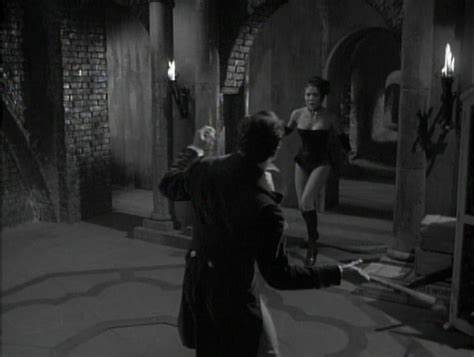
He was in a famous scene where he got to fight with Diana Rigg while she was dressed in black leather. “I whipped her and she had a snake around her neck. I think I was mad for the snake, that’s probably what it was, I wanted the snake”.

The scene caused a bit of a stir at the time. “Yes, it did,” says Peter. “The clothes she was wearing and a man whipping her, I suppose. She’s a neighbour, so I’ve stopped whipping her now!”

He also had a major role in one of the better Peter Davidson Doctor Who’s. He played Timanov, a religious leader on the volcanic Planet of Fire.

“We went to Lanzarote which was lovely,” he recalls. “I had a lot of fun there. They were a super company to work for, really great fun.

“It is an interesting story, it was like a kind of prehistoric thing in it away, and I thought the location was absolutely appropriate; marvellous those volcanoes, the colours were fantastic. A lady directed that [Fiona Cumming] she was good. I don’t know why she hasn’t done more because she was really good, very helpful”.

He still get fan mail – at least that’s what he tells you when he’s asked about the female admirers he used to get in the 60s and 70s.

“I still get them! We’ve got a wonderful fan club… because of this Sherlock Holmes thing, they thought I was going to be a in every episode, letters have been piling in. It’s quite extraordinary. I don’t understand it at all, thank God, because I think if I did understand it, it would stop”.

Interview by Jane Killick.


© Copyright The Hellfire Club: The OFFICIAL PETER WYNGARDE Appreciation Society: https://www.facebook.com/groups/813997125389790/

INTERVIEW: Leeds and West Riding magazine

Please note that some of the additional information provided here by the journalist named below may not be accurate, so it should be treated with caution.


September 1973

Tea and honey…

with the King of Siam

It was not the sultry, ultra-sophisticated Jason King I’d love women the world over all the stern, anti-feminists, oriental King and I Peter Wyngarde that I met for afternoon tea on a sunny Yorkshire hotel terrace last week. No dark glasses. No dramatics in dress. No champagne with oysters. The man himself – in casual, rolled up jeans and open floral shirt with unfreaked hair combed soft just as it grows is more devastating than all the images we have of him on stage and screen rolled into one.

Eyes incredibly blue, smile with a disarming friendliness, this is a man happy in the sun, and at peace with the world. It’s communicating peace too; a shared contemplation of blue skies, green gardens and the grey stonework of the fine mediaeval building behind us. “I like to find somewhere like this, quiet and away from it all.

“This part is 13th Century common and from that line though this side was added in 1845 – quite well I thought,” he explained with a sweep of his arm. The art of the actor is put aside – for the moment he is content to forget all matters theatrical and recount some of the history of the Hall. This is only a second stay here yet already he is familiar with pedigree and past, characteristics of the care and attention to detail prevalent in all his work.

Obviously Peter Wyngarde (king of small screen, stage and fashion), has a great feeling for all buildings and the great outdoors. He squirms bare feet into sparse sandals and squares up to a tiny table to do homage to another great love… tea! Lid carefully lifted; pot softly stirred (“I think it will be alright”) and a hitherto quite indifferent liquid poured to perfection.

He waits patiently – and a girl brings honey. That the Wyngarde way to take tea, I mentally kicked myself for having plonked white cube sugar in my (which I hate) and resolve to make with the honey for a second cup – which I did – and it’s delicious!

When the girl returns (ostensibly for the tray, but really to request a handful of autographs), books are duly signed but the pot is not relinquished until it yields up a third cup. “Don’t take it just yet. Tea is a firm favourite of mine and, as you know, I drink it by the bucketful,” he reminds her. Despite attentive pouring, the final offering comes with a floating leaf or two. The now empty teapot is carefully observed. “Oh, I see what is the matter. You’ve used quick brew tea and the strainer isn’t right for that kind of tea,” he tells her gently.

I remember several nights previously watching this man’s communication with a packed house at Leeds Grand Theatre as the iron King Mongkut. Here and now, he takes time to make a moment of history of one young aspiring waitress. Probably all her future customers will benefit. Certainly, the plain-ordinary English cuppa is elevated to immeasurable heights when truly appreciated. Nor does it need to be served in a chaste silver pot, by chased bronzed Amazon’s, on a mountain top in the French Riviera for this man to take pleasure. Despite the seductions of screen life, Peter Wyngarde preserves intact the art of enjoying the simplistic.

This month, the lavish touring The King and I, in which he stars, visits the Theatre Royal, Nottingham (September 3rd – 15th), and the

New Theatre, Hull (September 17th – 29th) then on to the Palace Theatre, Manchester, from October 1st before opening in London.

It played to packed-solid houses at Leeds Grand Theatre for two weeks in July, and before that with phenomenal success for a full four-week season in the Forum Theatre Billingham.

“I like touring, especially in provincial theatres. They’re not really having a very good time of it. It’s a good thing when one can use the name one has made on television to draw an audience. For instance, we filled a theatre at Billingham every night for four weeks and still people were turned away. We could have stayed there much longer. It is wonderful. But I understand that since we left, they had to close a show midweek. I don’t know what the answer is. You see last nights (this was in Leeds) we had a house full of young people. They loved it. The show is new to them! They went overboard for the songs shouted for uncles comment cheered, just like a pop concert. It’s marvellous”.

He ponders some more on the difficulties surrounding live theatre day today. “A lot of the traditions have gone. When a country loses its traditions, its lost”.

He counters my suggestion that perhaps the pull of so many other leisure entertainment lures “people away from the theatre with the reply, “I believe in competition. It’s healthy. But you see, television can be rather like a two-headed monster. It can strip away the mystery – bear the technicalities. When I go to the theatre, although I’ve been in it myself for so many centuries, I still want to believe that it’s true. It’s magic. One has to retain that. If you’re going to show the cameras, and the way this and that is achieved of course, the magic is lost”.

He takes a cigarette (one of the ten he’s allowed each day – doctor’s orders) and shows me the nicotine deposit in his cigarette holder. “Look at that. That’s from just, how many I had today – three/four cigarettes. I know it’s very bad for me. But I get so cross and irritable if I don’t smoke. Unbearable”.

The thought that he has to look after his voice now that he’s a singer, makes him laugh out loud. “Well, it’s not really a singing part. Mine are speaking-out songs, if one can call it that. The ‘Puzzlement’ piece is a tongue twisting one at that. Does it come over alright?” he asks.

Has he been in a musical before? “Yes, I played in Brecht’s The Good Woman Of Setzuan. I took the part of Yang Sun, a Chinese pilot. It’s strange, I hadn’t thought of it ‘til now, that in the two musical plays I’ve been in, I should play an oriental”.

What about clothes? One of the several awards he has gained with Jason King is ‘The Best Dressed Man In Britain’.

“Yes, clothes are very important to me. I think see things mostly in shapes, through the eye not the ear. Perhaps that means I have no right to be in musicals! I draw a shape. I see characters as shapes and before I know it, I’m designing clothes”. His interpretation in The King and I is powerful and moving. He has given a barbaric splendour to the two full-length caftans, heavily encrusted with embroidery, and ablaze with colour. “You should read the original book, it’s remarkable,” he advises.

Above: Peter with his King and I Co-star, Sally Ann Howes

“The King was truly a tremendous man. He was 63 when he became King, you know. He spent 20 years in a Buddhist monastery, preparing himself to rule Siam, which he knew he would be called upon to do. He was far ahead of his time and did, in fact, have this prim Victorian governess to teach English to his children. She was really the last person to be sent to such a place. Of course, it’s been changed for the stage

– most stories have to be to some degree, but you have to put forward as much of the truth as you can.

“I don’t play the role romantically – he was a very hard man – he didn’t understand the meaning of love; didn’t acknowledge such a thing existed. He’s perplexed by his feelings. The whole thing is of great puzzlement to him. There’s the scene in the library, where he says, ‘But why should I be called upon to discuss matters of importance with… a woman!’ The beginning is there then, it’s definitely there, and he’s greatly puzzled by it. And when he dies her love for him is there too”.

Herein lies is sensitive rendering of the role – he understands the man and the media with which he works himself.

Early this year, in Leeds, we saw him do the same sort of thing in Charles Dyer’s Mother Adam, a part which he says he very much wanted to do, and one that he recalls took a lot longer to get to grips with. He firmly believes that an actor should be a Vagabond (“like the travelling players of longer go”). And says that in the past four years, he’s travelled more than anyone else he knows. Where does this very much travelled man feel most at home? “That’s an interesting question,” he parries. “Well as I said, I love the sun. I love doing nothing in the sun, and I adore Fiji. Went there for a week instead seven! But I should say that it is here in England that I feel most at home. That’s funny because I get very cross sometimes at the way things get done”.

A plane flies over at that moment and ‘at-home’ Peter Wyngarde points a finger skywards, shades his eyes with one hand, and becomes a small boy again. “I take great delight in watching planes go by and recognising what they are. I used to make models when I was a small boy. I know them all,” he says with a grin.

Earlier he’d said, “I think when you’re working in the theatre at night, you shouldn’t do anything at all during the day”. But this busy-doing-nothing time was now drawing to a close. “I’m afraid I shall have to go now. This is sort of a ritual hour,” he said. Tea and honey time, was over.

And the King went away to prepare for the tasks ahead for a new he would be called upon to do many things.

Interview by Joy Jones.

INTERVIEW: TV Times

Please note that some of the additional information provided here by the journalist named below may not be accurate, so it should be treated with caution.


Saturday, 10th August, 1985

Return Of The King

35,000 Australian women once voted him the man they would most like to be seduced by. In the early 70s he was the hottest property on ITV, and responsible for a generation of tots being christened ‘Jason’. Even today, when he phoned TV Times, the blasé switchboard girl paused and asked, “Are you THE Peter Wyngarde?”

He was, of course, the super with-it star of the series Department S and Jason King, all languid elegance, snappy suits, curly hair and drooping moustache. And then he more or less disappeared.

During the last 10 years he has popped up only occasionally; a film role here, a stage play there, between stretches out of work. But a couple of months ago he suddenly sizzled back to ITV screens as the devil himself in a Hammer House Of Horror Mystery And Suspense story. And on Wednesday he plays an almost equally nasty piece of work in Bulman, also on ITV.

“I’m Gallio, a crook,” says Wyngarde. “I play him with a terribly phoney American accent – like a very old George Raft. In fact, I took the moustache off for the role because Raft never had a moustache. And I really get to sock someone.

“It’s nice playing villains. People don’t expect it of me, but they forget that before Jason King I had done 110 television plays; that’s 110 different characters. But even today Jason King follows me around. I can take my moustache off, cut my hair, but people still recognise me as him.

Both Department S and Jason King keep cropping up on late night television all over the world. There is even talk, says Wyngarde, that Channel 4 may rerun them. “A lot of people would like to bring them back, and it would be lovely money for me”.

At the age of 52, Wyngarde is fed up just sitting around in London. “In fact, I’m thinking of going to America unless more work comes along here. And the sort of work I like is being done in America.

When in August, he asks, is his Bulman episode being shown? “The 14th? That’s just after my mother’s birthday. She will be pleased to see me again”.

Interview by Adrian Furness.