‘That Was the Week That Was’ was a groundbreaking satirical television programme, produced and broadcast by the BBC from November 1962 and until late December of the following year. The show was the brainchild of broadcaster, author and stage director, Ned Sherrin,and Jack Duncan (founder of the satirical magazine Private Eye with Richard Ingrams and Paul Foot), and was hosted by David Frost.
Arriving just in time for the Profumo affair, ‘That Was The Week That Was’ gained a reputation for savage satire. It witnessed and commented on all the major events of the time, including producing a special, non-satirical, edition as a tribute following the assassination of President Kennedy.
As well as launching David Frost into the nation’s living-rooms, the programme also established the careers of such varied talents as Roy Kinnear, Lance Percival and Willie Rushton as well as providing an outlet for writing by Keith Waterhouse, Richard Ingrams, David Nobbs, Christopher Booker, Peter Tinniswood, Bill Oddie, Michael Frayn, Johnny Speight, Clement Freud and Graham Chapman among numerous others.
With the satire came a vast numbers of complaints. Nonetheless the BBC kept the show on for two series, only finally bowing to the inevitable when the perceived need to avoid political controversy during the run-up to the 1964 General Election resulted in the programme being halted.
Peter’s Appearance
Peter invites the audience to consider the words of ” one of the vice presidents of the Paignton operatic, drama and choral society society RN (retired)”, who complains about the proposed staging of John Osborne’s play, ‘Look Back In Anger’. which he describes as “Muck”, in the Devonshire town.
“We feel it is up to us to keep Paignton clean,” the gentleman exclaims, to which Peter asks the following question: “Was he thinking of the John Osborne that wrote to his fellow countryman last year. The John Osborne that denounces the England of the Bomb, bingo and the Twist. ‘Damn you England, you’re rotting now, and quite soon you’ll disappear. My hate will overrun you yet if only for a few seconds. I wish it could be eternal.”
Various character punctuate the monologue, including a working class man (played by Kenneth Cope); two British navel officers (Willy Rushton and Roy Kinnear), and scenes from Osborne’s play, ‘The Entertainer’ are recreated with Lance Percival playing Archie Rice – the character made famous by Laurence Olivier.
*A series of carefully curated cinematic evenings, introduced by author and film fan, John Patrick Higgins. Themed welcome Cocktail included.
Chamber Films will showcase the classic and the curious, the weird, the wired and wonderfully askew. There’s no theme, no thesis, no seam running through these films, unless there is. The subconscious is a hell of a film programmer.
Above: Poster for the Fear In The Fens Festival, 2019
Email from The Psychotronic Film Society of Savannah – 25th September, 2017
Peter Wyngarde Tribute
My organization, the Psychotronic Film Society of Savannah, has been holding public screenings of underappreciated and/or overlooked feature films for the past 14 years. We have won several awards in this area for such things as Best Local Film Series and Best Indie Cinema, and are routinely named the Runner-Up for Best Local Film Festival (after the big, international Savannah Film Fest).
From time to time, we salute some of my favorite actors, directors, cinematographers, screenwriters, producers, etc… with a special screening of one of their films on or around their birthday.
As there seems to be some confusion surrounding Peter’s actual date of birth, I just decided to salute him on September 27th!
We are not announcing the exact name of the film in advance, as we do from time to time. It will not be revealed until the film itself rolls. We are simply asking adventurous film lovers to take a chance, buy a ticket and be pleasantly surprised.
We do this because I have found that sometimes, when we announce a film in advance that can be easily found on DVD or through internet streaming services, people take my advice and watch it privately, rather than showing up to our screening – which causes us to lose money, as licensing to show most copywritten films in public here in the states can be quite costly!
So, strictly between you and I and Peter, we will be screening the original, European cut of Night of the Eagle AKA Burn, Witch, Burn.
Our venue is a 50-seat coffeehouse that we black out one night a week and turn into a cozy, quiet screening room.
Please convey my thanks to him in advance for any assistance he may be able to provide in such matters, as well as my heartfelt appreciation for the enjoyment and inspiration his artistic endeavors have given me over the years.
I look forward to hearing back on all of this, and hope this message finds you both doing well.
Best,
Jim Reed
Executive & Artistic Director – The Psychotronic Film Society of Savannah
The Innocents remains one of the greatest, most frightening gothic horror films ever made, a film brimming with formal brilliance and thematic complexity. The black and white cinemascope frame is governed with the utmost care by director of photographer Freddie Francis, playing the edges of the frames against each other, placing objects in striking relief from each other on the sides or background and foreground. Clayton and Francis manipulate the lenticular distortions of the scope lenses to eerie effect, making objects in the foreground appear large and positioned in a dreamy haze. The world of the Bly estate feels in a permanent vivid mode, heightened by either depth of field, framing, lighting or sound. As the story goes, based on Henry James’ 1898 novella The Turn of the Screw, a governess, played by Deborah Kerr, is hired by an uncle (Michael Redgrave) to look after two precocious children, Flora (Pamela Franklin) and Miles (Martin Stephens) at the Victorian estate known as Bly. The other prominent resident is the down-to-earth maid, Mrs. Grose (Megs Jenkins). Miss Giddens arrives at Bly, meets the children and settles into her role of governess with a slightly anxious disposition. Things go well until she begins to learn of the sordid past love affair between the previous, now deceased groundskeeper Peter Quint (Peter Wyngarde) and previous Governess Miss Jessel. Miss Giddens begins to sense their ghostly presence at Bly, and suspects that the children are also being affected by the ghosts, although neither Mrs. Grose or the children admit to any such ghostly presence.
The Innocents is a classic case of what Tzvetan Todorov called the “pure fantastic”, a film whereby the audience is ‘stuck’ between two possible interpretations of the events experienced by the characters: are the ghosts from the house’s past real or are they imagined by the characters as either a product of past trauma or psycho-sexual repression? If you accept that the ghosts are real, we arrive at one or more of the following meanings of the events:
A: Supernatural Explanation
1: The ghosts are real and have possessed Miss Giddens 2: The ghosts are real and have possessed Flora (and Miles, and in the process, sending Miss Giddens to the brink) 3: The ghosts are real and have possessed Flora, Miles and Miss Giddens (one then can wonder, why not Mrs. Grose?) 4: The ghosts are real and are simply expressing their evil presence onto the house, which affects Miss Giddens and the children (if not to the point of possession)
If you accepts that the ghosts are not real, we arrive at one or more of the following meanings of the events:
B: Natural Explanation
1: Miss Giddens is having a neurotic breakdown 2: Due to Miss Giddens’ sheltered life she is sexually repressed, and being exposed to both the salacious back-story of Miss Jessel and Peter Quint and Miles’ precocious behaviour, she begins to identify with Miss Jessel and project her sexual anxieties onto the ghosts 3. Less likely but possible part of the psychological make-up is that Miles and Flora are scarred by sexual abuse they suffered under Quint & Jessel. And perhaps, just perhaps, they had something to do with their deaths (maybe, everyone at Bly, Mrs. Grose, Miles, Flora, and minor character Anna [Isla Cameron], are guarding the secret of what really happened to Quint and Jessel. Perhaps they were abusing the children and the others reacted to this by murder. And this would explain why the ghosts come back with a vengeance). Is the reason Miles was expelled from school, “causing injury to others” a hint at what he is capable of?
C: A third altogether different reading
The whole film is being imagined by Miss Giddens, as suggested by the opening and closing shots; and the repeat of a line from the credit scene to the opening scene, in which case whether the ghost is real or not is inconsequential.
Above: Quint influencing Miles (Martin Stephens)
Main Aesthetic Aim of the Film or: Tying Us Up in a Cognitive Quagmire
Throughout the film there is a development in terms of how director Jack Clayton plays out the natural/supernatural explanation, wanting to maintain enough ambiguity in the text so that viewers could never feel fully comfortable reading the film one way or the other. Clayton plays an aesthetic balancing act in his use of point of view, framing, sound, acting and performance and other formal touches. Discounting Miss Giddens hearing someone call out ‘Flora’ when she first arrives at Bly House, the first five ghost sightings (noted in my analysis below) are clearly demarcated as being from Giddens’ subjective point of view. Up until this point the viewer leans toward the ghosts being a product of her imagination/neurosis/fantasy. In one of them, the shot remains subjective but Flora is also in the shot with the ghost, though Flora does not claim to see the ghost. The fifth sighting begins to ‘reduce’ the weight of subjectivity by introducing what can be construed as a concrete, objective element, so the idea of the ghosts as real can be entertained. This involves a drop of liquid we see at the table where Miss Giddens sees the ghost of the former Governess sitting. Is the drop of water Miss Jessel’s tear -which would establish the ghost as real? Or is it spilled water? Or does Giddens imagine seeing the tear? On the sixth sighting (twice in the same scene), Clayton frames for the first time the ghost and Giddens in the same shot, with her & Flora in the foreground of the shot, and the ghost in the background, displacing the subjectivity and allowing the viewer to read the shot as objective. It is clear that Clayton needed to introduce claims of objectivity to maintain an aesthetic balance between the natural and supernatural reading. At the climax we get the ninth and final sighting of the ghost, and what might be construed as the most powerful formal evidence of the ghost as being real: we see both Miss Giddens, Miles and the ghost in the same frame, but even here Clayton is clever enough to re-introduce an element of doubt & uncertainty through subtle formal decisions. If the ghost was real Miles, who was standing right next to Giddens, would have seen it. But does he? The framing of Miles and the level of his eye line gaze before he faints, in relation to where the ghost was to have appeared, makes it physically impossible for Miles to have seen the ghost.
Although the film is not always subjective, the range of narrative information, our knowledge of events is restricted to what Miss Giddens knows. We never see or hear the children speak to each other. Or Mrs. Grose to the children or to maid Anna (Isla Cameron). There are scene which may begin with these characters seen together, but there is no expansion of what was said. This is an important device which keeps things on the borderline between psychological and supernatural.
For the balance of this study I will proceed with a scene by scene analysis which highlights moments where the narrative balances between natural/supernatural through alternating various formal and narrative elements, aided by selected frame grabs from the recent BFI blu ray release.
Scene by Scene Analysis:
The film opens (and closes) on a close-up of Miss Giddens’ hands against a black background (frame comparison at end). A snippet of this moment of Giddens praying also appears quickly in the dream sequence at 60’10,” wearing the same frilly white pyjama top (see end for frame grabs). Her hands are in supplication, like in the end; and the sound is the same as the end, with her crying sobs and bird whistles. The song we hear over the credit scene sung by a child’s voice, which comes back later, is “O Willow, Waly.” We hear Miss Gidden say, “More than anything I love children. They need affection, love, someone who will belong to them, and to whom they will belong.” As noted by Stephen Rebello in his excellent overview of the film, both from its production history and aesthetic analysis, he claims that the use of the word ‘belong’ “introduces the theme of possession in the governess’ choice of the word ‘belong’” (p. 55). Clayton notes, “That credit sequence caused me more headache and heartache than the rest of the film together….We did it after the rest of the shooting was completed. I wanted something very evocative, very strong. It is almost an exact duplicate of a shot I have at the very end of the film, so you’re not certain if she is lost in her own thoughts or is in reality” (p. 55). This dissolves to the first post-credit scene, the Uncle asking her, “Do you have an imagination?” A telling question. Does this suggest the whole film is a flashback, since it ends on this shot after Miles has died in her arms? Or has it all been in her mind? Even the way it dissolves to an out of focus shot of Giddens, coming into focus with an echo sound suggests a flashback or memory:
When we first see him he is also wearing a white flower on his lapel, and flowers will be a heavily featured part of the art direction all the way through, with strong possible symbolic meaning. Flora’s name also suggests a flower. The uncle equates ‘truth’ with imagination. We also hear the uncle relate to her the need the children have for love and affection using the exact same phrase as was heard in the credit scene. How can that be? Either this is a great coincidence, or a suggestion that what we are about to see is a product of her imagination. These and other dissolves are modulated to achieve an affect. Rebello explains: “Termed “multiple dissolves,” the technique involved an overlay of three distinct images –one from the scene ending, a second ”floating” image, the third from the beginning of the following scene– which gave the film’s transitions an eerie, languid sense of flow” (p. 55).
When Miss Giddens arrives on the grounds of Bly House (9’30”-10’30”) she hears Flora’s name called out two or three times. When asked by Miss Giddens, Flora says she didn’t hear her name being called out. It is a brief but subtle first indication that Miss Giddens is predisposed to “hearing” things.
In a scene where the governess’ helper Anna and Mrs. Grose give Flora a bath Flora exclaims, “Miles is coming, Miles is coming,” to which Mrs. Grose replies “You know very well that Miles is at school.” A few scenes later as Miss Giddens reads letters we learn that Miles is expelled from school and will be coming home, making Flora’s earlier statement prophetic. When Miss Giddens’ brings this up, Flora pretends not to hear. Does this suggest the children have a psychic bond?
Web/Entrapment Motifs
At 20’40” we get a dramatic deep focus shot where Miss Giddens looks worried because of news of Miles’ expulsion, but Flora, disinterested in the letter, is entranced by the butterfly trapped in a spider’s web.
This allusion to ‘webs’ and entrapment becomes a clever motif in the mise en scène, connecting back to when Miss Giddens first enters the Bly mansion and is framed within a stained glass window in the shape of a web, and then a few seconds later, between a bouquet of white roses and the stained glass web-shaped window with Flora framed below it. This is then developed with the association of Miles to the statue of the chained man in the next scene (see below).
As Giddens asks Mrs Grose about the letter she wonders about Miles’ corruptive behaviour: “I like a boy with spirit, but not to the degree to contaminate…to corrupt.” Mrs. Grose laughs: “Master Miles. Misses are you afraid he will corrupt you?” Throughout this dialogue framed in the background between them is a statue of a man in chains (see below), a possible symbolic reference to Miles and his eventual entrapment in Miss Giddens’ paranoia. To make the connection even stronger, the shot dissolves to Miles arriving at the train depot and the placement of Miles in the frame replaces that of the outgoing image of the statue (22’20”). (The statue here is recalled in the reflected statue that appears behind Quint at the window, shown in a later slide).
And then the motif of webs and entrapment comes full circle in the climax, where Miles is trapped within the high hedges of the circular garden, eventually dying trapped within the arms of Miss Giddens.
The garden scene from a little under half an hour into the film begins with a huge CU of a white flower, and then cuts to Miss Giddens surrounded by flowers. Why are there so many flowers depicted in this film? What do they symbolize? According to Freud, flowers symbolized female genitalia, and virginity, both of which are fitting to the film’s treatment of Giddens as a sexually repressed virgin who will be aroused sexually by the Bly House. Continuing with this ‘natural’ sexual imagery, just as she is about to cut a flower (we see scissors in her hand), a symbol of her losing her virginity, of her ‘vagina’ being ‘cut’ into, she sees the disturbing image of a beetle crawling out of the statue of a little boy (Miles?). The image seems to disturb her, cementing the first of many sexual invocations– like later, sex is both attractive and repulsive to her (and like the ghosts); then the sound goes silent, a possible subjective (or authorial mark) cue. The statue oddly holds two detached hands in each hand, another odd symbol (of death, and desire?).
1st sighting of a ghost, from Miss Giddens’ POV
Very tellingly, right after this sexually symbolic scene, we get her first sighting of Quint the ghost (or Quint the sexual projection of the repressed Giddens), atop a very phallic tower (29’00”). The scene cuts to her POV of blaring sunlight –a vision of a man, Quint, atop the watchtower, with slow motion shots of birds flying by the tower. She goes to the top of the tower to investigate her sighting and sees Miles there, then asks him if he saw the ‘man’ at the top of the tower, to which he replies in the negative. This is the first time Miss Giddens projects Quint onto Miles.
2nd sighting of a ghost: her POV
36’00”-41’15”: While playing hide and seek with the children, Miss Giddens sees Miss Jessel walk by her at the end of the corridor.
Then she goes into the attic and finds a music box which plays the song we hear the children singing, and a little animated ballerina in the music box (which explains why Flora will later play the ballerina). She comes across a glass encased photo of Quint.
As if to echo or foreshadow when she first sees Quint it is again behind glass, a window. And then near the end Miles throws Flora’s turtle through the window, shattering the window at the exact point where Quint was sighted by Giddens.
Above: Quint peering through the window at Miss Giddens (Deborah Kerr)
3rd ghost sighting: her POV (39’00”-39’30”)
The scene continues with Miles play wrestling with Miss Giddens, while the diegetic music box continues to play. Giddens claims that Miles’ horse playing is hurting her. But is the pain real, or is it her active hyper imagination that makes it feel like pain? Or is she feeling sexually aroused by Miles’ touches after having seen the photo of Quint, and hearing the music? The scene establishes the children as mischievous, perhaps more than naive. As she looks for a hiding place she sees a face, that of Quint, behind the window (echoing the picture of Quint behind the glass). When we first see him floating toward the camera in the background, she is framed like Flora in the garden scene, when Flora is playing with a butterfly that is eating a spider (prey and predator theme). Then we see Quint as her POV. Clayton is clever with the assignation of subjectivity here because it seems that Quint appears to us before her, which would make it objective, but she has her head turned and through her peripheral vision seems to acknowledge the presence of the ghost at its onset.
Again, it is interesting the way the profile framing in the beginning of the above sequence recalls Flora in profile earlier, with Giddens in the spot where Quint will be. Framing as projection? When she confronts Mrs. Grose, the maid tells her Quint is dead. She recoils and then we get a HA shot with the kids at the top of the stairs laughing at her, that underscores either her paranoia, or legitimizes the supernatural (because the children are possessed to laugh).
47’00”- When the kids dress up and act out a play, it is telling that the lyrical dialogue that Miles chooses deals with a Lord coming back from the grave “….leaving the marks of his grave on my floor.” As a reaction, we can see how Miss Giddens looks terrified and Mrs. Grose has a smile on her face, suggesting how the event is experienced differently according to one’s state of mind: Mrs. Grose has no imagination, Giddens too much! It is a game for Grose, a portentous sign for Giddens.
4th sighting of a ghost (music turns creepy), narrational coding is poised between authorial & subjective
51’20”-52’30”: Flora retells an episode from the past and is humming the song from the music box, which Miss Giddens associates with Jessel and Quint. She asks Flora where she learned the song, but she does not recall. The music turns non-diegetic electronic. We see a CU of Giddens looking off-screen, and then cut to the ghost of Miss Jessel in black standing among the reeds. It is clearly framed as Giddens’ POV, as it cuts back to her reacting. Then it cuts to another POV but now with Flora in the shot, her back to the camera, which creates some confusion over the narration: is it still Giddens’ POV? Flora has her back to us with the ghost of Miss Jessel in the extreme background, hence can be cued as Giddens’ ‘displaced’ subjectivity. Miss Giddens asks Flora, “Who is it?” and it cuts back to her. A CU of Flora suggests she sees nothing, or is at least puzzled by the question. Then a follow-up shot reveals no ghost in the shot. The Governess assumes Flora saw the ghost but there is no such evidence, which may prove her neurosis or over active imagination, drawn from her sexual repression, psychosis, sexual obsession, which she draws out in the sexual relations between Quint and Miss Jessel.
Grose tells her all the details of the past sordid affair between Miss Jessel and Peter Quint, with Giddens listening intently. She even forces Grose to tell all the details: “I can hear them together.” Grose also implies that the children saw them having sex (‘with doors wide open”). Giddens tries to make it seem as if the children are under the spell of the two ghosts. The governess is lit from below to give her a sinister look (57’55”). Flowers are present in this exchange, even their shadows, as they are all through the film.
t is no coincidence that Miss Giddens experiences an unsettling dream directly after learning of the sordid details of the love affair between Miss Jessel and Quint. The POV is ambiguous, is it omnipotent or subjective? The dream underscores her obsession with Quint, the affair, and his hold over the children. During the dream there are several evocative superimpositions: one of her full lips in CU (which she will later use to kiss Miles) and the children. Another of her asleep ‘lying’ below the superimposed image of Quint on the tower, a highly sexualized collage. She also ‘sees’ Quint walking hand in hand with Miles, and Flora dancing with Miss Jessel.
As Miss Giddens approaches the study we hear off-screen crying. It is Jessel’s voice, an internalized subjective audio? As Miss Giddens turns her head the camera pans with her and we see Jessel seated, in black, at the desk, crying. The shot is framed from Giddens’ POV, then cuts back to her recoiling into darkness. Miss Giddens walks over to the desk and sees what she must interpret as a remnant of Miss Jessel: a drop of water on the chalkboard Miss Jessel was writing a mathematical equation on.
Are we to think the drop of liquid is Miss Jessel’s tear? Or is Giddens imagining it? Could it be spilled water from one of the containers on the desk? Note how the position of Miss Jessel seated at the desk is identical to Giddens seen seated there earlier. And now Miss Giddens is dressed in all black, to look more like Miss Jessel, who is always seen in a black dress.
In the next scene, Miss Giddens tells Mrs. Grose that she has changed her mind about going to London because they must keep close guard of the children, and “mustn’t take a chance.” In the shot she looks wide-eyed and speaks in a slow drawl, as if she is possessed by Miss Jessel, whom she begins to resemble more and more. When she tells Mrs. Grose about the event we get this surreal exchange:
Giddens: From now on we must never let them [the children] out of our sight. We can’t take the slightest chance. Mrs. Grose: Of what? Giddens: She was here. She was waiting for me. Mrs. Grose: Who? Miss Giddens: She spoke. Mrs. Grose: She spoke???? Miss Giddens: It came to there. Oh I could feel pity for her, if she herself were not so pitiless. And hungry. Hungry for him. For his arms, his lips, but they can only reach him, they can only reach each other by entering the souls of the children and possessing them….the children are possessed.
Mrs. Grose responds as if in agreement, or perhaps to make it seem like she is in agreement, “So surely, you must tell the Master.”
At 67’00” the camera dollies around Miss Giddens seated at the fireplace with a book, the Bible; a flower petal falls onto the cover. It is the first time we see her with her hair down, like Miss Jessel. She hears the piano play but the keys are not moving (subjective sound?). The framing has a vase of fresh white flowers in the right foreground, dominant. Why so many flowers? Why are they so fresh? What do they symbolize? Again according to Freud, flowers symbolized female genitalia, and virginity, both of which are fitting to the film’s treatment of Giddens as a sexually repressed woman who has been aroused sexually by the Bly House. The freshness of the flowers suggesting her newly shaped sexuality (hair down another such sign).
Miss Giddens walks the night hallways with wind howling, searching the subjective sounds she hears of Miles reciting that ‘grave’ song. She finds Flora in her bedroom looking out the window, where Miles is walking in the circle garden in his white pajamas. Giddens collects him and accompanies him to bed, where she discovers a dove with a broken neck, foreshadowing Miles’ neck at the end. Miles’ asks that she ‘kiss’ him, which both ‘attracts and repulses’ her. After the kiss, there is a close-up of her trembling lips, then a CU of a satisfied, smiling Miles. (A close-up which would no doubt solicit a laugh from a contemporary audience.)
6th Sighting: Jessel in the Meadow again (79’00”-80’50”)
In the second gondola scene Miss Giddens sees Miss Jessel again. Miss Giddens is dressed in black and begins to ask Flora forceful questions about Jessel, insisting she can ‘see’ her (as she will do in the final scene with Miles, insisting that he ‘sees’ Quint). This is the first time we get a ghost and Giddens in the same frame, the first POV which in cinema language could be construed as ‘objective’ and hence proof of the ghost being real. But it isn’t that obvious. The camera is close to the backs of the two characters, hence can be read as a displaced subjective shot. And it has an odd optically induced feel, as if it is a process shot, which wasn’t the case with the other appearances of the ghost. Hence it feels more artificial, unreal than the first such sighting of Jessel.
Mrs. Grose arrives to console Flora, who is now screaming, crying, having a breakdown. Mrs. Grose gives no indication at all that she saw a ghost. Jessel is no longer in the frame, as Giddens still tries to convince them they can ‘see’ her. Grose uses common ‘natural’ explanations to make sense of Flora’s hysteria: Giddens has rekindled a traumatic memory for Flora, which she is forced to relive (and is not ‘possessed’). Another way to read this more ‘objective’ representation of the ghost is that by now, later in the plot, and in Giddens’ denial/psychosis/fantasy, the ghosts have taken a more ‘real’ presence for her, they are becoming ‘more real’ in her mind. This is repeated in the final scene where this form of ‘displaced subjectivity’ or ‘3rd person point of view’ is played out with Quint, Giddens and Miles. Only when Grose and Flora leave do we get another POV shot with Jessel in the frame. Only now the rain in the foreground and weeping on the bridge wall behind Jessel gives the image an oddly unreal feel.
7th Sighting: Jessel Again
After Mrs. Grose and Flora have left, Miss Giddens ‘sees’ Miss Jessel for a second time, again in the meadow, the rain now coming down hard. This sighting is now back to being purely subjective.
The scenes of Flora yelling and screaming off-screen are harrowing. This triggers an argument between Grose and Giddens where Grose takes the natural explanation (a ‘bad memory’) and Giddens the supernatural one. Foreshadowing The Exorcist, Grose wonders where Flora might have learned the cuss words she was using. In a wonderful shot Miss Giddens insists that Grose depart Bly with Flora, and leave her alone with Miles, and on those words (“except for Miles”) we can see a small portrait of Quint on the wall between them. “Trying to make me admit something that isn’t true.”
She has transferred herself into Jessel, and Quint into Miles, reflected in that portrait of Quint. Mrs. Grose asks, “What am I to tell their uncle?” Miss Giddens, as if it is obvious, “Why, the truth.” Grose hesitates, the replies, “Yes, the truth.”
8th Sighting: Quint at Window (95’30”-96’30”)
Miles now assumes the role of the ‘master of the house’, her symbolic ‘protector’ and ‘lover’. Giddens tries to ‘trick’ Miles into admitting the ‘other’ presence in the house, but Miles does not bite. The scene switches outside to the greenhouse, where flowers and plants are in abundance. Miles: “I’m different.” “That’s why you are afraid.” In one shot white roses are framed between them, as she hears rustling sounds outside (her sexuality is being aroused). Miles admits to having said bad things at school, “sometimes I hurt things”. And that he screams at night, “The master said, I frightened the other boys.” She relates that to Quint, but he doesn’t. Miles says he “made them up in his head” but Giddens tries to persuade him to say that it was Quint’s influence. This is a similar dynamic to the argument she had with Mrs. Grose: a natural vs. supernatural explanation of Miles’ behaviour. Triggered by her eyeline glance, we get a POV shot of Quint outside the window of the greenhouse behind a CU of Miles, condensation smearing the window, as does perspiration on both Miles and Mrs. Giddens’ faces. Giddens recoils into a supplication pose which uncannily echoes the opening credit scene. “You’re afraid you might be mad,” yells Miles. Miles calls her a ‘hussy’ and a ‘dirty minded hag’ all of these fitting the Freudian sexually repressed reading of the narrative events. Both Miles and Quint begin to laugh maniacally. In one shot both Miles and Quint have a self-satisfied smirk on their faces. Miles throws Flora’s turtle through the window, smashing it, another connection to the broken glass encasement of Quint’s pocket portrait.
Above: Quint peering down at Miss Giddens in the garden at Bly House
9th and final sighting: Quint (97’30”)
In the final scene, the harried Giddens still insists, “Say his name and it will all be over.” Miles asks, “Who?” “Your insane.” Miles speaks what many audience members might think. “You must tell me his name.” Miles: “He’s dead.” Odd electronic music begins. She yells “look” as the camera quickly pans from one statue to another, from her POV, until stopping at a low angle shot of Quint atop a pedestal where a statue would be. She finally terrifies the boy into saying his name, “Peter Quint, Peter Quint.” But then Miles leaves her arms and walks about asking “where, where?” This then cuts to the most compelling shot to argue the ghosts as real. A high angle shot from above Quint’s left shoulder looking down at Giddens, who is looking back at him, and Miles, who is not looking up at where Quint would be. It cuts to a closer shot of Miles as he shouts, “Where you devil” but tellingly, his eyeline glance is straight ahead, not an angle which would match Quint’s position up on the pedestal. The language of cinema tells us that Miles DOES NOT or CAN NOT see Quint, which again casts the story back into ambiguity. This is no doubt why Clayton had Quint appear so high: to creep back an element of doubt into the veracity of the shot where we see ghost & Giddens in the same frame. Miles seems frozen, or in a state of shock. The sound turns silent. Miles falls forward, at which there is a cut on action of his fall to the ground to the HA shot, only now Quint is not there, but a statue. An important point: even if there are two shots where we see a character other than Miss Giddens in the frame with a ghost, detracting from it being subjective, you must remember that NO character EVER admits to having seen the ghost that Giddens claims to have seen. Neither Flora, Mrs. Grose nor Miles admit that they have seen the ghost.
While Miles is being held in Miss Giddens’ bosom, as she tries to convince him to “say his name” Miles utters the words “forgive me” (97’00”). It is enigmatic. What is he asking forgiveness for? For what he did at school? For the way he treated Miss Giddens? For murdering Jessel and Quint? Just as Miles’ head falls limply back against its own weight, we hear the sound of birds, connecting this gesture to his dove with the broken neck. Maybe this is to suggest that Miles, like the beautiful, pure white dove, is an ‘innocent’ trapped in the clasp of Miss Giddens’ psychosis.
The finale leading to ‘the kiss’ begins with HA shot from atop the pedestal and statue’s shoulder looking down at Giddens and the fallen Miles. We see Giddens place her right arm UNDER Miles to lift him up (la pieta?), and then she begins to caress his head. “He’s gone now Miles. You are safe. Your free. I have you. He’s lost you forever.” When his head falls back limply (like his dove) and she calls out his name without response, she must realize he is dead and yells out a primal scream “Miles” and we hear the whimpers we heard at the start of the film. We see a hand momentarily enter the frame from below to caress her own face, to wipe away a possible tear, and then the hand slips out of frame as the shot cuts to a CU of her about to kiss Miles. Whose hand is this? Given its smallness, it would appear to be Miles’ hand, but he seemed deathly still in the previous shot, dead even. The movement seemed to awkward to have been Mrs. Giddens’ hand. One explanation for why the gesture may feel odd is that it is Miss Giddens’s desire for Miles to caress her face.
Then we get the second full on lips kiss between them. The first earlier in the film egged on by Miles, this time by Giddens. Her hand caresses his face. Making it even more shocking is that Miles’ eyes are still open. Her head pulls away and falls out of the frame left. Fades to black, then fades back in with the same bird sounds and a close-up of her hands set against the same black background as the opening, with the final end credits.
What does it mean that the same shot, maybe even scene occurs three times in the film during ontologically different narrative points. The first time it is during the credit scene, which according to Bordwell & Thompson & Smith in Film Art are nondiegetic, although they can still tell us something about the story we are about to see. “Credit scenes are nondiegetic, but they can assist our understanding of the story” (p. 95). The second time it occurs in a dream, hence is inter-diegetic, since it is part of Giddens’ subjective world, and the third time it is diegetic, since it follows and concludes the final scene.
When I have taught this film several students have suggested that Miles and Flora may have killed Jessel and Quint, and this fact is the secret they hold close to their hearts, and which continues to traumatize them. More likely, they were damaged psychologically by the Quint/Jessel sexual trysts, to the point where maybe they were involved, perhaps even abused sexually, which would explain the sexual tensions that exist between the different characters, especially Miss Giddens and Miles. The Innocents is an exemplary gothic, (possibly) supernatural (possibly) ghost story which continues to entrance viewers with a delicate and complex aesthetic approach to ambiguity which manages to generate fear and ontological uncertainty in equal measure.
Deborah Kerr, “Recalling the film in a letter, she observed, “With Jack Clayton’s help, plus my own feelings, I tried to tread a very narrow tight-rope between Miss Giddens being an internally and sexually tormented woman, and a completely normal human being who found herself beset by evil powers. I think Jack and I both wanted to leave it to the audience, which resulted in the film’s strangely disturbing quality” (Stephen Rebello, “Jack Clayton’s The Innocents.” Cinefantastique, Volume 13, Number 5, June-July 1983, p. 51-55 (quote on p. 53).
Bibliography
Bordwell, David, Kristen Thompson, Jeff Smith. Film Art: An Introduction. New York: McgRaw-Hill Education, 12th ed., 2020.
Rebello, Stephen. “Jack Clayton’s The Innocents.” Cinefantastique, Volume 13, Number 5, June-July 1983, p. 51-55
Todorov, Tzvetan. The Fantastic: A Structural Approach to a Literary Genre. Cornell University Press; 1 edition (May 31 1975).
In shooting order, ‘Nadine’ was the second installment of ‘Jason King’ to be made at Elstree Studios, but was the 15th episode to be broadcast on television – on Wednesday, 2nd February 1972.
Above: Peter and Ingrid Pitt during a break in filming ‘Nadine’. Notice the script on the table in front of them.
Example of a typical week on set
Date
Stage 8
Stage 9
Lot Location
Friday, 30th October 1970
Interior King’s hotel room (Athens). Set No. 2/04
Monday, 2nd November 1970
Interior of King’s hotel room (Athens) To complete Interior Athens hotel corridor (Set No. 2/04) Interior Nadine’s hotel room (Athens) – (Set No. 2/06)
Exterior Villa Grounds (Set No. 2/03) Exterior Italian Hotel (Set No.2/03)
Friday, 6th November, 1970
Interior King’s Hotel Room (Pisa) – 9Set No. 2/10)
Shooting Schedule
Date: Friday, 30th October 1970 – First day of shooting.
A 20 second sequence (numbered 24 in the schedule) is set in Jason’s hotel room in Athens. Only Peter is required on this occasion. It is shot on Sound Stage No.8 at Elstree. The Props Department supply the following for the scene:
General dressing for modern Greek-style room.
Wicker boat with bunch of black grapes
Book with jacket reading: “Early Sparta” by G.L. Huxley
Bed, furniture etc. – Telephone
Also shot that day are scenes 64, featuring Jason King (Peter Wyngarde) and Nadine (Ingrid Pitt). Props:
Cassette tape player and cassettes.
Jason’s car keys on ring.
Timing: 20 seconds.
Scenes 66, 68, 70 and 72, featuring just Jason. Props: Glass of Alka Selzer. (Timing: 30 seconds).
Scene 25, featuring Jason and a Bellboy. Props:
Tray with a glass of lemon tea (glass in metal holder).
Timing: 35 Seconds.
Scenes 27, 36, 38, 40, 42, 44, 46, 48, 50, 52 and 54 – all requiring a lighting change, as it is meant to be at night, and featuring just Jason.
Start of Scene 59, with Jason and Nadine. The props department supply the following:
One full bottle of Champagne
One empty bottle of Champagne
Ice Bucket/Ice/Cloth
Champagne Glass
Remains of Dinner
Skewers – Skewers with meat and pancake pieces
Instructions to the Sound Department:
Playback for dance tempo
Tiny Powder/Tablet Box
This segment lasts 3-15.
Monday, 2nd November, 1970
The first job of the day day is to complete Scene 59, which was started at the end of the previous week. The props are the same as the above. which lasts just 5 seconds, features no artistes.
Next is Scene 23, which requires no actors, as it’s just a 5 second shot of Nadine’s’s hotel door with a “Do Not Disturb” (written in both English and Greek) on the handle.
Scene 55 takes place inside Nadine’s hotel room, which includes both Jason and Nadine. It lasts just 15 seconds. The room is dressed in the following way:
Similar dressing to Jason’s room
Telephone
Bedroom furniture
White leather suitcase (ladies)
Nadine’s clothes in suitcase
Iced drink in tall glass
Expensive bottle of perfume
Small transistor radio
Pack of “Disque Bleu” cigarettes
Lighter (Achille’s)
“Mark Caine” paperback entitled “After You – Death” with Jason’s photo on the back cover
The next sequence (No.22) involves Nadine and Achille – again in Nadine’s hotel room. It has a running time of just 40 seconds.
Four Nighttime shots (No’s. 65, 67, 69, 71 and 73) are shot – all involving Nadine in her hotel room, lasting 40 seconds in total.
Back in daylight, and again in her hotel room, Nadine features alone in Scenes 26, 35, 37 and 53 – culminating in 30 seconds of screen time. The props Department supply these items:
Towel – bath type (wet)
Make-up materials on dressing table
Travelling alarm clock
Cassette player and cassettes
Scene 56 has Jason and Nadine back together in the same hotel room for a 30 second sequence.
Above: Jason in the Greek night club
Tuesday, 3rd November 1970
All of the following characters are required for Scene 29, which is set inside a Greek night club: Jason Nadine, Achille (Patrick Mower), Kim (Stacy Gregg), Female Singer, Greek Musicians, Club Owner, Barman, Waiters, Guest (Greek). Guests (Tourist Types). It lasts 4 minutes in total and requires the following from the Props Department:
Dozen table – chairs
Bar counter and dressing
Drinks – Whisky, etc.
Small dance area in centre of floor
Musicians on rostrum.Instruments
Drinks on tray
These Special Instructions are also issued:
Smoke F.X.
PLAYBACK for song
PLAYBACK for dancing
Timing: 4 Minutes
Scene 58 requires the same characters and is also det inside the Greek Night Club. Timing: 2 Minutes.
Wednesday 4th November, 1970
Scene No.2 is set in a Executive Office & Annex on Soundstage 9, and focusing on these characters: Placide (Al Mancini), a Male Secretary and Magda Nillson. The Stage is set up as follows: GENERAL SET UP FOR LUXURY SUITE
Two-way mirror effect
Large abstract paintings
Large wall map of Europe (with Greece and Turkey marked)
Desk – chairs – setee
Intercom on desk – telephone
Slim folder files (with various photos and data)
It adds another 55 seconds to the overall time.
Scenes 4, 6, 74, 99, 101, 103 and113 all take place in the Executive Office & Annex – involving these characters: (Scenes 3 & 6) – Placide, a Male Secretary and Magda Nillson; (Scenes 74, 99, 101, 103 &113) Placide and Renzo (Alfred Marks). The only additional prop is a cablegram worded as per script.
Above: Jason in his hotel room in Pisa
Thursday 5th November 1970
A 45 second scene (4) is shot involving Placide, Renzo, Achille, Magda Nillson and a Male Secretary – – again in the Executive Office and Annex. The Props Department supply these items:
Annex dressing
Desk – chairs – settee
Intercom – Telephone
Slim folder as used in the Exec. Office – photos – data
Havana Cigar
Bottle of Vichy water – glass
Notepad for sketches – pencil
Drawings on pad as per script
Office Scenes 5 & 7 (timings, 10 and 15 seconds, respectively, once more are in the Executive Office with Placide, Renzo, Achille, Leta Sahili and the Male Secretary. While the setting remains the same, the addition of these items are added to the scene:
Photo of Jason
Photo of Nadine
The Unit move onto the studio lot for and exterior scene in the grounds of a villa, which adds a further 1.10 minutes to to film. The characters called to set are Nadine, Bearer and a Young Boy. Props include:
Clay pigeon “shoot” – Skeet
Bird Release Machine
12 Bore gun & blanks
Telegram – wording per script
Scene 97 requires no actors, as the director shoots 5 seconds of footage to “establish” a shot of the exterior of a Small Italian Hotel. Scene 104 features Jason and Nadine in the car park outside the aforementioned Hotel – a sequence lasting 25 seconds. The Props Department supply the following:
Various parked cars (Italian types) with Italian & other number plates.
Achille’s car.
Achille’s continuity car plates.
Special instructions for Scene 16 featuring Nadine are:
WEATHER COVER CALL (STUDIO) FOR LOC. Int. Section of airliner cabin.
The props required for this 25 second sequence are:
One seat section & window.
Seat belts (unfastened)
Continuity “MARK CAINE” paperback titled “AFTER YOU – DEATH”
The next scene – No.89 -which lasts just 5 seconds, is of the inside of an Italian phone box, and includes the characters Missoni and Roder, this is followed in short order by two short sequences of 15 seconds involving Jason. Special instructions are:
Int. Cars. Back projection. (Set No. 2/22).
(A) King’s Car
Props provided include: Jason’s car – continuity number plates. Back projection plates required.
Scenes 78, 81 and 83 involves Jason and Nadine. It takes place in Jason’s car, demanding the following props:
Cigarettes & lighter (Nadine’s).
Cigarettes & lighter (Jason’s).
It adds a further 20 seconds to the film.
Two 15 second shots (32, & 34) are shot next involving Jason, and 1 single shot of Nadine (Scene 61) – both inside Jason’s car. This is followed by two short sequences (85, &95) of Achille in his car which , combined, last for just 10 seconds. Props required are:
Achille’s car
Cigarettes (Disque Bleu)
Scenes 110, 126 & 138 are in Jason’s hotel room in Pisa, General dressing – Italian decor, where King is seen alone. Props for these sequences of 10 seconds are:
Bedroom/Sitting room furniture.
Jason’s continuity suitcases & typewriter (on small table).
Typing paper and carbons.
Remaining in the same hotel room, the characters of Jason and Nadine feature in Scenes 112 and 135 (2,10 and 1.35 seconds, respectively). are shot. Both are shot on Sound Stage 9.
Again in the same hotel room, shooting begins of Scene 141 involves Jason, Nadine, Renzo, Roder, a ‘Man from car’ and an Italian policeman (1). The props required are:
Roder’s gun
Box of cigars.
Small automatic under cigars.
Monday 9th November 1970
The first work of the new weeks is to complete Scene 141 inside King’s hotel room . Again, the characters required are Jason, Nadine, Renzo, Roder, a ‘Man from car’ and an Italian policeman (1). When completed, a further 2 minutes and 45 seconds are in the can.
A change of lighting is needed for Scene 115, which requires the presence of Jason and Nadine. This sequence lasts 2 minutes. Props required are:
Box of 50 Havana cigars
Cigar cutter.
Brandy.
Brandy glasses.
Matches.
Scenes 119, 121 and 123 features Jason – once more in his hotel room in Pisa. Combined, this amounts to less than 50 seconds of footage. Newly introduced props are:
Jason’s cigarettes & lighter.
Small zipped case with Beretta and blanks.
The next section to be shot (Scenes 116, 118, 120 and 122) are in Nadine’s room in the same hotel. There is a lighting change, as the action is taking place in the late evening. The room is dressed almost identically to Jason’s.
Scenes 125, 127, 137 and 139 – all which take place in the same hotel room – involve Nadine, Renzo and Roder. Combined, they add 45 seconds of footage.
Above: Jason and Nadine
Tuesday, 10th November 1970
Out on the studio Lot for Scenes 91 and 93 with Jason and Nadine enjoying a picnic at the side of an Italian road, which lasts all of 1 minute and 45 seconds. Various props are arranged, including:
PICNIC AREA
Jason’s car – continuity number plates.
Dust on car.
Sink handkerchief (as table-cloth).
French bread.
Cheese, butter, tomatoes.
Picnic basket.
Cutlery – thick tumblers. Bottle of rough red wine.
On the same lot at Elstree, a 5 second shot (92) is filmed of Achille sitting in his car watching Jason and Nadine. The props Department Supply Achille’s car and asked to “Check number plates for country of origin.”.
Still on the Lot, three very short segments (10, 12 & 14) of 10 seconds each are filmed featuring Jason standing next to some Greek ruins. The following are required from the Props Department:
Mock-up section of ruins (pillars) against skyline.
Jason’s car.
Jason’s cigarettes/lighter.
Remaining on the Lot for Scene 134 which involves Renzo, and Mussoni and Roder. They’re seen in a forest standing next to what appears to be a freshly dug grave. This segment amounts to 25 seconds of screen time. Props required are:
Newly dug ground (Grave).
Spade or Shovels.
Half smoke cigar.
Part of the Lot is now dressed to resemble an Italian street for two very short scenes of 5 seconds each (No.’s 87 & 88), featuring Jason, Nadine and Achille.
Scene 30, while still on the Elstree lot, takes us back to the car park in Greece, Cars are arranged and parked, but a special instruction is issued not show number plates in shot.
Three more sequences (No.’s 124, 136 and 140) in a mock up of an underground car park at Jason’s hotel in Pisa, which add 75 seconds of screen time and involve the characters of Jason, Renzo, Mussoni, Roder an Italian police officer and an unnamed man in a car. Latterly, various scenes that were started earlier in the shoot – namely inside the Airliner, the Italian Phone Box, inside Jason’s and Achille’s respective cars, and in Simone’s hotel bedroom (Paris); Scene Numbers 39, 41, 43, 45,47, 49 and 51. Scene 124 would be Peter’s final piece of work on the episode.
The final sections of the shoot – Scene Numbers 98, 100, 102, 106, 108, 129, 131, 125, 107, 128, 130 and 132 are shot on Soundstage 9 which have been made up to look like Mussoni’s hotel room and Achille’s hotel room – both in Pisa. The characters required for these pieces are Mussoni, Roder, Renzo, Nadine and Achille. These are to make up the final 3.35 seconds of the episode.
The entire episode was filmed on Sounds Stages 8 and 9, and on the back Lot at Elstree.
Born on December 28th, 1921, Cyril Frankel became one of the greatest icons of the British small screen, with directorial credits including episodes of classics as Gideon’s Way, The Baron, The Champions, The Avengers, Department S, Randall and Hopkirk (Deceased), Jason King, The Adventurer, Return of the Saint and The Hammer House of Mystery and Suspense.
Having worked his way up from the very bottom of Britain’s once
thriving film industry, his work directing documentaries caught the eye of producer John Grierson, who through his company Group 3, financed a factual short entitled Man of Africa, which was premiered at both the 1953 Edinburgh and Cannes Film Festivals.
From there, Frankel moved into feature films, directing titles such as Death On Horseback, Make Me An Offer, It’s Great To Be Young and the Hammer Classic, Never Take Sweets From A Stranger.
It was at this time that people had begun to set their sights more firmly on the medium of television, and he was fortunate enough to be invited by Monty Berman and Robert S. Baker at the Incorporated Television Company (ITC) to work on their new adventure series, Gideon’s Way, starring John Gregson and based on the novels of John Creasy. In all, Frankel worked on a total of six episodes of the series which ran from 1964-65. From thereon in, he was to become the automatic choice for director on Berman’s next series, The Baron 1966-67, for which he was to charge a fee of £100 per day.
After taking charge of four episodes of this popular series which starred American, Steve Forrest. as wealthy antiques dealer John Mannering Frankel returned briefly to the big screen with the Hammer production of The Witches in 1966. While filming was still in progress at Bray studios, Monty Berman arrived on set to see him and described the format of his latest creation which he’s entitled The Champions, which gave Frankel not only the opportunity to direct, but to work with producer and scriptwriter, Dennis Spooner, in his new role of Creative Consultant.
It was during the making of this novel supernatural adventure series that Frankel first came into contact with Peter Wyngarde, who had been cast in the role of a crooked surgeon (John Hallem) in The Invisible Man, which would be the second episode of the new series to be broadcast. The story told how Hallem trades in his scalpel for a life of crime when he and his partner steal $30 million in gold bullion from the Bank of England.
Happy at being given the role of ITC’s inhouse director, Frankel found himself in the unique position of being the only director on Lew Grade’s books to be on a percentage, and as such was awarded 2% of all profits made from future triumphs such as Randall and Hopkirk (Deceased) Department S and Jason King.
When The Champions ceased production in 1968 with 30 episodes in the can, Frankel took charge of one instalment of The Avengers entitled Whoever Shot Poor George Oblique’s Stroke XR40?, just prior to work beginning on yet another new ITC series, Department S.
Since Berman and Spooner had been experiencing some difficulty in casting for the lead role, which was originally to be that of an ageing Oxford Don. It was Frankel who suggested that Peter would be ideal for the part having worked with him on the Invisible Man, but his proposal was met with some resistance with Berman saying, “Don’t you think he might overdo it a little?” Frankel, thankfully, beg to differ, and Peter was offered the part in spite of Reach For The Sky star Kenneth More also being in line for the job.
Peter, who had first caught Berman’s attention in the controversial ‘Whipping Scene’ in The Avengers story, A Touch of Brimstone in 1966, didn’t quite see the so fan unnamed character in quite the same way as Berman, Frankel and Spooner had, and insisted that he be given a free hand in nurturing him.
Firstly, a fitting name had to be found. Peter himself chose ‘Jason’, while the wife of actor and personal friend, Michael Bryant, suggested ‘King’.
Meanwhile. actress Rosemary Nicols who, at the time playing in the West End production of Fiddler On The Roof, and having impressed Dennis Spooner in her role as the young widow in Robert Banks Stewart’s off-beat psychological science fantasy thriller, Undermined in 1965 and a one off appearance in the Danger Man instalment, Day Of Execution, was signed to the project. Berman, in the meantime, had been dispatched the US to find the obligatory American cast member – a ploy by Lew Grade to help sell his products to the US market – returning to England with Californian, Joel Fabiani.
With the somewhat formal tweed-clad university lecturer shelved in favour of the more elegant and flamboyant Jason King, production began on Department S at associated British Elstree studios in Hertfordshire with both it and Randall and Hopkirk (Deceased) being shot simultaneously.
Above: Peter and Cyril Frankel on the set of Department S
As it was, Frankel was appointed director of the pilot episodes of both Department S and Randall and Hopkirk (Deceased), which were,The Man In The Elegant Room (originally scheduled for broadcast on September 3rd, 1969, but was later replaced by Six Days) and My Lamented Friend And Partner, respectively. While the shooting schedule of both series would, initially, progress smoothly, Frankel would soon find himself running frantically between the two main sound stages in a vain attempt to keep an eye on both productions and the artists in his charge. It soon became apparent that he was spreading himself a little too thinly, and not only that, he felt that some of the leading actors were beginning to take advantage of his absence from one or the other set.
While Frankel was experiencing certain “difficulties” Kenneth Cope, who been cast in the role of the late Marty Hopkirk in Randall and Hopkirk (Deceased), Peter, he later claimed had also started to lead a lot of people and merry dance on the Department S set, although this was clearly a trait of his perfectionist nature as opposed to anything more sinister. Nevertheless, Frankel was to say that, “These two boys might have got away with murder with some other directors, but not with me!” That said, he wasn’t adverse to incorporating ideas put forward by cast members – particularly those presented to him by Peter who was, after all, instrumental in developing the Jason King character – but only if it disrupting the shooting schedule.
When push inevitably came to shove, Frankel felt that it was Department S that was most in need of his services, and towards the end of the production, he found himself working more and more frequently on the series rather than on Randall and Hopkirk (Deceased), which hadn’t been the original agreement.
In spite of their differences of opinion, Frankel did acknowledge Peter’s great talent and invaluable contribution to the success of the series, saying: “Peter is a fine actor, I cast him myself, but he did need controlling”.
In the end, Frankel would end up directing a total of nine of the twenty-eight episodes of Department S. They were as follows:
Six Days
The Man In The Elegant Room
A Ticket To Nowhere
The Man Who Got a New Face
Les Fleurs Du Mal
The Perfect Operation
The Mysterious Man In The Flying Machine
The Ghost Of Mary Burnham
A Fish Out Of Water
Of the stories he directed, Frankel named A Fish Out Of Water as his favourite, saying that it had a certain romanticism about it, and named The Invisible Man as his number one story from The Champions.
When production of Department S and Randall and Hopkirk (Deceased) were completed, Frankel was asked to direct an episode of Gerry Anderson’s new live action science fiction series, UFO entitled Timelash at Pinewood Studios. When he returned to Elstree it was with Peter for the new Department S spin-off, Jason King, in which the playboy author had become even more flamboyant.
Frankel confessed that working with Peter had not become any easier, as the actor had arrived with even more extravagant ideas about his character who, legend has it, thought it might be nice to have a falcon on his arm for one scene! When Frankel point blankly refused, Peter’s reply was said to be, “Oh, you’re just so mediocre!”
Unfortunately, it wasn’t always a question of whether his ideas were good or not, Frankel was under great pressure from his employers to get at least 25 or 26 shots a day to keep up with the studio’s hectic schedule. His responsibility as director was basically to get the thing done within a given time, and that often meant sticking rigidly to the script.
Over time he would develop a habit of recasting certain actors on whom he felt he could rely, a number of familiar faces popped up in the new series, including Ronald Radd, Alexandra Bastedo, Ronald Lacey, Toby Robbins, Anton Rodgers and Juliet Harmer, to name but a few.
With the Jason King character becoming ever more flamboyant by the day, Peter would often be spotted sitting in the make-up chair as early as 5:00 O’clock in the morning in preparation for a seven O’clock start on set.
With Peter’s popularity at an all-time high, his desire to perfect every word; every scene in the series was construed by Frankel as a “Colossal ego trip” which caused no end of problems, yet the show’s creator, the late Dennis Spooner, said that he himself experienced no such disruptive behaviour, adding: “I think Peter is probably the finest actor, technically, that I have ever worked with”, and going on to name Jason King as his favourite of all the ITC shows. In the end, Frankel went on to direct a total of 12 of the 26 episodes of the series. They were as follows:
Variations On A Theme
A Red, Red Rose Forever
All That Glisters (Parts 1 & 2)
Uneasy Lies The Head
Nadine
A Kiss For A Beautiful Killer
If IT’s Got To Go, It’s Got To Go
A Thin Band Of Air
Every Picture Tells A Story
Chapter On: The Company I Keep
An Author In Search Of Two Characters
After production ceased on Jason King Frankel, who went on to work mainly in the theatre, direct other ITC series, including, The Adventurer, followed by the occasional episode of The Protectors and The Return of The Saint.
Having been approached back in the 1960s to work on television classics such as The Prisoner and The Persuaders, Frankel ended his association with the small screen in 1986 by directing a feature-length story from The Hammer House of Mystery and Suspense entitled, Tennis Court, during which he would again encounter Peter, who was also working on the Hammer episode, And The Wall Came Tumbling Down.
In the 1990s, rumours were abound that an independent production company had developed a film script for a Randall and Hopkirk (Deceased) film (not to be confused with the ITV series starring Vic Reeves and Bob Mortimer series of 2000-01), and Frankel had indicated that he’d be interested in directing it. However, with ITC being controlled from the United States, it would have been likely – if the projected had gone ahead – that American stars and an American director would’ve been hired, which was something that Frankel felt many British fans would never accept, which is probably why the US-produced reboot of The Prisoner was such a huge flop.
From the moment this ‘Obituary’ was published on The Guardian website, members of the public began to make their feelings felt about the evident vindictiveness of its author. In addition to the comments below, numerous members of the acting profession – including actors, directors and producers – were also to contact The Guardian to protest. Within the hour, the piece was replaced with something that was far more balanced and competently written. This was evidently not the sublime revenge*the author had threatened or expected.
* For his banning from the Official Peter Wyngarde Appreciation Society in 2014)
“This is a thoroughly mean-spirited ‘obituary’ by someone who seems to bear a personal grudge against Wyngarde.”
“This reads less as an obituary and more as a rather nasty hatchet job……the guy was certainly an enigma, but didn’t Gielgud call him one of the finest actors of his generation? (or was that made up too?) ”
“Strikes me as a pre-prepared obit that didn’t get a second pair of eyes before being heading off to the presses. It is grossly one sided. Does he not get any credit for creating a wonderfully outrageous and camp character that inspired the hugely successful Austin Powers performance.”
“One doesn’t doubt that he was possessed of a huge ego but that’s what makes an actor, or at least what did before Eastenders up its doors for today’s talentless grunters.”
“My father’s not here for me to ask him again what it was like, but worked with PW twice. Once on The Siege of Sidney Street (1960) and a decade later on an episode of Jason King (A Thin Band of Hair) and I believe found Wyngarde nothing less than professional.”
“How did you determine that he was homosexual? Which he wasn’t, by the way. Not everything you hear, see or read is necessarily factual.”
“What a nasty piece of writing. I’m actually quite surprised the Guardian saw fit to publish it.”
“One can only imagine penning this obituary has saved its author the trouble of going along to the cemetery and urinating onto its subject’s grave.”
“It’s ok, he’s dead now Gavin. You won, well done son.”
“Well! The Grauniad doesn’t often do hatchet-jobs in its obits, but this is clearly the exception!”
!I admit I wasn’t a big fan of his, but let’s give the guy some credit! After all he was a fine actor in his day. And that moustache! Just about every bloke of my generation was growing a zapata like his, back in his heyday when he was one of the most familiar faces on TV. I certainly grew one (people said it didn’t suit me, so after a few months I shaved it off…).”
“R.I.P. Peter W. You deserve it.”
“Not the first time. Michael Hann’s piece on Sean Hughes also fits into the ‘hatchet job’ category. “
“Nasty obituary for a man who deserved far better – shame! Yes, Jason could be terribly effete but he had more style than any other TV hero and Peter Wyngarde nailed the character absolutely. I still remember the shock of learning from one episode – quite out of the blue – that Jason was a widower whose wife had been killed in an air crash.”
“Blimey, the man’s not long dead and he gets this!”
“Very disrespectful of a talented and entertaining man brought low by poisonous bigotry.”
“Shame on The Guardian. “
“What a mean spirited piece…”
“What an incredibly spiteful, mean spirited and malicious obituary. I feel very sorry for the kind of man that derives personal satisfaction from such pettiness.”
“Most of it is from Wikipedia.”
“Having fun with Wyngarde’s age and ancestry while trying to work through the actor’s own obfuscation on the subject is one thing, but the penultimate paragraph seems mean-spirited for the sake of being mean-spirited.”
“What a disgraceful review. Most of the information is supposition, guesswork and slurs and offers little in the way of fact. Written with an axe to grind from someone who would be better placed with the Daily Fail. Shame on the Guardian for allowing this kind of shoddy journalism.”
“The Guardian is getting a bit of a reputation for this sort of Obituary now, it seems… The very same comments were made about Michael Hann’s awful piece on Sean Hughes. Not at the bottom of the article, but all over Twitter and Facebook. Unfortunately they had taken the comment feature off of that one so that those of us close to Sean who knew how wrong it was couldn’t reply. Certainly both obituaries seem like the work of a tabloid dressed up in Guardian clothing. “
“Peter Wyngarde deserved something far better than this piece. Of course, as other newspapers have done, one can have sport with the seemingly preposterous moustache/suits (which, as others have commented, were pervasive at the time), but those pieces credited Wyngarde as somebody who took acting seriously.”
“Peter Wyngarde’s arrest is surely as irrelevant – in real terms – as Alan Turing’s.”
“Yuk, what a miserable hatchet job.”
“How horrible. Shame on the Guardian!”
“What a shame The Guardian memorialises Wyngarde’s with this snide piece.”
“Er, we think he did this, we think he did that, help me desk, do I have to write this?”
“The dead can’t sue!”
“Obituaries are generally one of the stronger suits the Guardian has left. This one is quite off-colour. I feel, it is a bit on the lazy side and also structurally not quite up to the job. On the other hand, my compliments to the Wikipedia author, who quite untypically relatively to his peers, was not lazy at all but invested quite a bit of time into his research.”
“What Peter Wyngarde is concerned: I came to the conviction that his whole life up to 1969 was just a preparation to become Jason King. And he did the role with such excellence that there was nothing really left to follow.”
“The Sydney Morning Herald, another publication way past its bed time, spoke to him on occasion of his visit to Australia in 1972 where he played in the Melbourne stage production of Simon Gray’s “Butley” a loser and alcoholic to boot. There he let us know:”
“I also wrote all the dialogue for Jason. well I had to as they originally had him as the type of man who’d use expressions like ‘my dears’ and ‘old boys’ and it was all terribly camp. But Jason isn’t camp – he is high-camp and that saves him.”
“He also tells us that his greatest wish was to star in a musical, admitting that he is not the greatest singer in the world. “
“Perhaps I could fake it like Rex Harrison in ‘My Fair Lady’”
“Anyway, I will take the occasion to drag out the old Department S and Jason King DVDs, travelling back to an era which was still looking up in hope and not endlessly dragged down. The eloquent Jason King in his nigh infinite flamboyance is probably one its ultimate symbols and a definite contrast to our time in which we ended up running around in deliberately washed out and ripped jeans and where the most frequent use of the word “fuck” is considered cool.”
“He did appear in at least one musical – The King and I at The Adelphi Theatre with Sally Ann Howes. The obituary seems to be written by someone with an axe to grind. Obits should be balanced but this one seems way off kilter. I agree. There was a similar obit about the folklorist Iona Opie recently that focussed upon one or two of her crankier qualities and sale of her collection, rather than a lifetime of hard work and lasting influence. That is not fair – and an obituary in a paper of record should aim to be fair and balanced.”
“For better or worse, Peter Wyngarde will be remembered for the “character” of Jason King – a character whose suaveness and “way with the ladies” have become shorthand for that brief period when the mainstream of popular culture appropriated – and vulgarised – certain aspects of swinging London and the hippy/groovy lifestyle of half a decade before. I would suggest that it was his great skills as an actor that allowed him to inhabit this role with such aplomb. Compare/contrast with say Tony Curtis and Roger Moore (both fine actors on their day) in “The Persuaders” who were utterly stiff and unconvincing.”
“Come on Guardian. Sort these obituaries out.”
“Is Vic there ? RIP Mr. Wyngarde.”
“Disappointing that The Guardian should choose to run such a distasteful hatchet job under the guise of an obituary.”
“An obituary needs to be, to some extent, a document of record, of fact. Wyngarde deliberately obscured many of the facts in his life, so the obituarist has to make do with what’s left. 400 words of “gosh, he wore funny clothes on telly, Austin Powers” isn’t much good to anyone.”
“But Tim, there is much, much more to say about the man than dates and clothes. Ask anyone.Other than born and died dates an obituary doesn’t need to be a document of record at all.”
“It can easily have a lightness of touch, and some humour.”
“The author seems the go-to guy for 1960’s / 70’s British TV & film stars, but sadly just doesn’t seem very good at it.”
“The Telegraph (I know, I know) do a great series of books covering obituaries subtitled “a celebration of eccentric lives”. That’s probably what should have been aimed for here, not this sneering, nasty, hatchet job.”
“I read similar short biographies (obviously not an obituary) about Peter Wyngarde over the years and they all point to the various mysterious claims about his age, place or birth, parentage, achievements, and more. I wish he’d written his autobiography. Jason King may be a possible influence on Austin Powers, but Wyngarde is truly the international man of mystery…”
“I understand that Matthew Vaughn twice wanted him for reasonable-sized film roles, in Layer Cake and X-Men: First Class, but on each occasion was told that he had died.”
“How fitting that today’s Edgar Allan Poe’s birthday – for that Wyngarde obituary gives the impression that Gaughan is only a pen-name for Griswold. Of course, de mortuis nihil nisi bonum – Mr. Gaughan might, like Griswold, be dead for quite some time, as it seems to be rather common to write tosh like this for a newspaper’s stockpile and use it years after it was written. Either if Mr. Gaughan is dead or still alive, it would have served this obituary if the author would have been less obsessed by the “mystery” of Wyngarde and had instead tried to inform himself a little less roughly about his work and career. But then, the spirit of Griswold still walks amongst us and would rather stick his nose into a public toilet then into over 200 successful performances of “The King and I”. It possibly was less the intention to give a fair and interesting life’s review but rather to serve the yellow press and have the last snarl?”
“Peter was one of the great TV characters of the late 60s and early 70s. A credible and sinister ‘Number 2’ in ‘The Prisoner’ set him up for ‘Department S and ‘Jason King.’ He lived out his characters and just like King would have done, flicked a tray of nonchalant cigarette ash at suggestions that he was the son of a Liverpool seaman. Instead, the son of an aristocratic diplomat, up to Oxford sometime to study Law went nicely with the man, his persona and his TV and Film characters. Interestingly, he maintained a few odd contacts up on Merseyside but as his most famous character would have said to the beautiful lady he was about to seduce… ‘I’ts purely for research purposes for my latest novel… Now, let me take your coat my dear.’ Wonderful, one of the greats.”
“Poor form writing this. Though there are many truths here there are some utterly pointless criticisms of a remarkable man who made a remarkable cultural contribution. Once again, a bad show from The Guardian.”
“Quite agree, argentofan. Recounting Wyngarde’s petty vanities at this time is at best bad form and at worst squeezes out of the obit what should have been a generous recognition of his talent.”
“What a tawdry and nasty obituary that concentrates mostly on the downside of Peter’s life. The author was allegedly banned from Peter Wyngarde’s Official Facebook page because he insisted on posting vindictive comments about the great actor on there. Peter Wyngarde was one of our finest actors and he didn’t do anyone any harm. He was a hero to millions of television viewers. He deserves a better obituary than this one straight from a gutter press author who clearly bears a grudge against the late, great Peter Wyngarde. RIP Peter. “
“Ah, that explains the vitriol. I thought the piece reeked of personal animosity. Yes, it probably boils down that Peter didn’t sign Gaughan’s autograph book in the correct colour ink or something equally as trivial.”
“You couldn’t help but like him, and his acting style. He had a point about being flamboyant. He was born OTT and went on from there.”
“Watching Department S and Jason King, made the move away from Crackerjack pencils,a kind of growth spurt into adult television.”
“This poor obituary does not become you Gavin or the Guardian.”
“I think it becomes Gavin, whoever he may be, very well indeed.”
“Just not good enough. Apart from the unnecessarily spiteful tone – sneering never becomes the obituarist – this cut-and-paste job is incomplete. Whatever the merits of Wyngarde’s curious LP When Sex Leers Its Inquisitive Head – and it did gain an audience on reissue in the 90s – it should have been mentioned, as should have been his gentle, amused presence, particularly in later years.”
“So, The Guardian, explain again how this works: an elderly actor who many people have a deep affection for because he was a greatly talented, huge entertaining part of their lives, dies, you think it appropriate to allow a hack with a personal axe to grind to write his official ‘obituary’ that does nothing but spit vitriol as though he was another Saville or Glitter? What an utter, utter joke this piece is.”
“Gavin Gaughan, read these comments, if you please! And then have a good hard think.”
“From reading these slapdash, thoroughly unkind words you’d think Wyngarde was a public hate figure on a par with Saville or Gary Glitter. What exactly did Wyngarde do to Gavin Vaughan one has to wonder.”
“Spell check wants him to change his name to Vaughan it seems. After this, that might not be a bad idea.”
“The obits from the Graughan usually describe the negatives and the positives of a notable person’s life but in a respectful and reflective manner;this essay regarding Wyngarde however is unduly cynical and flippant.It is true his career was affected by his conviction in 1975,though surely it should have been pointed out this was still an era in which Britain was coming to terms with the decriminalisation of homosexuality eight years before; apparently,Wyngarde never publicly acknowledged he was homosexual,and in fact denied it. In any case, should one sneer at his personal/sexual orientation as is implied here?”
“Regarding his acting career,his performance as the suave,witty,slightly too old playboy Jason King was a real icon of its era,perhaps arriving a trifle too late as the swinging 60’s were giving way to the more pessimistic 70’s.My late father was often mistaken for Jason King in this period too,with his droopy moustache and long hair,taking it all as a badge of honour. ‘Department S’ and the eponymous named series itself were merely fluffy,far-fetched spy/mystery dramas in the ITC mould,but Wyngarde’s performance as King provided a nonchalant,adroit resonance that gave it an extra spark.His TV career did decline after the shows ended,but what is not mentioned is that he at least managed a revival on the stage in various performances and tours,and made a decent comeback on TV in the mid 80’s in shows like Doctor Who,Crown Court and The Two Ronnies.”
“Wyngarde’s acting persona may probably have become more unfashionable from the mid-70’s onwards,but his urbane,cultured presence and impeccably modulated diction were always welcome in any film or TV programme he graced.He deserves more respect than this obituary has provided, R.I.P.”
“There is an amazing obituary to be written about the great Peter Wyngarde, highlighting the many triumphs of his long & eventful career. This isn’t it. On a personal note, in the 1990s, when I screened the Granada TV dramas South (1959) & On Trial: Sir Roger Casement (1960) at the National Film Theatre (with great success), Mr Wyngarde took the time & trouble to write to me, a beautifully hand-written three page letter, informing me about the two plays & an earlier BBC TV drama he had done, Patrick Hamilton’s Rope.”
“This article seems to making fun of details that may may not be true. wtf! name me one actor/actress without some amendment to there name or persona in some way. the whole film, TV and music industry is SMOKE AND MIRRORS!!!!! the guy was a genuine talent, the likes of which won’t be found in this modern day post x factor po-faced world where real characters aren’t allowed or tolerated anymore. Sad to see the vitriol in this article. Peter Wyngarde may not have been everyone’s glass of champagne, but he made his mark in acting, creating an icon in Jason King, and in Klytus had one of the most melodious, seductive voices ever. He was an original, a one of a kind and one that could never be copied no matter what. He will be sorely miss by those who admired him.”
“What a small minded, nasty, spiteful piece this is. Shame on the guardian for hosting it.”
“Nasty piece of work. The obituary I mean, not Peter Wyngarde.”
“Yes I must agree with the general tenor of comments that this is a nasty hatchet job. Plus there’s not many of us born these days whose birth dates are uncertain, further uncertainty about his paternity – sounds like a very interesting life worthy of further investigation – and undeserving of this kind of critique.”
“Disgraceful piece, utterly shameful.”
“If this ‘so-called ‘obituarist’ had done his homework, he may have uncovered the following critique & understood what Peter Wyngarde was truly capable of as an actor. In 1993 Keith Howes described Peter Wyngarde in Broadcasting It as “an incomparable player of dashing, juicy rakehells, men on the edge, pagan creatures. A star in the grand style, with the ability to lengthen his vowels & pierce with his eyes, never afraid to add touches of the absurd & the surreal. Remembered now not for his extraordinary range & charisma during the 1950s, but for his campy thriller-writer sleuth Jason King in the early 1970s.”
“Night Of The Eagle” is not ‘a’ horror film. It’s one of the best supernatural-themed films of all time, up there with “Night Of The Demon”.
“I was only a wee lad at the time but I still remember Peter as Sydney Carton in the BBC Sunday tea-time serial “A Tale Of Two Cities”.
“Gaughan-the-hatchet-man’ failed to mention Peter’s theatre work post-Jason King ( he was an impressive Dracula ) or that Peter was a guest at memorabilia/autograph fairs when he was in his mid-to-late 80’s. As his ITC series were made 40 years ago, that’s quite a testament to his continued popularity.”
“Well the comments section has provided The Guardian with a nice bit of market research on this appalling piece of work…… 9 out of 10 cats preferred someone else’s product.”
“I see we can report a post, but not a whole article. I‘ll have to contact the ed somehow to get this appalling piece pulled, and a proper knowledgeable obit published in its place.”
“Gavin seems nice doesn’t he?”
Click below for more on this matter and on Wikipedia…
No.1 Earls Terrace, Kensington, London where Peter lived from November 1958 until his passing in January 2018.(Right): The entrance was at the side of the Terrace.(Left): The rear view shows the balcony overlooking a his garden, which faces Edwardes Square
Peter in his bedroom – late 1960s
In his drawing room. The French windows at the back of lead out onto a balcony that overlooked his garden and Edwardes Square – a private garden for residents of Earls Terrace and surrounding houses
Drawing room: Here he is sitting on the back of his Chesterfield sofa with his Afghan Hound, Yussef at his side. The door to his left lead through to the hallway, his bedroom and kitchen
Drawing Room – Left to Right: Reading in his favourite wing-back chair; with Yussef in the same chair; with lady friend and Yussef on the Chesterfield
Drawing Room: Peter standing in front of his Edwardian fireplace
With Yussef
Once again in his favourite chair
Peter with one of his “birds”
Enjoying a magazine. The door to Peter’s left was, at the time that this photograph was taken, the room where his onetime flatmate, Alan Bates, had slept. In the mid-1990s, however, the flat was renovated and that room was converted into a kitchen, and the original kitchen, which had been at the front of the property, became the bathroom.
In one of his Georgian chairs
A selection of photographs taken in the Drawing Room. The image bottom centre was taken in Edwardes Square. You can see Earls Terrace in the background
In the Drawing Room
Sitting on the Chesterfield in his Drawing Room
Peter sitting on the rail outside his front door
Cleaning his riding boots in his bedroom
With girlfriend, Elisabeth Skjortekjole
Witney Bed Farm – Peter’s home near Stroud, Gloucestershire
Peter in his bedroom at Witney Bed Farm
Peter in the living room at Witney Bed Farm
Taken in the early 1990’s, with another of his lady friends
Having a quiet moment at Earls Terrace – August 2014
The last photo I ever took of Peter in his flatin Earls Terrace – 2016
We were in the middle of doing a clear out and I’d bobbed out to take some stuff to a nearby charity shop when he tried to send a text, only to find his phone had died. I’d bought him a new Blackberry for Christmas, but since this was mid-November, I decided to give him his present early. Here he is showing off the box it came in.Tina Wyngarde-Hopkins
My quest begins one bright sunny September morning and, armed with a map, a full tank of petrol. The journey commences.
My destination is Hertfordshire and in particular, the area within a 30-mile radius of the word famous Elstree Film Studios where, nearly 50 years ago, Department S was created.
After an uncharacteristically carefree jaunt along the M25 motorway, I reach the turn-off at Watford and the treasure hunt begins.
Since ‘The Pied Piper of Hambledown’ is a huge favourite of mine, I set off in search of the first location discovery. The village of ‘Hambledown’ beckons deep in the Hertfordshire countryside in the guise of the picturesque rural hamlet of Latimer, which I’m reliably informed, was the actual location where the episode was filmed 50+ years ago.
So along the country lanes I travelled in anticipation and uncertainty as to whether the village actually did exist or indeed whether I’d find it. My questions were soon answered as I turned the corner into Latimer and with a gasp of sheer delight, I slowly drove into the deserted, tranquil village of ‘Hambledown’, which had remained unchanged all these years and peacefully sleeping.
Right: Scene from the Department S episode, The Pied Piper of Hambledown
I pulled up alongside what was the ‘Duke of Cumberland’ public house, and after several rounds of photographs, I imagined the arrival of Jason King’s maroon Bentley, as it did in the episode. My considerable excitement was to be prolonged as I travelled on the location of doctor Brogan’s house from the same episode, which was, once again, totally unchanged.
I couldn’t resist parking my car in the exact same spot as Jason had parked his Bentley just outside the house. Although the gate was missing, the house remained as it was back then… unbelievable!
Onward then to ‘Colonel Loring’s estate – again from the same episode, which appeared in the grand form of Aldenham Grange, and despite being greeted by two ferocious Labradors behind two newly erected gates, the stately presence of this elegant house could be seen along the short driveway.
A short wait for the Colonel to appear at the staircase window went in vain, and so after a brief photo’ opportunity, I continued on to Elstree Aerodrome, where Jason and Stewart had observed the mysterious Veronica Bray “looping-the-loop” in a scene from ‘The Trojan Tanker’.
Left: Elstree Aerodrome
I should add at this point, that in between my frenzied excitement of finding an unspoilt Department S locations, my companion was having similar success hot on the trail of Steed and Mrs Peel, within 26 planned locations between us, there was not a second to lose.
As we hurtled along country lanes visualising our favourite Sixties television episodes, it occurred to me what a great Hellfire Club treasure hunt this would be.
A draw-back to this new-found hobby was soon to be discovered as we stopped at the location of the episode ‘The Double Death of Charlie Crippen’, and namely the gates of the ‘Villa Fantell’.
Holding the gates open, and secretly hoping that Jason would pass through in hot pursuit of some international villain, and posing for a photo, it became apparent that the actual gates were the entrance to a cemetery, and after several disproving looks from passers-by, we thought we’d move on to our final location – that being the crossroads where Annabelle was pursued by Russian agents en-route to the ‘Lucy Williams Nursing Home’ in ‘The Duplicated Man’. Although there was a little more traffic these days , you could still envisage those cars racing along the misty English country roads. Many of these locations doubled up for exact locations in other top Sixties and Seventies classic programmes, and I could almost imagine the various camera crews bumping into each other as they jostled for positions.
Well, 26 locations later, and with camera packed full of photographic memories, it was hard to comprehend that, 50 years ago, Peter Wyngarde had tramped this very countryside filming our favourite episodes, much of it unchanged.
So home we went – tired but elated by our experiences. With a total of 42 Department S and Jason King episodes that I know of, there are plenty reserved for another day and another story.
Click below for more about locations used in Peter’s film and television work…


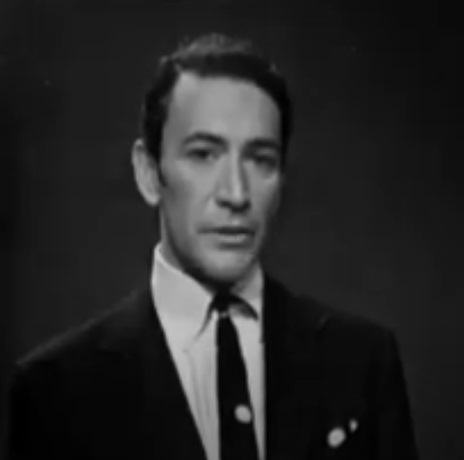


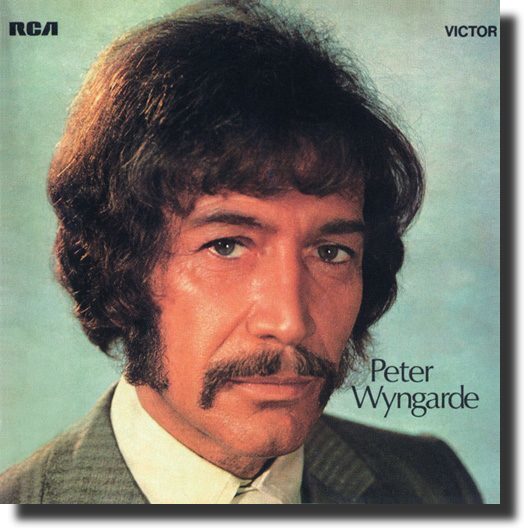


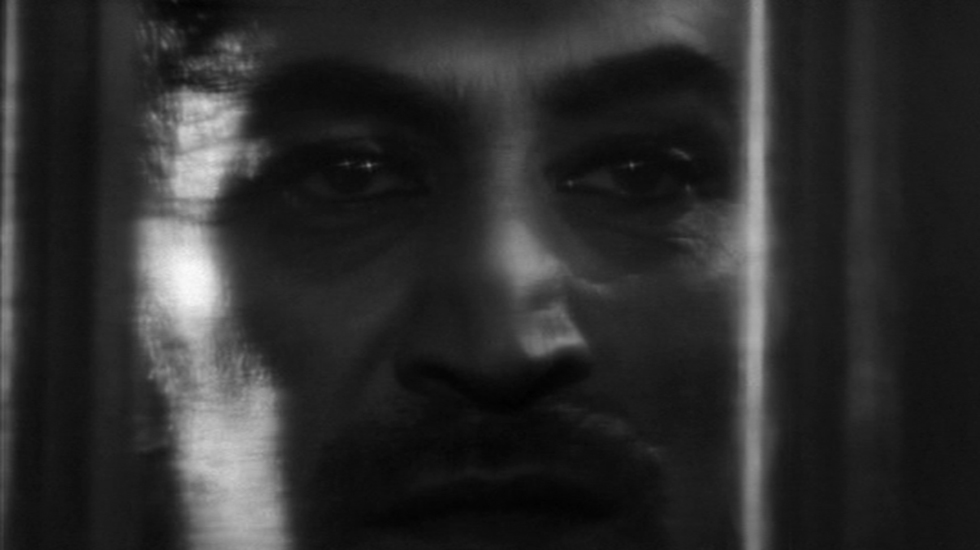

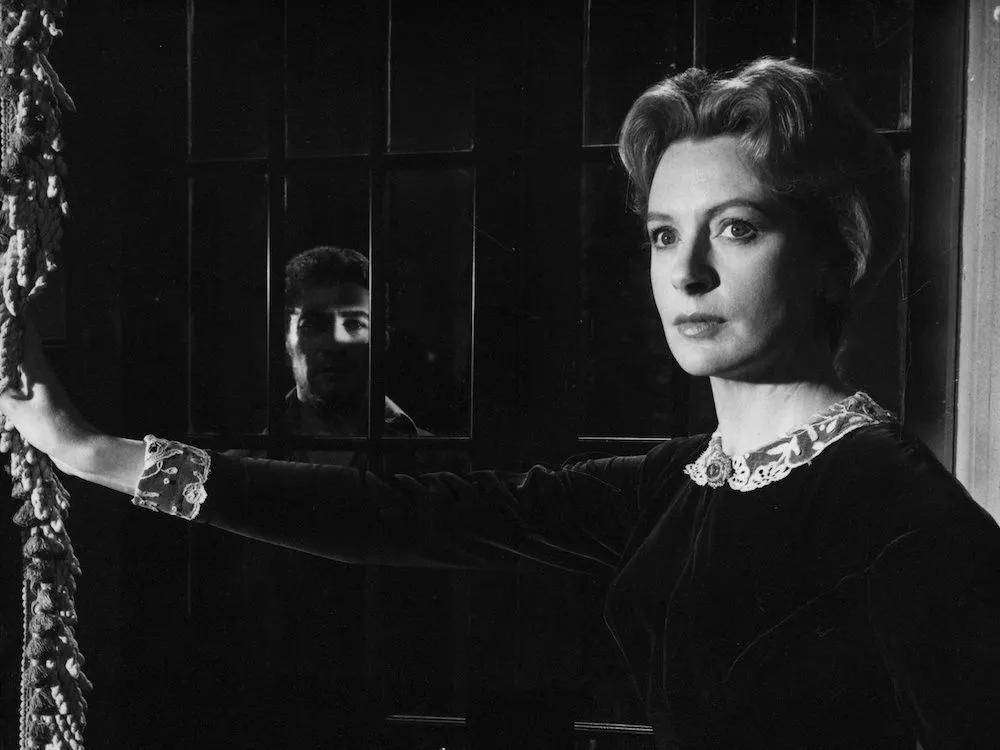


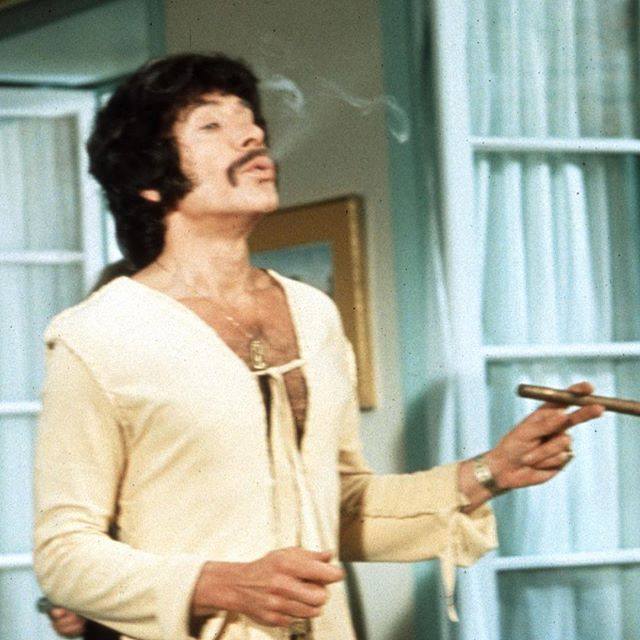
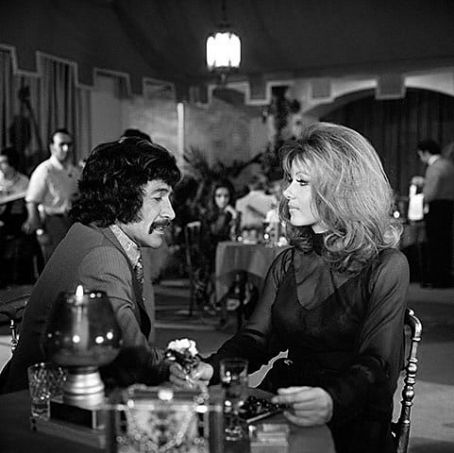

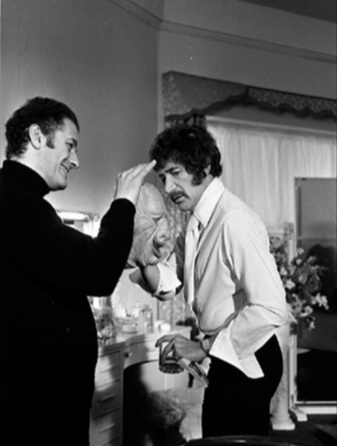


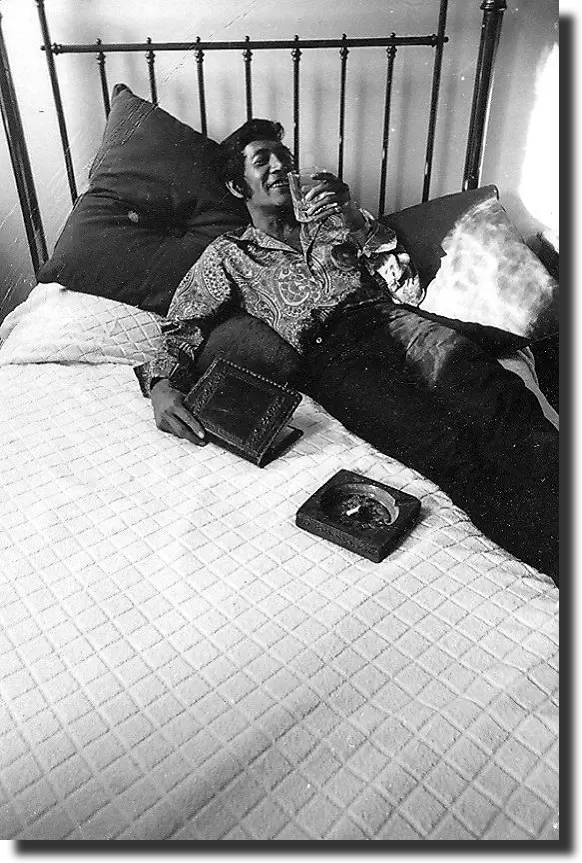


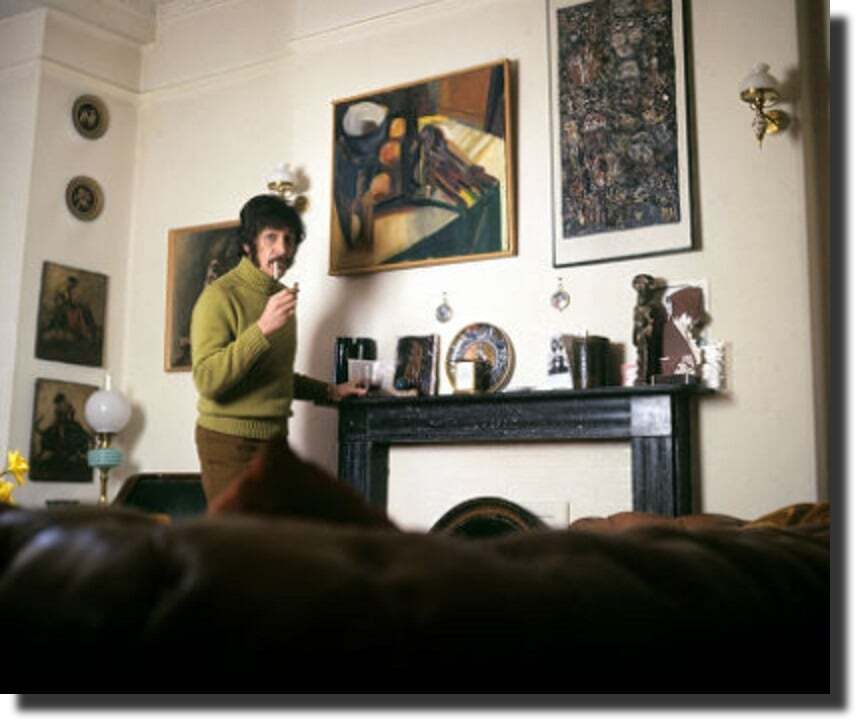
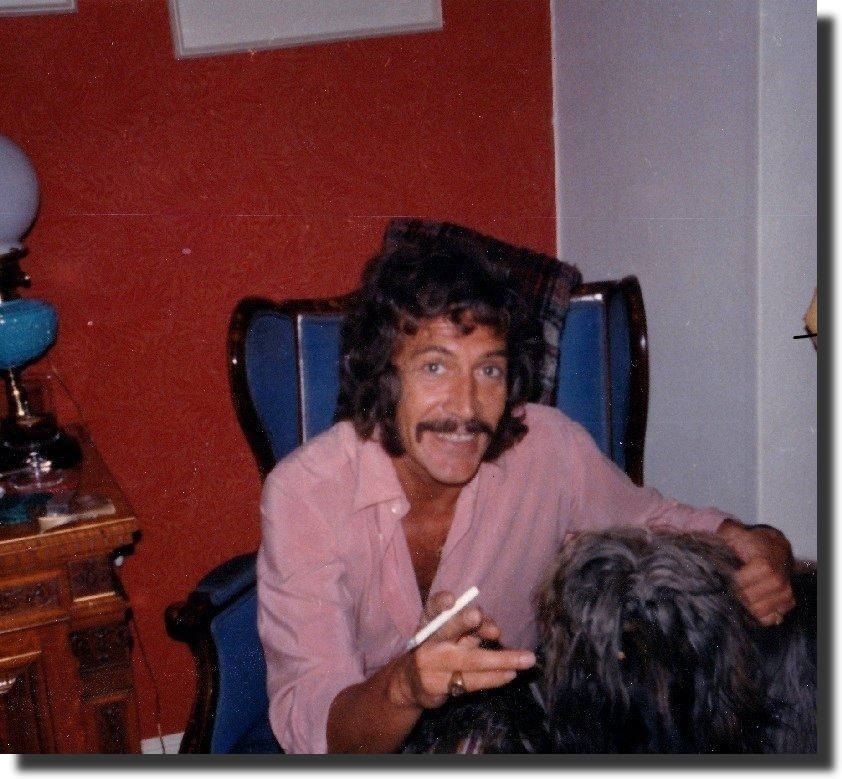


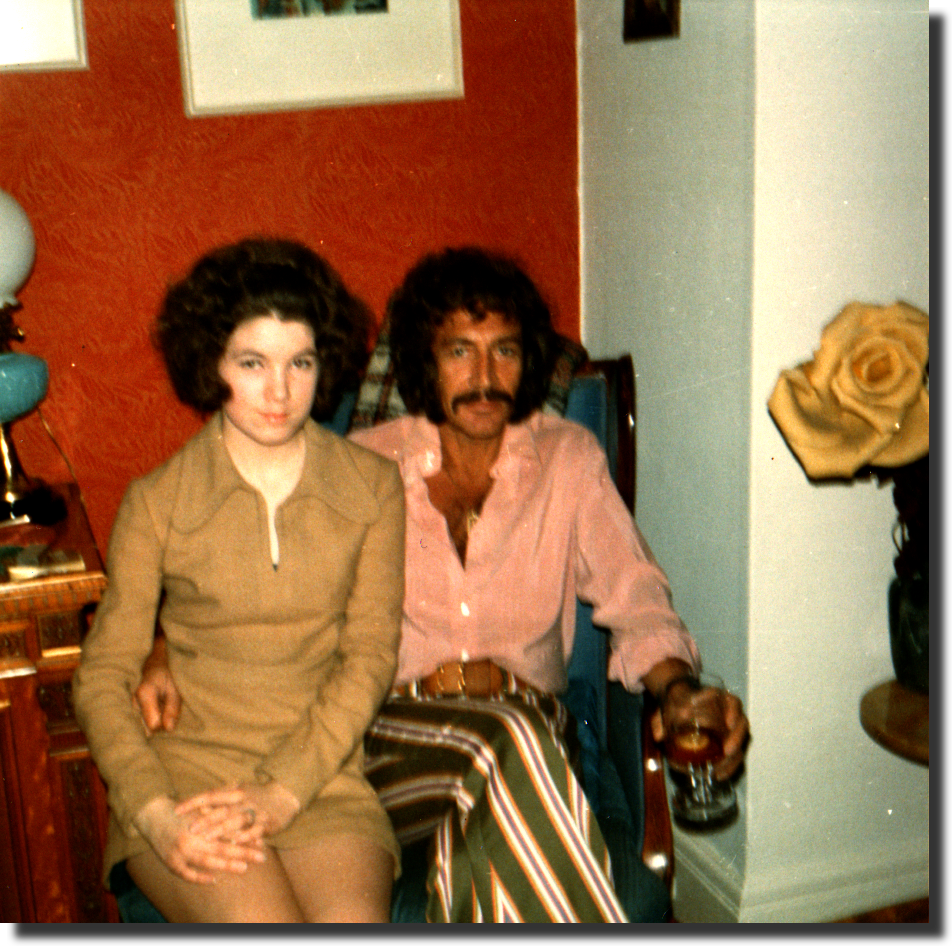
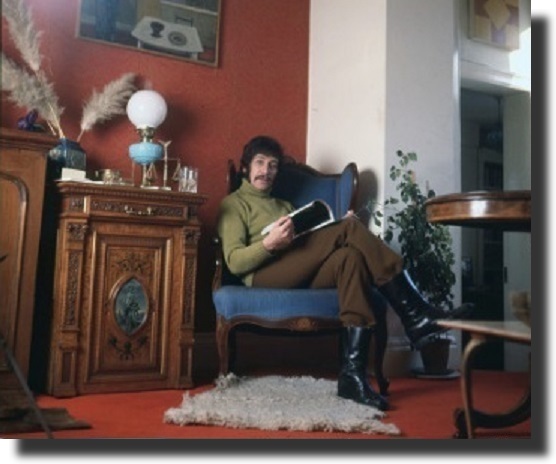
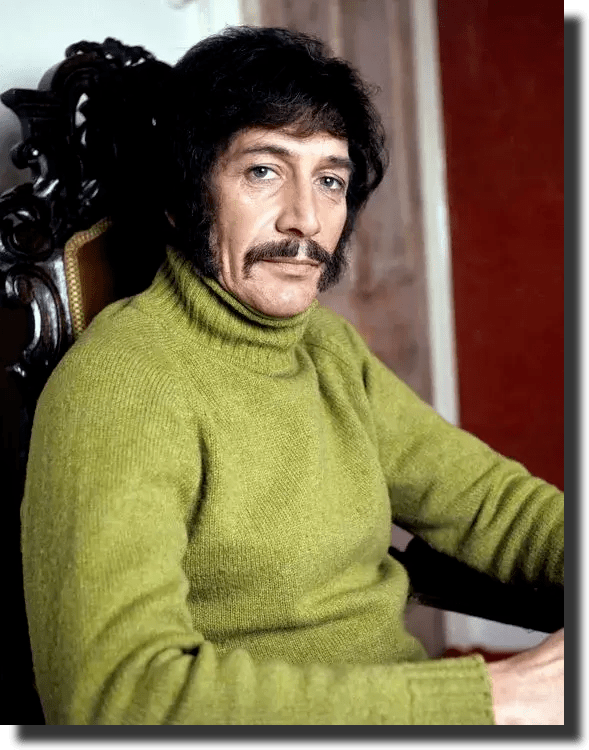

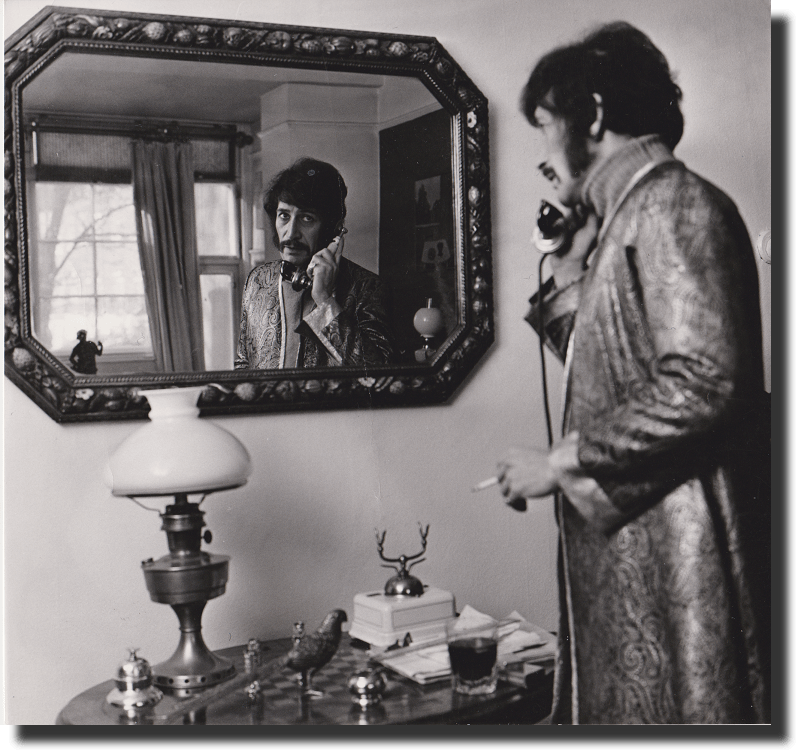

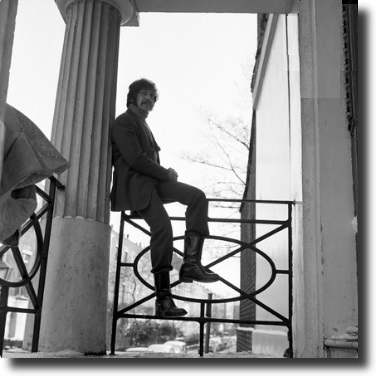
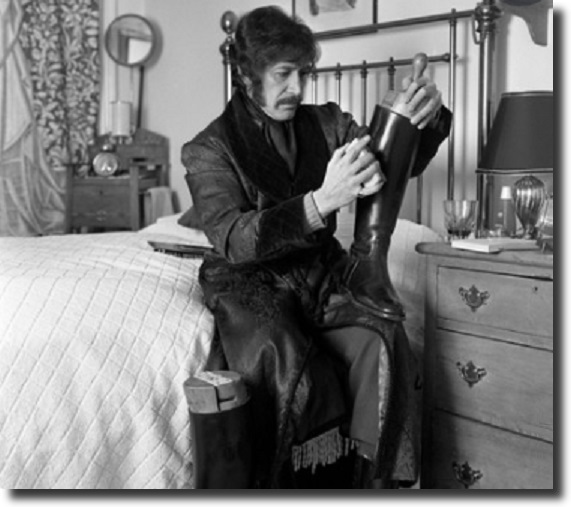



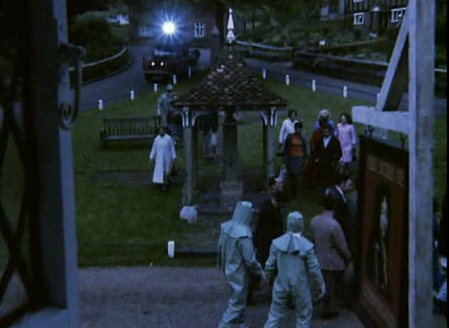

 PETER WYNGARDE: The Official Website