


Please note that some of the additional information provided here by the journalist named below may not be accurate, so it should be treated with caution.
Spring 2000
An Exclusive Interview with Peter Wyngarde
When did your passion for acting begin?
Well, I think it was probably as a small boy. I can always remember wanting to do plays and things when I was a child. It is rather funny but my first real inspiration, I suppose, was Mickey Mouse. I saw one of the cartoons and thought it was just fantastic. I remember wishing I could be this big mouse. I suppose I had the big ears and all I really needed was the red pants and black shoes, and as far as I was concerned, as a child, I would be Mickey.
One of your first appearances was in The Salt Land, an instalment of International Theatre.
Oh yes, that was very interesting. It was about this extraordinary patriarch character who led these people in Jerusalem. Now I’m not Jewish and I thought that the only way I could play this part was to go to a synagogue and to watch and learn to see what these people do. I really tried to immerse myself in the culture which is something that I always try to do in any part I play. We finally shot it at Shepperton Studios. It was terribly good. The only problem was at that particular moment in time I was asked to do War and Peace. I was under contract to Paramount. It was to be my first Hollywood film for them. I was to play the role of Peter. I did all the make-up test, met Audrey Hepburn.It was one of the leads and I then had about three months before filming began. This was in June or July as I recall. At the same time as this I was asked to do The Salt Land. Paramount had originally told me that I wasn’t needed until sometime in September so it was three months away and I thought I’ll have time to do The Salt Land first with no problem.
Then I got the call to say I must begin work on War and Peace the next day. I told Paramount that as much as I wanted to do War and Peace, I was committed to other work over here but as soon as it was finished I would come over. Paramount with furious and there was this big court case about it. In the end Henry Fonda played my character and that was that. I was told to be ready in September and I had three months to do the TV play but Paramount suddenly brought everything ahead by about two months so that caused the problem. Anyway that was the end of that. It was because of all the aggravation that I remember it. I was very friendly with the cast of The Salt Land. The guy who played my brother was an actor called David Peel, who was a top BBC radio star. He had a fantastic voice. He was very good looking and actually he was about 15 years older than me but played my younger brother.
What about the Isambard Kingdom Brunel TV drama from the late 50s, Engineer Extraordinary?
Oh yes, I loved that. The thing I remember about that was the fact that I am innumerate. I’m just not good at maths and I really can’t add up. We had this teacher at school called Mr. Jones and he would come into class and ask, “How did you get on with your own work?Have you all done it?” We would all say, “Yes Sir. We’ve done it.” He would then go through it all on the blackboard thinking we had done it and we would copy it down as fast as we could. He was always very impressed, but we actually learned very little, hence my problem with figures. So there is a whole group of adults who came from his classes over the years who could not add up.
Getting back to the Brunel thing, there were lots of calculations and equations and that sort of thing and I had to tell them that I was going to have problems. What we did in the end was to have monitors around the studio with all the calculations on so I would wander around and when I had make the calculations in my head as Brunel I would glance at the monitor and say something like, “It has to be 39 foot wide and 10 foot across and we must calculate the combined stress ratio by 5 and…” you know the sort of thing. That was sort of Marlon Brando acting, you know, with boards with dialogue written on them. Apparently he’d always done it like that but for me it was just because of the immense amounts of numbers and equations in the script. I have to say that it was probably one of the best performances I gave. Marlon must be right.
Night of the Eagle?
Directed by Sidney Hayes and regarded now as something of a cult film, I have many memories of that one. Janet Blair was in it and she was a pretty big American star at the time. In the States it was called Burn Witch Burn. The two big stories that stick in my mind are firstly the one about the scene when I’m supposed to throw a Bunsen burner at this bird. The lighting cameraman told me to throw it straight at the camera. Well, I said, “If I do that I’ll smash the lens won’t I?” he said that he didn’t think I could get it
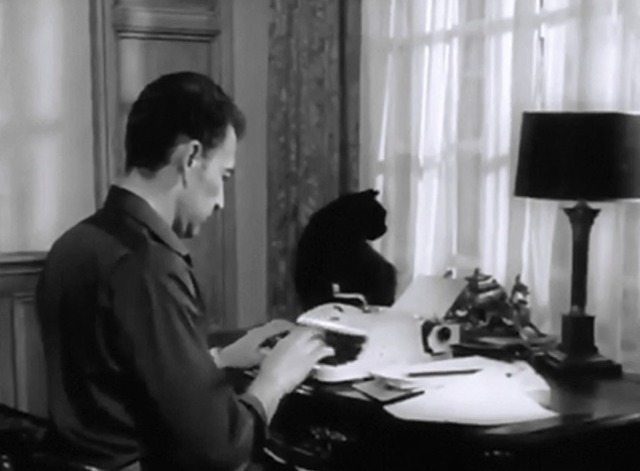
even halfway towards him. The director called, “Action”, and I hurled the Bunsen and smash; one broken lens which cost them more than the whole film’s budget to replace. Remember this was my first real big starring role and I wanted it to be good.
One of the things that I always thought looked a bit phoney was that theatrical look of fear that actors try to do. During my time in the internment camp even as a young child I knew only too well that look of genuine terror and fear. I wanted to capture this on film. I was intent on having no stuntman and that was that. Anyway, I am supposed to be attacked by this eagle and it was huge, a Golden Eagle actually. We were shooting at Elstree and I wanted to see the bird before I actually shot the scene. And went over to where it was and trying to be dreadfully amusing I asked the handler if I could meet my co-star? The door opened and there was this bloke with this enormous bird. It was gigantic with a 15 foot wingspan. We had a chat and this guy was very nice and when I left he turned and I saw the other side of his face which I hadn’t seen before. One eye was missing.
I then began to wonder if I had done the right thing saying that I was intent on doing it all myself but I was committed to doing it and would have looked such a fool if I now backed out. So I had a drink to calm myself down. I was really feeling pretty scared I must say. I went down onto the set and heard that the bird hadn’t been fed for a couple of days and they were packing bits of meat into my costume. The crew were behind a protective steel screen and I was thinking this is it, the end of my career: ‘Wyngarde eaten by big bird’. But then I looked at the crew behind the screen and I thought, I’ll show you, and we shot the scene and it really worked but I was shit scared. Sidney was a wonderful director actually and we work together very well.
Did you enjoy making the TV play A Midsummer Night’s dream?
Oh yes, that was terrific. Joan Kemp Welsh directed it and she was wonderful. It was in black and white and I think if it was in colour it would be still shown today. We had a great cast, Benny Hill was Bottom and he was fantastic. So many of those comedians were really good actors. I worked with Ronnie Barker on a number of occasions and like Benny he was also an exceptional actor and an absolute joy to work with. The Oberon character really managed to make it seem as if he had come out of the earth, you know kind of growing from the earth itself. Excellent production and all due to Joan.
Tell us about your first guest role in The Avengers?
The wonderful Avengers, A Touch of Brimstone and the lovely Diana Rigg in all that gear. I still see her regularly, she really is something else and her daughter is very beautiful as well. I think that particular episode was a kind of turning point for her and the series in general. The Honor Blackman ones were very popular and she was still being compared to her when all of a sudden this episode came along and it allowed her to be really sexy. In fact I don’t think anyone had been quite that sexy on television before.
The whipping scene is the bit that is so well remembered and actually it was amazing, it really was. I also enjoyed Patrick’s company a great deal; the man is an angel. I was determined to make my character a real match for Steed. Most of his adversaries were either big rough types with no brains or physically weak but clever masterminds. I wanted to be elegant and quicker, but also tough and resourceful and I think we kind of pulled it off. I think one of Patrick’s faults is that he’s actually too nice to be an actor. You’ve got to be a bit of a so-and-so sometimes, but Patrick is just so lovely and charming.
What were your personal thoughts on the famous whipping scene?
Well, I loved every minute of it, (laughs). No, seriously, it was obviously very kinky and it was meant to be. Since the Kathy Gale days, there was always this slightly campy and kinky side to The Avengers. Before The Avengers, I had this reputation for being a bit of a sadist (laughs), quite unfounded of course. After that episode I was in great demand, off screen too (laughs uproariously).
Have you any recollections of The Baron and The Champions?
Yes, I remember The Baron very well. Steve Forrest was a really nice guy, but he was typical of Hollywood actors at the time. They had this extraordinary way of behaving. Many Hollywood people thought that if you were an actor you must be a faggot. Now it’s gay, then it was faggot. Lots of these American stars were so scared of being thought of as faggots that they did their best to look macho and manly. So they were always in the gym or getting into fights or getting out their guns or riding motorbikes and racing cars, you know the sort of stuff. It’s ridiculous really. Now, of course no one is bothered but it still happens. Steve wasn’t gay but he did a lot of that sort of things. I really felt that he just wasn’t very interested in the part. He was Dana Andrews younger brother and I think he kind of did certain things because he was in the shadow of his more famous older brother. I suppose all brothers are like that whether you’re in films are not. I’ve seen Steve in things since then, but he was a nice guy.
One of the biggest memories for me of those ITC programmes was the amount of familiar faces you would see around the set. One of my real mates was the lighting cameraman I mentioned earlier. He was a bloke called Frank Watts. He was a lovely guy and worked on a lots of those shows including Department S and Jason King. He’s dead now, what a lovely man. I do remember a little of The Champions but nor a great deal. I did so many of those things and because I was with many of the same type of actors and technicians it all becomes a bit of a blur to be honest. So many of those scripts were interchangeable between the series too.
Tell me about your appearances in The Saint?
Roger was a real professional and an absolute scream to work with. I guess that with the whole weight of a show on your shoulders you either crumble or you loosen up and have a bit of fun. Roger most certainly was the type of person who liked to have a bit of fun. The first one I did was The Man Who Likes Lions. I was this sort of gangster who had this thing about Ancient Rome and we threw this party and Simon Templer comes and we end up having this broad sword fight. Obviously, Roger was this big strapping sort of bloke and he was a bit of a piss-taker. I was half his size and playing this camp kind of character. And I decided that for once the tables would be turned on Mr. Moore.
During our rehearsals for the fight I was sort of acting like a bit of a wimp. You know I was saying stuff like, “Oh Roger sweetie, do you have to bang my shield so hard with your sword” and “Can’t we rest for a minute, I’m so tired.” Anyway, I could see Roger winking over at his mates in the crew and mouthing to them what he thought of me, if you know what I mean. Now what Roger didn’t know was that after many years of fencing on stage in different productions I had become something of a swordsman. I really enjoyed it as a sport and later on when I was doing things like Jason King, I would fence with one of the key stuntmen, a guy called Paul Wesson – he was quite a mate of mine in those days. I fence just for fun you know like you might play squash or something. Anyway, we were about to do this scene for real. I had convinced Roger and his pals that I was just about ready to shoot the scene but was still very nervous. A couple of other people on the set were wise to my little plan so I knew it would be a good gag to pull on Roger. So there we are and you’ve got Roger, the man who is The Saint and had been in Ivanhoe, and me this apparent fairy who can’t fight and doesn’t like all the noise of the swords.
The director calls, “Action,” and I lay into Roger like a whirlwind and he’s looking at me in fear and surprise and actually it looks fantastic because he really looks like he’s fighting for his life. In the end he ends up falling into the pit that supposed to have a lion in it and I’m standing looking down, pissing myself with laughter. Roger, being such a great sport called me all the names under the sun and then pissed himself as well. We reshot the final part of the fight because it is my character that has to fall into the pit. It really was a great atmosphere on The Saint and it was primarily down to Roger and his marvellous sense of humour. I did another one a little later that I don’t remember too much about it, apart from the fact that I was playing an Arab or something and I was all blacked up and looked a bit ridiculous. But we all had a laugh about the sword fight.
Tell us about Epic, your second appearance in The Avengers?

Yes, that’s right, it was a colour one with James Hill directing. That was wonderful, wonderful because I played this actor and, as part of the story, I played 10 or 11 different characters. I played a cowboy and an Indian, a 1920s gangster, a sort of Dracula character, a gladiator and a few others. It was great fun. Obviously being with Patrick and Diana again was lovely and the chance to do all those characters
was marvellous. Around that time I also did I, Spy and I must say that Bill Cosby was one of the most talented men I’ve ever worked with. He was a natural and a really terrific bloke. I actually learned a great deal from Bill about film making. He knows his stuff technically let me tell you; even then he knew the lot. I really didn’t like Robert Culp. He was a bit of a big head and full of himself. Bill Cosby was one of those people who has time for everyone, you know, from the caterers to the director, he was that sort of fella, not Culp. Still I guess some people are like that. We were both nominated for Emmy Awards actually and we met up again, me with The Avengers team and Bill for I, Spy.
What was it like to work on Checkmate, an episode of The Prisoner?
Now McGoohan was a really dedicated film maker. He knew exactly what was going on on the set, in the make-up room, in the edit room, you name it. I suppose you needed someone who knew what it was all about because I certainly didn’t. Once more, and I know it must sound boring, but he was a lovely man to work with. The Prisoner was his baby and he wanted to see how every element of it was developing and growing. It was marvellous to see a man with such vision and dedication at work. I must say that quite often people have moaned about me always having opinions and views on how things should be done, but I can honestly say that when I was working with McGoohan I never questioned them once. That was because I knew more than any other person I’ve worked with, he knew exactly what he wanted from you and he knew how to draw it out of you, if it needed drawing out. I would go with the flow as you might say. It was a pleasure.
Don Chaffey directed the one I was in, but Patrick watched every single move that was being made and it was him that you sort of look to for anything you needed. He made you realise that if you did what he told you, it would work. I felt very comfortable with Patrick even though I didn’t really understand the show. As it went on I kind of began to grasp what he wanted. The other aspect which was wonderful was how the programme looked. That place in Wales was beautiful but sadly I never filmed there myself. I really loved the idea of the chess with the people being the pieces. It was all very clever, I was just very fascinated by the whole set up. Even though I had done The Saint and The Avengers and all those others, I really felt that this was something rather special.
McGoohan obviously impressed you very much. Are there any other actors who made this kind of impression?
The people I have worked with the I’ve really made shows work with is Pat in The Avengers and Jeremy Brett in Sherlock Holmes. They kind of said, now do you want to come along with me and enjoy it and do something good, or do you want to do something else and forget it? They were sort of like McGoohan too, they are very special people actually. Although Roger was The Saint it wasn’t his show. It was a kind of team thing, I know Roger directed some episodes of The Saint, but he wasn’t like The Prisoner or Pat in The Avengers. The girls came and went but there was always Pat. Sadly Jeremy isn’t with us anymore, I enjoyed working with him a great deal on Sherlock Holmes.
Would you like to tell us about this?
Yes, of course, in one way was kind of like The Saint. Now Roger was marvellous and he brought the character up to date. I had grown up seeing Louis Hayward and George Sanders in The Saint films so my idea of The Saint wasn’t really Roger. The same thing applied to Sherlock Holmes. I’d enjoyed the old Basil Rathbone films although I wasn’t so keen on the ones that were set in the War when they sort of made them all contemporary. Basically after reading the stories you had a kind of idea of what Holmes should look like and Rathbone pretty much worked for me.
Now later on when Peter Cushing did it I was really disappointed. He was a fine actor and a lovely, lovely man but I thought he was too short and I personally felt he was sort of artistic but not imposing and intellectual enough. I worked with him on Alexander the Great and he was a wonderful man. I am a very visual person and that’s why I thought Jeremy was so good in the role. I mean he was Sherlock Holmes. He was a marvellous actor and I enjoyed working with him on the show very much. I think what I found over the years is that the best actors are the best people and the shit actors are the shit people. It sounds terrible to say that but I really have found it to be true.
Tell us about your famous character Jason King and the series in which he first appeared Department S?
I was doing a play called The Duel, based on a short story by Chekhov, at the Duke of York Theatre. Before we actually opened I was sent some scripts for this programme called Department S. I didn’t really think too much about them actually. They were quite good but I just didn’t want to do another television series. I’d done a serial, A Tale Of Two Cities and another series called Epilogue to Capricorn and all the other things we’ve spoken about and I was really keen to do something else. I didn’t want to commit myself to a series. I was just about to open in this play which I was hoping would run for quite some time. Nyree Dawn Porter was in it with the superb Michael Bryant. We had a really fantastic cast and I was excited about it. After the first night’s performance I threw a party with all the cast and some of my friends along with the producer and director of Department S, Monty Berman and Cyril Frankel. The evening was wonderful and we were really enjoying ourselves not thinking of the time, when someone said, the reviews will be out now, let’s grab the papers. And off they went. By now it was the early hours of the morning. When they came back I said, “No, I won’t look at the notices.” It’s just something that I’ve never done. There is always some little twit on a newspaper who thinks they can tell readers how actors should be doing this or that. On the other hand you have the situation where you may get a really good review and you get a big head when really you’ve just done the job you get paid to do properly anyway. That in my opinion is the whole problem with reviews. So, they never told me what was written in the papers but I could tell by their faces they weren’t as good as we would have hoped. Actually, they weren’t too bad but I thought what the hell, I’ll do this series. I picked up a napkin and wrote,’ I, Peter Wyngarde agree to do your series Department S,’ and signed it. This would act as the contract and I asked it to be passed to Monty Berman and he looked at it and said, fine, and that was that.
The character was not originally visualised as the flamboyant, smoothie that we all remember.
Well, that’s right. He was supposed to be this sort of eccentric professor who is a bit of a crank who just sat around and a couple of times per episode, would give the others an idea or work something out for them. He was a bit of a crusty old thing and at first I thought, this is great, I’ve only got to sit around, do a bit of filming and I’m one of the stars of the show. After a while I realised that I wanted something more from the role.
Now I have to say that I always did like people like Marlon Brando and James Cagney who seem to be able to play all these different roles but just seemed to be playing themselves. It’s quite a talent and I thought to myself that I’d like to try this with the Department S role. So in the end the character Jason King was really Peter Wyngarde at that time in my life. He was a kind of flamboyant extension of myself really and certainly more of me than anyone else had done. So I went to see Cyril and Monty and I told them that I saw this characters being a kind of extension of myself and also Ian Fleming, who was involved with the real Department S in Naval Intelligence in the War. He was a sort of elegant, refined man who knew all the various aspects of espionage and crime but also has this knowledge of good food and wine. They both liked the idea and it was up to us to give this character a name. I came up with Jason because it was just a name I liked and Michael Bryant’s wife came up with King. It sounded just right so Jason King was born.
What about your stunning wardrobe?
Well, the clothes were just amazing. I’ve always liked to do my own clothes if I could and this was the opportunity to really do something special. My father had a wonderful tailor in Savile Row and I went to him with these designs that I’d put together and had the suits made up and I was very pleased with them. Talking about the suits, there is a fantastic story which I must tell you. We had been doing Department S for about six weeks, when some Americans came over to see how it was coming along. I think Lew Grade was looking to sell it to them. Lew was fantastic and had this wonderful relationship with this type of people all over the world and the Americans loved him. Anyway, they came over and there was the head of the American ABC and, just before he came to visit, for the first time ever, Lew had seen a complete episode. This was to give him a bit of a background on what it was he was due to be selling them. Lew said to Monty Berman, “Oh yes, Department S, fantastic, but you’ve got to get rid of that one with the Viva Zapata moustache. I mean, those clothes and that hair, the Americans won’t like all that, they’ll think he’s a faggot.
So I was on my way to being written out. Can you believe that? So, these executives from the States arrived and they said, “Hey Lew, this show’s great and a that guy is just incredible and those suits are fantastic. Who’s is tailor? Lew Grade was obviously as pleased as Punch and said, “I’m so glad you like it and by the way the tailor is my tailor too. Would you like his number?” This top American said, sure I’ll take 25 suits in the same style but different colours. When the suits arrived, Lew got a phone call. “What the are these God-damn suits? They look like boxes. These aren’t like the ones the guy was wearing in Department S.” To which Lew replied, “They are exactly the same as Joel Fabiani wears in the show and he had them made by my tailor.” To which the executive replied, “Not Fabiani. The other guy, with the Viva Zapata moustache.” Lew was absolutely mortified because he just assumed that the Americans wouldn’t like anything relating to this flamboyant English character with curly hair and a moustache. Of course I thought it was hilarious. Lew gets on the phone to me after making up some story about getting the tailor’s phone number mixed up and begs me to tell him where I got the suits made. In the end Lew paid for another load to be done for the head of ABC and I was reinstalled.
How did you find your co-stars?
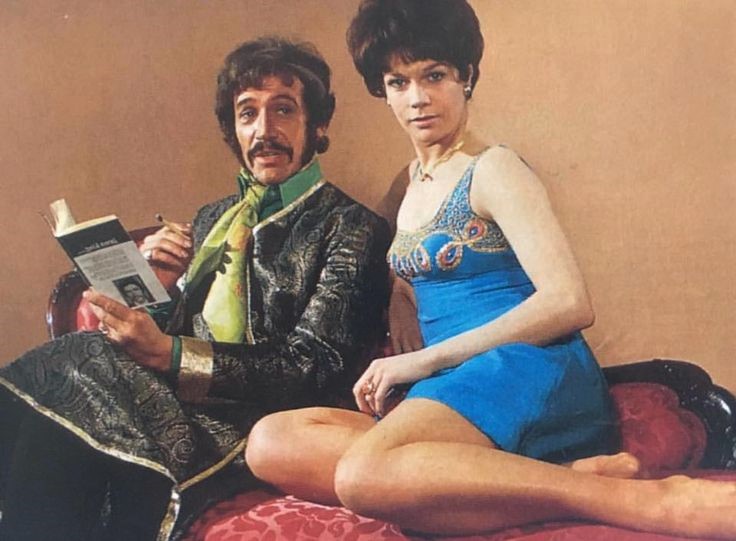
Well, I wasn’t that close to Rosemary really, but she was alright I suppose, but Joel was charming. We really had a good relationship both on screen and off. He was quite a good mate. We originally had this idea that he was this kind of kooky hippie agent in swinging London with the round tinted glasses and long hair and jeans and I was this flamboyant sort of dandy. Even though he was the actual secret agent and I was the assistant really, he could never get into places
and had to clamber over walls or squeeze through half open windows. However, Jason would be invited in and elegantly walk into these stately homes or offices and be welcomed with open arms because he was this famous writer who everybody wanted to meet and be seen with. Now I really think that would have been fantastic. It was a kind of early buddy relationship that you saw so much of later.
We would have lots of scenes with him getting annoyed with me about things and arguing and stuff, and we were both planning to do it like that. Then of course the partnership became a sort of three-way thing with Rosemary and then Joel’s wife heard about all this and saw my costumes and his sort of casual look and said, “Joel, you don’t look smart enough. Peter will get all the press and you need to look smart as well.” Poor Joel changed his mind and ended up looking just like all the other ITC men, you know like The Baron and all those who came out of Lew’s sable. I stood out because I was different. If he had stuck to that original idea of one ridiculously smart and one very casual, we both would have taken the public’s attention. As it was he just became another bland television hero who they had all seen a million times before. It was a great shame because he was a fantastic guy and a really good actor. As the series went on it was my character that people warmed to and then later Lew decided to do the Jason King series.
Is it true you weren’t very keen to do this?
Yes, that’s right for, I done Department S and I’d really had my fill of it by then. Lew kept asking me and I told him that I really didn’t think that Jason King was strong enough on his own to carry an entire series. I told him about mine and Joel’s original idea for the series and suggested we do something as a duo or with a new girl, but Lew insisted it should be Jason on his own. The character, in my opinion, is larger than life and I thought he was just a bit of light relief. For instance, Jason would enter a ski competition, come last, end up on his arse but still manage to walk away with a trophy and two girls on his arm. Jason King was sort of bizarre and in a sort of way ‘Avengerish’; you know sort of reality but not quite. I was comfortable doing that but having Jason in the real world, week after week, on his own was something that I didn’t think would work.
How did Lew convince you?
Well, he said to me (with Wyngarde doing a fantastic impersonation of Lew Grade), “Peter, let me tell you something. To me, Roger Moore is a hero. Look at him, he’s tall, he’s a good-looking boy. He wears a nice suit and he talks nice. Now you, you’ve got this hair, you’ve got this drooping moustache, these funny suits and you talk funny, too posh Peter, too posh. But my wife, she likes you. Will you do Jason King again?” Now after he told me all this I just won’t refuse. He had a way of convincing people to do things for him. He really was wonderful and actually his wife was a very lovely lady.
You made one major request prior to shooting the series I understand.
Yes, I did. Jason was supposed to be this globe-trotting character who was in Paris one week and in Berlin the next and Venice the week after. That’s a wonderful thing for a series because it allows you to use different types of characters and costumes and sets and all of that stuff. The show was actually going to be called ‘The World of Jason King’. Now all of these locations are fantastic but the whole thing looks just dreadful when you have an establishing shot of, say the Eiffel Tower for example, and then a terrible looking rear projection shot of a character against a background of Paris. I said if I’m going to do this show I want to go to these places so it looks real. Obviously it costs a huge amount of money to take crew abroad and shoot and there were stories set all over Europe. It would have cost poor old Lew millions.
I was determined to do it in one form or another and in the end we agreed that I would travel around Europe with Cyril Franklin and Frank Watt, the lighting cameraman. We went to Paris and Venice and all these places and filmed me going into hotels, getting out of cars, walking down different streets and generally doing all of the things that could be used as the series was being made to give the impression that I was really in these places. I think we did two trips a month or two each time. We had a marvellous time and got a great deal of very valuable footage. Sometimes we might see something going on and we’d shoot Jason looking at it like a parade or something, anything that could be used later. It cost a fair amount of money but it was probably a fraction of the cost of getting a full crew out on location. It added to the authenticity of the programme when it was all added into the finished episodes. It made the budget of the show appear even larger. Often writers will look at the footage we had shot and then create a story around it.
Did you did you remember any memorable incidents?
Oh yes, the time we were in Vienna was marvellous, it was just like the film The Third Man. There is this huge fairground wheel and we thought that it looked quite interesting. I had a little microphone attached to my lapel and I said to Frank, right, I’m going to walk towards the wheel and look around – just keep filming. Everything was fine and all of a sudden I saw this man and he was the double of Orson Welles, he really was. He was very tall and had the hat and the long black coat. Frank couldn’t believe it. I told him to keep filming while I walked towards him because he looked an interesting character. When we neared him we just somehow lost him, it was so strange, he just seemed to disappear. Anyway, right next to the wheel was a scale model of it and we decided to film me as Jason looking at the model. The next minute I notice this man on the wheel itself looking down at us. When the wheel stopped this man comes walking over to us and we’re thinking this is too good to be true, it’s The Third Man. He looks straight into my eyes and says, “You want to buy a watch?” It was just a priceless moment. He pulled back his sleeve and exposed seven or eight watches strapped to his arm.
What are the favourite things you’ve done since the 60s?
I did the Sherlock Holmes we spoke of earlier and I did Doctor Who, but I really enjoyed Flash Gordon. I thought Mike Hodges was a great director and Dino de Laurantiis really put some money into it. I thought it was great fun to watch and we had a great deal of fun making it. I was disappointed with the ending because the original ending had me picking up the ring in the dust. They added the question mark but it was supposed to be Klytus. They were intending to do a sequel with Lorenzo Semple’s story, which was actually written by the way. Klytus comes back as the leader of an army of creatures from below the surface of the planet. They want to take over this surface because there is a population explosion and they’ve outgrown their cities and Klytus leads them.
We were all sent all over Europe and America to promote the first film and go to the premiers. Max von Sydow went to Los Angeles, I went to New York. I think Sam was in Europe with one of the girls and it was a really big thing. Then pirate videos began to appear all over the place and it turned out that they had, I believe, come from someone at Shepperton who had sent copies to America. Everyone had seen it by the time of the premiers and it sort of killed it really. In England and the rest of the world it was a huge hit and was the top film for many weeks.
Peter, thank you for allowing us to speak with you.
It was my pleasure. I’ve enjoyed it a great deal.
Interview by Martin Gainsford

 PETER WYNGARDE: The Official Website
One thought on “INTERVIEW: Action TV”