


Broadcast: Saturday, 3rd August 1957
Character: Andrea Bokolas
The Story
George Polk (Larry Cross) wanted a scoop. He died seeking it. A violent death. At point blank range a bullet went through the nape of his neck, and he was then thrown in the sea.
Aged 34, Polk was a foreign correspondent for the Columbia Broadcasting System of America. He was due to return to his native States after a long and distinguished tour of duty. But he wanted to finish it by interviewing General Markos, leader of the Greek communist guerrillas.
He flew from Athens to Salonika on May 7, 1948, and he made it known that he wanted to see Markos. A Greek journalist, Gregorios Staktopoulos (the character was renamed, Andrea Bakolas, for the sake of this drama, and played by Peter Wyngarde), told him he could fix him a trip to “the mountains” to fulfil has ambition.
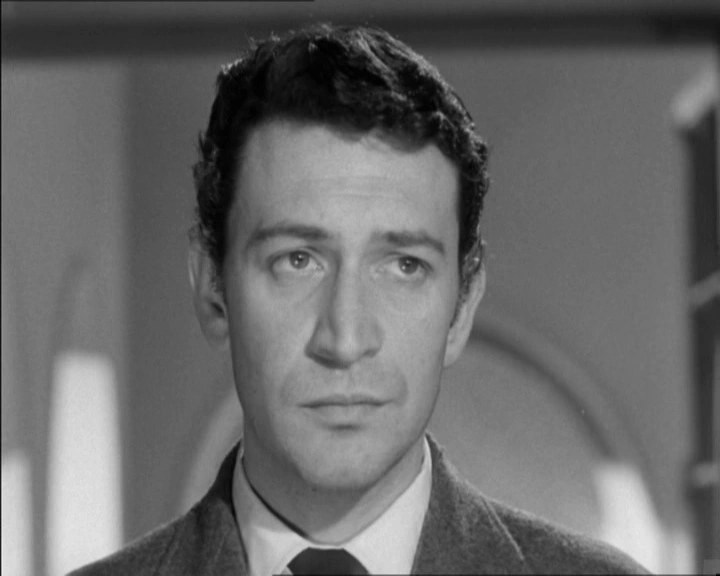
Above: Peter as Andreas Bokolas
On the night of May 8 the Greek took Polk to a jetty. They got into a boat (according to Staktopoulos’s evidence at the trial) with two other men.
They rode far out into the bay. Polk allowed himself to be blindfolded and his hands and feet tied. A moment of two later he was shot by a man sitting directly behind him. Still alive, Polk was dumped into the bay. The autopsy report stated that death was by drowning.
Eight days later, Polk’s body was found in shallow water in the harbour. It was fully clothed; hands and feet still bound. At the harbourmaster’s office, the American Consul in Salonika identified the body.
On the night of May 8 the Greek took Polk to a jetty. They got into a boat (according to Staktopoulos’s evidence at the trial) with two other men.
They rode far out into the bay. Polk allowed himself to be blindfolded and his hands and feet tied. A moment of two later he was shot by a man sitting directly behind him. Still alive, Polk was dumped into the bay. The autopsy report stated that death was by drowning.
Eight days later, Polk’s body was found in shallow water in the harbour. It was fully clothed; hands and feet still bound. At the harbourmaster’s office, the American Consul in Salonika identified the body.
Polk’s death became headline news in America. Two weeks before, he had attacked the Greek government. He received a threatening letter because of it.
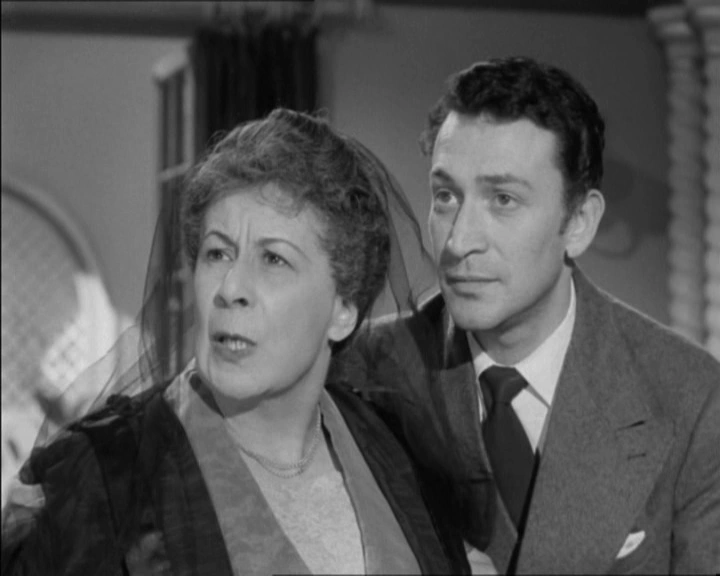
Above: Peter with Helen Misener as Madam Bakolas – Andrea’s mother.
Communists blamed the government for his death. They hoped it would rouse bitter feeling in America against Greece and perhaps curtail Marshall Aid for the country, one of the chief anti-Communist weapons in the country at the time.
The Greek government acted swiftly to pin the murder on the Communists. It offered a reward of 25,000,000 drachmas for information that could bring the murderer to justice.
And in America, the Overseas Writers’ group of newspapermen raised several thousand dollars to finance a full investigation into Polk’s death in the name of “free speech” and future protection for foreign correspondents. The newspapermen appointed a distinguished American lawyer. General William Donovan, to represent them at the trial. He made certain the trial would be a civil one and not a court martial, thus ensuring the Press could report it fully.
By October 1, 1948, Gregorios Staktopoulos had been apprehended. He made several long statements. He told me how he was a Communist and had been expelled. This, he explained, had been a fake expulsion to enable him to work more freely as a journalist and also to be more useful to the cause.
He met Polk in a restaurant where Helen Mamas, another correspondent for an American agency, had introduced them. This involved her in the case, but she quickly proved her innocence. It’s her story (the character was renamed, Helen Zotos, for the sake of this drama, and played by Faith Domergue) that has been made into the film.
Staktopoulos met Polk later in a darkened street and went into a café where they discussed ways of meeting Markos. The next evening, Staktopoulos said in his evidence, he received a phone call telling him to take Polk to a rowing boat which would be at a certain jetty between 9pm and midnight.
Just after 10pm, the boat arrived. Polk, carrying only what looked like a roll of paper, walked towards it and Staktopoulos followed. They got into the boat and the Greek journalist said he recognised the boatman to be Adam Mouzenidis, a well-known Communist leader.
Mouzenidis rowed them across the bay to another café, where Staktopoulos thought he would be put ashore. Instead, two more men got into the boat. Staktopoulos recognised one as Vasvanas, another noted Communist. Mouzenidis gave up the rowing seat and placed himself in the bulwark behind Polk, and Staktopoulos. Vasvanas rowed out to sea.
Mouzenidea broke the silence – “Tell Polk we must cover his eyes so he cannot see where we are going to take him,” he said in Greek to Staktopoulos. Polk agreed, and was blindfolded.
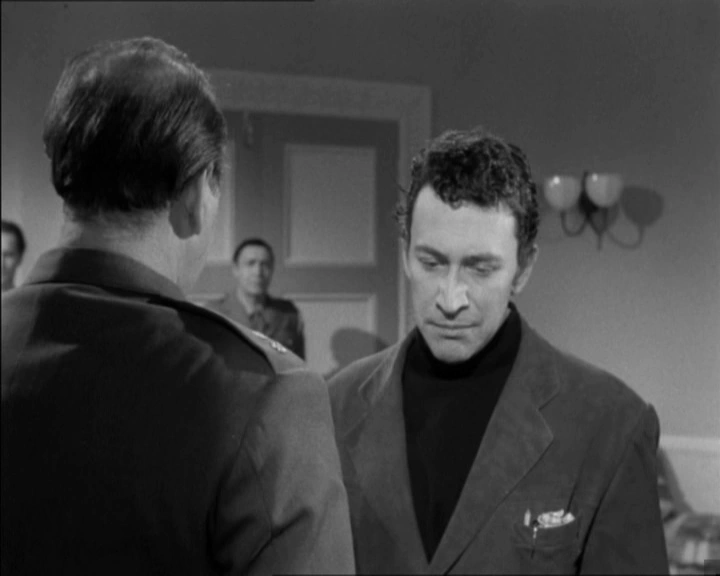
Above: Peter with Eric Pohlmann as Major Macridis
Mouzenidis then said Polk had to be tied hand and foot for security reasons. Again Polk agreed, and Mouzenidis went in front of Polk and trussed him at the wrists and ankles with thick hemp rope. Mouzenidis then returned to his seat behind Polk. In his testimony, Staktopoulos made great effort to lay the blame for the Polk’s death on Helen Mamas, whom he said had made arrangements for another journalist to see Markos, and who returned safely. However, the Greek police exonerated Mamas.
The trial was held in April 1949. Vasvanas and Mouzenidis were found guilty and sentenced to death in their absence. It’s since thought that they both dies whilst fighting for Markos.
Gregorios Staktopoulos was convicted on one count of complicity in the murder and sentenced to life imprisonment. Doubt as to whether or not he knew Polk was to be killed saved him from the death sentence. He was released in 1961.
Foreign correspondents had seen that the murder of a colleague had been avenged.

 PETER WYNGARDE: The Official Website
2 thoughts on “REVIEW: Overseas Press Club Exclusive! – The George Polk Story”